US Business

Germany primes energy price cap as bills soar

Germany on Wednesday signed off on an energy price cap, the cornerstone of a massive 200-billion-euro ($198-billion) package to shield households and businesses from rising costs.

“The source for these consequences and great challenges is (Russian President Vladimir) Putin’s war,” Scholz said at a press conference. 

The support package was Germany’s response “so that citizens do not have to fear their bills”, said Scholz, who has ploughed ahead with plans despite criticism from European partners.

Germany’s businesses have also crying out for help at a time when Europe’s largest economy is drifting towards recession and inflation has shot past 10 percent.

The plan will see the price for a percentage of household and businesses’ typical consumption capped at lower-than-market prices.

For gas, 25,000 larger businesses, as well as almost 2,000 hospitals and schools will benefit from the cap as soon as January 1 next year, according to the plan agreed between the federal government and regional leaders. 

Households and smaller businesses meanwhile could have to wait until March 1 at the latest for the price brake to come into force.

Policymakers will “seek” to apply the relief retroactively from February 2023, according to the document.

A similar price cap will also apply to electricity from the start of the new year in January, with the measures set to last through to the end of April 2024.

– December help –

While the cap for smaller consumers will only come into force later, the government will pick up their heating bills in December.

For households, the price of a kilowatt-hour of gas will be capped at 12 cents for up to 80 percent of their typical usage.

The same unit of gas currently costs billpayers 18.6 cents, according to the price comparison site Check 24.

All in all, the support measures could save a single-person household with a typical gas consumption of 5,000 kWh around 264 euros over a year, the site estimates.

The partial price cap was designed to maintain “incentives to save energy” over the winter while supplies are short, according to the government paper, despite concerns that lowering prices would sustain demand.

The plans left a “winter gap” for consumers until at least February, North Rhine-Westphalia state premier Hendrik Wuest said at the same news conference as Scholz.

Wuest, who had pushed for the government to bring the price cap in earlier for households, said the chancellor had agreed to “examine” alternative solutions put forward by regional leaders.

– European discontent –

Germany, long reliant on Moscow for energy imports, has been hit hard by the sharp rise in prices since the invasion of Ukraine and the cut to supplies.

Despite the Germany economy eking out 0.3-percent growth between July and September, most analysts still expect the country to slip into recession as the high cost of energy drags on production.

Businesses that have been pushing for more support from the government welcomed the plans.

The price cap measures should “create a bit of security and at the same time ease worries”, the BDI industrial lobby said Monday ahead of the final agreement.

Berlin’s massive go-it-alone plan to shield its economy has ruffled feathers among European partners who would have preferred a common solution.

They feared that more highly indebted EU countries could not afford the outlay made by Germany, while the plan could affect their own energy costs.

Germany’s energy price shield will be partly financed through new borrowing through an economic stabilisation fund created during the coronavirus pandemic. 

Berlin also intends to fund the cap by skimming off part of the bumper profits made by energy companies as prices have risen.
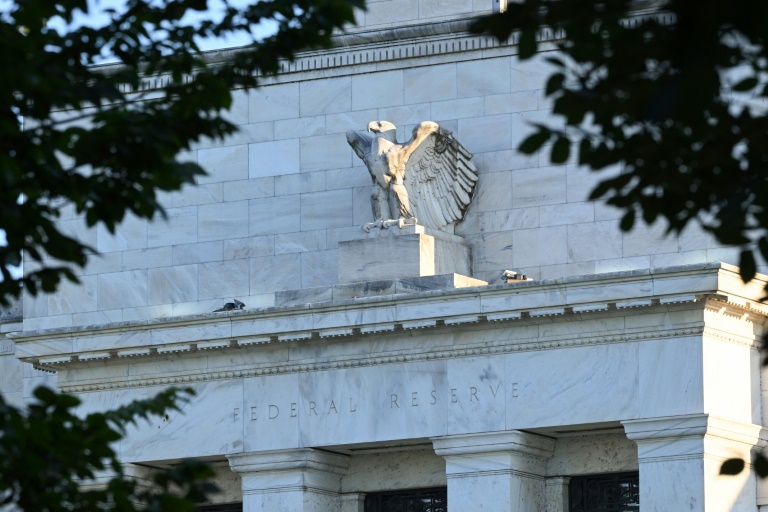
Fed delivers another steep rate hike with more to come

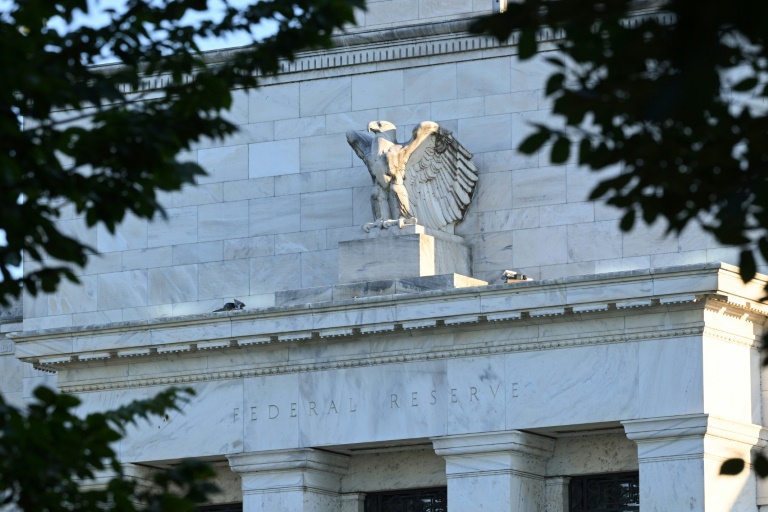
The Federal Reserve delivered another steep interest rate increase on Wednesday, as expected, with its move to cool red-hot inflation taking on more weight amid the political maelstrom ahead of key US midterm elections.

With high inflation squeezing American families of all political stripes, President Joe Biden faces a battle to avoid losing control of both chambers of Congress.

The Fed’s aggressive rate hikes this year so far have not had a noticeable impact on prices, but increase the risk the US economy could suffer a recession even as the job market remains strong.

The US central bank raised the benchmark borrowing rate by 0.75 percentage point — the fourth straight increase of that size and the sixth hike this year — in its all-out battle to tame inflation not seen since the 1980s.

The policy-setting Federal Open Market Committee (FOMC) signaled that more increases will be needed to tamp down rising prices but it will consider the impact on the economy when deciding on the pace of future moves — opening the door to the possibility it will implement smaller steps in coming months.

The latest three-quarter percentage point increase takes the benchmark lending rate to 3.75-4.0 percent, the highest since January 2008.

In a statement at the conclusion of its two-day policy meeting, the US central bank said more rate hikes “will be appropriate” to achieve a “sufficiently restrictive” level to tamp down inflation.

However, it added that, “in determining the pace of future increases” the Fed will “take into account the cumulative tightening of monetary policy, the lags with which monetary policy affects economic activity and inflation, and economic and financial developments.”

Analysts will scrutinize Fed Chair Jerome Powell’s press conference, due to start at 1830 GMT, for more clarity on whether the FOMC is considering easing off on its aggressive moves or even pausing the rate hikes to assess the impact on prices and the overall economy.

But he faces a difficult chore to balance concerns the Fed is moving too fast, while reaffirming its legal mandate to bring down inflation.

“It will be a challenge for the Fed to signal an eventual shift in policy while also communicating a steadfast commitment to bringing down inflation,” Nancy Vanden Houten of Oxford Economics said in an analysis ahead of the meeting.

She noted that a number of Fed officials in recent weeks have suggested it is time for the central bank to consider slowing the pace of increases to guard against raising rates too far.

While the housing market has cooled sharply amid higher borrowing costs, key inflation measures show prices continue to rise and the labor market remains tight, with job openings rising and private hiring accelerating in October.

– Political pressure –

As central bankers walk a tightrope fighting inflation while avoiding tipping the economy into a recession, politicians are ramping up pressure on Fed officials amid growing worries of an economic downturn.

Biden faces growing voter frustration over high inflation and signs a “red wave” that could sweep the opposition Republicans to power in the House and Senate.

Republicans put the blame for inflation and slower growth squarely on Biden, while the president’s Democrats worry the Fed moves will lead to higher unemployment.

Democratic Senator Sherrod Brown urged the Fed last month to show commitment to its dual mandate — of promoting maximum employment and stable prices — and moderate the rate hikes.

“For working Americans who already feel the crush of inflation, job losses will make it much worse,” Brown said in a letter to Powell.

But Powell has argued that allowing high inflation to become entrenched would inflict even more pain on American families and workers.

Oanda analyst Craig Erlam said it may be too late to avoid a recession “but the Fed has been very clear from the start that while a soft landing is the desirable and attainable outcome, getting inflation under control is the primary focus.”

Fed delivers another steep rate hike with more to come

The Federal Reserve delivered another steep interest rate increase on Wednesday, as expected, with its move to cool red-hot inflation taking on more weight amid the political maelstrom ahead of key US midterm elections.

With high inflation squeezing American families of all political stripes, President Joe Biden faces a battle to avoid losing control of both chambers of Congress.

The Fed’s aggressive rate hikes this year so far have not had a noticeable impact on prices, but increase the risk the US economy could suffer a recession even as the job market remains strong.

The US central bank raised the benchmark borrowing rate by 0.75 percentage point — the fourth straight increase of that size and the sixth hike this year — in its all-out battle to tame inflation not seen since the 1980s.

The policy-setting Federal Open Market Committee (FOMC) signaled that more increases will be needed to tamp down rising prices but it will consider the impact on the economy when deciding on the pace of future moves — opening the door to the possibility it will implement smaller steps in coming months.

The latest three-quarter percentage point increase takes the benchmark lending rate to 3.75-4.0 percent, the highest since January 2008.

In a statement at the conclusion of its two-day policy meeting, the US central bank said more rate hikes “will be appropriate” to achieve a “sufficiently restrictive” level to tamp down inflation.

However, it added that, “in determining the pace of future increases” the Fed will “take into account the cumulative tightening of monetary policy, the lags with which monetary policy affects economic activity and inflation, and economic and financial developments.”

Analysts will scrutinize Fed Chair Jerome Powell’s press conference, due to start at 1830 GMT, for more clarity on whether the FOMC is considering easing off on its aggressive moves or even pausing the rate hikes to assess the impact on prices and the overall economy.

But he faces a difficult chore to balance concerns the Fed is moving too fast, while reaffirming its legal mandate to bring down inflation.

“It will be a challenge for the Fed to signal an eventual shift in policy while also communicating a steadfast commitment to bringing down inflation,” Nancy Vanden Houten of Oxford Economics said in an analysis ahead of the meeting.

She noted that a number of Fed officials in recent weeks have suggested it is time for the central bank to consider slowing the pace of increases to guard against raising rates too far.

While the housing market has cooled sharply amid higher borrowing costs, key inflation measures show prices continue to rise and the labor market remains tight, with job openings rising and private hiring accelerating in October.

– Political pressure –

As central bankers walk a tightrope fighting inflation while avoiding tipping the economy into a recession, politicians are ramping up pressure on Fed officials amid growing worries of an economic downturn.

Biden faces growing voter frustration over high inflation and signs a “red wave” that could sweep the opposition Republicans to power in the House and Senate.

Republicans put the blame for inflation and slower growth squarely on Biden, while the president’s Democrats worry the Fed moves will lead to higher unemployment.

Democratic Senator Sherrod Brown urged the Fed last month to show commitment to its dual mandate — of promoting maximum employment and stable prices — and moderate the rate hikes.

“For working Americans who already feel the crush of inflation, job losses will make it much worse,” Brown said in a letter to Powell.

But Powell has argued that allowing high inflation to become entrenched would inflict even more pain on American families and workers.

Oanda analyst Craig Erlam said it may be too late to avoid a recession “but the Fed has been very clear from the start that while a soft landing is the desirable and attainable outcome, getting inflation under control is the primary focus.”

Twitter could face crypto makeover, billionaire investor hints

Social media platform Twitter could become much more entwined with cryptocurrencies and blockchain in the future, one of the backers of Elon Musk’s $44 billion takeover hinted on Wednesday.

Changpeng Zhao, who owns crypto firm Binance and put $500 million into the takeover by the world’s richest man, gave his first hint that he would not be a completely silent investor.

“Let’s give Elon some time to get adjusted,” he told a press conference at the Web Summit tech conference in Lisbon, before adding that he was there to help Twitter in any future crypto-related moves.

Zhao was speaking on the first full day of the get together, which kicked off on Tuesday night with a plea from Ukraine’s first lady for IT workers to use their skills to save lives rather than end them.

“Some IT specialists in Russia have made their choice to be aggressors and murderers,” said Olena Zelenska, urging attendees to make the opposite choice.

The Web Summit brings together start-ups, investors, business leaders and agenda-broadening speakers –- linguist Noam Chomsky and heavyweight boxing champion Oleksandr Usyk are among this year’s line-up.

Organisers said all 70,000 tickets had been sold for the first full-scale edition since coronavirus restrictions halted in-person gatherings in 2020.

Although most major tech firms are represented, the most senior Silicon Valley figures rarely appear at such events any more.

Some attendees were happy with the lower-key approach at a conference that has previously seen the likes of Musk give talks.

“These conferences were getting too big, it was getting harder to find interesting things,” said attendee Gabriele Lemmle from Munich, adding that she was happier to focus on start-ups with fresh ideas.

– Crypto Twitter –

With Silicon Valley bosses in short supply, crypto chiefs filled the void.

In one of his talks, Zhao played down the current slump in his sector and argued that cryptocurrencies were among the most stable assets at the moment.

During his speech at the opening ceremony on Tuesday he had insisted that Musk was the boss and he had no plans for Twitter, but by Wednesday his tone had shifted.

“We want to be very supportive on anything that Twitter does with crypto and web3,” he said, referring to a notional future version of the web that would have crypto and blockchain at its heart.

The Web Summit comes at a time when the tech industry as a whole faces huge difficulties.

Firms are being roiled by supply chain problems, trade disputes between the US and China, plunging profits and creaky business models, and a wider economic slump that has sent investors and consumers fleeing.

But Mark MacGann, a former lobbyist for Uber who leaked thousands of compromising documents on his old firm in July, focused on the problems regulators face in trying to control big tech.

He said regulators were largely limited to issuing fines that were “pocket change” and did nothing to change the behaviour of big tech.

“When you become so big and so wealthy that you become ungovernable and impossible to regulate, that’s very dangerous for society and democracy,” he said. 

MacGann — who led Uber’s lobbying efforts in Europe between 2014 and 2016 — leaked thousands of documents earlier this year that led to widespread accusations that the ride-hailing app had broken the law — allegations the firm denied.

MacGann said Uber had improved since he left, but questioned why the firm was funnelling millions into lobbying designed to stop legislative efforts to give drivers more rights.

And he called for more protection for whistleblowers in tech, arguing that workers who revealed malpractice in the public sector enjoy more safeguards.

Web Summit organisers say more than 1,000 speakers will take part in the event, which runs until Friday, giving talks on subjects from cybersecurity to artificial intelligence.

US lottery jackpot swells to $1.2 billion

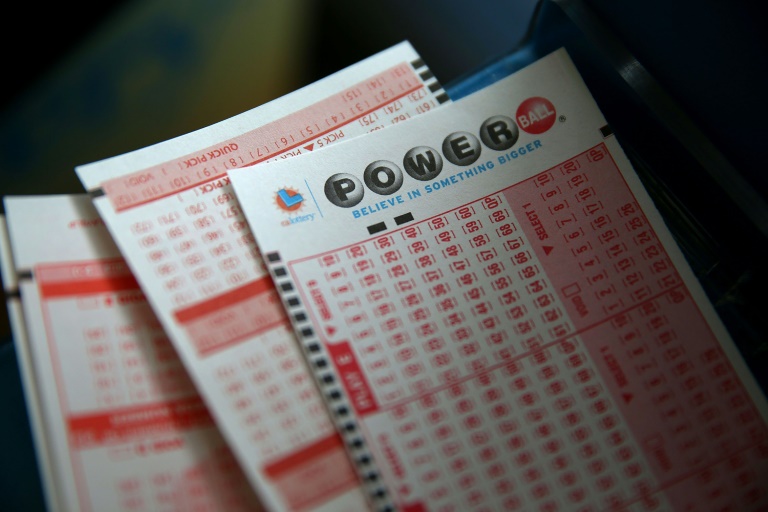
The grand prize for Wednesday night’s Powerball lottery has surged to over $1.2 billion, its organizers estimate, which would make it the fourth-highest jackpot in US lotto history.

With no winning ticket sold over the previous 38 Powerball drawings, the jackpot has been steadily growing for three months.

If a single lucky winner matches all six numbers Wednesday night, they will have the option of accepting the $1.2 billion as an annuity, paid out over three decades, or taking a lump sum cash payment, estimated by Powerball at $596.7 million.

The jackpot, the which is the second-highest in Powerball history and the fourth-highest in the United States overall, would be split evenly if multiple winning tickets are sold.

Taxes will inevitably gobble up a significant chunk of any prize, still leaving an extraordinarily large payout for the gamble of a $2 ticket.

Lottery winners are generally advised to immediately seek assistance from financial advisors, even before claiming the prize money.

The biggest jackpot in the world ever won was $1.586 billion, split among three Powerball ticket holders in January 2016.

In July, one ticketholder won a $1.3 billion jackpot, the third-highest ever, in the other national US lottery, Mega Millions.

The second-biggest prize ever — and the highest won by a single person — was in an October 2018 Mega Millions drawing for $1.5 billion.

The odds of winning the Powerball jackpot are one in 292.2 million — much higher than the one-in-a-million chance of being struck by lightning, according to US government data.

Powerball tickets are sold in 45 states, the US capital of Washington, Puerto Rico and the US Virgin Islands.

After lengthy slump, Boeing outlines path to comeback

After years of stumbles and weak results, Boeing said Wednesday it expects to return at mid-decade to operational health and a more robust financial performance.

The aerospace giant — which has reported losses the last three years — guided investors to 2025-26 as the timeframe when they should expect a strong financial performance resembling those the company posted prior to the 737 MAX and Covid-19 crises.

Investors cheered the outlook, sending shares up nearly six percent at one point as Boeing signaled a more normal level of production and plane deliveries within the foreseeable future.

“We are on the right path to return to the operational and financial strength we expect of ourselves,” said Chief Executive Dave Calhoun at the outset of the company’s first investor day since 2016.

Boeing’s difficult period began in October 2018 with a deadly Lion Air crash of the 737 MAX, the first of two fatal crashes of the plane that together claimed nearly 350 lives and led to a global grounding of more than a year and a half.

The company’s problems mushroomed when the coronavirus pandemic decimated global travel beginning in 2020.

Demand has recovered strongly and the MAX has been cleared for service by most leading regulators.

But Boeing has struggled to fully exploit the improving environment due in part to supply chain problems and heavier scrutiny from US air safety regulators. These issues have forced the company to curtail production and delayed the certification of new aircraft.

The forecast released Wednesday includes a gradual improvement in Boeing plane deliveries and production in 2023 and 2024 and hitting its stride after that, boosting revenues.

The company projected free cash flow, a closely-watched benchmark of financial health, rising in 2023 to $3-$5 billion from the $1.5-$2 billion range in 2022.

It said free cash flow will surge to around $10 billion in 2024 and 2026, much closer to the $13.6 billion Boeing notched in 2018.

Shares rose 3.2 percent to $148.01 in early-afternoon trading.

Stocks slide before expected Fed hike

European and US stock markets slid on Wednesday, with investors on edge before another widely expected jumbo interest rate hike from the US Federal Reserve.

On Wall Street, the Dow was down 0.4 percent in midday trading, while the broader S&P 500 slid 0.8 percent and the tech-heavy Nasdaq slumped 1.3 percent.

London equities shed 0.6 percent on the eve of another expected large rate increase from the Bank of England.

In the eurozone, Frankfurt and Paris fell following weak eurozone manufacturing survey data and a dip in German exports.

“All eyes will be on central banks on both sides of the Atlantic as both the US Federal Reserve and BoE get ready to deliver their rate decisions over the next 24 hours or so,” said AJ Bell investment director Russ Mould.

“While we have a good idea of the quantum of increase both parties will deliver, it will be all about the mood music,” he added.

Global central banks have this year ramped up borrowing costs in an attempt to curb inflation, which has rocketed on sky-high energy costs arising from Russia’s war on Ukraine.

Economists fear that rising rates will spark a global economic downturn because they ramp up loan repayments for individuals and businesses, thereby denting consumer spending and investment.

– US rate clues –

Wednesday’s Fed decision is hotly anticipated by traders hoping for a hint from officials that they are ready to temper their speed of monetary tightening.

“Investors are waiting for clues from the Federal Reserve about the path of rate rises, and in the meantime a slightly more wary mood has settled on the markets,” said Hargreaves Lansdown analyst Susannah Streeter.

“A fourth consecutive 75 basis point hike is not going to surprise anyone, but the key question is whether the Fed will signal that it is ready to pivot to a less hawkish stance in its December and subsequent meetings,” said market analyst Fawad Razaqzada at City Index and FOREX.com.

Analyst Craig Erlam at OANDA said increasing numbers of investors are anticipating Fed policymakers will hint at a slower pace of interest rate hikes from December, given the softness of economic data in some sectors and the lag in impact of monetary policy.

“Investors are so desperate for anything remotely dovish at this point that even a hint could get a strong reaction,” he said.

In Asia, stocks were mixed after Tuesday’s losses on Wall Street, as forecast-beating US data jolted hopes the Fed could soon tone down its hawkish pace of rate hikes.

Hong Kong led gainers — extending the previous day’s surge — as traders remain hopeful China could begin rolling back its economically painful zero-Covid policy, the day after an unverified statement suggesting a shift was taking place.

Suggestions that the Fed could take its foot off the pedal as the world’s top economy shows signs of slowing have helped fuel a rally across risk assets for more than a week.

But some of the wind was taken out of their sails Tuesday after data showed a rise in job openings while other numbers released indicated the manufacturing sector did not perform as badly as expected last month.

The readings suggest the US economy continues to hold up despite recent signs of weakness in the face of decades-high inflation, and Fed policymakers are likely to interpret them as interest rates need to continue to move higher.

– Key figures around 1630 GMT –

New York – Dow: DOWN 0.4 percent at 32,539.42 points

EURO STOXX 50: DOWN 0.8 percent at 3,622.01

London – FTSE 100: DOWN 0.6 percent at 7,144.14 (close)

Frankfurt – DAX: DOWN 0.6 percent at 13,256.74 (close)

Paris – CAC 40: DOWN 0.8 percent at 6,276.74 (close)

Tokyo – Nikkei 225: DOWN 0.1 percent at 27,663.39 (close)

Hong Kong – Hang Seng Index: UP 2.4 percent at 15,827.17 (close)

Shanghai – Composite: UP 1.2 percent at 3,003.37 (close)

Euro/dollar: DOWN at $0.9865 from $0.9883 on Tuesday

Pound/dollar: DOWN at $1.1455 from $1.1486

Dollar/yen: DOWN at 147.09 yen from 148.23 yen

Euro/pound: UP at 86.12 pence from 85.96 pence

Brent North Sea crude: UP 1.8 percent at $96.37 per barrel

West Texas Intermediate: UP 2.1 percent at $90.20 per barrel

burs-rl/rox

Stocks slide before expected Fed hike

European and US stock markets slid on Wednesday, with investors on edge before another widely expected jumbo interest rate hike from the US Federal Reserve.

On Wall Street, the Dow was down 0.4 percent in midday trading, while the broader S&P 500 slid 0.8 percent and the tech-heavy Nasdaq slumped 1.3 percent.

London equities shed 0.6 percent on the eve of another expected large rate increase from the Bank of England.

In the eurozone, Frankfurt and Paris fell following weak eurozone manufacturing survey data and a dip in German exports.

“All eyes will be on central banks on both sides of the Atlantic as both the US Federal Reserve and BoE get ready to deliver their rate decisions over the next 24 hours or so,” said AJ Bell investment director Russ Mould.

“While we have a good idea of the quantum of increase both parties will deliver, it will be all about the mood music,” he added.

Global central banks have this year ramped up borrowing costs in an attempt to curb inflation, which has rocketed on sky-high energy costs arising from Russia’s war on Ukraine.

Economists fear that rising rates will spark a global economic downturn because they ramp up loan repayments for individuals and businesses, thereby denting consumer spending and investment.

– US rate clues –

Wednesday’s Fed decision is hotly anticipated by traders hoping for a hint from officials that they are ready to temper their speed of monetary tightening.

“Investors are waiting for clues from the Federal Reserve about the path of rate rises, and in the meantime a slightly more wary mood has settled on the markets,” said Hargreaves Lansdown analyst Susannah Streeter.

“A fourth consecutive 75 basis point hike is not going to surprise anyone, but the key question is whether the Fed will signal that it is ready to pivot to a less hawkish stance in its December and subsequent meetings,” said market analyst Fawad Razaqzada at City Index and FOREX.com.

Analyst Craig Erlam at OANDA said increasing numbers of investors are anticipating Fed policymakers will hint at a slower pace of interest rate hikes from December, given the softness of economic data in some sectors and the lag in impact of monetary policy.

“Investors are so desperate for anything remotely dovish at this point that even a hint could get a strong reaction,” he said.

In Asia, stocks were mixed after Tuesday’s losses on Wall Street, as forecast-beating US data jolted hopes the Fed could soon tone down its hawkish pace of rate hikes.

Hong Kong led gainers — extending the previous day’s surge — as traders remain hopeful China could begin rolling back its economically painful zero-Covid policy, the day after an unverified statement suggesting a shift was taking place.

Suggestions that the Fed could take its foot off the pedal as the world’s top economy shows signs of slowing have helped fuel a rally across risk assets for more than a week.

But some of the wind was taken out of their sails Tuesday after data showed a rise in job openings while other numbers released indicated the manufacturing sector did not perform as badly as expected last month.

The readings suggest the US economy continues to hold up despite recent signs of weakness in the face of decades-high inflation, and Fed policymakers are likely to interpret them as interest rates need to continue to move higher.

– Key figures around 1630 GMT –

New York – Dow: DOWN 0.4 percent at 32,539.42 points

EURO STOXX 50: DOWN 0.8 percent at 3,622.01

London – FTSE 100: DOWN 0.6 percent at 7,144.14 (close)

Frankfurt – DAX: DOWN 0.6 percent at 13,256.74 (close)

Paris – CAC 40: DOWN 0.8 percent at 6,276.74 (close)

Tokyo – Nikkei 225: DOWN 0.1 percent at 27,663.39 (close)

Hong Kong – Hang Seng Index: UP 2.4 percent at 15,827.17 (close)

Shanghai – Composite: UP 1.2 percent at 3,003.37 (close)

Euro/dollar: DOWN at $0.9865 from $0.9883 on Tuesday

Pound/dollar: DOWN at $1.1455 from $1.1486

Dollar/yen: DOWN at 147.09 yen from 148.23 yen

Euro/pound: UP at 86.12 pence from 85.96 pence

Brent North Sea crude: UP 1.8 percent at $96.37 per barrel

West Texas Intermediate: UP 2.1 percent at $90.20 per barrel

burs-rl/rox

From XXX to cookery? Erotic site OnlyFans seeks to shift debate

A year is a long time in the history of OnlyFans, an online platform where people sell erotic photos and videos to their subscribers.

Last August, the site tried to ban explicit sexual content in advance of a rumoured stock market flotation, only to climb down after an outcry from its army of creators and users.

On Wednesday, the firm’s boss seemed keen to move beyond that discussion and paint a picture of a company in harmony with its users, whatever content they might upload.

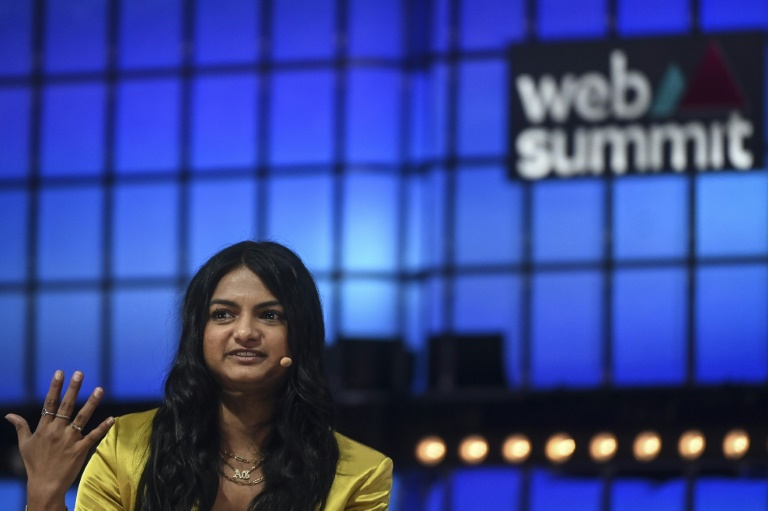
“Everyone on Onlyfans is an adult,” Amrapali Gan told the Web Summit, a tech conference in Lisbon, tacitly accepting that the platform is largely known for explicit content.

“You can have adult content, you can have cooking content, that really depends on what creators are willing to share,” she said.

“It’s really a place where creators are able to monetise content that they would normally be shared for free on other social media platforms.”

The platform takes a 20 percent commission on the fees that users pay out to content creators.

It was founded in Britain in 2016 but really discovered its niche during the Covid pandemic and now boasts 180 million users and some two million creators.

But it still divides opinion, to say the least.

– ‘It’s like Instagram’ –

“What’s interesting about Onlyfans is the freedom,” Kny Vy, a content creator on OnlyFans, told AFP.

“We control what we do, it’s independent, not mainstream porn. We do what we like, what we want to do, what our subscribers want too.”

Kny Vy invested in professional filming equipment and manages to make between 600 and 3,500 euros per month.

But most content creators on the platform make much less.

Another woman who uses OnlyFans but wanted to remain anonymous told AFP it was essentially like Instagram.

“The more content you publish, the more your followers stick to your pages,” she said.

She said Onlyfans offered a “more secure framework” for actresses than the traditional porn industry allowing them “to refuse practices that they do not want to do”.

– Commodification of bodies’ –

But the platform has been dogged by controversy.

One user of the site was given three weeks in jail and fined in Singapore recently, and two models in Myanmar were arrested for uploading content to the platform.

And more broadly, campaigners say the site is a tool of exploitation rather than emancipation.

“It necessarily encourages prostitution,” said Sandrine Goldschmidt from Mouvement du Nid (Nest Movement), a French group campaigning for abolition of the sex trade.

She said OnlyFans and similar sites encourage the idea that “selling photos of your body is a way to make ends meet”.

And even without physical contact, this was “commodification of bodies” akin to “sexual exploitation” said Goldschmidt.

Berengere Wallaert of ACPE, a French charity tackling child prostitution, went further.

“Many young victims of prostitution started by posting their ads on the OnlyFans site,” she said. 

None the wonder that Amrapali Gan was keen to stress the security measures her site has put in place.

“There is not something happening on OnlyFans that we don’t see,” she said.

“Every single piece of content is moderated and reviewed by a human,” she said, arguing that other companies could not necessarily say the same.

Democrats lean in on economy, democracy in midterm home stretch

A week out from the US midterm elections, Democrats stepped up their campaign offensive Wednesday, ringing alarm bells on right-wing threats to democracy and pushing President Joe Biden’s plans to tackle runaway inflation.

Biden — who argues that a changing of the guard in the Democratic-controlled Congress would exacerbate price hikes and threaten entitlements — will talk up infrastructure improvements in an address from the White House.

But he will pivot to democracy in the evening, berating right-wingers denying his 2020 election victory and questioning the integrity of voting — as well as discussing the broader stakes of a Republican victory in the midterms.  

The consensus among election watchers ahead of the voting next Tuesday is that House Democrats will be swept from power in a Republican red tide, while the party’s control of the Senate is hanging by a thread.

Democrats are being hammered on the biggest issues for voters, especially inflation and fears of a looming recession, with the Federal Reserve repeatedly hiking interest rates. 

“Seniors who live on a fixed income are suffering in President Biden’s cruel economy, as the latest inflation report shows Americans continue to fall further behind,” Republicans on the chief congressional tax-writing committee said in a statement.

The group highlighted increasingly isolated seniors having to cut back on social outings and hobbies as “Biden-flation” bites.

– Balancing act –

The nonpartisan Cook Political Report moved 10 House races toward the Republicans on Tuesday in the solidly-Democratic states of New York, New Jersey, Oregon, California and Illinois. 

Biden, whose approval rating has been underwater for more than a year, has been relatively inconspicuous on the campaign trail.

But he enters the fray in the home stretch with stump speeches in Pennsylvania, New Mexico, California and Maryland.

He and Vice President Kamala Harris will zoom in on the economy Wednesday, touting the passage of legislation to boost infrastructure, tackle inflation, curb prescription drug price hikes and lower heating bills.    

“Starting in January, we’re capping the cost of insulin for seniors on Medicare at $35 a month,” Biden tweeted, referring to the US national insurance scheme for over 65s. 

“That’s more money at the end of the month to pay for groceries, to get your car repaired, to put toward holiday shopping for your grandkids.”

It is a tricky balancing act for Biden, who also has to acknowledge his own supporters’ fears over spiraling urban violence, burgeoning anti-Semitism and threats to democracy from election deniers. 

A hammer attack that left House Speaker Nancy Pelosi’s 82-year-old husband needing surgery has renewed focus in the closing stages on violent political rhetoric used by the far right.

More than half of Americans say the price of gas and consumer goods is the economic issue that worries them the most in a new Quinnipiac University national poll.

But 59 percent of Republicans voiced concerns over the potential for significant voter fraud and 54 percent of Democrats worried about widespread voter suppression.

– Infighting –

“You can’t condemn the violence unless you condemn those people who continue to argue the election was not real, that it’s being stolen,” Biden said Saturday.

Democrats have some major legislative victories to tout, but they have been hamstrung since Biden’s election win by internecine fights between progressives and moderates.

A huge row sparked by the party’s leftist flank calling on Biden to negotiate with President Vladimir Putin over Russia’s invasion of Ukraine was the most recent example of Democratic dysfunction.

Before settling on a “kitchen sink” strategy of talking about the cash in voters’ pockets, Democrats spent much of the campaign pulling in different directions on the importance of abortion rights, climate change, reproductive freedoms and the war in Ukraine.

But polling consistently shows that voters are more focused on their pocketbooks, and internal divisions left Democrats without a cohesive response to Republican attacks that they have mishandled the economy.

If all of the races in Cook’s Republican column go as predicted, the party would need to win just six of the 35 “toss up” races to take the majority. Democrats would need 29. 

For the first time since July, FiveThirtyEight’s Senate forecast makes Republicans more likely than not to take the upper chamber. 

Close Bitnami banner
Bitnami