US Business

Fear, burnout plague harassed US poll workers

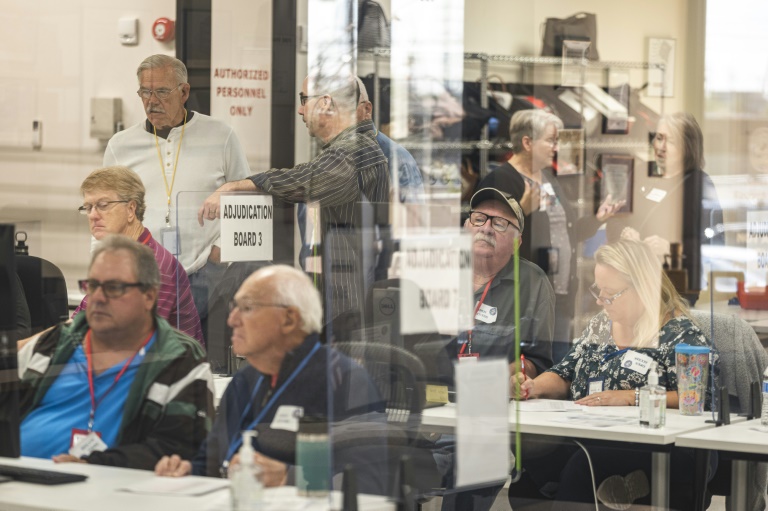
Many are burning out, others fear for their safety: conspiracy theories born in the 2020 election are fueling harassment of poll workers across the United States — complicating their work and stoking fears of violence in the November 8 midterms.

Egged on by baseless claims of fraud from former president Donald Trump and others, many voters are taking matters into their own hands, with officials warning of real consequences for the democratic process.

“The only problems we have had, honestly, have been dealing with misinformation,” said Richard Keech, deputy registrar in Loudoun County, Virginia, outside Washington.

Voters streamed into the county Office of Elections when AFP visited on October 28, casting ballots early in a swing state where Republicans hope to pick up seats in Congress.

One asked if the voting machines were connected to the internet, echoing a huge, false narrative that spread online in 2020. Voting machines are not typically online — and thus are not vulnerable to hacking while polls are open.

However benign, questions like that can slow election workers down. Others are less innocent, veering into harassment.

Since August, Loudoun County has fielded more than 200 freedom of information requests about voting equipment and procedures, the highest number ever received — sapping precious resources. 

A local group of “digital warriors” circulated a video falsely claiming county officials were storing photos of ballots.

“Within 24 hours, we had voters showing up at the front counter insisting to see the picture of their ballot to show that their vote was counted properly,” said Keech, who has worked for the elections office for over a decade.

In Arizona, ballot watchers inspired by a popular conspiracy film about the 2020 election have staked out and recorded activity at drop boxes.

In other battleground states such as Florida and Michigan, the Republican National Committee has recruited poll workers from groups that deny President Joe Biden’s 2020 victory was legitimate.

And in Pennsylvania, poll officials say they are concerned for their safety.

“There’s definitely a gravity weighing on us just kind of knowing what’s happening in other counties,” said Dori Sawyer, voter services director in Montgomery County, near Philadelphia. “Kind of, you know, wondering: When is it our turn?”

– ‘Threats and harassment’ –

Despite reports about vulnerabilities in electronic voting systems, Jen Easterly, director of the Cybersecurity and Infrastructure Security Agency, said last month that the agency is “not aware of any specific or credible threats to compromise or disrupt election infrastructure.”

That said, “the current election threat environment is more complex than it has ever been,” she told reporters, pointing to potential harassment targeting officials and “insider threats” from poll workers.

After Trump’s presidential election loss, local officials became the target of unfounded claims about malfeasance. Some had to go into hiding due to death threats, as they recounted in congressional testimony.

The US Department of Justice has pledged to crack down on such threats going into the midterms, but the intimidation has already taken a toll.

“It’s kind of exacerbated the tensions around elections in a way that I’ve never seen before — and I’ve been doing this for almost 20 years,” said Tammy Patrick, senior advisor to the elections program at the nonprofit Democracy Fund and a former Arizona election official.

“We have seen states where a quarter of their election officials, a third of their election officials have resigned.”

According to Keech, about a third of the poll workers in Virginia’s Loudoun County are new this year. Other US states have not replaced those who resigned after 2020, and the job for the top election official in Fulton County, Georgia — which includes Atlanta — remains empty.

Experts warn this attrition spells trouble, as mistakes from inexperienced poll workers could be misconstrued as wrongdoing. And in some places, staffing gaps are being filled by members of election denial groups.

“Whenever you bring on a lot of temporary workers in the run-up to an election cycle, by the very nature you increase the possibility of that insider threat,” said David Levine, a fellow at the Alliance For Securing Democracy, a national security group, and a former Idaho election official.

– ‘Safeguarding’ –

Some voting processes have been changed as a result of harassment.

“We’ve made some additional physical security enhancements to our building or locations,” Keech said, including new locks at the Office of Elections. 

He said Loudoun County also “further strengthened” chain-of-custody procedures for ballots.

In Montgomery County, Sawyer said she has had security briefings with local law enforcement and FBI agents. Her staff will also be present at drop boxes to explain how they are secured.

When voters call with “really intense concerns” about the election process, Sawyer said she reminds them that “we’re real people.”

“I care about democracy,” she said. “We get to choose our leaders. We kind of get to write our own destiny. I think that is worth safeguarding.”
Republican denial of election results a 'path to chaos': Biden

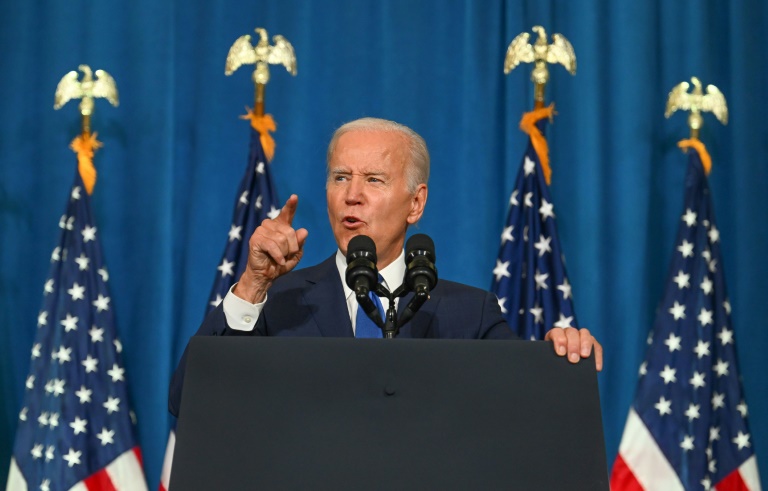
President Joe Biden warned US voters Wednesday that the future of democracy was at stake in next week’s midterms, with the steadfast refusal of some Republican candidates to accept election results opening a “path to chaos in America.”

With conservatives hammering his administration over the state of the economy, the 79-year-old Democrat took aim squarely at Republicans who have cast their lot with former president Donald Trump in denying Biden’s 2020 election victory.

“There are candidates running for every level of office in America… who won’t commit to accepting the results of the elections they’re in,” Biden said in a televised address to the nation.

Their goal, he said, was to follow Trump’s lead and try to “subvert the electoral system itself” — noting there are more than 300 Republican election deniers on the ballot in races across the country this year.

“They’ve emboldened violence and intimidation of voters and election officials,” he charged– less than two years after a mob of Trump supporters ransacked the US Capitol to try to overturn the 2020 result.

“That is the path to chaos in America,” he said. “It’s unprecedented. It’s unlawful. And, it is un-American.”

Biden’s dire warning of threats to democracy comes six days ahead of Tuesday’s vote, in which Republicans are heavily favored to capture the House of Representatives and possibly the Senate.

In the wake of a violent attack on the husband of the Democratic House speaker, Nancy Pelosi, which dramatically heightened concerns about heated political rhetoric, Biden urged Americans to unite in defense of democracy. 

“We must with an overwhelming voice stand against political violence and voter intimidation, period,” he said.

“We have to face this problem,” he said. “We can’t pretend it’s just going to solve itself.”

But nearly 22 months after the Capitol insurrection, polling shows that American voters are more concerned with the economy. 

More than half say the price of gas and consumer goods is the economic issue that worries them the most in a new Quinnipiac University national poll.

Democrats are being attacked on inflation and fears of a looming recession, with the Federal Reserve repeatedly hiking interest rates — and Biden acknowledged Wednesday that “inflation is still hurting” at a White House event with union workers and employers.

His admission came as the US central bank delivered another steep rate hike, raising the benchmark borrowing rate by 0.75 percentage points — the fourth straight increase of that size and the sixth hike this year.

– Balancing act –

Biden, whose approval rating has been underwater for more than a year, has been relatively inconspicuous on the campaign trail.

But he entered the fray in the home stretch with Wednesday’s address, ahead of stump speeches in Pennsylvania, New Mexico, California and Maryland.

Democrats have some major legislative victories to tout, but they have been hamstrung since Biden’s election win by internecine fights between progressives and moderates.

A huge row sparked by the party’s leftist flank calling on Biden to negotiate with President Vladimir Putin over Russia’s invasion of Ukraine was the most recent example of Democratic dysfunction.

Before settling on a “kitchen sink” strategy of talking about the cash in voters’ pockets, Democrats spent much of the campaign pulling in different directions on the importance of abortion rights, climate change, reproductive freedoms and the war in Ukraine.

But polling consistently shows voters more focused on their pocketbooks, and internal divisions left Democrats without a cohesive response to Republican attacks that they have mishandled the economy.

The nonpartisan Cook Political Report moved 10 House races toward the Republicans on Tuesday in the solidly Democratic states of New York, New Jersey, Oregon, California and Illinois.

If all of the races in Cook’s Republican column go as predicted, the party would need to win just six of the 35 “toss up” races to take the majority. Democrats would need 29. 

Twitter's new path unclear as Musk says 'weeks' for banned accounts' return

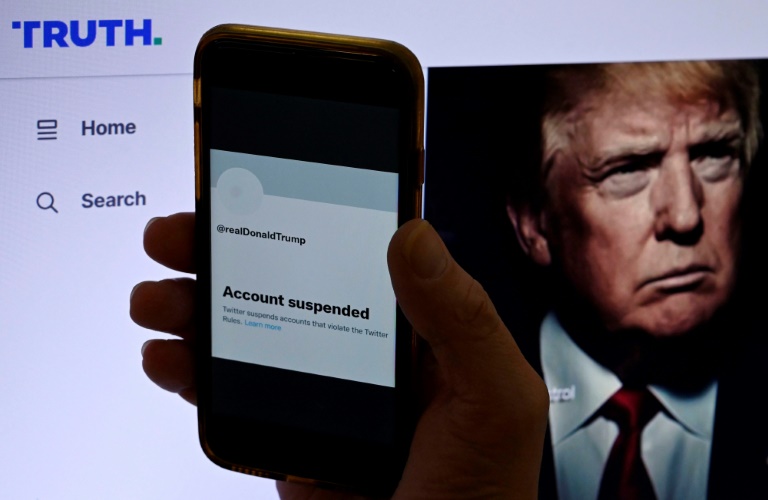
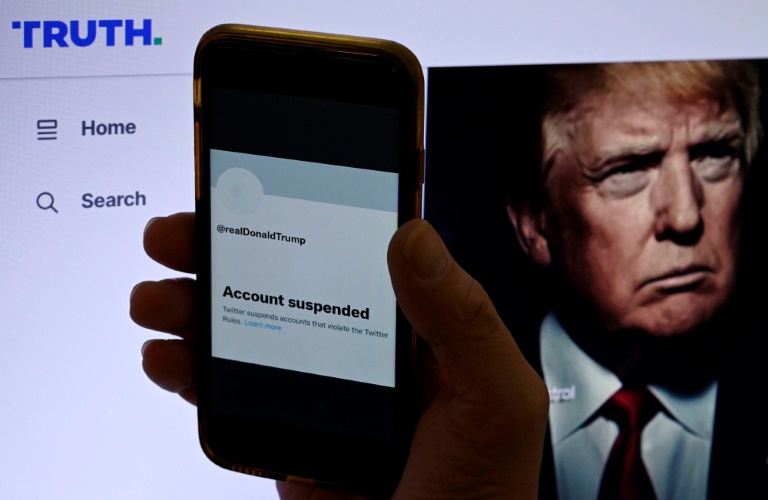
The road ahead for Twitter remained as murky as ever after new owner Elon Musk said Wednesday that it could take weeks to reinstate banned accounts — such as that of former US president Donald Trump.

Twitter users have been watching closely to see whether Musk will reinstate Trump, banned for inciting last year’s attack on the Capitol by a mob seeking to overturn the results of the 2020 election, and other deplatformed users.

The potential reinstatement of such accounts banned for violating the site’s content moderation rules has been seen as a bellwether of where Musk, a self-described “free speech absolutist,” wants to take the site he describes as a global town square.

But on Wednesday the South African billionaire said the wait will have to continue a little while longer. 

“Twitter will not allow anyone who was de-platformed for violating Twitter rules back on platform until we have a clear process for doing so, which will take at least a few more weeks,” he tweeted.

That would delay a return of Trump until after crucial November 8 midterm elections in the United States, which will determine control of Congress. 

Trump, once a prolific tweeter, retains a powerful hold on his Republican Party, and has reopened his 2020 playbook by questioning the integrity of the upcoming election.

Since Musk took Twitter private last week, Trump has suggested he would be happier sticking with his own Truth Social messaging platform.

But the former president’s network has financial issues and many political strategists believe he would find it hard to resist the influence offered by Twitter, where he was once one of the site’s biggest global draws.

The financial fate of Truth Social could be determined at a crucial meeting expected on Thursday that could see one of the site’s key backers dissolved.

The announcement comes only days after the world’s wealthiest man took sole control of the social media giant in a contentious $44 billion deal, vowing to dial back content moderation.

But the huge sum paid for Twitter has heaped pressure on Musk to keep advertisers on board and keep a lid on offensive content.

Musk in his tweet on Wednesday also said he had talked to civil society leaders “about how Twitter will continue to combat hate & harassment & enforce its election integrity policies.”

This followed his reassurance over the weekend that the site would not become a “free-for-all hellscape,” and announced the formation of a content moderation council.

However on Sunday, Musk himself tweeted an anti-LGBT conspiracy theory about what happened the night US Speaker Nancy Pelosi’s husband was attacked, then hours later deleted the post.

– ‘Most accurate’ –

In a sign that the approach to content moderation was a key concern, Musk praised the site for its handling of a White House tweet that users said exaggerated a claim that Biden had increased retirement benefits.

The White House deleted the tweet after Twitter users flagged the post as lacking context.

“Our goal is to make Twitter the most accurate source of information on Earth, without regard to political affiliation,” Musk said.

US conservatives complain of censorship on the major social networks and Musk staunchly defends looser moderation of content on Twitter in the name of free speech.

Twitter’s finances also remain a mystery going forward, with Musk on the hook to make huge loan repayments after his buyout.

Musk on Tuesday said the site will charge $8 per month to verify users’ accounts, arguing the plan would solve the platform’s issues with bots and trolls while creating a new revenue stream for the company.

Some users warned that they would simply leave the site if they were made to pay.

Twitter's new path unclear as Musk says 'weeks' for banned accounts' return

The road ahead for Twitter remained as murky as ever after new owner Elon Musk said Wednesday that it could take weeks to reinstate banned accounts — such as that of former US president Donald Trump.

Twitter users have been watching closely to see whether Musk will reinstate Trump, banned for inciting last year’s attack on the Capitol by a mob seeking to overturn the results of the 2020 election, and other deplatformed users.

The potential reinstatement of such accounts banned for violating the site’s content moderation rules has been seen as a bellwether of where Musk, a self-described “free speech absolutist,” wants to take the site he describes as a global town square.

But on Wednesday the South African billionaire said the wait will have to continue a little while longer. 

“Twitter will not allow anyone who was de-platformed for violating Twitter rules back on platform until we have a clear process for doing so, which will take at least a few more weeks,” he tweeted.

That would delay a return of Trump until after crucial November 8 midterm elections in the United States, which will determine control of Congress. 

Trump, once a prolific tweeter, retains a powerful hold on his Republican Party, and has reopened his 2020 playbook by questioning the integrity of the upcoming election.

Since Musk took Twitter private last week, Trump has suggested he would be happier sticking with his own Truth Social messaging platform.

But the former president’s network has financial issues and many political strategists believe he would find it hard to resist the influence offered by Twitter, where he was once one of the site’s biggest global draws.

The financial fate of Truth Social could be determined at a crucial meeting expected on Thursday that could see one of the site’s key backers dissolved.

The announcement comes only days after the world’s wealthiest man took sole control of the social media giant in a contentious $44 billion deal, vowing to dial back content moderation.

But the huge sum paid for Twitter has heaped pressure on Musk to keep advertisers on board and keep a lid on offensive content.

Musk in his tweet on Wednesday also said he had talked to civil society leaders “about how Twitter will continue to combat hate & harassment & enforce its election integrity policies.”

This followed his reassurance over the weekend that the site would not become a “free-for-all hellscape,” and announced the formation of a content moderation council.

However on Sunday, Musk himself tweeted an anti-LGBT conspiracy theory about what happened the night US Speaker Nancy Pelosi’s husband was attacked, then hours later deleted the post.

– ‘Most accurate’ –

In a sign that the approach to content moderation was a key concern, Musk praised the site for its handling of a White House tweet that users said exaggerated a claim that Biden had increased retirement benefits.

The White House deleted the tweet after Twitter users flagged the post as lacking context.

“Our goal is to make Twitter the most accurate source of information on Earth, without regard to political affiliation,” Musk said.

US conservatives complain of censorship on the major social networks and Musk staunchly defends looser moderation of content on Twitter in the name of free speech.

Twitter’s finances also remain a mystery going forward, with Musk on the hook to make huge loan repayments after his buyout.

Musk on Tuesday said the site will charge $8 per month to verify users’ accounts, arguing the plan would solve the platform’s issues with bots and trolls while creating a new revenue stream for the company.

Some users warned that they would simply leave the site if they were made to pay.

After lengthy slump, Boeing outlines path to comeback

After years of stumbles and weak results, Boeing said Wednesday it expects to return at mid-decade to operational health and a more robust financial performance.

The aerospace giant — which has reported losses the last three years — guided investors to 2025-26 as the timeframe when they should expect a strong financial performance resembling those the company posted prior to the 737 MAX and Covid-19 crises.

Investors cheered the outlook, sending shares up more than seven percent at one point as Boeing signaled a more normal level of production and plane deliveries within the foreseeable future.

“We are on the right path to return to the operational and financial strength we expect of ourselves,” said Chief Executive Dave Calhoun at the outset of the company’s first investor day since 2016.

Boeing’s difficult period began in October 2018 with a deadly Lion Air crash of the 737 MAX, the first of two fatal crashes of the plane that together claimed nearly 350 lives and led to a global grounding of more than a year and a half.

The company’s problems mushroomed when the coronavirus pandemic decimated global travel beginning in 2020.

Demand has recovered strongly and the MAX has been cleared for service by most leading regulators.

But Boeing has struggled to fully exploit the improving environment due in part to supply chain problems and heavier scrutiny from US air safety regulators. These issues have forced the company to curtail production and delayed the certification of new aircraft.

The forecast released Wednesday includes a gradual improvement in Boeing plane deliveries and production in 2023 and 2024 and hitting its stride after that, boosting revenues.

Stan Deal, head of Boeing’s commercial division, told analysts he expects to liquidate most of a backlog of undelivered planes by 2024, with a few spilling into 2025. This includes 787 Dreamliner planes, in addition to MAX aircraft.

Deal also updated the timeframe on the certification of the 737 MAX 10, its latest version of the plane, saying the aircraft should be cleared for service by late 2023 or early 2024.

The company projected free cash flow, a closely-watched benchmark of financial health, rising in 2023 to $3-$5 billion from the $1.5-$2 billion range in 2022.

It said free cash flow will surge to around $10 billion in 2024 and 2026, much closer to the $13.6 billion Boeing notched in 2018.

Shares finished 2.8 percent higher at $147.41.

Dollar gains, US stocks fall as Fed hikes rates again

Wall Street stocks fell and the dollar gained Wednesday after the Federal Reserve announced another large interest rate hike and indicated it was in no rush to moderate its stance.

The US central bank raised the benchmark lending rate by 0.75 percentage point, the fourth straight increase of that size and the sixth hike this year.

The move was expected, but markets were fixated on signals on whether the Fed might undertake smaller hikes in December and at future meetings. Equities had rallied in October in part due to hopes for a Fed pivot.

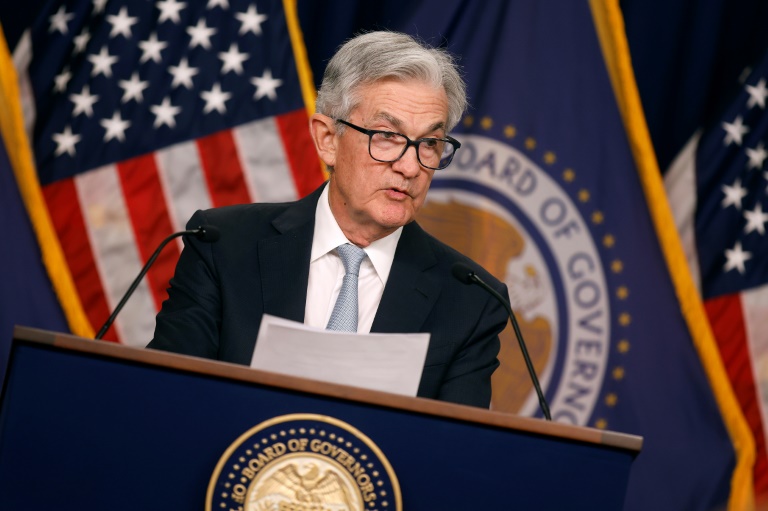
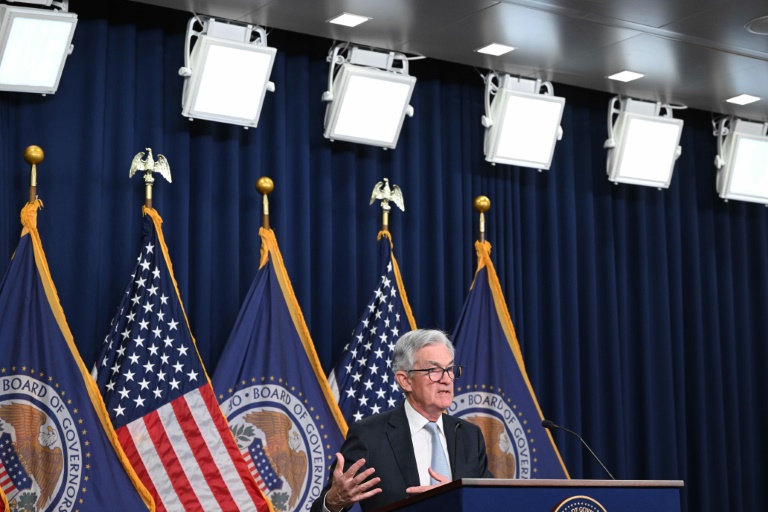
But after rising on the Fed’s policy statement, equities tumbled into the red during the press conference when Fed Chair Jerome Powell said it was “very premature” to discuss pausing rate increases and brushing back criticism that the central bank had “overtightened.”

FHN Financial’s Chris Low noted that Powell indicated that in order to tame inflation, interest rates would need to settle at a higher level than previously thought.  

“The biggest takeaway was not the expected strong hint at a slower pace,” Low said. “It was the realization rates would have to go higher.”

Stocks gave up their gains and turned negative before finishing the day firmly lower.

The S&P 500 dropped 2.5 percent, while the dollar also reversed course, finishing higher against the euro and pound.

The Fed’s aggressive rate hikes this year so far have not had a noticeable impact on prices, but they have stoked fears of an impending recession even as the job market remains strong.

While the US housing market has cooled sharply amid higher interest rates, key inflation measures show prices continue to rise and the labor market remains tight, with job openings rising and private hiring accelerating in October.

Elsewhere, London equities shed 0.6 percent on the eve of another expected large rate increase from the Bank of England.

In the eurozone, Frankfurt and Paris fell following weak eurozone manufacturing survey data and a dip in German exports.

In Asia, stocks were mixed. Hong Kong led gainers — extending the previous day’s surge — as traders remain hopeful China could begin rolling back its economically painful zero-Covid policy, the day after an unverified statement suggesting a shift was taking place.

Among individual companies, Boeing gained 2.8 percent as executives outlined a plan to return to financial strength in the 2025-26 timeframe after a lengthy slump due to the 737 MAX and Covid-19 crises.

– Key figures around 2100 GMT –

New York – Dow: DOWN 1.6 percent at 32,147.76 (close)

New York – S&P 500: DOWN 2.5 percent at 3,759.69 (close)

New York – Nasdaq: DOWN 3.4 percent at 10,524.80 (close)

London – FTSE 100: DOWN 0.6 percent at 7,144.14 (close)

Frankfurt – DAX: DOWN 0.6 percent at 13,256.74 (close)

Paris – CAC 40: DOWN 0.8 percent at 6,276.74 (close)

EURO STOXX 50: DOWN 0.8 percent at 3,622.01 (close)

Tokyo – Nikkei 225: DOWN 0.1 percent at 27,663.39 (close)

Hong Kong – Hang Seng Index: UP 2.4 percent at 15,827.17 (close)

Shanghai – Composite: UP 1.2 percent at 3,003.37 (close)

Euro/dollar: DOWN at $0.9816 from $0.9883 on Tuesday

Pound/dollar: DOWN at $1.1390 from $1.1486

Dollar/yen: DOWN at 147.90 yen from 148.23 yen

Euro/pound: UP at 86.17 pence from 85.96 pence

Brent North Sea crude: UP 1.6 percent at $96.15 per barrel

West Texas Intermediate: UP 1.8 percent at $90.00 per barrel

burs-jmb/hs

Russia rejoins deal to ship vital Ukraine grain exports

Russia on Wednesday rejoined a deal to allow Ukrainian grain exports through the Black Sea, but President Vladimir Putin warned Moscow could again pull out of the agreement.

The revival of an arrangement aimed at easing fears of global food insecurity came as Washington said it was “increasingly concerned” Russia could use nuclear weapons in its campaign in Ukraine.

Moscow had said on Saturday that it was temporarily pulling out of the grain deal, accusing Ukraine of using a safe shipping corridor established under the agreement to launch a drone assault on its Black Sea fleet.

Russia’s defence ministry said it had now received sufficient guarantees from Kyiv that it would not use the maritime corridor to carry out attacks.

UN Secretary-General Antonio Guterres welcomed Russia’s decision to resume participation in the agreement, which was brokered by the United Nations and Turkey in July and allows for joint inspections of ships.

President Volodymyr Zelensky said on Twitter that he had thanked Turkish President Recep Tayyip Erdogan for his role in preserving the grain deal. The Ukrainian leader later hailed its resumption as “a significant diplomatic result for our country and the whole world”.

But Putin said Russia could leave the deal again if Ukraine violates its guarantees, though Moscow would not interfere with any grain deliveries even if it did.

Moscow had warned the route was dangerous for shipments without its participation in the agreement but some deliveries from Ukraine still went ahead on Monday and Tuesday.

– ‘Real guarantees’ –

A Turkish security source said the corridor was open again from 0900 GMT although no departures from Ukraine were planned Wednesday.

Russia’s Deputy Foreign Minister Andrei Rudenko said Moscow has yet to decide if it would remain part of the deal after November 18.

The agreement comes up for renewal on November 19, but the extension is a separate issue and that decision will be made “taking into account all the accompanying factors,” state news agency RIA Novosti reported him as saying.

US State Department spokesman Ned Price called Wednesday for the deal to be renewed, saying this “will ultimately inject even more predictability and stability in this marketplace and, most importantly, apply downward pressure to the prices” of global food.

The deal, overseen by the Joint Coordination Centre in Istanbul, has allowed more than 9.7 million metric tonnes of grain and other foodstuffs to leave Ukrainian ports.

This has brought much-needed relief to a global food crisis triggered by the conflict between Russia and Ukraine, both major global grain exporters.

World grain prices, which had soared earlier this week, began to ease on Wednesday after Russia announced it was returning to the deal, despite doubts over its future.

Putin had demanded “real guarantees”, while Zelensky on Tuesday had urged “reliable and long-term protection” of the corridor. 

The Russian defence ministry said it obtained written guarantees from Kyiv.

It said Ukraine guaranteed “the non-use of the humanitarian corridor and Ukrainian ports determined in the interests of the export of agricultural products for conducting military operations against the Russian Federation”.

– ‘Turbulent situation’ –

The White House said repeated discussion by Russian officials of the potential use of nuclear weapons in Ukraine has left US officials worried that a risk could become a reality.

“We have grown increasingly concerned about the potential as these months have gone on,” said White House national security spokesman John Kirby.

Kirby also said North Korea was sending a significant amount of artillery ammunition to Russia under cover of shipments to countries in the Middle East or North Africa.

He did not confirm a New York Times report that high-level Russian military officials recently discussed when and how they might use tactical nuclear weapons on the battlefield.

The report, which cited unnamed US officials, said Putin did not take part in the discussions and there was no indication the Russian military had decided to deploy the weapons.

Russia’s foreign ministry said the world’s “top priority” should be to avoid a clash of nuclear powers.

“We are firmly convinced that in the current difficult and turbulent situation — a consequence of irresponsible and shameless actions aimed at undermining our national security — the top priority is to prevent any military clash of nuclear powers,” a foreign ministry statement said.

Fed delivers another steep rate hike with more to come

The Federal Reserve delivered another steep interest rate increase on Wednesday, as expected, with its move to cool red-hot inflation taking on more weight amid the political maelstrom of key US midterm elections.

With high inflation squeezing American families of all political stripes, President Joe Biden faces a battle to avoid losing control of both chambers of Congress.

The Fed’s aggressive rate hikes this year so far have not had a noticeable impact on prices, but they have stoked fears of an impending recession even as the job market remains strong.

The US central bank raised the benchmark lending rate by 0.75 percentage point — the fourth straight increase of that size and the sixth hike this year — in its all-out battle to tame inflation not seen since the 1980s.

The latest three-quarter percentage point increase takes the benchmark lending rate to 3.75-4.0 percent, the highest since January 2008.

By making it more costly to borrow, policymakers aim to put the brakes on spending and bring demand more into balance with supply that has been battered by global supply issues and the ongoing Russian war in Ukraine.

While the US housing market has cooled sharply amid higher interest rates, key inflation measures show prices continue to rise and the labor market remains tight, with job openings rising and private hiring accelerating in October.

The policy-setting Federal Open Market Committee (FOMC) said more rate increases will be needed to tamp down rising prices but it will take into consideration the impact on the economy when deciding on the pace of future moves — opening the door to the possibility it will implement smaller steps in coming months.

But Fed Chair Jerome Powell cautioned that policymakers are not yet ready to halt their efforts.

“It will take time, however, for the full effects of monetary restraint to be realized, especially on inflation,” Powell told reporters.

“It’s very premature in my view to be thinking about or talking about pausing our rate hike. We have a ways to go.”

But he said the committee could begin discussing the possibility of slowing the aggressive pace of rate increases at the December meeting, but ultimately might have to increase the level higher than expected to achieve the goal of bringing inflation down to two percent.

– Slower growth –

As central bankers walk a tightrope fighting inflation while avoiding tipping the economy into a recession, politicians are ramping up pressure on Fed officials.

Powell acknowledged that bringing inflation down is “likely to require below-trend growth,” and that the window to achieve a soft landing — slowing inflation while avoiding a downturn — has narrowed.

Biden is facing growing voter frustration over high inflation and there are signals in polling that a “red wave” could sweep the opposition Republicans to power in the House and Senate.

Republicans put the blame for inflation and slower growth squarely on Biden, while the president’s Democrats worry the Fed moves will lead to higher unemployment.

But Powell has argued that allowing high inflation to become entrenched would inflict even more pain on American families and workers.

In his press conference Wednesday, Powell dismissed criticism that the central bank had moved too quickly, and said the outlook for the world’s largest economy is highly uncertain.

“No one knows whether there’s going to be a recession or not, and if so, how bad that recession would be,” he said.

White House spokesperson Karine Jean-Pierre said the Fed moves are “part of our transition” to “stable and steady growth with lower inflation.”

The US stock market endured another volatile day, jumping after the Fed announcement, when it looked like a pause was coming, and then sinking as Powell spoke.

Ian Shepherdson of Pantheon Macroeconomics said that while the statement offered hope of a policy pivot, “Powell isn’t budging yet.”

He said the FOMC offered “a clear signal that the wave of 75bp hikes is over,” however, the Fed chief “was deeply reluctant to promise that shift in December.”

Fed delivers another steep rate hike with more to come

The Federal Reserve delivered another steep interest rate increase on Wednesday, as expected, with its move to cool red-hot inflation taking on more weight amid the political maelstrom of key US midterm elections.

With high inflation squeezing American families of all political stripes, President Joe Biden faces a battle to avoid losing control of both chambers of Congress.

The Fed’s aggressive rate hikes this year so far have not had a noticeable impact on prices, but they have stoked fears of an impending recession even as the job market remains strong.

The US central bank raised the benchmark lending rate by 0.75 percentage point — the fourth straight increase of that size and the sixth hike this year — in its all-out battle to tame inflation not seen since the 1980s.

The latest three-quarter percentage point increase takes the benchmark lending rate to 3.75-4.0 percent, the highest since January 2008.

By making it more costly to borrow, policymakers aim to put the brakes on spending and bring demand more into balance with supply that has been battered by global supply issues and the ongoing Russian war in Ukraine.

While the US housing market has cooled sharply amid higher interest rates, key inflation measures show prices continue to rise and the labor market remains tight, with job openings rising and private hiring accelerating in October.

The policy-setting Federal Open Market Committee (FOMC) said more rate increases will be needed to tamp down rising prices but it will take into consideration the impact on the economy when deciding on the pace of future moves — opening the door to the possibility it will implement smaller steps in coming months.

But Fed Chair Jerome Powell cautioned that policymakers are not yet ready to halt their efforts.

“It will take time, however, for the full effects of monetary restraint to be realized, especially on inflation,” Powell told reporters.

“It’s very premature in my view to be thinking about or talking about pausing our rate hike. We have a ways to go.”

But he said the committee could begin discussing the possibility of slowing the aggressive pace of rate increases at the December meeting, but ultimately might have to increase the level higher than expected to achieve the goal of bringing inflation down to two percent.

– Slower growth –

As central bankers walk a tightrope fighting inflation while avoiding tipping the economy into a recession, politicians are ramping up pressure on Fed officials.

Powell acknowledged that bringing inflation down is “likely to require below-trend growth,” and that the window to achieve a soft landing — slowing inflation while avoiding a downturn — has narrowed.

Biden is facing growing voter frustration over high inflation and there are signals in polling that a “red wave” could sweep the opposition Republicans to power in the House and Senate.

Republicans put the blame for inflation and slower growth squarely on Biden, while the president’s Democrats worry the Fed moves will lead to higher unemployment.

But Powell has argued that allowing high inflation to become entrenched would inflict even more pain on American families and workers.

In his press conference Wednesday, Powell dismissed criticism that the central bank had moved too quickly, and said the outlook for the world’s largest economy is highly uncertain.

“No one knows whether there’s going to be a recession or not, and if so, how bad that recession would be,” he said.

White House spokesperson Karine Jean-Pierre said the Fed moves are “part of our transition” to “stable and steady growth with lower inflation.”

The US stock market endured another volatile day, jumping after the Fed announcement, when it looked like a pause was coming, and then sinking as Powell spoke.

Ian Shepherdson of Pantheon Macroeconomics said that while the statement offered hope of a policy pivot, “Powell isn’t budging yet.”

He said the FOMC offered “a clear signal that the wave of 75bp hikes is over,” however, the Fed chief “was deeply reluctant to promise that shift in December.”

Germany primes energy price cap as bills soar

Germany on Wednesday signed off on an energy price cap, the cornerstone of a massive 200-billion-euro ($198-billion) package to shield households and businesses from rising costs.

“The source for these consequences and great challenges is (Russian President Vladimir) Putin’s war,” German Chancellor Olaf Scholz said at a press conference. 

The support package was Germany’s response “so that citizens do not have to fear their bills”, said Scholz, who has ploughed ahead with plans despite criticism from European partners.

Germany’s businesses have also been crying out for help at a time when Europe’s largest economy is drifting towards recession and inflation has shot past 10 percent.

The plan will see the price for a percentage of household and businesses’ typical consumption capped at lower-than-market prices.

For gas, 25,000 larger businesses, as well as almost 2,000 hospitals and schools will benefit from the cap as soon as January 1 next year, according to the plan agreed between the federal government and regional leaders. 

Households and smaller businesses meanwhile could have to wait until March 1 at the latest for the price brake to come into force.

Policymakers will “seek” to apply the relief retroactively from February 2023, according to the document.

A similar price cap will also apply to electricity from the start of the new year in January, with the measures set to last through to the end of April 2024.

– December help –

While the cap for smaller consumers will only come into force later, the government will pick up their heating bills in December.

For households, the price of a kilowatt-hour of gas will be capped at 12 cents for up to 80 percent of their typical usage.

The same unit of gas currently costs billpayers 18.6 cents, according to the price comparison site Check 24.

All in all, the support measures could save a single-person household with a typical gas consumption of 5,000 kWh around 264 euros over a year, the site estimates.

The partial price cap was designed to maintain “incentives to save energy” over the winter while supplies are short, according to the government paper, despite concerns that lowering prices would sustain demand.

The plans left a “winter gap” for consumers until at least February, North Rhine-Westphalia state premier Hendrik Wuest said at the same news conference as Scholz.

Wuest, who had pushed for the government to bring the price cap in earlier for households, said the chancellor had agreed to “examine” alternative solutions put forward by regional leaders.

– European discontent –

Germany, long reliant on Moscow for energy imports, has been hit hard by the sharp rise in prices since the invasion of Ukraine and the cut to supplies.

Despite the Germany economy eking out 0.3-percent growth between July and September, most analysts still expect the country to slip into recession as the high cost of energy drags on production.

Businesses that have been pushing for more support from the government welcomed the plans.

The price cap measures should “create a bit of security and at the same time ease worries”, the BDI industrial lobby said Monday ahead of the final agreement.

Berlin’s massive go-it-alone plan to shield its economy has ruffled feathers among European partners who would have preferred a common solution.

They feared that more highly indebted EU countries could not afford the outlay made by Germany, while the plan could affect their own energy costs.

Germany’s energy price shield will be partly financed through new borrowing through an economic stabilisation fund created during the coronavirus pandemic. 

Berlin also intends to fund the cap by skimming off part of the bumper profits made by energy companies as prices have risen.

Close Bitnami banner
Bitnami