US Business

'Law and order returned' Hong Kong's US-sanctioned leader tells bankers

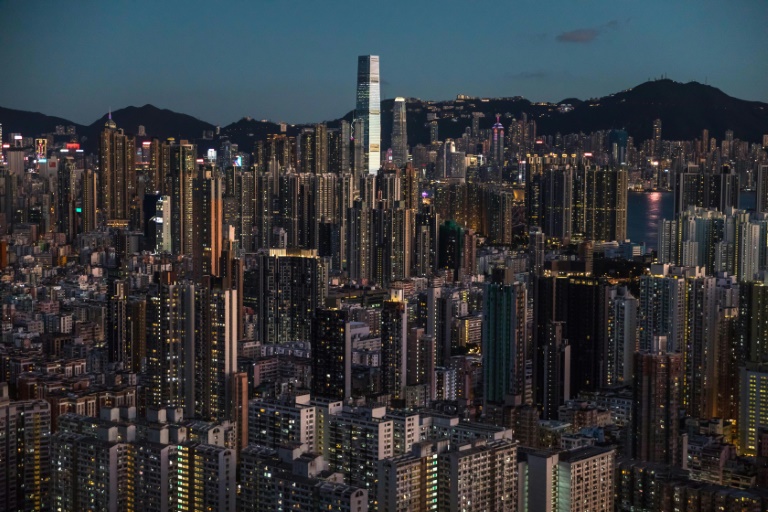
Hong Kong’s US-sanctioned leader said political stability and business confidence have been restored following the crushing of democracy protests, as he opened a summit on Wednesday attended by global bankers including leading Wall Street executives.

The Asian business hub is hosting a week of high-profile events after years of political unrest and pandemic travel curbs tarnished the city’s business-friendly reputation, sparked an exodus of talent and battered its economy.

The marquee event at the Four Seasons hotel was heralded by city leader John Lee as proof that the previously shuttered metropolis is back in business.

“We were, we are and we will remain one of the world’s leading financial centres. And you can take that to the bank,” Lee told delegates.

A former security chief who took office this year, Lee is among the Chinese officials sanctioned by Washington for cracking down on rights in Hong Kong after huge democracy protests. 

Most of the city’s political opposition are either behind bars or have fled overseas since those protests.

Blacklisted individuals are unable to hold accounts with the same banking giants attending the summit.

“Social disturbance is clearly in the past and has given way to stability, to growing business and community confidence in Hong Kong’s future,” Lee said in his summit speech. 

“Law and order has returned. The worst is behind us.”

– US criticism –

Among those speaking at the summit were Goldman Sachs head David Solomon, Morgan Stanley CEO James Gorman, Blackrock president Rob Kapito and JP Morgan Chase counterpart Daniel Pinto.

But their presence is not without controversy.

Last week, the leaders of the bipartisan US Congressional-Executive Commission on China called on Wall Street executives not to attend, accusing them of “whitewashing human rights violations” and giving political cover to Lee.

The row illustrates the tightrope faced by multinationals in Hong Kong, which is both a lucrative business gateway for China and a flashpoint in increasingly tense relations between Beijing and Western powers.

In his speech Lee said the city has an “irreplaceable connection” to mainland China for global businesses “as the centre of economic gravity in the world shifts eastward”.

The summit comes at a time of uncertainty over China’s economy under President Xi Jinping.

Xi, who secured a norm-breaking third term last month, has overseen regulatory crackdowns clipping the wings of some major Chinese companies and is still sticking to a strict zero-Covid strategy.

– ‘Don’t read international media’ –

Lee’s speech was followed by recorded interviews with three top officials involved in regulation, including Fang Xinghai, vice chairman of the China Securities Regulatory Commission, who criticised international press coverage of China.

“Don’t read too much of international media,” Fang said, sparking laughter from the audience.

Those comments received backing from both UBS chairman Colm Kelleher and Liu Jin, president of Bank of China.

“Like Vice Chairman Fang said we’re not reading the American press, we all buy the story,” Kelleher told delegates.

He added that while investors were closely watching Beijing for signs of reopening, international bankers were “very pro-China”.

Much of the discussion focused on the wider global economy where spiralling inflation rates and geopolitical uncertainty have hit sentiment.

“My gut is the central banks will, in aggregate, tame inflation,” Morgan Stanley chief Gorman told delegates in one of the more positive assessments.

Former governor of the Bank of England Mark Carney painted a more stark portrait.

“We’re headed very likely to a global recession,” he said, citing — among other things — China’s strict zero-Covid controls and the fallout in Europe of Russia’s invasion of Ukraine. 

The Hong Kong summit is being held in a bubble that keeps delegates away from residents. 

While Hong Kong scrapped mandatory quarantine in September — a key demand of businesses — it maintains layers of pandemic restrictions long since abandoned almost everywhere else.

Overseas arrivals must undergo frequent testing and are unable to go to bars and restaurants for their first three days in the city.

Restrictions on various gatherings remain and masks are compulsory, including outdoors.

Hong Kong’s leaders are keen to resuscitate the city’s fortunes. The city is headed for a full recession with gross domestic product plunging 4.5 percent in the third quarter of this year. 

Its stock exchange is among the world’s worst performers, down more than 50 percent this year to levels last seen in 2009.

China is the last major economy committed to a zero-Covid strategy, persisting with snap lockdowns, mass testing and lengthy quarantines that have stamped out outbreaks but created growing economic pain.
In Niagara Falls, bitcoin mining brings a new roar to town

In the US border town of Niagara Falls, residents accustomed to the soothing roar of the famous waterfalls recently discovered a much less pleasant sound: the “haunting hum” of bitcoin mining farms.

“I get four hours of sleep, maybe, because of that constant noise,” said Elizabeth Lundy, an 80-year-old retired hairdresser. “I can hear the noise even through the storm windows.” 

On a sunny October morning, a mechanical whirring could be heard clearly on Lundy’s front porch. The noise turned to a deafening din as one walked two blocks toward Buffalo Avenue where the US bitcoin miners operate.

Bitcoin mining farms have multiplied in the United States since China halted this activity in 2021. The United States is now emerging as a global leader in the industry.

Attracted by the cheap hydroelectric power available in Niagara Falls, Blockfusion took up residence at a former coal factory there in 2019, followed by US Bitcoin in 2020, which operates from a former sodium plant.

US Bitcoin installed hundreds of noisy fans outside, needed to cool the thousands of computer graphics cards that heat up as they solve the complex equations required to earn them cryptocurrency.

– ‘A 747 jet’ –

“It sounds like a 747 jet,” said Frank Peller, a 70-year-old resident who lives in a brownstone more than a mile from this crypto mining operation.

“It’s the loudest in the morning, at night and if there’s high humidity and a breeze,” he added.

He once could sit in his backyard and hear the roar of Niagara Falls more than two miles away. But now, “you can’t hear it at all” and you can’t avoid “the roar of bitcoin mining every day.” 

Bryan Maacks, who lives closer to Buffalo Avenue, described a “haunting, vibrating hum” — a vexing throb that has run through his house day and night since last winter. 

“It’s very mentally daunting. It’s like having a toothache for 24 hours a day every day,” Maacks, 65, said.

He said he wears headphones all the time and uses a fan to block out the noise to get to sleep. 

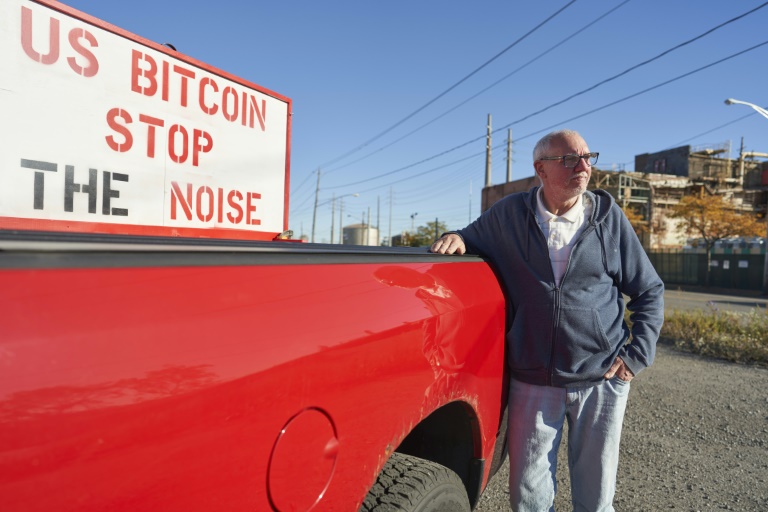
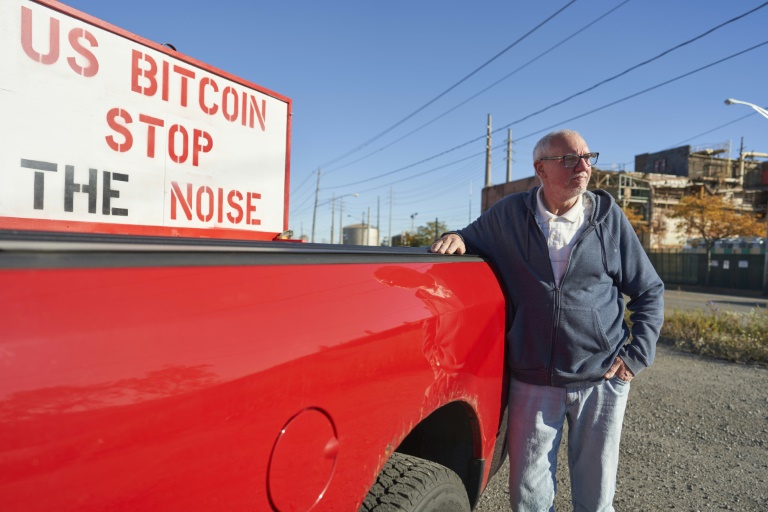
Maacks launched a petition and made a “US Bitcoin Stop the Noise” sign on the back of his red pickup truck, which he parked for several weeks in front of the company.

“The noise pollution of this industry is like nothing else that has been there,” said Niagara Falls Mayor Robert Restaino in his office decorated with paintings of the famous waterfalls.

That’s quite a statement in a city that embraced heavy industry for decades.

Faced with a flood of complaints, mainly regarding US Bitcoin, the mayor decreed a moratorium on any new mining activity in December 2021, then in early September set strict noise limits of 40 to 50 decibels near residential areas. 

– ‘Noise barrier’ –

US Bitcoin said it’s taking steps to address the problem.

“Immediately upon these concerns being flagged, we erected a plastic barrier,” the company said in a statement to AFP.

“We also conducted acoustic studies and had plans drawn for a larger noise abatement wall” that was prevented from being built by the moratorium, the company said.

In the nearby town of North Tonawanda, the Canadian mining company Digihost, is also facing the ire of local residents, and has undertaken the construction of a soundproofing wall more than six meters (20 feet) high, at an estimated cost of several hundred thousand dollars, Mayor Austin Tylec said.

In Niagara Falls, City Hall ordered the closure of the two bitcoin farms in early October until they comply with new local statutes.

While both companies say they are cooperating with the city, only Blockfusion had shut down its processors by the end of October and reduced the number of fans running, with US Bitcoin’s still running at full capacity, an AFP reporter found.

“If they continue to refuse to comply with our order to stop, then we’ll have to be in court,” Restaino said.

Such a legal battle already pits the bitcoin farm Red Dog Technologies against local authorities in Tennessee. Other complaints about noise pollution in the vicinity of computer centers have arisen from North Carolina to Pennsylvania.

“I’m going to be protesting till the hum is gone, basically, till I get the roar of the falls back because that’s what I used to hear,” Maacks said.   

In Niagara Falls, bitcoin mining brings a new roar to town

In the US border town of Niagara Falls, residents accustomed to the soothing roar of the famous waterfalls recently discovered a much less pleasant sound: the “haunting hum” of bitcoin mining farms.

“I get four hours of sleep, maybe, because of that constant noise,” said Elizabeth Lundy, an 80-year-old retired hairdresser. “I can hear the noise even through the storm windows.” 

On a sunny October morning, a mechanical whirring could be heard clearly on Lundy’s front porch. The noise turned to a deafening din as one walked two blocks toward Buffalo Avenue where the US bitcoin miners operate.

Bitcoin mining farms have multiplied in the United States since China halted this activity in 2021. The United States is now emerging as a global leader in the industry.

Attracted by the cheap hydroelectric power available in Niagara Falls, Blockfusion took up residence at a former coal factory there in 2019, followed by US Bitcoin in 2020, which operates from a former sodium plant.

US Bitcoin installed hundreds of noisy fans outside, needed to cool the thousands of computer graphics cards that heat up as they solve the complex equations required to earn them cryptocurrency.

– ‘A 747 jet’ –

“It sounds like a 747 jet,” said Frank Peller, a 70-year-old resident who lives in a brownstone more than a mile from this crypto mining operation.

“It’s the loudest in the morning, at night and if there’s high humidity and a breeze,” he added.

He once could sit in his backyard and hear the roar of Niagara Falls more than two miles away. But now, “you can’t hear it at all” and you can’t avoid “the roar of bitcoin mining every day.” 

Bryan Maacks, who lives closer to Buffalo Avenue, described a “haunting, vibrating hum” — a vexing throb that has run through his house day and night since last winter. 

“It’s very mentally daunting. It’s like having a toothache for 24 hours a day every day,” Maacks, 65, said.

He said he wears headphones all the time and uses a fan to block out the noise to get to sleep. 

Maacks launched a petition and made a “US Bitcoin Stop the Noise” sign on the back of his red pickup truck, which he parked for several weeks in front of the company.

“The noise pollution of this industry is like nothing else that has been there,” said Niagara Falls Mayor Robert Restaino in his office decorated with paintings of the famous waterfalls.

That’s quite a statement in a city that embraced heavy industry for decades.

Faced with a flood of complaints, mainly regarding US Bitcoin, the mayor decreed a moratorium on any new mining activity in December 2021, then in early September set strict noise limits of 40 to 50 decibels near residential areas. 

– ‘Noise barrier’ –

US Bitcoin said it’s taking steps to address the problem.

“Immediately upon these concerns being flagged, we erected a plastic barrier,” the company said in a statement to AFP.

“We also conducted acoustic studies and had plans drawn for a larger noise abatement wall” that was prevented from being built by the moratorium, the company said.

In the nearby town of North Tonawanda, the Canadian mining company Digihost, is also facing the ire of local residents, and has undertaken the construction of a soundproofing wall more than six meters (20 feet) high, at an estimated cost of several hundred thousand dollars, Mayor Austin Tylec said.

In Niagara Falls, City Hall ordered the closure of the two bitcoin farms in early October until they comply with new local statutes.

While both companies say they are cooperating with the city, only Blockfusion had shut down its processors by the end of October and reduced the number of fans running, with US Bitcoin’s still running at full capacity, an AFP reporter found.

“If they continue to refuse to comply with our order to stop, then we’ll have to be in court,” Restaino said.

Such a legal battle already pits the bitcoin farm Red Dog Technologies against local authorities in Tennessee. Other complaints about noise pollution in the vicinity of computer centers have arisen from North Carolina to Pennsylvania.

“I’m going to be protesting till the hum is gone, basically, till I get the roar of the falls back because that’s what I used to hear,” Maacks said.   

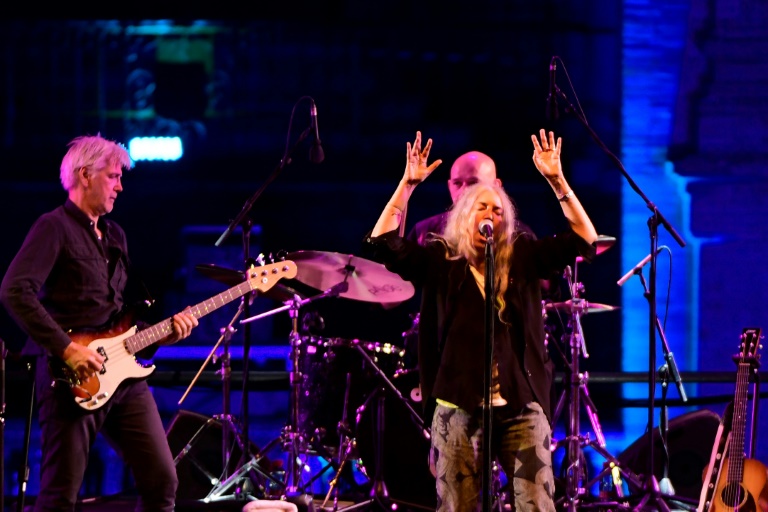
Punk poet Patti Smith says writing is her 'essential' art form

Her Godmother of Punk Rock icon status made her a household name, but for Patti Smith, it’s writing where she finds her true artistic voice.

Along with her musical performance and literary pursuits, Smith is a painter and photographer, but if she had to choose one form? 

“I’d pick writing.”

“Writing is my most essential form of expression,” the artist told AFP in Chicago, where she recently received the prestigious Ruth Lilly Poetry Prize.

Smith, who was inducted into the Rock and Roll Hall of Fame in 2007, is perhaps best known for her seminal punk album “Horses.”

But poetry was an earlier love, and “Horses” begins with lines from a poem that she penned.

“Performing poetry, reading poetry was very strong in New York in the late 1960s and early 1970s,” she said. 

But “I had so much energy and was really a child of rock and roll, so standing there reading a poem was never satisfying to me,” Smith continued. 

“I quickly merged my poems with a few chords as something to propel me to improvise more poetry, and it sort of evolved into a rock and roll band.”

While Smith’s album and her band went on to critical acclaim, writing always was at its backbone, she said, pointing to her song “Redondo Beach” which was initially a poem.

“Throughout all my albums and even the prose that I write, poetry is still a thread,” she said.

“Horses” is widely considered one of the best albums of all time, but for Smith it was her 2010 book “Just Kids” — a memoir she promised her best friend and muse Robert Mapplethorpe that she would write hours before he died — that became her life’s greatest success.

“I’d never written a book of nonfiction, but he asked me if I would write our story,” she recalled.

Mapplethorpe, a photographer, died at age 42. He and Smith shared a deep friendship, romance and lifelong creative bond.

“My greatest success in my life has been the book that he asked me to write and it almost makes me cry. Robert got his wish and I kept my vow and wrote the book as best I could.”

“Just Kids” won The National Book Award and introduced Smith to an entirely new generation of fans, while outselling all of her music albums along the way.

She said young people used to tell her “Horses” changed their lives — but “it was usurped by ‘Kids.'” 

“I think it’s really opened up many doors for me,” she continued. “Other books were examined and people read them and now when we have our concerts, it’s a wonderful thing to step on stage and see a sea of people under 30, even under 25.”

“To see all these young people who are interested in your work and giving of their energy, I’m so grateful for that.”

– People power –

Smith, who turns 76 this December, said she has no plans to slow her output.

She’s set to release “A Book of Days” later this month, a volume based on her Instagram account’s musings.

She’s also considering a serialized book entitled “The Melting,” based on her Substack account posts.

Smith has maintained her prolific output for years but she says “things don’t necessarily come easy.”

“I’ve had to plug away my whole life.”

She considers herself an optimist but she’s “deeply concerned and heartbroken” about the state of the world right now, citing environmental crises along with the rise of nationalism globally and the Russian invasion of Ukraine.

“There’s so many things happening simultaneously right now, it’s overwhelming,” she said. “But I have kids, so I’m always seeking in my mind ways to make the world better for them.”

Persevering means writing daily and trying her best to help others.

“We just have to keep doing our work and find a way to keep ourselves healthy and just help one another. It seems so elemental but it’s also required,” she said.

Smith said she’s working on writing a new song inspired by the women protesting in Iran, and still believes, like one of her famous songs, that people have the power.

“I absolutely believe it,” she said. “It’s just whether we choose to use it or not. That’s what the women of Iran are doing.”

“That’s the only tool we have.”

China imposes Covid lockdown on area around iPhone factory

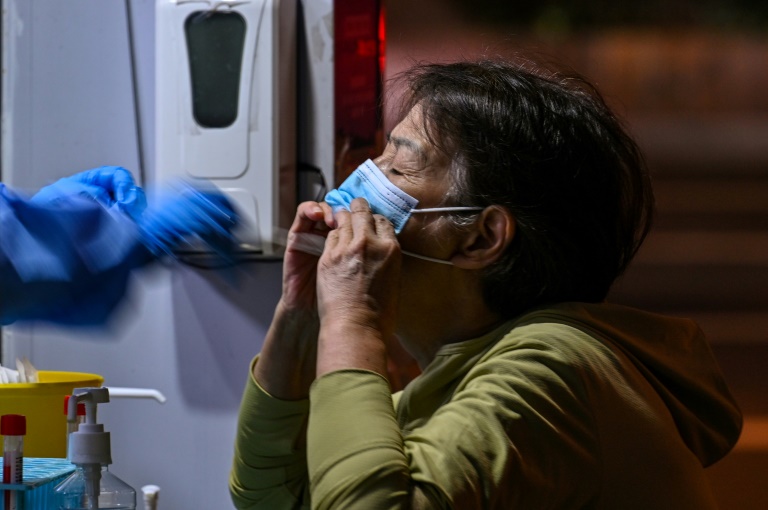
Chinese authorities on Wednesday locked down the area surrounding the world’s largest iPhone factory after workers fled the facility to avoid a virus outbreak and the resulting restrictions.

All people except Covid-prevention volunteers and essential workers “must not leave their residences except to receive Covid tests and emergency medical treatment”, officials from central China’s Zhengzhou Airport Economy Zone said Wednesday. 

The move comes after images emerged last week on Chinese social media showing people breaking out of the facility, which is run by Taiwanese tech giant Foxconn and employs hundreds of thousands of workers.

Employees were complaining online of poor conditions and having to flee the factory on foot to avoid Covid transport curbs.

China is the last major economy committed to a zero-Covid strategy, persisting with snap lockdowns, mass testing and lengthy quarantines in a bid to stamp out emerging outbreaks.

But new variants have tested local officials’ ability to snuff out flare-ups faster than they can spread, causing much of the country to live under an ever-changing mosaic of Covid curbs.

The district in Zhengzhou city said Wednesday that all businesses would be required to work from home, with only “key enterprises” in the district allowed to continue operating, without specifying which businesses fell under this category.

Only medical vehicles and those delivering essentials are allowed on the streets.

The district’s more than 600,000 residents will have to take nucleic acid tests every day, the local government said, warning that it would “resolutely crack down on all kinds of violations.”

– ‘Closed loop’-

Foxconn said over the weekend that it was testing employees daily and keeping them in a “closed loop” as well as offering transport to those who wanted to leave, after the videos on social media showed employees walking down motorways with their suitcases.

Local governments in the area surrounding Zhengzhou city have asked Foxconn workers to register with authorities if they return home and to complete several days of quarantine upon arrival.

The company added Tuesday that it would quadruple bonuses for employees willing to remain at the factory during the outbreak.

China reported more than 2,000 fresh domestic infections on Wednesday for the third day in a row.

Henan province, where Zhengzhou is located, officially reported 359 Covid-19 infections on Wednesday, a jump from Tuesday’s 104.

The southern Chinese manufacturing hub of Guangzhou also announced partial lockdowns in several districts this week in response to rising case numbers.

Top Chinese regulator urges investors to avoid foreign news

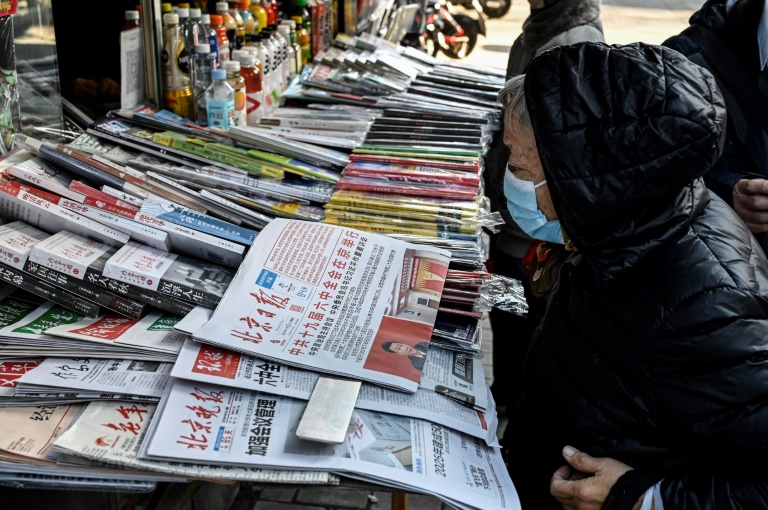
Investors should avoid reading international press coverage of China’s economy, a top Chinese securities regulator told a summit of global bankers on Wednesday in comments that received endorsement from two senior executives.

The advice was made by Fang Xinghai, vice chairman of China Securities Regulatory Commission, in a pre-recorded interview that was broadcast to a summit being held in Hong Kong.

“I deal with international investors quite a lot in my daily work and I am afraid some of them have read too much the international media reports about events in China,” he said.

“A lot of media reports, let me put it this way, they really don’t understand China very well and they have a short term focus… Don’t read too much of international media,” he added.

Hong Kong is hosting a week of high-profile events after years of political unrest and pandemic travel curbs tarnished the city’s business-friendly reputation, sparked an exodus of talent and battered its economy.

Senior executives from banks such as Goldman Sachs, Morgan Stanley, Blackrock, JP Morgan Chase, UBS, HSBC and Standard Chartered are among those attending.

In a later panel discussion UBS chairman Colm Kelleher backed Fang’s comments.

“Like Vice Chairman Fang said we’re not reading the American press, we all buy the story,” he said.

Kelleher added that international bankers were “very pro-China” and watching closely as to whether the world’s second largest economy would re-open.

Liu Jin, president of Bank of China, also referenced Fang’s remarks in comments about China’s deeply indebted property market. 

“Don’t worry too much. As Mr Fang said, don’t read too much negative reports,” he told delegates. 

China is the last major economy committed to a zero-Covid strategy, persisting with snap lockdowns, mass testing and lengthy quarantines.

The measures have stamped out outbreaks but created growing economic pain for local and international businesses.

Huge defaults have hit China’s property sector in the last 18 months, much of it revelations that were first reported on by international media.

Domestic media is state-controlled in China and widespread censorship is used to suppress negative stories or critical coverage.

Foreign media face intense restrictions but have more leeway and are a conduit of information in a country where official economic data can be sometimes opaque.

In his comments Fang told investors to “find out what’s really going on in China, and what’s the real intention of our government, by themselves”.

However China has been largely cut off from the rest of the world for the last 2.5 years by pandemic travel controls.

President Xi Jinping, who secured a norm-breaking third term last month, has yet to signal any timeframe for whether and when China might move away from its zero-Covid controls.

Anonymous graves mark the end of the line for migrants at US border

Sheriff Urbino Martinez has collected the remains of so many dead migrants who have come across the US southern border that he is known as “The Undertaker.”

“It’s deadly out there,” says Martinez, who patrols the small Texan county of Brooks, a few dozen kilometers (miles) from Mexico.

“We started keeping track of the dead bodies from 2009,” he told AFP in his office, pointing to 20 thick volumes, where his department has information on 913 cases. 

But, he says, that’s only a fraction of the true human toll of the border crossings.

“I would multiply that times five, maybe even 10 for those bodies that will never be recovered.”

The United States logged a record 2.3 million migrant encounters at its southern border in the year to September — a key issue for some voters as they head to the polls for next month’s midterm elections.

Many were sent back south; an unknown number made it into the country without being detected. 

At least 700 people are known to have died in the attempt.

To avoid the checkpoint in Falfurrias, the main town in Brooks County, migrants are directed by human traffickers into vast farmsteads where dense vegetation, treacherous sands and soaring temperatures can prove fatal.

Sometimes, there isn’t much of a person left to find.

Martinez’s folders are labelled “human remains” — a chillingly accurate description of the photographs that sometimes show partial torsos or just a few bones.

“If it’s real hot, your body will decompose completely within 72 hours, and then the animals are going to tear whatever’s left.

“The feral hogs, the rats, anything that’s out there that can tear the limb off, they’re going to do it. We found human bones inside a rat’s den before.”

Numbers are down in Brooks county this year — Martinez has logged 80 bodies so far in 2022, all of which were processed through his mobile mortuary.

“It is less than last year but it is 80 too many,” he says.

– No identification –

The death that Martinez finds in Brooks is not unique to his county.

The same pattern of tragedy is repeated all along the Texan border: desperate people dying as they flee the crushing poverty, violence and terror of their dysfunctional homelands.

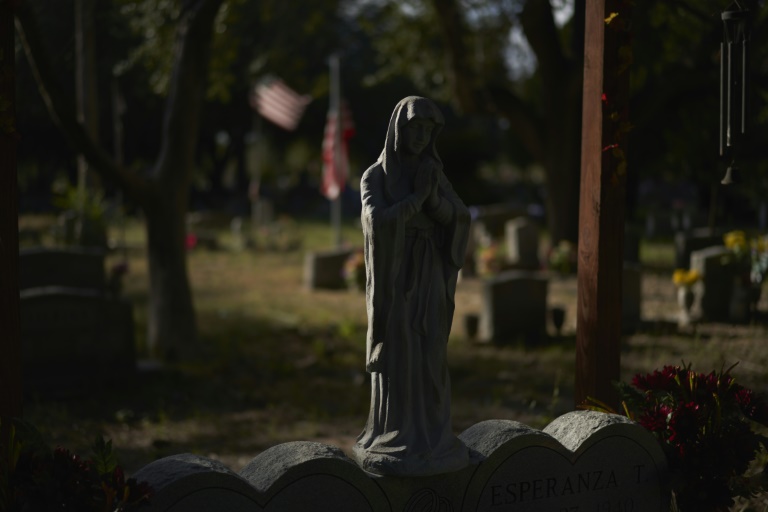
In the border town of Eagle Pass, the municipal cemetery is strewn with rudimentary crosses that mark the graves of dozens of unknown dead; the men and women whose American dreams ended in anonymous graves.

Around 40 plaques, labelled John or Jane Doe, sit next to a small US flag.

Across town, the migrants are still coming, gambling that the possibility of death en route is better than the alternative. 

“It was an ordeal,” said Alejandra, a 35-year-old Colombian who crossed the rushing Rio Grande to reach Texas, even though she cannot swim. “But it was scarier to go back.” 

Cowering under a tree from the hot sun, Alejandra said she needed asylum because of the danger she faced from organized crime in Colombia. 

“If we go back, they’ll kill us,” she said, looking at her three teenage children.

– Remains –

Corinne Stern, the chief coroner for southern Texas, says most of the migrants whose remains she examines died from heatstroke or dehydration.

“Up until about five years ago, (the border) took up about 30 percent of my time… Now it’s taking up about 75 percent,” says the doctor, who wears a necklace inscribed with the Hebrew word for “Life.”  

In the reception area of the morgue, a painting reads: “Let the dead teach the living.”  

Inside, a blackboard lists dozens of Jane and John Does. 

The morgue is impeccably clean, but the smell of bodily decay is pervasive, permeating the masks visitors are required to wear. 

The vast majority of border cases she receives have no identification, Stern says, as she examines the skeletal remains of a still-clothed female body.

Attached to the corpse is a small olive green backpack. 

When the doctor picks it up, two lollipops fall out, their colorful wrappings a contrast to the earthy ochre that swathes the clothes and the bones.

DNA samples are extracted in an attempt to identify her, but for now she will be labeled as yet another Jane Doe, one of 250 Stern has dealt with this year.

– ‘Where is my wife?’ –

For Eduardo Canales, the open-endedness of anonymous death is too much to bear.

In 2013, Canales founded the South Texas Human Rights Center, installing water stations around ranches to prevent migrants from drinking the water in the cattle troughs, which can be toxic for humans.

Canales, 74, supplies blue plastic barrels that have location coordinates and a phone number to call for help.

But when he began receiving calls from family members looking for loved ones who had gone missing after crossing the border, he decided to expand his work.  

“For me the most important thing is for families to be able to find closure,” he says. 

“Families don’t stop looking, they never give up. They keep asking where is my wife, my brother, my daughter?” 

Many were buried anonymously in the Falfurrias cemetery, but a partnership with Texas State University made it possible to exhume dozens of bodies and identify them by their fingerprints. 

The effort has reduced the number of anonymous graves in Brooks: of the 119 people found in 2021, 107 were identified. 

“But many more die and disappear without us ever finding them,” Canales says, pointing to vast dusty plains. 

“Here the only constant is death.” 

Will Brazil's Bolsonaro, now defeated, go to jail?

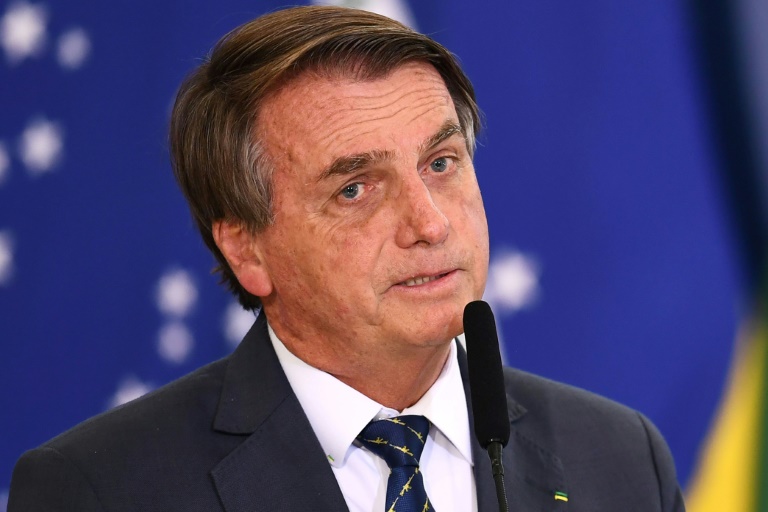
Brazilian President Jair Bolsonaro once took a stab at predicting the outcome of his 2022 re-election bid: “Prison, death or victory.”

Victory it was not. Death came in the form of an end to his presidency, which he grudgingly accepted Tuesday — two days after the election was declared for his opponent.

And prison?

“You can be sure that option… does not exist,” the far-right leader told members of his crucial evangelical support base in August 2021.

Analysts, however, believe a future behind bars may be a very real prospect for the bellicose Bolsonaro, even if it may take years.

Almost from the start of his controversial mandate in 2019, Bolsonaro racked up accusations and investigations for everything from spreading disinformation to crimes against humanity.

He survived more than 150 impeachment bids — a record.

Most of these were over his flawed management of the coronavirus pandemic, which claimed the lives of more than 685,000 people in Brazil — the world’s second-highest toll after the United States.

While in office, Bolsonaro was shielded from legal consequences by two political allies: Attorney General Augusto Aras and Arthur Lira, the speaker of Brazil’s lower house of Congress.

But that will change on January 1, 2023 when his arch-rival, leftist ex-president Luiz Inacio Lula da Silva, takes over the reins once more, and Bolsonaro loses his presidential immunity.

– ‘Crimes against humanity’ –

Legal problems can come from several fronts.

A Brazilian Senate committee has recommended charges over Bolsonaro’s management of the Covid-19 pandemic, including “crimes against humanity.”

The Covid-denying Bolsonaro, who punted unproven cures and said vaccines could turn people into “alligators,” is also being investigated for allegedly failing to act on an embezzlement tip-off regarding coronavirus vaccine purchases.

Another probe is pending into claims that Bolsonaro leaked a classified police investigation into corruption accusations against his sons, and interfered in another.

The outgoing president was further implicated in a probe into his senator son Flavio for an alleged scheme to collect part of political staffers’ salaries in a practice known as “rachadinha.”

That case was scrapped on the grounds that Bolsonaro junior enjoyed parliamentary immunity.

Bolsonaro has consistently denied any wrongdoing, claiming he is the victim of political persecution.

“They are looking for a way to get at me,” he said after the online news site Uol published claims 30 days before the election, that his family members had bought 51 properties. 

The properties were paid partly or fully in cash for a total of some $4.7 million between 1990 and 2022, with questions raised over the provenance of the money.

There were also claims of public money being abused on his watch to curry favor with evangelical leaders.

“When his presidential term ends, Jair Bolsonaro will be answerable to justice and the public prosecutor’s office will be able to open new investigations,” legal expert Rogerio Dultra dos Santos of Fluminense Federal University told AFP.

Bolsonaro was elected on an anti-corruption platform at a time when the country was reeling from a massive graft scandal involving state oil company Petrobras, Lula’s government and his Workers’ Party (PT).

Lula’s own convictions in relation to that scandal were later annulled.

– ‘Several years’ –

Lula has vowed to grant access to possibly compromising documents, both official and personal, that Bolsonaro had sealed for 100 years before leaving office.

This “could have legal consequences,” said Dos Santos.

However, any attempt to bring Bolsonaro to justice could “take several years” considering the likelihood of multiple appeals along the way, the analyst added.

Ironically, Bolsonaro could benefit from a Supreme Court ruling that allowed Lula’s release from prison in November 2019 pending an appeal against his corruption conviction.

Temporarily changing gear from his previous insistence that Lula would never win the election, Bolsonaro recently said he would “stay out of politics” if he loses.

But Mayra Goulart, a political scientist at the Federal University of Rio de Janeiro, said she would be “very surprised” if this were true.

Lawmakers and various other public servants in Brazil enjoy immunity from prosecution while in office.

Whatever his legal fate, Goulart said Bolsonaro would likely follow a similar path as his political idol, Donald Trump, “who maintains a considerable influence on American politics despite his 2020 defeat.”

'Law and order returned' Hong Kong's US-sanctioned leader tells bankers

Hong Kong’s US-sanctioned leader said political stability and business confidence has been restored following the crushing of democracy protests as he opened a summit on Wednesday attended by global bankers including leading Wall Street executives.

The Asian business hub is hosting a week of high-profile events after years of political unrest and pandemic travel curbs tarnished the city’s business-friendly reputation, sparked an exodus of talent and battered its economy.

The marquee event at the Four Seasons hotel was heralded by city leader John Lee as proof that the previously shuttered metropolis is back in business.

“We were, we are and we will remain one of the world’s leading financial centres. And you can take that to the bank,” Lee told delegates.

A former security chief who took office this year, Lee is among the Chinese officials sanctioned by Washington for cracking down on rights in Hong Kong after huge democracy protests. Blacklisted individuals are unable to hold accounts with the same banking giants attending the summit.

Most of the city’s political opposition are either behind bars or have fled overseas since those protests.

“Social disturbance is clearly in the past and has given way to stability, to growing business and community confidence in Hong Kong’s future,” Lee said in his summit speech. 

“Law and order has returned. The worst is behind us.”

– US criticism –

Among those speaking at the summit were Goldman Sachs head David Solomon, Morgan Stanley CEO James Gorman, Blackrock president Rob Kapito and JP Morgan Chase counterpart Daniel Pinto.

But their presence is not without controversy.

Last week, the leaders of the bipartisan US Congressional-Executive Commission on China called on Wall Street executives not to attend, accusing them of “whitewashing human rights violations” and giving political cover to Lee.

The row illustrates the tightrope faced by multinationals in Hong Kong, which is both a lucrative business gateway for China and a flashpoint in increasingly tense relations between Beijing and Western powers.

In his speech Lee said the city has an “irreplaceable connection” to mainland China for global businesses “as the centre of economic gravity in the world shifts eastward”.

The summit comes at a time of uncertainty over China’s economy under President Xi Jinping.

Xi, who secured a norm-breaking third term last month, has overseen regulatory crackdowns clipping the wings of some major Chinese companies and is still sticking to a strict zero-Covid strategy.

– ‘Don’t read international media’ –

Hong Kong’s gross domestic product plunged 4.5 percent in the third quarter of this year while its stock exchange is among the world’s worst performers, down more than 50 percent this year to levels last seen in 2009.

Lee’s speech was followed by recorded interviews with three top officials involved in regulation, including Fang Xinghai, vice chairman of the China Securities Regulatory Commission, who criticised international press coverage of China.

“Don’t read too much of international media,” Fang said, sparking laughter from the audience.

During panel discussions senior Wall Street executives said there were growing signs inflation could be brought under control by central banks, but geopolitical risks and the end of the era of easy money would continue to inject volatility.

“My gut is the central banks will, in aggregate, tame inflation,” Morgan Stanley chief Gorman told delegates, predicting interest rates of between 4-5 percent and inflation rates of around four percent over the coming years.

“There is a feeling that you know, the central banks will get this under control and then there will be there will be bright spots for investing,” added UBS chairman Colm Kelleher.

Kelleher also backed Fang’s criticism of Western media.

“We’re not reading the American press, we all buy the (China) story,” he said.

The bankers’ summit is being held in a bubble that keeps delegates away from residents. 

While Hong Kong scrapped mandatory quarantine in September — a key demand of businesses — it maintains layers of pandemic restrictions long since abandoned by almost everywhere else.

Overseas arrivals must undergo frequent testing and are unable to go to bars and restaurants for their first three days in the city.

Restrictions on various gatherings remain and masks are compulsory, including outdoors. 

China is the last major economy committed to a zero-Covid strategy, persisting with snap lockdowns, mass testing and lengthy quarantines that has stamped out outbreaks but created growing economic pain.
Asian markets swing as US data tempers Fed hopes

Asian stocks were mixed Wednesday following losses on Wall Street as forecast-beating US data jolted hopes the Federal Reserve could soon tone down its hawkish pace of interest rate hikes.

Suggestions that the US central bank could take its foot off the pedal as the world’s top economy shows signs of slowing have helped fuel a rally across risk assets for more than a week

But some of the wind was taken out of their sails Tuesday after data showed a rise in job openings while other numbers released indicated the manufacturing sector did not perform as badly as expected last month.

The readings suggest the economy continues to hold up despite recent signs of weakness in the face of decades-high inflation and numerous rate hikes that many observers warn will spark a recession.

They also come as the Fed concludes its latest policy meeting later in the day.

While it is widely tipped to unveil a fourth straight jumbo hike, the gathering was hotly anticipated by traders hoping for a hint from officials that they are ready to temper their speed of monetary tightening.

“Markets have been reacting to dovish expectations for Wednesday’s (policy meeting), which I have argued are wrong,” said SPI Asset Management’s Stephen Innes.

“Based on US economic data out Tuesday, there is no way for the Federal Reserve to turn dovish. The labour market is still strong, and manufacturing is still (slightly) expanding.”

He added: “Even if we see the Fed slow the pace of hikes, they are still hiking, the policy is still highly restrictive, front-end rates will still get worse before they get better.

“Sure, we could see a knee jerk higher on stocks via a lower Fed glide path, but will it be sustainable?”

Highlighting the tough jobs central banks face in the inflation fight, data out of South Korea on Wednesday and Britain on Tuesday indicated prices remain elevated, despite higher borrowing costs

After the negative lead from Wall Street, Asia fluctuated.

Hong Kong edged down after soaring more than five percent Tuesday following an unverified statement saying China was forming a committee to consider rolling back some painful zero-Covid measures.

The foreign ministry in Beijing said it was unaware of such a committee later Tuesday, while some commentators said authorities have actually boosted containment measures since a key Communist Party conference last month.

There were also losses in Singapore, Jakarta and Wellington.

But Shanghai, Sydney, Taipei and Manila rose.

Seoul was also up Wednesday as traders brushed off news North Korea had fired at least 10 missiles, including one that the South’s military said landed close to its territorial waters for the “first time”.

Tokyo ended the morning flat even as tech titan Sony racked up gains of more than eight percent a day after it lifted its annual net profit and sales forecasts thanks to the weak yen.

Oil prices jumped after a report said US stockpiles saw a huge drop last week, suggesting demand remains intact as worries about supplies continue to swirl.

While well down from their post-Ukraine-invasion peak, both main contracts have jumped in recent weeks after OPEC and other major producers said they would slash output.

The decision came after a drop in prices caused by global recession concerns, China’s demand-sapping lockdowns and the strong dollar, which makes the commodity expensive for buyers using other currencies.

– Key figures around 0230 GMT –

Tokyo – Nikkei 225: FLAT at 27,686.05 (break)

Hong Kong – Hang Seng Index: DOWN 0.7 percent at 15,364.64

Shanghai – Composite: UP 0.1 percent at 2,972.29

Euro/dollar: UP at $0.9886 from $0.9883 on Tuesday

Pound/dollar: UP at $1.1507 from $1.1486

Dollar/yen: DOWN at 147.42 yen from 148.23 yen

Euro/pound: DOWN at 85.94 pence from 85.96 pence

West Texas Intermediate: UP 0.9 percent at $89.19 per barrel

Brent North Sea crude: UP 0.8 percent at $95.37 per barrel

New York – Dow: DOWN 0.24 percent at 32,653.20 (close)

London – FTSE 100: UP 1.3 percent at 7,186.16 (close)

Close Bitnami banner
Bitnami