US Business

Rare US Constitution original copy to be auctioned in December

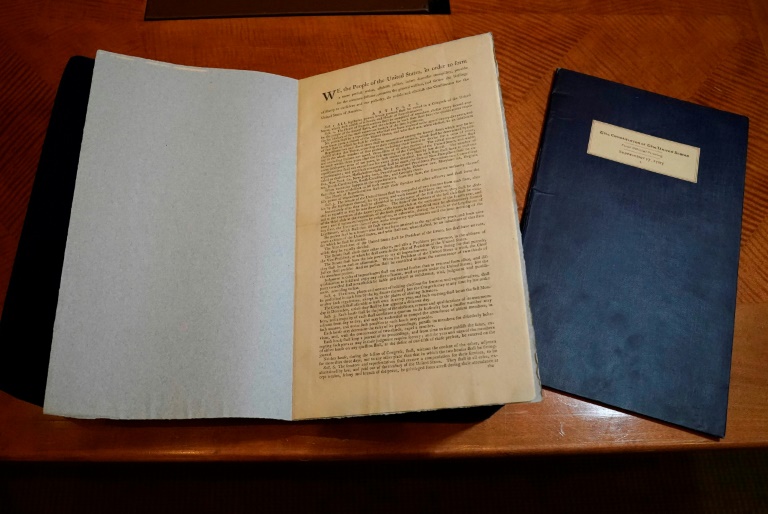
An original copy of the US Constitution — one of only two known to be in private hands — will be auctioned off in December with bidding estimated to go as high as $30 million, Sotheby’s announced Tuesday.

Five hundred first printings were made of the US Constitution’s final text and provided to participants at the 1787 Constitutional Convention, including George Washington, Alexander Hamilton and Ben Franklin, but almost all have been lost to history.

Of the 13 that are known to have remained, 11 are owned by governments and institutions.

Last year, one of the two privately held copies was bought for $43.2 million by US hedge fund manager Ken Griffin, who outbid a group of 17,000 cryptocurrency investors who had raised $40 million to try to buy the document, vowing to exhibit it in the public digital domain.

Griffin’s purchase, which he has since lent for display at a free public museum, set a record for the highest price ever paid for a historical document at auction, according to Sotheby’s.

The second copy will be auctioned off on December 13 for up to $30 million dollars, but bidding could soar even higher, according to Richard Austin, an expert in manuscripts and old books at Sotheby’s New York auction house.

Austin told AFP he would “like to see another private individual or perhaps a group being responsible for the care of this very important document.”

The artifact will be on public display at Sotheby’s New York starting on November 4.

Suspect in Pelosi attack was on 'suicide mission': court filings

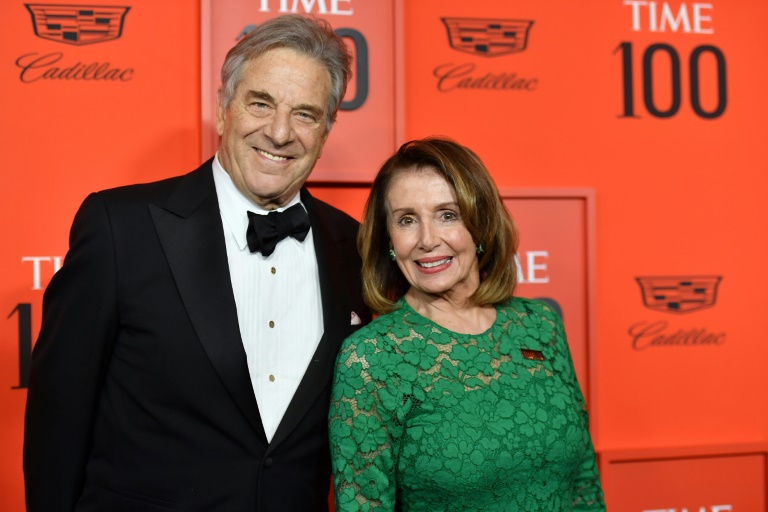
The man accused of attacking the husband of US House Speaker Nancy Pelosi with a hammer told police he also planned to target several other politicians as part of a “suicide mission,” according to court documents filed Tuesday.

David DePape, 42, was arrested last week after he allegedly broke into the couple’s mansion intending to tie up Pelosi and break her kneecaps, but found only her 82-year-old husband.

He was ordered to be held in custody after he pleaded not guilty to attempted murder and other charges during his arraignment Tuesday at a San Francisco court.

In new court filings, state prosecutors said DePape told police he was sick of “lies coming out of Washington” and had “named several targets, including a local professor, several prominent state and federal politicians” as well as their relatives.

“I didn’t really want to hurt him, but you know this was a suicide mission,” DePape allegedly told officers at the scene of his arrest, referring to Paul Pelosi.

“I’m not going to stand here and do nothing even if it cost me my life.”

According to the state prosecutors’ filing, DePape startled Paul Pelosi awake from his bed in the early hours of Friday, holding a hammer and several plastic zip ties.

He told Paul Pelosi he had come to find Nancy Pelosi because she is “number two in line for the presidency,” and “we’ve got to take them all out.”

Pelosi was able to call the police and open the mansion’s front door when officers arrived, before DePape struck him in the head with the hammer, leaving him bloodied and unconscious for three minutes, court documents said.

“This case demands detention. Nothing less,” prosecutors wrote.

DePape wore orange jail clothes and spoke only to answer procedural questions during the brief appearance, the San Francisco Chronicle reported.

His arm was in a sling, which his lawyer said was a result of an injury he sustained during arrest.

– Litmus test –

The story of the attack quickly metastasized into a political litmus test in the highly divided United States.

Liberals blasted the dangerous coarsening of public discourse and the willing perpetuation of falsehoods by mainstream Republicans that has seen Nancy Pelosi cast as a figure of hate on the right, and a legitimate target for real-life violence.

Swathes of the conservative media ecosystem, meanwhile, set about questioning the narrative around the attack with lurid and unproven allegations.

New Twitter boss Elon Musk was among those who helped spread the misinformation after tweeting a link to a speculative opinion piece by an outlet with a history of unreliability.

Speaking outside the courthouse, DePape’s court-appointed lawyer Adam Lipson said the defense team would be looking into the swirling untruths that may have influenced his client.

“There’s also been a lot of speculation regarding Mr. DePape’s vulnerability to misinformation and that is certainly something that we are going to look into,” he told reporters.

“We are going to be doing a comprehensive investigation of what happened,” he said, adding: “We’re going to be looking into Mr. DePape’s mental state.”

– ‘Long recovery’ –

In an earlier court affidavit filed Monday, the FBI said DePape intended to hold Pelosi — who is second in line to the US presidency after the vice president — hostage and talk to her.

“If Nancy were to tell DePape the ‘truth,’ he would let her go, and if she ‘lied,’ he was going to break ‘her kneecaps,'” the affidavit said.

Nancy Pelosi was not in San Francisco at the time of the attack.

Following the attack, Paul Pelosi was sent to a hospital where he underwent emergency surgery for a skull fracture and serious injuries to his right arm and hands.

Late Monday Nancy Pelosi issued a statement saying her husband faced “a long recovery process.”

The suspect faces charges on both a state and a federal level.

DePape faces state charges of attempted murder, residential burglary, assault with a deadly weapon, elder abuse, false imprisonment of an elder, and threats to a public official and their family.

Federal authorities on Monday charged DePape with attempting to kidnap a US official and assaulting her family member.

'Law and order returned' Hong Kong's US-sanctioned leader says at banking summit

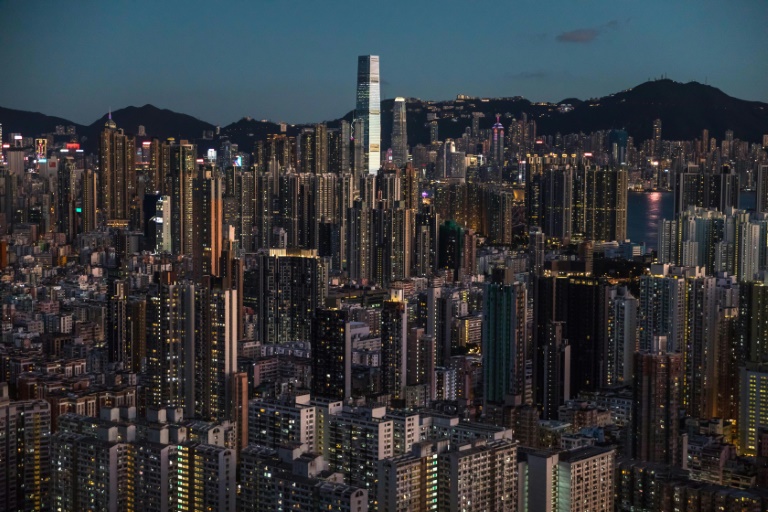
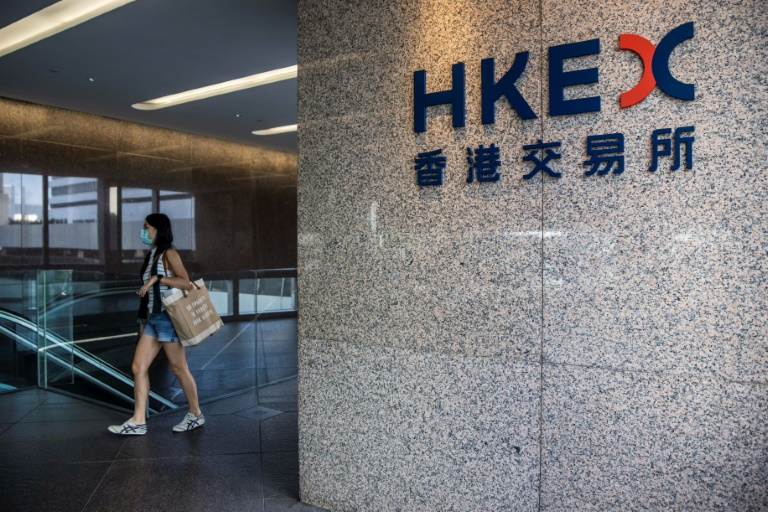
Hong Kong’s US-sanctioned leader insisted Wednesday that political stability and business confidence in the city has been restored following the crushing of democracy protests, as he opened a financial summit attended by global bankers including leading Wall Street executives.

Hong Kong is hosting a week of high-profile events after years of political unrest and pandemic travel curbs tarnished the city’s business-friendly reputation, sparked an exodus of talent and battered its economy.

The marquee event at the Four Seasons hotel was heralded by city leader John Lee as proof that the previously shuttered Asian finance hub is back in business.

“We were, we are and we will remain one of the world’s leading financial centres. And you can take that to the bank,” Lee told delegates.

Lee, a former police officer and security chief who took office this year, is among the Chinese officials sanctioned by Washington for cracking down on rights in Hong Kong after huge democracy protests. These blacklisted individuals are unable to hold accounts with the same banking giants attending the summit.

Most of the city’s political opposition are either behind bars or have fled overseas since those protests. 

“Social disturbance is clearly in the past, and has given way to stability to growth in business and community confidence in Hong Kong’s future,” Lee said in his summit speech. 

“Law and order has returned. The worst is behind us,” he added.

Among those due to speak at the summit are Goldman Sachs head David Solomon, Morgan Stanley CEO James Gorman, Blackrock president Rob Kapito and JP Morgan Chase counterpart Daniel Pinto.

But their presence is not without controversy.

Last week, the leaders of the bipartisan US Congressional-Executive Commission on China called on Wall Street executives not to attend, accusing them of “whitewashing human rights violations” and giving political cover to Lee.

The row illustrates the tightrope faced by multinationals in Hong Kong, which is both a lucrative business gateway for China and a flashpoint in increasingly tense relations between Beijing and Western powers.

“Hong Kong’s seamless connection with the mainland affords Hong Kong advantages available to no other economy,” Lee declared in his speech. 

– Unsettled economic waters –

The summit comes at a time of uncertainty over China’s economy under President Xi Jinping.

Xi, who secured a norm-breaking third term last month, has overseen regulatory crackdowns clipping the wings of some major Chinese companies and is still sticking to a strict zero-Covid strategy.

Hong Kong’s economy saw gross domestic product plunge 4.5 percent in the third quarter of this year, according to preliminary figures released Tuesday.

Its stock exchange is among the world’s worst performers, down more than 50 percent this year to levels last seen in 2009.

Lee’s opening speech will be followed by recorded interviews with three mainland officials involved in regulation, including Yi Gang, the governor of China’s central bank.

That will be followed by a panel titled “Navigating Through Uncertainty” featuring senior executives from Morgan Stanley, Blackstone, UBS, Goldman Sachs and Bank of China president Liu Jin.

Hong Kong finance chief Paul Chan is also expected to give a speech after he was cleared by health officials to attend the conference after testing positive for Covid-19 last week during an overseas trip. 

Lee’s speech made no mention of the labyrinthine pandemic rules maintained by both China and, to a lesser extent, Hong Kong.

While Hong Kong scrapped mandatory quarantine in September — a key demand of businesses — it maintains layers of pandemic restrictions long since abandoned by almost everywhere else.

Overseas arrivals must undergo frequent testing and are unable to go to bars and restaurants for their first three days in the city.

Restrictions on various gatherings remain and masks are compulsory, including outdoors. 

Plea from Ukraine first lady kicks off annual tech summit in Portugal

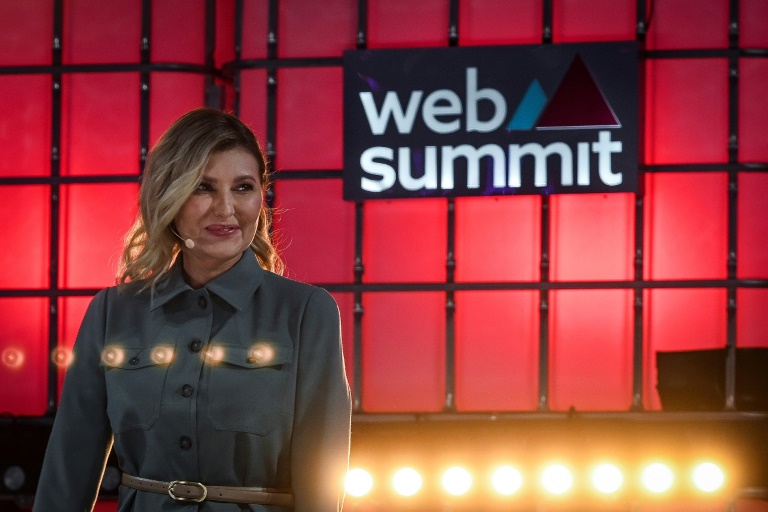
One of the world’s biggest tech conferences will get going in Lisbon on Wednesday, after Ukraine’s first lady formally opened the event by urging participants to use their skills to save lives rather than end them.

Olena Zelenska told an audience of several thousand at the Web Summit’s opening ceremony late on Tuesday not to put “technology at the service of terror” — unlike some in Russia.

“Some IT specialists in Russia have made their choice to be aggressors and murderers,” she said, urging attendees to make the opposite choice.

“I believe that technology should be used to create, save and help people, not destroy them.”

The Web Summit brings together start-ups, investors, business leaders and agenda-broadening speakers –- linguist Noam Chomsky and heavyweight boxing champion Oleksandr Usyk are among this year’s line-up.

Organisers said all 70,000 tickets had been sold for the first full-scale edition since coronavirus restrictions halted in-person gatherings in 2020.

One of the focuses this year is cryptocurrencies and the blockchain technology that underpins them.

Crypto prices have plummeted and surveys show that public interest is flatlining in the US, the principal market for retail investors.

Web Summit organiser Paddy Cosgrave told AFP last week that he was deeply sceptical about the entire crypto sector.

But at Tuesday’s opening ceremony, Changpeng Zhao, boss of one of the world’s biggest crypto companies Binance, tried to play down the crash.

He told the audience it was part of an economic cycle and argued that cryptocurrencies were in fact the most stable assets right now.

– 100 years of Twitter –

Zhao also faced questions about his decision to back Elon Musk’s takeover of Twitter to the tune of $500 million.

The Binance chief told the audience in Portugal he was committed to the deal for the long haul.

“We anticipate to be involved for the next 10, 50, 100 years,” he said, adding that Musk’s guidance would make the platform much stronger in the decades to come.

Before Zhao got to the stage, the event was delayed for an hour when a camera fell from the ceiling of the arena, sending dozens of audience members fleeing and briefly spreading panic, though nobody was reported hurt.

The organisers described it as a “technical issue” and eventually restarted proceedings, but not before a flood of disgruntled messages on social media from attendees complaining of a lack of information.

The Web Summit comes at a tricky time for the tech industry, which is struggling with supply chain problems, trade disputes between the US and China, negative stories about big tech, and economic volatility that has sent investors fleeing.

Cosgrave is keen to show the event does not shy away from those issues, highlighting the platform it gives to whistleblowers.

This year’s agenda includes Mark MacGann, who leaked thousands of documents about Uber’s lobbying in Europe.

But the opening ceremony stuck resolutely to the idea of technology as a force for positive change.

Portuguese Prime Minister Antonio Costa urged the audience to use technology to tackle pressing issues like climate change.

“Tech is not a panacea, but it can help to solve the problems that are in front of us,” he said.

The organisers say more than 1,000 speakers will take part in the event, which runs until Friday, giving talks on subjects from cybersecurity to artificial intelligence.

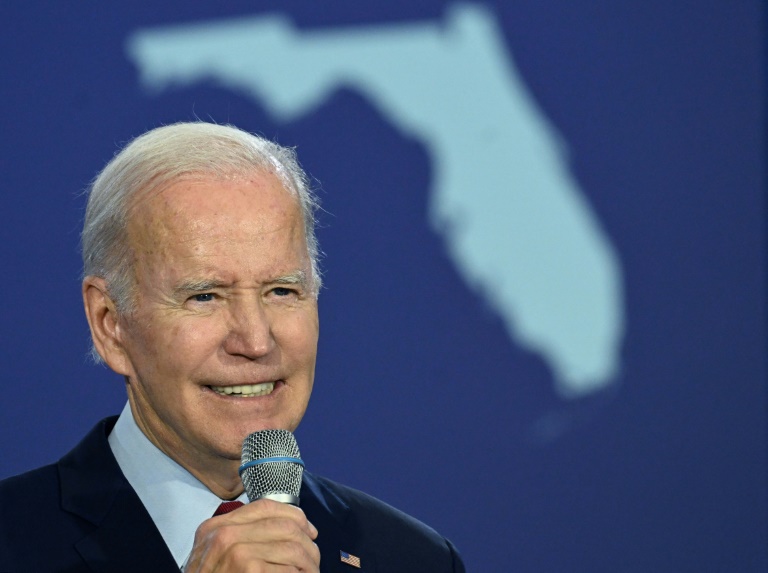
Biden in Florida for final push before the midterms

Joe Biden scolded Republicans on social spending issues Tuesday in popular retirement spot Florida as the US president makes his closing pitch ahead of next week’s midterm elections.

Facing signs of a growing “red wave” that could sweep the opposition Republicans to power in the House and Senate, Biden portrayed himself as “middle-class” Joe as he attempts — with mixed success — to court the blue-collar vote.

“You’ve been paying for Social Security your whole life,” the Democratic leader said, speaking in the coastal city of Hallandale Beach, about 20 miles (30 kilometers) north of Miami.

“You earned it,” he said, referring to the benefits program for retirees. “Now these guys want to take it away. Who in the hell do they think they are?”

He warned against a proposal from Florida Republican Senator Rick Scott, who suggested putting Social Security — which began in the 1930s — and Medicare — the state-funded health insurance for people over 65, which has been in place since the 1960s — to a congressional vote every five years. 

Biden, 79, had been promising since a trip was canceled by a hurricane to go to Florida, a traditional “swing state” that has leaned more solidly into the conservative column in recent cycles, and where 21 percent of residents are older than 65.

“Those are more than government programs,” he added during the speech. 

“They are a promise. A promise we made as a country: if you work hard and contribute when it comes time to retire, we’re going to be there for you.”

Biden closed out his speech with a wish: “God bless you all; God protect our troops, and God give some of our Republican friends some enlightenment.”

Later during an address at Florida Memorial University in Miami, he laid out his administration’s reforms on drug and hearing aid prices, airline hidden fees and student debt forgiveness, while hammering Republicans as being in the pockets of “Big Pharma” and the rest of corporate America.

If Republicans seize control of Congress, “many of the biggest corporations will go back to paying zero taxes,” Biden said. 

“It’s reckless, it’s irresponsible, it will make inflation worse, (and) it will badly hurt working class and middle class Americans.” 

Biden played up his blue-collar roots, reminding attendees that “like many of you I come from a normal middle-class family.

“We know what it’s like when hard times hit,” he said. “We get it.”

Biden also donned his Democratic leadership hat for fundraising events for his party’s Florida gubernatorial and Senate candidates, who are both expected to lose.

The White House hopes the visit will nevertheless help in portraying the Republican Party as a threat to middle-class households and seniors. 

Political scientist Aubrey Jewett said the Republicans had done a good job of convincing much of the Hispanic community — which makes up more than a quarter of the state’s 22 million population — to switch allegiance. 

Former president Donald Trump and Governor Ron DeSantis, his one-time protege turned rival, have shrewdly played on Hispanics’ fear of communism, the University of Central Florida professor told AFP.

– Campaign pivots –

“That got a certain percentage of Hispanics who thought, ‘We didn’t come to this country and flee Cuba or South America to come here and get the same thing.'”

Biden has been relatively quiet during the campaign for the midterms, which are expected to hand the House of Representatives back to the Republicans, who would also take the evenly divided Senate with just one pick-up. 

Reproductive rights once appeared to be the issue that would decide the election. Voter registrations, particularly among women, surged after the US Supreme Court ended federal protections for abortion access in June.

But it has lost salience as a campaign issue, sparking concern among Democrats that they may have relied too heavily on the subject to the detriment of “kitchen table” fare like inflation and crime.

The party has tried to pivot in the closing weeks of the campaign, but soaring consumer prices — up 8.2 percent in a year — have undermined Biden’s attempt to sell himself as the president for the American worker.

The Democrats have called on former president Barack Obama, still the party’s biggest draw, to mobilize the troops.

The pair are scheduled to appear together Saturday in hotly-contested Pennsylvania. 

How dubious 'local news' sites are feeding US misinformation

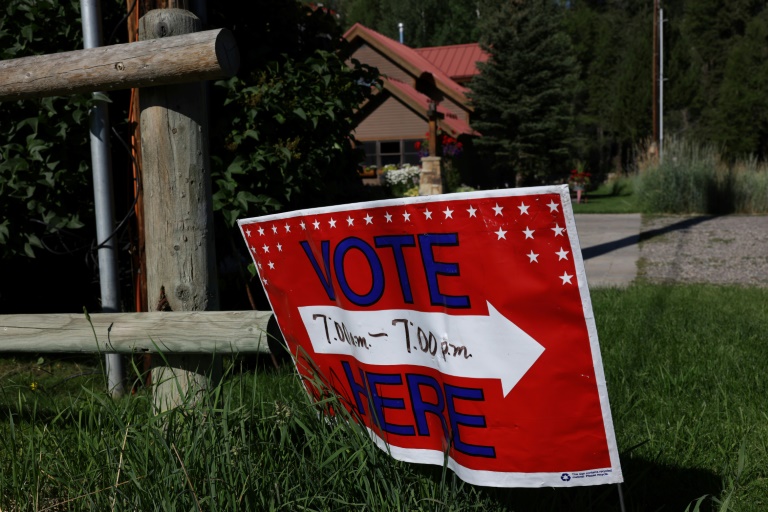
When Elon Musk amplified a conspiracy theory about the hammer attack on US House Speaker Nancy Pelosi’s husband, he joined the growing ranks of Americans routinely sharing misinformation published by dubious websites presenting themselves as local news outlets.

The new Twitter owner eventually deleted his tweet linking to the false article by the Santa Monica Observer, but millions had already digested and re-circulated a smear that went viral on Facebook and other social networks.

Many US voters seeking and sharing news about midterm elections may find themselves in both a desert and an ocean, only to be left in a fog.

“Fewer journalists means more opportunities for conspiracy theories without any check at all,” said Daniel Kreiss, a University of North Carolina (UNC) political communication professor.

Hundreds of newspapers have shuttered since the start of the Covid-19 pandemic, but there are plenty of imitators popping up in their stead.

The Santa Monica Observer received a trust score of just 12.5 out of 100 on media monitor NewsGuard’s rating scale last year, being described as: “Another example of a publisher producing unreliable content under the guise of local news.”

The site, according to NewsGuard, has published numerous conspiracy theories and false and misleading claims about politics, vaccines and the pandemic.

A Northwestern University report in October revealed the huge newspaper dropoff. It also showed more than a fifth of Americans live in “news deserts” or in communities at risk of losing local outlets.

Most of the sites filling the gaps make little or no attempt to show balance or be transparent. NewsGuard flagged many of them as failing to meet “basic journalistic standards.”

“People say there is no shortage of information — there’s news on my phone, there’s news anywhere,” said Steve Waldman, president of Report for America, a non-profit group that deploys journalists to news organizations nationwide.

But Waldman and other experts say the relative deficit of credible reporting — about one in four US newspapers has disappeared since 2005, and another third are likely to be gone by 2025 — makes it harder for voters to separate fact from fiction.

“People are repeating and sharing the most outrageous and nonsensical information imaginable,” said Les High, former publisher of the Whiteville News Reporter in eastern North Carolina and founder of a nonprofit news site called the Border Belt Independent.

“It’s awfully hard to have a democracy when nobody can discern the truth.”

– Masquerading as neutral –

More than 1,200 outlets that Kreiss of UNC described as “thinly veiled actors posing as neutral news websites” have cropped up in the past few years, according to researchers at Columbia University’s Tow Center for Digital Journalism.

Priyanjana Bengani, a senior research fellow at the center, said most of the sites are not transparent.

“They don’t always say they are funded by advocacy groups,” she noted.

Both sides of the political divide are involved, issuing news articles that are little more than campaign pitches for local Democrat and Republican candidates.

The sites get readers by delivering content in paid ads on social media platforms, which allow targeting of specific groups by geography or demographics. This can mislead readers into thinking the articles are “organic” content from established news outlets, researchers say.

NewsGuard said in a report in October that millions of dollars are being poured into such ads for the midterms, notably on Facebook and Instagram.

“These pseudo-newsrooms have taken advantage of Meta’s low costs, hyper-targeting tools and porous policies related to political ad spending to target voters in battleground states while underplaying or entirely hiding their partisan-driven agendas and financing,” NewsGuard said, referring to the owner of Facebook and Instagram.

– Filtering misinformation –

Recent research by the nonprofit Reboot Foundation, which focuses on media literacy, found just 28 percent saying they felt very confident in their ability to filter election misinformation, a finding that suggests US voters are primed to fall for misleading or one-sided political narratives.

Roughly half get at least some of their news from social media sites, according to a 2021 Pew Research Center report. An estimated 10 percent get news from TikTok, according to a separate Pew report, and some six percent get news from “alternative” platforms such BitChute, Parler and Truth Social.

Penelope Abernathy, a lead researcher for Northwestern’s news deserts study, said social media fundamentally changes the nature of the news people consume, fueling partisanship.

“What appears on your feed may be posted by a friend or determined by algorithm, and this tends to favor (content) designed to inflame passions,” she said.

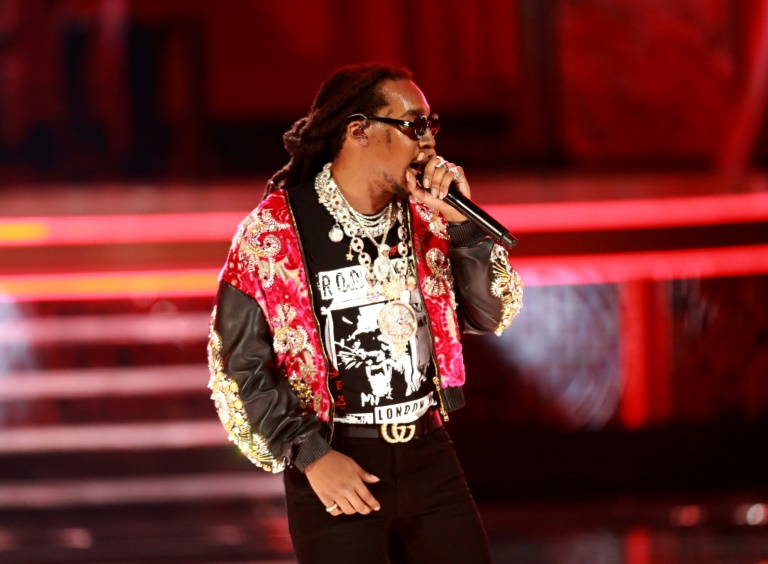
Rapper Takeoff, member of Migos, shot dead at 28

The rapper Takeoff, a member of the influential hip-hop trio Migos, was fatally shot Tuesday at a bowling alley in Houston, according to police. He was 28 years old.

Police in the Texas city said they received a call at approximately 2:34 am that a shooting was underway. Takeoff was found dead at the scene, they said.

Two other people were shot and took private vehicles to area hospitals with non-life threatening injuries, according to police.

Officers said the shooting happened following a private party of some 40 people at the bowling alley and that a large group had gathered outside the venue’s front door when shots rang out following an argument.

Pop industry news website TMZ, which broke the news early Tuesday, had said fellow Migos member Quavo was also at the bowling alley when the shooting broke out. It did not appear Quavo was injured.

Houston Police Chief Troy Finner told journalists at least two firearms were involved. 

He said investigators currently have “no reason to believe” that Takeoff, born Kirshnik Khari Ball, “was involved in anything criminal” at the time of the shooting, or that he was directly targeted.

“Based on what people say about him, he’s well-respected, non-violent — I would not expect him to be involved.”

Finner said Takeoff’s mother had flown into Houston and that he had spoken to her.

“I want everyone here to understand the pain and suffering of a mother,” he said.

– ‘Pillar of Atlanta culture’ –

Both Finner and Houston’s mayor urged against “demonizing” the hip hop community over the tragedy.

“We all need to stand together and make sure nobody tears down that industry,” the police chief said. “Sometimes the hip hop community gets a bad name…. (There are) a lot of great people in our hip hop community, and I respect them.”

Hip hop powerhouse Coach K, who manages Migos, issued a statement saying his team was “devastated” by the killing.

“It is with broken hearts and deep sadness that we mourn the loss of our beloved brother,” he said, adding that Takeoff was a victim of “senseless violence and a stray bullet.”

Tributes rolled in as news spread that a member of one of rap’s biggest contemporary acts had died.

“This broke my heart,” posted Gucci Mane, a fellow Atlanta rapper who had collaborated with Migos.

“No hot takes. No profound thoughts. Just sad that another rapper, son, brother, and friend has been killed,” said Houston rapper Lecrae.

The NBA Atlanta Hawks basketball team also voiced condolences, calling Takeoff a “pillar of Atlanta culture.”

– ‘Bad and Boujee’ –

Born in Lawrenceville, Georgia on June 18, 1994, Takeoff was best known for his membership in Migos along with Quavo, his uncle, and Offset, his cousin who is married to fellow rapper Cardi B.

“Growing up, I was trying to make it in music. I was grinding, which is just what I loved doing,” Takeoff said in a 2017 interview with The Fader. “Just making something and creating for me.”

“I was getting my own pleasure out of it, because it’s what I liked doing. I’d wait for Quavo to get back from football practice and I’d play my songs for him.”

The Atlanta-based Migos soared to prominence off their viral 2013 song “Versace,” which Drake remixed.

The trio later recorded “Walk It Talk It” with the Canadian superstar rapper.

It was 2016’s hit “Bad and Boujee” that first saw them hit number one, a song emblematic of their signature flow, a unique cadence of staccato lyrical bursts in triplet rhythm.

The smash has been streamed 1.5 billion times in the United States alone.

– ‘Culture’ trilogy –

The trio is considered widely influential in bringing contemporary Southern trap, a popular rap sub-genre, to the mainstream.

Following their debut album “Yung Rich Nation” in 2015, they debuted atop the Billboard top albums chart with their sophomore effort “Culture” in 2017.

They followed up a year later with “Culture II,” once again hitting the top spot.

In 2021, they completed the trilogy with “Culture III.”

Migos also played fictionalized versions of themselves on the hit Donald Glover show “Atlanta.”

Quavo and Takeoff, who recently have been performing as a duo, had just released a new music video for the track “Messy.”

Takeoff was considered the most reserved member of the group, but his fellow rappers routinely heralded him as a singular talent.

“My thing was rapping. I knew I was gonna be who I was,” Takeoff told the music magazine. “You couldn’t tell me I wasn’t going to be who I was.”

“I knew I was going to be here.”

US requests for overseas abortion pills surges: study

Requests by Americans for abortion pills from outside the United States have surged since the US Supreme Court’s explosive decision last summer to overturn the nationwide right to the procedure, according to a study published Tuesday.

Researchers, whose work was published in the medical journal JAMA, analyzed the number of requests submitted to telemedicine service Aid Access, which delivers abortion pills from abroad to 30 US states.

Aid Access was purposefully set up to help women “self-manage” their abortions at home, circumventing local bans or other barriers.

After the Supreme Court’s controversial decision in late June, many Republican-led states severely restricted or outright banned abortions.

According to the study, Aid Access received an average of 83 requests per day before the Supreme Court’s decision from the 30 states in which it operates.

But in the two months after, that number jumped to 213 per day — an increase of about 160 percent.

Proportional to the number of women in each state, the increase in Aid Access requests were highest in Louisiana, Mississippi, Arkansas, Alabama and Oklahoma — all of which completely banned abortions.

In the states that outlawed abortions, “current legal restrictions” was cited as women’s motivation for using the service in about 62 percent of cases after the Supreme Court decision, compared to 31 percent before.

The study did analyze requests for the pills on other sites, where they are easily available for a few hundred dollars — but without medical supervision.

Another study, also published Tuesday in the journal JAMA, looked at the average travel time for women to reach an abortion clinic in the United States.

The average time was 28 minutes before the Supreme Court’s decision, and it increased significantly to 1 hour and 40 minutes afterward. The national average however masks wide local disparities.

In states that implemented a total abortion ban or limits after six weeks of pregnancy, the average travel time increase was four hours, according to the study, which added that the lack of access was especially a problem for those with fewer resources.

In the 100 days following the Supreme Court ruling, at least 66 clinics stopped performing abortions, according to a report in early October by the Guttmacher Institute.

Global stocks mixed on Fed hopes, China zero-Covid reports

Global stock markets were mixed Tuesday as traders looked ahead to the US Federal Reserve’s next interest rate decision hoping it will signal a more dovish approach to fighting inflation.

Early gains in US equities soon turned to red following mixed data that sparked anxiety that the Fed might disappoint investors.

Markets were particularly unnerved by Labor Department figures showing a surge in open positions in September, surprising investors who have been expecting the jobs market to slow.

“The economy can’t be slowing down that fast if companies are still struggling to fill job openings,” said Oanda’s Edward Moya. “The Fed downshift trade could blow up if the labor market refuses to break.”

The US central bank is widely expected Wednesday to announce a fourth straight 75-basis-point rate hike as it tries to rein in rising prices — but recent signals have suggested officials are looking to dial down the pace of increases.

Hopes that the Fed could pivot to a less hawkish stance in the coming months have sparked a rally in risk assets over the past week — helped by signs that other central banks are also trying to take a step back.

The main European indices pared back on earlier gains through afternoon trading, but still closed in the green.

London was up 1.3 percent, Paris 1.0 percent, and Frankfurt gained 0.6 percent.

– Waiting game –

“The waiting game for the Fed is still on, with investors largely in the dark until the US central bank illuminates the path ahead for interest rate rises tomorrow,” said Hargreaves Lansdown analyst Susannah Streeter.

In Asia, Hong Kong led the rally following unconfirmed posts on Chinese social media saying officials were putting together a committee to discuss how to move the country away from its economically damaging zero-Covid policy.

Shares jumped more than five percent after the appearance of the unverified document, which ramped up hopes that the world’s number two economy could begin opening up in the new year and ease the strict containment measures that have hammered productivity and markets.

Oil prices also gained on speculation of a gradual easing of the zero-Covid policy in China, a major consumer.

However, neither Chinese state media nor government officials have suggested the meeting actually took place, or that such a committee was established, raising questions about the statement’s veracity.

Nonetheless, Shanghai climbed more than two percent, while the yuan also rallied after recently falling to record lows against the dollar.

– Big earnings season –

Meanwhile positive results from multinational firms also helped lift equities. 

Shares climbed in London-listed oil giant BP after it reported that third-quarter profit had more than doubled on high commodity prices, to $8.2 billion.

It is the latest energy group to report bumper earnings in recent weeks after Chevron, Shell and TotalEnergies.

Also reporting Tuesday was US drugmaker Pfizer, which recorded an 83 percent surge in Covid-19 vaccine revenues in the United States in the most recent quarter.

Ride-hailing group Uber saw shares rocket after it reported a 72 percent surge in quarterly revenues.

And shares in British grocery delivery platform Ocado soared more than 35 percent at one point after it announced a tie-up with South Korean conglomerate Lotte Shopping.

– Key figures around 2100 GMT –

New York – Dow: DOWN 0.24 percent at 32,653.20 (close)

New York – S&P 500: DOWN 0.4 percent at 3,856.10 (close)

New York – Nasdaq: DOWN 0.9 percent at 10,890.85 (close)

London – FTSE 100: UP 1.3 percent at 7,186.16 (close)

Frankfurt – DAX: UP 0.6 percent at 13,338.74 (close)

Paris – CAC 40: UP 1.0 percent at 6,328.25 (close)

EURO STOXX 50: UP 0.9 percent at 3,651.02 (close)

Tokyo – Nikkei 225: UP 0.3 percent at 27,678.92 (close)

Hong Kong – Hang Seng Index: UP 5.2 percent at 15,455.27 (close)

Shanghai – Composite: UP 2.6 percent at 2,969.20 (close)

Euro/dollar: UP at $0.9883 from $0.9882 on Monday

Pound/dollar: UP at $1.1486 from $1.1469

Dollar/yen: DOWN at 148.23 yen from 148.71 yen

Euro/pound: DOWN at 85.96 pence from 86.16 pence

West Texas Intermediate: UP 2.1 percent at $88.37 per barrel

Brent North Sea crude: UP 2.0 percent at $94.65 per barrel

burs-jmb/dw

Trump reopens 2020 playbook with 'rigged' election claim

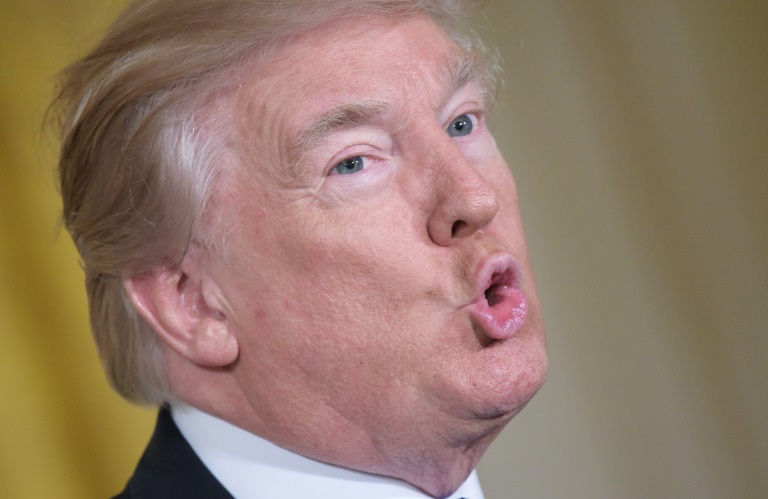
Donald Trump on Tuesday expanded his campaign of undermining trust in US democracy to this year’s midterm elections, claiming baselessly that voting in a crucial swing state had been “rigged.”

The 76-year-old former US president, who tried repeatedly to overturn his 2020 defeat to Joe Biden through a torrent of disinformation about nonexistent fraud — returned to the playbook in a post on his Truth Social platform.

Trump linked to a report on an obscure right-wing website suggesting that hundreds of thousands of mail-in ballots in Pennsylvania could be tainted by fraud.

“Here we go again!” Trump posted. “Rigged Election.”

The report cites a claim made last week by 15 Republican lawmakers in Pennsylvania that, as of October 21, more than 240,000 ballots had been sent out to “unverified” voters.

“That is an enormous number of ballots which, according to the law, must be set aside and not counted for the 2022 General Election unless the voter produces ID,” the legislators stated in a letter to the state government.

But Pennsylvania’s state department said the letter was based on a poor understanding of the Keystone State’s classification process — conflating applications for mail-in ballots with approved mail-in ballots.

“There are not 240,000+ ‘unverified ballots,’ as certain lawmakers are claiming. That is misinformation,” the department, which administers the state’s elections, said in a statement.

Pennsylvania requires applicants for postal ballots to provide proof of identification — alongside the request or separately. The ID is verified before the vote is counted.

If the voter fails in this requirement before the cut-off point, six days after election day, the ballot simply isn’t counted.

The state department said the identity of the voter had yet to be verified on around 7,600 mail-in ballot applications statewide.

Trump had already been making noises by Friday about election irregularities, calling Pennsylvania’s election “a total mess.” 

“The Democrats are playing games again because they know they are in deep trouble after unleashing skyrocketing crime, record Inflation, a war against American Energy, etc,” Trump said.

Pennsylvania is one of 35 states holding US Senate elections on November 8, as well as picking a new governor and a slate of local officials.

Trump and his allies led millions of Americans into believing the 2020 presidential election was not free and fair, even as his own administration declared it the most secure vote in history.

He was impeached in 2021, one week before leaving office, for inciting a riot by his supporters at the US Capitol in Washington.

Trump’s 2022 Senate pick in Pennsylvania, celebrity surgeon Mehmet Oz, is in a tight race with Democrat John Fetterman, while the former president’s gubernatorial favorite, fellow election denier Doug Mastriano, is expected to lose.

Close Bitnami banner
Bitnami