US Business

Ukraine first lady appeals for IT workers' help

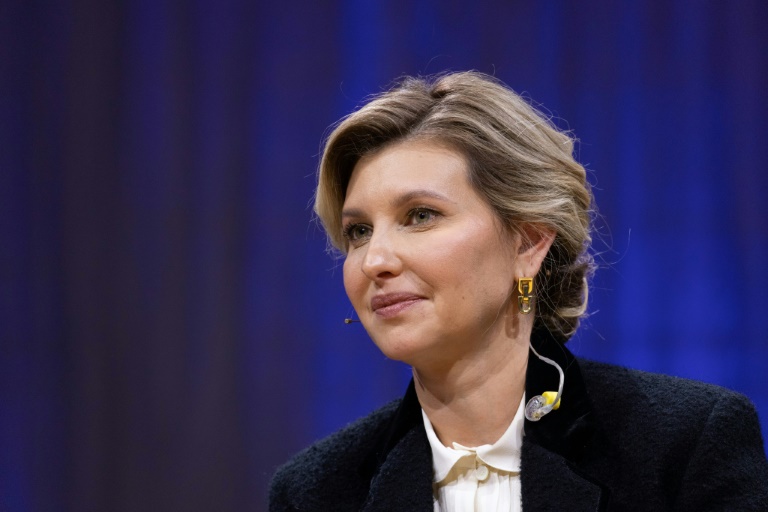
Ukraine’s first lady called on Tuesday for IT specialists to help her country by building technology that saves lives rather than ending them.

Olena Zelenska told thousands of investors, entrepreneurs and tech workers gathered for the annual Web Summit in Portugal that Russia “puts technology at the service of terror”.

She showed slides of the aftermath of drone attacks in Ukraine’s capital, Kyiv, and urged the delegates to use their skills to make a positive change instead.

Her husband, Ukrainian President Volodymyr Zelensky, appeared as a hologram at several tech events earlier this year to directly appeal to companies to help rebuild his country with advanced tech infrastructure.

Zelenska, who has made in-person appearances at several events recently and addressed US Congress in July, said she would not make a detailed appeal.

Instead, the 44-year-old, a screenwriter by profession, highlighted the key role that technology was playing in the Russian invasion of her country.

She cited a Bellingcat report that alleged Russian IT workers were playing an active part in the war effort.

“Some IT specialists in Russia have made their choice to be aggressors and murderers,” she said, urging the audience to make the opposite choice.

“I believe that technology should be used to create, save and help people, not destroy them.”

Her 15-minute speech drew a standing ovation from the audience.

The organisers of the Web Summit had earlier become embroiled in a row over an invitation they had extended to people from Grayzone, a journalism website that regularly reflects pro-Russian conspiracy theories about the conflict.

The conference cancelled the invites, provoking a huge row on social media between users who said it was an infringement of free speech and those who supported the decision.

Some 70,000 people are expected to attend the Lisbon conference over the next three days.

Uber reaches 615 mn pound tax settlement with Britain

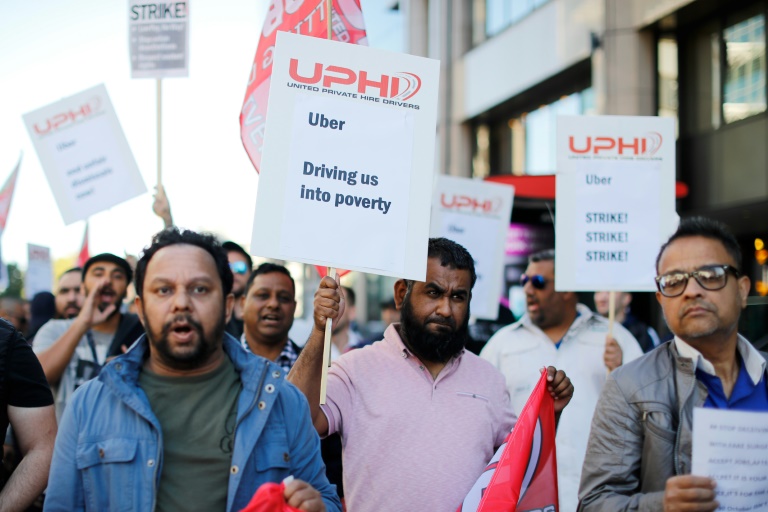
Uber will pay British authorities 615 million pounds (around $700 million) to settle a tax dispute following a British judicial ruling that classified drivers as workers, the company said Tuesday.

The ride-hailing company disclosed the agreement with HM Revenues and Customs as it reported third-quarter results, saying the cash payment will be sent to authorities in the fourth quarter.

The settlement is the latest ripple effect from a major March 2021 ruling by Britain’s Supreme Court classifying Uber drivers as employees, rejecting the Silicon Valley company’s contention that the drivers should be categorized as self-employed.

As a result of that decision, British authorities had argued that Uber was on the hook for VAT taxes for the period prior to March 2022 when it operated in the United Kingdom. Uber began paying the levy in March. 

In May 2021, Uber reached an agreement with a British trade union to represent its 70,000 drivers in the UK.

US woman who led female IS battalion gets 20 years in prison

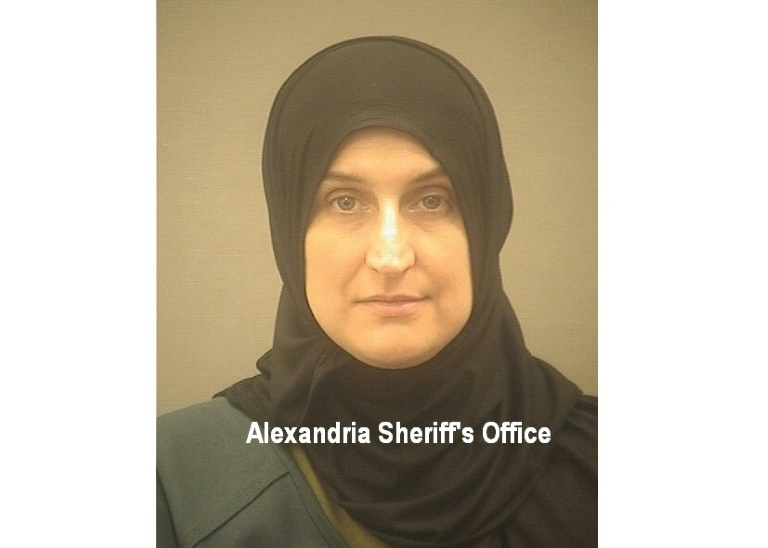
An American woman who converted to Islam and joined the Islamic State in Syria, leading an all-female military battalion, was sentenced to 20 years in prison by a US court Tuesday.

Allison Fluke-Ekren, 42, who grew up on a farm in Kansas, was given the maximum sentence by US District Judge Leonie Brinkema after pleading guilty to terror charges.

“You’re obviously a very intelligent woman,” Brinkema told Fluke-Ekren in federal court in Alexandria, Virginia.

“There’s no question that you were providing material support to a terrorist organization,” the judge said.

For more than eight years, Fluke-Ekren was engaged in a “terrorism crime spree” across war zones in Libya, Iraq, and Syria, including training other women and young girls to undertake attacks for the Islamic State, US Attorney Raj Parekh said.

Fluke Ekren “in effect became the empress of ISIS,” Parekh said. “She brainwashed young girls and trained them to kill.”

Fluke-Ekren is the rare American woman who occupied a senior position in the ranks of the now defunct Islamic Caliphate.

Her sentencing included dramatic remarks to the judge by one of her daughters.

Leyla Ekren, who was married off to an IS fighter in Syria when she was just 13 years old, said her mother was motivated by a “lust for control and power.”

“I want people to see what kind of person she was,” her daughter said.

“She abandoned me in Raqqa with my rapist,” she said in a reference to her IS fighter-husband.

At one point prosecutors played audio recordings of telephone conversations between Fluke-Ekren and her daughter taped by the FBI.

Her daughter, who was in the public gallery, plugged her ears with her fingers as the tapes were played aloud.

In a written statement to the court, her son Gabriel, who like his sister waived anonymity, said his mother is a “monster without love for her children, without an excuse for her actions.”

“She has the blood, pain, and suffering of all of her children on her hands,” he said.

– ‘Deeply regret’ –

Fluke-Ekren, who was wearing a dark green prison jacket and black headscarf, addressed the court herself and asked the judge for a “compassionate sentence” of just two years in prison.

“I deeply regret my choices,” she told the judge. “To anyone who has been hurt by my actions I ask forgiveness.”

Born Allison Brooks, Fluke-Ekren grew up in a “loving and stable home” in Overbrook, Kansas, and was considered a “gifted” student, the US attorney said.

“There is nothing in her background that can explain her conduct,” Parekh said.

After leaving her first husband, Fluke-Ekren attended the University of Kansas, where she married a fellow student named Volkan Ekren and became a Muslim. She later earned a teaching certificate from a college in Indiana.

They had five children together and adopted another after the child’s parents were killed as suicide bombers in Syria.

In 2008, the family moved to Egypt and in 2011 to Libya where, the US attorney said, “Fluke-Ekren’s dogged pursuit to obtain positions of power and influence to train young women in extremist ideology and violence began.”

They were in Benghazi in September 2012 when the Islamic militant group Ansar al-Sharia attacked the US mission and CIA annex there, killing the US ambassador and three other Americans.

Fluke-Ekren, a fluent Arabic speaker, assisted Ansar al-Sharia by “reviewing and summarizing the contents of stolen US government documents.”

The family left Libya in late 2012 or early 2013 and moved around between Iraq, Turkey and Syria, becoming deeply involved with IS and living in the group’s Mosul stronghold for a time.

Fluke-Ekren’s second husband — the leader of an IS sniper unit — was killed in 2015.

She married three more times, including to an IS military leader who was responsible for the defense of Raqqa in 2017.

In 2017, Fluke-Ekren became the leader of a battalion of female IS members called “Khatiba Nusaybah,” which provided military training to more than 100 women and girls, according to the US attorney.

“During training sessions, Fluke-Ekren instructed the women and young girls on the use of AK-47 assault rifles, grenades, and explosive suicide belts,” Parekh said.

Fluke-Ekren acknowledged in court that she had provided such training but said it was only for self-defense.

“I never fought myself,” she said. “I never shot or fired one bullet.”

Musk announces $8 monthly charge for verified Twitter accounts

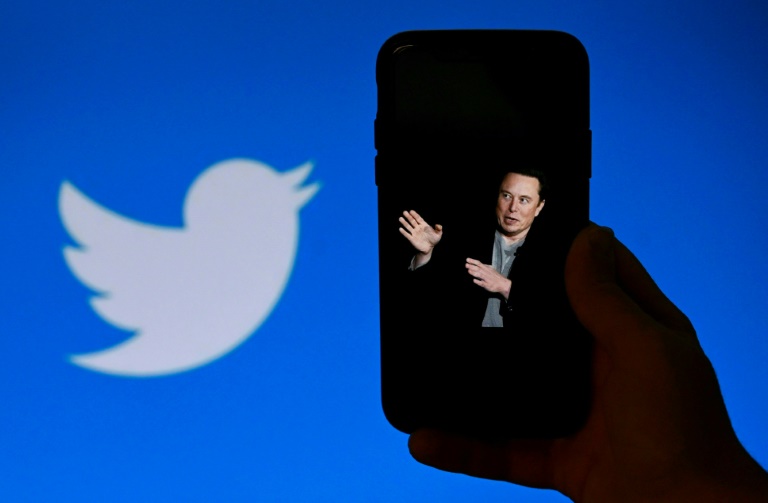
New Twitter head Elon Musk said Tuesday the site will charge $8 per month to verify users’ accounts, arguing the plan would solve the platform’s issues with bots and trolls while creating a new revenue stream for the company.

The announcement comes only days after the world’s wealthiest man took sole control of the social media giant in a contentious $44 billion deal.

“Power to the people! Blue for $8/month,” Musk, who has styled himself as a free-speech champion, tweeted, in reference to the platform’s paid subscription service, Twitter Blue.

Under the new plan, paid subscribers would receive Twitter’s famous blue checkmark that signals a verified, authentic account.

That feature is currently offered only to public figures, an approach Musk described as a “lords & peasants system.”

He said Twitter Blue subscribers would also receive “priority” placement in “replies, mentions & search,” which he called “essential to defeat spam/scam.”

There would also be expanded video abilities, fewer ads, and the possibility for users to get a “paywall bypass for publishers willing to work with us,” he said.

Twitter Blue currently allows users to access certain news sites for free and without ads, such as the Los Angeles Times.

“This will also give Twitter a revenue stream to reward content creators,” Musk tweeted.

Addressing the worries of some Twitter users that their blue check mark would lose its notoriety, he also announced “a secondary tag below the name for someone who is a public figure, which is already the case for politicians.”

The Twitter Blue service currently offers various other premium features, such as allowing subscribers to edit their tweets.

The new plan’s pricing, up from the current $5 per month, would be adjusted by country “proportionate to purchasing power parity,” Musk added in a reply to his original tweet.

Musk re-tweeted and replied to users praising the paid-verification idea, saying the move “will destroy the bots.” 

“If a paid Blue account engages in spam/scam, that account will be suspended,” Musk wrote.

– ‘Need to pay the bills’ –

For users that currently have blue check marks, Musk is considering removing them if they do not pay for the new service, tech news outlet The Verge reported.

Some users warned that they would simply leave the site if they were made to pay.

The SpaceX and Tesla chief floated the $8 subscription fee idea earlier Tuesday in a tweet reply to author Stephen King, who was complaining about media reports that the verification service could cost $20 per month.

“We need to pay the bills somehow!” Musk responded.

“Twitter cannot rely entirely on advertisers. How about $8?”

The proposal is only one part of a series of sweeping changes the 51-year-old entrepreneur has implemented at Twitter, with the entire board, including  CEO Parag Agrawal, let go last week.

The Washington Post has reported that Musk, whose account bio currently reads “Twitter Complaint Hotline Operator,” plans to fire some 75 percent of his company’s 7,500 employees.

Musk financed the massive deal through a mixture of his own wealth, money from other investment groups and loans from banks which will have to be reimbursed.

His previous comments condemning Twitter’s content moderation policies as heavy-handed — as well as his frequent posts of boundary-testing memes — has given pause to some advertisers, currently the company’s main source of revenue.

Some users have expressed fear Twitter could turn into a global stage for hate speech and disinformation.

He tried to calm the nerves by reassuring over the weekend that the site would not become a “free-for-all hellscape,” and announced the formation of a content moderation council.

However on Sunday, Musk himself tweeted an anti-LGBT conspiracy theory about what happened the night US Speaker Nancy Pelosi’s husband was attacked, then hours later deleted the post.

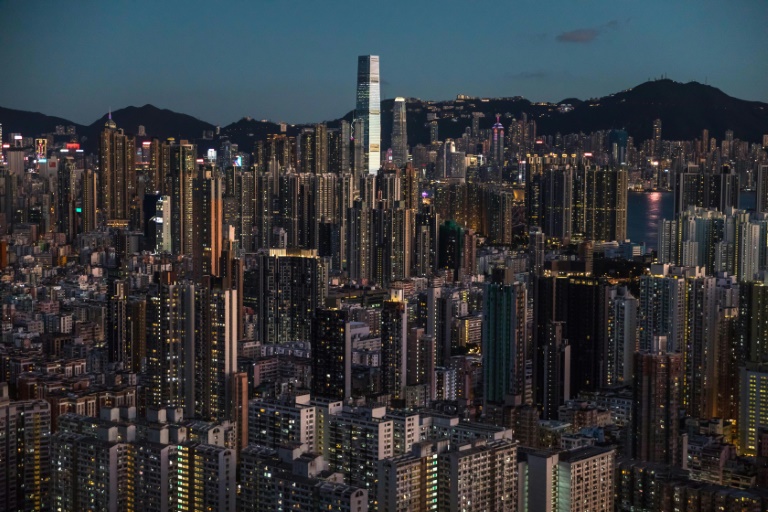
Wall Street chiefs to share stage with Hong Kong's sanctioned leader

Some of the world’s top bankers will attend a Hong Kong finance summit on Wednesday, defying criticism by US lawmakers over their decision to share a stage with the city’s leader who is sanctioned by Washington.

Hong Kong is hosting a week of high profile events after lifting years of pandemic travel curbs that tarnished the city’s business-friendly reputation, sparked an exodus of talent and battered its economy.

The marquee event is a summit on Wednesday attended by some 200 finance executives including some of Wall Street’s leading luminaries.

Among those due to speak are Goldman Sachs head David Solomon, Morgan Stanley CEO James Gorman, Blackrock president Rob Kapito and JP Morgan Chase counterpart Daniel Pinto.

The glitzy gathering at the Four Seasons hotel is being heralded by Hong Kong leader John Lee, who will give the opening speech, as proof that the previously shuttered Asian finance hub is back in business.

“After three years of pandemic, Hong Kong is reconnecting with the world,” Lee told reporters on Tuesday.

But the event is not without controversy.

The leaders of the bipartisan US Congressional-Executive Commission on China have called on Wall Street executives not to attend, accusing them of “whitewashing human rights violations” and giving political cover to Lee.

Lee, a former security chief who took office this year, is among Chinese officials sanctioned by Washington for cracking down on rights in Hong Kong after huge democracy protests, unable to hold accounts with the same banking giants attending the summit.

The row illustrates the tightrope faced by multinationals in Hong Kong, which is both a lucrative business gateway for China and a flashpoint in increasingly tense relations between Beijing and Western powers.

JP Morgan’s asset and wealth management head Mary Callahan Erdoes described Hong Kong as a “super-connector” for businesses wanting to access China, adding that the city “never disappeared” during the pandemic.

“There hasn’t been a city in the East that has emerged in the same way that Hong Kong has,” she told the South China Morning Post in an interview published Tuesday.

– Unsettled economic waters –

The summit comes at a time of uncertainty over China’s economy under President Xi Jinping.

Xi, who secured a norm-breaking third term last month, has overseen regulatory crackdowns clipping the wings of some major Chinese companies and is still sticking to a strict zero-Covid strategy.

Hong Kong’s China-dependent economy saw gross domestic product plunge 4.5 percent in the third quarter of this year, according to preliminary figures released Tuesday.

Its stock exchange is among the world’s worst performers, down more than 50 percent this year to levels last seen in 2009.

Lee’s opening speech will be followed by recorded interviews with three mainland officials involved in regulation, including Yi Gang, the governor of China’s central bank.

That will be followed by a panel titled “Navigating Through Uncertainty” featuring senior executives from Morgan Stanley, Blackstone, UBS, Goldman Sachs and Bank of China president Liu Jin.

Hong Kong finance chief Paul Chan is also expected to give a speech but it is unclear if he will be able to attend in person after he caught the coronavirus overseas.

While Hong Kong scrapped mandatory quarantine in September — a key demand of businesses — it maintains layers of pandemic restrictions long since abandoned by almost everywhere else.

Overseas arrivals must undergo frequent testing and are unable to go to bars and restaurants for their first three days in the city.

Restrictions on various gatherings remain and masks are compulsory, including outdoors. 

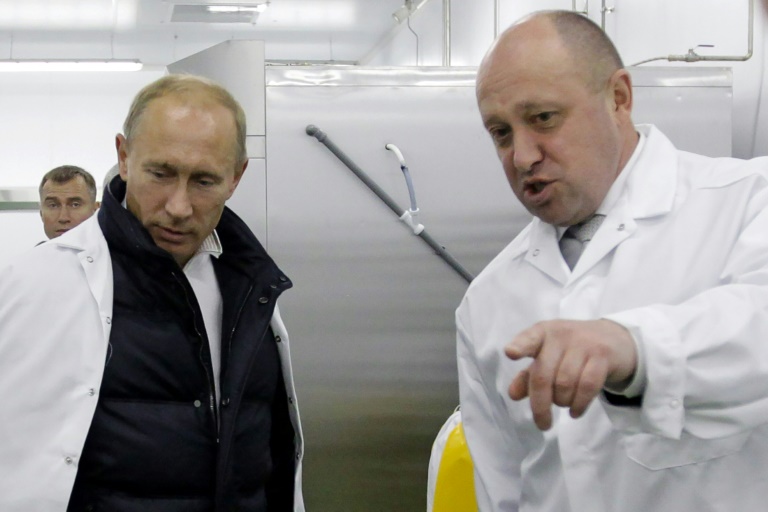
Russia's Wagner facing UK court action over Ukraine 'terrorism'

Lawyers in Britain on Tuesday took the first step towards what they said was “groundbreaking” legal action against Russia’s shadowy Wagner group over allegations it has committed “terrorism” in Ukraine.

The proposed legal move is aimed at uncovering billions of dollars in reparations for victims of the mercenary fighters. 

Wagner emerged in 2014 in Ukraine and is suspected by the West of doing the Kremlin’s dirty work in countries such as Syria and the Central African Republic — a charge Russia has always denied.

Jason McCue, senior partner at McCue Jury and Partners, said Wagner and its alleged boss Yevgeny Prigozhin “engaged in a campaign of terrorism” in Ukraine including murder, rape, the targeting of infrastructure and the planting of explosives around nuclear facilities.

“Their purpose was to spread terror and chaos in Ukraine,” he told Britain’s House of Commons Foreign Affairs Committee on Tuesday.

Ukrainian officials have said Wagner has been sending thousands of soldiers recruited in Russian prisons to the front line, with the promise of a salary and an amnesty.

According to communications intercepted by German intelligence, Wagner group mercenaries may have been involved in atrocities in the Ukrainian town of Bucha soon after the invasion on February 24.

– ‘Courageous Ukrainian victims’ –

McCue told the lawmakers Wagner had to be stopped and that “every option must be pursued to further protect victims of Wagner elsewhere in the world”.

Legal action “on behalf of courageous Ukrainian victims has just this second been commenced” against Wagner group and Prigozhin, he said.

“The claim has been commenced with formal service of a Letter Before Action on Prigozhin and Wagner. This is the first time in the world that Wagner and their likes have been sued by its victims for terrorism, used as a weapon of war, Putin’s illegal war,” he told members of parliament.

McCue said evidence would be produced before the High Court in London aimed at establishing that “Wagner engaged in terrorism against the Ukrainian people” and that “Putin’s war machine engaged in an unlawful conspiracy to deploy terrorism to facilitate their illegal invasion of Ukraine”.

The case was being brought by a group of Ukrainian victims in the UK but also “symbolically represents” all Ukrainians who have “suffered loss as a result of the war”, he added.

– Close Putin ally –

Mikhail Khodorkovsky, a former oligarch turned critic of Russian President Vladimir Putin told the hearing Prigozhin’s influence was on a par with that of other senior ministers in the Kremlin due to his personal relationship with the leader.

“The influence of Mr Prigozhin is approximately equal to the influence of Mr (Sergei Shoigu), minister of defence, or Mr (Sergei) Lavrov, foreign minister,” he said.

Prigozhin, he said, was close enough to Putin that he was even allowed to sign pardons on behalf of the president in order to allow him to recruit criminals from prisons “irrespective of the gravity of the crimes”.

“This is a very high level of influence,” he said.

The exiled tycoon said he believed the Wagner group would in the future be used “in Europe”.

And he criticised Western governments for being too slow to recognise the danger it posed.

In Africa, he said, Wagner had been engaged in the “preparing and training” of combat groups.

“This should have raised great concern and a great response at that time,” he said, adding that there had been a “great under-estimation of the enemy”.

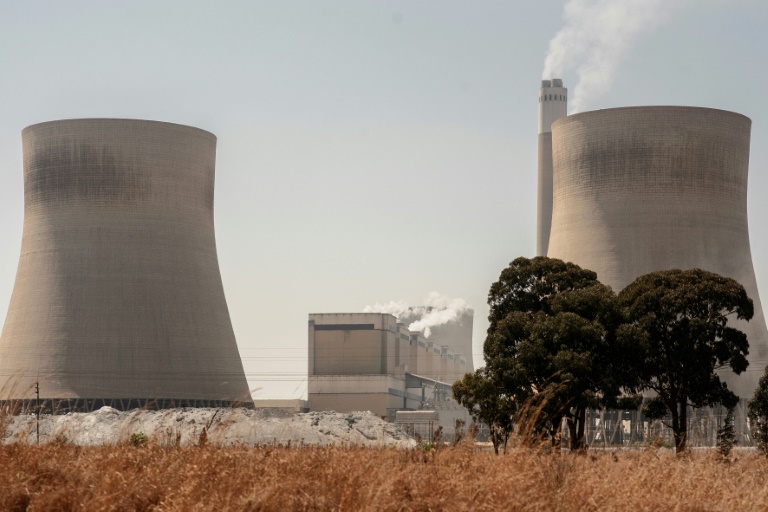
S.Africa will need $500 bn to reach net zero: World Bank

South Africa, one of the world’s largest greenhouse gas emitters, will require at least half-a-trillion dollars to achieve carbon neutrality by 2050, the World Bank said Tuesday.

“Financing requirements associated with the transitions could amount to 4.4 percent of GDP per year — or 8.5 trillion rand (about $500 billion)” between this year and 2050, said the bank in a report published Tuesday.

In light of the government’s limited fiscal capacity, the domestic private sector and external financing will be required for the transition, it said.

Last year, South Africa, the continent’s most industrialised economy, secured $8.5 billion in loans and grants from a group of rich nations to finance the transition to cleaner energy sources.

The bank said South Africa accounts for 1.2 percent of global greenhouse gas emissions — with the coal-dominated energy sector responsible for nearly half of its discharges.

“The power sector… will need to transform radically by moving away from coal toward renewables,” it said, projecting that solar and wind will provide about 85 percent of the country’s energy by 2050.

The country “is one of the most carbon- and energy intensive economies in the world”, the bank added, noting that South Africa’s carbon intensity was 3.2 times higher than the global average in 2019.

“This shift should start immediately to address the ailing generation capacity, accompanied by (an) enhanced regional energy market,” said the bank.

A shift away from coal for renewable sources of energy will help the country tackle its ongoing energy crisis “most urgently and cost-competitively”.

But transitioning from coal will come at a heavy cost.

The bank estimates that at least 300,000 jobs in high-emitting sectors will be lost, urging the government to find ways to alleviate the potential negative effects of the transition.

For every job lost, the bank estimated that between two and three jobs could be created in renewables, green manufacturing and non-coal mining sectors.

Julie Powell of 'Julie and Julia' fame dies at 49

Julie Powell, the writer whose yearlong mission to cook through Julia Child’s “French Cooking” masterpiece was immortalized in print and film, has died of cardiac arrest, The New York Times said Tuesday. She was 49 years old.

Citing her husband, the paper said one of the original food bloggers died on October 26 at her home in upstate New York.

Disillusioned with her low-level administration job in New York and seeking a creative outlet, Powell launched her Julie/Julia Project in the nascent era of internet writing, detailing her kitchen adventures using spiky humor in a direct, diaristic tone.

The project involved cooking all 524 recipes from Child’s 1961 classic “Mastering the Art of French Cooking, Volume 1” from her tiny, broken-down apartment in Long Island City, Queens that she shared with her husband.

The self-deprecating drama of her mishaps and disappointments both in and out of the kitchen struck a chord with a crop of primarily Gen X readers, and the blog gained hundreds of thousands of views at a moment when many people still used dial-up.

In 2005 the project was published as a book: “Julie & Julia: 365 Days, 524 Recipes, 1 Tiny Apartment Kitchen.”

For her final film the late writer and director Nora Ephron adapted the book into an Oscar-nominated feature film, starring Meryl Streep as Child and Amy Adams as Powell.

Powell’s project inspired scores of food bloggers who followed, its template and tone apparent in the later successful web and social media projects of cooks including Dorie Greenspan, Ina Garten, Deb Perelman and Alison Roman.

“I was shocked to learn this morning of the passing of Julie Powell, the original food blogger,” Perelman tweeted Tuesday under the account of her famous social media and cookbook brand, Smitten Kitchen. 

“Cooking through Julia Child’s books, she made Child relevant to a new generation, and wrote about cooking in a fresh, conversational, this-is-my-real life tone that was rare back then.”

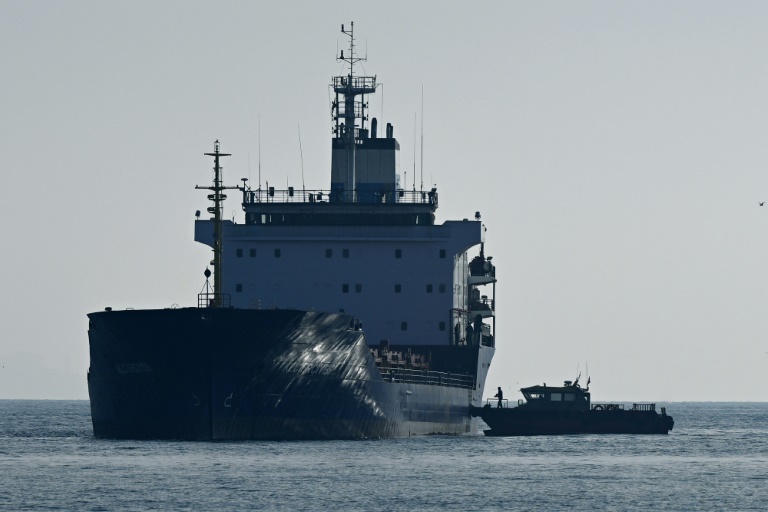
Grain exports to stop as Putin demands 'real guarantees' from Kyiv

Grain exports will halt on Wednesday after Moscow pulled out of a deal to let ships through the Black Sea, as Russian President Vladimir Putin demanded “real guarantees” from Kyiv before returning to the agreement.

Russia announced its suspension on Saturday, accusing Ukraine of misusing the safe shipping corridor for an attack on Russian ships in Crimea. Kyiv has dismissed this as a “false pretext” to withdraw.

The Turkey and UN-brokered deal signed in July by Kyiv and Moscow is crucial to easing a global food crisis caused by the war.

In a phone call with Turkish President Recep Tayyip Erdogan Tuesday, Putin wanted Kyiv to give “real guarantees” that it was “not using the humanitarian corridor for military purposes”, a Kremlin statement said.

No grain ship movements were planned for Wednesday, the body overseeing the export deal said, although three more grain-loaded cargo ships left Ukrainian ports on Tuesday.

Moscow had warned on Monday it was “more risky, dangerous” to continue the exports without Russia’s participation.

Russia is also putting greater pressure on Ukrainians inside the country as recent attacks damaged the country’s infrastructure, plunging families and businesses into darkness weeks before winter.

On Tuesday, Kyiv mayor Vitali Klitschko said water and electricity supplies had been “fully restored” in the capital.

But the attacks have “seriously damaged around 40 percent of the entire energy infrastructure” of Ukraine, the presidency said in a statement.

Ukrainian presidential adviser Oleksiy Arestovich said Monday’s bombardment was “one of the most massive shellings of our territory by the army of the Russian Federation”.

– Infrastructure strikes –

Following the strikes, aerial views showed Kyiv thrown into darkness overnight, with the only lights coming from street traffic.

Monday’s shelling had left 80 percent of the capital’s consumers without water and 350,000 homes without electricity. 

Klitschko warned there would still be planned power cuts in the city “because of the considerable deficit in the power system after the barbaric attacks of the aggressor”.

Ukrainian energy operator Ukrenergo said it would limit supplies to all consumers in central and northern regions of the country to “reduce the pressure on the network”.

EU commissioner for energy Kadri Simson arrived in Kyiv “to help scale up support to the Ukrainian energy sector”, she said on Twitter.

The Ukrainian army said Russia launched 55 cruise missiles Monday, mainly at energy infrastructure.

Russia’s defence ministry claimed Tuesday the “massive strikes… significantly disrupted the management and logistics of the Ukrainian armed forces”.

Russia has pivoted to systematically attacking the Ukrainian utilities network after setbacks on the battlefield, where its army is facing pushbacks on the eastern and southern fronts.

In the south, Kyiv’s forces are preparing for fierce battles to recapture the city of Kherson and its surrounding region.

Kherson is one of four regions — along with Zaporizhzhia, Donetsk and Lugansk — that Moscow claims to have annexed but does not fully control. 

– New ‘evacuations’ from Kherson –

Russian authorities meanwhile announced tens of thousands more civilians would be “evacuated” from the Russian-occupied southern Ukrainian region of Kherson amid a counter-offensive by Kyiv.

This comes after 70,000 people already left their homes in Kherson, Moscow-installed local authorities said last week.

The Russian-backed leader of the Kherson region, Vladimir Saldo, said on Tuesday new resettlements were being carried out because of the risk of a “massive missile attack” by Ukrainian forces on a local dam.

But Ukraine said Russian “occupiers are carrying out forced displacement of the civilian population”.

“Citizens living in premises along the banks of the Dnipro river are being forcibly evicted from their homes,” the General Staff of the Ukrainian Armed Forces said on Facebook Tuesday. 

– Grain corridor –

Turkey has stepped up diplomatic efforts to salvage the grain export deal that was due to be renewed on November 19.

Erdogan told Putin during Tuesday’s call that he was “confident” the issue of grain exports from Ukraine could be resolved, according to the Turkish presidency.

The resumption of the deal could only take place after a “thorough investigation into the circumstances of the incident”, Putin told Erdogan.

With millions at risk of starvation unless exports continue, French President Emmanuel Macron “denounced” Russia’s decision to exit the deal “which again harms global food security” in a call with his Ukrainian counterpart Volodymyr Zelensky Tuesday, his office said.

Zelensky thanked Macron on Twitter for “specific decisions on strengthening Ukraine’s defence capabilities. Specific initiatives to restore the destroyed energy infrastructure”.

bur-sea/raz/gw

Despite conflict Russia sends France giant magnet for nuclear fusion project

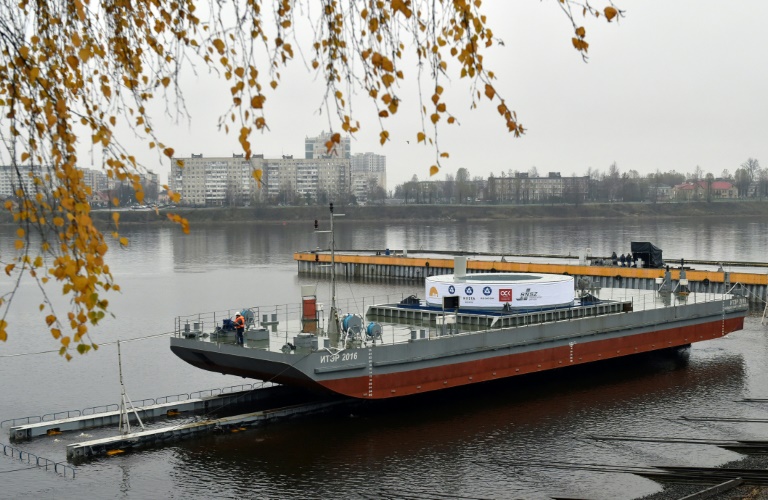
Russia on Tuesday dispatched one of six giant magnets needed for the ITER nuclear fusion programme in France, one of the last international scientific projects Moscow participates in despite the Ukraine conflict. 

The ship carrying the Russian-made magnet — or “poloidal field coil” — departed Saint Petersburg on Tuesday under grey skies.

On board, the massive nine-metre-wide coil, which weighs 200 tonnes had been tightly wrapped to withstand a two-week trip to Marseille, southern France. 

The ring-shaped magnet built under Russian atomic agency Rosatom’s supervision will make up the top part of the world’s largest “tokamak”.

The tokamak is a magnetic fusion device built in France following the same principle that powers our sun and stars.

The Russian piece was meant to leave in May but sanctions forbidding Russian ships docking in Europe delayed the departure. 

Still, the “current situation did not change the fact that we will fullfil our obligations”, Rosatom representative for international projects Viacheslav Perchukov said.

Geopolitical tensions “practically did not affect the realisation of this project”, Perchukov said.  

“Without (the Russian coil), the tokamak will not work,” senior ITER centre scientist Leonid Khimchenko told AFP.

He hailed a “unique” achievement, over eight years in the making. 

In southern France, 35 nations are collaborating to build the largest nuclear fusion device in the world. 

“This is such an interesting project that in fact we are all one family… there is no competition between us, nothing,” Khimchenko said.

The project was set in motion after a 1985 summit between US President Ronald Reagan and Russian leader Mikhail Gorbachev.

Andrey Mednikov, a scientist in charge of the production of the poloidal field coil, praised the continuing international cooperation. 

“If this cooperation was brought to a halt,” Mednikov said, “everyone would lose: both Russia and the international community.”

Close Bitnami banner
Bitnami