US Business

Hackers, abusers and regulators may vex Musk at Twitter

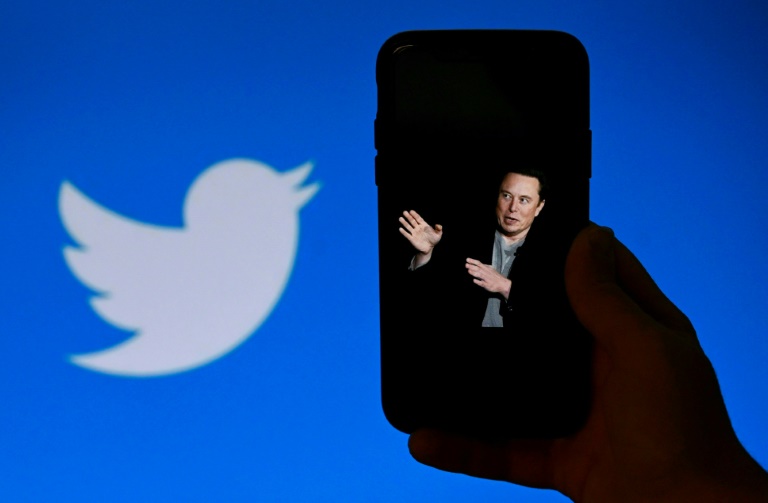
Elon Musk’s talk of slimming Twitter’s staff and letting people post anything allowed by law is expected to clash with the reality of fending off hackers, trolls, police and regulators, experts say.

If Musk guts Twitter staff or mass resignations hit the platform, it could mean “doom,” said Rebekah Tromble, director of the Institute for Data, Democracy and Politics at George Washington University.

“No matter Musk’s big vision, you need a highly skilled, knowledgeable workforce capable of (re)building a viable platform and responding to EU obligations,” Tromble told AFP.

Along with engineers, that includes legal and policy teams that keep user data safe and guard against dangerous posts.

“There really, truly are almost countless ways that Twitter as a company has to think about safeguarding its users,” Tromble said.

Cybersecurity issues range from lone hackers out to cause mischief to organized groups and attacks by nation states.

Then there are “bad actors” who gang up to abuse targets on Twitter in a tactic referred to as “dog piling.”

“One of my greatest fears at the moment, is that a sort of large scale firing or even large scale resignations will mean that the already imperfect system will just backslide,” Tromble said.

Losing people from teams that fight intrusive demands by police or other government agencies for Twitter user data means experience walks out the door with them, Tromble added.

– Tweet trouble –

Musk is in for a wake-up call when it comes to taking a laissez faire approach to content moderation, according to Emma Llanso of the Center for Democracy and Technology.

US law is permissive in terms of letting social media platforms decide content policies and not holding them accountable for what users post, but that could soon change, Llano said.

The US Supreme Court, in a decision with potentially far-reaching ramifications, is set to hear two cases challenging the legal immunity of internet companies from liability for content posted by their users.

The top court in the United States may well decide to roll back how much social media firms like Twitter are immune to blame for content “recommended” to users.

“There are any number of decisions content sorting algorithms must make regarding which tweets a user sees,” Llanso said.

“Does that make them recommended?”

Musk has said he wants to rely more on software and less on people for content moderation.

The Supreme Court is also to consider cases concerning whether states can dictate content rules at social media platforms.

And while there is currently strong legal footing for Musk to do as he wants with content moderation in the United States, laws are more restrictive in Europe and elsewhere.

“Many countries around the world are really looking at cracking down on the broad leeway social media services have had till now on setting content policy the way they see fit,” Llanso said.

Varying content moderation laws will also mean that Twitter has to figure out in real time what can be shown where.

With Musk at the helm for just some 24 hours, malicious characters were already testing the limits of Twitter systems, Tromble noted.

“And when hate speech, doxxing and harassment slip through the cracks, real harm occurs,” Tromble said.

“Doxxing” is the publication of private or identifying information about a person, often with malicious intent. 

Even if there aren’t legal consequences for letting Twitter turn foul, there are business consequences, said Electronic Frontier Foundation director of federal affairs, India McKinney.

“People are looking for a place to go,” McKinney said of the search by some users for an alternative to Twitter.

“It is an opportunity for someone, that’s for sure.”

Russia says repelled Ukraine drone attack on Crimea fleet

The Russian army accused Ukraine of a “massive” drone attack on its Black Sea Fleet in Crimea on Saturday, claiming the UK helped in the strike that damaged a ship.

Sevastopol in Moscow-annexed Crimea, which has been targeted several times in recent months, serves as the headquarters for the fleet and a logistical hub for operations in Ukraine.

The Russian army claimed to have “destroyed” nine aerial drones and seven maritime ones, in an attack early Saturday in the port. 

Moscow’s forces alleged British “specialists”, whom they said were based in the southern Ukrainian city of Ochakiv, had helped prepare and train Kyiv to carry out the strike.  

In a further singling out of the UK — which Moscow sees as one of the most unfriendly Western countries — Moscow said the same British unit was involved in explosions of the Nord Stream gas pipeline last month. 

Moscow’s military said ships targeted at their Crimean base were involved in a UN-brokered deal to allow the export of Ukrainian grain. 

Russia had recently criticised the deal, saying its own grain exports have suffered due to Western sanctions. 

– ‘Massive’ attack –

Mikhail Razvozhayev, the Moscow-instaled governor of Sevastopol, said Saturday’s drone attack was the “most massive” the peninsula had seen. 

The city’s services were on “alert” but he claimed no “civilian infrastructure” had been damaged. 

He called on residents of the city not to post videos of the incident on social media.

“It should be clear to everyone that such information is much needed for Ukrainian Nazis in order to understand how the defence of our city is built,” he said.

City authorities said that the harbour was “temporarily” closed to boats and ferries and urged people “not to panic.” 

Attacks on Crimea, annexed by Moscow in 2014, have increased in recent weeks, as Kyiv presses with a counter-offensive in the south to retake lands held by Moscow for months. 

Moscow-installed authorities in Kherson, just north of Crimea, have vowed to turn the city into a fortress, preparing for an inevitable assault. 

On Thursday, Razvozhayev said a thermal power station had been attacked in Balaklava, in the Sevastopol area. 

He claimed there was only minor damage and no casualties.  

In early October, Moscow’s bridge linking Crimea to the Russian mainland — personally inaugurated by President Vladimir Putin in 2018 — was damaged by a blast that Putin blamed on Ukraine. 

The Russian fleet stationed in the port had also been attacked by a drone in August.  

Russia’s allegations Saturday came as the Ukrainian army reported fighting in the Lugansk and Donetsk regions in the east, including near Bakhmut — the only area where Moscow’s forces have advanced in recent weeks.  

Pro-Russian separatists fighting alongside Moscow also announced a new prisoner exchange with Kyiv, saying 50 will return home from each side. 

On the southern front, AFP journalists witnessed artillery battles in the village of Kobzartsi, the last settlement on the Ukrainian side before the line of contact with the Russians. 

“It can go wrong here. But we know that they suffer much more on their side than on ours,” said Ukrainian soldier in his 20s, Oleksiy. 

Both sides were gearing up for the battle for the city of Kherson, the regional capital that fell to Moscow’s forces in the first days of their offensive.  

Musk seeks to soothe critics with Twitter content panel

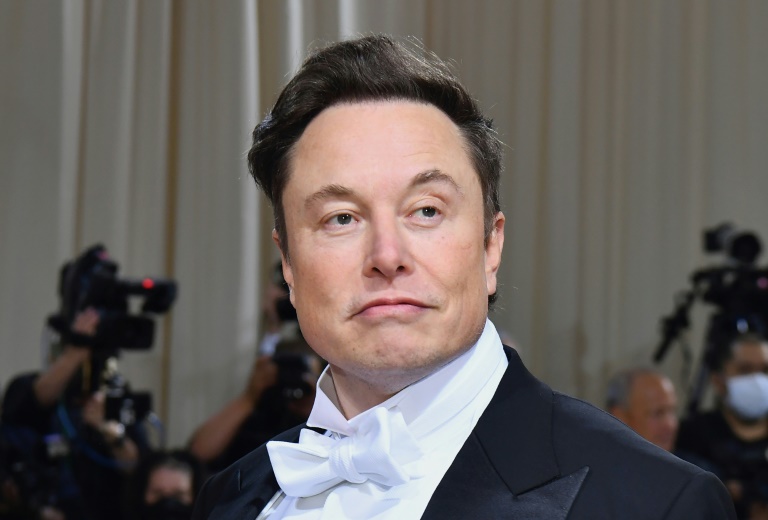
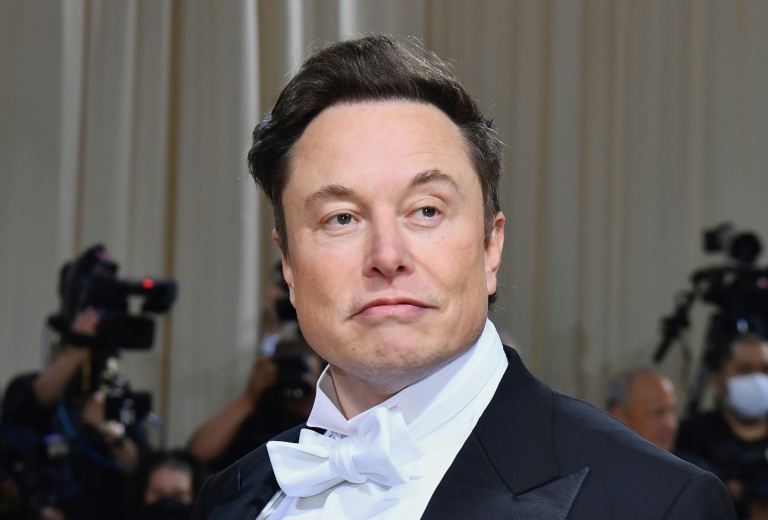
Twitter formally became the private property of Elon Musk on Friday, steering the social media giant down an uncertain path under the stewardship of one of its most vocal critics.

Scrutiny quickly turned to how the platform will operate under a self-proclaimed free-speech absolutist who some users fear will turn Twitter into a global stage for hate speech and disinformation.

In a nod to such concerns, Musk’s first policy act was to tweet that he will form a “content moderation council” embracing “widely diverse viewpoints.”

“No major content decisions or account reinstatements will happen before that council convenes,” he said.

Musk’s sealing of the on-again, off-again $44 billion deal ended a months-long soap opera of corporate chicanery, involving insults, threats and lawsuits.

“The bird is free,” tweeted the billionaire Tesla founder and space pioneer in reference to the company’s logo. “Let the good times roll.”

The deal drew contrasting reactions, with former US president Donald Trump cheering the change of leadership on a platform that had banned him, while activists warned of a surge in harassment and misinformation.

European politicians were quick to signal to Musk that the continent had regulations for social media companies.

“In Europe, the bird will fly by our rules,” tweeted Thierry Breton, the EU internal market commissioner.

Musk had vowed to dial back content moderation and was expected to clear the way for Trump to return to the platform.

The then-president was blocked over concerns he would ignite more violence like the 2021 deadly attack on the US Capitol to overturn his election loss.

Taking to his own Truth Social platform, Trump said he was “very happy that Twitter is now in sane hands” — but gave no commitment to rejoin if allowed.

Far-right users were quick to rejoice at Musk’s ownership, posting comments such as “masks don’t work” and other taunts, under the belief that moderation rules would now be relaxed.

– ‘A huge responsibility’ –

Yale University philosophy professor Jason Stanley, who has characterized Trump’s rise as a sign of mounting fascism in the United States, said he would alter his approach to posting.

“For the moment I am staying on Twitter. But I am going to try to be much more careful about what I say now that Elon Musk is in charge. Cascading hate speech targeting can destroy your week,” he said.

Right-wing political commentator Ben Shapiro said he gained 40,000 Twitter followers Friday, while the actor Mark Hamill, a liberal, said he had lost almost 6,000 followers over the last three days.

Musk reportedly fired Twitter chief executive Parag Agrawal and other senior officials — though the company did not reply to a request for comment and Agrawal still listed himself as CEO on his Twitter profile.

But Ned Segal, Twitter’s chief financial officer since 2017, announced his departure.

“At its best, (Twitter) democratizes communication and knowledge, ensuring accountability and equal distribution of info,” Segal said.

“It’s a huge responsibility for everyone that shares in the work. I wish them strength, wisdom and foresight.”

On Friday, employees filled the San Francisco headquarters. “There were more people in the office today than I’ve ever seen since Covid,” said an employee who asked to remain anonymous.

“Elon brought in teams of engineers from Tesla to do some evaluations.  

“I would be very surprised if there were not some reductions of the workforce soon.” 

Musk, who is using a combination of his own money, funds from wealthy investors and bank loans to finance the deal, has conceded he is overpaying for a company that has regularly posted eye-watering losses.

– How to monetize? –

Twitter says it has 238 million daily users — dwarfed by the likes of Facebook’s nearly two billion — and has not been able to monetize in the same way as its rivals.

But it holds an outsized influence on public debate because it is the favored platform for many companies, politicians, journalists and other public figures.

Though he has vowed that Twitter will not become a “free-for-all hellscape,” Musk reportedly plans deep staff cuts that would gut teams that oversee content.

Despite Musk posting a letter to advertisers saying he wants Twitter to be a forum where rival viewpoints can be debated in a “healthy manner”, US auto giant General Motors said Friday it has “temporarily paused” paid ads on the platform.

“We are engaging with Twitter to understand the direction of the platform under their new ownership,” said a GM spokesman. 

Media watchdog Media Matters for America sounded the alarm over the future of a Musk-led Twitter, particularly the impact on imminent US midterm elections.

The platform “is now on a glide path to becoming a supercharged engine of radicalization” and a “fever swamp of dangerous conspiracy theories, partisan chicanery, and operationalized harassment,” the organization’s head Angelo Carusone said.

Musk seeks to soothe critics with Twitter content panel

Twitter formally became the private property of Elon Musk on Friday, steering the social media giant down an uncertain path under the stewardship of one of its most vocal critics.

Scrutiny quickly turned to how the platform will operate under a self-proclaimed free-speech absolutist who some users fear will turn Twitter into a global stage for hate speech and disinformation.

In a nod to such concerns, Musk’s first policy act was to tweet that he will form a “content moderation council” embracing “widely diverse viewpoints.”

“No major content decisions or account reinstatements will happen before that council convenes,” he said.

Musk’s sealing of the on-again, off-again $44 billion deal ended a months-long soap opera of corporate chicanery, involving insults, threats and lawsuits.

“The bird is free,” tweeted the billionaire Tesla founder and space pioneer in reference to the company’s logo. “Let the good times roll.”

The deal drew contrasting reactions, with former US president Donald Trump cheering the change of leadership on a platform that had banned him, while activists warned of a surge in harassment and misinformation.

European politicians were quick to signal to Musk that the continent had regulations for social media companies.

“In Europe, the bird will fly by our rules,” tweeted Thierry Breton, the EU internal market commissioner.

Musk had vowed to dial back content moderation and was expected to clear the way for Trump to return to the platform.

The then-president was blocked over concerns he would ignite more violence like the 2021 deadly attack on the US Capitol to overturn his election loss.

Taking to his own Truth Social platform, Trump said he was “very happy that Twitter is now in sane hands” — but gave no commitment to rejoin if allowed.

Far-right users were quick to rejoice at Musk’s ownership, posting comments such as “masks don’t work” and other taunts, under the belief that moderation rules would now be relaxed.

– ‘A huge responsibility’ –

Yale University philosophy professor Jason Stanley, who has characterized Trump’s rise as a sign of mounting fascism in the United States, said he would alter his approach to posting.

“For the moment I am staying on Twitter. But I am going to try to be much more careful about what I say now that Elon Musk is in charge. Cascading hate speech targeting can destroy your week,” he said.

Right-wing political commentator Ben Shapiro said he gained 40,000 Twitter followers Friday, while the actor Mark Hamill, a liberal, said he had lost almost 6,000 followers over the last three days.

Musk reportedly fired Twitter chief executive Parag Agrawal and other senior officials — though the company did not reply to a request for comment and Agrawal still listed himself as CEO on his Twitter profile.

But Ned Segal, Twitter’s chief financial officer since 2017, announced his departure.

“At its best, (Twitter) democratizes communication and knowledge, ensuring accountability and equal distribution of info,” Segal said.

“It’s a huge responsibility for everyone that shares in the work. I wish them strength, wisdom and foresight.”

On Friday, employees filled the San Francisco headquarters. “There were more people in the office today than I’ve ever seen since Covid,” said an employee who asked to remain anonymous.

“Elon brought in teams of engineers from Tesla to do some evaluations.  

“I would be very surprised if there were not some reductions of the workforce soon.” 

Musk, who is using a combination of his own money, funds from wealthy investors and bank loans to finance the deal, has conceded he is overpaying for a company that has regularly posted eye-watering losses.

– How to monetize? –

Twitter says it has 238 million daily users — dwarfed by the likes of Facebook’s nearly two billion — and has not been able to monetize in the same way as its rivals.

But it holds an outsized influence on public debate because it is the favored platform for many companies, politicians, journalists and other public figures.

Though he has vowed that Twitter will not become a “free-for-all hellscape,” Musk reportedly plans deep staff cuts that would gut teams that oversee content.

Despite Musk posting a letter to advertisers saying he wants Twitter to be a forum where rival viewpoints can be debated in a “healthy manner”, US auto giant General Motors said Friday it has “temporarily paused” paid ads on the platform.

“We are engaging with Twitter to understand the direction of the platform under their new ownership,” said a GM spokesman. 

Media watchdog Media Matters for America sounded the alarm over the future of a Musk-led Twitter, particularly the impact on imminent US midterm elections.

The platform “is now on a glide path to becoming a supercharged engine of radicalization” and a “fever swamp of dangerous conspiracy theories, partisan chicanery, and operationalized harassment,” the organization’s head Angelo Carusone said.

Nets owner says disappointed in Irving's support of 'anti-Semitic' film

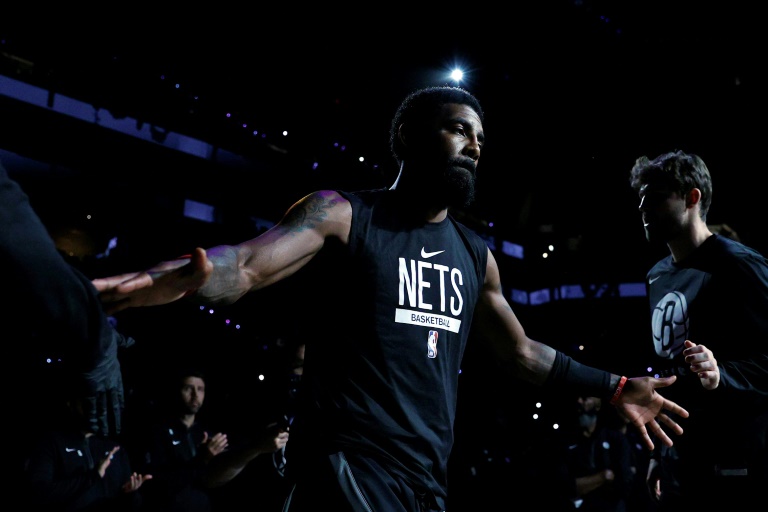
Brooklyn Nets owner Joe Tsai said Friday he was “disappointed” that guard Kyrie Irving used social media to draw attention to a film based on a book “full of anti-Semitic disinformation.”

Irving posted a tweet on Thursday that offered a link to the Amazon page for the 2018 film “Hebrews to Negroes: Wake Up Black America”.

“I’m disappointed that Kyrie appears to support a film based on a book full of anti-Semitic disinformation,” Tsai tweeted on Friday.

“I want to sit down and make sure he understands this is hurtful to all of us, and as a man of faith, it is wrong to promote hate based on race, ethnicity or religion.”

“This is bigger than basketball.”

In addition to Tsai’s Twitter post, the Nets issued a statement saying they “strongly condemn and have no tolerance for the promotion of any form of hate speech.”

Irving has shared controversial opinions before.

He was sidelined much of last season because of his refusal to be vaccinated against Covid-19, calling Covid vaccine mandates “one of the biggest violations of HUMAN RIGHTS in history”.

He once caused a flap by suggesting he believes the Earth is flat, and in October he was criticized by NBA legend Kareem Abdul-Jabbar for sharing a video from far-right conspiracy theorist Alex Jones.

VP Harris to replace Biden at last of three Asia summits

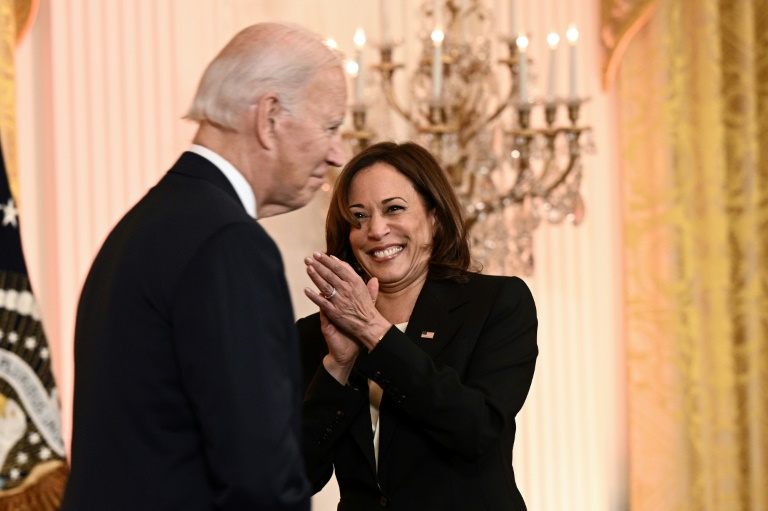
Vice President Kamala Harris will represent the United States next month in Bangkok in the third in a trio of Asian summits, the White House confirmed Friday, as President Joe Biden returns for his granddaughter’s wedding.

Biden will travel on November 11 to the annual UN climate conference in Egypt before heading to the East Asia Summit in Cambodia and the Group of 20 in Bali, the White House said.

But he will not attend the summit of the Asia-Pacific Economic Cooperation (APEC) forum taking place in the Thai capital on November 18-19.

Harris will attend instead and travel afterward to the Philippines, a longtime US ally, with her husband, Doug Emhoff.

The White House said in a statement that her visit would “re-affirm and strengthen the US-Philippines Alliance and underscore the breadth of our cooperation as friends, partners and allies.”

The United States is hoping for a smooth relationship with President Ferdinand Marcos Jr. after rough patches with his abrasive predecessor, Rodrigo Duterte.

Marcos scrapped a deal to buy military helicopters from Russia, the target of a US pressure campaign over its invasion of Ukraine, and has instead sealed a deal with the United States.

Thailand is also a treaty ally of the United States. Diplomats say that Thailand has been resigned to if not pleased with Biden’s decision to skip the APEC summit.

His eldest granddaughter, Naomi Biden, earlier this year announced plans to get married on November 19 on the White House’s South Lawn, only the 19th wedding ever held at the US executive mansion, according to the White House Historical Association.

Biden will likely have a chance to visit Thailand in 2023 when the kingdom takes over from Cambodia as chair of the Association of Southeast Asian Nations (ASEAN), which leads the annual East Asia Summit.

Asian diplomats and experts put high value on US presidents’ attendance at such summits, seeing them as proof of Washington’s stated commitment to the region at a time when China is seeking to exert its clout.

But then US president Donald Trump also skipped the last in-person APEC summit, in 2018 in Papua New Guinea, with vice president Mike Pence attending instead.

It looks improbable that Biden will miss the APEC summit next year as the host is the United States.

The summit venue has not been announced but the State Department said that APEC top diplomats will hold a preparatory meeting in August 2023 in Seattle, three months after the bloc’s trade officials gather in Detroit.

Obama says democracy at stake in US midterms

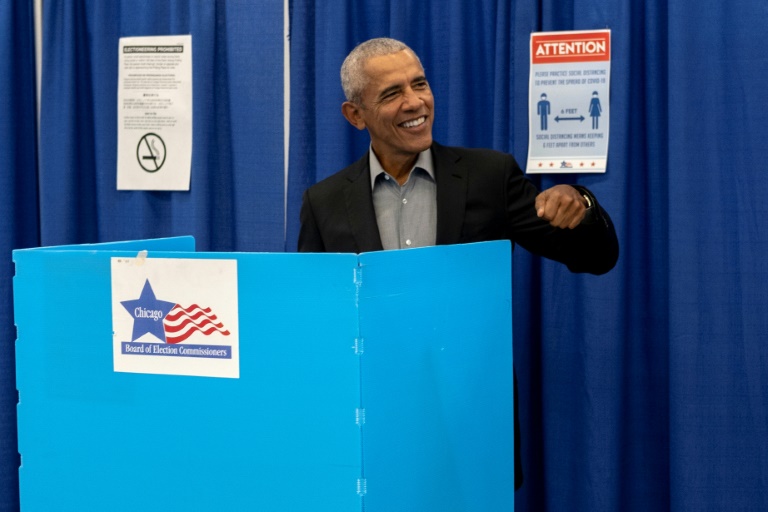
Former US president Barack Obama said Friday that democracy is at stake in next month’s midterm elections in the United States, as he hit his first stop on the campaign trail.

The Democratic power player, who remains a hugely popular figure in his party, told a boisterous rally in Georgia that everyone had to get out and vote to prevent election conspiracy theorists getting their hands on the levers of power.

“It’s not enough to elect Democrats at the top of the ticket,” a fired-up Obama told the crowd in the suburbs of Atlanta.

“We need to elect good people up and down the ballot. Across the country, some of the folks who tried to undermine our democracy are running for offices that will oversee the next election. 

“And if they win, there’s no telling what might happen.”

Obama, who has kept a relatively low profile since leaving office in 2017, was guest of honor at the rally in Georgia, where two extremely close contests, fueled by tens of millions of dollars, are captivating America. 

Democrat Raphael Warnock, the first Black US senator elected in the southern state with a long history of segregation, is seeking re-election against Herschel Walker, a former American football star backed by Donald Trump. 

The contest could well decide which party gets control of the US Senate — and the ability to advance or frustrate President Joe Biden’s agenda. 

There is also a fierce battle for the governor’s office, where Republican Brian Kemp is up against influential Democratic figure Stacey Abrams. 

As well as hammering the Republican Party on electoral integrity and the Trump-driven false claims that the 2020 presidential ballot was rigged, Obama also touched on abortion rights, which have been threatened since the Supreme Court overturned the long-standing Roe vs. Wade.

“Women everywhere should be able to control have a say in what happens with their own bodies,” he said. 

“It shouldn’t be controversial to say that the most personal of healthcare choices should be made by a woman and her doctor. Not by a bunch of mostly male politicians.”

Americans have already begun voting in elections that will decide control of both houses of Congress, as well as who gets the governors’ mansions in dozens of states.

Hundreds of other positions at county and state level will also be decided in the November 8 polls.

Intruder hunting US politician Pelosi attacks her husband with hammer

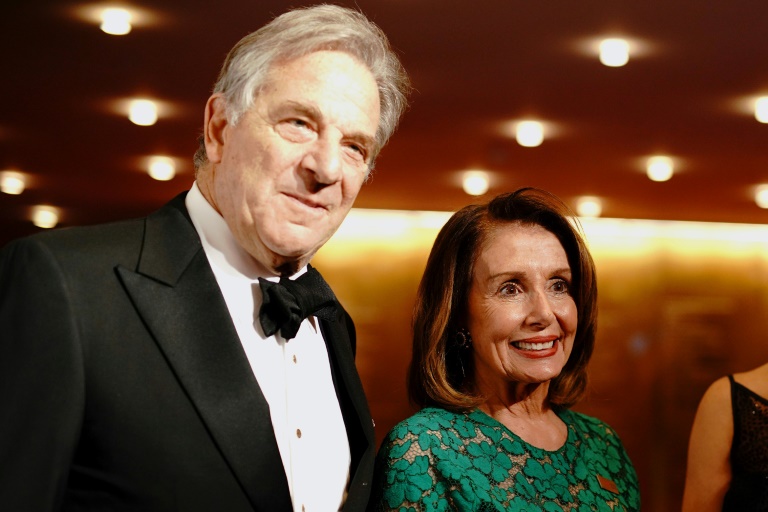
An intruder attacked the husband of US House Speaker Nancy Pelosi with a hammer, fracturing his skull, after breaking into their California home on Friday in search of her.

Paul Pelosi was “attacked at home by an assailant who acted with force and threatened his life while demanding to see the speaker,” Pelosi spokesman Drew Hammill said.

Paul Pelosi, 82 — who underwent surgery and is recovering in hospital — was at home alone, as his wife was working in Washington.

San Francisco police said officers found the assailant at the couple’s home just before 2:30 am (0930 GMT), where he and Paul Pelosi were scuffling over a hammer.

“The suspect pulled the hammer away from Mr. Pelosi and violently assaulted him with it,” San Francisco police chief Bill Scott told reporters, saying later that Paul Pelosi was hit at least once. 

He identified the assailant as 42-year-old David Depape but declined to take questions.

At a press conference Friday evening, Scott said the suspect was still in hospital, adding he could not yet publicly reveal the alleged motivation for the crime. 

“This was not a random act,” Scott said. “This was intentional, and it is wrong.”

“Everybody should be disgusted about what happened this morning.”

– ‘Condemn all violence’ –

US media, citing family sources, said the intruder told Paul Pelosi he was going to tie him up and wait for the speaker to get home.

The victim managed to dial 911 while the man was distracted, according to an account given to cable network MSNBC.

Local media had earlier reported that the intruder shouted “Where’s Nancy?” during the assault.

Scott said Depape would be charged with attempted homicide, assault with a deadly weapon, burglary and other felonies.

“Mr. Pelosi was admitted to Zuckerberg San Francisco General Hospital where he underwent successful surgery to repair a skull fracture and serious injuries to his right arm and hands,” the speaker’s spokesman added.

“His doctors expect a full recovery.”

Nancy Pelosi — who is second in line to the presidency — and the couple’s five children were reported to be returning to San Francisco to be by his side. 

Addressing a campaign rally in Philadelphia on Friday evening, President Joe Biden called the attack “despicable” and said that political violence had “no place” in the United States.

“Enough is enough is enough,” he added.

Earlier in the day, Biden, also 82, had called Pelosi to express support and said he was praying for her husband, the White House said.

“He is… very glad that a full recovery is expected. The president continues to condemn all violence, and asks that the family’s desire for privacy be respected,” Biden’s press secretary Karine Jean-Pierre said in a statement.

– ‘Disgusted’ –

The intruder broke in through a sliding-glass door, The Wall Street Journal reported, citing unnamed law enforcement officers, leaving him with wounds to the head and body.

He had espoused extreme right-wing positions on social media, including conspiracy theories about Covid-19, one of the officers told the daily newspaper.

With less than two weeks to go before the crucial US midterm elections, members of both parties have sounded the alarm about the potential for political violence.

According to the Capitol Police in Washington, threats against lawmakers have more than doubled since 2017 to nearly 10,000 in 2021.

Members of both parties rallied to support Pelosi on social media, with several suggesting the assault was the inevitable result of an increase in violent political rhetoric.

Adam Kinzinger, a Republican member of the House committee investigating the January 2021 attack on the US Capitol, blamed conspiracy theories spread by Donald Trump and his far-right followers for radicalizing some supporters. 

“I want to be clear: when you convince people that politicians are rigging elections, drink babies’ blood, etc, you will get violence. This must be rejected,” he said of Friday’s attack.

Republican House whip Steve Scalise said he was “disgusted” by the attack.

Paul Pelosi was convicted of drunk driving after an accident in May and sentenced to five days in jail.

In one wealthy Atlanta suburb, a plot to secede from the city

More than two centuries after the United States declared independence from Britain, a very modern breakaway is being hatched in the plush suburbs of Atlanta — and taxation is once again the issue.

The residents of Buckhead, the richest neighborhood in Georgia’s capital, have tired of funding a city they say is failing to get its arms around crime, and they’ve had enough. 

“The reality is that we’re living somewhat in a war zone,” Bill White, the leader of a movement to make Buckhead its own municipality, tells AFP in a palatial, white-columned mansion owned by a friend.

It is just days until the midterms, a quadrennial affair between presidential elections when Americans pick their leaders in Congress, state legislatures and governors’ mansions — but White isn’t feeling particularly well represented. 

Everywhere he looks, the 55-year-old sees a community besieged — by threats as prosaic as neglected potholes and as urgent and shocking as home invasions and even murders.

It is not alarmist to worry over a surge in homicides that has plagued Atlanta but mayhem in Buckhead feels like a bit of a stretch, especially since crime has been falling in this upscale part of town.

White insists however that he doesn’t believe the data. 

The entrepreneur says he once counted Donald Trump among his friends in his New York days, and he deploys superlatives with the alacrity of the former president as he sets out his dream of an independent Buckhead, with its own mayor, schools and of course, its own police force. 

For Michael Owens, a professor of political science at Atlanta’s Emory University, Buckhead’s potential exit would be emblematic of a country riven by political, social and cultural divisions. 

“We have always created cities in the United States… The thing that’s very odd these days, though, is the call to break away from existing cities to, in essence, partition them or to secede from them,” he says.

Buckhead is far from being an isolated case of secessionary fervor. 

In 2002, residents of Hollywood tried unsuccessfully to divorce from Los Angeles and two years ago, residents of a rural part of Oregon voted to leave the Democratic state and join neighboring, more conservative Idaho. 

Atlanta relies heavily on the revenue provided by Buckhead’s upwardly mobile movers and shakers and naturally its ambitions are causing officialdom to break out in a collective cold sweat. 

– ‘Law and order’ –

All the city has to do is “adjust” its budget, says White’s host Warren Jolly, the owner of the palatial estate where waiters are starting to bustle near a staircase lined with leopard print. 

The 58-year-old real estate developer is entertaining guests at a fundraiser for Burt Jones, who is running to be Georgia’s new lieutenant governor on November 8. 

In that position, the Republican could greatly advance the cause of Buckheadian independence. And he has pledged to do just that.

In front of a crowd of guests enjoying hamburger sliders with fried green tomatoes, the 40-year-old launches into a tirade about the need to restore “law and order.” 

“We do not want to be Chicago… We do not want to lead the nation in homicides,” warns Jones, who raised $100,000 for his campaign war chest from the event.

It is a message that resonates in this audience of Republicans, who — in line with the party nationwide — accuse the Democrats of being soft on crime. 

But for some Atlanta residents, this plan by the city’s whitest neighborhood to break away from a city where half the population is Black smacks of racism.

“It’s a land grab in the home of Martin Luther King Jr. It’s insane,” said Tricia Harris, 45, a resident of the city of 500,000 and a member of a group fighting Buckhead independence. 

Denouncing “white entitled people, led by Trump Republicans” withholding money from areas where it is most needed, she tells AFP that the move is more likely to increase rather than stem criminality.  

Buckhead’s pro-secession denizens say charges of racism are misplaced, and that they are motivated by nothing more than the American-as-apple-pie dream of self-determination.

“It’s an insult to us that simply wanting to reduce crime, pay less taxes and get our 911 calls is somehow classified as being racist,” White retorts back at the mansion.

“It’s ridiculous.”

US Supreme Court to consider race-conscious university admissions

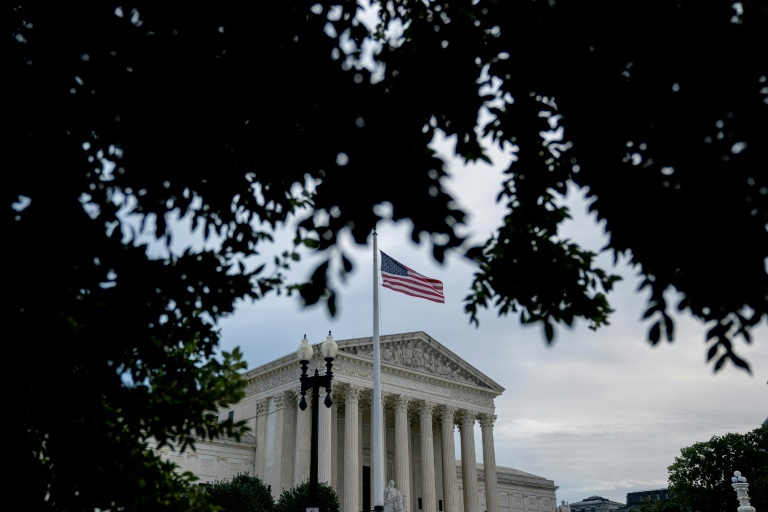
After abortion and guns, the US Supreme Court tackles another controversial and sensitive issue on Monday — the use of race in deciding who gets admitted to some of America’s top universities.

And the conservative-dominated court may be poised to make another historic U-turn, like it did in June when it overturned the landmark 1973 “Roe v. Wade” decision guaranteeing a woman’s right to abortion.

The court is to hear two hours of oral arguments on the use of race in admissions to Harvard and the University of North Carolina (UNC) — respectively the oldest private and public institutions of higher education in the country.

Harvard and UNC, like a number of other competitive schools, use race as a factor in trying to ensure representation of minorities, historically African Americans, in the student body.

The policy known as “affirmative action” emerged from the Civil Rights Movement in the late 1960s to “help address our country’s long history of discrimination and systemic inequality in higher education,” said Yasmin Cader, deputy legal director at the American Civil Liberties Union (ACLU).

It has been controversial from the start, drawing fire mostly from the right, and a number of white students have mounted legal challenges over the years, claiming “reverse discrimination.”

Nine states have banned affirmative action at public universities including California, where voters did so in a ballot proposition in 1996 and rebuffed an attempt to revive the policy in 2020.

– Students for Fair Admissions –

The Supreme Court has previously upheld affirmative action, most recently in 2016 by a single vote, but its opponents believe the current right-leaning bench will lend a more sympathetic ear to their arguments.

“If they overturned Roe, I think they are equally likely to overturn Bakke,” said Ilya Shapiro, a senior fellow at the Manhattan Institute, a conservative think-tank.

In a landmark ruling in 1978 — Regents of the University of California v. Bakke — the Supreme Court banned the use of quotas in admissions as unconstitutional.

But the court said race or ethnic origin can be considered as one factor among others in admitting students to ensure a diverse student body.

With six justices — three of whom were nominated by former president Donald Trump, a Republican — conservatives wield a solid majority on the nine-seat high court.

And those in favor of “color-blind” admissions policies believe they may have an ally in Chief Justice John Roberts.

“The way to stop discrimination on the basis of race is to stop discriminating on the basis of race,” Roberts wrote in a ruling in a 2007 school integration case.

A group known as Students for Fair Admissions, which claims more than 20,000 members and was founded by Edward Blum, a long-time conservative opponent of affirmative action, is behind the latest attack on the policy.

In 2014, the group filed suits against Harvard and UNC claiming that their race-conscious admissions policies discriminate against equally qualified applicants of Asian-American origin.

Asian-American students are underrepresented at the schools considering their record of superior academic achievement, according to the complaints.

“In a multi-racial, multi-ethnic nation like ours, the college admissions bar cannot be raised for some races and ethnic groups but lowered for others,” according to Blum.

“Our nation cannot remedy past discrimination and racial preferences with new discrimination and different racial preferences.”

– ‘Diverse leaders’ –

After losing in lower courts, the group is seeking a ruling from the Supreme Court that the Constitution prohibits any form of discrimination — a decision that could also impact hiring, for example, or government contracting, where preference is sometimes given to minority-owned businesses.

The Supreme Court will hear one hour of argument in each case with Ketanji Brown Jackson, the court’s first African-American woman, sitting out the Harvard case because she has served previously on the Board of Overseers of the school.

The administration of Democratic President Joe Biden and a number of major American companies have weighed in on the side of the universities.

“Our Nation’s future depends on having diverse leaders who are prepared to lead in an increasingly diverse society,” the Department of Justice said.

Apple, General Motors and Starbucks joined a brief arguing that “diverse workforces” improve business performance “and thus strengthen the American and global economies.”

The ACLU’s Cader warned that a decision by the court overturning its previous support for affirmative action policies would have wide-ranging and long-lasting repercussions.

“We face the threat of the generations behind us having less rights than we had ourselves,” Cader said.

“And I can say that as an African American woman who went to law school under that precedent.”

Close Bitnami banner
Bitnami