US Business

EU strikes deal to ban combustion-engine cars by 2035

The European Union on Thursday struck an agreement on legislation to phase out new CO2-emitting vehicles by 2035, negotiators announced.

The talks between representatives of the European Council, fronting the 27 member states, and the European Parliament started Thursday and underpin the bloc’s transition towards a carbon-neutral future.

“We have just finished the negotiations on CO2 standards for cars,” tweeted French MEP Pascal Canfin, who heads the European parliament’s environment commission.

“Historic (EU) decision for the climate which definitively confirms the target of 100 percent zero emission vehicles in 2035 with intermediary phases between 2025 and 2030.”

Cars currently account for about 15 percent of all CO2 emissions in the EU, while transportation overall accounts for around a quarter.

The agreed text, based on a proposal by the EU executive in July 2021, calls for reducing CO2 emissions from new cars in Europe to zero by 2035. 

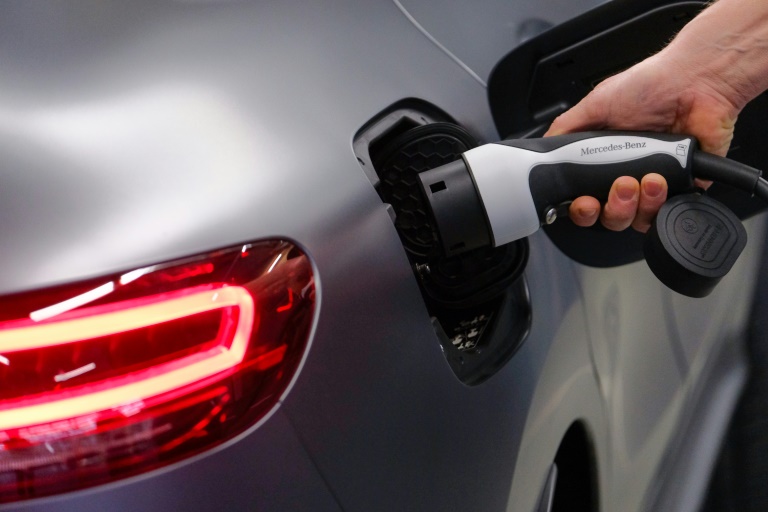
This means a de facto halt to sales of new petrol and diesel cars, light commercial vehicles and hybrids in the bloc by that date, in favour of all-electric vehicles.

European Commission chief Ursula von der Leyen praised the agreement as “a crucial milestone to reach our 2030 climate target”.

There is a waiver for “niche” manufacturers, or those producing fewer than 10,000 vehicles per year.

Sometimes called the “Ferrari amendment” as it will benefit luxury brands in particular, these vehicles are allowed to be equipped with a combustion engine until the end of 2035. 

– ‘Far-reaching’ –

BMW CEO Oliver Zipse, who is also the president of the European Automobile Manufacturers’ Association (ACEA), said the decision was “extremely far-reaching”. 

“Make no mistake, the European automobile industry is up to the challenge of providing these zero-emission cars and vans,” he said.

But more needed to be done for the industry to meet this target, added Zipse, such as having “an abundance of renewable energy, a seamless private and public charging infrastructure network, and access to raw materials”. 

The European Parliament had in June voted in favour of the 2035 ban on all vehicles with internal combustion engines.

Conservative MEPs and Germany had shown reluctance over some of the targets, fearing the costly burden they will place on EU automakers competing against global rivals with looser targets.

Currently around 12 percent of new cars sold in the European Union are electric vehicles, with its consumers shifting away from CO2-emitting models as energy costs and greener traffic regulations bite.

Meanwhile, China — the world’s biggest automobile market — wants at least half of all new cars to be electric, plug-in hybrid or hydrogen-powered by 2035.
Loans, investments and piles of his own cash: How Musk financed Twitter takeover

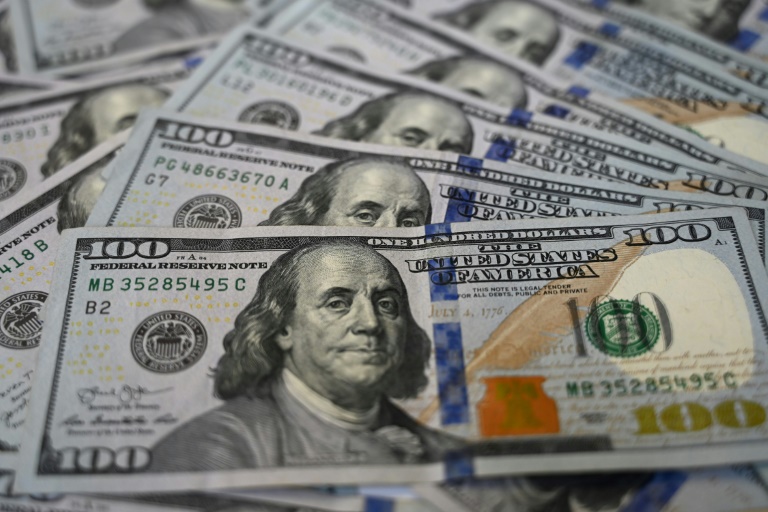
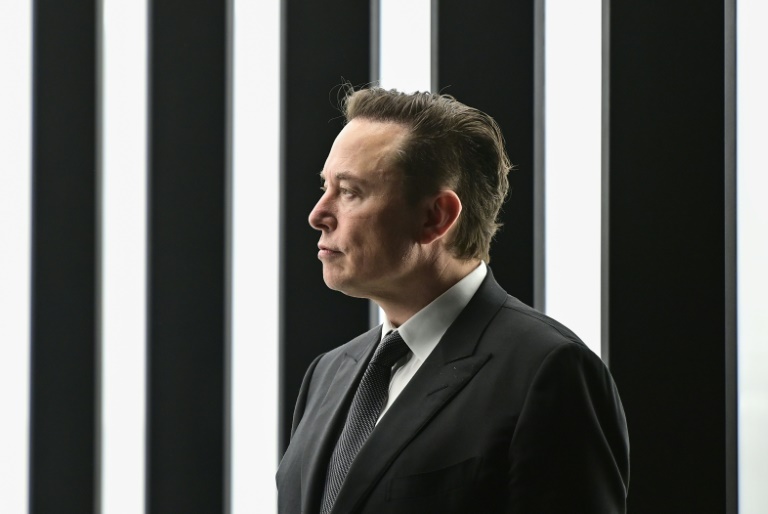
In looking for ways to pay for his takeover of Twitter, Elon Musk has offered up money sourced from his own personal assets, investment funds and bank loans, among others.

Here are the financing details for the deal, which was finalized Thursday.

– Musk’s own money –

At first, the Tesla head had hoped to avoid contributing any more than $15 billion of his personal money to the $44 billion deal. 

A large part of that, around $12.5 billion, was set to have come from loans backed by his shares in the electric car company — meaning he would not have had to sell those shares.

Ultimately, Musk abandoned the loan idea and put up more funding in cash. The 51-year-old ended up selling around $15.5 billion worth of Tesla shares in two waves, in April and in August. 

In the end, the South African-born billionaire will personally cough up a little more than $27 billion in cash in the transaction.

And importantly, Musk, who Forbes magazine says is worth around $220 billion, already owns 9.6 percent of Twitter in market shares. 

– Investment funds –

The total sum of the deal also includes $5.2 billion from investment groups and other large funds, including from Larry Ellison, the co-founder of software company Oracle, who wrote a $1 billion check as part of the arrangement. 

Qatar Holding, which is controlled by Qatar’s sovereign wealth fund, the Qatar Investment Authority, has also tossed capital into the pot.

And Prince Alwaleed bin Talal of Saudi Arabia transferred to Musk the nearly 35 million shares he already owned.

In exchange for their investments, the contributors will become Twitter shareholders. 

– Loans –

The rest of the money — about $13 billion worth — is backed by bank loans, including from Morgan Stanley, Bank of America, Japanese banks Mitsubishi UFJ Financial Group and Mizuho, Barclays and the French banks Societe Generale and BNP Paribas.

According to documents filed with the US Securities and Exchange Commission, Morgan Stanley’s contribution alone is about $3.5 billion. 

These loans are guaranteed by Twitter, and it is the company, not Musk himself, which will assume the financial responsibility to pay them back. 

The California company has so far struggled to generate profit and has worked at an operating loss over the first half of 2022, meaning the debt generated in the takeover could add even more financial pressure to the social media platform’s already shaky position. 

Elon Musk: tech genius, social media boss, eccentric

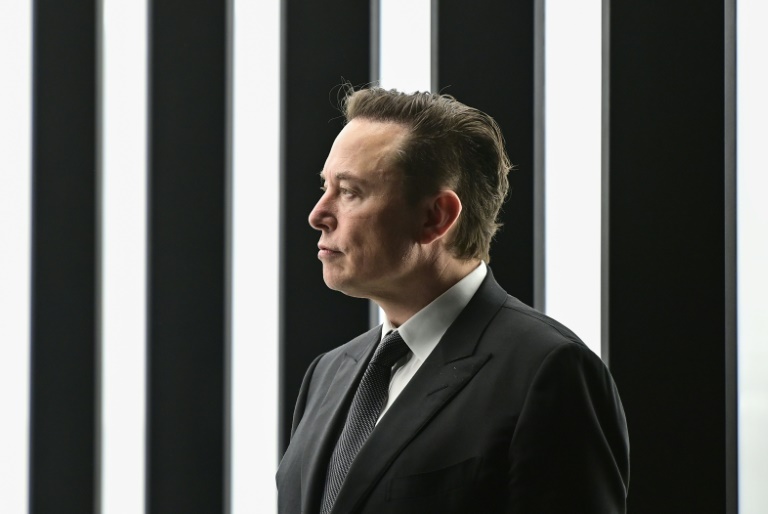
Elon Musk is at turns ingenious, impulsive and infuriating. He is also a corporate maverick, unafraid to tackle  myriad industries by his own rules.

After revolutionizing the auto industry, sending his own rocket to space — with his car on board — and building the world’s biggest fortune, the eccentric billionaire is the new king of social media after he took charge of Twitter on Thursday and fired its top executives.

That will give him control of the network on which the world debates, mobilizes, bickers and throws shade, Musk often first among them.

The deal will also fuel the fire over his political views, business methods, outsized personality and unconventional personal life — flames he does nothing to douse.

He is libertarian, anti-woke and promotes himself as a champion of free speech. He has been accused of being autocratic and bullying.

“The reason I acquired Twitter is because it is important to the future of civilization to have a common digital town square” for healthy debate, Musk said earlier Thursday, while insisting it could not become a “free-for-all hellscape.”

His takeover of the social media juggernaut caps a months-long roller coaster of announcements, counter-announcements and legal maneuvering — which he characteristically punctuated by firing jabs at the company on its own platform.

It is the latest corporate conquest for Musk, after online publishing and payments, space travel and electric cars.

The 51-year-old is the richest person in the world, a title he took last year from Amazon’s Jeff Bezos following the meteoric rise of Tesla, his electric automaker founded in 2003.

– Newsmaker, for better and worse –

Musk’s businesses make headlines for the right reasons: his space transport firm SpaceX is a partner in a three-way venture that sent the first fully private mission to the International Space Station.

But his empire also makes news of a less flattering kind: Tesla has faced a series of lawsuits alleging discrimination against Black workers as well as sexual harassment.

In parallel with the whiplash-inducing stream of business news, Musk’s unconventional private life also keeps the world’s eyebrows raised.

Musk has had two children with his on-again off-again partner, the musician Grimes: a son, X AE A-XII, known as X, and a girl they named Exa Dark Sideræl Musk — although the parents will mostly call her Y.

He also fathered twins with a top executive in Neuralink, a company he co-founded.

One way or another, Musk has become one of the most ubiquitous figures of the era. So how did he get where he is today?

– To Mars… and beyond? –

Born in Pretoria, on June 28, 1971, the son of an engineer father and a Canadian-born model mother, Musk left South Africa in his late teens to attend Queen’s University in Ontario.

He transferred to the University of Pennsylvania after two years and earned bachelor’s degrees in physics and business.

After graduating from the Ivy League school, Musk abandoned plans to study at Stanford University in California.

Instead, he dropped out and started Zip2, a company that made online publishing software for the media industry.

He banked his first millions before the age of 30 when he sold Zip2 to US computer maker Compaq for more than $300 million in 1999.

Musk’s next company, X.com, eventually merged with PayPal, the online payments firm bought by internet auction giant eBay for $1.5 billion in 2002.

After leaving PayPal, Musk embarked on a series of ever more ambitious ventures.

He founded SpaceX in 2002 — now serving as its chief executive officer and chief technology officer — and became the chairman of electric carmaker Tesla in 2004.

After some early crashes and near-misses, SpaceX perfected the art of landing booster engines on solid ground and ocean platforms, rendering them reusable, and late last year it sent four tourists into space, on the first ever orbital mission with no professional astronauts on board.

Musk’s jokingly-named The Boring Company is touting an ultra-fast “Hyperloop” rail transport system that would transport people at near supersonic speeds.

And he has said he wants to make humans an “interplanetary species” by establishing a colony of people living on Mars.

To this end, SpaceX is developing a prototype rocket, Starship, which it envisages carrying crew and cargo to the Moon, Mars and beyond — with Musk saying he feels confident of an orbital test this year, possibly in November.

Musk, who holds US, Canadian and South African citizenship, has been married and divorced three times — once to the Canadian author Justine Wilson and twice to actress Talulah Riley. He has nine children. A tenth child died in infancy.

Forbes estimates his current net worth at $222 billion.

Elon Musk: tech genius, social media boss, eccentric

Elon Musk is at turns ingenious, impulsive and infuriating. He is also a corporate maverick, unafraid to tackle  myriad industries by his own rules.

After revolutionizing the auto industry, sending his own rocket to space — with his car on board — and building the world’s biggest fortune, the eccentric billionaire is the new king of social media after he took charge of Twitter on Thursday and fired its top executives.

That will give him control of the network on which the world debates, mobilizes, bickers and throws shade, Musk often first among them.

The deal will also fuel the fire over his political views, business methods, outsized personality and unconventional personal life — flames he does nothing to douse.

He is libertarian, anti-woke and promotes himself as a champion of free speech. He has been accused of being autocratic and bullying.

“The reason I acquired Twitter is because it is important to the future of civilization to have a common digital town square” for healthy debate, Musk said earlier Thursday, while insisting it could not become a “free-for-all hellscape.”

His takeover of the social media juggernaut caps a months-long roller coaster of announcements, counter-announcements and legal maneuvering — which he characteristically punctuated by firing jabs at the company on its own platform.

It is the latest corporate conquest for Musk, after online publishing and payments, space travel and electric cars.

The 51-year-old is the richest person in the world, a title he took last year from Amazon’s Jeff Bezos following the meteoric rise of Tesla, his electric automaker founded in 2003.

– Newsmaker, for better and worse –

Musk’s businesses make headlines for the right reasons: his space transport firm SpaceX is a partner in a three-way venture that sent the first fully private mission to the International Space Station.

But his empire also makes news of a less flattering kind: Tesla has faced a series of lawsuits alleging discrimination against Black workers as well as sexual harassment.

In parallel with the whiplash-inducing stream of business news, Musk’s unconventional private life also keeps the world’s eyebrows raised.

Musk has had two children with his on-again off-again partner, the musician Grimes: a son, X AE A-XII, known as X, and a girl they named Exa Dark Sideræl Musk — although the parents will mostly call her Y.

He also fathered twins with a top executive in Neuralink, a company he co-founded.

One way or another, Musk has become one of the most ubiquitous figures of the era. So how did he get where he is today?

– To Mars… and beyond? –

Born in Pretoria, on June 28, 1971, the son of an engineer father and a Canadian-born model mother, Musk left South Africa in his late teens to attend Queen’s University in Ontario.

He transferred to the University of Pennsylvania after two years and earned bachelor’s degrees in physics and business.

After graduating from the Ivy League school, Musk abandoned plans to study at Stanford University in California.

Instead, he dropped out and started Zip2, a company that made online publishing software for the media industry.

He banked his first millions before the age of 30 when he sold Zip2 to US computer maker Compaq for more than $300 million in 1999.

Musk’s next company, X.com, eventually merged with PayPal, the online payments firm bought by internet auction giant eBay for $1.5 billion in 2002.

After leaving PayPal, Musk embarked on a series of ever more ambitious ventures.

He founded SpaceX in 2002 — now serving as its chief executive officer and chief technology officer — and became the chairman of electric carmaker Tesla in 2004.

After some early crashes and near-misses, SpaceX perfected the art of landing booster engines on solid ground and ocean platforms, rendering them reusable, and late last year it sent four tourists into space, on the first ever orbital mission with no professional astronauts on board.

Musk’s jokingly-named The Boring Company is touting an ultra-fast “Hyperloop” rail transport system that would transport people at near supersonic speeds.

And he has said he wants to make humans an “interplanetary species” by establishing a colony of people living on Mars.

To this end, SpaceX is developing a prototype rocket, Starship, which it envisages carrying crew and cargo to the Moon, Mars and beyond — with Musk saying he feels confident of an orbital test this year, possibly in November.

Musk, who holds US, Canadian and South African citizenship, has been married and divorced three times — once to the Canadian author Justine Wilson and twice to actress Talulah Riley. He has nine children. A tenth child died in infancy.

Forbes estimates his current net worth at $222 billion.

How has surging inflation gripped voters ahead of the midterms?

Surging consumer prices are far and away the top voter concern in upcoming US midterm elections, beating out worries about crime and abortion as households feel the squeeze from pricier food, shelter and services.

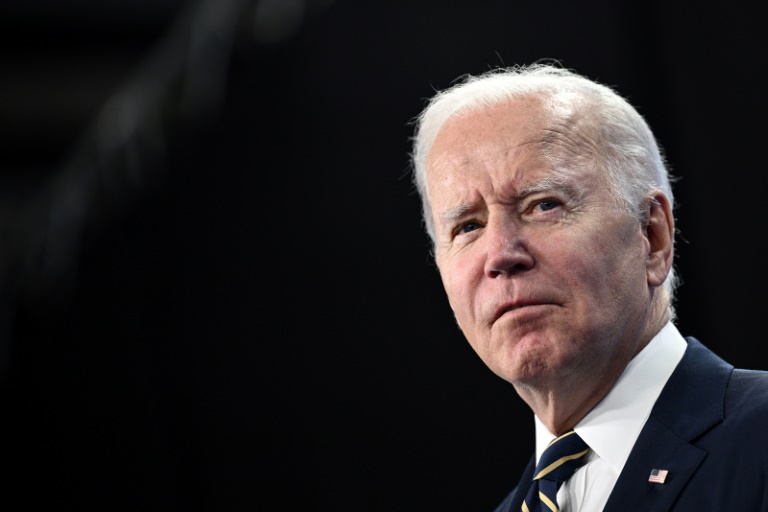
And that’s bad news for President Joe Biden and his Democrats as frustration and anger with negative economic issues like rising inflation is normally directed at the president and the party in power.

A Monmouth University Poll released this month named inflation as chief among Americans’ concerns, with the share of respondents who rated it extremely important spiking from 37 percent in September to 46 percent in October.

Here are some ways in which stubbornly high prices have taken hold of voters, days ahead of the November 8 elections:

– Food and fuel –

Grocery prices are up 13 percent on average from last year, shaken by the fallout from Russia’s invasion of Ukraine, Covid-19 disruptions and a surge in processing and transportation fees, said David Ortega, associate professor at Michigan State University.

The cost of wheat flour has jumped 24 percent with the price of bread surging as well, while poultry and eggs became more costly after avian flu ravaged commercial suppliers.

“Things like turkey, heading into the Thanksgiving holiday, are going to be much more expensive,” he told AFP.

“It definitely puts this issue of inflation front and center in consumers’ minds,” he added.

Poorer households tend to be the hardest-hit as they spend a bigger portion of their incomes on food, and this has repercussions at the ballot box. 

Voters earning less than $50,000 accounted for 38 percent of the vote in the 2018 midterms and 35 percent of the vote in 2020, a Brookings report this year noted.

Americans are also particularly sensitive to fuel costs, with confidence in the economy and country’s direction tracking the rise and fall in prices. 

While gas prices have trended down recently, they remain 18.8 percent higher than a year ago.

– Shelter –

But inflation is not felt just in food and energy costs.

A key measure of consumer prices excluding both volatile categories surged to a 40-year high in September, underscoring the broader pressures that Americans face.

Housing prices have gone up, and the costs of rental and other related expenses make up nearly a third of overall inflation.

Although the median sales price of existing homes has been edging down, they remain higher than in recent years, National Association of Realtors data showed.

In both August and September, the median figures were 8.4 percent above last year.

Coupled with elevated mortgage rates, on the back of aggressive Federal Reserve rate hikes, home ownership has become a more distant prospect for many.

“Whether you’re dealing with actual cost of a home or the rental equivalent, those numbers have seen double-digit gains over the last couple of years,” CFRA chief investment strategist Sam Stovall told AFP.

That has priced many first-time homebuyers out of the market and forced them to continue forking out higher rents.

In August, renters of typical household income spent more than a quarter of their earnings on leasing a home, according to data from Realtor.com.

– Services –

Costs associated with services have gone up too, given their close ties to wage growth.

Prices of food away from home rose 8.5 percent from a year ago, maintaining an elevated pace of growth on a monthly basis, Labor Department data showed.

This comes as the job market remains tight with low unemployment levels and businesses struggling to fill positions.

“With people… jumping from one job to the next, we’re seeing an increase in wages and that too is contributing to inflation,” Stovall said.

Half of the workers who changed jobs from April 2021 to March 2022 saw a real increase of 9.7 percent or more over their pay a year earlier, said a Pew Research Center report released in July.

While supply bottlenecks have eased from earlier in the pandemic, those hoping that a price drop in goods would offset increases elsewhere may be disappointed.

Analysts note that many companies continue to maintain their higher prices.

All of these weigh on consumers, with today’s inflation levels unheard of for those below age 40, said Farrokh Langdana of Rutgers Business School.

“For so many people, this is like a new phenomenon,” he said.

Musk and Twitter: Volatile courtship ends in unlikely union

Elon Musk’s pursuit of Twitter was a melodrama from the beginning — a volatile courtship between a mercurial billionaire and an influential social media platform.

That relationship — a love-hate affair from both sides — is at last a sure thing, with Musk taking control of the company Thursday.

Here is a look at his on-off romance with the network:

– The courtship –

It all began with an expensive first date: Musk — a longtime Twitter user known for inflammatory tweets — snapped up 73.5 million shares at a cost of nearly $2.9 billion.

The purchase, which was revealed in an April 4 regulatory filing and gave him a 9.2 percent stake in the company, sent Twitter shares soaring and sparked speculation that Musk was seeking an active role in the social media company’s operations.

It also earned him a seat on the board. CEO Parag Agrawal announced the offer — in a tweet, of course — and called Musk “a passionate believer and intense critic of the service which is exactly what we need.”

But the initial attraction didn’t last: Musk opted against joining the board, and quickly launched a hostile takeover bid for the company, offering $54.20 a share, an April 13 filing showed.

Twitter in turn adopted a “poison pill” defense that would allow shareholders to buy additional stock.

– The engagement –

Then came the plans for a walk down the corporate aisle: Twitter reversed course and said on April 25 that it was selling to Musk in a deal valued at $44 billion.

Musk parted with $8.4 billion in shares in Tesla, pledged up to $21 billion from his personal fortune and got some friends to stake him a few billion.

– The breakup –

But the billionaire soon began showing signs of cold feet, saying on May 13 that the deal to buy Twitter was “temporarily on hold” pending details on spam and fake accounts on the platform.

After two months of very public fighting over the issue, he called off the deal and accused Twitter of making “misleading” statements.

The company quickly launched legal action to enforce the agreement.

– The reconciliation –

Both sides had been gearing up for a lengthy and hugely expensive showdown at the Delaware Chancery Court.

Musk had been buoyed by whistleblower revelations that portrayed the company as cavalier with its bot counting and lax on security.

Twitter, however, believed the agreement it had with Musk was airtight.

Then, earlier this month, Musk revealed — on Twitter, of course — that he had agreed to close the deal at the initially offered price, calling the acquisition an “accelerant” towards creating “X,” which he said would be “the everything app”.

He offered no further detail.

Litigation was suspended, and the court in Delaware set Friday as the deadline for sealing the deal.

– The marriage –

On Thursday, word finally arrived that the nuptials were complete: Musk had taken control of Twitter and fired its top executives, including chief executive Agrawal.

Earlier in the day Musk said that he hoped to foster “healthy” debate on the platform. A happily ever after in the making? Time will tell.

Musk had already given clues to the impending union, changing his Twitter biography to read “Chief Twit” and visiting the company’s California headquarters earlier in the week.

Musk and Twitter: Volatile courtship ends in unlikely union

Elon Musk’s pursuit of Twitter was a melodrama from the beginning — a volatile courtship between a mercurial billionaire and an influential social media platform.

That relationship — a love-hate affair from both sides — is at last a sure thing, with Musk taking control of the company Thursday.

Here is a look at his on-off romance with the network:

– The courtship –

It all began with an expensive first date: Musk — a longtime Twitter user known for inflammatory tweets — snapped up 73.5 million shares at a cost of nearly $2.9 billion.

The purchase, which was revealed in an April 4 regulatory filing and gave him a 9.2 percent stake in the company, sent Twitter shares soaring and sparked speculation that Musk was seeking an active role in the social media company’s operations.

It also earned him a seat on the board. CEO Parag Agrawal announced the offer — in a tweet, of course — and called Musk “a passionate believer and intense critic of the service which is exactly what we need.”

But the initial attraction didn’t last: Musk opted against joining the board, and quickly launched a hostile takeover bid for the company, offering $54.20 a share, an April 13 filing showed.

Twitter in turn adopted a “poison pill” defense that would allow shareholders to buy additional stock.

– The engagement –

Then came the plans for a walk down the corporate aisle: Twitter reversed course and said on April 25 that it was selling to Musk in a deal valued at $44 billion.

Musk parted with $8.4 billion in shares in Tesla, pledged up to $21 billion from his personal fortune and got some friends to stake him a few billion.

– The breakup –

But the billionaire soon began showing signs of cold feet, saying on May 13 that the deal to buy Twitter was “temporarily on hold” pending details on spam and fake accounts on the platform.

After two months of very public fighting over the issue, he called off the deal and accused Twitter of making “misleading” statements.

The company quickly launched legal action to enforce the agreement.

– The reconciliation –

Both sides had been gearing up for a lengthy and hugely expensive showdown at the Delaware Chancery Court.

Musk had been buoyed by whistleblower revelations that portrayed the company as cavalier with its bot counting and lax on security.

Twitter, however, believed the agreement it had with Musk was airtight.

Then, earlier this month, Musk revealed — on Twitter, of course — that he had agreed to close the deal at the initially offered price, calling the acquisition an “accelerant” towards creating “X,” which he said would be “the everything app”.

He offered no further detail.

Litigation was suspended, and the court in Delaware set Friday as the deadline for sealing the deal.

– The marriage –

On Thursday, word finally arrived that the nuptials were complete: Musk had taken control of Twitter and fired its top executives, including chief executive Agrawal.

Earlier in the day Musk said that he hoped to foster “healthy” debate on the platform. A happily ever after in the making? Time will tell.

Musk had already given clues to the impending union, changing his Twitter biography to read “Chief Twit” and visiting the company’s California headquarters earlier in the week.

Anonymous graves mark the end of the line for migrants at US border

Sheriff Urbino Martinez has collected the remains of so many dead migrants who have come across the US southern border that he is known as “The Undertaker.”

“It’s deadly out there,” says Martinez, who patrols the small Texan county of Brooks, a few dozen kilometers (miles) from Mexico.

“We started keeping track of the dead bodies from 2009,” he told AFP in his office, pointing to 20 thick volumes, where his department has information on 913 cases. 

But, he says, that’s only a fraction of the true human toll of the border crossings.

“I would multiply that times five, maybe even 10 for those bodies that will never be recovered.”

The United States logged a record 2.3 million migrant encounters at its southern border in the year to September — a key issue for some voters as they head to the polls for next month’s midterm elections.

Many were sent back south; an unknown number made it into the country without being detected. 

At least 700 people are known to have died in the attempt.

To avoid the checkpoint in Falfurrias, the main town in Brooks County, migrants are directed by human traffickers into vast farmsteds where dense vegetation, treacherous sands and soaring temperatures can prove fatal.

Sometimes, there isn’t much of a person left to find.

Martinez’s folders are labelled “human remains” — a chillingly accurate description of the photographs that sometimes show partial torsos or just a few bones.

“If it’s real hot, your body will decompose completely within 72 hours, and then the animals are going to tear whatever’s left.

“The feral hogs, the rats, anything that’s out there that can tear the limb off, they’re going to do it. We found human bones inside a rat’s den before.”

Numbers are down in Brooks county this year — Martinez has logged 80 bodies so far in 2022, all of which were processed through his mobile mortuary.

“It is less than last year but it is 80 too many,” he says.

– No identification –

The death that Martinez finds in Brooks is not unique to his county.

The same pattern of tragedy is repeated all along the Texan border: desperate people dying as they flee the crushing poverty, violence and terror of their dysfunctional homelands.

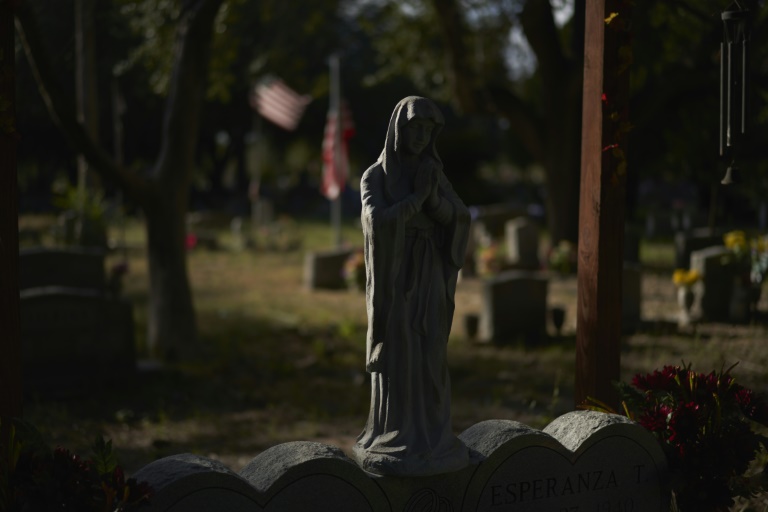
In the border town of Eagle Pass, the municipal cemetery is strewn with rudimentary crosses that mark the graves of dozens of unknown dead; the men and women whose American dreams ended in anonymous graves.

Around 40 plaques, labelled John or Jane Doe, sit next to a small US flag.

Across town, the migrants are still coming, gambling that the possibility of death en route is better than the alternative. 

“It was an ordeal,” said Alejandra, a 35-year-old Colombian who crossed the rushing Rio Grande to reach Texas, even though she cannot swim. “But it was scarier to go back.” 

Cowering under a tree from the hot sun, Alejandra said she needed asylum because of the danger she faced from organized crime in Colombia. 

“If we go back, they’ll kill us,” she said, looking at her three teenage children.

– Remains –

Corinne Stern, the chief coroner for southern Texas, says most of the migrants whose remains she examines died from heatstroke or dehydration.

“Up until about five years ago, (the border) took up about 30 percent of my time… Now it’s taking up about 75 percent,” says the doctor, who wears a necklace inscribed with the Hebrew word for “Life.”  

In the reception area of the morgue, a painting reads: “Let the dead teach the living.”  

Inside, a blackboard lists dozens of Jane and John Does. 

The morgue is impeccably clean, but the smell of bodily decay is pervasive, permeating the masks visitors are required to wear. 

The vast majority of border cases she receives have no identification, Stern says, as she examines the skeletal remains of a still-clothed female body.

Attached to the corpse is a small olive green backpack. 

When the doctor picks it up, two lollipops fall out, their colorful wrappings a contrast to the earthy ochre that swathes the clothes and the bones.

DNA samples are extracted in an attempt to identify her, but for now she will be labeled as yet another Jane Doe, one of 250 Stern has dealt with this year.

– ‘Where is my wife?’ –

For Eduardo Canales, the open-endedness of anonymous death is too much to bear.

In 2013, Canales founded the South Texas Human Rights Center, installing water stations around ranches to prevent migrants from drinking the water in the cattle troughs, which can be toxic for humans.

Canales, 74, supplies blue plastic barrels that have location coordinates and a phone number to call for help.   

But when he began receiving calls from family members looking for loved ones who had gone missing after crossing the border, he decided to expand his work.  

“For me the most important thing is for families to be able to find closure,” he says. 

“Families don’t stop looking, they never give up. They keep asking where is my wife, my brother, my daughter?” 

Many were buried anonymously in the Falfurrias cemetery, but a partnership with Texas State University made it possible to exhume dozens of bodies and identify them by their fingerprints. 

The effort has reduced the number of anonymous graves in Brooks: of the 119 people found in 2021, 107 were identified. 

“But many more die and disappear without us ever finding them,” Canales says, pointing to vast dusty plains. 

“Here the only constant is death.” 

Inflation vs abortion: two issues at play in US midterms

At a pizzeria along a noisy Ohio highway, Matt Kruse and his family have come to hear J.D. Vance, a Republican Senate candidate who has seized on soaring inflation as the pillar of his campaign.

Kruse, holding a daughter in his arms, is an eager listener, already angry about “runaway inflation.” The message he wants the US midterm elections to send to Democrats is clear: “Stop spending money.”

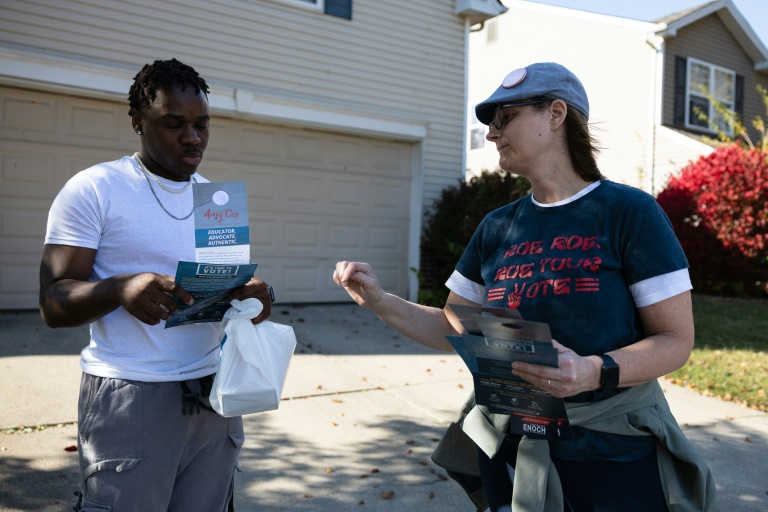
An hour’s drive away, the tone is different: a dark minivan cruises slowly along a suburban street, looking for a specific house number. “This has to be 800,” says Amy Cox, who gets out to hang a flyer on the front door.

Back behind the wheel, with a dog Toby sitting by the handbrake, the Democratic candidate for state office explains she is campaigning for what moves her — abortion — because for many women “their rights are way more important than inflation.”

With the approach of elections seen by both parties as hugely consequential, one issue is overwhelming all others: soaring prices. 

And in the residential towns of Ohio, where Halloween pumpkins and election signs are numerous, Republicans are trying to exploit this theme to rally voters — while Democrats, determined to defend abortion rights, tend to dodge it.

To buy food for one’s family, “Now, you’re spending on one trip $350, $400, you know, for a family of four,” says Kruse, a short- haired man who works in law enforcement. “In the past, it was costing you under 200 bucks.”

– ‘Tax on middle class’ –  

“When they talk about abortion or whatever like that, that doesn’t affect everybody. Inflation affects every single person,” Kruse adds.

That is particularly true in Ohio, gateway to the agricultural Midwest, where “a majority… are middle-class working people.”

Until recently Ohio was America’s premier electoral bellwether, holding up a political mirror to the vast nation as the state voted for every presidential winner since 1960. 

But that bell was unrung in 2020 when Donald Trump won the state decisively while losing the White House to Democrat Joe Biden — and experts have predicted Ohio will continue tilting rightward.

That dynamic could well benefit J.D. Vance, one of many Republicans pinning blame for cost-of-living woes squarely on Biden.

“The inflation that we’re going through right now in this country is a tax on the middle class,” Vance hammers out in Mt. Orab, where Kruse and his family came to hear him.

In 2020, Brown County surrounding Mt. Orab voted 78 percent for Trump, who is supporting Vance in one of the country’s most-watched duels. 

In jeans and white shirt, the 38-year-old bemoans the soaring price of eggs — “it’s crazy” — while 30 or so curious sympathizers and local voters nod in agreement.

Vance makes sure to recall his own humble origins, which he recounted in his best-selling 2016 memoir, “Hillbilly Elegy.”

“We have got to get back to a country where people like my mamaw can go to the grocery store without completely breaking the bank,” he says.

– A cold anger – 

“If the Democrats keep printing money… it’s gonna get worse and we have to stop that,” said Angela Marlow, an annoyed tone to her voice. “We’ve got to get our financial house in order.”

The 58-year-old mother of nine said she believes the state of the economy is pushing voters to cast ballots for Republicans.

Inflation is close to a 40-year high and by far the top concern for American voters.

But the Supreme Court’s June ruling reversing a constitutional right to abortion has also shaken the country, women in particular. 

So it is with cold anger that Cox, a 44-year-old mushroom farmer, campaigns along autumn-colored tree-lined roads in Trenton, near the Indiana border.

A cap on her head, Cox paces across a yard and knocks on a door. An elderly woman opens, and Cox hands her a leaflet bearing her name and that of Tim Ryan, a Democratic congressman vying with Vance for Ohio’s open Senate seat.

– ‘Corporate greed’ –  

“Are you going to vote on election day?” Cox asks. 

“I vote at every election,” the woman responds, sending Cox into a short spiel: “We’re all about higher wages, better health care, better education for our kids, safer communities, and taking care of people — especially women.”

The first point in her campaign flyer: a defense of abortion rights.

Cox climbs back into her van, joining Melissa VanDyke, who is also a candidate for the Ohio House of Representatives but from a neighboring district.

“I don’t campaign on inflation, no, because we don’t call it inflation. We call it corporate greed,” VanDyke says.

The priority for her volunteers: phoning young women in conservative households to convince them to vote Democratic. Many white working-class men, VanDyke says, are “lost” to her party already.

A decade post-Sandy, New York vulnerable as ever

Long before Superstorm Sandy devastated New York City and the surrounding region in 2012, scientist Klaus Jacob issued a prophetic report warning city leaders that such paralyzing flooding was imminent.

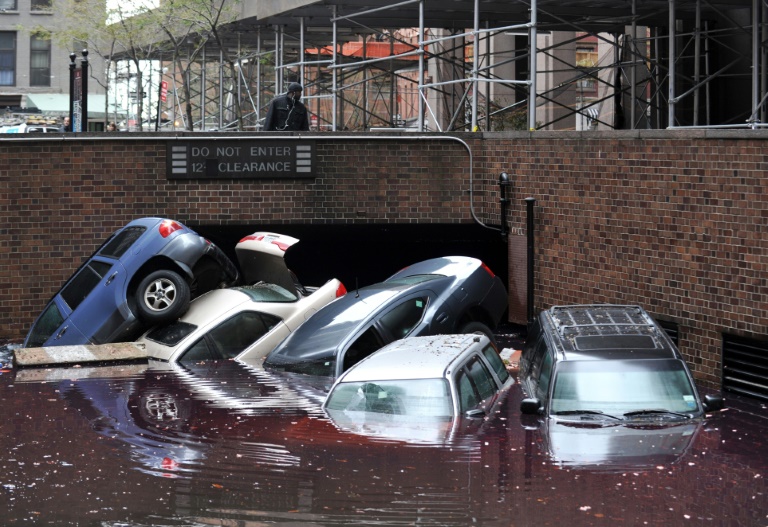
Then Sandy made landfall on October 29 of that year, leaving well over 100 people dead in the United States, including 43 New York City residents. It caused $19 billion in damages across the metropolis, triggering lengthy power outages, temporarily displacing thousands of people and damaging tens of thousands of residential units.

More than two feet of water flooded into Jacob’s own home in a quaint Hudson River town in New York state, an irony he suffered because municipal zoning laws barred him from raising the building enough to avoid such inundation.

“A week after Sandy I got a letter in the mail: ‘Now you can raise it,'” recounted Jacob, a geophysicist at Columbia University specializing in disaster risk management.

The experience speaks to the much larger challenges of short-sighted thinking as climate change warnings grow ever-more dire.

Ten years after Sandy left one of the world’s cultural and economic powerhouses tragically swamped, Jacob says the city is far from prepared for the coming era of intense storms.

New York received billions of federal dollars and invested in rebuilding. A number of resiliency projects remain in the planning stages while a few, including one to reduce Manhattan’s coastal flood risk, are underway.

Jacob said subway repairs that fixed thousands of holes would allow the vital transportation system to fare better in the wake of another Sandy-esque storm.

And the US Army Corps of Engineers recently detailed a $52 billion plan to erect a massive system of storm surge gates and seawalls.

But that will require years of bureaucracy to get approvals, and isn’t slated to begin construction until 2030.

– Climate and housing –

An October report from New York’s comptroller — an elected official responsible for scrutinizing the budget — criticized some city agencies for dawdling, with several projects stalled and billions in federal funding unused and still available.

Last fall’s Hurricane Ida meanwhile highlighted the city’s persistent frailties, including aging sewer infrastructure.

In a mere hour Ida poured more than three inches of rain onto Central Park — nearly twice what the city’s sewage system is capable of handling — and, according to Jacob, “the subway system became the default sewer system.”

Dozens of people in the region died. Several of the deceased lived in New York City basement apartments that flooded.

If Sandy hit tomorrow “we’d be way worse off,” said Thaddeus Pawlowski, an urban designer focused on climate resiliency, who formerly worked at the NYC Office of Emergency Management.

“Our housing situation has gotten so much worse. Our neighborhoods are so much more unequal,” Pawlowski told AFP.

New York is facing an acute housing crisis, but a fair proportion of the city’s new residencies have been in coastal neighborhoods like Williamsburg and Long Island City. Municipal data mapped by local outlet The City shows some 2,000 new units were built square in the floodplain of Coney Island, a district Sandy pummeled. 

The state has bought out some homeowners living in vulnerable neighborhoods, including in Staten Island’s Ocean Breeze, where hundreds of homes were purchased and demolished.

“That’s a good pilot program, but it’s bread crumbs — we need loaves,” said Jacob. “Buying out is not enough. We need to have a place where they can move.”

Jacob cited need for denser residential buildings, but emphasized new construction must eye climate risk rather than cater to the real estate industry.

“We don’t have any long-term vision, such that short-term measures, like building housing, work together with that long-term vision,” he told AFP. 

“Without that vision being developed, I think we are just fiddling around forever on the edges.”

– ‘Massive mobilization’ –

Climate experts and political leaders agree there’s no silver bullet — mitigating risk and shoring up resiliency demands sweeping planning and investment in conjunction with neighborhood-scale storm management, like shrub-filled bioswale ditches that filter runoff.

“We are not going to be able to say, ‘we did one project and now we are safe forever,'” said Rohit Aggarwala, the city’s chief climate officer. “That just is not the way it is going to work.”

Pawlowski pointed to the Green New Deal — a proposed congressional plan to reshape America’s climate and economic policy — as a way forward.

“We need a massive mobilization,” he said.

Jacob did say that, unlike some of the United States’ low-lying coastal cities like New Orleans, New York has “the luxury of high typography” that should inform building strategies.

Perhaps morbidly, he noted the city’s cemeteries occupy its highest points: “We could swap the dead and the living.”

Above all, Jacob urged against inertia, saying “either we are psychologically overwhelmed, or the water will overwhelm us.”

“Which one do you prefer?”

Close Bitnami banner
Bitnami