US Business

China economic slowdown to drag on Asia growth: IMF

China’s “sharp and uncharacteristic” economic slowdown is expected to drag on growth across Asia through the end of next year, the International Monetary Fund (IMF) warned Friday, darkening an already gloomy global outlook.

Worldwide economic prospects have dimmed this year as countries have faced higher living costs, tighter financial conditions and increased uncertainty following Russia’s invasion of Ukraine.

The crises have dulled the rebound from the Covid-19 pandemic, even as Asia has remained a “relative bright spot” compared with other parts of the globe, the IMF said in its Regional Economic Outlook.

But growth in the region faces headwinds from a Chinese economy weighed down by a hardline zero-Covid policy and a crisis in the property sector, the organisation said.

Earlier this month, the IMF announced it had cut its growth forecast for China to 3.2 percent in 2022, which would be the smallest expansion of the world’s second-largest economy in around four decades, excluding the first year of the pandemic.

The new report downgrades the growth forecast for Asia to four percent this year, down 0.9 percentage points from a previous outlook in April.

The organisation said it expects China’s growth to rise to 4.4 percent and Asia’s to increase to 4.3 percent next year, still “well below” the average of about 5.5 percent over the past two decades.

China’s “broad-based” slowdown “is estimated to have important spillovers to the rest of Asia through trade and financial links”, according to the IMF.

It noted that the region may also face other “persistent” headwinds in the form of tighter global monetary policy and Moscow’s invasion of Ukraine, which has caused commodities prices to spike.

– Few infections, little growth –

“Asia’s strong economic rebound early this year is losing momentum, with a weaker-than-expected second quarter,” said Krishna Srinivasan, the director of the IMF’s Asia and Pacific Department.

Much of the growth shortfall “can be explained by lower levels of investment following the pandemic”, he said, adding that many countries should act to ease overhanging corporate debt and human capital losses.

He warned that economic fragmentation, driven by geopolitical tensions and uncertainty in trade policy, “poses a significant risk to the region” and could “have adverse macroeconomic consequences in the short term”.

China is the last major economy wedded to a zero-Covid policy, imposing snap lockdowns, mandatory testing and lengthy quarantines in an effort to tamp down any outbreaks as they arise.

Around 208 million people in the country are under some form of enhanced virus restrictions, Japanese bank Nomura estimated in a note on Monday.

Further issues have plagued the massive property sector as a series of debt-laden developers have defaulted on loans while others have struggled to raise cash.

Official data on Monday showed China’s economy grew 3.9 percent year-on-year in the third quarter, a stronger-than-expected performance that was announced after Beijing announced a delay in releasing the figures during a Communist Party congress earlier this month.

Analysts still expect the country to fall well below its stated annual growth target of about 5.5 percent.

Investors fled Chinese stocks earlier this week after President Xi Jinping broke long-standing precedent to seal a third term in power, fuelling fears that virus lockdowns and other measures harmful to the economy would continue.

Japan to unveil huge economic package to address inflation

Japan is on Friday expected to announce an economic stimulus package that local media said could be worth $200 billion to cushion the impact of inflation and a weak yen.

Prices are rising in the world’s third-largest economy at the highest rate in eight years, although its three-percent inflation remains below the sky-high levels seen in the United States and elsewhere.

The yen has also lost over 20 percent of its value against the dollar this year, prompting authorities to intervene at least once in recent weeks, with further moves to prop up the currency suspected though unconfirmed by the government.

Details of the stimulus spending will be announced later in the day, with public broadcaster NHK and other media outlets saying it will be more than 29 trillion yen (around $200 billion).

The plans include measures to support households with energy bills, which have spiked since Russia’s invasion of Ukraine, and to encourage wage growth.

Japan — which has one of the world’s highest debt-to-GDP ratios — has already injected hundreds of billions of dollars into its economy over the past two years to support recovery from the Covid-19 pandemic.

The main driver of the yen’s steep falls is the contrast between Japan’s longstanding monetary easing policies, designed to encourage sustainable growth, and aggressive US interest-rate hikes.

The Bank of Japan is expected to maintain its ultra-loose stance in a policy decision on Friday, despite growing pressure to tweak its strategy as the yen declines.

“It’s understandable that the government is announcing new stimulus now, because Japan’s economy faces weak demand due to price rises,” Yoshiki Shinke, chief economist at Dai-ichi Life Research Institute, told AFP.

This is “in contrast to the United States, where demand is strong, with the Fed trying to cool down inflation,” he said.

“It’s impossible that Japan would hike rates to curb inflation, for this reason,” Shinke predicted.

Apple reports solid profits, but sees greater hit from strong dollar

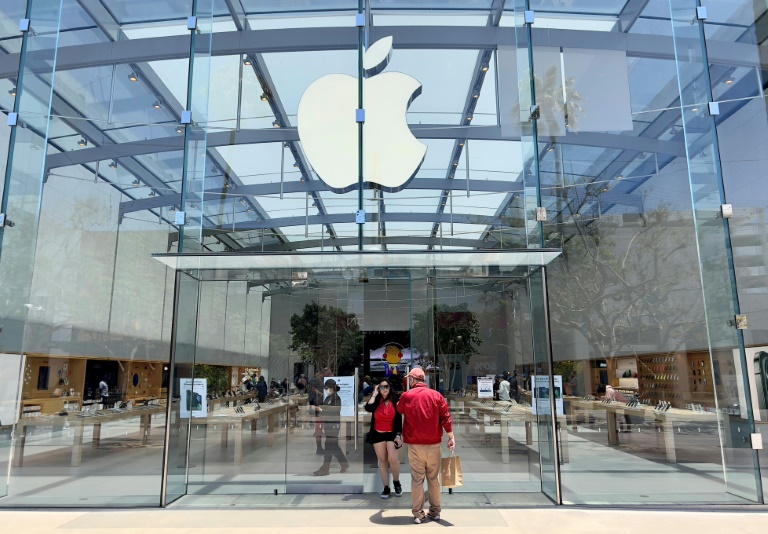
Apple reported solid profits on rising revenues Thursday, but the tech giant’s iPhone sales missed estimates as executives signaled a rising financial toll from the strong dollar.

Shares of Apple edged higher in after-hours trading, as the tech titan avoided a stumble akin to those experienced by Facebook parent Meta and Amazon, both of which have been punished by investors.

Profits edged up one percent to $20.7 billion, on an eight percent rise in revenues to $90.1 billion in Apple’s fiscal fourth quarter ending September 24. 

Results for the latest quarter “continue to demonstrate our ability to execute effectively in spite of a challenging and volatile macroeconomic backdrop,” said Apple Chief Financial Officer Luca Maestri.

Apple notched growth in most operating regions and product categories and released an earnings statement that contained no obvious red flags and showed the company still able to notch broad-based revenue growth.

Still, Apple’s smartphone revenues came in at $42.6 billion, up about 10 percent from the year-ago period, but a bit below the $43 billion projected by analysts.

The company also reported services revenue growth of just 5.0 percent compared with the year-ago period — much below the 12 percent jump in the prior quarter.

Some of the weakness in services stemmed from the impact of the strong dollar on overseas consumers, but executives also cited weakness in digital advertising and gaming, Maestri said.

While Apple avoided a specific forecast, Maestri cautioned analysts to expect revenue growth to “decelerate” in the fourth quarter, due in part to a foreign exchange hit of 10 percentage points.

Analysts described Apple’s results as respectable, but warned that the worsening consumer environment will pose challenges.

“Overall, we view the (September quarter) as a solid beat and see a good holiday selling season ahead, but do think conditions get more challenging as the iPhone 14 cycle extends given the uncertain economic conditions,” said CFRA Research analyst Angelo Zino. 

“That said, we believe Apple’s prestige brand is allowing it to successfully increase prices to consumers across all devices and services.”

Heading into earnings season, investors had expressed worries about the headwinds from the weakening global economy as central banks enact aggressive interest rate hikes to counter grinding inflation.

This week’s tech results have shown that the sector, which enjoyed outsized growth during the peak period of Covid-19, is not immune to these factors. 

Shares of Apple rose 0.7 percent to $145.87 in after-hours trading.

US, Canada want to help Haiti but no decision on security force

The United States and Canada, which on Thursday announced the launch of an assessment mission in Haiti, said the Caribbean nation needs international support but did not specifically address who might lead an intervention force.

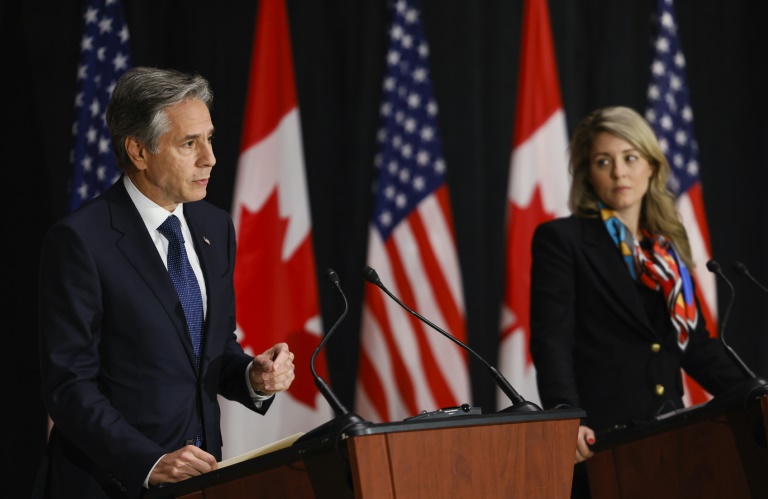
Discussions are ongoing about this force, which would essentially be an assistance mission in support of Haitian police, said US Secretary of State Antony Blinken during a joint press conference with his Canadian counterpart Melanie Joly in Ottawa.

“We agree that between deepening food and fuel shortages, the growing cholera outbreak, and gangs, blockading ports and terrorizing civilians, the situation is simply unsustainable,” Blinken said.

The two officials said they discussed the situation in Haiti extensively during their meeting.

Asked whether Canada would be ready to take the lead of such a security force, the Canadian minister did not answer directly but assured that Canada’s assessment mission was precisely intended to determine the security conditions on the ground.

The Canadian delegation is currently consulting with stakeholders “on options to support Haitian people in resolving the humanitarian and security crises” facing the impoverished country and “restore access to essential goods and services,” said the government.

Joly notably insisted that any solutions would have to be “by and for Haitians.”

“We’re looking at different options, but we want to make sure that we have the right assessment,” she said.

Blinken arrived in Ottawa in the morning for his first official visit to Canada since taking office, and met later in the day with Prime Minister Justin Trudeau, in particular to discuss Haiti.

“We’re going to be talking about Haiti where the situation is heartbreaking, where there’s much we can do,” Trudeau said at the top of the meeting. 

“We’re busy engaging very much with local and regional partners to make sure that it is done right,” he said.

On Friday, Blinken was scheduled to travel to Montreal — Joly’s hometown — where he is to tour a lithium battery recycling facility.

His visit to Canada comes in the wake of appeals by Haiti’s government and UN Secretary-General Antonio Guterres for international intervention as armed gangs take over vast stretches of the country and a cholera outbreak worsens.

The UN Security Council last week unanimously approved a resolution that targeted gang leaders but it did not address a multinational force.

The proposal of sending in an armed force does not have unanimous support, neither within the Haitian population nor within the Security Council, and no country has yet offered to lead it.

The United States has indicated that it is ready to support such a force but not to lead it, as has France.

For Haitians, the idea of sending in a peacekeeping force evokes painful memories. The country has already been host to American, French or Canadian troops, and UN missions — one of which brought cholera, causing an epidemic that killed more than 10,000 people.

– ‘Break the nexus’ –

A top US official on Wednesday voiced hope for progress on an international intervention.

Assistant Secretary of State for Western Hemisphere Affairs Brian Nichols said he was “optimistic” and “confident” about the possibility of putting this force in place possibly by early November.

“I’ve talked to dozens of partner nations around the world about the situation in Haiti and there is strong support for a multinational force,” he said.

But Blinken and Joly were more cautious on Thursday, declining to speculate who could lead it.

“What we’ve been talking about is, what might that look like? What would it need? And we’ve both been talking to a variety of countries to gauge their interest in and willingness to participate in that,” Blinken said.

In the meantime, in addition to humanitarian aid, the United States and Canada delivered law enforcement equipment in mid-October for the Haitian national police, under-equipped and overwhelmed by criminal gangs that act with impunity.

Both Blinken and Joly both insisted on Thursday on the need to “break the nexus” between the gangs and certain political elites who finance and direct them.

Meteorite that smashed into Mars shook planet, NASA says

Scientists who study Mars on Thursday revealed the remarkable Christmas gift they received from the planet last year.

On December 24, 2021, a meteorite hit Mars’ surface, triggering magnitude 4 tremors, which were detected by NASA’s InSight spacecraft  — which landed on the planet four years ago — some 2,200 miles (3,500 kilometers) away. 

The true origin of this so-called marsquake was only confirmed when the Mars Reconnaissance Orbiter (MRO) was able to take a picture of the newly formed crater created by the hit when it flew over the impact site less than 24 hours later. 

The image is impressive, showing blocks of ice that were spewed up onto the planet’s surface around the 492-foot (150-meter) wide and 70-foot (21-meter) deep hole.

The crater is the largest ever observed since the MRO began its Mars orbit 16 years ago.  

And though meteorite impacts on Mars are not rare, “we never thought we’d see anything that big,” Ingrid Daubar, who works on the InSight and MRO missions, told reporters at a press conference Thursday. 

Researchers estimate that the meteorite itself would have measured between 16 to 39 feet across. An object of that size would have disintegrated in Earth’s atmosphere before falling to the ground here. 

“It is simply the biggest meteorite impact on the ground that we have heard since science has been done with seismographs or seismometers,” said planetology professor Philippe Lognonne, who participated in two studies related to the observation published in the journal Science Thursday. 

NASA released an audio recording of the collision, which was made by speeding up the vibrations collected by the seismometer.

– ‘Useful’ ice presence –

The valuable information gathered in studying the crash will contribute to deeper knowledge of Mars’ interior and the history of how the planet was created, scientists said.

The presence of ice, in particular, is “surprising,” said Daubar, who also co-authored the two studies. 

“This is the warmest spot on Mars, the closest to the equator, we’ve ever seen water ice,” she said.

In addition to the information this discovery offers about the Martian climate, the presence of water at this latitude — and not just near the poles — could prove “really useful” for future human visitors to Mars, director of NASA’s Planetary Science Division Lori Glaze said. 

“We’d want to land the astronauts as near to the equator as possible,” she said, to take advantage of warmer temperatures. 

“That ice could be converted into water, oxygen or hydrogen,” Glaze said.

The impact was powerful enough to generate seismic waves both down to the planet’s core and across its crust horizontally, making it possible to study Mars’ internal structure — revealing that the crust on which InSight sits is less dense than the crust the waves traveled over from the crater site. 

The end of InSight’s mission — which recorded more than 1,300 marsquakes in total — could come in the next couple of months, according to Bruce Banerdt of NASA’s Jet Propulsion Lab, due to the expected accumulation of dust on the lander’s solar power panel. 

It’s “sad,” he said, while celebrating that the probe worked “marvelously” for four years. 

Amazon warns of meager holiday season sales growth

Amazon on Thursday predicted a slowdown in sales growth during the year-end holiday shopping season, sending shares in the e-commerce colossus tumbling.

Sales could grow as little as 2 percent in the final three months of this year, the company said, crimped by a strong US dollar that makes products more expensive in other countries.

Amazon shares plunged some 20 percent in after-market trades but regained some ground, down about 14 percent to $95.32 at 2130 GMT.

The company nevertheless returned to profit in the third quarter after two consecutive quarters of losses, with a net profit of $2.87 billion for the period from July to September, according to the statement issued Thursday.

Sales in the recently ended third quarter increased 15 percent to $127.1 billion, compared with $110.8 billion during the same period a year earlier, it reported.

Customer response to big Amazon sales events in the past four months has been “quite positive” and “it’s clear that particularly during these uncertain economic times, customers appreciate Amazon’s continued focus on value and convenience,” said chief executive Andy Jassy.

US tech giants that long seemed impervious to broad economic ills have seen their armor crack this year, with slowing growth and revenue eroding the faith of investors and their share prices.

While it has a lucrative AWS cloud computing unit and its Prime video offering, Amazon is a retailer at heart, noted independent tech analyst Rob Enderle of Enderle Group.

“When people are having a hard time making ends meet, retail tends to take a hit,” Enderle said.

And while founder and former chief executive Jeff Bezos was savvy about retail, “he went off to play with rockets” at his Blue Origin enterprise leaving Amazon in the hands of Jassy, known for his cloud computing prowess, the analyst added.

“Amazon is not a cloud company, it is a retail company, and a cloud computing guy is in charge,” Enderle contended.

Meta and Google parent Alphabet both saw share prices tank after disappointing quarterly earnings, as global economic woes along with competition undermined the digital ad revenue powering their money-making engines.

Even business tech stalwart Microsoft saw share prices drop after it released earnings figures showing economic conditions were also tightening budgets when it comes to customers of its cloud, software and services offerings.

Biden touts high-tech manufacturing resurgence ahead of midterms

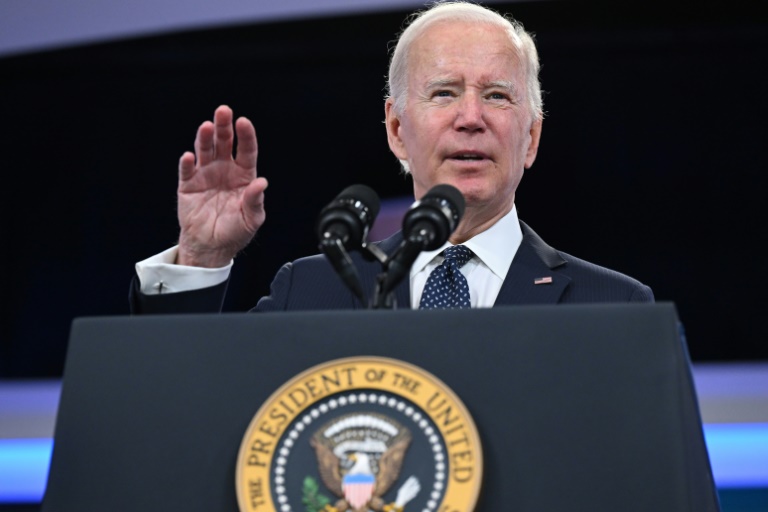
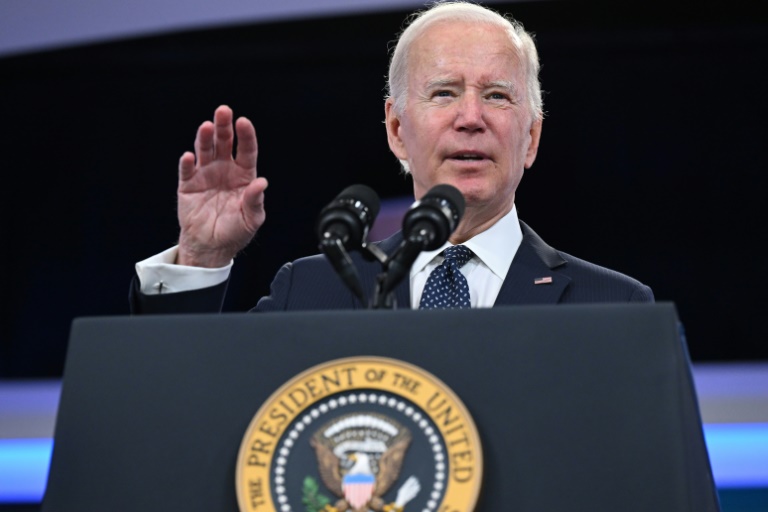
President Joe Biden touted giant investments in semiconductor manufacturing Thursday in a bid to seize back the narrative for Democrats as the party best at managing the economy ahead of midterm elections.

Biden got a piece of good news before leaving the White House for Syracuse, New York: a rebound in GDP growth in the third quarter, staving off fears that the world’s biggest economy is sliding into recession.

“Things are looking good!” he said, jogging up to journalists with a beaming smile.

Biden underlined that message in Syracuse at the site of a future $100 billion Micron manufacturing plant for semiconductors — a crucial, high-tech product that Biden has prioritized as the cornerstone of a rebirth in US manufacturing.

Democrats are forecast to lose the House of Representatives and possibly also the Senate in the November 8 election. But Biden is leading a late push to attack Republicans on the economy, an area where Democrats have been on the defensive as Americans struggle under four-decades high inflation.

Numerous big investments in the semiconductor and electric vehicle sectors are taking off around the country with encouragement from incentives through multi-billion dollar bills passed under the Democratic-led Congress. 

Biden says that shows he is rebuilding the kind of blue collar communities that went for Donald Trump and the Republicans in the last few years, in part because of disillusion after decades of industries ebbing out to foreign countries.

Central New York, physically and culturally far from the glitz of New York City itself, used to be a “heartland of manufacturing,” Biden said. Now the “region is poised to lead the world in advanced manufacturing” again.

The Micron plant will “ensure that the future is made in America,” he said, and is “part of a broader story about an economy we’re building, one that works for everyone.”

In an indication of how difficult the environment is for Democrats less than two weeks before voting day, even longtime stronghold New York is creaking. Governor Kathy Hochul, who was with Biden in Syracuse, is among those finding herself in an unexpectedly tough race.

– Economy dominates –

Democrats had hoped that anger over Republican restrictions on abortion access in much of the country would fuel a backlash saving their party from a long-predicted pounding in the midterms. However, inflation and other economic concerns have returned to dominate the agenda, according to polls.

With time running out, Biden is leading an intensified campaign to paint Republicans as reckless and readying to slash social spending for the poor, while protecting the very richest.

Biden enumerated what he said was a list of achievements, ranging from low unemployment, rising exports, higher salaries, and a series of measures to lower healthcare costs, student debt and other bread-and-butter issues.

Meanwhile, “Republican friends in Congress seem to be hoping for a recession, many of them,” Biden said.

He noted that Republican leaders have opposed many of his populist measures and are also suggesting they could try to force cuts in social security by threatening to trigger a US debt default, something that would cause “chaos” and “take down the economy.”

“I can’t tell you what they’re for,” he said of the Republicans, only “what they’re against.”

Republican National Committee chairwoman Ronna McDaniel mocked the Democrats and Biden’s trip north.

“We’re less than two weeks out and Biden is parachuting into New York to save Democrats,” she said. “It will backfire. Families cannot afford Biden and Democrats’ failed economy, and voters everywhere are eager to vote Biden Democrats out of office.” 

US economy grows for first time this year in third quarter

The US economy rebounded in the third quarter, government data showed Thursday, in welcome news for President Joe Biden days before midterm elections, though analysts warn of a gloomier path ahead.

Economic issues have become a flashpoint in the United States, with decades-high inflation weighing on growth and squeezing households.

Fears of a downturn have intensified in the world’s biggest economy after two quarters of negative growth, commonly viewed as a strong signal that a recession is underway — a trend that would have global consequences and domestic political costs.

But gross domestic product rose for the first time this year, at an annual rate of 2.6 percent in the July to September period, according to Commerce Department data.

“Our economic recovery is continuing to power forward,” said Biden in a statement, later telling reporters that “things are looking good.”

But he also said that officials need to “make more progress” on bringing down costs for American households.

On Thursday, mortgage rates surged past seven percent for the first time in two decades according to the Freddie Mac survey, piling pressure on potential homebuyers.

The better-than-expected GDP performance was helped by strong trade, but housing investment plunged and weaker consumer spending on goods casts a pall on growth as higher prices bite.

Industrial supplies and materials, notably petroleum and products, kept exports robust.

In consumer spending, an increase in services was “partly offset” by a drop in products like motor vehicles and parts, along with food and beverages, data showed.

– ‘Unsustainable’ –

The leap in exports is “unsustainable,” as a strong dollar and weak global growth will pose constraints moving forward, cautioned Ian Shepherdson of Pantheon Macroeconomics.

“We’re relying on better consumption, rising government spending, and… investment to keep GDP in the black,” he added.

Overall, personal consumption expenditures — a key segment of the economy — grew 1.4 percent, slower than before.

The US economy shrank 0.6 percent in the second quarter, according to revised numbers, after a larger decline in the first three months this year.

Treasury Secretary Janet Yellen said Thursday that recent data signals the economy is shifting towards “sustainable growth.”

But analysts warn of risks ahead, as households grapple with soaring prices and draw down their savings.

Republicans have blamed Democrats for worsening price spikes through runaway spending, though inflation is a global issue over which presidents have limited power.

– Risks ahead –

Analysts see a slowdown in growth in the coming quarters, with the possibility of a recession in 2023.

“This will likely be the only positive quarter for the entire year,” said economist Diane Swonk of KPMG in a tweet.

While there is still some momentum in household spending and a rebound in business investment, there is also “ongoing weakness in residential investment,” added Rubeela Farooqi of High Frequency Economics.

There are particular risks to consumption “as households continue to face challenges from high prices and likely slower job growth going forward,” she said in an analysis.

Households have been reeling from decades-high inflation, with prices soaring on supply chain snarls due to Covid-19 lockdowns and fallout from Russia’s invasion of Ukraine, which sent food and energy costs rocketing.

To lower price pressures, the US central bank has embarked on aggressive rate hikes, walking a tightrope as it tries to avoid tipping the economy into a recession.

Already, there are signs of stress, such as a hit to the more interest-sensitive housing sector.

Rates on popular 30-year fixed-rate mortgages have also rocketed to 7.08 percent according to Freddie Mac, as the Federal Reserve’s moves ripple through the economy.

Policymakers are expected to press on with rate increases at a meeting next week, in the face of persistently high prices.

US economy grows for first time this year in third quarter

The US economy rebounded in the third quarter, government data showed Thursday, in welcome news for President Joe Biden days before midterm elections, though analysts warn of a gloomier path ahead.

Economic issues have become a flashpoint in the United States, with decades-high inflation weighing on growth and squeezing households.

Fears of a downturn have intensified in the world’s biggest economy after two quarters of negative growth, commonly viewed as a strong signal that a recession is underway — a trend that would have global consequences and domestic political costs.

But gross domestic product rose for the first time this year, at an annual rate of 2.6 percent in the July to September period, according to Commerce Department data.

“Our economic recovery is continuing to power forward,” said Biden in a statement, later telling reporters that “things are looking good.”

But he also said that officials need to “make more progress” on bringing down costs for American households.

On Thursday, mortgage rates surged past seven percent for the first time in two decades according to the Freddie Mac survey, piling pressure on potential homebuyers.

The better-than-expected GDP performance was helped by strong trade, but housing investment plunged and weaker consumer spending on goods casts a pall on growth as higher prices bite.

Industrial supplies and materials, notably petroleum and products, kept exports robust.

In consumer spending, an increase in services was “partly offset” by a drop in products like motor vehicles and parts, along with food and beverages, data showed.

– ‘Unsustainable’ –

The leap in exports is “unsustainable,” as a strong dollar and weak global growth will pose constraints moving forward, cautioned Ian Shepherdson of Pantheon Macroeconomics.

“We’re relying on better consumption, rising government spending, and… investment to keep GDP in the black,” he added.

Overall, personal consumption expenditures — a key segment of the economy — grew 1.4 percent, slower than before.

The US economy shrank 0.6 percent in the second quarter, according to revised numbers, after a larger decline in the first three months this year.

Treasury Secretary Janet Yellen said Thursday that recent data signals the economy is shifting towards “sustainable growth.”

But analysts warn of risks ahead, as households grapple with soaring prices and draw down their savings.

Republicans have blamed Democrats for worsening price spikes through runaway spending, though inflation is a global issue over which presidents have limited power.

– Risks ahead –

Analysts see a slowdown in growth in the coming quarters, with the possibility of a recession in 2023.

“This will likely be the only positive quarter for the entire year,” said economist Diane Swonk of KPMG in a tweet.

While there is still some momentum in household spending and a rebound in business investment, there is also “ongoing weakness in residential investment,” added Rubeela Farooqi of High Frequency Economics.

There are particular risks to consumption “as households continue to face challenges from high prices and likely slower job growth going forward,” she said in an analysis.

Households have been reeling from decades-high inflation, with prices soaring on supply chain snarls due to Covid-19 lockdowns and fallout from Russia’s invasion of Ukraine, which sent food and energy costs rocketing.

To lower price pressures, the US central bank has embarked on aggressive rate hikes, walking a tightrope as it tries to avoid tipping the economy into a recession.

Already, there are signs of stress, such as a hit to the more interest-sensitive housing sector.

Rates on popular 30-year fixed-rate mortgages have also rocketed to 7.08 percent according to Freddie Mac, as the Federal Reserve’s moves ripple through the economy.

Policymakers are expected to press on with rate increases at a meeting next week, in the face of persistently high prices.

Disney unveils centenary events at London 'Mary Poppins' mansion

Disney on Thursday held a glitzy presentation of planned European events for the Hollywood studio’s 100th anniversary next year, returning to a London mansion used in its 2018 “Mary Poppins Returns” film.

Fiction’s most famous English nanny with magical powers was on hand to greet arriving celebrity attendees, urging them to “run along” through the venue’s columned hall filled with projections of Disney cartoons.

Events previewed at the show include a “Disney100” exhibition of historic film costumes and props that will be shown at ExCel in London next autumn. 

The studio will also stage a multimedia concert tour, with the Hollywood Sound Orchestra performing movie soundtracks as audiences watch scenes from films, which will have eight UK dates starting in May.

Events will also take place in Germany, Switzerland, Austria and France through next year.

Brothers Walt and Roy Disney founded the company in 1923 and it has evolved over the ensuing century from making lavish cartoon films such as “Bambi” to entering today’s video streaming market.

It is now increasingly behind dramas and documentaries, as well as movie franchises, while subsidiary operations include theme parks and TV networks.

“Over the past 100 years I think we’ve seen how it’s changed, starting off with one of the first cartoons set to sound (a 1928 Mickey Mouse film called “Steamboat Willie),” said Nicole Morse, a company vice president responsible for brand strategy.

The venue for Thursday’s showcase, Banking Hall in the City of London, was chosen because it featured in film “Mary Poppins Returns” released four years ago, she noted.

Silver models of Minnie and Mickey Mouse, artists drawing the famous characters for guests, alongside costumed Snoopy and Chip and Dale mascots, completed the Hollywood-evoking scene in the financial district building. 

Last month Disney held a preview of anniversary events for US fans at its D23 Expo in Anaheim, California.

The centenary comes as Disney+, its streaming service, is set to follow competitor Netflix in launching cheaper ad-subsidised subscriptions in December.

Close Bitnami banner
Bitnami