US Business

US sees 'acute threat' from Russia, but says China is main challenge

Russia’s invasion of Ukraine highlights the “acute threat” posed by Moscow, but China is the most consequential challenge for the United States, the Pentagon said Thursday.

The dangers are both conventional — Moscow’s aggression toward its neighbors and Beijing’s efforts to gain control of Taiwan — and nuclear, with Russia possessing an extensive arsenal and China’s stocks of atomic weapons growing fast.

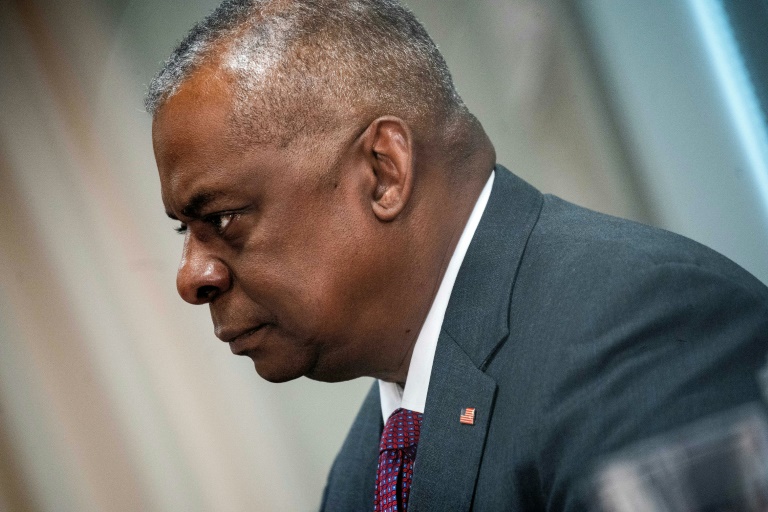
US Defense Secretary Lloyd Austin highlighted the different challenges posed by China and Russia as he unveiled the unclassified versions of several military strategy documents.

China “is the only competitor out there with both the intent to reshape the international order, and increasingly the power to do so,” Austin said.

“Unlike China, Russia can’t systemically challenge the United States over the long term. But Russian aggression does pose an immediate and sharp threat.”

The National Defense Strategy, which was released Thursday, likewise places the primary emphasis on China.

Beijing is seeking to “refashion the Indo-Pacific region and the international system to suit its interests and authoritarian preferences,” it says, describing this dynamic as “the most comprehensive and serious challenge to US national security.”

The strategy says Chinese rhetoric about and “coercive activity” toward self-ruled Taiwan — which Beijing has vowed to take control of, by force if necessary — is a destabilizing factor that risks miscalculation and threatens peace in the area.

As for Russia, it says the “acute threat” posed by Moscow has been most recently demonstrated by Moscow’s February invasion of Ukraine.

– ‘Emerging threat’ of climate change –

“The Department (of Defense) will support robust deterrence of Russian aggression against vital US national interests, including our treaty Allies,” the strategy says.

In a departure from the previous National Defense Strategy, which was issued during Donald Trump’s presidency, the newly released document classifies climate change as an “emerging threat.”

The US “will integrate climate change into threat assessments,” as well as increasing the “resiliency of military installations” and taking “climate extremes” into account in decisions on training and equipping the armed forces, the strategy says.

In an updated report on US nuclear posture released in parallel with the National Defense Strategy, the Pentagon defines the role of its nuclear arsenal as deterring both nuclear and non-nuclear attacks that have strategic consequences.

“This includes nuclear employment of any scale, and it includes high-consequence attacks of a strategic nature that use non-nuclear means,” a senior defense official told journalists.

The Nuclear Posture Review emphasizes that China’s nuclear arsenal is growing, but says Russia’s is currently more extensive.

– Warning to North Korea –

“By the 2030s the United States will, for the first time in its history, face two major nuclear powers as strategic competitors and potential adversaries,” the document says.

It emphasizes the importance of modernizing US strategic assets, while scrapping a submarine-launched nuclear cruise missile program and saying a type of obsolete nuclear bomb will be retired.

The document also contains a stark warning for Kim Jong Un against employing North Korea’s growing nuclear arsenal.

“Any nuclear attack by North Korea against the United States or its allies and partners is unacceptable and will result in the end of that regime. There is no scenario in which the Kim regime could employ nuclear weapons and survive,” it says.

The Missile Defense Review — also released Thursday — likewise points to growing threats from China and Russia.

Beijing is closing the gap with Washington when it comes to ballistic and hypersonic missile technology, while Moscow is modernizing its intercontinental-range missile systems and developing advanced precision-strike missiles.

The document says drones — which Russia has used to strike against Ukrainian cities and energy infrastructure — are also a threat that is likely to grow.

Russian President Vladimir Putin meanwhile offered a distinctly different take on the international strategic environment Thursday, saying Moscow is trying to “defend its right to exist” in the face of Western efforts to “destroy” his country.

“Ahead is probably the most dangerous, unpredictable and at the same time important decade since the end of the Second World War,” he said.


Strong McDonald's results showcase advantage amid inflation

McDonald’s reported stronger-than-expected quarterly profits Thursday as executives pointed to signs it is drawing customers priced out of more expensive restaurants.

The fast-food chain, known for the Big Mac and its golden arches logo, scored a 9.5 percent jump in global comparable store sales as it benefitted from higher guest counts and “strategic” price increases.

While McDonald’s has not seen significant trade down among its own consumers, the company is “benefitting from trade down” from more expensive restaurant categories, Chief Executive Chris Kempczinski said on a conference call with analysts.

Executives said the dynamics favor the brand.

“We actually think we’ve got pricing power right now,” a McDonald’s executive said on the conference call. “We’re gaining share among low-income consumers and that goes back to the fact that we are positioned as the leading brand in terms of value for money and affordability.”

Profits declined eight percent to $2 billion from the year-ago period, while revenues fell five percent to $5.9 billion, reflecting the chain’s smaller footprint after the sale of McDonald’s Russia business earlier this year.

McDonald’s said it continued to face heavy cost pressures across its operations for food, paper and energy. 

The company’s base economic scenario calls for a “mild to moderate” recession in the United States and one that is “potentially a little deeper and longer in Europe.”

“We’re going to continue to have inflation into 2023, both food and paper as well as labor, but we like our position relative to competitor in terms of where we stand,” Kempczinski said on a conference call.

In the United States, McDonald’s raised prices 10 percent compared with the year-ago period, executives said on the call.

In Europe, the company plans to set up a program to provide financial support to franchise companies struggling with economic conditions, especially spiking energy prices.

The program will be akin to efforts set up early in Covid-19, when McDonald’s established $1 billion in liquidity assistance to help franchisee companies facing financial stress.

Shares jumped 3.6 percent to $265.73 in afternoon trading.

World entering 'most dangerous' decade, warns Putin

The world is probably entering the “most dangerous” decade since the end of World War II, Russian President Vladimir Putin warned Thursday, presenting the Ukraine conflict as part of a wider struggle against western domination.

Arguing that Western dominance in global affairs was coming to an end, Putin insisted Russia was not just challenging the West but fighting for its own right to exist.

Putin was speaking as Ukrainian troops reclaim more territory that Moscow has annexed as its own, and has mobilised more troops to defend.

“Ahead is probably the most dangerous, unpredictable and at the same time important decade since the end of the Second World War,” Putin told members of the annual Valdai Discussion Club, in a lengthy question-and-answer session.

The situation was “to a certain extent revolutionary”, he said, describing the Ukraine offensive as simply part of the “tectonic shifts of the entire world order”.

“The historical period of undivided dominance of the West in world affairs is coming to an end,” said Putin. “The unipolar world is becoming a thing of the past. 

While the West was still “desperately” trying to govern humanity, it was not able to. “Most peoples of the world no longer want to put up with it,” he said.

And the Russian president characterised the current crisis as a battle for survival for Russia.

“Russia is not challenging the elites of the West, Russia is just trying to defend its right to exist,” he said.

– ‘Dirty bomb’ row –

Putin also returned to the row over Russian allegations that Ukraine was preparing to use a “dirty bomb” against its soldiers.

Kyiv was “doing everything to cover up traces of this preparation” for such a bomb, he said.

On Monday, the International Atomic Energy Agency (IAEA), responding to the  allegations, said it regularly visited two sites that Moscow had raised questions over.

The UN agency’s inspectors had found nothing untoward and were preparing to visit again in the coming days, the statement added.

“We are in favour,” said Putin. “And it should be done as fast as possible.” 

A dirty bomb is a conventional bomb laced with radioactive, biological or chemical materials which are disseminated in an explosion.

Over the past week, Russian Defence Minister Sergei Shoigu has repeated the claims regarding a Ukrainian dirty bomb in conversations with his counterparts in France, the US, the UK, China and India.

France, the US and the UK have all rejected the claim, and NATO chief Jens Stoltenberg has warned that Russia might be trying to use the claim as a “pretext” for escalation.

Kyiv meanwhile, has said it suspects Russia might itself use a dirty bomb in a “false flag” attack.

But Putin said Thursday using nuclear weapons in Ukraine would “make no sense at all to us — either in political or military terms”.

– Stalled talks –

Earlier Thursday, the Kremlin said Ukraine had pulled out of peace talks with Moscow back in March on orders from Washington.

“The text was ready… And then suddenly the Ukrainian side went off the radar, the Ukrainian side declared its unwillingness to continue negotiations,” Kremlin spokesman Dmitry Peskov told reporters.

Talks between Kyiv and Moscow have stalled since March, each side blaming the other for the stalemate.

Zelensky on Wednesday dismissed any possibility of talks with Moscow, denouncing Putin’s “planned rhetoric”. In late September, he said he would not negotiate with Russia as long as Putin was president.

Russia’s “special operation” in Ukraine has met with repeated setbacks.

Putin has in recent weeks changed his military commander there after Kyiv’s forces launched a  counter-offensive, recapturing territory in the east.

Last week, Putin introduced martial law in four Ukrainian regions that he has declared annexed: Kherson, Zaporizhzhia, Donetsk and Lugansk. 

The annexation announcement came in late September, despite Moscow’s forces not controlling some of the regions fully. Most recently, for example, there has been fierce fighting in the eastern region of Donetsk.

Russian-installed authorities in Ukraine’s occupied region of Zaporizhzhia on Thursday ordered phone checks on local residents.

Anyone subscribed to “propaganda resources of the terrorist Kyiv regime” would receive a warning, before being fined.

US economy grows for first time this year in third quarter

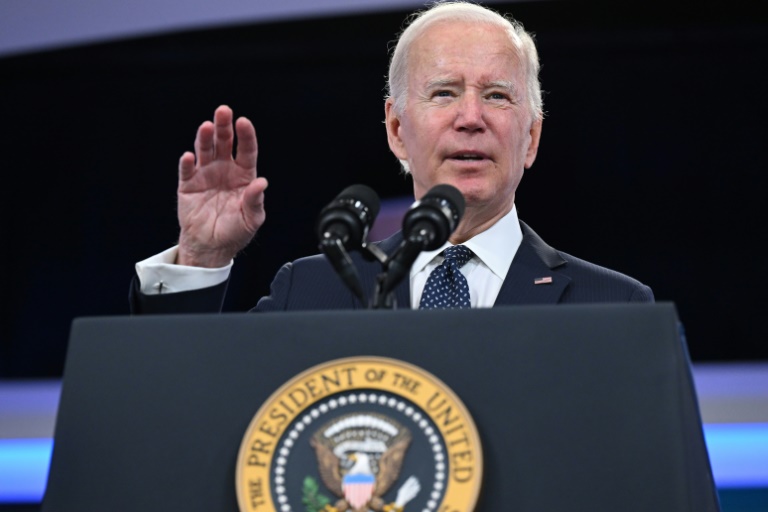
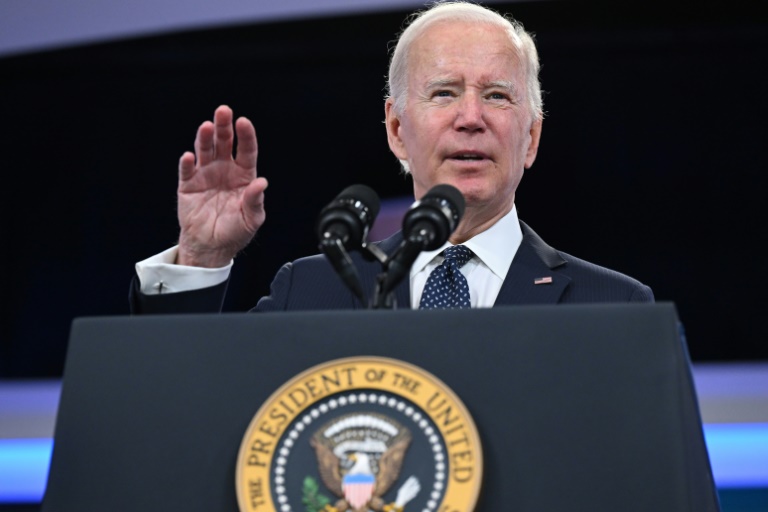
The US economy rebounded in the third quarter, government data showed Thursday, in welcome news for President Joe Biden days before midterm elections, though analysts warn of a gloomier path ahead.

Economic issues have become a flashpoint in the United States, with decades-high inflation weighing on growth and squeezing households.

Fears of a downturn have intensified in the world’s biggest economy after two quarters of negative growth, commonly viewed as a strong signal that a recession is underway — a trend that would have global consequences and domestic political costs.

But gross domestic product rose for the first time this year, at an annual rate of 2.6 percent in the July to September period, according to the latest Commerce Department data.

“Our economic recovery is continuing to power forward,” said Biden in a statement, later telling reporters that “things are looking good”.

But he also said that officials need to “make more progress” on bringing down high costs for American households.

On Thursday, mortgage rates surged past seven percent for the first time in two decades according to the Freddie Mac survey, piling further pressure on potential homebuyers.

The better-than-expected GDP performance was helped by strong trade, but housing investment plunged and weaker consumer spending on goods casts a pall on growth as higher prices bite.

Industrial supplies and materials, notably petroleum and products, kept exports robust.

In consumer spending, an increase in services was “partly offset” by a drop in products like motor vehicles and parts, along with food and beverages, data showed.

– ‘Unsustainable’ –

The leap in exports is “unsustainable,” as a strong dollar and weak global growth will pose constraints moving forward, cautioned Ian Shepherdson of Pantheon Macroeconomics.

A fall in imports that helped net trade also marks a reversal of earlier inventory rebuilding, but that is now over, he said.

“We’re relying on better consumption, rising government spending, and… investment to keep GDP in the black,” he added.

Overall, personal consumption expenditures — a key segment of the economy — grew 1.4 percent, slower than before.

The US economy shrank 0.6 percent in the second quarter, according to revised numbers, after a larger decline in the first three months this year.

Biden has insisted that the economy is on the right path, but analysts warn of risks ahead, as households grapple with soaring prices and draw down on their savings.

– Risks ahead –

Republicans have blamed Democrats for worsening price spikes through runaway spending, though inflation is a global issue that presidents have limited power over.

Analysts see a slowdown in growth in the coming quarters, with the possibility of a recession in 2023.

“This will likely be the only positive quarter for the entire year,” said economist Diane Swonk of KPMG in a tweet.

While there is still some momentum in household spending and a rebound in business investment, there is also “ongoing weakness in residential investment,” added Rubeela Farooqi of High Frequency Economics.

There are particular risks to consumption “as households continue to face challenges from high prices and likely slower job growth going forward,” she said in an analysis.

Households have been reeling from decades-high inflation, with prices soaring on supply chain snarls due to Covid-19 lockdowns and fallout from Russia’s invasion of Ukraine, which sent food and energy costs rocketing.

To lower price pressures, the US central bank has embarked on aggressive rate hikes, walking a tightrope as it tries to avoid tipping the economy into a recession.

Already, there are signs of stress, such as a hit to the more interest-sensitive housing sector.

Rates on popular 30-year fixed-rate mortgages have also rocketed to 7.08 percent according to Freddie Mac, as the Federal Reserve’s moves ripple through the economy.

Policymakers are expected to press on with rate increases at a meeting next week, in the face of persistently high prices.

US economy grows for first time this year in third quarter

The US economy rebounded in the third quarter, government data showed Thursday, in welcome news for President Joe Biden days before midterm elections, though analysts warn of a gloomier path ahead.

Economic issues have become a flashpoint in the United States, with decades-high inflation weighing on growth and squeezing households.

Fears of a downturn have intensified in the world’s biggest economy after two quarters of negative growth, commonly viewed as a strong signal that a recession is underway — a trend that would have global consequences and domestic political costs.

But gross domestic product rose for the first time this year, at an annual rate of 2.6 percent in the July to September period, according to the latest Commerce Department data.

“Our economic recovery is continuing to power forward,” said Biden in a statement, later telling reporters that “things are looking good”.

But he also said that officials need to “make more progress” on bringing down high costs for American households.

On Thursday, mortgage rates surged past seven percent for the first time in two decades according to the Freddie Mac survey, piling further pressure on potential homebuyers.

The better-than-expected GDP performance was helped by strong trade, but housing investment plunged and weaker consumer spending on goods casts a pall on growth as higher prices bite.

Industrial supplies and materials, notably petroleum and products, kept exports robust.

In consumer spending, an increase in services was “partly offset” by a drop in products like motor vehicles and parts, along with food and beverages, data showed.

– ‘Unsustainable’ –

The leap in exports is “unsustainable,” as a strong dollar and weak global growth will pose constraints moving forward, cautioned Ian Shepherdson of Pantheon Macroeconomics.

A fall in imports that helped net trade also marks a reversal of earlier inventory rebuilding, but that is now over, he said.

“We’re relying on better consumption, rising government spending, and… investment to keep GDP in the black,” he added.

Overall, personal consumption expenditures — a key segment of the economy — grew 1.4 percent, slower than before.

The US economy shrank 0.6 percent in the second quarter, according to revised numbers, after a larger decline in the first three months this year.

Biden has insisted that the economy is on the right path, but analysts warn of risks ahead, as households grapple with soaring prices and draw down on their savings.

– Risks ahead –

Republicans have blamed Democrats for worsening price spikes through runaway spending, though inflation is a global issue that presidents have limited power over.

Analysts see a slowdown in growth in the coming quarters, with the possibility of a recession in 2023.

“This will likely be the only positive quarter for the entire year,” said economist Diane Swonk of KPMG in a tweet.

While there is still some momentum in household spending and a rebound in business investment, there is also “ongoing weakness in residential investment,” added Rubeela Farooqi of High Frequency Economics.

There are particular risks to consumption “as households continue to face challenges from high prices and likely slower job growth going forward,” she said in an analysis.

Households have been reeling from decades-high inflation, with prices soaring on supply chain snarls due to Covid-19 lockdowns and fallout from Russia’s invasion of Ukraine, which sent food and energy costs rocketing.

To lower price pressures, the US central bank has embarked on aggressive rate hikes, walking a tightrope as it tries to avoid tipping the economy into a recession.

Already, there are signs of stress, such as a hit to the more interest-sensitive housing sector.

Rates on popular 30-year fixed-rate mortgages have also rocketed to 7.08 percent according to Freddie Mac, as the Federal Reserve’s moves ripple through the economy.

Policymakers are expected to press on with rate increases at a meeting next week, in the face of persistently high prices.

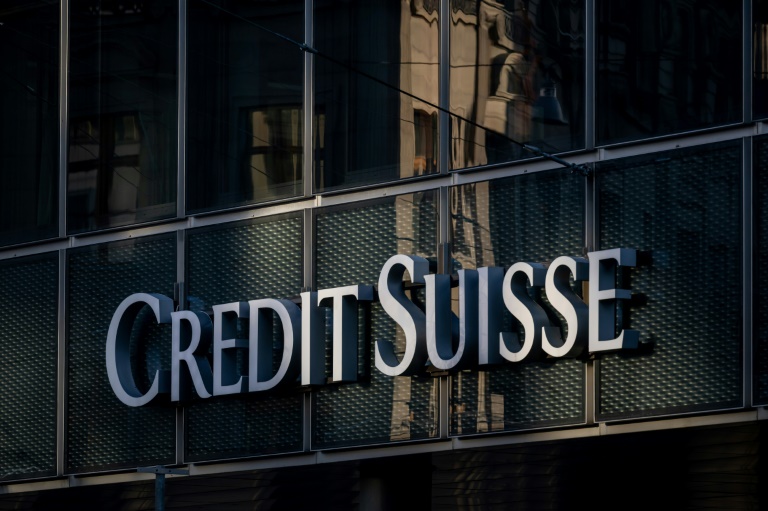
Credit Suisse launches radical overhaul to stabilise bank

Credit Suisse unveiled radical measures Thursday aimed at turning around the beleaguered bank following huge third quarter losses, including revamping its investment banking, slashing 9,000 jobs and a capital injection from the Saudi National Bank.

Switzerland’s second-biggest bank launched a new strategy intended to repair the damage following a series of scandals, saying it wanted to create “a simpler, more focused and more stable bank”.

“We all know Credit Suisse is at a critical point in its history,” chairman Axel Lehmann said.

For months, if not years, it has been “overshadowed by various issues”, while he acknowleged that the 166-year-old institution had become unfocused.

“We need to draw a line,” he insisted.

Lehmann said the reassessment of the bank’s direction included “a radical strategy and a plan to create a stronger, more resilient and more efficient bank with a firm foundation”.

The revamp came as Credit Suisse unveiled a third quarter net loss of 4.034 billion Swiss francs ($4.07 billion).

The Zurich-based bank revealed it was going for a “radical restructuring” of its investment bank, an accelerated cost-cutting effort, and strengthened and reallocated capital, “all of which are designed to create a new Credit Suisse”.

The group’s shares slid on the announcements, closing down 18.6 percent on the Swiss stock exchange’s main SMI index at 3.877 Swiss francs.

“The reaction is negative, which is not good. I think the markets were expecting more drastic things,” Carlo Lombardini, a professor of banking law at the University of Lausanne, told AFP.

“The bank is not going to go bankrupt… but the question is how it will generate income in a difficult market”.

– Saudi investment –

The bank intends to raise capital worth four billion Swiss francs ($4 billion) through issuing new shares to qualified investors, including Saudi National Bank, which has committed to invest up to 1.5 billion Swiss francs.

The Saudi bank will thus take a stake of up to 9.9 percent, becoming a chief shareholder alongside the US company Harris Associates (10.05 percent) and the sovereign wealth fund of Qatar (5.03 percent).

Making a capital increase is a “fairly radical choice”, said David Benamou, director of investments at Axiom Alternative Investments.

He told AFP it was a “very good message” for customers and creditors.

The Ethos foundation, which represents pension funds in Switzerland, welcomed that bank “finally seems to have understood that it was necessary to stop the investment banking”.

However, it criticised the Saudi injection, telling AFP that the current shareholders “have suffered a very significant dilution effect”.

– ‘Lengthy process’ –

Credit Suisse said it expects staff numbers to drop by 9,000 to approximately 43,000 staff by the end of 2025.

The group will also reduce its cost base by 15 percent, or around 2.5 billion Swiss francs, delivering a cost base of around 14.5 billion Swiss francs in 2025.

Credit Suisse will refocus on its most stable activities — wealth management and Swiss banking — and reduce its merchant banking.

It will revive its First Boston brand, named after an US investment bank it absorbed in 1990, where its capital market and advisory activities will be brought together.

Andreas Venditti, an analyst at Swiss investment managers Vontobel, said Koerner’s new strategic plan was “just the first step in a lengthy process to restore credibility and regain the trust” of Credit Suisse’s stakeholders.

“Resolute execution and no further mis-steps will be key and it will take time until results will begin to show,” he said.

Analysts at the US investment bank Jefferies said the capital raise was “larger than we thought it would be, and third quarter results show another quarter-on-quarter deterioration in momentum that we find concerning, though not very surprising”.

– Archegos, Greensill shocks –

Credit Suisse’s capital-guzzling investment banking arm has been the source of heavy losses which plunged Credit Suisse’s accounts into the red — eclipsing its more stable activities such as wealth management or its Swiss domestic banking services.

Credit Suisse’s investment bank suffered a loss of 3.7 billion Swiss francs in 2021 and backed that up with a 992 million Swiss franc loss in the first half of 2022.

It was hit by the implosion of US fund Archegos, which cost Credit Suisse more than $5 billion.

Meanwhile its asset management branch was rocked by the bankruptcy of British financial firm Greensill, in which some $10 billion had been committed through four funds.

Credit Suisse is one of 30 banks globally deemed too big to fail, forcing it to set aside more cash to weather a crisis.

While many industry experts think a bankruptcy highly improbable, these rumours helped drag its share price down to a low of 3.158 Swiss francs on October 3.

Seeking 'healthy' debate, Musk nears Twitter deal finish line

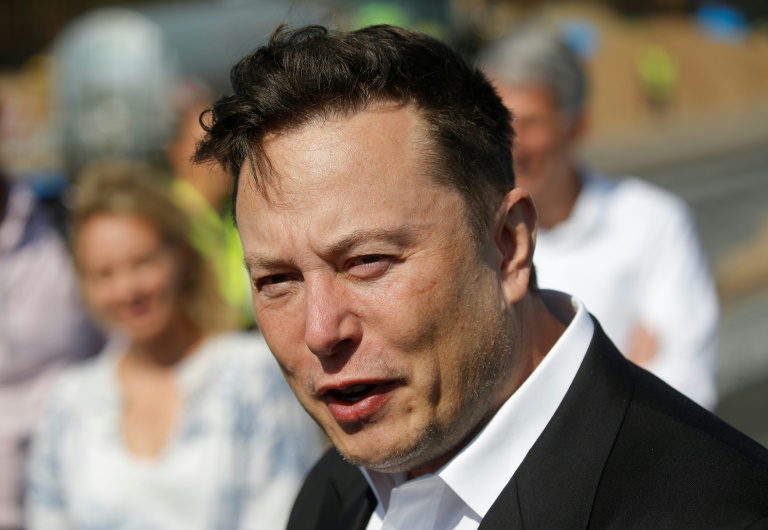
Closing in on his Twitter megadeal, Elon Musk said Thursday his goal is to enable “healthy” debate of ideas and counter the tendency of social media to splinter into partisan “echo chambers.”

In a message meant to reassure jittery Twitter advertisers on the eve of a court-imposed deadline to finalize the deal, Musk said he would work with marketers to “build something extraordinary together.”

The billionaire entrepreneur pursued the $44 billion deal “because it is important to the future of civilization to have a common digital town square, where a wide range of beliefs can be debated in a healthy manner,” Musk tweeted.

The planned takeover has dismayed activists who fear a surge in harassment and misinformation under the unpredictable Musk, who himself is known for trolling other Twitter users.

But Musk said he realizes Twitter “cannot become a free-for-all hellscape where anything can be said with no consequences.”

The Tesla boss’s on-again, off-again acquisition of the platform appeared to be entering its final phase after a Delaware judge paused litigation on October 6 on Twitter’s suit against Musk after he previously walked away from the deal.

Musk has reportedly been lining up financing and, while there is always the chance of a last-minute curveball, more signs point to the deal’s likely closure.

The New York Stock Exchange posted a pending order to suspend trading in Twitter before Friday’s session.

Shares of Twitter climbed 1.1 percent to $53.96 near 1615 GMT Thursday, not far below the $54.20 purchase price in Musk’s deal.

“We expect Musk and Twitter to officially close the deal by Friday morning with Cinderella finally getting the glass slipper that fits,” said Wedbush analyst Dan Ives.

– ‘Chief Twit’ –

Musk originally agreed to the Twitter acquisition in April, but soon pulled back, saying in July he was canceling the contract because he was misled by Twitter over the number of fake “bot” accounts — allegations rejected by the company.

Twitter in turn sought to prove Musk, who also heads aerospace firm SpaceX, was contriving excuses to walk away simply because he changed his mind.

A trial on Twitter’s suit was scheduled for mid-October, but the Delaware court gave the parties until 5:00 pm on October 28, 2022 to close the transaction.

Fresh questions about the deal and Twitter’s future surfaced last week following reports Musk planned deep staff cuts.

But on Wednesday, Musk changed his Twitter profile to “Chief Twit” and posted a video of himself walking into the company’s California headquarters carrying a sink.

The South African-born entrepreneur cuts a polarizing figure in American business.

Supporters cheer his disruptive spirit and achievements at Tesla, while detractors criticize him as a megalomaniac with a dangerous tendency to wade into geopolitical topics in which he lacks expertise, such as the Russia-Ukraine conflict. 

In his latest statement Thursday, Musk said much of the public speculation about his intentions in the deal had been “wrong” as he insisted his goals were noble.

In pursuing Twitter, “I didn’t do it because it would be easy. I didn’t do it to make more money,” Musk said. 

“I did so with humility, recognizing that failure in pursuing this goal, despite our best efforts, is a very real possibility.”

Musk urged marketers to devise ads that are “as relevant as possible” to consumers, appealing to the industry at a time when tech giants Google and Facebook have reported big declines in advertising revenue.

“Low relevancy ads are spam, but highly relevant ads are actually content!” he said.

Insider Intelligence analyst Jasmine Enberg said Twitter’s ad business has suffered due to uncertainty surrounding the Musk deal, as well as the macroeconomic concerns that have buffeted the broader online ad industry.

“Even slightly loosening content moderation on the platform is sure to spook advertisers, many of whom already find Twitter’s brand safety tools to be lacking compared with other social platforms,” Enberg said.

Having more relevant ads is “a noble goal, but one that is difficult to accomplish,” Enberg said.

“Musk is set to acquire Twitter at a time when data is already scarce and users are highly skeptical of forking over more personal information to social platforms.”

Seeking 'healthy' debate, Musk nears Twitter deal finish line

Closing in on his Twitter megadeal, Elon Musk said Thursday his goal is to enable “healthy” debate of ideas and counter the tendency of social media to splinter into partisan “echo chambers.”

In a message meant to reassure jittery Twitter advertisers on the eve of a court-imposed deadline to finalize the deal, Musk said he would work with marketers to “build something extraordinary together.”

The billionaire entrepreneur pursued the $44 billion deal “because it is important to the future of civilization to have a common digital town square, where a wide range of beliefs can be debated in a healthy manner,” Musk tweeted.

The planned takeover has dismayed activists who fear a surge in harassment and misinformation under the unpredictable Musk, who himself is known for trolling other Twitter users.

But Musk said he realizes Twitter “cannot become a free-for-all hellscape where anything can be said with no consequences.”

The Tesla boss’s on-again, off-again acquisition of the platform appeared to be entering its final phase after a Delaware judge paused litigation on October 6 on Twitter’s suit against Musk after he previously walked away from the deal.

Musk has reportedly been lining up financing and, while there is always the chance of a last-minute curveball, more signs point to the deal’s likely closure.

The New York Stock Exchange posted a pending order to suspend trading in Twitter before Friday’s session.

Shares of Twitter climbed 1.1 percent to $53.96 near 1615 GMT Thursday, not far below the $54.20 purchase price in Musk’s deal.

“We expect Musk and Twitter to officially close the deal by Friday morning with Cinderella finally getting the glass slipper that fits,” said Wedbush analyst Dan Ives.

– ‘Chief Twit’ –

Musk originally agreed to the Twitter acquisition in April, but soon pulled back, saying in July he was canceling the contract because he was misled by Twitter over the number of fake “bot” accounts — allegations rejected by the company.

Twitter in turn sought to prove Musk, who also heads aerospace firm SpaceX, was contriving excuses to walk away simply because he changed his mind.

A trial on Twitter’s suit was scheduled for mid-October, but the Delaware court gave the parties until 5:00 pm on October 28, 2022 to close the transaction.

Fresh questions about the deal and Twitter’s future surfaced last week following reports Musk planned deep staff cuts.

But on Wednesday, Musk changed his Twitter profile to “Chief Twit” and posted a video of himself walking into the company’s California headquarters carrying a sink.

The South African-born entrepreneur cuts a polarizing figure in American business.

Supporters cheer his disruptive spirit and achievements at Tesla, while detractors criticize him as a megalomaniac with a dangerous tendency to wade into geopolitical topics in which he lacks expertise, such as the Russia-Ukraine conflict. 

In his latest statement Thursday, Musk said much of the public speculation about his intentions in the deal had been “wrong” as he insisted his goals were noble.

In pursuing Twitter, “I didn’t do it because it would be easy. I didn’t do it to make more money,” Musk said. 

“I did so with humility, recognizing that failure in pursuing this goal, despite our best efforts, is a very real possibility.”

Musk urged marketers to devise ads that are “as relevant as possible” to consumers, appealing to the industry at a time when tech giants Google and Facebook have reported big declines in advertising revenue.

“Low relevancy ads are spam, but highly relevant ads are actually content!” he said.

Insider Intelligence analyst Jasmine Enberg said Twitter’s ad business has suffered due to uncertainty surrounding the Musk deal, as well as the macroeconomic concerns that have buffeted the broader online ad industry.

“Even slightly loosening content moderation on the platform is sure to spook advertisers, many of whom already find Twitter’s brand safety tools to be lacking compared with other social platforms,” Enberg said.

Having more relevant ads is “a noble goal, but one that is difficult to accomplish,” Enberg said.

“Musk is set to acquire Twitter at a time when data is already scarce and users are highly skeptical of forking over more personal information to social platforms.”

Energy giants' billions renew windfall tax debate

The billions in profits announced by TotalEnergies and Shell on Thursday have revived the debate over windfall taxes on the thriving energy giants.

As millions struggle with higher energy bills and inflation, there have been mounting calls for a much bigger tax to be placed on energy companies that have benefitted from price fluctuations.

In Paris, TotalEnergies said surging global oil and gas prices had helped it post a massive jump in profits in the third quarter.

In London meanwhile, British energy giant Shell announced net profit totalling $6.7 billion in the third quarter.

Net profits at TotalEnergies soared 43 percent from the same period last year to $6.6 billion, with record performances for its natural gas and liquefied natural gas (LNG) activities.

The firm has now earned $17.3 billion over the first nine months of the year, more than the $16 billion in profits it posted last year.

Shell’s result Thursday compared with a loss after tax of $447 million in the July-September period last year, the company said. 

Flush with cash from revenue surging to almost $100 billion, Shell said it would buy back shares at a cost of $4 billion.

Both sets of results will fuel raging debate over sizable profits by energy firms due to the spike in prices thanks to the Russian invasion of Ukraine.

– Pressing the giants –

In France, the leftwing opposition is pressing for a windfall tax to help fund measures to protect consumers from energy price hikes.

TotalEnergies has been plagued by strikes in France that have led to petrol shortages at pumps.

“Staff are right to call for a 10-percent wage rise” after TotalEnergies’ latest declared profits, tweeted the France Unbowed (LFI) deputy Thomas Portes.

And Patrick Kanner, head of France’s socialists in the upper house, the Senate, argued that TotalEnergies should play their part in the “national effort to allow the poorest to deal with the inflationary crisis”.

President Emmanuel Macron however reiterated his opposition to such a measure in a prime-time television appearance on Wednesday evening.

In Britain, Greenpeace UK made similar arguments about Shell.

“A proper tax on Shell’s reported Q3… profits as well as the billions made in Q1 and Q2 by all the fossil fuel giants would already have generated enough cash to insulate thousands of homes,” said Greenpeace UK’s senior climate advisor Charlie Kronick.

“Responding to the cost-of-living crisis is well within the government’s control.”

Britain’s new prime minister, Rishi Sunak, unveiled a windfall tax on the profits of British energy companies earlier this year when he was finance minister.

But campaigners say it was far too small.

– One-off bonus –

TotalEnergies reached a pay deal with most unions, but one has held out and two refineries remain on strike despite the government forcing some employees back to work under threat of jail time.

The company has also announced it would pay its workers a bonus, “an exceptional one-month-salary bonus in 2022 to all its employees worldwide” it announced Thursday.

Shareholders too will get 35 to 40 percent of cash flow, and a higher interim quarterly dividend than last year.

French Finance Minister Bruno Le Maire welcomed the company’s bumper profits, saying it would allow TotalEnergies to maintain its current discounted prices at service stations.

“When a French company succeeds, I think all of us should be satisfied with its success and we should all be proud of having a big energy company like Total,” he told BFM Business television.

But France’s Multinationals Observatory argued Thursday that TotalEnergies, which they say pays virtually no tax in France, should really pay between 40 and 65 million dollars tax this year.

While oil and gas prices have recently cooled, they are still much higher than before Russia launched its invasion of Ukraine in February.

The war has not been all a boon for TotalEnergies, which was involved in several gas projects in Russia.

It made a new $3.1 billion impairment charge due to its activities there, following write downs worth $7.6 billion in the first two quarters this year.

Despite slower global growth next year, TotalEnergies said it expects a cut of two million barrels per day by the OPEC oil cartel and its allies to support prices, as well as a European ban on Russian oil imports due to go into effect next month.

Canada gauges Haiti options ahead of talks on intervention force

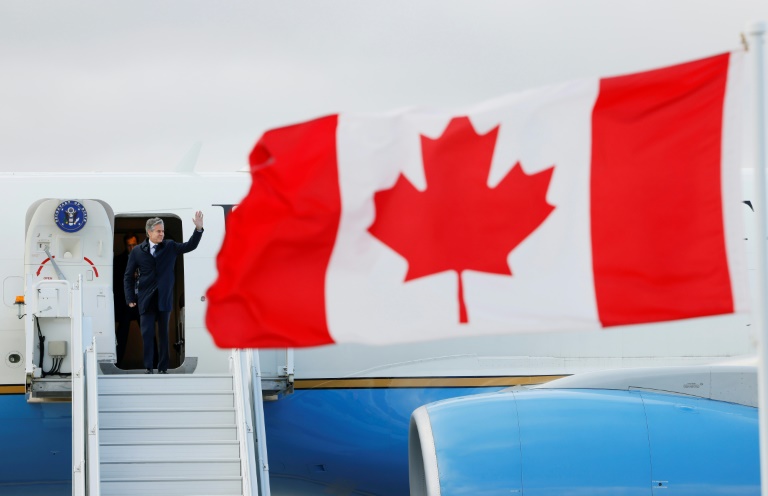
Canada said Thursday it was conducting an assessment mission in Haiti, as US Secretary of State Antony Blinken arrived in Ottawa for talks on setting up an intervention force to address the Caribbean nation’s spiralling crises.

The Canadian delegation is due to assess options “to support Haitian people in resolving the humanitarian and security crises” facing the impoverished country and “restore access to essential goods and services,” in consultation with regional partners the United Nations, the CARICOM Caribbean grouping and others, a statement said.

The mission comes in the wake of appeals by Haiti’s government and UN Secretary-General Antonio Guterres for international intervention as armed gangs take over vast stretches of the country and a cholera outbreak worsens.

The UN Security Council last week unanimously approved a resolution that targeted gang leaders but it did not address a multinational force. 

Ahead of Blinken’s arrival in Ottawa, however, a top US official voiced hope for progress on an international intervention.

“I am very optimistic that the international community and the Security Council will come together around another resolution that would create a multinational force for Haiti,” said Assistant Secretary of State for Western Hemisphere Affairs Brian Nichols.

While President Joe Biden’s administration has made clear it has no desire to put US troops in harm’s way, Nichols rejected pessimism that no country would step forward.

He said a “number of countries” have the capacity to lead a mission, including Canada, but that there had been no decision.

“I’ve talked to dozens of partner nations around the world about the situation in Haiti and there is strong support for a multinational force,” he added.

– US prioritizes police –

Blinken said ahead of his trip that solving Haiti’s problems would be “difficult, if not impossible” without restoring security.

He reiterated the US focus on building the Haitian National Police, pointing to the October 15 delivery by the US and Canadian militaries of equipment, including armored vehicles.

“We need to break the nexus — a very noxious nexus — between the gangs and certain political elites who are funding them, directing them and using them to advance their own interests instead of the interests of the country,” Blinken told an event at Bloomberg News.

“If we are able to help break that up as well as reinforce the Haitian National Police, then I think the government can get a grip on security,” he said.

Canadian Foreign Minister Melanie Joly said she would discuss Haiti with Blinken and that any actions need to “take into consideration what Haitians themselves think.”

“The goal is, at the end of the day, to find ways to help Haiti in the most effective way,” she told reporters in Ottawa.

Joly said Canada would work to impose sanctions on gang leaders in line with last week’s Security Council resolution that notably froze for one year all economic resources linked to Jimmy Cherizier, nicknamed “Barbecue,” whose armed groups have blockaded Haiti’s main oil terminal.

In a statement, she vowed Canada would “not remain idle while gangs and those who support them terrorize Haiti’s citizens.”

Joly said she would also coordinate with Blinken on the Ukraine war, Iran and China, ahead of a series of major Asian summits.

Blinken has spoken frequently to Joly but his two-day trip is his first to Canada since becoming the top US diplomat in January 2021 with the start of Biden’s presidency.

In Ottawa, Blinken will meet with Prime Minister Justin Trudeau and tour a community center for Ukrainian refugees.

He will spend Friday in Montreal, Joly’s hometown, where he will visit a lithium recycling factory in a bid to highlight cooperation on supply chains.

Close Bitnami banner
Bitnami