US Business

Britain's new PM delays crunch budget plan

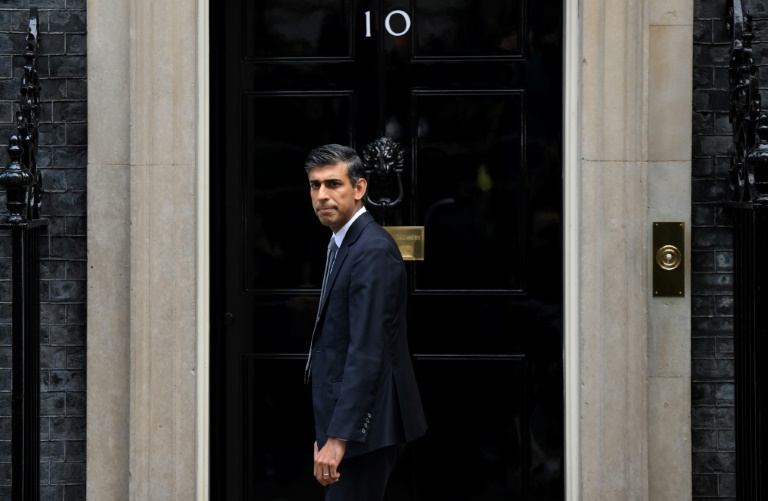
British Prime Minister Rishi Sunak on Wednesday postponed an eagerly awaited budget plan due next week, as the youthful new leader got down to business after weeks of political turmoil. 

Following a meeting of his new cabinet, Sunak was set to engage in his first parliamentary joust against opposition Labour leader Keir Starmer, who is demanding a snap general election.

“The Tories have crashed the economy, with low wages, high prices and a cost-of-living crisis,” Starmer said, in a taste of the attack to come during the Prime Minister’s Questions. 

“The public needs a fresh start and a say on Britain’s future.”

But Sunak, 42, ruled out an early election as he vowed stability and fiscal rectitude following his appointment by King Charles III on Tuesday to succeed Liz Truss after she served just 49 days in Downing Street.

After appointing the cabinet team, Sunak phoned the presidents of Ukraine and the United States to vow continuity on UK foreign policy, including resisting Russia’s invasion of its neighbour with cash and military aid.

But Chancellor of the Exchequer Jeremy Hunt — retained in Sunak’s cabinet along with other senior ministers — said that Monday’s planned “medium-term fiscal statement” was no longer so pressing.

Instead, there will be a full budget statement on November 17 to lay out the new government’s tax and spending plans, Hunt told reporters.

“Now, we have a new prime minister and the prospect of much longer-term stability for the economy,” he said, stressing the new plan would be accompanied by fresh economic forecasts from the Office for Budget Responsibility (OBR). 

– Promise to restore trust –

Hunt said he had discussed the delay with Bank of England governor Andrew Bailey — who had been blindsided by Truss’s previous ill-conceived plan for tax cuts financed by extra borrowing, which sent markets into a tailspin. 

The delay would ensure the budget can “stand the test of time” to give British mortgage holders and businesses more assurance, Hunt said, after the Truss plan provoked a damaging spike in borrowing costs and torpedoed her premiership.

Markets were unperturbed by the postponement, suggesting Hunt and Sunak have successfully calmed investor nerves.

Sunak vowed to restore “trust” and “integrity” in government after Truss’s financial carnage and the many controversies that brought down Boris Johnson before her.

But for critics, the new leader undermined his own pledges by also re-appointing the hardline right-winger Suella Braverman as interior minister, days after she was forced to resign for a security breach.

Foreign Secretary James Cleverly — also retained by Sunak — said Braverman had shown contrition for her “mistake” in emailing classified government documents outside her department.  

The documents reportedly included market-sensitive information from the OBR. 

Hunt declined to confirm this, while Cleverly denied allegations that Sunak reappointed Braverman after a secret deal securing her support against Johnson’s audacious comeback bid.

– ‘Livid’ –

As well as mending Britain’s wounded finances, Sunak is also pledging to reunite the Conservatives after another bruising leadership contest, mere weeks after Johnson was forced out.

The right-leaning Times daily welcomed a “generally broad and capable set of cabinet appointments”, although the left-wing Guardian expressed scepticism.

“Sooner or later, he will face the parliamentary disunity that his election sought to banish,” it said in an editorial. 

Sunak, finance minister under Johnson, also kept Truss’s defence, trade and culture ministers among others, as well as re-hiring some older faces from the Johnson cabinet.

The line-up “reflects a unified party and a cabinet with significant experience, ensuring that at this uncertain time there is continuity at the heart of government”, a Downing Street source said.

But Braverman’s return raised eyebrows across the political spectrum, with Labour demanding answers on the implications for national security. 

Cabinet secretary Simon Case, the UK’s most senior civil servant, was “livid” over her swift return, a source told The Times.

Truss left office as the UK’s shortest-serving premier in history, replaced by its youngest since 1812 and first Hindu leader.

Sunak triumphed in a 96-hour Tory leadership contest after rival contender Penny Mordaunt failed to secure enough nominations from Tory lawmakers and Johnson dramatically aborted his own bid.
Euro back above dollar parity on US economic strains

The euro on Wednesday surged back above parity with the dollar, with the US currency sliding against its main rivals on concerns over the world’s biggest economy.

The euro bounced back above one dollar for the first time since mid-September, helped also by expectations of a big interest rate hike from the European Central Bank on Thursday.

There were large gains against the dollar also for the British pound and yen, helping them to recover some ground after recent sharp losses.

The dollar retreated following “a string of negative (US) economic data released since the beginning of the week”, noted ActivTrades senior analyst Ricardo Evangelista.

He said that poorly-received data, including slower house price growth and weaker consumer confidence, showed that big rate hikes from the Federal Reserve are “starting to open some cracks in the American economy. 

“The Federal Reserve has been hiking rates aggressively in an attempt to bring inflation under control, and the country’s economy is starting to suffer as a result,” Evangelista added.

Sterling on Wednesday jumped more than one percent against the dollar, winning a boost also from markets welcoming the appointment of Rishi Sunak as prime minister.

The move was seen as offering stability to the UK economy after weeks of upheaval fuelled by predecessor Liz Truss’s tax-cutting budget.

The dollar also slumped against the yen following recent 32-year highs, as the Bank of Japan holds off from raising interest rates.

– Stocks track earnings –

Stock markets were mixed Wednesday as traders digested another batch of earnings from some of the world’s biggest companies.

Banks are enjoying large profits as interest rates rise but there are concerns over bad loans with the global economy threatened by possible recession.

Shares in Barclays fell 1.3 percent despite the British bank announcing a 10-percent jump in quarterly net profits.

Google parent Alphabet meanwhile reported quarterly earnings that fell short of market expectations as belts tightened in the digital ad market that drives its revenue.

Alphabet shares slipped 6.8 percent to $97.35 in after-market trades that followed the release of the earnings report.

“When Google stumbles, it’s a bad omen for digital advertising at large,” said Insider Intelligence analyst Evelyn Mitchell.

“This disappointing quarter for Google signifies hard times ahead if market conditions continue to deteriorate.”

– Key figures around 0945 GMT –

Euro/dollar: UP at $1.0023 from $0.9971

Pound/dollar: UP at $1.1567 from $1.1478 on Tuesday

Dollar/yen: DOWN at 147.14 yen from 147.92 yen

Euro/pound: DOWN at 86.64 pence from 86.85 pence

London – FTSE 100: DOWN 0.4 percent at 6,983.15 points

Frankfurt – DAX: DOWN 0.5 percent at 13,115.31

Paris – CAC 40: UP 0.1 percent at 6,255.26

EURO STOXX 50: DOWN 0.1 percent at 3,580.76

Tokyo – Nikkei 225: UP 0.7 percent at 27,431.84 (close)

Hong Kong – Hang Seng Index: UP 1.0 percent at 15,317.67 (close)

Shanghai – Composite: UP 0.8 percent at 2,999.50 (close)

New York – Dow: UP 1.1 percent at 31,836.74 (close)

Brent North Sea crude: UP 0.4 percent at $93.89 per barrel

West Texas Intermediate: UP 0.6 percent at $85.82 per barrel

burs/bcp/rox

Euro back above dollar parity on US economic strains

The euro on Wednesday surged back above parity with the dollar, with the US currency sliding against its main rivals on concerns over the world’s biggest economy.

The euro bounced back above one dollar for the first time since mid-September, helped also by expectations of a big interest rate hike from the European Central Bank on Thursday.

There were large gains against the dollar also for the British pound and yen, helping them to recover some ground after recent sharp losses.

The dollar retreated following “a string of negative (US) economic data released since the beginning of the week”, noted ActivTrades senior analyst Ricardo Evangelista.

He said that poorly-received data, including slower house price growth and weaker consumer confidence, showed that big rate hikes from the Federal Reserve are “starting to open some cracks in the American economy. 

“The Federal Reserve has been hiking rates aggressively in an attempt to bring inflation under control, and the country’s economy is starting to suffer as a result,” Evangelista added.

Sterling on Wednesday jumped more than one percent against the dollar, winning a boost also from markets welcoming the appointment of Rishi Sunak as prime minister.

The move was seen as offering stability to the UK economy after weeks of upheaval fuelled by predecessor Liz Truss’s tax-cutting budget.

The dollar also slumped against the yen following recent 32-year highs, as the Bank of Japan holds off from raising interest rates.

– Stocks track earnings –

Stock markets were mixed Wednesday as traders digested another batch of earnings from some of the world’s biggest companies.

Banks are enjoying large profits as interest rates rise but there are concerns over bad loans with the global economy threatened by possible recession.

Shares in Barclays fell 1.3 percent despite the British bank announcing a 10-percent jump in quarterly net profits.

Google parent Alphabet meanwhile reported quarterly earnings that fell short of market expectations as belts tightened in the digital ad market that drives its revenue.

Alphabet shares slipped 6.8 percent to $97.35 in after-market trades that followed the release of the earnings report.

“When Google stumbles, it’s a bad omen for digital advertising at large,” said Insider Intelligence analyst Evelyn Mitchell.

“This disappointing quarter for Google signifies hard times ahead if market conditions continue to deteriorate.”

– Key figures around 0945 GMT –

Euro/dollar: UP at $1.0023 from $0.9971

Pound/dollar: UP at $1.1567 from $1.1478 on Tuesday

Dollar/yen: DOWN at 147.14 yen from 147.92 yen

Euro/pound: DOWN at 86.64 pence from 86.85 pence

London – FTSE 100: DOWN 0.4 percent at 6,983.15 points

Frankfurt – DAX: DOWN 0.5 percent at 13,115.31

Paris – CAC 40: UP 0.1 percent at 6,255.26

EURO STOXX 50: DOWN 0.1 percent at 3,580.76

Tokyo – Nikkei 225: UP 0.7 percent at 27,431.84 (close)

Hong Kong – Hang Seng Index: UP 1.0 percent at 15,317.67 (close)

Shanghai – Composite: UP 0.8 percent at 2,999.50 (close)

New York – Dow: UP 1.1 percent at 31,836.74 (close)

Brent North Sea crude: UP 0.4 percent at $93.89 per barrel

West Texas Intermediate: UP 0.6 percent at $85.82 per barrel

burs/bcp/rox

Britain's new PM eyes delay to crunch budget plan

British Prime Minister Rishi Sunak could postpone an eagerly-awaited budget plan due next week, a senior minister said Wednesday, as the youthful new leader gets down to business after weeks of political turmoil. 

Following a meeting of his new-look cabinet, Sunak was set to engage in his first parliamentary joust against opposition Labour leader Keir Starmer, who is demanding a snap general election.

“The Tories have crashed the economy, with low wages, high prices and a cost-of-living crisis,” Starmer said, in a taste of the attack to come. “The public needs a fresh start and a say on Britain’s future.”

But Sunak, 42, ruled out an early election as he vowed stability and fiscal rectitude following his appointment by King Charles III on Tuesday.

After appointing the cabinet team, Sunak phoned the presidents of Ukraine and the United States to vow continuity on UK foreign policy, including resisting Russia’s invasion of its neighbour with cash and military aid.

Foreign Secretary James Cleverly — one of several ministers retained by Sunak from the old cabinet of Liz Truss — said however that Monday’s “medium-term fiscal statement” was no longer so pressing.

The statement was forced on Truss after she caused financial markets to implode with an ill-conceived plan for tax cuts financed by extra borrowing. 

She ditched her finance minister and turned to a new one in Jeremy Hunt to steady the ship, but her own premiership was mortally wounded. 

Sunak also retained Hunt in his cabinet, and vowed to restore “trust” and “integrity” in government after Truss’s financial carnage and the many controversies that brought down Boris Johnson before her.

But for critics, the new leader undermined his own pledges by also re-appointing the hardline right-winger Suella Braverman as interior minister, days after she was forced to resign for a security breach.

Cleverly said Braverman had shown contrition for her “mistake” in emailing sensitive government documents outside her department. 

– ‘Livid’ –

On the fiscal statement, the foreign minister told BBC television that “a short delay, in order to make sure that we get this right, I think that is not necessarily a bad thing at all”.

“He will want some time with his chancellor (Hunt) to make sure that the fiscal statement matches his priorities,” Cleverly added, warning that further cuts to foreign aid might be necessary.

As well as mending Britain’s wounded finances, Sunak is also pledging to reunite the Conservatives after another bruising leadership contest, mere weeks after Johnson was forced out.

The right-leaning Times daily welcomed a “generally broad and capable set of cabinet appointments”, although the left-wing Guardian expressed scepticism.

“Sooner or later, he will face the parliamentary disunity that his election sought to banish,” it said in an editorial. 

Sunak, finance minister under Johnson, also kept Truss’s defence, trade and culture ministers among others, as well as re-hiring some older faces from the Johnson cabinet.

The line-up “reflects a unified party and a cabinet with significant experience, ensuring that at this uncertain time there is continuity at the heart of government”, a Downing Street source said.

But Braverman’s return raised eyebrows across the political spectrum, with Labour demanding answers to the implications for national security. 

Cabinet secretary Simon Case, the UK’s most senior civil servant, is “livid” over her swift return, a source told The Times.

Truss left office as the UK’s shortest-serving premier in history, replaced by its youngest since 1812 and first Hindu leader.

Sunak triumphed in a 96-hour Tory leadership contest after rival contender Penny Mordaunt failed to secure enough nominations from Tory lawmakers and Johnson dramatically aborted an audacious comeback bid.

China Covid curbs disrupt production at world's biggest iPhone factory

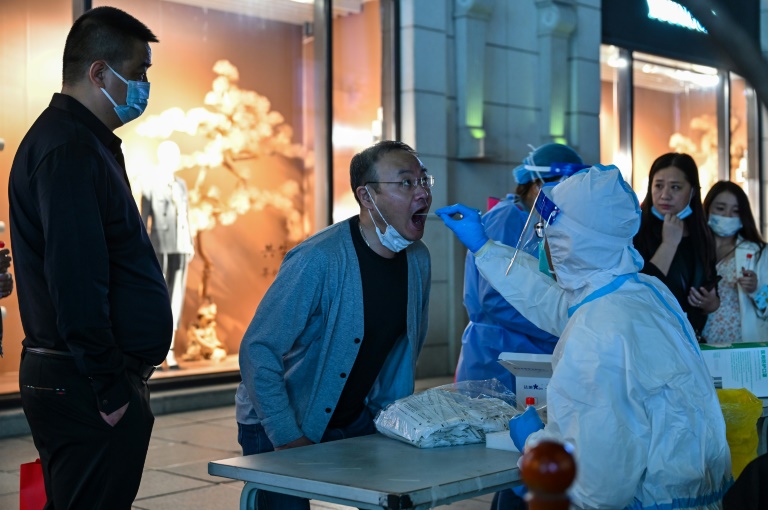
Millions of people in China were under tight Covid restrictions on Wednesday as sporadic outbreaks across the country prompted business closures and disruption at the world’s largest iPhone factory.

China is the last major economy welded to a zero-Covid strategy, persisting with snap lockdowns, mass testing and lengthy quarantines in a bid to keep infections to a minimum.

But fast-spreading virus variants have challenged that approach in recent months, with shutdowns and an ever-shifting patchwork of curbs sparking public exasperation and rare pockets of protest.

The world’s most populous nation recorded just 1,241 new local cases on Wednesday, the majority of which displayed no symptoms, according to the National Health Commission.

But they include an outbreak at a factory in the central city of Zhengzhou that employs around 300,000 people and is known as the largest producer of iPhones in the world.

Foxconn Technology Group, which runs the facility, acknowledged the flare-up on Wednesday but said “operation and production… is relatively stable”.

“Health and safety measures for employees (are) being maintained,” the Taiwanese electronics maker said, adding that it was “providing the necessary guarantees for livelihoods, including material supplies, psychological comfort and responsive feedback”.

The company did not specify how many staff were affected by the outbreak but said it was a “small number” and that unsubstantiated online rumours of tens of thousands of infections were “patently false”.

“At present, the epidemic prevention work in Zhengzhou is progressing steadily, and the impact… is controllable,” the statement said.

“The operating outlook for this quarter remains unchanged,” it added.

There were signs of further tightening in Beijing, with the capital’s Universal Resort theme park saying on Wednesday that it had “closed temporarily… to implement epidemic control requirements”.

“We will continue to evaluate the impact on operations and work hard to restore them as soon as possible”, the resort said on its official Weibo social media account, without giving a timeline for reopening.

– Inhalable vaccine –

Chinese authorities have shown little willingness to ease Covid measures even as the number of daily cases has diminished, with Japanese investment bank Nomura estimating this week that more than 200 million people are under some form of enhanced restrictions.

In the northwestern city of Xining — home to 2.5 million — residents complained on social media about grinding stay-home measures, with some making accusations of underreported cases that AFP was unable to verify.

“Xining is like Shanghai in April,” wrote one Weibo user, referencing the months-long lockdown that triggered isolated protests in the eastern megacity earlier this year.

But Shanghai’s situation has since improved, and officials there began rolling out an inhalable Covid vaccine on Wednesday in what is thought to be the first such campaign in the world.

The vaccine — produced by Tianjin-based manufacturer CanSino Biologics — was approved by domestic regulators last month and is being administered as a booster for those who have previously received a jab.

Footage posted on social media by local news outlets showed residents lifting translucent beakers to their lips and sucking in the mist-like vaccine through a nozzle.

Would-be crypto investors in Singapore could face risk tests

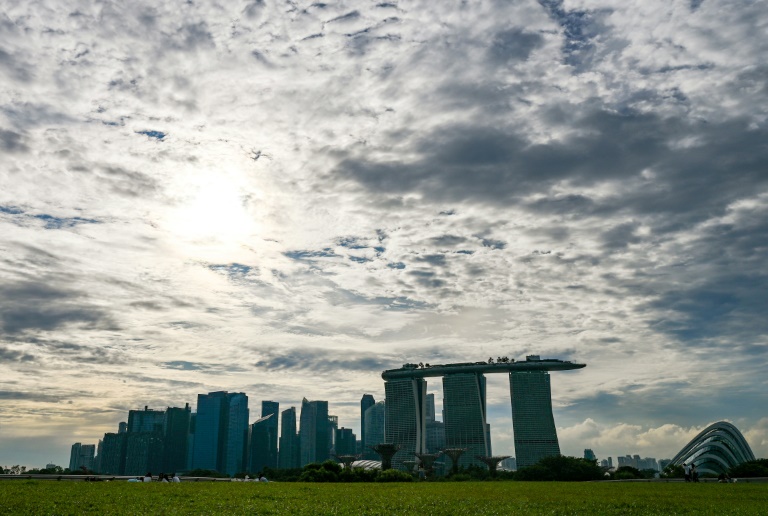
People looking to trade cryptocurrency in Singapore may soon have to take a test to prove they understand what they are getting into, the central bank said Wednesday, as it looks to prevent clueless investors from bankrupting themselves.

The Asian finance hub has taken cautious steps to expand its digital assets market, but has warned against the risks from trading in digital coins, especially among small investors lured by stories of quick riches.

“Trading in cryptocurrencies is highly risky and not suitable for the general public,” the Monetary Authority of Singapore (MAS) said as it unveiled proposals to protect traders.

“However, cryptocurrencies play a supporting role in the broader digital asset ecosystem and it would not be feasible to ban them.”

Under the plan, which will face public scrutiny before it can become legislation, the MAS will require cryptocurrency service providers to be more transparent in telling consumers about the risks so they could make informed choices.

Would-be investors must also take a test to assess their understanding of the risks before they are allowed to trade, and they will be barred from using credit cards or payment apps to buy the units.

If an applicant fails to answer the questions correctly, service providers can give them “educational materials… to strengthen the customer’s knowledge of the risks… This should not be limited to those questions to which the retail customer answered incorrectly”.

Incentives encouraging consumers to invest in crypto are disallowed, and service providers must also adhere to certain standards on how to carry out their business, the MAS said.

There has been a global push to regulate the crypto market following wild swings and a string of high-profile collapses, some of which took place in the city-state, hitting its reputation as a potential crypto hub.

In June, Singapore-based cryptocurrency hedge fund Three Arrows Capital collapsed, while Hodlnaut — a crypto lender based in the city-state — has been placed under interim judicial management.

Fugitive South Korean national Do Kwon, founder of cryptocurrency Terra, was also based in the city-state.

Despite the risks, digital currencies continue to attract investors because of reported big gains made over short periods and promotional endorsements encouraging the public to get into the market, the MAS said.

Cryptocurrencies are not backed by real-world assets, making them subject to huge price swings and trading in them is highly speculative.

Germany allows smaller Chinese stake in Hamburg port

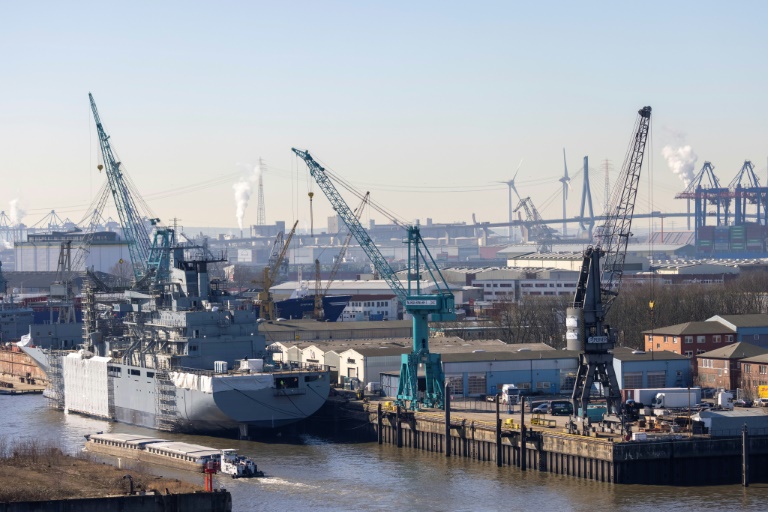
Germany’s coalition government on Wednesday allowed a Chinese firm to take a smaller-than-planned stake in a Hamburg port, after Chancellor Olaf Scholz resisted calls to ban the controversial sale outright.

Under the compromise reached by Scholz’s cabinet, Chinese shipping giant Cosco will be allowed to buy a stake “below 25 percent” in a container terminal owned by HHLA, the economy ministry said in a statement.

“The reason for the partial prohibition is the existence of a threat to public order and safety.”

China’s state-owned Cosco had initially sought a 35-percent stake and the deal would have automatically gone ahead if a compromise solution hadn’t been found this week.

The fate of the Tollerort terminal at Hamburg’s port — Europe’s third busiest — has sparked a fierce row in Scholz’s coalition government, amid growing concern about critical infrastructure falling into foreign hands.

Scholz, a former Hamburg mayor, had supported the sale and has repeatedly stressed the importance of strong trade ties with China.

He is due to visit China next week, the first European Union leader to make the trip since November 2019.

But Scholz’s coalition partners the Greens and the FDP wanted to veto the Hamburg port deal, citing security risks.

Badly burnt by its over-reliance on Russian energy, many in Germany are also wary of becoming too dependent on China economically.

Six German ministries, including those of economy, defence and foreign affairs, had opposed the Cosco sale.

The European Commission had also expressed reservations about the deal, a source told AFP at the weekend.

The agreement to settle for allowing a reduced stake of 24.9 percent, thereby depriving Cosco of voting rights, “reduces the acquisition to a purely financial participation”, the economy ministry said.

But the face-saving compromise failed to silence some critics.

Anton Hofreiter, a Green party lawmaker and chairman of the German parliament’s European affairs committee, said greenlighting the deal was the wrong decision.

“(Scholz’s) argument… that this is a purely commercial project is fatally reminiscent of the statements on Russia and Nord Stream,” he told the Funke media group.

“The attitude can be described as naive at best. We urgently need a realistic view of China.”

Beijing meanwhile welcomed the deal’s sign off and accused critics of “hyping up” the acquisition.

“Cooperation is mutually beneficial. We hope the relevant parties will view pragmatic cooperation between China and Germany rationally and stop baselessly hyping it up,” said foreign ministry spokesman Wang Wenbin.

Markets rise with Wall St on rate hope, healthy earnings

Stocks rose Wednesday to build on another strong performance in New York following more healthy earnings from big-name firms while hopes for a slowdown in Federal Reserve rate hikes spread cheer.

Hong Kong and Shanghai enjoyed a much-needed advance after China’s central bank and forex officials pledged support for the country’s equities, bonds and yuan, helping investors bounce back from Monday’s rout.

The mood across trading floors has been generally positive this week after a report on Friday suggested the Fed could begin discussing applying the brakes on its monetary tightening campaign aimed at fighting decades-high inflation.

That came as some bank officials hinted they could be open to the prospect of hiking by less than the 75 basis points seen after the past three meetings.

And while a similar move is expected next month, there are flickers of hope that the pace could slow in December or next year.

Adding to that optimism was data indicating that higher borrowing costs were having an impact on the world’s biggest economy, with house prices falling, consumer confidence at a three-month low and weakness in the factory sector.

“A few economic reports all told a similar story… that the economy is weakening,” said OANDA’s Edward Moya. “A weakening economy will bring down inflation and that is good news for long-term investors looking to get back into equities.”

CMC Markets analyst Michael Hewson added: “There appears to be an increasing belief that a Fed pause is close.”

He pointed to comments from San Francisco Fed boss Mary Daley that it could be time to talk about stepping back after November’s hike.

All three main indexes on Wall Street rallied, with the Nasdaq up more than two percent, helped by a drop in Treasury yields.

Investors also welcomed another round of better-than-expected profits, this time from Coca-Cola and General Motors.

However, after-hours big misses from Microsoft, Texas Instruments and Google parent Alphabet soured the mood a little among tech investors and tempered early gains in Asia.

– China concerns –

The gains in Hong Kong came after it collapsed more than six percent Monday on concerns over Chinese President Xi Jinping’s plans, after he strengthened his grip on power and put in top jobs loyalists who backed his economically painful zero-Covid strategy.

News that part of the Chinese city of Wuhan had been put into lockdown reinforced market worries and helped pare the morning’s rally in Hong Kong and Shanghai. 

Still, helping the mood was China’s central bank and forex regulator saying they would maintain the development of stock and bond markets, and that the yuan would be “basically stable”.

The currency sank against the dollar Tuesday, with the onshore yuan hitting a 15-year low and the offshore unit at its lowest level since being allowed to trade overseas in 2010. 

Both clawed back some of their losses on Wednesday.

The remarks, however, were in response to the end of the Communist Party’s twice-a-decade gathering in Beijing rather than in reaction to the markets selloff, Bloomberg News reported.

Elsewhere, Tokyo, Sydney, Singapore, Seoul, Wellington, Taipei and Manila were also up.

London was flat while Paris and Frankfurt rose.

The prospect of a slowdown in US rate hikes helped weaken the dollar, which has surged against most currencies this year.

The yen, which touched a fresh 32-year low of 151.95 per dollar Friday, was back below 147, while the euro hovered just below $1.0 ahead of the European Central Bank’s policy meeting this week that is expected to end with another big rate hike.

And the pound was also just approaching $1.16 — the first time since mid-September — after former finance minister Rishi Sunak took over as UK prime minister.

His appointment provided a much-needed sense of stability to markets after weeks of upheaval fuelled by predecessor Liz Truss’s debt-fuelled tax-cutting budget last month.

– Key figures around 0810 GMT –

Tokyo – Nikkei 225: UP 0.7 percent at 27,431.84 (close)

Hong Kong – Hang Seng Index: UP 1.0 percent at 15,317.67 (close)

Shanghai – Composite: UP 0.8 percent at 2,999.50 (close)

London – FTSE 100: FLAT at 7,012.76

Pound/dollar: UP at $1.1583 from $1.1478 on Tuesday

Dollar/yen: DOWN at 146.84 yen from 147.92 yen

Euro/dollar: UP at $0.9996 from $0.9971

Euro/pound: UP at 86.62 pence from 86.85 pence

West Texas Intermediate: DOWN 0.9 percent at $84.59 per barrel

Brent North Sea crude: DOWN 1.1 percent at $92.49 per barrel

New York – Dow: UP 1.1 percent at 31,836.74 (close)

Mercedes-Benz to sell off Russian assets to local investor

German carmaker Mercedes-Benz is expected to sell its Russian assets to a local investor, the Russian ministry of industry and trade said Wednesday, becoming the latest automaker to exit since Moscow sent troops to Ukraine.

“Mercedes-Benz intends to sell its shares in Russian subsidiaries to a local investor,” Avtodom, the ministry said in a Telegram statement.

“The new owner of the Russian divisions of Mercedes-Benz, Avtodom, will be able to attract other companies as partners for joint productions,” the ministry added.

Mercedes-Benz confirmed it intended to sell in a separate statement. 

“The fulfilment of obligations to customers in Russia… as well as the preservation of jobs for employees of the Russian divisions of the company” were the priority in concluding the deal with Avtodom, general director of Mercedes-Benz-RUS Natalya Koroleva said. 

“The completion of the transaction is subject to the approval of all relevant authorities,” Mercedes-Benz said in the statement. 

Many Western companies left Russia for ethical or logistical reasons since Moscow launched what it calls a “special military operation” in Ukraine on February 24.

No financial details of the transaction were provided by either side on Wednesday.

Western sanctions imposed on Russia since the beginning of the Ukraine offensive have heavily disrupted supply chains.

The technology and car manufacturing sector were particularly affected. 

Deutsche Bank net profit soars five-fold in Q3

Germany’s biggest lender Deutsche Bank on Wednesday said its third-quarter net profit had risen more than five-fold year-on-year, far better than expected, as a restructuring programme bears fruit.

The group’s net profit between July and September reached 1.1 billion euros ($1.1 billion), compared with 194 million euros in the same period last year, it said in a statement.

It was higher than forecasts by analysts from Factset, who predicted a net profit of 809 million euros.  

Profits before tax hit 1.6 billion euros — the best third-quarter result since 2006, according to the bank. 

Revenues increased 15 percent year on year, to 6.9 billion euros. 

They were driven by corporate banking, with an increase of 25 percent to 1.6 billion euros, according to Deutsche Bank.

In the investment banking division, they rose six percent to 2.4 billion euros. 

The results “underline the successful transformation of our bank,” said Deutsche Bank CEO Christian Sewing.

Deutsche Bank launched a restructuring programme in July 2019, which saw the size of the investment banking division reduced, with the loss of thousands of jobs.

An uncertain outlook, due to the war in Ukraine and the risks of recession in Europe, led the bank to build up provisions of 350 million euros this quarter, up from 117 million in the same period a year earlier.

The bank also reduced its exposure to Russian credit in the third quarter.

Close Bitnami banner
Bitnami