US Business

Santander's net profit climbs to 2.4 bn euros in Q3

Spanish banking giant Banco Santander on Wednesday announced an 11-percent increase in net profits year-on-year in the third quarter.

The company posted a net profit of 2.42 billion euros ($2.41 billion) between July and September, thanks to strong commercial performance in Poland and Argentina.

It surpassed forecasts of analysts who expected a profit of 2.15 billion euros.

In the year to date profits climbed 25 percent to 7.32 billion euros.

Ana Botin, the executive chair of Banco Santander, said the group had delivered a “strong quarter with revenues increasing and profitability remaining above target… supported by our rock-solid balance sheet”.

She said that they expected the “macroeconomic environment to remain challenging as markets across Europe and North America adapt to levels of inflation not experienced in decades”.

The Spanish bank has 159 million customers worldwide, and said it saw revenues grow fastest in Argentina, Poland and Mexico.

The growth comes despite more pressures at home. Earlier this year the Spanish government said it would slap temporary taxes on banks and energy firms to cover the cost of state measures put in place to help Spaniards grapple with soaring inflation.

Socialist Prime Minister Pedro Sanchez told parliament that the new taxes on lenders should generate around 1.5 billion euros per year and will remain in place for two years.

Greeks turn to firewood to heat homes amid energy crisis

Residents of the Athens suburb of Glyfada who are struggling to heat their homes as energy prices soar now have an option — free firewood from the local council.

“We need it… especially in this difficult year,” says Yiannis Dimitrakopoulos, a 75-year-old pensioner queuing for logs. 

Dozens of people wait patiently in their cars for their turn. 

“We try to get as much wood as we can. We have a fuel oil central heating system but you never know,” says Erofili Generali, a teacher in her 50s.

She looks on while her husband fills the boot of their car with wood collected from local forests and parks.

Although temperatures in Glyfada remain fairly mild during the winter season, the inhabitants of this fashionable southern suburb, nicknamed the Athens Riviera, still need to heat their homes somewhat in winter. 

– Fuel oil and gas heating –

When natural gas prices more than quadrupled in September, many began to wonder how they would afford it.

Many Greeks are still recovering from the financial impact of the county’s decade-long economic crisis, and with inflation running at more than 10 percent for the last six months, the price of food and essential goods has shot up.

In Glyfada, which has a population of around 90,000, homes are mainly equipped with central heating systems that use fuel oil or, increasingly, natural gas.

“We feel betrayed about these exorbitant natural gas prices,” says Dimitrakopoulos.

He recalls how the Greek government has heavily promoted gas for heating in recent years.

Some homes in the area do have fireplaces, although these are not used as the main source of heating.

So the council has stepped in to help with free firewood.

“Many trees came down in a snowstorm in January, so we decided not to recycle the wood into industrial fuel like we used to,” explains Annie Kafka, Glyfada’s deputy civil protection officer.  

Instead, the wood was chopped up so the council could “offer it to households because of the energy crisis”.

Launched at the beginning of October, firewood distribution usually takes place twice a week. 

Approximately 3,000 households have already benefitted from the initiative. 

Meanwhile, demand is exploding. Some 14,000 people have registered on the council’s website, according to Kafka.

Households are notified by SMS when they can come and fill up their car boots. “Vulnerable families obviously have priority,” Kafka says.

– Air pollution –

In September, the council in Zografou, an eastern suburb of Athens, launched a similar initiative.

“The demand from our residents was impressive,” said local councillor Dimosthenis Bouloukos.

But in the country’s densely populated capital, the initiative has not been welcomed with the same enthusiasm, mainly due to environmental concerns.

“Burning wood adds significantly to air pollution, especially in big cities like Athens that already suffer from nitrogen oxide emissions,” explains Petros Varelidis, head of the Natural Environment and Climate Change Agency.

During Greece’s financial crisis, which lasted from 2008 to 2018, a large number of the city’s residents resorted to firewood to heat their homes as they could no longer afford fuel oil or gas.

As a result, Greece’s main cities found themselves shrouded in choking smog. 

But while Glyfada’s residents are aware of the environmental damage caused by burning wood, they argue that there is no other way, given the tough economic times that lie ahead.

“It’s a form of recycling, even if it is harmful,” says Dimitrakopoulos. “This year it’s justifiable.” 

China fiscal deficit balloons to nearly $1 trillion as economy cools

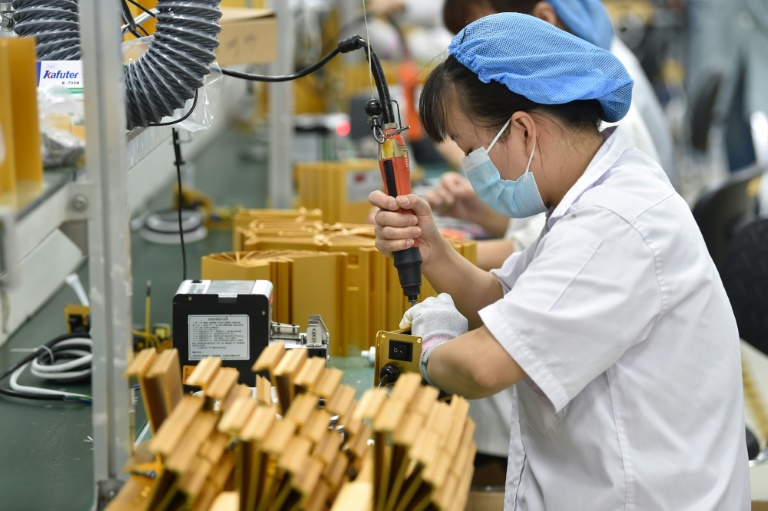
China’s fiscal deficit ballooned to an all-time high of nearly $1 trillion in the first nine months of the year, analysis of government data by Bloomberg showed, as a real estate crisis and tax rebates to boost a cooling economy emptied government coffers.

The budget shortfall for all levels of government from January to September was 7.16 trillion yuan ($980 billion), according to an analysis based on data released by Beijing’s Ministry of Finance on Tuesday — almost three times the 2.6 trillion shortfall over the same period last year.

Overall government revenue dropped 6.6 percent to 15.3 trillion yuan from January to September as the government dolled out more tax rebates to businesses, according to the finance ministry.

Fiscal expenditure then rose 6.2 percent to 19.04 trillion yuan in the first nine months, following a government-driven infrastructure push to boost growth and create employment.

China’s economy grew 3.9 percent year-on-year in the third quarter, data showed this week, beating expectations.

But President Xi Jinping’s re-election to a historic third term as leader of the Communist Party spooked investors Monday, with China’s currency slumping and stocks in Hong Kong nosediving to their lowest level since the global financial crisis.

China is also battling an unprecedented crisis in its real estate sector, which makes up more than a quarter of the country’s GDP when combined with construction.

In October, second-hand home prices fell by the highest month-on-month rate since 2014.

“The housing market is still stuck in a downward spiral, global demand is set to cool further, and the weak renminbi is constraining the central bank’s ability to provide policy support,” Julian Evans-Pritchard from Capital Economics wrote in a research note.

Consumer demand has also been dampened by sudden lockdowns and strict travel restrictions under Beijing’s strict zero-Covid policy.

China is the last of the world’s major economies still sticking to a zero-Covid strategy.

“There is no clear sign of a significant easing of the zero-Covid strategy,” Ting Lu, chief China economist at Nomura, said, adding that at least 207 million people were under some form of lockdown across 28 cities in China earlier this week.

“The actual economic recovery momentum is not strong,” he added.

Hong Kong arrests two in $446 million money-laundering case

Hong Kong authorities have arrested two men for laundering funds worth HK$3.5 billion ($446 million) by reselling precious metals, one of the city’s largest money-laundering cases, officials said Wednesday.

The two were involved in a scheme selling around eight tonnes of precious metals — mostly gold and palladium — between 2020 and 2021 for returns “incommensurate” with their backgrounds, customs official Rita Li said at a press conference.

It was a record for money-laundering cases busted by Hong Kong Customs, Li said, although the police have cracked larger cases.

Precious metals can be bought and sold anonymously in Hong Kong and are attractive to criminals because of their high value, small size and ease of transportation, Li added. 

“Unlawful elements can easily use proceeds from crime to buy precious metals and then resell them, or conduct multi-layer transactions, to launder money,” she said.

The two men used company accounts to receive large sums from precious metal trading firms and jewellery stores, then quickly transferred the funds to shell companies or accounts abroad, authorities said.

The suspects — believed to be linked to a crime syndicate — were arrested for money laundering last Friday and are on bail pending investigation.

Authorities say they are investigating the origins of the precious metals and will not rule out further arrests.

Last month, four suspected Hong Kong gang members were arrested for laundering $52 million over a two-year period.

Australia admits cyber defences 'inadequate' as medical hack hits millions

Hackers accessed millions of medical records at one of Australia’s largest private health insurers, the company said Wednesday, prompting the government to admit the nation’s cyber safeguards were “inadequate”.

This was the latest in a series of hacks targeting millions of people that have brought Australian companies’ lax approach to cyber security into sharp relief.

Medibank chief executive David Koczkar said information about each of the company’s 3.9 million policy holders — some 15 percent of Australia’s population — had been compromised.

“Our investigation has now established that this criminal has accessed all our private health insurance customers’ personal data and significant amounts of their health claims data,” he said in a statement to the Australian stock exchange.

“This is a terrible crime. This is a crime designed to cause maximum harm to the most vulnerable members of our community.”

The cyber attack was revealed last week, but it was not known until now how many people were impacted.

The hackers have previously threatened to leak the data, starting with 1,000 famous Australians, unless Medibank pays a ransom.

Medibank on Wednesday also confirmed it was not insured against cyber attacks, estimating the hack could cost the company as much as Au$35 million (US$22 million).

The Medibank hack followed an attack on telecom company Optus last month that exposed the personal information of some nine million Australians — almost a third of the population.

The Optus attack was one of the largest data breaches in Australian history.

– ‘Inadequate’ –

Australia’s Attorney-General Mark Dreyfus has previously accused companies of stockpiling sensitive customer data they did not need. 

Firms currently face paltry fines — Au$2.2 million — for failing to protect customer data. 

Dreyfus last week said these fines would be ratcheted up to Au$50 million. 

“Unfortunately, significant privacy breaches in recent weeks have shown existing safeguards are inadequate,” he said. 

“It’s not enough for a penalty for a major data breach to be seen as the cost of doing business.”

Home Affairs Minister Clare O’Neil on Tuesday said the fallout from the Medibank hack was “potentially irreparable”.

“One of the reasons why the government is so worried about this is because of the nature of the data,” she told Australia’s parliament. 

“When it comes to the personal health information of Australians, the damage here is potentially irreparable.”

O’Neil has previously described hacking as a “dog act” — an Australian phrase reserved for something especially shameful or despicable. 

Asian markets rally with Wall St on rate hope, healthy earnings

Asian stocks rose Wednesday to build on another strong performance in New York following more healthy earnings from big-name firms while hopes for a slowdown in Federal Reserve rate hikes spread cheer.

Hong Kong and Shanghai were among the best performers after China’s central bank and forex officials pledged support for the country’s equities, bonds and yuan, helping investors bounce back from Monday’s rout.

The mood across trading floors has been generally positive this week after a report Friday suggested the Fed could begin discussing applying the brakes on its monetary tightening campaign aimed at fighting decades-high inflation.

That came as some bank officials hinted they could be open to the prospect of hiking by less than the 75 basis points seen after the past three meetings.

And while a similar move is expected next month, there are flickers of hope that the pace could slow in December or next year.

Adding to that optimism was data indicating the higher borrowing costs were having an impact on the world’s biggest economy, with house prices falling, consumer confidence at a three-month low and weakness in the factory sector.

“A few economic reports all told a similar story… that the economy is weakening,” said OANDA’s Edward Moya. “A weakening economy will bring down inflation and that is good news for long-term investors looking to get back into equities.”

All three main indexes on Wall Street rallied, with the Nasdaq up more than two percent, helped by a drop in Treasury yields.

Investors also welcomed another round of better-than-expected profits, this time from Coca-Cola and General Motors. However, after-hours big misses from Microsoft, Texas Instruments and Google parent Alphabet soured the mood a little among tech investors.

Still, Asian markets were well up, led by Hong Kong’s jump of more than two percent while Shanghai climbed one percent.

– China concerns –

The rally in Hong Kong came after it collapsed more than six percent Monday on concerns over Chinese President Xi Jinping’s plans after he strengthened his grip on power and put in top jobs loyalists who backed his economically painful zero-Covid strategy.

Helping the buying was China’s central bank and forex regulator saying they would maintain the development of stock and bond markets, and that the yuan would be “basically stable”.

The currency sank against the dollar Tuesday, with the onshore yuan hitting a 15-year low and the offshore unit at its lowest level since being allowed to trade overseas in 2010. Both clawed back some of their losses on Wednesday.

The remarks, however, were in response to the end of the Communist Party’s twice-a-decade gathering in Beijing rather than in reaction to the markets selloff, Bloomberg News reported.

Elsewhere, Tokyo and Singapore each rose more than one percent while Sydney, Seoul, Wellington, Taipei, Manila and Jakarta were also up.

The prospect of a slowdown in US rate hikes helped weaken the dollar, which has surged against most currencies this year.

The yen, which touched a fresh 32-year low of 151.95 per dollar Friday, was back just above 148, while the euro is hovering just below $1.0 ahead of the European Central Bank’s policy meeting this week that is expected to end with another big rate hike.

And the pound was also holding above $1.14 after former finance minister Rishi Sunak took over as UK prime minister, giving a much-needed sense of stability to markets after weeks of upheaval fuelled by predecessor Liz Truss’s debt-fuelled tax-cutting budget last month.

– Key figures around 0300 GMT –

Tokyo – Nikkei 225: UP 1.20 percent at 27,577.15 (break)

Hong Kong – Hang Seng Index: UP 2.2 percent at 15,492.01

Shanghai – Composite: UP 1.0 percent at 3,007.38

Pound/dollar: DOWN at $1.1460 from $1.1478 on Monday

Dollar/yen: UP at 148.32 yen from 147.92 yen

Euro/dollar: DOWN at $0.9953 from $0.9971

Euro/pound: UP at 86.89 pence from 86.85 pence

West Texas Intermediate: DOWN 0.5 percent at $84.93 per barrel

Brent North Sea crude: DOWN 0.7 percent at $92.84 per barrel

New York – Dow: UP 1.1 percent at 31,836.74 (close)

London – FTSE 100: FLAT at 7,013.48 (close) 

US midterm elections: misinformation to watch out for

With midterm election campaigns in the closing stretch, Americans could face an onslaught of misinformation about the results. Recent trends suggest alleged voter fraud will be one of the biggest themes.

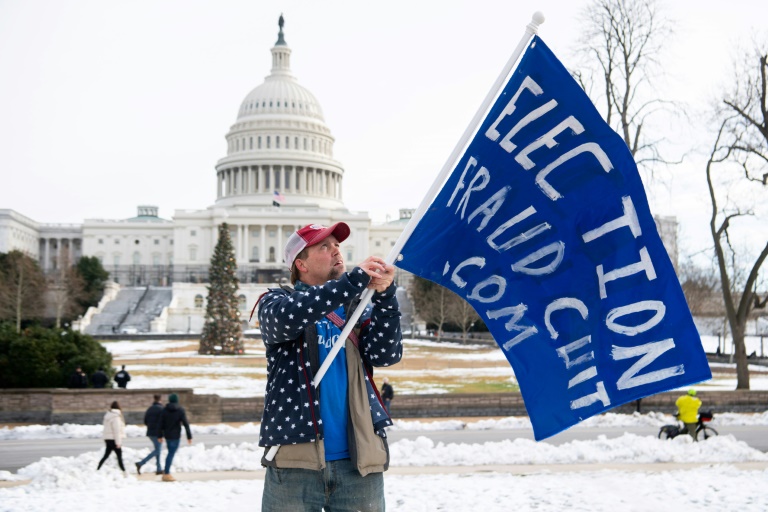
Claims of foul play — despite being repeatedly debunked after the 2020 presidential election — have permeated voters’ minds. Nearly 40 percent of Republicans and a quarter of Democrats might blame fraud if their party does not win control of Congress on November 8, according to a recent Axios-Ipsos poll.

Such an outlook, with social media weaponized by political operatives and potentially by foreign actors, poses an ongoing risk to democracy in the United States.

“There is going to be a continued effort to undermine confidence in the system,” warned Larry Norden, senior director of the Elections and Government Program at the Brennan Center for Justice, a liberal-leaning think tank, citing “lies around the election” as his biggest fear.

False and misleading claims are bubbling up.

In Colorado, partisan websites misconstrued a database error as a coordinated effort by Democrats to get non-citizens to vote. Social media posts in Alaska and Ohio misled some voters into believing that mail-in ballots without the proper postage would not be counted.

Election officials across the country have set up webpages to prepare for a misinformation deluge. Still, two years on from debunked conspiracy theories and dozens of defeated court cases from former president Donald Trump and his allies, experts say partisan beliefs are unbowed.

“We do have some portion of the American public that does not believe in the legitimacy of the 2020 election — despite all of the extensive evidence,” said Jen Easterly, director of the Cybersecurity and Infrastructure Security Agency (CISA), during a press briefing this month.

With voters increasingly likely to turn to social media for updates, experts recommend taking claims of a rigged election with extreme caution.

“In fact, our election systems are quite secure,” said Rick Hasen, a law professor and fraud expert at the University of California-Los Angeles (UCLA). “Voter fraud tends to be small and isolated.”

– Fraud is rare –

The 2020 presidential election was the most secure in American history, according to CISA. Litigation, audits and recounts have since backed that up, contradicting repeated claims from Trump that stolen votes put Joe Biden in the White House.

“None of the charges of widespread fraud turned out to be true,” said Charles Stewart, director of the Massachusetts Institute of Technology Election Lab, while noting “this is not the same thing as saying there was no fraud.”

Isolated cases were detected after the last general election. But of the more than 65 million absentee ballots cast in 2020, there have been 12 criminal fraud convictions, according to a database maintained by the conservative-leaning Heritage Foundation think tank.

Studies compiled by the Brennan Center, which reviewed fraud cases prior to 2020, also found wrongdoing is uncommon. Americans are more likely to get struck by lightning than impersonate someone at the polls, according to a 2007 report from the policy institute.

“When fraud occurs in elections, it’s most likely to occur for small, local elections where there’s not a lot of attention being paid,” Stewart said. “The fraud claims for really big elections are particularly rare.”

Americans who do commit such crimes face harsh penalties. Those convicted on charges related to the 2020 election were fined thousands of dollars, and some face jail time.

“Voters should look to official sources of information — and to experts and those in the press who focus on election issues — to figure out when claims of vote-rigging are legitimate or just more nonsense,” said Hasen of UCLA.

– Ballots are verified –

Claims of dead people voting and videos supposedly showing malfeasance at the polls reached large audiences in 2020. But there are numerous safeguards to prevent ballot tampering in person, and by mail.

Elections officials verify the eligibility and identity of voters requesting absentee ballots by using techniques such as signature matching. They also implement several security measures, including locks and tamper-evident seals, to protect drop boxes.

Once ballots are cast, there are “protocols in place for assuring the chain of custody,” Stewart said.

“Every step along the way, election workers are recording how many ballots they have, who’s transporting them (and) numbers are reconciled at every place they’re removed or exchanged.”

Russia rejects US basketballer's appeal of 'traumatic' sentence

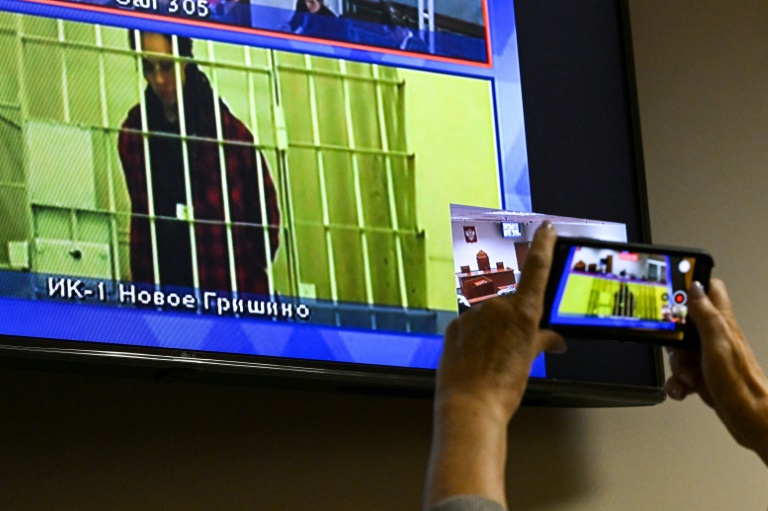
A Russian court on Tuesday rejected an appeal from US basketball star Brittney Griner of her nine-year prison term on drug charges, dismissing her plea for the “traumatic” sentence to be reduced.

The court in Krasnogorsk near Moscow ruled to leave Griner’s August verdict “without change” in the case that came amid fierce tensions between Moscow and Washington over Russia’s military offensive in Ukraine.

US President Joe Biden’s administration dismissed the ruling as “another sham judicial proceeding” that will keep Griner “wrongfully detained under intolerable circumstances” and vowed to continue pressing for her release.

“The President has demonstrated that he is willing to go to extraordinary lengths and make tough decisions to bring Americans home,” US National Security advisor Jake Sullivan said in a statement.

Griner, a star in the Women’s National Basketball Association in the US, had pleaded by video link from her detention centre just outside the Russian capital for the sentence to be cut.

“I really hope that the court will adjust this sentence because it has been very, very stressful and very traumatic,” Griner said.

The 32-year-old was handed nine years in prison in August for possessing vape cartridges with a small quantity of cannabis oil, after she was arrested at a Moscow airport in February.

Speaking slowly so her words could be translated into Russian, Griner asked the court for leniency given that the amount of cannabis found was “barely over the significant amount”.

“I don’t understand the first court’s decision to give one year less than the max when I’ve been here almost eight months and people with more severe crimes have gotten less than what I was given,” she said. 

“So I just beg that the court… reassess my sentence.”

– Not expecting ‘miracles’ –

Griner’s lawyers said they were disappointed by Tuesday’s decision as it goes against standard legal practice.

“Other defendants in similar criminal cases receive punishment in the form of a suspended sentence or a jail term not exceeding six years,” Maria Blagovolina and Alexander Boykov said in a statement.

“Thus, Brittney Griner remains one of the most severely punished defendants in Russia.”

The lawyers said Griner is doing fine physically and that she spoke to her family last week on her birthday, but Tuesday’s decision was hard for Griner to take.

“She had some hopes and these hopes vanished today,” Blagovolina told reports outside the court house.

WNBA commissioner Cathy Engelbert said the ruling “was not unexpected and Brittney Griner remains wrongly detained.”

“It is time to bring this case to an end and bring BG home.”

Griner’s lawyers hope to speak to her later this week about whether she wants to continue appealing the verdict in higher courts.

When she was arrested, the two-time Olympic basketball gold medallist and Women’s NBA champion had been in Russia to play for the professional Yekaterinburg team, during her off-season from the Phoenix Mercury Women’s National Basketball Association side.

She pleaded guilty to the charges, but said she did not intend to break the law or use the banned substance in Russia.

Griner had testified that she had permission from a US doctor to use medicinal cannabis to relieve pain from her many injuries, and had never failed a drug test.

The use of medical marijuana is not allowed in Russia.

In August, Moscow said it was ready to discuss a prisoner swap for Griner, but there has been no apparent progress.

Reports have suggested that Griner and another American jailed in Russia, Paul Whelan — a former US marine arrested in December 2018 and accused of spying — could be traded for Viktor Bout, a Russian arms trafficker serving 25 years in jail on a 2012 conviction.

Force firms to reveal their impact on nature: major businesses

Businesses must be compelled to reveal their impact on nature, more than 300 firms said in an open letter to world leaders published on Wednesday ahead of crunch United Nations negotiations to halt catastrophic biodiversity loss.  

Consumer goods group Unilever, furniture maker IKEA and India’s Tata Steel were among a slew of high profile corporations calling for stricter measures to impel firms to act, amid growing alarm over the devastation being wrought upon the natural world. 

“We need governments globally to transform the rules of the economic game and require business to act now,” the Business for Nature coalition said.

It said its open letter had been signed by some 330 companies with combined revenues of more than $1.5 trillion. 

International efforts to protect the world’s natural life support systems — including air, food and water — are set to conclude in Canada in December. Negotiators are hammering out a global framework to “live in harmony with nature” by 2050, with key benchmarks in 2030.

While businesses are beginning to report on their carbon emissions and climate impacts — albeit with some facing accusations of “greenwashing” — few firms give details on biodiversity.

The businesses that signed on to the statement said they wanted clarity from policymakers. 

“This statement shows the extensive support from major businesses for an ambitious global deal for nature, with clear goals to drive collective business and finance action,” said Andre Hoffmann, the vice-chairman of Roche Holdings.  

“The political certainty will accelerate the necessary changes to our business models. We stand ready to do everything in our power to shift to a society where nature, people and business thrive.”

In March, a report by central banks found that financial institutions and businesses were underestimating the risks of biodiversity loss and destroying the natural assets they depend on.

The new statement calls on heads of state to sign up to a target of mandatory requirements for large firms to assess and disclose their impacts and dependency on biodiversity by the end of this decade. 

The task “won’t be easy but it must happen” the firms said, urging measures to ensure that the UN targets aim to both reduce negative impacts and encourage positive ones.  

“The current rate of global economic activity is more than the planet can cope with,” said Steve Waygood, the chief responsible investment officer at Aviva Investors, which also signed the Business for Nature statement.  

“If nature was a current account, then we would be heavily overdrawn. This is bad for the environment and bad for long term growth.”

Many hope the UN deal, when finalised, will be as ambitious in its goals to protect life on Earth as the Paris Agreement was for climate change — even if the United States is not a party to UN efforts to conserve nature.  

One landmark proposal on the table is the protection of 30 percent of wild land and oceans by 2030. 

Another key focus of negotiations are harmful subsidies for things like fossil fuels, agriculture and fishing that can result in environmental destruction and encourage unsustainable levels of production and consumption.  

These amount to as much as $1.8 trillion every year, or two percent of global gross domestic product, Business for Nature has estimated. 

The world failed to meet almost all of a previous set of targets on nature in the decade to 2020.

Google's money churning ad engine sputters in rough economy

Google parent Alphabet on Tuesday reported quarterly earnings that fell short of market expectations as belts tightened in the digital ad market that drives its revenue.

Alphabet said it made a profit of $14 billion in the third quarter on ad revenue that grew just 6 percent to $69 billion when compared with the same period of last year.

Aside from one period at the start of the Covid pandemic, that would mark the weakest revenue growth at Alphabet for any quarter since 2014.

“When Google stumbles, it’s a bad omen for digital advertising at large,” said Insider Intelligence analyst Evelyn Mitchell.

“This disappointing quarter for Google signifies hard times ahead if market conditions continue to deteriorate.”

Alphabet shares slipped 6.8 percent to $97.35 in after-market trades that followed the release of the earnings report.

Google’s foundation in advertising on its heavily used search engine does give it an advantage, however, over other ad-reliant tech firms such as Meta, Snap and Twitter, the analyst added.

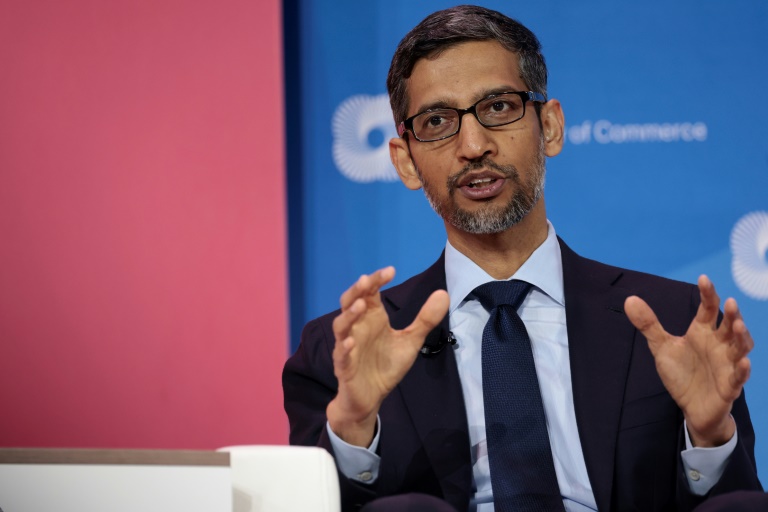
“Over time, we’ve had periods of extraordinary growth and then there are periods I viewed as a moment where you take the time to optimize the company to make sure we are set up for the next decade of growth ahead,” Alphabet and Google chief Sundar Pichai said on an earnings call.

“I view this as one of those moments.”

Alphabet chief financial officer Ruth Porat said the financial results in the quarter showed “healthy fundamental growth in Search and momentum in Cloud” computing revenue, but suffered from foreign exchange rates given the strong US dollar.

“We’re working to realign resources to fuel our highest growth priorities,” Porat said.

Big tech firms are grappling with multiple challenges, from inflation to the war in Ukraine, putting pressure on earnings.

Alphabet recruited throughout the pandemic, but announced a slowdown in hiring as ad revenue growth cooled this year.

“Within this slower headcount growth next year we will continue hiring for critical roles, particularly focused on top engineering and technical talent,” Porat said.

Many other tech companies have decided to lay off staff, including Netflix and Twitter, or slow the pace of hiring, such as Microsoft and Snap. 

– YouTube squeeze? –

Worsening the financial situation for Alphabet is the fact that Google tends not to aggressively promote advertising on its platform with tactics such as trying to convince businesses that online marketing is a smart move during tough economic times, said independent tech analyst Rob Enderle of Enderle Group.

“They don’t like the idea of making their money off advertising, so they don’t treat the market very well,” Enderle contended.

“Now, you are seeing the adverse impact of not taking your revenue source seriously.”

The earnings report also showed that ad revenue at YouTube was slightly lower than it was in the same quarter a year earlier, despite a hot trend of people watching video on-demand on the internet.

“Overall, I feel YouTube remains in a really good position to continue to benefit from the streaming boom,” chief business officer Philipp Schindler said during an earnings call.

However, Alphabet noticed a “pullback in spending” by advertisers at YouTube in the quarter, Schindler told analysts.

“They have a ton of competition in video, and TikTok is probably hitting YouTube pretty hard,” Enderle said.

Netflix last week reported that it gained subscribers in the recent quarter, calming investor fears that the streaming giant was losing paying customers.

The company said it ended the third quarter with slightly more than 223 million subscribers worldwide, up some 2.4 million, after seeing subscriber ranks ebb during the first half of the year.

The turn-around in subscriber growth comes as Netflix is poised to debut a subscription option subsidized by ads in November across a dozen countries.

Rival streaming platform Disney+ is to launch ad-subsidized subscriptions in December.

Close Bitnami banner
Bitnami