US Business

Trump family business fraud trial opens

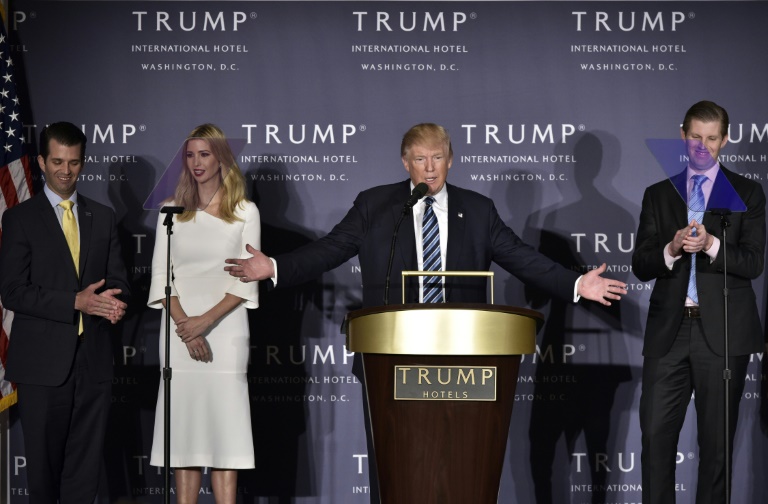
The trial of Donald Trump’s family business on fraud and tax evasion charges began in New York on Monday, with the former US president immediately dismissing as it as a political stunt.

Manhattan prosecutors have charged the Trump Organization, currently run by Trump’s two adult sons, Donald Jr and Eric Trump, with hiding compensation it paid to top executives between 2005 and 2021.

Trump, who is not named in the case, slammed the charges as a “witch hunt” by rivals, weeks ahead of congressional elections on November 8.

“The highly partisan Democrat Witch Hunt goes on, this time in New York… right during the important Mid-Term Elections, of course,” he said on social media.

The company faces potential fines of over $1.5 million if found guilty.

US news outlets said Judge Juan Merchan had made media access to the courtroom difficult and had warned the 130 jury candidates that their selection could take a week, so as to filter out any supporters or open opponents of the divisive former Republican president. 

The trial could last a month and a half, he said.

One of the implicated executives, longtime CFO Allen Weisselberg, has already pleaded guilty to 15 counts of tax fraud, and is expected to testify against his former company as part of a plea bargain.

A close friend of the Trump family, the 75-year-old Weisselberg admitted he schemed with the company to receive undeclared benefits such as a rent-free apartment in a posh Manhattan neighborhood, luxury cars for him and his wife and private school tuition for his grandchildren.

According to his plea deal, Weisselberg has agreed to pay nearly $2 million in fines and penalties and complete a five-month prison sentence in exchange for testimony during the trial, for which jury selection began Monday.

“This plea agreement directly implicates the Trump Organization in a wide range of criminal activity and requires Weisselberg to provide invaluable testimony in the upcoming trial against the corporation,” Manhattan District Attorney Alvin Bragg said in August.

Weisselberg has so far refused to give testimony directly implicating the former president in the scheme.

– Multiple legal cases –

Two subsidiaries of the Trump family’s sprawling real estate, golf and hospitality business are targeted by the suits.

While Donald Trump is not named in this case, he is facing charges along with three of his eldest children in a civil investigation led by New York’s attorney general, Leticia James.

James, a Democrat, has accused the family of purposefully inflating and deflating the value of their properties to avoid tax liabilities and to get more favorable loan and insurance deals.

Her office is seeking $250 million in fines against the former president, and that his family be barred from conducting business in the state.

The suit also calls for three of Trump’s children — Donald Jr, Eric and Ivanka — to be barred from purchasing real estate in New York for five years.

The 76-year-old Trump, who has heavily hinted at but not yet announced a 2024 White House run, is also facing legal action on several other fronts.

He is at the center of a Justice Department investigation into the handling of highly classified documents, which the FBI seized from his Florida home in a raid, as well as multiple state and federal probes into his involvement in the January 6, 2021, attack on the US Capitol.

The congressional committee investigating the Capitol riot has issued a subpoena requiring him to submit documents by November 4 and give sworn testimony by mid-November.

Without confirming that Trump had received the subpoena, his lawyer David Warrington has said his team would “review and analyze” the document and “respond as appropriate to this unprecedented action.”

Trump’s compliance would mean testifying under oath.

If he refuses, the House of Representatives can hold him in criminal contempt in a vote recommending him for prosecution. 
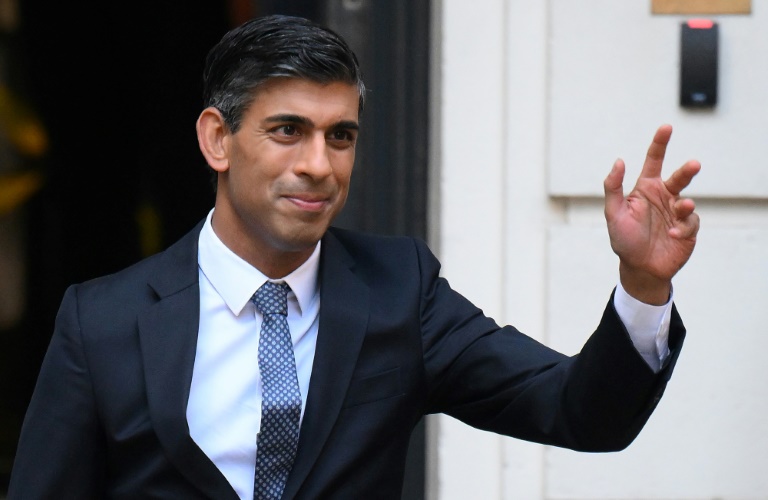
Stocks mostly up as Sunak poised to become new British PM

European and US stocks rose Monday as markets reacted to the news that former finance minister Rishi Sunak was to become Britain’s new prime minister.

European markets closed in positive territory, despite data showing Britain and Germany heading for recession and the Hong Kong stock market plunging as Chinese President Xi Jinping handed key economic posts to loyalists behind his zero-Covid strategy.

Wall Street stocks also advanced for a second straight session, boosted not only by the signs of greater political normalcy in Britain, but also by optimism about corporate earnings.

Investors are hopeful about the upcoming deluge of earnings reports, particularly from large tech companies that have often outperformed earnings expectations.

“Earnings season is coming in much less badly than I think the market was anticipating,” said Andy Kapyrin, co-chief investment officer at RegentAtlantic. 

News that European gas prices were at a four-month low also spurred traders. The reference Dutch TTF dipped below 100 euros ($99) for the first time since June, to 96.50 euros per megawatt hour.

Analysts at Energi Danmark said the price fall was due to mild weather in Europe and high levels of gas stocks, with governments replenishing reserves before winter after supply cuts from Russia.

Oil prices also retreated on recession fears.

– Sunak ‘the final chance’ –

All eyes were on Britain as Sunak prepared to become the country’s third prime minister in less than two months following the resignations of Boris Johnson and Liz Truss.

His last rival for leadership of the ruling Conservative party, Penny Mordaunt, dropped out of the race on Monday, clearing the way for Sunak to become prime minister.

“The pound started the week trading higher, as many see the new potential PM as a source of some stability, particularly when compared to the chaotic term served by the Truss government, which saw massive volatility across markets,” noted XTB chief market analyst Walid Koudmani.

“Many see Sunak as the final chance for the Conservative party, as he has managed to maintain some credibility” compared with the uncertainty of the Truss and Johnson premierships, he added.

The eurozone was meanwhile looking ahead to Thursday, when the European Central Bank is expected to announce another bumper rise in interest rates aimed at curbing sky-high prices.

Back in Asia, Hong Kong stocks plunged by more than six percent to a 13-year low Monday as investors were spooked by extending Xi’s zero-Covid strategy.

The policy has been blamed for the sharp drop in growth in the world’s number-two economy and, while data showed Monday that it expanded more than forecast in the third quarter, traders remain on edge.

“The more centralized power becomes, the more the risk of overzealous policy implementation based on directives from the top,” Duncan Wrigley, at Pantheon Macroeconomics, said.

“This happened in some of the lockdowns in the second quarter.”

– Key figures around 2120 GMT –

New York – Dow: UP 1.3 percent at 31,499.62 (close)

New York – S&P 500: UP 1.2 percent at 3,797.34 (close)

New York – Nasdaq: UP 0.9 percent at 10,952.61 (close)

London – FTSE 100: UP 0.6 percent at 7,013.99 points (close)

Frankfurt – DAX: UP 1.6 percent at 12,931.45 (close)

Paris – CAC 40: UP 1.6 percent at 6,131.36 (close)

EURO STOXX 50: UP 1.5 percent at 3,527.79 (close)

Tokyo – Nikkei 225: UP 0.3 percent at 26,974.90 (close)

Hong Kong – Hang Seng Index: DOWN 6.4 percent at 15,180.69 (close)

Shanghai – Composite: DOWN 2.0 percent at 2,977.56 (close)

Pound/dollar: UP at $1.1281 from $1.1258 on Friday

Dollar/yen: UP at 148.95 yen from 147.65 yen

Euro/dollar: UP at $0.9876 from $0.9863

Euro/pound: UP at 87.56 pence from 87.26 pence

West Texas Intermediate: DOWN 0.6 percent at $85.05 per barrel

Brent North Sea crude: DOWN 0.3 percent at $93.26 per barrel

burs-jmb/mdl

NATO warns Russia against 'dirty bomb' pretext

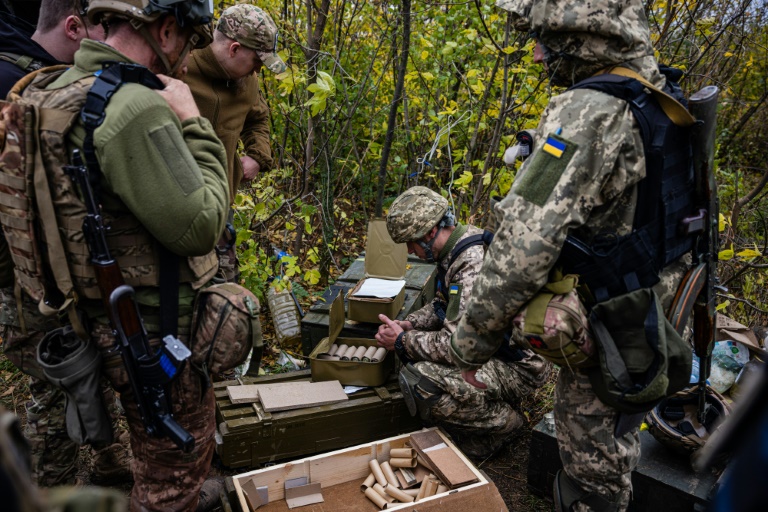
Russia must not escalate the conflict in Ukraine with false claims that Kyiv is planning to unleash a so-called “dirty bomb”, the head of NATO warned Monday.

Jens Stoltenberg weighed in following Moscow’s repeated allegations that Ukraine could deploy such a weapon, sparking fears Russia could use one and blame Kyiv.

The head of the US-led military alliance said he had spoken with Pentagon chief Lloyd Austin and Britain’s Defence Secretary Ben Wallace “about Russia’s false claim that Ukraine is preparing to use a dirty bomb on its own territory.”

“NATO Allies reject this allegation. Russia must not use it as a pretext for escalation. We remain steadfast in our support for Ukraine,” he wrote on Twitter.

Moscow has alleged that Ukraine is close to developing a dirty bomb, and Foreign Minister Sergei Lavrov insisted the threat is real.

“This is not empty information… there are serious suspicions that such things may be planned”, Lavrov said, adding: “We have a keen interest in preventing such a terrible provocation.”

But State Department spokesman Ned Price said Washington is worried that Russia’s claims could be a cover.

“We have seen a pattern in this conflict and the lead-up to this war where the Russians have engaged in mirror imaging — the Russians have accused the Ukrainians, the Russians have accused other countries of what itself was planning. That is our concern”, Price said.

The head of the Russian army Valery Gerasimov repeated Moscow’s claims in a telephone call with his US counterpart on Monday, the defence ministry said. 

The call was the latest in a string of conversations between Russian defence officials and counterparts from NATO countries, during which Moscow said, without providing evidence, that Kyiv was planning to deploy a dirty bomb.

In a statement on Monday, Russian Lieutenant General Igor Kirillov said: “According to the information we have, two organisations in Ukraine have specific instructions to create a so-called ‘dirty bomb’. This work is in its final stage”. 

At its most basic, a dirty bomb is a conventional weapon laced with radioactive, biological or chemical materials that are disseminated in an explosion.

Moscow’s claims follow weeks of military defeats for Russia in southern and eastern Ukraine, with observers and Kyiv saying the Kremlin is becoming increasingly desperate.

In Kyiv’s latest announcement of territorial gains, the Ukrainian military claims to have pushed Russian forces from several villages in the northeast of the country.

– Inspection mission –

“Due to successful actions, our troops pushed the enemy out of the settlements of Karmazynivka, Myasozharivka and Nevske in the Lugansk region and Novosadove in Donetsk region,” the Ukrainian military said in a statement.

Both Kyiv and its allies have fiercely rejected the dirty bomb claims, which follow thinly veiled threats from Moscow of potential nuclear escalation.

Ukrainian Foreign Minister Dmytro Kuleba said the head of the United Nations nuclear agency (IAEA), Rafael Grossi, accepted his request to “urgently send experts to peaceful facilities in Ukraine, which Russia deceitfully claims to be developing a dirty bomb.”

The IAEA confirmed in a statement that it would visit two Ukrainian facilities “in the coming days.”

Britain, the United States and France also issued a joint statement dismissing the Russian claims.

“Our countries made clear that we all reject Russia’s transparently false allegations that Ukraine is preparing to use a dirty bomb on its own territory,” the statement said.

With the help of Western-supplied heavy weapons, Ukraine has managed to claw back swathes of its territory from Russia in the east and south, while its power grid has been pummelled ahead of winter.

As momentum has swung toward Ukraine, Russian President Vladimir Putin has faced fissures in domestic support for his campaign, as a messy troop draft and battlefield losses challenged the prospect of a quick conclusion.

The Kremlin meanwhile said on Monday that France and Germany were showing “no desire” to participate in mediation on the conflict and praised Turkish President Recep Tayyip Erdogan’s offer to organise talks.

Turkey helped broker the deal that allowed grain exports to resume under the UN’s aegis in July, and played a role in a prisoner swap in September, one of the largest exchanges.

US left-wing lawmakers urge Biden to negotiate on Ukraine

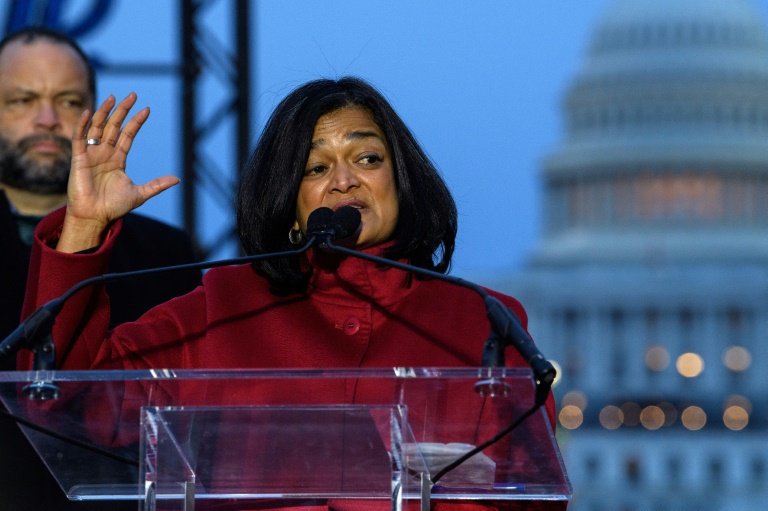
Left-wing US lawmakers on Monday urged President Joe Biden to seek a negotiated settlement with Russia to end the Ukraine war including by exploring security arrangements acceptable to both sides.

In a letter, 30 House members from Biden’s Democratic Party made clear they opposed Russia’s “outrageous and illegal invasion of Ukraine” and agreed with the White House that a settlement was up to Kyiv.

“But as legislators responsible for the expenditure of tens of billions of US taxpayer dollars in military assistance in the conflict, we believe such involvement in this war also creates a responsibility for the United States to seriously explore all possible avenues,” said the lawmakers led by Representative Pramila Jayapal, leader of the House Progressive Caucus.

They called for direct engagement with Russia to find a solution “that is acceptable to the people of Ukraine.”

“Such a framework would presumably include incentives to end hostilities, including some form of sanctions relief, and bring together the international community to establish security guarantees for a free and independent Ukraine that are acceptable for all parties, particularly Ukrainians,” they wrote.

“The alternative to diplomacy is protracted war, with both its attendant certainties and catastrophic and unknowable risks.”

Russian President Vladimir Putin, before launching the invasion on February 24, had demanded guarantees that the former Soviet republic would never join NATO, the Western military alliance.

US officials were skeptical that NATO was his real concern, noting that Ukraine had little prospect of entering the alliance, but engaged in top-level talks with Russia until the invasion.

Asked about the letter, State Department spokesman Ned Price said, “Nobody wants to see this war ended more than our Ukrainian counterparts.”

“We don’t know when it will transpire, principally and solely because we have not seen any indication from the Russians that they are prepared to engage in that diplomacy and dialogue,” he told reporters.

“We have been providing our Ukrainian partners with what they need on the battlefield so that when a negotiating table emerges, they will be in the strongest possible position,” Price said.

White House Press Secretary Karine Jean-Pierre said separately: “We’ve been very clear: nothing about Ukraine without Ukraine.”

The United States in May approved $40 billion in aid to Ukraine, leading Western efforts both to provide weapons and shore up an economy devastated by the Russian attacks.

Ukrainian President Volodymyr Zelensky — who had begrudgingly held out the possibility of dropping the NATO bid to avert war — has vowed to defeat the Russian invaders and to win back land they occupied.

'Will & Grace' star Leslie Jordan dead at 67

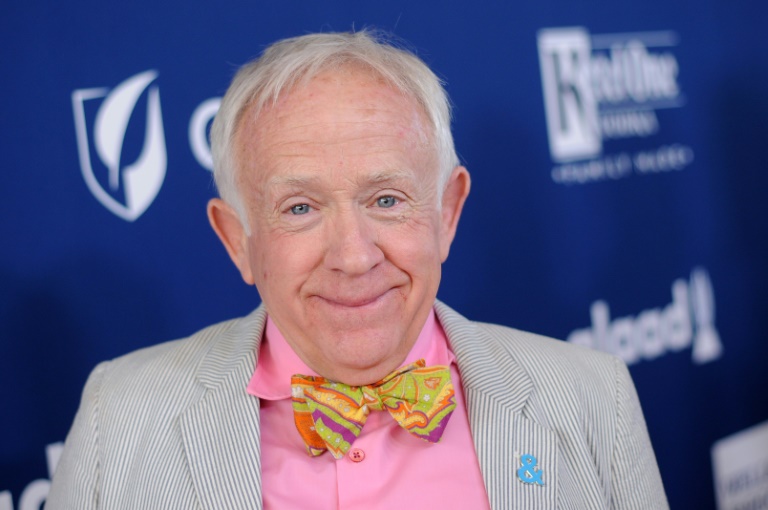
Leslie Jordan, an award-winning American actor and writer best known for his role in the sitcom “Will & Grace,” died Monday at age 67, one of his agents said.

Jordan was involved in a single-car road accident as he drove in Hollywood, Don LeClair said, without specifying the exact cause of death. News reports said he may have suffered a medical emergency at the wheel.

“The world is definitely a much darker place today without the love and light of Leslie Jordan,” LeClair said in a statement sent to AFP.

Jordan enjoyed a successful and career over the course of three decades as he appeared in TV shows that included “American Horror Story,” “Murphy Brown” and “Ugly Betty.”

In “Will & Grace” he played the pugnacious Beverley Leslie, a frenemy of the character Karen Walker, and in 2006 he won an Emmy Award for outstanding guest actor in the comedy series. 

Jordan was a versatile artist with movie credits including “The Help,” and a Gospel record released last year.

In 2020 Jordan became wildly popular on Instagram by posting videos of how he tried to entertain himself during the coronavirus pandemic, such as doing silly exercises or impressions of famous singers. His follower count shot up from 100,000 to 5.8 million.

Fans lamented his death online.

“Thank you for all the smiles you have given us. You will be missed,” one of them wrote.

On Sunday Jordan, who grew up in Chattanooga, Tennessee, posted one last video in which he sang with the producer Danny Myrick.

“Leslie Jordan was a Chattanooga legend and national treasure who brought joy and hope to millions,” the city’s mayor Tim Kelly wrote on Twitter.

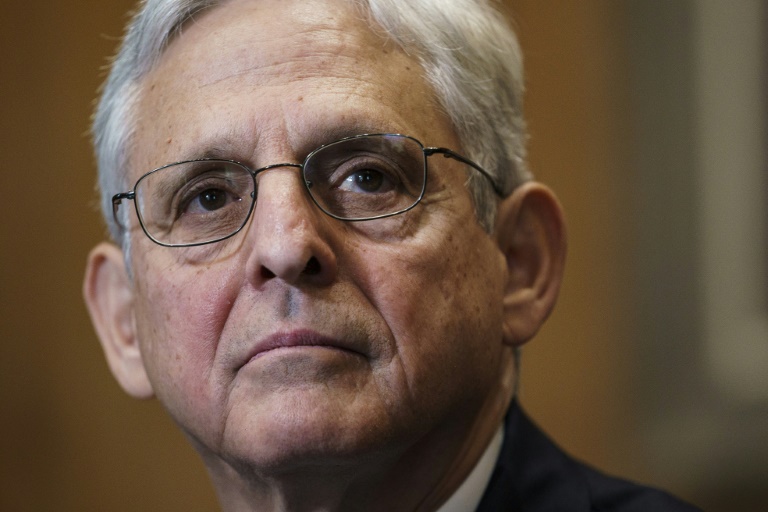
China trying to 'undermine' US judicial system: Justice chief

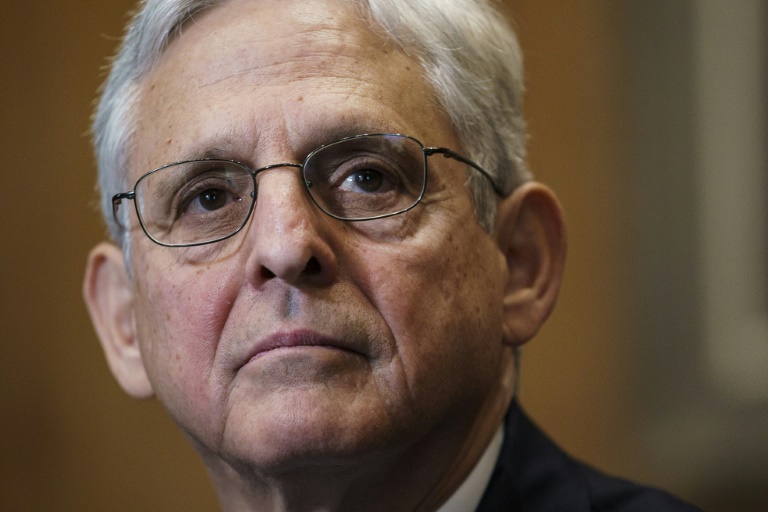
Top US justice officials accused the Chinese government Monday of an unrelenting campaign by intelligence operatives to subvert the American justice system and steal commercial secrets. 

Attorney General Merrick Garland and FBI Director Christopher Wray detailed three separate cases in which Beijing’s spies allegedly harassed dissidents inside the United States, tried to interfere in the prosecution of a Chinese telecoms giant understood to be Huawei, and pressured US academics to work for them.

Thirteen Chinese nationals who allegedly worked for Beijing’s spy agencies have been indicted in the cases and two of them have been arrested.

The cases showed that China “sought to interfere with the rights and freedoms of individuals in the United States and to undermine our judicial system that protects those rights,” said Garland.

“The Justice Department will not tolerate attempts by any foreign power to undermine the rule of law upon which our democracy is based,” the top US law enforcement officer said.

Garland, Wray, and other top justice officials spoke about the cases in a press conference in Washington one day after Xi Jinping secured a historic third term as China’s leader.

US officials have tied Xi to what they see is a growing effort by Chinese intelligence agencies over the past decade to steal US intellectual property and to crack down on Chinese political dissidents in the United States.

Asked whether the announcements Monday were timed to Xi’s confirmation as the Chinese Communist Party’s all-powerful general secretary on Sunday, Wray avoided any specific link.

“We bring cases when they’re ready. And that’s probably the simplest answer and most straightforward answer to that, as far as what signal they send,” the FBI chief said.

“If the Chinese government, the Chinese Communist Party, continues to violate our laws, they are going to keep encountering the FBI,” he said.

– Huawei case interference –

In a case cited Monday but unveiled last week, seven Chinese nationals allegedly tried to force a US resident to go back to China. Two people were arrested, but five others — all allegedly employees of Chinese intelligence agencies — remain at large, likely in China.

In the second case, two Chinese intelligence officials working from China tried to recruit a US government employee to provide them inside information on the Justice Department’s prosecution of Huawei. 

In 2019 Huawei was charged with a systematic campaign to steal US trade secrets, sanctions evasion and other counts.

The two agents believed they had recruited a US government official to work for them and paid the person $61,000 worth of bitcoin to supply internal documents related to the case against Huawei.

But the informant was in fact a double agent who worked with the FBI on the case.

The third case involved Chinese intelligence operatives who worked for the Ministry of State Security posing as academics to recruit operatives in the United States.

From 2008 to at least 2018, they targeted professors, former security officials and others with access to sensitive information and technology for recruitment.

“In all three of these cases, and frankly, in thousands of others, we found the Chinese government threatening established democratic norms and the rule of law as they work to undermine US economic security and fundamental human rights,” said Wray.

The US Justice Department has announced at least a half-dozen similar cases against alleged Chinese intelligence officers so far this year. 

Wray said the threat is constant, and that the FBI opens a Chinese counterintelligence investigation “about every 12 hours.”

China trying to 'undermine' US judicial system: Justice chief

Top US justice officials accused the Chinese government Monday of an unrelenting campaign by intelligence operatives to subvert the American justice system and steal commercial secrets. 

Attorney General Merrick Garland and FBI Director Christopher Wray detailed three separate cases in which Beijing’s spies allegedly harassed dissidents inside the United States, tried to interfere in the prosecution of a Chinese telecoms giant understood to be Huawei, and pressured US academics to work for them.

Thirteen Chinese nationals who allegedly worked for Beijing’s spy agencies have been indicted in the cases and two of them have been arrested.

The cases showed that China “sought to interfere with the rights and freedoms of individuals in the United States and to undermine our judicial system that protects those rights,” said Garland.

“The Justice Department will not tolerate attempts by any foreign power to undermine the rule of law upon which our democracy is based,” the top US law enforcement officer said.

Garland, Wray, and other top justice officials spoke about the cases in a press conference in Washington one day after Xi Jinping secured a historic third term as China’s leader.

US officials have tied Xi to what they see is a growing effort by Chinese intelligence agencies over the past decade to steal US intellectual property and to crack down on Chinese political dissidents in the United States.

Asked whether the announcements Monday were timed to Xi’s confirmation as the Chinese Communist Party’s all-powerful general secretary on Sunday, Wray avoided any specific link.

“We bring cases when they’re ready. And that’s probably the simplest answer and most straightforward answer to that, as far as what signal they send,” the FBI chief said.

“If the Chinese government, the Chinese Communist Party, continues to violate our laws, they are going to keep encountering the FBI,” he said.

– Huawei case interference –

In a case cited Monday but unveiled last week, seven Chinese nationals allegedly tried to force a US resident to go back to China. Two people were arrested, but five others — all allegedly employees of Chinese intelligence agencies — remain at large, likely in China.

In the second case, two Chinese intelligence officials working from China tried to recruit a US government employee to provide them inside information on the Justice Department’s prosecution of Huawei. 

In 2019 Huawei was charged with a systematic campaign to steal US trade secrets, sanctions evasion and other counts.

The two agents believed they had recruited a US government official to work for them and paid the person $61,000 worth of bitcoin to supply internal documents related to the case against Huawei.

But the informant was in fact a double agent who worked with the FBI on the case.

The third case involved Chinese intelligence operatives who worked for the Ministry of State Security posing as academics to recruit operatives in the United States.

From 2008 to at least 2018, they targeted professors, former security officials and others with access to sensitive information and technology for recruitment.

“In all three of these cases, and frankly, in thousands of others, we found the Chinese government threatening established democratic norms and the rule of law as they work to undermine US economic security and fundamental human rights,” said Wray.

The US Justice Department has announced at least a half-dozen similar cases against alleged Chinese intelligence officers so far this year. 

Wray said the threat is constant, and that the FBI opens a Chinese counterintelligence investigation “about every 12 hours.”

Jewish school in New York to pay $8 mn to avoid fraud prosecution

An Orthodox Jewish school in New York state will pay $8 million after admitting to financial fraud and embezzlement of public funds, according to court documents released Monday.

The Central United Talmudical Academy (CUTA), which operates New York state’s largest Hasidic educational establishment in the Brooklyn neighborhood of Williamsburg, admitted to embezzling some $3 million from the federal government that was intended for the daily meals of some 2,000 schoolboys.

To avoid criminal charges and to close a federal investigation launched in 2018, CUTA has agreed to pay a fine of $5 million in addition to the $3 million it has already returned, according to a statement by the New York federal prosecutor’s office. 

“The misconduct at CUTA was systemic and wide ranging, including stealing over $3 million allocated for schoolchildren in need of meals,” said US Attorney Breon Peace in the statement.

The prosecutor said the agreement with the religious school will make it possible to provide “a path forward to repay and repair the damage done to the community, while also allowing CUTA to continue to provide education for children in the community.”

The FBI, which led the investigation, said the school’s “admission makes clear there was a pervasive culture of fraud and greed in place at CUTA.”

“We expect schools to be places where students are taught how to do things properly. The leaders of CUTA went out of their way to do the opposite,” said FBI assistant director Michael Driscoll.

Two former school leaders have already pleaded guilty in 2018 to complicity in financial fraud, one of them receiving a two-year prison sentence, the other a suspended sentence and a hefty fine. 

According to The New York Times, Brooklyn and the lower Hudson Valley have around 100 Hasidic religious schools, which have received more than $1 billion in taxpayer money in the past four years. 

“They focus on providing religious instruction, with most offering little instruction in English, reading and math and almost no classes in history, science or civics,” the newspaper said.

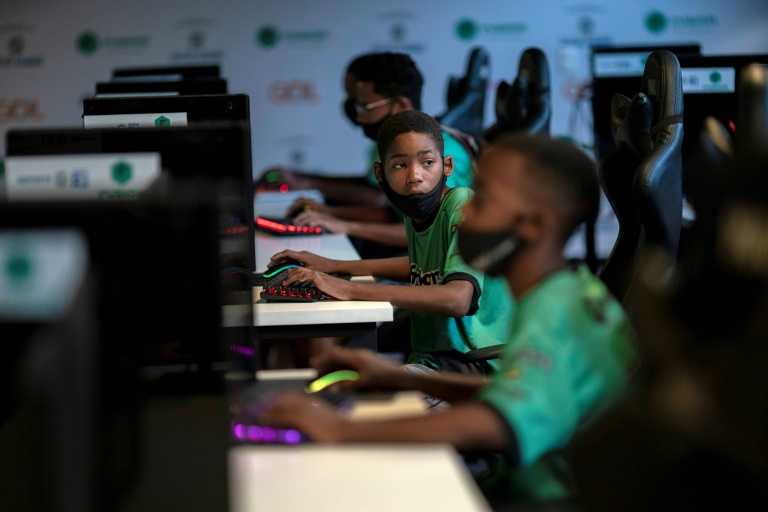
Video games could improve kids' brains: study

Parents often worry about the harmful impacts of video games on their children, from mental health and social problems to missing out on exercise. 

But a large new US study published in JAMA Network Open on Monday indicates there may also be cognitive benefits associated with the popular pastime.

Lead author Bader Chaarani, an assistant professor of psychiatry at the University of Vermont, told AFP he was naturally drawn to the topic as a keen gamer himself with expertise in neuroimagery.

Prior research had focused on detrimental effects, linking gaming with depression and increased aggression.  

These studies were however limited by their relatively small number of participants, particularly those involving brain imaging, said Charaani.

For the new research, Chaarani and colleagues analyzed data from the large and ongoing Adolescent Brain Cognitive Development (ABCD) Study, which is funded by the National Institutes of Health.

They looked at survey answers, cognitive test results, and brain images from around 2,000 nine- and ten-year-olds, who were separated into two groups: those who never played games, and those who played for three hours or more a day.

This threshold was chosen as it exceeds the American Academy of Pediatrics screen time guidelines of one or two hours of video games for older children.

– Impulses and memory –

Each group was assessed in two tasks.

The first involved seeing arrows pointing left or right, with the children asked to press left or right as fast as they could. 

They were also told to not press anything if they saw a “stop” signal, to measure how well they could control their impulses. 

In the second task, they were shown people’s faces, and then asked if a subsequent picture shown later on matched or not, in a test of their working memory.

After using statistical methods to control for variables that could skew results, such as parental income, IQ, and mental health symptoms, the team found the video gamers performed consistently better on both tasks.

As they performed the tasks, the children’s brains were scanned using functional magnetic resonance imaging (fMRI). Video gamers’ brains showed more activity in regions associated with attention and memory.

“The results raise the intriguing possibility that video gaming may provide a cognitive training experience with measurable neurocognitive effects,” the authors concluded in their paper. 

Right now it’s not possible to know whether better cognitive performance drives more gaming, or is its result, said Chaarani.

The team hope to get a more clear answer as the study continues and they look again at the same children at older ages.

This will also help exclude other potential factors at play such as the children’s home environment, exercise and sleep quality.

Future studies could also benefit from knowing what genres of games the children were playing — though at age 10 children tend to favor action games like Fortnite or Assassin’s Creed.

“Of course, excessive use of screen time is bad for overall mental health and physical activity,” said Chaarani. 

But he said the results showed video games might be a better use of screen time than watching videos on YouTube, which has no discernible cognitive effects.

Foreign tourism to Greece up but below pre-Covid peak

The number of foreign tourists visiting Greece has sharply increased so far this year despite soaring inflation and the Ukraine war, according to official statistics published on Monday.

But the figures remained below the record pre-pandemic levels of 2019 that helped revive the country’s tourism-dependent economy after years of crisis.

From January to late August, 19.12 million foreign tourists flocked to the sun-drenched southern European nation to explore attractions such as the Athens Acropolis or the Aegean islands, the Bank of Greece said.

That represented a 121-percent increase on the same period in 2021, when Covid-19 travel and social restrictions weighed heavily on the tourism sector.

In August alone, traditionally the peak of the Mediterranean tourism season, more than 5.8 million foreign visitors came to Greece, a rise of 44 percent on 2021 figures. 

However, tourist numbers in the first eight months of this year were down 12.4 percent on the same period in 2019.

Decades-high inflation is eating away at the budgets of many European households, while Russian tourists — frequent visitors to the beaches of Crete or Corfu — are down sharply due to the fallout from the Ukraine war and European sanctions.

Tourism represents a quarter of Greece’s annual economic output, but questions linger over the future of the sector.

Some islands are becoming saturated with tourists, whereas others have become so expensive that many Greeks can no longer afford to live there.

Close Bitnami banner
Bitnami