US Business

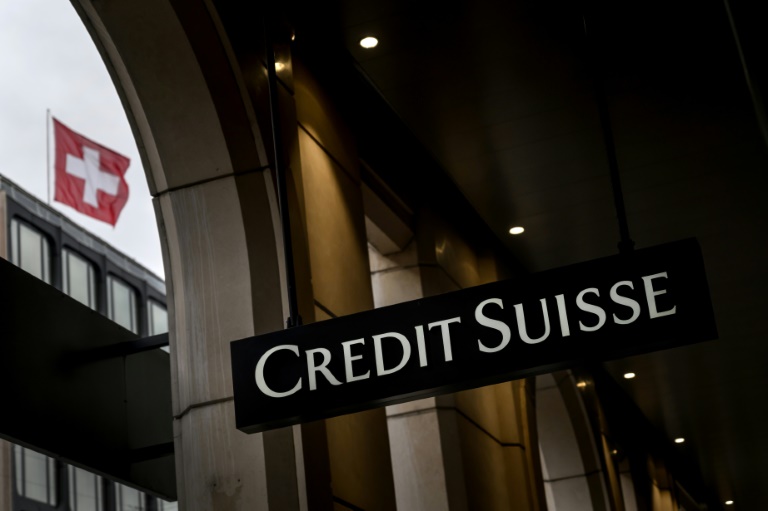
Credit Suisse to pay 238 mn euros to settle French fraud probe

Credit Suisse has agreed to pay 238 million euros ($234 million) to avoid prosecution on French money laundering and tax fraud charges, according to a settlement approved Monday by a Paris court.

The settlement will see Switzerland’s second-largest bank pay a fine of 123 million euros and pay an additional 115 million euros in damages and interest to the French state.

Credit Suisse said it had reached the settlement “to resolve a legacy matter in relation to an investigation into historical cross-border private-banking services.”

It added that “the settlement does not comprise a recognition of criminal liability.”

French financial prosecutors opened a probe in 2016 and found that 5,000 French nationals had undeclared Credit Suisse accounts that were hiding two billion euros, according to the court.

The judge presiding over the settlement said that Credit Suisse bankers had prospected for clients in high-end French restaurants and hotels, avoiding the bank’s offices in the country.

Prosecutor Francois-Xavier Dulin said the settlement took into account “the systematic character, lengthy period and creation of tools to hide” its prospecting of French clients between 2005 and 2012.

He said Credit Suisse had created offshore entities to aid clients to avoid declaring certain assets to French authorities.

Prosecutors added the settlement also took into account the bank’s current cooperation and the corrective measures it undertook.

“The bank is pleased to resolve this matter, which marks another important step in the proactive resolution of litigation and legacy issues,” Credit Suisse said in its statement.

The bank last week reached an agreement with prosecutors in the US state of New Jersey over mortgage-backed securities dating back to the 2008 financial crisis.

Credit Suisse shares gained more than 2.3 percent on the Swiss stock exchange by mid-afternoon on Monday as investors welcomed the latest court settlement.

Ratings agency Standard & Poor’s earlier this month said these “legacy issues” would “continue to cloud visibility” around the bank’s financial forecasts if they remained unresolved.

New Credit Suisse chief executive Ulrich Koerner is set to unveil his strategic road map on Thursday as he tries to improve the beleaguered bank’s fortunes.

His update has triggered speculation about the size of a potential increase in capital and the assets Credit Suisse may sell to finance its restructuring.

In November 2017, HSBC Private Bank, a Swiss subsidiary of the British banking giant, agreed to pay 300 million euros to avoid a trial in France over tax fraud accusations.

Michigan teen pleads guilty to murder of four classmates

A 16-year-old boy pleaded guilty on Monday to shooting dead four students at his Michigan high school in a case that has drawn national attention because his parents are also facing charges.

Ethan Crumbley, who was 15 years old at the time of the November 30, 2021, shooting but was charged as an adult, faces a potential sentence of life in prison.

“Is it your own choice to plead guilty?” Oakland County Circuit Judge Kwame Rowe asked Crumbley in a televised court appearance.

“Yes sir,” replied the lanky teenager, who was wearing an orange prison jumpsuit, black glasses and a face mask.

Prosecutors then walked him through the day of the shooting, with Crumbley admitting that he brought a 9mm Sig Sauer handgun and 50 rounds of ammunition to Oxford High School, north of Detroit.

He acknowledged entering a boy’s bathroom, removing the gun from his backpack and opening fire on his fellow students.

Four classmates between the ages of 14 and 17 were killed and six other students and a teacher were wounded.

Crumbley faced first-degree murder and terror charges.

During the half-hour court appearance, the boy said he gave his father the money to purchase the gun used in the shooting.

Crumbley’s parents, James and Jennifer Crumbley, have been charged with involuntary manslaughter and are scheduled to go on trial next year.

While school shootings carried out by teens have become a sadly familiar part of American life, it is highly unusual for parents to face charges.

– ‘My new beauty’ –

The Crumbleys are accused not only of supplying their son with a weapon, but of ignoring escalating warnings that he appeared to be on the brink of violence.

James Crumbley allegedly bought the handgun for his son and his wife took the boy to a shooting range just days before the attack.

Ethan was with his father at the time of the purchase at a local firearms store and the teen posted a picture of the gun on his Instagram account, writing “just got my new beauty today” along with a heart emoji.

The Crumbleys were summoned to the school on the day of the shooting after a teacher was “alarmed” by a note she found on Ethan’s desk.

The parents were shown the drawing and advised they needed to get the boy into counseling.

They allegedly resisted taking their son home and he returned to class.

He later entered the bathroom, emerged with the gun which had been concealed in his backpack and fired more than 30 shots.

Europe's bees stung by climate, pesticides and parasites

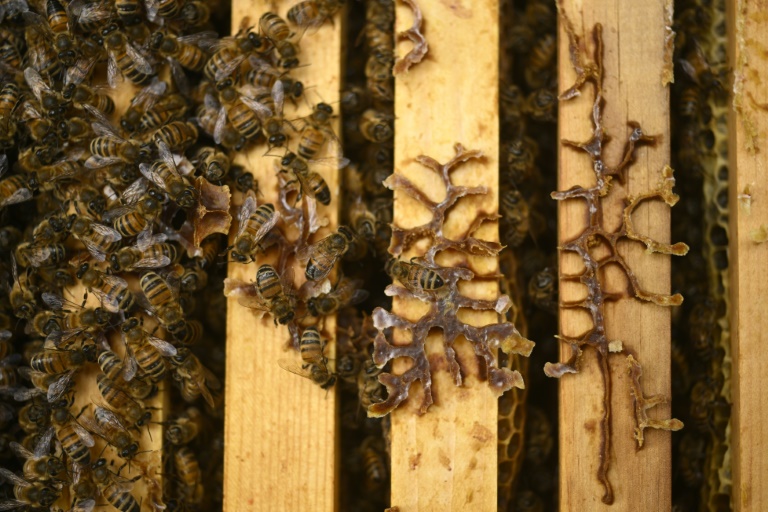
Bees pollinate 71 of the 100 crop species that provide 90 percent of food worldwide. They also pollinate wild plants, helping sustain biodiversity and the beauty of the natural world.

But climate change, pesticides and parasites are taking a terrible toll on bees and they need protecting, according to European beekeepers, who held their annual congress in Quimper, western France, this week.

The congress, which said some European beekeepers were suffering “significant mortalities and catastrophic harvests due to difficult climatic conditions”, was an opportunity for beekeepers and scientists to try to respond to the major concerns.

The European Union, the world’s second largest importer of honey, currently produces just 60 percent of what it consumes.

French beekeepers, for example, expect to harvest between 12,000 and 14,000 tonnes of honey this year, far lower than the 30,000 tonnes they harvested in the 1990s, according to the National Union of French Beekeepers (UNAF).

“I’ve been fighting for bees for 30 years but if I had to choose now, I don’t know if I’d become a beekeeper,” said UNAF spokesman Henri Clement, who has 200 hives in the unspoilt mountainous Cevennes region in southeastern France.

Clement is 62 and not far off retiring.

“But it’s not much fun for young people who want to take up the profession,” he said.

Many of the subjects buzzing around the congress were evidence of this — Asian hornets, parasitic varroa mites and hive beetles (all invasive alien species in Europe), pesticides and climate change.

With climate change, “the bigger issue is just the erratic weather and rain patterns, drought and things like that”, explained US entomologist Jeffery Pettis, president of Apimondia, an international federation of beekeeping associations in 110 countries.

“In certain places, the plants had been used to a certain temperature. And now it goes up, and you have a hot dry summer, and there are no flowers,” Pettis told AFP.

No flowers means no pollen, which means bees dying of hunger.

Climate scientists say human-induced global heating is intensifying extreme weather events like flooding, and heatwaves that exacerbate wildfires.  

“The fires seem to be a big issue,” Pettis said. “They come sporadically and we lose hives directly from flooding and fires.”

– Pollen quality –

Pettis, a former scientist at the US Department of Agriculture, published a study in 2016 on the quality of pollen produced by goldenrod — a hardy perennial also known as solidago that produces a myriad of small, yellow, daisy-like flowers.

The study showed that the more carbon dioxide — a greenhouse gas — accumulates in the atmosphere, the lower the amount of protein in goldenrod pollen. 

North America bees are dependent on nourishment from goldenrod pollen to get through the winter, Pettis explained.

“Getting inferior food … should affect wintering. It could happen with other pollen sources. We don’t know.”

As in France, 30 to 40 percent of hives in the United States are dying every winter, Pettis said, decimated by varroa mites, pesticides and the destruction of wild spaces where wild plants grow.

“Today, there are even American startups that are developing drones to pollinise plants in the place of bees. It’s utterly appalling,” said Clement.

Toxic pesticides are another factor decimating bee colonies and other pollinating insects.

French molecular biophysics scientist Jean-Marc Bonmatin said parasites like varroa, were “boosted by the presence of neonicotinide pesticides, which directly poison pollinators”.   

Neonicotinides, chemically similar to nicotine, are systemic pesticides. 

Unlike contact pesticides, which remain on the surface of the treated leaves, systemic pesticides are taken up by the plant and transported throughout the plant, to their leaves, flowers, roots and stems, as well as to their pollen and nectar.

These toxic substances can remain in the soil for between five and 30 years, Bonmatin said.

The EU restricted the use of three neonicotinides — but not all — in 2013 and banned them outright in 2018.

But since 2013, several EU states have repeatedly granted “emergency authorisations” to use the noxious insecticides on major crops.

– Limiting toxic chemicals –

He said open source software called Toxibee was being launched soon to help farmers protect bees by identifying the least toxic molecules to use on their crops. 

“Before they spray the crops with pesticides, they can try to limit their noxious effect,” he said.

“Because what kills bees will one day damage people’s health too.”

Pettis strove, however, to remain upbeat, pointing to some of the ways people can help bees.

“(We should) diversify agriculture and try not be driven by chemically-dependant agriculture, support organic and more sustainable farming.”

He also stressed the incredible resistance of some bee species, helped by factors in the natural world.

He cited the example of a black bee found on the Ile de Groix island in Brittany, which has survived varroa attacks without beekeepers treating them for mites or giving them supplementary feeding.

“We think the bees are dependent on us but in reality they survive pretty well even without us,” he said.

“And you still have the beauty of the bees. It’s such a good thing to work with bees.”

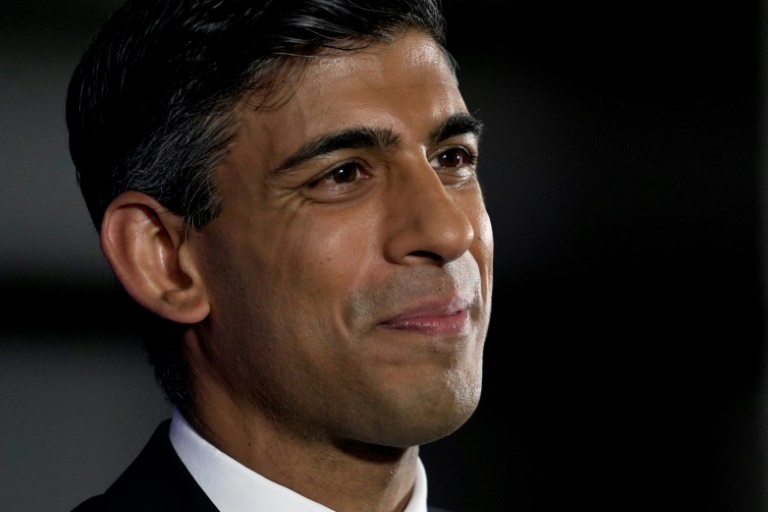
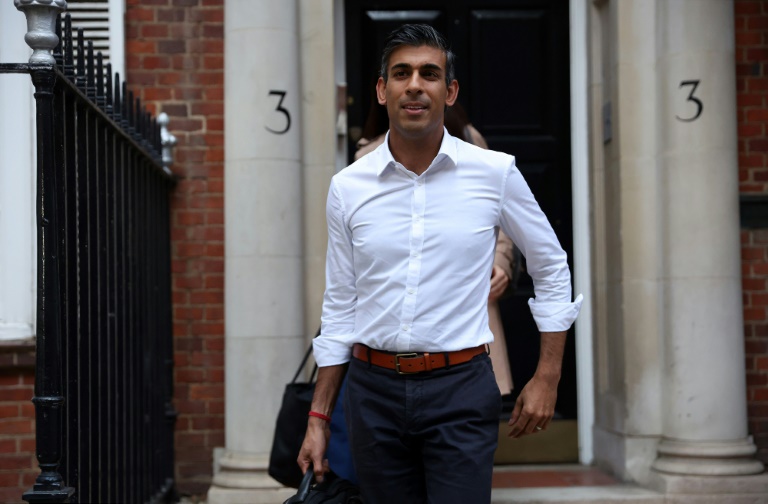
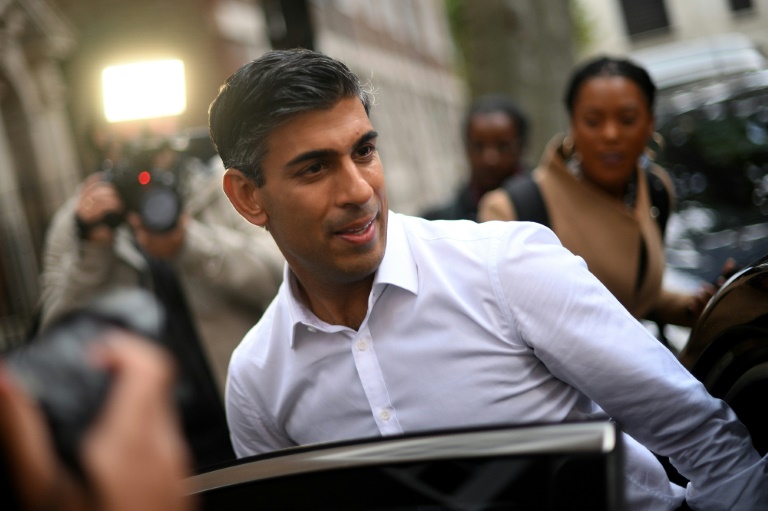
Rishi Sunak, set to be the UK's first Hindu PM

Rishi Sunak, the Conservatives’ new leader, has capped a stunning political comeback that marks a dramatic rise to power for the son of immigrants from Britain’s old empire.

Liz Truss’s political implosion after just 44 days in office allowed the former finance minister to become the first prime minister of colour.

“Indian son rises over the empire,” read a headline on the Indian news channel NDTV, adding: “History comes full circle in Britain.”

At 42, Sunak will also become the youngest prime minister of modern times once he is confirmed in office by King Charles III.

The former hedge fund investor, an observant Hindu, failed in the summer to persuade the Tory grassroots that he was a better option than Truss. 

But having correctly predicted her economic agenda would spark turmoil, he was able to throw his hat into the ring for a second time.

After securing the public support of more than half of Conservative MPs, his only remaining challenger Penny Mordaunt was forced to withdraw — following the failure of former leader Boris Johnson’s own bid.

Fabulously rich from his previous career in finance, Sunak faces daunting challenges in power, from an economic crisis to uniting his fractious party. 

Some within it remain highly critical of Sunak, viewing him as disloyal for triggering the downfall of Johnson in July.

He has also been mocked as out of touch with Britons struggling with decades-high inflation — perhaps best symbolised by wearing expensive Prada loafers to a construction site visit on the summer campaign trail.

Video footage also emerged of a 21-year-old Sunak — educated at Winchester College, an exclusive private school, and the University of Oxford — talking about his friends.

“I have friends who are aristocrats, I have friends who are upper-class, I have friends who are, you know, working-class,” he says, before adding: “Well, not working-class.”

– ‘Dishy Rishi’ –

A details-oriented policy wonk with a background in economics, Sunak has sought to present himself as a stable choice at a time of crisis.

An early backer of Brexit, he took over as chancellor of the exchequer in February 2020 — a baptism of fire for the Tory rising star as the Covid pandemic erupted.

He was forced to craft an enormous economic support package at breakneck speed, which he now insists must be paid off with sound fiscal plans.

In India, Sunak is better known through his wife, Akshata Murty. She is the daughter of Indian tycoon Narayana Murthy, the billionaire co-founder of information technology group Infosys. 

The Sunaks met while studying in California and they have two young daughters, along with a photogenic dog. 

The ex-minister’s Instagram-friendly profile earned him the media nickname of “Dishy Rishi”.

Until last year, he held a US Green Card — which critics said suggested a lack of long-term loyalty to Britain. 

And he has been dogged by difficult questions over Murty’s failure until recently to pay UK taxes on her Infosys returns, which opinion polls suggest was viewed with deep disfavour by voters.

Sunak has also been damaged by the scandals of Johnson’s tumultuous premiership. 

He ended up with a police fine for breaching Covid rules after joining a birthday gathering for the then-prime minister at Downing Street.

Johnson was also fined following an investigation into the “Partygate” affair.

Along with the controversy over his family fortune, the scandal sullied the reputation of the teetotal Sunak, who admits only to a fondness for Coca-Cola and sugary confectioneries. 

– Waiter to wealth –

Sunak represents the constituency of Richmond in Yorkshire, northern England — a safe and overwhelmingly white Conservative seat he took over in 2015 from former party leader and foreign secretary William Hague, who described him as “exceptional”.

Theresa May gave Sunak his first job in government in January 2018, making him a junior minister for local government, parks and troubled families.

Sunak’s grandparents were from Punjab in northern India and emigrated to Britain from eastern Africa in the 1960s.

They arrived with “very little”, Sunak told MPs in his maiden speech.

His father was a family doctor in Southampton on England’s south coast, and his mother ran a local pharmacy.

Sunak waited tables in a local Indian restaurant, before progressing to Oxford and then Stanford University in California.

He swears his oath of allegiance as an MP on the Hindu Bhagavad Gita. 

He insists his own family’s experience, and that of his mega-rich wife’s, are a “very Conservative” story of hard work and aspiration. 

Stocks, pound up as Sunak to become new British PM

Global stocks and the pound climbed Monday as markets reacted to the news that former finance minister Rishi Sunak would become Britain’s new prime minister.

European and American equities climbed despite data showing Britain and Germany headed for recession and a plunging Hong Kong stock market as Chinese President Xi Jinping handed key economic posts to loyalists behind his zero-Covid strategy.

Wall Street also opened in the green on Monday, with sentiment boosted by hopes the Federal Reserve would soon slow its pace of interest rate hikes.

News that European gas prices were at a four-month low also spurred traders, as the reference Dutch TTF dipped below 100 euros for the first time since June, reaching 98.60 euros per megawatt hour at around 1030 GMT on Monday.

All eyes were on Britain as Sunak was poised to become the country’s third prime minister in less than two months following the resignations of Boris Johnson and Liz Truss.

His last rival for leadership of the ruling Conservative party, Penny Mordaunt, dropped out of the race on Monday, clearing the way for Sunak to become prime minister after his failed bid earlier this year.

“The pound started the week trading higher as many see the new potential PM as a source of some stability, particularly when compared to the chaotic term served by the Truss government which saw massive volatility across markets,” noted XTB chief market analyst Walid Koudmani.

“Many see Sunak as the final chance for the Conservative Party as he has managed to maintain some credibility” compared with the uncertainty of the Truss and Johnson premierships, he added.

“Investors clearly hope Sunak will stabilise the economy and the political situation — though it’s hard to work out at this point which is the harder task,” commented AJ Bell financial analyst Danni Hewson.

Yields on UK government bonds also dropped following recent surges in the wake of Truss’s disastrous budget that led to her downfall.

Focus was also on the euro after new Italian Prime Minister Giorgia Meloni took office.

Meloni’s post-fascist Brothers of Italy scored a historic victory in general elections on September 25.

Her new government is the most far-right in Italy since World War II, and takes power at a time of decades-high inflation and an energy crisis linked to Russia’s invasion of Ukraine.

Milan’s stock market was up 1.3 percent in early afternoon trading on Monday, mirroring strong gains in Frankfurt and Paris, while yields on Italian government bonds also fell.

London was up by 0.6 percent in mid-afternoon trading, but the stronger pound and falling oil and gas prices were weighing on the heavyweight energy sector, according to traders.

The eurozone was meanwhile looking ahead to Thursday when the European Central Bank is expected to announce another bumper rise in interest rates aimed at curbing sky-high prices.

On the corporate front, Dutch medical device manufacturer Philips announced it would axe 4,000 jobs after its recall of faulty sleep respirators pushed it into a loss.

Following the news, the group’s share price dropped 0.8 percent on the Amsterdam stock exchange on Monday.

– Key figures around 1330 GMT –

London – FTSE 100: UP 0.6 percent at 7,014.28 points

Frankfurt – DAX: UP 1.8 percent at 12,957.93

Paris – CAC 40: UP 1.9 percent at 6,147.93

EURO STOXX 50: UP 1.7 percent at 3,537.16

New York – Dow: UP 0.6 percent at 31,263.39

Tokyo – Nikkei 225: UP 0.3 percent at 26,974.90 (close)

Hong Kong – Hang Seng Index: DOWN 6.4 percent at 15,180.69 (close)

Shanghai – Composite: DOWN 2.0 percent at 2,977.56 (close)

New York – Dow: UP 2.5 percent at 31,082.56 (close)

Pound/dollar: UP at $1.1285 from $1.1258 on Friday

Dollar/yen: UP at 149.14 yen from 147.65 yen

Euro/dollar: DOWN at $0.9835 from $0.9863

Euro/pound: DOWN at 87.16 pence from 87.26 pence

West Texas Intermediate: DOWN 0.4 percent at $84.70 per barrel

Brent North Sea crude: DOWN 0.3 percent at $91.07 per barrel

burs/imm/cdw

Stocks, pound up as Sunak to become new British PM

Global stocks and the pound climbed Monday as markets reacted to the news that former finance minister Rishi Sunak would become Britain’s new prime minister.

European and American equities climbed despite data showing Britain and Germany headed for recession and a plunging Hong Kong stock market as Chinese President Xi Jinping handed key economic posts to loyalists behind his zero-Covid strategy.

Wall Street also opened in the green on Monday, with sentiment boosted by hopes the Federal Reserve would soon slow its pace of interest rate hikes.

News that European gas prices were at a four-month low also spurred traders, as the reference Dutch TTF dipped below 100 euros for the first time since June, reaching 98.60 euros per megawatt hour at around 1030 GMT on Monday.

All eyes were on Britain as Sunak was poised to become the country’s third prime minister in less than two months following the resignations of Boris Johnson and Liz Truss.

His last rival for leadership of the ruling Conservative party, Penny Mordaunt, dropped out of the race on Monday, clearing the way for Sunak to become prime minister after his failed bid earlier this year.

“The pound started the week trading higher as many see the new potential PM as a source of some stability, particularly when compared to the chaotic term served by the Truss government which saw massive volatility across markets,” noted XTB chief market analyst Walid Koudmani.

“Many see Sunak as the final chance for the Conservative Party as he has managed to maintain some credibility” compared with the uncertainty of the Truss and Johnson premierships, he added.

“Investors clearly hope Sunak will stabilise the economy and the political situation — though it’s hard to work out at this point which is the harder task,” commented AJ Bell financial analyst Danni Hewson.

Yields on UK government bonds also dropped following recent surges in the wake of Truss’s disastrous budget that led to her downfall.

Focus was also on the euro after new Italian Prime Minister Giorgia Meloni took office.

Meloni’s post-fascist Brothers of Italy scored a historic victory in general elections on September 25.

Her new government is the most far-right in Italy since World War II, and takes power at a time of decades-high inflation and an energy crisis linked to Russia’s invasion of Ukraine.

Milan’s stock market was up 1.3 percent in early afternoon trading on Monday, mirroring strong gains in Frankfurt and Paris, while yields on Italian government bonds also fell.

London was up by 0.6 percent in mid-afternoon trading, but the stronger pound and falling oil and gas prices were weighing on the heavyweight energy sector, according to traders.

The eurozone was meanwhile looking ahead to Thursday when the European Central Bank is expected to announce another bumper rise in interest rates aimed at curbing sky-high prices.

On the corporate front, Dutch medical device manufacturer Philips announced it would axe 4,000 jobs after its recall of faulty sleep respirators pushed it into a loss.

Following the news, the group’s share price dropped 0.8 percent on the Amsterdam stock exchange on Monday.

– Key figures around 1330 GMT –

London – FTSE 100: UP 0.6 percent at 7,014.28 points

Frankfurt – DAX: UP 1.8 percent at 12,957.93

Paris – CAC 40: UP 1.9 percent at 6,147.93

EURO STOXX 50: UP 1.7 percent at 3,537.16

New York – Dow: UP 0.6 percent at 31,263.39

Tokyo – Nikkei 225: UP 0.3 percent at 26,974.90 (close)

Hong Kong – Hang Seng Index: DOWN 6.4 percent at 15,180.69 (close)

Shanghai – Composite: DOWN 2.0 percent at 2,977.56 (close)

New York – Dow: UP 2.5 percent at 31,082.56 (close)

Pound/dollar: UP at $1.1285 from $1.1258 on Friday

Dollar/yen: UP at 149.14 yen from 147.65 yen

Euro/dollar: DOWN at $0.9835 from $0.9863

Euro/pound: DOWN at 87.16 pence from 87.26 pence

West Texas Intermediate: DOWN 0.4 percent at $84.70 per barrel

Brent North Sea crude: DOWN 0.3 percent at $91.07 per barrel

burs/imm/cdw

Russia claims Ukraine 'dirty bomb' in final stages

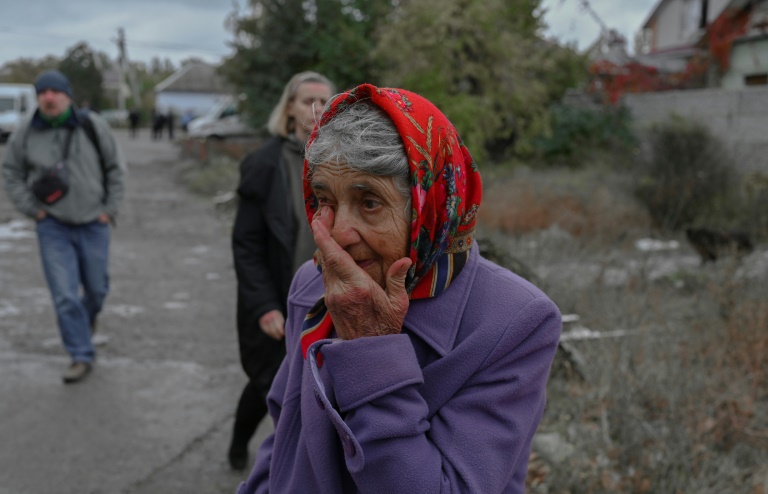
Russia on Monday claimed that Ukraine was in the “final stages” of developing a so-called dirty bomb to use against Moscow’s forces, allegations Kyiv said were “absurd” and could signal Russia’s battlefield plans.

The claim from Moscow comes after a string of unexpected and rare calls between Russian Defence Minister Sergei Shoigu with counterparts from several NATO countries, in which he said Kyiv was planning to deploy the weapon.

But they also follow on the back of weeks of military defeats for Russia in southern and eastern Ukraine, with observers of the conflict and Kyiv saying the Kremlin was becoming increasing desperate.

“According to the information we have, two organisations in Ukraine have specific instructions to create a so-called ‘dirty bomb’. This work is in its final stage,” Lieutenant General Igor Kirillov said on Monday.

At its most basic, a dirty bomb is a conventional bomb laced with radioactive, biological or chemical materials which are disseminated in an explosion.

– Inspection mission –

Since Russia’s allegations and thinly veiled threat of potential nuclear escalation in the Ukraine fighting, both Kyiv and its allies have fiercely rejected the claim.

Ukrainian Foreign Minister Dmytro Kuleba said the head of the United Nations nuclear agency (IAEA), Rafael Grossi, accepted his request to “urgently send experts to peaceful facilities in Ukraine, which Russia deceitfully claims to be developing a dirty bomb.”

The United Kingdom, the United States and France issued a joint statement dismissing the claim earlier on Monday.

“Our countries made clear that we all reject Russia’s transparently false allegations that Ukraine is preparing to use a dirty bomb on its own territory,” according to the statement.

Ukraine has managed, with the help of Western-supplied heavy weapons, managed to claw back swathes of its territory from Russia in the east and south, while its power grid has been pummelled ahead of winter’s arrival.

As momentum has swung toward Ukraine, Russian President Vladimir Putin has faced fissures in domestic support for his campaign, as a messy draft of troops and battlefield losses challenged notions of quick conclusion.

Neither side in the conflict are near sitting down for peace talks. Putin is under intense pressure to achieve a result he can call victory and the Ukrainians are generally intensely mobilised to take back their territory.

The Kremlin said on Monday that France and Germany were showing “no desire” to participate in mediation on the conflict and praised Turkish President Recep Tayyip Erdogan’s offer to organise talks.

Turkey helped broker the deal that allowed grain exports to resume under the UN’s aegis in July, and also played a role in a prisoner swap in September, one of the largest exchanges.

– Russia TV presenter apology –

Yet French President Emmanuel Macron on Sunday said Ukrainians will decide when peace is possible.

He supported Western backing for Kyiv “so that at some point the Ukrainian people can choose peace… in the terms they will have decided”.

Since the beginning of the conflict in February, Macron has differed from other Western leaders in pushing to keep talks open with Putin.

The conflict is also being constantly waged via volleys of accusations and insults between the two sides, although even they admit that sometimes it goes too far.

A presenter with state-funded Russian television channel RT apologised on Monday after being suspended for calling for the burning of Ukrainian children. 

Anton Krasovsky, a 47-year-old pro-Kremlin pundit under Western sanctions, said on Telegram that his comments had been “wild, unthinkable”.

Krasovsky’s comments last week sparked an uproar on social media, after he responded to a guest talking about meeting Ukrainian children in the 1980s who said they saw Russia as an occupier in Soviet times. 

These children “need to be drowned”, Krasovsky said. “Shove them into their huts and burn them up.”

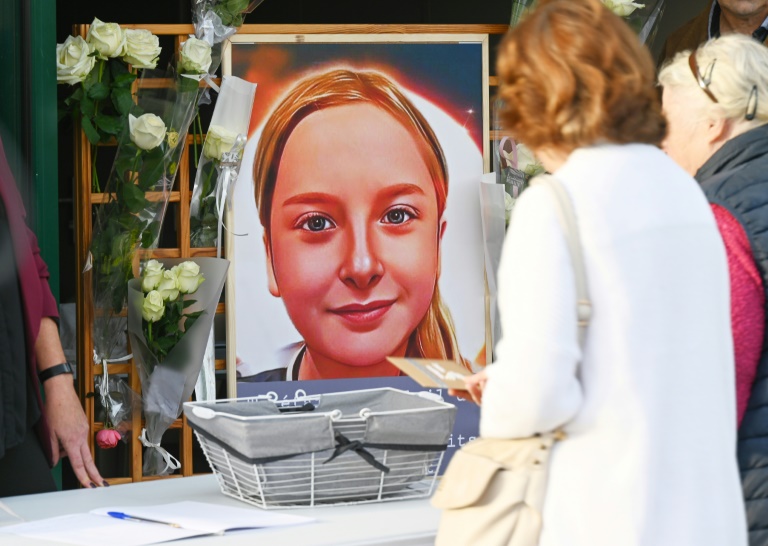
French girl, 12, laid to rest after 'evil' murder

A 12-year-old girl whose murder shocked France and sparked political controversy was laid to rest on Monday, while a mentally disturbed Algerian woman already targeted by an expulsion order was charged with the killing. 

The brutal assault and murder of the girl known as Lola was branded as “evil” by President Emmanuel Macron after her body was found earlier this month in a trunk in Paris.

The killing prompted conservative and far-right critics to accuse his government of not doing enough to prevent illegal migration, while ministers shot back that such rebukes were inappropriate.

Lola’s family had called for political mudslinging to be set aside and for the young girl be laid to rest in “respect and dignity” in the town of Lillers, in her home region in northern France.

Her parents, her brothers, other family members and a large crowd were present when her white coffin, adorned with white flowers, was carried into the local church.

The church holds just 500. Many more followed the ceremony via loudspeakers set up outside.

“My grandchildren, who are the same age as Lola, wanted us to be here,” said Sabine Vizenski, one of the mourners gathered near the church.

“There are no words to describe what was done to that young girl,” said another, Thomas Maillot, who drove half an hour to pay his respects. “It’s very important for me to be here,” he said.

The funeral mass was open to the public but the family wanted the actual burial in the cemetery to be strictly private. Interior Minister Gerald Darmanin, an ally of Macron, was present.

– ‘Extreme evil’ –

Macron had on Friday spoken of the “atrociousness of the crime” which he described as an act of “extreme evil”.

He praised the “dignified” behaviour of Lola’s family, who he said deserved “first and foremost the respect and affection of the nation”.

But the profile of the suspect, an Algerian woman named only as Dahbia B. who was the subject of an expulsion order, has prompted stinging criticism from the right and one of the most bitter political debates since Macron’s re-election in May.

She had overstayed a student visa and had failed to comply with a notice issued in August to leave France within 30 days.

On Monday, the 24-year-old was charged with the rape and murder of a minor aged under 15, along with torture and abuse.

The woman confessed that she had “committed harm of a sexual nature and other violent acts against (Lola) that caused her death, and hid her body in the trunk”, prosecutors said.

According to the autopsy, the young girl died due to “cardio-respiratory failure with signs of asphyxia and cervical compression”.

The investigation will now focus on whether the suspect was suffering from a psychiatric disorder at the time of the killing and if she can face criminal responsibility for the murder.

– ‘Honour the memory’ –

Lola’s parents, who met Macron last week, on Friday pleaded with politicians to stop exploiting their daughter’s murder, after her photo was displayed at a far-right demonstration in Paris the day before.

Eric Ciotti, MP from the right-wing Republicans (LR) party, had accused the government of “criminal … laxism” over migration, while extreme-right figure Eric Zemmour, an unsuccessful presidential candidate in May, had even described Lola’s killing as “Francocide”.

The far-right National Rally (RN) observed a minute of silence in parliament on Monday and the leader of its MPs, Marine Le Pen, insisted on the need for “answers” from the government.

In a statement sent to AFP on Friday, Lola’s parents called for an immediate end to “any use of the name and image of their child for political ends” so they could “honour the memory of their child in peace, respect and dignity”.

Separately, police have launched an investigation after one of their officers gave graphic details of the case in an interview with television channel BFMTV. The interview, filmed in a way that concealed the officer’s identity, was broadcast on Friday.

burs/jh/tgb/gil

Incoming PM Sunak inherits UK economy in crisis

Britain’s next prime minister, former finance chief Rishi Sunak, inherits a UK economy that was headed for recession even before the recent turmoil triggered by Liz Truss.

Outgoing Prime Minister Truss resigned after her budget of tax cuts funded by debt sent shockwaves through markets, crashing the pound.

That caused the government to U-turn on most of its budget, including scaling back a cap on soaring energy bills that have contributed heavily to a cost-of-living crisis for tens of millions of Britons.

Data Monday showed Britain’s economic downturn has worsened in October, with private-sector output at a 21-month low.

“October’s flash PMI data showed the pace of economic decline gathering momentum after the recent political and financial market upheavals,” noted Chris Williamson, chief business economist at S&P Global Market Intelligence that helped compile the figures.

“The heightened political and economic uncertainty has caused business activity to fall at a rate not seen since the global financial crisis in 2009 if pandemic lockdown months are excluded.”

Williamson added that upcoming data would likely show Britain already in recession.

The S&P Global/ CIPS flash UK composite purchasing managers index stood at 47.2 in October, below September’s level of 49.1.

A figure under 50 indicates a contraction.

The UK is not alone, however, with separate S&P data pointing to “impending recession” in Germany, Europe’s biggest economy.

– ‘Sunak stability’ –

Truss resigned last Thursday after just 44 days as prime minister. She had succeeded Boris Johnson on September 6 after a weeks-long campaign against Tory rival Sunak.

The former chancellor of the exchequer had warned in the battle to succeed Johnson that tax cuts promised by Truss when government debt had already soared on Covid interventions was the wrong policy to pursue.

He was proved right as the budget sent the pound crashing to a record-low close to parity with the dollar and triggered yields on government bonds to soar.

With Sunak seen as bringing stability to markets, sterling rose and yields fell Monday.

“Investors clearly hope Sunak will stabilise the economy and the political situation — though it’s hard to work out at this point which is the harder task,” said AJ Bell financial analyst Danni Hewson.

“As well as the recovery in sterling and the reduced cost of government borrowing (as yields drop), Sunak will be pleased to see European gas prices” falling.

However, with UK inflation at a 40-year high above 10 percent, the Bank of England is set to unveil another bumper interest-rate hike at a regular policy meeting next week.

This will heap further pressure on borrowers, including homeowners who have seen mortgage rates surge in the wake of the government’s costly budget.

Shevaun Haviland, director general of the British Chambers of Commerce, urged Sunak to also help out businesses struggling with huge energy bills.

“The political and economic uncertainty of the past few months has been hugely damaging to British business confidence and must now come to an end,” she said in a statement after Sunak’s new position was confirmed.

“The new prime minister must be a steady hand on the tiller to see the economy through the challenging conditions ahead. 

“This means setting out fully costed plans to deal with the big issues facing businesses; soaring energy bills, labour shortages, spiralling inflation, and climbing interest rates.”   

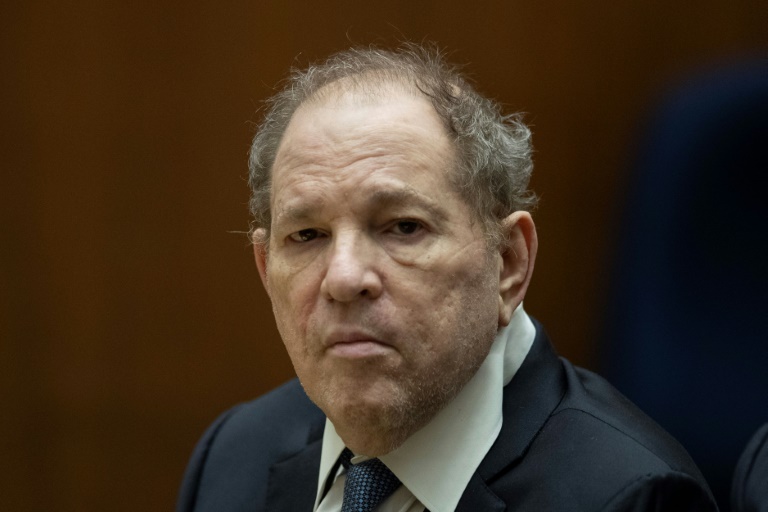
Opening arguments to start in Weinstein sex assault trial

Opening arguments were due to begin Monday in the Los Angeles trial of disgraced Hollywood movie mogul Harvey Weinstein, with five alleged victims expected to take the stand during the two-month case.

The 70-year-old “Pulp Fiction” producer is already serving 23 years in jail in New York after being convicted there of a series of sex crimes.

He now faces 11 more charges, including sexual battery by restraint, forcible rape and forcible oral copulation against women in Beverly Hills and Los Angeles hotels between 2004 and 2013.

If convicted, Weinstein — who has pleaded not guilty to all counts — could be sentenced to more than 100 additional years behind bars.

The task of selecting a jury got underway on October 10, with Judge Lisa Lench overseeing proceedings.

Widespread sexual abuse and harassment allegations against Weinstein exploded in October 2017, and his conviction in New York in 2020 was a landmark in the #MeToo movement.

In June, he lost a bid to have that sex crimes conviction overturned. He has also been separately charged by British prosecutors with the 1996 indecent assault of a woman in London.

In total, nearly 90 women, including Angelina Jolie, Gwyneth Paltrow and Salma Hayek, have accused Weinstein of harassment or assault.

Weinstein attorney Mark Werksman has said there would be testimony in Los Angeles from well-known figures, The Los Angeles Times reported.

“Some of these victims, people will recognize them. Some of these women, you’ve seen them in movies, they’ve been in ad campaigns, a couple of them have achieved some success as actresses or models,” Werksman said, according to the paper.

Weinstein says that all his sexual encounters were consensual, and his lawyer told reporters that the Los Angeles accusations “stem from many years ago” and cannot “be substantiated or corroborated by any forensic evidence” or “credible witnesses.”

Before the allegations against him emerged, the producer and his brother Bob were Hollywood’s ultimate power players.

They co-founded Miramax Films, a distribution company named after their mother Miriam and father Max, in 1979. It was sold to Disney in 1993.

Their hits included 1998’s “Shakespeare in Love,” for which Weinstein shared a best picture Oscar. Over the years, Weinstein’s films received more than 300 Oscar nominations and 81 statuettes.

“She Said,” a film about the 2017 newspaper investigation into Weinstein that sparked the demise of his movie empire, is set for wide release on November 18 in the United States.

Close Bitnami banner
Bitnami