US Business

Google fined $162 mn by Indian watchdog over market dominance

Google has been fined more than $160 million by India’s anti-trust watchdog after a probe found the tech behemoth was abusing its commanding position in the local smartphone market. 

The California-based company’s Android mobile operating system is by far the dominant player in India and is run on 95 percent of all the country’s smartphones, according to research agency Counterpoint.

But the Competition Commission of India (CCI) said the operating system was configured to unlawfully crowd out rivals to YouTube, web browser Chrome and other popular Google apps.

Android had a suite of Google apps pre-installed on its phones, including the company’s own search engine, “which accorded significant competitive edge to Google’s search services over its competitors”, a CCI statement said late Thursday. 

“Markets should be allowed to compete on merits and the onus is on (Google) that its conduct does not impinge this competition on merits,” it added. 

The commission levied a fine of 13.4 billion rupees ($162 million) and instructed the company to allow Android users to remove pre-installed Google apps. 

It also told Google not to enter into any agreement with smartphone makers that would encourage them to only sell Android-based devices or exclusively use its software.

Google faced a similar anti-trust ruling in the European Union that found the company had imposed “unlawful restrictions” on smartphone makers to benefit its search engine. 

Last month the EU’s second-highest court upheld a $4.1 billion fine against the company. 

Global regulators have followed suit, with Google facing a barrage of cases in the United States and Asia based on similar accusations.

India is home to the second-highest number of smartphone users in the world, after China.

Its smartphone market grew 27 percent year on year in 2021, according to Counterpoint, with annual sales exceeding 169 million units.

More than 60 percent of phones sold in the country come from leading Chinese manufacturers including Xiaomi and Oppo.  

Apple remains a minor player in the budget-conscious market but has seen some inroads in recent years, and the company last month announced plans to locally manufacture its flagship iPhone 14. 

Ukraine warns Russia planning to destroy hydro dam

Kyiv accused Russia of planning to destroy a hydroelectric dam in the eastern Kherson region, where Ukrainian soldiers have been steadily advancing and Moscow-installed authorities have begun evacuations.

Ukrainian President Volodymyr Zelensky said Russian forces had mined the Kakhovka hydroelectric power plant with the intent of blowing it up, in what would amount to a “catastrophe on a grand scale”.

Hundreds of thousands of people around the lower Dnipro River would be in danger of rapid flooding if the dam was destroyed, Zelensky warned in a speech Thursday to European leaders.

He said cutting water supplies to the south could also impact the cooling systems of the Zaporizhzhia nuclear power plant, Europe’s largest.

And the North Crimean canal, which provides a crucial water supply to Crimea — occupied since 2014 by Russia — could be destroyed.

Russia’s goal is to halt the Ukrainian advance in the region and protect Russian troops, according to Zelensky’s adviser, Mykhailo Podolyak.

– Energy battlefield-

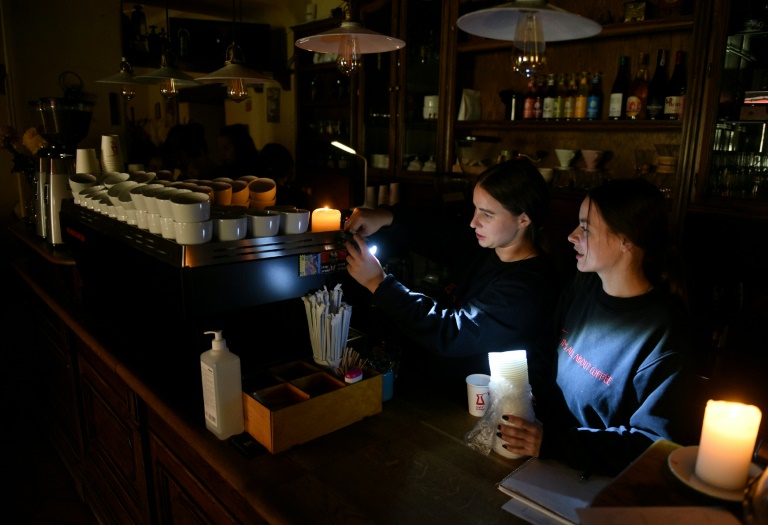
Cities across Ukraine began curbing electricity consumption ahead of winter Thursday as authorities warned that heavy damage to the country’s energy grid by Russian attacks would spark a new wave of refugees from the country.

“Russia’s leadership has given the order to turn the energy system itself into a battlefield. The consequences of this are very dangerous, again for all of us in Europe,” Zelensky said in an address to the EU council

Energy-saving measures were put in place across the country after Russian missile and drone strikes destroyed at least 30 percent of the country’s power stations in a week, according to authorities.

Following blackouts in parts of Kyiv overnight, the city’s mayor Vitali Klitschko urged businesses to limit screens and signage lights “as much as possible”.

“Even small savings and a reduction in electricity consumption in every home will help stabilise the operation of the national energy system,” he said.

Ukrainians responded defiantly.

“It’s not going to change our attitude, maybe we will only hate them more,” said Olga, a resident of Dnipro in central Ukraine who declined to give her last name.

“I would rather sit in the cold with no water and electricity than be in Russia,” she said.

People were rushing to buy auxiliary power supplies like generators and batteries, according to Kyrylo, an electronics vendor.

Speaking of the coming winter, he said: “I think that there will be nothing that we cannot survive.”

“There will be some kind of heating in any case, and the fact that it will be 16 (degrees Celsius, or 61 Fahrenheit) instead of 20 doesn’t matter much.  Just put on a thermal and socks,” he said.

– Iranians on the ground –

The White House meanwhile said it had evidence of Iranians taking a direct role in the war, helping Russians direct their Iranian-made “kamikaze drones” — which are destroyed in attacks on Ukrainian targets such as power stations.

“Tehran is now directly engaged on the ground, and through the provision of weapons that are impacting civilians and civilian infrastructure in Ukraine,” said White House national security spokesman John Kirby.

He added that there was also concern Iran might supply surface-to-surface missiles to Russia for use in the war.

“The United States is going to pursue all means to expose, deter and confront Iran’s provision of these munitions against the Ukrainian people,” he added.

The European Union and United Kingdom announced sanctions on three Iranian generals and an arms firm accused of supplying Russia with drones.

However, bipartisan support for military aid to Ukraine is starting to wane in Washington, with Republicans signalling that funding could be cut after congressional midterm elections next month.

“They said that if they win they’re not likely to fund, to continue to fund Ukraine,” US President Joe Biden said while campaigning in Pennsylvania.

“They have no sense of American foreign policy.”

– Kherson evacuation-

Little changed along the long front lines, where Russia has been sending many of the 200,000 troops newly called up to the fight.

Russian President Vladimir Putin on Thursday visited a training centre for mobilised troops south-east of Moscow where he embraced soldiers and fired a gun.

Some fighters opened their rucksacks to show him what they had been equipped with, and he asked one about his family, who replied he had a five-year-old daughter.

Putin hugged him and wished him “good luck.” 

Meanwhile Russia continued to evacuate people from Kherson city as Ukrainian forces inched closer to the southern hub, in Moscow’s hands since the earliest days of the invasion in February.

Moscow-installed authorities in Kherson said that around 15,000 people have been moved out.

Russia’s Rossiya 24 TV showed images of people waiting to board ferries, unable to use bridges damaged by Ukraine.

Kirill Stremousov, a pro-Russian official, said on Telegram that the evacuations would give Russian forces more room to fight, and said they would not cede the city back to the Ukrainians.

“Remember, nobody is going to give up Kherson,” he said.

But Ukrainians said the exit of civilians from the area was in fact forced deportations to Russia.

The US-based Institute for the Study of War, in its daily analysis, said that as Ukrainian forces continue to close in on Kherson city, Russian authorities “are likely setting information conditions to justify planned Russian retreats and significant territorial losses.”

Dollar extends gains on Fed rate hike expectations

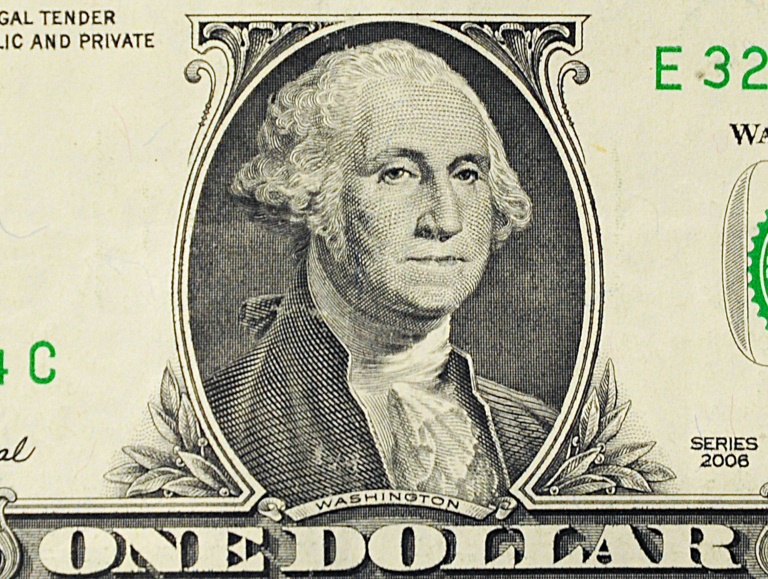
The dollar extended gains Friday on expectations the Federal Reserve will press ahead with its programme of bumper interest rate hikes for the rest of the year.

Traders were girding for another possible intervention by Tokyo after the yen sank past 150 per dollar, while sterling remained under pressure owing to uncertainty in Westminster after Prime Minister Liz Truss resigned after just six weeks in office.

The fear that has gripped markets for most of the year returned after a brief respite at the start of the week, sending equity markets back into the red, with a series of better-than-expected earnings results unable to lift the gloom.

The dollar burst to a new 32-year high against the yen on Thursday as investors bet the Fed will ramp up borrowing costs much more as it struggles to rein in prices, while the Bank of Japan refuses to budge from its ultra-loose policies citing the need to support the torpid economy.

Even data Friday showing Japanese inflation hit an eight-year high last month — or more than 30 years when excluding VAT rises — was unable to change expectations that the central bank will continue to hold firm.

“In October, inflation may reach 3.3 percent or 3.4 percent as many food prices are going up, mobile phone fees are giving a lift and service prices are rising,” said Mari Iwashita of Daiwa Securities Co.

“The BoJ seems to focus on downside risks overseas to conclude that it will need to keep up monetary easing. It strikes me that they have already made the decision to maintain easing.”

With the dollar sitting around 150.20 yen, there is a growing sense that authorities in Tokyo will step in to support their currency, though analysts warned that such moves rarely have a lasting effect. The last intervention was on September 22, when the dollar hit 145.90 yen.

– ‘Unmitigated disaster’ –

Finance Minister Shunichi Suzuki again said on Friday that the government was prepared to move and that the recent sudden, one-sided yen weakness was undesirable. 

The dollar was also elevated against sterling after another day of drama in London, where Truss gave in to pressure to resign after removing her finance and interior ministers within days and seeing her debt-fuelled, tax-cutting mini-budget torn up.

The pound initially rallied on the news but fell back as traders contemplated more drift in government.

“Truss has no doubt been an unmitigated disaster and I’m not sure who exactly will make the country feel at ease at this point,” said OANDA’s Craig Erlam.

“There will obviously be calls for a general election but that won’t provide any certainty or leadership for the country in the midst of a crisis. It would appear there are only bad options on the table so we probably shouldn’t expect a positive outcome.”

Equity markets fell back again, extending Thursday’s losses and tracking another sell-off on Wall Street as expectations for more rate hikes by central banks around the world continue to grow owing to stubbornly high inflation.

On Thursday, the head of the Philadelphia Fed, Patrick Harker, said: “We are going to keep raising rates for a while.

“Given our frankly disappointing lack of progress on curtailing inflation, I expect we will be well above four percent by the end of the year”, then take a step back in the new year, he said.

Observers say the Fed could lift rates to as high as five percent before they take their foot off the pedal, and even then keep them there until officials are happy that prices are under control. They are currently at 3.0-3.25 percent.

In early trade, Tokyo, Hong Kong, Sydney, Seoul, Singapore, Wellington, Taipei and Manila were all in the red, though Shanghai and Jakarta edged up.

– Key figures around 0230 GMT –

Tokyo – Nikkei 225: DOWN 0.2 percent at 26,951.59 (break)

Hong Kong – Hang Seng Index: DOWN 0.5 percent at 16,205.50

Shanghai – Composite: UP 0.1 percent at 3,036.56

Pound/dollar: DOWN at $1.1200 from $1.1224 on Thursday

Dollar/yen: UP at 150.25 yen from 150.19 yen

Euro/dollar: DOWN at $0.9772 from $0.9787 

Euro/pound: UP at 87.21 pence from 87.17 pence

West Texas Intermediate: UP 0.1 percent at $84.58 per barrel

Brent North Sea crude: DOWN 0.1 percent at $92.32 per barrel

New York – Dow: DOWN 0.3 percent at 30,333.59 (close)

London – FTSE 100: UP 0.3 percent at 6,943.91 (close) 

Brazil's dirty campaign: a disinformation guide

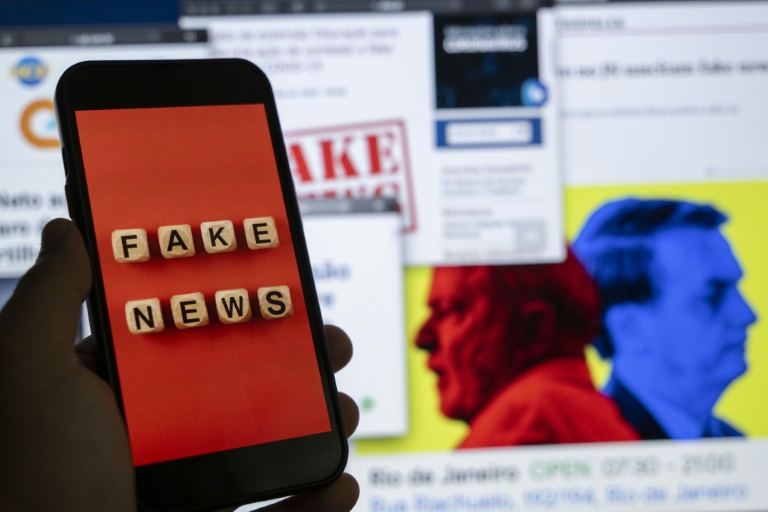
Brazil’s election campaign has been an orgy of mudslinging, social media attacks and outright lies so outlandish they are sometimes comical.

Here is a look from AFP’s fact-checking team at some of the top disinformation techniques — none of them particularly high-tech — used in the online proxy wars between backers of far-right incumbent Jair Bolsonaro and leftist rival Luiz Inacio Lula da Silva ahead of the country’s presidential runoff on October 30.

– Quotes out of context –

One of the main methods seen in the social media disinformation campaign is editing context out of video footage to make the candidates appear to say something they haven’t.

For example, a video was widely shared Wednesday by Bolsonaro backers, including influential Evangelical pastor Silas Malafaia, in which Lula says: “I have to lie. Politicians have to lie.”

The veteran leftist did utter those words the night before — but was mimicking Bolsonaro when he said it.

“Bozo (his mocking nickname for the incumbent) is a compulsive liar,” Lula, 76, said in a podcast interview. “He literally says, ‘I have to lie.'”

Bolsonaro, 67, has also been targeted with the tactic.

In one clip, he appears to say he will name scandal-plagued ex-president Fernando Collor to his cabinet to “confiscate retirees’ pensions.”

In reality, Bolsonaro was talking about a rumor swirling online.

– Pink menace –

Bolsonaro warns ex-president Lula (2003-2010) wants to “impose communism” in Brazil, and often points to crises in other Latin American countries as examples of the dangers of left-wing rule.

Amid signs of a new “pink tide” emerging in the region — with leftists now in power in Argentina, Chile and Colombia, among others — the disinformation campaign has cast a wide muckraking net.

One viral post accuses Colombian President Gustavo Petro’s leftist government of “authorizing pedophilia,” based on a measure that legalized marriage for minors older than 14.

But the measure was adopted in 2021, under conservative ex-president Ivan Duque.

“Starving locals attack poultry and pig farmers in Argentina,” warns another apocalyptic message, accompanying a video of pillaging that allegedly occurred under leftist President Alberto Fernandez.

In reality, the images came from the Colombian town of Puerto Tejada during protests last year against Duque’s government.

Videos from violent protests in Chile in 2019 under conservative ex-president Sebastian Pinera have likewise been misrepresented as happening under current President Gabriel Boric, who took office last March.

– Fake polls –

Fake opinion polls showing one candidate with a large lead are another common tactic.

Sometimes the supposed polls are completely fabricated. Other posts use editing software to change the figures in TV news reports.

In fact, most real polls give Lula a small lead over Bolsonaro.

– ‘Proof’ of fraud –

Multiple claims of fraud went viral after the first-round election on October 2, in which Lula took 48 percent of the vote to 43 percent for Bolsonaro.

Lula supposedly won more votes than there were inhabitants in a list of cities that circulated widely. But the figures cited are incorrect, and some of the cities don’t even exist.

Other viral posts allege the vote count on election night followed an algorithm in which Lula gained one percentage point and Bolsonaro lost one-half for every 12 percent of polling stations that reported results.

But those numbers do not match actual figures.

– Fake articles –

Other posts copy the look of established media to spread false news reports.

The G1 news site operated by Globo, Brazil’s biggest media group, is a frequent target.

One screen capture of a supposed G1 article has Lula saying he will confiscate Brazilians’ firearms if elected.

Another quotes him as saying, “Even God can’t stop me from winning this election.”

UK Tory rivals open truncated leadership race

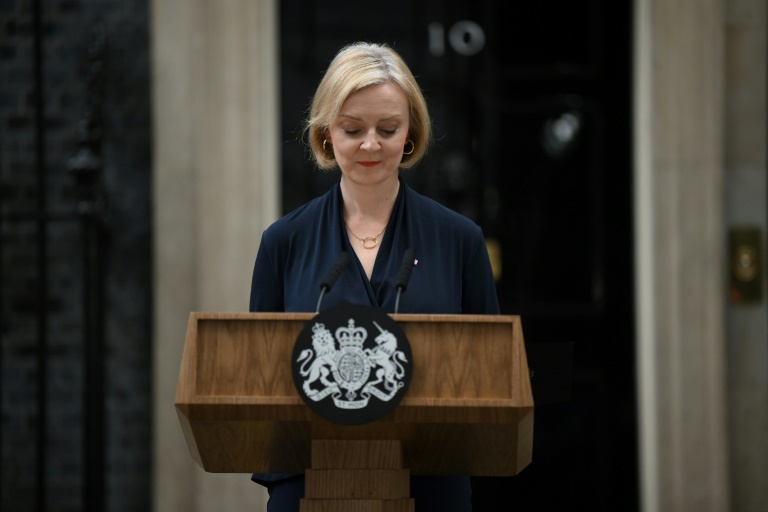
Contenders bidding to succeed Prime Minister Liz Truss were Friday to open a hectic weekend of campaigning, but opposition parties demanded that UK voters get their own say to end months of political chaos.

After only 44 days in office, packed with economic crisis largely of her own making, the Conservative leader announced Thursday she was stepping down.

Truss admitted she “cannot deliver the mandate” on which she was elected by Tory members, after her right-wing platform of tax cuts disintegrated and as many Conservative MPs revolted.

Truss succeeded Boris Johnson on September 6 after a weeks-long campaign against Tory rival Rishi Sunak, vowing a radical overhaul as Britons struggle with a cost-of-living crisis.

Having warned correctly of the disastrous consequences of her debt-fuelled tax promises, former finance minister Sunak has emerged as an early favourite to succeed Truss.

But the scandal-ridden Johnson may also be in the mix for a dramatic comeback bid, despite leaving Downing Street with dismal poll ratings.

Likely contenders were keeping their powder dry in the immediate hours after party managers announced Thursday a truncated election process leading up to a result on October 28.

But supporters of Sunak and Johnson were quick to promote their merits — while others such as senior cabinet members Penny Mordaunt and Ben Wallace were reportedly mulling their own runs.

Some including new finance minister Jeremy Hunt have already ruled themselves out.

Former minister Tim Loughton urged the four “big beasts” of Sunak, Mordaunt, Hunt and Wallace to agree on a unity candidate so that “we can get back to some degree of normality”.

Other candidates could include a representative of the party’s right such as Suella Braverman, whose resignation as interior minister on Wednesday helped trigger Truss’s downfall.

But Brexiteer right-wingers and other factions “need to park all those egos” and work together given the gravity of the economic situation, Loughton told BBC radio.

“We need to have a united and talented cabinet of grown-ups who come together and get us back on course,” he said.

– ‘Soap opera’ –

Whoever does stand will not have long to make their case, and will have to overcome a high bar to run.

They have until 2:00 pm (1300 GMT) on Monday to produce at least 100 nominations from their fellow Tory MPs.

That means a maximum of three candidates will emerge from among the 357 Conservatives in the House of Commons.

The MPs will vote to leave two candidates standing, and hold another “indicative” vote to tell the party membership their preferred option.

The rank-and-file will then have their say in an online ballot over the course of next week, unless a single candidate emerges from the MPs’ deliberations in an effective coronation.

But for Labour and other opposition parties, the governing party is showing contempt towards the electorate.

Demanding an immediate general election, more than two years ahead of schedule, Labour leader Keir Starmer said Britain “cannot have another experiment at the top of the Tory party”.

“This is not just a soap opera at the top of the Tory party — it’s doing huge damage to the reputation of our country” and to people’s livelihoods, he said.

The ultimate winner of the Tory race will be Labour, according to many pundits, pointing to the opposition party’s runaway lead in the polls.

“You’d have to hope, if you’re the Tory party, that you really have reached a nadir and the only way is up from here,” said Tim Bale, professor of politics at Queen Mary, University of London.

Friday’s editions of the right-wing Daily Telegraph, Sun and Daily Express newspapers all talked up Johnson’s chances.

But Bale told AFP that the former premier’s return “would just be the final joke that the Conservative party tried to play on the country, and the country wouldn’t be laughing”.

“We need to climb out of the hole the Tories have dug us into. That probably does mean a change of government,” he added, as the left-leaning Daily Mirror demanded: “General election now.”

Kevin Spacey cleared in NY sex assault case

A New York court on Thursday dismissed a $40 million sexual misconduct lawsuit brought against Kevin Spacey by an actor who claimed the Hollywood star targeted him when he was 14.

A jury found that Anthony Rapp, who was seeking damages for “emotional anguish,” failed to prove that the two-time Oscar winner had “touched a sexual or intimate body part,” leading Judge Lewis Kaplan to dismiss the civil case.

After deliberating for about an hour “the jury found the defendant not liable,” according to the US district court for the Southern District of New York.

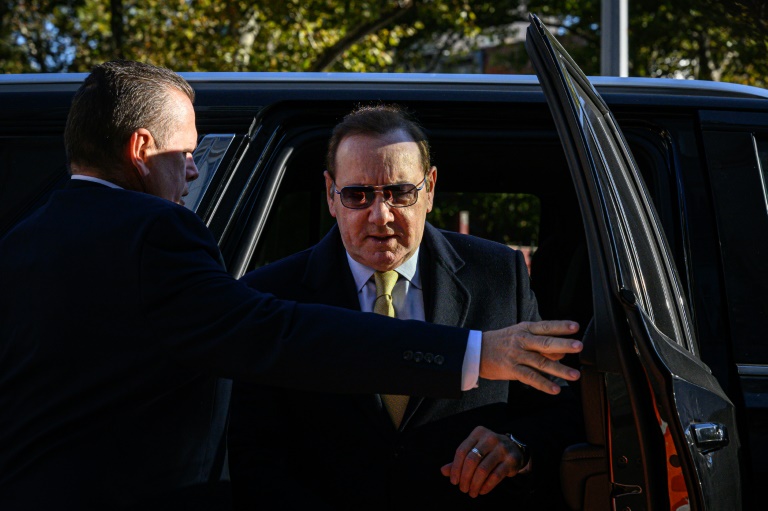
The 63-year-old star of “The Usual Suspects” and “House of Cards” was seen leaving court soon after the verdict was announced, without addressing reporters.

His lawyer said in a statement that “Mr. Spacey is grateful to live in a country where the citizens have a right to trial by impartial jurors who make their decision based on evidence and not rumor or social media.”

Rapp “told his truth in court,” said his attorney Peter Saghir in a statement to AFP.

“While we respect the jury’s verdict, nothing changes what happened to him,” he added.

One of the first stars to be caught up in the global #MeToo reckoning, Spacey has separately pleaded not guilty to charges of sexually assaulting three men in Britain between March 2005 and April 2013.

In 2019 charges against the actor of indecent assault and sexual assault were dropped in Massachusetts.

Rapp, who stars in the series “Star Trek: Discovery,” alleged he was assaulted by Spacey at a party in Manhattan in 1986, when he was 14 and Spacey 26.

In his lawsuit the actor, now 50, accused Spacey of coming into a bedroom where he was watching television, of picking him up, lifting him onto a bed and briefly laying down next to him.

According to a court document, Rapp claimed Spacey’s hand “grazed” his buttocks while doing so.

During the two-week trial, Rapp recounted that he “felt frozen” — until he managed to “wiggle his way” out.

Rapp agreed however there had been “no kissing, no undressing, no reaching under clothes, and no sexualized statements or innuendo,” during an incident that lasted no more than two minutes.

– Troubled past –

Since Rapp’s accusations first emerged in 2017, Spacey has disappeared from screens and theaters.

The “American Beauty” star took the stand repeatedly in New York to deny Rapp’s account of events, saying he had no recollection of attending the party in question with him.

At the time of Rapp’s accusations, Spacey came out publicly as gay for the first time, which he said led to charges he was “trying to change the subject, or trying to deflect.”

During cross-examination in New York, Spacey described a troubled family past, with a father he described as a “white supremacist” and a “neo-Nazi,” who disliked gay people and did not appreciate his son’s interest in the theater.

Spacey said Rapp’s accusations made him feel “shocked, frightened and confused” and that urged by his advisors he issued a public apology which he said he now regrets.

Homegrown superheroes: Meet the US Robin Hoods battling inflation

There is no such thing as a free lunch, economists chide, but one alternative store in the southern US city of Atlanta is offering the next best thing to those struggling with spiraling prices.

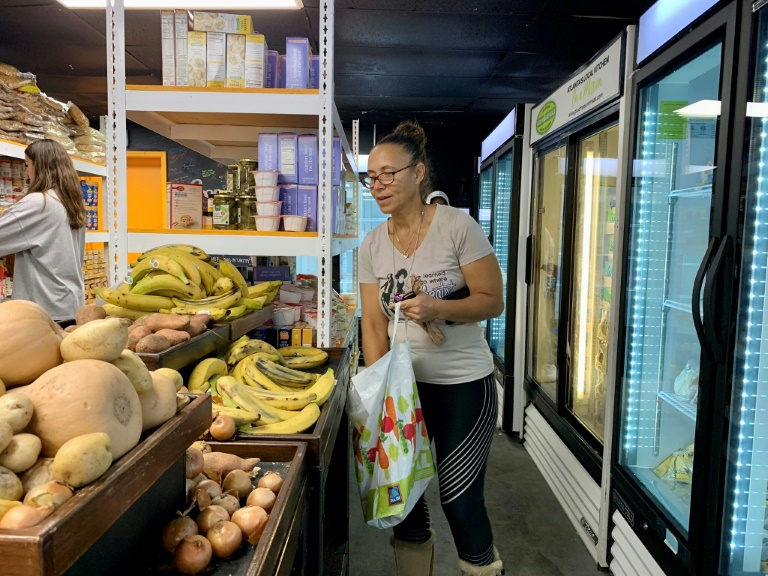
Locals load up on plantains, frozen meat and other ingredients free of charge at The Grocery Spot, a small, neon-lit outlet in the Georgia state capital.

In three weeks, Americans get to deliver their verdict on Joe Biden’s presidency in the crucial midterm elections that decide whether his Democrats get to keep pushing through his agenda — or cede control of Congress to the Republicans.  

The economy, and inflation in particular, are topping every nationwide poll of voters’ priorities, but householders have been struggling more than most in Atlanta — where a generation of the “newly poor” has been crushed by soaring costs. 

The Grocery Spot — which launched almost two years ago, around the time that President Joe Biden assumed office and the consumer price index began its vertiginous ascent — says it has seen an explosion in patrons. 

“Have you been to the supermarket recently?” asks Theresa McGhee, an entrepreneur in the medical industry, as she negotiates the cramped shelves at the charitable association’s premises in the northwestern Grove Park neighborhood.

“You pick up a few things, it’s $100,” the mother, in her 50s, complains as she fills up on potatoes, granola bars and tubs of ice cream.

With its 12 percent inflation rate, Atlanta is one of the US cities where prices have increased the most this year. 

McGhee is clear that “greed, greed, greed” is at the root of the crisis — from the avarice of elected politicians to the excesses of big business.

– Making ends meet –

Price rises in the 97 percent-Black Grove Park neighborhood are fueling mistrust of the American political class, potentially imperiling Biden’s Democrats in the November 8 election. 

The party has relied heavily on the African-American vote in its bid to win the state, which was already hotly contested in 2020. 

One manager of the store, who goes by the name Slugga, has already made up his mind that he won’t be voting in three weeks, however. 

“I don’t see the point,” the 39-year-old African-American man tells AFP. 

Slugga, who was raised nearby, sees politics as little more than a never-ending drama of partisan squabbles. 

“Who’s going to help our future?” he asks, the sleeves of his black hoodie bunching as he digs into the pockets of his blue jeans. 

“You’d be surprised how many people have worked all their life and can’t make ends meet,” chimes in a woman in a long black coat, preferring not to give her name. 

“They give you just enough money to remind you how screwed you are,” agrees a volunteer, putting away boxes. 

– ‘Superheroes’ –

The Grocery Spot spends more than $400 a week on diesel to drive around Georgia looking for unsold goods, which it redistributes in its store. 

Every day that it is open for business, almost 500 people walk through its doors before it runs out of stock. 

“There is this newly poor demographic that no one is taking care of,” Matt Jones, the association’s founder, tells AFP. 

“I’m here for the teachers, the Uber and Lyft drivers, the Walmart employees,” says the Marine Corps veteran, who describes himself as “anti-government.” 

“I think it’s bullshit for the government to come in and say we want to give you a grant and support you, when this is what they should be doing,” he adds. 

At The Grocery Spot, shopping operates in a “pay-what-you-can” honesty system, with customers invited — but not obliged — to offer a small sum as they check out. 

A saleswoman noisily shakes a bell that resonates throughout the store with each donation. 

The association is also active on social media, using its accounts to raise cash. 

“We always wanted to be our own superheroes,” says Slugga, leaning against the graffiti-covered truck the store uses to collect its fresh produce. 

“I feel like Robin Hood,” he says as he watches the shoppers filling their baskets. “This many people ate today.”

Furries and fakes: Debunked myth litters US midterm campaign

Conspiracy-embracing candidates in the US midterm election have courted mockery by repeating a debunked myth about schools pandering to students who identify as cats, but analysts say the strategy is calculated, serious — and effective.

At least 20 conservative candidates, including several elected Republicans, have claimed that some schools are stocking boxes of cat litter for students who identify as animals, according to a compilation of public statements by NBC News.

It is what some observers call zombie misinformation — falsehoods that resurface after being repeatedly knocked down by fact checkers and, in this case, schools and even one Republican lawmaker who apologized and retracted his statement in March after spouting the claim.

The wave of misinformation in the midterm campaign comes amid wider culture wars in the United States over transgender rights and “woke” schools educating children about gender identity — issues known to resonate strongly with conservative voters.

“The legislators who continue to parrot these debunked stories are most likely doing so because they believe doing so is politically expedient, regardless of whether they believe it or not,” Joshua A. Tucker, professor of politics and co-director of the New York University’s Center for Social Media and Politics, told AFP.

“And as long as we’re in a period of time where identity and culture are such salient political cleavages in US society, we are going to continue to see politicians latching on to outlandish claims to demonstrate what side they are on in the culture wars.”

– ‘Electoral incentive’ –

There is a “clear electoral incentive” for conservative politicians to suggest that they believe this misinformation, said Matthew Motta, an assistant professor at Boston University School of Public Health.

“Political science research suggests that culture war issues like these (LGBT rights and ‘woke’ politics) are relatively easy for voters to grasp,” Motta told AFP.

“Republican politicians may circulate misinformation like this in order to try to improve their electoral standing.”

The subculture of furries refers to people who dress up or roleplay as animal characters. Activists see the hoax about furries and cat litter as part of a broad conservative backlash against LGBTQ students and public schools that support their rights. 

Conservative politicians have long been accused of amplifying false narratives — from former president Donald Trump’s false claim that the 2020 election was stolen to Covid-19 misinformation and the QAnon conspiracy theory.

The rise of misinformation, particularly around elections, illustrates the potency of false narratives in a deeply divided nation that can be spun into viral political discourses.

One analysis of congressional candidates’ Facebook posts by the NYU Center for Social Media and Politics found that Republican candidates in this year’s midterms shared more links to unreliable news sources than they did in 2020.

“We find that Republican challengers consistently share more unreliable sources than Republican incumbents,” said the analysis authored by the university’s Megan Brown and Maggie Macdonald.

– ‘Division, disorder, confusion’ –

Among other culprits, their analysis identified former Alaska governor Sarah Palin as a “super-sharer of unreliable sources,” with 849 links shared from January to July.

Hemant Kakkar, an assistant professor at Duke University’s Fuqua School of Business, cautions against increasing already rampant polarization around misinformation by generalizing all conservatives as promoters of false information.

“In our research we have found certain conservatives — those low on conscientiousness are driven by the need to create division, disorder and confusion when it comes to sharing of fake news,” Kakkar told AFP.

“However, that is just a small subset of conservatives.”

Kakkar’s research, published this month, also pointed to the “inadequacy” of fact-checker interventions to deter that subset from spreading false news.

The inability to stop the spread of the litterbox hoax could have real life consequences, with activists warning that the misinformation could result in more stigma, violence and discrimination against sexual minorities, particularly those who are transgender and non-binary.

“Claiming that kids are identifying as cats underscores the sickening lengths some politicians will go to rile up the most extreme and dangerous elements of their base,” said Geoff Wetrosky from Human Rights Campaign, a civil rights organization.

“The attention this freakish lie has received on social media illustrates the pernicious influence of disinformation and that anti-LGBTQ+ politicians will do and say anything to animate the most extreme fringe — no matter the consequence,” Wetrosky said in a statement.

US airlines cheer travel boost from shift to hybrid work

US airlines say they are reaping the benefits of a growing trend of hybrid work that allows employees to travel more frequently as Covid-19 restrictions ebb.

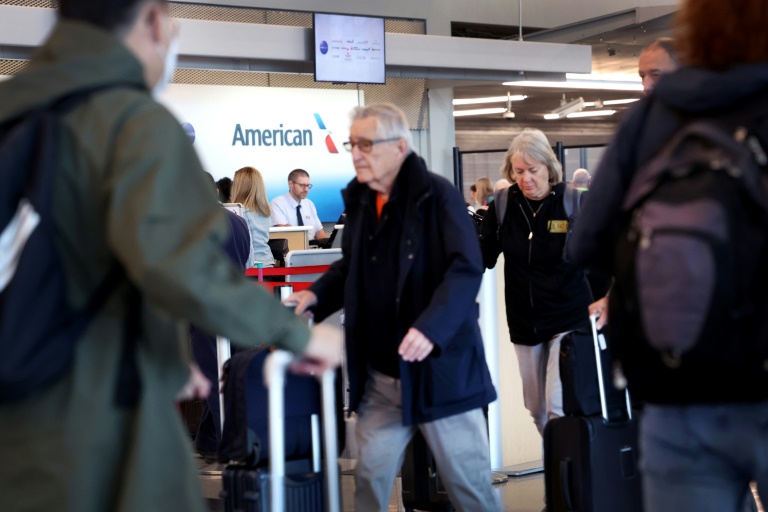
Carriers including American Airlines, United and Delta highlighted the phenomenon on a series of conference calls as they reported banner results on continued strong travel demand.

The increased adoption of virtual meetings, such as through Zoom, has eased the chains that once bound office workers to their desk, allowing greater flexibility.

Get-away weekends are going longer, meaning an excursion that might have previously lasted from Friday night to Monday morning might now return on Tuesday or leave on Thursday.

Prior to the pandemic, United Airlines would trim its transatlantic flights in the middle of the week. But this winter, more flights are planned for Europe “throughout the entire week,” said United Chief Commercial Officer Andrew Nocella.

The dynamic also means more travel outside of the traditional school holiday period, with Delta pointing to exceptional activity in Florida last month.

“If you look at September which is historically one of the worst months for Florida, you couldn’t buy a ticket to Disney,” said Glen Hauenstein, president of the Atlanta-based company.

“You had some people who were on break here, and they said they wanted to go to Disney with their families and they couldn’t buy a ticket.”

A portion of these trips outside conventional travel periods may also be the result of deadlines for consumers to use flight credits for canceled Covid-19 travel, Atmosphere Research’s Henry Harteveldt said.

“Some part of it may be driven by the fact that the summer was simply too busy and they were priced out of the market or decided they did not want to travel,” he added.

– Changing behavior –

Airlines said they expect the trend to hold for at least a while longer. This will include the upcoming holiday season, when traffic is expected to be elevated throughout the month between Thanksgiving and Christmas.

Such an expanded travel calendar with less pronounced peaks enables carriers to spread out their labor.

“We staff our pilot workforce for the flying that we do from June 15 to like August 15” Nocella said. “If we can staff for a much larger chunk of time, that should be incredibly efficient.”

The boost comes as airlines still are not yet seeing a full recovery in lucrative business travel that has long been a critical source of revenues. One downside of the new environment is that some of these revenues may not return.

“A lot of people who used to be frequent travelers used the time during the pandemic to reassess that part of their lives,” Harteveldt said. “A lot don’t want to be road warriors anymore.”

On the other hand, when people do travel for work, they are more frequently deciding to extend their stays due to the greater acceptability of remote work.

American estimates that 45 percent of its revenues now come from travelers who are mixing business and leisure travel, whereas 30 percent comes from tourism and 25 percent from business travel.

Airlines cite another boon from this trend: More consumers who sign up for airline rewards programs, or purchase their tickets directly on a carrier’s website, said Robert Isom, chief executive of American. 

The latest earnings reports also showed that airlines are still getting a lift from increased sales of premium tickets from travelers who have become more accustomed to paying more.

“They are willing and able to pay for better comfort, for better services, to reduce some of the stress and hassle,” Harteveldt said. 

But analysts are less sure the higher prices will stick, especially with the threat of a recession due to elevated inflation.

“It’s definitely difficult to speculate,” said Chris Raite, an analyst at Third Bridge. “We’re watching to see if airlines can hold the pricing power in the fourth quarter and 2023.”

US airlines cheer travel boost from shift to hybrid work

US airlines say they are reaping the benefits of a growing trend of hybrid work that allows employees to travel more frequently as Covid-19 restrictions ebb.

Carriers including American Airlines, United and Delta highlighted the phenomenon on a series of conference calls as they reported banner results on continued strong travel demand.

The increased adoption of virtual meetings, such as through Zoom, has eased the chains that once bound office workers to their desk, allowing greater flexibility.

Get-away weekends are going longer, meaning an excursion that might have previously lasted from Friday night to Monday morning might now return on Tuesday or leave on Thursday.

Prior to the pandemic, United Airlines would trim its transatlantic flights in the middle of the week. But this winter, more flights are planned for Europe “throughout the entire week,” said United Chief Commercial Officer Andrew Nocella.

The dynamic also means more travel outside of the traditional school holiday period, with Delta pointing to exceptional activity in Florida last month.

“If you look at September which is historically one of the worst months for Florida, you couldn’t buy a ticket to Disney,” said Glen Hauenstein, president of the Atlanta-based company.

“You had some people who were on break here, and they said they wanted to go to Disney with their families and they couldn’t buy a ticket.”

A portion of these trips outside conventional travel periods may also be the result of deadlines for consumers to use flight credits for canceled Covid-19 travel, Atmosphere Research’s Henry Harteveldt said.

“Some part of it may be driven by the fact that the summer was simply too busy and they were priced out of the market or decided they did not want to travel,” he added.

– Changing behavior –

Airlines said they expect the trend to hold for at least a while longer. This will include the upcoming holiday season, when traffic is expected to be elevated throughout the month between Thanksgiving and Christmas.

Such an expanded travel calendar with less pronounced peaks enables carriers to spread out their labor.

“We staff our pilot workforce for the flying that we do from June 15 to like August 15” Nocella said. “If we can staff for a much larger chunk of time, that should be incredibly efficient.”

The boost comes as airlines still are not yet seeing a full recovery in lucrative business travel that has long been a critical source of revenues. One downside of the new environment is that some of these revenues may not return.

“A lot of people who used to be frequent travelers used the time during the pandemic to reassess that part of their lives,” Harteveldt said. “A lot don’t want to be road warriors anymore.”

On the other hand, when people do travel for work, they are more frequently deciding to extend their stays due to the greater acceptability of remote work.

American estimates that 45 percent of its revenues now come from travelers who are mixing business and leisure travel, whereas 30 percent comes from tourism and 25 percent from business travel.

Airlines cite another boon from this trend: More consumers who sign up for airline rewards programs, or purchase their tickets directly on a carrier’s website, said Robert Isom, chief executive of American. 

The latest earnings reports also showed that airlines are still getting a lift from increased sales of premium tickets from travelers who have become more accustomed to paying more.

“They are willing and able to pay for better comfort, for better services, to reduce some of the stress and hassle,” Harteveldt said. 

But analysts are less sure the higher prices will stick, especially with the threat of a recession due to elevated inflation.

“It’s definitely difficult to speculate,” said Chris Raite, an analyst at Third Bridge. “We’re watching to see if airlines can hold the pricing power in the fourth quarter and 2023.”

Close Bitnami banner
Bitnami