US Business

Texas sues Google over biometric recognition features

The US state of Texas filed a lawsuit against Google on Thursday, accusing the internet giant of harvesting large amounts of biometric data from people without their explicit consent, a claim rejected by the California-based company.

The suit accuses Google of collecting “millions of biometric identifiers,” such as voice and facial details, from users in Texas in violation of a state law, and profiting as a result, attorney general Ken Paxton said in a release.

“Google’s indiscriminate collection of the personal information of Texans, including very sensitive information like biometric identifiers, will not be tolerated,” Paxton said. 

Google rejected the accusation, promising to “set the record straight” in court.

“AG Paxton is once again mischaracterizing our products in another breathless lawsuit,” Google spokesperson Jose Castaneda said in reply to an AFP inquiry.

Google Photos uses technology that groups similar faces to make it easier to find old pictures, but they are only visible to users and the feature is easily turned off, according to Castaneda.

“The same is true for Voice Match and Face Match on Nest Hub Max, which are off-by-default features that give users the option to let Google Assistant recognize their voice or face to show their information,” Castaneda said.

Conservative Republican Paxton has taken aim at tech firms in a slew of lawsuits, including a similar complaint against Facebook-parent Meta in February.

Without clear federal guidelines addressing how user data can be collected and used, several US states have passed their own rules, while states and consumer groups have filed multiple lawsuits on the matter.

Big staff cuts likely at Twitter: report

Massive layoffs appear to be on the horizon at Twitter, especially if billionaire Elon Musk completes his $44 billion purchase of the company, the Washington Post reported on Thursday.

While pitching his deal to buy Twitter to investors, Musk said he planned to get rid of nearly three-quarters of the firm’s workers, lopping its ranks to just over 2,000 employees, the Post reported.

Even if Musk’s deal to buy Twitter fails, a plan by the company to cut about $800 million from its payroll by the end of next year would lead to letting go of about a quarter of its workers, the paper said.

Staff cuts at the San Francisco-based company would likely hamper the platform’s ability to moderate abusive posts or keep data secure, according to the Post, which cited interviews and documents.

“Once Elon Musk buys Twitter, he can do as he pleases,” said University of Richmond law school professor Carl Tobias.

“And, I think he plans to.”

Twitter was already having trouble making money before Musk came along and “battered it and litigated it to death,” Tobias said.

Twitter had filed a lawsuit to hold Musk to the terms of the takeover deal he inked in April, even though Musk tried to get out of it.

A US judge recently suspended litigation in the saga after Musk expressed a change of heart, giving the parties until October 28 to finalize the on-again, off-again megadeal.

“I’m excited about the Twitter situation,” Musk said while fielding questions on a Tesla quarterly earnings call this week.

“I think it’s an asset that has just sort of languished for a long time but has incredible potential, although obviously myself and the other investors are overpaying for Twitter right now.”

Musk’s potential stewardship of the influential social media site has sparked worry from activists who fear he could open the gates to more abusive and misinformative posts.

Big staff cuts likely at Twitter: report

Massive layoffs appear to be on the horizon at Twitter, especially if billionaire Elon Musk completes his $44 billion purchase of the company, the Washington Post reported on Thursday.

While pitching his deal to buy Twitter to investors, Musk said he planned to get rid of nearly three-quarters of the firm’s workers, lopping its ranks to just over 2,000 employees, the Post reported.

Even if Musk’s deal to buy Twitter fails, a plan by the company to cut about $800 million from its payroll by the end of next year would lead to letting go of about a quarter of its workers, the paper said.

Staff cuts at the San Francisco-based company would likely hamper the platform’s ability to moderate abusive posts or keep data secure, according to the Post, which cited interviews and documents.

“Once Elon Musk buys Twitter, he can do as he pleases,” said University of Richmond law school professor Carl Tobias.

“And, I think he plans to.”

Twitter was already having trouble making money before Musk came along and “battered it and litigated it to death,” Tobias said.

Twitter had filed a lawsuit to hold Musk to the terms of the takeover deal he inked in April, even though Musk tried to get out of it.

A US judge recently suspended litigation in the saga after Musk expressed a change of heart, giving the parties until October 28 to finalize the on-again, off-again megadeal.

“I’m excited about the Twitter situation,” Musk said while fielding questions on a Tesla quarterly earnings call this week.

“I think it’s an asset that has just sort of languished for a long time but has incredible potential, although obviously myself and the other investors are overpaying for Twitter right now.”

Musk’s potential stewardship of the influential social media site has sparked worry from activists who fear he could open the gates to more abusive and misinformative posts.

Biden campaigns in Pennsylvania, ground zero for midterms

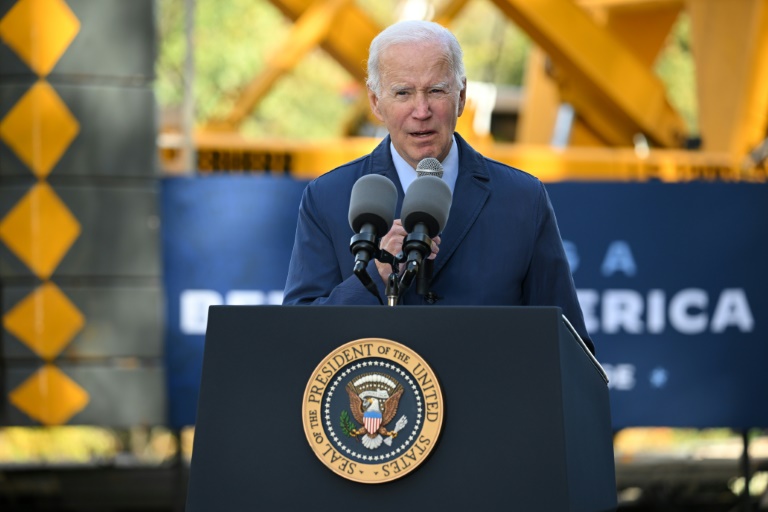
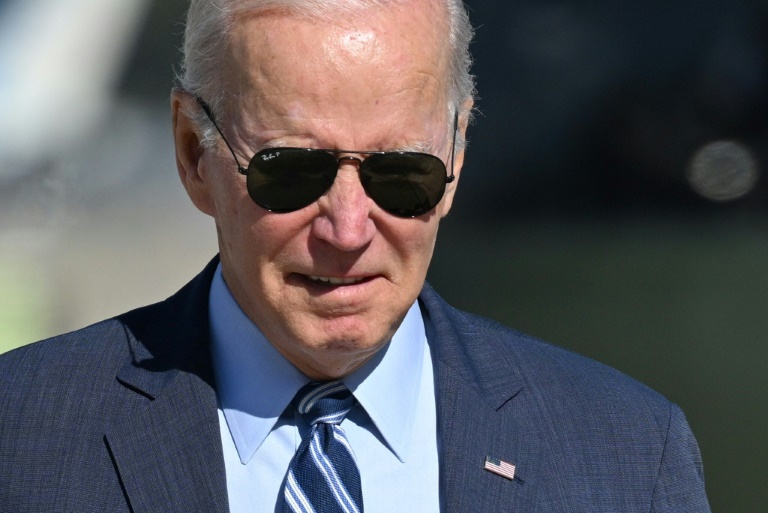
US President Joe Biden touted the rebirth of American infrastructure and manufacturing Thursday in a Pennsylvania trip aimed at boosting Senate hopeful John Fetterman, whose closely watched race could be key to avoiding a Democratic wipeout in the midterm elections.

Biden touched down first in the western city of Pittsburgh, where he plugged his signature infrastructure package with a tour of a newly repaired bridge, before attending an evening fundraiser with Fetterman in Philadelphia.

The national spending spree that Biden’s Democrats got through the divided Congress is “the most significant investment” in US history, Biden said on a makeshift podium at the edge of Fern Hollow Bridge.

The bridge, which collapsed eight months ago on a day that Biden happened to be visiting, has almost been rebuilt, serving as a poster child for the White House’s policies, which include restoring tens of thousands of bridges around the country.

“There’s no better place to talk about rebuilding the backbone of America, the middle class,” Biden said.

“I want you to feel the way I do — pride, pride in what we can do when we work together,” he said, referring to the pieces of heavy construction equipment lined up around the building site.

The speech aimed to buoy Democrats in the final run-up to the midterms in three weeks, with Fetterman in one of the key races to holding the Senate.

Fetterman, who greeted Biden on the tarmac in Pittsburgh, is known for his multiple tattoos and a love of hoodies and cargo shorts.

He was once a runaway favorite in the battle against Republican candidate Mehmet Oz, a celebrity TV doctor — but the race has tightened, reflecting sinking Democratic hopes of maintaining the party’s already fragile control of Congress.

The Democrat suffered a stroke in May and the Oz campaign has made his health a major campaign issue, arguing he is medically unfit for office.

Fetterman’s doctor released a letter this week stating that he could work “full duty” in public office, but his performance will nonetheless be scrutinized for any signs of physical or cognitive weakness when he faces off against Oz in a debate October 25.

The latest average of polls shows Fetterman’s nearly 11-point lead in mid-September whittled down to about five points.

With Biden hampered by approval ratings in the low 40 percent range, some campaigning Democratic candidates have even asked him to keep away.

He has avoided large-scale rallies in favor of smaller policy announcements that he hopes can shift the momentum. Just this week, Biden gave speeches vowing to protect abortion access and explaining his attempts to tamp down high energy costs.

But less than three weeks from voting day, Americans appear to be veering toward the Republican message that Democrats are failing on the economy.

That raises the likelihood of Republicans taking control of at least the House of Representatives and quite possibly the Senate — ushering in two years of political trench warfare for the White House.

Even just the House would give the increasingly far-right Republican Party the ability to shut down Biden’s agenda and — as prominent figures are already threatening — attempt impeachment.

– Numbers don’t add up –

A New York Times/Siena poll this week showed that, of likely voters, 26 percent named worries over the economy as their top issue, while 18 percent listed inflation, at its highest rate in four decades.

Even on issues where Biden feels he has a winning hand, there are limits.

During his impassioned speech on abortion, the president tapped into widespread anger over the Supreme Court’s decision to overturn the half-century-old Roe v. Wade ruling that enshrined national abortion rights.

Predicting a revolt by women voters at the ballot box, Biden said Republicans “ain’t seen nothing yet.” 

But the Siena poll showed just five percent of likely voters named abortion as their top issue.

At the Philadelphia fundraiser Thursday, Biden criticized Republicans for having suggested that US funding for Ukraine could be cut if the party makes widely expected gains in the midterm elections.

“These guys don’t get it,” Biden said. “It’s a lot bigger than Ukraine. It’s Eastern Europe. It’s NATO. It’s really serious, serious consequential outcomes.”

“They have no sense of American foreign policy,” Biden said.

Analysts with Larry Sabato’s Crystal Ball election newsletter at the University of Virginia said that after giddy hopes of defying expectations to win this fall, the Democrats seem to be coming back to earth.

“It’s just tough for a party to thrive with an unpopular president and with the public having significant concerns about issues, like the economy and inflation,” they said Wednesday.


Slowed Snapchat parent earnings send shares off a cliff

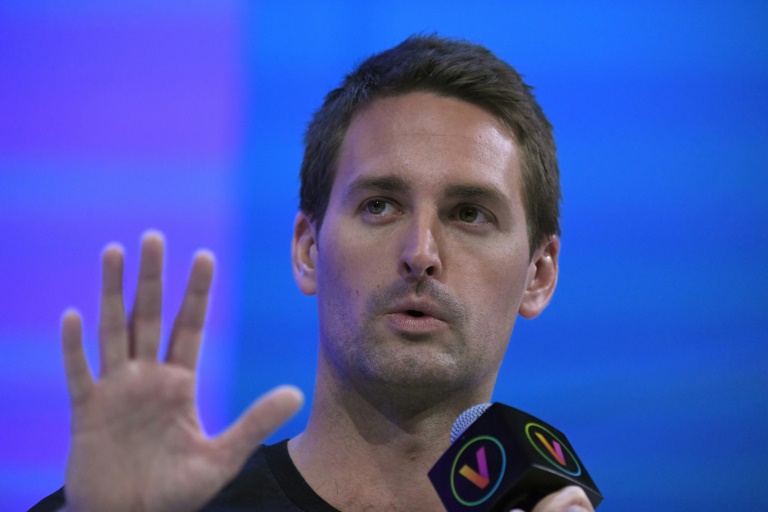
Shares in Snapchat’s parent company plunged more than 26 percent on Thursday on a quarterly earnings report that showed revenue was slowing as online advertisers tighten budgets.

In what could be a harbinger of pain to come for other tech firms like Google and Meta that rely on digital ads to make their money, Snap said that revenue in the recently ended quarter grew just 6 percent to $1.13 billion when compared to the same period the previous year.

Snap reported that it lost $360 million in the quarter, compared with a $72 million loss in the third quarter of last year. 

That came despite the number of daily users climbing 19 percent to 363 million in the same year-over-year comparison, Snap reported. Snap shares were down some 26 percent to $7.97 in after-market trades.

Snap chief executive Evan Spiegel said in the earnings report that the user growth “expands our long-term opportunity as we navigate this volatile macroeconomic environment.”

The loss in the recently ended quarter included $155 million in restructuring charges.

Snap in August confirmed a plan to cut 20 percent of staff, as the photo-centric messaging app worked to dig itself out amid competition and revenue woes.

A hit with young internet users in its early days, Snapchat has remained a small player in the social networking space as competition from other apps, such as TikTok, has grown ever more intense.

“We must now face the consequences of our lower revenue growth and adapt to the market environment,” Spiegel said in a note when announcing the decision “to reduce the size of our team by approximately 20 percent.”

Like other social networks, Snap has taken a hit as advertisers have tightened their belts, as well as from new privacy changes by Apple that have bitten into firms’ sales of costly but highly targeted ads.

“This quarter we took action to further focus our business on our three strategic priorities: growing our community and deepening their engagement with our products, reaccelerating and diversifying our revenue growth, and investing in augmented reality,” Spiegel said.

Snap also announced that its board of directors has authorized the buyback of as much as $500 million worth of the Southern California-based internet firm’s shares.

Slowed Snapchat parent earnings send shares off a cliff

Shares in Snapchat’s parent company plunged more than 26 percent on Thursday on a quarterly earnings report that showed revenue was slowing as online advertisers tighten budgets.

In what could be a harbinger of pain to come for other tech firms like Google and Meta that rely on digital ads to make their money, Snap said that revenue in the recently ended quarter grew just 6 percent to $1.13 billion when compared to the same period the previous year.

Snap reported that it lost $360 million in the quarter, compared with a $72 million loss in the third quarter of last year. 

That came despite the number of daily users climbing 19 percent to 363 million in the same year-over-year comparison, Snap reported. Snap shares were down some 26 percent to $7.97 in after-market trades.

Snap chief executive Evan Spiegel said in the earnings report that the user growth “expands our long-term opportunity as we navigate this volatile macroeconomic environment.”

The loss in the recently ended quarter included $155 million in restructuring charges.

Snap in August confirmed a plan to cut 20 percent of staff, as the photo-centric messaging app worked to dig itself out amid competition and revenue woes.

A hit with young internet users in its early days, Snapchat has remained a small player in the social networking space as competition from other apps, such as TikTok, has grown ever more intense.

“We must now face the consequences of our lower revenue growth and adapt to the market environment,” Spiegel said in a note when announcing the decision “to reduce the size of our team by approximately 20 percent.”

Like other social networks, Snap has taken a hit as advertisers have tightened their belts, as well as from new privacy changes by Apple that have bitten into firms’ sales of costly but highly targeted ads.

“This quarter we took action to further focus our business on our three strategic priorities: growing our community and deepening their engagement with our products, reaccelerating and diversifying our revenue growth, and investing in augmented reality,” Spiegel said.

Snap also announced that its board of directors has authorized the buyback of as much as $500 million worth of the Southern California-based internet firm’s shares.

Yen sinks to new low as British pound briefly surges after Truss exit

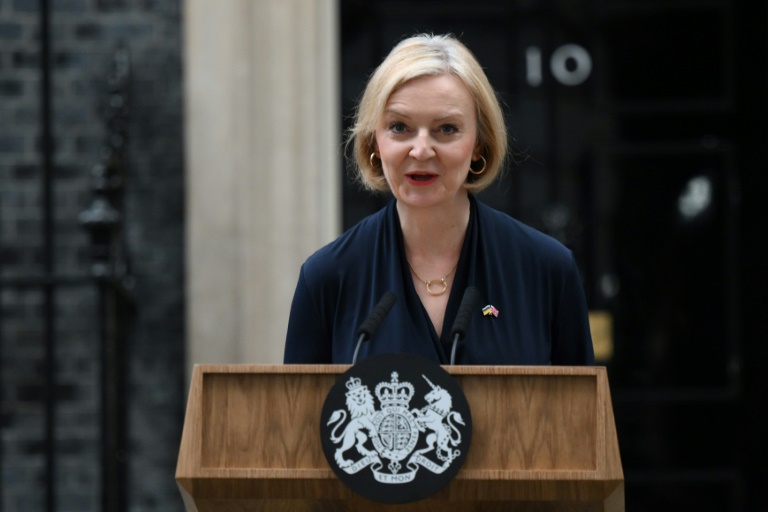
The yen sank to a new 32-year low Thursday against the dollar, while the pound briefly rallied after British Prime Minister Liz Truss announced her resignation following a brief crisis-filled tenure.

Around 1900 GMT the dollar traded at 150.17 against the Japanese currency, which fell to levels last seen in August 1990 in a retreat that reflects the Bank of Japan’s accommodative monetary policy next to the aggressive interest rate hikes adopted by the Federal Reserve.

Analysts say the yen will continue to slide as long as the two policies differ, with more dramatic Fed interest-rate hikes likely to address grinding inflation.

Markets were also fixated on Britain where Truss announced her resignation just 44 days after taking office, as the ruling Conservatives planned a rapid contest to replace the shortest-lived premier in UK history.

The British pound briefly surged more than one percent against the dollar to $1.1336, but later retreated somewhat.

“The political tumult in the UK is not going away anytime soon until we have a clear understanding on who will lead and what will be their agenda,” said Oanda’s Edward Moya.

The FTSE 100 index closed up 0.3 percent while Britain’s borrowing costs eased on the news, as the yield on 30-year government bonds, known as gilts, fell to 3.90 percent.

“Sterling and gilts rallied as the sorry reign of Liz Truss came to an end,” said Markets.com analyst Neil Wilson.

“After a flurry of activity we are seeing retracement of these initial moves as markets realize that there’s still huge uncertainty about whether the Tory party can survive in power.”

– Strong dollar, China fears –

Elsewhere, Wall Street stocks finished lower again, retreating after an early advance following the latest rise in US Treasury yield as weak housing data pointed to the drag from higher lending rates.

The yield on the 10-year US Treasury note climbed further above four percent, reflecting the market’s expectation for more aggressive Fed interest rate hikes.

Data showed existing home sales in the United States fell for an eighth straight month in September, as surging mortgage rates following earlier Fed rate hikes weigh on demand.

Worries about higher interest rates offset a largely positive set of earnings from IBM, A&T and others.

Earlier, Asian markets finished the day in the red, with selling also fuelled by concerns about the Chinese economy as Covid cases spike in the country and leaders stick to lockdown strategies.

– Key figures around 2015 GMT –

New York – Dow: DOWN 0.3 percent at 30,333.59 (close)

New York – S&P 500:  DOWN 0.8 percent at 3,665.78 (close)

New York – Nasdaq: DOWN 0.6 percent at 10,614.84 (close)

London – FTSE 100: UP 0.3 percent at 6,943.91 (close) 

Frankfurt – DAX: UP 0.2 percent at 12,767.41 (close)

Paris – CAC 40: UP 0.8 percent at 6,086.90 (close)

EURO STOXX 50: UP 0.6 percent at 3,492.85 (close)

Tokyo – Nikkei 225: DOWN 0.9 percent at 27,006.96 (close)

Hong Kong – Hang Seng Index: DOWN 1.4 percent at 16,280.22 (close)

Shanghai – Composite: DOWN 0.3 percent at 3,035.05 (close)

Pound/dollar: UP at $1.1224 from $1.1219 on Wednesday

Dollar/yen: DOWN at 150.19 yen from 149.90 yen

Euro/dollar: UP at $0.9787 from $0.9773 

Euro/pound: UP at 87.17 pence from 87.11 pence

Brent North Sea crude: DOWN less than 0.1 percent at $92.38 per barrel

West Texas Intermediate: UP 0.5 percent at $85.98 per barrel

burs-jmb/dw

US grandmaster Niemann sues chess champion Carlsen over cheating charges

American grandmaster Hans Niemann, in the latest move in a scandal that has rocked the world of chess, filed a lawsuit on Thursday against Magnus Carlsen after the Norwegian world champion accused him of cheating.

Niemann, in the suit filed in federal court in Missouri, is seeking $100 million in damages from Carlsen, his company Play Magnus Group, Danny Rensch of Chess.com, the world’s leading online chess platform, and American grandmaster Hikaru Nakamura.

Niemann accused the defendants of slander and libel and colluding to destroy his reputation and livelihood.

Carlsen has publicly accused Niemann of cheating, and chess.com alleged in a report earlier this month that the 19-year-old American has “probably cheated more than 100 times” in online games.

In his complaint, Niemann said the 31-year-old Carlsen, the five-time reigning world champion, Rensch and Nakamura have inflicted “devastating damages” on his reputation and career by “egregiously defaming him.”

It accuses them of “unlawfully colluding to blacklist him from the profession to which he has dedicated his life.”

“Since the age of 16, Niemann’s sole means of supporting himself has been from the money he makes teaching chess and participating in chess tournaments,” the lawsuit said.

After Niemann “soundly defeated” Carlsen at the Sinquefield Cup tournament in Missouri on September 4, the Norwegian “viciously and maliciously retaliated against Niemann by falsely accusing Niemann, without any evidence, of somehow cheating during their in-person game,” it said.

Chess.com, the lawsuit said, “banned Niemann from its website and all of its future events, to lend credence to Carlsen’s unsubstantiated and defamatory accusations of cheating.”

The Florida-based Nakamura, an influential streaming partner of Chess.com, is accused of publishing “hours of video content amplifying and attempting to bolster Carlsen’s false cheating allegations.”

– ‘Ready to play naked’ –

Chess.com banned Niemann on September 5, shortly after the first accusations were made.

Niemann’s lawsuit suggested that the move by Chess.com was made under pressure from Carlsen, whose Play Magnus company is currently being acquired for $83 million by Chess.com.

“Carlsen, having solidified his position as the ‘King of Chess,’ believes that when it comes to chess, he can do whatever he wants and get away with it,” the complaint said.

Two weeks after his Sinquefield Cup loss, Niemann and Carlsen met again in the sixth round of the online Julius Baer Generation Cup.

Carlsen resigned after making just one move and released a statement saying he would not “play against people that have cheated repeatedly in the past.”

The International Chess Federation announced on September 29 that it was opening an investigation into the accusations of cheating. 

Niemann has admitted to cheating in the past on Chess.com, when he was between 12 and 16 years old, but denies the most recent accusations, claiming to be “ready to play naked,” if necessary.

Biden campaigns in Pennsylvania, ground zero for midterms

US President Joe Biden touted the rebirth of American infrastructure and manufacturing Thursday in a Pennsylvania trip aimed at boosting Senate hopeful John Fetterman, whose closely watched race could be key to avoiding a Democratic wipeout in the midterms.

Biden touched down first in Pittsburgh, where he plugged his signature infrastructure package with a tour of a newly repaired bridge, ahead of an evening fundraiser with Fetterman in Philadelphia.

The national spending spree that Biden’s Democrats got through the divided Congress is “the most significant investment” in US history, Biden said on a makeshift podium at the edge of Fern Hollow Bridge, which collapsed eight months ago on a day that Biden happened to be visiting. Now, it has now almost been rebuilt, serving as a poster child for the White House’s policies.

“There’s no better place to talk about rebuilding the backbone of America, the middle class,” Biden said.

“I want you to feel the way I do — pride, pride in what we can do when we work together,” he said, referring to the pieces of heavy construction equipment lined up around the build.

The speech aimed to buoy Democrats in the final run-up to the midterms in three weeks, with Fetterman in one of the key races to holding the Senate.

Fetterman, who greeted Biden on the tarmac in Pittsburgh, is known for his multiple tattoos and a love of hoodies and cargo shorts.

He was once a runaway favorite in the battle against Republican candidate Mehmet Oz, a celebrity TV doctor — but the race has tightened, reflecting sinking Democratic hopes of maintaining the party’s already fragile control of Congress.

The Democrat suffered a stroke in May and the Oz campaign has made his health a major campaign issue, arguing he is medically unfit for office.

Fetterman’s doctor released a letter this week stating that he could work “full duty” in public office. Fetterman’s performance will be scrutinized for any signs of physical or cognitive weakness when the two candidates meet for a debate October 25.

The latest average of polls shows Fetterman’s nearly 11-point lead in mid-September whittled down to about five points.

With Biden hampered by approval ratings in the low 40 percent range, some campaigning Democratic candidates have even asked him to keep away.

He has avoided large-scale rallies in favor of smaller policy announcements that he hopes can shift the momentum. Just this week, Biden gave speeches vowing to protect abortion access and explaining his attempts to tamp down high energy costs.

But three weeks from voting day, Americans appear to be veering toward the Republican message that Democrats are failing on the economy.

That raises the likelihood of Republicans taking control of at least the House and quite possibly the Senate — ushering in two years of political trench warfare for the White House.

Even just the House would give the increasingly far-right Republican Party the ability to shut down Biden’s agenda and — as prominent figures are already threatening — attempt impeachment.

– Numbers don’t add up –

A New York Times/Siena poll this week showed that, of likely voters, 26 percent named worries over the economy as their top issue, while 18 percent listed inflation, at its highest rate in four decades.

Even on issues where Biden feels he has a winning hand, there are limits.

During his impassioned speech on abortion, the president tapped into widespread anger over the Supreme Court’s decision to overturn the half-century-old Roe v. Wade ruling that enshrined national abortion rights.

Predicting a revolt by women voters at the ballot box, Biden said Republicans “ain’t seen nothing yet.” 

But the Siena poll showed just five percent of likely voters named abortion as their top issue.

Analysts with Larry Sabato’s Crystal Ball election newsletter at the University of Virginia said that after giddy hopes of defying expectations to win this fall, the Democrats seem to be coming back to earth.

“It’s just tough for a party to thrive with an unpopular president and with the public having significant concerns about issues, like the economy and inflation,” they said Wednesday.
“This is why the House remains very likely to flip to the Republicans and why, despite the aforementioned challenges, Republican chances to win the Senate remain no worse than a coin flip.”

Facebook adds way to remove misinformation from groups

Facebook on Thursday added a method for people running groups to automatically sift out claims that have been debunked since being posted.

The ability for group administrators to send misinformation to a “quarantine queue” comes ahead of midterm elections in the United States and as Facebook-parent Meta continues to fend off critics who say it doesn’t do enough to fight misinformation on its platforms.

The tool allows those running groups to automatically relegate into quarantine new posts tagged as containing false information, as well as previously posted claims that were subsequently proven untrue, according to Facebook.

“To help ensure content is more reliable for the broader community, group admins can automatically move posts containing information rated as false by third-party fact-checkers to pending posts so that the admins can review the posts before deleting them,” said head of Facebook Tom Alison.

Facebook in March began letting groups automatically reject fresh posts identified as containing false information, taking aim at a part of the massive network that has drawn particular concern from misinformation watchdogs.

More than 1.8 billion people per month use Facebook Groups, which allow members to gather around topics ranging from parenting to politics.

Yet critics have said the groups are ripe for the spread of misleading or false information because they have sometimes large audiences of like-minded users organized on a particular topic.

The misinformation sifting tool was among enhancements aimed at making it easier for administrators to manage groups.

“There are over 100 million new group memberships every day on Facebook — which is kind of incredible,” Meta chief Mark Zuckerberg said in a post, adding a promise to keep building new features for “even deeper connections around shared interests.”

The evolution of groups is part of Meta’s vision of a future in which life online plays out in virtual worlds referred to as the metaverse, according to Alison.

“Technology is evolving at a rapid pace,” Alison said at the summit.

“More specifically: we’re evolving it, investing in products and research that will help make the metaverse a reality.”

Close Bitnami banner
Bitnami