US Business

Tesla quarterly profit jumps, but revenues miss estimates

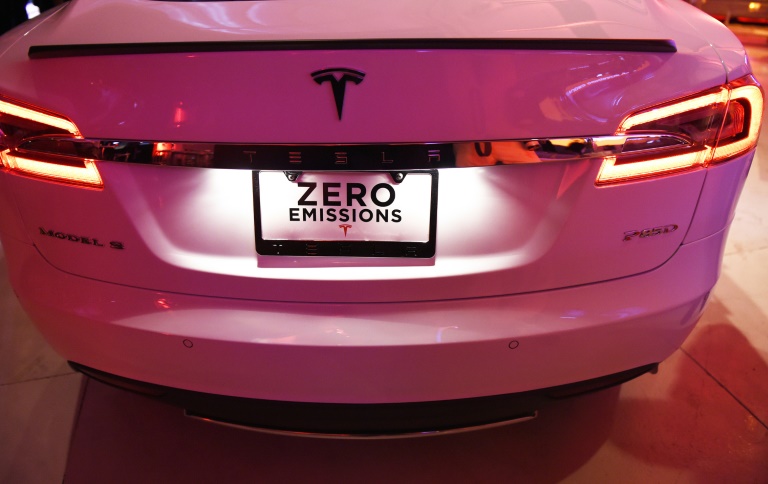
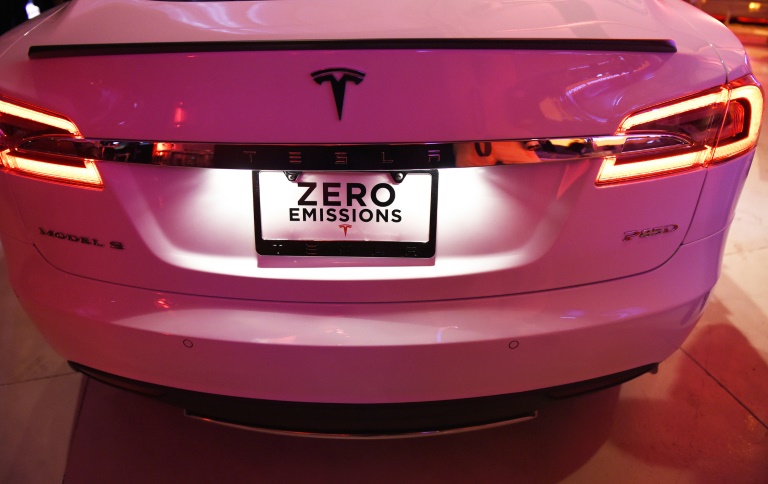
Tesla reported Wednesday another quarter of sparkling earnings growth, but shares fell amid questions over the resilience of electric vehicle demand, CEO Elon Musk’s embattled Twitter transaction and other issues.

The electric vehicle (EV) maker scored a more than doubling of profits in the third-quarter to $3.3 billion on increased auto deliveries

But shares retreated in after-hours trading after the company reported revenues of $21.5 billion, a 56 percent increase over the year-ago period, but about $500 million below analyst forecasts.

The company flagged battery supply chain bottlenecks as a constraint on EV growth and noted that logistics volatility was an “improving” challenge. 

“Knock on wood, it looks like we’ll have an epic end-of-year,” Musk said during an earnings call.

“The factories are running at full speed and we’re delivering every call we make.”

The results follow Tesla’s disclosure earlier this month that deliveries and production grew solidly in the third quarter after diving in the prior period due to a coronavirus-related factory closure at the company’s Shanghai plant.

The automaker has avoided setting specific annual delivery targets, but analysts have benchmarked a target of about 1.4 million for all of 2022.

Tesla is on pace for a 50 percent increase in production this year, but could fall shy of that goal when it comes to getting the cars to buyers, chief financial officer Zach Kirkhorn said on the call.

Tesla is working on smoothing out a “crazy delivery wave” at the end of each quarter, Musk told analysts.

“There weren’t enough boats; there weren’t enough trains; there weren’t enough car carriers to actually support the wave, because it got too big,” Musk said.

Tesla watchers are expecting a strong fourth quarter with a restored Shanghai factory and the ramp-up of plants in Texas and Germany.

– Immune to inflation? –

But Covid-19 remains a wildcard in light of China’s continued adherence to its zero-tolerance approach to fighting the virus.

Another question concerns whether Musk’s company will continue to remain immune to macroeconomic concerns, especially inflation. 

The cheapest version, the Tesla Model 3, currently lists for about $48,500. With US inflation showing no signs of easing, analysts wonder whether demand for the pricey vehicles will remain robust.

Shares of Tesla have dropped more than 16 percent since September 30, shortly before the company released its third-quarter delivery figures and ahead of Musk’s October 4 revival of his bid to acquire Twitter and head off a trial in which he was being sued by the company for breach-of-contract.

In the most recent move in the takeover saga, a Delaware judge suspended litigation between the parties to allow time to finalize the $44 billion transaction. 

But the judge has said that if the deal does not close by October 28, the trial could be rescheduled for November. 

“I’m excited about the Twitter situation,” Musk said during the earnings call.

“I think it’s an asset that has just sort of languished for a long time but has incredible potential, although obviously myself and the other investors are overpaying for Twitter right now.”

Some analysts see the drop in Tesla shares — during a period that saw the S&P 500 advance — reflects worries that Musk will sell more Tesla shares to finance the purchase of the social media company.

“Despite Elon Musk’s Twitter distractions, Tesla has been fixated on identifying and mitigating disruptive themes in the automotive sector,” said GlobalData analyst Daniel Clarke.

“That’s why its results show it to be one step ahead of competitors.”

The analyst warned, however, that reliance on the China market is potentially a massive “bump in the road” for Tesla as geopolitical rivalry heats with the United States and Chinese electric car maker BYD approaches in its “rear view mirror.”

Tesla shares were down more than six percent to $208.16 in after-hours trading, despite Musk saying there is a potential for the company to buy back billions of dollars’ worth of shares.
Tesla quarterly profit jumps, but revenues miss estimates

Tesla reported Wednesday another quarter of sparkling earnings growth, but shares fell amid questions over the resilience of electric vehicle demand, CEO Elon Musk’s embattled Twitter transaction and other issues.

The electric vehicle (EV) maker scored a more than doubling of profits in the third-quarter to $3.3 billion on increased auto deliveries

But shares retreated in after-hours trading after the company reported revenues of $21.5 billion, a 56 percent increase over the year-ago period, but about $500 million below analyst forecasts.

The company flagged battery supply chain bottlenecks as a constraint on EV growth and noted that logistics volatility was an “improving” challenge. 

“Knock on wood, it looks like we’ll have an epic end-of-year,” Musk said during an earnings call.

“The factories are running at full speed and we’re delivering every call we make.”

The results follow Tesla’s disclosure earlier this month that deliveries and production grew solidly in the third quarter after diving in the prior period due to a coronavirus-related factory closure at the company’s Shanghai plant.

The automaker has avoided setting specific annual delivery targets, but analysts have benchmarked a target of about 1.4 million for all of 2022.

Tesla is on pace for a 50 percent increase in production this year, but could fall shy of that goal when it comes to getting the cars to buyers, chief financial officer Zach Kirkhorn said on the call.

Tesla is working on smoothing out a “crazy delivery wave” at the end of each quarter, Musk told analysts.

“There weren’t enough boats; there weren’t enough trains; there weren’t enough car carriers to actually support the wave, because it got too big,” Musk said.

Tesla watchers are expecting a strong fourth quarter with a restored Shanghai factory and the ramp-up of plants in Texas and Germany.

– Immune to inflation? –

But Covid-19 remains a wildcard in light of China’s continued adherence to its zero-tolerance approach to fighting the virus.

Another question concerns whether Musk’s company will continue to remain immune to macroeconomic concerns, especially inflation. 

The cheapest version, the Tesla Model 3, currently lists for about $48,500. With US inflation showing no signs of easing, analysts wonder whether demand for the pricey vehicles will remain robust.

Shares of Tesla have dropped more than 16 percent since September 30, shortly before the company released its third-quarter delivery figures and ahead of Musk’s October 4 revival of his bid to acquire Twitter and head off a trial in which he was being sued by the company for breach-of-contract.

In the most recent move in the takeover saga, a Delaware judge suspended litigation between the parties to allow time to finalize the $44 billion transaction. 

But the judge has said that if the deal does not close by October 28, the trial could be rescheduled for November. 

“I’m excited about the Twitter situation,” Musk said during the earnings call.

“I think it’s an asset that has just sort of languished for a long time but has incredible potential, although obviously myself and the other investors are overpaying for Twitter right now.”

Some analysts see the drop in Tesla shares — during a period that saw the S&P 500 advance — reflects worries that Musk will sell more Tesla shares to finance the purchase of the social media company.

“Despite Elon Musk’s Twitter distractions, Tesla has been fixated on identifying and mitigating disruptive themes in the automotive sector,” said GlobalData analyst Daniel Clarke.

“That’s why its results show it to be one step ahead of competitors.”

The analyst warned, however, that reliance on the China market is potentially a massive “bump in the road” for Tesla as geopolitical rivalry heats with the United States and Chinese electric car maker BYD approaches in its “rear view mirror.”

Tesla shares were down more than six percent to $208.16 in after-hours trading, despite Musk saying there is a potential for the company to buy back billions of dollars’ worth of shares.
Why law enforcement struggles to throttle crypto scams

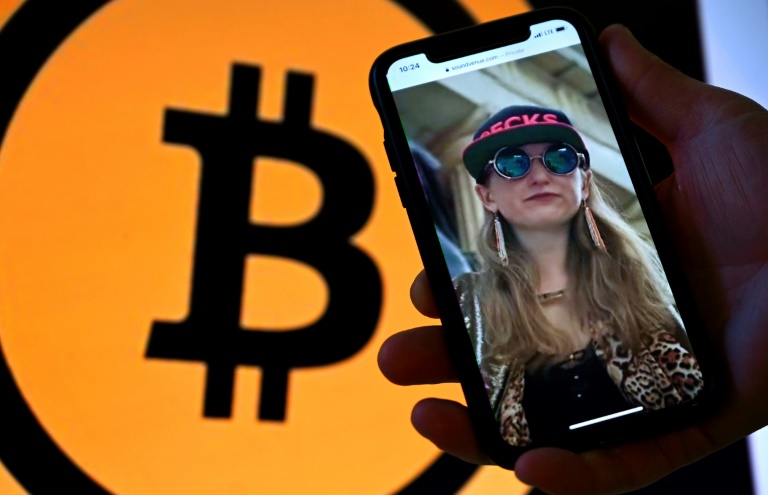
Under the headline “Scammers in Paris”, an online sleuth known as ZachXBT published a blog in August detailing how a pair of youngsters stole cryptoassets worth millions.

Much to his surprise, the French police announced last week that they had acted on his tipoff and charged five people.

It was the first time his sleuthing had led to police action, ZachXBT told AFP, despite having investigated $250 million worth of crypto scams and thefts and chronicling them for his 300,000 Twitter followers.

One explanation for the lack of action is that low-level scams are not a priority.

The authorities in the European Union and the United States — the leaders on crypto control — have relentlessly focused on aspects of crypto crime related to terrorist financing, money laundering and sanctions busting.

Arrests have been rare at federal level in the US — the Department of Justice’s specialised unit charged only eight suspects in the first half of this year.

US federal agencies have often concentrated on headline-grabbing suspects like Heather Morgan, an amateur rapper nicknamed “Razzlekhan” who was charged with money laundering in February, and more recently reality TV star Kim Kardashian, who was fined this month for illegally promoting a cryptocurrency.

Yet the specialist crypto firm Chainalysis said more than $3.5 billion had been lost to scams and hacks between January and July. 

AFP contacted police departments and crime agencies in Europe and the United States but none could give figures for clear-up rates or charges for crypto-related crime.

– ‘Fear of crypto’ –

The sheer scale of the criminality proves difficult for law enforcement agencies already lacking resources for financial crime.

Chainalysis is one of several firms rushing to fill the gap in expertise, selling its tools and services to agencies including the New York police.

Former New York police chief Terry Monahan told a recent Chainalysis event that before he stepped down last year officers would face three cryptocurrency cases every day.

But they had no way of investigating, so the cases would be closed.

“The victim was left with nowhere else to go,” he said, pointing out that federal agencies were only interested in cases worth millions.

Another part of the problem is the direction from the top.

The focus on terrorism and sanctions busting comes as regulators struggle to decide if cryptoassets are securities or commodities.

If they plump for securities, crypto companies would face so much regulation and fines that the sector could be decimated.

Omid Malekan, a professor at Columbia University, said the manoeuvring by US agencies could be seen as “their fear of what a crypto-centric future might mean for US power at home and abroad”.

If decentralised crypto networks revolutionise finance, US politicians would no longer be able to project power in the way they do now with the dollar and the banks.

– ‘Very little’ enforcement –

With Washington and Brussels focused on high-value targets, victims of low-level fraud are often left high and dry.

Some end up asking ZachXBT for help, and he has recovered funds for them.

“I would say there is very little law enforcement in the crypto space,” he said, adding that China was particularly unresponsive to his investigations.

But he said US authorities at least were taking more notice of lower-level scams.

Scams have become harder to ignore since crypto lender Celsius went bust owing $4.7 billion to investors.

Many of those who lost out were ordinary folk sold on the idea of quick and easy profit.

Their testimony to regulators — pensioners robbed of their life savings, small investors left contemplating suicide, farm owners who lost their livelihoods — reset the image of a typical crypto-scam victim.

– ‘Treasure trove’ –

Monahan and Malekan both reckon law enforcement is slowly getting a grip.

Monahan hailed the tracking technology supplied by the likes of Chainalysis for allowing some funds to be returned.

“At least we got something back for (the victims), we didn’t just take that case and toss it into the trash,” he said.

And Malekan says increasingly sophisticated tools are helping to unmask scammers despite the much-vaunted anonymity of the blockchain — the digital ledgers where all transactions are stored.

“Once a single participant is unmasked,” said Malekan, “their on-chain history becomes a treasure trove of data for chasing down their entire network”.

However, the damage of years of lax enforcement will be difficult to unpick.

“I do think lack of enforcement encourages and emboldens the scammers,” said Molly White, whose project “Web3 is going just great” chronicles some of the most outrageous scams and thefts in the crypto world.

“I think it has contributed to a perception that crypto hacks are basically risk-free and high reward, which many of them have been.”

Musk says he's 'excited' about buying Twitter, but overpaying

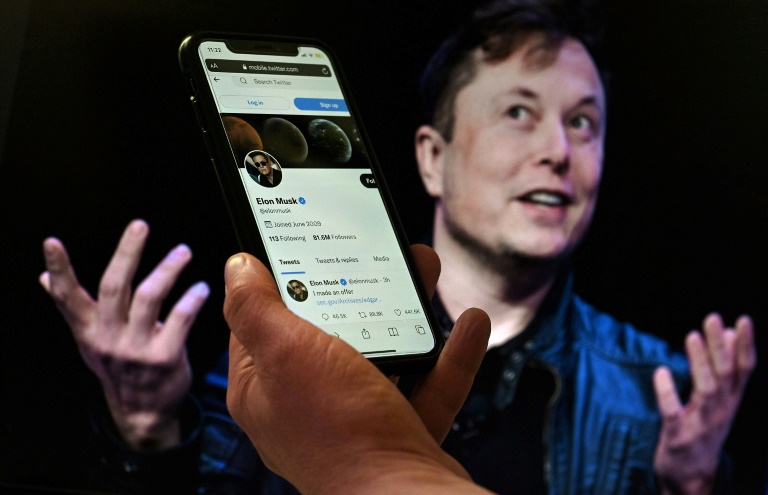
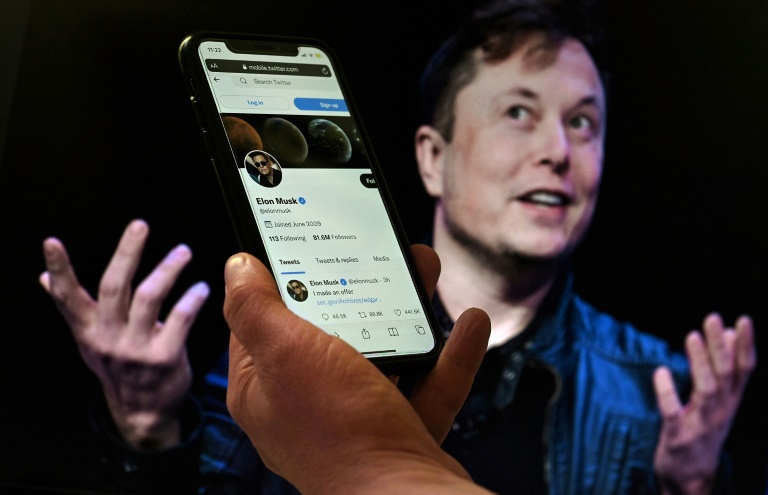
Elon Musk on Wednesday said he is “excited” about taking over Twitter, expressing enthusiasm even though he’s spent months trying to break free of the $44 billion buyout contract.

A US judge early this month suspended litigation in the saga over Musk’s proposed takeover of Twitter, giving the parties until October 28 to finalize the on-again, off-again megadeal.

Twitter had filed a lawsuit to hold Musk to the terms of the deal he inked in April after the Tesla chief sent word he was terminating the contract.

“I’m excited about the Twitter situation,” Musk said while fielding questions on a Tesla quarterly earnings call.

“I think it’s an asset that has just sort of languished for a long time but has incredible potential, although obviously myself and the other investors are overpaying for Twitter right now.”

Musk added that he believes Twitter has potential to be worth “an order of magnitude” more than it is now.

Delaware Judge Kathaleen McCormick granted a request by Musk to freeze the case despite bitter opposition from Twitter, and said that a trial originally set for this week could be rescheduled for next month if a deal is not finalized.

With trial on Twitter’s breach-of-contract suit against Musk looming, the unpredictable billionaire had done an about-face, reviving his takeover plan on condition the court halt the lawsuit against him.

Musk began to step back from the Twitter deal soon after it was agreed, and said in July he was canceling the purchase because he was misled by Twitter concerning the number of fake “bot” accounts, allegations rejected by the company.

Twitter, meanwhile, has sought to prove Musk was contriving excuses to walk away — simply because he changed his mind.

Musk’s potential stewardship of the influential social media site has sparked worry from activists who fear he could open the gates to more abusive and misinformative posts.

Musk says he's 'excited' about buying Twitter, but overpaying

Elon Musk on Wednesday said he is “excited” about taking over Twitter, expressing enthusiasm even though he’s spent months trying to break free of the $44 billion buyout contract.

A US judge early this month suspended litigation in the saga over Musk’s proposed takeover of Twitter, giving the parties until October 28 to finalize the on-again, off-again megadeal.

Twitter had filed a lawsuit to hold Musk to the terms of the deal he inked in April after the Tesla chief sent word he was terminating the contract.

“I’m excited about the Twitter situation,” Musk said while fielding questions on a Tesla quarterly earnings call.

“I think it’s an asset that has just sort of languished for a long time but has incredible potential, although obviously myself and the other investors are overpaying for Twitter right now.”

Musk added that he believes Twitter has potential to be worth “an order of magnitude” more than it is now.

Delaware Judge Kathaleen McCormick granted a request by Musk to freeze the case despite bitter opposition from Twitter, and said that a trial originally set for this week could be rescheduled for next month if a deal is not finalized.

With trial on Twitter’s breach-of-contract suit against Musk looming, the unpredictable billionaire had done an about-face, reviving his takeover plan on condition the court halt the lawsuit against him.

Musk began to step back from the Twitter deal soon after it was agreed, and said in July he was canceling the purchase because he was misled by Twitter concerning the number of fake “bot” accounts, allegations rejected by the company.

Twitter, meanwhile, has sought to prove Musk was contriving excuses to walk away — simply because he changed his mind.

Musk’s potential stewardship of the influential social media site has sparked worry from activists who fear he could open the gates to more abusive and misinformative posts.

Director Paul Haggis's civil trial for rape opens in New York

The New York civil trial against Oscar-winning Canadian filmmaker Paul Haggis, who is accused of raping a publicist in 2013, opened on Wednesday.

Haggis, who wrote and directed “Crash,” and penned the screenplay for “Million Dollar Baby,” arrived in court in the morning, an AFP photographer observed. 

The 69-year-old was accused in December 2017 by film publicist Haleigh Breest of abusing and raping her in January 2013 when she was 26 years old.

With the #MeToo movement gaining ground, three more women subsequently accused Haggis of sexual assault.

More recently, Haggis was arrested in June in southern Italy on suspicion of aggravated sexual assault in a different case. He denied any wrongdoing and was soon released.

The filmmaker’s lawyers suggested on Wednesday that Breest’s suit was guided by the Church of Scientology, which Haggis left and has since criticized, according to US media. 

The plaintiff’s lawyers denied the accusation.

In her suit, Breest said that on the evening of January 31, 2013, after a film screening in Manhattan, the director insisted she have a drink at his home, even though she preferred to go to a bar. 

Once in his apartment, Haggis made multiple advances before making her perform oral sex and then raping her, she says.

Known for being one of the creators of the “Walker Texas Ranger” television series, Haggis received an Oscar for best picture and best original screenplay in 2006 for “Crash.”

He was additionally the screenwriter for Clint Eastwood’s “Million Dollar Baby,” “Flags of Our Fathers” and “Letters from Iwo Jima,” as well as James Bond films “Casino Royale” and “Quantum of Solace.”

Trump testifies in case filed by rape accuser

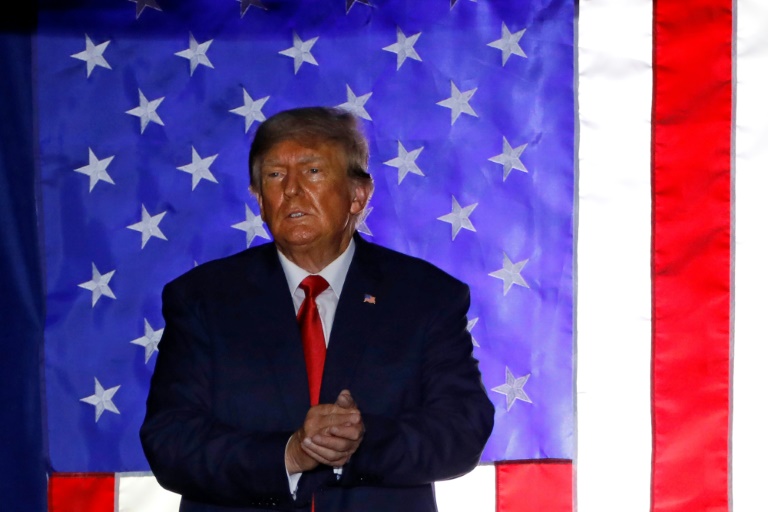
Former US president Donald Trump testified Wednesday in a defamation case pitting him against a prominent former American columnist who says he raped her in the 1990s.

E. Jean Carroll, 78, alleges that Trump sexually assaulted her in a New York department store.

Last week, a New York federal court judge rejected a motion by Trump, who has denied the accusation, to further delay his deposition. 

The New York law firm representing Carroll said in a statement: “We’re pleased that on behalf of our client… we were able to take Donald Trump’s deposition today.”

The firm, Kaplan Hecker & Fink, said it was “not able to comment further.”

In ruling on the deposition last week, Judge Lewis Kaplan said that Carroll’s and Trump’s depositions should be held on October 14 and 19, respectively.

It is not known if Carroll testified last Friday.

It also was not immediately clear if Trump submitted the sworn deposition from his Mar-a-Lago residence in Florida.

Carroll on Tuesday shared a photo of her lawyer Roberta Kaplan on Twitter captioned “Carroll versus Trump,” and wished Kaplan “GOOD LUCK FOR TOMORROW.” She later deleted the tweet.

Kaplan, who is unrelated to the case’s judge, is a co-founder of the Time’s Up movement that provides legal aid to victims of sexual assault.

Carroll, a former columnist for Elle magazine, sued then-president Trump for defamation in a New York civil court in November 2019.

In an excerpt of her book published by New York Magazine that year, Carroll said she was raped by Trump in the changing room at the luxury Bergdorf Goodman department store on Fifth Avenue in New York in the mid-1990s.

Trump denied the accusation, saying Carroll was “not my type” and that she was “totally lying,” which prompted the defamation suit.

The case has been delayed by procedural battles, including whether Trump should be represented by the US government, since he was president at the time he made the statements. 

According to several media outlets on Tuesday, Trump’s lawyers have always claimed their client was protected by his executive immunity, particularly for allegedly defamatory statements he made during his term.

Last week, Trump made new comments about the case on his right-wing Truth Social platform, mocking Carroll’s rape allegations. 

According to legal experts cited in a Vice News report, Carroll could argue that Trump defamed her again — this time as a private citizen. 

Judge Kaplan said last week that Carroll could claim damages from Trump for the alleged rape starting from November 24, after a New York state law comes into effect that allows survivors of sexual assault to file a civil suit regardless of the statute of limitations.

US hits network that smuggled chips to Russian arms makers

US authorities indicted five Russians Wednesday who allegedly shipped American electronic components to Russia arms makers, some of which have been found on the battlefield in Ukraine.

Separately, three Latvians and a Ukrainian were charged for attempting to send a US-made high-precision industrial grinder to Russia that the Justice Department said could be used by arms makers or in a nuclear weapons program.

The Justice Department said the two schemes involved front companies in multiple countries including Dubai and Germany and were designed to evade US and global sanctions on Russia.

The first scheme involved buying sensitive technologies from US manufacturers like advanced semiconductors and microprocessors that are used in fighter aircraft, missile systems, smart munitions, radar and satellites.

The Justice Department said Dubai-based Russian Yury Orekhov, Artem Uss, the son of a regional Russian governor, and the three others used a Hamburg, Germany-based firm for the operation, shipping some of the technology to Russian defense companies that are under US sanctions.

It said, for example, that Orekhov had travelled to the United States in 2019 to source parts that were used in the Russian-made Sukhoi fighter aircraft.

“Some of the types of electronic components obtained through the criminal scheme have been found in Russian weapons platforms seized on the battlefield in Ukraine,” the Justice Department said.

At the same time, it said, Orekhov, his Russian parters and two Venezuelan oil brokers who were also indicted, used the German company as a front to ship “hundreds of millions of barrels of oil” from Venezuela to Russia and China, violating global sanctions.

Payments meanwhile were routed through shell companies, a bank in the Untied Arab Emirates, and via cash drops and cryptocurrency trades, the department said.

The five Russians and two traders are charged with conspiracy to defraud the Untied States, sanctions violations, fraud and money laundering.

Orekhov and Uss were arrested Monday in Germany and Italy, respectively, and the United States will seek their extradition, the department said.

In the second scheme, the four arranged the purchase of a jig grinder made in the US state of Connecticut ostensibly for the European market, but sought to ship it to Russia. The grinder was intercepted by Latvian authorities.

“These defendants attempted to smuggle a high-precision export-controlled item to Russia where it could have been used in nuclear proliferation and Russian defense programs,” said US Attorney Vanessa Roberts Avery.

The three Latvians were arrested on Tuesday while the Ukrainian national was arrested in June in Estonia.

They are all charged with conspiracy to defraud the Untied States, smuggling, and money laundering. The Justice Department is also seeking their extradition.

Meanwhile the US Treasury placed sanctions on Orekhov, the German company and a Dubai company he controls.

“Russia has increasingly struggled to secure critical inputs and technologies needed for its brutal war against Ukraine,” said Deputy Treasury Secretary of Wally Adeyemo in a statement.

“We know these efforts are having a direct effect on the battlefield, as Russia’s desperation has led them to turn to inferior suppliers and outdated equipment,” Adeyemo said.

Stocks waver as inflation concerns offset positive earnings

US stocks stumbled Wednesday, snapping a two-day rally, as investors tracked soaring inflation, while oil prices rose despite the latest US petroleum release announcement by President Joe Biden.

The yield on the 10-year US Treasury note, a proxy for Federal Reserve interest rates, jumped above four percent following UK data that showed inflation soaring back above 10 percent last month.

“There’s nothing to suggest that inflation is going to move in the right direction,” said Tom Cahill of Ventura Wealth Management. 

A downcast Federal Reserve “Beige Book” report observed rising recession fears as households grapple with soaring costs and earlier Fed interest rate hikes slowing demand.

After climbing the last two days, major US indices retreated, with the S&P 500 losing 0.7 percent.

Bourses in Paris, London and Frankfurt also pulled back.

Market movements have been dominated in recent months by interest rate hikes by the US Federal Reserve and other central banks as they try to rein in surging inflation.

Foreign exchange traders were keeping tabs also on whether the dollar would reach 150 yen, which would be a fresh high for 32 years.

Japan’s currency is being hit hard as the country’s central bank holds off from hiking interest rates, in sharp contrast to its peers.

Traders were given an extra boost by news that Netflix gained more than two million subscribers in July-September. Shares of Netflix surged more than 13 percent.

In Europe, Nestle’s nominal sales surged in the first nine months of the year as the maker of Nespresso capsules, Purina pet food and Haagen-Dazs ice cream raised its prices in response to soaring inflation.

Nestle’s shares ended the day down 1.3 percent, however, amid concerns about the impact of higher prices on sales volumes.

On commodity markets, crude oil prices rose after US inventory data showed a surprise decline in petroleum reserves. 

The gains also came as Biden announced the release of a final 15 million barrels of an earlier promise to release 180 million barrels from the Strategic Petroleum Reserve.

However, he also urged the US oil industry to get more oil out of the ground, insisting this did not counter his presidency’s priority of pushing the United States into a clean energy future.

“We need to responsibly increase American oil production without delaying or deferring our transition to clean energy,” he said.

– Key figures around 2100 GMT –

New York – Dow: DOWN 0.3 percent at 30,423.81 (close)

New York – S&P 500: DOWN 0.7 percent at 3,695.16 (close)

New York – Nasdaq: DOWN 0.9 percent at 10,680.51 (close)

London – FTSE 100: DOWN 0.2 percent at 6,924.99 (close)

Frankfurt – DAX: DOWN 0.2 percent at 12,741.41 (close)

Paris – CAC 40: DOWN 0.4 percent at 6,040.72 (close)

EURO STOXX 50: UP 0.2 percent at 3,471.24 (close)

Tokyo – Nikkei 225: UP 0.4 percent at 27,257.38 (close)

Hong Kong – Hang Seng Index: DOWN 2.4 percent at 16,511.28 (close)

Shanghai – Composite: DOWN 1.2 percent at 3,044.38 (close)

Pound/dollar: DOWN at $1.1219 from $1.1320 on Tuesday

Dollar/yen: UP at 149.88 yen from 149.26 yen

Euro/dollar: DOWN at $0.9778 from $0.9858 

Euro/pound: UP at 87.10 pence from 87.09 pence

Brent North Sea crude: UP 2.6 percent at $92.41 per barrel

West Texas Intermediate: UP 3.3 percent at $85.55 per barrel

burs-jmb/bfm

French oil refinery strikes begin to ease

After three weeks of blockades, strikes at sites owned by French oil giant TotalEnergies were starting to ease on Wednesday, although uncertainty remains over fuel supply as the country heads into the autumn holiday break.

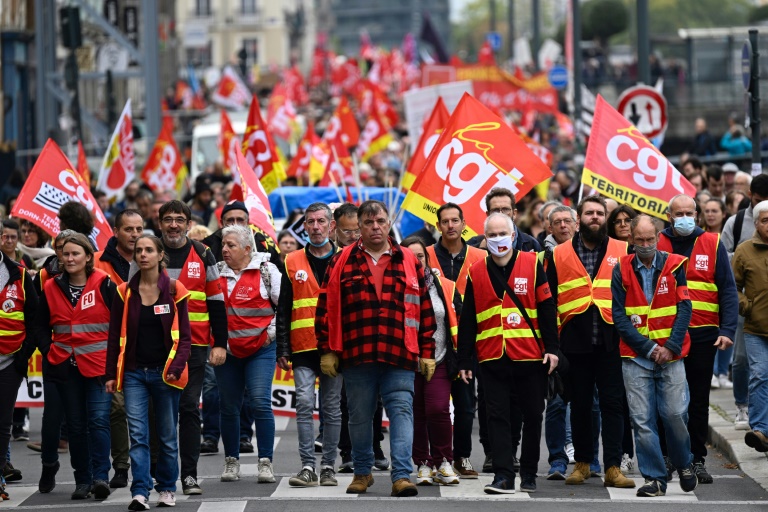
In recent weeks several of France’s seven refineries and one fuel depot were out of action as striking members of the hard-left CGT union rejected a pay offer from the hydrocarbon industry leader that other unions accepted.

But on Wednesday the CGT said the strike at the Donges refinery in the west of the country was suspended, as well as at two other oil sites in France, one in the north and one in the south.

Prime Minister Elisabeth Borne said the situation “continues to improve markedly”.

The blockades will continue at the Normandy and the Rhone sites.

Strike action at two Esso-ExxonMobil refineries ended last week, after a pay deal between management and moderate unions which represent a majority of workers.

“We hope that management will heed the demands of the strikers in order to bring this conflict to an end,” Benjamin Tange of the CGT union told AFP.

The CGT had announced on Wednesday morning that it had proposed a “protocol for ending the conflict” to the management of TotalEnergies.  

According to the union, the proposal was rejected by management, a statement not confirmed by the company when questioned by AFP.

The union proposal called for “negotiations on employment and investment” as well as guarantees that those who went out on strike would not be punished.

The CGT — which launched the industrial action three weeks ago — has been pushing for a 10-percent pay rise for staff at TotalEnergies, retroactive to the start of this year.

It says the French group can more than afford it, citing TotalEnergies’ net profit of $5.7 billion in the April-June period as energy prices soared with the war in Ukraine, and its payout of billions of euros in dividends to shareholders.

But the strike action has forced many filling stations to close and had a knock-on effect across all sectors of the economy.

Faced with the fuel shortages, many people have started to cancel holidays ahead of the upcoming school break, which has been impacting on an anticipated boost for the country’s tourism sector.

Energy Transition Minister Agnes Pannier-Runacher said the government is “doing everything so that people can go on a peaceful vacation”.

Some 20 percent of service stations were still short of petrol or diesel on Wednesday, according to the health ministry.

To try and ease the shortage, the government has used requisitioning powers to force some strikers back to open fuel depots — a move that has infuriated unions but been upheld in the courts.

burs-rox/pvh

Close Bitnami banner
Bitnami