US Business

Netflix subscriber numbers re-ignite after chilly start to year

Netflix on Tuesday reported that it gained more than 2 million subscribers in the recent quarter, calming investor fears that the streaming giant was losing paying customers.

The company said it ended the third quarter with slightly more than 223 million subscribers worldwide, up some 2.4 million, after seeing subscriber ranks ebb during the first half of the year.

Netflix shares shot up more than 14 percent in after hours trading to $275 on the earnings news.

“Well, thank God we’re done with shrinking quarters,” Netflix co-chief executive said during an earnings call.

“We’re back to the positivity; we’ve got to pick up the momentum.”

The turn-around in subscriber growth comes as Netflix is poised to debut a subscription option subsidized by ads in November across a dozen countries.

The new “Basic with Ads” subscriptions will be priced at $6.99 in the United States — three dollars less than a no-ads basic option, Netflix chief operating officer Greg Peters said in a briefing.

“The timing is great because we really are at this pivotal moment in the entertainment industry and evolution of that industry,” Peters said.

“Now streaming has surpassed both broadcast and cable for total TV time in the United States.”

Netflix is working with Microsoft on its ad-supported tier, and teams at both companies will likely need to be bulked up to handle the huge demand by advertisers, Peters said.

“We’re turning some folks away right now because we just don’t have the marketing capacity to serve everyone,” Peters said

After having shunned advertising since it started its streaming service, Netflix acquiesced as competition in the market intensifies and as consumers recoil from soaring inflation.

Rival streaming platform Disney+ is to launch ad-subsidized subscriptions in December.

With the launch of cheaper, ad-supported subscriptions, Netflix and Disney+ are expected to bite into the revenue of traditional television channels.

“In directly acknowledging competition and using advertising, Netflix is adapting to the streaming landscape’s new normal,” said Insider Intelligence principal analyst Ross Benes.

– Covid ‘logjam’ –

Netflix expects to add another 4.5 million subscribers in the final quarter of this year.

“Although international growth continues, the US video streaming market is hitting its ceiling for subscribers,” said Third Bridge analyst Jamie Lumley.

“After periods of rapid expansion and extraordinary spending, Netflix, Disney and their competitive set will soon be forced to focus on improving margins and cutting back on content spending.”

Netflix said in a letter to shareholders that it believes its competitors have been losing money as they invest heavily to win audiences.

Netflix reported a quarterly profit of $1.4 billion on revenue of $7.9 billion — a net income slightly less than in the same period a year ago when it brought in more money.

Netflix plans to hold steady with spending some $17 billion a year on content, said co-chief executive Ted Sarandos.

“I feel better and better about that $17 billion of content spend, because what we have to do is be better at getting more impact per billion dollars spent than anybody else,” Serranos said.

“Big shows that folks engaged with and talk about drive a lot of growth.”

Peters noted hits such as “Stranger Things” and “Extraordinary Attorney Woo” and pending releases of keenly anticipated films such as “Glass Onion: A Knives Out Mystery.”

Netflix is also working to smooth out the show release rhythm that was disrupted by the pandemic, according to executives.

“Covid got a lot of content jammed up,” Sarandos said.

“It will take several years to completely unwind the Covid logjam.”
Netflix subscriber numbers re-ignite after chilly start to year

Netflix on Tuesday reported that it gained more than 2 million subscribers in the recent quarter, calming investor fears that the streaming giant was losing paying customers.

The company said it ended the third quarter with slightly more than 223 million subscribers worldwide, up some 2.4 million, after seeing subscriber ranks ebb during the first half of the year.

Netflix shares shot up more than 14 percent in after hours trading to $275 on the earnings news.

“Well, thank God we’re done with shrinking quarters,” Netflix co-chief executive said during an earnings call.

“We’re back to the positivity; we’ve got to pick up the momentum.”

The turn-around in subscriber growth comes as Netflix is poised to debut a subscription option subsidized by ads in November across a dozen countries.

The new “Basic with Ads” subscriptions will be priced at $6.99 in the United States — three dollars less than a no-ads basic option, Netflix chief operating officer Greg Peters said in a briefing.

“The timing is great because we really are at this pivotal moment in the entertainment industry and evolution of that industry,” Peters said.

“Now streaming has surpassed both broadcast and cable for total TV time in the United States.”

Netflix is working with Microsoft on its ad-supported tier, and teams at both companies will likely need to be bulked up to handle the huge demand by advertisers, Peters said.

“We’re turning some folks away right now because we just don’t have the marketing capacity to serve everyone,” Peters said

After having shunned advertising since it started its streaming service, Netflix acquiesced as competition in the market intensifies and as consumers recoil from soaring inflation.

Rival streaming platform Disney+ is to launch ad-subsidized subscriptions in December.

With the launch of cheaper, ad-supported subscriptions, Netflix and Disney+ are expected to bite into the revenue of traditional television channels.

“In directly acknowledging competition and using advertising, Netflix is adapting to the streaming landscape’s new normal,” said Insider Intelligence principal analyst Ross Benes.

– Covid ‘logjam’ –

Netflix expects to add another 4.5 million subscribers in the final quarter of this year.

“Although international growth continues, the US video streaming market is hitting its ceiling for subscribers,” said Third Bridge analyst Jamie Lumley.

“After periods of rapid expansion and extraordinary spending, Netflix, Disney and their competitive set will soon be forced to focus on improving margins and cutting back on content spending.”

Netflix said in a letter to shareholders that it believes its competitors have been losing money as they invest heavily to win audiences.

Netflix reported a quarterly profit of $1.4 billion on revenue of $7.9 billion — a net income slightly less than in the same period a year ago when it brought in more money.

Netflix plans to hold steady with spending some $17 billion a year on content, said co-chief executive Ted Sarandos.

“I feel better and better about that $17 billion of content spend, because what we have to do is be better at getting more impact per billion dollars spent than anybody else,” Serranos said.

“Big shows that folks engaged with and talk about drive a lot of growth.”

Peters noted hits such as “Stranger Things” and “Extraordinary Attorney Woo” and pending releases of keenly anticipated films such as “Glass Onion: A Knives Out Mystery.”

Netflix is also working to smooth out the show release rhythm that was disrupted by the pandemic, according to executives.

“Covid got a lot of content jammed up,” Sarandos said.

“It will take several years to completely unwind the Covid logjam.”
Biden to release 15 mln barrels from US oil reserves: official

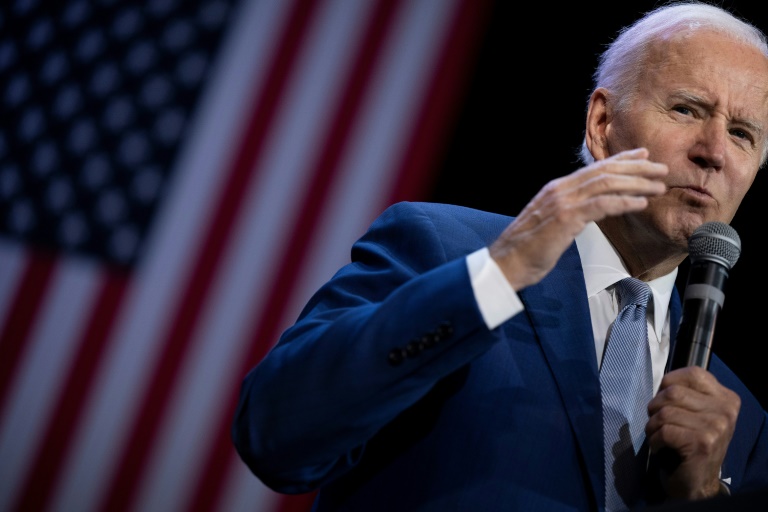
President Joe Biden will announce Wednesday he’s putting the final 15 million barrels on the market from a record release of US strategic oil reserves, with more releases possible if energy prices spike, a senior US official said.

The new tranche of oil from the Strategic Petroleum Reserve will be “completing the 180 million barrel release authorized in the spring,” in response to price hikes linked to Russia’s invasion of Ukraine, a senior US official said Tuesday.

The order, which Biden will announce in a speech, means the president will be “making clear that the administration is prepared to undertake significant additional… sales this winter if they are needed due to Russian or other actions disrupting global markets,” the official added.

The decision to make the biggest ever dip into the emergency oil reserves — usually kept for responding to situations such as hurricane-related shutdowns at oil refineries — was Biden’s gambit to calm energy markets and shield the world’s biggest economy from Ukraine war shocks.

Major energy exporter Russia was hit with US and European sanctions soon after it invaded Ukraine in February, causing turmoil on markets. In addition, the Kremlin has threatened to use its leverage over energy supplies as an economic weapon against the West, which supports Ukraine’s fight to repel the invasion.

For Biden there are serious domestic concerns, with gasoline prices at one point averaging more than $5 a gallon, causing nationwide anger. While prices have since moderated, inflation remains the biggest factor driving Republican hopes of defeating the Democrats in November’s midterm legislative elections.

– Reserves in good shape –

The senior official, who spoke on condition of anonymity, stressed that the Strategic Petroleum Reserve was not being used irresponsibly.

At the same time as announcing the 15 million barrel drawdown for delivery in December — and flagging the possibility of more to come — Biden is highlighting a plan to refill the reserve as soon as prices hit around $67-72 a barrel, the official said.

This is “an important signal for producers that the SPR will be part of helping to moderate and stabilize price flows, not only when prices are going high but when prices are going low,” he said.

The reserve, meanwhile, remains in good shape, the official said, with more than 400 million barrels. “That is still a large amount” and allows for “additional opportunity… if we need to do more sales.”

The official described the SPR use as a “brilliant” bridge out of a crisis moment, playing “an incredibly constructive role through a very challenging time period.”

However, with “additional volatility” expected from Russia and production levels still not back to pre-Covid pandemic levels, stability is “not quite there yet.”

Asked whether the United States could take the more radical measure of curbing fuel exports — something that would help tamp down domestic prices but hurt foreign buyers, including in allied countries — an official declined to confirm or deny.

“We’re keeping all tools on the table,” the official, who also spoke on condition of anonymity, said.

But with the midterm vote just three weeks away, Republicans are seeking to paint Biden as a manipulator of the oil reserves in order to win support for his Democrats.

The move is not an effort to steady markets, “it’s a bid to try and save his party from getting walloped in the Midterm elections,” House Republican Byron Donalds tweeted, adding that “Biden’s mismanagement of our strategic oil reserves is a dire threat to national security.”

Warming waters 'key culprit' in Alaska crab mass die-off

Climate change is a prime suspect in a mass die-off of Alaska’s snow crabs, experts say, after the state took the unprecedented step of canceling their harvest this season to save the species.

According to an annual survey of the Bering Sea floor carried out by the National Oceanic and Atmospheric Administration, estimates for the crustaceans’ total numbers fell to about 1.9 billion in 2022, down from 11.7 billion in 2018, or a reduction of about 84 percent.

For the first time ever, the Alaska Department of Fish and Game announced the Bering Sea snow crab season will remain closed for 2022-23, saying in a statement efforts must turn to “conservation and rebuilding given the condition of the stock.”

The species is also found in the more northward Chukchi and Beaufort Seas, but they do not grow to fishable sizes there.

Erin Fedewa, a marine biologist with the Alaska Fisheries Science Center, told AFP the shocking numbers seen today were the result of heatwaves in 2018 and 2019. 

The “cold water habitat that they need was virtually absent, which suggests that temperature is really the key culprit in this population decline,” she said.

Historically an abundant resource in the Bering Sea, their loss is considered a bellwether of ecological disruption.

There are thought to be several ways that warmer temperatures have depleted the species.

Studies have pointed toward a higher prevalence of Bitter Crab Disease as the temperature heats up. 

The crustaceans, named for their love of cold water, are also under greater metabolic stress in warmer waters, meaning they need more energy to stay alive.

“A working hypothesis right now is that the crabs starved, they couldn’t keep up with metabolic demands,” said Fedewa.

Young snow crabs in particular need low temperatures to hide out from their major predator, Pacific cod, and temperatures in regions where juveniles typically reside jumped from 1.5 degrees Celsius in 2017 to 3.5 Celsius in 2018 (35 degrees Fahrenheit to 38 degrees Fahrenheit) — with studies indicating 3C might be an important threshold.

– Overfishing not blamed –

More research is underway and findings should be published soon, but in the meantime, “everything really points to climate change,” Fedewa said.

“These are truly unprecedented and troubling times for Alaska’s iconic crab fisheries and for the hard-working fishermen and communities that depend on them,” Jamie Goen, executive director of Alaska Bering Sea Crabbers said in a statement, lamenting that second and third generation crab-fishing families “will go out of business.”

The industry was also hit by the cancellation of Bristol Bay red king crab fishing for the second year in a row.

Fedewa also noted that overfishing isn’t a big factor in the population collapse of snow crabs. 

Fishing removes only large adult males, she said, “and we’ve seen these declines across all sizes of snow crab, which really suggest some bottom-up environmental driver is at play.”

Male Alaska snow crabs can reach six inches (15 centimeters) in shell width, but females seldom grow larger than three inches, according to NOAA.

In some good news, this year’s survey saw significant increases in the immature crabs compared to last year — but it will take four or five years before the males among them grow to fishable size.

Following the heatwave years, temperatures have returned to normal, and “the hope is that leaving crabs untouched will allow them to reproduce, there’ll be no mortalities, and we can just let the stock try to recover,” said Fedewa. 

A hope that is pinned on no further heatwaves.

US confirms Saudi sentencing of American over tweets

The United States said Tuesday it was raising with Saudi Arabia a prison sentence handed to a US citizen over tweets critical of the kingdom, another source of tension between the historic allies. 

The State Department confirmed the detention of Saad Ibrahim Almadi, a US citizen of Saudi origin, and said the United States brought up his case starting in December and as recently as Monday.

Almadi was sentenced to 16 years in prison for the tweets, his son Ibrahim confirmed to AFP.

“We have consistently and intensively raised our concerns regarding the case at senior levels of the Saudi government, both through channels in Riyadh and Washington,” State Department spokesman Vedant Patel told reporters.

“Exercising freedom of expression should never be criminalized,” he said.

The Washington Post reported that Almadi, who lives in Florida and had gone to visit family, was detained in November at the airport regarding 14 tweets he wrote over the previous seven years.

The newspaper, quoting the son Ibrahim, said that Almadi, who is 72, was sentenced on October 3 to 16 years in prison with a travel ban of another 16 years after that.

The son told the newspaper that his father had expressed only “mild” opinions with tweets mentioning corruption in Saudi Arabia and the killing of Jamal Khashoggi, the US-based columnist who was dismembered in 2018 after being lured into the kingdom’s Istanbul consulate.

Almadi was charged in part with supporting and funding terrorism and trying to destabilize the kingdom, said his son, who confirmed the Post’s reporting to AFP.

The State Department said no US representative was present at the sentencing as Saudi Arabia originally gave a later date for the hearing before moving it up.

“We did not hear back from the Saudi government until after the October 3 date” of the sentencing, Patel said, without confirming the details of the decision.

The death of Khashoggi, who wrote for The Washington Post, triggered outrage in Washington although then president Donald Trump boasted of saving the powerful crown prince, Mohammed Bin Salman, from major repercussions.

President Joe Biden declassified intelligence that showed that the crown prince ordered the killing and vowed to get tougher, including over Saudi Arabia’s deadly offensive in Yemen.

Biden in July nonetheless traveled to Saudi Arabia and was photographed in a fist-bump with the crown prince on a trip seen as seeking the kingdom’s help to lower gas prices by pumping more oil.

But OPEC+, led by Saudi Arabia, on October 5 announced a major cut in production just ahead of US congressional elections, outraging Biden who vowed consequences.

Saudi Arabia has long faced criticism over human rights. Blogger and rights activist Raif Badawi served 10 years in prison through March and was publicly lashed 50 times for charges over content on his website.

US confirms Saudi sentencing of American over tweets

The United States said Tuesday it was raising with Saudi Arabia a prison sentence handed to a US citizen over tweets critical of the kingdom, another source of tension between the historic allies. 

The State Department confirmed the detention of Saad Ibrahim Almadi, a US citizen of Saudi origin, and said the United States brought up his case starting in December and as recently as Monday.

Almadi was sentenced to 16 years in prison for the tweets, his son Ibrahim confirmed to AFP.

“We have consistently and intensively raised our concerns regarding the case at senior levels of the Saudi government, both through channels in Riyadh and Washington,” State Department spokesman Vedant Patel told reporters.

“Exercising freedom of expression should never be criminalized,” he said.

The Washington Post reported that Almadi, who lives in Florida and had gone to visit family, was detained in November at the airport regarding 14 tweets he wrote over the previous seven years.

The newspaper, quoting the son Ibrahim, said that Almadi, who is 72, was sentenced on October 3 to 16 years in prison with a travel ban of another 16 years after that.

The son told the newspaper that his father had expressed only “mild” opinions with tweets mentioning corruption in Saudi Arabia and the killing of Jamal Khashoggi, the US-based columnist who was dismembered in 2018 after being lured into the kingdom’s Istanbul consulate.

Almadi was charged in part with supporting and funding terrorism and trying to destabilize the kingdom, said his son, who confirmed the Post’s reporting to AFP.

The State Department said no US representative was present at the sentencing as Saudi Arabia originally gave a later date for the hearing before moving it up.

“We did not hear back from the Saudi government until after the October 3 date” of the sentencing, Patel said, without confirming the details of the decision.

The death of Khashoggi, who wrote for The Washington Post, triggered outrage in Washington although then president Donald Trump boasted of saving the powerful crown prince, Mohammed Bin Salman, from major repercussions.

President Joe Biden declassified intelligence that showed that the crown prince ordered the killing and vowed to get tougher, including over Saudi Arabia’s deadly offensive in Yemen.

Biden in July nonetheless traveled to Saudi Arabia and was photographed in a fist-bump with the crown prince on a trip seen as seeking the kingdom’s help to lower gas prices by pumping more oil.

But OPEC+, led by Saudi Arabia, on October 5 announced a major cut in production just ahead of US congressional elections, outraging Biden who vowed consequences.

Saudi Arabia has long faced criticism over human rights. Blogger and rights activist Raif Badawi served 10 years in prison through March and was publicly lashed 50 times for charges over content on his website.

United Airlines bullish on air travel despite inflation

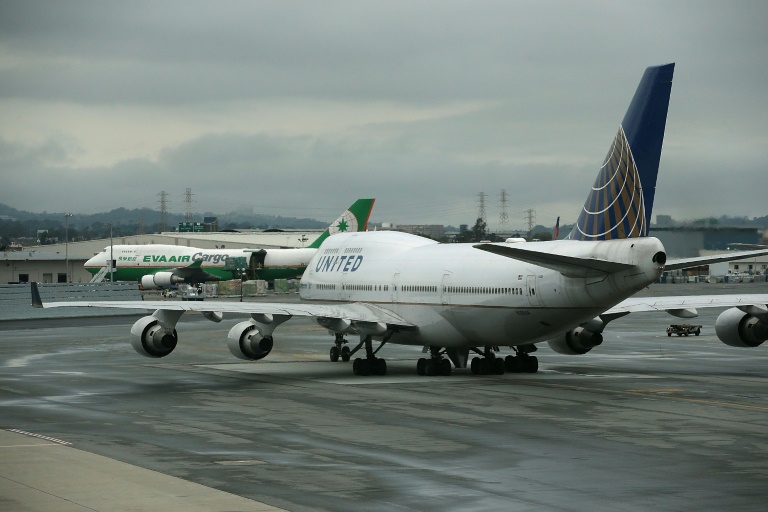
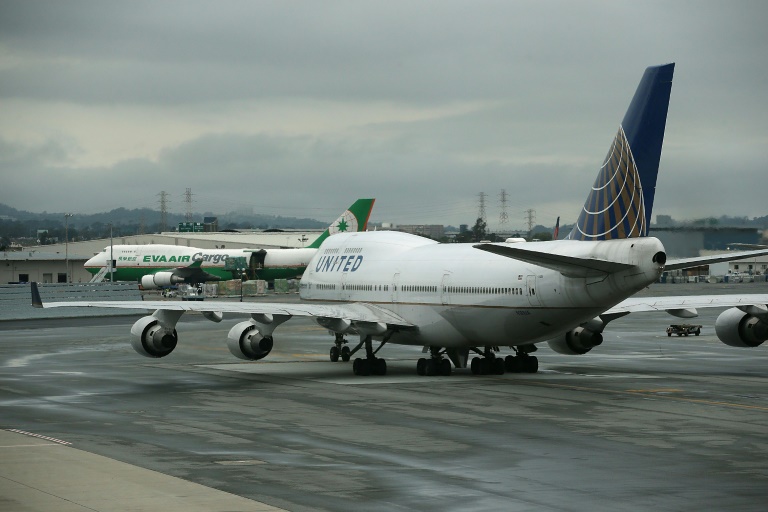
United Airlines reported strong third-quarter results Tuesday and said it does not expect inflation and other macroeconomic headwinds to derail the travel industry’s comeback.

The major US carrier improved in key revenue benchmarks compared with the comparable pre-pandemic 2019 stretch, making the period “by most metrics, the best operational quarter in our history,” as Chief Executive Officer Scott Kirby put it.

Compared with the 2019 quarter, United had about 10 percent fewer passengers and also about 10 percent lower seat capacity in the just-finished quarter.

But revenues were about 13 percent higher, thanks to lofty ticket prices in the wake of torrid consumer demand.

“Despite growing concerns about an economic slowdown, the ongoing COVID recovery trends at United continue to prevail and we remain optimistic that we’ll continue to deliver strong financial results in the fourth quarter, 2023 and beyond,” Kirby said.

Profits for the quarter ending September 30 were $942 million, about double the year-ago level, with revenues jumping 66 percent to $12.9 billion.

United pointed to three “durable” industry-wide trends that it expects to override economic headwinds: continuing pent-up travel demand after the coronavirus pandemic; the beneficial impact of hybrid work on travel demand; and “external supply challenges” that will limit industry supply.

Shares of United jumped 7.1 percent to $39.88 in after-hours trading.

United Airlines bullish on air travel despite inflation

United Airlines reported strong third-quarter results Tuesday and said it does not expect inflation and other macroeconomic headwinds to derail the travel industry’s comeback.

The major US carrier improved in key revenue benchmarks compared with the comparable pre-pandemic 2019 stretch, making the period “by most metrics, the best operational quarter in our history,” as Chief Executive Officer Scott Kirby put it.

Compared with the 2019 quarter, United had about 10 percent fewer passengers and also about 10 percent lower seat capacity in the just-finished quarter.

But revenues were about 13 percent higher, thanks to lofty ticket prices in the wake of torrid consumer demand.

“Despite growing concerns about an economic slowdown, the ongoing COVID recovery trends at United continue to prevail and we remain optimistic that we’ll continue to deliver strong financial results in the fourth quarter, 2023 and beyond,” Kirby said.

Profits for the quarter ending September 30 were $942 million, about double the year-ago level, with revenues jumping 66 percent to $12.9 billion.

United pointed to three “durable” industry-wide trends that it expects to override economic headwinds: continuing pent-up travel demand after the coronavirus pandemic; the beneficial impact of hybrid work on travel demand; and “external supply challenges” that will limit industry supply.

Shares of United jumped 7.1 percent to $39.88 in after-hours trading.

Stock markets climb on bright US earnings and UK policy U-turns

Major global equities rose Tuesday, with sentiment boosted by upbeat US earnings and relief over the demise of the new British government’s controversial fiscal plan.

Analysts pointed to better-than-expected reports from Goldman Sachs and Johnson & Johnson as a positive driver for stocks, along with shifting investor sentiment.

On Wall Street, both the Dow and S&P 500 climbed more than one percent following a day of strong trading in Asia and Europe.

“Better-than-expected US earnings reports sparked a rally on Wall Street with positive momentum reverberating across European equities,” Interactive Investor analyst Victoria Scholar told AFP.

US industrial production also picked up more than anticipated in September, according to official data Tuesday, bouncing back after a dip in August.

But Craig Erlam, senior market analyst at OANDA, warned the upbeat investor sentiment might not last, saying there was a “strong feeling of a bear market rally about trading over the course of the last week.”

“From the post-US-inflation rebound to what has now been a strong start to the week — in part driven by the UK’s decision to no longer shoot itself in the foot — nothing about this screams sustainable.”

Companies in the S&P 500 are expected to see earnings growth of just 1.6 percent, the lowest rate in two years, according to Factset.

– UK turbulence –

Frankfurt stocks closed up one percent on Tuesday as a key survey showed German investor confidence climbed slightly in October, but remained at a low level.

London gains were muted after the Bank of England poured cold water on a newspaper report that it could delay the sale of government bonds again to help maintain market stability.

A BoE spokesperson described the Financial Times story as “inaccurate”.

The British pound retreated slightly after jumping Monday above $1.14 as the UK government sensationally ripped up its controversial debt-fuelled budget.

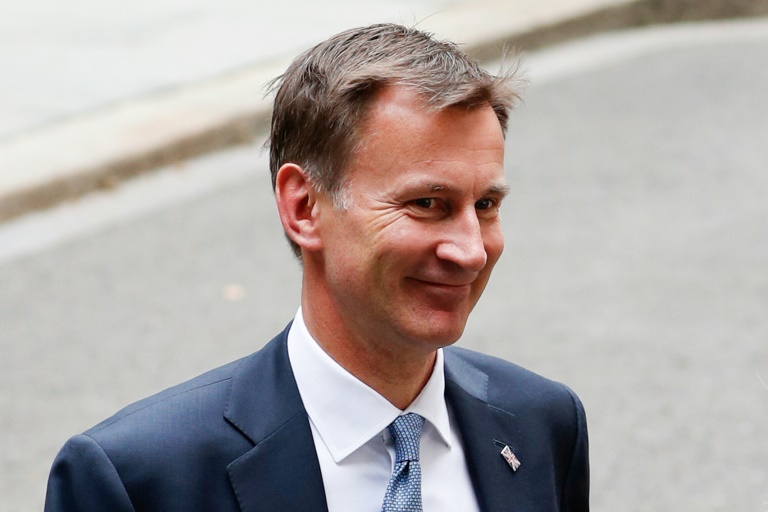
After a volatile few weeks during which the pound hit a record low, new finance minister Jeremy Hunt sought Monday to reassure investors as he scrapped tax cuts and warned of tough spending cuts.

Monday’s move, which dealt a blow to Prime Minister Liz Truss’s authority, sent sterling up as much as two percent at one point and the cost of government borrowing tumbled, while the FTSE 100 jumped.

“Investors continue to monitor the political and economic turbulence surrounding the UK,” noted XTB analyst Walid Koudmani.

Markets in China fluctuated a day after authorities delayed the release of third-quarter economic figures, which analysts said were likely to show the weakest growth since the pandemic owing to Covid-19 lockdowns.

The decision comes as the Communist Party holds a key gathering at which President Xi Jinping is expected to be handed a third term.

Oil prices slumped Tuesday in response on the expectation that the United States will draw more barrels than expected from its strategic reserves heading into the winter season.

– Key figures around 2030 GMT –

New York – Dow: UP 1.1 percent at 30,523.80 (close)

New York – S&P 500: UP 1.1 percent at 3,719.98 (close)

New York – Nasdaq: UP 0.9 percent at 10,772.40 (close)

London – FTSE 100: UP 0.2 percent at 6,936.74 (close)

Frankfurt – DAX: UP 0.9 percent at 12,765.61 (close)

Paris – CAC 40: UP 0.4 percent at 6,067.00 (close)

EURO STOXX 50: UP 0.6 percent at 3,463.83  (close)

Tokyo – Nikkei 225: UP 1.4 percent at 27,156.14 (close)

Hong Kong – Hang Seng Index: UP 1.8 percent at 16,914.58 (close)

Shanghai – Composite: DOWN 0.1 percent at 3,080.96 (close)

Pound/dollar: DOWN at $1.1332 from $1.1358 on Monday

Dollar/yen: UP at  149.21 yen from 149.04 yen

Euro/dollar: UP at $0.9862 from $0.9841 

Euro/pound: UP at 87.01 pence from 86.64 pence

Brent North Sea crude: DOWN 1.7 percent at $90.03 per barrel

West Texas Intermediate: DOWN 3.1 percent at $82.82 per barrel

burs-jmb/bgs

Cement giant Lafarge fined $778 mn for working with Islamic State in Syria

French cement giant Lafarge SA was slapped with a $778 million fine Tuesday for making millions in payments to the Islamic State and another jihadist group to build its business in Syria.

The US Justice Department said the company and its Syrian subsidiary actively sought the Islamic State (IS) group’s help to squeeze out competitors when the radical Islamists controlled large parts of Syria and Iraq in 2013-2014, operating an effective “revenue sharing agreement” with them.

It also paid access and protection money to associates of IS and the similarly radical Al-Nusrah Front, ultimately earning some $70 million in revenues during the period, with a Lafarge executive saying the cooperation was “to share the cake.”

Lafarge agreed to the fine and to plead guilty to one count of conspiring to provide material support to US-designated foreign terrorist organizations, the first time a corporation has faced the charge.

– ‘Unthinkable choice’ –

US officials said Lafarge, now owned by Swiss giant Holcim Group, made itself a handmaiden to terror for profits.

“In the midst of a civil war, Lafarge made the unthinkable choice to put money into the hands of ISIS, one of the world’s most barbaric terrorist organizations, so that it could continue selling cement,” US prosecutor Breon Peace said, using another acronym for IS.

“This unprecedented charge and resolution reflect the extraordinary crimes committed and demonstrates that corporations that take actions in contravention of our national security interests in violation of the law will be held to account,” Peace said.

In a statement, Lafarge said the company and its defunct subsidiary Lafarge Cement Syria “have accepted responsibility for the actions of the individual executives involved.”

“We deeply regret that this conduct occurred and have worked with the US Department of Justice to resolve this matter.”

Holcim, which took over Lafarge in 2015 without knowledge of the Syria business dealings, said it had been cleared of any wrongdoing by US authorities.

“None of the conduct involved Holcim, which has never operated in Syria, or any Lafarge operations or employees in the United States,” it said.

Holcim shares traded in Switzerland were suspended temporarily when the announcement was made but ended the day up 2.8 percent at 42.82 Swiss francs ($43.07). 

– Millions in payments –

Lafarge began operating a 680 million euro ($670 million) cement plant in  northern Syria in 2010, the year IS swept the region with a brutal campaign to establish its extremist “caliphate.”

That sparked a counter-offensive by the Iraq military and Syrian Kurdish forces backed by the US-led international coalition in the region.

The US designated IS and Al-Nusrah terror organizations, threatening tough penalties against anyone working with them.

Rather than withdraw like other companies, Lafarge kept working to market its cement, the Justice Department said.

From 2013 to 2104, it paid IS and Al-Nusrah around $5.9 million, some for raw materials, some as payments based on the volume of cement sold and some simply as monthly “donations.”

Lafarge paid another $1.1 million to intermediaries between the two groups.

It also worked out a deal with IS to make it harder for cheaper Turkish cement suppliers to sell their goods in the same area, allowing Lafarge to keep its prices higher.

– Sharing ‘the cake’ –

Company executives knew of the arrangement, the Justice Department said.

In 2014, a senior supervisory official who reported directly to Lafarge’s chief executive wrote to officials in the Syria subsidiary about negotiations with IS.

“We have to maintain the principle that we are ready to share the ‘cake,’ if there is a ‘cake,'” he wrote, defining cake as “profit.” 

Lafarge “negotiated and made unlawful payments at a time when these groups were gaining territory and brutalizing innocent civilians in Syria and elsewhere and were actively plotting against Americans,” said US Assistant Attorney General Matthew Olsen.

Lafarge still faces charges in France for complicity in crimes against humanity.

In May, a French appeals court approved the charge, opening the door for a trial of the company and eight executives, including former CEO Bruno Lafont.

Lafarge continues to fight that case, but now faces the possibility of the introduction of evidence from the US prosecution.

Unlike in the United States, it does not have the option of negotiating a settlement, which is disallowed under French anti-terrorism statutes.

Close Bitnami banner
Bitnami