US Business

Stocks, sterling extend gains after UK budget U-turn

Equities rose with sterling Tuesday after the UK government scrapped a controversial debt-funded mini-budget that had roiled markets, while traders were also cheered by a broadly positive start to earnings season.

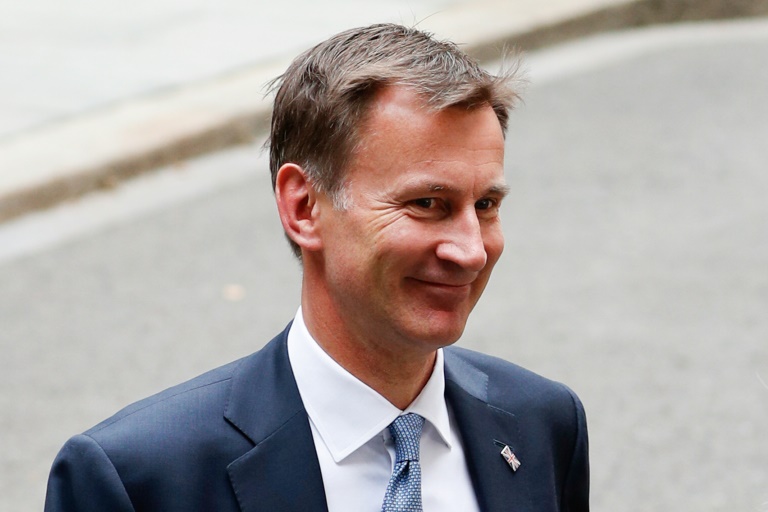
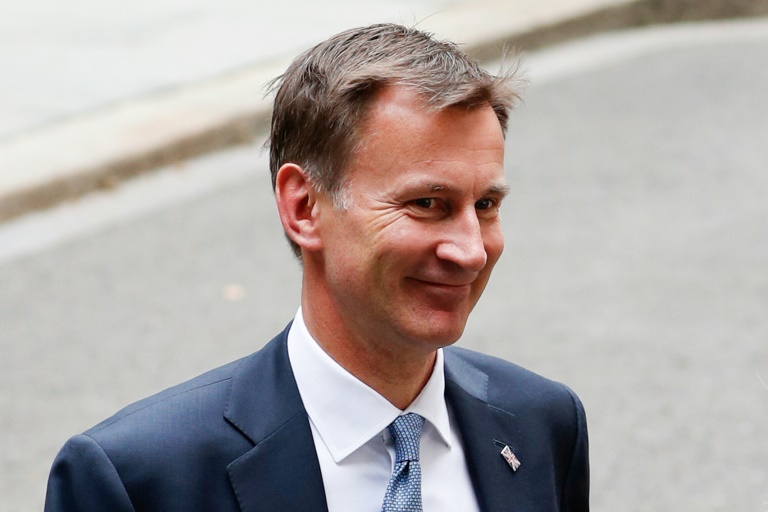
After a volatile few weeks during which the pound hit a record low, new finance minister Jeremy Hunt sought Monday to reassure investors as he unveiled a new spending package, doing away with tax cuts and warning of much lower spending.

The move — which deals a blow to Prime Minister Liz Truss’s authority — sent sterling up as much as two percent at one point and the cost of government borrowing tumbled, while the FTSE 100 jumped.

The positive mood filtered through to other markets, with Wall Street enjoying a much-needed surge, including a more than three percent jump in the Nasdaq.

And most of Asia followed suit, with Tokyo, Hong Kong, Singapore, Mumbai, Bangkok, Sydney, Seoul, Wellington, Taipei, Manila and Jakarta all enjoying a pick-up, though Shanghai dipped.

London opened on the front foot along with Paris and Frankfurt.

The pound was also given an extra boost — at one point topping $1.14 — after a Financial Times report said the Bank of England will likely put off the sale of government bonds again as it looks to maintain market stability.

The Bank had been due to offload the gilts — bought to keep borrowing costs down during the pandemic — from October 6 but delayed that because of the turmoil sparked by the mini-budget, but the FT said it would likely delay again until financial conditions had calmed.

The market gains built on Monday’s rise, though analysts warned that the advances were unlikely to be sustained owing to broader worries about inflation and rising interest rates.

“The last couple of months have been tough for equity markets since peaking towards the end of the summer and a rebound of some kind was going to happen eventually,” said OANDA’s Craig Erlam. 

“I’m just not convinced there’s much substance behind it as the economic landscape looks treacherous and we don’t even know if we’re at peak inflation and interest rate pricing yet. Those are substantial headwinds that will make any stock market rebound extremely challenging.”

The latest data out of New Zealand showing inflation remained at a three-decade high underscored the tough job central banks have in bringing prices down, even after several rate hikes.

Commentators said traders have come to the conclusion that a recession is on the way in major economies, with the main question being how bad it will be.

“I think we can stop saying inflation is ‘hotter than expected’ and shift to ‘hotter than hoped’ — because it really does feel like we’re all just crossing our fingers and hoping prices come down,” said Matt Simpson at City Index.

“And in the few cases that they are, it is clearly not fast enough for anyone’s liking. Conversely to the adage about stock market prices, inflation seems to get the elevator up and the escalator down — but not before lingering around the top floor for an extended period of time.”

Markets in China fluctuated a day after authorities delayed the release of third-quarter economic figures, which analysts said were likely to show the weakest growth since the pandemic owing to Covid-19 lockdowns.

The decision comes as the Communist Party holds a key gathering at which President Xi Jinping is expected to be handed a third term.

“Whenever the release occurs, we should all be prepared for some global financial market reaction if the world’s two largest economies are both in recession this year. Especially, as the global economic slowdown remains ongoing,” said Clifford Bennett at ACY Securities.

“While in China, we have a slightly artificially generated risk of recession due to a zero-Covid policy.

“This policy has been confirmed to remain in place indefinitely. This means China will see further economic disruption over the coming year.”

– Key figures around 0810 GMT –

Tokyo – Nikkei 225: UP 1.4 percent at 27,156.14 (close)

Hong Kong – Hang Seng Index: UP 1.8 percent at 16,914.58 (close)

Shanghai – Composite: DOWN 0.1 percent at 3,080.96 (close)

London – FTSE 100: UP 1.1 percent at 6,994.87

Pound/dollar: UP at $1.1357 from $1.1351 on Monday

Dollar/yen: DOWN at 148.99 yen from 149.03 yen

Euro/dollar: UP at $0.9858 from $0.9840

Euro/pound: UP at 86.80 pence from 86.66 pence

West Texas Intermediate: UP 0.4 percent at $85.82 per barrel

Brent North Sea crude: UP 0.3 percent at $91.89 per barrel

New York – Dow: UP 1.9 percent at 30,185.82 (close)

— Bloomberg News contributed to this story —
France prepares for major disruptions as unions call transport strike

France faced major disruptions on Tuesday after unions called a nationwide transport strike, as they remain in deadlock with the government over walkouts at oil depots that have sparked fuel shortages.

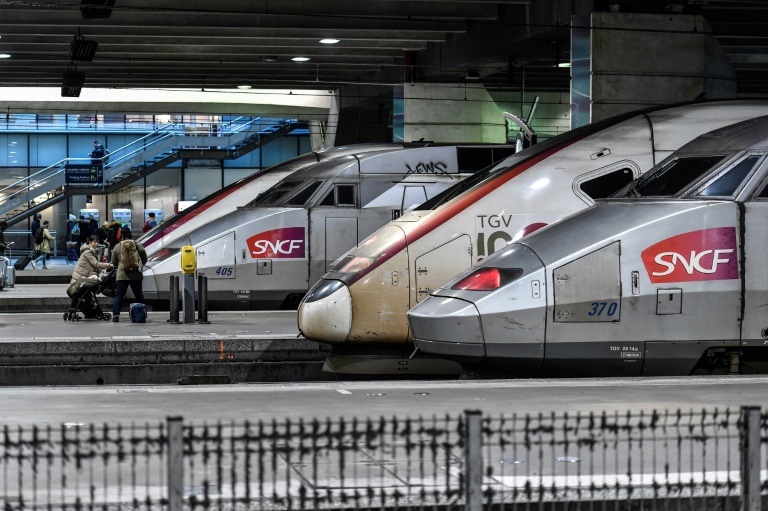
The effects were already visible at Paris hub Gare de Lyon early Tuesday, with packed suburban trains disgorging floods of passengers onto the platforms every 15 or even 20 minutes.

“I’ve got a two or three hour trip today, rather than an hour and a half normally,” said commuter Yera Diallo, adding that “I have no idea how it’s going to go this evening.”

The broader strike comes after workers at several oil refineries and depots operated by energy giant TotalEnergies voted to extend walkouts.

Their industrial action has seriously disrupted fuel distribution across the country but particularly in northern and central France and the Paris region.

Motorists have scrambled to fill tanks as the fuel strike, which has lasted for nearly three weeks, cripples supplies at around 30 percent of France’s service stations and has had a knock-on effect across all sectors of the economy.

President Emmanuel Macron’s government used requisitioning powers to force some strikers back to open fuel depots, a move that infuriated unions but has so far been upheld in the courts.

“We will continue to do the utmost,” Macron said after a meeting Monday with ministers, adding he wanted the crisis “to be resolved as quickly as possible”.

– ‘Time for negotiation over’ –

Finance Minister Bruno Le Maire earlier said it was necessary to use requisitioning powers to reopen the refineries and depots.

“The time for negotiation is over,” Le Maire told the BFMTV broadcaster. 

“There was a negotiation, there was an agreement,” he added, referring to the agreement concluded last week between TotalEnergies and two majority unions, but which the hard-left CGT union rejects.

CGT boss Philippe Martinez suggested Monday that the government “get around a table” with the unions to discuss an increase in France’s minimum wage.

“Requisitioning is unacceptable and it’s never the right solution,” added Frederic Souillot, general secretary of the FO union which is also taking part in the day of strike action, the unions’ biggest challenge to Macron since he won a new presidential term in May.

– Trains cancelled –

The leftist CGT and FO called for a nationwide strike Tuesday for higher salaries, and against government requisitions of oil installations, threatening to cripple public transport in particular.

Unions in other industries and the public sector have also announced action to protest against the twin impact of soaring energy prices and overall inflation on the cost of living.

Rail operator SNCF will see “severe disruptions” with half of train services cancelled, Transport Minister Clement Beaune said.

CGT boss Martinez told RTL radio that “it will be the workers who decide” whether the strike at SCNF continues into the busy late October school holiday period.

Suburban services in the Paris region as well as bus services will also be impacted, operator RATP said, but the inner-Paris metro system should be mostly unaffected.

Beyond transport workers, unions hope to bring out staff in sectors such as the food industry and healthcare.

Their action will kick off what is likely to be a tense autumn and winter as Macron also seeks to implement his flagship domestic policy of raising the French retirement age.

But the economic squeeze partly caused by Russia’s invasion of Ukraine, along with the failure of Macron’s party to secure an overall majority in June legislative polls, only adds to the magnitude of the task.

In Paris Tuesday, separate marches by striking workers and vocational school teachers are expected by police to gather more than 15,000 people in total.

A weekend march against the high cost of living called by opposition party France Unbowed (LFI) saw around 30,000 people hit the streets by a police count, while organisers claimed 140,000.

China sees 'much faster timeline' on taking Taiwan, Blinken warns

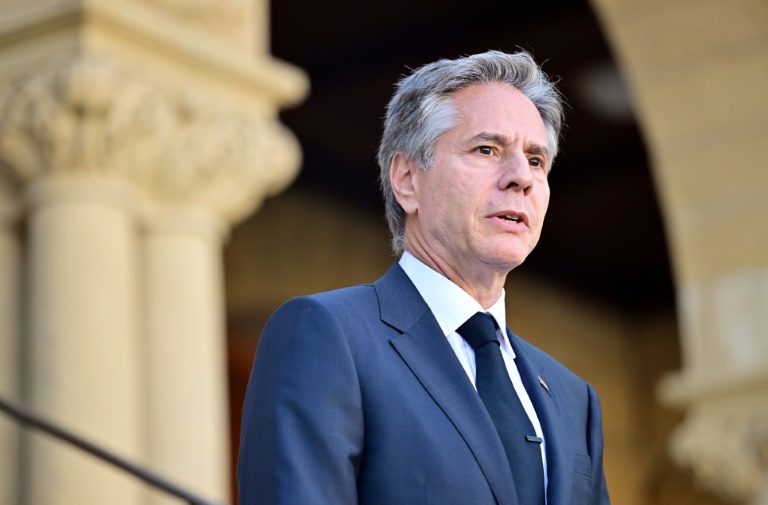
Beijing wants to seize Taiwan “on a much faster timeline” than previously considered, US Secretary of State Antony Blinken said Monday, warning that President Xi Jinping was leading China in a more aggressive direction.

Xi is on the cusp of securing a third five-year term at the helm of the world’s most populous nation, delivering a landmark Communist Party Congress speech on Sunday that hailed his decade in power and restated his vow to one day “reunify”, or forcefully take, Taiwan.

“We’ve seen a very different China emerge in recent years under Xi Jinping’s leadership,” Blinken told a forum at Stanford University with former secretary of state Condoleezza Rice.

“It is more repressive at home; it’s more aggressive abroad. And in many instances that poses a challenge to our own interests as well as to our own values,” he added.

Blinken accused Xi of “creating tremendous tension” by changing the approach toward self-ruled Taiwan, which China’s Communist Party has never controlled but claims as its own.

He said China had made a “fundamental decision that the status quo was no longer acceptable, and that Beijing was determined to pursue reunification on a much faster timeline”, though he gave no hard estimate or date.

Senior US military figures have previously sounded the alarm that China has expanded its military forces to the point where it could soon have the capability to pull off an invasion of Taiwan. 

China’s stance has long been that it seeks “peaceful reunification” with Taiwan but reserves the right to use force if necessary, especially if the island ever formally declares independence.

But the rhetoric and actions towards Taiwan have become more pronounced under Xi, China’s most assertive leader in a generation.

He has tied taking Taiwan to his landmark “great rejuvenation of the Chinese nation” and has previously said the goal of reunification cannot continue to be passed indefinitely from generation to generation.

In Sunday’s speech he repeated similar themes, saying the “wheels of history are rolling on towards China’s reunification” and that “we reserve the option of taking all measures necessary”.

– Shared interests –

Russia’s recent invasion of Ukraine, which China has not condemned, has also raised fears that Beijing might try something similar against Taiwan’s 23 million people.

Ties between Washington and Beijing have been at a decade-low ebb under both the administrations of Donald Trump and his successor Joe Biden, over a range of issues from trade to security and human rights. 

But Blinken said the world’s two largest economies should be willing to cooperate on shared interests.

He said the world “fundamentally expects” the two powers to work together on climate change, global health and possibly drug trafficking.

Beijing “just has to be responsive to demand signals that it’s getting from countries around the world to be a positive actor, not a negative actor, on issues that concern them”.

China cut cooperation with the United States on climate change and drug trafficking in August as part of its protest against a visit to Taiwan by US House Speaker Nancy Pelosi, which also saw Beijing launch its biggest military drills yet around the island.

Xi is widely expected to meet President Biden on the sidelines of a Group of 20 summit next month in Bali, their first meeting since the US leader took office.

Taiwan's Foxconn unveils more electric vehicle prototypes

Taiwanese tech giant Foxconn unveiled two more electric vehicle prototypes on Tuesday, including a pickup truck, as it said commercial production on two other designs would start later this year.

The world’s largest contract electronics maker, Foxconn already plays a lynchpin role in assembling gadgets for a host of top international brands including Apple’s iPhones.

The company has moved to diversify beyond electronics assembly and embraced the competitive but rapidly expanding EV business, unveiling three concept cars last year.

Foxconn chairman Young Liu showed off two more prototypes at Tuesday’s media event in Taipei — a sporty hatchback dubbed the Model B and a pickup, the Model V.

He also announced that commercial production would start by the end of the year on the group’s previously unveiled electric bus and a family sports utility vehicle.

“Foxconn has cut in half the design time and reduced development cost by a third in taking an EV from concept to production-ready,” Liu said.

Foxconn plans to do with electric vehicles what it did for gadgets — become a go-to contract builder.

Its strategy is to construct vehicles for clients rather than sell them under its own name, using the prototypes as a guide.

Liu said one of its clients, Taiwanese automaker Luxgen, had received 15,000 customer pre-orders in under two days for its N7 car, which is based on the Foxconn Model C unveiled last year.

Foxconn has also started building electric vehicles for Lordstown Motors after completing its purchase of a former General Motors plant in Lordstown, Ohio in May.

This month, it signed a memorandum of understanding with US-based INDIEV Inc to build the first INDI One prototype EV at its Ohio facility.

Its partners also include Fisker, one of a host of US-based electronic car startups hoping to someday challenge Tesla’s supremacy.

Fisker has recently reaffirmed plans to have Foxconn build its upcoming Fisker Pear model at the Ohio factory starting in 2024.

It has been widely reported for years that Apple has a secret electronic car project, something Foxconn could be in an ideal place to partner on given its existing relationship with the California-based giant.

Mountainous Lesotho finds gold in trout fish farming

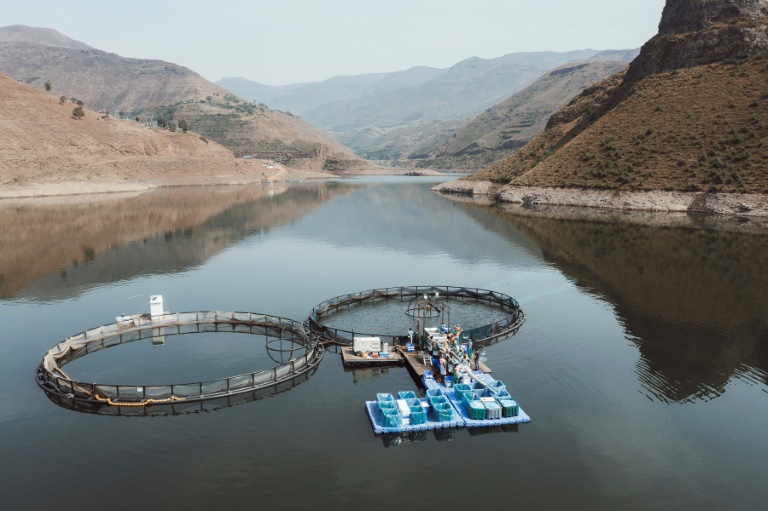
It’s harvest time in Lejone, a small village nestling in mountains in southern Africa more than two thousand metres above sea level.

The yield is not grain or fruit, but rainbow trout — the bounty from an undulating river at the foot of the peaks of Lesotho.

Fishermen haul nets bulging with trout onto a floating platform.

The fish are killed and put on ice, the first step on their journey to dinner tables in neighbouring South Africa.

The settlement is home to one of Lesotho’s two professional fish farms — pioneering ventures in the poor landlocked kingdom.

Stephen Phakisi, 59, launched Katse Fish Farms with two partners in 2005.

Today, he chuckles at how the trio leapt into the business with meagre knowledge about some of its unknowns, including the best feed for fattening fish quickly.

“For five years, it was totally uneconomical,” Phakisi says.

He recalls how he once found a shoal of fish dead and belly-up in the water, while another time a full cargo of imported fingerlings died on a 16-hour drive from Cape Town. 

Today, the company is profitable, with a yearly output of 800 tonnes of fish, which is sold at about $4 a kilogram. 

It supplies a few local restaurants, where the trout is usually pan-fried in butter for a few minutes and served with a side dish of kale and potato chips or rice.

But the bulk of its production lands on the shelves of high-end supermarkets in neighbouring South Africa, where a vacuum-packed one-kilo bag can cost up to $50. 

– ‘Heads and bones’ –

Trout farming in Lesotho has grown on the back of another of the mountain country’s most famous exports: water. 

South Africa gets much of its water from its neighbour, which has dammed several of its waterways over the past three decades. 

The dams have widened riverbeds, creating inlets and basins that are ideal for trout farming. 

Katse Fish Farms lies more than 2,000 metres (6,500 feet) above sea level on the Malibamatso River, upstream from the giant Katse Dam reservoir that supplies South Africa’s capital Pretoria and the largest city, Johannesburg.

Fish farming currently accounts for less than 0.1 percent of Lesotho’s $2 billion GDP.

Locals say they have always eaten salted, sun-dried freshwater fish. And young boys sell fresh catch to passing motorists.

But as dam construction continues the country has the potential “to become the regional leader in aquaculture,” according to the Lesotho National Development Corporation.

In this country of just over two million people, who rank among the poorest in the world, few seem to be benefiting so far from the water boom. 

“We are selling water to South Africa but we have no water to our homes,” says Joshua Sefali, a village leader in Lejone.

Many of the village’s stone houses with thatched roofs have no mains water or electricity.  

Large swathes of land were flooded after dams went up. 

Some people lost their homes and access to farmland, receiving only small compensation in return. 

Machaka Khalala, 31, said she received about $165 when the field where she used to grow corn and spinach was submerged. 

Now she makes a living selling “fat cakes,” a local doughnut.

But that’s often not enough to make ends meet.

A cap on her head, Khalala was among dozens of people queueing up in the cold, a bucket in hand, on a mountain roadside.

Here, Lesotho’s other fish farm hands out leftovers every week — “the heads and backbones,” Khalala said. 

Australia backs plan for intercontinental power grid

Australia touted a world-first project Tuesday that could help make the country a “renewable energy superpower” by shifting huge volumes of solar electricity under the sea to Singapore.

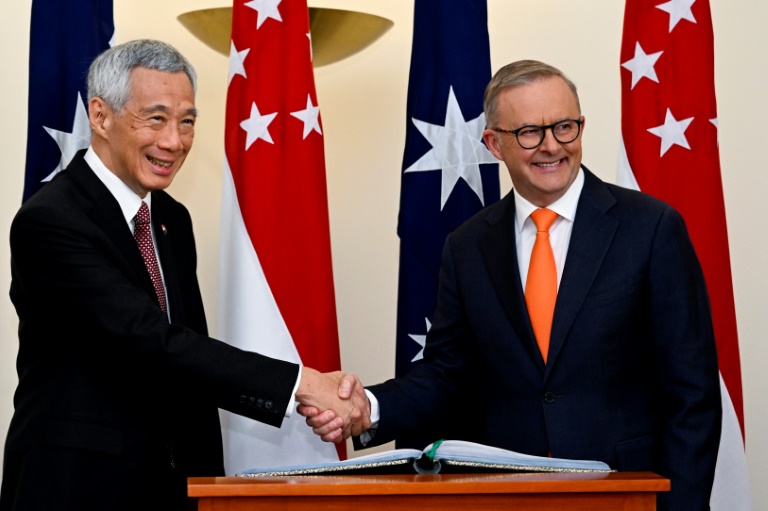
Singapore Prime Minister Lee Hsien Loong met Australian counterpart Anthony Albanese in Canberra to ink a new green energy deal between the two countries. 

Albanese said the pact showed a “collective resolve” to slash greenhouse gas emissions through an ambitious energy project. 

He name-checked clean energy start-up Sun Cable, which wants to build a high-voltage transmission line capable of shifting huge volumes of solar power from the deserts of northern Australia to tropical Singapore.

Sun Cable has said that, if successful, it would be the world’s first intercontinental power grid.

“If this project can be made to work — and I believe it can be — you will see the world’s largest solar farm,” Albanese told reporters. 

“The prospect of Sun Cable is just one part of what I talk about when I say Australia can be a renewable energy superpower for the world.”

Lee said the green economy deal was the “first such agreement of its kind”.

“We hope that it will be a pathfinder for other countries simply to co-operate with one another to deal with what is a global problem.” 

Australia is one of the world’s largest coal and gas exporters and has been frequently criticised on the global stage for its failure to make meaningful reductions in carbon emissions. 

Coal still plays a key role in domestic electricity production. 

Deadly drone strikes hit Kyiv as Russian warplane crashes

Moscow on Monday stepped up attacks across Ukraine, cutting electricity and killing eight people, including in kamikaze drone strikes on the capital, as a Russian warplane crashed near the border.

The plane struck a residential area of Yeysk, a town in southwest Russia, according to Russian authorities.

The final toll was 13 dead and 19 injured, the ministry of emergency situations, quoted by Russian news agencies, said as the search for survivors ended early Tuesday after the crash caused a massive fire in a residential area.

Moscow is thought to be trying to counter battlefield losses in its eight-month war in Ukraine by waging a punitive policy of striking energy facilities before winter in a move President Vladimir Putin hopes will weaken resistance.

Ukrainian Prime Minister Denys Shmygal said Russia launched five strikes in Kyiv and against energy facilities in Sumy and the central Dnipropetrovsk regions, knocking out electricity to hundreds of towns and villages.

Ukraine said four people were killed in Kyiv, including a married couple expecting a baby, and another four in the northeast region of Sumy.

Foreign Minister Dmytro Kuleba demanded EU sanctions on Iran, accusing Tehran of providing Russia with drones.

An AFP journalist saw drones swooping low over central Kyiv on Monday as police tried to shoot them down with automatic weapons and smoke rose from explosions across the city.

“I saw a bright orange splash… The house trembled,” said resident Tamara Beroshvili.

Ukraine’s military said it shot down eight Iranian-made drones and two Russian cruise missiles on Monday.

Iran denies exporting any weapons to either side, but the United States warned it would take action against companies and nations working with Tehran’s drone programme following the strikes in Kyiv.

– Call for Russia to be ousted from G20 –

The strikes come exactly a week after Russian missiles rained down on Kyiv and other cities on October 10 in the biggest wave of attacks in months, killing at least 19 people, wounding 105 others and sparking an international outcry.

“They seem to be hitting us every Monday now,” said taxi driver Sergiy Prikhodko, who was waiting for a fare near the central train station in Kyiv.

“It’s a new way of starting the week,” he told AFP.

Air raid sirens sounded in Kyiv shortly before the first explosion at around 6:35 am (0335 GMT), followed by sirens across most of the country.

“Kamikaze drones and missiles are attacking all of Ukraine. The enemy can attack our cities, but it won’t be able to break us,” President Volodymyr Zelensky said.

“Russia will not achieve anything with this form of terror even now when we still do not have a sufficient number of air defence and missile defence systems,” he added.

Senior presidential aide Mykhaylo Podolyak called for Russia to be excluded from the G20 following the strikes.

“Those who give orders to attack critical infrastructure, to freeze civilians and organise total mobilisation to cover the frontline with corpses, cannot sit at the same table with leaders of (the) G20,” he said in a statement on social media, calling for Russia to be “expelled from all platforms”.

– NATO drills –

In Moscow, mayor Sergei Sobyanin announced that Russian army draft offices would close from Monday, saying the Kremlin’s mobilisation quotas to recruit reservists to fight in Ukraine had been completed in the capital.

Meanwhile, Ukraine announced it had swapped more than 100 prisoners with Russia in what it said was the first all-female exchange with Moscow since the invasion began on February 24.

“The more Russian prisoners we have, the sooner we will be able to free our heroes. Every Ukrainian soldier, every front-line commander should remember this,” Zelensky said.

NATO launched regular nuclear deterrence drills in western Europe, which were planned before Russia invaded Ukraine, rejecting calls to scrap the exercises after Putin ratcheted up veiled threats to launch a nuclear attack.

The exercises will involve US B-52 long-range bombers, and up to 60 aircraft in total will take part in training flights over Belgium, the United Kingdom and the North Sea.

Meanwhile, Moscow ally Belarus said as many as 9,000 Russian soldiers and around 170 tanks would be deployed in the country to build up a new joint force, which it said will be uniquely defensive and aims to secure its borders.

In the south, Ukrainian troops have been pushing closer and closer to the large city of Kherson, just north of Crimea.

Kherson is one of four regions in Ukraine that Moscow recently claimed to have annexed.

burs/jm-kjm/wd/sst/mtp/cwl

Asian markets up, sterling holds gains after UK budget U-turn

Equities mostly rose and sterling held on to its gains Tuesday after the UK government scrapped a controversial debt-funded mini-budget that had roiled markets, while traders were also cheered by a broadly positive start to earnings season.

After a volatile few weeks during which the pound hit a record low, new finance minister Jeremy Hunt sought Monday to reassure investors as he unveiled a new spending package, doing away with tax cuts and warning of much lower spending.

The move — which deals a blow to Prime Minister Liz Truss’s authority — sent sterling up as much as two percent at one point and the cost of government borrowing tumbled, while the FTSE 100 jumped.

The positive mood filtered through to other markets, with Wall Street enjoying a much-needed surge, including a more than three percent jump in the Nasdaq.

And most of Asia followed suit, with Tokyo, Hong Kong, Sydney, Seoul, Wellington, Taipei, Manila and Jakarta all enjoying a pick-up, though Shanghai and Singapore dipped.

The gains built on Monday’s rise, though analysts warned that the advances were unlikely to be sustained owing to broader worries about inflation and rising interest rates.

“Investors are still searching for the elusive fundamental support behind these rallies,” said SPI Asset Management’s Stephen Innes.

“Not finding that absolute macro needle in a haystack suggests these rallies still fall into the technical squeeze category rather than one where investors are boarding the rally wagon en masse.”

The latest inflation reading out of New Zealand showing it remained at a three-decade high underscored the tough job central banks have in bringing prices down, even after several rate hikes.

Commentators said traders have come to the conclusion that a recession is on the way in major economies, with the main question being how bad it will be.

“I think we can stop saying inflation is ‘hotter than expected’ and shift to ‘hotter than hoped’ — because it really does feel like we’re all just crossing our fingers and hoping prices come down,” said Matt Simpson at City Index.

“And in the few cases that they are, it is clearly not fast enough for anyone’s liking. Conversely to the adage about stock market prices, inflation seems to get the elevator up and the escalator down — but not before lingering around the top floor for an extended period of time.”

Markets in China softened after a positive start, a day after authorities delayed the release of third-quarter economic figures, which analysts said were likely to show the weakest growth since the pandemic owing to Covid-19 lockdowns.

The decision comes as the Communist Party holds a key gathering at which President Xi Jinping is expected to be handed a third term.

“Whenever the release occurs, we should all be prepared for some global financial market reaction if the world’s two largest economies are both in recession this year. Especially, as the global economic slowdown remains ongoing,” said Clifford Bennett at ACY Securities.

“While in China, we have a slightly artificially generated risk of recession due to a zero-Covid policy.

“This policy has been confirmed to remain in place indefinitely. This means China will see further economic disruption over the coming year.”

– Key figures around 0230 GMT –

Tokyo – Nikkei 225: UP 0.8 percent at 26,985.55 (break)

Hong Kong – Hang Seng Index: UP 0.5 percent at 16,689.89

Shanghai – Composite: DOWN 0.1 percent at 3,082.71

Pound/dollar: DOWN at $1.1339 from $1.1351 Monday

Dollar/yen: DOWN at 148.92 yen from 149.03 yen

Euro/dollar: DOWN at $0.9833 from $0.9840

Euro/pound: UP at 86.72 pence from 86.66 pence

West Texas Intermediate: DOWN 0.3 percent at $85.24 per barrel

Brent North Sea crude: DOWN 0.2 percent at $91.44 per barrel

New York – Dow: UP 1.9 percent at 30,185.82 (close)

London – FTSE 100: UP 0.9 percent at 6,920.24 (close) 

Asian markets up, sterling holds gains after UK budget U-turn

Equities mostly rose and sterling held on to its gains Tuesday after the UK government scrapped a controversial debt-funded mini-budget that had roiled markets, while traders were also cheered by a broadly positive start to earnings season.

After a volatile few weeks during which the pound hit a record low, new finance minister Jeremy Hunt sought Monday to reassure investors as he unveiled a new spending package, doing away with tax cuts and warning of much lower spending.

The move — which deals a blow to Prime Minister Liz Truss’s authority — sent sterling up as much as two percent at one point and the cost of government borrowing tumbled, while the FTSE 100 jumped.

The positive mood filtered through to other markets, with Wall Street enjoying a much-needed surge, including a more than three percent jump in the Nasdaq.

And most of Asia followed suit, with Tokyo, Hong Kong, Sydney, Seoul, Wellington, Taipei, Manila and Jakarta all enjoying a pick-up, though Shanghai and Singapore dipped.

The gains built on Monday’s rise, though analysts warned that the advances were unlikely to be sustained owing to broader worries about inflation and rising interest rates.

“Investors are still searching for the elusive fundamental support behind these rallies,” said SPI Asset Management’s Stephen Innes.

“Not finding that absolute macro needle in a haystack suggests these rallies still fall into the technical squeeze category rather than one where investors are boarding the rally wagon en masse.”

The latest inflation reading out of New Zealand showing it remained at a three-decade high underscored the tough job central banks have in bringing prices down, even after several rate hikes.

Commentators said traders have come to the conclusion that a recession is on the way in major economies, with the main question being how bad it will be.

“I think we can stop saying inflation is ‘hotter than expected’ and shift to ‘hotter than hoped’ — because it really does feel like we’re all just crossing our fingers and hoping prices come down,” said Matt Simpson at City Index.

“And in the few cases that they are, it is clearly not fast enough for anyone’s liking. Conversely to the adage about stock market prices, inflation seems to get the elevator up and the escalator down — but not before lingering around the top floor for an extended period of time.”

Markets in China softened after a positive start, a day after authorities delayed the release of third-quarter economic figures, which analysts said were likely to show the weakest growth since the pandemic owing to Covid-19 lockdowns.

The decision comes as the Communist Party holds a key gathering at which President Xi Jinping is expected to be handed a third term.

“Whenever the release occurs, we should all be prepared for some global financial market reaction if the world’s two largest economies are both in recession this year. Especially, as the global economic slowdown remains ongoing,” said Clifford Bennett at ACY Securities.

“While in China, we have a slightly artificially generated risk of recession due to a zero-Covid policy.

“This policy has been confirmed to remain in place indefinitely. This means China will see further economic disruption over the coming year.”

– Key figures around 0230 GMT –

Tokyo – Nikkei 225: UP 0.8 percent at 26,985.55 (break)

Hong Kong – Hang Seng Index: UP 0.5 percent at 16,689.89

Shanghai – Composite: DOWN 0.1 percent at 3,082.71

Pound/dollar: DOWN at $1.1339 from $1.1351 Monday

Dollar/yen: DOWN at 148.92 yen from 149.03 yen

Euro/dollar: DOWN at $0.9833 from $0.9840

Euro/pound: UP at 86.72 pence from 86.66 pence

West Texas Intermediate: DOWN 0.3 percent at $85.24 per barrel

Brent North Sea crude: DOWN 0.2 percent at $91.44 per barrel

New York – Dow: UP 1.9 percent at 30,185.82 (close)

London – FTSE 100: UP 0.9 percent at 6,920.24 (close) 

'A turning point': Japanese fashion after Kenzo, Miyake

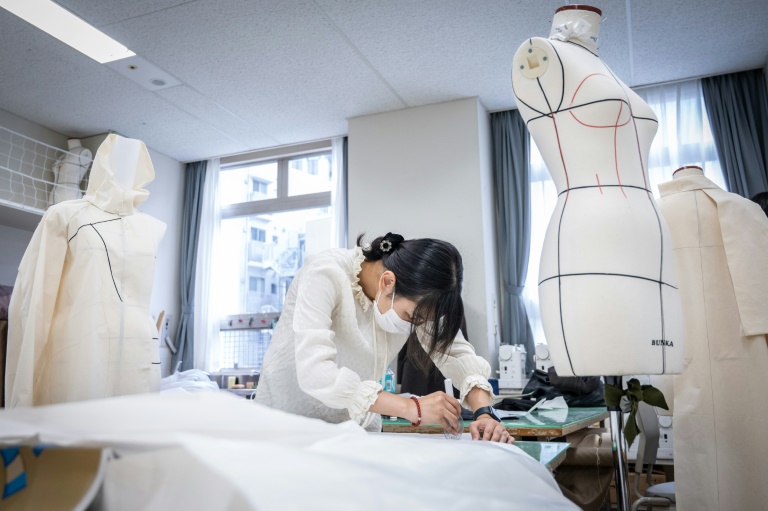
At Tokyo’s prestigious Bunka Fashion College, students concentrate in silence that is broken only by the sound of scissors and sewing machines as they strive to emulate the global success of alumni like Kenzo.

The loss of greats Kenzo Takada and Issey Miyake heralds the end of a fashion era, decades after Japanese design revolutionised Parisian catwalks in the 1970s and ’80s.

And the French capital remains a goal for emerging talent like Bunka graduate Takuya Morikawa, whose streetwear-inspired tailoring made its Paris Fashion Week debut two years ago.

Morikawa, 40, hopes his shows at the industry’s top event will lead to “an amazing future, beyond my wildest dreams”.

Before launching his label TAAKK in 2013, Morikawa spent eight years at Miyake’s studio, where he worked on runway collections and the famous “Pleats Please” line, but also harvested rice and made paper to learn about traditional craft methods.

He told AFP he was saddened by Miyake’s death this summer, but implored younger designers not to feel disheartened.

“We need to do our best to not let these designers’ deaths impact the fashion world. If that happens, it means we’re doing our job badly,” he said.

One of the big names picking up the baton is Nigo, who shot to fame in the 1990s with his streetwear brand A Bathing Ape.

The designer, who also studied at Bunka and whose real name is Tomoaki Nagao, was named artistic director at Kenzo last year, after founder Takada died of Covid-19 in 2020.

Another Japanese label enjoying international success is Sacai, founded in 1999 by Chitose Abe, who was tapped as the first guest couture designer for Jean Paul Gaultier.

– ‘Goosebumps’ –

Kenzo and textile visionary Miyake became hugely influential by pursuing their passion in Paris, as did haute couture trailblazer Hanae Mori, who died in August.

Left holding the torch are Yohji Yamamoto, now 79, and 80-year-old Rei Kawakubo, founder of Comme des Garcons, who shook up the fashion establishment in the early 1980s.

New challenges, including the vast range of styles now available for every taste, have made it harder for emerging designers to grab global attention, according to Bunka president Sachiko Aihara.

“The world was shocked” by avant-garde Japanese design, she said, recalling how her students began to dress in black after Yamamoto launched his first monochromatic clothing line.

“But we no longer live in an era where a designer presents a collection and everyone wears it,” she said at the school, whose basement archive is packed with valuable garments that students and teachers can study.

This is because of the explosion in diverse types of clothing, “not a decline in talent”, stressed Aihara, adding that it was now also essential to study business to start a competitive brand.

Designer Mariko Nakayama, who worked as a stylist in Tokyo’s fashion scene for decades, also remembers “feeling goosebumps” wearing Comme des Garcons for the first time.

She agrees, however, that the industry is different now.

“Looking at Virgil Abloh for Louis Vuitton, for example, I feel that now is an era of edit,” with designers making modern tweaks to classic shapes and patterns, she said at her boutique in Tokyo’s upscale Omotesando district.

– ‘Create new values’ –

Working in Paris, London, New York or Milan is still seen as key to succeeding for Japanese designers, said Aya Takeshima, 35, who studied at Central Saint Martins in the British capital.

Takeshima’s recent show at Tokyo Fashion Week for her brand Ayame featured women wearing sheer blouses and embossed dresses, while male models donned delicate dresses. 

She told AFP she had chosen to study abroad to “learn what I needed to become an independent designer”, adding that the experience had helped her understand different perspectives.

“Honestly, I think it would be difficult” to succeed internationally while only working in Japan, she said.

“In Japan, it felt like technique was drilled into you first, while ideas and concepts… were secondary”, but it was the other way around in London, Takeshima explained.

Bunka college recognises these benefits and plans to offer a scholarship for studying abroad as part of its 100th-anniversary celebrations next year.

For 21-year-old Natalia Sato, a student at Bunka, Miyake and the old guard of Japanese designers “brought a great deal of Japanese and Eastern values” to the world, including techniques inspired by “delicate” traditional craftsmanship.

“I’m worried that the foundation they built might be destroyed by their passing”, but “at the same time, this is a turning point” that could provide new creative opportunities, she said.

“It’s a chance for me to think about how we can create new values.”

Close Bitnami banner
Bitnami