US Business

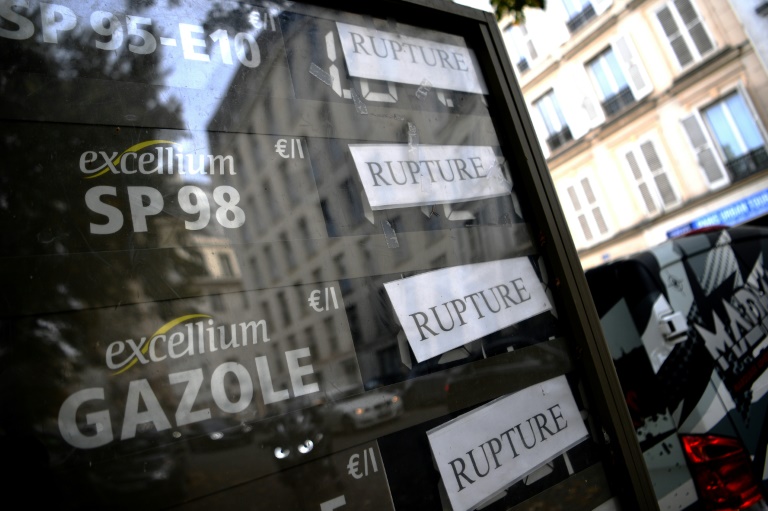
Strikes persist at TotalEnergies refineries, fuel depot in France

French refinery and fuel depot workers at five sites owned by oil giant TotalEnergies have extended their strike, union leaders said Saturday, compounding concern over petrol supply ahead of wider protests early next week.

Four of France’s seven refineries and one fuel depot were out of action after striking members of the hard-left CGT union rejected a pay offer from the hydrocarbon industry leader that other unions accepted.

Operations had resumed earlier this week at two other refineries run by Esso-ExxonMobil, however, after workers reached a deal with management.

The strike action has forced many filling stations to close and had a knock-on effect across all sectors of the economy.

President Emmanuel Macron’s government used requisitioning powers this week to force some strikers back to open fuel depots, a move that infuriated unions but has so far been upheld in the courts.

The CGT, which launched the industrial action three weeks ago, said on Saturday that workers at three TotalEnergies sites had decided to extend the stoppage.

Employees at the two others, including France’s largest refinery near the northwestern city of Le Havre, had already decided to stay out.

– Protest in Paris –

On Sunday, left-wing opponents of Macron will hold a march and rally in Paris to campaign against the rising cost of living.

Jean-Luc Melenchon, leader of the left-wing France Unbowed (LFI) party, had planned the march well before the current strike, but organisers are hoping to pick up some of the momentum from the current industrial unrest.

“The rise in prices is unbearable,” LFI deputy Manon Aubry told broadcaster LFI. “It is the greatest loss of purchasing power in 40 years.”

It is time the billions that the big companies were reaping in profits were passed down to those struggling to make ends meet, she added.

Police are expecting around 30,000 people to attend, with one source saying they feared problems from hard-left troublemakers. “The organiser has been warned of these fears,” said the official.

– More protests, strikes –

The CGT meanwhile has extended its strike action up to Tuesday, when it has also called a broader strike involving public transport nationwide.

The union risks stoking resentment in a country where three-quarters of workers rely on personal vehicles for their jobs, with public support for the strike at just 37 percent in a BVA poll released Friday.

The CGT is pushing for a 10-percent pay rise for staff at TotalEnergies, retroactive for all of 2022.

It says the French group can more than afford it, citing TotalEnergies’ net profit of $5.7 billion in the April-June period as energy prices soared with the war in Ukraine, and its payout of billions of euros in dividends to shareholders.

The CGT walked out of talks with the French group, even as other unions representing a majority of workers accepted a deal for a smaller pay hike.

TotalEnergies on Saturday urged employees to resume work, “in view of the signing of a majority deal on salaries” with two other unions.

Esso-ExxonMobil has said it would take two to three weeks to relaunch production at its refineries.

Prime Minister Elisabeth Borne is due to appear on primetime television Sunday evening to discuss the petrol shortage.
In reversal, Musk to continue funding Starlink in Ukraine

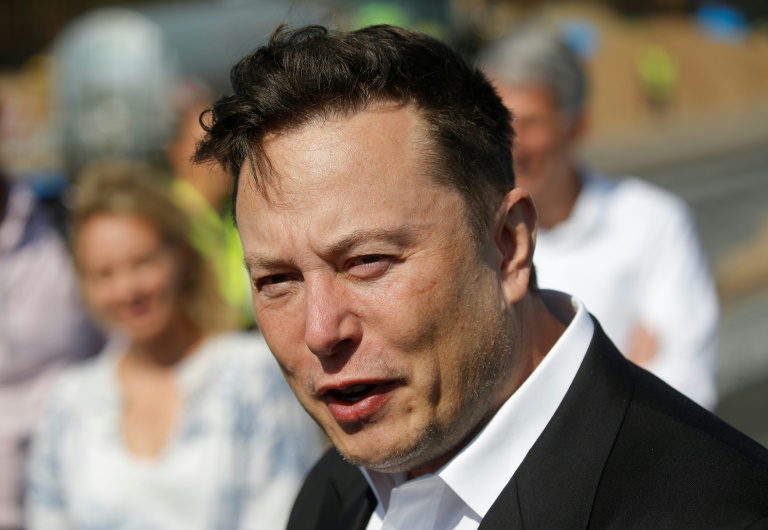
Elon Musk said Saturday that his company SpaceX will continue to pay for Starlink satellite internet in war-torn Ukraine, one day after the tech mogul suggested he could not keep funding the project.

Starlink, a constellation of more than 3,000 small satellites in low Earth orbit, has been vital to Ukraine’s communications as it battles Russia.

But Musk has found himself embroiled of late in public spats with Ukrainian leaders who were angered by his controversial proposals for de-escalating the conflict, which included acknowledging Russian sovereignty over Crimea.

“The hell with it,” Musk, the world’s richest man, wrote on Twitter.

“Even though Starlink is still losing money & other companies are getting billions of taxpayer $, we’ll just keep funding Ukraine govt for free.”

In a series of tweets Friday, Musk had detailed the logistics of the operation and said it was costing SpaceX nearly $20 million per month, and suggested the company could not fund it indefinitely.

Meanwhile, the US military confirmed it was communicating with the billionaire’s company about funding for the key network.

“SpaceX is not asking to recoup past expenses, but also cannot fund the existing system indefinitely *and* send several thousand more terminals that have data usage up to 100X greater than typical households,” he said Friday. 

“This is unreasonable.”

– Pentagon funding on cards? –

SpaceX has donated some 25,000 ground terminals to Ukraine, according to an updated figure given by Musk last week.

He says the operation has already cost SpaceX $80 million, and that total is projected to exceed $100 million by the end of the year.

Musk also appeared to confirm a report by CNN saying he had written to the Pentagon warning that his financial contributions would come to an end, and that the military would need to foot the bill.

According to CNN, SpaceX figures shared with the Pentagon show about 85 percent of the first 20,000 terminals in Ukraine were paid at least in part by countries such as the United States, Poland, or other entities, which also paid for about 30 percent of internet connectivity.

Deputy Pentagon Press Secretary Sabrina Singh said Friday the Pentagon is in contact with Musk about the funding issue, saying it had “received correspondence from SpaceX about the funding of… their satellite communications product in Ukraine.”

Musk has recently been in a spat with Ukrainian officials including President Volodymyr Zelensky after suggesting a peace deal that involved re-running controversial referendums in Russian-occupied territories in Ukraine — an idea welcomed by Moscow.

A senior Ukrainian presidential aide, Mykhaylo Podolyak, acknowledged the importance of Starlink in a tweet on Friday.

“Like it or not, @elonmusk helped us survive the most critical moments of war,” Podolyak wrote, adding that Ukraine “will find a solution to keep #Starlink working.”

In reversal, Musk to continue funding Starlink in Ukraine

Elon Musk said Saturday that his company SpaceX will continue to pay for Starlink satellite internet in war-torn Ukraine, one day after the tech mogul suggested he could not keep funding the project.

Starlink, a constellation of more than 3,000 small satellites in low Earth orbit, has been vital to Ukraine’s communications as it battles Russia.

But Musk has found himself embroiled of late in public spats with Ukrainian leaders who were angered by his controversial proposals for de-escalating the conflict, which included acknowledging Russian sovereignty over Crimea.

“The hell with it,” Musk, the world’s richest man, wrote on Twitter.

“Even though Starlink is still losing money & other companies are getting billions of taxpayer $, we’ll just keep funding Ukraine govt for free.”

In a series of tweets Friday, Musk had detailed the logistics of the operation and said it was costing SpaceX nearly $20 million per month, and suggested the company could not fund it indefinitely.

Meanwhile, the US military confirmed it was communicating with the billionaire’s company about funding for the key network.

“SpaceX is not asking to recoup past expenses, but also cannot fund the existing system indefinitely *and* send several thousand more terminals that have data usage up to 100X greater than typical households,” he said Friday. 

“This is unreasonable.”

– Pentagon funding on cards? –

SpaceX has donated some 25,000 ground terminals to Ukraine, according to an updated figure given by Musk last week.

He says the operation has already cost SpaceX $80 million, and that total is projected to exceed $100 million by the end of the year.

Musk also appeared to confirm a report by CNN saying he had written to the Pentagon warning that his financial contributions would come to an end, and that the military would need to foot the bill.

According to CNN, SpaceX figures shared with the Pentagon show about 85 percent of the first 20,000 terminals in Ukraine were paid at least in part by countries such as the United States, Poland, or other entities, which also paid for about 30 percent of internet connectivity.

Deputy Pentagon Press Secretary Sabrina Singh said Friday the Pentagon is in contact with Musk about the funding issue, saying it had “received correspondence from SpaceX about the funding of… their satellite communications product in Ukraine.”

Musk has recently been in a spat with Ukrainian officials including President Volodymyr Zelensky after suggesting a peace deal that involved re-running controversial referendums in Russian-occupied territories in Ukraine — an idea welcomed by Moscow.

A senior Ukrainian presidential aide, Mykhaylo Podolyak, acknowledged the importance of Starlink in a tweet on Friday.

“Like it or not, @elonmusk helped us survive the most critical moments of war,” Podolyak wrote, adding that Ukraine “will find a solution to keep #Starlink working.”

Pakistan summons US envoy over Biden 'most dangerous nation' remark

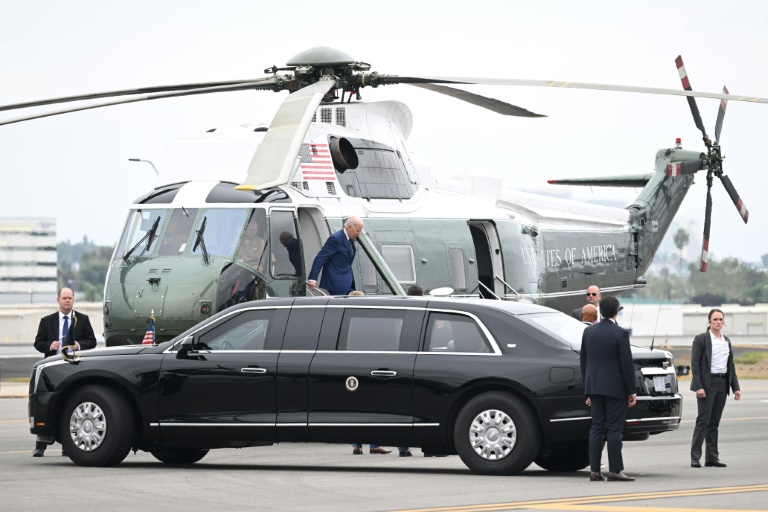
Pakistan on Saturday summoned the US ambassador for an explanation after President Joe Biden described the South Asian country as “one of the most dangerous nations in the world” and questioned its nuclear weapons safety protocols.

Biden made the apparently off-the-cuff remark late Thursday while talking about United States foreign policy during a private Democratic Party fundraiser in California, but the White House later published a transcript of his comments, which sparked outrage in Pakistan.

Washington’s relations with Pakistan have soured since last year, when the US ended a two-decade war in Afghanistan.

Pakistan provided crucial logistical access, but US officials believe Islamabad’s powerful military and intelligence apparatus also aided the Taliban, who swept back to power as foreign troops pulled out.

Biden was speaking about his frequent interactions with Chinese leader Xi Jinping, when he said: “Did anybody think we’d be in a situation where China is trying to figure out its role relative to Russia and relative to India and relative to Pakistan?

“This is a guy who understands what he wants but has an enormous, enormous array of problems. How do we handle that? How do we handle that relative to what’s going on in Russia? 

“And what I think is maybe one of the most dangerous nations in the world: Pakistan. Nuclear weapons without any cohesion.”

Hours after the transcript of his address was posted, Pakistan summoned the US ambassador Donald Blome to the foreign office in Islamabad.

– Room to manoeuvre –

“I have discussed it with the prime minister, and we have summoned the ambassador of the United States… for an official demarche,” Pakistani Foreign Minister Bilawal Bhutto Zardari said during a press conference in Karachi.

“I am surprised by the remarks of President Biden. I believe this is exactly the sort of misunderstanding that is created when there is lack of an engagement.”

Later, Prime Minister Shehbaz Sharif tweeted that Pakistan was a “responsible nuclear state”.

“We are proud that our nuclear assets have the best safeguards… We take these safety measures with the utmost seriousness. Let no one have any doubts,” he said.

The foreign minister also appeared to offer Washington some room to manoeuvre diplomatically away from Biden’s remarks.

“It was not an official function, it was not an address to the nation or an address to the parliament,” he said.

“We should allow them an opportunity to explain this position. I don’t believe that this should negatively impact the relations between Pakistan and the United States.”

The US is wary of Pakistan’s close partnership with China, as Beijing pushes ahead with a $54 billion “economic corridor” that will build infrastructure and give Beijing an outlet to the Indian Ocean.

Washington has repeatedly said China will reap most of the benefits, leaving Pakistan with unsustainable debt.

The warnings by the US — which considers China its preeminent global competitor — have repeatedly been brushed aside by Pakistan.

Pakistan this week abstained from a United Nations General Assembly vote to condemn Russia’s annexation of parts of Ukraine, despite a major US diplomatic push to seek clearer condemnation of Moscow.

Scientists scour global waters testing ocean plankton and pollution

After a near two-year “Microbiome” mission around the world, scientists said on Saturday they had gathered thousands of samples of marine micro-organisms in a bid to better understand ocean plankton and pollution.

The survey was carried out from the 33-year-old Tara research schooner, which returned to her home port of Lorient on France’s western coast at the weekend.

From Chile to Africa, via the Amazon and the Antarctic, nearly 25,000 samples were collected over the 70,000-kilometre (43,000-mile) route.

“All this data will be analysed,” Tara Ocean Foundation director Romain Trouble told a press conference.

“Within 18 months to two years we will start to have the first discoveries from the mission,” he said.

At the base of the food chain, micro-organisms were the “invisible people of the sea”, accounting for two-thirds of marine biomass, said Trouble.

“They capture atmospheric CO2 (carbon dioxide) and supply half of the oxygen we breathe.”

Trouble said the mission sought to find out how it all works.

“How do all these marine viruses, bacteria, micro-algue manage to interact to produce oxygen?”

“And how will that change tomorrow with climate change and pollution?”

The Tara team paid particular attention to the impact on the oceans of the River Amazon, which has a water flow rate of 200 million litres (53 million gallons) per second.

They wanted to test a theory that deforestation and the spread of agriculture has increased nitrate fertiliser discharge, leading to an abundance of toxic algae along river banks and coasts, particularly in the Caribbean.

The 22-month odyssey also sought to trace the sources of plastic pollution at river mouths, to understand distribution and the types of material involved.

The mission was Tara’s 12th global journey and involved 42 research institutions around the world.

Next spring, Tara sets off to research chemical pollution off European coasts. 

China's economy slows as Xi plans for historic third term

As China’s leaders gather for a crucial party congress, the country is expected on Tuesday to announce some of its weakest quarterly growth figures since 2020, its economy hobbled by Covid restrictions and a real estate crisis.

The figures for the third quarter, along with a salvo of other economic indicators, will be unveiled in the middle of the week-long political meeting that is expected to grant President Xi Jinping a historic third term in charge.

A group of experts interviewed by AFP said they expected an average GDP increase of 2.5 percent on last year’s July-September quarter.

In the previous quarter, growth in the world’s second largest economy collapsed to only 0.4 percent compared to the previous year, the worst performance since 2020. The country posted 4.8 percent growth in the first quarter of 2022.

Many economists think China will struggle to attain its growth target this year of around 5.5 percent, and the International Monetary Fund (IMF) has lowered its GDP growth forecast to 3.2 percent for 2022 and 4.4 percent for 2023.  

AFP’s panel of experts predicted average growth of three percent in 2022, a long way off the 8.1 percent seen in 2021. 

That would be China’s weakest growth rate in four decades, excluding 2020 when the global economy was hammered by the emergence of the coronavirus.

“The big policy challenge is accepting that the economy has reached a state of maturity that means growth numbers are likely permanently reset to the zero to 4.5 percent range for the coming decade,” Clifford Bennett, chief economist at ACY Securities, told AFP. 

– Zero-Covid –

Another factor that has had an enormous impact is Beijing’s zero-Covid policy. 

China is the last of the world’s major economies to continue to follow the strategy, which imposes tight travel restrictions, mass PCR testing and obligatory quarantines.  

It also involves sudden and strict lockdowns — including of businesses and factories — which has disrupted production and weighed heavily on household consumption.

But despite the impact on the economy, “there is no clear sign of a significant easing of the zero-Covid strategy”, Nomura’s Ting Lu said, noting that so far the opposite had happened. 

In the week leading up to the Chinese Communist Party (CCP) Congress, state media have published multiple editorials warning the policy should not be relaxed, and officials have pounced on outbreaks across the country over the last week with increased curbs.

Some lockdown restrictions have returned to major financial hub Shanghai, prompting some to fear a repeat of earlier this year when the city was shut down for two months. 

Meanwhile, China is also battling an unprecedented crisis in its real estate sector — historically a driver of growth in the economy and representative of more than a quarter of the country’s GDP when combined with construction. 

Following years of explosive growth fuelled by easy access to loans, Chinese authorities launched a crackdown on excessive debt in 2020.

Property sales are now falling across the country, leaving many developers struggling and some owners refusing to pay their mortgages for unfinished homes.

– ‘Modern economy’ –

Despite the problems, “many economic indicators have actually recovered reasonably well from the mass lockdowns of March and April”, according to analyst Thomas Gatley from Gavekal Dragonomics.

Car sales held strong in September, driven by strong demand for electric clean vehicles.

August exports increased by 7.1 percent compared to the previous year, and Beijing has invested in infrastructure to support activity.

However, “those pillars of growth are becoming more fragile”, Gatley said. 

And “the Chinese economy faces more fundamental problems” of transformation, sinologist Jean-Louis Rocca told AFP. 

After decades of growth fueled by investment and exports, he said China “no longer wants to be ‘the world’s factory'” — instead it aspires to be a “modern economy”, geared towards new technology and consumption — and the transition is still ongoing. 

Another worry for the CCP, which draws a large part of its political legitimacy from its economic success, is that this type of modern economy does not create very many jobs, Rocca said — which has serious implications for China’s growing middle class. 

Defiant Putin says Russia 'doing everything right' in Ukraine

Russian President Vladimir Putin said Moscow was “doing everything right” in its nearly eight-month invasion of Ukraine despite a string of embarrassing defeats against Kyiv’s forces, who will receive $725 million in new US military assistance.

Putin’s comments Friday came hours after Kremlin-installed officials in the southern Kherson region urged residents to leave as Kyiv said its soldiers were advancing on the oblast’s main city.

Moscow also hinted at the extent of the damage dealt to the Crimea bridge — the sole land connection between its mainland and the annexed Ukrainian peninsula — following a blast last Saturday, saying it could take many months to complete repairs.

“What is happening today is not pleasant. But all the same, (if Russia hadn’t attacked in February) we would have been in the same situation, only the conditions would have been worse for us,” Putin told reporters after a summit in the capital of Kazakhstan.

“So we’re doing everything right,” he insisted.

He did, however, acknowledge that Russia’s ex-Soviet allies were “worried.”

Putin said there was no need for further massive strikes against Ukraine at present and claimed the Kremlin did not intend to destroy its pro-Western neighbour.

“There is no need now for massive strikes. There are other tasks. For now,” he said.

He spoke days after Russia unleashed a wave of missile strikes on cities across Ukraine that left at least 20 civilians dead.

Putin said the strikes were in retaliation for the explosion on the Crimea bridge, which he has described as a “terrorist act”.

The bridge is a logistically crucial transport link for moving military equipment to Russian soldiers fighting in Ukraine.

– New US military aid –

Washington on Friday announced an additional $725 million in military assistance to Kyiv, including more ammunition for the Himars rocket systems that have been used by Ukraine to wreak havoc on Russian targets.

The aid comes “in the wake of Russia’s brutal missile attacks on civilians across Ukraine” and “mounting evidence of atrocities by Russia’s forces,” US Secretary of State Antony Blinken said in a statement.

It brings the total US military assistance to Ukraine to $17.6 billion since the Russian invasion on February 24.

“We will continue to stand with the people of Ukraine as they defend their freedom and independence with extraordinary courage and boundless determination,” Blinken said.

Separately, Elon Musk said his SpaceX would not be able to pay indefinitely for the Starlink satellite internet vital to Ukraine’s communications in the fight against Russian invaders.

The US military confirmed it was communicating with the billionaire’s company about funding for the key network.

Ukraine, which is clawing back territory in both the east and south, feted its first Defenders Day public holiday since the start of Moscow’s invasion, pledging victory.

“On October 14, we express our gratitude… gratitude to everyone who fought for Ukraine in the past. And to everyone who is fighting for it now. To all who won then. And to everyone who will definitely win now,” President Volodymyr Zelensky said in a video address to mark the occasion.

“The world is with us, more than ever. This makes us stronger than ever in history,” Zelensky said, referring to unprecedented Western aid.

Saudia Arabia announced $400 million in humanitarian aid for Ukraine, the official SPA news agency reported early Saturday, adding that Crown Prince Mohammed bin Salman had made a phone call to Zelensky.

Saudi Arabia last month played an unexpected role in facilitating a prisoner-of-war swap between Moscow and Kyiv.

The kingdom has however come under growing criticism from Washington after the Saudi-led OPEC group of oil exporters agreed on a drastic production cut with Russia and other allies, which could send energy prices soaring even higher.

– Advance on Kherson –

In southern Ukraine, Kyiv’s forces have been pushing closer and closer to Kherson, the main city in the region of the same name just north of Crimea.

On Friday, Moscow-installed authorities renewed a call for residents to temporarily leave.

“The bombardment of the Kherson region is dangerous for civilians,” Kirill Stremousov, deputy head of the pro-Russian regional administration said, and urged residents to take a trip for “rest and recreation” elsewhere.

Kyiv, which announced its counter-offensive in the south in August, said it has already recaptured more than 400 square kilometres (155 miles) in the Kherson region in under a week.

But in the east, pro-Russian forces said they were closing in on the industrial city of Bakhmut after reporting the capture of two villages on the city’s outskirts this week.

An official of the so-called Lugansk People’s Republic, a pro-Kremlin breakaway region in east Ukraine, said “active hostilities were under way” within Bakhmut.

“Our forces are confidently marching and liberating this settlement,” the official, Andriy Marochko, was quoted as saying by Russia’s state-run TASS news agency.

Musk says cannot fund Starlink in Ukraine indefinitely

Elon Musk said Friday that SpaceX would not be able to pay for Starlink satellite internet in Ukraine indefinitely, while the US military confirmed it was communicating with the billionaire’s company about funding for the key network.

The discussions come as Musk has been embroiled in public spats with Ukrainian leaders who were angered by his controversial plan for de-escalating the conflict, which included acknowledging Russian sovereignty over Crimea.

Starlink, a constellation of more than 3,000 small satellites in low Earth orbit, has been vital to Ukraine’s communications as it fights against Russia’s invasion, with SpaceX donating some 25,000 ground terminals, according to an updated figure given by Musk last week.

In a series of tweets, the world’s richest man appeared to confirm a report by CNN saying he had written to the Pentagon warning that his financial contributions would come to an end, and that the military would need to foot the bill.

“SpaceX is not asking to recoup past expenses, but also cannot fund the existing system indefinitely *and* send several thousand more terminals that have data usage up to 100X greater than typical households,” he tweeted. 

“This is unreasonable.”

Musk said the operation has already cost SpaceX $80 million and is projected to exceed $100 million by the end of the year.

But CNN said SpaceX figures shared with the Pentagon show about 85 percent of the first 20,000 terminals in Ukraine were paid at least in part by countries such as the United States, Poland, or other entities, which also paid for about 30 percent of internet connectivity.

Deputy Pentagon Press Secretary Sabrina Singh said Friday that the US Department of Defense is in contact with Musk about the funding issue.

“We can confirm the department received correspondence from SpaceX about the funding of… their satellite communications product in Ukraine. We remain in communication with SpaceX about this and other topics,” Singh said in a statement.

– ‘Helped us survive’ –

She had earlier told journalists that there are potential alternatives to Starlink, but declined to provide specifics.

“There are certainly other SATCOM capabilities that exist out there. I’m not going to show our hand right now on exactly what those are or who we’re talking to,” Singh said, referring to satellite communications.

In overnight replies on Twitter Friday, Musk expanded on the logistics of the operation. 

“In addition to terminals, we have to create, launch, maintain & replenish satellites & ground stations & pay telcos for access to Internet via gateways,” he said.

“We’ve also had to defend against cyberattacks & jamming, which are getting harder. Burn is approaching ~$20M/month.”

Musk has recently been in a spat with Ukrainian officials including President Volodymyr Zelensky after suggesting a peace deal that involved re-running controversial referendums in Russian-occupied territories in Ukraine — an idea welcomed by Moscow.

Kyiv’s ambassador to Germany, Andriy Melnyk, weighed in on Twitter, telling Musk to “fuck off.”

In a Friday tweet that included the shrug emoji, Musk said: “We’re just following his recommendation.”

Singh declined to comment on whether Musk had decided to scrap the Starlink service in response to the ambassador’s remark, saying it was a question for SpaceX.

Musk later seemed to confirm that Starlink remained operational on the frontlines, tweeting: “Starlink is only comms system still working at warfront – others all dead.”

The US Agency for International Development, in a statement Friday evening, also said that “to our knowledge, SpaceX has not withdrawn service to Ukraine’s civilian government agencies and critical infrastructure operators.”

The Financial Times had earlier reported Starlink outages had hit Ukrainian forces on the frontline, hindering their ability to recapture Russian-controlled areas in the east of the country, but said the situation later improved.

A senior Ukrainian presidential aide, Mykhaylo Podolyak, acknowledged the importance of Starlink in a tweet on Friday.

“Like it or not, @elonmusk helped us survive the most critical moments of war,” Podolyak wrote, adding that Ukraine “will find a solution to keep #Starlink working.”

Musk says cannot fund Starlink in Ukraine indefinitely

Elon Musk said Friday that SpaceX would not be able to pay for Starlink satellite internet in Ukraine indefinitely, while the US military confirmed it was communicating with the billionaire’s company about funding for the key network.

The discussions come as Musk has been embroiled in public spats with Ukrainian leaders who were angered by his controversial plan for de-escalating the conflict, which included acknowledging Russian sovereignty over Crimea.

Starlink, a constellation of more than 3,000 small satellites in low Earth orbit, has been vital to Ukraine’s communications as it fights against Russia’s invasion, with SpaceX donating some 25,000 ground terminals, according to an updated figure given by Musk last week.

In a series of tweets, the world’s richest man appeared to confirm a report by CNN saying he had written to the Pentagon warning that his financial contributions would come to an end, and that the military would need to foot the bill.

“SpaceX is not asking to recoup past expenses, but also cannot fund the existing system indefinitely *and* send several thousand more terminals that have data usage up to 100X greater than typical households,” he tweeted. 

“This is unreasonable.”

Musk said the operation has already cost SpaceX $80 million and is projected to exceed $100 million by the end of the year.

But CNN said SpaceX figures shared with the Pentagon show about 85 percent of the first 20,000 terminals in Ukraine were paid at least in part by countries such as the United States, Poland, or other entities, which also paid for about 30 percent of internet connectivity.

Deputy Pentagon Press Secretary Sabrina Singh said Friday that the US Department of Defense is in contact with Musk about the funding issue.

“We can confirm the department received correspondence from SpaceX about the funding of… their satellite communications product in Ukraine. We remain in communication with SpaceX about this and other topics,” Singh said in a statement.

– ‘Helped us survive’ –

She had earlier told journalists that there are potential alternatives to Starlink, but declined to provide specifics.

“There are certainly other SATCOM capabilities that exist out there. I’m not going to show our hand right now on exactly what those are or who we’re talking to,” Singh said, referring to satellite communications.

In overnight replies on Twitter Friday, Musk expanded on the logistics of the operation. 

“In addition to terminals, we have to create, launch, maintain & replenish satellites & ground stations & pay telcos for access to Internet via gateways,” he said.

“We’ve also had to defend against cyberattacks & jamming, which are getting harder. Burn is approaching ~$20M/month.”

Musk has recently been in a spat with Ukrainian officials including President Volodymyr Zelensky after suggesting a peace deal that involved re-running controversial referendums in Russian-occupied territories in Ukraine — an idea welcomed by Moscow.

Kyiv’s ambassador to Germany, Andriy Melnyk, weighed in on Twitter, telling Musk to “fuck off.”

In a Friday tweet that included the shrug emoji, Musk said: “We’re just following his recommendation.”

Singh declined to comment on whether Musk had decided to scrap the Starlink service in response to the ambassador’s remark, saying it was a question for SpaceX.

Musk later seemed to confirm that Starlink remained operational on the frontlines, tweeting: “Starlink is only comms system still working at warfront – others all dead.”

The US Agency for International Development, in a statement Friday evening, also said that “to our knowledge, SpaceX has not withdrawn service to Ukraine’s civilian government agencies and critical infrastructure operators.”

The Financial Times had earlier reported Starlink outages had hit Ukrainian forces on the frontline, hindering their ability to recapture Russian-controlled areas in the east of the country, but said the situation later improved.

A senior Ukrainian presidential aide, Mykhaylo Podolyak, acknowledged the importance of Starlink in a tweet on Friday.

“Like it or not, @elonmusk helped us survive the most critical moments of war,” Podolyak wrote, adding that Ukraine “will find a solution to keep #Starlink working.”

Astronomers are captivated by brightest flash ever seen

Astronomers have observed the brightest flash of light ever seen, from an event that occurred 2.4 billion light years from Earth and was likely triggered by the formation of a black hole.

The burst of gamma-rays — the most intense form of electromagnetic radiation — was first detected by orbiting telescopes on October 9, and its afterglow is still being watched by scientists across the world.

Astrophysicist Brendan O’Connor told AFP that gamma-ray bursts that last hundreds of seconds, as occurred on Sunday, are thought to be caused by dying massive stars, greater than 30 times bigger than our Sun.

The star explodes in a supernova, collapses into a black hole, then matter forms in a disk around the black hole, falls inside, and is spewed out in a jet of energy that travels at 99.99 percent the speed of light.

The flash released photons carrying a record 18 teraelectronvolts of energy — that’s 18 with 12 zeros behind it — and it has impacted long wave radio communications in Earth’s ionosphere.

“It’s really breaking records, both in the amount of photons, and the energy of the photons that are reaching us,” said O’Connor, who used infrared instruments on the Gemini South telescope in Chile to take fresh observations early Friday.

“Something this bright, this nearby, is really a once-in-a-century event,” he added.

Gamma-ray research first began in the 1960s when US satellites designed to detect whether the Soviet Union was detonating bombs in space ending up finding such bursts originating from outside the Milky Way. 

“Gamma-ray bursts in general release the same amount of energy that our Sun produces over its entire lifetime in the span of a few seconds — and this event is the brightest gamma ray burst,” said O’Connor.

This gamma-ray burst, known as GRB 221009A, was first spotted by telescopes including NASA’s Fermi Gamma-ray Space Telescope, Neil Gehrels Swift Observatory, and Wind spacecraft on Sunday morning Eastern time. 

– 1.9 billion-year-old movie –

It originated from the direction of the constellation Sagitta, and traveled an estimated 1.9 billion years to reach Earth — less than the current distance of its starting point, because the universe is expanding.

Observing the event now is like watching a 1.9 billion-year-old recording of those events unfold before us, giving astronomers a rare opportunity to glean new insights into things like black hole formation.

“That’s what makes this sort of science so addictive — you get this adrenaline rush when these things happen,” said O’Connor, who is affiliated with the University of Maryland and George Washington University.

Over the coming weeks, he and others will continue watching for the signatures of supernovas at optical and infrared wavelengths, to confirm that their hypothesis about the origins of the flash are correct, and that the event conforms to known physics.

Unfortunately, while the initial burst may have been visible to amateur astronomers, it has since faded out of their view.

Supernova explosions are also predicted to be responsible for producing heavy elements — such as gold, platinum, uranium — and astronomers will also be on the hunt for their signatures.

Astrophysicists have written in the past that the sheer power of gamma-ray bursts could cause extinction level events here on Earth.

But O’Connor pointed out that because the jets of energy are very tightly focused, and aren’t likely to arise in our galaxy, this scenario is not something we should worry much about.

Close Bitnami banner
Bitnami