US Business

Kroger unveils $24.6 bn deal to create supermarket giant

Grocery chain Kroger will acquire smaller rival Albertsons in a $24.6 billion transaction announced Friday that would create a supermarket giant but could face tough regulatory scrutiny.

The transaction, which unites two companies with some 710,000 employees and 5,000 stores in the United States, aims to take advantage of economies of scale to compete more effectively with giants like Walmart and Amazon.

But shares of both companies fell Friday as analysts cautioned that the transaction could face a tough once-over from Biden administration regulators, who have adopted a skeptical approach to large mergers.

In this case, both Kroger and Albertsons are consumer-facing companies. The deal also comes as the US economy contends with grinding inflation. 

In uniting, the two companies would have a combined customer base of about 85 million households, boosting its consumer data holdings and enabling some $1 billion in annual cost savings, executives said on a conference call with analysts.

These include “synergies” through improved sourcing, supply chain efficiencies and administrative savings, said Kroger Chief Financial Officer Gary Millerchip.

The companies pledged that the savings would enable them to “invest in lowering prices for customers,” they said in a press release.

But Morningstar analyst Zain Akbari predicted that the overlap between the companies in many markets would lead “regulators to scrutinize a transaction closely,” he said in a note earlier this week following reports of merger talks.

To address that issue, Albertsons plans to spin off between 100 and 375 stories as a standalone public company prior to the deal’s closing. 

This would create a “new, agile competitor” to the new Kroger, with a strong balance sheet and “experienced” management, Kroger and Albertsons said in a news release.

That transaction is expected to lower the deal cost by up to $4 billion to Kroger, the companies said. 

Near 1500 GMT, shares of Albertsons were down 7.1 percent at $26.59, while Kroger was down 3.2 percent at $45.06.

Kroger unveils $24.6 bn deal to create supermarket giant

Grocery chain Kroger will acquire smaller rival Albertsons in a $24.6 billion transaction announced Friday that would create a supermarket giant but could face tough regulatory scrutiny.

The transaction, which unites two companies with some 710,000 employees and 5,000 stores in the United States, aims to take advantage of economies of scale to compete more effectively with giants like Walmart and Amazon.

But shares of both companies fell Friday as analysts cautioned that the transaction could face a tough once-over from Biden administration regulators, who have adopted a skeptical approach to large mergers.

In this case, both Kroger and Albertsons are consumer-facing companies. The deal also comes as the US economy contends with grinding inflation. 

In uniting, the two companies would have a combined customer base of about 85 million households, boosting its consumer data holdings and enabling some $1 billion in annual cost savings, executives said on a conference call with analysts.

These include “synergies” through improved sourcing, supply chain efficiencies and administrative savings, said Kroger Chief Financial Officer Gary Millerchip.

The companies pledged that the savings would enable them to “invest in lowering prices for customers,” they said in a press release.

But Morningstar analyst Zain Akbari predicted that the overlap between the companies in many markets would lead “regulators to scrutinize a transaction closely,” he said in a note earlier this week following reports of merger talks.

To address that issue, Albertsons plans to spin off between 100 and 375 stories as a standalone public company prior to the deal’s closing. 

This would create a “new, agile competitor” to the new Kroger, with a strong balance sheet and “experienced” management, Kroger and Albertsons said in a news release.

That transaction is expected to lower the deal cost by up to $4 billion to Kroger, the companies said. 

Near 1500 GMT, shares of Albertsons were down 7.1 percent at $26.59, while Kroger was down 3.2 percent at $45.06.

Trump calls Jan 6 probe a 'witch hunt,' does not address subpoena

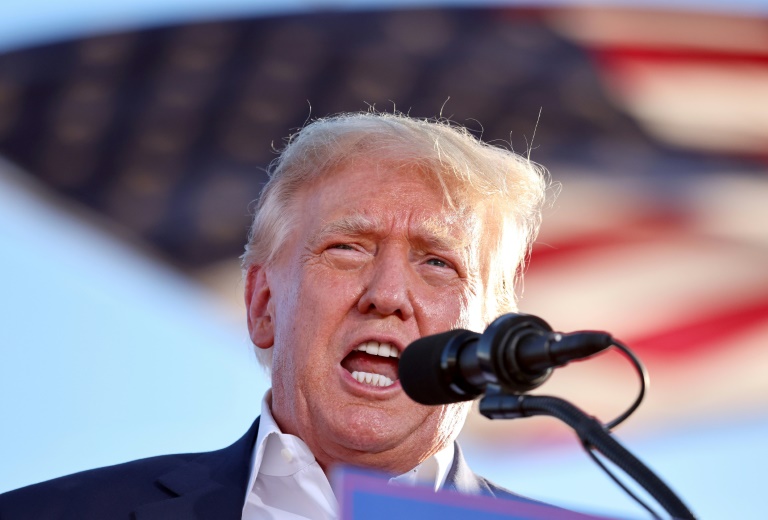
Former US president Donald Trump on Friday denounced the congressional investigation into the attack on the US Capitol by his supporters as a “show trial” and a “witch hunt.”

Trump, in a letter to Bennie Thompson, the chairman of the January 6 committee, did not address the subpoena for him to testify that was issued by the House panel on Thursday.

Instead, the former Republican president repeated his criticisms of the committee and his false claims that the 2020 election won by Democrat Joe Biden was “rigged and stolen.”

“You have not spent even a short moment on examining the massive Election Fraud that took place during the 2020 Presidential Election,” Trump wrote.

“The Unselect Committee has perpetuated a Show Trial the likes of which this Country has never seen before,” he said. “There is no Due Process, no Cross-Examination, no ‘real’ Republican members, and no legitimacy since you do not talk about Election Fraud.

“It is a Witch Hunt of the highest level, a continuation of what has been going on for years,” Trump said.

He also defended the rioters who attacked Congress on January 6, 2021 as it was certifying Biden’s election victory, calling them “patriots” and “concerned American citizens.”

“You have not gone after the people that created the Fraud, but rather great American Patriots who questioned it, as is their Constitutional right,” Trump said. “These people have had their lives ruined as your Committee sits back and basks in the glow.”

The January 6 panel, holding what is expected to be its final hearing before the November midterm elections on Thursday, voted to subpoena Trump to testify.

Trump responded with a post on his Truth Social platform but did not say whether he would agree to appear.

“Why didn’t the Unselect Committee ask me to testify months ago?” he said. “Why did they wait until the very end, the final moments of their last meeting?”

The New York Times reported that Trump has been telling aides that he favors testifying if he can do so live, but it is unclear whether the committee would grant such a demand.

Subpoenas from the panel have proved difficult to enforce, with former White House aide Steve Bannon the only person convicted of contempt of Congress so far for refusing to comply.

Across eight hearings in the summer the January 6 panel has unveiled reams of evidence showing the former president’s involvement in a labyrinthine series of connected schemes to overturn the election.

Trump, who urged his supporters in a fiery speech near the White House on January 6 to “fight like hell,” was impeached for inciting the mob to storm Congress to halt the peaceful transfer of power to Biden.

Musk says cannot fund Starlink in Ukraine indefinitely

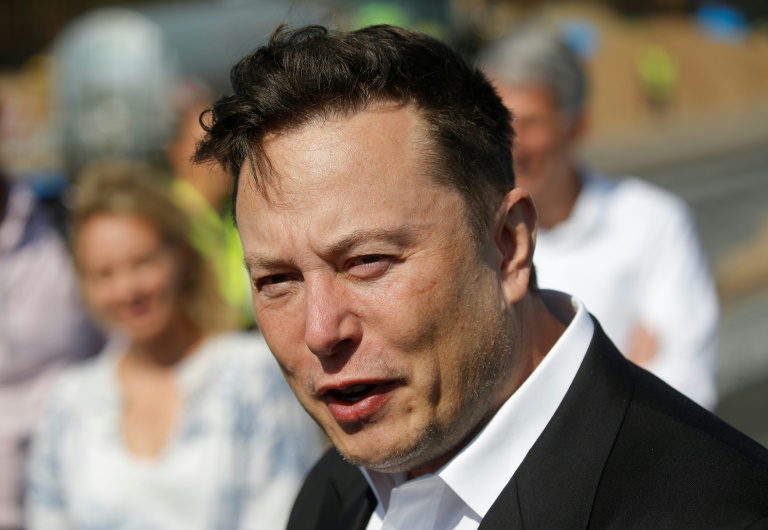
Elon Musk said Friday his company SpaceX wouldn’t be able to fund the Starlink satellite internet network over Ukraine indefinitely, amid reports he had asked the US military to cover the costs.

The move comes as Musk has been embroiled in public spats with Ukranian leaders who were angered by his controversial proposals for de-escalating the conflict, which included acknowledging Russian sovereignty over Crimea.

Starlink, a constellation of over 3,000 small satellites in low Earth orbit, has been vital to Ukraine’s war effort against Russia, with SpaceX donating some 25,000 ground terminals, according to an updated figure given by Musk last week.

In a series of tweets, the world’s richest man appeared to confirm a report by CNN saying he had written to the Pentagon warning that his financial contributions would come to an end, and that they would need to foot the bill.

“SpaceX is not asking to recoup past expenses, but also cannot fund the existing system indefinitely *and* send several thousand more terminals that have data usage up to 100X greater than typical households,” he tweeted. 

“This is unreasonable.”

Musk said the operation has already cost SpaceX $80 million and is projected to exceed $100 million by the end of the year.

But CNN said SpaceX figures shared with the Pentagon show about 85 percent of the first 20,000 terminals in Ukraine were paid at least in part by countries like the US, Poland, or other entities. 

They also paid for about 30 percent of internet connectivity.

– ‘Following his recommendation’ –

In overnight replies on Twitter on Friday, Musk expanded on the logistics of the operation. 

“In addition to terminals, we have to create, launch, maintain & replenish satellites & ground stations & pay telcos for access to Internet via gateways,” he said. 

“We’ve also had to defend against cyberattacks & jamming, which are getting harder. Burn is approaching ~$20M/month.”

Musk has recently been in a spat with Ukrainian officials including President Volodymyr Zelensky after suggesting a peace deal that involved re-running controversial referenda in Russian-occupied territories in Ukraine. 

Musk’s proposals were welcomed by Russia.

In response, Kyiv’s ambassador to Germany Andriy Melnyk weighed in, telling Musk to “fuck off.”

“We’re just following his recommendation,” Musk tweeted Friday, along with the shrug emoji.

According to CNN, SpaceX documents sent to the Pentagon said Ukraine had asked for 8,000 more Starlink terminals in July.

The Financial Times meanwhile has reported Starlink outages hit Ukrainian forces on the frontline, hindering their ability to liberate Russian-controlled areas in the east of the country, but the situation later improved.

Suspect, 15, in custody over latest US mass shooting

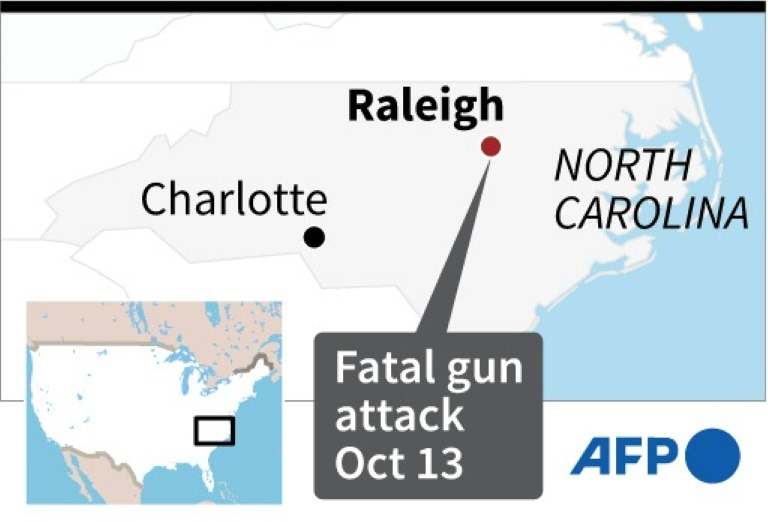
The gunman believed to have killed five people in North Carolina in America’s latest mass shooting is a 15-year-old boy, in critical condition after being shot by police, officials said Friday.

Two more people were wounded in the Thursday night shooting, the motive of which remains under investigation, Raleigh police chief Estella Patterson told a news conference in the state capital.

She said the fatalities included a 29-year-old off-duty police officer who was on his way to work. The four other victims were a 16-year-old boy and three women aged 35, 49 and 52.

A 59-year-old woman also remained hospitalized in critical condition.

“The nightmare of every community has come to Raleigh,” Governor Roy Cooper added at the same news conference.

“This is senseless, horrific and infuriating act of violence.”

The shooter, who was identified only as a white male, opened fire in the state capital Raleigh on and near a popular walking trail called the Neuse River Greenway.

Patterson and other officials gave few details of how the mass shooting unfolded.

After an hours long standoff in a house, the boy suspect was shot and taken into custody, and is in now in hospital in critical condition, police said.

“My heart is heavy because we don’t have answers as to why this tragedy occurred,” Patterson said.

Gun violence is an urgently pressing problem in the United States, where more than 34,000 people have been killed by firearms so far in 2022 alone, more than half of them from suicide, according to the Gun Violence Archive website.

The North Carolina shooting occurred after a jury earlier in the day rejected the death penalty and backed life imprisonment for Nikolas Cruz, who shot and killed 17 people at a Florida high school in 2018.

Mass shootings have repeatedly stunned the nation, reigniting debate on the divisive issue of gun control — but there has been little headway in Congress.

However, several of the most recent gun rampages, including a shooting at a school in Texas and a supermarket frequented by African Americans in New York state, caused particular shock across the country, prompting lawmakers to agree in June, for the first time in 30 years, to pass modest reform of gun control laws.

Nearly 400 million guns were in circulation among the civilian population in the United States in 2017, or 120 guns for every 100 people, according to the Small Arms Survey project.

Defiant Putin says Russia 'doing everything right' in Ukraine

Russian President Vladimir Putin said on Friday that Moscow was conducting its nearly eight-month invasion of Ukraine correctly, despite his forces’ early failure to topple Kyiv and a string of recent embarrassing battlefield defeats.

But his comments came hours after Kremlin-installed officials in Ukraine’s southern region of Kherson urged residents to leave, pointing to nearing Ukrainian artillery and as Kyiv announced its forces were pushing closer towards the region’s main city.

And on Thursday Moscow also hinted at the potentially wide extent of the damage dealt to the Crimea bridge, saying it could take many months to complete repairs after a recent blast rocked the key supply link between Russia and the annexed Crimean peninsula.

“What is happening today is not pleasant. But all the same, (if Russia hadn’t attacked on February) we would have been in the same situation, only the conditions would have been worse for us,” Putin told reporters after a summit in the capital of Kazakhstan.

“So we’re doing everything right,” he insisted.

Nearly eight months into Moscow’s war, Ukraine’s emboldened military, which is clawing back territory in the east as well as in the south, was celebrating Defender’s Day. Meanwhile a United Nations envoy alleged Russian forces were using rape as a weapon. 

Putin described the explosion on the Crimea bridge on Saturday as a “terrorist” act and in retaliation battered Ukraine for two days with missiles that hit energy facilities and caused blackouts and disruption to water supplies.

Speaking to reporters on Thursday, he said that “for now” he saw no need to continue the massive salvo of missiles that hit cities across Ukraine — several far from the front line — and left at least 20 civilians dead. He explained the Russian military had other objectives.

– ‘The world is with us’ –

“Our aim is not to destory Ukraine,” Putin added.

The Crimea bridge is logistically crucial for Moscow. It is a vital transport link for moving military equipment to Russian soldiers fighting in Ukraine.

But it is also symbolically important to Putin, who inaugurated the bridge in 2018 several years after he annexed the peninsula from Ukraine to a chorus of Western condemnation. 

The missile barrage on Monday and Tuesday, he said, was direct retaliation for the blast.

Russia’s cabinet, in a decree signed by Prime Minister Mikhail Mishustin, ordered the company tasked with the “design and restoration of destroyed elements of … the Crimean Bridge” to complete the work by July 1, 2023.

That date gives an indication of the extent of the damage caused by the explosion at the bridge because Russian officials have otherwise been circumspect about the lasting impact of the incident.

They did however say hours after the blast — which they blamed on Ukraine special forces — that both road and rail traffic had been restored.

In Kyiv on Friday, President Volodymyr Zelensky vowed, during events marking the country’s first Defender’s Day celebrations, that Ukrainian troops would be victorious over Russian forces

He also laid a wreath at a memorial for soldiers killed since 2014, when Kremlin-backed separatists wrested control of parts of two eastern regions. In February this year, the separatists appealed for Russia to intervene.

“The world is with us, more than ever. This makes us stronger than ever in history,” Zelensky added in reference to unprecedented Western aid.

Ukrainian forces mounted a counter-offensive in the south towards the end of the summer and have been pushing closer and closer to the main city in the Kherson region, also called Kherson.

On Friday, the Moscow-installed authorities in the region renewed a call for residents to temporarily leave, with reports that Ukrainian forces had been gaining ground near Kherson.

– Advance on Kherson –

“The bombardments of the Kherson region are dangerous for civilians,” Kirill Stremousov, the deputy head of the pro-Russian regional administration said. He urged residents to take a trip for “rest and recreation” elsewhere.

But in the east, pro-Russian forces said they were closing in on the industrial city of Bakhmut after they reported the capture of two villages on the city’s outskirts this week.

An official of the so-called Lugansk People’s Republic, a pro-Kremlin breakaway region in east Ukraine, said “active hostilities were underway” within Bakhmut.

“Our forces are confidently marching and liberating this settlement,” the official, Andriy Marochko, was quoted as saying by Russia’s state-run TASS news agency. 

Also this week, UN envoy Pramila Patten told AFP in an interview that rapes and sexual assaults attributed to Moscow’s forces in Ukraine were part of a Russian “military strategy” and a “deliberate tactic to dehumanise the victims”. 

“When you hear women testify about Russian soldiers equipped with Viagra, it’s clearly a military strategy,” the UN special representative on sexual violence said on Thursday. “It is clearly a deliberate tactic to dehumanise the victims.”


Pound slides amid UK political drama, stocks soar

The pound fell Friday as under-fire British Prime Minister Liz Truss sacked her finance minister and made a dramatic policy U-turn, while equities rallied for a second day despite surging US inflation.

The yen held around three-decade dollar lows as rampant US consumer prices cemented expectations of more hefty Federal Reserve rate hikes.

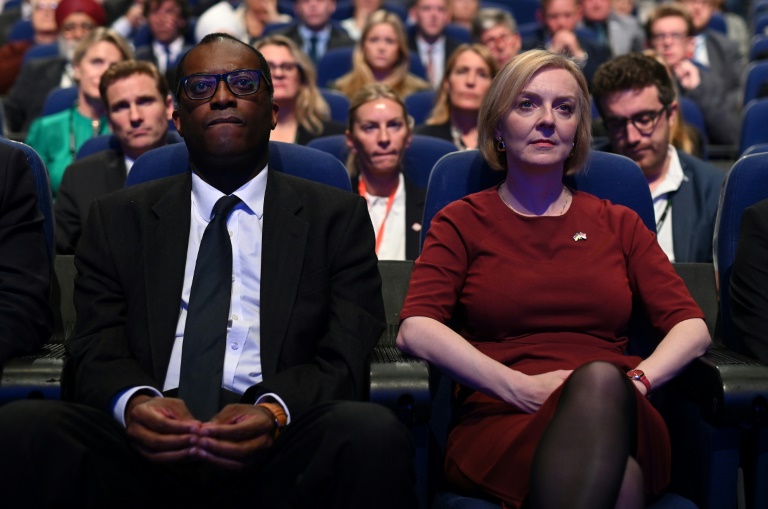
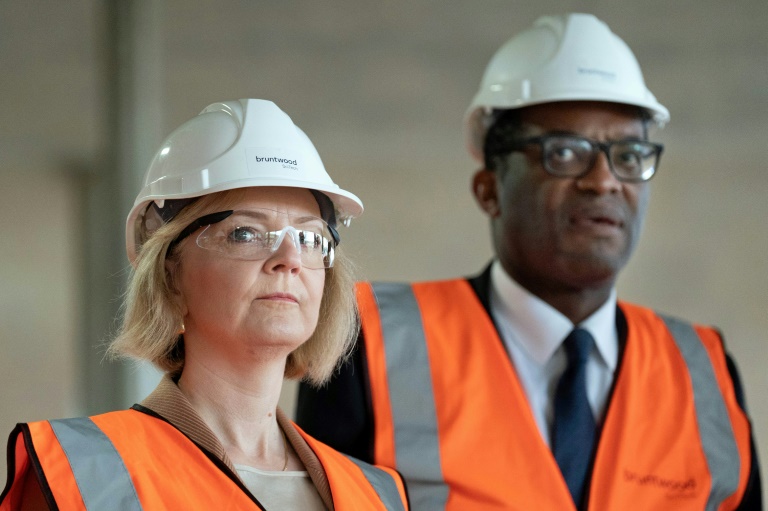
Truss sacked Kwasi Kwarteng as finance minister as pressure mounted on her government following last month’s big spending, tax-slashing budget, which spooked markets.

The September 23 budget sent the pound tumbling to a record dollar low near parity with the greenback and bond yields surged, before stabilising thanks to interventions by the Bank of England. 

Sterling sank 1.2 percent to $1.1188 after Prime Minister Liz Truss dismissed Kwarteng. It reduced those losses as Truss appointed Jeremy Hunt as her new finance minister.

“The soap opera that is UK politics continues to dominate FX markets Friday,” said Stephen Innes, managing partner at SPI Asset Management.

Truss later announced a dramatic policy U-turn, stating the “need to act now to reassure the markets”, abandoning plans to eliminate an increase in corporation tax.

UK 10-year government bond yields fell further following the announcement, despite the Bank of England having insisted the costly market interventions would end Friday.

London’s FTSE 100 was 1.6 percent higher in afternoon trading. 

– ‘Astonishing rebound’ –

Stock markets continued to push higher Friday after rising on Thursday despite data showing strong inflationary pressures in the United States.

“Markets staged an astonishing rebound despite a hotter-than-expected inflation report in the United States,” said Interactive Investor analyst Richard Hunter on the broad-based gains.

“The reasons… were not immediately clear, although traders pointed to a technical rebound as investors unwound defensive positions which had been in place ahead of the inflation report.”

US CPI inflation data showed prices rose last month at a faster clip than expected, despite this year’s series of Fed interest rate hikes, which have fanned fears of a global recession.

The month-on-month reading came in double estimates, while core inflation — which strips out volatile energy and food prices — was also elevated.

The figures sparked a sharp plunge on Wall Street but the selling quickly reversed, and all three main indices finished the day with gains of more than two percent.

Wall Street opened higher on Friday as a number of top banks kicked off earnings season, JPMorgan Chase, Citigroup, Wells Fargo and U.S. Bancorp all beating analysts’ expectations. 

“None of those banks missed consensus earnings estimates, like investment bank Morgan Stanley did, yet their reports were laced with increased provisions for credit losses,” noted market analyst Patrick O’Hare at Briefing.com.

US retail sales came in flat in September, below analyst expectations of a 0.2 percent rise.

“The key takeaway from the report is that it is not adjusted for inflation, so the lackluster numbers for September suggest consumers were pulling back on spending activity in the face of high inflation,” O’Hare said.

– Key figures around 1330 GMT –

London – FTSE 100: UP 1.6 percent at 6,956.37 points

Frankfurt – DAX: UP 2.1 percent at 12,616.25

Paris – CAC 40: UP 2.4 percent at 6,021.88

EURO STOXX 50: UP 2.3 percent at 3,438.20

New York – Dow: UP 0.6 percent at 30,207.67

Tokyo – Nikkei 225: UP 3.3 percent at 27,090.76 (close)

Hong Kong – Hang Seng Index: UP 1.2 percent at 16,587.69 (close)

Shanghai – Composite: UP 1.8 percent at 3,071.99 (close)

Pound/dollar: DOWN at $1.1232 from $1.1326 Thursday

Dollar/yen: UP at 147.84 yen from 147.12 yen

Euro/dollar: DOWN at $0.9751 from $0.9776

Euro/pound: DOWN at 86.81 pence from 88.29 pence

Brent North Sea crude: DOWN 1.6 percent at $93.02 per barrel

West Texas Intermediate: DOWN 1.9 percent at $87.46 per barrel

burs-rl/jj

'Shelf-life of a lettuce': Truss's nightmare on Downing Street

British Prime Minister Liz Truss has had the shortest of political honeymoons since taking over from Boris Johnson.

Taking out the 10 days of mourning for Queen Elizabeth II, Truss had only a week in control of events before her political programme imploded, leading to the sacking of her finance minister.

“That is the shelf-life of a lettuce,” The Economist magazine commented this week.

– September 5 –

Truss wins a vote by Conservative party members by 81,326, against 60,399 for Johnson’s former finance minister Rishi Sunak. 

As the new leader of the largest party in parliament, that makes her prime minister — with support from less than 0.2 percent of the UK electorate and only a minority of her own MPs.

The next day, she is confirmed as prime minister by the queen. 

Despite her weak mandate, Truss purges all Sunak supporters from her new cabinet, and installs the like-minded Kwasi Kwarteng as chancellor of the exchequer.

– September 8 –

Truss unveils a costly scheme to cap household energy bills, in response to Russia’s invasion of Ukraine. 

But the dramatic announcement is eclipsed by the queen’s death, which suspends all government business for 10 days.

– September 23 –

Kwarteng announces a “mini-budget” which details the price of the energy scheme -– £60 billion ($67 billion) over the next six months. 

But there are no measures to raise funds. 

Instead, he announces massive new borrowing to pay for sweeping tax cuts — including for top-earners — along with scrapping a cap on bankers’ bonuses.

The announcement immediately draws political fire for being unfair. But the markets reserve the most stinging verdict in their response to the new borrowing — driving the pound down towards parity against the dollar.

Two days later, a Sunday, Kwarteng vows “more to come” on tax cuts. The next day, when markets reopen, the pound plumbs new depths. 

The budget is dubbed “Kami-Kwasi” by media, which begin reporting tensions between Kwarteng and Truss, and deep disquiet among Tory MPs including cabinet ministers.

– September 28 – 

With bond market turmoil placing British pension funds in jeopardy, the Bank of England announces a two-week programme to buy long-term UK bonds, capped initially at £65 billion, “to restore orderly market conditions”. 

– September 29 –

Pollsters YouGov report a 33-point lead for the main opposition Labour party over the Tories –- its biggest margin since the heyday of former Labour prime minister Tony Blair in the late 1990s.

Other polls also point to electoral disaster for the Conservatives. But hours before his keynote speech at the party’s annual conference at the start of October, Kwarteng vows to “stay the course”.

– October 3 –

Kwarteng and Truss are forced into a humiliating U-turn as civil war engulfs the party conference, scrapping the planned cut in the top rate of income tax following hurried late-night talks.

In her own conference speech on October 5, Truss vows to pursue her “growth, growth, growth” agenda but fails to reassure party rebels and nervous markets. 

UK government bond yields keep rising, inflicting more pain for UK households as mortgage rates surge.

– October 10 – 

In another volte-face, Kwarteng reveals he will publish a medium-term fiscal plan alongside independent budget forecasts on October 31 –- Halloween –- rather than in late November as originally planned. 

But on October 12, Truss rules out any cuts to public spending, even as she vows no further U-turns on the remaining tax cuts, compounding perceptions of a government in chaos.

– October 14 – 

With markets still rattled and pressure piling on Truss, the prime minister fires Kwarteng after just 38 days in the role, further stoking rumours that her party was about to attempt her own ouster.

Kwarteng defends the economic programme in a letter to Truss, insisting it was needed because “the status quo was simply not an option”.

In his place, she appoints former foreign minister Jeremy Hunt.

UK's Truss fires finance minister as economic plan in tatters

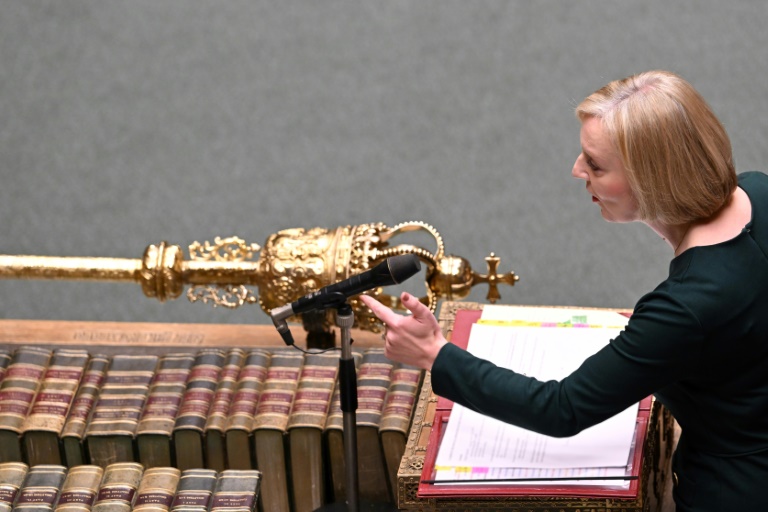
British Prime Minister Liz Truss on Friday dismissed her finance minister, forcing Kwasi Kwarteng to carry the can for turmoil sparked by her right-wing economic platform as restive Conservatives plotted her own demise.

The chancellor of the exchequer was dismissed in person by Truss after he rushed back early from international meetings in Washington, and she was due to hold her first Downing Street news conference at 2:30 pm (1330 GMT).

There was no immediate announcement of his successor, who will become Britain’s fourth finance minister this year, and the pound slumped anew on currency markets.

“You have asked me to stand aside as your chancellor. I have accepted,” Kwarteng wrote in a letter to Truss, who only succeeded Boris Johnson on September 6.

But he insisted that their economic programme was needed because “the status quo was simply not an option”.

In reply, Truss wrote that Kwarteng had “put the national interest first”.

“I know that you will continue to support the mission that we share to deliver a low-tax, high-wage, high-growth economy that can transform the prosperity of our country for generations to come,” she said.

Financial upheaval sparked by the new government’s September 23 plan to slash taxes — financed via billions in more borrowing — has subsided somewhat since the Bank of England intervened in bond markets.

But the central bank was adamant it would end its bond-buying spree on Friday, and market analysts said only a bigger climbdown by Truss following Kwarteng’s disastrous budget announcement last month would avert fresh panic.

Tony Travers, from the London School of Economics, told AFP Kwarteng had been made “the fall guy for the government’s mistakes” — but that the sacking had not taken the pressure off Truss or calmed the Tories.

“It’s very hard to see them coming back from this” by the next election, he added. 

– ‘Not going anywhere’ –

Kwarteng was due to have stayed in Washington this weekend to conclude annual meetings of the International Monetary Fund and World Bank, after earned a rebuke from IMF chief Kristalina Georgieva on the need for “coherent and consistent” policies.

Speaking in Washington on Thursday, Kwarteng had insisted that his job was safe. “I’m not going anywhere,” he said.

But UK broadcasters showed live footage of Kwarteng’s British Airways plane landing at Heathrow airport a day early, after Truss held hurried meetings with her own financial advisors on Thursday in his absence.

Speculation was rife that Truss would row back on planned changes to corporation tax, having already changed her mind about cutting income tax for the highest earners.

The promised tax cuts were the centrepiece of Truss’s successful pitch to Tory party members that she,, rather than rival Rishi Sunak, was the best candidate to replace Johnson. 

That programme now lies in tatters, and Truss’s judgement is in question more than ever, after Sunak’s warnings were entirely vindicated: higher borrowing to pay for tax cuts served only to terrify the markets and drive up borrowing costs for millions of Britons.

A new YouGov poll for The Times newspaper said 43 percent of Conservative voters want a new prime minister in Downing Street.

Other polls show a mammoth lead up opening up for the main opposition Labour party, threatening electoral meltdown for the Tories. 

– ‘Romcom-worthy dash’ –

Junior minister Greg Hands said “I don’t recognise” multiple reports that senior Tory MPs were plotting to unseat Truss by installing a new leadership team under Sunak and Penny Mordaunt, who also ran to succeed Johnson.

Pressed on whether Truss will still be in 10 Downing Street in a week, Hands told ITV: “Oh definitely.”

The chancellor’s September 23 budget sparked market chaos because of fears it would drive up state debt. 

The pound tumbled to a record dollar low near parity with the greenback and bond yields surged, before stabilising thanks to interventions by the Bank of England (BoE). 

But with that costly BoE crutch ending on Friday, markets had already priced in a fresh about-turn by the government, leaving Downing Street with no room for manoeuvre.

Sophie Lund-Yates, lead equity analyst at Hargreaves Lansdown, said before Kwarteng’s sacking that his “romcom-worthy dash through the airport” showed the government waking up to financial reality.

But for many pundits, the self-inflicted damage risks proving terminal for Truss and her hard-right platform.

Another new poll by Ipsos showed Truss’s net satisfaction score at minus 51, lower than any of her predecessors this century, while Kwarteng left office with historically low ratings for a chancellor.

Royal Mail plans up to 10,000 job cuts

British postal operator Royal Mail on Friday unveiled plans to axe up to 10,000 jobs, blaming the move partly on ongoing staff strikes that contributed to a first-half loss.

The announcement came one day after staff staged the first of 19 walkouts targeting the critical run-up to Christmas, joining several other UK sectors carrying out industrial action as sky-high inflation erodes the value of wages.

Royal Mail’s job cuts follow “the impact of industrial action, delays in delivering agreed productivity improvements and lower parcel volumes”, its parent group said in a results statement, sending shares tanking.

“Our operational full-time employee workforce will need to reduce by an estimated 10,000 by the end of August 2023,” International Distributions Services added alongside news it had plunged into the red.

– ‘Gross mismanagement’ –

The planned job losses comprise almost seven percent of Royal Mail’s total workforce of 150,000 people.

The restructuring includes up to 6,000 compulsory redundancies.

Dave Ward, general secretary of the CWU union that has organised Royal Mail walkouts, said the job cuts were “the result of gross mismanagement “.

He added there had been “a failed business agenda of ending daily deliveries, a wholesale levelling-down of the terms, pay and conditions of postal workers, and turning Royal Mail into a gig economy-style parcel courier”.

The group suffered an operating loss of £219 million ($245 million) in the six months to the end of September, it added Friday.

That contrasted sharply with profit of £235 million a year earlier, when it was buoyed by strong parcel demand during the pandemic.

“It now expects full-year losses to hit £350 million, which is the figure it had hoped to make in cost savings before the strikes erupted,” noted Susannah Streeter, senior investment and markets analyst at Hargreaves Lansdown.

The threat of further strike action beyond Christmas “means that no certainty can be given over the full year outlook for the group as a whole”, she added.

Royal Mail said full-year operating losses could increase to £450 million should “customers move volume away for longer periods” as a result of strike action.

The share price of International Distributions Services was down more than eight percent at 192.65 pence in afternoon London trading, having recovered from even sharper losses following Friday’s news.

– Royal makeover –

Set up more than 500 years ago, Royal Mail has experienced some of its most turbulent times during the past decade, particularly following its controversial privatisation in 2013.

The firm’s core letters business has been ravaged as consumers increasingly go online to communicate.

However, it enjoyed booming demand for parcel deliveries during Britain’s Covid lockdowns — and played a vital role delivering test kits and protective clothing in the pandemic.

Yet the Covid-era boom in parcels has tailed off.

Following the death of Queen Elizabeth II last month, all new Royal Mail postboxes will no longer feature the EIIR royal cipher.

The cipher stood for Elizabeth II Regina (“queen” in Latin).

Instead they will be imprinted with CIIIR, representing Charles III Rex (“king” in Latin). A crown will feature above both letters.

New British stamps will also feature an image of his head.

Close Bitnami banner
Bitnami