US Business

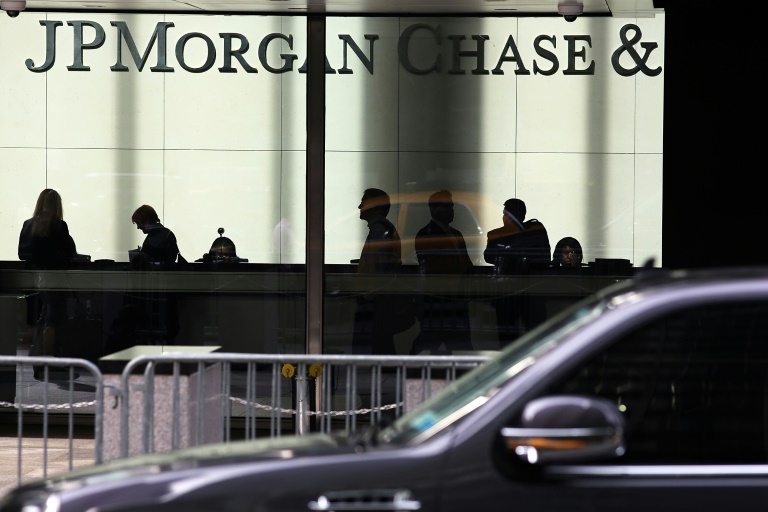
JPMorgan Chase reports lower profits, warns of economic 'headwinds'

JPMorgan Chase reported a drop in third-quarter profits Friday as it set aside funds for potential loan defaults and highlighted the rising risk of recession.

Profits fell 17 percent to $9.7 billion on a 10 percent increase in revenues to $32.7 billion.

The results were dented by JPMorgan’s move to add $808 million in reserves for potential bad loans. In the year-ago period, profits were boosted by $2.1 billion in reserve releases.

The contrast reflects today’s much more subdued economic outlook compared with a year ago.

Higher interest rates helped boost the bank’s net interest income, but JPMorgan suffered a big drop in investment banking revenues.

Chief Executive Jamie Dimon said consumer spending remained robust during the period, but pointed to myriad risks facing the economy. 

“There are significant headwinds immediately in front of us –- stubbornly high inflation leading to higher global interest rates, the uncertain impacts of quantitative tightening, the war in Ukraine, which is increasing all geopolitical risks, and the fragile state of oil supply and prices,” Dimon said. 

“While we are hoping for the best, we always remain vigilant and are prepared for bad outcomes so we can continue to serve customers even in the most challenging of times.”

In an interview with CNBC earlier this week, Dimon said a US recession was likely in early-to-mid 2023 and that the stock market could fall another 20 percent.

Both earnings-per-share and revenues topped analyst expectations.

Shares rose 1.8 percent to $111.30 in pre-market trading.

Equities soar despite hot US inflation, pound dips on uncertainty

Asian and European equities rallied Friday despite news of surging US inflation, while the pound dipped on uncertainty over Britain’s controversial budget.

The yen held around three-decade dollar lows as rampant US consumer prices cemented expectations of more hefty Federal Reserve rate hikes.

London stocks rose as British finance minister Kwasi Kwarteng flew back one day early from a key IMF gathering in Washington, stoking speculation of another U-turn over his debt-fuelled measures that sparked recent markets turmoil.

He was also reported to have lost his job.

The pound dipped before the Bank of England ends later Friday its emergency bond-buying policy that sought to stem the turbulence.

– ‘Astonishing rebound’ –

“Markets staged an astonishing rebound despite a hotter-than-expected inflation report in the United States,” said Interactive Investor analyst Richard Hunter on the broad-based gains.

“The reasons… were not immediately clear, although traders pointed to a technical rebound as investors unwound defensive positions which had been in place ahead of the inflation report.”

US CPI inflation data showed prices rose last month at a faster clip than expected, despite this year’s series of Fed interest rate hikes which have fanned fears of a global recession.

The month-on-month reading came in double estimates, while core inflation — which strips out volatile energy and food prices — was also elevated.

The figures sparked a sharp plunge on Wall Street but the selling quickly reversed, and all three main indexes finished the day with gains of more than two percent.

“It could be argued that yesterday’s hotter-than-expected CPI reading may well have been partially priced in as far as stock markets were concerned,” noted CMC Markets analyst Michael Hewson.

Investors are awaiting quarterly results Friday from US banks Citigroup, JPMorgan Chase and Wells Fargo.

The updates “could offer some important insights into how US consumers are spending their money”, added Hewson.

Markets meanwhile remain on tenterhooks that the UK government was set to perform another U-turn on last month’s tax-slashing budget.

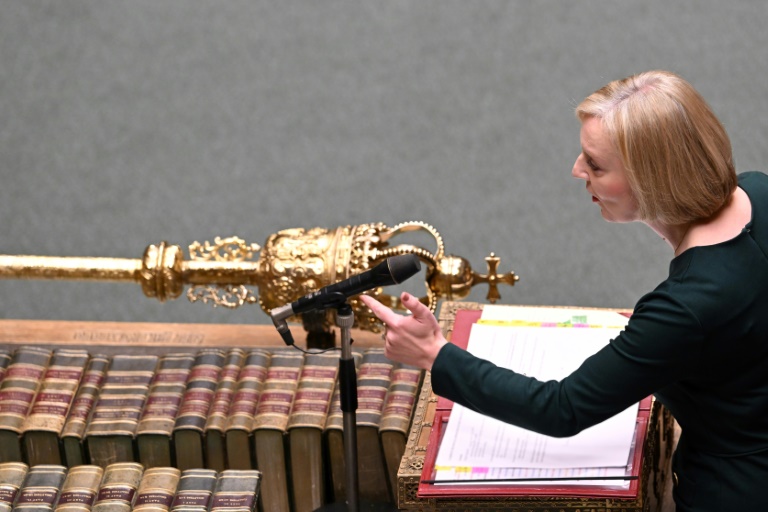
Speculation had been swirling that British Prime Minister Liz Truss could sack Kwarteng over the badly-received budget, with the BBC reporting that he had in fact lost his job.

The pound had rallied sharply Thursday on reports the new government could row back on more tax-cut pledges.

Truss has insisted that there would be no more U-turns, after she was previously forced to scrap a plan to cut tax on the richest earners. 

Meanwhile, the yen’s weakness comes from the Bank of Japan’s refusal to lift interest rates — citing a need to support the economy — just as the Fed presses ahead with hefty hikes in borrowing costs.

– Key figures around 1115 GMT –

London – FTSE 100: UP 1.3 percent at 6,938.57 points

Frankfurt – DAX: UP 1.3 percent at 12,520.35

Paris – CAC 40: UP 1.7 percent at 5,977.18

EURO STOXX 50: UP 1.6 percent at 3,466.70

Tokyo – Nikkei 225: UP 3.3 percent at 27,090.76 (close)

Hong Kong – Hang Seng Index: UP 1.2 percent at 16,587.69 (close)

Shanghai – Composite: UP 1.8 percent at 3,071.99 (close)

New York – Dow: UP 2.8 percent at 30,038.72 (close)

Pound/dollar: DOWN at $1.1249 from $1.1326 Thursday

Dollar/yen: UP at 147.67 yen from 147.12 yen

Euro/dollar: DOWN at $0.9739 from $0.9776

Euro/pound: DOWN at 86.57 pence from 88.29 pence

Brent North Sea crude: DOWN 1.1 percent at $93.49 per barrel

West Texas Intermediate: DOWN 1.2 percent at $88.06 per barrel

French fuel shortages take toll as strike standoff hardens

Striking French refinery workers vowed Friday to maintain their blockades after rejecting a pay offer from oil giant TotalEnergies, raising the spectre of worsening fuel shortages ahead of a general public-sector strike next week.

The hard-left CGT union, which initiated the industrial action, walked out of talks with Total late Thursday, though other unions representing a majority of workers accepted a deal.

“We’re not blind, we know this is impacting daily life for all the French,” CGT chief Philippe Martinez told Franceinfo radio, calling on the government to put pressure on the company to renegotiate.

His union has called a strike for Tuesday that could disrupt public transport, following anti-inflation marches planned for Sunday by left-wing opponents of President Emmanuel Macron.

Macron’s government has forced some strikers back to work to open fuel depots after three weeks of blockades, a move that infuriated unions but was upheld by a court on Friday, a judicial source told AFP.

Four of the country’s seven refineries remain shut, and around a third of the country’s service stations are either low on petrol or completely dry, according to the energy transition ministry.

France’s wholesale suppliers association warned that deliveries would be “severely compromised” beginning Friday, as motorists again faced long queues hoping to fill up before the weekend.

Officials in the southeastern Auvergne-Rhone-Alpes region said it would make train and bus transport free until Sunday night because of the fuel shortages.

– ‘Time for confrontation’ –

Macron promised Wednesday that relief would come next week, but left-wing opponents see a chance to spark a broader protest against his reform drive.

In particular they are seeking to derail a pensions overhaul that would push back the retirement age from 62, which Macron wants to push through parliament in the coming months.

“The time for a confrontation has arrived,” parliamentarian Clementine Autain from the France Unbowed party told France 2 television on Thursday.

But not all unions have joined the call for the general strike next Tuesday, with the country’s biggest, the CFDT, opting out.  

Until this week, the government had been reluctant to inflame the pay dispute at TotalEnergies and the US giant Esso-ExxonMobil, prompting critics to say it was oblivious to the strike’s impact on everyday workers.

“For two weeks there was no management of this problem, they were in denial,” said Eric Ciotti of the right-wing Republicans party — whose support will be crucial for Macron after his centrist grouping lost its parliamentary majority earlier this year.

The CGT is pushing for a 10 percent raise, citing TotalEnergies’ net profit of $5.7 billion in the April-June period as energy prices soared with the war in Ukraine, and its payout of billions of euros in dividends to shareholders. 

Finance Minister Bruno Le Maire told RTL radio Thursday that given its huge profits, the company had “the capacity… and therefore an obligation” to raise workers’ pay.

But the union risks stoking resentment, with public support of the strike at just 37 percent in a BVA poll released Friday.

“For the past four or five days, it has been catastrophic”, said Francoise Ernst, who works at a driving school in Paris. 

“And I think that if it goes on, we will have to stop working.”

burs-js/jh/rox

Erdogan tells government to start work on Russian gas hub

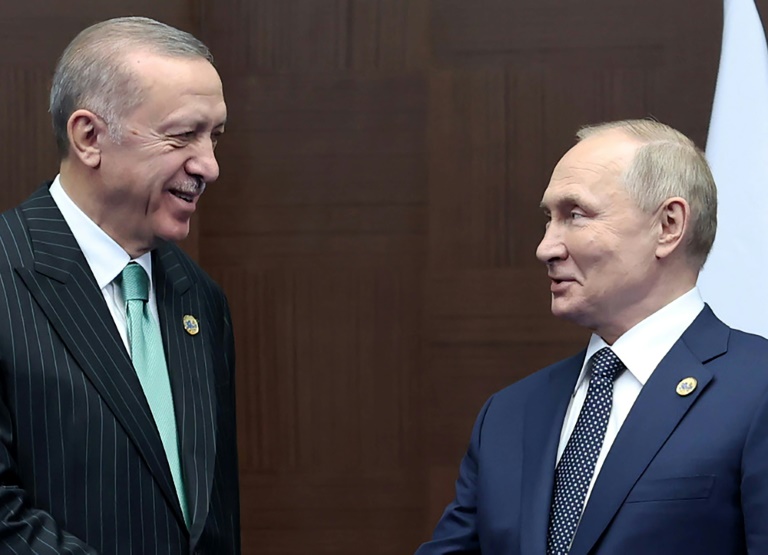
Turkish President Recep Tayyip Erdogan backs the Kremlin’s idea of creating an international gas hub in Turkey and wants his government to quickly present implementation plans, Turkish media reported Friday.

Russian President Vladimir Putin proposed piping natural gas to southern Europe via Turkey following the near total disruption of Russian supplies via the Nord Stream project. 

The idea raised the immediate alarm of European powers such as France, with President Emmanuel Macron’s office saying it made “no sense”.

Russia already supplies Turkey with gas via the TurkStream link under the Black Sea.

Erdogan said on his return flight from talks with Putin in Kazakhstan on Thursday that the new distribution centre would probably be established in Thrace, a northwestern region near Bulgaria.

“We have a national distribution centre, but of course now this will be an international distribution centre,” Erdogan told reporters after holding his fourth meeting with the Russian leader in the past three months.

“There will be no waiting on this issue.”

– No truce talks –

Gas prices have skyrocketed since the beginning of Russia’s war and Europe has struggled to find alternative energy supplies after Russia strangled deliveries in response to Western sanctions.

The latest spike came after a series of blasts this month destroyed both lines of Russia’s Nord Stream pipeline to Germany.

Putin said this week that Russia has also thwarted a planned attack against the TurkStream pipeline, without providing evidence or details.

“We are quickly establishing a security net” for the new gas distribution centre project, Erdogan said.

A new distribution centre would take years to complete and require massive investments that Russia might not be able to afford as its economy shrinks from the impact of Western sanctions imposed over its invasion of Ukraine.

The European Union is also taking urgent measures to try and cut off its decades-old dependence on Russian energy supplies.

But Turkish Foreign Minister Mevlut Cavusoglu argued that Europe needed “additional pipelines, additional facilities” to alleviate its energy crisis.

“It is a matter of supply and demand,” Cavusoglu said.

NATO member Turkey has refused to join in the international sanctions regime against Russia and is trying to use this neutral status to bring the sides together for truce talks.

But Cavusoglu conceded on Friday that the possibility of a ceasefire was diminishing with time.

“The war has progressed, the possibility of a ceasefire has decreased, but we will continue our efforts,” Cavusoglu said. 

Court challenge in Kenya over GM crops

A Kenyan lawyer said Friday he has filed a court challenge to a decision by the new government to lift a decade-old ban on genetically modified crops.

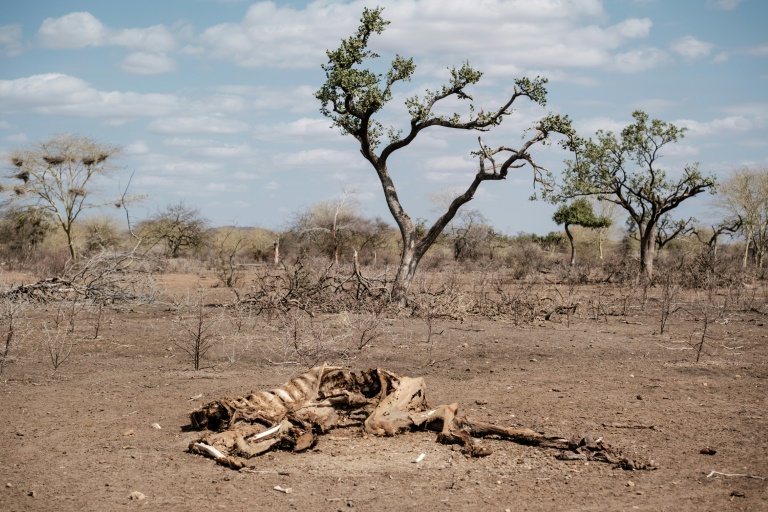
Paul Mwangi wants the High Court to set aside last week’s cabinet order allowing the open cultivation and importation of GM crops to Kenya, which is currently in the grip of its worst drought in four decades. 

“The hasty removal of all regulatory protocols… is neither rational nor reasonable,” Mwangi said in court documents dated October 13.

The government of newly elected President William Ruto last week “effectively” lifted the 2012 ban saying it was in response to dwindling food security. 

In his lawsuit, Mwangi argues that the move was unconstitutional as there were concerns over the safety of GM crops and that it also risked driving small-scale farmers out of business.  

“It derogates the rights of peasants and people working in rural areas of access to adequate food that is produced through ecologically sound and sustainable methods,” he said. 

The government has defended its decision, saying it would enable Kenya to have disease-resistant crops and improve yields.

Mwangi — a counsel for defeated presidential candidate Raila Odinga — told AFP on Friday he was waiting to hear from the court when the case will be heard.

Kenya, like many other African nations, banned GM crops over health and safety concerns and to protect smallholder farms, which account for the vast majority of rural agricultural producers in the country.

However, Kenya had faced criticism over the ban including from the United States which is a major producer of GM crops.

Activists and agriculture lobby groups last week protested over the lifting of the ban, saying it opened the market to US farmers using sophisticated technologies and highly subsidised farming and threatened the livelihoods of small-scale farmers. 

Agriculture is the backbone of Kenya’s economy, contributing over 20 percent to gross domestic product.

Ruto, a former chicken seller turned millionaire businessman, was elected  in August on a promise to turn around Kenya’s stuttering economy and tackle a cost of living crisis.

Within weeks of taking office in September, he halved the price of fertilisers to improve crop yields in the midst of the drought that has affected 23 of 47 counties. 

Four consecutive rainy seasons have failed in Kenya, Somalia and Ethiopia, an unprecedented climatic event that has pushed millions across the Horn of Africa into extreme hunger.

Markets surge after sharp Wall St swing, pound holds gains

Equities rallied Friday to extend a surge on Wall Street, where all three indexes saw extreme swings in response to a forecast-beating inflation report that cemented expectations for more big Federal Reserve rate hikes.

Sterling also held most of its big gains sparked by speculation the UK government was set to perform another U-turn on its debt-fuelled mini-budget, though the yen remained stuck around three-decade lows against the dollar.

The hotly awaited US inflation report showed prices rose last month at a faster clip than expected, despite a series of interest rate increases this year that have fanned fears of a global recession.

The month-on-month reading came in double estimates, while core inflation — which strips out volatile energy and food prices — was also elevated.

The figures sparked a sharp plunge on Wall Street but the selling quickly reversed, and all three main indexes finished the day with gains of more than two percent, with analysts suggesting several reasons for the extreme move.

Some said the initial selling may have been a knee-jerk reaction before traders accepted the data was not as bad as other recent reports, while technical factors were also flagged.

Others speculated that equities had finally reached their bottom after a year of selling that has seen many indexes plunge into correction territory, having lost more than 20 percent from their recent peaks.

“The market reversal was a head-scratcher”, said OANDA’s Edward Moya. “Some investors are convinced core inflation will soon start trending lower. Fed tightening will remain aggressive at 75 basis points in November and possibly December,” he added.

“Monetary policy is quickly getting restrictive and that will undoubtedly send inflation lower. It looks like rates will peak slightly above five percent and for some that is good enough of a reason to get back into stocks.”

He warned, however, that “given the path for rates is higher, this market reversal won’t last long”.

Tokyo piled on more than three percent, while Seoul and Taipei added more than two percent. There were also big gains in Mumbai, Sydney, Singapore, Wellington and Manila. Hong Kong closed in positive territory but late selling saw it end well off its intraday highs.

London, Paris and Frankfurt jumped in the morning, extending Thursday’s gains in early business.

There was little reaction to news that Chinese consumer inflation had hit a two-year high partly because of surging pork prices, though Shanghai was well up ahead of the start of a key Communist Party gathering at which Xi Jinping is expected to be named president for a third term.

– Yen weakness –

The pound held up after breaking higher Thursday on reports the new government could row back on more tax-cut pledges in its mini-budget, which sparked market turmoil when released two weeks ago.

Sterling sat around $1.13 — compared with Thursday’s sub-$1.10 levels — with help also coming from Bank of England cash injections to prop up financial markets.

The pound’s stronger position came despite Prime Minister Liz Truss’s insistence that there would be no more U-turns, after she was previously forced to scrap a plan to cut the higher rate of income tax. 

Finance Minister Kwasi Kwarteng has returned early from a meeting in Washington to address the crisis.

While the BoE has said it intends to end its market support Friday, analysts say it will likely keep an eye on events.

“There is… an expectation that whatever the Bank of England and Governor (Andrew) Bailey says about ending the support for the gilt market today, if we get further turbulence next week, they will have little choice but to step in and provide liquidity to the market,” said CMC Markets’ Michael Hewson.

The US inflation data pushed the already strong dollar further up against other currencies and it hit a 32-year high of 147.67 yen. Traders are now looking to see if Tokyo intervenes again to protect the unit.

Japanese Finance Minister Shunichi Suzuki said authorities were “watching the foreign exchange markets with a high sense of urgency, and we’ll take appropriate responses against excessive moves”.

Officials refused to say if they intervened Thursday following a brief drop in response to the greenback’s spike.

The yen’s weakness comes from the Bank of Japan’s refusal to lift interest rates — citing a need to support the economy — as the Fed presses ahead with its big rate hikes.

– Key figures around 0810 GMT –

Tokyo – Nikkei 225: UP 3.3 percent at 27,090.76 (close)

Hong Kong – Hang Seng Index: UP 1.2 percent at 16,587.69 (close)

Shanghai – Composite: UP 1.8 percent at 3,071.99 (close)

London – FTSE 100: UP 0.9 percent at 6,911.54

Pound/dollar: DOWN at $1.1302 from $1.1333 Thursday

Dollar/yen: UP at 147.47 yen from 147.22 yen

Euro/dollar: DOWN at $0.9769 from $0.9780

Euro/pound: UP at 86.37 pence from 86.28 pence

West Texas Intermediate: UP 0.4 percent at $89.48 per barrel

Brent North Sea crude: UP 0.4 percent at $94.92 per barrel

New York – Dow: UP 2.8 percent at 30,038.72 (close)

Danone plans to withdraw from most of its business in Russia

French agribusiness Danone said Friday it planned to transfer control of its essential dairy and plant-based business in Russia, retaining only its infant nutrition branch.

One of the few multinationals to have remained in Russia since the Ukraine war, Danone said the move to “transfer the effective control” of the dairy business could result in a write off of up to one billion euros ($980 million).

The arm represented five percent of Danone’s net sales in 2022 so far.

“Danone considers that this is the best option to ensure long-term local business continuity, for its employees, consumers and partners,” the group said in a statement.

The transaction will be subject to the approval of authorities, the group added.

Danone will however retain the activities of its “specialised nutrition” arm, which includes infant milk.

“Danone’s priority remains to act responsibly and respectfully to its local employees, consumers, and partners throughout the process,” the statement said Friday.

In March, the French group said it would continue its business in Russia, where it employs 8,000 people, as many international companies suspended operations in the wake of Moscow’s invasion of Ukraine.

But Danone spoke in July of the “extremely tense” operational conditions in Russia and Ukraine.

– Multinational exodus –

A large number of major western companies have pulled out of Russia in an exodus since Moscow invaded its pro-Western neighbour on February 24.

Starbucks and McDonald’s were among American corporations to announce their exit.

McDonald’s — which had employed 62,000 workers in Russia — was bought by Russian businessman Alexander Govor and renamed “Vkusno i tochka” (“Delicious. Full Stop”).

The Russian operations of Starbucks were also bought and reopened with a new name and logo.

Denmark’s Lego, the world’s largest toymaker, said in July that it would “indefinitely cease commercial operations” in Russia, ending its partnership with the retail group that operated 81 stores on the brand’s behalf.

French automaker Renault left the country in May, handing over its assets in the country to the Russian government.

Other firms to wind down their Russian business include clothing brands Nike, Adidas and H&M, Swedish furniture giant Ikea, and US tech giant Cisco.

BBC marks 100 years facing questions about its future

On November 14, 1922, the clipped tones of the BBC’s director of programmes, Arthur Burrows, crackled across the airwaves.

“This is 2LO, Marconi House, London calling,” he announced, and with that, public service broadcasting in Britain was born.

One hundred years on, the British Broadcasting Corporation is a global media giant. But its centenary comes at a time of drastic budget cuts that have raised questions about its future.

The corporation, officially founded on October 18, 1922, has a special place in Britain’s broadcasting landscape.

“The BBC is us,” said Jean Seaton, professor of media history at the University of Westminster in London, and the corporation’s official historian.

“It remains despite the attacks of this government an expression of us, unlike Netflix, which is an expression of the world,” she told AFP.

“The BBC is an expression of our sense of humour, interests or values. It belongs to us.”

For nearly seven million people, each day starts with BBC Radio 4’s flagship “Today” programme, which often sets the political agenda. 

At weekends, “Strictly Come Dancing”, which pairs celebrities with professional ballroom dancers, has had viewers glued to their sets for 20 years and is the most talked-about television programme on air.

BBC series such as “Peaky Blinders”, “Fleabag” or “Killing Eve” have been exported around the world.

The BBC’s influence extends far beyond Britain’s borders, making it one of the small island nation’s most visible and respected global brands.

It reaches an audience of 492 million around the world every week, according to the corporation’s 2021-2022 annual report.

BBC World Service broadcasts in 41 languages to about 364 million people a week globally.

For the last 100 years, the broadcaster has stuck firm with its original mission statement: to “inform, educate and entertain”.

“It underpins everything that we want to do,” said James Stirling, who is head of the BBC’s centenary celebrations.

– Impartiality –

Another word — impartiality — crops up repeatedly and has become a priority for BBC management given the frequent criticism it has received from the Conservative government.

During Brexit — Britain’s divisive divorce from the European Union — it accused the BBC of bias in favour of those who wanted to stay in the bloc.

Ministers have also alleged that it focuses too much on the concerns of urban elites rather than the working classes.

Britain’s right-wing tabloids — never shy of criticising their publicly funded competitor — have lapped it up.

But more worrying is a decision in January by Boris Johnson’s government to freeze its licence-fee funding model for two years, raising fears it could be scrapped in future.

The annual charge for households with a television set is currently set at £159 ($176).

In response to Johnson’s plans, the BBC in May announced a huge cost-cutting programme of £500 million a year, axing about 1,000 of its 22,000 staff and moving about services online.

The financial situation has been accompanied by an exodus of younger audiences towards streaming and on-demand platforms, prompting questions about why they should still pay for the BBC.

“Today” presenter Nick Robinson, a former BBC political editor, said it was vital for the broadcaster to keep proving its value.

“If my kids’ generation… just come to the view that I don’t really need that, I can get all that stuff from YouTube and get it from all these competitors… then we’re done,” he told the Daily Telegraph.

– ‘Pride’ –

Successful new formats have emerged, however, despite the BBC often being labelled as “legacy media”.

Journalist Ros Atkins has made his name with video “explainers” of major news stories and issues, combining them with analysis, fact-checking and vital context.

They are broadcast on television, the BBC website and via social media, where they often register millions of views around the world.

“While we still have millions of people who consume our journalism via our platforms — the BBC website, TV and radio — millions of others are consuming journalism elsewhere on Twitter, Instagram, TikTok,” he said.

“We’ve seen very big numbers on these videos. They prove this kind of journalism has an audience.”

Atkins, who started at the BBC in 2001, is well aware of the difficulties ahead. “It’s going to impact all of us who work here,” he added.

“But if you ask me how I feel about the experience of being a journalist at the BBC… I still feel I’m walking through the door at the best news organisation in the world.” 

Two unions reach compromise with oil giant in French strikes

Two French unions announced a tentative pay rise agreement with oil giant TotalEnergies early Friday following emergency negotiations to end a three-week strike that has emptied the country’s petrol stations and sparked a wider backlash to the rising cost of living.

The hard-left CGT union, which initiated the industrial action, walked out of the meeting, however, and vowed to continue striking. 

Under pressure from the government to resolve the 18-day crisis, the oil group met with four unions at its headquarters in the suburbs of Paris.

At around 3:30 am (0130 GMT), after nearly six hours of talks, representatives from CFDT and CFE-CGC said they supported the proposed seven percent pay increase and 3-6,000 euro bonus. 

“The CFDT negotiating team is in favour of the measures that are on the table,” said Geoffrey Caillon, CFDT’s coordinator. CFE-CGC coordinator Dominique Conver also called the terms “rather favourable”.

The unions have until noon on Friday to consult with their members and decide whether to sign the offer. 

Launched on September 27, the industrial action has blocked TotalEnergies’ refineries and fuel depots, causing nationwide fuel shortages and a crisis for President Emmanuel Macron’s government as calls grow for a general walkout.

Denouncing the negotiations as a “charade”, CGT representative Alexis Antonioli said TotalEnergies’ proposals were “largely insufficient”.

“It will not do anything to change the determination or outlook of the strikers,” Antonioli said. 

French railway workers and civil servants represented by CGT voted to join the striking oil refinery staff in a national day of stoppages next Tuesday, raising fears that anger over surging inflation could spiral into a series of blockages.

The famously militant CGT said it was not only pushing for higher wages for railway workers but also wanted to signal anger at the government’s intervention.

Facing frustrated businesses and an increasingly alarmed public, Macron’s administration has invoked emergency powers to compel some striking refinery workers back to their jobs.

He pledged a return to normal “in the course of the coming week”. 

– ‘A disaster’ –

Six out of seven refineries have been affected by the strikes, causing huge queues outside petrol stations and growing frustration among motorists.

“It’s been a disaster,” said Francoise Ernst, a driving instructor. “We can’t work anymore.”

Only one refinery has been able to resolve the strike so far. At the Fos-sur-Mer facility, which belongs to Esso-ExxonMobil, an agreement was signed on Monday with CFDT and CFE-CGC, but the terms were also rejected by CGT. 

“The time for a confrontation (with the government) has arrived,” left-wing opposition parliamentarian Clementine Autain from the France Unbowed party told France 2 television on Thursday.

Left-wing political parties are seizing on the strikes to ignite a protest movement against Macron and the rising cost of living, with a rally planned for Sunday.

Leading Greens lawmaker Sandrine Rousseau has said she hoped the refinery standoff would be “the spark that begins a general strike”.

But not all unions have joined the call for a general strike next Tuesday, with the country’s biggest, the CFDT, opting out.  

– Sympathy and anger –

Until Tuesday, the government had been reluctant to inflame the pay dispute at French energy group TotalEnergies and US giant Esso-ExxonMobil.

TotalEnergies made a net profit of $5.7 billion in the April-June period and is distributing billions to shareholders as its employees push for higher wages. 

Finance Minister Bruno Le Maire told RTL radio that given its huge profits this year, it had “the capacity… and therefore an obligation” to raise workers’ pay.

With 30 percent of French service stations with little or no fuel, particularly those in the Paris region and the north, the government has begun requisitioning fuel depot workers, which forces them to return to work or risk prosecution.

After an ExxonMobil depot Wednesday, a TotalEnergies site in northern France was requisitioned Thursday, with the first laden fuel tankers protected by police seen leaving during the afternoon.

Prime Minister Elisabeth Borne’s office said the emergency measures were justified because of a “real economic threat” for northern France, which relies heavily on agriculture, fishing and industry.

But the unions have reacted furiously to the government intervention.

“What we are seeing here is the Macronian dictatorship,” CGT official Benjamin Tange told AFP. The current industrial action, he said, arose out of “the anger of several months, several years and a rupture of social dialogue”.

burs-tq-bp-ico/ob/lb/qan

Five dead in North Carolina shooting, suspect captured

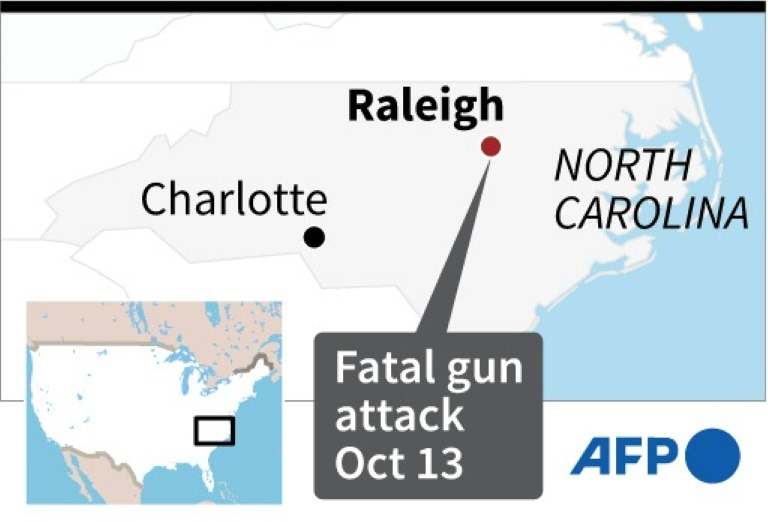
A shooting Thursday in North Carolina’s capital Raleigh left at least five people dead, including an off-duty police officer, officials in the southeast US city said, adding that a suspect had been captured.

Raleigh Mayor Mary-Ann Baldwin said the shooting occurred near the Neuse River Greenway, a popular trail in the area.

“This is a sad and tragic day for the city of Raleigh. Just after 5:00 pm today, multiple people were shot,” she told a press conference.

The Raleigh Police Department “has confirmed five fatalities. One of them was an off-duty Raleigh police officer.”

The shooter, a “white male juvenile,” was taken into custody shortly after 9:30 pm, Raleigh Police Lieutenant Jason Borneo said in a follow-up press conference.

The mayor had earlier reported that the shooter was being “contained in a residence in the area” by police.

One victim, Borneo said, remained in critical condition.

Also among the wounded was a canine officer who had been taken to the hospital, although Borneo reported that an injured police officer had been released.

When asked about a motive for the shooting, he said it would likely “come to bear” in the coming days.

North Carolina Governor Roy Cooper, who attended the evening press conference, told journalists that: “Tonight terror has reached our doorstep.”

“The nightmare of every community has come to Raleigh. This is a senseless, horrific, and infuriating act of violence that has been committed.”

Gun violence is a major problem in the United States where more than 34,000 people have died in shootings so far in 2022 alone, more than half of which were from suicide, according to the Gun Violence Archive website.

“We  must do more,” Baldwin told the press conference.

“We must stop this mindless violence in America. We must address gun violence. We have much to do, and tonight we have much to mourn.”

The North Carolina shooting occurred after a jury earlier in the day rejected the death penalty and backed life imprisonment for Nikolas Cruz, who shot and killed 17 people at a Florida high school in 2018.

Mass shootings have repeatedly stunned the nation, reigniting debate on gun control, a hot-button cultural issue that has made little headway in Congress.

However, several of the most recent gun rampages, including a shooting at a school in Texas and a supermarket frequented by African-Americans in New York state, caused particular shock across the country, prompting lawmakers to agree in June, for the first time in 30 years, to pass modest reform of gun control laws.

Nearly 400 million guns were in circulation among the civilian population in the United States in 2017, or 120 guns for every 100 people, according to the Small Arms Survey project. 

Close Bitnami banner
Bitnami