US Business

India's Infosys plans $1 bn buyback on strong profits

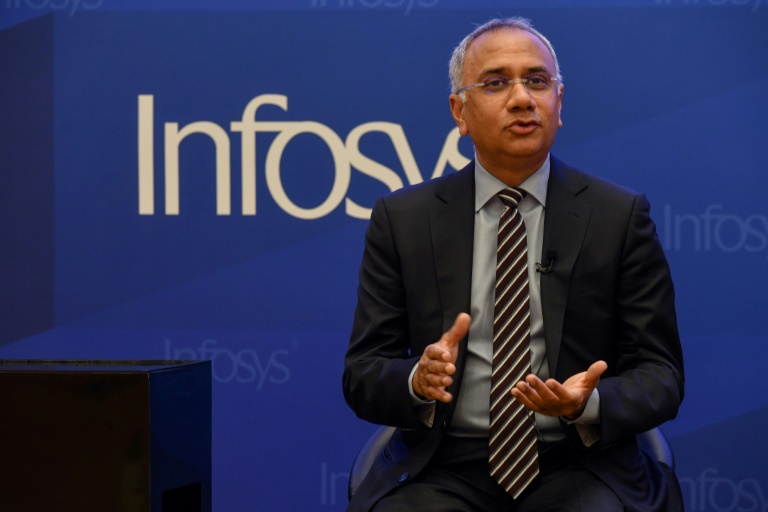
Indian outsourcing behemoth Infosys approved a $1 billion share buyback on Thursday after strong quarterly profits that reflected sustained demand for digital services.

Tech companies have benefited from higher digital services demand since the pandemic, and India’s second-largest IT company has kept a robust balance sheet despite labour competition driving up sector salaries. 

Net profit rose 11 percent year-on-year to 60.21 billion rupees ($731.4 million) in the September quarter.

Revenues were up 23.4 percent for the same period, helped by strong demand in North America and Europe.

“While concerns around the economic outlook persist, our demand pipeline is strong as clients remain confident in our ability to deliver the value they seek,” chief executive Salil Parekh said in a statement.

The Bangalore-headquartered company reported large deals of $2.7 billion for the quarter, its best result in nearly two years and up $1 billion from the June quarter.

Its board approved plans to buy back shares worth 93 billion rupees ($1.13 billion) at 1,850 rupees per share, a 30 percent premium to Thursday’s closing price.

Chief financial officer Nilanjan Roy said the board had approved an open market share buyback of 93 billion rupees ($1.14 billion) in its meeting before the results announcement.

Infosys also reported a marginally lower employee attrition rate — a key metric for IT companies — compared to the previous quarter.

Competition for employees has increasingly driven up salaries and weighed on operating margins of Indian technology companies.

“While supply side challenges are gradually abating as reflected in the reducing attrition rates, they continue to exert pressure on our cost structure,” Roy said.

Infosys is India’s second-largest information technology company and earns more than 60 percent of its revenues from North American markets.

It was at the forefront of an outsourcing boom that saw India become a back office to the world as Western firms subcontracted work to a skilled English-speaking workforce.

Shares in Infosys closed 0.64 percent lower in Mumbai ahead of the earnings announcement.

Easyjet warns of another annual loss

British airline EasyJet on Thursday warned of a third annual loss in a row, as sector-wide disruption and a strong dollar offset a recovery from the pandemic.

Pre-tax losses are expected to be between £170 million and £190 million ($190 million and $210 million) for its financial year that just ended, EasyJet said in an update.

That would however mark a significant improvement after the carrier had plunged deeper into the red in 2020 and 2021 on Covid fallout.

EasyJet on Thursday flagged a £75-million hit on costs “from operational issues experienced across the industry” in its financial year to the end of September.

The carrier also highlighted a £64-million charge on foreign exchange movements.

Nevertheless, EasyJet enjoyed a fourth-quarter summer bounceback with operating profit of up to £545 million.

It also stressed resilient demand for its current first quarter, despite Britain’s cost-of-living crisis.

The group expects demand during October and Christmas to return to pre-pandemic levels.

“Demand is continuing,” chief executive Johan Lundgren told reporters on a conference call.

“Despite the difficulties that households will have, we still know that holidays and travel is on the top of the list when people prioritise what they want to do with their disposable income.”

EasyJet, based in Luton north of London, releases full annual results on November 29.

The Covid pandemic ravaged global aviation, grounding planes worldwide and forcing airlines to slash thousands of jobs in 2020.

Demand has recovered sharply after most lockdowns were lifted. However, airlines and airports are struggling to recruit sufficient staff after having had axed so many positions.

La Liga win injunction to freeze 50 million euros of beIN assets

Spain’s top football division, La Liga, has taken out a court injunction against the beIN Media Group to freeze 50 million euros ($48.5 million) of their assets after non-payment for television rights.

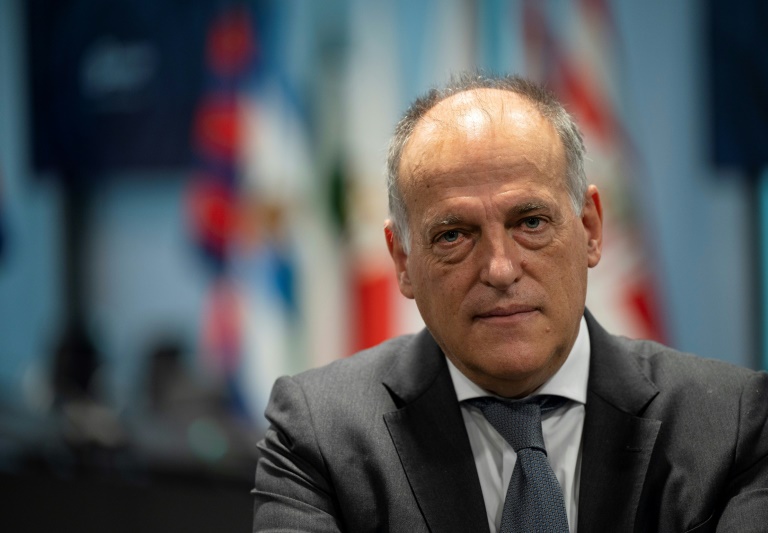
The dispute is widely seen as the latest salvo in a feud between La Liga’s outspoken president Javier Tebas and beIN Group Chairman Nasser Al-Khelaifi, who is also the president of Qatari-owned Paris Saint-Germain.

The two men have been at loggerheads on a range of issues over the past few years.

A Spanish court placed a temporary hold on the 50 million euros pending a full hearing on the case, according to court documents issued on Monday that AFP has seen.

A La Liga spokesperson confirmed the Spanish league had sought legal remedies “to guarantee the payment of the amounts owed from the contracts for international TV rights following non-payment by beIN.”

The media group broadcasts La Liga football across three continents and in 35 countries, including France, Hong Kong and New Zealand, paying La Liga an estimated 1.5 billion euros over the past five years.

“BeIN is one of the leading media groups in world sport and entertainment. Our reputation is founded on decades of significant investment, best-in-class broadcasting, long-term and trusted relationships with rights-holders, and a track record of payment,” a beIN Media Group spokesperson told AFP.

“We will not discuss publicly the private discussions we’ve been having with La Liga, or any rights-holder for that matter, regarding specific contracts. That is not how business should be conducted, certainly not by professional and dignified institutions.

“If we ran our operations reacting to certain executives’ comments on others within the sports industry, we wouldn’t be in business.”

Al-Khelaifi has become an increasingly powerful presence in the world of football as president of the European Club Association (ECA). Both he and Tebas are on UEFA’s Executive Committee.

Tebas condemned PSG and Premier League side Manchester City in June this year for violating Financial Fair Play rules, and has often railed against “state-owned” clubs for “financial doping”. PSG are owned by a Qatari investment fund.

La Liga protested against PSG signing Kylian Mbappe to a new contract in the summer, with the player turning down Real Madrid, by filing a complaint against them in a French court. 

At the time, Tebas described the new Mbappe deal as “an insult to football”.

At a La Liga event in May, Tebas attacked Al-Khelaifi for having too many conflicts of interest given his multiple positions in football. 

“He wears a lot of hats, there’s too many conflicts of interest and this cannot be,” said Tebas.

“It can’t happen in football in 2022. A leading actor like him cannot be in these organisations and preside over a TV channel that buys (the rights to) La Liga, the Champions League, (and) internationals.”

WWII munitions hinder Nord Stream pipeline probe

Investigations into the suspected sabotage of the Nord Stream gas pipelines linking Russia with Europe are “progressing well”, despite World War II munitions on the seabed, Denmark said Thursday.

“It’s a zone marked by the presence of munitions — used or not — from World War II,” Danish Defence Minister Morten Bodskov told reporters on the sidelines of a meeting of the NATO defence alliance in Brussels.

“There’s a lot of stuff at the bottom of the sea, so it’s not so easy.”

“But the work is continuing and going well,” he added.

The two Nord Stream pipelines were damaged by four explosions under the Baltic Sea at the end of September, causing major gas leaks.

Sweden has announced that preliminary underwater inspections backed up suspicions of probable sabotage.

“With Sweden and Germany, Denmark is carrying out an inquiry which is progressing well,” the minister said.

“What we discover will of course be made public.”

With fingers being pointed at Russia for the sabotage, Moscow demanded to be part of the investigations into the explosions which happened in international waters, but Copenhagen and Stockholm refused.

Russia’s ambassador to Copenhagen said the credibility of the inquiry was undermined by Moscow’s absence.

But Sweden’s outgoing Prime Minister Magdalena Andersson told Moscow to open its own investigation.

Both Moscow and Washington have denied responsibility for the gas leaks.

Biden to prioritize China competition amid 'dangerous' Russia

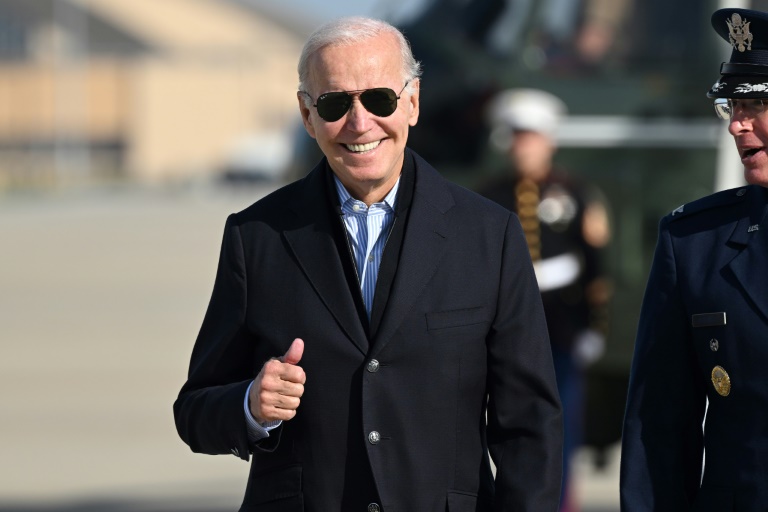
President Joe Biden’s administration said Wednesday it would prioritize winning over China, seeing it as the only global rival to the United States, even as it also works to constrain a “dangerous” Russia.

“The post-Cold War era is over, and the competition is underway between the major powers to shape what comes next,” Biden’s national security advisor, Jake Sullivan, said in a speech at Georgetown University to unveil the national security strategy.

The strategy said the 2020s would be a “decisive decade for America and the world” — for reducing conflict, promoting democracy over authoritarianism and confronting the key shared threat of climate change.

“We will prioritize maintaining an enduring competitive edge over the PRC while constraining a still profoundly dangerous Russia,” the strategy said, referring to the People’s Republic of China.

Vladimir Putin’s Russia “poses an immediate threat to the free and open international system, recklessly flouting the basic laws of the international order today, as its brutal war of aggression against Ukraine has shown,” the strategy added.

China, “by contrast, is the only competitor with both the intent to reshape the international order and, increasingly, the economic, diplomatic, military and technological power to advance that objective.”

The release of the strategy was delayed by the Ukraine war, with Biden spending most of this year rallying allies against Russia and marshalling billions of dollars in weapons to Kyiv, but it remains largely consistent with interim guidance laid out shortly after he took office in January 2021.

“I don’t believe that the war in Ukraine has fundamentally altered Joe Biden’s approach to foreign policy, which long predates his presidency,” Sullivan earlier told reporters.

“But I do believe that it presents in living color the key elements of our approach — the emphasis on allies, the importance of strengthening the hand of the democratic world and standing up for our fellow democracies and for democratic values,” he said.

– China wants to be ‘world’s leading power’ –

The strategy said the United States was willing to work even with competitors on shared interests, amid the Biden team’s talks with top carbon emitter China on climate change, described as “the existential challenge of our time.”

But the White House emphasized risks from China, warning that its rapid advances in technology aimed to mold the world order in support of “its own authoritarian model.”

Despite Beijing’s repeated denials it is seeking hegemony, the strategy said China “has ambitions to create an enhanced sphere of influence in the Indo-Pacific and to become the world’s leading power,” using the favored US term for the broader Asia region.

The White House also tied a rising China to Biden’s vows to prioritize the US middle class, saying Beijing was seeking to make the world dependent on its economy while limiting access to its own billion-plus market.

The strategy called for major investment at home, two months after Biden signed a $52 billion package to improve US capacity for building semiconductors, but also said the United States sought to “coexist peacefully” with China and manage the competition “responsibly.”

“We are not seeking to have competition tip over into confrontation or a new Cold War and we are not engaging each country as simply a proxy battleground,” Sullivan said.

Chinese foreign ministry spokesperson Mao Ning said at a press conference Thursday that China and the US “shoulder responsibilities for maintaining world peace and stability and promoting economic prosperity and development.

“The US should uphold the principles of mutual respect, peaceful coexistence, and win-win cooperation… and work with China to bring China-US relations back onto a healthy and stable track,” she said.

The strategy release comes as Biden vows a reassessment of relations with one longtime US ally, Saudi Arabia, which moved to slash oil output — benefitting energy exporter Russia and potentially raising gas prices for American consumers weeks before congressional elections.

Amid reconciliation between Israel and Gulf Arab states, the strategy called for a “more integrated Middle East” that would reduce the long-term “resource demands” of the United States, which for decades has provided security for oil-producing nations.

The strategy also acknowledged the need to address democratic shortcomings at home, where former president Donald Trump refused to concede defeat in the 2020 election and whose supporters led a deadly assault on the US Capitol.

“We have not always lived up to our ideals and in recent years our democracy has been challenged from within. But we have never walked away from our ideals,” it said.

Asian markets drop as traders brace for key US inflation data

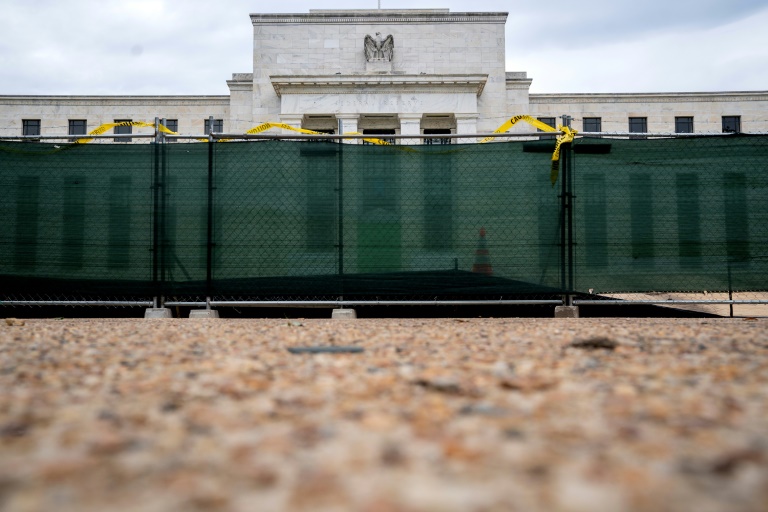
Equities fell in Asia and the dollar maintained its strength Thursday ahead of the release of US inflation data that could determine the pace of Federal Reserve interest rate hikes.

The release of the September report comes a day after minutes from the central bank’s latest policy meeting showed officials determined to win their battle against runaway prices by ramping up borrowing costs, though they did note the risk to the economy that posed.

Investors are growing increasingly worried that the strict monetary tightening campaign — including three bumper rate hikes in succession — will plunge the United States into recession.

While there are hopes for signs of a slowdown, traders have taken to the sidelines in case of more volatility.

On Wednesday, figures showed wholesale inflation rose a forecast-beating 0.4 percent.

After another day of losses on Wall Street, Asia was again in the red with Hong Kong, Singapore and Seoul off more than one percent.

Tokyo, Shanghai, Mumbai, Wellington and Taipei were also off.

London and Paris fell but Frankfurt edged up.

“The big rise in core prices would appear to suggest that inflation is likely to be much stickier over the next few months that markets had originally been hoping,” said CMC Markets analyst Michael Hewson.

This, he added, was “adding to the risk we could see the Federal Reserve not only be much more aggressive on rate hikes, but keep those rates higher for longer”.

Minutes from the Fed’s September meeting suggested it will press on with a fourth straight 0.75 percentage-point hike next month, with policymakers noting a slowdown of growth and the jobs market would be “required” to tame inflation, adding that prices remained “unacceptably high”.

They also pointed out that prices had “not yet responded” to the previous tightening.

Bank officials had for months stuck to a line that they will continue ramping up rates and hold them until they were satisfied they have slain inflation.

But the minutes said “several participants noted that, particularly in the current highly uncertain global economic and financial environment, it would be important to calibrate the pace of further policy tightening with the aim of mitigating the risk of significant adverse effects on the economic outlook”.

However, they said the cost of not doing enough to tackle prices outweighed the cost of doing too much.

– Dollar still king –

“The Fed remains purposefully driven to tighten monetary policy further into restrictive territory given the rather gradual cooling of economic activity and slow inflation response,” said Gregory Daco, at Ernst & Young.

But added that “the balance of risks is rapidly shifting”.

“Elevated global economic and financial market uncertainty will make it essential for the Fed to calibrate its policy response.”

They expect to lift rates to around 4.6 percent in 2023, according to the median estimate — from the current 3-3.25 percent.

Expectations for even more tightening kept the dollar elevated across the board, and it hit a fresh 24-year high near 147 yen, more than one yen above the point at which Japanese authorities last month intervened to protect the currency.

Still, sterling held most of the gains it enjoyed Wednesday fuelled by expectations the Bank of England will unveil a huge rate hike next month in the wake of volatility in UK financial markets.

The crisis in London saw the yield on 30-year government bonds bounce above five percent, while that on 10-year bonds hit 4.64 percent, the highest since 2008 during the global financial crisis.

The UK government’s increased borrowing costs are a reflection of market unease regarding the affordability of upcoming tax cuts aimed at supporting Britain’s recession-threatened economy.

Oil prices edged up after dropping Wednesday in response to a report from the industry-funded American Petroleum Institute indicating a huge jump in US stockpiles, suggesting weakening demand.

Meanwhile, OPEC trimmed its estimate for growth in demand this year and next by half a million barrels a day.

A drop in the past few days has eaten into last week’s gains that came in response to a decision by OPEC and other producers to slash output by two million barrels a day. 

– Key figures around 0810 GMT –

Tokyo – Nikkei 225: DOWN 0.6 percent at 26,237.42 (close)

Hong Kong – Hang Seng Index: DOWN 1.9 percent at 16,389.11 (close)

Shanghai – Composite: DOWN 0.3 percent at 3,016.36 (close)

London – FTSE 100: DOWN 0.5 percent at 6,793.63

Pound/dollar: DOWN at $1.1090 from $1.1101 Wednesday

Dollar/yen: UP at 146.83 yen from 146.86 yen

Euro/dollar: DOWN at $0.9704 from $0.9707

Euro/pound: UP at 87.54 pence from 87.41 pence

West Texas Intermediate: UP 0.6 percent at $87.77 per barrel

Brent North Sea crude: UP 0.8 percent at $93.20 per barrel

New York – Dow: DOWN 0.1 percent at 29,210.85 (close)

'Everything has collapsed': Russia's draft tanks small businesses

In his brand new co-working space in Chelyabinsk, a city in central Russia, entrepreneur Maxim Novikov is counting the empty seats.

The space is usually overflowing with designers, programmers and young Russians working on their start-ups.

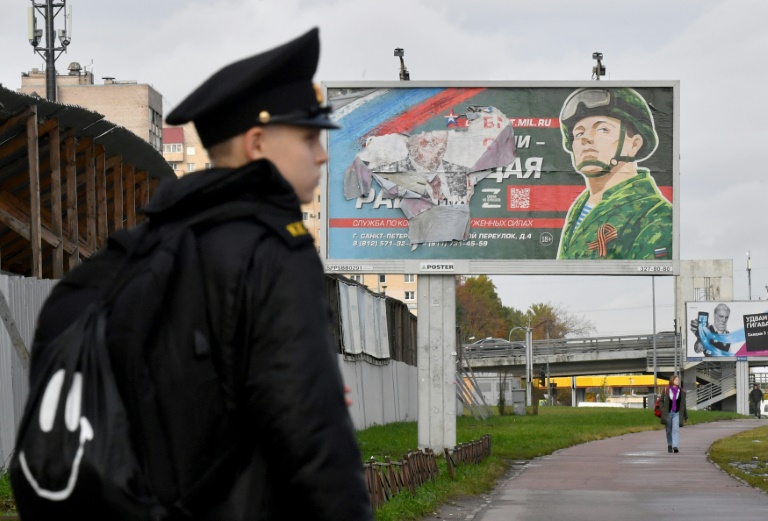
But since President Vladimir Putin announced a mobilisation of hundreds of thousands of young Russian men last month, the 33-year-old has lost much of his clientele.

“Many have stopped coming,” he told AFP by phone.

Instead, they are filling the depleted ranks of Russia’s army or they are among the tens of thousands of others who have fled south for neighbouring Kazakhstan.

The Kremlin’s mobilisation has brought uncertainty and chaos to businesses already hard-hit by sanctions and still recovering from the fallout of the pandemic.

In the last three weeks, a little more than half of the 77 spots in Novikov’s co-working place were occupied.

He has “no idea” if the people who fled or were drafted will keep paying subscription fees, which cost between 70 and 130 dollars.

And now Novikov is worried about his loans.

“Turnover has already dropped by more than 40 percent this year,” Novikov, an architecture graduate, said. 

“I wanted to buy a third space but for the moment it is not possible to take the risk.” 

 – ‘Projects on hold’ – 

But he is far from the only business owner in Russia who is growing more nervous over the workforce vacuum.

“It means projects are being put on hold and private companies will be afraid to invest,” said Natalia Zubarevich, an economist at Moscow State University.

Russia’s economy has already been battered this year by unprecedented Western sanctions in response to Putin’s decision to send troops to Ukraine on February 24.

But Zubarevich said mobilisation was an “additional aggravating factor.”

She added she was not surprised young men from the provinces were joining the army, attracted by monthly payouts that are sometimes almost as much as their annual salaries. 

Meanwhile, in glitzy central Moscow, 45-year-old Yelena Irisova is distraught at seeing her company, which produces luxury leather bags, stop production.

She employs around ten people in the small business. 

But two of her craftsmen left the company in recent weeks — one fearing mobilisation, another to help her daughter whose husband had been sent to the front.

“After September 21, everything collapsed,” Irisova said. “Our sales fell threefold — from 10 to three orders a day.”

She says her savings will keep her going “a month or two, but not more.”

– Almost no orders – 

No Russian business seems unscathed.

Katerina Iberika, 39, who owns a pastry shop specialising in birthday cakes in Moscow, is also facing ruin. 

Her five employees are women with exemptions from mobilisation. But it’s the low morale among the public that’s endangering her business. 

“Cancellations of orders for big events started two days before mobilisation,” Iberika told AFP.

Now she gets nearly no orders at all, except for “very small” ones. 

She is considering leaving Russia.

In increased isolation — and hit by sanctions and mobilisation — an anxious Russian society is watching its spending closely. 

“People are looking to put their money aside,” Sofya Donets, chief economist for Russia at Renaissance Capital, said.

“They’re not going to overspend.”

Some industries have been harder hit than others by a sudden lack of men. 

Employers have sounded the alarm in recent days, asking the government for exemptions from mobilisation, in particular for small and medium-sized companies.

Russia’s economic development ministry told AFP that it had drawn up a list of measures for these “problematic issues”.

It said it had facilitated grants and micro credits. 

“A mobilised entrepreneur will be able to suspend the fulfilment of obligations” to pay the loans back, the ministry said.

Analyst Sofya Donets expects “more intervention and state aid” to calm the effects of mobilisation. 

Especially since Russian coffers continue to fill up thanks to its energy exports.

Finland hopes new nuclear reactor eases energy crunch

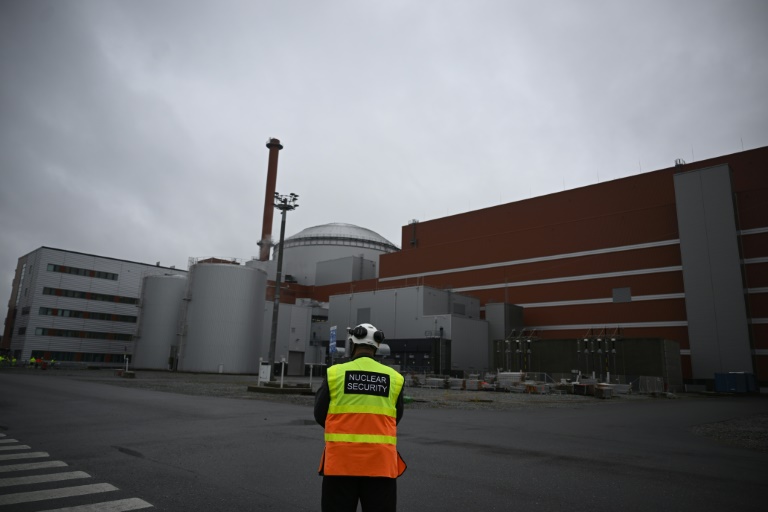
After over a decade of delays, the deafening sound of Finland’s new Olkiluoto 3 nuclear reactor finally running its turbine at full power was welcomed with joy — and relief.

The Nordic country is hoping the plant will be able to ease the coming winter’s challenges as Europe battles soaring energy prices following Russia’s invasion of Ukraine.

“It has taken a lot of perseverance and years of hard work to get to this point, so we feel pretty good at the moment,” Johanna Aho, a spokeswoman for the plant’s operator TVO, told AFP.

The almost 300-degree Celsius (572 F) steam gushing from the reactor turns the over 60-meter-long turbine up to 25 times every second, making a visit to the turbine island in protective gear feel as hot as one of Finland’s ubiquitous saunas.

More than 12 years behind schedule, on September 30, Olkiluoto 3 reached full power for the first time since construction began in 2005. 

With a power level of 1,600 megawatts, the reactor, located on Finland’s southwestern coast, is now the most powerful in Europe and the third most powerful in the world.

Around 10 full power tests remain for the unit — during which it will periodically stop producing electricity for several days or even weeks — before normal operation starts in December.

– Support for nuclear –

When the new unit reached full power on September 30, TVO said the Olkiluoto plant accounted for around 40 percent of Finland’s electricity production, with the Olkiluoto 1 and 2 reactors together producing approximately 21 percent and the new OL3 alone around 19 percent.

“That’s a lot of electricity and it’s the kind of steady, predictable and stable electricity production that nuclear power provides,” Aho said.

In recent years, support for nuclear energy has grown in Finland, spurred by concern over climate change.

A May poll by trade association Finnish Energy showed 60 percent of Finns supported nuclear power, a record high.

But after Finnish group Fennovoima in May terminated a nuclear power project with Russia’s Rosatom, citing risks linked to the war in Ukraine, there are no other nuclear reactor projects in the pipeline.

Finland gets around 50 to 60 percent of its electricity from hydro, wind, solar and biomass, with fossil fuels and peat comprising roughly 10 percent.

– French were ‘unprepared’ –

Olkiluoto 3 was meant to be up and running already in 2009, six years after TVO announced a deal with France’s Areva and Germany’s Siemens for the reactor’s construction.

But the project quickly ran into issues.

In 2006, TVO announced that “delays in the construction work and in manufacturing of the main coolant lines” had pushed the reactor’s starting date back to 2010-2011.

And when the Finnish nuclear safety agency STUK by 2009 required hundreds of improvements to be made due to “problems with the construction”, the partners started casting blame.

TVO demanded 2.4 billion euros in compensation from Siemens and Areva for the setbacks. The two in turn demanded 1.0 billion euros from TVO, arguing that the project had encountered “more rigorous security requirements” than initially foreseen.

Areva meanwhile accused STUK of being slow to approve documents, to which STUK responded by saying the consortium had been “unprepared”.

“The French did not understand at first the Finnish system, that no important device can be built before the plan is approved,” Jukka Laaksonen from STUK told AFP at the time.

After years of litigation and even more delays, Areva and TVO settled their disputes in November 2018, with the French agreeing to pay 450 million euros ($554 million) in compensation.

– Model plagued by delays –

Design work on the EPR began in 1992 with the objective of creating a next-generation reactor with added safety features that could win over public opinion which was highly sceptical of nuclear power following the Chernobyl catastrophe of 1986.

But the complex design has caused delays and problems.

Like Olkiluoto, France’s EPR which began construction in 2007 has been plagued by delays and is still not finished.

In Britain, the construction of an EPR at Hinkley Point in southwest England is also running behind schedule.

China launched two EPR reactors in the Taishan power plant in Guangdong province by 2019, but one was shut for over a year for repairs following damaged fuel pellets and a build-up of gasses in the closed cooling circuit.

Ukraine claims new gains, welcomes Western air defence pledge

Ukraine said Wednesday it had reclaimed more territory in the south and welcomed a Western pledge to deliver air defence systems to Kyiv “as fast as we can” after days of intense Russian missile strikes.

A US-led group of around 50 countries held talks at the NATO headquarters in Brussels and vowed to deliver new anti-missile systems to Kyiv.

Ukraine is reeling from Russian attacks that have left scores dead and wounded as well as villages and towns without power and hot water across the country.

“The systems will be provided, as fast as we can physically get them there,” US Defense Secretary Lloyd Austin said after the meeting, without giving details.

In a further show of Western solidarity, the G7 vowed to “stand with Ukraine for as long as it takes”, while International Monetary Fund chief Kristalina Georgieva pledged financial help for the sake of “moving with you in the direction of a strong Ukraine”.

Ukrainian President Volodymyr Zelensky, who has described the Russian missile attacks as an act of terrorism and has pressed the West for an “air shield”, welcomed the promised anti-missile systems.

“The more audacious and cruel Russian terror becomes, the more obvious it is to the world that helping Ukraine to protect the sky is one of the most important humanitarian tasks for Europe today,” Zelensky said in his daily address to the nation.

– ‘Come back to the table’ –

As Ukraine faces a barrage of Russian aerial assaults, Britain on Thursday said it would supply drones and, for the first time, rockets capable of shooting down cruise missiles.

“The AMRAAM rockets… will be provided in the coming weeks for use with the NASAMS air defence systems pledged by the US,” the British defence ministry said in a statement.

In an interview, French President Emmanuel Macron also promised air defences.

“We’re going to deliver… radars, systems and missiles to protect them from these attacks,” Macron said, adding that France was also negotiating to send another six Caesar mobile artillery units.

It was not immediately clear whether the weapons promised by Macron were part of the commitment made in Brussels or separate.

Macron also called on Russian President Vladimir Putin to resume negotiations with Kyiv.

“Today, first of all, Vladimir Putin must stop this war, respect Ukraine’s territorial integrity and come back to the table for talks,” Macron told broadcaster France 2.

The United Nations General Assembly voted overwhelmingly on Wednesday to condemn Russia’s annexation of parts of Ukraine, sending what US President Joe Biden said was a “clear message” that Moscow could not erase a sovereign state.

– ‘Under the rubble’ –

Since Monday, Russia has pummelled Ukraine with missiles, damaging energy facilities nationwide in attacks that Putin said were retaliation for last week’s deadly explosion at a Crimean bridge. 

That blast ripped through a road and rail link Moscow uses to transport military equipment.

In the early hours Thursday, Russia struck the Ukrainian capital region with Iranian-made “kamikaze drones”, according to an official. 

“Another attack by kamikaze drones on critical infrastructure facilities,” said Kyrylo Tymoshenko, deputy head of the Ukrainian president’s office, without further details.

Earlier, a bombing blitz smashed into the Black Sea port city of Mykolaiv, obliterating the top floors of a five-storey residential building.

“(The) rest is under the rubble. Rescuers are working on the spot,” Mykolaiv Mayor Oleksandr Senkevych wrote on Telegram.

And in the town of Avdiivka, Russian strikes killed at least eight people at a market, according to the Ukraine-appointed chief of the region.

The Russian military meanwhile said it had fended off Ukrainian attacks in the eastern Donetsk, Lugansk and Kharkiv regions.

But in the latest setback for Putin, Kyiv said Wednesday that it had retaken five more settlements in the southern region of Kherson — one of the four territories Moscow said it annexed in September.

For Ukrainians trapped on the frontline, fears over the relentless exchange of fire are now compounded by the prospect of a winter without power or water.

“Firewood… how can I get it?” said Oleksandra Pylypenko from the eastern town of Bakhmut.

“I don’t know how we’ll survive.”

– ‘Need more artillery’ –

Some of the anti-aircraft defence systems pledged by Western allies began arriving in Ukraine this week.

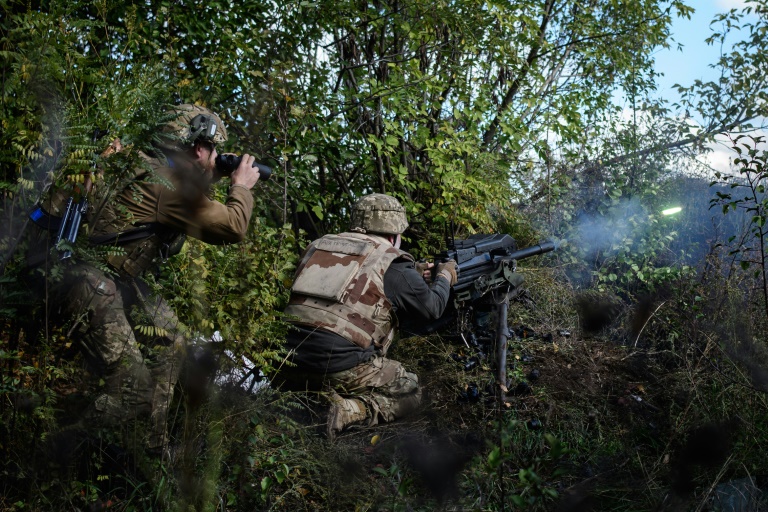
On the frontline in Donetsk, Western weapons have helped boost Ukrainian morale and the abilities of Kyiv’s forces.

“We definitely need more artillery,” said an officer who gave his name as “Sergiy” with Ukraine’s 5th Regiment on a hill overlooking Russian-held Gorlivka in Donetsk.

“When it comes to artillery, they still have an advantage so we can’t return fire equally,” he added. 

“We are firing more precisely now, but with fewer strikes.”

With Russia’s bombing blitz escalating fear of an atomic disaster, UN nuclear agency chief Rafael Grossi arrived in Kyiv for talks on setting up a nuclear safety and protection zone around Ukraine’s Russian-held Zaporizhzhia plant.

US Capitol riot panel to get inside Trump's head: aides

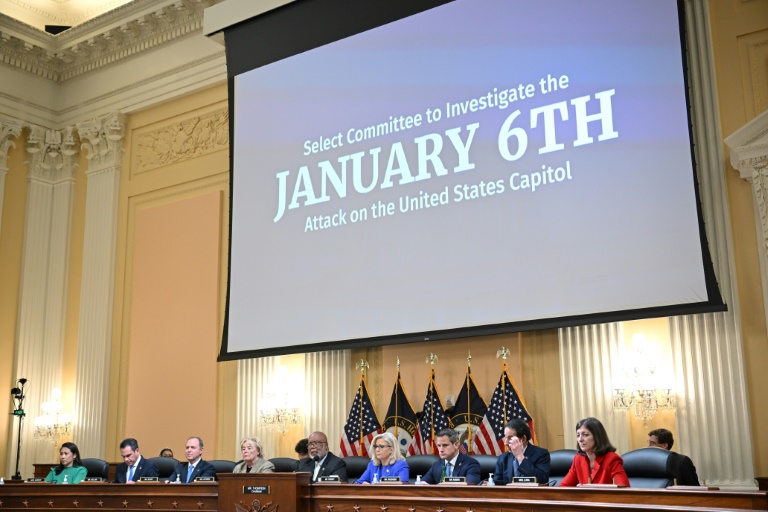
Lawmakers investigating the 2021 attack on the US Capitol plan to journey inside the mind of Donald Trump on Thursday during the final public presentation on their sprawling probe before crucial midterm elections.

The House of Representatives panel has already unveiled reams of evidence on the former president’s involvement in a labyrinthine series of connected schemes to overturn the 2020 election.

In what could be its last public session before it issues a report on its findings, the panel of seven Democrats and two Republicans has promised fresh damning evidence on the insurrection.

“And we’re going to bring a particular focus on the former president’s state of mind and his involvement in these events as they unfolded,” a select committee aide said.

Blockbuster witness testimony across eight hearings in the summer provided stunning examples of Trump and his allies pressuring election officials and trying to get lawfully-cast votes nullified in swing states, and of Trump’s inertia amid the mob uprising on January 6, 2021.

The aide said that while each previous hearing had dug into separate aspects of the plan to overturn the election and block the transfer of power, Thursday’s session would reach back before January 6 to tell the broader story.

“So what you’re going to see is a synthesis of some evidence we’ve already presented with that new, never-before-seen information to illustrate Donald Trump’s centrality to the scheme from the time prior to the election,” he added.

– ‘Right to the violence’ –

The panel plans to release its final report by the end of the year, but after the November 8 elections that decide which party controls Congress. A preliminary report may come out beforehand.

It will be the first hearing without live witnesses — instead featuring new video evidence, including footage from a Danish film crew shot for a documentary about longtime Trump ally Roger Stone.

In one clip from the day before the 2020 election, the notorious self-styled “dirty trickster” is seen telling the filmmakers he has no interest in waiting to contest the vote tally.

“Let’s get right to the violence,” says the 70-year-old Republican operative.

Stone, who has not been charged in connection with the riot, has challenged the authenticity of the clips.

Committee aides said there would also be new video footage showing “efforts to respond in real time to the violence… as that violence was unfolding.”

The panel also plans to unveil evidence developed from “hundreds of thousands” of pages of documents surrendered by the Secret Service, the aides said, as lawmakers seek to understand why certain agents’ text messages from the eve of the insurrection and the day itself went missing.

The records are expected to confirm evidence from earlier hearings that Trump riled up his supporters despite being repeatedly warned of looming violence on January 6.

– Criminal referrals? –

Former White House aide Cassidy Hutchinson testified in June that Trump was briefed that some of his supporters had turned up armed, and demanded they be permitted into his rally and that he be allowed to lead them at the Capitol.

Trump, who urged his supporters in a fiery speech near the White House to “fight like hell,” was impeached for inciting the mob to storm Congress to halt the peaceful transfer of power to Joe Biden.

The defeated president’s election fraud falsehoods inspired a welter of restrictive voting laws in conservative states as he endorsed a crop of Republican candidates running to oversee future elections who have tried to undermine faith in the last one.

The hearing comes with the former president’s legal woes mounting, as the Justice Department probes the mishandling of government secrets found at his Florida beach club, Mar-a-Lago.

Individual panelists have publicly suggested Attorney General Merrick Garland should charge Trump over the Capitol attack, although the committee has not announced a formal decision on whether it will make criminal referrals.

It is looking increasingly unlikely that members will subpoena Trump and his vice president Mike Pence, who was threatened by the president’s supporters during the insurrection.

Close Bitnami banner
Bitnami