US Business

G20 to meet under Ukraine war, inflation cloud

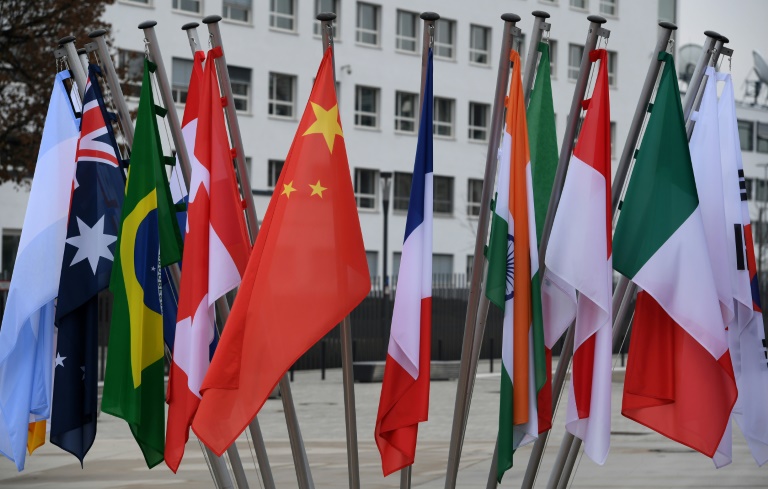
A divided G20 holds talks on Thursday under the shadow of multiple crises, from Russia’s war in Ukraine to a global economic slowdown, on top of soaring inflation and climate change.

Finance ministers and central bankers from the Group of 20 major economies are gathering in Washington during annual meetings of the IMF and World Bank this week that have underscored the multiple challenges the world is facing.

The list of threats ranges from rising interest rates to soaring food prices, along with growing poverty and natural disasters blamed on climate change.

The IMF lowered its growth forecast for the world economy for next year earlier this week, warning that the “worst is yet to come.”

But the G20, which includes Russia, is expected to close its meeting without a joint communique, as in its previous gatherings presided by Indonesia this year.

“It may be difficult to have a joint communique,” said a source in the French economy ministry.

While Western nations have imposed unprecedented sanctions on Russia, other countries have maintained economic ties with Moscow, with India and China stepping up their purchases of Russian oil.

The Group of Seven wealthy democracies is now looking to cap the prices of Russian crude exports, a move aimed at stripping the country of a major source of funding for its war effort.

The G7 — which includes Britain, Canada, France, Germany, Italy, Japan and the United States — said Wednesday it had made “significant progress” in key parts of its proposal, noting that it had added Australia to its coalition.

Gaining broad global approval for a price cap is a key challenge for the proposal.

The Saudi-led OPEC group of oil exporters has angered the United States by agreeing on a drastic production cut with Russia and other allies, which could send energy prices soaring even higher.

US President Joe Biden warned of “consequences” for Saudi Arabia in an interview with CNN this week.

– ‘We’re cooked’ –

Tensions within the G20 come as leaders are due to meet at a summit in Bali, Indonesia, next month that could see Biden share the same venue as Russian President Vladimir Putin and another rival, Chinese leader Xi Jinping.

The lack of consensus within the group also comes ahead of the United Nations’ COP27 climate summit in Egypt in November.

Climate change has been among the central topics of the IMF and World Bank meetings this week.

IMF Managing Director Kristalina Georgieva said that the world has to invest up to $6 trillion per year if it is to meet the Paris agreement goal of reaching net-zero carbon emissions by 2050 in order to limit the increase in global temperatures.

“If we do not shift our trajectory this decade, we’re cooked. If we don’t want to be cooked, then we should speed up,” Georgieva said Wednesday in talks on climate change.

Mideast petrolheads hope eSports takes them to the track

Virtual cars whizz by with engines roaring, as 26 drivers vie for the top spot at an online tournament in Jordan — many dreaming one day of transitioning to real racers.

Professional racing requires not only talent, but also support from well-established teams and sponsors who can help cover the hefty costs that go into acquiring and maintaining race cars.

Young people in the Middle East and elsewhere with a passion for the sport have instead been opting for a far more affordable and accessible alternative followed by millions of fans — eSports.

The dimly lit event hall in Jordan’s capital was buzzing with excitement this weekend, as the racers at the Toyota Gazoo Middle East and North Africa eSports Cup assumed positions behind simulators, representing 13 countries across the region.

“It’s a great experience,” said the youngest competitor, 16-year-old Khaled Dashti of Kuwait, encouraging others “to give this kind of racing a try”.

Dashti said he would love to swap computer games for the driving wheel. 

“My dream is to go into GT racing,” he said. “As these games evolve, there will be more opportunities”, he added.

– ‘Sport of the future’ –

One racer who has made the transition is Japan’s Yusuke Tomibayashi, a former eSports champion who now competes at Super GT300 races.

At the race in Amman, he said he was “amazed” to see how quickly virtual racing was taking hold in the Middle East.

There as part of a marketing push to illustrate the link between the virtual and real-life sport, he played against Lebanon’s Karl Etyemezian — and lost.

Since the 1980s, virtual simulators have given players the chance to feel the rush of driving a race car.

Today, Tomibayashi said the starkest difference is that virtual racing cannot convey how gravity affects real-life drivers as they take the track corners.

Accidents happen and teams must stop to change tires and refuel like the real thing — save for risks and the smell of fuel and burning rubber.

“It’s not only the drivers who get an adrenaline rush, but also the crowd,” said Fawaz Dahdal, 28, watching the tournament for the second year in a row.

“It is no longer just a game,” he said. “It’s the sport of the future.”

The races were projected live on a big screen, accompanied by live commentary and shouts of support from a crowd of some 500 fans — with many more watching from home.

“eGames take up a lot of my children’s time,” said Rana Alyan, who took her son Bakr, 11, to watch the tournament. “But they only practise after they finish their homework.”

– Millions watching –

The racers in Amman were playing “Gran Turismo”, endorsed since 2018 and sponsored by the International Automobile Federation (FIA).

Nadim Haddad, head of Jordan Motorsport’s eSports department and a member of the FIA eSports Commission, said that Covid lockdowns “contributed to the spread of digital games.”

After a national championship organised in 2020, players moved on to a regional cup, he explained.

The first Middle Eastern cup last year drew around 13.8 million viewers online, about 70 percent aged between 18-34, according to figures shared by digital strategy firm APEX.

Over a million people watched the cup from the United Arab Emirates alone.

Applause rang through the hall in Amman as Oman’s Mohammed al-Barwani, 34, was declared the winner of this year’s tournament on Saturday, qualifying him for the world grand finals.

“I wasn’t expecting this victory,” Barwani said.

While some of his rivals had accidents, he also attributed his success to a strategy of conserving fuel and tyres.

“We didn’t make any mistakes,” he said.

Barwani said his goal now is to get into drifting — a motorsport which involves deliberately oversteering the car to slip, skid and spin.

“I started my journey on simulators,” he said. “If I get a change in real-life races, I won’t miss it.”

'Everything has collapsed': Russia's draft tanks small businesses

In his brand new co-working space in Chelyabinsk, a city in central Russia, entrepreneur Maxim Novikov is counting the empty seats.

The space is usually overflowing with designers, programmers and young Russians working on their start-ups.

But since President Vladimir Putin announced a mobilisation of hundreds of thousands of young Russian men last month, the 33-year-old has lost much of his clientele.

“Many have stopped coming,” he told AFP by phone.

Instead, they are filling the depleted ranks of Russia’s army or they are among the tens of thousands of others who have fled south for neighbouring Kazakhstan.

The Kremlin’s mobilisation has brought uncertainty and chaos to businesses already hard-hit by sanctions and still recovering from the fallout of the pandemic.

In the last three weeks, a little more than half of the 77 spots in Novikov’s co-working place were occupied.

He has “no idea” if the people who fled or were drafted will keep paying subscription fees, which cost between 70 and 130 dollars.

And now Novikov is worried about his loans.

“Turnover has already dropped by more than 40 percent this year,” Novikov, an architecture graduate, said. 

“I wanted to buy a third space but for the moment it is not possible to take the risk.” 

 – ‘Projects on hold’ – 

But he is far from the only business owner in Russia who is growing more nervous over the workforce vacuum.

“It means projects are being put on hold and private companies will be afraid to invest,” said Natalia Zubarevich, an economist at Moscow State University.

Russia’s economy has already been battered this year by unprecedented Western sanctions in response to Putin’s decision to send troops to Ukraine on February 24.

But Zubarevich said mobilisation was an “additional aggravating factor.”

She added she was not surprised young men from the provinces were joining the army, attracted by monthly payouts that are sometimes almost as much as their annual salaries. 

Meanwhile, in glitzy central Moscow, 45-year-old Yelena Irisova is distraught at seeing her company, which produces luxury leather bags, stop production.

She employs around ten people in the small business. 

But two of her craftsmen left the company in recent weeks — one fearing mobilisation, another to help her daughter whose husband had been sent to the front.

“After September 21, everything collapsed,” Irisova said. “Our sales fell threefold — from 10 to three orders a day.”

She says her savings will keep her going “a month or two, but not more.”

– Almost no orders – 

No Russian business seems unscathed.

Katerina Iberika, 39, who owns a pastry shop specialising in birthday cakes in Moscow, is also facing ruin. 

Her five employees are women with exemptions from mobilisation. But it’s the low morale among the public that’s endangering her business. 

“Cancellations of orders for big events started two days before mobilisation,” Iberika told AFP.

Now she gets nearly no orders at all, except for “very small” ones. 

She is considering leaving Russia.

In increased isolation — and hit by sanctions and mobilisation — an anxious Russian society is watching its spending closely. 

“People are looking to put their money aside,” Sofya Donets, chief economist for Russia at Renaissance Capital, said.

“They’re not going to overspend.”

Some industries have been harder hit than others by a sudden lack of men. 

Employers have sounded the alarm in recent days, asking the government for exemptions from mobilisation, in particular for small and medium-sized companies.

Russia’s economic development ministry told AFP that it had drawn up a list of measures for these “problematic issues”.

It said it had facilitated grants and micro credits. 

“A mobilised entrepreneur will be able to suspend the fulfilment of obligations” to pay the loans back, the ministry said.

Analyst Sofya Donets expects “more intervention and state aid” to calm the effects of mobilisation. 

Especially since Russian coffers continue to fill up thanks to its energy exports.

Ukraine claims new gains, welcomes Western air defence pledge

Ukraine said Wednesday it had reclaimed more territory in the south and welcomed a Western pledge to deliver air defence systems to Kyiv “as fast as we can” after days of intense Russian missile strikes. 

A US-led group of around 50 countries held talks at the NATO headquarters in Brussels and vowed to deliver new anti-missile systems to Kyiv.

Ukraine is reeling from Russian attacks that have left scores dead and wounded as well as villages and towns without power and hot water across the country.

“The systems will be provided, as fast as we can physically get them there,” US Defense Secretary Lloyd Austin said after the meeting, without giving details.

In a further show of Western solidarity, the G7 vowed to “stand with Ukraine for as long as it takes”, while International Monetary Fund chief Kristalina Georgieva pledged financial help for the sake of “moving with you in the direction of a strong Ukraine”.

Ukrainian President Volodymyr Zelensky, who has described the Russian missile attacks as an act of terrorism and has pressed the West for an “air shield”, welcomed the promised anti-missile systems.

“The more audacious and cruel Russian terror becomes, the more obvious it is to the world that helping Ukraine to protect the sky is one of the most important humanitarian tasks for Europe today,” Zelensky said in his daily address to the nation.

– ‘Come back to the table’ –

As Ukraine faces a barrage of Russian aerial assaults, Britain on Thursday said it would supply drones and, for the first time, rockets capable of shooting down cruise missiles.

“The AMRAAM rockets… will be provided in the coming weeks for use with the NASAMS air defence systems pledged by the US,” the British defence ministry said in a statement.

In an interview, French President Emmanuel Macron also promised air defences.

“We’re going to deliver… radars, systems and missiles to protect them from these attacks,” Macron said, adding that France was also negotiating to send another six Caesar mobile artillery units.

It was not immediately clear whether the weapons promised by Macron were part of the commitment made in Brussels or separate.

Macron also called on Russian President Vladimir Putin to resume diplomatic negotiations with Kyiv.

“Today, first of all, Vladimir Putin must stop this war, respect Ukraine’s territorial integrity and come back to the table for talks,” Macron told broadcaster France 2.

The United Nations General Assembly voted overwhelmingly on Wednesday to condemn Russia’s annexation of parts of Ukraine, sending what US President Joe Biden said was a “clear message” that Moscow could not erase a sovereign state.

– ‘Under the rubble’ –

Since Monday, Russia has pummelled Ukraine with missiles, damaging energy facilities nationwide in attacks that Putin said were retaliation for last week’s deadly explosion at a Crimean bridge. 

That blast ripped through a road and rail link Moscow uses to transport its military equipment.

Just after 1:00 am Thursday (22:00 GMT), the bombing blitz targeted the Black Sea port of Mykolaiv, obliterating the top floors of a five-storey residential building, according to the mayor.

“(The) rest is under the rubble. Rescuers are working on the spot,” Oleksandr Senkevych wrote on Telegram.

And in the town of Avdiivka, Russian strikes killed at least eight people at a market, according to the Ukraine-appointed chief of the region.

The Russian military meanwhile said it has fended off Ukrainian attacks in the eastern Donetsk, Lugansk and Kharkiv regions.

But in the latest setback for Putin, Kyiv said Wednesday that it has retaken five more settlements in the southern region of Kherson — one of the four territories Moscow said it annexed in September.

For Ukrainians trapped on the frontline, fears over the relentless exchange of fire are now compounded by the prospect of a winter without power or water.

“Firewood… how can I get it?” said Oleksandra Pylypenko from the eastern town of Bakhmut.

“I don’t know how we’ll survive.”

– ‘Need more artillery’ –

Some of the anti-aircraft defence systems pledged by Western allies began arriving in Ukraine this week.

On the frontline in Donetsk, Western weapons have helped boost Ukrainian morale and the abilities of Kyiv’s forces.

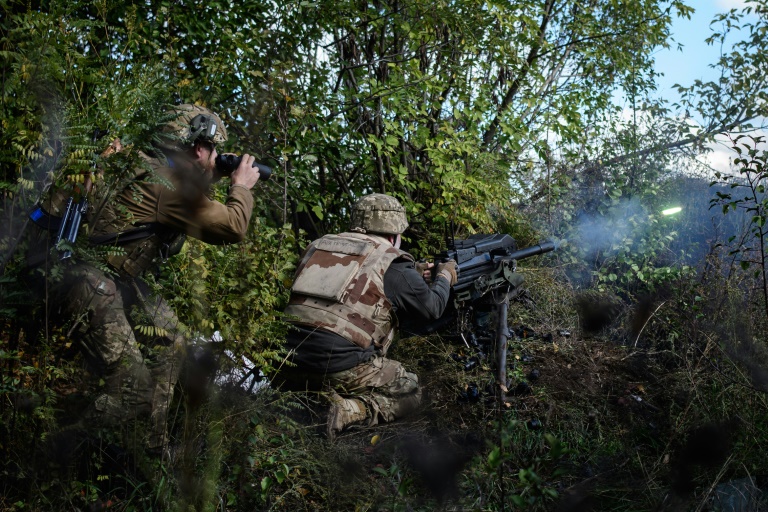
“We definitely need more artillery,” said an officer who gave his name as “Sergiy” with Ukraine’s 5th Regiment on a hill overlooking Russian-held Gorlivka in Donetsk.

“When it comes to artillery, they still have an advantage so we can’t return fire equally,” he added. 

“We are firing more precisely now, but with fewer strikes.”

With Russia’s bombing blitz escalating nuclear fears, UN nuclear agency chief Rafael Grossi arrived in Kyiv for talks on setting up a nuclear safety and protection zone around Ukraine’s Russian-held Zaporizhzhia plant.

Asian markets drop as traders brace for key US inflation data

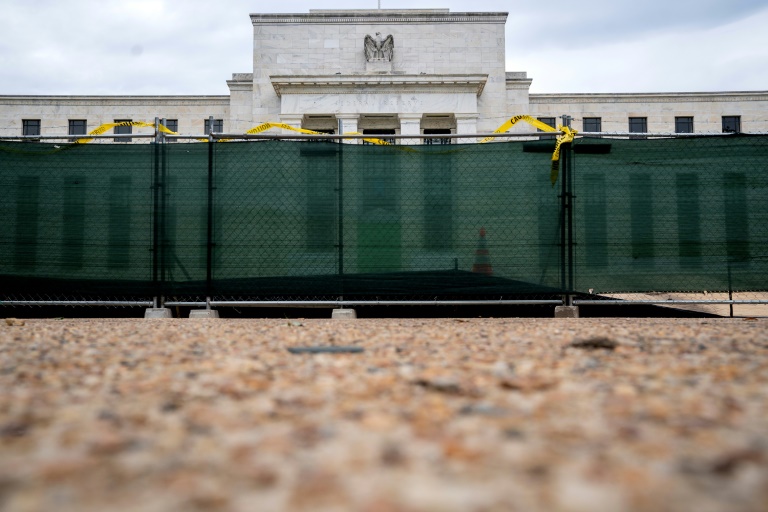
Equities fell in Asia and the dollar maintained its strength Thursday ahead of the release of crucial US inflation data that could determine the pace of Federal Reserve interest rate hikes.

The release of the September report comes a day after minutes from the central bank’s latest policy meeting showed officials determined to win their battle against runaway prices by ramping up borrowing costs, though they did note the risk to the economy that posed.

Investors are growing increasingly worried that the strict monetary tightening campaign — including three bumper rate hikes in succession — will plunge the United States into recession.

While there are hopes for signs of a slowdown, traders have taken to the sidelines in case of more volatility.

On Wednesday, figures showed wholesale inflation rose a forecast-beating 0.4 percent.

After another day of losses on Wall Street, Asia was again in the red with traders in Hong Kong, Tokyo, Shanghai, Singapore, Seoul, Wellington, Taipei and Manila selling.

“The Fed needs data to start finding an off-ramp,” Carol Schleif, of BMO Family Office, told Bloomberg Television.

“That’s a tough market to be in. Until we get a bunch more data, markets will have to figure out how to find their footing.”

Minutes from the Fed’s September meeting suggested it will press on with a fourth straight 0.75 percentage-point hike next month, with policymakers noting a slowdown of growth and the jobs market would be “required” to tame inflation, adding that prices remained “unacceptably high”.

They also pointed out that prices had “not yet responded” to the previous tightening.

Bank officials had for months stuck to a line that they will continue ramping up rates and hold them until they were satisfied they have slain inflation.

But the minutes said “several participants noted that, particularly in the current highly uncertain global economic and financial environment, it would be important to calibrate the pace of further policy tightening with the aim of mitigating the risk of significant adverse effects on the economic outlook”.

However, they said the cost of not doing enough to tackle prices outweighed the cost of doing too much.

– Dollar still king –

“The Fed remains purposefully driven to tighten monetary policy further into restrictive territory given the rather gradual cooling of economic activity and slow inflation response,” said Gregory Daco, at Ernst & Young.

But added that “the balance of risks is rapidly shifting”.

“Elevated global economic and financial market uncertainty will make it essential for the Fed to calibrate its policy response.”

They expect to lift rates to around 4.6 percent in 2023, according to the median estimate — from the current 3-3.25 percent.

Expectations for even more tightening kept the dollar elevated across the board, and it hit a fresh 24-year high near 147 yen, more than one yen above the point at which Japanese authorities last month intervened to protect the currency.

Still, sterling held most of the gains it enjoyed Wednesday fuelled by expectations the Bank of England will unveil a huge rate hike next month in the wake of volatility in UK financial markets.

The crisis in London saw the yield on 30-year government bonds bounce above five percent, while that on 10-year bonds hit 4.64 percent, the highest since 2008 in the midst of the global financial crisis.

The UK government’s increased borrowing costs are a reflection of market unease regarding the affordability of upcoming tax cuts aimed at supporting Britain’s recession-threatened economy.

Oil prices were broadly flat after another drop Wednesday following a report from the industry-funded American Petroleum Institute indicating a huge jump in US stockpiles, suggesting weakening demand.

Meanwhile, OPEC trimmed its estimate for growth in demand this year and next by half a million barrels a day.

A drop in the past few days has eaten into last week’s gains that came in response to a decision by OPEC and other producers to slash output by two million barrels a day. 

– Key figures around 0230 GMT –

Tokyo – Nikkei 225: DOWN 0.5 percent at 26,260.25 (break)

Hong Kong – Hang Seng Index: DOWN 1.1 percent at 16,507.45

Shanghai – Composite: DOWN 0.3 percent at 3,018.07

Pound/dollar: DOWN at $1.1086 from $1.1101 Wednesday

Dollar/yen: UP at 146.90 yen from 146.86 yen

Euro/dollar: DOWN at $0.9701 from $0.9707

Euro/pound: UP at 87.50 pence from 87.41 pence

West Texas Intermediate: DOWN 0.2 percent at $87.08 per barrel

Brent North Sea crude: FLAT at $92.42 per barrel

New York – Dow: DOWN 0.1 percent at 29,210.85 (close)

London – FTSE 100: DOWN 0.9 percent at 6,826.15 (close) 

Fledgling union efforts at Amazon, Starbucks dig in for long fight

Recent unionization drives at Starbucks and Amazon have lifted morale in the US labor movement, but organizers have yet to transform election victories into material change.

Moreover, some union backers such as Will Westlake have paid a price for their activism.

Formerly a Starbucks barista in Buffalo, New York, where the initial union votes took place in December 2021, Westlake was fired earlier this month — ostensibly for not removing a suicide prevention badge from his apron, which he has viewed as an expression of his solidarity with the movement.

But Westlake thinks his firing was payback for his union activism.

“I was number 123” on the list of Starbucks employees to lose their jobs as the campaign has spread to some 250 cafes nationwide, said Westlake.

Starbucks declined to comment on allegations from Starbucks Workers United that the company fired workers for union activism.

But such reprisals at US companies are “pretty routine in this country,” said Ruth Milkman, a sociologist at CUNY in New York.

– Young activists –

Milkman counts herself among the experts in labor relations who have been surprised at the spread of the union drives to a growing slate of corporations, including Apple, REI, Chipotle and Trader Joe’s — companies that union organizers have not in the past viewed as fertile to their efforts.

“This was kind of a different moment,” said Milkman of a period defined by a labor shortage, the pandemic and “a young labor force frustrated by their limited labor market options.” 

US officials have seen a 53 percent jump in the number of union elections over the last year, according to the National Labor Relations Board.

But that increase takes place against the backdrop of a longtime decline in organized labor since the 1980s, with fewer than 10 percent of private-sector employees now unionized.

While union backers have won some high-profile election victories over the last year, in many cases, the successful votes have taken place at small establishments, such as an individual Starbucks cafe.

What’s more, “winning the election is actually the easy part,” said Cedric de Leon, a sociologist at the University of Massachusetts at Amherst.

“The hard part is to negotiate the contract,” he said. “And there is nothing the government can really do to force the employers to negotiate in good faith.”

While two Starbucks cafes in Buffalo voted to unionize last December, the first meeting with management on the contract will take place only this month.

The outlook is even murkier at the Staten Island, New York warehouse that in April became the first Amazon site in the United States to unionize.

But Amazon is contesting the vote, alleging improprieties. 

Commenting on a union election now taking place at an upstate New York warehouse, an Amazon spokesman said this week that the company will continue to fight the Staten Island election outcome because “we don’t believe it represents what the majority of our team wants.”

– Culture of intimidation –

Under the Biden administration, the NLRB has for its part cracked down on some anti-union conduct by big corporations, as with a complaint earlier this month against Apple after the company prevented the distribution of union fliers in a break room.

In August, a US judge ordered Starbucks to reinstate seven employees that the NLRB found were unlawfully fired by the coffee giant.

Such moves by companies represent an effort to instill in workers “a culture of fear and intimidation,” said de Leon, noting that support from President Joe Biden and other political leaders will not be enough to make real change.

But “250 Starbucks going out on a nationwide strike, that could be decisive,” he said.

The recent wave of union campaigns has come amid a tight labor market in a period of elevated consumer demand. A recession would alter some of those dynamics, although de Leon notes that previous economically weak periods such as the 1930s and 1970s have boosted unions.

Westlake said he is determined to hold companies like Starbucks to account.

“They are hoping that the public won’t care enough and that in two or three years, they will be able to fire all the union leaders and crush the union,” said Westlake, who has filed a complaint with the NLRB over his dismissal.

Fledgling union efforts at Amazon, Starbucks dig in for long fight

Recent unionization drives at Starbucks and Amazon have lifted morale in the US labor movement, but organizers have yet to transform election victories into material change.

Moreover, some union backers such as Will Westlake have paid a price for their activism.

Formerly a Starbucks barista in Buffalo, New York, where the initial union votes took place in December 2021, Westlake was fired earlier this month — ostensibly for not removing a suicide prevention badge from his apron, which he has viewed as an expression of his solidarity with the movement.

But Westlake thinks his firing was payback for his union activism.

“I was number 123” on the list of Starbucks employees to lose their jobs as the campaign has spread to some 250 cafes nationwide, said Westlake.

Starbucks declined to comment on allegations from Starbucks Workers United that the company fired workers for union activism.

But such reprisals at US companies are “pretty routine in this country,” said Ruth Milkman, a sociologist at CUNY in New York.

– Young activists –

Milkman counts herself among the experts in labor relations who have been surprised at the spread of the union drives to a growing slate of corporations, including Apple, REI, Chipotle and Trader Joe’s — companies that union organizers have not in the past viewed as fertile to their efforts.

“This was kind of a different moment,” said Milkman of a period defined by a labor shortage, the pandemic and “a young labor force frustrated by their limited labor market options.” 

US officials have seen a 53 percent jump in the number of union elections over the last year, according to the National Labor Relations Board.

But that increase takes place against the backdrop of a longtime decline in organized labor since the 1980s, with fewer than 10 percent of private-sector employees now unionized.

While union backers have won some high-profile election victories over the last year, in many cases, the successful votes have taken place at small establishments, such as an individual Starbucks cafe.

What’s more, “winning the election is actually the easy part,” said Cedric de Leon, a sociologist at the University of Massachusetts at Amherst.

“The hard part is to negotiate the contract,” he said. “And there is nothing the government can really do to force the employers to negotiate in good faith.”

While two Starbucks cafes in Buffalo voted to unionize last December, the first meeting with management on the contract will take place only this month.

The outlook is even murkier at the Staten Island, New York warehouse that in April became the first Amazon site in the United States to unionize.

But Amazon is contesting the vote, alleging improprieties. 

Commenting on a union election now taking place at an upstate New York warehouse, an Amazon spokesman said this week that the company will continue to fight the Staten Island election outcome because “we don’t believe it represents what the majority of our team wants.”

– Culture of intimidation –

Under the Biden administration, the NLRB has for its part cracked down on some anti-union conduct by big corporations, as with a complaint earlier this month against Apple after the company prevented the distribution of union fliers in a break room.

In August, a US judge ordered Starbucks to reinstate seven employees that the NLRB found were unlawfully fired by the coffee giant.

Such moves by companies represent an effort to instill in workers “a culture of fear and intimidation,” said de Leon, noting that support from President Joe Biden and other political leaders will not be enough to make real change.

But “250 Starbucks going out on a nationwide strike, that could be decisive,” he said.

The recent wave of union campaigns has come amid a tight labor market in a period of elevated consumer demand. A recession would alter some of those dynamics, although de Leon notes that previous economically weak periods such as the 1930s and 1970s have boosted unions.

Westlake said he is determined to hold companies like Starbucks to account.

“They are hoping that the public won’t care enough and that in two or three years, they will be able to fire all the union leaders and crush the union,” said Westlake, who has filed a complaint with the NLRB over his dismissal.

Chaos agent Kanye West crosses line with bigoted remarks

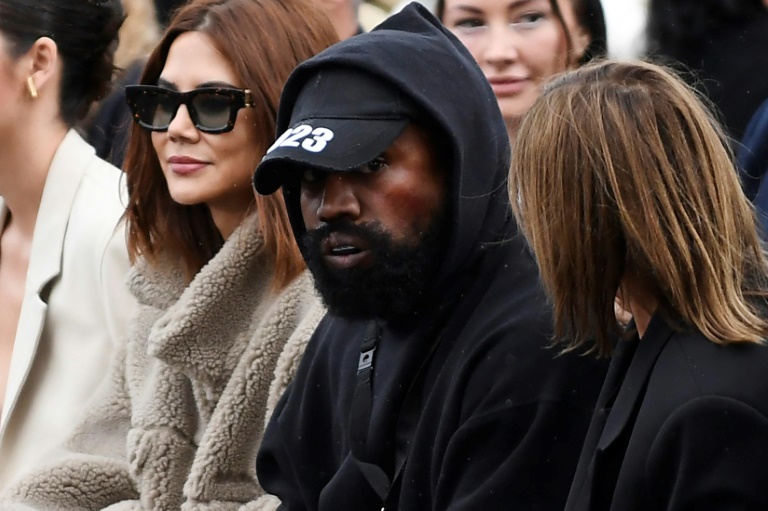
Kanye West has long been one of the entertainment industry’s most polarizing figures, but his recent actions including anti-Semitic comments and white supremacist messaging have alienated fans and business partners alike. 

It’s another problematic turn for the rapper and fashion mogul once hailed as an artistic genius, but whose stubborn contrarianism has seen him start conflating hate speech with free speech.

The latest controversies — which erupted during Paris fashion week and after an interview with Fox News — add to his reputation as a chaos agent, one that has tarnished his musical and fashion talent.

The 45-year-old West, who in the past has unironically compared himself to Michelangelo, broke out in 2004 with “The College Dropout,” building a masterful music career that saw him imbue rap with soul and electronic elements to create his lush albums.

His mercurial ways drew some critics but for years his celebrity earned him a pass.

At times his comments garnered him praise for his honesty: in 2005, he called out George W. Bush’s handling of Hurricane Katrina, delivering an urgent plea for help during a televised fundraising concert before saying “George Bush doesn’t care about Black people.”

But in the decades that followed his musings grew increasingly bombastic and controversial.

After the rollercoaster rollout of his album “The Life of Pablo,” West, who has talked openly about struggling with bipolar disorder, suffered a mental breakdown, disappearing from the public eye.

In late 2016 he reemerged, strolling into Trump Tower to meet the then president-elect.

He made waves as a rare celebrity to support the Republican billionaire, whose four years in the White House were mired with repeated accusations of racism and sexism.

In 2018, West met with Trump in Washington for a surreal tete-a-tete that included a hug between the two and an on-camera rant.

And during the 2020 election West, who later legally changed his name to Ye, his longtime nickname, launched his own unsuccessful bid for the American presidency as an independent candidate of the Birthday Party.

– ‘Attention addict’ –

Since then West has been crossing line after line.

At Paris’ most recent fashion week he sported a shirt allying with white supremacist rhetoric. Days later his Instagram and Twitter accounts were restricted over anti-Semitic posts.

The American Jewish Committee (AJC) hit out at West for having “fomented hatred of Jews,” while many other celebrities decried his words and urged him to stop.

“Kanye West should figure out how to make a point without using anti-Semitism,” the AJC organization said.

The artist’s already controversial Fox News interview grew even more so after Vice released unaired footage including West comments that were steeped in racist conspiracy theories.

This week, a producer behind the series “The Shop: Uninterrupted” with NBA superstar LeBron James said they were pulling an episode that would have featured West, saying he used the platform to “reiterate more hate speech and extremely dangerous stereotypes.”

He unceremoniously scrapped his partnership with Gap, and German sportswear giant Adidas said it was reconsidering their collaboration that’s been dogged by tensions.

These are only the latest shock-value moves from the rapper who has long fed media cycles with provocation.

Earlier this year, West was banned from posting on Instagram for 24 hours after violating the social network’s harassment policy amid his acrimonious divorce from reality star Kim Kardashian, with whom he has four children.

While in the past some analysts have allowed West benefit of the doubt due to his mental illness, the consensus this time around has emphasized that psychiatric episodes are not an excuse for bigoted behavior.

In the opinion pages of The New York Times, columnist Charles Blow dubbed the artist “a brooding, narcissistic attention addict and praise junkie.”

“He attends his torture. He curates and employs it. Some of it may come naturally, but some is manufactured, to enlarge the legend.”

Conspiracy theorist Alex Jones to pay nearly $1 bn for Sandy Hook lies

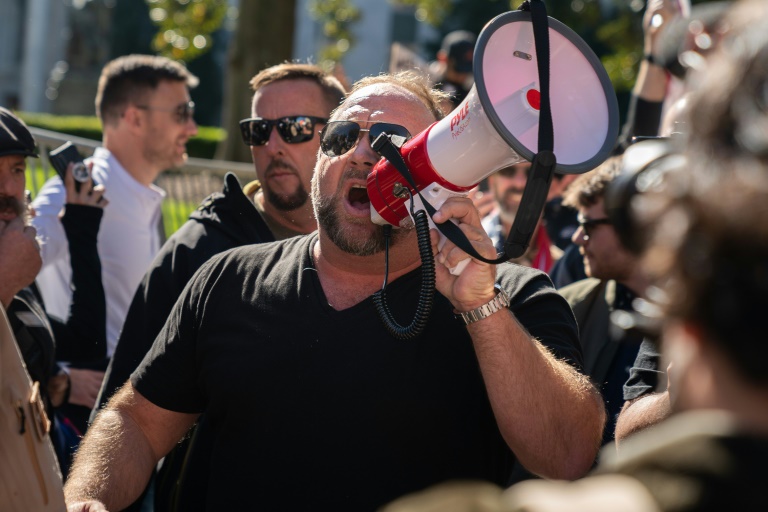
A US jury ordered far-right conspiracy theorist Alex Jones on Wednesday to pay nearly $1 billion in damages for falsely claiming that the deadly 2012 Sandy Hook elementary school shooting was a “hoax.”

The jury in Connecticut, where the massacre took place, awarded $965 million to the families of eight Sandy Hook victims and an FBI agent who brought the defamation case against Jones.

Several family members who were in the courtroom broke down in sobs as the damage awards were read out by a clerk of the court. Jones was not present.

“It shows that the internet is not the wild, wild west and that your actions have consequences,” said Bill Sherlach, whose wife, Mary, died at Sandy Hook. “People like Alex Jones will have to rethink what they say and how they say it.”

Jones, founder of the website InfoWars and host of a popular radio show, has been found liable in multiple defamation lawsuits brought by relatives of the victims of the shooting in Newtown, Connecticut, which left 20 children and six teachers dead.

The 48-year-old Jones claimed for years on his show that the Sandy Hook shooting was “staged” by gun control activists and that the parents were “crisis actors,” but has since acknowledged it was “100 percent real.”

Sandy Hook families maintained that his lies and denialism, coupled with his ability to influence the beliefs of thousands of followers, caused real emotional trauma.

They explained they were harassed and threatened by Jones’s fans.

Erica Lafferty, daughter of the Sandy Hook principal who was shot by the gunman, said during the trial she had been repeatedly accused on social media of being an actress and had even received rape threats.

“I am incredibly proud and thankful of the message we sent here today: The truth matters. And those who profit off of other people’s trauma will pay for what they’ve done,” she said in a statement after the verdict.

“There will be more Alex Joneses in the world. But today they learned that they will be held accountable.”

Jones was also accused of pulling in massive profits from various products he sold on his website.

A Texas jury ordered Jones last month to pay nearly $50 million in damages to Neil Heslin and Scarlett Lewis, whose six-year-old son Jesse was killed by the 20-year-old gunman behind the Sandy Hook shooting.

The latest trial was held in Waterbury, Connecticut, less than 20 miles (30 kilometers) from Newtown.

The six-person jury awarded damages for defamation, slander and emotional distress to a total of 15 plaintiffs ranging from a low of $28 million to a high of $120 million to Robbie Parker, whose six-year-old daughter Emilie died at Sandy Hook.

William Aldenberg, an FBI agent who responded to the Sandy Hook shooting and joined the families in filing the lawsuit against Jones, was awarded $90 million in damages.

– ‘Historic’ –

InfoWars declared bankruptcy in April and another company owned by Jones, Free Speech Systems, also recently filed for bankruptcy.

Jones was appearing live on his InfoWars website as the damage awards were read out in court and said he planned to appeal.

“This is what a show trial is like,” he said, while appealing to his listeners to visit his website and buy his products.

Chris Mattei, a lawyer for the families, welcomed the jury’s decision.

“We believe it is historic and we are going to enforce this verdict,” Mattei told reporters.

“And if you’re out there right now and you’re one of Alex Jones’s audience members, and you’re considering giving him money, I just want you to know that based on the jury’s verdict today, it’s not a very good bet,” he said.

“All Alex Jones does is take from you, exploit you, lie to you, feed your fears and your anxieties and your mistrust,” he said. “Well, that stops, that’s stopping today, thanks to the courage of these families.”

Jones, a vocal supporter of former president Donald Trump, is also under scrutiny over the January 6, 2021 assault on the US Capitol.

Trump appeared frequently on Jones’ radio show during his 2016 White House campaign and Jones was in Washington when supporters of the then-president stormed Congress in a bid to prevent certification of Democrat Joe Biden’s election victory.

Avengers assemble: Republicans plot payback after US midterms

Confident of emerging victorious from the simmering cauldron of the US midterm elections, Republicans are cooking up a buffet of legislative priorities for the new Congress — and topping the menu is a dish best served cold.

The party of former president Donald Trump has had to watch powerlessly from the opposition benches as its recalcitrant leader has spent years fending off criminal and congressional probes.

But the Republicans are expected to regain the House of Representatives in November, and are plotting revenge on Trump’s foes in Congress, the White House and law enforcement with investigations of their own. 

One major target could be President Joe Biden himself, according to Republican congresswoman Nancy Mace, who has confirmed longstanding speculation that some colleagues are mulling impeachment next year.

“I believe there is pressure on the Republicans to put that forward and have that vote,” she told NBC in September. “I think that’s what some folks are considering.”

The House Oversight Committee’s top stated priority, though, will be intensifying scrutiny of the Democratic leader’s son, Hunter Biden, who is already being investigated by the FBI over his business.

The battle for the 100-seat Senate, currently divided evenly between the two parties, has been described as a “jump ball” by Republican leader Mitch McConnell.

But a gain of just six seats would hand the “Grand Old Party” control of the House, paving the way for two years of intense scrutiny of the Biden administration.

– ‘500 requests’ –

Party leaders have so far declined to endorse the impeachment move publicly.

But they have vowed to “conduct rigorous oversight to rein in government abuse of power and corruption” among a package of broad policy priorities unveiled in the final weeks of the election campaign.

“House Republicans have put the Biden administration on notice — with more than 500 requests for information and documents,” their prospectus says. 

“When backed by subpoena power, the American people will finally get some of the answers they deserve.”

Several House Republicans and Trump administration figures have defied subpoenas to appear before Democratic-led probes, including the investigation into the 2021 insurrection.

But Republicans have pledged nevertheless to compel testimony on multiple aspects of decision-making by the Democrats.

Subjects for the planned investigations include the White House’s handling of the fraught withdrawal from Afghanistan, illegal immigration at the Mexico border and the origins of the Covid-19 virus.

Homeland Security Secretary Alejandro Mayorkas, who is in charge of immigration, is a prime target for impeachment.

Republicans have also vowed to investigate Anthony Fauci after locking horns repeatedly with Biden’s soon-departing chief medical advisor over Covid-19 vaccines, mask mandates and other pandemic-related issues.

“Dr. Fauci was warned by top scientists early on that the virus looked genetically manipulated and likely leaked from the Wuhan lab,” top Republican James Comer, who expects to lead the oversight committee next year, said in a statement. 

“Despite these facts, Dr. Fauci dismissed these ideas in public as conspiracy theories.”

Comer is contradicted by John Hopkins University, which said in August that recent research confirming a Chinese seafood market as the origin of the pandemic was the “death knell for any alternative theories.”

– ‘Hypocrisy’ –

Another target of Republican scrutiny could be the FBI’s handling of the raid at Trump’s Florida beach club to recover illegally stored classified documents.

“Attorney General (Merrick) Garland: preserve your documents and clear your calendar,” House Republican leader Kevin McCarthy tweeted the day of the search, accusing Democrats of the “weaponized politicization” of the Justice Department.

US media has reported that the Republicans are also plotting revenge on the panel investigating the 2021 US Capitol assault, which has uncovered a slew of damning evidence about Trump’s role in the riot. 

Republicans will also look into special counsel Robert Mueller’s investigation into the Russian attack on the 2016 US election, which revealed extensive contacts between the Trump campaign and Russian government and intelligence operatives.

News of the investigations has prompted a withering response from Democrats, who have dismissed the Hunter Biden probe in particular as a Republican “obsession.”

“Unlike former president Trump and his family, who used their senior White House positions to advance their own financial interests — and whom Republicans have blindly defended — Hunter Biden is a private citizen who is not a member of the administration,” one aide told The Washington Post.

“Republicans’ hypocrisy is not lost on the American people.”

Close Bitnami banner
Bitnami