US Business

US trio, including ex-Fed chief Bernanke, win economics Nobel

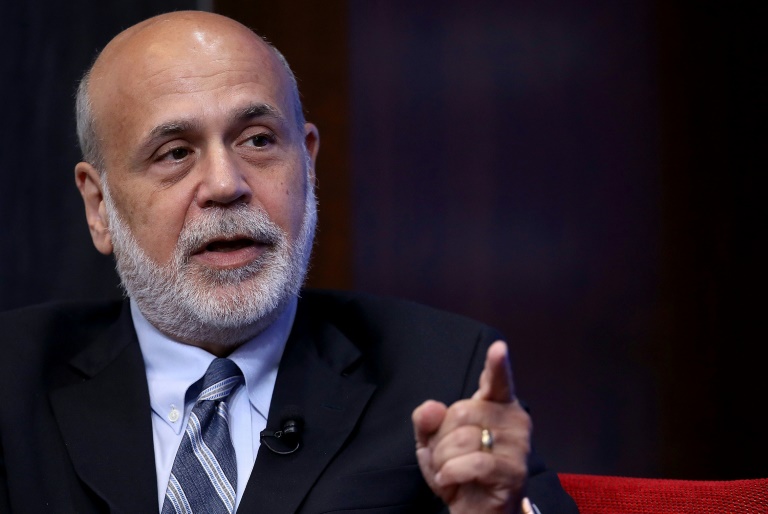
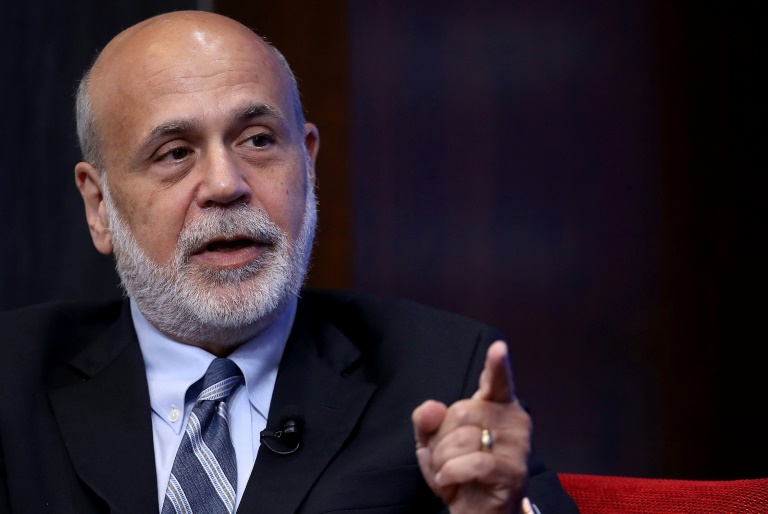
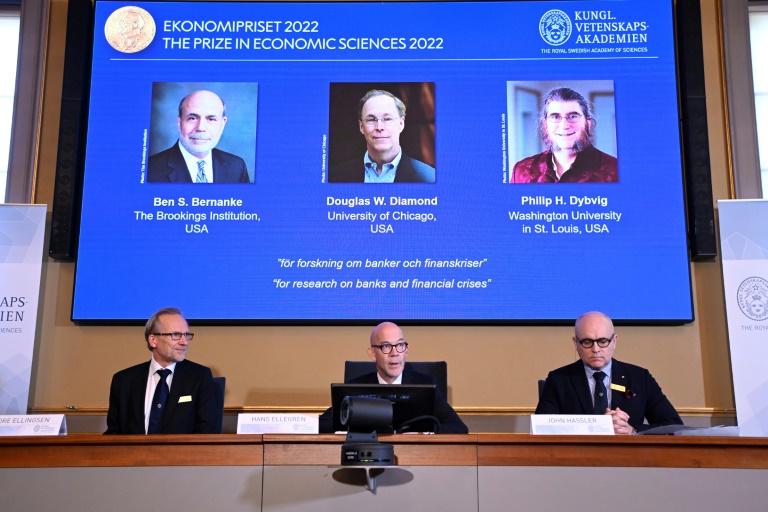
A US trio including ex-Federal Reserve chief Ben Bernanke, who played a key role battling the 2008 financial crisis, won the economics Nobel on Monday for research on banks in times of turmoil.

Bernanke, together with Douglas Diamond and Philip Dybvig, were honoured for having “significantly improved our understanding of the role of banks in the economy, particularly during financial crises, as well as how to regulate financial markets”, the jury said.

Bernanke, 68, has been both credited for spurring recovery after the 2008 recession and pilloried by critics for doing little to avert it, allowing investment bank Lehman Brothers to collapse.

He received the award for his analysis, conducted in the early 1980s, of the Great Depression in the 1930s, the worst economic crisis in modern history.

In particular, Bernanke showed “how failing banks played a decisive role in the global depression,” making the downturn “not only deep, but also long-lasting,” the Nobel jury noted.

In his role as chief of the central bank, Bernanke “was able to put knowledge from research into policy,” during the financial crisis of 2008-2009, the Nobel Committee said.

Bernanke has been hailed for the Fed’s unorthodox response of slashing interest rates and flooding the financial system with liquidity.

– Bank runs –

Diamond, a professor at the University of Chicago born in 1953, and Dybvig, 67, a professor at Washington University in St. Louis, were honoured for showing how “banks offer an optimal solution” for channelling savings to investments by acting as an intermediary.

The pair also showed how these institutions were vulnerable to so called banks runs.

“If a large number of savers simultaneously run to the bank to withdraw their money, the rumour may become a self-fulfilling prophecy –- a bank run occurs and the bank collapses,” the Nobel Committee said.

The committee added that this dangerous dynamic can be avoided by governments providing deposit insurance and giving banks a life-line by becoming a lender of last resort.

“The laureates’ insights have improved our ability to avoid both serious crises and expensive bailouts,” Tore Ellingsen, chair of the Committee for the Prize in Economic Sciences, said.

“In a nutshell, the theory says that banks can be tremendously useful but they are only guaranteed to be stable if they are properly regulated”, he added.

Diamond, speaking to reporters after the announcement, reflected Monday on the decision by US authorities not to bailout US investment bank Lehman Brothers, as they later did other financial institutions.

The bank’s collapse sent shockwaves through financial markets when it filed for bankrupcy in September 2008.

“It would have been better to find a more accommodating way, a less unstable way and unexpected way to resolve Lehman Brothers,” Diamond said, stressing there were questions about what regulators were legally able to do at the time.

“Had they found a way, I think the world would have had less of a severe crisis than it did,” Diamond said.

– ‘False Nobel’ –

Of all the Nobels, the economics prize has the fewest number of female winners, just two since it was first awarded in 1969 — Elinor Ostrom in 2009 and Esther Duflo in 2019.

The economics prize, set up by the Swedish central bank, was the only award absent from the original five created by scientist Alfred Nobel, sometimes earning it the moniker of “false Nobel”.

But like the other prizes it comes with a medal and an award sum of 10 million Swedish kronor (around $900,000).

The winners will receive the prize from King Carl XVI Gustaf at a formal ceremony in Stockholm on December 10, the anniversary of the 1896 death of scientist Alfred Nobel who created the prizes in his last will and testament. 

Last year, the honour went jointly to Canada’s David Card, Israeli-American Joshua Angrist and Dutch-American Guido Imbens for research that “revolutionised” empirical work in their field and brought better understanding of how labour markets work.

The Economics Prize closes this year’s Nobel season. 
German experts propose energy price cap from next year

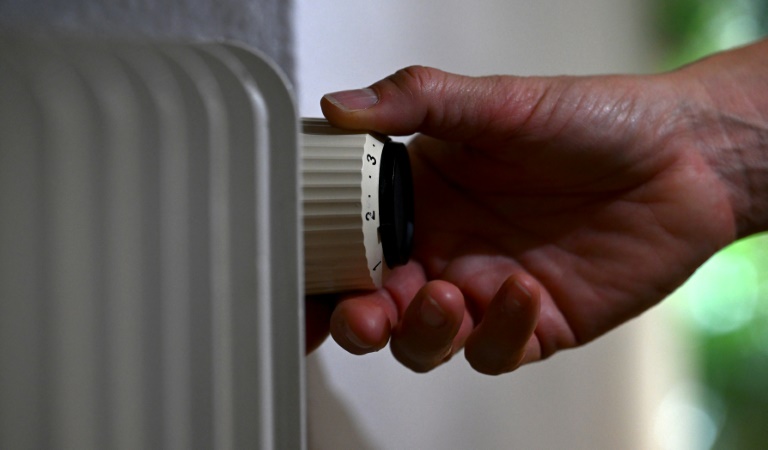
A price cap to reduce soaring German energy costs following Russia’s invasion of Ukraine should come into force next year with additional help provided beforehand, a government-appointed commission recommended Monday.

Under the plan, households will benefit from the cap covering 80 percent of their usage from March next year to April 2024, said the expert commission.

To bridge the gap until the brake enters force, the government should foot gas and district heating bills for households and small companies in December to tackle high costs over winter, they said.

“We wanted the effects of the relief measures to be fast,” Michael Vassiliadis, a member of the commission told a press conference, adding a “first possibility” of lightening the burden for consumers needed to be provided by the end of 2022. 

Moscow’s move to cut off gas supplies amid the fallout from the Ukraine war has triggered an energy crisis in Europe, with Germany particularly hard hit as it relied heavily on Russian supplies prior to the conflict. 

The proposed price cap is part of a controversial 200-billion-euro ($194-billion) fund aimed at shielding Germans from skyrocketing energy costs. 

The announcement of the fund last month caused tensions with some fellow European Union members, who are concerned by Berlin’s go-it-alone approach and are calling for bloc-wide solutions.

Vassiliadis insisted that Germany’s plans were not “against Europe”. 

He said Germany took European solidarity into account, but was also acting “with regard to our households and people”.

For major industrial users, the commission also proposed a price cap of seven cents per kilowatt hour for usage of up to 70 percent of 2021’s consumption.

These companies, numbering around 25,000 in Germany, will not benefit from December’s payment, but the price cap should kick in already in January to help ease their energy burden, the commission said.

The energy crisis endangered not just individual companies but “the German economic model, and also our prosperity,” said commission member Siegfried Russwurm.

Germany is set to sink into a recession in 2023, leading economic institutes said last month, citing the impact of energy prices. 

Bernanke: Depression scholar who faced global financial crisis

Ben Bernanke, who shared the Nobel Economics Prize on Monday, is a scholar of the Great Depression who helped to steer the United States through another major financial crisis as Federal Reserve chief.

Bernanke took over as Fed chair in February 2006, just before the collapse of the US housing market that triggered a global crisis of epic proportions.

Many analysts say Bernanke’s aggressive and unorthodox moves allowed the central bank to prop up the financial system and keep credit flowing, therefore avoiding a repeat of a 1930s-style calamity.

His critics, though, argue that he did little to avert the crisis and may have helped fuel the problems when he was a Fed governor in 2002-2005 under then-chairman Alan Greenspan and subsequently headed the Council of Economic Advisers under former president George W. Bush.

The Nobel jury awarded the prize to Bernanke, 68, along with fellow US economists Douglas Diamond and Philip Dybvig for having “significantly improved our understanding of the role of banks in the economy, particularly during financial crises, as well as how to regulate financial markets.”

Bernanke was singled out for his analysis of “the worst economic crisis in modern history” — the Great Depression in the 1930s. He published a book on his essays about the topic and co-authored another about the 2008 financial crisis.

He is now a senior fellow at the Brookings Institution think tank in Washington and a senior adviser to the asset management firms Pimco and Citadel — appointments that raised concerns about the “revolving door” between Washington and Wall Street.

– ‘Creative leadership’ –

In recognition for his actions during the global financial crisis, he was named TIME magazine’s “Person of the Year” for 2009.

TIME honored the former Princeton University professor as “the most important player guiding the world’s most important economy.”

“His creative leadership helped ensure that 2009 was a period of weak recovery rather than catastrophic depression,” TIME senior writer Michael Grunwald wrote.

Grunwald said at the time that Bernanke still wielded “unrivaled power over our money, our jobs, our savings and our national future.”

Bernanke served as central bank chief under Bush and was kept on the job by the Republican leader’s Democratic successor, Barack Obama.

The former central banker has stressed the importance of transparency in the Fed’s communications, stepping away from Greenspan’s turgid, jargon-laden statements.

And unlike his predecessor, Bernanke talked often to reporters.

Joseph Brusuelas, a director at Moody’s Analytics, once said that the Fed’s unorthodox response to the global financial crisis was “without precedent” as it slashed its policy rate to zero and “flooded the financial system with liquidity.”

The Fed’s moves, Brusuelas said, “slowly rebuilt confidence in the banking system.”

Jeffrey Sachs, economist at Columbia University, said “a depression seemed possible” at the time of the Lehman Brothers collapse in September 2008, but action by central banks “prevented financial markets from crashing.”

– Lehman ‘blunder’ –

But others criticized him for failing to better predict the severity of the economic crisis: in 2007, when the first signs of the subprime mortgage crisis emerged, Bernanke assured Congress that the fallout would be limited.

Others accuse Bernanke of failing to act quickly to cut interest rates once the scale of the crisis emerged. The Fed instead adopted a go-slow posture on cutting rates, before making an emergency cut in January 2008.

Among Bernanke critics, the late economist Allan Meltzer at Carnegie Mellon University said the Lehman collapse represented a mistake of historic proportions.

“Allowing Lehman to fail without warning is one of the worst blunders in Federal Reserve history,” he wrote in a Wall Street Journal essay.

Bernanke was born on December 13, 1953 in Augusta, Georgia, to a pharmacist father and a schoolteacher mother. He grew up in a Jewish household, a minority in the heavily Christian community.

He spent his childhood in Dillon, South Carolina — a farm town with a population of 7,500 — and was a star scholar, achieving a near-perfect score in the Scholastic Aptitude Test (SAT), a university entrance exam.

He studied economics at Harvard and graduated with top honors in 1975, then went on to obtain a PhD in economics from the Massachusetts Institute of Technology. 

He worked at Princeton for 17 years before joining the Federal Reserve Board in 2002.

Bernanke: Depression scholar who faced global financial crisis

Ben Bernanke, who shared the Nobel Economics Prize on Monday, is a scholar of the Great Depression who helped to steer the United States through another major financial crisis as Federal Reserve chief.

Bernanke took over as Fed chair in February 2006, just before the collapse of the US housing market that triggered a global crisis of epic proportions.

Many analysts say Bernanke’s aggressive and unorthodox moves allowed the central bank to prop up the financial system and keep credit flowing, therefore avoiding a repeat of a 1930s-style calamity.

His critics, though, argue that he did little to avert the crisis and may have helped fuel the problems when he was a Fed governor in 2002-2005 under then-chairman Alan Greenspan and subsequently headed the Council of Economic Advisers under former president George W. Bush.

The Nobel jury awarded the prize to Bernanke, 68, along with fellow US economists Douglas Diamond and Philip Dybvig for having “significantly improved our understanding of the role of banks in the economy, particularly during financial crises, as well as how to regulate financial markets.”

Bernanke was singled out for his analysis of “the worst economic crisis in modern history” — the Great Depression in the 1930s. He published a book on his essays about the topic and co-authored another about the 2008 financial crisis.

He is now a senior fellow at the Brookings Institution think tank in Washington and a senior adviser to the asset management firms Pimco and Citadel — appointments that raised concerns about the “revolving door” between Washington and Wall Street.

– ‘Creative leadership’ –

In recognition for his actions during the global financial crisis, he was named TIME magazine’s “Person of the Year” for 2009.

TIME honored the former Princeton University professor as “the most important player guiding the world’s most important economy.”

“His creative leadership helped ensure that 2009 was a period of weak recovery rather than catastrophic depression,” TIME senior writer Michael Grunwald wrote.

Grunwald said at the time that Bernanke still wielded “unrivaled power over our money, our jobs, our savings and our national future.”

Bernanke served as central bank chief under Bush and was kept on the job by the Republican leader’s Democratic successor, Barack Obama.

The former central banker has stressed the importance of transparency in the Fed’s communications, stepping away from Greenspan’s turgid, jargon-laden statements.

And unlike his predecessor, Bernanke talked often to reporters.

Joseph Brusuelas, a director at Moody’s Analytics, once said that the Fed’s unorthodox response to the global financial crisis was “without precedent” as it slashed its policy rate to zero and “flooded the financial system with liquidity.”

The Fed’s moves, Brusuelas said, “slowly rebuilt confidence in the banking system.”

Jeffrey Sachs, economist at Columbia University, said “a depression seemed possible” at the time of the Lehman Brothers collapse in September 2008, but action by central banks “prevented financial markets from crashing.”

– Lehman ‘blunder’ –

But others criticized him for failing to better predict the severity of the economic crisis: in 2007, when the first signs of the subprime mortgage crisis emerged, Bernanke assured Congress that the fallout would be limited.

Others accuse Bernanke of failing to act quickly to cut interest rates once the scale of the crisis emerged. The Fed instead adopted a go-slow posture on cutting rates, before making an emergency cut in January 2008.

Among Bernanke critics, the late economist Allan Meltzer at Carnegie Mellon University said the Lehman collapse represented a mistake of historic proportions.

“Allowing Lehman to fail without warning is one of the worst blunders in Federal Reserve history,” he wrote in a Wall Street Journal essay.

Bernanke was born on December 13, 1953 in Augusta, Georgia, to a pharmacist father and a schoolteacher mother. He grew up in a Jewish household, a minority in the heavily Christian community.

He spent his childhood in Dillon, South Carolina — a farm town with a population of 7,500 — and was a star scholar, achieving a near-perfect score in the Scholastic Aptitude Test (SAT), a university entrance exam.

He studied economics at Harvard and graduated with top honors in 1975, then went on to obtain a PhD in economics from the Massachusetts Institute of Technology. 

He worked at Princeton for 17 years before joining the Federal Reserve Board in 2002.

Britain unveils fresh action to calm markets turmoil

Britain on Monday ramped up efforts to calm markets after a heavily criticised budget, with the government bringing forward key economic forecasts and the Bank of England boosting liquidity.

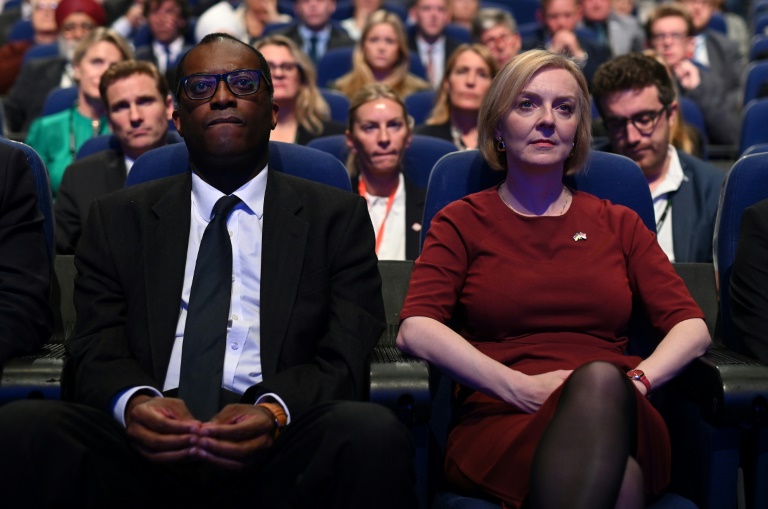
Finance minister Kwasi Kwarteng will unveil debt-slashing plans and predictions sooner than expected, after markets chaos sparked by his borrowing-fuelled budget at the end of September.

In a U-turn, Kwarteng revealed he would publish his medium-term fiscal plan alongside the forecasts on October 31 rather than in late November.

It comes after the chancellor of the exchequer was already forced to axe a tax cut for the richest earners, in the face of outrage as millions of Britons face a cost-of-living crisis with UK inflation around 10 percent.

Markets have been spooked by the budget from the government of new Prime Minister Liz Truss, who has also unveiled a costly energy price freeze for households and businesses.

The plans that are aimed at supporting Britain’s recession-threatened economy sent UK bond yields soaring and the pound tumbling to a record low against the dollar.

– Bank of England action –

The Bank of England earlier Monday revealed it was launching a temporary facility aimed at easing liquidity pressures that arose after the budget shocked markets.

The BoE in a statement announced “additional measures to support market functioning”.

It added that the central bank was ready to increase the size of its UK government bond purchases under an emergency measure due to end Friday.

The BoE said it was launching a Temporary Expanded Collateral Repo Facility, enabling “banks to help to ease liquidity pressures facing” client funds beyond the end of this week.

The budget turmoil triggered the emergency buying of long-dated bonds by the BoE.

The central bank has so far made purchases of so-called gilts totalling around £5 billion ($5.5 billion), far less than its £65-billion limit, under a plan ending Friday.

The purchases are “to restore market functioning in long-dated government bonds and reduce risks from contagion to credit conditions for UK households and businesses”, the BoE stressed in its statement Monday.

The budget was widely criticised, including by the International Monetary Fund, over fears that government debt would balloon to pay for the tax cuts.

Fitch last week lowered the outlook on its credit rating for British government debt to negative from stable.

The pound was down against the dollar Monday but above the record-low level that was close to parity.

– Calm for now –

Britain’s turbulent bond market meanwhile remains elevated on stubborn debt concerns.

The yield on 30-year UK government bonds, which spiked to 5.14 percent following the budget, stood at 4.48 percent on Monday.

“The central bank’s action has helped to calm government debt markets but there are concerns about what happens next week after the BoE’s support package ends,” noted Victoria Scholar, head of investment at Interactive Investor.

Monday’s intervention comes as Britain suffers a cost-of-living crisis caused by the highest inflation in decades after energy and food prices have rocketed this year.

The BoE has piled on further pressure by hiking its main interest rate to a 14-year high in a bid to cool inflation.

This in turn has seen retail banks ramp up interest rates on mortgages, with analysts predicting heavy price falls for homes.

Stocks down, dollar up as markets expect more big US rate hikes

Stock markets mostly retreated and the dollar firmed Monday as forecast-beating US jobs data fanned expectations for more large interest rate hikes from the Federal Reserve.

A rally across equity trading floors last week has given way to gloom as investors grow increasingly worried that central bank rate hikes to tame runaway prices will plunge the global economy into recession.

Adding to the stress is the upcoming corporate earnings season, which many fear will show that companies are feeling the pain of tightening monetary policies.

European and Asian equities mostly suffered Monday following heavy losses Friday on Wall Street.

Last week closed out with news that the United States created a net 263,000 jobs in September.

While that was down from August it was more than expected, highlighting the tough job Fed officials face in their battle against decades-high inflation. 

With the spotlight on a US consumer price index reading later in the week, policymakers continue to take a hawkish tone, warning they will not ease up on their rate hikes even if that means causing a recession.

Elsewhere on Monday, the Moscow stock exchange plunged nearly 12 percent following multiple strikes on Ukrainian cities and a weekend explosion that partially destroyed the bridge connecting Crimea to Russia.

In foreign exchange and amid a strong dollar, the pound won little support from Britain ramping up efforts to calm markets after a heavily criticised budget.

In what was seen as co-ordinated action, the government brought forward key economic forecasts and the Bank of England boosted liquidity.

“With the pound remaining weak and (UK) government borrowing costs inching up again towards worrying levels, the UK government and the Bank of England have launched a two-pronged attempt to calm markets,” noted Susannah Streeter, senior investment and markets analyst at Hargreaves Lansdown.

Oil prices meanwhile fell after the biggest weekly gain since March that followed a decision by OPEC and allied producers led by Russia to slash crude output by two million barrels per day.

The drop Monday came also on demand concerns caused by China’s Covid flare-ups and more weak data out of Beijing owing to lockdowns.

– Key figures around 1030 GMT –

London – FTSE 100: DOWN 0.4 percent at 6,967.02 points

Frankfurt – DAX: UP 0.4 percent at 12,319.65

Paris – CAC 40: DOWN 0.4 percent at 5,842.82

EURO STOXX 50: DOWN 0.3 percent at 3,365.99

Hong Kong – Hang Seng Index: DOWN 3.0 percent at 17,216.66 (close) 

Shanghai – Composite: DOWN 1.7 percent at 2,974.15 (close)

Tokyo – Nikkei 225: Closed for a holiday

New York – Dow: DOWN 2.1 percent at 29,296.79 (close)

Pound/dollar: DOWN at $1.1058 from $1.1082 on Friday

Euro/dollar: DOWN at $0.9703 from $0.9743

Euro/pound: DOWN at 87.75 pence from 87.97 pence

Dollar/yen: UP at 145.46 yen from 145.38 yen

West Texas Intermediate: DOWN 0.5 percent at $92.16 per barrel

Brent North Sea crude: DOWN 0.7 percent at $97.22 per barrel

Stocks down, dollar up as markets expect more big US rate hikes

Stock markets mostly retreated and the dollar firmed Monday as forecast-beating US jobs data fanned expectations for more large interest rate hikes from the Federal Reserve.

A rally across equity trading floors last week has given way to gloom as investors grow increasingly worried that central bank rate hikes to tame runaway prices will plunge the global economy into recession.

Adding to the stress is the upcoming corporate earnings season, which many fear will show that companies are feeling the pain of tightening monetary policies.

European and Asian equities mostly suffered Monday following heavy losses Friday on Wall Street.

Last week closed out with news that the United States created a net 263,000 jobs in September.

While that was down from August it was more than expected, highlighting the tough job Fed officials face in their battle against decades-high inflation. 

With the spotlight on a US consumer price index reading later in the week, policymakers continue to take a hawkish tone, warning they will not ease up on their rate hikes even if that means causing a recession.

Elsewhere on Monday, the Moscow stock exchange plunged nearly 12 percent following multiple strikes on Ukrainian cities and a weekend explosion that partially destroyed the bridge connecting Crimea to Russia.

In foreign exchange and amid a strong dollar, the pound won little support from Britain ramping up efforts to calm markets after a heavily criticised budget.

In what was seen as co-ordinated action, the government brought forward key economic forecasts and the Bank of England boosted liquidity.

“With the pound remaining weak and (UK) government borrowing costs inching up again towards worrying levels, the UK government and the Bank of England have launched a two-pronged attempt to calm markets,” noted Susannah Streeter, senior investment and markets analyst at Hargreaves Lansdown.

Oil prices meanwhile fell after the biggest weekly gain since March that followed a decision by OPEC and allied producers led by Russia to slash crude output by two million barrels per day.

The drop Monday came also on demand concerns caused by China’s Covid flare-ups and more weak data out of Beijing owing to lockdowns.

– Key figures around 1030 GMT –

London – FTSE 100: DOWN 0.4 percent at 6,967.02 points

Frankfurt – DAX: UP 0.4 percent at 12,319.65

Paris – CAC 40: DOWN 0.4 percent at 5,842.82

EURO STOXX 50: DOWN 0.3 percent at 3,365.99

Hong Kong – Hang Seng Index: DOWN 3.0 percent at 17,216.66 (close) 

Shanghai – Composite: DOWN 1.7 percent at 2,974.15 (close)

Tokyo – Nikkei 225: Closed for a holiday

New York – Dow: DOWN 2.1 percent at 29,296.79 (close)

Pound/dollar: DOWN at $1.1058 from $1.1082 on Friday

Euro/dollar: DOWN at $0.9703 from $0.9743

Euro/pound: DOWN at 87.75 pence from 87.97 pence

Dollar/yen: UP at 145.46 yen from 145.38 yen

West Texas Intermediate: DOWN 0.5 percent at $92.16 per barrel

Brent North Sea crude: DOWN 0.7 percent at $97.22 per barrel

'Stranger Things' music coordinator on reigniting love for Kate Bush

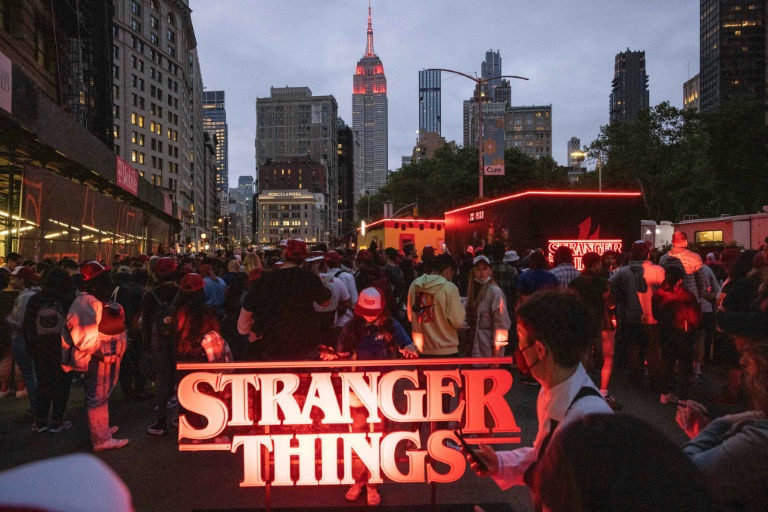
The woman who picked Kate Bush for “Stranger Things”, creating an unlikely summer smash, says Bush’s song allowed the world a much-needed sigh of relief after the stress of the pandemic.

As the Emmy-winning music coordinator for the Netflix show, Nora Felder takes a big part of the credit for turning “Running Up That Hill”, a song first released in 1985, into arguably the defining song of 2022. 

After Bush’s song featured on season four in May, it saw an 8,700-percent boost on Spotify, hitting the number one slot around the world. 

“No-one imagined what it would become. It swept the world,” Felder told AFP.

“I think the song was a way for the world to exhale, to let go of their breath. 

“The primary message of the song is stepping out of your shoes and understanding what the people around you are going through, that sometimes it’s a long road to the top.

“And I think we all felt trapped and didn’t know what was going to happen with the pandemic and everything else.”

– ‘Kate is very particular’ –

Felder’s job is more than just sitting around thinking of great tunes for a scene. Her day is filled with budgets, copyright negotiations, hiring bands and composers.

“I’m usually involved in the very early stages of the scripts,” she said. 

“It helps me a lot to have the stories in my head, to start building song ideas before it’s shot. When I get to know the characters, that’s when the ideas start coming to me.”

It was a tense moment when she approached Bush’s representatives, not knowing the singer-songwriter was already a fan of the show. 

“Because Kate is very particular about how her songs are used, I took a lot of time preparing the context and what it meant to the story and the characters,” Felder said. 

“Kate approved it because she understood and accepted the vision that the Duffer brothers (the showrunners) had created.”

It was a huge relief.

“I did have other selections but that was the best one. This song ticked all the check marks — the message behind the song, the way it built, the way it resonated with everything Max (the character) had gone through.” 

– ‘Open their ears’ –

Felder’s other major success in season four was using “Master of Puppets” by Metallica. 

She credits the love for character Eddie, who plays the song, with helping it connect to non-metal fans. 

“Because the audience fell in love with Eddie, it made them open their ears to the song that exemplified him. They are tough on the outside but on the inside, there’s an emotionality,” she said.

“‘Stranger Things’ is magical. People love the characters so much that it allows them to keep their mind open.” 

Metallica sent Felder flowers on the day she won the Emmy for music supervision last month. 

“And they followed me on Twitter. I’m still a little kid with certain bands, and I was thinking: ‘Oh my god, Metallica followed me!'” she said.

Felder began her career in music production, assisting on albums by Paul Simon, Sinead O’Connor and Iggy Pop, before moving into soundtracks on “Romy and Michele’s High School Reunion” and TV shows like “Ray Donovan” and “Baskets”.

With another season of “Stranger Things” in the pipeline, the pressure is on.

“With what happened this year, I suspect a lot of artists are going to be hoping they can be the next ‘Running Up That Hill’,” she said. 

“Who knows, maybe there will be another one or two.”

Air France, Airbus trial to open over 2009 Rio-Paris crash

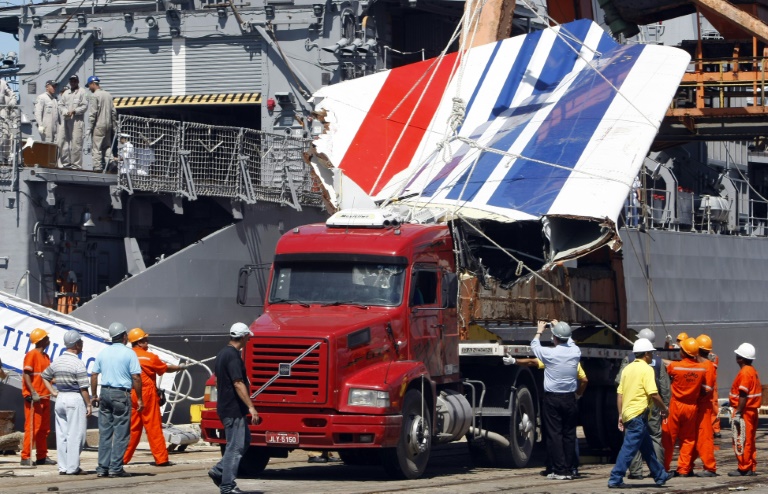
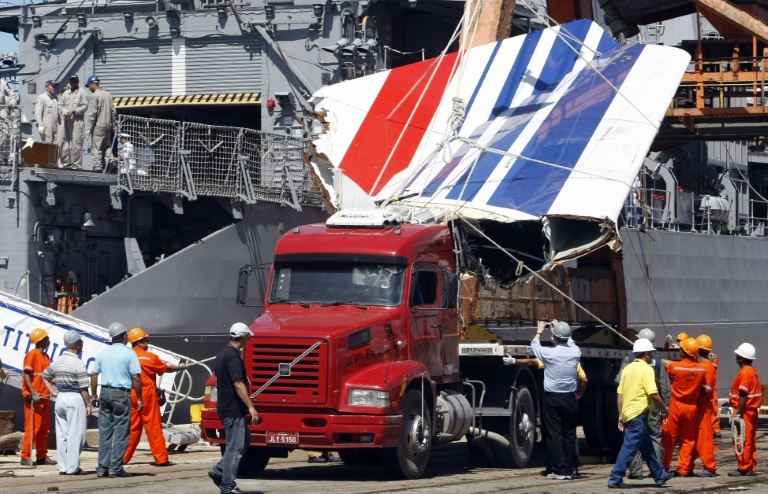
Air France and Airbus will go on trial on Monday on charges of involuntary manslaughter over the fatal 2009 crash of a jet heading to Paris from Brazil, killing all 228 people aboard.

Victims’ families and some aviation experts say the pilots were insufficiently trained to handle a loss of speed readings caused by crucial equipment freezing over in a storm.

Flight AF 447 from Rio de Janeiro plunged into the Atlantic Ocean in the early hours of June 1, 2009, after entering a zone near the Equator known for strong turbulence.

The Airbus A330 was carrying 12 crew members and 216 passengers. It was the carrier’s deadliest crash.

It took nearly two years to locate the bulk of the fuselage and recover the “black box” flight recorders.

French flagship carrier Air France and aircraft maker Airbus were charged as the inquiry progressed. 

Experts determined the crash resulted from mistakes made by pilots disorientated by so-called Pitot speed-monitoring tubes that had frozen over in thick cloud.

But investigating magistrates overseeing the case dropped the charges in 2019, a decision that infuriated victims’ families.

Prosecutors appealed against the decision and in 2021 a Paris court ruled there was sufficient evidence for a trial to go ahead. 

Ophelie Toulliou, who lost her brother on the flight, said it was essential “the truth come out, and that the sentences, if deserved, are handed down”.

“But the message is also to make companies that think they’re untouchable understand ‘You’re like everyone else and if you make mistakes, they will be punished,'” she told AFP.

– ‘Lost our speeds’ –

The court will hear testimony from dozens of aviation experts and pilots over two months of hearings, and each company faces a maximum fine of 225,000 euros ($220,000).

There will also be analysis of the final minutes in the cockpit before the plane went into free-fall after entering a so-called “intertropical convergence zone” that often produces volatile storms with heavy precipitation.

In the cold, the Pitot tubes froze, a problem that had already been reported by other pilots. The tubes were quickly replaced on planes worldwide in the months after the accident.

“We’ve lost our speeds,” one pilot is heard saying in the flight recordings, before other indicators mistakenly show a loss of altitude and a series of alarm messages appear on the cockpit screens. 

The pilots start climbing and even though a “STALL” alert sounds, reach 11,600 metres (38,060 feet). 

“I don’t know what’s happening,” one of the pilots is heard saying as the stall begins.

– Training overhaul –

Air France pilots’ union SPAF said it was now “indispensable for a court to hear all the parties and decide where responsibility lies in a public hearing”.

The crash prompted an overhaul of training protocols across the industry, in particular to prepare pilots to handle the intense stress of unforeseen circumstances.

Pilots are also now required to continually practice stall responses on simulators.

“That was the big change after this accident for all civil airline companies. Before, it was something pilots learned in basic training and then they were never trained again,” one airline executive told AFP, on condition of anonymity.

Testimony will also be heard from some of the 476 members of victims’ families who are civil plaintiffs in the case.

But Nelson Faria Marinho, president of the Brazilian association of victims’ relatives, said, “I’m not expecting anything from this trial.”

“Even if there is a conviction, who will be punished? The CEOs? They were changed at Airbus and Air France a long time ago,” he told AFP during an interview at his Rio home.

He will be represented by former French pilot Gerard Arnoux, who has advised several of the victims’ families and wrote a book titled “Rio-Paris Is Not Responding: AF447, the Crash that Should Not Have Happened”.

Air France, Airbus trial to open over 2009 Rio-Paris crash

Air France and Airbus will go on trial on Monday on charges of involuntary manslaughter over the fatal 2009 crash of a jet heading to Paris from Brazil, killing all 228 people aboard.

Victims’ families and some aviation experts say the pilots were insufficiently trained to handle a loss of speed readings caused by crucial equipment freezing over in a storm.

Flight AF 447 from Rio de Janeiro plunged into the Atlantic Ocean in the early hours of June 1, 2009, after entering a zone near the Equator known for strong turbulence.

The Airbus A330 was carrying 12 crew members and 216 passengers. It was the carrier’s deadliest crash.

It took nearly two years to locate the bulk of the fuselage and recover the “black box” flight recorders.

French flagship carrier Air France and aircraft maker Airbus were charged as the inquiry progressed. 

Experts determined the crash resulted from mistakes made by pilots disorientated by so-called Pitot speed-monitoring tubes that had frozen over in thick cloud.

But investigating magistrates overseeing the case dropped the charges in 2019, a decision that infuriated victims’ families.

Prosecutors appealed against the decision and in 2021 a Paris court ruled there was sufficient evidence for a trial to go ahead. 

Ophelie Toulliou, who lost her brother on the flight, said it was essential “the truth come out, and that the sentences, if deserved, are handed down”.

“But the message is also to make companies that think they’re untouchable understand ‘You’re like everyone else and if you make mistakes, they will be punished,'” she told AFP.

– ‘Lost our speeds’ –

The court will hear testimony from dozens of aviation experts and pilots over two months of hearings, and each company faces a maximum fine of 225,000 euros ($220,000).

There will also be analysis of the final minutes in the cockpit before the plane went into free-fall after entering a so-called “intertropical convergence zone” that often produces volatile storms with heavy precipitation.

In the cold, the Pitot tubes froze, a problem that had already been reported by other pilots. The tubes were quickly replaced on planes worldwide in the months after the accident.

“We’ve lost our speeds,” one pilot is heard saying in the flight recordings, before other indicators mistakenly show a loss of altitude and a series of alarm messages appear on the cockpit screens. 

The pilots start climbing and even though a “STALL” alert sounds, reach 11,600 metres (38,060 feet). 

“I don’t know what’s happening,” one of the pilots is heard saying as the stall begins.

– Training overhaul –

Air France pilots’ union SPAF said it was now “indispensable for a court to hear all the parties and decide where responsibility lies in a public hearing”.

The crash prompted an overhaul of training protocols across the industry, in particular to prepare pilots to handle the intense stress of unforeseen circumstances.

Pilots are also now required to continually practice stall responses on simulators.

“That was the big change after this accident for all civil airline companies. Before, it was something pilots learned in basic training and then they were never trained again,” one airline executive told AFP, on condition of anonymity.

Testimony will also be heard from some of the 476 members of victims’ families who are civil plaintiffs in the case.

But Nelson Faria Marinho, president of the Brazilian association of victims’ relatives, said, “I’m not expecting anything from this trial.”

“Even if there is a conviction, who will be punished? The CEOs? They were changed at Airbus and Air France a long time ago,” he told AFP during an interview at his Rio home.

He will be represented by former French pilot Gerard Arnoux, who has advised several of the victims’ families and wrote a book titled “Rio-Paris Is Not Responding: AF447, the Crash that Should Not Have Happened”.

Close Bitnami banner
Bitnami