US Business

Veil protests present Iran with its 'Berlin Wall' moment, activist says

Iran may use the Islamic veil as a tool of oppression, but the hijab is also the weakest pillar of an embattled regime trying to forestall its own “Berlin Wall” moment, an Iranian-American activist based in New York tells AFP.

Masih Alinejad, 45, who fled Iran in 2009, became known in 2014 after she launched a social media campaign called mystealthyfreedom.org that encourages Iranian women to protest against the obligation to wear the hijab in their country.

In her opinion, Iranian women rejecting the mandatory hijab will have a similar effect as the fall of the Berlin Wall in 1989, which marked the beginning of the end of the Soviet Union.

The journalist and activist now has 500,000 followers on Twitter and eight million followers on Instagram, where she posts dozens of photos or videos every day of Iranian women removing their hijab or images of the violent repression in her homeland.

She has become a voice in exile for the protests that have rocked Iran since their initial spark: the death on September 16 of 22-year-old Mahsa Amini at the hands of morality police in Tehran.

Alinejad’s public standing increased markedly in mid-2021, when US prosecutors indicted four “Iranian intelligence agents” for plotting in 2018 to kidnap her and whisk her back to Iran, where one of her brothers was also imprisoned. 

Iran denied any involvement in the scheme.

– ‘The weakest pillar’ –

“To me, the compulsory hijab is like the Berlin Wall. If we tear this wall down, the Islamic Republic won’t exist,” Alinejad told AFP, a flower peeking out from her curly and voluminous hair.

The comparison with the toppling of the Berlin Wall is dear to her and clearly needles Iran’s supreme leader Ayatollah Ali Khamenei, who in a speech this week said “US political elements” making the analogy do not feel sorry “for the death of a young girl,” but instead have broader political aims.

“That actually shows you that compulsory hijab is the weakest pillar of the Islamic Republic. That is why the regime is really scared of this revolution,” Alinejad said.

She argued that if Iranian women succeed in saying no “to those who are telling them what to wear, these women will be more powerful to say no to (a) dictator.”

The crackdown on the demonstrations caused the death of dozens of people, human rights organizations say.

The hijab “is a tool to oppress us… to control women” and “to control the whole society through women,” Alinejad said.

Iran’s TikTok generation is protesting the use of women’s bodies as “a political platform for our government, for the Islamic regime to write its own ideology.”

– ‘I’m not safe here’ –

Far from her country of birth, Alinejad has found employment as host of a program on the Persian service of Voice of America, the US government-funded outlet. She’s also faced criticism on social media for taking a hard line opposing any negotiation with Tehran on nuclear issues. Some see her as serving US interests and feeding Islamophobia. 

She offers a tart response that brings tears to her eyes: “I invite them all to go to Afghanistan, to go to Iran, live under Sharia law.”

She routinely pillories Western leaders who comply with the obligation to wear a hijab during their visits to Iran, targeting in particular the former French minister Segolene Royal, or the former representative of the European Union, the Italian Federica Mogherini.

“The hijab can be a choice only the day that all women around the world can choose what they want to wear,” she said.

Alinejad says fear has been a constant presence both inside Iran and abroad. Speaking figuratively for Iranian women as a whole, she said: “From the age of seven, if I don’t cover this hair, I (wouldn’t) be able to go to school. I get lashes. I go to jail. I get killed.”

Exiled life in the United States holds its own dangers. “I’m not safe here in America,” she said, recalling the 2018 kidnapping attempt against her.

More recently, in late July, a man was arrested after loitering around her home in Brooklyn. The FBI found a Kalashnikov in his car. Since then, the activist has had to move. 

Meta warns of password stealing phone apps

Meta warned a million Facebook users Friday that they have been “exposed” to seemingly innocuous smartphone applications designed to steal passwords to the social network.

So far this year, Meta has identified more than 400 “malicious” apps tailored for smartphones powered by Apple or Android software and available at the Apple and Google app stores, director of threat disruption David Agranovich said during a briefing.

“These apps were listed on the Google Play Store and Apple’s App Store and disguised as photo editors, games, VPN services, business apps and other utilities to trick people into downloading them,” Meta said in a blog post.

The apps often ask people to login with their Facebook account information to use promised features, stealing usernames and passwords if entered, according to Meta’s security team.

“They are just trying to trick people into entering in their login information in a way that enables hackers to access their accounts,” Agranovich said of the apps.

“We will notify one million users that they may have been exposed to these applications; that is not to say they have been compromised.”

More than 40 percent of the apps Meta listed involved ways to edit or manipulate images, and some were as seemingly simple as using smartphones as flashlights.

“Our sense is these types of malicious app developers try to target multiple services,” Agranovich said, noting the app creators are likely after passwords to more than just Facebook accounts.

“The targeting here seemed to be relatively indiscriminate — get people to download the applications around the world in an attempt to get access to as many login credentials as possible.”

Meta said that it shared what it discovered with Apple and Google, who control what is offered at their respective app shops and each vet offerings.

Apple told AFP that only 45 of the 400 applications highlighted by Meta were on its operating system, and that the company has already removed them from its app store.

Google said that most of the apps Meta flagged had already been identified and removed from the Play store by its own vetting systems.

“All of the apps identified in the report are no longer available on Google Play,” a spokesperson told AFP.

“Users are also protected by Google Play Protect, which blocks these apps on Android.”

Meta warns of password stealing phone apps

Meta warned a million Facebook users Friday that they have been “exposed” to seemingly innocuous smartphone applications designed to steal passwords to the social network.

So far this year, Meta has identified more than 400 “malicious” apps tailored for smartphones powered by Apple or Android software and available at the Apple and Google app stores, director of threat disruption David Agranovich said during a briefing.

“These apps were listed on the Google Play Store and Apple’s App Store and disguised as photo editors, games, VPN services, business apps and other utilities to trick people into downloading them,” Meta said in a blog post.

The apps often ask people to login with their Facebook account information to use promised features, stealing usernames and passwords if entered, according to Meta’s security team.

“They are just trying to trick people into entering in their login information in a way that enables hackers to access their accounts,” Agranovich said of the apps.

“We will notify one million users that they may have been exposed to these applications; that is not to say they have been compromised.”

More than 40 percent of the apps Meta listed involved ways to edit or manipulate images, and some were as seemingly simple as using smartphones as flashlights.

“Our sense is these types of malicious app developers try to target multiple services,” Agranovich said, noting the app creators are likely after passwords to more than just Facebook accounts.

“The targeting here seemed to be relatively indiscriminate — get people to download the applications around the world in an attempt to get access to as many login credentials as possible.”

Meta said that it shared what it discovered with Apple and Google, who control what is offered at their respective app shops and each vet offerings.

Apple told AFP that only 45 of the 400 applications highlighted by Meta were on its operating system, and that the company has already removed them from its app store.

Google said that most of the apps Meta flagged had already been identified and removed from the Play store by its own vetting systems.

“All of the apps identified in the report are no longer available on Google Play,” a spokesperson told AFP.

“Users are also protected by Google Play Protect, which blocks these apps on Android.”

Uvalde schools suspends police force after bungled shooting response

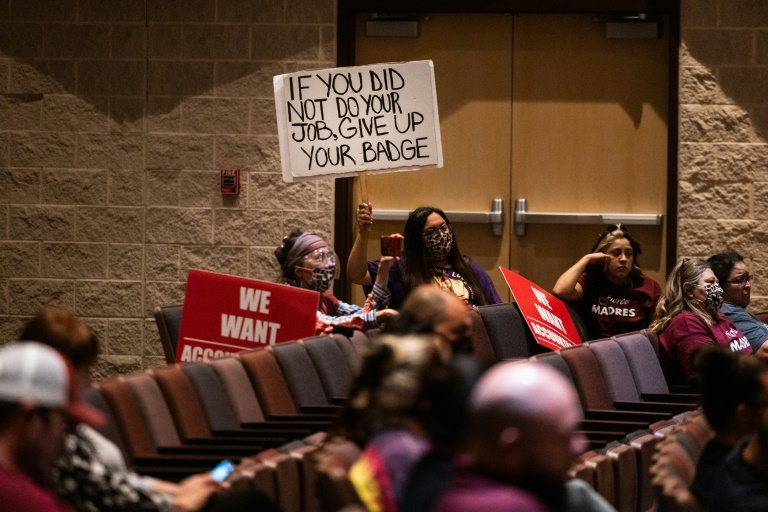
The education board that oversees schools in the Texas town of Uvalde on Friday suspended the police force whose bungled response to a horrific mass shooting has been widely criticised.

Nineteen young children and two teachers were killed when a teenage gunman went on a rampage at Robb Elementary School on May 24 in America’s worst school shooting in a decade. Police eventually shot and killed the gunman.

Police in Uvalde have been under intense scrutiny since it emerged that more than a dozen officers waited for over an hour outside classrooms where the shooting was taking place and did nothing as children lay dead or dying inside.

On Friday the Uvalde Consolidated Independent School District said it was suspending the small police force that has responsibility for safety and security in the handful of public schools under its aegis.

“As a result of the recent developments… the district has made the decision to suspend all activities of the Uvalde CISD Police Department for a period of time,” a statement said.

“Officers currently employed will fill other roles in the district.”

In August the school board sacked the district police chief who oversaw the response to the shooting.

The district said a review into officers’ responses to the tragedy would continue.

“The district has requested the Texas Department of Public Safety to provide additional troopers for campus and extra-curricular activities. 

“We are confident that staff and student safety will not be compromised during this transition.”

A total of 376 officers — border guards, state police, city police, local sheriff departments and elite forces — responded to the massacre, a Texas state lawmakers’ report said in July.

But the situation was “chaotic” due to the officers’ “lackadaisical approach” to subduing the gunman, the report charged.

School shootings have become a totemic reminder of the United States’ paralysis over guns.

A majority of voters favor stricter controls on the use and purchase of firearms, but the country’s political class has proved unwilling to respond in any meaningful way, citing a constitutional “right to bear arms.” 

In June reform advocates notched a limited victory with the passage of legislation that demands enhanced background checks for younger buyers and provides federal cash for states introducing “red flag” laws that allow courts to temporarily remove weapons from those considered a threat.

US job gains slow, but not enough to ease inflation worries

US job gains slowed slightly in September, offering some good news for the Federal Reserve as it works to cool the economy, but official data released on Friday also showed wages continued to rise, underlining the challenge to tamping down rampant inflation.

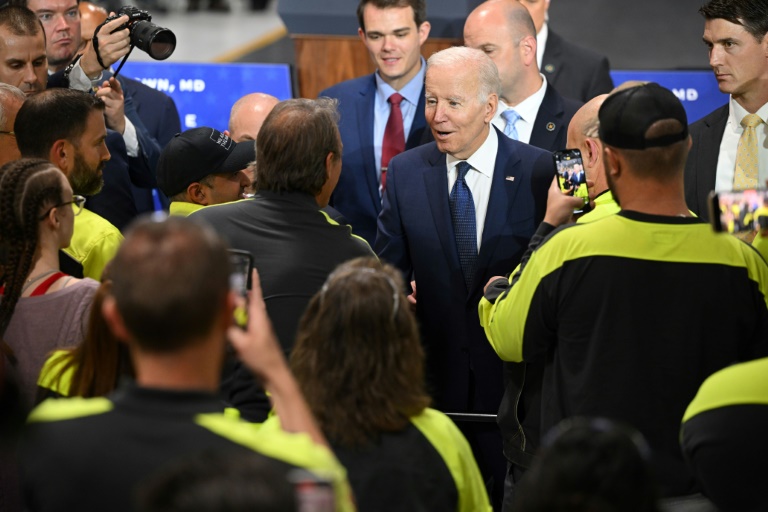
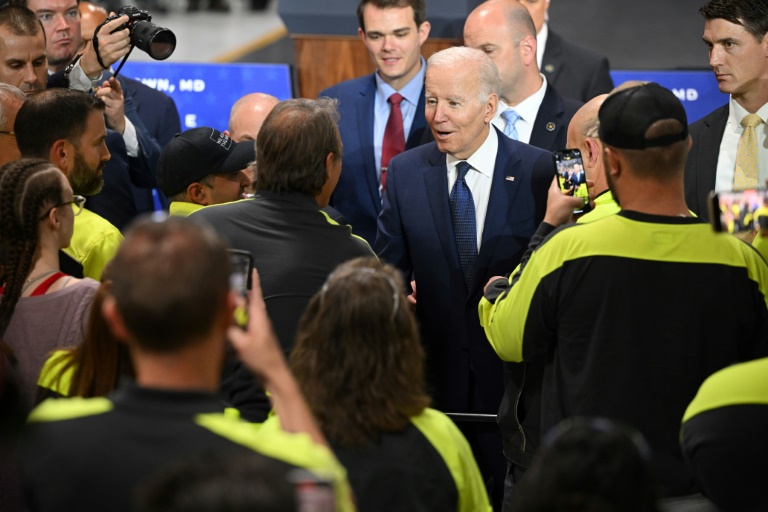
President Joe Biden, who has seen his approval erode in the face of surging prices, cheered the data as a sign of “historic progress” in the economy, even while he said there is more work to do to help American families.

But the central bank likely will want to see more evidence of slowing price increases, which have soared at the fastest pace in 40 years, before pulling back on its aggressive interest rate increases. And economists say another big hike remains likely next month.

The economy added 263,000 jobs last month, showing a steady slowdown from the blistering pace in 2020 and 2021, the Labor Department said in the closely-watched report. The unemployment rate slipped two-tenths of a percentage point to 3.5 percent.

Biden said the gain brings the total jobs created since he took office in January 2021 to 10 million.

“Our job market continues to show resilience as we navigate through this economic transition we’re in,” he said in a speech at a Volvo plant in Hagerstown, Maryland. 

Following the rapid turnaround from the worst of the pandemic, “we have to move from historically strong economic recovery to a more steady, stable recovery,” Biden said. 

– Wages still rising –

But he stressed, “We need to bring inflation down without giving up all the historic economic progress that working class and middle class people have made.”

While the US president cheered the increase in wages caused by the strong labor market, that is of more concern for the Fed. 

The report showed a 10-cent increase in average hourly earnings in the month to $32.46. Over the past 12 months, average hourly earnings have increased by 5.0 percent, still high but a slowing from the pace seen over the past year.

The central bankers are watching closely to see if wages continue to accelerate, which would fuel further inflationary pressures.

The Fed has raised the benchmark lending rate five times this year and said more tightening will be needed to get inflation down, but it acknowledges that the process could cause a painful economic slowdown.

“A moderation in job and wage growth will be welcome developments for Fed officials. However, these data do not change the near-term course of monetary policy,” Rubeela Farooqi of High Frequency Economics said in an analysis.

Fed officials in recent comments have made it clear that no single data report will change their trajectory since it will take time for inflation to get back down to the two percent goal, which will require more rate hikes.

– Worker shortage? –

Robert Frick, corporate economist with Navy Federal Credit Union, called the September data “a Goldilocks jobs report.”

He said it was “cool enough to make the Fed happy that the ‘tight’ labor market is loosening, and warm enough to satisfy most Americans looking for work, or looking to switch jobs for higher pay.”

Jason Furman, a former White House economist, said only two “surprisingly low” inflation reports before the November 1-2 policy meeting could cause the Fed to pivot its stance.

“And while economic forecasting can be difficult, I’m reasonably confident the chances of that happening are precisely 0%,” Furman tweeted.

US employers continue to complain that they have difficulty filling open positions, and the Fed wants to see signs of an easing in the tight labor market.

The data showed notable gains in the leisure and hospitality sector and in health care, and a decline in government jobs.

The unemployment rate, which edged up in August as more workers came off the sidelines to join the labor force, slipped back last month, and the participation rate was barely changed at 62.3 percent as the pool of available workers was about steady.

Hurricane Ian, which caused massive devastation, especially in Florida, “had no discernible effect” on the data, which was collected before the storm made landfall.

US job gains slow, but not enough to ease inflation worries

US job gains slowed slightly in September, offering some good news for the Federal Reserve as it works to cool the economy, but official data released on Friday also showed wages continued to rise, underlining the challenge to tamping down rampant inflation.

President Joe Biden, who has seen his approval erode in the face of surging prices, cheered the data as a sign of “historic progress” in the economy, even while he said there is more work to do to help American families.

But the central bank likely will want to see more evidence of slowing price increases, which have soared at the fastest pace in 40 years, before pulling back on its aggressive interest rate increases. And economists say another big hike remains likely next month.

The economy added 263,000 jobs last month, showing a steady slowdown from the blistering pace in 2020 and 2021, the Labor Department said in the closely-watched report. The unemployment rate slipped two-tenths of a percentage point to 3.5 percent.

Biden said the gain brings the total jobs created since he took office in January 2021 to 10 million.

“Our job market continues to show resilience as we navigate through this economic transition we’re in,” he said in a speech at a Volvo plant in Hagerstown, Maryland. 

Following the rapid turnaround from the worst of the pandemic, “we have to move from historically strong economic recovery to a more steady, stable recovery,” Biden said. 

– Wages still rising –

But he stressed, “We need to bring inflation down without giving up all the historic economic progress that working class and middle class people have made.”

While the US president cheered the increase in wages caused by the strong labor market, that is of more concern for the Fed. 

The report showed a 10-cent increase in average hourly earnings in the month to $32.46. Over the past 12 months, average hourly earnings have increased by 5.0 percent, still high but a slowing from the pace seen over the past year.

The central bankers are watching closely to see if wages continue to accelerate, which would fuel further inflationary pressures.

The Fed has raised the benchmark lending rate five times this year and said more tightening will be needed to get inflation down, but it acknowledges that the process could cause a painful economic slowdown.

“A moderation in job and wage growth will be welcome developments for Fed officials. However, these data do not change the near-term course of monetary policy,” Rubeela Farooqi of High Frequency Economics said in an analysis.

Fed officials in recent comments have made it clear that no single data report will change their trajectory since it will take time for inflation to get back down to the two percent goal, which will require more rate hikes.

– Worker shortage? –

Robert Frick, corporate economist with Navy Federal Credit Union, called the September data “a Goldilocks jobs report.”

He said it was “cool enough to make the Fed happy that the ‘tight’ labor market is loosening, and warm enough to satisfy most Americans looking for work, or looking to switch jobs for higher pay.”

Jason Furman, a former White House economist, said only two “surprisingly low” inflation reports before the November 1-2 policy meeting could cause the Fed to pivot its stance.

“And while economic forecasting can be difficult, I’m reasonably confident the chances of that happening are precisely 0%,” Furman tweeted.

US employers continue to complain that they have difficulty filling open positions, and the Fed wants to see signs of an easing in the tight labor market.

The data showed notable gains in the leisure and hospitality sector and in health care, and a decline in government jobs.

The unemployment rate, which edged up in August as more workers came off the sidelines to join the labor force, slipped back last month, and the participation rate was barely changed at 62.3 percent as the pool of available workers was about steady.

Hurricane Ian, which caused massive devastation, especially in Florida, “had no discernible effect” on the data, which was collected before the storm made landfall.

Tesla to deliver 1st electric semis to PepsiCo in December

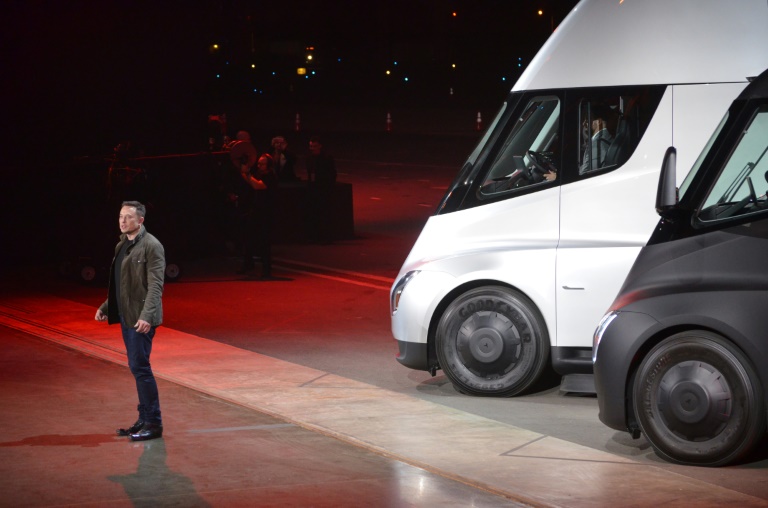
PepsiCo said Friday it will receive its first Tesla semi-trucks December 1, a vehicle Elon Musk has said can travel 500 miles on a single charge.

The trucks will support the soda company’s Sacramento, California beverage plant as a well as it’s Modesto, California factory for the Frito-Lay snack brand, according to Pepsi.

A Pepsi spokeswoman declined to say how many Tesla trucks will be delivered, saying in an email “we will provide more details once we have taken delivery.”

Musk announced the planned December 1 delivery inn a Twitter post Thursday night, calling the truck “super fun to drive.”

He first announced the vehicle in 2017, targeting production two years later. But the timeframe has been pushed back several times amid supply chain problems.

French motorists scramble for fuel as strike cuts supply

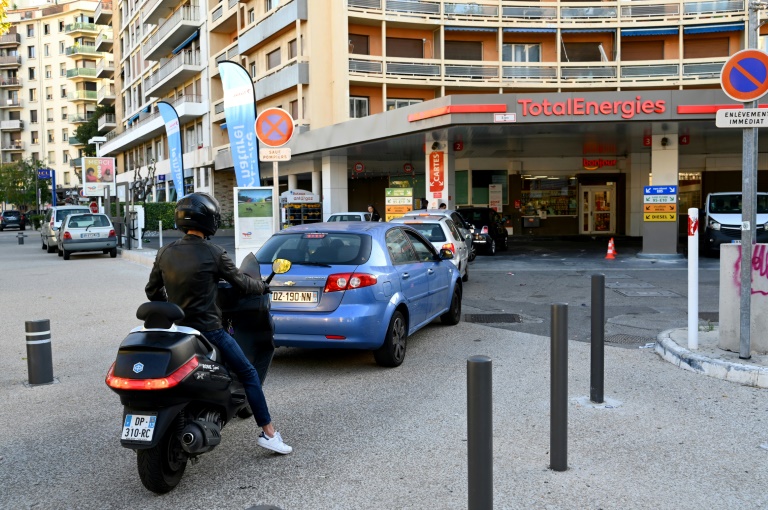
Frustrated motorists faced another day of long waits at petrol pumps across France on Friday, with President Emmanuel Macron urging residents not to panic as a strike at energy giant TotalEnergies entered its 12th day.

TotalEnergies, among the world’s biggest oil companies, runs a network of around 3,500 filling stations in France, nearly a third of the total. Most of them are low on fuel.

Across France, nearly one in five filling stations were short of at least one type of fuel, according to government data.

“Does anyone know of a petrol station around here that’s been re-supplied?” read a post in a local Facebook group on Friday morning. 

“Where can I get ethanol?” posted another motorist in the hope of filling the tank before the weekend.

Several of TotalEnergies’ oil refineries have been blockaded by striking workers.

“We’ve been dry since Sunday,” a manager at a station in central Paris said on Thursday.

Since the start of September, TotalEnergies has cut petrol prices by 20 euro cents ($0.19) per litre to help vehicle owners cope with sharp rises in energy prices triggered by the war in Ukraine.

The average price for E5-type unleaded petrol is now 1.62 euros per litre, or 6.19 euros per gallon, up around four percent from only a week ago.

“Everybody wants to buy from us because we’re cheaper,” the station manager said.

Bottlenecks due to strong demand have been exacerbated by strike action over pay, which has cut the frequency of fuel deliveries in half, he said.

Anthony, a plumber in Paris, said traffic was backed up along an entire boulevard as early as 7:00 am on Friday when he started his morning rounds, as people tried to reach a TotalEnergies station in the east of the capital.

– ‘Shareholders get a lot’ –

“It’s been like this since 5 o’clock this morning and every morning before,” said Ali Mansoibou, the manager of an Agip petrol station in Marseille, pointing at a long queue of cars waiting to be filled.

Mansoibou said he allowed each driver to buy no more than 30 euros’ worth of fuel, but even so, “there’ll be nothing left for the weekend”.

The government has responded to the shortages by releasing fuel from strategic stocks, Energy Transition Minister Agnes Pannier-Runacher told the broadcaster BFM television late on Thursday.

In addition, more supplies were being brought in from neighbouring Belgium and elsewhere, she said.

Supply would improve “within two or three days”, she predicted.

Transport Minister Clement Beaune said fuel trucks would, exceptionally, be allowed to make deliveries on Sunday, in a bid to bring relief.

But Thierry Defresne, head of the European works council at TotalEnergies, told AFP that “every site” at the company had announced their intention to extend the strike action.

“Shareholders get a lot but workers are completely forgotten,” Defresne told RMC radio on Friday.

“Fabulous profits are being made but they don’t want to offset the impact of inflation (on employees),” he said.

TotalEnergies paid out a special dividend to shareholders totalling 2.6 billion euros ($2.55 billion) after the company — like most in the sector — made exceptionally large profits from high energy retail prices.

The government appeared sympathetic to the wage demands on Friday, with Olivia Gregoire, minister for small and midsize companies, calling on energy majors to “listen to demands for salary rises”.

Most of the sector’s companies had posted “strong results”, she said. “We expect an effort in favour of workers.”

President Emmanuel Macron issued an “appeal for calm” from French motorists, urging them, “Don’t panic.” 

The northern Hauts de France region banned filling up jerrycans to discourage panic buying by drivers.

Macron struck a harder tone towards strikers.

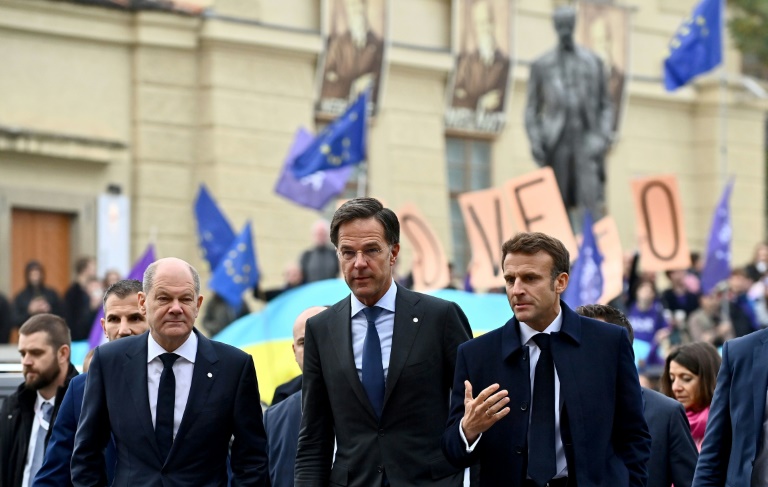
“All wage demands are legitimate but you can’t block others from moving about and living their lives,” he said while on a trip to Prague earlier this week.

Staff at the French branch of oil major ExxonMobil have also demanded higher wages, with angry demonstrators setting fire to wooden crates during a protest in northern France on Wednesday. 

TotalEnergies did not give any details about the impact of the strike on supply. A spokesperson told AFP simply that the situation was “stable”.

burs-rl/

Deal reached for civil aviation to try for net-zero emissions by 2050

UN aviation agency members reached an agreement Friday to try to achieve by 2050 net-zero carbon emissions in air travel — often criticized for its outsized role in climate change.

The assembly, which brought together representatives from 193 nations at the International Civil Aviation Organization’s Montreal headquarters, reached a “historic agreement on a collective long-term aspirational goal (LTAG) of net-zero carbon emissions by 2050!” the UN agency said in a Twitter message.

It added that it “continues to advocate for much more ambition and investment by states to ensure aviation is fully decarbonized by 2050 or earlier.”

“It’s an excellent result,” a diplomatic source told AFP, revealing that that only four countries — including China, the main thrust of global growth in air travel — “had expressed reservations.”

The air transportation industry has faced growing pressure to deal with its outsized role in the climate crisis.

Currently responsible for 2.5 percent to three percent of global CO2 emissions, the sector’s switch to renewable fuels is proving difficult, even if the aeronautics industry and energy companies are seeking progress.

The International Air Transport Association (IATA) said airlines were “strongly encouraged” by the adoption of the climate goal, coming one year after the organization endorsed the same position at its own general meeting.

IATA director general Willie Walsh said now “we expect much stronger policy initiatives in key areas of decarbonization such as incentivizing the production capacity of sustainable aviation fuels.”

According to airlines, it will require investments of $1.5 billion between 2021 and 2050 to decarbonize aviation.

“The global aviation community welcomes this landmark agreement,” said Luis Felipe de Oliveira, the head of Airports Council International, which represents 1,950 airports in 185 countries.

“This is a watershed moment in the effort to decarbonize the aviation sector with both governments and industry now heading in the same direction, with a common policy framework,” he said in a statement.

– Deal is non-binding –

The agreement, however, was far from satisfying for some non-governmental groups expressing regret it didn’t go far enough and was not legally binding.

Planes attract particularly sharp criticism because only about 11 percent of the world’s population fly each year, according to a widely quoted 2018 study by Nordic researchers.

In addition, 50 percent of airline emissions come from the one percent of travelers who fly the most, it found.

“This is not the aviation’s Paris agreement moment. Let’s not pretend that a non-binding goal will get aviation down to zero,” said Jo Dardenne of NGO Transport & Environment.

She also expressed disappointment over tweaks considered by delegates to the sector’s carbon offsetting and reduction scheme, known as CORSIA.

During the 10-day meeting, Russia had also sought but failed to get enough votes to be re-elected to the UN organization’s governing council, which is responsible for ensuring compliance with aviation rules.

Russia was accused of breaking international rules by registering hundreds of leased planes at home rather than returning them, as required by sanctions imposed after its invasion of Ukraine in February.

The ICAO general meeting was the first since the start of the pandemic, which had brought the airline industry to its knees: in 2021 the number of airline passengers was only half the 4.5 billion in 2019, marking a small rebound from the 60 percent year-over-year drop in 2020.

The sector hopes in 2022 to see to 83 percent of its customer levels from three years ago and to become profitable again worldwide next year.

EU leaders struggle for answer to Putin's 'energy missile'

EU leaders wrestled on Friday to come up with a plan to tackle soaring energy costs as they struggled with the fallout from Russia’s war on Ukraine at a summit in Prague. 

President Volodymyr Zelensky urged further sanctions on Moscow’s energy sector and more arms as the bloc looks to maintain its backing for Ukraine and hold a tough line against the Kremlin.

“We must be strong – until our common victory, to preserve all that we value so much,” Zelensky told the leaders by videolink. 

“We must invest now in our defence, in our security, in our cooperation as much as possible.”

The leaders also discussed ways to better protect their critical infrastructure in the wake of leaks from the Russia-Europe Nord Stream gas pipelines that have been blamed on “sabotage”.

But it was the sharp disagreements over how to tackle the energy crisis that were the major focus of attention as the 27 nations wrangled over the best plan to try to bring down prices.

Europe is facing an energy crunch as the cost of electricity generation skyrockets because of a massive surge in gas prices caused by Russia turning off the taps.

“Russia has fired an energy missile at the European continent and the world,” European Council head Charles Michel said. 

Governments across the bloc are scrambling to lower bills for their consumers, but they rely on different sources for their energy and are split over the solutions.

EU executive head Ursula von der Leyen is proposing a “roadmap” of measures to help ease the burden — including potential moves to cap the price of gas. 

However, there is no consensus on how any caps could work and leaders are not set to take a firm decision until a summit in Brussels later this month.  

“We will have a lot of work this autumn and winter and it will not be easy,” German Chancellor Olaf Scholz said.  

– Not ‘intimidated’ –

More than half of the bloc have pushed for the EU to impose a price ceiling on how much it would pay for gas piped or shipped in, as the northern hemisphere winter sets in.

But Germany has so far stood in the way over fears that the move could divert precious supplies away from Europe.

“A price cap on gas if that could be achieved would be grand, with the caveat that we cannot endanger security of supplies,” said Latvian Prime Minister Krisjanis Karins.

“We cannot set the price so that no one would sell gas into Europe.”

Berlin has come under fire from other EU members for dragging its feet on the issue while announcing a 200-billion-euro ($199-billion) fund to subsidise gas purchases at home.

“My message to Germany is be united with all the others because during difficult times everybody has to agree on a common denominator,” Polish Prime Minister Mateusz Morawiecki said.

Despite some discontent from Hungary, the bloc has managed to remain largely united in its opposition to the Kremlin as Putin has escalated the conflict by claiming four occupied regions of Ukraine.

– ‘Ukraine needs support now’ –

A broader summit of 44 nations from across Europe held in Prague on Thursday highlighted Moscow’s isolation.

Michel insisted the EU does not “intend to be intimidated” after US President Joe Biden warned of the risk of nuclear “Armageddon” as Putin ratcheted up his threats. 

The bloc is looking to maintain its backing for Kyiv as Zelensky’s troops push Russian forces back on several fronts over seven months into the war. 

Ukraine is urging the EU to speed up much-needed economic support, after Brussels on Monday signed a memorandum of understanding to provide five billion euros.

On the military front, the bloc is planning to launch a training mission for Ukrainian forces later this month.

It is also eyeing a possible fresh tranche of funding for arms for Ukraine that would take its overall spending on weaponry to three billion euros.

French President Emmanuel Macron for his part announced Paris was setting up a special 100-million-euro fund to allow Kyiv to buy arms directly. 

“Ukraine needs our support not tomorrow, Ukraine needs support today, right now,” said Lithuanian President Gitanas Nauseda. 

Close Bitnami banner
Bitnami