US Business

Meta warns of password stealing phone apps

Meta warned a million Facebook users Friday that they have been “exposed” to seemingly innocuous smartphone applications designed to steal passwords to the social network.

So far this year, Meta has identified more than 400 “malicious” apps tailored for smartphones powered by Apple or Android software and available at the Apple and Google app stores, director of threat disruption David Agranovich said during a briefing.

“These apps were listed on the Google Play Store and Apple’s App Store and disguised as photo editors, games, VPN services, business apps and other utilities to trick people into downloading them,” Meta said in a blog post.

The apps often ask people to login with their Facebook account information to use promised features, stealing usernames and passwords if entered, according to Meta’s security team.

“They are just trying to trick people into entering in their login information in a way that enables hackers to access their accounts,” Agranovich said of the apps.

“We will notify one million users that they may have been exposed to these applications; that is not to say they have been compromised.”

More than 40 percent of the apps Meta listed involved ways to edit or manipulate images, and some were as seemingly simple as using smartphones as flashlights.

“Our sense is these types of malicious app developers try to target multiple services,” Agranovich said, noting the app creators are likely after passwords to more than just Facebook accounts.

“The targeting here seemed to be relatively indiscriminate — get people to download the applications around the world in an attempt to get access to as many login credentials as possible.”

Meta said that it shared what it discovered with Apple and Google, who control what is offered at their respective app shops and each vet offerings.

Apple did not respond to questions regarding whether it took action against any of the apps Meta deemed malicious.

But Google said that most of the apps Meta flagged had already been identified and removed from the Play store by its own vetting systems.

“All of the apps identified in the report are no longer available on Google Play,” a spokesperson told AFP.

“Users are also protected by Google Play Protect, which blocks these apps on Android.”

Meta warns of password stealing phone apps

Meta warned a million Facebook users Friday that they have been “exposed” to seemingly innocuous smartphone applications designed to steal passwords to the social network.

So far this year, Meta has identified more than 400 “malicious” apps tailored for smartphones powered by Apple or Android software and available at the Apple and Google app stores, director of threat disruption David Agranovich said during a briefing.

“These apps were listed on the Google Play Store and Apple’s App Store and disguised as photo editors, games, VPN services, business apps and other utilities to trick people into downloading them,” Meta said in a blog post.

The apps often ask people to login with their Facebook account information to use promised features, stealing usernames and passwords if entered, according to Meta’s security team.

“They are just trying to trick people into entering in their login information in a way that enables hackers to access their accounts,” Agranovich said of the apps.

“We will notify one million users that they may have been exposed to these applications; that is not to say they have been compromised.”

More than 40 percent of the apps Meta listed involved ways to edit or manipulate images, and some were as seemingly simple as using smartphones as flashlights.

“Our sense is these types of malicious app developers try to target multiple services,” Agranovich said, noting the app creators are likely after passwords to more than just Facebook accounts.

“The targeting here seemed to be relatively indiscriminate — get people to download the applications around the world in an attempt to get access to as many login credentials as possible.”

Meta said that it shared what it discovered with Apple and Google, who control what is offered at their respective app shops and each vet offerings.

Apple did not respond to questions regarding whether it took action against any of the apps Meta deemed malicious.

But Google said that most of the apps Meta flagged had already been identified and removed from the Play store by its own vetting systems.

“All of the apps identified in the report are no longer available on Google Play,” a spokesperson told AFP.

“Users are also protected by Google Play Protect, which blocks these apps on Android.”

Ireland voices hope of end to post-Brexit trade row in N.Ireland

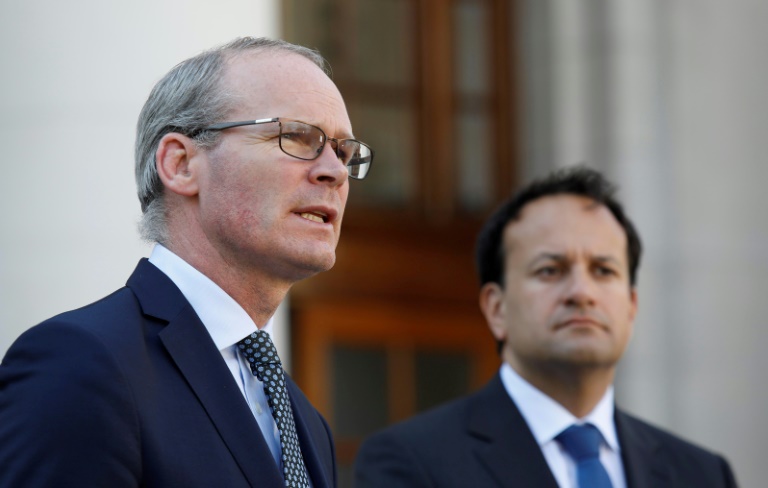
Ireland’s foreign minister Simon Coveney on Friday gave hope of an end to wrangling over post-Brexit trading rules in Northern Ireland, as talks resumed to break the impasse.

Coveney met his UK counterpart James Cleverly in London on Thursday night and said there was a “real focus” on making progress and a “new air of positivity”.

“There is a genuine effort coming from this new team in the British government to try to reach out to Dublin and indeed to Brussels,” he told Ireland’s national broadcaster RTE.

“But time will tell whether, of course, the compromises necessary to get a deal are possible.”

Relations between Ireland and the UK have been soured by long-running disagreements over the implementation of trade arrangements between London and Brussels known as the Northern Ireland Protocol.

The deal, signed separately from the Brexit trade agreement that took the UK out of the European Union, effectively keeps Northern Ireland within the European single market and customs union.

London and pro-UK unionist parties in Northern Ireland object to having checks on goods heading to the province from mainland Britain, arguing it impinges on the country’s sovereignty.

The UK is seeking to unilaterally overhaul the agreement, despite EU warnings it could spark reprisals.

But there are signs of a thaw in frosty relations: last week Steve Baker, a junior UK Northern Ireland minister, apologised for the effect of the hardline stance on relations with Ireland.

On Thursday, Ireland’s deputy prime minister Leo Varadkar, who will become prime minister in December under a coalition deal in Dublin, conceded that the protocol had been “a little too strict”.

Coveney echoed the statements, saying both the EU and Ireland as a member of the bloc were in agreement on the need for flexibility.

Talks between London and Brussels had been stalled since February but a month-end deadline for the restoration of the devolved assembly in Belfast appears to have focused minds.

Northern Ireland’s biggest pro-UK party, the Democratic Unionist Party, has vowed to stay away from the newly elected legislature unless the protocol is scrapped or substantially overhauled.

UK Northern Ireland Secretary Chris Heaton-Harris has said fresh elections would need to be called by October 28 unless power-sharing between unionists and pro-Ireland nationalists is restored.

Coveney said the prospect of that would “polarise opinion again, and make compromise a lot more difficult”.

Adidas puts partnership with Kanye West 'under review'

German sportswear giant Adidas said Friday it was reconsidering its partnership with Kanye West after the US rap star reportedly became disgruntled with how the brand was marketing his products. 

The artist now known as Ye has netted billions selling his Yeezy clothing range through the German company since 2015, but the collaboration had recently been dogged by tensions.

“After repeated efforts to privately resolve the situation, we have taken the decision to place the partnership under review,” Adidas said in a statement.  

In a recent Instagram message cited by US media outlets, West had accused Adidas of arranging marketing events and bringing back older styles without his approval.

He also said the brand had hired staff to work under him and organised a “Yeezy Day” without his involvement.

West also sparked controversy this week when he was pictured wearing a “White Lives Matter” T-shirt at Paris Fashion Week.

The artist was associated with Nike for years but broke away in 2013, lending his name to Adidas as they launched their first Yeezy shoe together in 2015 — a partnership that went on to make him a billionaire. 

Along with Beyonce, Stella McCartney and Pharrell Williams, West’s has been one of the top names used by Adidas to boost sales, especially online.

Announcing the review, Adidas did not mention recent tensions, but said its partnership with the rapper had been “one of the most successful collaborations in our industry’s history” and was “rooted in mutual respect and shared values”.

West has made headlines in recent years for his psychiatric problems, controversial comments about slavery and support for former US president Donald Trump.

– ‘White Lives Matter’ –

He was widely criticised for wearing the “White Lives Matter” T-shirt, which was also shown as part of his collection in Paris.

The phrase “Black Lives Matter” became a rallying cry for protests against racism and police brutality sparked by the 2020 murder of George Floyd.

Asked why he wore it, West said in a Fox News interview Thursday: “I do certain things from a feeling, I like, just channel the energy, it just feels right.”

The Chicago-born star was for years part of one of the world’s most famous power couples thanks to his marriage to reality TV star Kim Kardashian.

But Kardashian filed for divorce last year after US media reported the pair were living separately and dealing with “regular relationship issues”.

West and retail brand Gap also announced an end to a partnership last month, with the artist saying he had plans to open his own stores.

The announcement capped months of social media complaints from West, which included accusations that he had been left out of the creative process and criticisms of marketing delays.

“GAP left Ye no choice but to terminate their collaboration agreement because of GAP’s substantial noncompliance,” wrote the artist’s lawyer, Nicholas Gravante, in a letter.

However, the controversy around his business ventures has not dimmed West’s success in the music world, as the star continues to enjoy hits and praise from critics.

His album “Donda” was nominated for Album of the Year and Best Rap Album at the 2022 Grammys.

Stocks steady, dollar down before US jobs data

Equity markets steadied and the dollar fell Friday before all-important US jobs data that should offer clues on the pace of future interest rate hikes from the Federal Reserve.

Further US interest rate hikes are expected in the coming months to try and cool decades-high inflation.

However, markets are starting to price in a less aggressive pace of rate tightening than seen so far this year, easing fears of a global recession.

“Investors are turning more concerned about the aggressive Fed tightening and are ready to bet that the rate hikes would slow down in the next few meetings,” Swissquote analyst Ipek Ozkardeskaya noted before Friday’s jobs data.

Analysts expect the monthly report to show 250,000 posts were created in September, which would be the weakest since late 2020 but still a healthy figure suggesting a strong labour market. 

There is a fear that a result higher than expectations could spark another sell-off across risk markets as investors bet on more bumper rate hikes.

Fed officials have consistently warned that they are determined to ramp up borrowing costs to fight inflation, even at the expense of a recession — feeding worries among traders that the world economy is heading for such a scenario.

OANDA analyst Edward Moya said a consumer price index report next week was also on traders’ radars.

“Economists are not expecting a significant drop in pricing pressures, but many traders think that a cool report could happen and that will force the Fed to change their tune next week.”

While major European stock markets steadied Friday, Asian indices and Wall Street dropped overnight.

Adding to the unease was a warning from US President Joe Biden that the world faced nuclear “Armageddon” for the first time since the 1962 Cuban missile crisis.

He told a Democratic Party fundraiser in New York that Russian President Vladimir Putin was “not joking” when he threatened to use nuclear weapons over the Ukraine war.

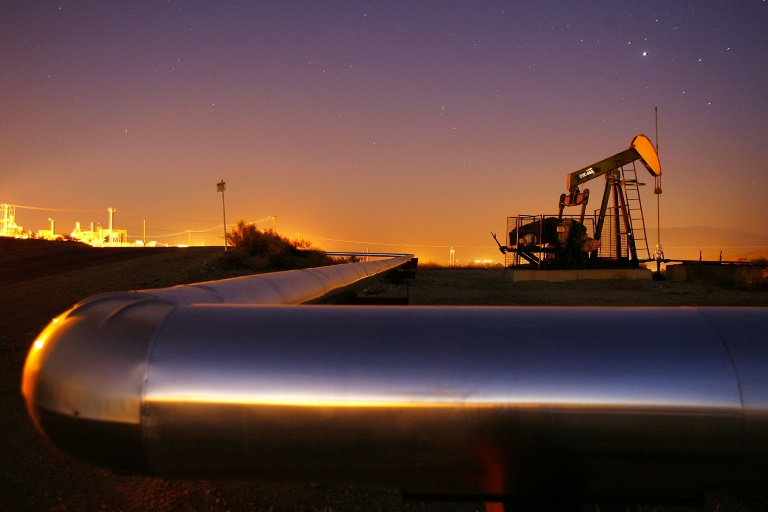
Elsewhere, oil prices jumped and were set for their biggest weekly gain since March after OPEC and other major producers led by Russia agreed to slash daily output by two million barrels.

– Key figures around 1045 GMT –

London – FTSE 100: UP 0.1 percent at 7,006.14 points

Frankfurt – DAX: DOWN 0.1 percent at 12,459.38

Paris – CAC 40: UP 0.1 percent at 5,941.65

EURO STOXX 50: DOWN 0.2 percent at 3,426.51

Tokyo – Nikkei 225: DOWN 0.7 percent at 27,116.11 (close)

Hong Kong – Hang Seng Index: DOWN 1.5 percent at 17,740.05 (close)

Shanghai – Composite: Closed for a holiday

New York – Dow: DOWN 1.2 percent at 29,926.94 (close)

Pound/dollar: UP at $1.1190 from $1.1161 on Thursday

Euro/dollar: UP at $0.9796 from $0.9794

Euro/pound: DOWN at 87.53 pence from 87.74 pence

Dollar/yen: DOWN at 144.92 yen from 145.11 yen

Brent North Sea crude: UP 1.1 percent at $95.41 per barrel

West Texas Intermediate: UP 1.2 percent at $89.49 per barrel

France under fire over Ukraine weapons deliveries

France has repeatedly been in critics’ sights over its lower level of military support to Ukraine compared with allies, but officials and experts say capacity rather than political will is at the root of the differences.

According to an August ranking by the Kiel Institute for the World Economy, France’s 233 million euros ($230 million) of military aid place it 11th in the world, well behind the US (25 billion euros), Britain (four billion euros) and Poland (1.8 billion euros).

Even neighbouring Germany, historically leery of military entanglements following World War II, has committed more than four times as much as France.

Such rankings “don’t fully reflect reality”, the defence ministry told AFP, because they “only take into account what has been promised, not what has actually been delivered”.

What’s more, some countries might report only arms deliveries as military aid, while others might count in training or the cost of transporting ammunition.

Defence Minister Sebastien Lecornu on Monday made a virtue of Paris’ “relative discretion” in aiding Kyiv in an address to MPs, saying that “France has been giving and supporting Ukraine since the beginning”.

Publicly-known shipments include anti-tank and anti-aircraft missiles, armoured personnel carriers, fuel, infantry gear and towed artillery cannons.

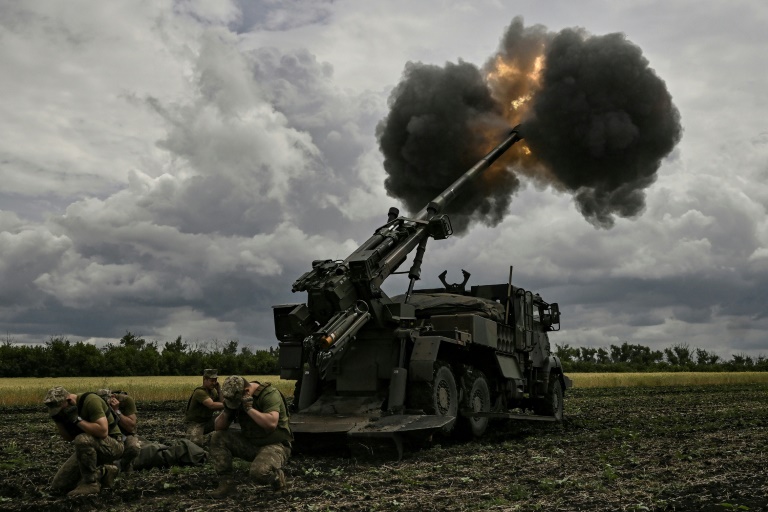
It has also sent 18 of its prized truck-mounted CAESAR cannons, which are able to set up, fire a highly-accurate volley at ranges of up to 40 kilometres (25 miles) and shift position before the enemy can locate them and fire back.

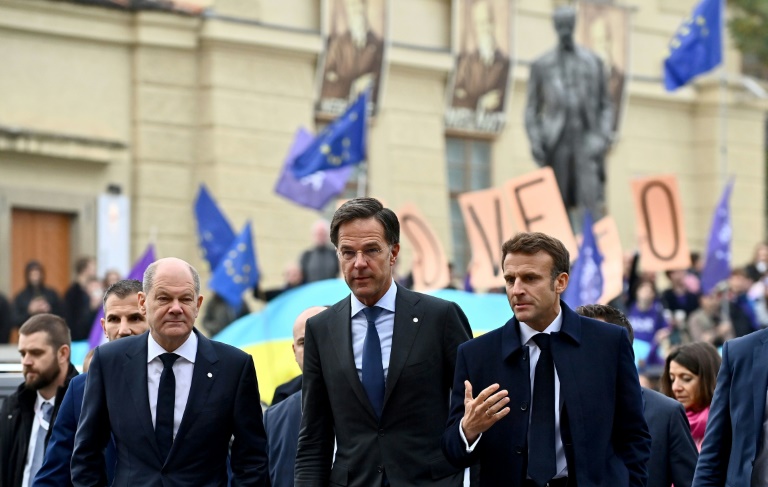
President Emmanuel Macron said Thursday at a European gathering in Prague that France plans to deliver more of the mobile artillery pieces.

Further guns could be diverted to Ukraine from a Danish order, a source familiar with the deal told AFP.

– Limited capacity –

Initial fears that arms deliveries might make Russia see Ukraine’s backers as parties to the war have faded, said Sylvie Matelly, deputy director of France’s Institute for International and Strategic Studies (IRIS).

Meanwhile the Ukrainians have shown they can quickly learn to use Western-made arms, rather than the Soviet stocks from former Warsaw Pact countries prioritised early in the conflict.

But that leaves the fact that “the weapons we have here ready to use are the weapons supposed to ensure our national defence,” Matelly said.

“If we give them away, if we tap into our reserves, we’re causing big headaches for ourselves,” she added.

“It’s not a lack of political will, perhaps it’s political prudence about our own security, our own defence.”

Several high-ranking French officers said that although Paris has boosted military spending in recent years, set to reach 44 billion euros in 2023, its stocks of equipment remain limited.

Handing off vital weapons systems like the CAESAR — the 18 delivered to Kyiv made up a quarter of the French fleet of the mobile artillery platforms — reduces the army’s own ability to fight the kind of high-intensity war now raging in Ukraine.

And with the war on the European Union’s doorstep, “we can’t compare (arms deliveries by) France and the US”, Matelly said.

Washington “has less need of weapons to defend its national territory” directly, rather than protecting its interest abroad, she added.

Even with its far higher stocks and productive capacity, “there is starting to be concern among US military leaders about weapons reserves” given the level delivered to Ukraine and the parallel commitment to defend Taiwan in case of Chinese attack.

– Complex production –

Modern weapons like high-precision artillery pieces and missiles can take years to roll off production lines, especially with disruption to supply chains affecting certain parts and raw materials.

That means that simply committing more cash is not an instant fix — although a parliamentary report published in February found that up to six billion euros were needed to replenish France’s arsenals, well above the two billion announced this week for 2023.

“We don’t have significant reserves. At the heart of talks (with the defence ministry) is how to scale up the way we work, to refill our reserves as quickly as possible,” one French defence industry insider said on condition of anonymity.

“Deploying military capacity means having the whole ecosystem that allows it to be deployed,” Matelly said.

“It’s industry, it’s technology, human capital.”

Figures such as French President Emmanuel Macron have pushed for greater defence integration among EU nations to hack back the duplication of effort that still characterises member states’ armed forces and arms industries.

“It’s moving forward, progress is being made, but today we’re more in cooperation mode,” Matelly said, with further steps “requiring total confidence in your counterparts, and we’re still quite far from that”.


EU leaders struggle for common response to energy crisis

EU leaders meeting in Prague on Friday looked to bridge divisions on how to tackle soaring energy prices as they grapple with the fallout from Russia’s war on Ukraine.

President Volodymyr Zelensky was dialling in from Kyiv as the bloc looks to maintain its economic and military support for Ukraine and hold a tough line against Moscow.

EU leaders were also discussing how to better protect their critical infrastructure in the wake of leaks from the Russia-Europe Nord Stream gas pipelines that have been blamed on “sabotage”.

But it was the sharp disagreements over how to tackle the energy crisis that were the major focus of attention as the 27 nations wrangled over the best plan to try to bring down prices.

Europe is facing an energy crunch as the price of electricity generation skyrockets because of a massive surge in gas prices caused by Russia turning off the taps.

Governments across the bloc are scrambling to lower the costs for their consumers, but they rely on different sources for their energy and are split over the solutions.

EU executive head Ursula von der Leyen is proposing a “roadmap” of measures to help ease the burden — including potential moves to cap the price of gas. 

However, there is no consensus on how any caps could work and leaders are not set to take a firm decision until a summit in Brussels later this month.  

“Now, it is time to discuss how we can limit the peaks in the energy prices and the manipulation of energy prices by (Russian President Vladimir) Putin,” von der Leyen told journalists. 

“This will be the discussion about price caps, the question where to put them and how to put them.”

– ‘Common denominator’ –

More than half of the bloc have pushed for the EU to impose a price ceiling on how much it would pay for gas piped or shipped in, as the northern hemisphere winter sets in.

But Germany has so far stood in the way over fears that the move could divert precious supplies away from Europe.

“A price cap on gas if that could be achieved would be grand, with the caveat that we cannot endanger security of supplies,” said Latvian Prime Minister Krisjanis Karins.

“We cannot set the price so that no one would sell gas into Europe.”

Berlin has come under fire from other EU members for dragging its feet on the issue while announcing a 200-billion-euro ($199-billion) fund to subsidise gas purchases at home.

“My message to Germany is be united with all the others because during difficult times everybody has to agree on a common denominator,” Polish Prime Minister Mateusz Morawiecki said.  

The difficulty of trying to curb prices from energy suppliers was highlighted Wednesday by the OPEC+ cartel’s agreement to cut oil production in defiance of Western efforts to starve Moscow of revenue.

That decision appeared to undermine a G7 push for a cap on the price of Russian oil that was backed by the EU in its latest package of sanctions agreed this week.

Despite some discontent from Hungary, the bloc has managed to remain largely united in its opposition to the Kremlin as Putin has escalated the conflict by claiming four occupied regions.

A broader summit of 44 nations from across Europe held in Prague on Thursday highlighted Moscow’s isolation.

The EU is looking to maintain its backing for Kyiv as Zelensky’s troops push Russian forces back on several fronts over seven months into the war. 

Ukraine is urging the EU to speed up much needed economic support after Brussels on Monday signed a memorandum of understanding to provide five billion euros.

On the military front, the bloc is looking to launch a training mission for Ukrainian forces later this month.

It is also eyeing a possible fresh tranche of funding for arms for Ukraine that would take its overall spending on weaponry to three billion euros.

“Ukraine needs our support not tomorrow, Ukraine needs support today, right now,” said Lithuanian President Gitanas Nauseda. 

Chipmaker TSMC's sales buck estimates, competition slowdown

Taiwanese semiconductor giant TSMC posted better-than-expected third-quarter profits on Friday as rivals warn that demand for consumer electronics is being hit by the global economic downturn.

Taiwan Semiconductor Manufacturing Company operates the world’s largest silicon wafer factories and produces some of the most advanced microchips used in everything from smartphones and cars to missiles.

Revenue for September was approximately TW$208.25 billion ($6.6 billion), down 4.5 percent from the month before but an increase of 36 percent from September last year. 

Third-quarter revenue at the world’s largest contract chipmaker also rose 48 percent on-year to about TW$613 billion ($19.4 billion), according to Bloomberg News calculations. 

TSMC’s results came the same day biggest rival Samsung Electronics warned it expects operating profits in the third quarter to fall 32 percent.

They also came as preliminary third-quarter sales at US chipmaker Advanced Micro Devices (AMD) missed projections by more than $1 billion.

TSMC’s results did not contain a forecast but the company is more shielded from a downturn in part because it produces some of the most advanced and smallest chips which are still highly sought after and in short supply.

The Taiwanese firm controls more than half of global foundry output, with clients including Apple and Qualcomm.

Weinstein sex assault trial in Los Angeles to start

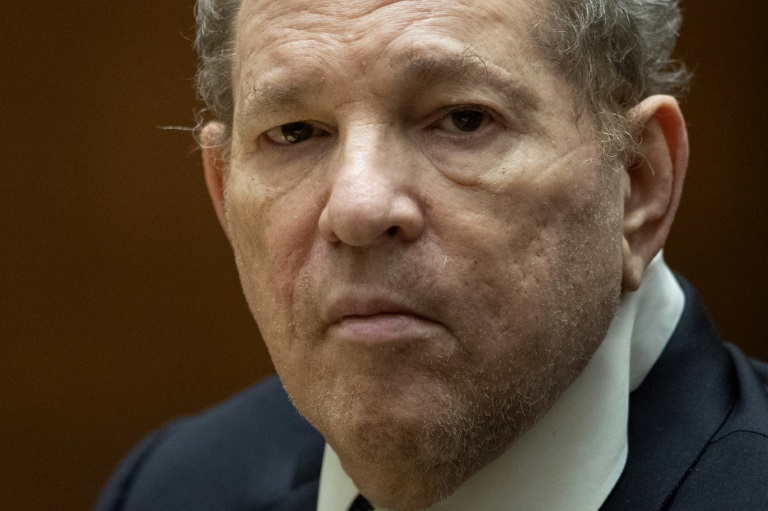
Harvey Weinstein’s next sexual assault trial is set to begin Monday in Los Angeles, almost exactly five years after allegations of sexual misconduct against the Hollywood mogul helped launch the #MeToo era.

The 70-year-old “Pulp Fiction” producer was already serving 23 years in jail in New York when he was brought across the country last summer to face further sex crime charges in a city where he once forged lucrative film deals with A-listers and hoarded Oscars.

Jury selection will begin Monday at a downtown Los Angeles courthouse, where Weinstein has attended several pre-trial hearings, seated in a wheelchair and clad in brown prison clothes and a face mask.

He faces 11 felony charges including sexual battery by restraint, forcible rape and forcible oral copulation against women in Beverly Hills and Los Angeles hotels between 2004 and 2013, in a trial expected to last two months.

If convicted, Weinstein — who has pleaded not guilty to all charges — could be sentenced to 140 additional years behind bars.

Widespread sexual abuse and harassment allegations against Weinstein exploded in October 2017, and his conviction in New York in 2020 was a landmark in the #MeToo movement.

In June, he lost a bid to have that sex crimes conviction overturned. He has also been separately charged by British prosecutors with the 1996 indecent assault of a woman in London.

In total, nearly 90 women, including Angelina Jolie, Gwyneth Paltrow and Salma Hayek, have accused Weinstein of harassment or assault. 

The statute of limitations has expired on further allegations of rape against Weinstein in Los Angeles as far back as 1977.

He says that all his sexual encounters were consensual, and his lawyer told reporters that the Los Angeles accusations “stem from many years ago” and cannot “be substantiated or corroborated by any forensic evidence” or “credible witnesses.”

But for Weinstein’s New York conviction, prosecutors presented no forensic evidence or third-party witness accounts, their case instead resting on asking the jury to believe the women.

Gloria Allred, who represents multiple Weinstein accusers, said it was important that alleged victims in Los Angeles “have their day in court.”

– ‘She Said’ –

Weinstein’s hearing is one of four high-profile celebrity sex abuse trials starting this month, each stemming from allegations that emerged in the wake of the #MeToo movement. 

Kevin Spacey appeared in a New York court Thursday to face a civil lawsuit brought by US actor Anthony Rapp, who has accused the actor of sexually assaulting him at a party in the 1980s, when he was 14. 

Actor and Scientologist Danny Masterson also goes on trial in Los Angeles for multiple sexual assault charges.

And “Crash” director Paul Haggis faces a civil lawsuit in New York after being accused of raping publicist Haleigh Breest.

Next week also features the New York Film Festival world premiere of “She Said,” a film about the 2017 newspaper investigation into Weinstein that sparked the demise of his movie empire.

Before the allegations against Weinstein emerged, the disgraced producer and his brother Bob were Hollywood’s ultimate power players.

They co-founded Miramax Films, a distribution company named after their mother Miriam and father Max, in 1979. It was sold to Disney in 1993.

Their hits included 1998’s “Shakespeare in Love,” for which Weinstein shared a best picture Oscar. Over the years, Weinstein’s films received more than 300 Oscar nominations and 81 statuettes.

Stocks drop, dollar holds gains as US jobs report looms

Equity markets fell and the dollar held gains as the optimism that coursed through trading floors earlier this week gave way to nervousness ahead of a massive US jobs report later Friday that could determine Federal Reserve rate hike plans.

Soft economic data out of Washington sent equities surging at the start of the week and dragged the greenback on hopes that the readings could allow the US central bank to slow its strict monetary tightening programme.

However, the uncertainty that has characterised the year so far has slowly returned and Wall Street’s three main indexes ended Thursday with fresh losses, with sights firmly on the non-farm payrolls (NFP) figures.

Analysts expect the monthly report to show 250,000 posts were created in September, which would be the weakest since late 2020 but still a healthy figure suggesting a strong labour market. 

There is a fear that a result higher than expectations could spark another sell-off across risk markets as investors bet on more bumper rate hikes.

Fed officials have consistently warned that they are determined to ramp up borrowing costs to fight four-decade-high inflation, even at the expense of a recession — feeding worries among traders that the world economy is heading for such a scenario.

“The pivot party gang dialled down their new-found enthusiasm overnight after hawkish central bankers expressed concerns over sticky inflation,” said SPI Asset Management’s Stephen Innes.

He pointed out that other central banks, including in Europe and Canada, had also flagged further tough measures.

Still, OANDA’s Edward Moya added that a consumer price index report next week was also on traders’ radars.

“Economists are not expecting a significant drop in pricing pressures, but many traders think that a cool report could happen and that will force the Fed to change their tune next week,” he said in a note.

“Fed messaging has been consistent and it will likely stay that way post-NFP. Rate hike and cut bets will likely have significant swings after next Thursday’s inflation report.”

Asian markets extended the New York retreat, with downbeat earnings from chipmakers — and a warning from South Korean titan Samsung — owing to a drop in demand that raised worries about the upcoming corporate reporting season.

Hong Kong led the losses in Asia after surging almost six percent Wednesday, while Tokyo, Sydney, Seoul, Wellington, Taipei, Mumbai, Bangkok and Jakarta were all in negative territory.

London, Paris and Frankfurt dipped and US futures were also in the red.

Adding to the unease was a warning from US President Joe Biden that the world faced nuclear “Armageddon” for the first time since the 1962 Cuban missile crisis and that he was trying to find Russian counterpart Vladimir Putin’s “off-ramp”.

He told a Democratic Party fundraiser in New York that Putin was “not joking” when he threatened to use nuclear weapons as his army faces a series of defeats in eastern Ukraine following his invasion in February.

The risk-off mood saw the dollar bounce Thursday after days of losses caused by traders lowering their rate expectations, and it built on the advance against most other units Friday.

The standout was sterling, which remained wedged below $1.12 and continued a rollercoaster that saw it hit a record low last week before recovering thanks to a Bank of England lifeline.

However, observers warned of more volatility in the pound as the government presses ahead with a debt-funded tax-cutting mini-budget, while the promised support from the BoE is due to end soon.

Oil prices edged up and were set for their biggest weekly gain since March after OPEC and other major producers led by Russia agreed to slash output by two million barrels, leading some analysts to predict a return to $100 a barrel by the end of the year.

– Key figures around 0810 GMT –

Tokyo – Nikkei 225: DOWN 0.7 percent at 27,116.11 (close)

Hong Kong – Hang Seng Index: DOWN 1.5 percent at 17,740.05 (close)

Shanghai – Composite: Closed for a holiday

London – FTSE 100: DOWN 0.1 percent at 6,988.31

Pound/dollar: DOWN at $1.1155 from $1.1161 on Thursday

Euro/dollar: UP at $0.9798 from $0.9794

Euro/pound: UP at 87.75 pence from 87.74 pence

Dollar/yen: DOWN at 144.90 yen from 145.11 yen

West Texas Intermediate: UP 0.3 percent at $88.72 per barrel

Brent North Sea crude: UP 0.3 percent at $94.66 per barrel

New York – Dow: DOWN 1.2 percent at 29,926.94 (close)

Close Bitnami banner
Bitnami