US Business

French motorists scramble for fuel as strike cuts supply

Frustrated motorists faced more chaos at petrol pumps across France on Friday as a strike at energy giant Totalenergies entered its 12th day.

Totalenergies, among the world’s biggest oil companies, runs a network of around 3,500 stations in France, nearly a third of the total, with most of them low on fuel.

“Does anyone know of a petrol station around here that’s been re-supplied?”, read a post in a local Facebook post Friday morning. “Where can I get ethanol?” posted another motorist in the hope of filling the tank before the weekend.

Several of Totalenergies’s oil refineries have been blocked by striking workers.

“We’ve been dry since Sunday,” a manager at a station in central Paris said on Thursday.

TotalEnergies has, since the start of September, cut petrol prices by 20 euro cents ($0.19) per litre to help vehicle owners cope with sharp rises in energy prices triggered by the war in Ukraine.

The average price for E5-type unleaded petrol is now 1.62 euros per litre, or 6.19 euros per gallon, up around four percent from only a week ago.

“Everybody wants to buy from us because we’re cheaper,” said the station manager.

Bottlenecks due to strong demand have been exacerbated by strike action over pay, which has cut the frequency of fuel deliveries in half, he said.

The government has responded by releasing fuel from strategic stocks to relieve the shortage, Energy Transition minister Agnes Pannier-Runacher told the broadcaster BFMTV late Thursday.

In addition, more supplies were being brought in from neighbouring Belgium and elsewhere, she said.

The supply situation would improve “within two or three days”, she predicted, adding that just 15 percent of all petrol stations in France had been affected.

But Thierry Defresne, head of the European works council at TotalEnergies, told AFP that “every site” at the company had announced their intention to extend strike action.

burs/jh/yad

US, Philippines reinforce alliance with joint military drills

US and Philippine marines stormed a beach near a disputed rocky outcrop in the South China Sea on Friday as part of joint military drills involving more than 3,500 troops. 

It is the first time the annual naval exercises have been held under Philippine President Ferdinand Marcos, who has expressed strong support for the decades-old alliance, after rocky relations under his predecessor Rodrigo Duterte.

Duterte had threatened to cancel drills and axe a key military deal with the United States as he pivoted towards China.

But Marcos told US President Joe Biden during a meeting in New York last month that he appreciated America’s role in “maintaining the peace in our region”. 

China’s recent war games around Taiwan, which it claims as part of its territory, rang alarm bells among nations surrounding the South China Sea. 

Beijing claims sovereignty over almost the entire sea, while the Philippines, Vietnam, Malaysia and Brunei have overlapping claims to parts of it. 

China has ignored an international court ruling that its claims have no legal basis, and has aggressively asserted its stance.

It has built artificial islands as well as deployed hundreds of coast guard and maritime militia vessels to prowl the strategic waters, swarming reefs and harassing fishing and other boats.

The KAMANDAG exercises — the Filipino acronym for “Cooperation of the Warriors of the Sea” — kicked off Monday and will be held across the country’s main island of Luzon until October 14.

One of the objectives is improving the Philippine military’s coastal defence capability. 

Around 300 troops were involved in Friday’s amphibious drills held on an uninhabited beach in Zambales province, about 240 kilometres (150 miles) east of Scarborough Shoal, which China seized from the Philippines in 2012.

The rich fishing ground has become a flashpoint between the two countries.

“We are preparing for any threat that will be coming sooner or later,” said Major Emery Torre, spokesman for the Philippine Marine Corps.

But Torre said the exercises did not simulate an attack by a particular country and were not related to a specific situation.

Marcos has taken a harder line on defending Philippine waters, insisting he would not let China trample on Manila’s maritime rights.

During aerial surveillance over Scarborough Shoal on Thursday, the Philippine Coast Guard spotted six Chinese vessels, including four coast guard and two militia boats, in and around the small ring of reefs. 

“We are doing the patrol operations to establish a presence at the area and also for the sake of our fishermen,” said coast guard spokesman Armand Balilo.

As regional tensions rise, Washington is keen to preserve its security alliance with Manila, which includes a mutual defence treaty and permission for the US military to store defence equipment and supplies on several Philippine bases.

It also allows US troops to access certain military bases in the country.

Manhattan arts complex opens new hall by exploring district it once displaced

Years before Manhattan’s Upper West Side became home to arias and pirouettes, it housed San Juan Hill, a bustling neighborhood and thriving arts nexus where clubs and dance halls were hatching new musical forms.

But the district was destroyed in the mid-20th century to make way for the shiny new arts complex Lincoln Center. Now, as the New York Philharmonic prepares to debut its long-planned new performance space there this weekend, the institution is reckoning with its unsavory beginnings, opening with the commissioned piece “San Juan Hill: A New York Story.”

It was in the San Juan Hill neighborhood that stride piano innovator James P. Johnson composed the wildly popular “Charleston” dance at the Jungle Cafe club, and jazz piano legend Thelonious Monk — credited with developing bebop — grew up.

But in 1947, New York’s notorious urban planner Robert Moses declared the area — home to thousands of Black and Puerto Rican families, and hundreds of small businesses — a slum district, clearing the way to raze it as part of his grand “urban renewal” campaign that controversially transformed the city.

“What happens to the neighborhood is what happens to lots of other neighborhoods — that it sort of stands in the way of some future vision of the city,” said historian Julia Foulkes.

She collaborated with composer and trumpeter Etienne Charles as he created the Philharmonic’s new piece, which places his group Creole Soul in conversation with the symphony.

By mid-century, 18 city blocks had been leveled and thousands of people displaced, as the project to construct the arts campus that would come to house the Metropolitan Opera, New York Philharmonic, New York City Ballet and the Juilliard conservatory got underway.

“What’s lost is not only specific blocks and residences, but actually the tenor of a whole area,” said Foulkes, a professor at The New School.

Along with musical elements including ragtime, jazz, calypso, funk and hip hop, Charles’s multimedia work features spoken word, visual projections and first-person accounts of San Juan Hill that document the neighborhood’s history and pay homage to the music and culture brought to the city by migrants from the south and the Caribbean.

Charles, who is originally from Trinidad and Tobago and studied himself at Juilliard, told AFP he hopes the project will shed light on the mere fact that the neighborhood — now wiped off the map — existed.

“We have to start valuing people for more than just where they live and the quality of the property that they have, and start looking at their culture and their lineage and their heritage and their history that they are building,” he said.

“It’s always about knowing who was there, and understanding what your relationship to that is.”

– Inclusivity –

Shanta Thake, the chief artistic officer at Lincoln Center, said that the commission is part of a broader conversation at the institution, “thinking through what it means to be a civic space, and what it means to hold the city’s stories — and what it also means to have interrupted the city’s stories.”

“For a long time there was a prevailing narrative of ‘Lincoln Center is the best thing that could have ever happened to this neighborhood,'” she continued, saying that pieces like Charles’s allow for “really peeling that apart.”

The composer’s piece is the crown jewel of a series of talks and workshops sponsored by the institution exploring culture, gentrification and community activism, Lincoln Center said.

For years, companies at the complex have been battling criticisms that their offerings are geared toward primarily white, upper-class audiences.

Part of the gut renovation of David Geffen Hall, the Philharmonic’s home, was giving it more accessible airs, with a breezy lobby that opens to the plaza and a sidewalk studio for performances visible from the street. 

And tickets to Charles’s show, which includes five movements from the orchestra and debuts October 8, were made available for a choose-what-you-pay fee starting at $5, with some distributed for free.

The composer, who has worked with Lincoln Center before, said he thinks the complex has made efforts to “ensure that they are inclusive, not only for the audiences, but what they present musically — this piece is an example of that.”

Historian Foulkes recalled Charles telling her his aim was to compose music “that sounds like what if symphony and orchestras had not excluded all of the other music that had been occurring around them.”

“I think that is such a compelling image for where we need to be,” she said.

Nuclear 'Armageddon' threat back for first time since Cold War: Biden

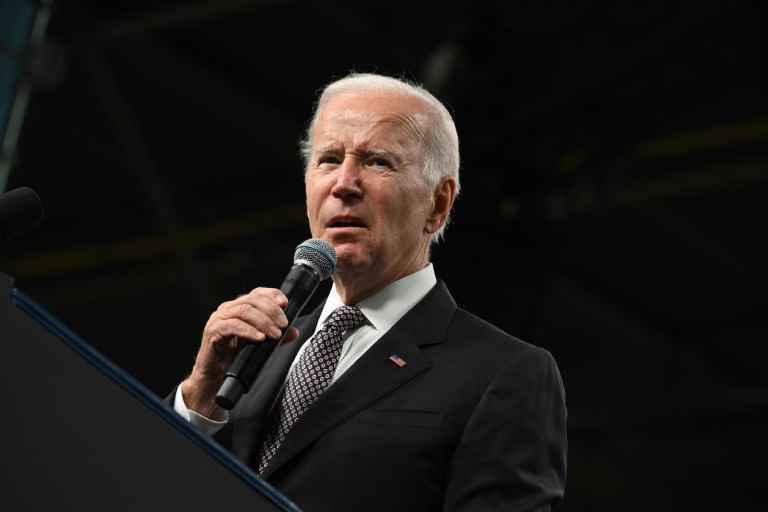
US President Joe Biden said Thursday the world risks nuclear “Armageddon” for the first time since the Cold War and that he is trying to find Russian President Vladimir Putin’s “off-ramp” in the Ukraine conflict.

“We have not faced the prospect of Armageddon since Kennedy and the Cuban missile crisis” in 1962, Biden said at a Democratic Party fundraising event in New York, referring to former US president John F Kennedy.

Putin is “not joking” when he threatens to use nuclear weapons to pursue his invasion of Ukraine, Biden said.

The president made his unusually strong comments about the risks created by Putin’s nuclear threats while speaking to party supporters at an event hosted in the Manhattan home of James Murdoch, son of newspaper mogul Rupert Murdoch.

Referring to the nuclear standoff 60 years ago triggered by the Soviet Union stationing missiles in Cuba, within easy range of the United States, Biden said that for the “first time since the Cuban missile crisis, we have a direct threat from the use of nuclear weapons if in fact things continue down the path they are going.”

“We’re trying to figure out what is Putin’s off-ramp,” Biden said.

Putin has made thinly veiled threats to use nuclear weapons if he feels he has run out of options in his bid to seize swaths of Ukrainian territory in the face of stiff resistance by Western-back Kyiv.

Experts say these would most likely be relatively small, tactical strikes. But Biden warned such strikes in a limited area would still risk triggering a wider conflagration.

“We’ve got a guy I know fairly well,” Biden said. Putin’s “not joking when he talks about potential use of tactical nuclear weapons or biological or chemical weapons, because his military is, you might say, significantly underperforming.”

But “I don’t think there’s any such thing as the ability to easily (use) a tactical nuclear weapon and not end up with Armageddon,” Biden said.

The president’s comments come as Ukraine has recaptured fresh territory from Russian troops, the latest in a series of Moscow defeats undermining the Kremlin’s claim to have annexed around 20 percent of Ukraine.

But with Russian’s once-vaunted military faltering, Washington and its Western allies have grown concerned about what Putin might be planning on the battlefield.

“Where does he find a way out?” Biden asked. 

“Where does he find himself in a position that he does not, not only lose face, but lose significant power within Russia?”

Asian stocks drop, dollar holds rally as US jobs report looms

Asian markets fell and the dollar held an advance as the optimism that coursed through trading floors earlier this week gave way to nervousness ahead of a massive US jobs report later Friday that could determine Federal Reserve rate hike plans.

Soft economic data out of Washington sent equities surging at the start of the week and dragged the greenback on hopes that the readings could allow the US central bank to pivot and slow down its strict monetary tightening programme.

However, the uncertainty that has characterised the year so far has slowly returned and Wall Street’s three main indexes ended Thursday with fresh losses, with sights firmly on the non-farm payrolls (NFP) figures.

Analysts expect the monthly report to show 250,000 posts were created in September, which would be the weakest since late 2020 but still a healthy figure suggesting a strong labour market. 

There is a fear that a result higher than expectations could spark another sell-off across risk markets as investors bet on more bumper rate hikes.

Fed officials have consistently warned that they are determined to ramp up borrowing costs to fight four-decade-high inflation, even at the expense of a recession — feeding worries among traders that the world economy is heading for such a scenario.

“The pivot party gang dialled down their new-found enthusiasm overnight after hawkish central bankers expressed concerns over sticky inflation,” said SPI Asset Management’s Stephen Innes.

He pointed out that other central banks, including in Europe and Canada, had also flagged further tough measures.

Still, OANDA’s Edward Moya added that a consumer price index report next week was also coming on traders’ radars.

“Economists are not expecting a significant drop in pricing pressures, but many traders think that a cool report could happen and that will force the Fed to change their tune next week,” he said in a note. 

“Fed messaging has been consistent and it will likely stay that way post-NFP. Rate hike and cut bets will likely have significant swings after next Thursday’s inflation report.”

Asian markets extended the New York retreat, with downbeat earnings from chipmakers — and a warning from South Korean titan Samsung — raising worries about the upcoming corporate earnings season.

Tokyo, Hong Kong, Sydney, Seoul, Wellington, Taipei, Manila and Jakarta were all in negative territory.

Adding to the unease was a warning from US President Joe Biden that the world faced nuclear “Armageddon” for the first time since the 1962 Cuban missile crisis and that he is trying to find Russian counterpart Vladimir Putin’s “off-ramp”

He told a Democratic Party fundraiser in New York that Putin was “not joking” when he threatened to use nuclear weapons as his army faces a series of defeats in eastern Ukraine following his invasion in February.

The risk-off mood saw the dollar bounce Thursday after days of losses caused by traders lowering their rate expectations, and it held the advance in early Asian business.

The standout was sterling, which remained wedged below $1.12 and continued a rollercoaster that saw it hit a record low last week before recovering thanks to a Bank of England lifeline.

However, observers warned of more volatility in the pound as the government presses ahead with a debt-funded tax-cutting mini-budget, while the promised support from the BoE is due to end soon.

Oil prices edged down but are set for their biggest weekly gain since March after OPEC and other major producers led by Russia agreed to slash output by two million barrels, leading some analysts to predict a return to $100 a barrel by the end of the year.

– Key figures around 0230 GMT –

Tokyo – Nikkei 225: DOWN 0.6 percent at 27,149.76 (break)

Hong Kong – Hang Seng Index: DOWN 0.9 percent at 17,836.92

Shanghai – Composite: Closed for a holiday

Pound/dollar: UP at $1.1164 from $1.1161 on Thursday

Euro/dollar: UP at $0.9797 from $0.9794

Euro/pound: UP at 87.77 pence from 87.74 pence

Dollar/yen: DOWN at 145.04 yen from 145.11 yen

West Texas Intermediate: DOWN 0.1 percent at $88.40 per barrel

Brent North Sea crude: DOWN 0.2 percent at $94.28 per barrel

New York – Dow: DOWN 1.2 percent at 29,926.94 (close)

London – FTSE 100: DOWN 0.8 percent at 6,997.27 (close) 

Samsung Electronics forecasts 31.7% fall in Q3 profit

Samsung Electronics expects operating profits in the third quarter to fall 31.7 percent, the South Korean tech giant said in a statement Friday, after a global economic downturn hit demand for consumer electronics.

The latest forecast is the company’s first projection of a year-on-year decline in profit for nearly three years. 

Operating profit for July to September was predicted to reach 10.8 trillion won ($7.7 billion), down 31.7 percent from 15.8 trillion won a year earlier, the world’s major maker of smartphones and memory chips said in a statement.

But the company said it expected sales to increase by 2.7 percent from the same period last year to 76 trillion won.

The firm is the flagship subsidiary of the giant Samsung Group, by far the biggest of the family-controlled conglomerates that dominate business in Asia’s fourth-largest economy, and is crucial to South Korea’s economy.

Until the second quarter of this year, Samsung, along with other tech companies, significantly benefitted from strong demand for electronic devices — as well as chips that power them — during the pandemic.

But the global economy is now facing multiple challenges, including soaring inflation, rising interest rates and a growing threat of a broad debt crisis.

The situation has been exacerbated by Russia’s invasion of Ukraine — which spurred a surge in energy prices and pushed global food prices up — along with China’s adherence to a strict zero-Covid policy.

“If you look at the current macroeconomic environment, the demand for consumer segment such as smartphones, PCs remains weak,” Neil Shah, an analyst at Counterpoint research, told AFP. 

And “almost a third of the Samsung’s revenues and almost 70 percent of operating profits comes from semiconductor divisions and particularly memory,” he added.

The company is expected to release its final earnings report at the end of this month.

Families of detainees appeal to US to kick up pressure in Mideast

Relatives of imprisoned or recently released activists in the Middle East, including in Egypt and Saudi Arabia, urged the United States this week to use its influence to secure progress on human rights in those countries.

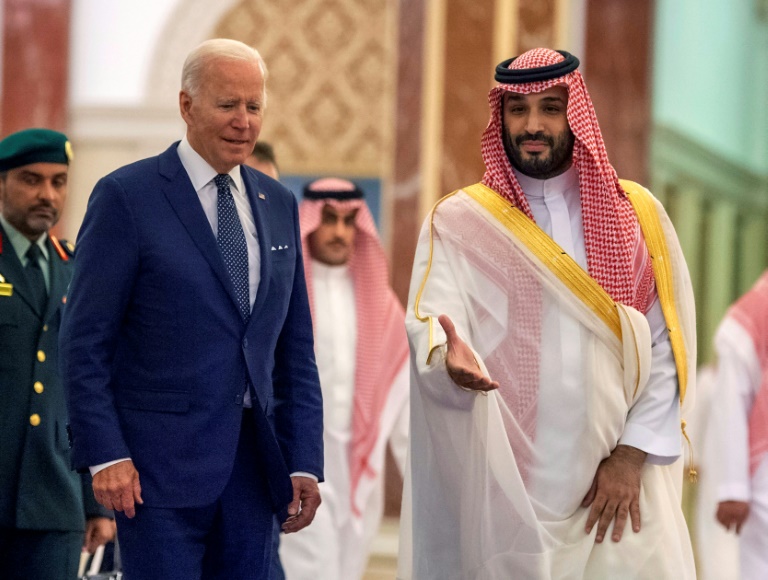
Their talks in Washington with White House, State Department and congressional officials, led by the NGO Freedom Initiative, came almost three months after President Joe Biden’s much-criticized visit to Jeddah, where he met with Crown Prince Mohammed bin Salman and Egyptian President Abdel Fattah al-Sissi.

The visit brought focus to Biden’s back-and-forth posture toward US allies like Saudi Arabia and Egypt. Before Biden was elected, he pledged to treat Saudi Arabia as a “pariah” because of the murder of journalist Jamal Khashoggi, dismembered in 2018 in the Saudi consulate in Istanbul, and to be a herald of democracy.

But his cordial “fist bump” greeting with Prince Mohammed in July left a bitter taste for some activists and their families, and their visit to Washington was tinged with both disillusionment and determination to keep the pressure on.

Sanaa Seif, sister of Alaa Abdel Fattah, Egypt’s most notorious detainee who has been on hunger strike for more than six months, told AFP she was “disappointed” that while US officials were “very sympathetic… it doesn’t translate to anything tangible.”

Pressure from Washington could, however, have an impact on the Egyptian government as well as on the British authorities and push them to act more forcefully, she argued. From his cell, her brother, sentenced to five years in prison for “spreading false information,” became a British citizen this year.

– ‘Imprisoned for tweets’ –

In the run-up to the global climate summit known as COP27 next month in Egypt, Palestinian Ramy Shaath, who was imprisoned for more than 900 days in Egypt, has called on the United States to ensure that this climate conference does not serve as “greenwashing” for the regime.

“The level of oppression is becoming devastating” in Egypt, he said, noting that NGOs say the country holds some 60,000 political prisoners.

Yet al-Sissi remains susceptible to foreign pressure.

“He definitely looks at the US and the European Union as the main source of support, the main source of income, main source of weaponry, and he’s susceptible to their small criticism,” Shaath said, adding that he wishes such criticism would become “more vocal.”

Egypt receives more than $1 billion a year in direct US military aid.

Lina al-Hathloul, the sister of Loujain al-Hathloul, a Saudi women’s rights activist released from prison in 2021 but still banned from leaving the country, also told US officials that “the only concrete solution (was) to stop encouraging a dictator,” referring to the crown prince.

“You have leverage,” she urged them.

Before Biden’s trip to Jeddah in mid-July, “we were clear with our message: If the administration is going to visit our countries without putting clear conditions when it comes to human rights, it will get worse and our oppressors will feel emboldened,” Lina al-Hathloul told AFP.

“They promised us that it was not going to happen” in this way, she added, but the situation in Saudi Arabia is “clearly worse than before.”

“Everyone is afraid,” she said. “People are imprisoned for tweets.”

In September, in front of the United Nations General Assembly, Biden assured that “the United States will always promote human rights… around the world,” and that “the future will be won by those countries that unleash the full potential of their populations.”

But his “fist bump” diplomacy, which was supposed to mark a new beginning with Riyadh, showed its limits in another area Wednesday with the announcement that Saudi-led oil exporters group Opec+ was going to cut its production.

“Biden sold his human rights principles for the Saudi crown prince’s promise to increase oil production,” blasted Kenneth Roth, the former head of non-governmental organization Human Rights Watch. “So Joe Biden, was it worth it?”

Biden pardons thousands for cannabis possession

US President Joe Biden pardoned thousands of Americans convicted of marijuana possession Thursday in a major new step towards destigmatizing the drug — and fulfilling a promise to his supporters a month before midterm elections.

“I am announcing a pardon of all prior federal offenses of simple possession of marijuana,” Biden said.

Biden did not call for fully decriminalizing cannabis, saying that “limitations on trafficking, marketing and under-age sales should stay in place.”

Instead, he homed in individual possession of a substance that the government health authorities estimate was used by at least 18 percent of the population in 2019 — and which is already permitted by multiple state governments for recreational or medical purposes.

In addition to the pardons, Biden instructed the departments of justice and health to determine whether cannabis should be reclassified as a less dangerous substance.

Officials told reporters that about 6,500 people are directly affected by convictions under federal marijuana statutes. Clemency will extend to thousands more convicted under laws in the federal capital, Washington.

However, Biden’s gesture aims to take the shift much further, putting pressure on state authorities everywhere to follow suit.

“I am urging all governors to do the same with regard to state offenses. Just as no one should be in a federal prison solely due to the possession of marijuana, no one should be in a local jail or state prison for that reason, either,” Biden said.

– Political impact –

The move was announced abruptly by video and in a written statement, with no previous build-up by the White House.

However, the impact is expected to be significant, both legally and politically, allowing Biden to seize the narrative on a trend toward decriminalization that swaths of the country have already embraced.

Ahead of the November 8 midterms, where his Democrats are struggling to hold onto even partial control of Congress, Biden has now satisfied a key demand from racial justice activists angered at the way enforcement of cannabis laws often targets ethnic minorities.

“As I often said during my campaign for president, no one should be in jail just for using or possessing marijuana. Sending people to prison for possessing marijuana has upended too many lives and incarcerated people for conduct that many states no longer prohibit,” Biden said.

He noted that non-white people are disproportionately affected by marijuana possession convictions, which in addition to sometimes including jail time can unleash years of legal fallout, creating difficulties in getting work and education.

The third measure announced was an instruction for federal health and justice officials to “review expeditiously how marijuana is scheduled under federal law.”

Currently, federal law lumps marijuana alongside what are widely accepted to be far more dangerous narcotics such as heroin and LSD. It is in a group higher than the relatively modern — and hugely addictive — drugs fentanyl and methamphetamine.

Senate leader Chuck Schumer, a key Biden ally who is fighting to try and keep the chamber under Democratic control in November, said the president’s move recognized that the so-called “war on drugs” has been “a war on people and particularly people of color.”

Derrick Johnson, president of the NAACP, a leading civil rights organization, said on Twitter: “We applaud President Biden.”

“Correcting unequal treatment — including marijuana reform — has been a priority issue for the NAACP for decades.”

Judge halts Twitter-Musk case, sets Oct. 28 deadline to close deal

A US judge on Thursday suspended litigation in the saga over Elon Musk’s proposed $44-billion takeover of Twitter, giving the parties until October 28 to finalize the on-again, off-again megadeal.

Delaware Judge Kathaleen McCormick, ruling on a Musk request to freeze the case that had drawn a biting retort from Twitter, said a trial originally scheduled to begin in 11 days could be rescheduled for next month if a deal is not finalized.

“If the transaction does not close by 5 pm on October 28, 2022, the parties are instructed to contact me by email that evening to obtain November 2022 trial dates,” McCormick said in the order.

The move buys time for a potential reconciliation between two parties that began squabbling as soon as Musk sealed an agreement in April to purchase the influential social media site for $54.20 per share.

With an October 17 trial date on Twitter’s breach-of-contract suits against Musk looming, the unpredictable Tesla boss did an about-face on Tuesday, reviving his $44-billion takeover plan on condition the Delaware court halt the lawsuit against him.

Twitter said Tuesday it expects to close the buyout deal at the $54.20 price in a statement that did not address Musk’s demands over freezing the litigation.

Legal briefs filed earlier Thursday shed further light on prickly proceedings characterized by mutual distrust.

“There is no need for an expedited trial to order Defendants to do what they are already doing and this action is now moot,” said a filing prepared by Musk’s attorneys that alluded to his latest offer.

“Yet, Twitter will not take yes for an answer. Astonishingly they have insisted on proceeding with this litigation, recklessly putting the deal at risk and gambling with their stockholders interests.”

The filing said Twitter had opposed a suspension on the “theoretical possibility” of lack of financing for the transaction, adding that Musk has access to financing to close the deal “on or around October 28.”

-‘Trust us’ this time –

Twitter refuted those arguments, noting that Musk’s side had still not committed to a closing date and calling Musk’s latest appeal “an invitation to further mischief and delay,” Twitter attorneys said in a filing to the Delaware court.

“‘Trust us,’ they say, ‘we mean it this time,'” Twitter lawyers said in a brief that described Musk as seeking an “indefinite” time frame to close the deal.

“The obstacle to terminating this litigation is not, as Defendants say, that Twitter is unwilling to take yes for an answer. The obstacle is that Defendants still refuse to accept their contractual obligations.

“Until Defendants commit to close as required, Twitter is entitled to its day in court to… prove Defendants’ breaches so as to ensure complete relief in the event the closing should for any reason not occur,” they said.

Analysts say the litigation provides leverage to Twitter against the risk of another shift by Musk.

US media have reported that the talks are stuck in part on Musk’s assertion that the deal is contingent on billions of dollars in debt financing by major banks.

Twitter “thought they had a deal before,” said Adam Badawi, a law professor at the University of California, Berkeley. “So to actually accept something from (Musk), it’s going to have to be as ironclad as it possibly can.”

But experts were eyeing the latest court twist as beneficial for Musk.

“I think it’s definitely an advantage to him. I mean, he obviously very much wanted to delay this,” Ann Lipton, a law professor at Tulane University, told AFP.

But she noted the advantage would shift to Twitter should Musk not seal the deal by October 28.

“If somehow that doesn’t happen, I think that Twitter will have a stronger case that he’s been acting in bad faith all along, which… justifies whatever equitable remedies would be appropriate for that,” Lipton added.

A serial entrepreneur made rich through his success with Tesla electric cars, Musk began to step back from the Twitter deal soon after it was agreed.

Musk said in July he was canceling the purchase because he was misled by Twitter concerning the number of fake “bot” accounts, allegations rejected by the company.

Twitter, meanwhile, has sought to prove Musk was contriving excuses to walk away — simply because he changed his mind.

Musk’s potential stewardship of the influential social media site has sparked worry from activists who fear he could open the gates to more abusive and misinformative posts.

Shares of Twitter, which surged on Tuesday’s news of Musk’s reversal, fell 3.7 percent to $49.39.


Judge halts Twitter-Musk case, sets Oct. 28 deadline to close deal

A US judge on Thursday suspended litigation in the saga over Elon Musk’s proposed $44-billion takeover of Twitter, giving the parties until October 28 to finalize the on-again, off-again megadeal.

Delaware Judge Kathaleen McCormick, ruling on a Musk request to freeze the case that had drawn a biting retort from Twitter, said a trial originally scheduled to begin in 11 days could be rescheduled for next month if a deal is not finalized.

“If the transaction does not close by 5 pm on October 28, 2022, the parties are instructed to contact me by email that evening to obtain November 2022 trial dates,” McCormick said in the order.

The move buys time for a potential reconciliation between two parties that began squabbling as soon as Musk sealed an agreement in April to purchase the influential social media site for $54.20 per share.

With an October 17 trial date on Twitter’s breach-of-contract suits against Musk looming, the unpredictable Tesla boss did an about-face on Tuesday, reviving his $44-billion takeover plan on condition the Delaware court halt the lawsuit against him.

Twitter said Tuesday it expects to close the buyout deal at the $54.20 price in a statement that did not address Musk’s demands over freezing the litigation.

Legal briefs filed earlier Thursday shed further light on prickly proceedings characterized by mutual distrust.

“There is no need for an expedited trial to order Defendants to do what they are already doing and this action is now moot,” said a filing prepared by Musk’s attorneys that alluded to his latest offer.

“Yet, Twitter will not take yes for an answer. Astonishingly they have insisted on proceeding with this litigation, recklessly putting the deal at risk and gambling with their stockholders interests.”

The filing said Twitter had opposed a suspension on the “theoretical possibility” of lack of financing for the transaction, adding that Musk has access to financing to close the deal “on or around October 28.”

-‘Trust us’ this time –

Twitter refuted those arguments, noting that Musk’s side had still not committed to a closing date and calling Musk’s latest appeal “an invitation to further mischief and delay,” Twitter attorneys said in a filing to the Delaware court.

“‘Trust us,’ they say, ‘we mean it this time,'” Twitter lawyers said in a brief that described Musk as seeking an “indefinite” time frame to close the deal.

“The obstacle to terminating this litigation is not, as Defendants say, that Twitter is unwilling to take yes for an answer. The obstacle is that Defendants still refuse to accept their contractual obligations.

“Until Defendants commit to close as required, Twitter is entitled to its day in court to… prove Defendants’ breaches so as to ensure complete relief in the event the closing should for any reason not occur,” they said.

Analysts say the litigation provides leverage to Twitter against the risk of another shift by Musk.

US media have reported that the talks are stuck in part on Musk’s assertion that the deal is contingent on billions of dollars in debt financing by major banks.

Twitter “thought they had a deal before,” said Adam Badawi, a law professor at the University of California, Berkeley. “So to actually accept something from (Musk), it’s going to have to be as ironclad as it possibly can.”

But experts were eyeing the latest court twist as beneficial for Musk.

“I think it’s definitely an advantage to him. I mean, he obviously very much wanted to delay this,” Ann Lipton, a law professor at Tulane University, told AFP.

But she noted the advantage would shift to Twitter should Musk not seal the deal by October 28.

“If somehow that doesn’t happen, I think that Twitter will have a stronger case that he’s been acting in bad faith all along, which… justifies whatever equitable remedies would be appropriate for that,” Lipton added.

A serial entrepreneur made rich through his success with Tesla electric cars, Musk began to step back from the Twitter deal soon after it was agreed.

Musk said in July he was canceling the purchase because he was misled by Twitter concerning the number of fake “bot” accounts, allegations rejected by the company.

Twitter, meanwhile, has sought to prove Musk was contriving excuses to walk away — simply because he changed his mind.

Musk’s potential stewardship of the influential social media site has sparked worry from activists who fear he could open the gates to more abusive and misinformative posts.

Shares of Twitter, which surged on Tuesday’s news of Musk’s reversal, fell 3.7 percent to $49.39.

Close Bitnami banner
Bitnami