US Business

Markets surge on interest rate hopes

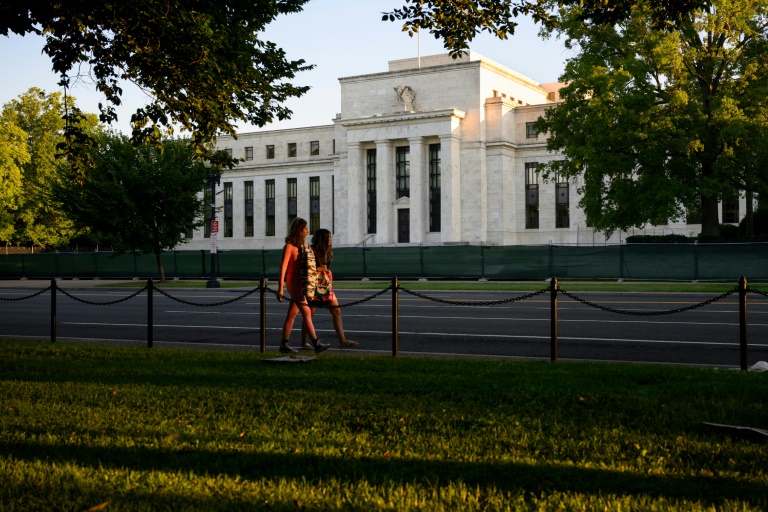
Asian and European stocks rallied Tuesday and the dollar dipped as weak US data sparked hopes the Federal Reserve could ease its interest-rate hiking plans.

Frankfurt and Paris equities soared more than three percent in value after similar stellar gains in Tokyo, while London won two percent.

“Weaker-than-expected manufacturing data from the US was taken as a signal that rising interest rates may be having some effect on cooling demand for goods,” said Interactive Investor analyst Richard Hunter.

“This in turn led to hopes of a Federal Reserve pivot, even though the spectre of inflation remains firmly at the top of their stated to-do list.”

The Fed and other central banks across the world have raised interest rates in efforts to tame runaway inflation, but the monetary tightening has raised fears that it could plunge countries into recession.

Wall Street had enjoyed a bumper start to the fourth quarter on Monday after data showed US manufacturing growth slowed more than expected in September to its weakest in more than two years.

The Institute for Supply Management said its manufacturing index dropped 1.9 points to 50.9 percent, just barely above the 50-percent threshold indicating expansion, as the prices index fell to the lowest in more than two years.

Eurozone manufacturing survey data out Monday showed a contraction on the back of the region’s ongoing energy crisis.

“The turnaround in risk appetite appears to have been driven by another deterioration in PMI surveys as traders speculate that such weakness could be a precursor to slower monetary tightening,” noted OANDA market analyst Craig Erlam.

Asian markets built on the Wall Street surge. Tokyo and Seoul were among the leaders, despite news that North Korea had fired a missile over Japan for the first time since 2017.

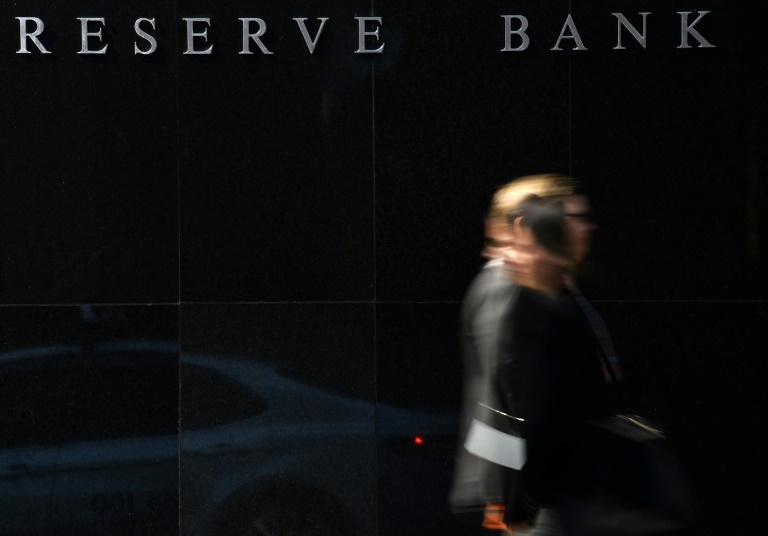
Sydney soared 3.8 percent after the Reserve Bank of Australia lifted interest rates by less than expected.

Hong Kong and Shanghai were closed for holidays.

Investors will focus later this week on Friday’s all-important US jobs figures for the latest reading on the health of the world’s biggest economy.

– Sterling extends gains –

Oil also continued to rise on expectations OPEC and other major producers will slash output this week, having become spooked by a plunge in the commodity on recession fears.

The 13 members of the Organization of the Petroleum Exporting Countries (OPEC), led by Riyadh, and their 10 allies headed by Moscow will hold Wednesday their first in-person meeting at the group’s headquarters in Vienna since March 2020.

The rally in equities came as the dollar weakened owing to lower expectations for US monetary tightening, with the pound also supported by the UK government’s decision to scrap a planned cut in the top rate of income tax.

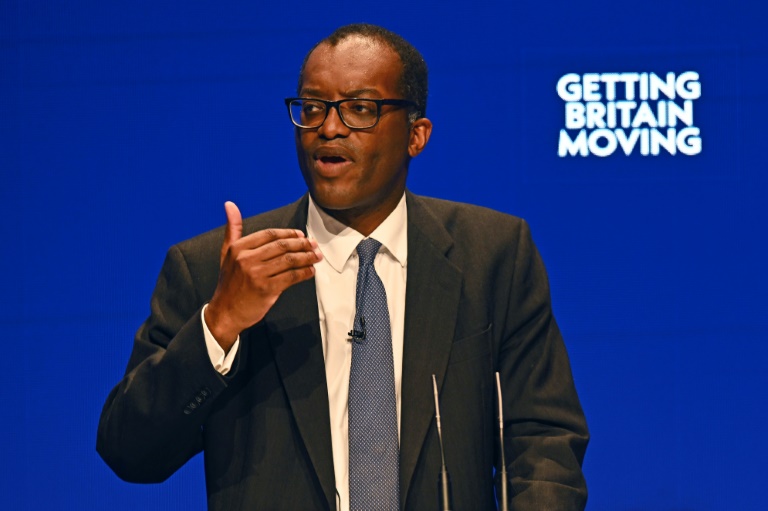
Finance minister Kwasi Kwarteng has dropped the proposal, which was part of a big-borrowing mini-budget that sent shudders through markets.

The pound extended gains after breaking back above $1.13, having last Monday tanked to a record low $1.0350.

– Key figures around 1030 GMT –

Paris – CAC 40: UP 3.5 percent at 5,995.86 points

Frankfurt – DAX: UP 3.1 percent at 12,590.86

London – FTSE 100: UP 2.0 percent at 7,046.02

EURO STOXX 50: UP 3.3 percent at 3,452.98

Tokyo – Nikkei 225: UP 3.0 percent at 26,992.21 (close)

Hong Kong – Hang Seng Index: Closed for a holiday

Shanghai – Composite: Closed for a holiday

New York – Dow: UP 2.7 percent at 29,490.89 (close)

Pound/dollar: UP at $1.1362 from $1.1323 on Monday

Euro/dollar: UP at $0.9898 from $0.9826

Euro/pound: UP at 87.13 pence from 86.77 pence

Dollar/yen: UP at 144.65 yen from 144.55 yen

Brent North Sea crude: UP 1.1 percent at $89.82 per barrel

West Texas Intermediate: UP 0.9 percent at $84.40 per barrel

burs/rfj/lth
EU lawmakers impose single charger for all smartphones

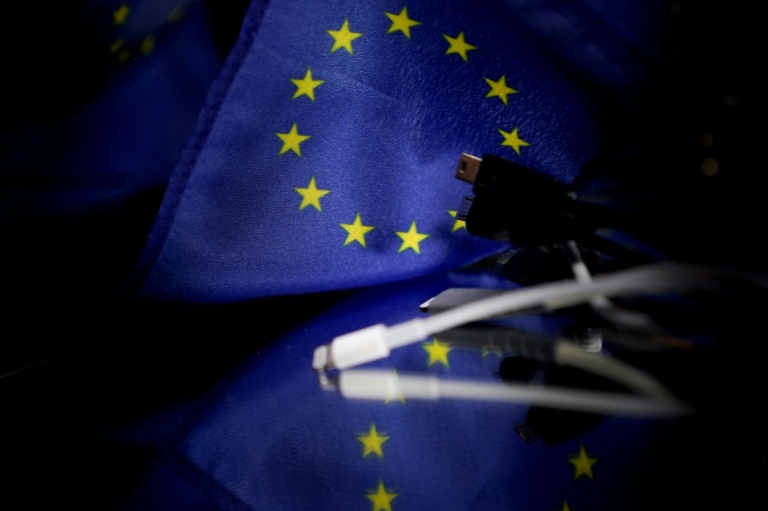
The EU parliament on Tuesday passed a new law requiring USB-C to be the single charger standard for all new smartphones, tablets and cameras from late 2024.

The measure, which EU lawmakers adopted with a vote 602 in favour, 13 against, will — in Europe at least — push Apple to drop its outdated Lightning port on its iPhones for the USB-C one already used by many of its competitors.

Makers of laptops will have extra time, from early 2026, to also follow suit.

EU policymakers say the single charger rule will simplify the life of Europeans, reduce the mountain of obsolete chargers and reduce costs for consumers. 

It is expected to save at least 200 million euros ($195 million) per year and cut more than a thousand tonnes of EU electronic waste every year, the bloc’s competition chief Margrethe Vestager said.

The EU move is expected to ripple around the world.

The European Union’s 27 countries are home to 450 million people who count among the world’s wealthiest consumers. Regulatory changes in the bloc often set global industry norms in what is known as the Brussels Effect.

“Today is a great day for consumers, a great day  for our environment,” Maltese MEP Alex Agius Saliba, the European Parliament’s pointman on the issue, said.

“After more than a decade; the single charger for multiple electronic devices will finally become a reality for Europe and hopefully we can also inspire the rest of the world,” he said.

– Faster data speed –

Apple, the world’s second-biggest seller of smartphones after Samsung, already uses USB-C charging ports on its iPads and laptops. 

But it resisted EU legislation to force a change away from its Lightning ports on its iPhones, saying that was disproportionate and would stifle innovation.

However some users of its latest flagship iPhone models — which can capture extremely high-resolution photos and videos in massive data files — complain that the Lightning cable transfers data at only a bare fraction of the speed USB-C does.

The EU law will in two years’ time apply to all handheld mobile phones, tablets, digital cameras, headphones, headsets, portable speakers, handheld videogame consoles, e-readers, earbuds, keyboards, mice and portable navigation systems.

People buying a device will have the choice of getting one with or without a USB-C charger, to take advantage of the fact they might already have at least one cable at home.

Makers of electronic consumer items in Europe agreed a single charging norm from dozens on the market a decade ago under a voluntary agreement with the European Commission.

But Apple refused to abide by it, and other manufacturers kept their alternative cables going, meaning there are still some six types knocking around.

They include old-style USB-A, mini-USB and USB-micro, creating a jumble of cables for consumers.

USB-C ports can charge at up to 100 Watts, transfer data up to 40 gigabits per second, and can serve to hook up to external displays.

Apple also offers wireless charging for its latest iPhones — and there is speculation it might do away with charging ports for cables entirely in future models. But currently the wireless charging option offers lower power and data transfer speeds than USB-C.

UK's embattled govt stares at new U-turn on economy

Britain’s Prime Minister Liz Truss defended her contentious plan to kick-start economic growth through tax cuts, despite expectations Tuesday of a second damaging U-turn.

Fresh from a humiliating climbdown on cutting income tax for the richest, Truss and Chancellor of the Exchequer Kwasi Kwarteng were set to bring forward a major debt reduction plan, the Financial Times and others reported.

Its unveiling will come later this month rather than on November 23, and will be accompanied by independent forecasts from the Office for Budget Responsibility (OBR) in a bid to calm febrile financial markets, the reports said.

There was no immediate comment from the government, as Truss and Kwarteng prepared for another difficult day at the ruling Conservatives’ annual conference in Birmingham, central England.

But Mel Stride, the Tory chairman of the powerful Treasury committee in the House of Commons, said: “I have pressed the chancellor very hard on this and to his credit he has listened.”

Acting in advance of the Bank of England’s next rate-setting meeting on November 3 could “reduce the upward pressure on interest rates to the benefit of millions of people up and down the country”, he added.

Asked if any more U-turns were coming, Truss was evasive in an interview with LBC radio broadcast Tuesday but recorded on Monday.

“I’m determined to carry on with this growth package,” she said, stressing another component of the plan to cap soaring energy bills. 

“That’s what’s important, but it’s also important that we do listen to people and we bring the country with us.” 

However, Truss also refused to rule out cuts to benefits as poorer Britons struggle with the worst cost-of-living crisis in generations.

“I’m very committed to supporting the most vulnerable,” Truss told BBC radio in another pre-recorded interview aired Tuesday.

But she added: “We have to look at these issues in the round. We have to be fiscally responsible.”

– ‘Get a grip!’ –

Potential cuts to the welfare budget are shaping up as the next battle with dissident Tory MPs after the aborted tax cut, part of a package that relies on billions more in new borrowing.

Splits have also emerged in the cabinet.

Senior minister Penny Mordaunt, one of the candidates Truss beat in the Tory leadership race, said it “makes sense” that welfare should still rise in line with soaring rates of inflation.

“I have always supported –- whether it’s pensions, whether it’s our welfare system –- keeping pace with inflation,” she told Times Radio. 

“That’s what I voted for before, and so have a lot of my colleagues.” 

Media coverage of Monday’s volte-face was damning, with many commentators arguing Truss’s credibility was already in tatters less than a month since she succeeded Boris Johnson.

The Daily Mail newspaper, normally a trenchant voice in support of the new leader’s right-wing agenda, headlined its main story: “Get a grip!”

Coverage of Kwarteng’s lacklustre speech to the Tory conference on Monday, which had to be rapidly rewritten after the tax plan was ditched, was also damning.

There was particular criticism of the finance minister’s jocular tone, which he reinforced at an evening reception with the Policy Exchange think-tank.

Market reactions that saw the pound slump to an all-time low against the dollar last week had been “hullabaloo”, he said.

Policy Exchange, he also told his laughing hosts, was “twice as old as the OBR — that gives you huge authority”.

Elsewhere at the Birmingham conference, Foreign Secretary James Cleverly was Tuesday to declare that Britain has the “strategic endurance” to see Ukraine “through to victory” over Russia.

And Home Secretary Suella Braverman was readying new measures to tackle migrants crossing the Channel from France on rickety boats, as Truss’s government seeks to shore up its right-wing credentials.

Markets rally, dollar dips as US data tempers rate fears

Asian markets rallied Tuesday and the dollar eased after weak US factory data sparked optimism that a series of big interest rate hikes were taking their toll, allowing the Federal Reserve to ease its foot off the pedal.

Oil also continued to rise on expectations OPEC and other major producers will slash output this week, having become spooked by a plunge in the commodity on recession fears.

All three main indexes in New York enjoyed a bumper start to the quarter after data showed US manufacturing growth slowed more than expected in September to its weakest in more than two years.

SPI Asset Management’s Stephen Innes said: “The positive aspect in the data is prices paid dropped to 51.7, the lowest print since June 2020, triggering a mini-risk revival in stocks and a sell-off on the US dollar as US yields continued to slide.

“In this hawkishly priced risk environment, bad data is considered good news, as it raises the possibility of a doveish pivot by the Federal Reserve.”

But he added that there was a lot more data to come this week, topped by Friday’s US jobs figures, that could alter investors’ views, while several Fed officials remained wedded to their rate hike plan to tame inflation.

Nicole Webb, at Wealth Enhancement Group, told Bloomberg Television that while the Fed will at some point stop hiking, “how long they hold us or suspend us there is still in question”.

Still, Asian markets built on the Wall Street surge.

Tokyo and Seoul were among the leaders, despite news that North Korea had fired a missile over Japan for the first time since 2017.

Sydney surged 3.8 percent after the Reserve Bank of Australia lifted interest rates by less than expected.

Singapore, Mumbai, Bangkok, Taipei, Manila, Jakarta and Wellington were also sharply higher. Hong Kong and Shanghai are closed for holidays.

London, Paris and Frankfurt were also well up soon after opening.

– Sterling extends gains –

The rally in equities came as the dollar weakened owing to lower expectations for US monetary tightening, with the pound also supported by the UK government’s decision to scrap a planned cut in the top rate of income tax.

Ahead of a speech to a conference of the ruling Conservatives, finance minister Kwasi Kwarteng dropped the proposal, which was part of a big-borrowing mini-budget that sent shudders through markets.

The pound extended gains after breaking back above $1.13, having last Monday tanked to a record low $1.0350.

The tax cut would have cost about £2-3 billion out of an estimated £72.4 billion worth of debt issuance this year.

But National Australia Bank’s Tapas Strickland said the u-turn “is a sign that the government is responding to market concerns and also to polling which may mean the new government is not as cavalier as some had feared”.

The dollar was also down against the euro and yen, while the Australian dollar overcame an initial drop after the RBA’s rate hike to push higher.

Commodities traders are keenly awaiting Wednesday’s monthly meeting of OPEC and other producers after reports said it is considering a million-barrels-a-day output cut.

WTI surged more than five percent Monday and Brent was up 4.4 percent, recovering some of the huge losses suffered in recent months because of fears about demand caused by an expected recession.

The jump was also helped by the weaker dollar, which makes the so-called black gold cheaper for buyers using other currencies.

A cut would deal an extra blow to central banks trying to fight decades-high inflation, which has partly been driven by the spike in crude markets stoked by Russia’s invasion of Ukraine.

But SPI’s Innes added OPEC could justify the move by pointing to the recent drop in prices, which are down about 40 percent from June.

– Key figures around 0720 GMT –

Tokyo – Nikkei 225: UP 3.0 percent at 26,992.21 (close)

Hong Kong – Hang Seng Index: Closed for a holiday

Shanghai – Composite: Closed for a holiday

London – FTSE 100: UP 0.7 percent at 6,956.55

Pound/dollar: UP at $1.1374 from $1.1315 on Monday

Euro/dollar: UP at $0.9859 from $0.9822

Euro/pound: UP at 86.90 pence from 86.74 pence

Dollar/yen: DOWN at 144.60 yen from 144.66 yen

West Texas Intermediate: UP 0.6 percent at $84.15 per barrel

Brent North Sea crude: UP 0.8 percent at $89.53 per barrel

New York – Dow: UP 2.7 percent at 29,490.89 (close)

Australia hikes rates less than forecast, boosting stocks

Australia raised interest rates less than expected Tuesday, boosting stocks and dragging the local dollar lower, as officials grow concerned about a slowing global economy sparked by rising borrowing costs and surging prices.

While the Reserve Bank of Australia’s 0.25 percentage point hike took the cash rate to a nine-year high of 2.60 percent, the increase was half what had been forecast as it joins others around the world in trying to rein in runaway inflation.

In a statement the RBA noted it had already increased rates “substantially in a short period of time”, though it held its inflation estimate for the year with a peak of 7.75 percent, before dropping to just over four percent in 2023.

“As is the case in most countries, inflation in Australia is too high,” the bank said in a statement.

It added that the surge in prices had been driven by “global factors”, along with strong spending levels in Australia.

The move highlights the tightrope central banks have to walk in trying to bring down inflation while at the same time trying to cushion their economies from a recession, a battle many commentators warn they are losing.

The Federal Reserve and European Central Bank have flagged further hikes at their next meetings, while the United Nations warned that the tightening programmes could trigger prolonged stagnation.

Sydney’s ASX 200 soared 3.8 percent after the announcement, while the Australian dollar dropped from US$0.6510 to as low as $0.6451 though it edged back slightly.

City Index Senior Market analyst Matt Simpson said the decision was “telling” after Australia had to “play catch-up with other central banks”.

“Already that trajectory is dying down. And as long as medium-term inflation expectations continue to behave, the case for a much higher cash is fading,” he said.

Federal Treasurer Jim Chalmers said the rise and international warnings of economic slowdowns would shape his upcoming budget announcement, which is due in three weeks.

“The storm clouds are gathering again in the global economy,” he told a news conference in Canberra.

“There’s no use pretending that the global situation hasn’t deteriorated.

“There’s no use pretending that rising inflation isn’t punching a hole in family budgets.”

At least 15 dead in new Ecuador prison riot

At least 15 prisoners died Monday in the latest riots to strike Ecuador’s troubled prison system, officials in the South American country reported.

The riots left 15 people dead and 21 injured, said a statement from SNAI, the agency that manages Ecuador’s prisons.

The SNAI had earlier announced that tactical units were continuing operations to regain control of the facility, located in the southern Ecuadoran city of Latacunga.

The prison, which houses about 4,300 prisoners and is one of the largest in the country, has been the site of seven major outbreaks of violence linked to drug trafficking that have left more than 400 inmates dead since February 2021.

Authorities have been unable to prevent the brutal violence, which is often carried out with knives and has involved beheadings.

According to official estimates, the country’s overcrowded prisons contain about 35,000 prisoners, many of them members of gangs linked to drug trafficking.

Bordered by Colombia and Peru, the world’s largest cocaine producers, Ecuador serves as a departure port for drug shipments, primarily to the United States and Europe.

In 2021, Ecuador seized a record 210 tons of drugs, mostly cocaine.

Last year, the country of 17.7 million people had a murder rate of 14 per 100,000, nearly double that of 2020.

In a bid to improve the living conditions in Ecuador’s prisons, President Guillermo Lasso launched the country’s first inmate census in August.

Last stop: Paris waves goodbye to cardboard Metro tickets

The Paris Metro is phasing out cardboard tickets after 120 years, taking the capital’s urban transit into a contactless future but leaving behind nostalgic fans who will miss the humble rectangular cards.

Beyond their intended use as a transport token, the tickets with their trademark magnetic strip have inspired artists, filmmakers and singers, served as emergency notepads and, most of all, bookmarks.

“As the metro ticket disappears, so does a part of our lives,” said Gregoire Thonnat, a collector and author of a book on the history of the metro ticket. “The metro ticket is part of how we picture Paris.” 

Ile-de-France Mobilites, which operates the metro’s ticketing system, had wanted the pack of 10 tickets known as “carnets” to be gone by the first quarter of this year.

But then the Covid-19 pandemic erupted, and Russia’s war in Ukraine, and with it a global shortage of microchips needed to make the smartcards to replace the tickets — whose sales still total 550 million per year, more than 50 tonnes of paper.

“We were in a hurry, but the chip crisis slowed us down,” Laurent Probst, director-general at Ile-de-France Mobilites told AFP.

The operator has started cutting the number of metro stations that still sell carnets to nudge clients towards plastic cards, and many turnstiles can no longer read cardboard tickets.

– ‘Change their habits’ –

As a result, the share of card tickets used on urban trips has dropped from more than two-thirds a year ago to well under half now. “Our customers are beginning to change their habits,” Probst said.

He said carnets would be gone completely sometime next year.

But, probably until 2024, travellers will still be able to buy single tickets at 1.90 euros ($1.82), a markup from the 1.49 euros a single journey costs when using a smartcard.

Ile-de-France Mobilites is pushing ahead with more modernisation, including the use of smartphones at turnstiles, with Android phones to be enabled within weeks and Apple phones in 2023.

“I’m enthusiastic about this development,” Probst said. “This is a sea change in the quality of our customer service.”

Paris’s leap into the future comes 20 years after the New York subway abolished metal tokens, and more than a decade after London’s Underground went mostly paperless, but some are pleased that Paris has taken things slowly.

“I enjoy the texture of it, I enjoy the cleanness of the ticket itself when it’s new, and how much you can destroy it and still have it,” said Sarah Sturman, an Italian-American artist in Paris who uses metro tickets in her collage work.

“I’m going to keep collecting metro tickets until they’re gone, and when they’re gone they’ll be even more precious,” she told AFP.

“If I see a metro ticket in a scrapbook 10 years from now, it will all come rushing back: Memories of being on the metro late at night, or in the rush hour, my favourite metro line, or why I hate another one, losing the tickets, trying to sort through my bag at the turnstile, doing laundry and finding your crumpled metro ticket in a pocket afterwards,” she said.

– ‘Ideal thickness’ –

Cannabis smokers will also miss the 30-by-66-millimetre ticket, which can be used to make filter tips, or “crutches”, for joints.

“Ideal thickness, perfect width, readily available — the three gold standards of a good crutch,” said Jake, a Japanese-American student in Paris.

The metro ticket also has its place in popular culture, famously in singer-songwriter Serge Gainsbourg’s 1959 hit “Le Poinconneur des Lilas” (The ticket puncher at the Lilas station); as a keepsake for Yves Montand in the 1953 film “Wages of Fear”; and on the cover of Raymond Queneau’s novel “Zazie in the Metro” that director Louis Malle made into a film in 1960.

“The useful life of a metro ticket is one hour, or one and a half hours, and yet we get attached to it,” Thonnat said. “It’s quite irrational.”

“Metro ticket” is also the name of a pubic hair trimming style that leaves just a ticket-size strip after waxing. The cut, known in the United States as a “landing strip,” is the most popular among Parisian women, according to a 2020 study published by the Version Femina magazine.

– ‘Something to show our kids’ –

Some tourists visiting Paris can’t wait for the day when they won’t have to decipher complicated metro ticket machines.

“I don’t like paper tickets, I want everything on my phone,” said Javier Romani, a visitor from the Catalonia region in Spain.

“I’m against the paper tickets,” said Jeff Noel, from Indianapolis in the US state of Indiana. “If you could do this electronically in your hotel room it would be a lot easier than trying to find a machine.”

Stefania Grigoriadou, from Thessaloniki, Greece, said she preferred online booking but would hold on to the ticket she bought to get to the Disneyland Paris theme park.

“It’s nice to have it as a souvenir. Maybe we won’t come to Paris again, and so we have something to show to our kids in the future,” she told AFP.

Why crypto's big 'merge' is causing big headaches

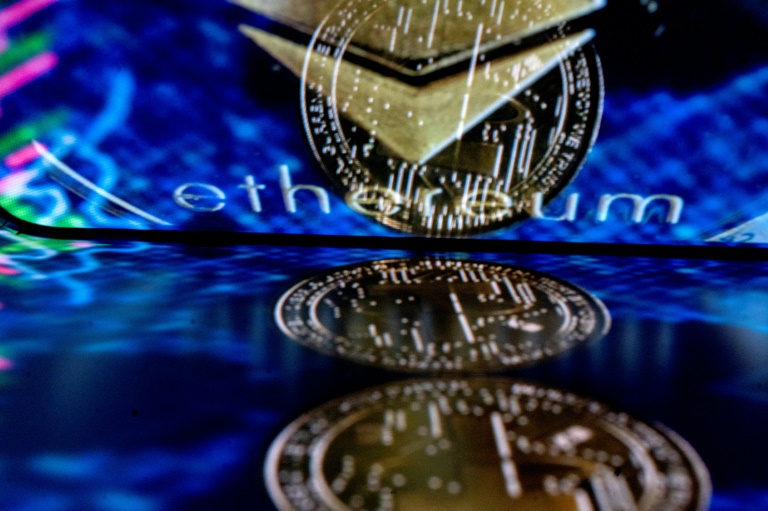
The biggest software upgrade in the short history of crypto has fulfilled its promise to wipe out more than 99 percent of the electricity used by the second-biggest cryptocurrency, experts have told AFP.

That is no mean feat, given that the Ethereum blockchain was burning through about as much electricity as New Zealand.

Sceptics had expected glitches with the upgrade, known as “the merge”, but it ended up being a “rather boring event”, according to Alex de Vries of the Free University in Amsterdam. 

De Vries, whose Digiconomist website models the energy use of Bitcoin and Ethereum, said consumption had indeed plummeted by more than 99 percent on Ethereum.

Moritz Platt, a researcher specialising in crypto at King’s College London, said the 99 percent estimates were realistic and heralded a positive step towards “cryptocurrency sustainability”.

So the Ethereum blockchain, which supports billions of dollars of trading in games, tokens, art and the ether currency, has cleaned up its act.  

But there are complications.

Ethereum faces bitter opposition from those who lost out from the merge and it could also get greater scrutiny from regulators.

– ‘Astronomical’ growth –

The old system, known as “proof of work”, relied on people and firms to “mine” new coins — an industry worth $22 million daily before the merge, according to de Vries.  

The miners used vast power-guzzling computer rigs to compete with each other to solve complex equations, and the winner was awarded the prize of adding entries to the blockchain and generating coins. 

The merge wiped out their business model overnight. 

“Those rigs do not magically turn back into invested capital,” said a crypto-miner known only as “J” who operates between Singapore and Hong Kong. 

He said it was costing him between $30,000 and $40,000 a month to keep his staff and equipment idling while he thinks about his next move.

Plenty of miners have sold off their kit, while others are putting their rigs to work on less profitable blockchains that still use the old system. 

A miner who uses the name Leon Ravencoin, for example, has been tweeting non-stop about the “astronomical” growth of Ravencoin, one of the currencies to get a boost after the merge.

The combined computing power used by these coins is around one-fifth of the pre-merge Ethereum blockchain. 

However, de Vries said they generated only about $500,000 in daily revenue so only the most energy-efficient machines with the lowest energy costs would be able to make a profit.

As a result, one-fifth of the computing power would work out far less than one-fifth of the electricity use.

– ‘Designed to be centralised’ –

Aside from the problem with miners, the new system, known as “proof of stake”, has several issues baked in.

Anyone willing to stake a large amount of ether can now “validate” new entries on the blockchain.

The more you stake, the more chance you have of updating the chain and earning coins. 

The system gives an advantage to the biggest players, and just three companies now account for more than half of “validators”, according to research by Dune Analytics. 

Cryptocurrencies were envisaged as a decentralised alternative to the banks, corporations and governments that failed so spectacularly during the global crash of 2008.

But crypto-miner J said the new Ethereum was “designed to be more centralised” and suggested it no longer had a real purpose.

Regulators have also begun to pay attention, with US Securities and Exchange Commission Chairman Gary Gensler suggesting proof-of-stake looked like a securities market that would fall under his remit.

The disaster scenario for Ethereum would be that enough disgruntled purists switch to one of the gas-guzzling proof-of-work alternatives, with Ethereum Classic being the main one.

“There is nothing capping Ethereum Classic prices,” said de Vries, meaning that miners could potentially make good profits if the market shifted their way.

A rush from the greener blockchain was “theoretically definitely possible”, he said.

Asian traders track Wall St up as US data tempers rate fears

Asian markets followed Wall Street higher Tuesday after weak US factory data sparked optimism that a series of big interest rate hikes were taking their toll, allowing the Federal Reserve to ease its foot off the pedal.

The rally in equities was matched by more gains in sterling as traders welcomed the government’s decision to scrap a planned cut in the top rate of income tax.

Oil also continued to rise on expectations OPEC and other major producers will slash output this week, having become spooked by a plunge in the commodity on recession fears.

All three main indexes in New York enjoyed a bumper start to the quarter after data showed US manufacturing growth slowed more than expected in September to its weakest in more than two years.

SPI Asset Management’s Stephen Innes said: “The positive aspect in the data is prices paid dropped to 51.7, the lowest print since June 2020, triggering a mini-risk revival in stocks and a sell-off on the US dollar as US yields continued to slide.

“In this hawkishly priced risk environment, bad data is considered good news, as it raises the possibility of a doveish pivot by the Federal Reserve.”

But he added that there was a lot more data to come this week, topped by Friday’s US jobs figures, that could alter investors’ views, while several Fed officials remained wedded to their rate hike plan to tame inflation.

Nicole Webb, at Wealth Enhancement Group, told Bloomberg Television that while the Fed will at some point stop hiking, “how long they hold us or suspend us there is still in question”.

Still, in early trade Tuesday, Asia built on the Wall Street surge.

Tokyo and Seoul were among the leaders, despite news that North Korea had fired a missile over Japan for the first time since 2017.

Sydney, Singapore, Taipei, Manila and Wellington were also sharply higher. Hong Kong and Shanghai are closed for holidays.

On currency markets, sterling held its gains against the dollar, which came on the back of lower US rate hike bets as well as the UK government’s decision to walk back a controversial tax cut.

Ahead of a speech to a conference of the ruling Conservatives, finance minister Kwasi Kwarteng dropped the proposal, which was part of a big-borrowing mini-budget that sent shudders through markets.

The UK unit held above $1.13, having last Monday tanked to a record low $1.0350.

The tax cut would have cost about £2-3 billion out of an estimated £72.4 billion worth of debt issuance this year.

But National Australia Bank’s Tapas Strickland said the u-turn “is a sign that the government is responding to market concerns and also to polling which may mean the new government is not as cavalier as some had feared”.

Commodities traders are keenly awaiting Wednesday’s monthly meeting of OPEC and other producers after reports said it is considering a million-barrels-a-day output cut.

WTI surged more than five percent Monday and Brent was up 4.4 percent, recovering some of the huge losses suffered in recent months because of fears about demand caused by an expected recession.

The jump was also helped by the weaker dollar, which makes the so-called black gold cheaper for buyers using other currencies.

A cut would deal an extra blow to central banks trying to fight decades-high inflation, which has partly been driven by the spike in crude markets stoked by Russia’s invasion of Ukraine.

But SPI’s Innes added OPEC could justify the move by pointing to the recent drop in prices, which are down about 40 percent from June.

– Key figures around 0230 GMT –

Tokyo – Nikkei 225: UP 2.4 percent at 26,840.75 (break)

Hong Kong – Hang Seng Index: Closed for a holiday

Shanghai – Composite: Closed for a holiday

Pound/dollar: DOWN at $1.1311 from $1.1315 on Monday

Euro/dollar: DOWN at $0.9817 from $0.9822

Euro/pound: UP at 86.79 pence from 86.74 pence

Dollar/yen: UP at 144.77 yen from 144.66 yen

West Texas Intermediate: UP 0.1 percent at $83.74 per barrel

Brent North Sea crude: UP 0.3 percent at $89.15 per barrel

New York – Dow: UP 2.7 percent at 29,490.89 (close)

London – FTSE 100: UP 0.2 percent at 6,908.76 (close) 

Biden tells storm-hit Puerto Rico: 'America's with you'

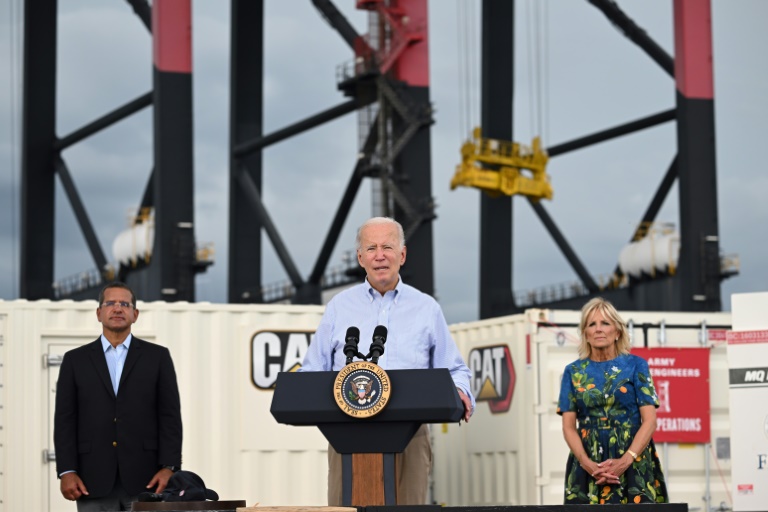
President Joe Biden toured hurricane-devastated areas of Puerto Rico on Monday, promising the sometimes overlooked US territory that this time, “America’s with you.”

The president and First Lady Jill Biden — who on Wednesday will also visit the devastation caused by Hurricane Ian in Florida where dozens have died — headed to Ponce, on the south coast of Puerto Rico, pounded by Hurricane Fiona last month.

“We came here in person to show we’re with you –- all of America’s with you,” he said in televised remarks. “I am committed to this island.”

Press Secretary Karine Jean-Pierre described Ponce as “the hardest hit area of Puerto Rico” and “an area where people have lost almost everything.”

More than two weeks after Hurricane Fiona passed over, thousands of people on the island, which is American but not a state, remain without power. Officials said at least seven percent of customers are still without electricity and five percent without water.

Biden announced $60 million to strengthen storm defenses, including flood barricades and warning systems — all on top of hundreds of millions of dollars in new budgeting made possible by the huge infrastructure spending bill passed by the Democratic-led Congress last year.

To Puerto Ricans skeptical of the sometimes distant federal government, Biden insisted: “We’re going to make sure you get every single dollar promised.”

Not everyone on the ground was buying the pitch.

“I’ve not been interested in watching the news or following the president’s visit,” said retiree Nixa Sanabria, 66, from Catano in the north. 

“It’s the usual political talk to sell the idea to folks that we’ll be given this or that — and then nothing happens.”

– Trump’s paper towels –

But the visit was part of a message from the Biden administration that the government is taking responsibility, in contrast to Donald Trump, who publicly fought with the island’s leadership and even suggested in 2018 that death tolls from hurricanes were manipulated to make him look “bad.”

Biden’s stop in Puerto Rico came five years to the day that Trump stopped by in the wake of the especially destructive 2017 Hurricane Maria.

In a quickly viral moment, Trump shocked local people by  jovially tossing rolls of paper towels, basketball style, into a crowd of residents whose lives had been turned upside down by flooding and damage.

The mayor of the capital San Juan at the time called Trump’s behavior “abominable.”

Departing for Puerto Rico, Biden told reporters that the island hadn’t “been taken very good care of” in the past. And in Ponce, he insisted things were now different.

“Times like these, our nation comes together, (we) put aside political differences and get to work. We show up,” Biden said.

Deanne Criswell, administrator of the Federal Emergency Management Agency, said that mayors on the island she had spoken to “finally feel like this administration cares for them.”

– Test of leadership –

The annual hurricanes often cut a ruinous path from the Caribbean up over Puerto Rico and Cuba or the Bahamas before hitting the US east or southern coasts.

Florida officials said the latest death count from Hurricane Ian was now at least 68 while another four deaths have been recorded in North Carolina.

The vast majority of those deaths occurred in Lee County on Florida’s west coast, where the storm roared ashore with devastating force and where questions are being raised about whether authorities there ordered evacuations early enough.

In Puerto Rico, 25 deaths have been linked to Hurricane Fiona, according to the island’s public health department, which is still investigating how 12 of the fatalities occurred.

The entire US territory lost power and about one million people were left temporarily without drinking water, when Fiona — then a Category 1 storm — hammered the island in mid-September.

Biden quickly declared a state of emergency, freeing up federal funds and expertise.

Island residents have complained of being ignored by Washington after previous disasters, including the hit from twin hurricanes, Irma and Maria, in 2017.

US authorities — federal, state and local — are often judged by the effectiveness of their response to such disasters.

After Hurricane Katrina devastated New Orleans and the Gulf coast, critics castigated then-president George W. Bush after photos showed him surveying damage while flying high overhead.

Close Bitnami banner
Bitnami