US Business

Twitter Blue subscribers getting edit feature

Twitter on Monday said a feature to edit tweets is being rolled out to those subscribing to its Blue service in Australia, Canada and New Zealand.

The long-awaited editing tool test “went well,” so it is being made more widely available, the San Francisco based tech firm said in a tweet, adding that it is “coming soon” to the United States.

“Edit Tweet is a feature that lets people make changes to their Tweet after it’s been published,” the company said on its blog. “Think of it as a short period of time to do things like fix typos, add missed tags, and more.”

The tool will let users edit a tweet up to five times within 30 minutes of initially posting, Twitter said.

An icon looking like a slanted pen or pencil will indicate that a tweet has been edited, and a “version history” will be available to show what was changed, Twitter said.

Twitter Blue subscriptions are priced at $5 monthly, according to the company’s website.

Tesla Chief Executive Elon Musk, who is locked in a lawsuit with Twitter over his effort to break his $44 billion deal to buy the global social media site, had backed an edit button shortly before the company said in April it was studying the change.

Users of Twitter Blue — the subscription offering now available in the United States, Canada, Australia and New Zeeland– “receive early access to features and help us test them before they come to Twitter,” the company said.

An aim of the tweak is that “Tweeting will feel more approachable and less stressful,” Twitter said while testing the feature,

Trump sues CNN for defamation, may act against Jan 6 panel

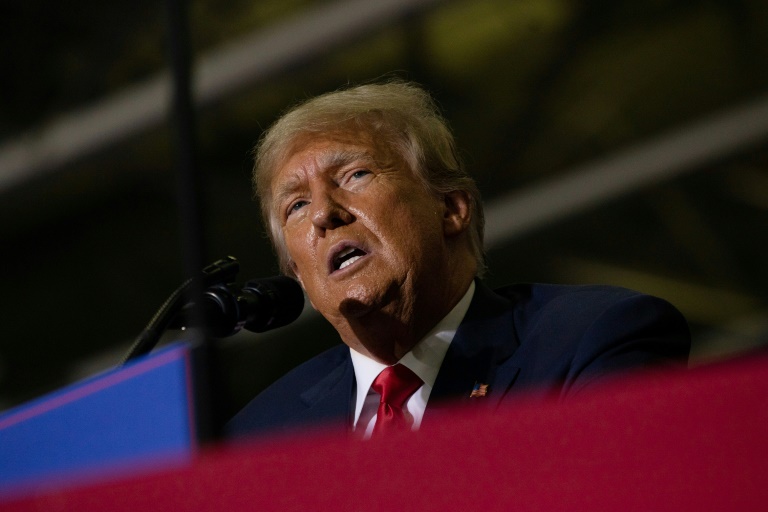
Former US president Donald Trump sued CNN on Monday, accusing the cable television news network of defamation and seeking $475 million in punitive damages.

Trump, in the lawsuit filed in a US District Court in Florida, accused CNN of waging a campaign of “libel and slander” against him because it “fears” he will run for president again in 2024.

“CNN has sought to use its massive influence — purportedly as a ‘trusted’ news source — to defame the plaintiff in the minds of its viewers and readers for the purpose of defeating him politically,” Trump’s lawyers said in the 29-page complaint.

In a follow-up statement laced with outrage, Trump said Monday that “in the coming weeks and months we will also be filing lawsuits against a large number of other Fake News Media Companies for their lies, defamation, and wrongdoing,” notably regarding coverage of the 2020 election.

The 76-year-old Republican also said his team “may bring appropriate action against” the congressional committee currently investigating the January 6, 2021 attack on the US Capitol by his supporters, saying the panel refused to probe “the massive Presidential Election Fraud” which he insists occurred.

Trump, who requested a jury trial, had a caustic relationship with CNN and other major news outlets like The New York Times during his term, branding them “fake news” and repeatedly raging against them on social media.

The former president, who has hinted repeatedly at another White House run, accused CNN in the lawsuit of involvement in a “concerted effort to tilt the political balance to the Left.”

He said CNN has tried to “taint” him with a “series of ever-more scandalous, false, and defamatory labels of ‘racist,’ ‘Russian lackey,’ ‘insurrectionist,’ and ultimately ‘Hitler.'”

In a July statement, Trump had threatened to sue CNN if the network refused to retract allegedly defamatory statements made about him.

The lawsuit contained excerpts from CNN’s response to Trump in which it stood by its reporting and declined to make any retractions.

In Monday’s filing, Trump took particular issue with CNN describing his claims that the 2020 election was “stolen” by Democrat Joe Biden as the “Big Lie.”

“The ‘Big Lie’ is a direct reference to a tactic employed by Adolf Hitler and appearing in Hitler’s Mein Kampf,” the complaint said. “The phrase is not taken lightly and is not bandied about blithely.”

The repeated use of the ‘Big Lie,’ it added, is a “deliberate effort by CNN to propagate to its audience an association between the plaintiff and one of the most repugnant figures in modern history.”

It said the term the “Big Lie” has been used in reference to Trump more than 7,700 times on CNN since January 2021.

Trump said he filed the suit to “vindicate his reputation as a dedicated public servant and to establish CNN’s liability for the harm it has caused to his reputation by the false, defamatory, and inflammatory mischaracterizations of him.”

Far-right Trump backers on trial for Capitol riot 'sedition'

The landmark sedition trial of five members of the far-right Oath Keepers opened Monday with prosecutors telling a jury the group mounted an “armed rebellion” at the US Capitol last year in a bid to keep Donald Trump in power.

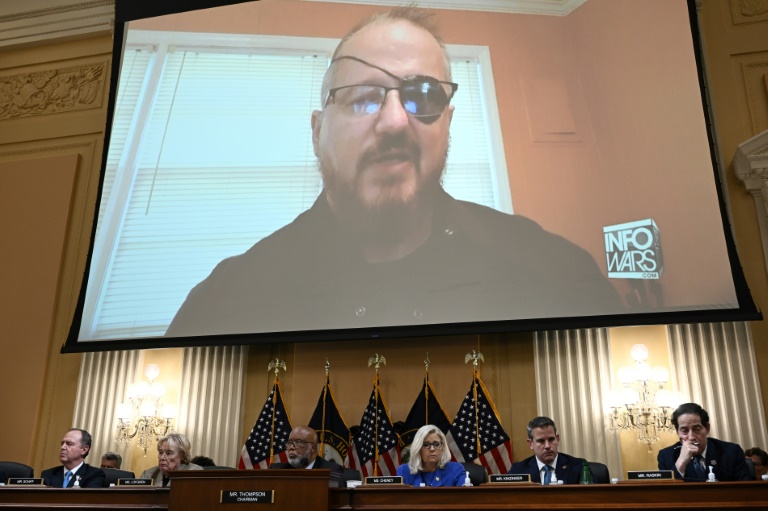
Justice Department attorney Jeffrey Nestler said that Stewart Rhodes, the eyepatch-wearing former soldier and Yale law school graduate, knew exactly what he was doing when he led the militia’s followers towards the Capitol on January 6, 2021.

Showing videos of the violent assault by dozens of group members dressed in military-style combat gear, Nestler said Rhodes directed them “like a general on the battlefield” as they sought to prevent 2020 election winner Joe Biden from being certified as the next president.

On January 6 the Oath Keepers “concocted a plan for an armed rebellion… plotting to oppose by force the government of the United States,” Nestler said.

“They did not go to the Capitol to defend or to help. They went to attack,” he said.

– ‘Peacekeeping force’ –

But defense lawyers, arguing in federal court in Washington, said the government had exaggerated its depiction of people who went to Washington to help with public security.

Prosecutors were “cherry-picking” a few inflammatory text messages from thousands and lacked proof of the charges.

Rhodes’s lawyer Phillip Linder said the group went to Washington on January 6 to provide security for Trump’s speech that day and other pro-Trump events.

“The Oath Keepers are basically a peacekeeping force,” Linder said. 

“The real evidence is going to show our clients were there to do security for events that were scheduled for the 5th and 6th” of January 2021, he said.

“This is the biggest bait-and-switch in the history of the American justice system,” said David Fischer, attorney for Thomas Caldwell, one of the other four Oath Keepers charged in the case.

Caldwell was the Oath Keeper responsible for preparing a heavily armed but never-mobilized  “quick reaction force” positioned just outside of Washington on the day of the insurrection. 

But Fischer said Caldwell never entered the Capitol and never attacked anyone. 

“He went down to Washington DC on a date with his wife,” the attorney claimed.

– Rare charge –

The trial was the first in hundreds of cases from the January 6 riot to make use of the rare charge of seditious conspiracy.

Carrying a potential 20-year prison sentence, it is a gamble for the Justice Department, which wants to underscore the seriousness of the event, in which Trump supporters sought to prevent Congress from certifying Biden as the victor in the November 2020 presidential election.

Out of 870 people charged so far, the government has reserved sedition for just a few dozen of the attackers, mostly members of self-styled militia groups like the Oath Keepers and Proud Boys who allegedly planned and coordinated the assault.

Three other Oath Keeper leaders are standing trial with Rhodes: Kelly Meggs, Jessica Watkins, and Kenneth Harrelson. Another four will undergo a separate trial.

Prosecutors sought to show that Rhodes, working with the others, began to plot a fight in Washington from the day after Biden defeated Trump.

“We must refuse to accept Biden,” Rhodes told his followers just after the election, talking in a later message of starting a “civil war.”

– Get me Roger Stone? –

On the opening day prosecutors presented footage of the Oath Keepers storming the Capitol on January 6, dressed in combat gear and coordinating in a classic military “stack” formation to push through the crowd to the doors of the building.

The trial’s first witness, FBI agent Michael Palian, who was involved in investigating the Oath Keepers, discussed a series of text messages involving the defendants that showed them as readily talking about taking action to block a Biden presidency — alleged evidence of a conspiracy.

The first day of the hearing mostly steered clear of questions of whether  Trump had any role in fomenting the January 6 violence.

The former president is already under investigation in Congress and the Justice Department over his possible links to the violence.

But Palian told the court that some of Rhodes’s text messages in the weeks after the election to a “Friends of Stone” chat group that included Trump political advisor Roger Stone.

“What’s the plan? We need to roll,” Rhodes texted.

No evidence was presented that Stone read or replied to the text.

Apple to release Will Smith film this year despite Oscars slap

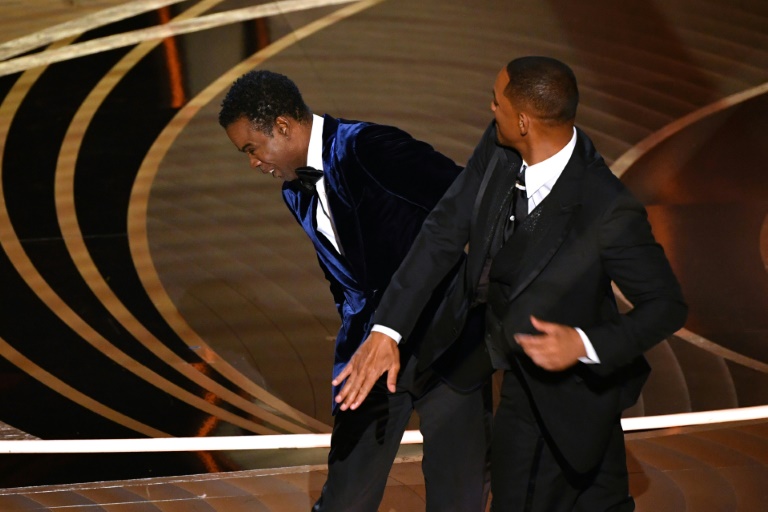
Less than a year after Will Smith shocked millions around the world by slapping Chris Rock at the Oscars, his new film “Emancipation” will be released this December, Apple said Monday.

The slavery drama was broadly assumed to have been delayed in the wake of Smith’s assault on comedian Rock, which drew widespread condemnation and resulted in Smith being banned from attending the Academy Awards ceremony for 10 years.

But Apple made the surprise announcement that the tainted star’s latest movie will hit theaters December 2, and begin streaming on Apple TV+ a week later.

The timing means Apple will be able to submit “Emancipation” to compete at the Oscars next March, just a year after it made history as the first streamer to win the Oscar for best picture with “CODA.”

Smith has kept a relatively low profile since that night at the Academy Awards, when he won best actor for his performance in “King Richard” just minutes after he had marched on stage and hit Rock for making a joke about his wife.

The former “Fresh Prince of Bel-Air” star made a public apology shortly after the incident, and released an emotional social media video about the moment in July, offering to meet with Rock “whenever you’re ready to talk.”

The 54-year-old also resigned his membership with the Academy of Motion Picture Arts and Sciences — although the organization did not revoke his best actor award, and his decade-long ban from attending the ceremony does not prevent him being nominated for Oscars.

Smith this weekend attended an advance screening of “Emancipation” hosted with the National Association for the Advancement of Colored People (NAACP) in the US capital Washington.

The movie stars Smith as a fugitive from slavery on a harrowing journey north from Louisiana seeking freedom.

His character Peter is inspired by the infamous photograph of a slave whose back was mutilated by lashes received on a plantation, and who was dubbed “Whipped Peter.” 

The film is directed by Antoine Fuqua, whose 2001 police drama “Training Day” earned a best actor Oscar for Denzel Washington. 

“Emancipation” was originally due to be filmed in Georgia, but production was moved last year after the southern US state approved a voting rights law that critics say is intended to depress turnout in Black and other underrepresented communities.

US auto sales remain slow in third quarter

Automakers saw lackluster US sales in the third quarter, as manufacturers continued to grapple with supply constraints, according to reports from the companies Monday.

The auto sector has been battling a shortage of components with supply problems that initially affected mainly semiconductors later spreading to other parts.

Japan’s Toyota suffered a seven percent drop in sales in the latest three months, to more than 526,000 units, while FCA — part of the Stellantis group which includes the Fiat and Chrysler brands — saw its sales drop by six percent compared to the same period of 2021.

Jeff Kommor, FCA’s US head of sales, said “we continue to deal with challenging industry supply constraints.”

US automaker Ford, which is expected to announce its sales figures on Tuesday, had previously warned that the company would likely end the quarter with up to 45,000 vehicles stockpiled due to the lack of parts amid the persistent problems in its supply chains.

But the situation appears to be improving at General Motors, which bucked the trend to sell over 555,000 vehicles, marking a 24 percent jump compared to a year earlier.

GM retained its spot as top seller in the US market, and said “improved semiconductor supplies, stable production and improvements in dealer inventory” helped it to regain market share.

Hyundai reported a three percent rise in sales, but other brands such as Honda and Nissan suffered large declines.

Electric car maker Tesla, which does not detail its US sales, said on Sunday that it delivered 343,830 vehicles worldwide between July and September.

While this was at the low end of analyst expectations, it marked an increase of over 42 percent increase.

The outlook for the auto sector has become more uncertain with the economic slowdown and inflation weighing on consumers.

Cox Automotive lowered its forecast for full-year auto sales in the US to 13.7 million last week.

But “recent changes in the economic outlook from rising interest rates is beginning to chip away at demand, and the waiting line for new vehicles is likely getting much shorter,” said Cox economist Charlie Chesbrough.

Oil jumps but dollar bruised on US data

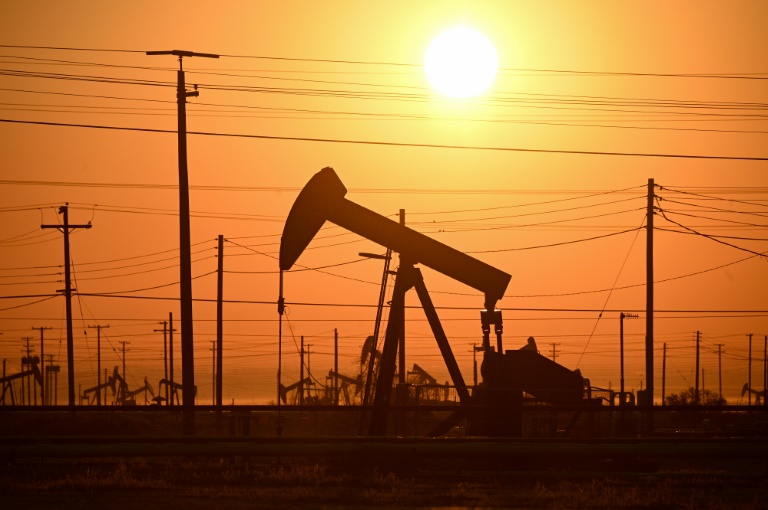
Oil prices jumped Monday on expectations of an OPEC output cut, while weak US data sent stocks higher amid rising hopes central banks may be able to ease off interest rate hikes.

Investors have been on edge over worries that rising interest rates, aimed at fighting sky-high inflation, could spark recessions, while the United Nations has called on central banks to slow down or risk pushing the world into grim prolonged stagnation.

A key manufacturing survey showing price pressures receding and demand slowing, helped buoy market sentiment amid hopes the Federal Reserve might soon pull back on its aggressive interest rate hikes.

The Institute for Supply Management said its manufacturing index dropped 1.9 points to 50.9 percent, just barely above the 50-percent threshold indicating expansion, as the prices index fell to the lowest in more than two years.

Fed officials have said the central bank will continue raising interest rates until inflation begins to drop, even if that means the US economy enters recession.

New York Fed President John Williams reiterated that message on Monday, saying that despite signs of easing demand and supply issues, inflation has become “broad-based … which will take longer to bring down.”

Still, investors are hoping interest rates may be close to a peak and the benchmark Dow jumped 2.7 percent, a good start to the new quarter after Wall Street’s worst month in 20 years.

Adam Sarhan of 50 Park Investments said “the market was extremely oversold,” which led some investors to come back looking for cheap shares.

“That happens during bear markets, the biggest up moves in history happened during bear markets,” he told AFP.

European stock indices moved higher following the US data, with Frankfurt’s DAX index ending the day 0.8 percent higher, the Paris CAC climbing 0.6 percent and London’s FTSE 100 adding 0.2 percent.

– Oil spikes before OPEC –

Oil prices leapt on reports that OPEC and its allies are considering a major output cut to stem a price plunge caused by demand worries.

But that stoked concerns about soaring inflation, which has been fueled this year by sky-high energy prices after key producer Russia’s invasion of Ukraine.

“Any cut will no doubt frustrate consuming countries that are on the verge of recession after spending a year dealing with soaring energy costs on the back of the post-pandemic recovery and war in Ukraine,” said OANDA analyst Craig Erlam.

Officials from the 13 members of the Organization of the Petroleum Exporting Countries (OPEC), led by Riyadh, and their 10 partners, led by Moscow, are due to meet physically on Wednesday for the first time since March 2020.

– Sterling gains on U-turn –

The British pound bounded above $1.13 following the latest US data, and after the UK government scrapped plans to axe its top income tax rate which helped send sterling spiraling to a record dollar low of $1.0350 a week ago.

Shares in Credit Suisse plunged to a new low in Zurich on Monday as the scandal-plagued lender sought to ease concerns about its financial health.

Its stock tumbled 11.6 percent to 3.58 Swiss francs ($3.61) before clawing back most of the ground, ending the day with a drop of 0.9 percent at 3.94 francs.

The Financial Times reported that senior executives sought over the weekend to reassure big clients and investors about the bank’s liquidity and capital position due to concerns raised about its financial strength.

Asian equities mainly fell Monday, with Hong Kong tumbling to its lowest point in more than a decade as fears for China’s economy deepens this year’s investor rout.

– Key figures around 2030 GMT –

New York – Dow: UP 2.7 percent at 29,490.89 (close)

New York – S&P 500: UP 2.6 percent at 3,678.43 (close)

New York – Nasdaq: UP 2.3 percent at 10,815.44 (close)

EURO STOXX 50: UP 0.7 percent at 3,342.17 (close)

London – FTSE 100: UP 0.2 percent at 6,908.76 (close) 

Frankfurt – DAX: UP 0.8 percent at 12,209.48 (close)

Paris – CAC 40: UP 0.6 percent at 5,794.15 (close)

Tokyo – Nikkei 225: UP 1.1 percent at 26,215.79 (close)

Hong Kong – Hang Seng Index: DOWN 0.8 percent at 17,079.51 (close)

Shanghai – Composite: Closed for a holiday

Pound/dollar: UP at $1.1315 from $1.1170 on Friday

Euro/dollar: UP at $0.9822 from $0.9802

Euro/pound: DOWN at 86.74 pence from 87.75 pence

Dollar/yen: DOWN at 144.66 yen from 144.74 yen

Brent North Sea crude: UP 4.4 percent at $88.86 per barrel

West Texas Intermediate: UP 5.2 percent at $82.63 per barrel

burs-rl/cdw/hs/des

Oil jumps but dollar bruised on US data

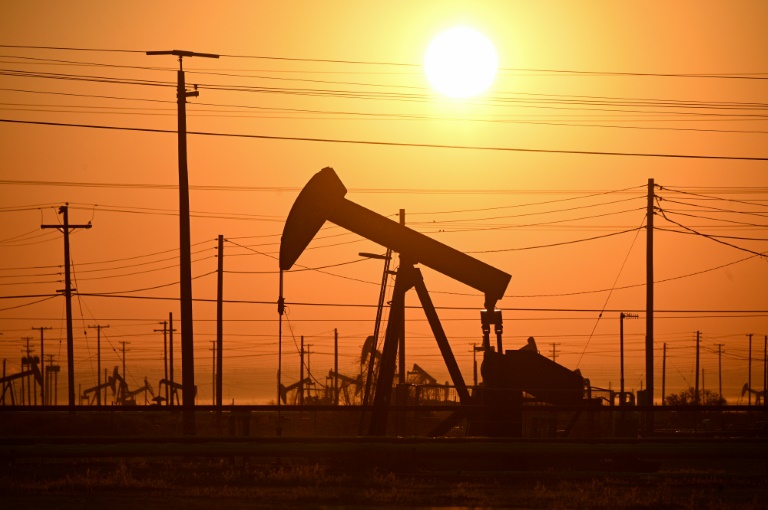
Oil prices jumped Monday on expectations of an OPEC output cut, while weak US data sent stocks higher amid rising hopes central banks may be able to ease off interest rate hikes.

Investors have been on edge over worries that rising interest rates, aimed at fighting sky-high inflation, could spark recessions, while the United Nations has called on central banks to slow down or risk pushing the world into grim prolonged stagnation.

A key manufacturing survey showing price pressures receding and demand slowing, helped buoy market sentiment amid hopes the Federal Reserve might soon pull back on its aggressive interest rate hikes.

The Institute for Supply Management said its manufacturing index dropped 1.9 points to 50.9 percent, just barely above the 50-percent threshold indicating expansion, as the prices index fell to the lowest in more than two years.

Fed officials have said the central bank will continue raising interest rates until inflation begins to drop, even if that means the US economy enters recession.

New York Fed President John Williams reiterated that message on Monday, saying that despite signs of easing demand and supply issues, inflation has become “broad-based … which will take longer to bring down.”

Still, investors are hoping interest rates may be close to a peak and the benchmark Dow jumped 2.7 percent, a good start to the new quarter after Wall Street’s worst month in 20 years.

Adam Sarhan of 50 Park Investments said “the market was extremely oversold,” which led some investors to come back looking for cheap shares.

“That happens during bear markets, the biggest up moves in history happened during bear markets,” he told AFP.

European stock indices moved higher following the US data, with Frankfurt’s DAX index ending the day 0.8 percent higher, the Paris CAC climbing 0.6 percent and London’s FTSE 100 adding 0.2 percent.

– Oil spikes before OPEC –

Oil prices leapt on reports that OPEC and its allies are considering a major output cut to stem a price plunge caused by demand worries.

But that stoked concerns about soaring inflation, which has been fueled this year by sky-high energy prices after key producer Russia’s invasion of Ukraine.

“Any cut will no doubt frustrate consuming countries that are on the verge of recession after spending a year dealing with soaring energy costs on the back of the post-pandemic recovery and war in Ukraine,” said OANDA analyst Craig Erlam.

Officials from the 13 members of the Organization of the Petroleum Exporting Countries (OPEC), led by Riyadh, and their 10 partners, led by Moscow, are due to meet physically on Wednesday for the first time since March 2020.

– Sterling gains on U-turn –

The British pound bounded above $1.13 following the latest US data, and after the UK government scrapped plans to axe its top income tax rate which helped send sterling spiraling to a record dollar low of $1.0350 a week ago.

Shares in Credit Suisse plunged to a new low in Zurich on Monday as the scandal-plagued lender sought to ease concerns about its financial health.

Its stock tumbled 11.6 percent to 3.58 Swiss francs ($3.61) before clawing back most of the ground, ending the day with a drop of 0.9 percent at 3.94 francs.

The Financial Times reported that senior executives sought over the weekend to reassure big clients and investors about the bank’s liquidity and capital position due to concerns raised about its financial strength.

Asian equities mainly fell Monday, with Hong Kong tumbling to its lowest point in more than a decade as fears for China’s economy deepens this year’s investor rout.

– Key figures around 2030 GMT –

New York – Dow: UP 2.7 percent at 29,490.89 (close)

New York – S&P 500: UP 2.6 percent at 3,678.43 (close)

New York – Nasdaq: UP 2.3 percent at 10,815.44 (close)

EURO STOXX 50: UP 0.7 percent at 3,342.17 (close)

London – FTSE 100: UP 0.2 percent at 6,908.76 (close) 

Frankfurt – DAX: UP 0.8 percent at 12,209.48 (close)

Paris – CAC 40: UP 0.6 percent at 5,794.15 (close)

Tokyo – Nikkei 225: UP 1.1 percent at 26,215.79 (close)

Hong Kong – Hang Seng Index: DOWN 0.8 percent at 17,079.51 (close)

Shanghai – Composite: Closed for a holiday

Pound/dollar: UP at $1.1315 from $1.1170 on Friday

Euro/dollar: UP at $0.9822 from $0.9802

Euro/pound: DOWN at 86.74 pence from 87.75 pence

Dollar/yen: DOWN at 144.66 yen from 144.74 yen

Brent North Sea crude: UP 4.4 percent at $88.86 per barrel

West Texas Intermediate: UP 5.2 percent at $82.63 per barrel

burs-rl/cdw/hs/des
UK govt vows reform despite U-turn on tax cut for the rich

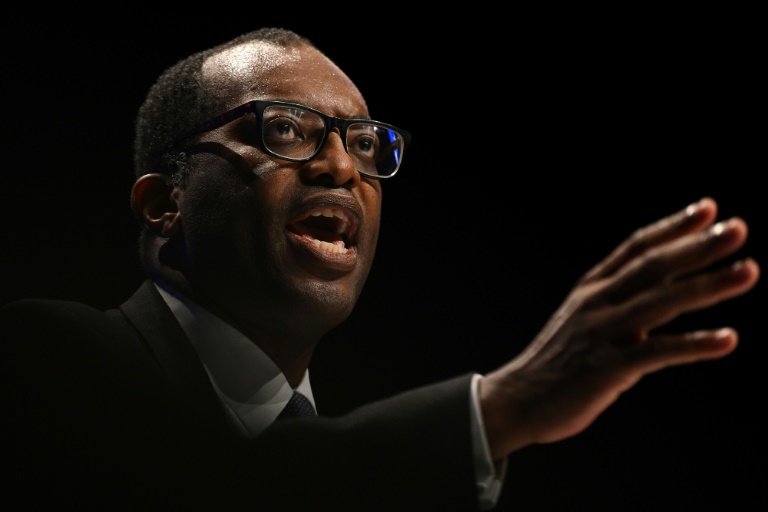
Britain’s under-fire finance minister Kwasi Kwarteng on Monday vowed to press on with his controversial economic reform plans, despite announcing a dramatic U-turn on a controversial tax cut for high earners.

The proposed cut was part of a debt-driven economic package that has bombed with the markets, the electorate and much of the ruling Conservative party.

The abrupt reversal raised questions about his and Prime Minister Liz Truss’s right-wing policy agenda, less than a month after taking power and a day after both vowed to stay the course.

“What a day. It has been tough,” Kwarteng said in a speech to the Tories’ annual conference in Birmingham, central England.

But he told delegates that “we need to focus on the task in hand”, implicitly criticising his Tory predecessors by saying there was a need to boost the economy out of its “slow, managed decline”.

“To grow the economy we really do need to do things differently,” he said.

Kwarteng pointedly avoided any specific mention of his about-face on the proposed scrapping of the 45 percent top rate of income tax.

But he insisted his and Truss’s contentious plans, which include axing a cap on bankers’ bonuses and reversing a planned rise in corporation tax, as well as a recent hike in national insurance contributions, were “sound” and “credible”.

“It will increase growth,” he added in the speech, which was delayed by an unspecified security alert at the venue. Police lifted the alert about an hour later.

– Political storm –

Earlier, Kwarteng said he had never considered resigning over the furore caused by the proposals, saying only that the decision to drop the tax cut was because it had become a “distraction”.

On the markets, the intention to pay for the cuts with billions more in extra borrowing had sent the pound tumbling to a record low against the dollar and UK government bond yields soaring.

The pound rebounded Monday as the government partially reversed course. 

Nevertheless, Kwarteng and Truss remain in the eye of a political storm, given the perceived unfairness of the package, which could yet see cuts to spending and benefits amid Britain’s worst cost-of-living crisis in generations.

As late as Sunday, the finance chief had been due to tell the conference that “we must stay the course”, according to a preview of his speech released by the Conservatives.

Truss on Sunday admitted communication errors in how the September 23 economic package had been presented, but agreed she was “absolutely committed” to abolishing the top tax rate. 

Within 24 hours, though, the 47-year-old prime minister — only in the role since September 6 — had performed one of most striking government U-turns in recent memory.

Truss told the BBC she had not discussed axing the high-earners’ tax band with her cabinet, who only seemed to learn of the reversal along with the public on Monday.

She also appeared to distance herself from the move by claiming “it was a decision that the chancellor made”, but her spokesman downplayed the comments.

“The prime minister was clear that… fiscal events are the responsibility of the chancellor — that’s all she was setting clear,” he told reporters Monday.

Out of a total tax package worth £45 billion ($50 billion), the top rate cut would have cost some £2 billion — relatively small, but outsized for its political impact.

Tory MPs who backed former finance minister Rishi Sunak — Truss’s rival in the recent Tory leadership race — had threatened to vote it down, raising the prospect of a major battle in the House of Commons.

Grant Shapps, who was refused a cabinet job by Truss, welcomed her scrapping the tax cut, which he told BBC radio had been planned with “grossly insensitive timing”.

– Credibility ‘destroyed’ –

With the U-turn, the stakes have soared for Truss as she prepares to close the party conference with a speech Wednesday.

A raft of polls have found Truss and her economic package deeply unpopular, alongside plummeting ratings for the Tories.

Some surveys showed Labour with mammoth leads of up to 33 points — its biggest since the heyday of its former prime minister Tony Blair in the late 1990s.

Labour’s finance spokeswoman Rachel Reeves said the climbdown “comes too late for the families who will pay higher mortgages and higher prices for years to come” following the recent market turmoil.

“The Tories have destroyed their economic credibility and damaged trust in the British economy,” she said.

From Yale to insurrection: Stewart Rhodes, Oath Keepers 'general'

The government calls Stewart Rhodes the “general” of a traitorous violent insurrection in Washington on January 6, 2021; his lawyers say he led a “peacekeeping force” in the riot at the US Capitol.

And his former wife called him a narcissistic “sociopath” who mythologizes his own future as “the next George Washington.”

Rhodes, 56, was at the center Monday of the first US sedition trial in decades, accused with other members of this Oath Keepers militia group of plotting the armed attack on the US Congress to block Joe Biden from becoming president.

Prosecutors say that as the leader of the Oath Keepers, the eye-patch-wearing Yale law graduate spearheaded the attack on the Capitol by supporters of then-president Donald Trump, stockpiling weapons nearby for an armed insurrection.

In an indictment, the Justice Department detailed encrypted chats in which Rhodes urged Oath Keeper members to prepare for a revolution after Trump was defeated by Biden in the November 2020 election.

“We aren’t getting through this without civil war,” he told them.

If Biden became president, he said, “It will be a bloody and desperate fight… That can’t be avoided.”

– From Yale Law to conspiracies –

Rhodes has spent years preparing to do battle with a government he views as increasingly repressive. 

He grew up in the southwest US, and joined the army after finishing high school.

But he was discharged early due to an injury in a parachuting exercise.

His former wife Tasha Adams Rhodes, with whom he had six children, says they met as he was working as a parking valet and she was teaching dance in Las Vegas.

He was also working as a firearms instructor — and lost one eye when he dropped a gun and it fired, hitting him.

In 1998 he graduated from a local university and was accepted at Yale University Law School, one of the country’s most elite institutions.

After Yale he set up a law practice in Montana, where he developed the idea for the Oath Keepers in 2009, on the premise that the federal government was increasingly encroaching on citizens’ rights including restricting gun ownership.

Followers must be willing to fight the government, he would say.

– Mainstreaming fringe ideas –

Blogging online about politics and the alleged threat of the American left, Rhodes struck a nerve among many white men with military and police backgrounds, recruiting thousands to the group.

“He showed a talent for giving fringe ideas more mainstream appeal,” wrote Mike Giglio in an Atlantic profile of Rhodes.

As the group grew, Rhodes mobilized armed, combat-suited Oath Keepers for security at Republican rallies and during social disturbances, like the riots in Ferguson, Missouri in 2014 after police shot a Black man.

“The Oath Keepers are basically a peacekeeping force,” Rhodes’ attorney Phillip Linder told the federal district court in Washington Monday. “They make themselves available to help keep peace in the streets.”

– ‘Extremely patriotic’ – 

But government prosecutor Jeffrey Nestler Monday said that text messages and recorded conversations show Rhodes planned the January 6 actions and organized his followers around them.

He depicted Rhodes outside the Capitol during the riot, constantly on his phone texting orders to his followers.

He was “like a general in the battlefield,” said Nestler. The Oath Keepers launched their fight to break through police lines into the Capitol after Rhodes texted them: “The patriots are taking matters into their own hands.”

Linder, Rhodes’ attorney, says that the government has exaggerated and taken out of context many of Rhodes’ text messages to portray his client as plotting to overthrow the government.

“Stewart Rhodes meant no harm to the capitol that day. Stewart Rhodes did not have any violent intent that day,” said Linder.

“Rhodes is extremely patriotic.. he is a constitutional expert,” he added.

More data needed to tackle systemic racism by police: UN experts

A dearth of data in many countries on the race and ethnicity of people arrested or killed by police presents a major barrier to tackling systemic racism, UN investigators warned Monday.

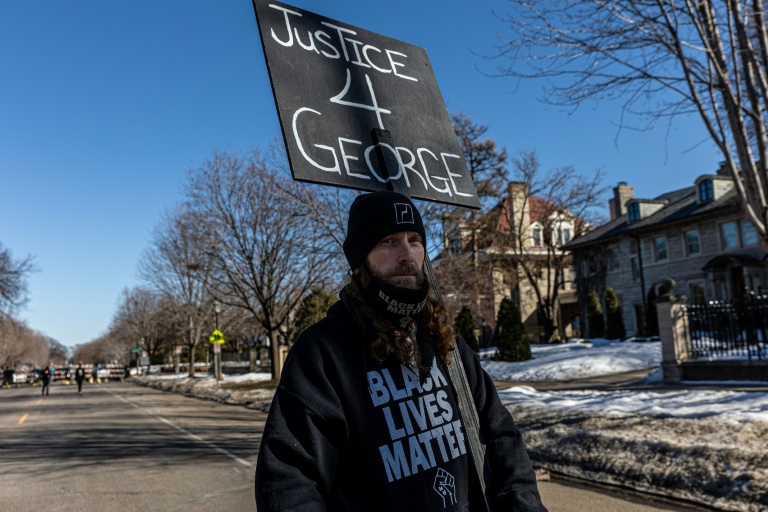
Speaking before the United Nations Human Rights Council, a group of experts appointed after the 2020 murder of George Floyd by a white US police officer insisted it was vital to make systemic racism around the world “visible”.

There is a “crucial need to collect, analyse, use and publish data, disaggregated by race or ethnic origin”, Yvonne Mokgoro, a former South African judge who heads the UN’s so-called Expert Mechanism to Advance Racial Justice and Equality in the context of Law Enforcement.

The team of three independent investigators were presenting their first report to the rights council since it appointed them last year, with a broad mandate to investigate racism by police worldwide.

Mokgoro said it was clear “racial profiling, excessive use of force, and other violations of international human rights law, during and after interactions with law enforcement officials and the criminal justice system, continue to be reported throughout the world”.

But, she warned, this “largely does not show in official statistics”.

– Must ‘become visible’ –

Mokgoro acknowledged that more data alone would not resolve “longstanding racism”.

But she said it was “an essential first step to highlight the magnitude of systemic racism against Africans and people of African descent and its manifestations in law enforcement and criminal justice”.

“It is essential that systemic racism, including its structural and institutional dimensions, become visible.”

In the United States for instance, where the killing of Floyd, a 46-year-old unarmed black man, in Minneapolis in May 2020, sparked mass protests, there is no centralised system to collect such statistics across more than 18,000 law enforcement agencies.

But some NGOs and media organisations scramble to gather the data to get an overview.

Collette Flanagan, who founded Mothers Against Police Brutality after her black son Clinton Allen was killed by police in Dallas, Texas in 2013, told the council his case was emblematic of “the current crisis in policing in the United States”.

She said a black person was “2.5 times more likely to be shot” to death by police in the United States.

Her son was unarmed, yet the white officer who shot him seven times “perceived my son as a threat”, she said.

“This officer escaped all criminal and civil accountability for killing my son.”

– ‘Dismantle racial discrimination’ –

The United States is not the only country facing this problem. 

Presenting a separate report Monday, acting UN rights chief Nada Al-Nashif provided updates on seven cases highlighted by her office last year of police-related fatalities, including Floyd’s, but also cases from Brazil, Britain, Colombia and France.

She said none of the cases had “yet been brought to a full conclusion, with those families still seeking truth, justice and guarantees of non-repetition”.

She highlighted some positive examples of efforts in various countries to act against systemic racism, but warned they largely “remain insufficient”.

US Ambassador Michele Taylor welcomed the report, and that it acknowledged “the progress, continued efforts and dedication to this issue in the United States”.

“We will continue our efforts to dismantle racial discrimination in law enforcement against people of African descent.”

Close Bitnami banner
Bitnami