US Business

Oil jumps but dollar bruised on US data

Oil prices jumped Monday on expectations of an OPEC output cut, while disappointing US data sent the dollar lower and stocks higher.

Investors have on edge over worries that rising interest rates, aimed at fighting sky-high inflation, could spark recessions.

With a key business survey flagging a slowing of the US economy, the dollar and US government bond yields moved lower as the US Federal Reserve may not need to raise interest rates as much as markets have feared to get a grip on inflation.

The Institute for Supply Management said its manufacturing index dropped 1.9 points to 50.9 percent, well below expectations and just barely above the 50-percent threshold indicating expansion.

That was the weakest pace in more than two years, and new orders fell by four percent.

Fed officials have indicated that the central bank will continue raising interest rates until inflation begins to drop, even if that means the US economy enters recession.

A slowdown means that a peak in interest rates may be close, and helped Wall Street stocks add to gains, with the Dow jumping 2.4 percent in late morning trade.

European stock indices moved higher following the US data, with Frankfurt’s DAX index ending the day 0.8 percent higher, the Paris CAC climbing 0.6 percent and London’s FTSE 100 adding 0.2 percent.

– Oil spikes before OPEC –

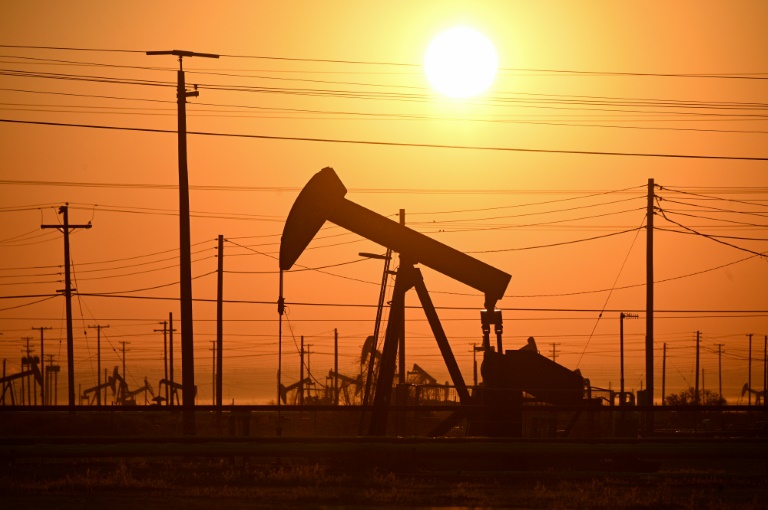
Oil prices leapt by more than five percent at one point as reports said OPEC and its allies are considering a major output cut to stem a price plunge caused by demand worries.

That stoked stubborn concerns about soaring inflation, which has been fuelled this year by sky-high energy prices after key producer Russia’s invasion of Ukraine.

“Any cut will no doubt frustrate consuming countries that are on the verge of recession after spending a year dealing with soaring energy costs on the back of the post-pandemic recovery and war in Ukraine,” said OANDA analyst Craig Erlam.

The 13 members of the Organization of the Petroleum Exporting Countries (OPEC), led by Riyadh, and their 10 partners led by Moscow will physically meet on Wednesday for the first time since March 2020.

– Sterling gains on U-turn –

The British pound bounded above $1.13 following the latest US data, and after the UK government scrapped plans to axe its top income tax rate in the wake of finance minister Kwasi Kwarteng’s debt-fuelled mini budget which helped send sterling spiralling to a record dollar low of $1.0350 one week ago.

UK gilts, or government bonds, remain supported by an emergency Bank of England intervention after yields had rocketed following the mini budget announcement.

– ‘Dicey’ sentiment –

Shares in Credit Suisse plunged to a new low in Zurich on Monday as the scandal-plagued lender sought to ease concerns about its financial health.

Its stock tumbled 11.6 percent to 3.58 Swiss francs ($3.61) before clawing back most of the ground, ending the day with a drop of 0.9 percent at 3.94 francs.

The Financial Times reported that senior executives sought over the weekend to reassure big clients and investors about the bank’s liquidity and capital position due to concerns raised about its financial strength.

“Sentiment is still pretty dicey and Credit Suisse is definitely weighing heavily today on European equities,” Markets.com analyst Neil Wilson told AFP.

“A globally systemic bank requiring to raise capital would be a major event and could certainly undermine confidence in the banking system.”

Asian equities mainly fell Monday, with Hong Kong tumbling to its lowest point in more than a decade as fears for China’s economy deepens this year’s investor rout.

– Key figures around 1530 GMT –

New York – Dow: UP 2.4 percent at 29,399.70 points

EURO STOXX 50: UP 0.7 percent at 3,342.17

London – FTSE 100: UP 0.2 percent at 6,908.76 (close) 

Frankfurt – DAX: UP 0.8 percent at 12,209.48 (close)

Paris – CAC 40: UP 0.6 percent at 5,794.15 (close)

Tokyo – Nikkei 225: UP 1.1 percent at 26,215.79 (close)

Hong Kong – Hang Seng Index: DOWN 0.8 percent at 17,079.51 (close)

Shanghai – Composite: Closed for a holiday

Pound/dollar: UP at $1.1301 from $1.1170 on Friday

Euro/dollar: UP at $0.9834 from $0.9802

Euro/pound: DOWN at 86.91 pence from 87.75 pence

Dollar/yen: DOWN at 144.32 yen from 144.74 yen

Brent North Sea crude: UP 3.8 percent at $88.41 per barrel

West Texas Intermediate: UP 4.3 percent at $82.88 per barrel

burs-rl/cdw

Kim Kardashian pays $1.26 mn for unlawful crypto promo

US reality star Kim Kardashian has agreed to pay a $1.26 million fine after unlawfully pushing a cryptocurrency on Instagram without revealing that she was paid to do so, the Securities and Exchange Commission announced Monday. 

The agency accused Kardashian, who has 331 million followers on Instagram — making her one of the top ten most followed people on the global social network — of failing to disclose that she was paid $250,000 to post about EMAX tokens, the crypto asset security being offered by EthereumMax.

The fine includes a penalty of $1 million plus $260,000, representing the amount Kardashian paid plus interest, the SEC said in a statement. She also agreed not to promote any crypto asset securities for three years.

“Are you guys into crypto????” the post, published in June of 2021, read.

“This is not financial advice but sharing what my friends just told me about the Ethereum Max token!”

SEC Chair Gary Gensler said the case was “a reminder that, when celebrities or influencers endorse investment opportunities, including crypto asset securities, it doesn’t mean that those investment products are right for all investors.”

“We encourage investors to consider an investment’s potential risks and opportunities in light of their own financial goals,” Gensler said in a statement.

– ‘Fully cooperated’ –

Reality-star-turned entrepreneur Kardashian came to fame with the US reality show “Keeping Up With the Kardashians,” which tracked the lives of her family members in Los Angeles.

The 41-year-old has steadily built her business empire in recent years — most visibly with her apparel and beauty brands — and has a net worth of $1.8 billion, according to Forbes.

She announced last month that she was branching into a new business arena with the launch of a private equity firm SKKY Partners.

“Ms. Kardashian is pleased to have resolved this matter with the SEC,” a lawyer for the star said in a statement sent to AFP.

She “fully cooperated with the SEC from the very beginning and she remains willing to do whatever she can to assist the SEC in this matter,” it said.

Kardashian “wanted to get this matter behind her to avoid a protracted dispute. The agreement she reached with the SEC allows her to do that so that she can move forward with her many different business pursuits.”

Other celebrities have been nabbed in the past by US authorities for illegally promoting cryptocurrencies, including boxer Floyd Mayweather, rap star DJ Khaled, actor Steven Seagal and rapper T.I.

In January, investors also launched a class action lawsuit against Kardashian, Mayweather and former basketball player Paul Pierce, as well as the two founders of EthereumMax, accusing them of artificially inflating the cryptocurrency’s price.

The ultra-volatile and poorly regulated crypto market has plunged in 2022.

Many central banks and financial market regulators have warned about the dangers posed by cryptocurrencies. But in the absence of a clear legislative framework, users are rarely informed when making their investments, say crypto critics.

Kim Kardashian pays $1.26 mn for unlawful crypto promo

US reality star Kim Kardashian has agreed to pay a $1.26 million fine after unlawfully pushing a cryptocurrency on Instagram without revealing that she was paid to do so, the Securities and Exchange Commission announced Monday. 

The agency accused Kardashian, who has 331 million followers on Instagram — making her one of the top ten most followed people on the global social network — of failing to disclose that she was paid $250,000 to post about EMAX tokens, the crypto asset security being offered by EthereumMax.

The fine includes a penalty of $1 million plus $260,000, representing the amount Kardashian paid plus interest, the SEC said in a statement. She also agreed not to promote any crypto asset securities for three years.

“Are you guys into crypto????” the post, published in June of 2021, read.

“This is not financial advice but sharing what my friends just told me about the Ethereum Max token!”

SEC Chair Gary Gensler said the case was “a reminder that, when celebrities or influencers endorse investment opportunities, including crypto asset securities, it doesn’t mean that those investment products are right for all investors.”

“We encourage investors to consider an investment’s potential risks and opportunities in light of their own financial goals,” Gensler said in a statement.

– ‘Fully cooperated’ –

Reality-star-turned entrepreneur Kardashian came to fame with the US reality show “Keeping Up With the Kardashians,” which tracked the lives of her family members in Los Angeles.

The 41-year-old has steadily built her business empire in recent years — most visibly with her apparel and beauty brands — and has a net worth of $1.8 billion, according to Forbes.

She announced last month that she was branching into a new business arena with the launch of a private equity firm SKKY Partners.

“Ms. Kardashian is pleased to have resolved this matter with the SEC,” a lawyer for the star said in a statement sent to AFP.

She “fully cooperated with the SEC from the very beginning and she remains willing to do whatever she can to assist the SEC in this matter,” it said.

Kardashian “wanted to get this matter behind her to avoid a protracted dispute. The agreement she reached with the SEC allows her to do that so that she can move forward with her many different business pursuits.”

Other celebrities have been nabbed in the past by US authorities for illegally promoting cryptocurrencies, including boxer Floyd Mayweather, rap star DJ Khaled, actor Steven Seagal and rapper T.I.

In January, investors also launched a class action lawsuit against Kardashian, Mayweather and former basketball player Paul Pierce, as well as the two founders of EthereumMax, accusing them of artificially inflating the cryptocurrency’s price.

The ultra-volatile and poorly regulated crypto market has plunged in 2022.

Many central banks and financial market regulators have warned about the dangers posed by cryptocurrencies. But in the absence of a clear legislative framework, users are rarely informed when making their investments, say crypto critics.

Vodafone, Hutchison in talks to merge UK ops

Vodafone on Monday confirmed it was in talks over merging its UK operations with rival Three UK, owned by Hong Kong-based CK Hutchison.

Vodafone said a combination would allow “the necessary scale to be able to accelerate the rollout of full 5G in the UK”, which has been partly hampered by Britain banning Chinese giant Huawei from involvement in the technology offering faster downloads than 4G.

Vodafone said it would have a majority 51-percent stake and CK Hutchison the remainder in a non-cash deal.

A merger would “expand broadband connectivity to rural communities and small businesses” in the UK, the statement said.

“The UK government rightly sees 5G as transformational for the economy and society and critical to the UK becoming more competitive in an increasingly digital world,” it added.

Vodafone’s share price was up about three percent in late trading on London’s FTSE 100 index, which was rising only slightly.

Susannah Streeter, senior investment and markets analyst at Hargreaves Lansdown, noted the possibility of “significant regulatory hurdles ahead for the deal, as the authorities weigh up the potential ceding ownership of more core UK infrastructure to an overseas owner”.

“Clearly much still needs to be agreed and it’s far from certain that this is a done deal, but if it is signed the joint venture with Three UK would create the biggest player in the UK mobile industry,” she added.

Biden heads to storm-hit Puerto Rico

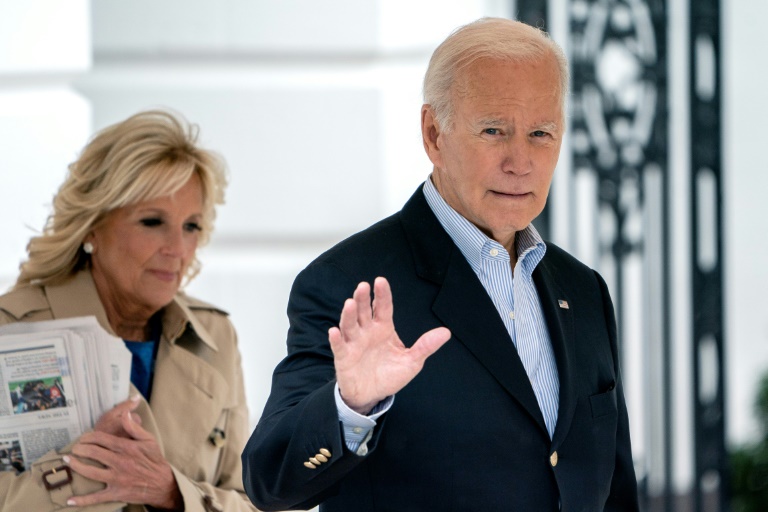
President Joe Biden headed to hurricane-ravaged Puerto Rico on Monday, where he will announce $60 million in funding to strengthen storm defences in a US territory whose people have complained of neglect after past natural disasters.

First Lady Jill Biden accompanied the president on the trip, with the couple also visiting Florida on Wednesday to see the devastating damage caused by Hurricane Ian.

Both Puerto Rico and Florida have suffered fatalities, widespread power outages, dangerous flooding and grievous property damage from the recent hurricanes — first Fiona, then Ian.

The Bidens will visit the city of Ponce on Puerto Rico’s southern coast, where they will meet with families and community leaders impacted by the storm and help pack food and other supplies for those in need.

“I’m heading to Puerto Rico because they haven’t been taken very good care of,” the president said as he departed.

“They’ve been trying like hell to catch up from the last hurricane. I want to see the state of affairs today and make sure we push everything we can.”

During the visit, Biden is to announce the new funding “to shore up levees, strengthen flood walls, and create a new flood warning system to help Puerto Rico become better prepared for future storms,” a White House official said.

Twenty-five deaths in Puerto Rico have been linked to Hurricane Fiona, according to the island’s public health department, which is still investigating how 12 of the fatalities occurred.

The entire US territory lost power and about one million people were left temporarily without drinking water, when Fiona — then a Category 1 storm — hammered the island in mid-September.

Biden declared a state of emergency for Puerto Rico on September 18.

Island residents, all US citizens, have complained of being overlooked by Washington after previous disasters, including the hit from twin hurricanes, Irma and Maria, in 2017.

Florida, where Hurricane Ian roared on land Wednesday as a Category 4 storm, is still struggling to assess the extensive damage, particularly on its southwest coast.

The confirmed death toll from Ian, one of the most powerful storms ever to hit the US mainland, has soared to at least 58 in Florida and four in North Carolina with rescuers still searching for survivors in submerged neighborhoods.

US authorities — federal, state and local — are often judged by the effectiveness of their response to such disasters.

After Hurricane Katrina devastated New Orleans and the Gulf coast, critics castigated then-president George W. Bush after photos showed him surveying damage while flying high overhead.

And after then-president Donald Trump, on a visit to Puerto Rico following storms there, took a basketball-style shot to distribute rolls of paper towels, the mayor of capital city San Juan called it “insulting” and “abominable.”

Far-right Trump backers on trial for Capitol riot 'sedition'

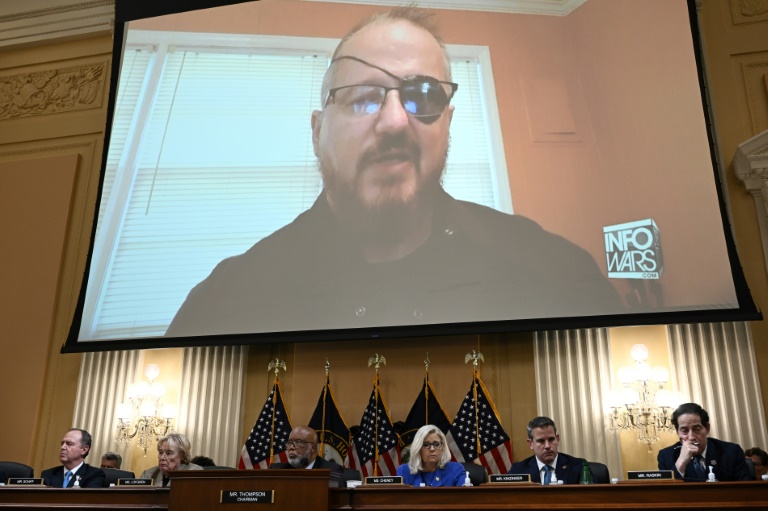
Opening arguments began on Monday in the US sedition trial of five members of the far-right Oath Keepers militia, including its founder, who joined the 2021 attack on the Capitol in Washington.

Stewart Rhodes — the eyepatch-wearing former soldier who plotted a military-style assault on the Capitol — and his followers are charged with taking up arms against the United States to keep Donald Trump in the White House, despite his election defeat.

The Oath Keepers’ attorneys are expected to argue that they believed Trump would invoke the 1807 “Insurrection Act,” deputizing them to protect the country.

That claim has raised expectations that the trial could reveal more about links between the Capitol attack and members of Trump’s administration or his personal advisors.

A jury was seated last week after Judge Amit Mehta rejected efforts by the defense to move the trial out of Washington on the grounds that residents are likely to be biased against the defendants because of the January 6, 2021 violence.

Rhodes’s attorney has also asked the judge to forbid use of terms frequently used to describe the Oath Keepers — such as “anti-government,” “organized militia,” “extremists,” “racist” and “white nationalist” — during the trial.

With a potential 20-year prison sentence, the sedition charge is the toughest yet in the prosecutions of hundreds who took part in the Capitol assault, which aimed to reverse President Joe Biden’s victory in the November 2020 election.

Four other Oath Keepers are to go on trial beginning November 29.

Rhodes, a Yale Law School graduate, and his followers conspired “to oppose by force the lawful transfer of presidential power,” according to the indictment.

At Rhodes’s direction, “they equipped themselves with a variety of weapons,” as well as combat and tactical gear, in preparation for January 6, it says.

“We aren’t getting through this without civil war,” Rhodes told the Oath Keepers in a group chat weeks before the assault on Congress, it adds.

The Oath Keepers are the first to go on trial for seditious conspiracy of the 870 people charged in the Capitol attack. 

The majority have been charged with illegally entering the Capitol, illegally disrupting a session of the legislature — the confirmation of Biden as president-elect — and assault on law enforcement officers. 

The sedition charge is rarely used by US prosecutors. The last time a conviction was obtained on the charge was against Ramzi Yousef, the planner of the 1993 World Trade Center bombing.

Members of the Proud Boys, another far-right group and key player on January 6, were also charged with seditious conspiracy in June, but their case has not gone to court yet.

US manufacturing growth slows to lowest since 2020: survey

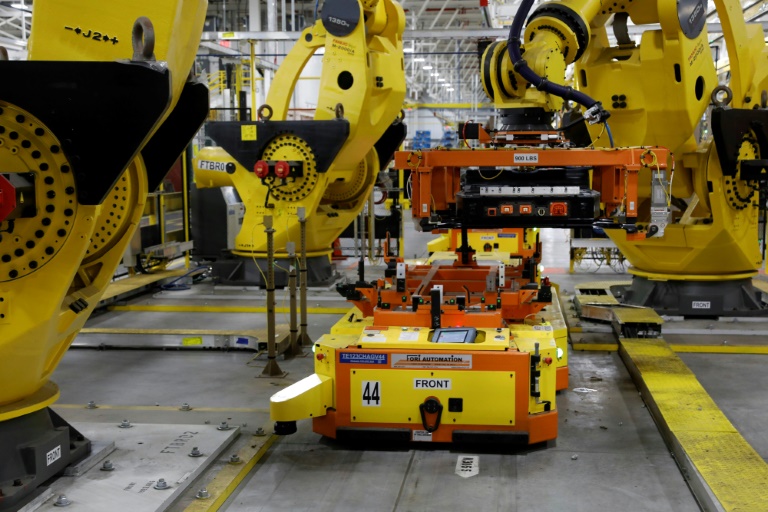
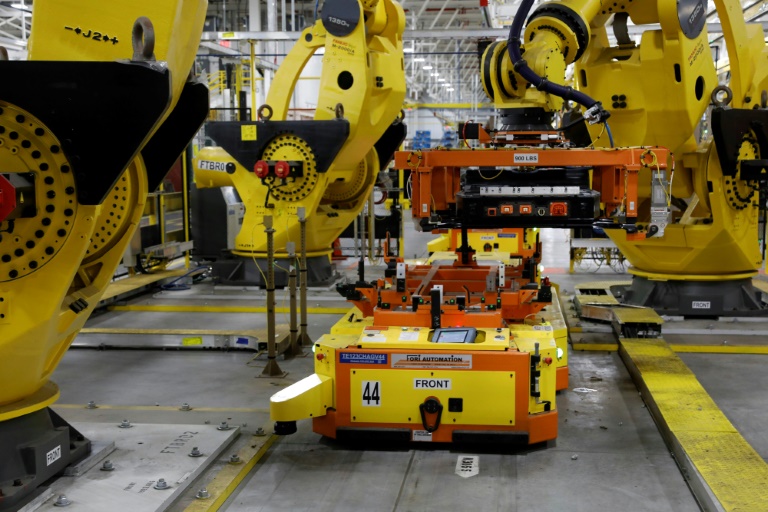
US manufacturing growth slowed in September to its weakest pace in more than two years amid a decline in orders, as well as easing price pressures, according to an industry survey released Monday.

The Institute for Supply Management said its manufacturing index dropped 1.9 points to 50.9 percent, well below expectations and just barely above the 50-percent threshold indicating expansion.

It was the weakest result since May 2020, ISM said.

“The US manufacturing sector continues to expand, but at the lowest rate since the pandemic recovery began,” ISM manufacturing survey chair Timothy Fiore said in a statement.

After companies surveyed for the past four months have reported “softening new orders rates, the September index reading reflects companies adjusting to potential future lower demand,” he said.

The new orders index fell sharply, sinking into contraction territory at 47.1 percent, though production edged up slightly, the report said.

The prices index also fell, still showing rising prices at 51.7 percent, but posting the lowest reading since June 2020.

Seven of the industries surveyed contracted compared to August, while nine reported growth.

“Concerns of global economic slowdown are growing, and (we are) experiencing some customers pulling back orders,” a chemical products firm said.

Several others pointed to ongoing supply chain issues hampering output.

Factory employment slowed sharply, and while Fiore said there was an uptick in hiring freezes, “Markedly absent from panelists’ comments was any large-scale mentioning of layoffs; this indicates companies are confident of near-term demand.”

US manufacturing growth slows to lowest since 2020: survey

US manufacturing growth slowed in September to its weakest pace in more than two years amid a decline in orders, as well as easing price pressures, according to an industry survey released Monday.

The Institute for Supply Management said its manufacturing index dropped 1.9 points to 50.9 percent, well below expectations and just barely above the 50-percent threshold indicating expansion.

It was the weakest result since May 2020, ISM said.

“The US manufacturing sector continues to expand, but at the lowest rate since the pandemic recovery began,” ISM manufacturing survey chair Timothy Fiore said in a statement.

After companies surveyed for the past four months have reported “softening new orders rates, the September index reading reflects companies adjusting to potential future lower demand,” he said.

The new orders index fell sharply, sinking into contraction territory at 47.1 percent, though production edged up slightly, the report said.

The prices index also fell, still showing rising prices at 51.7 percent, but posting the lowest reading since June 2020.

Seven of the industries surveyed contracted compared to August, while nine reported growth.

“Concerns of global economic slowdown are growing, and (we are) experiencing some customers pulling back orders,” a chemical products firm said.

Several others pointed to ongoing supply chain issues hampering output.

Factory employment slowed sharply, and while Fiore said there was an uptick in hiring freezes, “Markedly absent from panelists’ comments was any large-scale mentioning of layoffs; this indicates companies are confident of near-term demand.”

OPEC+ tipped to make big cut in oil output

Major oil-producing nations led by Saudi Arabia and Russia are expected to make this week their biggest output cut since the start of the Covid pandemic in efforts to buttress prices.

Energy prices soared after Russia invaded Ukraine earlier this year, pushing inflation to decades-high levels that have put pressure on economies across the world.

But crude prices have fallen in recent months on concerns over demand amid a slowdown in the global economy.

The 13 members of the Organization of the Petroleum Exporting Countries (OPEC), led by Riyadh, and their 10 allies headed by Moscow will hold on Wednesday their first in-person meeting at the group’s headquarters in Vienna since March 2020.

Collectively known as OPEC+, the alliance drastically slashed output by almost 10 million barrels per day in April 2020 to reverse a massive drop in crude prices caused by Covid lockdowns.

OPEC+ began to raise production last year after the market improved — output returned to pre-pandemic levels this year, but only on paper as some members struggled to meet their quotas.

The group agreed last month on a slight cut of 100,000 bpd from October, the first in more than a year.

– One million cut –

Analysts now expect — and financial media have reported — that OPEC+ will discuss taking one million bpd out of the market from November at Wednesday’s meeting.

“There’s been plenty of rumours about how the alliance will respond to the deteriorating economic outlook and lower prices,” said Craig Erlam, analyst at trading platform OANDA.

“A sizeable cut now looks on the cards, the question is whether it will be large enough to offset the demand destruction caused by the impending economic downturn,” he added.

After soaring close to $140 per barrel in the aftermath of Russia’s invasion of Ukraine, oil prices have dropped below the $90 mark.

According to the UBS bank, a cut of at least 500,000 bpd would be necessary to stop the price plunge.

In anticipation of Wednesday’s meeting, oil prices jumped on Monday, with Brent North Sea crude, the international benchmark, rising by almost five percent to reach $89.15 — still far from its March peak.

– Ignoring the West –

Stephen Brennock, an analyst with PVM Energy, said OPEC+ would “want to reassert its influence” when the group meets this week.

“After all, the producer group has lost control over the oil market in recent weeks,” he said.

It remains to be seen how the United States and other major oil consumers will react to any OPEC+ decision to slash output.

Consumer countries have pushed for OPEC+ to open taps more widely to bring down prices — calls which the group has largely ignored.

US President Joe Biden made a controversial trip to Saudi Arabia in July in part to convince the kingdom to loosen the production taps, meeting Crown Prince Mohammed bin Salman despite his promise to make Riyadh a “pariah” following the 2018 killing of journalist Jamal Khashoggi.

“OPEC will not be making any friends among Western leaders, especially petroleum importers whose economies and currencies are ravaged by higher oil prices due to a deterioration in the trade balance,” said Stephen Innes, an analyst with SPI Asset Management, ahead of Wednesday’s meeting.

Observers have cast doubt how much more OPEC+ could possibly be pumping with some of its members struggling to meet quotas.

Bjarne Schieldrop, chief commodities analyst at SEB research group, predicted it would be “very easy for the group to implement cuts given that most members are stretched to the limit of what they can produce”.

He said Saudi Arabia was currently producing 11 million barrels per day.

“It hasn’t maintained such a high production more than twice in history and then only for 1-2 months,” he said.

Oil jumps, European stocks wobble on Credit Suisse fears

Oil prices jumped Monday on expectations of an OPEC output cut, while European stocks wobbled on fears over the health of Swiss bank Credit Suisse. 

Investors are already on edge over worries that rising interest rates, aimed at fighting sky-high inflation, could spark recessions.

The British pound bounced above $1.12 after the UK government scrapped plans to axe its top income tax rate, after a debt-fuelled budget had sent sterling spiralling to a record dollar low one week ago.

– Oil spikes before OPEC –

Oil prices leapt by more than five percent as reports said OPEC and its allies are considering a major output cut to stem a price plunge caused by demand worries.

That stoked stubborn concerns about soaring inflation, which has been fuelled this year by sky-high energy prices after key producer Russia’s invasion of Ukraine.

“Any cut will no doubt frustrate consuming countries that are on the verge of recession after spending a year dealing with soaring energy costs on the back of the post-pandemic recovery and war in Ukraine,” said OANDA analyst Craig Erlam.

The 13 members of the Organization of the Petroleum Exporting Countries (OPEC), led by Riyadh, and their 10 partners led by Moscow will physically meet on Wednesday for the first time since March 2020.

– ‘Dicey’ sentiment –

Shares in Credit Suisse plunged to a new low in Zurich on Monday as the scandal-plagued lender sought to ease concerns about its financial health.

Its stock tumbled 11.60 percent to 3.58 Swiss francs ($3.61) before clawing back ground to 3.78 francs, down more than five percent.

The Financial Times reported that senior executives sought over the weekend to reassure big clients and investors about the bank’s liquidity and capital position due to concerns raised about its financial strength.

“Sentiment is still pretty dicey and Credit Suisse is definitely weighing heavily today on European equities,” Markets.com analyst Neil Wilson told AFP.

“A globally systemic bank requiring to raise capital would be a major event and could certainly undermine confidence in the banking system.”

AvaTrade analyst Naseem Aslam said that: “The sad reality is that if there is something wrong with Credit Suisse, then we have a major issue as this is a gigantic institute, and the domino effect will be unbearable.”

– Sterling gains on U-turn –

The pound rallied briefly after UK finance minister Kwasi Kwarteng made a major U-turn by scrapping a controversial plan to axe the top income tax rate.

The cut was part of a controversial mini-budget unveiled by Kwarteng 10 days ago, which had sent sterling spinning to a record low of $1.0350. 

UK gilts, or government bonds, remain supported by an emergency Bank of England intervention after yields had rocketed following the mini budget announcement.

Wall Street’s main stock indices opened higher, with the Dow climbing 1.2 percent.

Asian equities mainly fell Monday, with Hong Kong tumbling to its lowest point in more than a decade as fears for China’s economy deepens this year’s investor rout.

The Hang Seng Index shed 0.83 percent, or 143.32 points, to close at 17,079.51. 

But crucially it crossed below the 17,000 level in the afternoon, touching a nadir not seen since October 2011 and the aftermath of the global financial crash and during the eurozone debt crisis.

– Key figures around 1330 GMT –

London – FTSE 100: DOWN 0.2 percent at 6,880.56 points 

Frankfurt – DAX: UP 0.3 percent at 12,150.08

Paris – CAC 40: DOWN less than 0.1 percent at 5,757.95

EURO STOXX 50: DOWN 0.2 percent at 3,324.27

New York – Dow: UP 1.2 percent at 29,063.74

Tokyo – Nikkei 225: UP 1.1 percent at 26,215.79 (close)

Hong Kong – Hang Seng Index: DOWN 0.8 percent at 17,079.51 (close)

Shanghai – Composite: Closed for a holiday

Pound/dollar: UP at $1.11 from $1.1170 on Friday

Euro/dollar: DOWN at $0.9774 from $0.9802

Euro/pound: DOWN at 86.98 pence from 87.75 pence

Dollar/yen: UP at 144.87 yen from 144.74 yen

Brent North Sea crude: UP 5.1 percent at $89.50 per barrel

West Texas Intermediate: UP 5.9 percent at $84.68 per barrel

burs-rl/lth

Close Bitnami banner
Bitnami