US Business

Tesla says deliveries increased in Q3

New vehicle deliveries by Tesla increased in the third quarter, beating the previous three months during which its Chinese factory was shuttered for multiple weeks, the US electric automaker announced Sunday.

Between July and September, Tesla delivered a total of 343,380 vehicles around the world, the company led by Elon Musk said in a statement.

That represents an increase of 43 percent over the same period last year, and 35 percent more than the second quarter of 2022.

While the Q3 results show a return to growth for Tesla deliveries, the total number was at the very bottom end of analyst estimates, which were between 343,000 and 370,000.

The company said it was facing headwinds with regard to “vehicle transportation capacity,” which it hoped to resolve with better distribution among its factories — including recently opened sites in Berlin and Austin, Texas.

Wedbush Securities analyst Dan Ives described the quarter as “nothing to write home about” in a note to investors, while the market would likely be “disappointed by the softer delivery number in 3Q.”

“That said, we view this more of a logistical speed bump rather than the start of a softer delivery trajectory,” he added.

Tesla has managed to increase deliveries every quarter since the beginning of the pandemic, with the exception of Q2 this year, when the company was forced to close its Chinese factory.

Tesla also reported an increase in auto output, with 365,923 vehicles produced in the third quarter — 54 percent more than the same period last year, though a pace that would likely prevent it from reaching 1.5 million vehicles total for the year, as Musk had estimated in April.

The company plans to release its full quarterly results on October 19.

Paramount's gruesome 'Smile' tops N.America box office

New psychological horror film “Smile” has Paramount executives beaming after topping the North American box office with an estimated $22 million in weekend ticket sales, industry watcher Exhibitor Relations reported Sunday.

The film is the disturbing tale of a therapist (Sosie Bacon, daughter of actors Kevin Bacon and Kyra Sedgwick) whose grasp on reality begins to slip after she witnesses a shocking and gruesome event involving a patient.

“This is an excellent opening, the kind that launches a new horror series,” said analyst David A. Gross of Franchise Entertainment Research. Such horror films, he noted, tend to have low budgets but loyal audiences — two things studios love.

Indeed, another psychological horror film, Warner Bros.’ “Don’t Worry Darling,” placed second for the Friday-through-Sunday period, pulling in $7.3 million.

With Olivia Wilde acting and directing a cast that includes Florence Pugh, Chris Pine and pop icon Harry Styles, the film was last weekend’s Number One.

In third, also down one spot, was Sony’s history-inspired “The Woman King,” at $7 million. Oscar winner Viola Davis stars as the leader of an all-female army of African warriors.

Fourth place went to Universal’s new release “Bros,” at $4.8 million. Gross said reviews for the movie — a rare gay romantic comedy from a major Hollywood studio — were “outstanding” thanks to its “knowing and relatable” humor. Billy Eichner co-wrote and stars in the film.

And in fifth was the re-release of 20th Century’s 2009 blockbuster “Avatar,” at $4.7 million. The studio is hoping the original will help build interest in a high-budget ($250 million) sequel due in December, “Avatar: The Way of Water.” 

Rounding out the top 10 were:

“Ponniyin Selvan: Part One” ($4.1 million)

“Barbarian” ($2.8 million)

“Bullet Train” ($1.4 million)

“DC League of Super-Pets” ($1.3 million)

“Top Gun: Maverick” ($1.2 million)

Stay or go? Hard choice for Florida islanders devasted by Ian

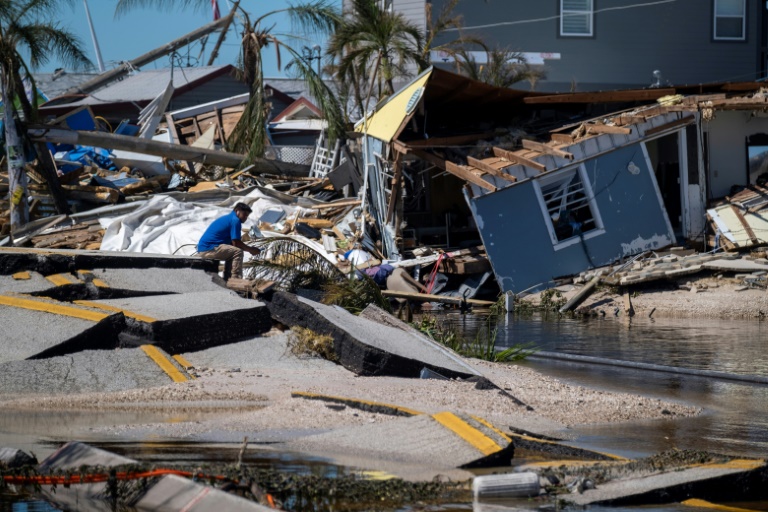
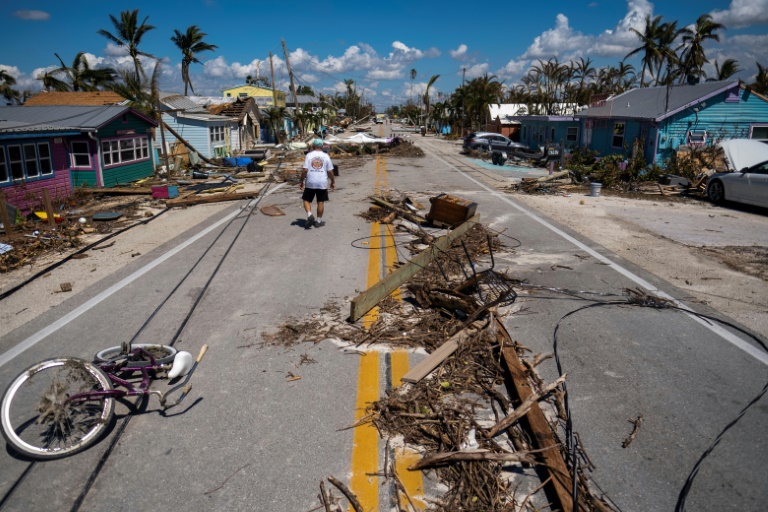
Karen Pagliaro walks down Matlacha’s main street, dodging downed trees, debris and abandoned vehicles, unsure where to go in the small island town cut off after Hurricane Ian damaged bridges linking it to mainland Florida.  

“We feel kind of forgotten,” says the 50-year-old teacher, who lost her home to the storm. “We thought they’d send in help, water and supplies and things, and we were told no, just get off.”

Until Wednesday, Matlacha was a small paradise in southwest Florida.

The fishing village of 800 people across two islets was dotted with colorful wooden houses built around the wide street. It was a place to enjoy the sea, good weather, seafood restaurants and small art galleries. 

The hurricane changed everything. 

Three days after Ian hit, the Coast Guard, firefighters and citizens from nearby towns are still coming by boat to rescue the last residents who were trapped there after refusing to evacuate. 

Other residents, those who did leave the island, are making the journey in the opposite direction from the mainland to check on the damage to their homes. 

Christian Lopez watches the jetty as the emergency services evacuate people — but he has no intention of leaving, despite losing his home.  

“I’d rather stay here than go somewhere else and be on the street. Here at least we have a little roof and we are going to try to fix up the trailer where we live,” says the 25-year-old. 

– ‘I never want to come back’ –

At the other end of Matlacha, the main street is cut off by a huge crevasse that people have to cross thanks to a makeshift bridge made of a metal board.    

Dozens of stunned and weary people walk somberly about, taking in the devastation. Most of them share the same uncertainty of not knowing what to do or where to go. 

“I don’t have a plan,” says John Lynch, sounding resigned. The 59-year-old’s house is sinking into the sea and he is preparing to leave. 

“We’ve been here for 25 years… It’s heartbreaking because this is where we plan on living for the rest of our lives.”  

Karen Pagliaro doesn’t know what she is going to do either. She has nowhere to go. The school where she works is temporarily closed because of hurricane damage. 

What is clear to her is that she wants to return to live in Matlacha.  “It’s our beloved city and we love it here,” she says.  

Near the pier, Jim Bedra doesn’t share that sentiment. The septuagenarian is about to leave town with his wife, Kathy, and their dog, Luna, on a Coast Guard boat.   

Last week he wanted to evacuate the island with Kathy and their 31-year-old son, but the two convinced him to stay where they had lived since 2013.  

He no longer has a home and his voice cracks at the thought. “We are going to stay in a shelter, I imagine,” says Bedra, who wants to return to his safely landlocked home state of Ohio. 

“I never want to come back here,” he says before boarding the boat for the mainland. 

“This is not the retirement we looked for.”

ma/st/bbk

Thousands march in Canada in solidarity with Iran protests

Several thousand people marched in Montreal and other Canadian cities Saturday in solidarity with protests sparked by the death of Mahsa Amini in the custody of Iran’s notorious morality police.

A wave of street violence has rocked Iran since Amini, 22, died days after her arrest for allegedly failing to observe the Islamic republic’s strict dress code for women.

Protests were held across the country for a 15th consecutive night on Friday despite a bloody crackdown that rights groups said has left more than 75 people dead.

Tens of thousands have also come out for solidarity rallies in several Canadian cities, including Vancouver, Toronto and the capital Ottawa.

A protest also took place Saturday in the US capital Washington where hundreds of members of the Kurdish community, some bearing placards calling for regime change in Tehran, gathered outside the White House gates.

In Canada, public broadcaster CBC showed images from Toronto on Saturday of motorists honking their support for demonstrators lining a five-kilometer (three-mile) stretch of road, wearing “Justice for Mahsa Amini” t-shirts and waving Iranian flags on the end of hockey sticks.

In Montreal, several women cut their hair as a crowd of more than 10,000 waved placards that read “Justice” and “No to Islamic Republic,” while chanting “Say her name. Say her name.”

“It was for the Iranian women who are fighting for their freedom, for their lives in Iran,” a 30-year-old expatriate who only gave her name as Sin told AFP after chopping off her long dark locks.

She described cutting off her hair that flowed almost to the middle of her back as “nothing compared to” what women in Iran have endured. 

“This is the least we can do to support my country, my women, my people in Iran who are under repression,” she said.

March co-organizer Nima Machouf, 57, added it was important to “be a voice for people in Iran and carry their message” to the world.

Several demonstrators called for regime change in Tehran, and for Canada to increase sanctions.

Ottawa has already applied sanctions over Iran’s nuclear program and Prime Minister Justin Trudeau announced a new round Monday against dozens of Iranian officials.

Reza, 42, came with his family, including his little girl and echoed the sentiment. “If we remain silent, what will we say to other generations?” he commented.

UK's Truss admits tax cuts misstep at start of tense Tory conference

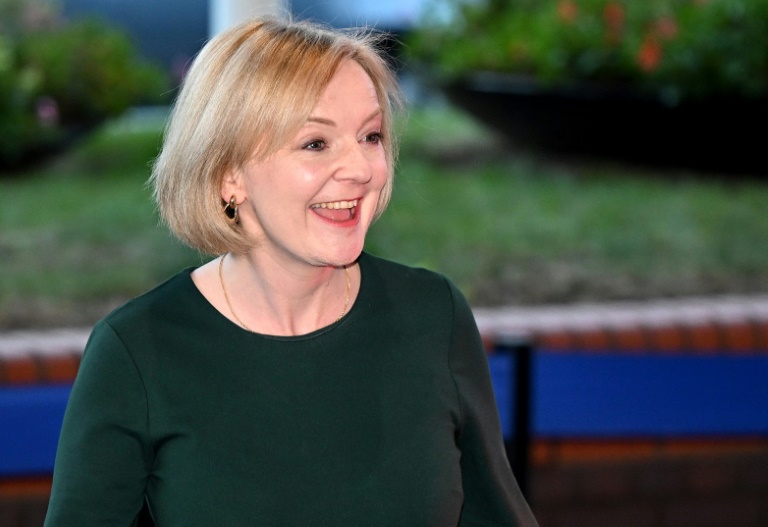
UK Prime Minister Liz Truss on Sunday conceded she should have better prepared Britain for her recent debt-driven mini-budget, which slashed taxes and sparked market turmoil, as her restive ruling Tories kick off their annual conference.

Less than a month into the job but already mired in a deep crisis, the new Tory leader insisted the controversial plans would return Britain to economic growth, as it grapples with decades-high inflation and imminent recession.

With the Conservative party faithful gathering for four days in Birmingham, Truss also sought to reassure critics she will reduce the extra government borrowing earmarked to fund the tax cuts for the wealthiest.

“I do stand by the package we announced… but I do accept we should have laid the ground better there,” Truss told the BBC in her first live TV appearance since the contentious proposals were unveiled on September 23.  

“We have a clear plan moving forward both to deal with the energy crisis and to deal with inflation, but also to get the economy growing,” she added, while also vowing to curb government debt “over the medium term”.

– ‘Under a bus’ –

Opposition parties, much of the public and even Conservative MPs — notably backers of her defeated leadership rival Rishi Sunak — are aghast at the mini-budget announced by finance minister Kwasi Kwarteng.

It went further than many had expected, abolishing the top rate of income tax and lifting a cap on bankers’ bonuses.

Markets tanked in response, and the Bank of England staged an emergency intervention to bail out embattled pension funds, setting the stage for a likely fractious annual conference.

Truss revealed on Sunday she had not discussed axeing high-earners’ 45-percent tax rate with her cabinet, and appeared to distance herself from the politically toxic move by claiming “it was a decision that the chancellor made”.

That prompted an immediate rebuke from erstwhile Tory MP ally Nadine Dorries, who accused her of “throwing (Kwarteng) under a bus on the first day of conference”.

Appearing on the BBC immediately after Truss, Conservative lawmaker Michael Gove was one of several Tories to express alarm at the plans.

He branded them “profoundly” problematic and said there would need to be “a course correction”.

– Poll rout –

Reports suggest some Tory MPs could join opposition parties’ attempts to block aspects of the mini-budget in parliament.

Meanwhile concerns are growing of a return to government austerity measures, after cabinet minister Simon Clarke warned on Saturday of the “very large welfare state” and need to “trim the fat”.

Critics argue Truss — elected leader by just 81,000 party members after the summer-long leadership contest — has no mandate to reimpose the type of swingeing cuts seen under the Conservative-led coalition government of 2010-2015.

During the campaign, the 47-year-old insisted she was “not planning public spending reductions”, but failed to reiterate that stance on Sunday.

A raft of polls have found Truss and her economic package deeply unpopular, alongside plummeting ratings for the Tories.

Some surveys showed Labour with mammoth leads of up to 33 points — its biggest since the heyday of its former prime minister Tony Blair in the late 1990s.

Echoing Blair, Labour leader Keir Starmer insists his party now represents mainstream UK voters.

Truss may at least take some relief from reports that Sunak and former prime minister Boris Johnson will stay away from Birmingham.

– ‘Decadence’ –

But plenty of critics remain.

Hundreds of protesters angry at the government’s handling of the worsening cost-of-living crisis massed in Birmingham on Sunday, after mass demonstrations in London and elsewhere the previous day.

“I’m here because this is the worst government we’ve had in my lifetime — and I’m nearly 73,” retired teacher Jane Scott told AFP at the protest in the city’s Victoria Square.

As various industries stage nationwide strikes this year, rail union leader Mick Lynch joined the rally, branding the situation “a class struggle”.

“We’ve seen the decadence and the corruption of the ruling class in this country,” he told attendees chanting “Tax the rich, not the poor. We won’t take it any more” and waving “Tories out” placards.

Inside the conference, the programme has been pared back to eliminate some of its fringe partying following the September 8 death of Queen Elizabeth II -– who appointed Truss only two days before she died. 

Kwarteng is due to address the main floor on Monday, before Truss closes it with the leader’s keynote speech on Wednesday.

Stay or go? Hard choice for Florida islanders devasted by Ian

Karen Pagliaro walks down Matlacha’s main street, dodging downed trees, debris and abandoned vehicles, unsure where to go in the small island town cut off after Hurricane Ian damaged bridges linking it to mainland Florida.  

“We feel kind of forgotten,” says the 50-year-old teacher, who lost her home to the storm. “We thought they’d send in help, water and supplies and things, and we were told no, just get off.”

Until Wednesday, Matlacha was a small paradise in southwest Florida.

The fishing village of 800 people across two islets was dotted with colorful wooden houses built around the wide street. It was a place to enjoy the sea, good weather, seafood restaurants and small art galleries. 

The hurricane changed everything. 

Three days after Ian hit, the Coast Guard, firefighters and citizens from nearby towns are still coming by boat to rescue the last residents who were trapped there after refusing to evacuate. 

Other residents, those who did leave the island, are making the journey in the opposite direction from the mainland to check on the damage to their homes. 

Christian Lopez watches the jetty as the emergency services evacuate people — but he has no intention of leaving, despite losing his home.  

“I’d rather stay here than go somewhere else and be on the street. Here at least we have a little roof and we are going to try to fix up the trailer where we live,” says the 25-year-old. 

– ‘I never want to come back’ –

At the other end of Matlacha, the main street is cut off by a huge crevasse that people have to cross thanks to a makeshift bridge made of a metal board.    

Dozens of stunned and weary people walk somberly about, taking in the devastation. Most of them share the same uncertainty of not knowing what to do or where to go. 

“I don’t have a plan,” says John Lynch, sounding resigned. The 59-year-old’s house is sinking into the sea and he is preparing to leave. 

“We’ve been here for 25 years… It’s heartbreaking because this is where we plan on living for the rest of our lives.”  

Karen Pagliaro doesn’t know what she is going to do either. She has nowhere to go. The school where she works is temporarily closed because of hurricane damage. 

What is clear to her is that she wants to return to live in Matlacha.  “It’s our beloved city and we love it here,” she says.  

Near the pier, Jim Bedra doesn’t share that sentiment. The septuagenarian is about to leave town with his wife, Kathy, and their dog, Luna, on a Coast Guard boat.   

Last week he wanted to evacuate the island with Kathy and their 31-year-old son, but the two convinced him to stay where they had lived since 2013.  

He no longer has a home and his voice cracks at the thought. “We are going to stay in a shelter, I imagine,” says Bedra, who wants to return to his safely landlocked home state of Ohio. 

“I never want to come back here,” he says before boarding the boat for the mainland. 

“This is not the retirement we looked for.”ma/st/bbk

Venezuela frees 7 Americans in swap for Maduro wife's nephews

Caracas on Saturday freed seven detained Americans — including five oil executives — in exchange for the release of two nephews of Venezuela’s first lady who were jailed in the United States for drug trafficking.

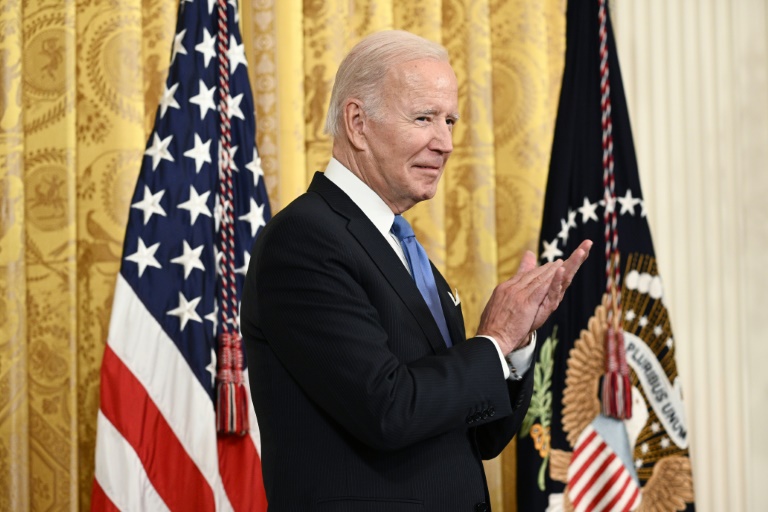
President Joe Biden issued the announcement that the Americans were on their way home — and a senior official in his administration confirmed shortly afterward that the US leader had made the “painful decision” to greenlight the prisoner swap to secure their freedom.

“Today, after years of being wrongfully detained in Venezuela, we are bringing home Jorge Toledo, Tomeu Vadell, Alirio Zambrano, Jose Luis Zambrano, Jose Pereira, Matthew Heath, and Osman Khan,” Biden said in a statement.

The negotiated release of “two young Venezuelans” held in the United States was confirmed in a near-simultaneous statement by Caracas — whose relations with Washington have been severely strained for years.

While Venezuelan authorities did not name the pair, they were identified by the senior US official as Francisco Flores de Freitas and his cousin Efrain Antonio Campos Flores — both nephews of President Nicolas Maduro’s wife, Cilia Flores.

“As a result of various conversations held since March 5 with representatives of the government of the United States, the release of two young Venezuelans unjustly imprisoned in that country has been achieved,” said the communique from Caracas.

Arrested in 2015 in a US sting operation in Haiti, the cousins were sentenced two years later to 18 years in prison for plotting to smuggle 800 kilos (1,760 pounds) of cocaine into the United States. 

The Venezuelan government says they were framed.

It became clear in negotiations that the release of the two Venezuelans, “sometimes referred to as the ‘narco nephews’ due to their relationship with Nicolas Maduro’s wife, was essential to securing the release of these Americans,” a senior US administration official told reporters.

“The president made a tough decision, a painful decision, to offer something the Venezuelans have actively sought” in the months-long swap negotiations, the official added.

However Venezuelan opposition leader Juan Guaido, who the United States recognizes as interim president of Venezuela, said the prisoner exchange was only further “proof” that “a criminal regime operates in Venezuela, linked to drug trafficking.”

– Oil executives freed –

Five of the seven freed Americans were executives of the Citgo oil corporation, detained in 2017 while on a business trip to the South American country and accused of corruption.

Citgo is the US subsidiary of Venezuela’s state oil company PDVSA.

The Citgo employees — former company president Pereira, along with Vadell, Toledo, and the Zambrano’s — each had been sentenced to more than 13 years in prison.

The other two Americans freed — Heath and Khan — were arrested separately.

“All seven of these Americans are in stable health,” and Biden has spoken with each of them, the administration official said.

They said the exchange took place Saturday “in a country between Venezuela and the United States.”

“A plane landed from our side, carrying those two — and a plane landed that departed from Venezuela carrying the seven Americans,” the official said.

“And then the passengers departed on different planes from the ones they came in on.”

Biden in his statement vowed his “unflinching commitment to keep faith with Americans held hostage and wrongfully detained all around the world.”

The United States had long contended that its seven nationals were held on spurious charges. State Department spokesman Ned Price referred to them a year ago as “political pawns.”

Relations between Washington and Caracas have been at rock bottom for years. The United States is one of around 60 countries that refused to recognize Maduro as the legally elected president after a widely disputed 2018 election.

But Russia’s invasion of Ukraine — and the pressure it placed on global energy supplies — brought behind-the-scenes efforts to engineer at least a minimal warming with Venezuela, a major oil producer.

A high-level US delegation traveled to Caracas in March to meet with Maduro in talks some analysts saw as a possible turning point, and which Maduro described as “respectful, cordial and diplomatic.”

Following that meeting, Caracas had previously freed two Citgo employees.

On Saturday, the senior administration official said “tough negotiations” led to the Americans’ release. “We’ve been raising their cases with Venezuelans for months now.”

Qatar races to ready luxury and budget rooms for World Cup

Fifty days before the World Cup kicks off in Qatar, workers are pouring concrete and hammering through the night to ready luxury hotels and bargain apartments for a million or more football fans.

Hundreds of migrants are labouring inside the 211 metre (696 feet) high Katara Towers, dramatically shaped like intertwined scimitar swords, where VIP guests of world football’s governing body FIFA will stay during the tournament.

The wealthiest will pay thousands of dollars a night for rooms with marble wine cellars and a lobby with one of the world’s biggest chandeliers.

Yet mountains of sand sit on the steps and some of the smoked glass windows are yet to be installed at this landmark on the Lusail seafront close to the stadium that will host the final.

“Everyone is working around the clock,” said one engineer on the project, speaking on condition of anonymity.

“It will be touch and go whether everything is installed to suit people paying so much,” this expert told AFP. 

A spokesperson for the Accor group, which will run the Fairmont and Raffles hotels in Katara Towers, insisted they would be ready for “FIFA guests” during the World Cup and then officially open after the tournament.

– $50,000 a night chalet –

Frenzied work is being carried out across Doha.

Forty kilometres (25 miles) away in Barwa Barahat Al Janoub, another army of labourers works under floodlights at night and scorching sunlight in the day, to ready apartments for fans paying $84 a night for a steel bed in a shared room.

The Barwa complex, out in the semi-desert, is expected to house more than 7,500 World Cup fans and will later be used for the thousands of foreign workers who keep Qatar’s oil- and gas-fuelled economy moving. 

A source on the project — which is 10 kilometres from a metro station — said that hundreds of rooms still need to be finished and that workers were engaged in “a furious race against time”.

A spokesperson for the Qatar organising committee said: “All of the accommodation options at the FIFA World Cup 2022 will be ready in good time before fans, teams and officials arrive in Qatar for the tournament.” 

A “comfortable inventory” exists for teams and fans, this spokesperson added.

Positioned at opposite extremes, the sword-shaped towers and austere workers’ rooms will play key roles in housing supporters of the 32 nations taking part in the World Cup from November 20.

Organisers say that more than one million fans will visit and that 130,000 rooms will be usable in hotels, apartments, cruise ships and desert tents.

But some supporters have already complained about prices and the availability of rooms.

Other Gulf cities, especially Dubai, are reporting a World Cup boom driven by fans who are reluctant to stay in Qatar, in part also due to perceptions — disputed by Doha — that respect for LGBTQ rights and alcohol will be in short supply. 

In Doha port there will be three cruise ships that can handle up to 13,000 people paying between $179 and $800 a night.

For $423 a night some supporters will be in traditional — but air conditioned — tents on a beachfront at Al Khor, north of Doha, with en-suite bathrooms, flat screen televisions and other luxury trappings.

One thousand bedouin-style tents are also being put up where fans can experience Qatari-style camping without air conditioning. Organisers have not announced the price.

Some Qatari landlords are trying to cash in on the World Cup, demanding $4,000-plus a night for Doha apartments. One two-bedroom chalet is advertised on booking.com at nearly $50,000 a night.

While 80 percent of Doha’s 30,000 hotel rooms are reserved by FIFA, some open market suites are being advertised at $5,500 a night.

“There is a lot of negotiating going on over prices,” said one Doha travel executive.

Nasser Al-Khater, chief executive of the World Cup Qatar organisers, stressed in a TV interview this week that official accommodation was being subsidised to keep prices down.

“The private sector also provides housing units and they have the right to determine the price they see suitable,” he said.

Germany builds new gas terminals to succeed Russian pipelines

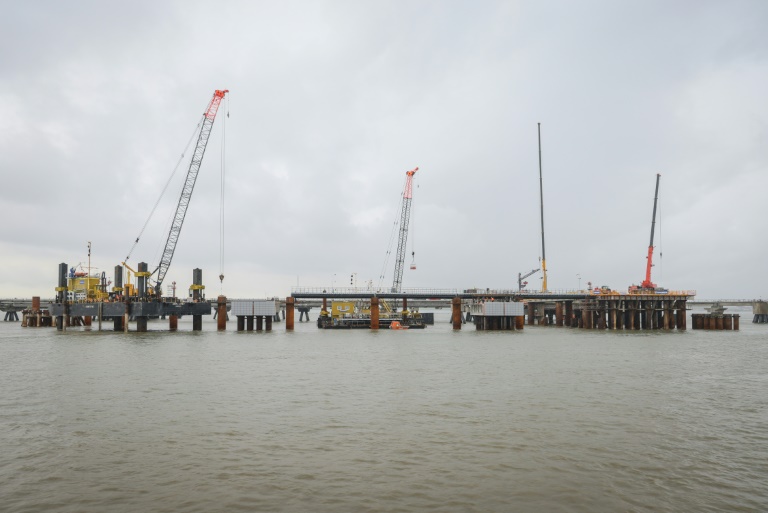
Germany’s most strategically important building site is at the end of a windswept pier on the North Sea coast, where workers are assembling the country’s first terminal for the import of liquefied natural gas (LNG).

Starting this winter, the rig, close to the port of Wilhelmshaven, will be able to supply the equivalent of 20 percent of the gas that was until recently imported from Russia.

Since its invasion of Ukraine, Moscow has throttled gas supplies to Germany, while the Nord Stream pipelines which carried huge volumes under the Baltic Sea to Europe were damaged last week in what a Danish-Swedish report called “a deliberate act.”

In the search for alternative sources, the German government has splashed billions on five projects like the one in Wilhelmshaven.

Altogether the new fleet should be able to handle around 25 billion cubic metres of gas per year, roughly equivalent to half the capacity of the Nord Stream 1 pipeline.

– New platform –

At the site in Wilhelmshaven, the half-finished concrete platform emerging from the sea sprays workers in fluorescent yellow vests with a fine mist.

Back on solid land, a constant stream of lorries delivers sections of grey pipe, which should relay the terminal to the gas network.

LNG terminals allow for the import by sea of natural gas which has been chilled and turned into a liquid to make it easier to transport.

A specialist vessel, known as an FSRU, which can stock the fuel and turn LNG back into a ready-to-use gas, is also hooked up to the platform to complete the installation.

Unlike other countries in Europe, Germany until now did not have an LNG terminal, instead relying on relatively cheap pipeline supplies from Russia.

But since the invasion of Ukraine, Germany has set about weaning itself off Moscow’s gas exports, which previously represented 55 percent of its supplies.

To diversify its sources, secure enough supplies of the fuel and keep its factories working, Berlin has bet massively on LNG to fill the gap left by Russian imports.

Chancellor Olaf Scholz last week signed an agreement with the United Arab Emirates for the supply of LNG, while touring Gulf states in search of new sources.

Renting five FSRU ships to plug into the new terminals has also set Berlin back three billion euros ($2.9 billion).

– Environment –

Following the outbreak of the war in Ukraine, Germany passed a law to drastically speed up the approval process for LNG terminals.

In Wilhelmshaven, the work is coming along rapidly. The terminal should be finished “this winter”, says Holger Kreetz, who heads the project for German energy company Uniper.

The strategic importance of the terminal has seen building work advance surprisingly quickly. “Normally, a project like this takes us five to six years,” Kreetz tells AFP.

The arrival of the new terminal has been welcomed by many residents in Wilhelmshaven, where deindustrialisation has pushed the unemployment rate up to 10 percent, almost twice the national average.

“It’s good that it’s in Wilhelmshaven… it’ll bring jobs,” Ingrid Schon, 55, tells AFP. 

Opposition comes from groups who fear the accelerated timescales for approval and construction could come at a cost to the environment.

Young activists from the group “Ende Gelaende” managed to block the site in Wilhelmshaven for a day in August.

The German environmental organisation DUH said the works would “irreversibly destroy sensitive ecosystems as well as endanger the living space of threatened porpoises”.

The source of the fuel has also been a sore point, with concerns raised that natural gas produced from fracking in the United States could be imported via the new terminal.

Criticism of the project has been dismissed by Economy Minister Robert Habeck, a Green party politician, who has emphasised the importance of “energy security”.

By 2030, the site is set to be converted for the importation of green hydrogen, produced with renewables, which Berlin has backed as part of its energy transition.

Death toll soars after Hurricane Ian devastates Florida

The death toll from Hurricane Ian, one of the most powerful storms ever to hit the United States, soared above 40 Saturday, as President Joe Biden heads to Florida later in the week to survey the devastation.

Shocked Florida communities were only just beginning to face the full scale of the destruction, with rescuers still searching for survivors in submerged neighborhoods and along the state’s southwest coast.

Homes, restaurants and businesses were ripped apart when Ian roared ashore as a powerful Category 4 hurricane on Wednesday.

The confirmed number of storm-related deaths rose to 44 statewide, the Florida Medical Examiners Commission said late Saturday, but reports of additional fatalities were still emerging county by county -– pointing to a far higher final toll.

Hard-hit Lee County alone recorded 35 deaths, according to its sheriff, while US media including NBC and CBS tallied more than 70 deaths either directly or indirectly related to the storm.

In the coastal state of North Carolina, the governor’s office confirmed four deaths related to Ian there.

Biden and his wife, Jill, will visit Florida on Wednesday, White House Press Secretary Karine Jean-Pierre tweeted, but the couple will first head to Puerto Rico on Monday to survey the destruction from a different storm, Hurricane Fiona, which struck the US territory last month.

In Florida’s Lee County on Saturday, rescuers and ordinary citizens in boats were still saving the last trapped inhabitants of the small island of Matlacha. Debris, abandoned vehicles and downed trees littered the pummeled hamlet’s main street and surroundings that are dotted by colorful wooden houses with corrugated roofs.

The community, home to about 800 people, was cut off from the mainland following damage to two bridges, and those who fled early were only just beginning to return home to survey the destruction.

Sitting in the shadow of a deserted Matlacha house, Chip Farrar told AFP that “nobody’s telling us what to do, nobody’s telling us where to go.”

“The evacuation orders came in very late,” the 43-year-old said. “But most people that are still here wouldn’t have left anyway. It’s a very blue-collar place. And most people don’t have anywhere to go, which is the biggest issue.”

Sixteen migrants were missing from a boat that sank during the hurricane, according to the US Coast Guard. Two people were found dead and nine others rescued, including four Cubans who swam to shore in the Florida Keys.

More than 900,000 customers remained without power in Florida Saturday night, hampering efforts by those who evacuated to return to their homes to take stock of what they lost. 

In Fort Myers Beach, a town on the Gulf of Mexico coast which took the brunt of the storm, Pete Belinda said his home was “just flipped upside down, soaking wet, full of mud.”

Ian barreled over Florida and into the Atlantic Ocean before making US landfall again, this time on the South Carolina coast Friday as a Category 1 hurricane, with maximum sustained winds of 85 miles (140 kilometers) per hour.

It was later downgraded to a post-tropical cyclone, and it was dissipating over Virginia late Saturday.

More than 45,000 people remained without power across North Carolina and Virginia, tracking website poweroutage.us said Saturday.

CoreLogic, a firm that specializes in property analysis, said wind-related losses for residential and commercial properties in Florida could cost insurers up to $32 billion, while flooding losses could reach $15 billion.

“This is the costliest Florida storm since Hurricane Andrew made landfall in 1992,” CoreLogic’s Tom Larsen said.

– Rescues continue – 

As of Saturday morning, Governor Ron DeSantis’s office said more than 1,100 rescues had been made across Florida.

DeSantis reported that hundreds of rescue personnel were going door-to-door “up and down the coastline.”

Many Floridians evacuated ahead of the storm, but thousands chose to shelter in place and ride it out.

Two hard-hit barrier islands near Fort Myers — Pine Island and Sanibel Island — were cut off after the storm damaged causeways to the mainland.

Aerial photos and video show breathtaking destruction in Sanibel and elsewhere.

A handful of restaurants and bars reopened in Fort Myers, giving an illusion of normalcy amid downed trees and shattered storefronts.

Before pummeling Florida, Ian plunged all of Cuba into darkness after downing the island’s power network.

Electricity was gradually returning, mainly in Havana, but many homes remain without power.

A new storm in the Pacific, Hurricane Orlene, intensified to Category 2 strength off the Mexican coast, where it was forecast to make landfall in the coming days.

Human-induced climate change is resulting in more severe weather events across the globe, scientists say.


Close Bitnami banner
Bitnami