US Business

Turkey's inflation rate hits fresh 24-year high

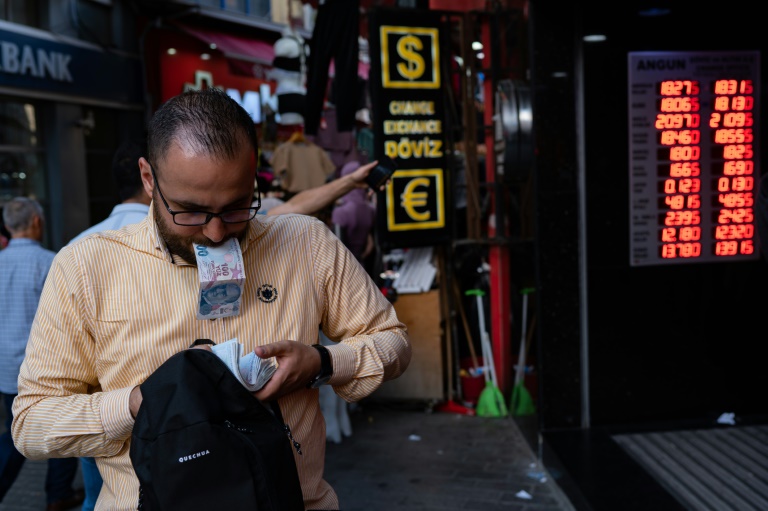
Turkish inflation jumped to a new 24-year high exceeding 83 percent in September, official data showed Monday, as President Recep Tayyip Erdogan presses for more interest rate cuts despite surging prices.

Turkey’s monetary policymakers are bucking the global trend of central banks raising interest rates to combat inflation, as high borrowing rates cool down the economy and prices.

But Erdogan, who has focused on growth ahead of a general election in June, has repeatedly railed against higher rates, calling them his “biggest enemy”.

The country’s central bank has followed his philosophy, lowering its policy rate to 12 percent from 13 percent last month.

Erdogan has called for more rate cuts at the bank’s next policy meeting on October 20, saying last week that it should be cut to single digits by the end of the year.

The TUIK state statistics agency said Monday that consumer prices rose by 83.45 percent in September on an annual basis, up from 80.2 percent in August.

Inflation began to rise worldwide after economies emerged from Covid lockdowns but it worsened this year as Russia’s invasion of Ukraine sent energy and food prices through the roof.

“We are going through a period in which the global economic crisis, deepened by  energy and commodity price increases triggered by the pandemic and war, has deeply affected all economies,” Erdogan said in a televised address on Monday.

“We will build the century of Turkey together, hopefully by overcoming the inflation issue,” Erdogan said.

– Lira sinks –

In parallel to red-hot prices, Turkey has endured a currency crisis, with the Turkish lira hitting a new record low of 18.56 against the dollar following the latest inflation reading.

September inflation was fuelled by transportation prices rising by 117.66 percent, food up more than 90 percent and housing prices climbing by more than 80 percent.

Hakan Kara, the former chief economist of the Turkish central bank, said on Twitter that the country has now experienced its sharpest inflation surge since World War II.

He said “breaking the record” was inevitable given the government’s unorthodox policies.

Liam Peach, senior emerging markets economist at London-based Capital Economics, said a large increase in electricity and gas prices pushed inflation higher in Turkey. 

“We think inflation will rise a bit further but with President Erdogan calling for further easing the central bank is likely to deliver another interest rate cut this month,” he wrote in a note to clients. 

– ‘Lost the plot’ –

Erdogan prioritises growth and exports over price stability, promising that prices will only start falling in January. 

“Erdogan has lost the plot on inflation —  which is what people care about, more than growth. Voters cannot feel real GDP growth, they see inflation,” said emerging market economic Timothy Ash of BlueBay Asset Management in London. 

High inflation is one of the pressing issues Erdogan’s ruling party needs to tackle as the crisis has seen its approval ratings drop to historic lows in the run up to next year’s election. 

Opposition leaders and many Turks no longer give credit to official government data.

A respected monthly study released by independent economists from Turkey’s ENAG research institute also showed prices soaring — at a much higher rate than the one reported by the state statistics agency.

ENAG said the official annual rate of consumer price increases reached 186.27 percent in September, compared to 181.37 percent in August.


UK's new govt in major tax U-turn after uproar

Britain’s beleaguered finance minister on Monday announced a dramatic U-turn on a tax cut unveiled as part of an economic package that has bombed with the markets, electorate and his party.

The abrupt change of course by Chancellor of the Exchequer Kwasi Kwarteng, and Prime Minister Liz Truss, raised questions about their right-wing project less than a month after she succeeded Boris Johnson.

“We get it, and we have listened,” Kwarteng said on Twitter, announcing that he would no longer be scrapping the 45 percent top rate of income tax levied on the highest earners.

Their plan also comprises axing a cap on bankers’ bonuses and reversing a planned rise in corporation tax, as well as a recent hike in national insurance contributions.

At the same time, they have refused to rule out cuts to spending and benefits in the middle of Britain’s worst cost-of-living crisis in generations.

The perceived unfairness of the package has ignited a political storm as Truss’s Conservatives gather for their annual conference in Birmingham.

On the markets, the intention to pay for the tax cuts with billions more in extra borrowing had sent the pound tumbling and UK government bond yields soaring.

The pound rebounded Monday as Kwarteng reversed course, telling BBC television from Birmingham that the focus on the top rate of tax had become a “massive distraction”. 

But asked if he had considered resigning, he said: “Not at all.”

“I’m very pleased that we’ve decided not to proceed with that because it was drowning out the elements of an excellent plan,” he insisted, pointing to a popular if costly scheme to cap energy bills.

– ‘Grossly insensitive’  –

Later Monday at the Tory conference, Kwarteng had been due to say: “We must stay the course. I am confident our plan is the right one.”

Instead, the finance chief was hastily rewriting his speech with the four-day gathering thrown into disarray.

On Sunday, Truss admitted communication errors in how the economic package had been presented on September 23, without conceding the need for any changes.

Asked if she was “absolutely committed” to abolishing the top tax rate, the prime minister — only in the role since September 6 — replied emphatically “yes”.

Less than 24 hours later, she had changed her tune.

“Our focus now is on building a high growth economy that funds world-class public services, boosts wages, and creates opportunities across the country,” she tweeted moments after Kwarteng announced the reversal.

Out of a total tax package worth £45 billion ($50 billion), the top rate cut would have cost some £2 billion — relatively small, but outsized for its political impact.

Tory MPs who backed former finance minister Rishi Sunak — Truss’s rival in the recent Tory leadership race — had threatened to vote it down, raising the prospect of a major battle in the House of Commons.

Grant Shapps, who was refused a cabinet job by Truss, welcomed her scrapping the tax cut, which he told BBC radio had been planned with “grossly insensitive timing”.

Shapps also hit out at threats made by the government to fire any Tory MPs who voted against the plan — which also drew a caustic reception from others.

– Champagne reception –

Truss told the BBC she had not discussed axing the high-earners’ tax band with her cabinet, and appeared to distance herself from the move by claiming “it was a decision that the chancellor made”.

With the U-turn, the stakes have soared for her as she prepares to close the party conference with a keynote speech on Wednesday.

One YouGov survey Friday found 51 percent of Britons think she should resign — and 54 percent want Kwarteng to go.

Several other polls in recent days showed a Labour lead of up to 33 points over the Tories — its biggest since the heyday of former Labour prime minister Tony Blair in the late 1990s.

Labour’s finance spokeswoman Rachel Reeves said the climbdown “comes too late for the families who will pay higher mortgages and higher prices for years to come” as a result of the recent market turmoil.

“The Tories have destroyed their economic credibility and damaged trust in the British economy,” she said.

Kwarteng, who used to work for a hedge fund, meanwhile expressed regret after it emerged that following the unveiling of his “mini-budget”, he had attended a champagne reception with financiers as the pound cratered.

Interviewed on LBC radio, Kwarteng said that “with hindsight it probably wasn’t the best day to go”.

Markets drop as traders eye jobs and earnings, oil jumps

Stocks slipped on Monday as investors await key US jobs data while girding themselves for a corporate earnings season many fear will highlight the impact of surging inflation and interest rates.

A report showing prices rose in the eurozone at a record pace last month added to concerns that central bank tightening has a long way to go, while Federal Reserve vice-chair Lael Brainard said US officials would not pull back too early.

Banks’ battle against inflation could also be made harder — particularly in Europe — as reports said OPEC and other oil producers are considering a major output cut owing to a plunge in prices caused by demand worries. 

Crude prices jumped more than four percent in Asian trade ahead of the possible cut.

Sterling enjoyed a brief rally above $1.12 — having hit a record low $1.0350 last Monday — after UK finance minister Kwasi Kwarteng made a major U-turn by saying he had scrapped controversial plans to axe the top income tax rate.

The cut was part of a controversial mini-budget unveiled by Kwarteng last Monday, which sent markets spinning.

Kwarteng’s announcement came as the ruling Conservatives hold their annual conference with new Prime Minister Liz Truss facing growing anger within the party.

The pound briefly hit a high of $1.1281 before easing back again.

All three main indexes on Wall Street ended down Friday, registering a third straight quarter of losses for the first time since the global financial crisis in 2009.

The release of US jobs data on Friday will be closely watched, with a strong reading likely to give the Fed more ammunition to unveil a fourth successive bumper rate hike at its November meeting.

Asian equity markets fell at the start of the week.

Hong Kong fell, having at one point dropped below 17,000 for the first time since 2011, while Sydney, Mumbai, Bangkok, Singapore, Taipei, Jakarta and Wellington were also in the red.

Tokyo rose, however, even as the Bank of Japan’s Tankan survey showed confidence fell among the country’s largest manufacturers for the third straight quarter. Manila also rose.

London, Paris and Frankfurt all tumbled in the morning.

– Crude slide ‘likely over’ –

With inflation remaining elevated, there is little prospect that the pain will ease any time soon.

On Friday, Brainard said: “Monetary policy will need to be restrictive for some time to have confidence that inflation is moving back to target.

“For these reasons, we are committed to avoiding pulling back prematurely.”

The comments were in line with other Fed officials, who have indicated borrowing costs were unlikely to be lowered until late 2023 or 2024.

“Last week’s developments reinforced our expectation that we will see further tightening in financial conditions, but also illustrated the short-term two-way volatility, which will likely accompany it,” Citigroup’s Ebrahim Rahbari said.

At a time of rising real rates, volatility and the strong dollar “we therefore remain very bearish regarding the outlook for global risk assets”, he added.

Markets are now bracing for company earnings reports, with traders keeping a close eye on their forecasts in light of the uncertain rate environment.

Saxo Capital Markets analysts said in a note that there was a risk-off mood “as corporate earnings misses continue to raise the threat of an ugly earnings season ahead”.

Both the US benchmark West Texas Intermediate crude and Brent climbed more than four percent, as reports said major producers were discussing a million-barrel per day cut in output to support prices in the face of falling demand.

The reduction would be the biggest since the pandemic began, when crude prices collapsed, and would help staunch a plunge in the oil markets over recent months. 

But OANDA’s Edward Moya said: “The slide in oil prices is likely over.

“Energy traders turned pessimistic over the summer given global slowdown fears, but now it seems the risks for oil are to the upside.”

And Suvro Sarkar, an energy analyst at DBS Bank, added: “It’s only going to be a matter of time before oil returns to $100 a barrel, especially with supplies set to tighten toward the end of the year.”

– Key figures around 0810 GMT –

Tokyo – Nikkei 225: UP 1.1 percent at 26,215.79 (close)

Hong Kong – Hang Seng Index: DOWN 0.8 percent at 17,079.51 (close)

Shanghai – Composite: Closed for a holiday

London – FTSE 100: DOWN 0.9 percent at 6,832.70

Pound/dollar: UP at $1.1211 from $1.1156 on Friday

Euro/dollar: DOWN at $0.9811 from $0.9802

Euro/pound: DOWN at 87.51 pence from 87.82 pence

Dollar/yen: UP at 145.00 yen from 144.80 yen

West Texas Intermediate: UP 4.5 percent to $83.06 per barrel

Brent North Sea crude: UP 4.4 percent to $88.83 per barrel

New York – Dow: DOWN 1.7 percent at 28,725.51 (close)

— Bloomberg News contributed to this story —

Biden heads to storm-hit Puerto Rico

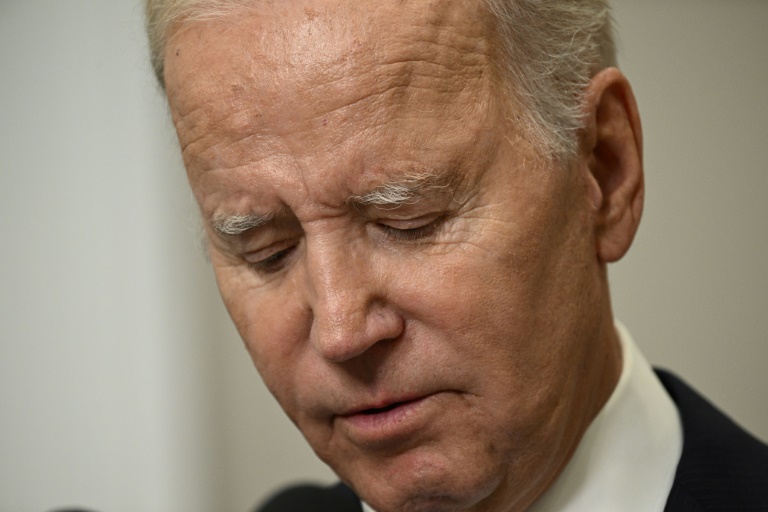
President Joe Biden and First Lady Jill Biden head to storm-ravaged Puerto Rico on Monday, in a bid to show solidarity with a US territory whose people have complained of neglect after past natural disasters.

The high-profile trip will be the first of two this week for the Bidens, who head on Wednesday to Florida to assess the devastating damage caused by Hurricane Ian.

Both Puerto Rico and Florida suffered numerous deaths, widespread power outages, dangerous flooding and grievous property damage from the recent hurricanes of rare intensity — first Fiona, then Ian.

No details of the Bidens’ trip have been announced, though visits to disaster zones are a customary duty of presidents.

But on Saturday, the president told a Congressional Black Caucus dinner that “our hearts… are heavy from the devastating hurricanes and storms in Puerto Rico, Florida and South Carolina. And we owe Puerto Rico a hell of a lot more than they’ve already gotten.”

Twenty-five people are believed to have died in Puerto Rico as a result of Hurricane Fiona, according to the island’s public health department, which is still investigating how 12 of the fatalities occurred.

The entire US territory lost power and about one million people were left temporarily without drinking water, when Fiona — then a powerful Category 4 storm — hammered the island in mid-September.

Biden declared a state of emergency for Puerto Rico on September 18.

Island residents — all US citizens — have complained of being overlooked by Washington after previous disasters, including the devastating hit from twin hurricanes, Irma and Maria, in 2017.

Florida, where Hurricane Ian roared on land Wednesday as a Category 4 storm, is still struggling to assess the extensive damage, particularly on its southwest coast.

The confirmed death toll from Ian, one of the most powerful storms ever to hit the US mainland, has soared to at least 58 in Florida and four in North Carolina with rescuers still searching for survivors in submerged neighborhoods.

More than 700,000 Floridians remained without power Sunday, according to the PowerOutage.us website, and officials said it could take months — and perhaps $50 billion or more — to rebuild devastated coastal zones.

Governments — federal, state and local — are often judged by the effectiveness of their response to such disasters.

After Hurricane Katrina devastated New Orleans and the Gulf coast, critics castigated then-president George W. Bush after photos showed him surveying damage while flying high overhead.

And after then-president Donald Trump, on a visit to Puerto Rico after the earlier storms there, took a basketball-style shot to distribute rolls of paper towels, the mayor of capital city San Juan called it “insulting” and “abominable.”

US defense chief vows to help Taiwan defend itself

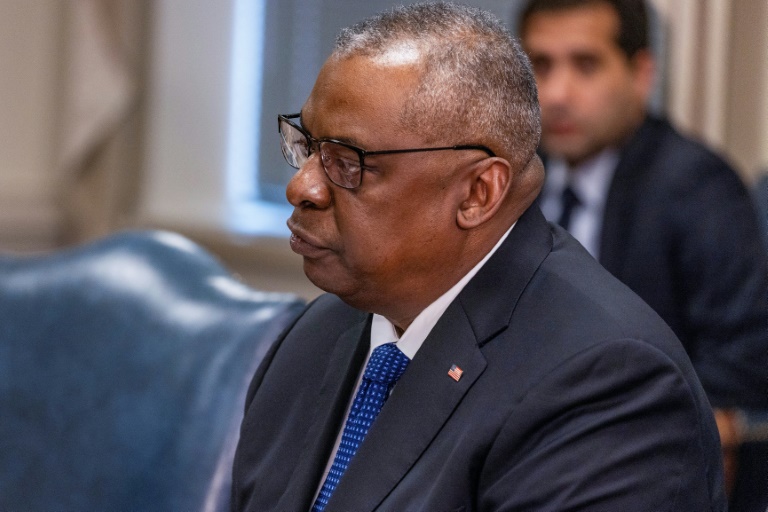
The United States will help Taiwan “develop the capability to defend itself” from a Chinese invasion, Defense Secretary Lloyd Austin said on Sunday, stopping short of President Joe Biden’s vow to send troops to the island.

“We’re committed to helping Taiwan develop the capability to defend itself,” Austin said in an interview with CNN.

Washington has historically maintained a policy of “strategic ambiguity” on whether it would intervene militarily if Taiwan were attacked by China. 

Asked in an interview with CBS last month whether US troops would defend Taiwan, Biden said “yes,” if it were “an unprecedented attack.”

Austin was asked by CNN host Fareed Zakaria whether the US military was preparing to send troops to Taiwan in line with Biden’s comments, but he declined to answer directly.

“The American military is always prepared to protect our interests and live up to our commitments. I think the president was clear in providing his answers as he responded to a hypothetical question,” Austin said.

“But, again, we continue to work to make sure that we have the right capabilities in the right places to ensure that we help our allies maintain a free and open Indo-Pacific,” he said.

Washington’s “strategic ambiguity” is designed both to ward off a Chinese invasion and to discourage Taiwan from provoking Beijing by formally declaring independence.

Asked if Biden’s comments meant a change in that policy, a White House spokesperson said at the time: “The president has said this before, including in Tokyo earlier this year. He also made clear then that our Taiwan policy hasn’t changed. That remains true.”

During a visit to Japan in May, Biden was asked whether he would commit US troops to Taiwan and he said “yes.”

“That’s the commitment we made,” he added.

Austin told CNN he saw no “imminent threat” of a Chinese invasion of Taiwan. 

But increased military activity on the Taiwan Strait showed that Beijing was moving to establish “a new normal,” he said.

Washington cut formal diplomatic relations with Taiwan in 1979, switching recognition to Beijing as the sole representative of China. But at the same time, the US maintained a decisive, if delicate role in supporting Taiwan.

Under a law passed by Congress, the US is required to sell Taiwan military supplies to ensure its self-defense against Beijing’s vastly larger armed forces.

UAE's latest bet on tech: a ministry in the metaverse

The United Arab Emirates, which already boasts the world’s tallest skyscraper and has launched a bold Mars mission, now hopes to become a pioneer in the depths of the metaverse.

In a project launched at Dubai’s gleaming Museum of the Future, it announced that the UAE’s economy ministry was setting up shop inside the immersive virtual world that is now taking shape. 

Those who don their virtual reality goggles or use other means to venture within will find a ministry open for business with companies and even ready to sign bilateral agreements with foreign governments, officials said.

The metaverse is an online world where users will eventually be able to game, work and study, its proponents say — although it is still in a “test” phase, the UAE’s economy minister conceded.

Abdulla bin Touq Al Marri was speaking at the inaugural Dubai Metaverse Assembly, held at the museum whose innovative ring shape decorated with Arabic calligraphy flanks the city’s main thoroughfare.

Representatives of tech giants mingled with entrepreneurs and developers exploring the potential of the metaverse, a network of digital spaces intended as an extension of the physical world.

“In the last couple of years we’ve seen investments, we’ve seen companies move in, and with the changes of the (visa) regime… we see talent coming in,” Al Marri told AFP in an interview.

“We trained our employees to really immerse themselves in the metaverse, use the metaverse and engage with the Generation Z that is going to come,” he added. 

The UAE, which has a history of bold projects including the 830-metre (2,723-foot) Burj Khalifa, hopes the metaverse can add $4 billion to annual GDP and 40,000 jobs to its workforce by 2030.

In its bid to become one of the world’s top-10 metaverse economies, Dubai wants to attract 1,000 companies specialising in blockchain and related technologies, helped by eased visa rules for freelancers, entrepreneurs and creatives.

As the coronavirus pandemic pushed more people into the online world, “Covid really accelerated” the trend, Al Marri added. 

“We thought the metaverse is a phase technology” that might take 10 to 20 years to emerge,” he said. “Covid-19 really immersed us so fast and expedited the use of the metaverse.”

– Virtual Mars trips –

Unlike the UAE’s oil-rich capital, Abu Dhabi, crude represents just five percent of Dubai’s economy which has pivoted towards business, tourism, real estate and new technologies.

The UAE has already introduced a law governing virtual assets and a regulatory body for cryptocurrencies, while welcoming major crypto exchange platforms.

One of the UAE’s early private-sector metaverse projects is called 2117, named after the dream of Dubai’s ruler Sheikh Mohammed bin Rashid to colonise Mars a century from now.

Metaverse users can now buy tickets to join a virtual shuttle carrying settlers to the red planet.

“A lot of us won’t live long enough to see this mission with our own eyes,” said Amin Al Zarouni, founder of the Bedu start-up behind the virtual Mars trip.

“We’ll try to replicate this experience in the metaverse.”

Until now, use of the metaverse is niche and even its architects say widespread adoption is years away. How it will develop is unknown.

According to Meta, which owns Facebook and other social media titans, Analysis Group research has shown that the metaverse could add $360 billion to GDP in the Middle East, North Africa and Turkey in 10 years, if it follows the growth pattern of mobile technology.

“We also know that when policy supports innovation, it accelerates the adoption of new technologies,” the company said, when asked about Dubai’s prospects of becoming a metaverse hub.

“If we look at the context of Dubai, there’s already a clear strategy and goals to accelerate metaverse adoption and investments in the building blocks of the metaverse.”

Asian markets swing as traders eye US jobs, earnings

Stocks drifted in Asia on Monday as investors await key US jobs data, while girding themselves for a corporate earnings season many fear will highlight the impact of surging inflation and interest rates.

A report showing prices rose in the eurozone at a record pace last month added concerns that central bank tightening has a long way to go, while Federal Reserve vice chair Lael Brainard said US officials would not pull back too early.

Banks’ battle against inflation could also be made harder as OPEC and other oil producers consider a major output cut owing to a plunge in prices caused by demand worries. Crude prices jumped more than three percent in Asian trade ahead of the possible cut.

Traders are also keeping an eye on developments in Britain as the ruling Conservatives hold their annual conference a week after new finance minister Kwasi Kwarteng shocked markets with a massive borrowing-dependent, tax-cutting mini budget.

All three main indexes on Wall Street ended down again Friday, registering a third straight quarter of losses for the first time since the global financial crisis in 2009.

The release of US jobs data on Friday will be closely watched, with a strong reading likely to give the Fed more ammunition to unveil a fourth successive bumper rate hike at its November meeting.

Asian markets fluctuated at the start of the week.

Hong Kong dipped along with Sydney, Singapore, Taipei, Jakarta and Wellington.

Tokyo rose, however, even as the Bank of Japan’s Tankan survey showed confidence fell among the country’s largest manufacturers for the third straight quarter. Manila also rose.

With inflation remaining elevated, there is little prospect that the pain will ease any time soon.

On Friday, Brainard said: “Monetary policy will need to be restrictive for some time to have confidence that inflation is moving back to target.

“For these reasons, we are committed to avoiding pulling back prematurely.”

The comments were in line with other Fed officials, who have indicated borrowing costs were unlikely to be lowered until late 2023 or 2024.

“Last week’s developments reinforced our expectation that we will see further tightening in financial conditions, but also illustrated the short-term two-way volatility, which will likely accompany it,” Citigroup’s Ebrahim Rahbari said.

At a time of rising real rates, volatility and the strong dollar “we therefore remain very bearish regarding the outlook for global risk assets”, he added.

Markets are now bracing for company earnings reports, with traders keeping a close eye on their forecasts in light of the uncertain rate environment.

Saxo Capital Markets analysts said in a note that there was a risk-off mood “as corporate earnings misses continue to raise the threat of an ugly earnings season ahead”.

Both the US benchmark West Texas Intermediate crude and Brent climbed 3.3 percent, as major producers discussed a one million barrel per day cut in output to support prices in the face of falling demand.

The reduction would be the biggest since the pandemic began, when crude prices collapsed, and would help staunch a plunge in the oil markets over recent months. 

But OANDA’s Edward Moya said: “The slide in oil prices is likely over.

“Energy traders turned pessimistic over the summer given global slowdown fears, but now it seems the risks for oil are to the upside.”

And Suvro Sarkar, an energy analyst at DBS Bank, added: “It’s only going to be a matter of time before oil returns to $100 a barrel, especially with supplies set to tighten toward the end of the year,” he said.

– Key figures around 0320 GMT –

Tokyo – Nikkei 225: UP 0.7 percent at 26,111.54 (break)

Hong Kong – Hang Seng Index: DOWN 0.9 percent at 17,060.92 

Shanghai – Composite: Closed for a holiday

Pound/dollar: DOWN at $1.1128 from $1.1156 on Friday

Euro/dollar: UP at $0.9813 from $0.9802

Euro/pound: UP at 88.18 pence from 87.82 pence

Dollar/yen: UP at 144.81 yen from 144.80 yen

West Texas Intermediate: UP 3.3 percent to $82.12 per barrel

Brent North Sea crude: UP 3.3 percent to $87.94 per barrel

New York – Dow: DOWN 1.7 percent at 28,725.51 (close)

London – FTSE 100: UP 0.2 percent at 6,893.81 (close)  

— Bloomberg News contributed to this story —

Tired of power cuts, blockaded Gaza turns to solar

Palestinians living in the Israeli-blockaded enclave of Gaza have long endured an unstable and costly electricity supply, so Yasser al-Hajj found a different way: solar power.

Looking at the rows of photo-voltaic panels at his beachfront fish farm and seafood restaurant, The Sailor, he said the investment he made six years ago had more than paid off.

“Electricity is the backbone of the project,” Hajj said, standing under a blazing Mediterranean sun. “We rely on it to provide oxygen for the fish, as well as to draw and pump water from the sea.”

The dozens of solar panels that shade the fish ponds below have brought savings that are now paying to refurbish the business, he said, as labourers loaded sand onto a horse-drawn cart.

Hajj said he used to pay 150,000 shekels ($42,000) per month for electricity, “a huge burden,” before solar power slashed his monthly bill to 50,000 shekels.

For most of Gaza’s 2.3 million residents, living under Hamas Islamist rule and a 15-year-old Israeli blockade, power cuts are a daily fact of life that impact everything from homes to hospital wards.

While some Gazans pay for a generator to kick in when the mains are cut — for around half of each day, according to United Nations data — ever more people are turning to renewables.

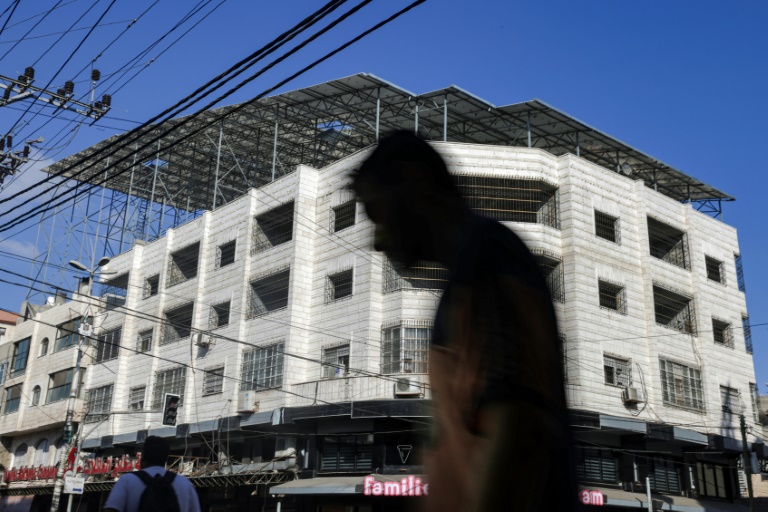
From the rooftops of Gaza City, solar panels now stretch out into the horizon.

Green energy advocates say it is a vision for a global future as the world faces the perils of climate change and rising energy costs.

– Swap to green power –

Gaza bakery owner Bishara Shehadeh began the switch to solar this summer, by placing hundreds of gleaming panels on his rooftop.

“We have surplus electricity in the day,” he said. “We sell it to the electricity company in exchange for providing us with current during the night.”

Solar energy lights up the bright bulbs illuminating the bustling bakery, but the ovens still run on diesel.

“We are working on importing ovens, depending on electrical power, from Israel, to save the cost of diesel,” said Shehadeh.

Both the bakery and the fish farm have relied partially on foreign donors to kick-start their switch to solar, although their owners are also investing their own cash.

But in a poverty-stricken territory where nearly 80 percent of residents rely on humanitarian assistance, according to the UN, not everyone can afford to install renewable energy.

Around a fifth of Gazans have installed solar power in their homes, according to an estimate published in April by the “Energy, Sustainability and Society” journal.

Financing options are available for Gazans with some capital, like Shehadeh, who got a four-year loan to fund his bakery project.

– Import restrictions –

At a store selling solar power kits, MegaPower, engineer Shehab Hussein said prices start at around $1,000 and can be paid in instalments.

Clients included a sewing factory and a drinks producer, which see the mostly Chinese-made technology as “a worthwhile investment”, he said.

Raya al-Dadah, who heads the University of Birmingham’s Sustainable Energy Technology Laboratory, said her family in Gaza has been using simple solar panels that heat water for more than 15 years.

“The pipe is super rusty, the glass is broken… and I just had a shower and the water is super hot,” she said during a visit to the territory.

But Dadah encountered obstacles when she tried to import a more sophisticated solar system for a community project in Gaza, where imports are tightly restricted by Israel and Egypt.  

“Bringing them to the Gaza Strip has proved to be impossible,” she said.

The advanced set-up includes more efficient panels and equipment that tracks the sun’s path.

Such technology is being used by Israeli firms such as SolarGik, whose smart control systems factor in weather conditions and can harness up to 20 percent more energy than standard panels, chief executive Gil Kroyzer told AFP.

Across the frontier in Gaza, in the absence of such high-tech equipment, Dadah relies on the standard panels to power a women’s centre and surrounding homes in the strip’s northern Jabalia area.

Despite the challenges, Dadah said solar energy remains a “brilliant” option for Gaza, with its copious sunlight: “It is really a very promising energy source, and it’s available everywhere”.

Anti-discrimination laws, voting rights on US Supreme Court docket

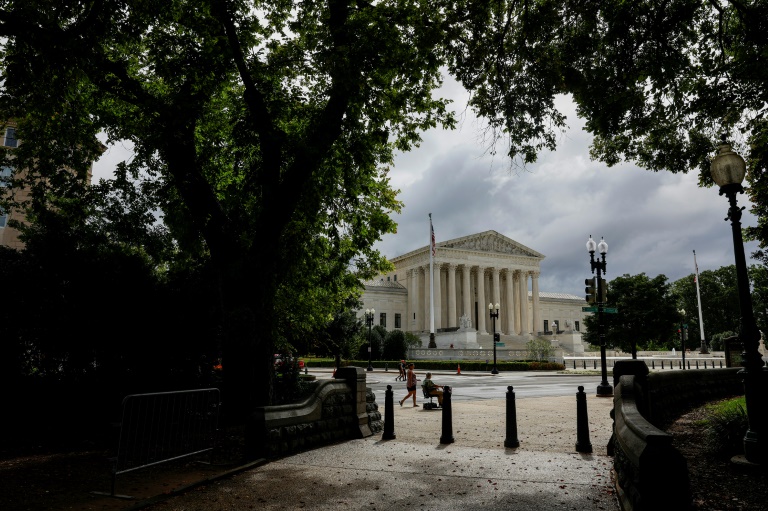
The conservative-dominated US Supreme Court, after quashing abortion access, begins a new term Monday which could bring setbacks to the rights of African Americans and gay couples.

Anti-discrimination laws, voting rights and immigration are among the hot topics on the docket for the nation’s highest court.

For the first time, the more than 230-year-old court will feature an African American woman — Ketanji Brown Jackson, named to the bench by Democratic President Joe Biden.

The liberal Jackson’s arrival will not modify the balance of power on the nine-member court, however.

With six justices — three of whom were nominated by former president Donald Trump, a Republican — conservatives will continue to wield a solid majority.

David Cole, legal director of the American Civil Liberties Union (ACLU), said the last term “saw the court aggressively exercising its newfound conservative power to upend long established precedents.”

“This term, the court appears ready to do so again,” Cole said. “The court is not likely to act modestly or at least is not inclined to act modestly.”

In June, the court struck down the landmark 1973 ruling guaranteeing a constitutional right to abortion, expanded public carry rights for gun owners and curbed the powers of the government agency responsible for environmental protection.

The rulings were welcomed in conservative circles which have accused the court in recent years of engaging in judicial activism when it comes to major social issues.

Ilya Shapiro, director of constitutional studies at the conservative Manhattan Institute think tank, said the court is reversing what he called the excesses of the 1970s.

Shapiro said he expects the court to take aim next at affirmative action policies which allow universities to take race into account in their admissions practices.

The court is to hear arguments on the use of race in deciding who gets to attend Harvard University and the University of North Carolina (UNC).

Harvard and UNC, like many other US institutions of higher education, use race as a factor in trying to ensure a diverse student body and to make up for a legacy of racial discrimination against African Americans and Hispanics.

The court has ruled previously in favor of affirmative action but it has long been in the cross-hairs of the right and its opponents believe the current court will be receptive to their arguments.

– ‘Far-reaching consequences’ –

Another closely watched case, which will be heard by the court on Tuesday, involves the seven congressional districts in the southern state of Alabama and the 1965 Voting Rights Act, which aims to prevent discrimination against African Americans at the polls.

The civil rights legislation allows for the creation of Black-dominated districts to ensure they have representation in Congress.

But it is illegal to restrict their voting power by concentrating Black voters in a single district or by splitting them into multiple districts.

A congressional map drawn up by the Republican-dominated Alabama state legislature provides for only a single Black-majority district although they make up about 25 percent of the population of the state.

The case takes on added significance because Black voters tend to vote overwhelmingly for Democrats.

Another case before the court would give state legislatures more power to regulate federal elections and could have “far-reaching consequences for democracy,” said Sophia Lin Lakin of the ACLU’s voting rights project.

The case could change how federal elections are conducted and give state legislatures “broad unchecked power over federal elections,” Lin Lakin said.

The Supreme Court will also revisit an issue from several years ago, when it ruled in favor of a cake-maker who cited his Christian beliefs in refusing to make a wedding cake for a gay couple.

The ruling in that case was narrow, however, and the court is being asked this time to decide whether a graphic designer who declines to build wedding websites for gay couples is violating anti-discrimination laws.

Between now and June 30, the end of the term, the Supreme Court is also expected to rule on expelling undocumented migrants, the death penalty and adoption of Native American children.

Stay or go? Hard choice for Florida islanders devasted by Ian

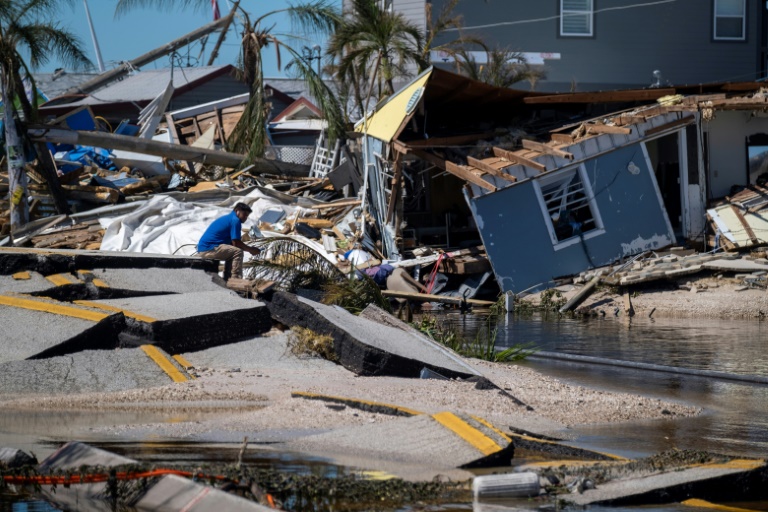
Karen Pagliaro walks down Matlacha’s main street, dodging downed trees, debris and abandoned vehicles, unsure where to go in the small island town cut off after Hurricane Ian damaged bridges linking it to mainland Florida.  

“We feel kind of forgotten,” says the 50-year-old teacher, who lost her home to the storm. “We thought they’d send in help, water and supplies and things, and we were told no, just get off.”

Until Wednesday, Matlacha was a small paradise in southwest Florida.

The fishing village of 800 people across two islets was dotted with colorful wooden houses built around the wide street. It was a place to enjoy the sea, good weather, seafood restaurants and small art galleries. 

The hurricane changed everything. 

Three days after Ian hit, the Coast Guard, firefighters and citizens from nearby towns are still coming by boat to rescue the last residents who were trapped there after refusing to evacuate. 

Other residents, those who did leave the island, are making the journey in the opposite direction from the mainland to check on the damage to their homes. 

Christian Lopez watches the jetty as the emergency services evacuate people — but he has no intention of leaving, despite losing his home.  

“I’d rather stay here than go somewhere else and be on the street. Here at least we have a little roof and we are going to try to fix up the trailer where we live,” says the 25-year-old. 

– ‘I never want to come back’ –

At the other end of Matlacha, the main street is cut off by a huge crevasse that people have to cross thanks to a makeshift bridge made of a metal board.    

Dozens of stunned and weary people walk somberly about, taking in the devastation. Most of them share the same uncertainty of not knowing what to do or where to go. 

“I don’t have a plan,” says John Lynch, sounding resigned. The 59-year-old’s house is sinking into the sea and he is preparing to leave. 

“We’ve been here for 25 years… It’s heartbreaking because this is where we plan on living for the rest of our lives.”  

Karen Pagliaro doesn’t know what she is going to do either. She has nowhere to go. The school where she works is temporarily closed because of hurricane damage. 

What is clear to her is that she wants to return to live in Matlacha.  “It’s our beloved city and we love it here,” she says.  

Near the pier, Jim Bedra doesn’t share that sentiment. The septuagenarian is about to leave town with his wife, Kathy, and their dog, Luna, on a Coast Guard boat.   

Last week he wanted to evacuate the island with Kathy and their 31-year-old son, but the two convinced him to stay where they had lived since 2013.  

He no longer has a home and his voice cracks at the thought. “We are going to stay in a shelter, I imagine,” says Bedra, who wants to return to his safely landlocked home state of Ohio. 

“I never want to come back here,” he says before boarding the boat for the mainland. 

“This is not the retirement we looked for.”

ma/st/bbk

Close Bitnami banner
Bitnami