US Business

No Terminator: Musk teases 'useful' humanoid robot

Elon Musk on Friday showed off the latest version of a humanoid robot that the world’s richest man said could one day eliminate poverty.

An Optimus prototype wheeled on stage during an annual Tesla AI Day presentation was mounted to a small platform. The robot, which remains a work-in-progress, waved to the audience and raised its knees.

“Our goal is to make a useful humanoid robot as quick as possible,” the billionaire tech pioneer Musk told the audience at the event in Silicon Valley.

“There is still a lot of work to be done.”

Tesla is adapting its autonomous car technology to give Optimus capabilities such as walking safely or working on a factory floor, company engineers said during the presentation.

Another version of the robot, built with off-the-shelf components rather than Tesla-made parts like Optimus, walked slowly onto the stage, pumped its fists and thrust its hips briefly in time with music as if dancing.

“The robot can actually do a lot more than we just showed you, we just didn’t want it to fall on its face,” Musk quipped.

Tesla is designing Optimus robots to be produced at high rates, pushing the price perhaps lower than $20,000, Musk said.

“This means a future of abundance; a future where there is no poverty, a future where you can have what you want in terms of products and services,” Musk said.

“It really is a fundamental transformation of civilization as we know it,” he said.

Musk, who once warned of artificial intelligence being a threat to humanity, said that Tesla wants to make sure the transition to a society in which robots do the work and people reap the benefits is a safe one.

“We always want to be careful we don’t go down the Terminator path,” he cautioned, referring to a blockbuster film about a killer cyborg and noting that Tesla is building in safeguards including a stop button that can’t be tampered with.

He said Tesla will begin testing Optimus on factory floors, doing simple tasks like carrying parts, and that the general public should be able to purchase the robots in three to five years.

Musk contended that Tesla, as a publicly traded company, would be held accountable by its shareholders if they think it isn’t being socially responsible.

“It’s very important that I can’t just do what I want. Tesla’s structure is ideal for that.”

Musk was reprimanded by the Securities and Exchange Commission after posting a tweet in 2018, in which he said he had acquired funding to take Tesla private, but did not provide proof or file paperwork with the SEC.

Musk is now is locked in a court battle with Twitter over his effort to terminate a $44 billion deal he made to take the messaging platform private.

Putin annexes Ukraine territories, Kyiv vows to fight back

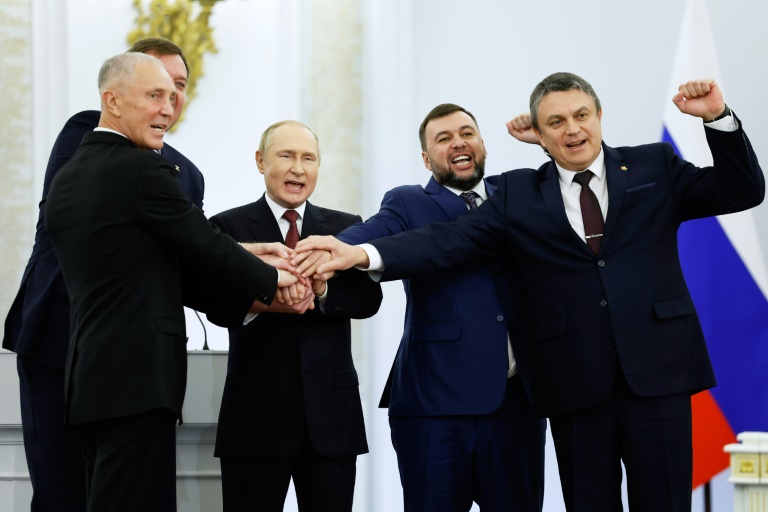
Russian President Vladimir Putin staged a grand ceremony in Moscow on Friday to celebrate the annexation of four parts of Ukraine occupied by his army, while Kyiv pushed for expedited NATO membership.

The event at the Kremlin — a turning point in post-Soviet history — came hours after shelling killed 30 people in Ukraine’s southern region of Zaporizhzhia in one of the worst attacks against civilians in months.

Putin was defiant during his address to Russia’s political elite, telling the West that the internationally condemned manoeuvre was irreversible and urging Ukraine to negotiate a surrender.

“I want to say this to the Kyiv regime and its masters in the West: People living in Lugansk, Donetsk, Kherson and Zaporizhzhia are becoming our citizens forever,” Putin said.

“We call on the Kyiv regime to immediately stop fighting and stop all hostilities… and return to the negotiating table.”

The packed hall erupted into chants of “Russia! Russia” after the deal was inked. 

Putin — rarely seen making physical contact since the pandemic — joined hands with his proxy leaders from the annexed regions and they shouted along in unison on state TV.

Washington announced “severe” new sanctions against Russian officials and the country’s defence industry, and said G7 allies support imposing “costs” on any nation that backs the annexation.

Ukrainian President Volodymyr Zelensky immediately urged the US-led military alliance NATO to grant his country fast-track membership.

– Biden says Putin ‘struggling’ –

The Ukrainian leader doubled down in an address to the nation, vowing never to hold talks with Russia as long as Putin was in power.

“We will negotiate with the new president,” Zelensky said.

US President Joe Biden condemned Friday’s ceremony in Moscow as a “sham routine” that Putin put on to show strength but instead demonstrated that “he’s struggling”, and pledged to continue backing Kyiv.

NATO chief Jens Stoltenberg slammed the annexation as “illegal and illegitimate” but remained non-committal after Ukraine said it was applying to join the Western alliance.

The United States and Canada voiced support for Ukraine’s membership but steered clear of promises to fast-track it.

Despite warnings from Putin prior to the annexation that he could use nuclear weapons to defend the captured territories, Ukraine’s Foreign Minister Dmytro Kuleba said Kyiv would “continue liberating our land and our people”.

US National Security Advisor Jake Sullivan said Friday that Washington would announce an “immediate” new weapons shipment for Kyiv next week.

Sullivan also said that while there is a “risk” of Putin using nuclear weapons, there is no indication that he would imminently do so. 

Hours ahead of the annexation ceremony, an attack in Zaporizhzhia in the south killed at least 30 people and wounded dozens as civilians were preparing to leave to pick up relatives, Ukrainian officials said.

Bodies in civilian clothes were strewn across the ground after the attack and windows of cars blown out.

One man, 56-year-old Viktor, said his life was saved because he went to get a coffee.

“The waitress gave it to me. And there was a bang. She got scared and left the cafe. A few minutes later, there was another explosion. Now she is on the floor,” he said.

“I managed to hide. She did not.”

– Land corridor –

In Moscow, at least 10,000 people convened for state-organised annexation celebrations, with huge banners emblazoned: “Donetsk. Lugansk. Zaporizhzhia. Kherson. Russia!”

“I’m happy if they want to join Russia,” Natalya Bodner, a 37-year-old lawyer told AFP. “They have more hope than we do”.

The four territories create a crucial land corridor between Russia and the Crimean Peninsula, annexed by Moscow in 2014.

Together, the five regions make up around 20 percent of Ukraine, where forces in recent weeks have been clawing back territory.

Zelensky on Friday hailed the “significant results” from Ukraine’s counteroffensive in the east.

Ukrainian forces were on the doorstep of Lyman in Donetsk, which Moscow’s forces pummelled for weeks to capture this summer.

“Lyman is partially surrounded,” said Denis Pushilin, the pro-Moscow leader in Donetsk, adding later on social media that Russian forces were holding out “with the last of their strength”.

Russia on Friday vetoed a UN Security Council resolution condemning the annexation of the regions, while China, India, Brazil and Gabon abstained.

Although Russia’s veto was a certainty, Western powers had hoped to demonstrate Moscow’s growing isolation on the world stage and will now take the condemnation effort to the General Assembly, where every nation has a vote and none can kill a resolution.

At a UNESCO meeting in Mexico City on Friday, representatives of dozens of countries walked out as Russia took the floor, symbolically condemning the invasion of Ukraine.

burs/lb/dva

Pickleball phenomenon takes over New York

A game that’s easy to pick up and more accessible than tennis, pickleball is all the rage in New York, as the sport snags investors and grows increasingly professionalized across the United States.

On a recent weekday evening at the foot of the Brooklyn Bridge, dozens of players ranging from thirty-somethings to retirees shared the four new courts at Brooklyn Bridge Park, which recently replaced the bocce ball courts.

Teams form spontaneously as players wait their turn at the park space that offers a unique view of Manhattan’s brightly lit skyscrapers.

“You come here, put your paddle over there, and you get to play with a range of people, beginner and intermediate,” said 52-year-old Amy Zhao with a smile.

With its neon perforated plastic ball, flat paddle rackets and obligatory underhand serve, pickleball is a kind of “mini tennis,” especially due to its smaller-sized court.

It’s also much cheaper: David Masters took up pickleball when he realized it cost $100 to snag a spot to play tennis at a New York public park.

“And also, you had to wake up at like 6:00 am just to reserve a court,” said the 31-year-old software engineer.

Beyond tennis, pickleball takes on airs of both badminton and ping-pong, with lighting-fast exchanges that demand quick reflexes.

What’s more, players must strategically position on the court: competitors can’t hit the ball before it bounces if it lands in a non-volley zone that’s just in front of the net.

The game was invented in 1965 by three fathers in the state of Washington.

In February, the Sports & Fitness Industry Association deemed it the fastest growing sport in the United States, with 4.8 million regular or casual players in 2021, up 39 percent from 2019.

– Professionalization –

The growth in New York is visible, with new courts popping up throughout the city and where private coaches have even become in demand, some running upwards of $75 per hour.

“During the pandemic, people wanted to get activities. And it felt like pickleball was one that checked a lot of boxes,” said 33-year-old Karim Kerawala. 

“It let them be outside and let them compete in something that didn’t require a ton of exercise, unless you wanted… higher level play,” Kerawala said.

Calling pickleball his “new obsession,” he said a meet-up app saw membership numbers go from around 200 to nearly 2,000 in one year.

A number of “professional” circuits have already arisen, including the APP tour that was founded in 2019. 

At the end of May the league organized a tournament at Flushing Meadows, on the grounds of the US Open. 

According to Ken Herrmann, founder of the APP Tour, interest and skill is such that qualifying tournaments are starting to become necessary for professional events.

The competing PPA Tour, found in 2018, signed exclusive contracts with the 24 best players in the sport, both men and women. 

They distributed $3 million in prize money in 2022, a sum that could double in 2023, said Hannah Johns, the PPA Tour’s content director.

“It’s been absolutely crazy, how much it’s taken off. And a lot of that is because we were able to get bigger sponsors and broadcast partners involved,” Johns said, citing CBS, NBC and ABC among the networks and the car rental company Hertz as a brand.

And with the already announced takeover of the PPA Tour by the private investment firm founded by businessman Tom Dundon — who already owns the Carolina Hurricanes ice hockey team — Johns vows future partners in the world of alcohol and gambling to come.

Major League Pickleball announced this week it’s joining forces with NBA phenom LeBron James, who is purchasing a team as part of an ownership group that includes fellow basketball champions Draymond Green and Kevin Love.

US would know if Russia prepares nuclear strike: experts

The United States would almost certainly discover ahead of time if Russia was preparing a nuclear strike on Ukraine, and Moscow might very well want it known, nuclear weapons experts say.

Russian President Vladimir Putin has raised the possibility of using nuclear weapons if Russia’s “territorial integrity” or existence is threatened.

Moscow’s declaration Friday that it was annexing four partly-occupied regions of Ukraine potentially meant Russia could consider responding to attacks on the claimed territory with a nuclear strike.

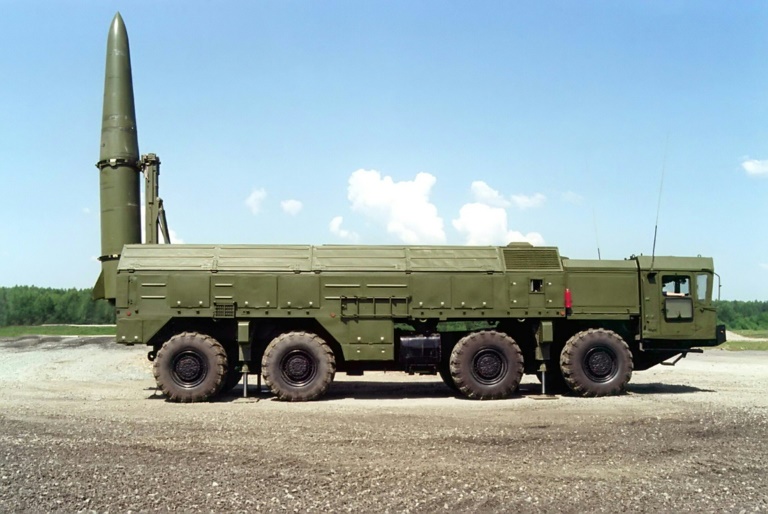
Should such an escalation materialize, it would probably be in the form of a smaller tactical nuclear weapon, likely launched on a short-range Iskander ballistic missile, according to experts.

While military analysts downplay Moscow’s threats for now and US officials say they have seen no activity indicating such plans, Western defense and intelligence are closely watching to see if real atomic threats emerge.

– Where are the bombs? –

Preparations for an attack would be evident, Pavel Podvig, a senior researcher at the UN Institute for Disarmament Research in Geneva, told AFP.

A 2017 report by the institute maps out 47 nuclear storage sites across Russia — 12 national-level facilities and 35 base facilities.

These are monitored constantly by intelligence and military surveillance satellites of the United States and other countries.

They can even be watched closely by commercial satellites, as shown by the widespread, regularly updated imagery of activities at North Korean nuclear facilities.

Podvig says Russia has deployed its strategic or long-range nuclear warheads in the field, on missiles, bombers and submarines.

But its non-strategic or tactical nuclear weapons, which number as many as 2,000, are stored and not installed on delivery vehicles like the Iskander, according to Podvig.

“There are no Iskanders roaming around with nuclear-armed warheads. These weapons are in storage,” he said.

– How would we know? –

“I’m confident the United States would see any Russian preparations for using nuclear weapons,” said Mark Cancian, a former official in the US defense and energy departments who worked on nuclear weapons issues.

“The weapons need to come out of storage, the units involved need to be alerted, and the Russians might also alert their strategic nuclear forces,” Cancian, now at the Center for Strategic and International Studies in Washington, told AFP.

He said evidence would also come from likely visible preparations for Russia’s ground forces, issuing them protective equipment and instructions on how to act in a nuclear environment.

“All of this would be visible,” he noted.

Podvig said Moscow, like Washington, has for decades embraced the need for disciplined management of its nuclear warheads, and that system is fairly strong and visible.

“We can be quite certain that there are no hidden facilities,” he said.

“Nuclear weapons need a certain structure, people who are trained, and the maintenance. You cannot do that in a random place.”

“Technically you could probably smuggle a couple of bombs out of a storage sight undetected,” he said.

But doing so has risks, including provoking a preemptive attack from the West.

“The Russians will never be certain that it is undetected. That would be a gamble,” said Podvig.

Moreover, he added, it is more likely that Russia would want the West to see its preparations as a warning.

“It would be the kind of escalatory step (and) Russia would want that to be visible,” Podvig said.

– Warning the world –

The United States warned for weeks before the February 24 invasion that Russia intended to attack Ukraine, seeking to prepare Kyiv and allies — and possibly deter Moscow from acting.

Would Washington warn the world openly if it detected Russia planning a nuclear assault? Doing so could spark unprecedented panic, not only in Ukraine but other areas that could be affected by radioactive fallout.

Such alarm could go global if people expected an escalation to transcontinental nuclear war.

The United States would almost certainly warn allies and other powers, including crucially China and India, hoping they would pressure Moscow to pull back or face international isolation.

But Washington would likely see issuing public warnings as useful in adding to pressure on Russia, according to Podvig.

“The strategy has to be based on isolation. The unacceptability of this has to be reinforced, that it is criminal,” he said. 

“That message might have deterrence value.”

After devastating Florida, Hurricane Ian rakes South Carolina

Deadly Hurricane Ian, one of the most powerful storms ever to hit the United States, roared into South Carolina on Friday, delivering a powerful second punch after walloping Florida.

The National Hurricane Center (NHC) said Ian made landfall near Georgetown, South Carolina, as a Category 1 hurricane with maximum sustained winds of 85 miles (140 kilometers) per hour.

It was later downgraded to a post-tropical cyclone but the NHC said Friday evening that Ian is bringing heavy rain, flash flooding and high winds to both South Carolina and North Carolina. Some areas can expect up to eight inches of rain.

As for storm-ravaged Florida, President Joe Biden said: “We’re just beginning to see the scale of the destruction.

“It’s likely to rank among the worst in the nation’s history,” he said of Ian, which barreled into Florida’s southwest coast on Wednesday as a Category 4 storm, a tick shy of the most powerful on the Saffir-Simpson wind scale.

The death toll from the storm stands at 23, the Florida Department of Law Enforcement said Friday evening.

News outlets quoting county officials have given even higher tolls, with CNN saying 45 fatalities have been blamed on Ian.

Seventeen migrants also remain missing from a boat that sank during the hurricane on Wednesday, according to the Coast Guard. One person was found dead and nine others rescued, including four Cubans who swam to shore in the Florida Keys.

With damage estimates running into the tens of billions of dollars, Biden said it’s “going to take months, years to rebuild.”

“It’s not just a crisis for Florida,” he said. “This is an American crisis.”

CoreLogic, a firm that specializes in property analysis, said wind-related losses for residential and commercial properties in Florida could cost insurers up to $32 billion while flooding losses could go as high as $15 billion.

“This is the costliest Florida storm since Hurricane Andrew made landfall in 1992,” CoreLogic’s Tom Larsen said.

– ‘We made it through’ – 

Rescue teams were assisting survivors Friday in devastated Florida communities and the US Coast Guard said it had made 117 rescues using boats and helicopters of people trapped in flooded homes.

Governor Ron DeSantis said hundreds of other rescue personnel were going door-to-door “up and down the coastline.”

DeSantis said the coastal town of Fort Myers where the hurricane made landfall, was “ground zero” but “this was such a big storm that there are effects far inland,” including serious flooding in the city of Orlando.

Many Floridians evacuated ahead of the storm, but thousands chose to shelter in place and ride it out.

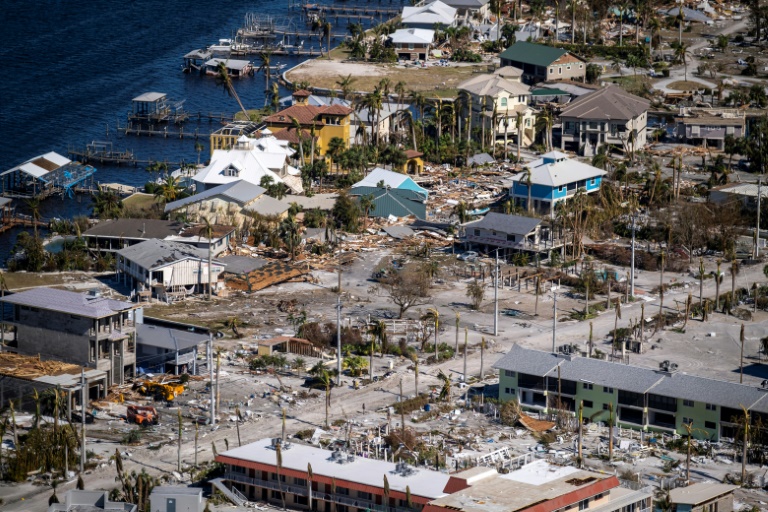
More than 1.4 million Florida residents were still without electricity on Friday and two hard-hit barrier islands near Fort Myers — Pine Island and Sanibel Island — were cut off after the storm damaged causeways to the mainland.

Aerial photo and video show breath-taking destruction in Sanibel and elsewhere.

The causeway is seen broken and washed out, with one section covered by calm waters lit up with reflections of the sun.

In Fort Myers Beach, a recreational boat called Crackerjack sits atop a pile of debris like an abandoned toy. A trailer park was blasted away to almost nothing recognizable.

Meanwhile in North and South Carolina, nearly half a million customers were without power, according to tracking website poweroutage.us, as a weakened Ian nevertheless lashed the states.

In Fort Myers, a handful of restaurants and bars reopened, giving an illusion of normalcy amid downed trees and shattered storefronts.

Dozens of people sat out on terraces under a bright sun, drinking beer and eating.

Dylan Gamber, 23, said he had been waiting for two hours at a pizzeria to get food to bring home.

“It was kind of bad, but we made it through,” Gamber said. “The roof of our house came off, a big tree collapsed across our vehicles, our yard was flooded, but other than that we were pretty good.

“As a community, we seem to be coming together and helping each other out.”

– ‘All submerged’ –

In nearby Bonita Springs, Jason Crosser was inspecting the damage to his store.

“The water went over the whole building,” said Crosser, 37. “It was all submerged. It’s all saltwater and water damage.”

After making landfall in South Carolina, Ian is expected to weaken fast and dissipate by Saturday night.

Before pummelling Florida, Ian plunged all of Cuba into darkness after downing the island’s power network.

Electricity was gradually returning, but many homes remain without power.

Human-induced climate change is resulting in more severe weather events across the globe, scientists say — including with Ian.

According to a rapid and preliminary analysis, human-caused climate change increased the extreme rain that Ian unleashed by over 10 percent, US scientists said.

Strong US dollar an unstoppable force endangering other currencies

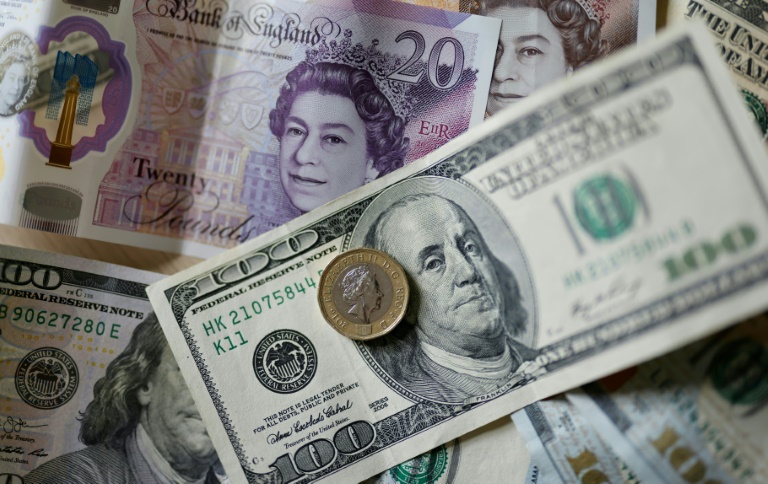
The dazzling rise of the US dollar, which has hit one record after another, is raising fears of a currency crash of a severity not seen since the 1997 Asian financial crisis reverberated around the world. 

The Federal Reserve’s rapid, steep interest rate increases and the relative health of the US economy has caused investors to flood into the dollar, driving the greenback up and sending the British pound, Indian rupee, Egyptian pound and South Korean won and others to uncharted depths.

“The moves are definitely getting extreme,” said Brad Bechtel of Jefferies, warning that the exchange rates could fall further creating a “dire situation.”

Most other major central banks also are forcefully tightening monetary policy to bring down inflation, but so far the moves have not helped stabilized the currency market, nor has Japan’s direct intervention to support the yen last week. 

Many fear that the same will be the case with the Bank of England’s plan announced Wednesday to conduct emergency purchases of government bonds to support the pound. 

“We have our doubts that the BoE’s plan will be the silver bullet to kill all of the angst that has been pressuring the pound … considering its plan doesn’t have permanency,” said Patrick O’Hare of Briefing.com.

Others, especially emerging market countries, are even worse off. The Pakistani rupee has lost 29 percent of its value against the US dollar in the past year, and the Egyptian pound has weakened by 20 percent.

Those countries, and others like Sri Lanka and Bangladesh which “benefitted from cheap and plentiful liquidity,” when interest rates were low during the pandemic, “are all suffering from tighter global liquidity,” said Win Thin, head of currency strategy at BBH Investor Services. 

“Those countries with the weakest fundamentals are likely to be tested first but others may join them,” he warned.

Those countries rely on imported oil and grain which have seen prices soar, widening their trade deficits and fueling inflation, massive blows to their currencies. 

The appreciation of the US currency has exacerbated the problem, since many commodities are denominated in dollars. 

Already in a fragile position, Pakistan was hit with historic flooding in August, which prompted the government to discuss a restructuring of its debt.

“There are severe pressures on the financial system now. And it’s only a matter of time until there’s a larger crisis somewhere in the world,” warns Adam Button of ForexLive. 

– Bad memories –

US Treasury Secretary Janet Yellen earlier this week said she has not yet seen signs of “disorderly” financial market developments amid the interest rate hikes.

For countries like Taiwan, Thailand or South Korea, which also dependent on energy imports, China’s zero-Covid policy has caused their exports to this key trading partner to plummet. 

Larger economies like China and Japan have contributed in recent weeks to the turbulence on the foreign exchange market. The Japanese yen plunged its lowest level in 24 years, while the Chinese yuan hit its weakest in 14 years.

Fear of destabilization brings back memories of the 1997 Asian financial crisis, which was triggered by the devaluation of the Thai baht. 

Malaysia, the Philippines and Indonesia followed, which panicked foreign investors and led to massive outflows of capital, pushing several countries into a severe recession and South Korea to the brink of default. 

At the time, the collapse of the baht was in part linked to its fixed parity with the dollar, which forced the Thai government to support its currency, depleting its foreign exchange reserves, which was unsustainable in the face of market forces.

Argentina eventually was forced to abandon its peg to the dollar and defaulted in late 2001 — the largest sovereign default in history.

Erik Nelson of Wells Fargo said that is a key difference between 2022 and 1997. 

“Now there’s not a lot of fixed exchange rates,” he said. “I’m frankly more worried about developed markets right now.”

Lebanon, one of the few to still peg its currency to the greenback, on Thursday announced a drastic devaluation, taking the country’s pound to 15,000 to the dollar from the previous fixed value of 1,507. 

In the United States, by contrast, where inflation has soared to a 40-year high “the Fed sees strong dollar as a blessing,” said Christopher Vecchio of DailyFX, noting that it helps “insulate the economy from more significant price pressures.”‘

A strong currency means the country pays less for its imported products. 

Strong US dollar an unstoppable force endangering other currencies

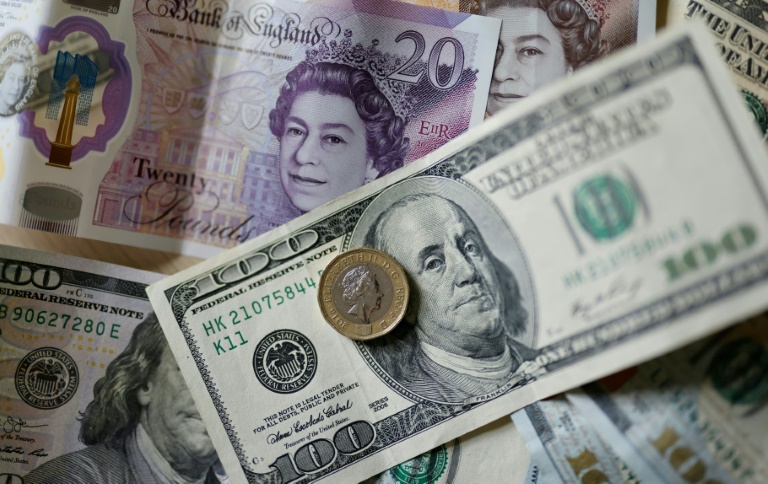
The dazzling rise of the US dollar, which has hit one record after another, is raising fears of a currency crash of a severity not seen since the 1997 Asian financial crisis reverberated around the world. 

The Federal Reserve’s rapid, steep interest rate increases and the relative health of the US economy has caused investors to flood into the dollar, driving the greenback up and sending the British pound, Indian rupee, Egyptian pound and South Korean won and others to uncharted depths.

“The moves are definitely getting extreme,” said Brad Bechtel of Jefferies, warning that the exchange rates could fall further creating a “dire situation.”

Most other major central banks also are forcefully tightening monetary policy to bring down inflation, but so far the moves have not helped stabilized the currency market, nor has Japan’s direct intervention to support the yen last week. 

Many fear that the same will be the case with the Bank of England’s plan announced Wednesday to conduct emergency purchases of government bonds to support the pound. 

“We have our doubts that the BoE’s plan will be the silver bullet to kill all of the angst that has been pressuring the pound … considering its plan doesn’t have permanency,” said Patrick O’Hare of Briefing.com.

Others, especially emerging market countries, are even worse off. The Pakistani rupee has lost 29 percent of its value against the US dollar in the past year, and the Egyptian pound has weakened by 20 percent.

Those countries, and others like Sri Lanka and Bangladesh which “benefitted from cheap and plentiful liquidity,” when interest rates were low during the pandemic, “are all suffering from tighter global liquidity,” said Win Thin, head of currency strategy at BBH Investor Services. 

“Those countries with the weakest fundamentals are likely to be tested first but others may join them,” he warned.

Those countries rely on imported oil and grain which have seen prices soar, widening their trade deficits and fueling inflation, massive blows to their currencies. 

The appreciation of the US currency has exacerbated the problem, since many commodities are denominated in dollars. 

Already in a fragile position, Pakistan was hit with historic flooding in August, which prompted the government to discuss a restructuring of its debt.

“There are severe pressures on the financial system now. And it’s only a matter of time until there’s a larger crisis somewhere in the world,” warns Adam Button of ForexLive. 

– Bad memories –

US Treasury Secretary Janet Yellen earlier this week said she has not yet seen signs of “disorderly” financial market developments amid the interest rate hikes.

For countries like Taiwan, Thailand or South Korea, which also dependent on energy imports, China’s zero-Covid policy has caused their exports to this key trading partner to plummet. 

Larger economies like China and Japan have contributed in recent weeks to the turbulence on the foreign exchange market. The Japanese yen plunged its lowest level in 24 years, while the Chinese yuan hit its weakest in 14 years.

Fear of destabilization brings back memories of the 1997 Asian financial crisis, which was triggered by the devaluation of the Thai baht. 

Malaysia, the Philippines and Indonesia followed, which panicked foreign investors and led to massive outflows of capital, pushing several countries into a severe recession and South Korea to the brink of default. 

At the time, the collapse of the baht was in part linked to its fixed parity with the dollar, which forced the Thai government to support its currency, depleting its foreign exchange reserves, which was unsustainable in the face of market forces.

Argentina eventually was forced to abandon its peg to the dollar and defaulted in late 2001 — the largest sovereign default in history.

Erik Nelson of Wells Fargo said that is a key difference between 2022 and 1997. 

“Now there’s not a lot of fixed exchange rates,” he said. “I’m frankly more worried about developed markets right now.”

Lebanon, one of the few to still peg its currency to the greenback, on Thursday announced a drastic devaluation, taking the country’s pound to 15,000 to the dollar from the previous fixed value of 1,507. 

In the United States, by contrast, where inflation has soared to a 40-year high “the Fed sees strong dollar as a blessing,” said Christopher Vecchio of DailyFX, noting that it helps “insulate the economy from more significant price pressures.”‘

A strong currency means the country pays less for its imported products. 

Mixed day for stocks as European inflation soars

Global stocks finished mixed after another volatile week, with European bourses rallying despite troubling inflation data and Wall Street continuing to retreat.

Eurozone consumer prices skyrocketed by a record 10 percent in September, official data showed, reaching double digits amid soaring energy prices caused by Russia’s war on Ukraine.

Stoked by a staggering 40.8 percent rise in energy prices, the yearly inflation rate in the 19-country single currency area hit its highest level since records began, according to Eurostat.

Nevertheless, markets in Paris and Frankfurt ended the day with gains of over one percent, pushing higher after recent losses.

London stocks also ended the day with a small gain as the British pound advanced again following the Bank of England’s surprise intervention in the bond market Wednesday after sterling sank to an all-time low against the dollar.

“Sterling has been all over the place this week,” said Fawad Razaqzada, analyst at City Index and Forex.com. “For traders, the pound is a confusing arena to be in right now.”

A poll Friday showed 51 percent of people think new UK Prime Minister Liz Truss should quit after championing a large tax cut in a bid to boost the economy that drew an unusual public rebuke from the International Monetary Fund.

The controversial economic package, which will dramatically increase government borrowing, also unusually lacked an accompanying cost analysis forecast from the country’s fiscal watchdog, the Office of Budget Responsibility.

Back in New York, major indices again finished decisively lower to conclude another difficult week defined by worries over inflation and the worsening Russia-Ukraine conflict.

Meanwhile, a closely-watched measure of US inflation released Friday showed the annual pace of price increases slowed slightly in August compared with the prior month. 

However, the inflation rate still exceeded analyst expectations, a dynamic that will likely keep the Federal Reserve on its current path to hike interest rates aggressively. The yield on the 10-year US Treasury note, a proxy for interest rates, rose closer to four percent.

In Asia, Shanghai dropped as data showed China’s manufacturing and services sectors struggled again in September from Covid lockdowns in parts of the country that have battered the world’s number-two economy.

There was also little reaction to news that Beijing would allow some cities to reduce mortgage rates for first-home purchases as it tries to support the property market.

Market sentiment continues to be eroded by rising fears about developments in the Ukraine war, as Russia  annexed four occupied regions of its neighbor Friday, with President Vladimir Putin threatening to use nuclear weapons to defend the territories.

– Key figures around 2050 GMT –

New York – Dow: DOWN 1.7 percent at 28,725.51 (close)

New York – S&P 500: DOWN 1.5 percent at 3,585.62 (close)

New York – Nasdaq: DOWN 1.5 percent at 10,575.62 (close)

London – FTSE 100: UP 0.2 percent at 6,893.81 (close)  

Frankfurt – DAX: UP 1.2 percent at 12,114.36 (close)

Paris – CAC 40: UP 1.5 percent at 5,762.34 (close)

EURO STOXX 50: UP 1.2 percent at 3,318.20 (close)

Tokyo – Nikkei 225: DOWN 1.8 percent at 25,937.21 (close)

Hong Kong – Hang Seng Index: UP 0.3 percent at 17,222.83 (close)

Shanghai – Composite: DOWN 0.6 percent at 3,024.39 (close)

Pound/dollar: UP at $1.1156 from $1.1117 on Thursday

Euro/dollar: DOWN at $0.9802 from $0.9816

Euro/pound: DOWN at 87.82 pence from 88.29 pence

Dollar/yen: UP at 144.80 yen from 144.46 yen

Brent North Sea crude: DOWN 0.6 percent at $87.96 per barrel

West Texas Intermediate: DOWN 2.1 percent at $79.49 per barrel

burs-jmb/hs

US, allies not 'intimidated' by Putin: Biden

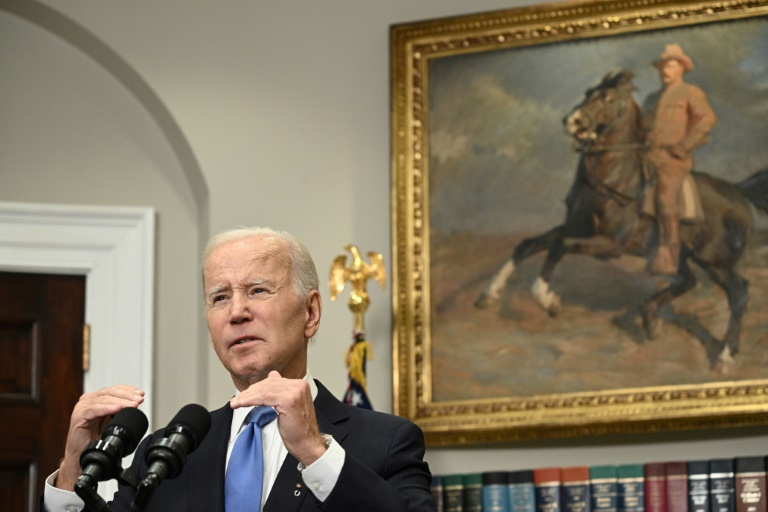
President Joe Biden said Friday the United States and NATO will not be intimidated by Russia’s President Vladimir Putin and warned that the Western alliance would defend “every inch” of its territory if attacked.

“America and its allies are not going to be intimidated,” he said in remarks at the White House. Putin is “not going to scare us.”

Biden then addressed the Kremlin leader directly, pointing his finger into the television camera as he warned against any attack spilling beyond Ukraine onto NATO territory.

“America’s fully prepared, with our NATO allies, to defend every single inch of NATO territory,” he said. “Mr Putin, don’t misunderstand what I’m saying: every inch.”

Biden was speaking shortly after Putin presided over a ceremony in Moscow to declare that Russia has annexed four more regions of Ukraine, although Western-armed Ukrainian troops continue to battle to restore control there.

Putin and multiple supporters have suggested that having declared the swath of Ukraine to belong to Russia, the Kremlin could now legitimately resort to nuclear weapons to defend what it says is Russian territory.

Biden called out his Russian counterpart’s “reckless words and threats” but dismissed Friday’s ceremony as a “sham routine that he put on” to show strength, while instead demonstrating that “he’s struggling.”

Shortly after, Biden’s top national security official said while there is a chance of Putin resorting to nuclear weapons, this doesn’t appear imminent.

“There is a risk, given all the loose talk and nuclear saber rattling by Putin, that he would consider this and we’ve been equally clear about what the consequences would be,” National Security Advisor Jake Sullivan told reporters.

“We do not presently see indications about the imminent use of nuclear weapons.”

Sullivan underlined that Washington was communicating privately but “directly with Russia about the kind of decisive response the United States would have.”

– More supplies for Ukraine –

The United States has walked a thin line since Putin launched the invasion of Ukraine in February by funneling ever greater military support to Kyiv while not getting directly involved — yet also guarding against potential for a spillover.

Sullivan noted that multiple reinforcements had been sent to boost Europe-based US forces, saying that they were ready if Russia escalated.

“We feel we have in place right now the capacity to respond to any contingency,” Sullivan said.

With Ukraine’s army making new headway against the Russian invaders in the east, Washington is maintaining the pace of new deliveries in ammunition and weapons.

There will be “another announcement of immediate security assistance to announce next week,” Sullivan told reporters, noting that the US government had also just pledged a longer term delivery of weapons to Ukraine, including 18 new Himars multiple rocket systems that must first be manufactured. 

Congress on Friday approved a further national spending bill that includes $12.3 billion more in military aid for Ukraine.

“This new grant assistance is a further demonstration of US confidence in Ukraine and will support critical government operations and provide relief to Ukrainian people suffering under Russia’s brutal war,” Treasury Secretary Janet Yellen said in a statement.

Meanwhile, addressing the mysterious explosion at the major Nord Stream natural gas underwater pipeline from Russia to western Europe, Biden echoed other Western leaders saying it was “a deliberate act of sabotage.”

He did not say who the United States believes is behind the attack but he described Russian allegations that Washington was involved as “disinformation and lies.”

“We’ll work with our allies to get to the bottom (of) exactly, precisely what happened,” he told reporters.

“At the appropriate moment, when things calm down, we’re going to be sending divers down to find out exactly what happened,” Biden said, adding that the United States is already working with allies to “enhance the protection of this critical infrastructure.”

Russian consulate in New York vandalized with red paint

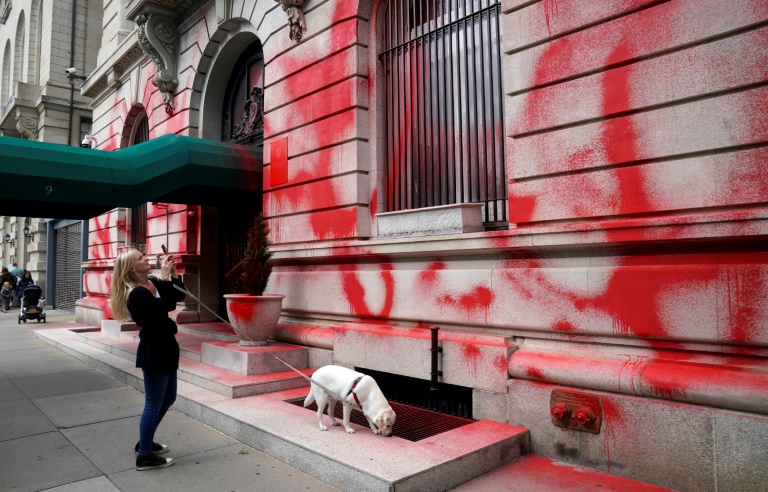
The Russian Consulate in New York was vandalized with red spray paint early Friday, in an apparent protest as President Vladimir Putin pursues his bloody invasion of Ukraine.

Officers said they responded to an emergency call just after 1:30 am that reported paint sprayed across the facade of the consulate on Manhattan’s Upper East Side.

A police spokeperson said the investigation was ongoing into the potential “bias incident” and no arrests had been made.

The bright red paint appeared hours before Putin announced he was annexing four parts of Ukraine occupied by his army.

Shelling also killed at least 30 people in Ukraine’s southern region of Zaporizhzhia — one of the worst attacks against civilians in months.

President Volodymyr Zelensky has urged the US-led military alliance NATO to grant Ukraine expedited membership, as international leaders including Joe Biden condemned Moscow’s annexations.

Rosie Morse, a retiree who lives in the neighborhood near the consulate, said the spray paint “looks like art work.”

“But the meaning is to express our feeling about Putin, and I can’t say that I don’t agree,” she told AFP. 

“It’s vandalism but it is the expression of how people in New York are realizing Putin is killing people,” said another bystander, Romen Baulin, 34. “This is a historical building and we are in the middle of New York, but I totally agree with the artist who did it.”

Close Bitnami banner
Bitnami