US Business

Gamers to bid farewell to FIFA franchise after 30 years

One of the biggest franchises in video game history is coming to an end on Friday with the release of FIFA 23, the final installment of a football game that has entranced millions of fans for the past three decades.

US game maker Electronic Arts (EA) and global football body FIFA spent months negotiating over the licensing agreement that has underpinned the game since its first edition in 1993.

But they confirmed the split in May when FIFA said it would be seeking other partners and EA said it would rebrand its game as “EA Sports FC” from next year.

For the final version, EA has included women’s club teams for the first time — though only from England and France — several years after it introduced women players.

Australian superstar Sam Kerr, who plays in the English league, is on the game’s cover along with French World Cup winner Kylian Mbappe.

“It is — and remains — one of the most popular franchises in all of gaming,” said Tom Wijman of Newzoo, a firm that analyses data on the industry.

The decoupling is risky for both EA and FIFA, with neither guaranteed success from their new ventures.

But analysts say EA is in a stronger position after spending 30 years developing and marketing the game.

The firm said last year that FIFA had sold more than 325 million copies over its three decades — reportedly generating more than $20 billion in sales.

– ‘Out on a high’ – 

Gamers were less bothered about the corporate fallout and just wanted to play the latest version of the game.

Professional eSports players — some of whom earn hundreds of thousands of dollars for playing the game — queued up to livestream their first attempts.

“One of my favourite videos ever,” tweeted Donovan Hunt, one of the most successful eSports players, linking to a YouTube video of his first try.

Swedish gamer Olle Arbin livestreamed his first attempt for 12 hours on Wednesday.

Reviewers have been impressed by the game’s improvements in graphics since the last edition, and praised additional features such as a “power shot” for giving gameplay another dimension.

“FIFA 23 sees the series bow out on a high, and provides encouraging signs for the debut of EA Sports FC this time next year,” wrote Ben Wilson on the specialist site GamesRadar.

– ‘Risky endeavour’ –

The video game industry, estimated to be worth around $300 billion a year, has become increasingly cutthroat in recent years with the biggest companies buying up many of their competitors.

EA had a turnover of $5.6 billion last year, making it one of the biggest game makers that remains outside the grasp of the four giants — Tencent, Sony, Microsoft and Nintendo.

The end of the deal with FIFA came after the football body reportedly raised its licensing fee demand from $150 million a year to $250 million — bring the total for the mooted four-year contract to $1 billion.

EA will lose the right to use the FIFA name and competitions such as the World Cup, but it can still use player names and non-FIFA competitions such as the English Premier League — a key advantage over its rivals.

However, the firm was already pivoting increasingly towards club competitions, both on and off screen.

It is taking on a five-year sponsorship deal of Spain’s top-flight La Liga next year, for a reported 30 to 40 million euros a year.

Newzoo’s Wijman said “EA Sports FC” has a good chance of success.

“Losing the FIFA brand may hurt EA’s chances somewhat, but they have the game engine, development teams, marketing expertise, and branding expertise,” he said.

FIFA could struggle to attract potential parters after its reported $1 billion demand, Wijman said.

It would be a “risky endeavour”, he said, “in any circumstance, but especially if you then have to compete with EA to build the most popular football game”.
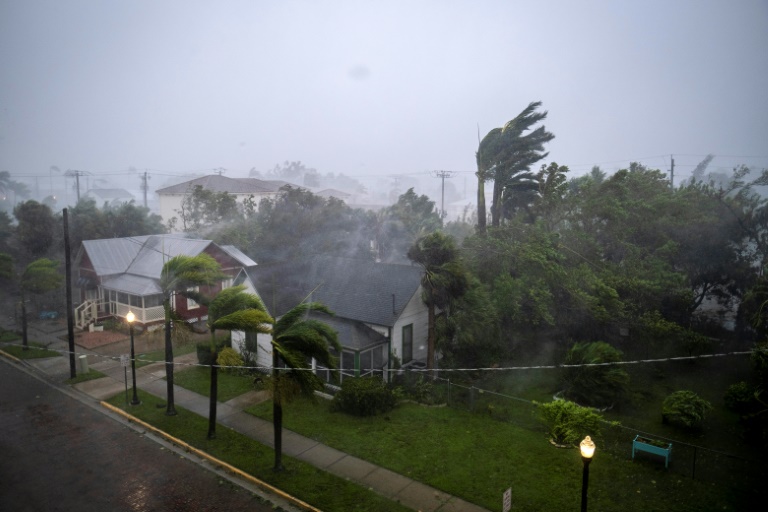
Hurricane Ian pounds Florida as a monster storm

Hurricane Ian plunged much of coastal southwest Florida into darkness Wednesday, as the monster storm brought “catastrophic” storm surges, wind and flooding that had officials readying a huge emergency response.

The US Border Patrol said 20 migrants were missing after their boat sank, with four Cubans swimming to shore in the Florida Keys islands and three rescued at sea by the coast guard.

The National Hurricane Center (NHC) said the eye of the “extremely dangerous” hurricane made landfall just after 3:00 pm (1900 GMT) on the barrier island of Cayo Costa, west of the city of Fort Myers.

Dramatic television footage from the coastal city of Naples showed floodwaters surging into beachfront homes, submerging roads and sweeping away vehicles.

Some neighborhoods in Fort Myers, which has a population of more than 80,000, resembled lakes.

The NHC said Ian was packing maximum sustained winds of 150 miles (240 kilometers) per hour when it landed. 

It later weakened to a Category 1 hurricane with winds of 90 miles per hour, while still battering Florida with “storm surge, winds and flooding,” the NHC said at around 11:00 pm local time Wednesday (0300 GMT).

More than two million customers were without electricity in Florida on Wednesday evening, out of a total of more than 11 million, with southwestern areas of the state the hardest hit, according to the PowerOutage.us tracking website.

Ian is set to affect several million people across Florida and in the southeastern states of Georgia and South Carolina.

As hurricane conditions spread, forecasters warned of a once-in-a-generation calamity.

“This is going to be a storm we talk about for many years to come,” said National Weather Service director Ken Graham. “It’s a historic event.”

Florida’s Governor Ron DeSantis said the state was going to experience a “nasty, nasty day, two days.”

– ‘Life-threatening’ –

The town of Punta Gorda, north of Fort Myers, was in near-total darkness as the storm wiped out power, save for the lucky few buildings with generators.

Howling winds ripped branches off trees and pulled chunks out of roofs.

About 2.5 million people were under mandatory evacuation orders in a dozen coastal Florida counties, with several dozen shelters set up, and voluntary evacuation recommended in others.

For those who decided to ride out the storm, authorities stressed it was too late to flee and residents should hunker down and stay indoors.

Airports in Tampa and Orlando stopped all commercial flights, and cruise ship companies delayed departures or canceled voyages.

With up to 30 inches (76 centimeters) of rain expected to fall on parts of the so-called Sunshine State, and a storm surge that could reach devastating levels of 12 to 18 feet (3.6 to 5.5 meters), authorities were warning of dire emergency conditions.

“This is a life-threatening situation,” the NHC warned.

The storm was set to move across central Florida before emerging in the Atlantic Ocean by late Thursday.

– ‘Nothing is left here’ –

Ian had plunged all of Cuba into darkness a day earlier, after battering the country’s west as a Category 3 storm and downing the island’s power network.

“Desolation and destruction. These are terrifying hours. Nothing is left here,” a 70-year-old resident of the western city of Pinar del Rio was quoted as saying in a social media post by his journalist son, Lazaro Manuel Alonso.

At least two people died in Pinar del Rio province, Cuban state media reported.

In the United States, the Pentagon said 3,200 national guard personnel were called up in Florida, with another 1,800 on the way.

DeSantis said state and federal responders were assigning thousands of personnel to address the storm response.

“There will be thousands of Floridians who will need help rebuilding,” he said.

As climate change warms the ocean’s surface, the number of powerful tropical storms, or cyclones, with stronger winds and more precipitation is likely to increase.

The total number of cyclones, however, may not.

According to Gary Lackmann, a professor of atmospheric science at North Carolina State University, studies have also detected a potential link between climate change and rapid intensification — when a relatively weak tropical storm surges to a Category 3 hurricane or higher in a 24-hour period, as happened with Ian.

“There remains a consensus that there will be fewer storms, but that the strongest will get stronger,” Lackmann told AFP.

Macron faces strike as French unions flex muscles

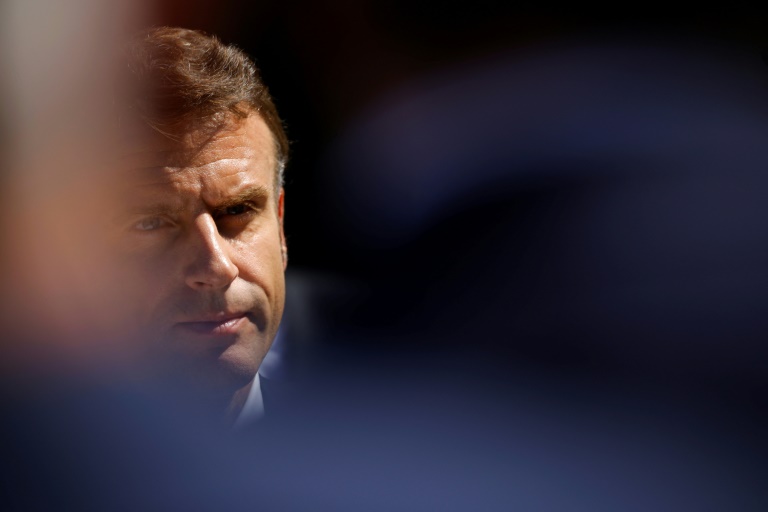
French schools, trains and businesses are set to be affected Thursday by the first major strike called since the re-election of President Emmanuel Macron in April, as unions push for wage hikes and the end of planned pension reform.

The extent of disruption remains uncertain, however, with the strike a test for the CGT union behind the protests, which is seeking to build support for a lengthy battle with the centrist government.

Macron has approved wage hikes for civil servants and teachers and put in place one of Europe’s most generous anti-inflation safety nets that has capped energy prices for households and held down inflation.

But his insistence on raising the retirement age from its current level of 62 — one of his main re-election campaign pledges — has stirred up unions and other left-wing opponents and remains broadly unpopular around the country.

“We are against pushing back the age of retirement because we consider it an aberration when there are so many unemployed people in this country,” Philippe Martinez, the head of the CGT, told the BFM broadcaster on Tuesday.

“Keeping people with work in their work means that people who haven’t got any can’t find it,” he added.

Despite warnings from allies about the risk of failure, Macron has tasked his government with hiking the retirement age from the current age of 62, one of the lowest in Europe, with changes set to take effect next year.

With deficits spiralling and public debt at historic highs, the former investment banker has argued that pushing back pensions and getting more people into jobs are the only ways the state can raise revenue without increasing taxes. 

His centrist party lost its majority in parliament in June, severely undermining his ability to push through changes. 

“If the president insists on declaring a social war on the people, we will respond with all the means at our disposal,” the parliamentary leader of the France Unbowed (LFI) political party, Mathilde Panot, tweeted on Wednesday.

– Stoppages – 

Thursday’s strike has been called by the CGT, France’s second-biggest union, with backing from smaller partners Solidaires and FSU.

The influential CFDT and hard-left FO unions have declined to take part, underlining splits in the country’s once formidable labour movement which has struggled to stop Macron’s economic and social security reforms since he came to power in 2017. 

Around one in 10 schools in Paris are expected to shut for the day on Thursday, while 300 will close in the southern Bouches-du-Rhone area which includes Marseille.

“We can really see that teachers are fed up with their salaries… if on top of that, there’s the issue of pensions, it risks creating some sparks,” said Guislaine David from the Snuipp-FSU union. 

SNCF railways and the RATP metro system in Paris are also bracing for disruption to services, while employees of oil and gas giant TotalEnergies have been on strike since Tuesday.

Despite anger over the soaring cost of living, Macron is in a hurry to push through pension reform, which he first promised in 2017 before pausing in 2020 during the Covid-19 pandemic.

“I don’t know anyone who wants to work for longer, but I don’t know anyone who thinks they are not going to work for longer,” a minister close to the president told AFP last week on condition of anonymity.

“Maybe I’m mistaken, but I’m not sure that the turnout will be as large as the unions and LFI are hoping for,” the minister said.

burs-adp/sjw/ah/mca

Hong Kong confirms November banking summit after ending quarantine

Hong Kong confirmed Thursday it will host an international banking summit in early November, days after it lifted mandatory quarantine rules for arrivals that have battered the city’s reputation as a business hub.

The city has had a difficult three years, with a sweeping crackdown on political freedoms and the imposition of some of the world’s strictest coronavirus pandemic controls, which have kept the city isolated even as competitors reopen.

The banking summit on November 2 is expected to draw 200 participants, including the group chairmen or Chief Executive Officers of 30 major financial institutions, according to the Hong Kong Monetary Authority (HKMA).

HKMA Chief Executive Eddie Yue wrote in a blog post that the event would allow guests to “meet their staff and clients in person, and establish new relationships”, now that travel to Hong Kong has become easier.

“For most of them this will only be a short visit and we need to make sure they can meet people, do business and build relationships in the kind of business-as-usual way they expect from a vibrant international city,” Yue added.

The gathering will include panel talks featuring Goldman Sachs CEO David Solomon, Morgan Stanley CEO James Gorman, Citigroup CEO Jane Fraser, as well as top executives from JPMorgan Chase, BlackRock, UBS and KKR, according to the HKMA.

Hong Kong last week scrapped mandatory hotel quarantine for travellers after two-and-a-half years, amid concerns of brain drain and losing business to rivals like Singapore and London, which reopened to the world once their populations were adequately vaccinated.

But the city still adheres to a version of China’s zero-Covid strategy and has kept some pandemic restrictions in place, including social distancing, business hours limitations and compulsory masking.

Arrivals in the city no longer have to quarantine in hotels, but they cannot enter restaurants or bars for three days after landing and must undergo regular testing. 

Those who test positive face being isolated in hotel rooms at their own expense.

It is unclear if summit participants will be exempt from the pandemic restrictions, and the HKMA said Thursday that it was working to “finalise an appropriate set of arrangements”.

HSBC Chief Executive Noel Quinn and Standard Chartered CEO Bill Winters were among the banking industry leaders who previously committed to attending the Hong Kong summit in person.

Asian stocks pick up after BoE steps in, but pound rally wanes

Asian stocks rallied Thursday as UK and US government yields fell after the Bank of England jumped into bond markets to prevent a fresh financial catastrophe.

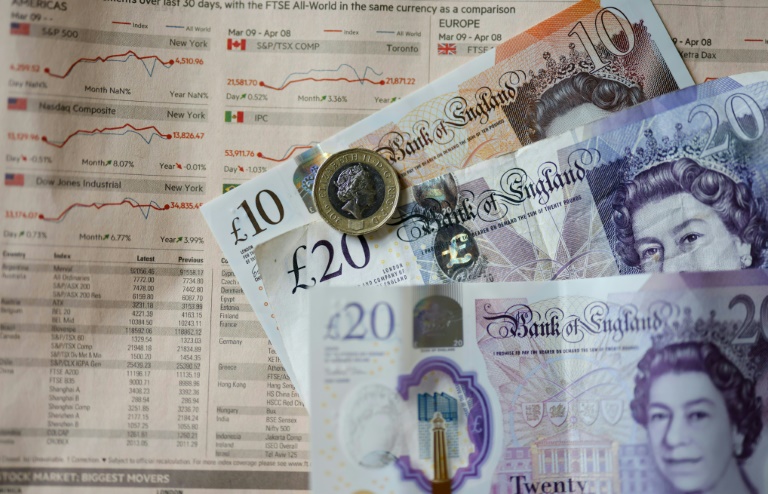
However, the pound — which earlier this week hit a record low against the dollar — struggled to hold its advance against the greenback, with commentators warning it could face further pain.

Financial markets are being hammered as central banks around the world ramp up interest rates to tackle runaway inflation, fuelling worries about a recession and a possible hit to company profits.

And the selling picked up this week after new UK finance minister Kwasi Kwarteng unveiled a tax-cutting mini-budget Friday, which many experts including the International Monetary Fund warned would fan borrowing and deal a further blow to the already fragile economy.

The spending plan sent yields on UK government bonds, as well as those of other countries, soaring and raised the prospect of even bigger interest rate hikes.

That led the Bank of England on Wednesday to announce a two-week programme to spend £65 billion ($71 billion) buying long-dated UK bonds “to restore orderly market conditions”.

The move meant the BoE had to suspend a programme to sell “gilts” as part of its drive to fight inflation, though analysts speculated that it could give traders some hope that similar support could be provided elsewhere.

National Australia Bank’s Ray Attrill said traders had grown accustomed to the fact that central banks were not ready to simply help asset markets when they drop in response to inflation-fighting measures.

But now there was an understanding that “when markets become dysfunctional with potential real world economic consequences, central banks’ financial stability obligations can still kick in”.

All three main indexes on Wall Street surged around two percent Wednesday, while European markets were also up.

And Asia extended the gains, though the initial surge was beginning to wane as the day wore on.

Hong Kong, Sydney, Seoul, Singapore, Wellington and Manila were all up more than one percent, while Tokyo, Shanghai, Taipei and Jakarta were also in positive territory.

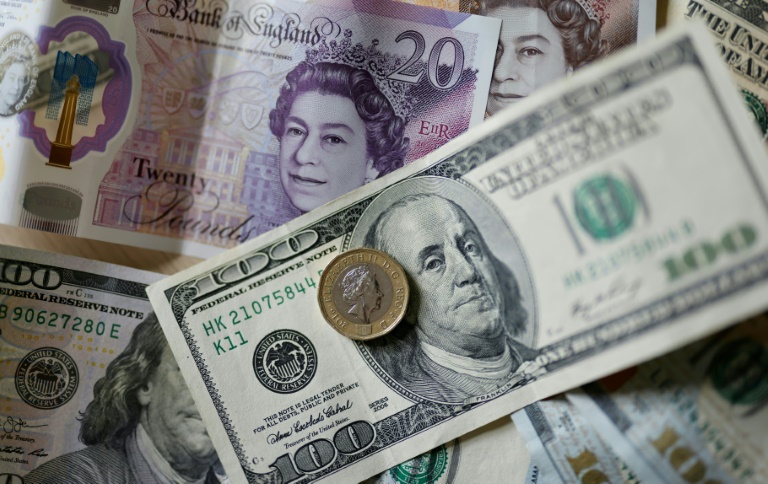
However, the pound was weakening again sitting just below $1.0800, having spiked at $1.0900 earlier, as the dollar remained the go-to unit owing to Fed plans to lift rates further this year.

OANDA’s Edward Moya warned of more rough seas for sterling.

“The British pound went on a little roller coaster ride following the BoE action to buy unlimited long-dated gilts, but will still probably remain heavy over the country’s fiscal situation, current account deficit, financial stability risks, and energy poverty likelihood for parts of the population,” he said in a note.

The uptick across markets, however, was rare and the general mood on trading floors remains dark as the Fed and other central banks zero in on hiking borrowing costs to fight decades-high inflation.

“All eyes are on inflation and interest rates,” said Josh Emanuel at Wilshire. “Equities are really going to take their cues from bond markets. So if you see bond yields move lower, that is a good sign for equities.”

And Julia Raiskin, at Citigroup, added that “markets are very pessimistic… Other than the dollar, there are not many assets that are trading constructively.”

– Key figures at around 0230 GMT –

Tokyo – Nikkei 225: UP 0.3 percent at 26,238.32 (break)

Hong Kong – Hang Seng Index: UP 1.3 percent at 17,477.77

Shanghai – Composite: UP 0.5 percent at 3,060.83

Pound/dollar: DOWN at $1.0789 from $1.0889 on Wednesday

Euro/dollar: UP at $0.9638 from $0.9735

Euro/pound: UP at 89.68 from 89.39 pence 

Dollar/yen: UP at 144.30 yen from 144.11 yen

West Texas Intermediate: DOWN 0.4 percent at $81.84 per barrel

Brent North Sea crude: DOWN 0.4 percent at $89.00 per barrel

New York – Dow: UP 1.9 percent at 29,683.74 (close)

London – FTSE 100: UP 0.3 percent at 7,005.39 (close)

Defying turmoil, Porsche to go 'full throttle' with blockbuster IPO

Luxury sports carmaker Porsche will debut on the Frankfurt stock exchange Thursday in one of Europe’s biggest listings in years, hoping its brand power can attract investors despite market turbulence.

Even as stocks worldwide suffer from surging inflation and mounting recession fears, the maker of the 911 sports car is pushing ahead with the blockbuster flotation.

The initial public offering (IPO) has generated buzz in Porsche’s home market of Germany, where top tabloid Bild described it as “crazy, cool, fast-paced”.

“On Thursday, sports car icon Porsche goes full throttle and races onto the stock market,” read a column in the paper.

“It will be the largest IPO in Germany for decades!”

Parent company Volkswagen is set to raise 9.4 billion euros ($9.2 billion) from the listing. Porsche’s shares will each be issued at 82.50 euros — the top end of an initial range — which gives the carmaker a valuation of 75 billion euros.

Some of the cash raised will be ploughed into Volkswagen’s high-speed drive towards electric vehicles, which has brought the legacy carmaker into more direct competition with US rival Tesla.

In terms of value of shares issued, Porsche’s is set to be the biggest stock market debut in Germany since Deutsche Telekom’s in 1996, and the largest in Europe since the 2011 flotation of Switzerland-based commodities giant Glencore.

– ‘Car market catalyst’ –

Analysts are looking to the carmaker’s market entry for some cheer against a morose economic backdrop, with investment bank Berenberg saying it could “offer a catalyst in an industry sorely lacking positive surprises”. 

It has generated interest from major investors, including Qatar and Abu Dhabi’s public investment funds, Norway’s sovereign wealth fund and US asset management firm T. Rowe Price. 

But German automotive expert Ferdinand Dudenhoeffer cautioned “it is not the best time for an IPO”, noting the Frankfurt stock market had fallen heavily since the start of the year.

But he said the conditions did exist for Porsche’s listing to be a success, and it would be “exciting to see how it develops in a difficult economic environment”.

The IPO will see 113.9 million shares of “Porsche AG” issued.

The carmaker’s valuation will be below some earlier estimates — but should still catapult it above rivals such as BMW, with a valuation of 47 billion euros, and Mercedes-Benz, with a 56-billion-euro capitalisation.

– Electric drive –

Porsche has joined the electric drive of the Volkswagen group, whose brands also include Audi and Skoda, in earnest. 

The electric “Taycan” has been the brand’s best-selling model since January, an electric version of the “Macan” is due in 2024, as well as the launch of a new SUV in the middle of the decade.

The electric strategy includes building battery factories across Europe and the US. Volkswagen announced this week it will work with Belgian group Umicore to produce battery materials. 

The IPO will see preferential shares sold to investors, which have no voting rights, while Volkswagen will also sell 25 percent of the carmaker to Porsche SE. 

The eponymous company is a listed holding controlled by the Porsche-Piech family, who in turn are the main shareholders in Volkswagen.

This means that Porsche SE will have a blocking minority that will allow it to steer the future of the company.

Volkswagen hopes that listing a minority stake in Porsche will push up its own stock market value, which is 85 billion euros — just a fraction of Tesla’s, at just over $900 billion.

Tracing uncertainty: Google harnesses quantum mechanics at California lab

Outside, balmy September sunshine warms an idyllic coast, as California basks in yet another perfect day.

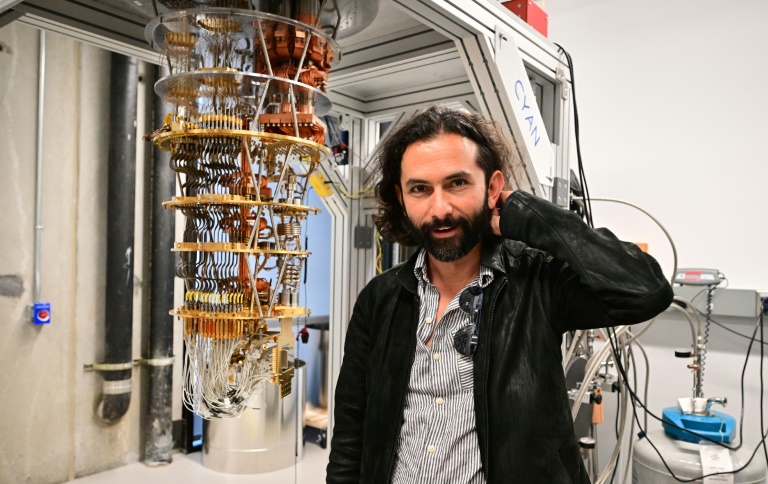
Inside, it’s minus 460 Fahrenheit (-273 Celsius) in some spots, pockets of cold that bristle with the impossible physics of quantum mechanics — a science in which things can simultaneously exist, not exist and also be something in between.

This is Google’s Quantum AI laboratory, where dozens of super-smart people labor in an office kitted out with climbing walls and electric bikes to shape the next generation of computers — a generation that will be unlike anything users currently have in their pockets or offices.

“It is a new type of computer that uses quantum mechanics to do computations and allows us… to solve problems that would otherwise be impossible,” explains Erik Lucero, lead engineer at the campus near Santa Barbara.

“It’s not going to replace your mobile phone, your desktop; it’s going to be working in parallel with those things.”

Quantum mechanics is a field of research that scientists say could be used one day to help limit global warming, design city traffic systems or develop powerful new drugs.

The promises are so great that governments, tech giants and start-ups around the world are investing billions of dollars in it, employing some of the biggest brains around.

– Schrodinger’s cat –

Old fashioned computing is built on the idea of binary certainty: tens of thousands of “bits” of data that are each definitely either “on” or “off,” represented by either a one or a zero.

Quantum computing uses uncertainty: its “qubits” can exist in a state of both one-ness and zero-ness in what is called a superposition.

The most famous illustration of a quantum superposition is Schrodinger’s cat — a hypothetical animal locked in a box with a flask of poison which may or may not shatter.

While the box is shut, the cat is simultaneously alive and dead. But once you interfere with the quantum state and open the box, the question of the cat’s life or death is resolved.

Quantum computers use this uncertainty to perform lots of seemingly contradictory calculations at the same time — a bit like being able to go down every possible route in a maze all at once, instead of trying each one in series until you find the right path.

The difficulty for quantum computer designers is getting these qubits to maintain their superposition long enough to make a calculation. 

As soon as something interferes with them — noise, muck, the wrong temperature — the superposition collapses, and you’re left with a random and likely nonsensical answer. 

The quantum computer Google showed off to journalists resembles a steampunk wedding cake hung upside-down from a support structure.

Each layer of metal and curved wires gets progressively colder, down to the final stage, where the palm-sized processor is cooled to just 10 Millikelvin, or about -460 Fahrenheit (-273 Celsius).

That temperature — only a shade above absolute zero, the lowest temperature possible in the universe — is vital for the superconductivity Google’s design relies on.

While the layer-cake computer is not huge — about half a person high — a decent amount of lab space is taken up with the equipment to cool it — pipes whoosh overhead with helium dilutions compressing and expanding, using the same process that keeps your refrigerator cold.

– Future –

But… what does it all actually do?

Well, says Daniel Lidar, an expert in quantum systems at the University of Southern California, it’s a field that promises much when it matures, but which is still a toddler.

“We’ve learned how to crawl but we’ve certainly not yet learned how to how to walk or jump or run,” he told AFP.

The key to its growth will be solving the problem of the superpositional collapses — the opening of the cat’s box — to allow for meaningful calculations.

As this process of error correction improves, problems such as city traffic optimization, which is fiendishly hard on a classical computer because of the number of independent variables involved — the cars themselves — could come within reach, said Lidar.

“On (an error-corrected) quantum computer, you could solve that problem,” he said.

For Lucero and his colleagues, these future possibilities are worth the brain ache.

“Quantum mechanics is one of the best theories that we have today to experience nature. This is a computer that speaks the language of nature.

“And if we want to go out and figure out these really challenging problems, to help save our planet, and things like climate change, than having a computer that can do exactly that, I’d want that.”

Apple App Store pulls Russian social network VKontakte

Apple on Wednesday confirmed that it removed popular Russian social network VKontakte from its App Store globally due to sanctions imposed by Britain.

The British government on Monday sanctioned 92 Russian individuals and entities after President Vladimir Putin’s regime held referendums in Moscow-controlled areas of Ukraine — denounced by Kyiv and its allies as a “sham” — and stepped up threats against the West.

“Sham referendums held at the barrel of a gun cannot be free or fair and we will never recognize their results,” British Foreign Secretary James Cleverly said in a statement.

The sanctions target “those behind these sham votes, as well as the individuals that continue to prop up the Russian regime’s war of aggression,” he said.

San Petersburg-based tech firm VK said in a blog post that some of its applications were no longer available from the App Store, which serves as the lone gateway for content onto Apple mobile devices.

VK apps are used for messaging, digital payments and grocery shopping as well as social networking.

The VK apps removed from the App Store were being distributed by developers controlled or majority-owned by parties sanctioned by the UK government, and Apple is complying with the law, according to the Silicon Valley tech giant.

Apple said that it terminated developer accounts associated with the apps, which were not available from the App Store regardless of users’ locations.

People who have already installed the apps on devices can still use them, but updates will no longer be provided through the App Store, according to Apple and VK.

“Their core functionality will be familiar and stable,” VKontakte-parent VK said of the apps.

“There may be difficulties with the work of notifications and payments.”

Balmain turns fashion show into music fest featuring Cher

French designer Olivier Rousteing pulled out all the stops on Wednesday in his latest collection for Balmain at Paris Fashion Week, closing his show with US star Cher on the catwalk.

The show began with Cher on a screen, saying: “All of us invent ourselves. Some of us just have more imagination than others.”

But that was only a teaser before Cher appeared in person with her 1999 hit “Strong Enough” booming around the event at a rugby stadium.

Dubbed the “Balmain Festival”, Rousteing unveiled his designs with clear African influences and mythological references including Apollo and Venus.

A particularly poignant moment during the finale came when black models walked down in a variety of textured dresses, some with the corseted look Rousteing favours and a song by Youssou N’Dour featuring the lyrics: “And when a child is born into this world, it has no concept, of the tone the skin is living in.”

After the show ended, the rising Nigerian star of Afrobeats, Ckay, performed on stage for thousands attending the event. 

The devil was in the detail, with straw dresses as well as models wearing large gold earrings, large-brimmed hats and necklaces almost completely covering the neck, while others had nose rings.

The glamour oozed at the Balmain event, with celebrities attending including US singer and actor Dove Cameron, Belgian artist Stromae and American reality TV star and close friend of Rousteing, Kylie Jenner.

There were stars on the catwalk too with famous American plus-size model Ashley Graham modelling one of Rousteing’s creations.

Rousteing, 37, has been artistic director at Balmain since 2011 and is known for pushing the brand into new territory and working with celebrities such as Jenner and her famous half-sister Kim Kardashian.

As cosmetics becomes an ever-bigger industry, Balmain this week announced plans to launch a beauty line as part of a partnership with Estee Lauder.

Stocks rally with sterling after surprise move by Bank of England

Global stock markets rallied on Wednesday in volatile trading after a surprise intervention by the Bank of England pressured bond yields in Britain and the United States and lifted the pound.

The Dow snapped a six-day streak of losses, piling on nearly 550 points, or 1.9 percent after the BoE action.

Following a historic slump in the pound, the BoE announced it was temporarily buying up long-dated UK government bonds “to restore orderly market conditions.”

The “intervention helped calm markets and led to a reversal of a spike (in bond yields) that we had seen earlier this morning,” said Angelo Kourkafas of Edward Jones.

Analysts noted that stocks were poised for an upturn after a bruising stretch since mid-August that had pushed major indices to their lowest level of 2022.

Britain’s new Finance Minister Kwasi Kwarteng’s tax-cutting budget sent shock waves through markets, pushing the pound to a record low and leading to dire warnings for Britain’s economy — though sterling later rallied against the dollar.

The BoE intervention followed rare criticism from the International Monetary Fund, which argued that Britain’s recent budget could increase inequality and worsen inflation.

The pound, which had sunk to an all-time low against the dollar, jumped about 1.5 percent against the US currency.

“The dollar weakness was triggered by the BoE intervention today, as that gave rise to speculation that other central banks might step in to support their currencies and bonds,” City Index analyst Fawad Razaqzada told AFP.

After early losses, major indices in London, Frankfurt and Paris all closed up Wednesday.

But geopolitical concerns continued to temper enthusiasm, analysts said, with heightened Ukraine tensions and looming recession fears.

– Fear grips markets –

Analysts warned of looming risks in the shape of soft economic data and crumbling earnings expectations.

“Fear of tightening-induced recessions has wiped out the recovery we saw in stock markets over the bulk of the summer as investors were once again burned by an over-eagerness to catch the bottom in the market, despite there being little evidence of it being justified,” said OANDA’s Craig Erlam.

“That fear has now gripped the markets and we may see a little more caution going forward,” Erlam added.

Sentiment was also rattled by worries about developments in Ukraine, after Kremlin-installed authorities in four regions under Russian control claimed victory in annexation votes, with Moscow warning it could use nuclear weapons to defend the territories.

Ukraine and its allies have denounced the so-called referendums as a sham, saying the West would never recognize the results.

Volatile oil prices also rose Wednesday, as the European Union proposed a new round of sanctions on Moscow, including a possible oil price cap.

Leaks from two Russia-Germany undersea gas pipelines, which the EU said were caused by deliberate sabotage, also threatened to fuel further tensions in the energy conflict.

– Key figures at around 2050 GMT –

New York – Dow: UP 1.9 percent at 29,683.74 (close)

New York – S&P 500: UP 2.0 percent at 3,719.04 (close)

New York – Nasdaq: UP 2.1 percent at 11,051.64 (close)

London – FTSE 100: UP 0.3 percent at 7,005.39 points (close)

Frankfurt – DAX: UP 0.4 percent at 12,183.28 (close)

Paris – CAC 40: UP 0.2 percent at 5,765.01 (close)

EURO STOXX 50: UP 0.2 percent at 3d335.30 (close)

Tokyo – Nikkei 225: DOWN 1.5 percent at 26,173.98 (close)

Hong Kong – Hang Seng Index: DOWN 3.4 percent at 17,250.88 (close)

Shanghai – Composite: DOWN 1.6 percent at 3,045.07 (close)

Pound/dollar: UP at $1.0889 from $1.0733 on Tuesday

Euro/dollar: UP at $0.9735 from $0.9594

Euro/pound: FLAT at 89.39 pence 

Dollar/yen: DOWN at 144.11 yen from 144.80 yen

Brent North Sea crude: UP 3.5 percent at $89.32 per barrel

West Texas Intermediate: UP 4.6 percent at $82.15 per barrel

burs-jmb/sw

Close Bitnami banner
Bitnami