US Business

Kremlin proxies in Ukraine plead to Putin for annexation

Kremlin-backed officials in Ukraine appealed to President Vladimir Putin Wednesday to annex the regions under their control, after the territories held votes denounced by Kyiv and the West as a “sham”.

Ukraine called on the EU to hit Russia with more sanctions and NATO to send more weapons to the frontline after the Kremlin-installed officials rolled out the alleged results late Tuesday.

The appeal came despite repeated warnings from Moscow that it could use its nuclear arsenal to defend the territories from a Ukrainian counter-offensive that has wrested back swathes of territory this month already.

“Ukraine cannot and will not tolerate any attempts by Russia to seize any part of our land,” President Volodymyr Zelensky said.

The United States announced a new package of weapons and supplies Wednesday worth $1.1 billion, including precision rocket systems, ammunition, armoured vehicles and radars.

The European Commission proposed fresh sanctions targeting Russian exports worth seven billion euros, an oil price cap, an expanded travel blacklist and asset freezes.

The EU slammed the “illegal” vote and said the results were “falsified”, while the White House and German Chancellor Olaf Scholz said they would “never” recognise them.

British Prime Minister Liz Truss and her Canadian counterpart Justin Trudeau vowed to disregard the votes and offer Kyiv further support.

Lugansk was the first Russian-controlled region of Ukraine to appeal to Putin to intervene, with the recently captured southern regions of Zaporizhzhia and Kherson following shortly after.

“Our residents made a historic choice and have decided to become part of the multinational population of the Russian Federation,” the Kremlin-installed leader in Kherson, Vladimir Saldo, said in a statement published on social media.

The Russian foreign ministry in a statement on Wednesday said the regions made a “conscious and free choice” in favour of annexation.

Only Donetsk — which along with Lugansk makes up the industrial Donbas region partially controlled by pro-Kremlin separatists since 2014 — had yet to formally ask Putin for annexation.

The appeal to Putin represents a turning point in the seven-month invasion as Russian officials in Moscow suggest they could use nuclear weapons in Ukraine and Putin calls up thousands of reservists to cement the Kremlin’s authority in the territories.

– ‘What have we ended up with?’ –

The four territories — Kherson and Zaporizhzhia in the south; Donetsk and Lugansk in the east — create a crucial land corridor between Russia and the Crimean peninsula, annexed by Moscow in 2014. 

Together, all five make up around 20 percent of Ukraine, whose forces in recent weeks have been clawing back ground.

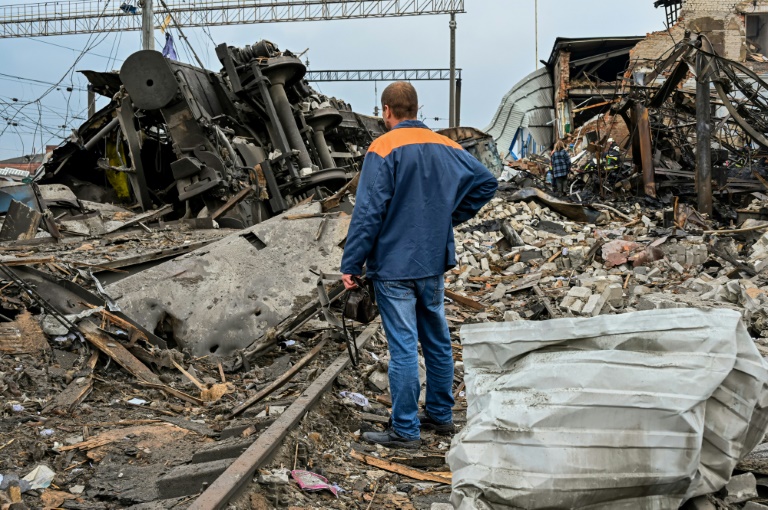
Despite those gains — particularly in the northeast — Russian forces have battered the second-largest city of Kharkiv and overnight a salvo of missiles hit a railway yard, knocking out power to more than 18,000 households.

Iryna Mayor, 51, a machine operator in the rail wagon workshop, paused from shifting rubble and laying damp and torn record books out to dry, to angrily mock the invasion.

“We’re Russian-speaking people, and what have we ended up with? Have we got peace, brotherhood? No, you can see what we got,” she declared, pointing at the twisted debris surrounding the missile craters.

Lawmakers are expected to vote hastily to annex the territories now that the results have been announced, and Russian news agencies have said Putin could sign legislation formalising the land grab this week.

– ‘I’m in shock’ –

Putin’s threat to use nuclear weapons in Ukraine coincided with his decision to call up hundreds of thousands of reservists to back up Russia’s struggling forces in eastern Ukraine.

The move has sparked panic, protests and an exodus among military-aged Russian men for neighbouring countries such as Georgia and Kazakhstan.

Moscow announced Wednesday it would no longer issue passports to Russian men called up to serve and a region bordering Russia closed to passenger cars, with both moves fuelling fears the borders could close entirely.

The same day, a Russian court remanded three young poets into custody for two months after they took part in an event against the mobilisation, the OVD-Info human rights NGO said.

At a military recruitment office in Saint Petersburg there was confusion and resignation, as draftees and their families bid each other goodbye.

Nikita, a 25-year-old reservist, had tears in his eyes as he held hands with his 22-year-old fiancee as he said goodbye.

“If you have to go, you have to,” he said. 

“I don’t know what to say. I am in shock,” Alina said, her gaze locked on Nikita.

Along the frontline of Ukraine, six people were injured in the Kharkiv region by Russian strikes, officials in Kyiv said, while five civilians were killed and 10 more wounded by Moscow’s forces. 
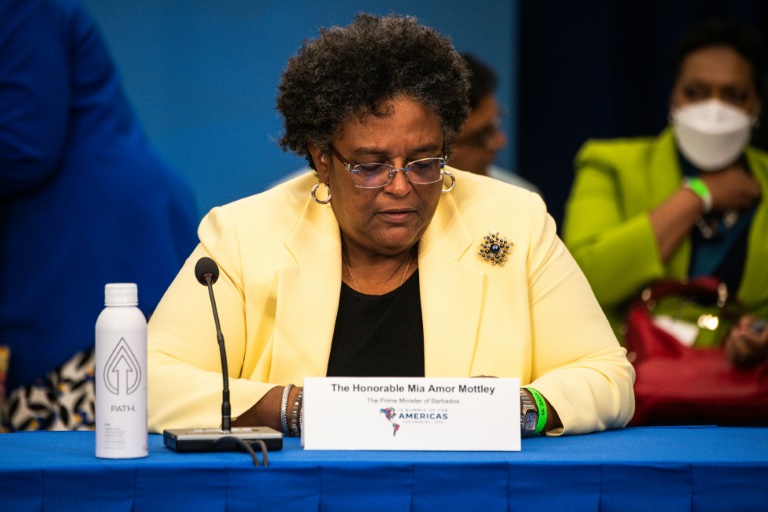
Barbados wins first loan deal from IMF climate change fund

Barbados on Tuesday became the first country to secure agreement on a financing package under a new IMF fund aimed at helping low-income countries tackle the impacts of climate change.

A team from the Washington-based lender agreed with the island nation’s government on a $183 million package through the Resilience and Sustainability Trust (RST) launched earlier this year.

The proposed deal “will provide financing to support the country’s climate change adaptation and mitigation efforts, and support Barbados’ ambitious goal of transitioning to a fully renewable-based economy by 2030,” said Bert van Selm, who led the IMF mission to Barbados this week.

The country still has to gain approval from the International Monetary Fund’s board and must negotiate a more traditional loan program, as required by the terms of the RST.

Barbados has requested a three-year, $110 million aid package under the Extended Fund Facility to accompany the other financing, van Selm said in a statement.

He told reporters the board is due to consider the two packages later this year, with negotiating terms expected to be a smooth process, as the country recently concluded a four-year EFF.

“We’re very happy to have Barbados as the first user of this new facility,” he said.

There are some reforms the country has not been able to fully implement due to the Covid-19 pandemic that will be included in the new loan, such as pension reform, he added.

Van Selm noted that the country faces some of the same challenges hitting the global economy, including rising inflation and supply chain issues, but with tourism returning to the island, the economy is expected to grow by 10 percent this year.

“Barbados continues to confront economic challenges owing to the global pandemic and higher global commodity prices, but the recovery is now well underway,” he said, although he cautioned about ongoing risks to the outlook.

The aid programs will help the country continue reform efforts, including reducing public debt, while boosting economic stability, he added.

The IMF aims to mobilize $45 billion for the RST with contributions from member governments and provide 20-year loans available to about 140 low- and middle-income nations eligible for the funding.

White House announces multi-billion dollar plan to attack obesity, hunger

The White House announced Wednesday billions of dollars in pledges from major corporations — including the likes of fast food behemoth Burger King — to craft a national strategy on ending the twin US challenges of hunger and obesity.

The private sector pledges were unveiled as President Joe Biden hosted what the administration touted as the first big White House summit on food and diet since Richard Nixon was in office more than half a century ago.

Nearly 42 percent of American adults are technically obese and about 10 percent of US households suffer food insecurity, according to the latest government statistics.

Biden told the White House Conference on Hunger, Nutrition, and Health that government, Congress, private companies and society must work together to end hunger and reduce diet-related diseases in the United States by 2030.

“If you can’t feed your child, what the hell else matters?” he asked the audience of Congress members, activists, health experts and food industry representatives including top chef and humanitarian Jose Andres. “In America, no child should go to bed hungry. No parent should die of disease that can be prevented.”

Because Congress is unlikely to fund major federal dietary programs, Biden finds his hands largely tied. However, officials said he was using the power of the presidency to get major companies involved and that the response has been strong.

“We know that we can only achieve the goals… if we rally a whole of society response,” a senior official said, speaking on condition of anonymity.

Officials briefing reporters said that $8 billion in public and private sector commitments already made include pledges from more than 100 organizations, ranging from hospitals to tech companies and food industry players.

“All have committed to bold and in some cases, paradigm shifting commitments that will meaningfully improve nutrition, promote physical activity, and reduce hunger and diet related disease over the next seven years,” an official said.

– What’s ‘healthy’? –

The White House says that poor diets are behind ever-rising cases of diseases like type 2 diabetes, obesity, hypertension, and certain cancers, warning that “there is no silver bullet to address these complex issues, and there is no overnight fix.”

One idea being pushed by the administration is to regulate the use of the term “healthy” on food packaging.

“More than 80 percent of people in the US aren’t eating enough vegetables, fruit and dairy. And most people consume too much added sugars, saturated fat and sodium,” the US Food and Drug Administration said.

For now, the quickest response is coming from the private sector.

S2G investments, which champions “a more humane and healthy planet,” and food industry innovation specialists Food Systems for the Future are set to launch a $2.5 billion private investor coalition over the next three years.

The National Restaurant Association will expand a project aimed at getting children to eat healthier food at 45,000 more outlets, including at chains like Burger King.

IT and communications giant Cisco will contribute $500 million over five years for healthier meals and food production in areas where it does business.

Officials acknowledged that there is no enforcement mechanism for the spending programs but “we will continue to certainly work closely with these partners to ensure they execute on the actions committed to.”

Washington dismisses Moscow's finger of blame for gas leaks

Moscow questioned Wednesday whether Washington caused mystery undersea gas pipeline leaks in Europe, that have been blamed on sabotage, which US officials bluntly called ridiculous as Russia opened a “terrorism” probe. 

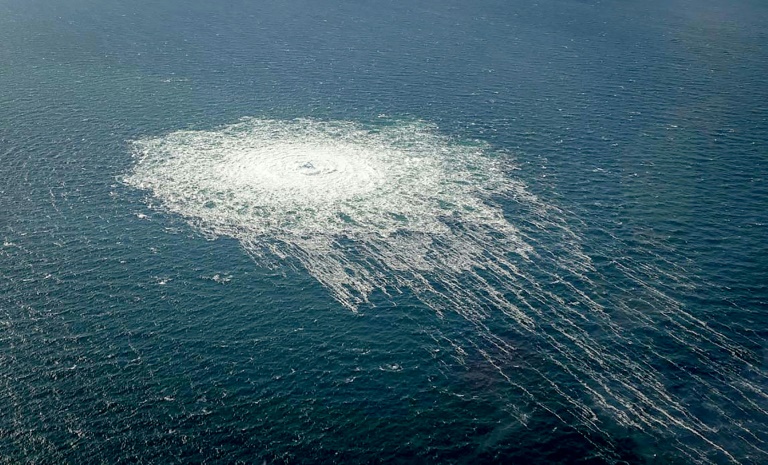
The three outflows from the Russia-Germany Nord Stream 1 and 2 pipelines have sent natural gas prices soaring, exacerbating an energy crunch in Europe as it stands on the threshold of winter also fanning geopolitical tensions.

Swedish intelligence announced it was opening an investigation into the massive leaks in the Baltic Sea, branding them “aggravated sabotage,” hours after the EU called the damage a “deliberate act”.

Russia’s FSB security service said it had launched an “international terrorism” investigation, the Russian prosecutor’s office announced, citing “intentional actions” to damage the pipelines.

Amid the claims and counter claims, the UN Security Council said it will meet Friday — at Russia’s request — to discuss the leaks.

“As the current Security Council president France has informed us today that Russia has requested a meeting about the Nord Stream leaks and this meeting is being planned for Friday,” Sweden’s Foreign Minister Ann Linde told a press conference. 

Russian representative Dmitry Polyanskiy said the meeting would take place at 3 pm (1900 GMT) at UN headquarters in New York.

The question of who is responsible has prompted high-level finger-pointing, with Moscow charging the United States had already said Nord Stream 2 was “finished” if Russia invaded Ukraine.

President Joe “Biden is obliged to answer the question of whether the US carried out its threat,” foreign ministry spokeswoman Maria Zakharova said on social media. 

Washington dismissed the suggestion, with a spokeswoman for the National Security Council saying: “We all know Russia has a long history of spreading disinformation and is doing it again here.”

Among Western allies, suspicion for the leaks has focused on Russia, which has cut gas supplies to Europe in retaliation for severe Western sanctions over the war in Ukraine.

They “are not a coincidence”, EU foreign policy chief Josep Borrell stated. “All available information indicates those leaks are the result of a deliberate act.”

He warned: “Any deliberate disruption of European energy infrastructure is utterly unacceptable and will be met with a robust and united response.”

EU chiefs Ursula von der Leyen and Charles Michel have also blamed the Nord Stream leaks on sabotage, as have leaders of several European countries.

– ‘Increased vigilance’ –

Michel tweeted that they “appear to be an attempt to further destabilise energy supply to EU”.

He added: “Those responsible will be held fully accountable and made to pay.”

The EU is currently mulling further sanctions on Russia for annexation votes imposed on four regions in Ukraine that Moscow’s forces occupy.

Neither of the Nord Stream pipelines are currently operational, but they were filled with gas when they were hit with what Swedish seismologists said were “massive releases of energy”.

One of the seismologists told AFP “there isn’t much else than a blast that could cause it”.

Denmark said meanwhile more than half of the gas in the Nord Stream pipelines had leaked into the atmosphere, adding the rest would likely escape by Sunday as Defence Minister Morten Bodskov said the pressure from the leak meant it would be “one or two weeks” before inspections of the damaged structures could begin.

Two Danish military vessels have been sent to the affected area.

According to climate groups, Nord Stream 1 and 2 contained some 350,000 tonnes of natural gas — methane and Greenpeace estimates the leaks could have the effect of releasing almost 30 million tonnes of CO2, or more than two-thirds of Denmark’s annual emissions.

Following Europe’s sabotage allegations, fossil fuel-rich Norway — which has overtaken Russia as the biggest supplier of gas to Europe — boosted security at its oil and installations in response.

“The government has decided to put measures in place to increase security at infrastructure sites, land terminals and platforms on the Norwegian continental shelf,” Norwegian Energy Minister Terje Aasland said.

The Norwegian Petroleum Safety Authority earlier this week called for “increased vigilance from all operators and shipping companies on the continental shelf”.

Built in parallel to the Nord Stream 1 pipeline, Nord Stream 2 was intended to double the capacity for Russian gas imports to Germany.

But Berlin blocked newly completed Nord Stream 2 in the days before the war.

Germany, which has been highly dependent on imports of fossil fuels from Russia to meet its energy needs, has since come under acute stress as Moscow’s supplies dwindle.

Washington dismisses Moscow's hints of blame for gas leak

Moscow questioned Wednesday whether Washington caused mystery undersea gas pipeline leaks in Europe that have been blamed on sabotage, in a turn of the tables that US officials bluntly called “ridiculous”. 

The three outflows from the Russia-Germany Nord Stream 1 and 2 pipelines have sent natural gas prices soaring, exacerbating an energy crunch in Europe as it stands on the threshold of winter and fanning geopolitical tensions.

Swedish intelligence announced it was opening an investigation into the massive leaks in the Baltic Sea, branding them “aggravated sabotage”, just hours after the EU called the damage “deliberate”.

But the question of who is responsible has prompted high-level finger-pointing, with Moscow charging the United States had already said Nord Stream 2 was “finished” if Russia invaded Ukraine.

President Joe “Biden is obliged to answer the question of whether the US carried out its threat,” foreign ministry spokeswoman Maria Zakharova said on social media. 

Washington dismissed the suggestion, with a spokeswoman for the National Security Council saying: “We all know Russia has a long history of spreading disinformation and is doing it again here.”

Among Western allies, suspicion for the leaks has focused on Russia, which has cut gas supplies to Europe in retaliation for severe Western sanctions over the war in Ukraine.

Russia replied on Wednesday by saying it will ask for the United Nations Security Council to convene “in connection with provocations” regarding the ruptured pipes.

Following Europe’s sabotage allegations, fossil fuel-rich Norway boosted security at its installations in response.

They “are not a coincidence”, EU foreign policy chief Josep Borrell said in a statement. “All available information indicates those leaks are the result of a deliberate act.”

He warned: “Any deliberate disruption of European energy infrastructure is utterly unacceptable and will be met with a robust and united response.”

EU chiefs Ursula von der Leyen and Charles Michel have also blamed the Nord Stream leaks on sabotage, as have leaders of several European countries.

– ‘Increased vigilance’ –

Michel tweeted that they “appear to be an attempt to further destabilise energy supply to EU”.

He added: “Those responsible will be held fully accountable and made to pay.”

The EU is currently mulling further sanctions on Russia for annexation votes imposed on four regions in Ukraine that Moscow’s forces occupy.

Neither of the Nord Stream pipelines are currently operational, but they were full with gas when they were hit with what Swedish seismologists said were “massive releases of energy”.

One of the seismologists told AFP “there isn’t much else than a blast that could cause it”.

Danish Defence Minister Morten Bodskov told reporters in Brussels that “it can easily take one or two weeks for the area to calm down enough” for an inspection to verify the cause.

Two Danish military vessels have been sent to the area.

Non-EU member Norway — which has now overtaken Russia as the biggest supplier of gas to Europe — said it will beef up security around its oil and gas facilities.

“The government has decided to put measures in place to increase security at infrastructure sites, land terminals and platforms on the Norwegian continental shelf,” Norwegian Energy Minister Terje Aasland said.

The Norwegian Petroleum Safety Authority earlier this week called for “increased vigilance from all operators and shipping companies on the continental shelf”.

Built in parallel to the Nord Stream 1 pipeline, Nord Stream 2 was intended to double the capacity for Russian gas imports to Germany.

But Berlin blocked newly completed Nord Stream 2 in the days before the war.

Germany, which has been highly dependent on imports of fossil fuels from Russia to meet its energy needs, has since come under acute stress as Moscow’s supplies dwindle.

Sweden and Poland agree sabotage is the most likely cause of the Nord Stream leaks, with Warsaw suggesting Russia was probably the culprit, to escalate the war in Ukraine.

'Catastrophic' Hurricane Ian blasts Florida

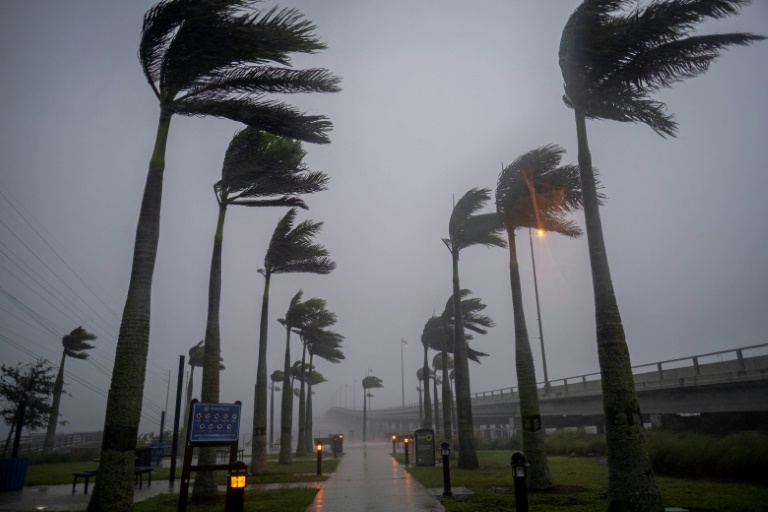
Monster Hurricane Ian walloped Florida on Wednesday, pounding the southern US state’s coast with extreme wind and rain, and causing “catastrophic” flooding from destructive storm surges.

Dramatic TV footage showed churning water submerging roads and sweeping away vehicles as the hurricane edged close to landfall near Fort Myers and Port Charlotte.

Ian, an “extremely dangerous” Category 4 storm, was destined to affect several million people across Florida and in southeastern states Georgia and South Carolina.

The storm was already “causing catastrophic storm surge, winds and flooding in the Florida peninsula,” the US National Hurricane Center (NHC) said in its latest advisory. 

As hurricane conditions spread, forecasters warned of a looming once-in-a-generation calamity.

Ian could already have had deadly consequences off the coast as US Border Patrol said 23 migrants were missing after their boat sank. Four Cubans who survived swam to shore in the Florida Keys.

The NHC said Ian was bringing sustained winds of 155 miles (250 kilometers) per hour, just two mph shy of Category 5 intensity — the strongest on the Saffir-Simpson scale.

Some 2.5 million people were under mandatory evacuation orders in a dozen coastal Florida counties, with several dozen shelters set up, and voluntary evacuation recommended in others.

For those who decided to ride out the storm, authorities were stressing it was too late to flee and that residents should hunker down and stay indoors.

– ‘Major impacts’ –

Airports in Tampa and Orlando stopped all commercial flights, and some quarter million households were already without power.

But that was a “drop in the bucket” compared with the outages expected over the next 48 hours, Florida Governor Ron DeSantis said.

“This is going to be a nasty, nasty day, two days,” he added.

“Clearly this is a very powerful major hurricane that’s going to have major impacts.”

With conditions rapidly deteriorating, some thrill-seekers nevertheless were seen walking in the mud flats of Tampa Bay and further south at Port Charlotte’s Charlotte Harbor, ahead of Ian’s arrival.

With up to two feet (61 centimeters) of rain expected to fall on parts of the so-called Sunshine State, and a storm surge that could reach devastating levels of 12 to 18 feet (3.6 to 5.5 meters) above ground, authorities were warning of dire emergency conditions.

“This is a life-threatening situation,” the NHC warned.

The storm was set to move across central Florida before emerging in the Atlantic Ocean by late Thursday.

– Widespread blackout –

Ian a day earlier had plunged all of Cuba into darkness after battering the country’s west as a Category 3 storm and downing the island’s power network.

Only the few people with gasoline-powered generators had electricity on the island of more than 11 million people.

“Desolation and destruction. These are terrifying hours. Nothing is left here,” a 70-year-old resident of the western city of Pinar del Rio was quoted as saying in a social media post by his journalist son, Lazaro Manuel Alonso.

At least two people died in Pinar del Rio province, Cuban state media reported.

– Rescue operation ready  –

In the United States, the Pentagon said 3,200 national guardsmen had been called up in Florida, with another 1,800 on the way.

DeSantis said state and federal responders were assigning thousands of personnel to address the storm response, noting there were 250 aircraft, 300 boats and 1,600 high-water vehicles on hand for rescues and other critical operations.

“There will be thousands of Floridians who will need help rebuilding,” he said.

National Weather Service director Ken Graham echoed concerns about what lay ahead, expressing certainty Ian will leave a trail of destruction.

“This is going to be a storm we talk about for many years to come,” he said. “It’s a historic event.”

As climate change warms the ocean’s surface, the number of powerful tropical storms, or cyclones, with stronger winds and more precipitation is likely to increase. 

The total number of cyclones, however, may not.

According to Gary Lackmann, a professor of atmospheric science at North Carolina State University, studies have also detected a “potential link” between climate change and rapid intensification — when a relatively weak tropical storm surges to a Category 3 hurricane or higher in a 24-hour period, as happened with Ian.

“There remains a consensus that there will be fewer storms, but that the strongest will get stronger,” Lackmann told AFP.

Kremlin proxies in Ukraine plead to Putin for annexation

Kremlin-backed officials in Ukraine appealed to President Vladimir Putin Wednesday to annex the regions under their control, after the territories held votes denounced by Kyiv and the West as a “sham”.

Ukraine called on the EU to hit Russia with more sanctions and NATO to send more weapons to the frontline after the Kremlin-installed officials rolled out the alleged results late Tuesday.

The appeal came despite repeated warnings from Moscow that it could use its nuclear arsenal to defend the territories from a Ukrainian counter-offensive that has wrested back swathes of territory this month already.

The United States acceded to Ukraine’s request for arms by announcing a new package of weapons and supplies worth $1.1 billion, including missile systems, ammunition, armoured vehicles and radars.

The European Commission proposed fresh sanctions targeting Russian exports worth seven billion euros, an oil price cap, an expanded travel blacklist and asset freezes.

The EU slammed the “illegal” vote and said the results were “falsified”, while the White House and German Chancellor Olaf Scholz said they would “never” recognise them.

British Prime Minister Liz Truss and her Canadian counterpart Justin Trudeau vowed to disregard the votes and offer Kyiv further support.

Lugansk was the first Russian-controlled region of Ukraine to appeal to Putin to intervene, with the recently captured southern regions of Zaporizhzhia and Kherson following shortly after.

“Our residents made a historic choice and have decided to become part of the multinational population of the Russian Federation,” the Kremlin-installed leader in Kherson, Vladimir Saldo, said in a statement published on social media.

The Russian foreign ministry in a statement on Wednesday said the regions made a “conscious and free choice” in favour of annexation.

Only Donetsk — which along with Lugansk makes up the industrial Donbas region partially controlled by pro-Kremlin separatists since 2014 — had yet to formally ask Putin for annexation.

The appeal to Putin represents a turning point in the seven-month invasion as Russian officials in Moscow suggest they could use nuclear weapons in Ukraine and Putin calls up thousands of reservists to cement the Kremlin’s authority in the territories.

– ‘What have we ended up with?’ –

The four territories — Kherson and Zaporizhzhia in the south; Donetsk and Lugansk in the east — create a crucial land corridor between Russia and the Crimean peninsula, annexed by Moscow in 2014. 

Together, all five make up around 20 percent of Ukraine, whose forces in recent weeks have been clawing back ground.

Despite those gains — particularly in the northeast — Russian forces have battered the second-largest city of Kharkiv and overnight a salvo of missiles hit a railway yard, knocking out power to more than 18,000 households.

Iryna Mayor, 51, a machine operator in the rail wagon workshop, paused from shifting rubble and laying damp and torn record books out to dry, to angrily mock the invasion.

“We’re Russian-speaking people, and what have we ended up with? Have we got peace, brotherhood? No, you can see what we got,” she declared, pointing at the twisted debris surrounding the missile craters.

Lawmakers are expected to vote hastily to annex the territories now that the results have been announced, and Russian news agencies have said Putin could sign legislation formalising the land grab this week.

– ‘I’m in shock’ –

Putin’s threat to use nuclear weapons in Ukraine coincided with his decision to call up hundreds of thousands of reservists to back up Russia’s struggling forces in eastern Ukraine.

The move has sparked panic, protests and an exodus among military-aged Russian men for neighbouring countries like Georgia and Kazakhstan.

Moscow announced Wednesday it would no longer issue passports to Russian men called up to serve and a region bordering Russia closed to passenger cars, with both moves fuelling fears the borders could close entirely.

But at a military recruitment office in Saint Petersburg there was confusion and resignation, as draftees and their families bid each other goodbye.

Nikita, a 25-year-old reservist, had tears in his eyes as he held hands with his 22-year-old fiancee as he said goodbye.

“If you have to go, you have to,” he said. 

“I don’t know what to say. I am in shock,” Alina said, her gaze locked on Nikita.

Along the frontline of Ukraine, six people were injured in the Kharkiv region by Russian strikes, officials in Kyiv said, while five civilians were killed and 10 more wounded by Moscow’s forces. 
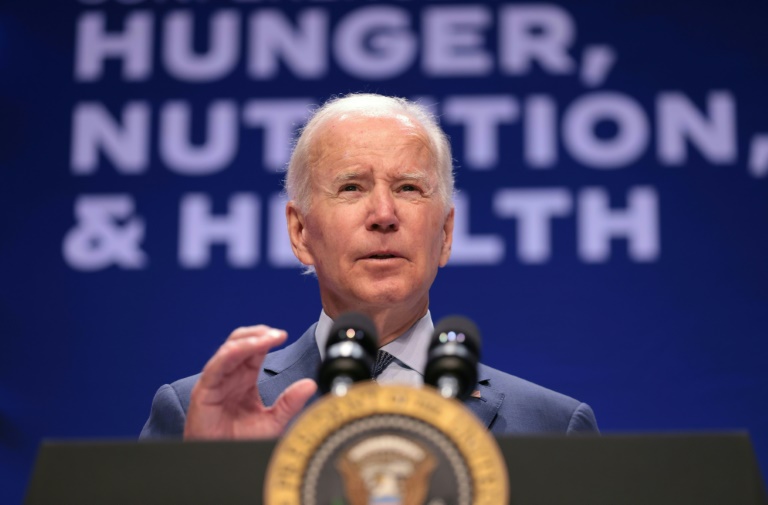
White House announces multi-billion dollar plan to attack obesity, hunger

The White House announced Wednesday billions of dollars in pledges from major corporations — including the likes of fast food behemoth Burger King — to craft a national strategy on ending the twin US challenges of hunger and obesity.

The private sector pledges were unveiled as President Joe Biden hosted what the administration touted as the first big White House summit on food and diet since Richard Nixon was in office more than half a century ago.

Nearly 42 percent of American adults are technically obese and about 10 percent of US households suffer food insecurity, according to the latest government statistics.

Biden told the White House Conference on Hunger, Nutrition, and Health that government, Congress, private companies and society must work together to end hunger and reduce diet-related diseases in the United States by 2030.

“If you can’t feed your child, what the hell else matters?” he asked the audience of Congress members, activists, health experts and food industry representatives including top chef and humanitarian Jose Andres. “In America, no child should go to bed hungry. No parent should die of disease that can be prevented.”

Because Congress is unlikely to fund major federal dietary programs, Biden finds his hands largely tied. However, officials said he was using the power of the presidency to get major companies involved and that the response has been strong.

“We know that we can only achieve the goals… if we rally a whole of society response,” a senior official said, speaking on condition of anonymity.

Officials briefing reporters said that $8 billion in public and private sector commitments already made include pledges from more than 100 organizations, ranging from hospitals to tech companies and food industry players.

“All have committed to bold and in some cases, paradigm shifting commitments that will meaningfully improve nutrition, promote physical activity, and reduce hunger and diet related disease over the next seven years,” an official said.

– What’s ‘healthy’? –

The White House says that poor diets are behind ever-rising cases of diseases like type 2 diabetes, obesity, hypertension, and certain cancers, warning that “there is no silver bullet to address these complex issues, and there is no overnight fix.”

One idea being pushed by the administration is to regulate the use of the term “healthy” on food packaging.

“More than 80 percent of people in the US aren’t eating enough vegetables, fruit and dairy. And most people consume too much added sugars, saturated fat and sodium,” the US Food and Drug Administration said.

For now, the quickest response is coming from the private sector.

GE, the multinational energy, aerospace and health care company, and food industry innovation specialists Food Systems for the Future are set to launch a $2.5 billion private investor coalition over the next three years.

The National Restaurant Association will expand a project aimed at getting children to eat healthier food at 45,000 more outlets, including at chains like Burger King.

IT and communications giant Cisco will contribute $500 million over five years for healthier meals and food production in areas where it does business.

Officials acknowledged that there is no enforcement mechanism for the spending programs but “we will continue to certainly work closely with these partners to ensure they execute on the actions committed to.”

US law failing war crimes victims, warns top Nazi hunter

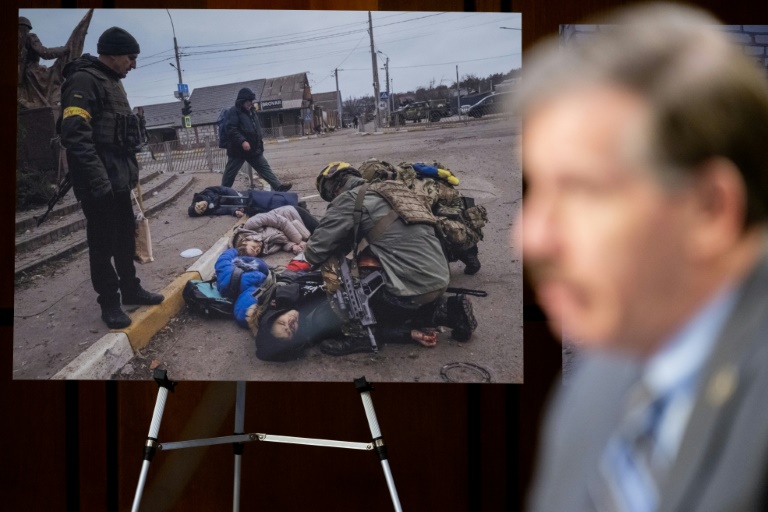
A legendary US Nazi hunter tapped by the Justice Department to investigate Russian war crimes in Ukraine said Wednesday that federal laws hamper efforts to bring abusers worldwide to justice.

Eli Rosenbaum, a 36-year veteran of the department, heads its new War Crimes Accountability Team, announced by Attorney General Merrick Garland during a trip to Ukraine in June.

The prosecutor, who has spent much of his career deporting Nazi war criminals, told a hearing in the US Senate the federal criminal code was not up to the task of pursuing war criminals living in the United States.

“Given the shocking crimes being perpetrated by Russia during its unprovoked war against Ukraine, this hearing could not possibly be held at a more appropriate, urgent, or, frankly, terrifying time,” Rosenbaum told the Senate Judiciary Committee.

But Rosenbaum said federal law does not cover the “vast majority” of war criminals who have come to the United States — unless the victim or perpetrator are American.

He added that federal statutes don’t help American victims of torture abroad unless the torturer is an American or living in the United States. 

There is also no law covering crimes against humanity often committed outside of war, such as enslavement, he said.

Rosenbaum worked on 100 cases that led to deportations of accused Nazis and other sanctions.

– ‘Deep frustration’ –

His targets included a former concentration camp guard in Tennessee, who was kicked out of the United States last year — 75 years after his crimes were committed.

Rosenbaum has also prosecuted war criminals over atrocities committed in Bosnia, Guatemala and Rwanda.

“Having prosecuted World War II Nazi cases for nearly four decades, I can attest to the deep frustration we experienced because statutory limitations… made it impossible to criminally prosecute any of the many Nazi criminals we found here,” he said.

“Instead, we could bring only civil actions against them. Russian and other war criminals who come here should not be able similarly to escape criminal justice or even find safe haven here.”

Rosenbaum told senators the federal departments primarily responsible for addressing war crimes — defense, homeland security, state and justice — had already agreed on “technical solutions” to close the gaps in legislation.

United Nations investigators accused Russia last week of committing war crimes on a massive scale in Ukraine, listing bombings, executions, torture and sexual violence, although they said it was too soon to prove crimes against humanity.

Speaking before the UN Human Rights Council, the head of a high-level investigative team listed numerous serious violations committed since Russia’s invasion of Ukraine seven months ago. 

Cristoforetti becomes first European woman to command ISS

Italy’s Samantha Cristoforetti on Wednesday became the first European woman to take over command of the International Space Station during a ceremony broadcast live from space.

The outgoing commander, Russian cosmonaut Oleg Artemyev, used the occasion to seemingly make a rare space-bound reference to the war in Ukraine, saying that “despite the storms on Earth, our international cooperation continues”.

During a relaxed ceremony, Artemyev handed Cristoforetti a golden key, symbolising that she is the new commander of the space station until she returns to Earth on October 10.

Cristoforetti, a 45-year-old European Space Agency astronaut and former Italian air force pilot, arrived for her second tour on the ISS in April.

She holds the record for the longest stay in space by a woman after spending 199 days in orbit in 2014 and 2015.

She is fifth woman — and the first non-US woman — to become commander since the role was created in 2000.

The space station, long a symbol of closer post-Cold War ties between Russia and the United States, has been in a difficult position since Moscow invaded Ukraine in February.

Moscow responded with outrage at unprecedented sanctions over the war and the ISS has been one of the last remaining areas of cooperation between Russia and the West.

– War’s echoes in space –

Artemyev praised the work of all 10 people onboard the space station — four Americans, five Russians and Cristoforetti.

He said he viewed the ISS as “a continuation of the Apollo–Soyuz programme,” the first crewed international space mission carried out jointly by the United States and Soviet Union in 1975 in the midst of the Cold War.

That was a time “when the relationship between the countries was also not simple, when there were people who found the way which leads to peace, and the way that war ends everywhere,” Artemyev said, not mentioning Ukraine by name.

For her part, Cristoforetti praised the work of her fellow crew, saying they all form “a tiny part of the gigantic team on the ground” which manages the operations of the space station.

The commander is responsible for all tasks performed by the crew members onboard the space station, which orbits more than 400 kilometres (248 miles) above Earth.

During an emergency, the commander has the authority to take decisions without waiting for instructions from ground control. 

In the event of a fire, depressurisation or the detection of toxic atmosphere — the three defined emergency scenarios — it is up to the commander to ensure that the lives of the crew are saved first.

French astronaut Thomas Pesquet, who has served as ISS commander, said last year that it is “like being on a boat — there is only master onboard after God”.

The decision of who becomes commander is made jointly by the five space agencies involved in the station: NASA, Russia’s Roscosmos, Europe’s ESA, Canada’s CSA and Japan’s JAXA.

Close Bitnami banner
Bitnami