US Business

Far-right Trump backers on trial for Capitol riot 'sedition'

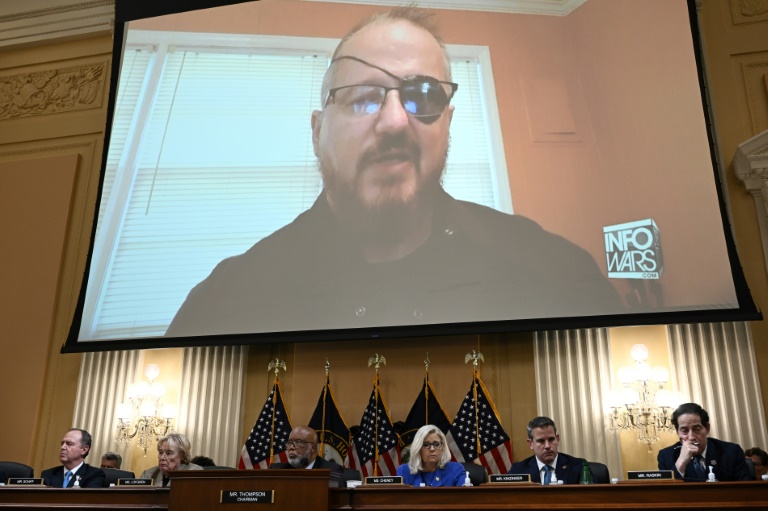
Jury selection began Tuesday in the sedition trial of four members of the far-right Oath Keepers militia, including its founder, who joined the 2021 attack on the US Capitol.

Stewart Rhodes — the eyepatch-wearing former soldier who plotted a military-style assault on the Capitol — and his followers are charged with taking up arms against the United States to keep Donald Trump in the White House, despite his election defeat.

As the process began to find 12 jurors from over 100 candidates, Judge Amit Mehta rejected an effort by the Oath Keepers’ attorneys to move the trial out of Washington on the grounds that local residents are likely to be biased against them because of the January 6, 2021, violence.

Rhodes’s attorney, meanwhile, asked the judge to forbid use of terms frequently used to describe the Oath Keepers, such as “anti-government,” “organized militia,” “extremists,” “racist” and “white nationalist” during the trial.

Use of such descriptors “would add nothing but prejudice into what already promises to be an emotionally charged trial,” said the attorney, James Lee Bright.

For instance, he said, describing them as “anti-government” could generate negative feelings because many of the people in Washington work for the government.

– Guns and combat gear –

With a potential 20-year prison sentence, the sedition charge is the toughest yet in the prosecutions of hundreds who took part in the Capitol assault, which aimed to reverse President Joe Biden’s victory in the November 2020 election.

Eight Oath Keepers in total have been charged with sedition; the other four will go on trial beginning November 29.

Rhodes, a Yale Law School graduate, and his followers conspired “to oppose by force the lawful transfer of presidential power,” according to the indictment.

At Rhodes’s direction, “they coordinated travel across the country to enter Washington DC (and) equipped themselves with a variety of weapons,” as well as combat and tactical gear, in preparation for the attack, it says.

“We aren’t getting through this without civil war,” Rhodes told the Oath Keepers in a group chat weeks before the uprising, it adds.

If Biden became president, Rhodes said, “It will be a bloody and desperate fight… That can’t be avoided.”

– Rarely used charge –

The Oath Keepers are the first of some 870 charged in the Capitol attack to go on trial for seditious conspiracy.  

The majority have been charged with illegally entering the Capitol, illegally disrupting a session of the legislature — the confirmation of Biden as president-elect — and assault on law enforcement officers. 

The sedition charge is very rarely used by US prosecutors. The last time a conviction was obtained on the charge was against Ramzi Yousef, the planner of the 1993 World Trade Center bombing.

The charge of seditious conspiracy was used in that case in the absence of a domestic terrorism law and was used to highlight Yousef’s intent to damage the US government.

In the Capitol assault case, the charge is being used against members of armed militia groups who took part and allegedly coordinated among themselves to lead the attack.

Members of the Proud Boys, another key player on January 6, were also charged with seditious conspiracy in June, but their case has not gone to court yet.

– Insurrection Act defense –

The trial will focus on allegations that they planned a violent attack on January 6, positioning a stockpile of weapons at a hotel just a few miles (kilometers) from the Capitol, and moved together in a military-style “stack” formation to break through police lines and into the Capitol.

The Federal Bureau of Investigation has collected communications between the group members and has photos and videos of their actions that day.

The group’s lawyers suggest they will defend themselves by saying they understood that Trump would invoke the 1807 Insurrection Act and deputize the militias to lawfully prevent Biden from being confirmed as president.

That claim has raised expectations that the trial could reveal more about links between the Capitol attack and members of Trump’s administration or his personal advisors.
NASA says Artemis launch before November will be 'difficult'

It will be “difficult” for NASA to make a new attempt to launch its massive Moon rocket in October, an official from the US space agency said Tuesday, with a lift-off in November looking more likely. 

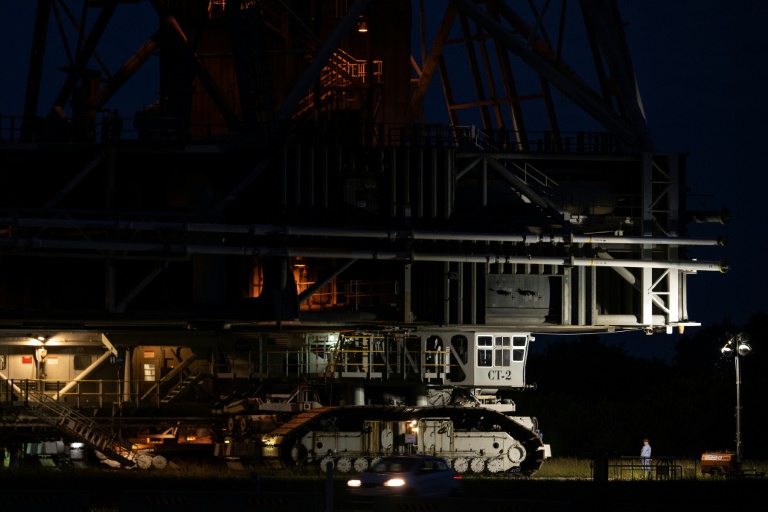
The SLS rocket, the most powerful ever designed by NASA, had to be returned overnight to its storage hangar in order to shelter it from the approach of Hurricane Ian. 

The next possible launch windows — determined according to the positions of the Earth and the Moon — are from October 17 to 31, then from November 12 to 27. 

“We know that the earliest it could go is late October, but more than likely we’ll go in the window in the middle of November,” NASA administrator Bill Nelson told CNN.

At a press conference, NASA associate administrator Jim Free was also asked about the rocket’s chances of attempting a lift-off in October. 

“I don’t think we’re going to take anything off the table,” he said. “But it is going to be difficult.” 

After the hurricane has passed by, NASA will have to take the time to change the batteries of the rocket’s self-destruct system, a complex operation that will be carried out in the storage hangar. 

Raising the 98-meter-high (320 foot) rocket and transporting it to its launch pad, before configuring it for takeoff, will also take days. 

The latest setback will therefore significantly postpone the launch of the long-awaited Artemis 1 mission. 

Two launch attempts had already been aborted at the last minute, at the end of August and then at the beginning of September, due to technical problems, including a leak when filling the rocket’s tanks with fuel. 

Fifty years after the last mission of the Apollo program, Artemis 1 will be used to ensure that the Orion capsule, at the top of the rocket, is safe to transport a crew to the Moon in the future.

As Ian barrels toward Florida, residents brace for hurricane hell

Soon to be in the teeth of a monster storm, anxious Tampa residents were making final preparations Tuesday ahead of potentially catastrophic Hurricane Ian, which is forecast to slam Florida’s west coast with a ferocity unseen here in decades.

Authorities have issued evacuation orders for more than two million Floridians, including those in the most vulnerable areas around the Tampa Bay, where inlets, canals and waterways are susceptible to the mass flooding and life-threatening storm surges expected when Mother Nature unleashes its fury on Florida beginning Tuesday night.

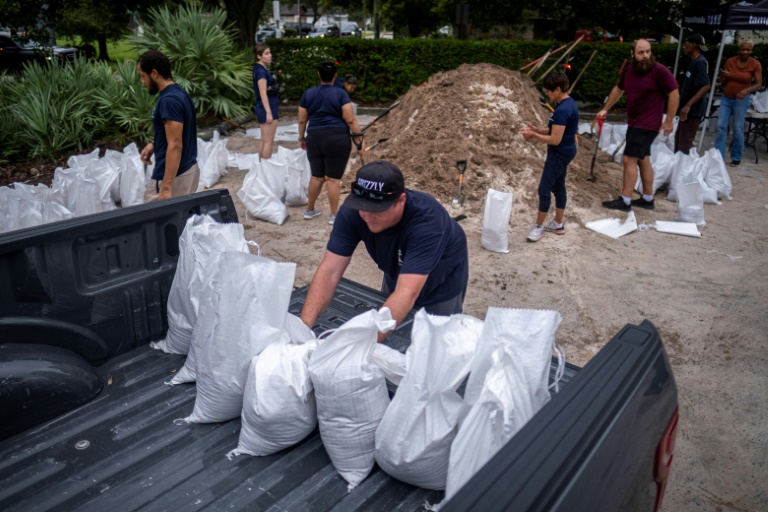
City employees were filling and handing out free sandbags at various locations, where long lines of cars could be seen as residents scrambled for ways to protect their property.

Amanda Harrison, 66, told AFP she waited two hours at a distribution point to get “the maximum number of bags” to line her home ahead of Ian’s wrath. “And my fears are that they’re not going to do any good.”

A 100-mile (160-kilometer) stretch from Ft Myers north to Tampa is under the most serious threat, as Ian battered Cuba Tuesday as a Category 3 major hurricane and began building in intensity over the warm Gulf of Mexico waters on its way north.

Fearing it could hit as a highly dangerous Category 4, Floridians were stocking up on bottled water, food, and other emergency supplies like batteries and propane gas. At a home improvement store in west Tampa, dozens of customers were buying plywood to protect their homes.

Others loaded up the family car to exit the hurricane zone.

Chelsea Thompson and her husband rushed to her parents’ home in St Petersburg, southwest of Tampa, early Tuesday to help them board up doors and windows with plywood.

Her parents’ home is in one of the mandatory evacuation zones and the family knew there was no time to lose. 

“The closer it (Hurricane Ian) gets, obviously with the unknown, your anxiety gets a little higher,” said 30-year-old Thompson.

“Boarding up the house makes it more real too,” she added. “So I am pretty nervous, but hoping for the best.”

While her parents were leaving the city with their dog, bound for inland Orlando, Thompson and her husband decided to ride out the hurricane in their own, less vulnerable home.

“We’re hoping that it takes a little bit of a turn… so we don’t get as much impact” from Ian, she added.

While Tampa braced for potential disaster, resident Ricardo Castro said taking necessary pre-storm steps was crucial.

“A lot of people are worried, but I’m from Puerto Rico and this is normal for us,” said the 48-year-old longtime Tampa resident, referring to the US island territory battered by massive Hurricane Fiona one week earlier.

As he and a neighbor waited for sandbags, Castro jumped out of his car to help fill bags and hand them out. 

“If you prepare,” he said, “everything will be fine.”

Danny Aller and his wife Karen were leaving little to chance. Twenty five miles west of Tampa in Indian Shores, the couple were boarding up their modest home with plywood bearing a blunt, spray-painted message: “Go away Ian.”

Colombia repatriates 274 priceless artifacts from US

From anthropomorphic figurines to 1,500-year-old Indigenous necklaces, Colombia has recently repatriated 274 ancient objects from the United States.

Colombia’s embassy in Washington has been collecting the artifacts from around the United States since 2018 thanks to “seizures” and voluntary “returns by collectors,” Alhena Caicedo, director of Colombia’s ICANH anthropology and history institute, told AFP.

The pottery, stone and seashell objects, made by Indigenous communities between 500 BC and 500 AD, were brought back last week by Colombian President Gustavo Petro as he returned from the United Nations General Assembly in New York.

Now residing at the offices of the foreign affairs ministry in Bogota, AFP was able to view a handful of the ancient artifacts that have been put on display.

Wearing latex gloves, ICANH officials carefully handled the priceless objects.

Most of those returned to Colombia were handed over voluntarily by an American woman who inherited them from her late husband. He had acquired them in the southwestern Colombian city of Cali in the 1970s.

Others had been confiscated by the FBI as part of an agreement between the two countries to return cultural objects that have been sold on the black market.

These artifacts “left this country illegally, we don’t know exactly when,” said Caicedo. 

They come from various regions of Colombia where peoples such as the Tumaco, Narino, Quimbaya, Tayrona and Sinu lived before the arrival of Spanish conquistadors in 1492.

Colombia says it has another 730 artifacts in its diplomatic missions around the world that need repatriating.

Last year, then-vice president Marta Lucia Ramirez asked the prestigious German auction house Gerhard Hirsh to cancel the sale of 25 pieces of pre-Columbian artworks.

Other Latin American countries have made similar requests following complaints from Indigenous people that their assets have been looted.

According to UNESCO, the illegal sale of pillaged cultural artifacts is worth close to $10 billion.

David Bowie's handwritten 'Starman' lyrics sell for over £200,000

David Bowie’s original handwritten lyrics for the pop classic “Starman”, part of an album that catapulted him to international stardom, on Tuesday sold at auction in Britain for £203,500.

Released as a single in 1972, the song about a Starman who would “like to come and meet us but he thinks he’d blow our minds” featured on the Ziggy Stardust concept album.

The handwritten lyrics sold for five times as much as the £40,000 estimate.

The winning bidder was Olivier Varenne, director of acquisitions and alliances and collections at the Museum of Old and New Art in Tasmania, on behalf of a private collector.

“We had almost unprecedented interest from around the world for this historic piece of memorabilia,” said Paul Fairweather of Omega Auctions.

“We’re very pleased with the incredible price achieved and are sure the lyrics will be rightly prized and treasured by the winning bidder.”

The lyrics were previously on display as part of the V&A Museum’s David Bowie Is collection. They had been owned by the same person since the 1980s.

The A4 page features handwritten amendments and edits by Bowie, including corrected spelling mistakes and additions.

The lyrics were sold as part of a David Bowie and glam rock sale on Tuesday.

In 2019, the first demo of Bowie singing Starman sold for 51,000 pounds after gathering dust in a loft for nearly five decades.

Bowie can be heard telling his guitarist Mick Ronson, who died in 1993, that he has not finished singing the song when he tries to end the demo.

The singer, born David Jones, died aged 69 in New York in 2016.

Blinken defends Pakistan arms sales against Indian criticism

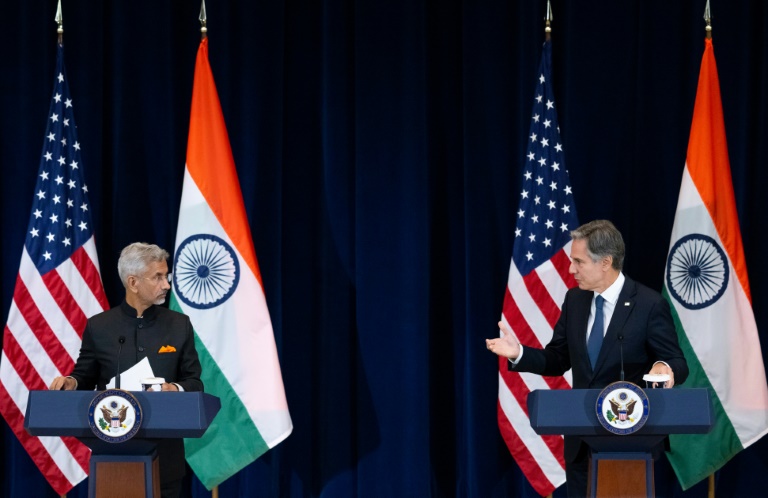
US Secretary of State Antony Blinken on Tuesday defended military sales to Pakistan after withering criticism from growing US partner India, which considers itself the target of Islamabad’s F-16 planes.

Blinken met in the US capital with India’s foreign minister a day after separate talks with his counterpart from Pakistan.

The US-Pakistan alliance, born out of the Cold War, has frayed over Islamabad’s relationship with the Taliban regime in Afghanistan.

The top US diplomat defended a $450 million F-16 deal for Pakistan approved earlier in September, saying the package was for maintenance of Pakistan’s existing fleet.

“These are not new planes, new systems, new weapons. It’s sustaining what they have,” Blinken told a news conference with his Indian counterpart, Subrahmanyam Jaishankar.

“Pakistan’s program bolsters its capability to deal with terrorist threats emanating from Pakistan or from the region. It’s in no one’s interests that those threats be able to go forward with impunity,” Blinken said.

Jaishankar did not criticize Blinken in public. But on Sunday, speaking at a reception for the Indian community in the United States, Jaishankar said of the US position, “You’re not fooling anybody.”

“For someone to say, I’m doing this because it’s for counter-terrorism, when you’re talking of an aircraft like the capability of the F-16, everybody knows where they are deployed,” he said, referring to the fleet’s positioning against India.

“Very honestly, it’s a relationship that has neither ended up serving Pakistan well nor serving American interests well,” he said.

Pakistan’s military relies on US equipment but the relationship soured during the two-decade US war in Afghanistan, with Washington believing that elements in Islamabad never severed support for the Taliban, who seized back power last year.

India historically has bought military equipment from Moscow and has pressed the United States to waive sanctions required under a 2017 law for any nation that buys “significant” military hardware from Russia.

Speaking next to Blinken, Jaishankar noted that India has in recent years also made major purchases from the United States, France and Israel.

India assesses quality and purchase terms and “we exercise a choice which we believe is in our national interest,” he said, rejecting any change due to “geopolitical tensions.”

– Playing down Ukraine gap –

The United States since the late 1990s has made warm relations with India a top goal, seeing common cause between the world’s two largest democracies on issues from China’s rise to the threat of Islamist extremism.

The United States has largely turned a blind eye to India’s continued relationship with Russia since the Ukraine invasion but was pleased when Prime Minister Narendra Modi recently told President Vladimir Putin that it was “not a time for war.”

Jaishankar indicated that India was working behind the scenes, saying it had “weighed in” with Russia during UN- and Turkish-led negotiations that opened up grain shipments from the blockaded Black Sea.

India “is widening its international footprint,” Jaishankar said.

“There are many more regions where we will be intersecting with American interests. It is to our mutual benefit that this be a complementary process,” Jaishankar said.

But once rock-solid support for India in the US Congress has seen gaps amid concern over rights under Modi, a Hindu nationalist whose government has been accused of marginalizing Muslims and other religious minorities and pressuring activists through legal action and financial scrutiny.

Blinken addressed the issue delicately, saying the two nations should commit to “core values including respect for universal human rights, like freedom of religion and belief and freedom of expression, which makes our democracies stronger.”

Jaishankar responded indirectly that both nations were committed to democracy but “from their history, tradition and societal context.”

“India does not believe that the efficacy or indeed the quality of democracy should be decided by vote banks,” he said.

Biden laying foundation for green energy investments: Yellen

US President Joe Biden’s push for green energy tax credits will help boost a massive ramp up in private investment that will create jobs and lower energy costs for American families, Treasury Secretary Janet Yellen said Tuesday.

Yellen called the administration’s plan “the most aggressive action that we’ve ever taken to address the climate crisis.”

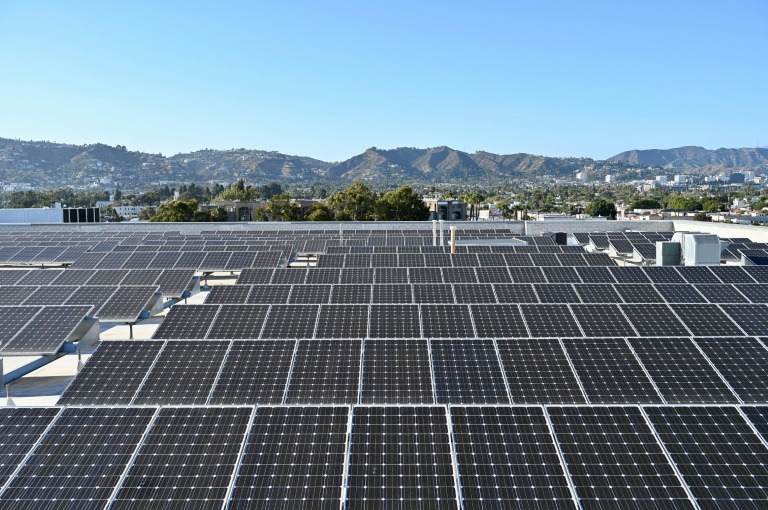
She traveled to North Carolina to tour a solar plant and tout policies included in the recently-approved Inflation Reduction Act, which together with the Infrastructure Law include more than $430 billion in energy investments.

The legislation provides tax credits to households to make their homes more energy efficient or switch to cleaner sources, which will help lower costs, Yellen said.

But the administration’s approach also “rests on harnessing the engagement of the private sector,” the official said in her speech, delivered in front of an array of solar panels. 

“Beyond the consumer tax credits, we expect a significant mobilization of private investment into the clean energy sector,” she said. “These investments will accelerate the transition to our green energy future and lower energy costs for American households and businesses.”

In addition, “They will secure our energy supply against global price shocks. And they will provide good-paying, high-quality jobs across America.” 

Yellen said the transition is critical to address climate change which has seen more costly storms arise across the globe. 

“Climate change poses a grave risk to the productive capacity of our economy while also impacting its stability,” she said. 

But the transition to a clean energy economy also brings lower costs and “significant economic opportunities in high-growth industries, while building economic resilience and creating good-paying jobs across the country.”

Biden laying foundation for green energy investments: Yellen

US President Joe Biden’s push for green energy tax credits will help boost a massive ramp up in private investment that will create jobs and lower energy costs for American families, Treasury Secretary Janet Yellen said Tuesday.

Yellen called the administration’s plan “the most aggressive action that we’ve ever taken to address the climate crisis.”

She traveled to North Carolina to tour a solar plant and tout policies included in the recently-approved Inflation Reduction Act, which together with the Infrastructure Law include more than $430 billion in energy investments.

The legislation provides tax credits to households to make their homes more energy efficient or switch to cleaner sources, which will help lower costs, Yellen said.

But the administration’s approach also “rests on harnessing the engagement of the private sector,” the official said in her speech, delivered in front of an array of solar panels. 

“Beyond the consumer tax credits, we expect a significant mobilization of private investment into the clean energy sector,” she said. “These investments will accelerate the transition to our green energy future and lower energy costs for American households and businesses.”

In addition, “They will secure our energy supply against global price shocks. And they will provide good-paying, high-quality jobs across America.” 

Yellen said the transition is critical to address climate change which has seen more costly storms arise across the globe. 

“Climate change poses a grave risk to the productive capacity of our economy while also impacting its stability,” she said. 

But the transition to a clean energy economy also brings lower costs and “significant economic opportunities in high-growth industries, while building economic resilience and creating good-paying jobs across the country.”

Hurricane Ian leaves western Cuba battered, takes aim for Florida

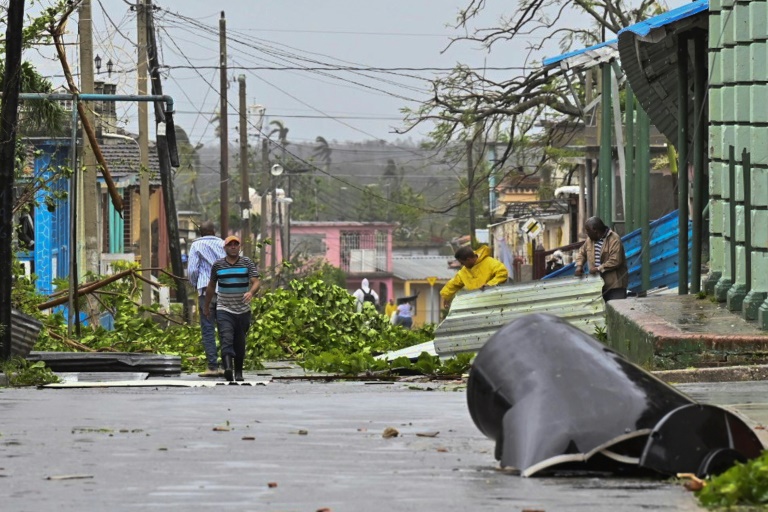
The powerful Category 3 Hurricane Ian battered western Cuba on Tuesday causing significant damage and prompting mass evacuations, with the storm expected to strengthen as it heads north towards the US state of Florida.

With maximum sustained winds of 125 miles (205 kilometers) per hour, Ian pummeled the island nation’s western regions for more than five hours before its eye moved out over the warm waters of the Gulf of Mexico.

Authorities have not yet been able to assess the damage, but residents described “destruction” and posted images on social media of flooded streets and felled trees.

No deaths or injuries have yet been reported.

“Desolation and destruction. These are terrifying hours. Nothing is left here,” said a 70-year-old resident of the western city of Pinar del Rio in a message to his journalist son that was shared on social media.

Ian is expected to “keep heading northwards, gradually moving over the southeast of the Gulf of Mexico, moving its center away from Cuban territory,” said the Cuba’s Insmet meteorological institute.

The US National Hurricane Center (NHC) said Ian, classified as a major hurricane, made landfall just southwest of the town of La Coloma in Pinar del Rio province at about 4:30 am local time (0830 GMT).

About 40,000 people had been evacuated from their homes in the western province, which was bearing the brunt of the storm, local authorities said.

In the town of Consolacion del Sur, images captured by AFP showed downed power lines, flooded streets and a scattering of damaged rooftops.

An official at the state electricity company said power was out in the provinces of Pinar del Rio and Artemisa.

Those were two of the three provinces put on maximum alert Monday night.

– ‘Storm surge’ –

With the hurricane moving north, Florida’s western coast from Fort Myers to Tampa Bay was at greatest risk of “life-threatening” storm surges, the NHC said.

Florida Governor Ron DeSantis said 2.5 million people were under evacuation orders as officials scrambled to prepare for the storm’s forecast landing on Wednesday.

“In some areas there will be catastrophic flooding and life threatening storm surge,” DeSantis said at a press conference on Tuesday.

He urged residents to follow evacuation orders and warned that though Ian’s exact path was still uncertain “the impacts will be far far broader.”

“When you have five to ten feet (1.5 to 3 meters) of storm surge that is not something that you want to be a part of. Mother Nature is a very fearsome adversary.” DeSantis said.

The governor on Monday urged residents to stock up on food, water, medicine and fuel, and he called up 7,000 National Guard members to help with the effort.

Authorities in several Florida municipalities, including Miami, Fort Lauderdale and Tampa, have been distributing free sandbags to residents to help protect their homes from the risk of flooding.

Tampa International Airport said it would suspend operations on Tuesday at 5:00 pm local time (2100 GMT).

US President Joe Biden has approved emergency aid in Florida through the Federal Emergency Management Agency (FEMA), while even NASA on the state’s east coast took precautions, rolling back its massive Moon rocket into its storage hanger for protection.

Like DeSantis, FEMA administrator Deanne Criswell highlighted the danger of storm surge, saying it was the agency’s “biggest concern.”

“If people are told to evacuate by their local officials, please listen to them. The decision you choose to make may be the difference between life and death,” she said.

– Fiona’s wake –

The Caribbean and parts of eastern Canada are still counting the cost of powerful storm Fiona, which tore through last week, claiming several lives.

Half a million residents in the US territory of Puerto Rico were still without power, according to a tracking website, as the island’s governor called on the federal government to waive a policy limiting which ships are able to dock there.

When Fiona arrived as a post-tropical cyclone in Canada on Saturday, it was still packing intense winds of 80 miles per hour, bringing torrential rain and waves of up to 40 feet (12 meters).

Storm surge swept at least 20 homes into the sea in the town of Channel-Port aux Basques, on the southwestern tip of Newfoundland, while three people are believed to have died.

Stocks slide amid Ukraine, gas worries, as pound rebounds

European equities fell Tuesday as concerns over European gas supplies and the Ukraine conflict again came to the fore, while the dollar weakened slightly against major rivals, helping the pound to rebound from a record low.

Paris, Frankfurt and London all closed in the red, failing to hang on to earlier gains. Wall Street followed suit in mid-morning trades after an early rally.

“There’s little doubt instability is here to stay, and nerves are frayed as central bankers pull out all the stops to battle with inflation,” Danni Hewson, analyst at AJ Bell said.

“And there’s plenty of tension too over Russian moves to try to annex parts of Ukraine as well as worries about gas supplies after it emerged the pipeline that carries gas from Russia to Europe has suffered some kind of damage.”

European natural gas prices surged nearly 10 percent at one point, to 190.50 euros, following news that the two Nord Stream gas pipelines linking Russia and Europe have been hit by unexplained leaks.

Explosions were recorded before the mysterious leaks, seismologists said Tuesday, raising suspicions of sabotage amid tensions over Moscow’s war in Ukraine.

The pipelines have been at the centre of geopolitical tensions in recent months as Russia cut gas supplies to Europe in suspected retaliation against Western sanctions following its invasion of Ukraine.

“This damage is the clearest signal so far that Europe will have to survive the winter without significant Russian gas flows,” analysts at Charles Schwab said in a note to clients.

– Tackling red-hot inflation – 

In the latest warning of a looming economic downturn, World Trade Organization chief Ngozi Okonjo-Iweala said Tuesday that the world was heading towards a global recession as multiple crises collide.

Recession prospects have risen in recent weeks as central banks keep hiking interest rates to try and cool decades-high inflation, boosting in particular the dollar.

The Federal Reserve has carried out three successive bumper US hikes and is warning of more to come.

That has seen investors pile into the dollar, sending it to record or multi-decade peaks, in turn rattling governments from Tokyo to Beijing and London.

On Monday, the pound hit an all-time low at $1.0350, with traders spooked by a UK tax giveaway they warned could further fuel inflation and significantly ramp up British state borrowing.

In late afternoon deals on Tuesday, the pound rose 0.6 percent to $1.0755, having earlier rebounded by more than one percent.

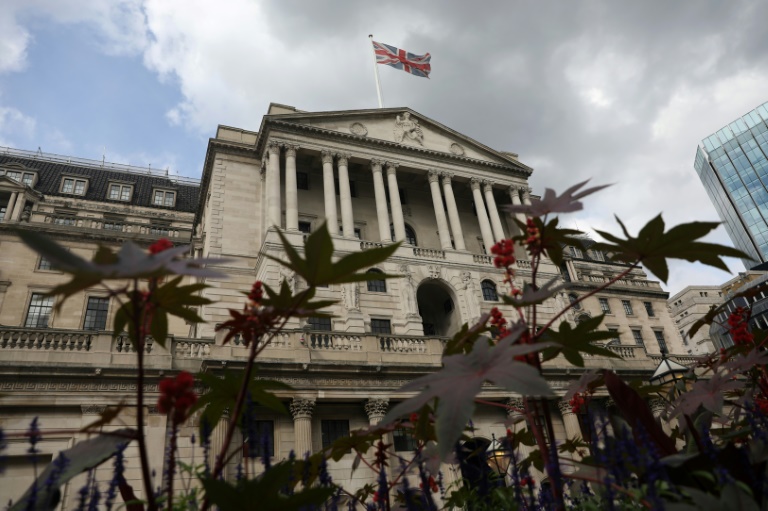
The small recovery came after the Bank of England said it would “not hesitate to change interest rates by as much as needed”.

With the pound showing record weakness against the dollar this week, analysts are forecasting a big rate increase when the BoE holds its next regular policy meeting on November 3.

Oil prices jumped more than two percent, helped by a weaker dollar.

“Oil remains a sellers’ market with worries about a global recession and high interest rates intensifying,” Fawad Razaqzada, analyst at City Index and FOREX.com said.

“In addition, with currencies of major oil importing nations tumbling, anything traded in US dollars will cost more… such as oil.”

– Key figures at around 1745 GMT –

London – FTSE 100: DOWN 0.5 percent at 6,984.59 (close)

Frankfurt – DAX: DOWN 0.7 percent at 12,139.68 (close) 

Paris – CAC 40: DOWN 0.3 percent at 5,753.82 (close)  

EURO STOXX 50: DOWN 0.4 percent at 3,328.65 

New York – Dow: DOWN 0.04 percent at 29,252.34

Tokyo – Nikkei 225: UP 0.5 percent at 26,571.87 (close)

Hong Kong – Hang Seng Index: FLAT at 17,860.31 (close)

Shanghai – Composite: UP 1.4 percent at 3,093.86 (close)

Pound/dollar: UP at $1.0776 from $1.0689 on Monday

Euro/dollar: UP at $0.9625 from $0.9611

Euro/pound: DOWN  at 89.37 pence from 89.87 pence 

Dollar/yen: DOWN at 144.62 yen from 144.72 yen

Brent North Sea crude: UP 2.8 percent at $86.38 per barrel

West Texas Intermediate: UP 2.5 percent at $78.66 per barrel

Close Bitnami banner
Bitnami