US Business

Large Wall Street firms fined $1.8 bn in US over lax recordkeeping

Large Wall Street firms agreed to pay $1.8 billion in fines over failures to keep electronic records such as text messages between employees on personal mobile phones, US authorities announced Tuesday.

Barclays, Bank of America, Deutsche Bank and Goldman Sachs were among the firms that agreed to fines over “longstanding failures” to maintain and preserve electronic communications that must be available to regulators in the course of oversight, the Securities and Exchange Commission (SEC) said in a statement.

The SEC announced a total of $1.1 billion in fines on 16 institutions in all. The 16 firms listed included some companies such as Morgan Stanley with affiliated firms also covered by the agreement.

In a parallel action, the Commodity Futures Trading Commission announced it reached settlements totaling $710 million from the same group of financial institutions over the same offenses.

“Finance, ultimately, depends on trust. By failing to honor their recordkeeping and books-and-records obligations, the market participants we have charged today have failed to maintain that trust,” SEC Chair Gary Gensler said in a statement. “Since the 1930s, such recordkeeping has been vital to preserve market integrity.

“As technology changes, it’s even more important that registrants appropriately conduct their communications about business matters within only official channels, and they must maintain and preserve those communications.”

An SEC investigation uncovered “pervasive off-channel communications” involving a range of senior and junior investment bankers and traders — omissions that “likely” deprived it of communications in agency probes, it said.

Bank of America was fined a total of $225 million under the two settlements.

Financial giants agreeing to $200 million in settlements were Barclays, Citigroup, Credit Suisse, Deutsche Bank, Goldman Sachs, Morgan Stanley and UBS.

Nomura, Jefferies and  Cantor Fitzgerald will pay respectively $100, $80 and $16 million

The SEC in December 2021 fined JPMorgan Chase $125 million for the offense, spurring an industry-wide regulatory crackdown on poor recordkeeping, the SEC said.
Large Wall Street firms fined $1.8 bn in US over lax recordkeeping

Large Wall Street firms agreed to pay $1.8 billion in fines over failures to keep electronic records such as text messages between employees on personal mobile phones, US authorities announced Tuesday.

Barclays, Bank of America, Deutsche Bank and Goldman Sachs were among the firms that agreed to fines over “longstanding failures” to maintain and preserve electronic communications that must be available to regulators in the course of oversight, the Securities and Exchange Commission (SEC) said in a statement.

The SEC announced a total of $1.1 billion in fines on 16 institutions in all. The 16 firms listed included some companies such as Morgan Stanley with affiliated firms also covered by the agreement.

In a parallel action, the Commodity Futures Trading Commission announced it reached settlements totaling $710 million from the same group of financial institutions over the same offenses.

“Finance, ultimately, depends on trust. By failing to honor their recordkeeping and books-and-records obligations, the market participants we have charged today have failed to maintain that trust,” SEC Chair Gary Gensler said in a statement. “Since the 1930s, such recordkeeping has been vital to preserve market integrity.

“As technology changes, it’s even more important that registrants appropriately conduct their communications about business matters within only official channels, and they must maintain and preserve those communications.”

An SEC investigation uncovered “pervasive off-channel communications” involving a range of senior and junior investment bankers and traders — omissions that “likely” deprived it of communications in agency probes, it said.

Bank of America was fined a total of $225 million under the two settlements.

Financial giants agreeing to $200 million in settlements were Barclays, Citigroup, Credit Suisse, Deutsche Bank, Goldman Sachs, Morgan Stanley and UBS.

Nomura, Jefferies and  Cantor Fitzgerald will pay respectively $100, $80 and $16 million

The SEC in December 2021 fined JPMorgan Chase $125 million for the offense, spurring an industry-wide regulatory crackdown on poor recordkeeping, the SEC said.
Elon Musk and Twitter dig for evidence as trial looms

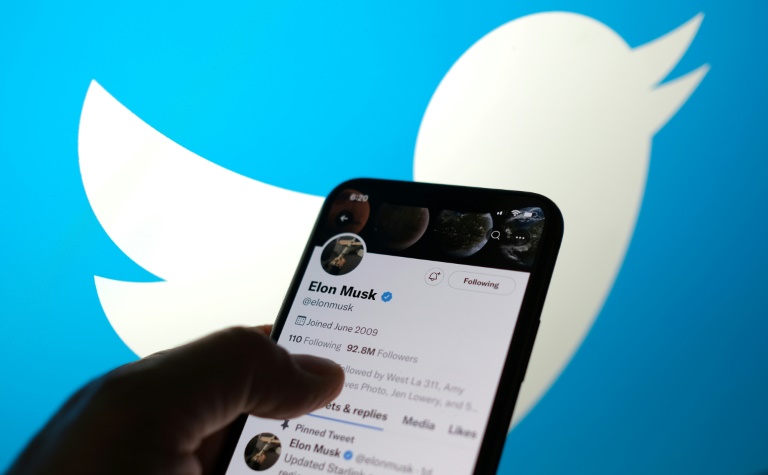
Twitter and Elon Musk sparred in court on Tuesday, each digging for evidence to prevail in a high-stakes trial next month over the billionaire’s bid to break his buyout deal.

Musk has been keen to find evidence to back his accusation that Twitter misled regulators and investors about what portion of accounts are actually spam or software “bots,” as well as its key measures regarding growth.

Twitter, which has sued Musk to force him to complete the $44 billion buyout deal, seeks material or testimony to prove he is contriving excuses to walk away because he changed his mind.

A Twitter attorney told the judge it was a struggle to get documents from data scientists Musk used to estimate the portion of fake accounts on the social network, and that what they finally got did not back his accusation about it being much higher than five percent.

Attorney Brad Wilson contended that Twitter has encountered a “pattern of delay and obfuscation” when it comes to what Musk learned from data scientists he had study Twitter data.

Musk attorneys, in turn, pressed the judge to make Twitter hand over more messages or other material, particularly regarding “monetizable daily active users” and “user active minutes.”

The hearing came during a discovery phase in which rival sides seek documents, emails, depositions and more to back their positions.

The long list of those called on to provide documents or to answer questions in the case includes Twitter co-founder and former chief Jack Dorsey.

Tesla chief Musk will be deposed under oath over the course of two days next week in sessions that are to be recorded by “stenographic, sound and visual means,” according to a filing.

Musk’s deposition is set to take place privately in law offices ahead of a five-day trial scheduled to begin October 17 in the Court of Chancery in the state of Delaware.

Musk, the world’s richest man, said in a letter in April that he was canceling the deal because he was misled by Twitter concerning the number of bot accounts on its platform, allegations rejected by the company.

He later added accusations made in a whistleblower complaint by a former head of security at Twitter to his reasons for walking away from the deal.

Twitter has stood by its assessment of user numbers, and portrayed the whistleblower as a “disgruntled former employee” whose allegations are without merit.

“There are a range of possibilities that can come from the Delaware court including settlement, breakup fee paid, deal enforced, and a myriad of other outcomes,” Wedbush analyst Dan Ives said of the trial.

“We also continue to believe there is a possibility behind the scenes both parties look to attempt negotiations before stepping into court in a few weeks.”

Elon Musk and Twitter dig for evidence as trial looms

Twitter and Elon Musk sparred in court on Tuesday, each digging for evidence to prevail in a high-stakes trial next month over the billionaire’s bid to break his buyout deal.

Musk has been keen to find evidence to back his accusation that Twitter misled regulators and investors about what portion of accounts are actually spam or software “bots,” as well as its key measures regarding growth.

Twitter, which has sued Musk to force him to complete the $44 billion buyout deal, seeks material or testimony to prove he is contriving excuses to walk away because he changed his mind.

A Twitter attorney told the judge it was a struggle to get documents from data scientists Musk used to estimate the portion of fake accounts on the social network, and that what they finally got did not back his accusation about it being much higher than five percent.

Attorney Brad Wilson contended that Twitter has encountered a “pattern of delay and obfuscation” when it comes to what Musk learned from data scientists he had study Twitter data.

Musk attorneys, in turn, pressed the judge to make Twitter hand over more messages or other material, particularly regarding “monetizable daily active users” and “user active minutes.”

The hearing came during a discovery phase in which rival sides seek documents, emails, depositions and more to back their positions.

The long list of those called on to provide documents or to answer questions in the case includes Twitter co-founder and former chief Jack Dorsey.

Tesla chief Musk will be deposed under oath over the course of two days next week in sessions that are to be recorded by “stenographic, sound and visual means,” according to a filing.

Musk’s deposition is set to take place privately in law offices ahead of a five-day trial scheduled to begin October 17 in the Court of Chancery in the state of Delaware.

Musk, the world’s richest man, said in a letter in April that he was canceling the deal because he was misled by Twitter concerning the number of bot accounts on its platform, allegations rejected by the company.

He later added accusations made in a whistleblower complaint by a former head of security at Twitter to his reasons for walking away from the deal.

Twitter has stood by its assessment of user numbers, and portrayed the whistleblower as a “disgruntled former employee” whose allegations are without merit.

“There are a range of possibilities that can come from the Delaware court including settlement, breakup fee paid, deal enforced, and a myriad of other outcomes,” Wedbush analyst Dan Ives said of the trial.

“We also continue to believe there is a possibility behind the scenes both parties look to attempt negotiations before stepping into court in a few weeks.”

Pie from the sky: drone delivery lands in America

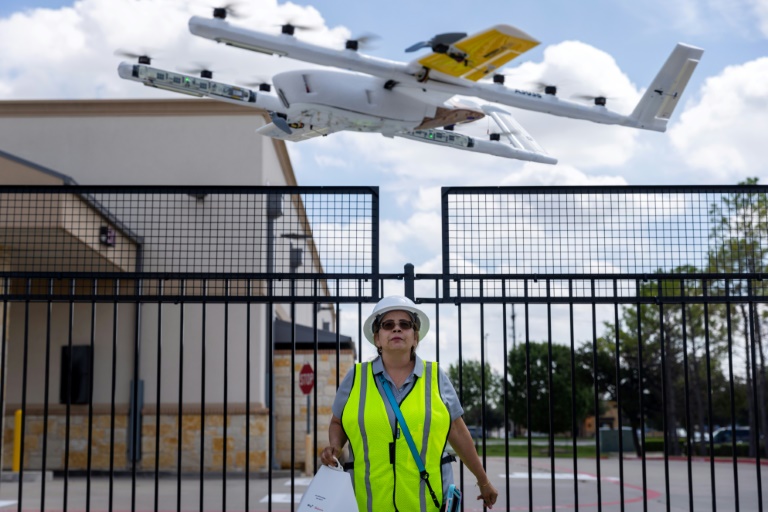
The little aircraft appeared out of the blue sky above a Texas home, deposited its payload of a mid-morning snack in the yard and zoomed off, as deliveries by drone start becoming a reality in America.

Flying shipments of pizzas and birthday gifts have still not become the norm that tech leaders predicted, but the service is available in parts of the United States and government regulation is catching up. 

Skeptics question whether drone drop-offs can ever work on a large scale, but backers argue they are safer and better for the planet than hulking, greenhouse-gas-spewing delivery trucks –- and faster.

The parcel lowered to the ground from an electric drone hovering above Tiffany Bokhari’s Frisco, Texas, house was in her hands minutes after she placed an order on a smartphone app. 

“On the soda, you can even see the condensation on it because it’s still cold,” she told AFP after the drone from Alphabet-owned Wing had flown off.

Service was new in the area and remained small-scale, but Wing offered the comparison of the up to 1,000 deliveries per day it’s doing in just one part of the Brisbane metro area in Australia.

– Blood and tooth brushes –

A handful of firms already have operations running or will by year’s end in parts of Texas, North Carolina or California, with providers including Israeli startup Flytrex, Wing and e-commerce behemoth Amazon.

In fact, it was Amazon founder Jeff Bezos who in 2013 unveiled a delivery drone in a CBS interview, predicting that within five years airborne shipments would be routinely zipping from fulfillment centers to customers’ doorsteps.

Things haven’t quite gone that way for the company that has otherwise seeped ubiquitously into aspects of modern life, from streaming and food shopping to health care.

When an Amazon delivery drone crashed during a test last year and started a brush fire, it was another setback for the company’s stumbling drone ambitions.

The work has advanced more steadily for others, and in April, Wing announced what it calls “the first commercial drone delivery service” in a major US metro area: Texas’s Dallas-Fort Worth.

Wing, which also offers deliveries to some areas in Australia and Finland, has a weight limit of 2.5-3 pounds (just over one kilo).

“An entire roasted chicken… that’s actually a good visual for the size of what fits,” said Jonathan Bass, who heads marketing and communications for Wing.

Take-out food, prescriptions and household items like toothbrushes are the type of small and light products that have worked for airborne drop-offs, though drones have for years delivered essential items like medical goods in parts of Africa. 

Drone drop-offs of perishable substances like blood make sense in places where infrastructure is lacking and air transport is the best option, yet some experts are skeptical of whether it works everywhere.

– Government rules –

For example, a drone can carry one delivery from a warehouse or store to generally one place, which means a steep drop in efficiency in comparison with an old-fashioned parcel delivery driver.

“It would take a small army of drones to service the 150-200 packages that just one truck normally takes on a route,” wrote Bloomberg Opinion columnist Thomas Black, who still saw potential for “premium” emergency deliveries.

But Flytrex CEO Yariv Bash asserted that electric drones, in addition to being more efficient than take-out food deliveries done by a fossil fuel-powered car, were safer.

“Drones don’t get tired. They don’t try to text while driving. They don’t drink and drive,” he told AFP. “You just get much better service.” 

The question of safety has been at the heart of long processes of getting government approvals to work in the United States.

Bass, from Wing, noted that although they use a 10-pound foam drone, the company had to get the same certification that firms like DHL or UPS need for their delivery aircraft.

But he noted the Federal Aviation Administration transport regulator has launched a committee that’s made recommendations for regulating drones in the United States, adding: “I think that would really unlock faster growth” in the country.

Growth in the United States wouldn’t be a surprise, as McKinsey & Company figures show the global number of commercial deliveries spiking from around 6,000 in 2018 to nearly half a million last year.

“But the path ahead is not yet clear,” the firm’s March report said. “Regulations, customer acceptance, and cost will all determine whether the industry reaches its potential.”

Pie from the sky: drone delivery lands in America

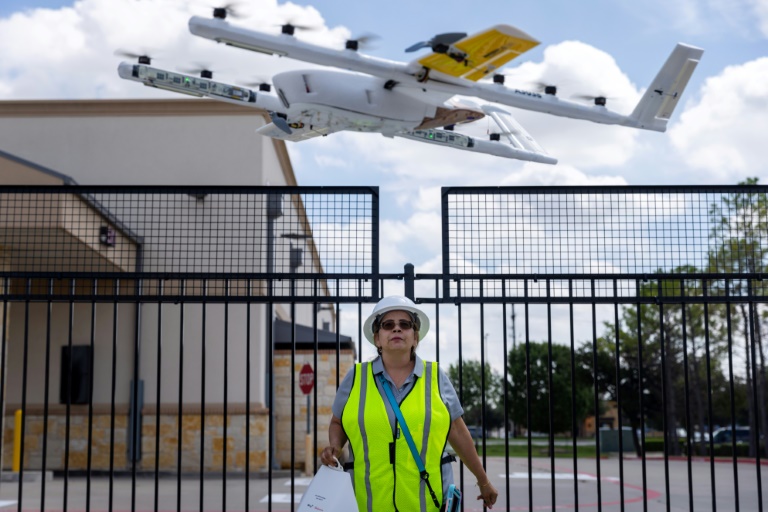
The little aircraft appeared out of the blue sky above a Texas home, deposited its payload of a mid-morning snack in the yard and zoomed off, as deliveries by drone start becoming a reality in America.

Flying shipments of pizzas and birthday gifts have still not become the norm that tech leaders predicted, but the service is available in parts of the United States and government regulation is catching up. 

Skeptics question whether drone drop-offs can ever work on a large scale, but backers argue they are safer and better for the planet than hulking, greenhouse-gas-spewing delivery trucks –- and faster.

The parcel lowered to the ground from an electric drone hovering above Tiffany Bokhari’s Frisco, Texas, house was in her hands minutes after she placed an order on a smartphone app. 

“On the soda, you can even see the condensation on it because it’s still cold,” she told AFP after the drone from Alphabet-owned Wing had flown off.

Service was new in the area and remained small-scale, but Wing offered the comparison of the up to 1,000 deliveries per day it’s doing in just one part of the Brisbane metro area in Australia.

– Blood and tooth brushes –

A handful of firms already have operations running or will by year’s end in parts of Texas, North Carolina or California, with providers including Israeli startup Flytrex, Wing and e-commerce behemoth Amazon.

In fact, it was Amazon founder Jeff Bezos who in 2013 unveiled a delivery drone in a CBS interview, predicting that within five years airborne shipments would be routinely zipping from fulfillment centers to customers’ doorsteps.

Things haven’t quite gone that way for the company that has otherwise seeped ubiquitously into aspects of modern life, from streaming and food shopping to health care.

When an Amazon delivery drone crashed during a test last year and started a brush fire, it was another setback for the company’s stumbling drone ambitions.

The work has advanced more steadily for others, and in April, Wing announced what it calls “the first commercial drone delivery service” in a major US metro area: Texas’s Dallas-Fort Worth.

Wing, which also offers deliveries to some areas in Australia and Finland, has a weight limit of 2.5-3 pounds (just over one kilo).

“An entire roasted chicken… that’s actually a good visual for the size of what fits,” said Jonathan Bass, who heads marketing and communications for Wing.

Take-out food, prescriptions and household items like toothbrushes are the type of small and light products that have worked for airborne drop-offs, though drones have for years delivered essential items like medical goods in parts of Africa. 

Drone drop-offs of perishable substances like blood make sense in places where infrastructure is lacking and air transport is the best option, yet some experts are skeptical of whether it works everywhere.

– Government rules –

For example, a drone can carry one delivery from a warehouse or store to generally one place, which means a steep drop in efficiency in comparison with an old-fashioned parcel delivery driver.

“It would take a small army of drones to service the 150-200 packages that just one truck normally takes on a route,” wrote Bloomberg Opinion columnist Thomas Black, who still saw potential for “premium” emergency deliveries.

But Flytrex CEO Yariv Bash asserted that electric drones, in addition to being more efficient than take-out food deliveries done by a fossil fuel-powered car, were safer.

“Drones don’t get tired. They don’t try to text while driving. They don’t drink and drive,” he told AFP. “You just get much better service.” 

The question of safety has been at the heart of long processes of getting government approvals to work in the United States.

Bass, from Wing, noted that although they use a 10-pound foam drone, the company had to get the same certification that firms like DHL or UPS need for their delivery aircraft.

But he noted the Federal Aviation Administration transport regulator has launched a committee that’s made recommendations for regulating drones in the United States, adding: “I think that would really unlock faster growth” in the country.

Growth in the United States wouldn’t be a surprise, as McKinsey & Company figures show the global number of commercial deliveries spiking from around 6,000 in 2018 to nearly half a million last year.

“But the path ahead is not yet clear,” the firm’s March report said. “Regulations, customer acceptance, and cost will all determine whether the industry reaches its potential.”

Activists protest in Manhattan for women in Iran, against the NYT

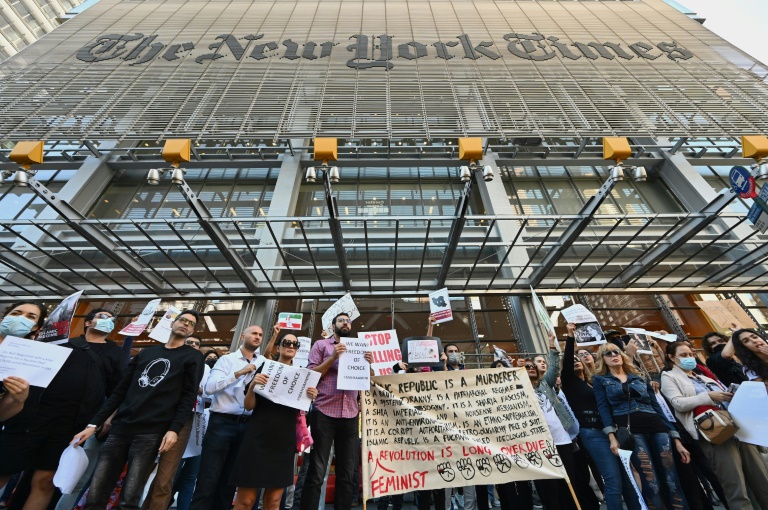
Dozens of young Iranians and Americans gathered Tuesday in front of The New York Times building in Manhattan to demonstrate for the rights of women in Iran, and to decry “bias” at the paper.

Activist Forouzan Farahani knelt on the sidewalk in front of the building and shaved her head in an act of protest following the death of 22-year-old Mahsa Amini, who died in the custody of the notorious morality police in mid-September.

Women in Iran have been leading demonstrations since September 16, defying a crackdown that a rights group says has killed more than 75 people and that has drawn international condemnation.

“We are here today to protest… the murder of Mahsa in Iran and uprisings that are ongoing across Iran in different cities,” said Farahani, 31. 

The Iranian told AFP the demonstrators were also protesting “bias and selective narrative” in The New York Times’ coverage of Iran in recent years.

“We also think that they don’t have a neutral position and so we think that it’s good to come to here and protest,” Farahani said.

The protesters singled out Farnaz Fassihi, a New York-based reporter for the Times who is covering the crisis in Iran.

“We stand by our reporting of the unrest in Iran, which is led by Farnaz Fassihi, an experienced journalist who has covered the Middle East for the past 25 years,” a spokesperson for the paper told AFP.

“As demonstrated today, Farnaz is regularly and unfairly harassed and threatened for her independent, deeply sourced reporting, which holds Iran’s authoritarian leadership to account. We will continue to do so, as our journalists cover the ongoing nationwide anti-government protests.”

In Iran, riot police in body armor have beaten protesters with truncheons in running street battles. 

Students have torn down large pictures of supreme leader Ayatollah Ali Khamenei and his late predecessor Ayatollah Ruhollah Khomeini, according to recent video footage published by AFP.

“People in Iran on the street, they’re not just protesting against the compulsory hijab,” Farahani said in New York. “They’re also protesting against the Islamic republic, which imposes this compulsory hijab.”

“They are protesting against the government, which kills their beloved ones.”

Stocks mostly fall on European gas woes, inflation worries

Global equities mostly fell Tuesday as concerns over European gas supplies and the Ukraine conflict again came to the fore, adding to worries over central bank efforts to counter inflation.

Paris, Frankfurt and London all closed in the red, failing to hang on to earlier gains. Wall Street stocks began strongly, but later came under pressure as investors bet on more aggressive Federal Reserve moves to counter inflation. 

“There’s little doubt instability is here to stay, and nerves are frayed as central bankers pull out all the stops to battle with inflation,” Danni Hewson, analyst at AJ Bell said.

“And there’s plenty of tension too over Russian moves to try to annex parts of Ukraine as well as worries about gas supplies after it emerged the pipeline that carries gas from Russia to Europe has suffered some kind of damage.”

European natural gas prices surged nearly 10 percent at one point, to 190.50 euros, following news that the two Nord Stream gas pipelines linking Russia and Europe have been hit by unexplained leaks.

EU chief Ursula Von der Leyen said the leaks were due to “sabotage,” threatening the “strongest possible response” to any deliberate disruption of European energy infrastructure.

The pipelines have been at the center of geopolitical tensions in recent months as Russia cut gas supplies to Europe in suspected retaliation against Western sanctions following its invasion of Ukraine.

“This damage is the clearest signal so far that Europe will have to survive the winter without significant Russian gas flows,” analysts at Charles Schwab said in a note to clients.

– Strong dollar – 

Recession prospects have risen in recent weeks as central banks keep hiking interest rates to try and cool decades-high inflation, boosting in particular the dollar.

Expectations for more Federal Reserve interest rate hikes dampened enthusiasm on Wall Street, where stocks opened solidly higher following several losing sessions in a dynamic initially attributed to an “oversold” market. 

But markets later reversed course following better-than-expected data, including a jump in consumer confidence in September. 

While the Nasdaq finished higher, both the Dow and S&P 500 declined.

The good economic data “further emboldens the Fed,” said Art Hogan, analyst of B. Riley Wealth Management, noting that the pullback in stocks followed a jump in the yield on the 10-year US Treasury note.

The aggressiveness of the Fed has also boosted the dollar against other currencies, although the greenback retreated Tuesday against the pound after hitting an all-time high on Monday.

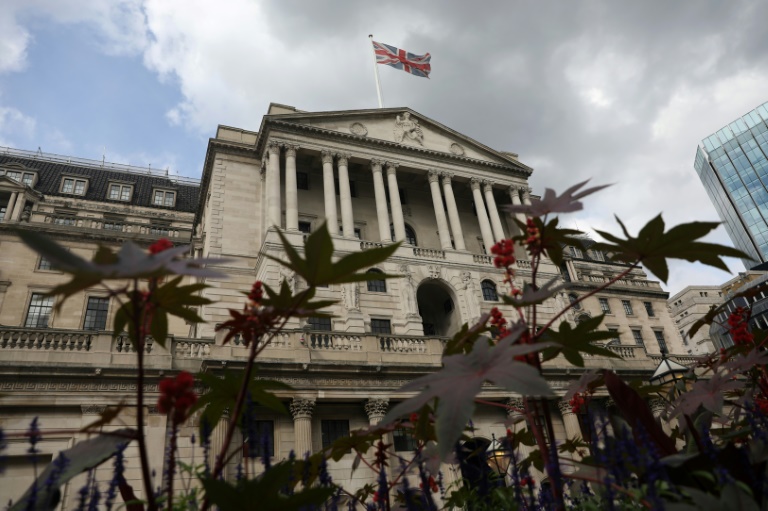
The small recovery in the pound came after the Bank of England said it would “not hesitate to change interest rates by as much as needed.”

During a visit to North Carolina, US Treasury Secretary Janet Yellen told reporters that the Fed is “moving faster than many other countries” in explaining the dollar’s surge.

“These kinds of developments, which represent a tightening of financial conditions are part of what’s involved in addressing inflation but I’m not seeing at this stage — and we are monitoring carefully — disorderly financial market developments,” Yellen said.

– Key figures at around 2050 GMT –

New York – Dow: DOWN 0.4 percent at 29,134.99 (close)

New York – S&P 500 DOWN 0.2 percent at 3,647.29 (close)

New York – Nasdaq: UP 0.3 percent at 10,829.50 (close)

London – FTSE 100: DOWN 0.5 percent at 6,984.59 (close)

Frankfurt – DAX: DOWN 0.7 percent at 12,139.68 (close) 

Paris – CAC 40: DOWN 0.3 percent at 5,753.82 (close)  

EURO STOXX 50: DOWN 0.4 percent at 3,328.65 (close)

Tokyo – Nikkei 225: UP 0.5 percent at 26,571.87 (close)

Hong Kong – Hang Seng Index: FLAT at 17,860.31 (close)

Shanghai – Composite: UP 1.4 percent at 3,093.86 (close)

Pound/dollar: UP at $1.0730 from $1.0689 on Monday

Euro/dollar: DOWN at $0.9595 from $0.9609

Euro/pound: DOWN  at 89.39 pence from 89.90 pence 

Dollar/yen: UP at 144.81 yen from 144.75 yen

Brent North Sea crude: UP 2.6 percent at $86.27 per barrel

West Texas Intermediate: UP 2.3 percent at $78.50 per barrel

Biden laying foundation for green energy investments: Yellen

US President Joe Biden’s push for green energy tax credits will help boost a massive ramp up in private investment that will create jobs and lower energy costs for American families, Treasury Secretary Janet Yellen said Tuesday.

Yellen called the administration’s plan “the most aggressive action that we’ve ever taken to address the climate crisis.”

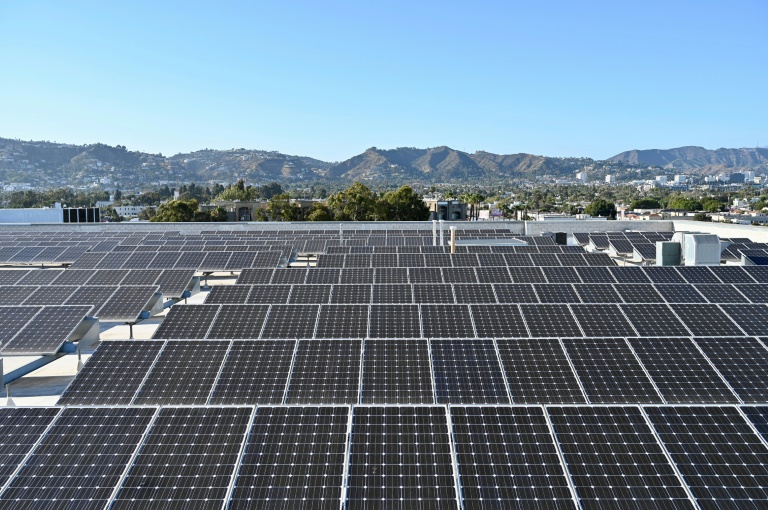
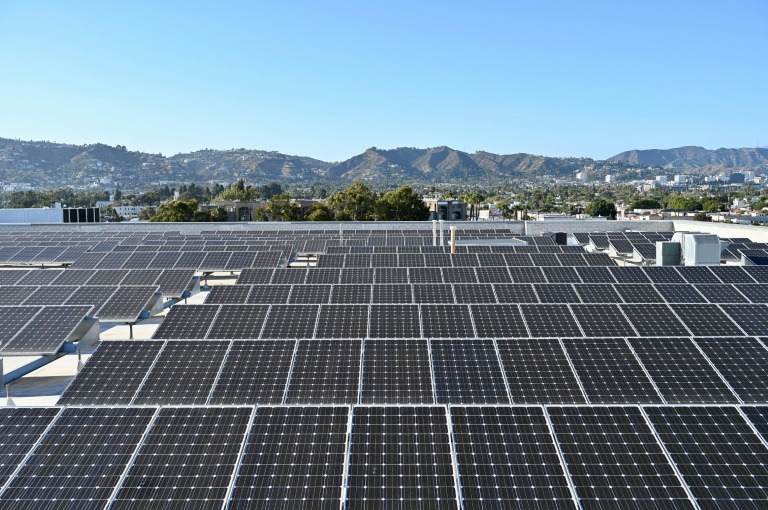
She traveled to North Carolina to tour a solar plant and tout policies included in the recently approved Inflation Reduction Act, which together with the Infrastructure Law includes more than $430 billion in energy investments.

The legislation provides tax credits to households to make their homes more energy efficient or switch to cleaner sources, which will help lower costs, Yellen said.

But the administration’s approach also “rests on harnessing the engagement of the private sector,” the official said in her speech, delivered in front of an array of solar panels. 

“Beyond the consumer tax credits, we expect a significant mobilization of private investment into the clean energy sector,” she said. “These investments will accelerate the transition to our green energy future and lower energy costs for American households and businesses.”

– Economic stability –

In addition, “They will secure our energy supply against global price shocks. And they will provide good-paying, high-quality jobs across America.” 

Yellen said the transition is critical to address climate change which has seen more costly storms arise across the globe. 

“Climate change poses a grave risk to the productive capacity of our economy while also impacting its stability,” she said. 

But the transition to a clean energy economy also brings lower costs and “significant economic opportunities in high-growth industries, while building economic resilience and creating good-paying jobs across the country.”

She said these new programs also will serve the “important goal” of boosting domestic capacity to produce solar panels, batteries for electric vehicles and even the minerals needed to make the batteries.

“I think the legislation will be effective. And we’re already hearing announcements about new activities starting up in the United States,” Yellen told reporters.

Global supply chain snarls have hit manufacturers which rely on imported components and have struggled to meet demand for goods and cars in the United States. Ford said recently it will have to store more than 40,000 partially built vehicles which are awaiting parts.

“We’re seeing a lot of supply chain issues that continue that’s limiting the production of electric vehicles and other cars,” Yellen said, adding that “I think that will resolve over time, and EVs will become quite affordable especially with the support from the Inflation Reduction Act.”

Biden laying foundation for green energy investments: Yellen

US President Joe Biden’s push for green energy tax credits will help boost a massive ramp up in private investment that will create jobs and lower energy costs for American families, Treasury Secretary Janet Yellen said Tuesday.

Yellen called the administration’s plan “the most aggressive action that we’ve ever taken to address the climate crisis.”

She traveled to North Carolina to tour a solar plant and tout policies included in the recently approved Inflation Reduction Act, which together with the Infrastructure Law includes more than $430 billion in energy investments.

The legislation provides tax credits to households to make their homes more energy efficient or switch to cleaner sources, which will help lower costs, Yellen said.

But the administration’s approach also “rests on harnessing the engagement of the private sector,” the official said in her speech, delivered in front of an array of solar panels. 

“Beyond the consumer tax credits, we expect a significant mobilization of private investment into the clean energy sector,” she said. “These investments will accelerate the transition to our green energy future and lower energy costs for American households and businesses.”

– Economic stability –

In addition, “They will secure our energy supply against global price shocks. And they will provide good-paying, high-quality jobs across America.” 

Yellen said the transition is critical to address climate change which has seen more costly storms arise across the globe. 

“Climate change poses a grave risk to the productive capacity of our economy while also impacting its stability,” she said. 

But the transition to a clean energy economy also brings lower costs and “significant economic opportunities in high-growth industries, while building economic resilience and creating good-paying jobs across the country.”

She said these new programs also will serve the “important goal” of boosting domestic capacity to produce solar panels, batteries for electric vehicles and even the minerals needed to make the batteries.

“I think the legislation will be effective. And we’re already hearing announcements about new activities starting up in the United States,” Yellen told reporters.

Global supply chain snarls have hit manufacturers which rely on imported components and have struggled to meet demand for goods and cars in the United States. Ford said recently it will have to store more than 40,000 partially built vehicles which are awaiting parts.

“We’re seeing a lot of supply chain issues that continue that’s limiting the production of electric vehicles and other cars,” Yellen said, adding that “I think that will resolve over time, and EVs will become quite affordable especially with the support from the Inflation Reduction Act.”

Close Bitnami banner
Bitnami