US Business

US lawmakers in shutdown showdown ahead of midterm elections

US lawmakers negotiated behind the scenes Monday to strike a temporary agreement that would avert a potentially damaging government shutdown, with federal funding due to expire at the end of the working week.

A so-called “continuing resolution” — essentially a stop-gap deal keeping the lights on until mid-December — is likely to include more than $12 billion in military and economic aid for Ukraine.

There will also be cash for resettling Afghan refugees, boosting winter heating allowances for low-income families and providing disaster aid in flooded Jackson, Mississippi.

One roadblock however is a piece of legislation Democrats have pledged to attach to the resolution known as the Energy Independence and Security Act 2022, which has opponents on both sides of the political aisle. 

The act would speed up the nation’s permitting process for energy infrastructure — both for fossil fuel projects and the clean energy initiatives championed by President Joe Biden.

But Republicans aren’t keen on handing Democrats another legislative victory with around 40 days to go until elections that will decide who controls Congress for the remainder of Biden’s first term.

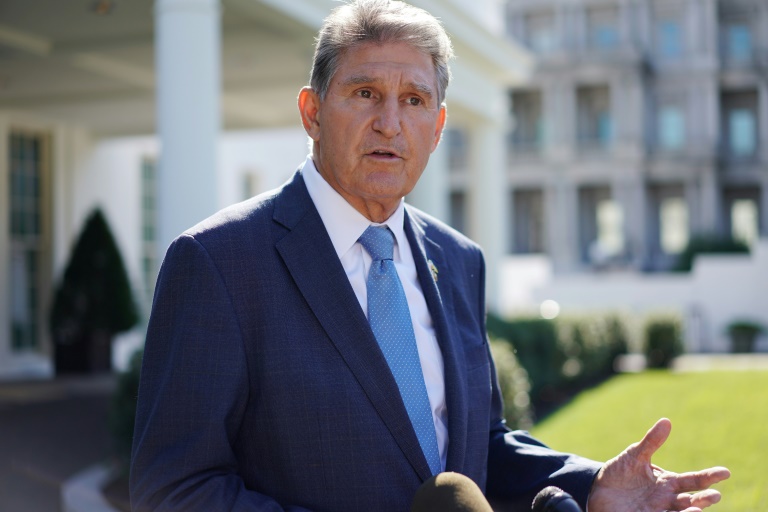
Liberals are also opposed to the text, spearheaded by West Virginia Democrat and fossil fuel magnate Senator Joe Manchin, arguing that it will lead to more oil and natural gas drilling.

Manchin called on both parties to “ignore the toxic ‘all or nothing’ legislative approach that has made it hard to discern what is truly essential for our nation” in an op-ed for The Wall Street Journal on Sunday.

Although prospects for a shutdown always raise pulses as the deadline approaches — the fiscal year ends at midnight on Friday going into Saturday — analysts see such an outcome so close to the election as highly unlikely.

If the energy measure fails in a Senate vote Tuesday, analysts expect it simply to be dropped and for the main vote on government funding to go ahead without it.

House Majority Leader Steny Hoyer has warned members that the chamber will stay in session through Saturday if necessary.

Shutdowns threaten the finances of hundreds of thousands of government workers who risk being sent home without pay as parks, museums and other federal properties close. 

There have been no shutdowns so far under Biden, although his predecessor Donald Trump saw two, including a 35-day shutdown from late 2018 to early 2019 that was the longest in US history.
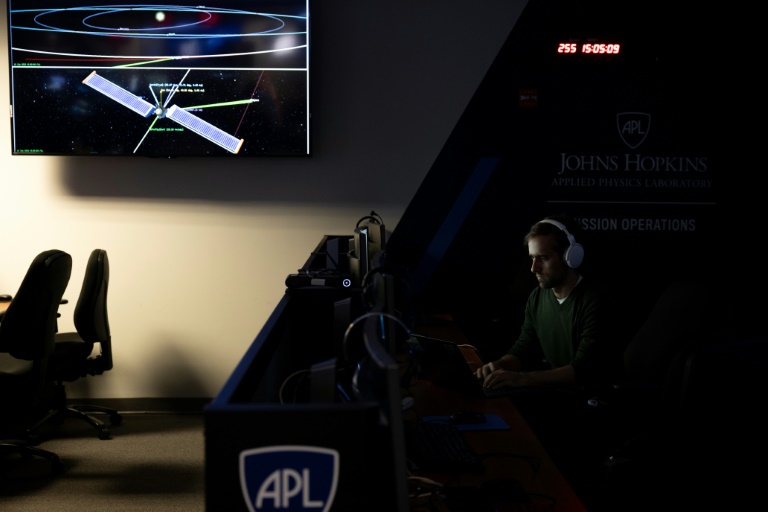
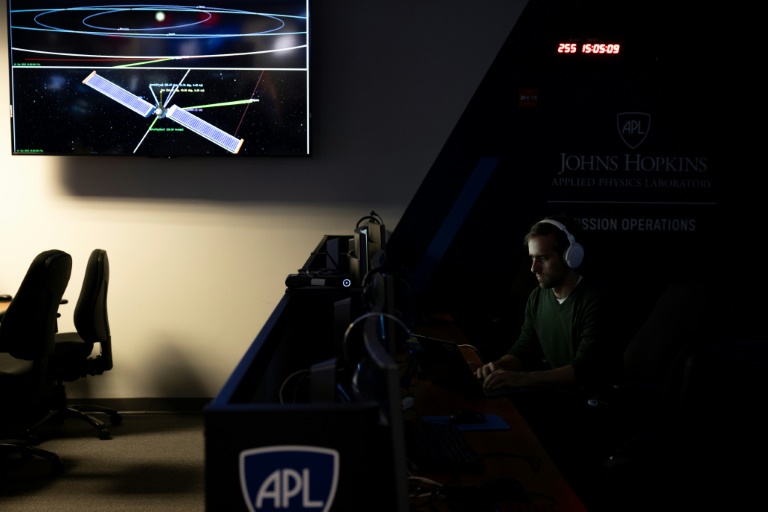
NASA to deflect asteroid in key test of planetary defense

NASA will on Monday attempt a feat humanity has never before accomplished: deliberately smacking a spacecraft into an asteroid to slightly deflect its orbit, in a key test of our ability to stop cosmic objects from devastating life on Earth.

The Double Asteroid Redirection Test (DART) spaceship launched from California last November and is fast approaching its target, which it will strike at roughly 14,000 miles (22,500 kilometers) per hour.

“It’s the final cosmic collision countdown,” tweeted mission control at Johns Hopkins Applied Physics Laboratory in Maryland.

To be sure, neither the asteroid moonlet Dimorphos, nor the big brother it orbits, called Didymos, pose any threat as the pair loop the Sun, passing about seven million miles from Earth at nearest approach.

But NASA has deemed the experiment important to carry out before an actual need is discovered.

If all goes to plan, impact between the car-sized spacecraft, and the 530-foot (160 meters, or two Statues of Liberty) asteroid should take place at 7:14 pm Eastern Time (2314 GMT), viewable on a NASA livestream.

By striking Dimorphos head on, NASA hopes to push it into a smaller orbit, shaving ten minutes off the time it takes to encircle Didymos, which is currently 11 hours and 55 minutes — a change that will be detected by ground telescopes in the days or weeks to come.

The proof-of-concept experiment will make a reality of what has before only been attempted in science fiction — notably in films such as “Armageddon” and “Don’t Look Up.” 

– Technically challenging –

As the craft propels itself through space, flying autonomously for the mission’s final phase, its camera system will start to beam down the very first pictures of Dimorphos.

Minutes later, a toaster-sized satellite called LICIACube, which already separated from DART a few weeks ago, will make a close pass of the site to capture images of the collision and the ejecta — the pulverized rock thrown off by impact.

LICIACube’s pictures will be sent back in the next weeks and months. 

Also watching the event: an array of telescopes, both on Earth and in space — including the recently operational James Webb — which might be able to see a brightening cloud of dust.

Finally, a full picture of what the system looks like will be revealed when a European Space Agency mission four years down the line called Hera arrives to survey Dimorphos’ surface and measure its mass, which scientists can currently only guess at.

– Being prepared –

Very few of the billions of asteroids and comets in our solar system are considered potentially hazardous to our planet, and none are expected in the next hundred years or so. 

But “I guarantee to you that if you wait long enough, there will be an object,” said NASA’s Thomas Zurbuchen. 

We know that from the geological record — for example, the six-mile wide Chicxulub asteroid struck Earth 66 million years ago, plunging the world into a long winter that led to the mass extinction of the dinosaurs along with 75 percent of all species.

An asteroid the size of Dimorphos, by contrast, would only cause a regional impact, such as devastating a city, albeit with greater force than any nuclear bomb in history.

How much momentum DART imparts on Dimorphos will depend on whether the asteroid is solid rock, or more like a “rubbish pile” of boulders bound by mutual gravity — a situation that’s not yet known.

The shape of the asteroid is also not known, but NASA engineers are confident DART’s SmartNav guidance system will hit its target.

If it misses, NASA will have another shot in two years’ time, with the spaceship containing just enough fuel for another pass.

But if it succeeds, the mission will mark the first step towards a world capable of defending itself from a future existential threat.

NASA to deflect asteroid in key test of planetary defense

NASA will on Monday attempt a feat humanity has never before accomplished: deliberately smacking a spacecraft into an asteroid to slightly deflect its orbit, in a key test of our ability to stop cosmic objects from devastating life on Earth.

The Double Asteroid Redirection Test (DART) spaceship launched from California last November and is fast approaching its target, which it will strike at roughly 14,000 miles (22,500 kilometers) per hour.

“It’s the final cosmic collision countdown,” tweeted mission control at Johns Hopkins Applied Physics Laboratory in Maryland.

To be sure, neither the asteroid moonlet Dimorphos, nor the big brother it orbits, called Didymos, pose any threat as the pair loop the Sun, passing about seven million miles from Earth at nearest approach.

But NASA has deemed the experiment important to carry out before an actual need is discovered.

If all goes to plan, impact between the car-sized spacecraft, and the 530-foot (160 meters, or two Statues of Liberty) asteroid should take place at 7:14 pm Eastern Time (2314 GMT), viewable on a NASA livestream.

By striking Dimorphos head on, NASA hopes to push it into a smaller orbit, shaving ten minutes off the time it takes to encircle Didymos, which is currently 11 hours and 55 minutes — a change that will be detected by ground telescopes in the days or weeks to come.

The proof-of-concept experiment will make a reality of what has before only been attempted in science fiction — notably in films such as “Armageddon” and “Don’t Look Up.” 

– Technically challenging –

As the craft propels itself through space, flying autonomously for the mission’s final phase, its camera system will start to beam down the very first pictures of Dimorphos.

Minutes later, a toaster-sized satellite called LICIACube, which already separated from DART a few weeks ago, will make a close pass of the site to capture images of the collision and the ejecta — the pulverized rock thrown off by impact.

LICIACube’s pictures will be sent back in the next weeks and months. 

Also watching the event: an array of telescopes, both on Earth and in space — including the recently operational James Webb — which might be able to see a brightening cloud of dust.

Finally, a full picture of what the system looks like will be revealed when a European Space Agency mission four years down the line called Hera arrives to survey Dimorphos’ surface and measure its mass, which scientists can currently only guess at.

– Being prepared –

Very few of the billions of asteroids and comets in our solar system are considered potentially hazardous to our planet, and none are expected in the next hundred years or so. 

But “I guarantee to you that if you wait long enough, there will be an object,” said NASA’s Thomas Zurbuchen. 

We know that from the geological record — for example, the six-mile wide Chicxulub asteroid struck Earth 66 million years ago, plunging the world into a long winter that led to the mass extinction of the dinosaurs along with 75 percent of all species.

An asteroid the size of Dimorphos, by contrast, would only cause a regional impact, such as devastating a city, albeit with greater force than any nuclear bomb in history.

How much momentum DART imparts on Dimorphos will depend on whether the asteroid is solid rock, or more like a “rubbish pile” of boulders bound by mutual gravity — a situation that’s not yet known.

The shape of the asteroid is also not known, but NASA engineers are confident DART’s SmartNav guidance system will hit its target.

If it misses, NASA will have another shot in two years’ time, with the spaceship containing just enough fuel for another pass.

But if it succeeds, the mission will mark the first step towards a world capable of defending itself from a future existential threat.

Direct impact or nuclear weapons? How to save Earth from an asteroid

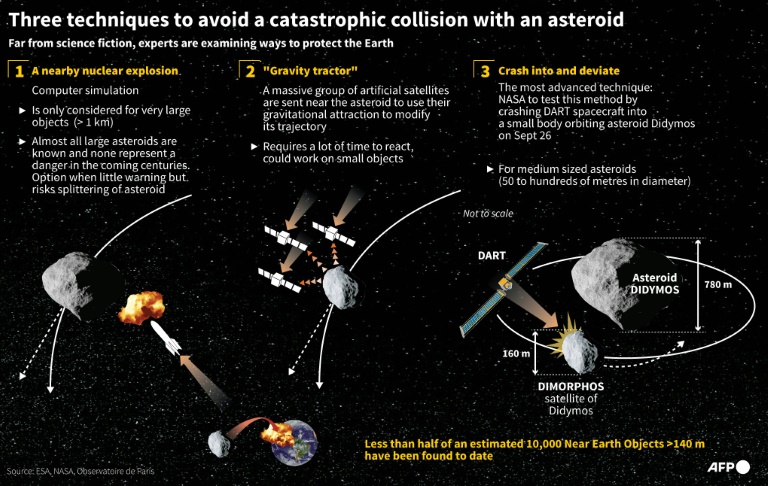
NASA’s DART mission to test deflecting an asteroid using “kinetic impact” with a spaceship is just one way to defend planet Earth from an approaching object  — and for now, the only method possible with current technology.

The operation is like playing billiards in space, using Newton’s laws of motion to guide us. 

If an asteroid threat to Earth were real, a mission might need to be launched a year or two in advance to take on a small asteroid, or decades ahead of projected impact for larger objects hundreds of kilometers in diameter that could prove catastrophic to the planet. 

Or, a larger object might require hits with multiple spacecraft.

“This demonstration will start to add tools to our toolbox of methods that could be used in the future,” said Lindley Johnson, NASA’s planetary defense office, in a recent briefing.

Other proposed ideas have included a futuristic-sounding “gravity tractor,” or a mission to blow up the hypothetical object with a nuclear weapon — the method preferred by Hollywood.

– Gravity tractor – 

Should an approaching object be detected early — years or decades before it would hit Earth — a spaceship could be sent to fly alongside it for long enough to divert its path via using the ship’s gravitational pull, creating a so-called gravity tractor.

This method “has the virtue that the method of moving the asteroid is totally well understood — it’s gravity and we know how gravity works,” Tom Statler, a DART program scientist at NASA said at a briefing last November when DART launched.

The mass of the spacecraft however would be a limiting factor — and gravity tractors would be less effective for asteroids more than 500 meters in diameter, which are the very ones that pose the greatest threat. 

In a 2017 paper, NASA engineers proposed a way to overcome this snag: by having the spacecraft scoop material from the asteroid to enhance its own mass, and thus, gravity.

But none of these concepts have been tried, and would need decades to build, launch and test.

– Nuclear detonation – 

Another option: launching nuclear explosives to redirect or destroy an asteroid. 

“This may be the only strategy that would be effective for the largest and most dangerous ‘planet-killer’ asteroids (more than one kilometer in diameter),” a NASA article on the subject says, adding such a strike might be useful as a “last resort” in case the other methods fail.

But these weapons are geopolitically controversial and technically banned from use in outer space.

Lori Glaze, NASA’s planetary science division director said in a 2021 briefing that the agency believed the best way to deploy the weapons would be at a distance from an asteroid, in order to impart force on the object without blowing it into smaller pieces that could then multiply the threat to Earth.

A 2018 paper published in the “Journal of Experimental and Theoretical Physics” by Russian scientists looked at the direct detonation scenario.

E. Yu. Aristova and colleagues built miniature asteroid models and blasted them with lasers. Their experiments showed that blowing up a 200-meter asteroid would require a bomb 200 times as powerful as the one that exploded over Hiroshima in 1945. 

They also said it would be most effective to drill into the asteroid, bury the bomb, then blow it up — just like in the movie Armageddon.

UK PM Truss under fire as pound sinks

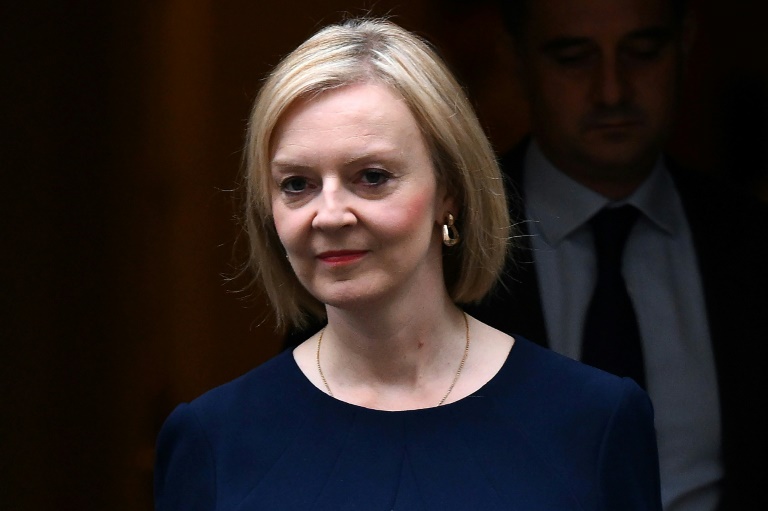
The government of new British Prime Minister Liz Truss on Monday came under pressure after the pound hit a record low against the dollar following last week’s huge tax-cutting budget.

The main opposition Labour party lambasted Truss for the massive spending plans, which some economists warn could further fuel inflation.

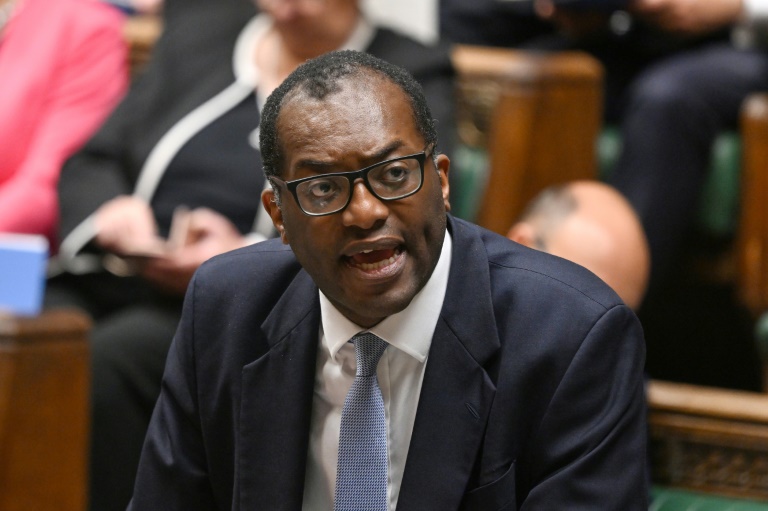
Labour’s finance spokeswoman Rachel Reeves described the situation as a “national emergency” and likened Truss and her chancellor of the exchequer Kwasi Kwarteng to “two desperate gamblers in a casino chasing a losing run”.

“The message from financial markets was clear on Friday and this morning that message is even more stark: sterling is down. That means higher prices, as the costs of imports rise,” she said. 

“The cost of government borrowing is up. That means that more taxpayers money will go into paying the interest on our government debt.

“And in turn that means the cost of borrowing for working people will now go up to with higher mortgage repayments,” she told Labour’s annual conference in Liverpool, northwest England.

Britain has been facing a cost-of-living crisis with soaring energy prices coupled with inflation and wage stagnation.

– Pound sinks –

Kwarteng was appointed finance minister by Truss earlier this month after she took office following a leadership battle to replace Boris Johnson as head of the ruling Conservative party.

On Friday Kwarteng unveiled a multi-billion-pound package to support households and businesses.

He also slashed taxes, bringing forward a plan to cut the lowest rate of income tax and reducing the highest to 40 percent from 45 percent to kickstart the economy.

But investors were spooked by the huge amount of borrowing likely needed for the package, which critics said would benefit the rich far more than the poorest hit by the cost-of-living crisis.

The cost of the energy support measures alone have been calculated at £60 billion ($65 billion) for only six months.

But economists estimate the whole tax package at between £100-200 billion.

The pound on Monday struck an all-time low at $1.0350 before regaining some ground to stand at $1.0728 around 1115 GMT.

The pound had already suffered a series of 37-year lows against the greenback this month on UK recession fears propelled by high inflation.

– ‘Back to 1970s’ –

Economist Nouriel Roubini, known for his pessimistic predictions and having anticipated the subprime crisis, said on Twitter he believed Britain was headed “back to the 1970s”.

“Stagflation and eventually the need to go and beg for an IMF (International Monetary Fund) bailout…. Truss and her cabinet are clueless,” he said.

The Bank of England (BoE), which on Thursday raised its rate by 0.50 percentage points to 2.25 percent, may need to meet urgently to raise the rate again.

The markets now believe that the rate could rise two percentage points by November, when its next meeting is scheduled.

Without intervention this week, the pound could well fall below parity to the dollar soon, warned Lee Hardman, analyst at MUFG, Japan’s largest bank.

The tension between the Bank of England and the Treasury was now “palpable”, added Susannah Streeter, analyst at Hargreaves Lansdown, with members of the Central Bank wanting to limit inflation by weakening demand and political leaders who want to boost it.

Sky News, citing unnamed sources, said the Bank of England was due to issue a statement.

While inflation reached 9.9 percent in the UK — the highest in the G7 — the central bank also estimated that the country had entered recession during the third quarter.

The pound is not the only currency in difficulty against the dollar: since the beginning of the year, the yen has lost 20 percent, while the euro has fallen by 15 percent. 

During the pound’s previous historic low, in 1985, several large countries, including the United States, had signed the Plaza agreement, which aimed to voluntarily depreciate the greenback.

“Are we getting closer to a ‘Plaza moment’?” said John Velis, analyst at BNY Mellon.

“The USD real exchange rate is currently as high as it was at that time, but the spirit of cooperation doesn’t yet seem to be present among the major economies in the world now,” he said.

Stocks volatile, pound hits record low

Markets seesawed and the British pound took a beating Monday as recession fears brought volatility to the markets.

Having extended losses in morning trading, Frankfurt and Paris edged higher by mid afternoon.

London shares remained lower, however, after the pound hit a record low against the dollar on surging fears about the ailing UK economy, before recovering.

Further clouding the horizon, the OECD warned the world economy would take a bigger hit than previously forecast next year due to the effects of Russia’s war in Ukraine.

“Volatility reigns supreme in a jittery market environment,” analyst Patrick O’Hare at Briefing.com said.

Wall Street stocks also fell shortly after trading opened, amid the upheaval in the foreign exchange market.

The pound on Monday struck an all-time low at $1.0350, days after new UK finance minister Kwasi Kwarteng’s inflation-fighting budget.

Economists expressed concerns that last week’s huge tax-cutting budget from the government of new Prime Minister Liz Truss — aimed at helping the recession-threatened economy — could actually spark massive borrowing and further fuel inflation.

“The market’s reactions show that investors have lost confidence in the government’s approach, creating a level of volatility that puts the pound on par with some emerging market peers,” said Fiona Cincotta, a senior analyst at City Index.

“Attention is now turning to the BoE (Bank of England) to step in to support the pound.”

Sterling has struggled in recent years as the UK fails to strike major trade deals following its exit from the European Union.

Prior to Monday’s crash, the pound suffered a series of 37-year lows against the greenback this month on UK recession fears propelled by sky-high inflation.

The euro has additionally come under heavy selling pressure against the dollar in recent months, as the Federal Reserve hikes interest rates more aggressively than the European Central Bank.

The euro struck a new 20-year low at $0.9554 on Monday before recovering.

A day after Eurosceptic populists swept to victory in Italy’s general election, the interest rates on 10-year government bonds hit their highest level for around a decade in France, Germany and Italy.

But the Italian stock market climbed as markets assessed the future political landscape.

“Time will tell how successful the new government will prove to be but the prospect of some political stability appears to be generating a small relief rally today,” said Craig Erlam, analyst at trading platform OANDA.

Elsewhere, the Moscow stock exchange plunged by 10 percent to its lowest point since Russia began its Ukraine offensive seven months ago as tensions grew across the country over partial military mobilisation.

– Key figures at around 1340 GMT –

Pound/dollar: UP at $1.0861 from $1.0852 on Friday

Euro/dollar: DOWN at $0.9663 from $0.9695

Euro/pound: DOWN at 0.8895 pence from 89.28 pence 

Dollar/yen: UP at 144.05 yen from 143.31 yen

London – FTSE 100: DOWN 0.4 percent at 6,991.89 points

Frankfurt – DAX: UP 0.4 percent at 12,336.04 

Paris – CAC 40: UP 0.3 percent at 5,800.28

EURO STOXX 50: UP 0.5 percent at 3,364.39 

New York – Dow: DOWN 0.3 percent at 29,496.06 

Tokyo – Nikkei 225: DOWN 2.7 percent at 26,431.55 (close)

Hong Kong – Hang Seng Index: DOWN 0.4 percent at 17,855.14 (close)

Shanghai – Composite: DOWN 1.2 percent at 3,051.23 (close)

West Texas Intermediate: UP 1.1 percent at $79.57 per barrel

Brent North Sea crude: UP 0.8 percent at $86.80 per barrel

burs-bcp/

Apple to make iPhone 14 in India in shift away from China

Apple will manufacture its new flagship smartphone in India, the US tech giant said Monday, as it seeks to diversify production away from a dependence on China.

The iPhone supply chain is based mainly in China but the country’s zero-Covid policies and tensions with the United States have hurt production, analysts say.

“We’re excited to be manufacturing iPhone 14 in India,” Apple said in a brief statement.

The California-based firm already makes older iPhone models in India via Taiwanese manufacturers such as Foxconn, which has a factory in the southern state of Tamil Nadu.

The latest announcement comes just weeks after Apple launched new smartphones. The tech behemoth is commencing production of the iPhone 14 in India much earlier than it did for previous models, Canalys analyst Sanyam Chaurasia said.

“Over the last couple of years, it has been increasingly diversifying its supply chain to India,” Chaurasia told AFP.

About 7.5 million iPhones — around three percent of Apple’s global production — were made in India last year, the analyst added.

“We expect that the local production of iPhones could reach more than 11 million this year,” he said.

Apple’s announcement will be a boost to Prime Minister Narendra Modi’s “Make in India” strategy under which he has urged foreign businesses to manufacture goods in the South Asian nation.

World economy to slow, 'paying the price of war': OECD

The world economy will take a bigger hit than previously forecast next year due to the effects of Russia’s war in Ukraine, the OECD said Monday.

In a bleak report titled “paying the price of war”, the Paris-based organisation noted that the conflict aggravated inflationary pressure when the cost of living was already rising quickly.

“The world is paying a very heavy price for Russia’s aggression against Ukraine,” OECD Secretary-General Mathias Cormann said in a news conference.

“Households and firms are suffering as costs rise and purchasing power is taking a hit,” Cormann said.

Covid outbreaks are still having an impact on the global economy while growth has also been affected by rising interest rates as central banks scramble to cool red-hot prices, the OECD said.

“A number of indicators have taken a turn for the worse, and the global growth outlook has darkened,” the Organisation for Economic Co-operation and Development said in the report.

Global growth stalled in the second quarter of this year and data in many economies “now point to an extended period of subdued growth”, the OECD said.

The organisation slashed its 2023 growth forecast for the global economy to 2.2 percent, down from 2.8 percent in its previous estimate in June.

“The central scenario is not a global recession, but risks have increased in the past few months,” said the OECD’s interim chief economist Alvaro Pereira.

To highlight the impact of Russia’s invasion of Ukraine, the OECD said global output in 2023 is now projected to be $2.8 trillion lower than previously estimated before the conflict in December 2021.

“This is the size of the French economy,” Pereira said.

– German recession –

The outlook for nearly all nations in the Group of 20 top economies was cut, except for Turkey, Indonesia and Britain, though the latter is forecast to have zero growth.

Growth in the United States — the world’s biggest economy — is forecast to slow to 0.5 percent in 2023.

The growth forecast for China, whose economy has been hit by strict Covid lockdowns, was cut sharply for this year to 3.2 percent while it was slightly lower to 4.7 percent for 2023.

Germany is now expected to go into recession next year with Europe’s biggest economy now seen shrinking by 0.7 percent — a 2.4-percentage-point drop from the previous forecast.

The country’s economy has been hit the hardest in Europe as it has relied heavily on Russian supplies of natural gas, which Moscow has cut significantly in suspected retaliation to Western sanctions.

The eurozone as a whole will post meagre growth of 0.3 percent, a sharp downgrade from 1.6 percent.

The OECD kept its 2022 global growth forecast unchanged at three percent after previously lowering it.

– ‘Significant uncertainty’ –

The war has sent energy and food prices soaring over concerns about supply as Russia is a major oil and gas producer while Ukraine is a key exporter of grains to countries across the world.

Inflation had already been on the rise before the conflict due to bottlenecks in the global supply chain after countries emerged from Covid lockdowns.

“Inflationary pressures have become increasingly broad-based, with higher energy, transportation and other costs being passed through into prices,” the OECD said.

The OECD raised its inflation forecast for the G20 to 8.2 percent for 2022 and 6.6 percent for next year.

Governments have announced emergency measures to help households and businesses cope with the soaring cost of living.

But the measures “have been poorly targeted”, the OECD said.

Central banks, meanwhile, have ramped up interest rates, a move necessary to tame inflation but that can also push economies into recession.

The monetary tightening is a “key factor slowing global growth”, the OECD said.

The organisation warned that “significant uncertainty surrounds the projections” for the global economy.

More severe fuel shortages could shave off a further 1.25-percentage-points from Europe’s economy in 2023 and a half-point for global growth.

World economy to slow, 'paying the price of war': OECD

The world economy will take a bigger hit than previously forecast next year due to the effects of Russia’s war in Ukraine, the OECD said Monday.

In a bleak report titled “paying the price of war”, the Paris-based organisation noted that the conflict aggravated inflationary pressure when the cost of living was already rising quickly.

“The world is paying a very heavy price for Russia’s aggression against Ukraine,” OECD Secretary-General Mathias Cormann said in a news conference.

“Households and firms are suffering as costs rise and purchasing power is taking a hit,” Cormann said.

Covid outbreaks are still having an impact on the global economy while growth has also been affected by rising interest rates as central banks scramble to cool red-hot prices, the OECD said.

“A number of indicators have taken a turn for the worse, and the global growth outlook has darkened,” the Organisation for Economic Co-operation and Development said in the report.

Global growth stalled in the second quarter of this year and data in many economies “now point to an extended period of subdued growth”, the OECD said.

The organisation slashed its 2023 growth forecast for the global economy to 2.2 percent, down from 2.8 percent in its previous estimate in June.

“The central scenario is not a global recession, but risks have increased in the past few months,” said the OECD’s interim chief economist Alvaro Pereira.

To highlight the impact of Russia’s invasion of Ukraine, the OECD said global output in 2023 is now projected to be $2.8 trillion lower than previously estimated before the conflict in December 2021.

“This is the size of the French economy,” Pereira said.

– German recession –

The outlook for nearly all nations in the Group of 20 top economies was cut, except for Turkey, Indonesia and Britain, though the latter is forecast to have zero growth.

Growth in the United States — the world’s biggest economy — is forecast to slow to 0.5 percent in 2023.

The growth forecast for China, whose economy has been hit by strict Covid lockdowns, was cut sharply for this year to 3.2 percent while it was slightly lower to 4.7 percent for 2023.

Germany is now expected to go into recession next year with Europe’s biggest economy now seen shrinking by 0.7 percent — a 2.4-percentage-point drop from the previous forecast.

The country’s economy has been hit the hardest in Europe as it has relied heavily on Russian supplies of natural gas, which Moscow has cut significantly in suspected retaliation to Western sanctions.

The eurozone as a whole will post meagre growth of 0.3 percent, a sharp downgrade from 1.6 percent.

The OECD kept its 2022 global growth forecast unchanged at three percent after previously lowering it.

– ‘Significant uncertainty’ –

The war has sent energy and food prices soaring over concerns about supply as Russia is a major oil and gas producer while Ukraine is a key exporter of grains to countries across the world.

Inflation had already been on the rise before the conflict due to bottlenecks in the global supply chain after countries emerged from Covid lockdowns.

“Inflationary pressures have become increasingly broad-based, with higher energy, transportation and other costs being passed through into prices,” the OECD said.

The OECD raised its inflation forecast for the G20 to 8.2 percent for 2022 and 6.6 percent for next year.

Governments have announced emergency measures to help households and businesses cope with the soaring cost of living.

But the measures “have been poorly targeted”, the OECD said.

Central banks, meanwhile, have ramped up interest rates, a move necessary to tame inflation but that can also push economies into recession.

The monetary tightening is a “key factor slowing global growth”, the OECD said.

The organisation warned that “significant uncertainty surrounds the projections” for the global economy.

More severe fuel shortages could shave off a further 1.25-percentage-points from Europe’s economy in 2023 and a half-point for global growth.

French borrowing to hit record as 2023 budget unveiled

The French government will borrow a record 270 billion euros ($260 billion) next year to finance a budget that includes caps on energy prices that are expected to soar over the winter, officials said Monday.

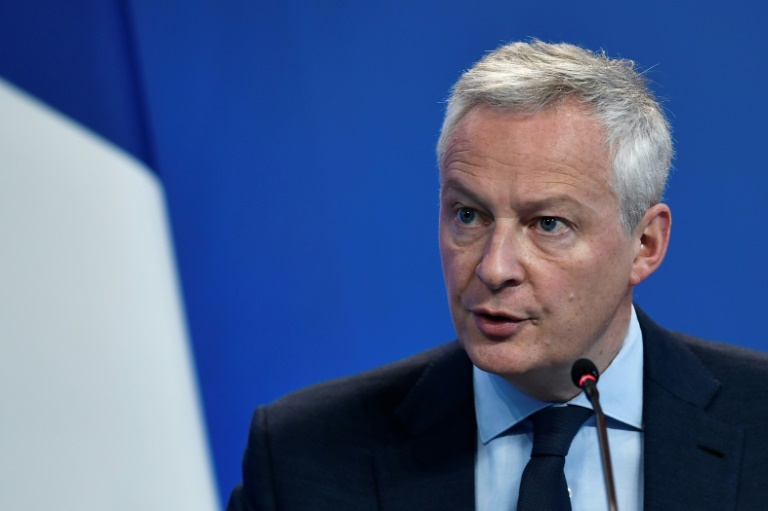
“This is not a restrictive budget, nor an easy one — it’s a responsible and protective budget at a time of great uncertainties,” Finance Minister Bruno Le Maire said at a press conference.

Electricity and gas prices have jumped since Russia’s invasion of Ukraine, and officials are urging energy “sobriety” to help avoid any shortages as the conflict drags on.

The government has vowed that, from January, increases of electricity and gas prices will be limited to 15 percent, a measure expected to cost 45 billion euros.

“There’s a large amount of spending because of gas,” Le Maire acknowledged, saying “this can only reinforce our determination to accelerate the climate transition.”

The government has also announced pay increases for teachers, judges and other civil servants as inflation is forecast to reach 4.3 percent next year after 5.4 percent in 2022.

And nearly 11,000 more public employees will be hired, in a stark reversal of President Emmanuel Macron’s 2017 campaign promise to slash 120,000 public-sector jobs.

The government is tabling on growth of one percent, a forecast Le Maire defended as “credible and pro-active” despite an estimate of just 0.5 percent GDP growth by the Bank of France, and 0.6 percent from economists at the OECD.

The public deficit is expected to reach five percent of GDP, as the EU has suspended the rules limiting deficit spending to three percent of GDP because of Russia’s war against Ukraine.

The budget plans are likely to face fierce opposition in parliament, where Macron’s centrist party and its allies lost their majority in elections earlier this year.

Macron also plans to push ahead with a pension reform that would gradually start pushing up the official retirement age from 62 currently, setting up a standoff with unions and left-wing opposition parties.

A nationwide strike against the reform has already been called for Thursday.

Close Bitnami banner
Bitnami