US Business

'Very high chance' Hong Kong will end year in recession

Hong Kong is set to end the year in the midst of a full-blown recession, the city’s finance chief warned Thursday, as spiralling interest rates join strict Covid-19 controls in hammering the economy.

“There is a very high chance for Hong Kong to record a negative GDP growth for this year,” Financial Secretary Paul Chan told reporters, adding that interest rates were being raised “at a pace that was never seen in the past three decades”.

The Chinese city’s monetary policy moves with the Federal Reserve because its currency, one of the cornerstones of its business hub reputation, is pegged to the US dollar.

The Fed’s hawkish rate hikes, aimed at curbing soaring inflation, come at an especially difficult time for Hong Kong, dampening sentiment when the economy is already struggling.

The city is currently in a technical recession — recording two consecutive quarters of negative growth this year.

The government has adhered to a version of China’s zero-Covid policy for more than 2.5 years, enforcing strict coronavirus controls and mandatory quarantine for international arrivals.

Quarantine, once as long as three weeks, has been reduced to three days. The government has signalled it may soon join the rest of the world in scrapping travel curbs.

Chan signalled his support for making travel and business easier. 

“The aspects related to the pandemic need to continue to improve in order for us to see larger investments because people are more cautious in a high interest rates environment,” he said.

– ‘Falling behind’ –

Business leaders have long been warning that the pandemic controls, combined with Beijing’s ongoing crackdown on dissent, have made it harder to attract talent and cut off Hong Kong internationally, especially as rivals reopen.

The city has seen a net outflow of more than 200,000 people in the last two years, a record population drop.  

“Hong Kong should be ahead of other Asian cities. But now there’s a feeling that we’re falling behind and being left isolated,” Eden Woon, the new head of the city’s American Chamber of Commerce told the South China Morning Post in an article published Thursday. 

“There are people leaving and the problems of retaining talent. All these things add up together and need to be addressed,” he added.

But earlier this week a senior Chinese official said it was “inappropriate” to say the city was seeing an exodus. 

“Hong Kong’s population drop is caused by various factors and there is no way to suggest that it is a result of an emigration wave,” Huang Liuquan, deputy director of the Hong Kong and Macau Affairs Office, said Tuesday. 

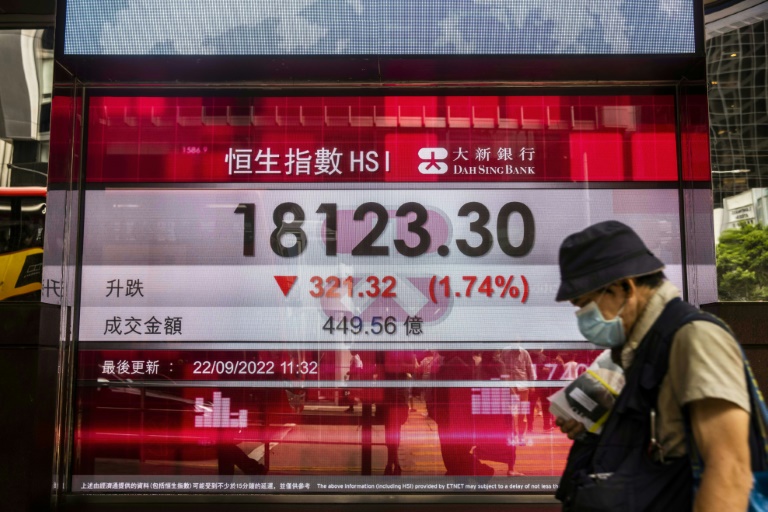
The Fed’s rate hikes hit Hong Kong’s stock market, which fell as much as 2.6 percent on Thursday, to 17,965.33, the lowest since December 2011. It pared some of those losses by the close, ending down 1.6 percent. 

The Hang Seng Index has been one of the worst performing top bourses in the past two years, shedding more than 22 percent since the start of January following last year’s 14 percent drop.

While the Hong Kong Monetary Authority has no choice but to follow the Fed, major banks such as Standard Chartered and HSBC have resisted that pressure. 

But on Thursday, both HSBC and Standard Chartered hiked their prime lending rates in Hong Kong by 12.5 basis points, the first raise in years. 

That could impact the city’s once white-hot property sector, with Goldman Sachs Group estimating prices may slide by about 20 percent over the next four years. 

Hong Kong also saw a recession in 2019 when months of huge and sometimes violent democracy protests rocked the city.
Indonesia hikes rates for second straight month to stem inflation

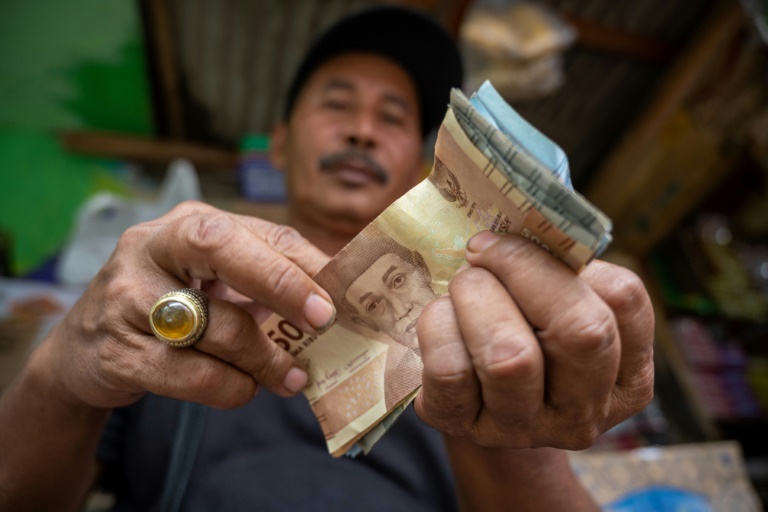
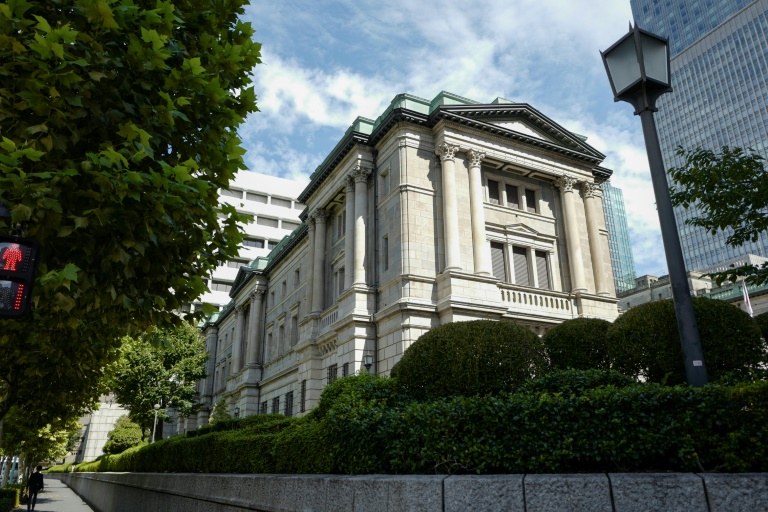
Indonesia’s central bank hiked its key interest rate for the second month in a row Thursday to combat rising inflation stoked by fuel prices and the war in Ukraine.

Bank Indonesia pushed the policy rate to 4.25 from 3.75 percent, and the jump was higher than expected by analysts.

Its two other main rates were also raised by 50 basis points.

The central bank hiked interest rates in August for the first time since 2018 to defend against accelerating inflation, with Russia’s invasion of Ukraine driving up global energy and food prices and pushing millions into poverty.

But a fuel price rise this month has put more pressure on the central bank to act.

The government raised heavily subsidised fuel prices by about 30 percent, a policy expected to further stoke inflation already at 4.69 percent.

Some analysts have forecast inflation reaching as high as seven percent by the end of the year.

Thurday’s rate hike was a “frontloaded, pre-emptive and forward-looking” move aimed at “lowering inflation expectation”, Bank Indonesia Governor Perry Warjiyo said.

It sought to bring down core inflation to within the central bank’s target of between 2 and 4 percent in the second half of next year, he said, predicting it could rise to nearly six percent this month.

President Joko Widodo came to power in 2014 on a pledge to boost annual growth to seven percent.

The commodities-driven economy has remained stuck around five percent, however, and has fallen below that after the onset of the coronavirus pandemic in early 2020.

The outlook for monetary policy is likely even more tightening as the government tries to get a greater handle on inflation, economists said.

“While a rate hike today was never in doubt, the size of the increase was,” said Gareth Leather, Asia economist from Capital Economics.

“With inflation set to jump sharply higher in September and remain well above target until late 2023, further tightening is likely.”

Japan government intervenes to bolster cratering yen

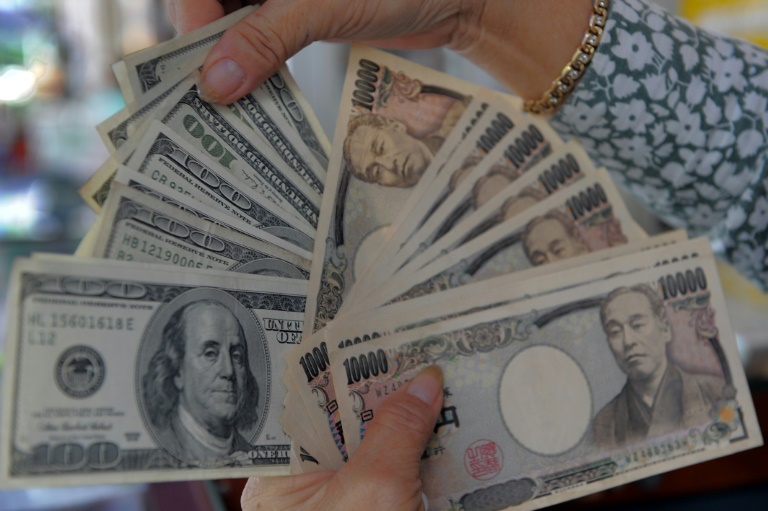
Japan’s finance ministry said Thursday it intervened in the currency market to bolster the yen, which has plummeted against the dollar in recent months on the widening policy gap between the US and Japanese central banks.

It was the first government intervention to prop up the currency since 1998 and came after the dollar surged to nearly 146 yen earlier in the day.

The yen has been weakening against the dollar for months, but sank further on Thursday after the US Federal Reserve again hiked rates to tame inflation, while the Bank of Japan left its ultra-loose monetary policy in place.

“There have been some rapid, one-sided developments on the back of speculative movement in the foreign exchange market,” Japan’s vice finance minister for international affairs Masato Kanda told reporters on Thursday evening.

“The government is worried about these excessive fluctuations and has just taken resolute action,” he added, confirming this referred to intervention.

His remarks saw the yen pare most of its losses, with the dollar retreating as low as 140.70 yen.

Inflation in Japan is rising, with the consumer price index in August at 2.8 percent, its highest level since 2014, but the central bank views the increases as temporary.

In its policy statement earlier Thursday, it said it would leave its current policy in place, “aiming to achieve the price stability target of two percent, as long as it is necessary”.

“It will continue expanding the monetary base until the year-on-year rate of increase in the observed CPI exceeds two percent and stays above the target in a stable manner.”

The bank said it sees Japan’s economy as on a recovery path, “with the impact of Covid-19 and supply-side constraints waning”, though it warned of uncertainty from commodity price increases linked to the war in Ukraine.

The yen’s rapid depreciation has caused concern in Japan, pushing up the cost of imported goods for consumers and businesses.

– ‘BoJ has no choice’ –

Earlier this month, the central bank reportedly conducted a “rate check”, an operation often seen as a precursor to a currency intervention.

The move came shortly after the yen came close to breaching the psychologically significant 145 barrier, and reports of the operation temporarily bolstered the Japanese unit.

It has plunged from around 115 in March, and the BoJ on Thursday repeated that “it is necessary to pay due attention to developments in financial and foreign exchange markets and their impact on Japan’s economic activity and prices”.

Governor Haruhiko Kuroda, whose term expires next year, told reporters before the intervention announcement that the bank would stick with its long-standing programme.

“We haven’t been and will not be targeting certain levels of foreign exchange,” he said.

“It is desirable that forex rates reflect economic and financial fundamentals, however the recent rapid depreciation of the yen is not that and is negative for the economy,” he added.

He noted though that the dollar has gained against most major currencies.

There is little expectation the BoJ will shift course, wrote Shigeto Nagai, head of Japan Economics at Oxford Economics, in a note.

“Although foreign investors might continue challenging the yen and (Japanese government bond) yields until the Fed’s rate tightening cycle peaks, we believe that the BoJ has no choice but to stick to the current… policy.”

Markets tumble again as Fed hikes rates, warns more to come

Asian and European markets sank Thursday and the dollar rallied after the Federal Reserve unveiled a third straight jumbo interest rate hike, said more were in the pipeline and warned the battle against inflation was straining the US economy.

While the three-quarter-point rise was widely expected, there was some surprise at the central bank’s forecast that borrowing costs would likely be held above four percent throughout next year.

Fed boss Jerome Powell reiterated his determination to focus on bringing down inflation — which is at a four-decade high — and accepted that the campaign would hit Americans hard.

“We have got to get inflation behind us,” Powell said after a two-day meeting of the Fed policy committee. “I wish there were a painless way to do that. There isn’t.”

He added that “the historical record cautions strongly against prematurely loosening policy” and the Fed would “keep at it until the job is done”.

All three main indexes on Wall Street tumbled Wednesday as traders contemplated an era of higher-for-longer rates, which could hit companies’ bottom lines.

Asia followed suit, with Hong Kong down at an 11-year low — while Tokyo, Shanghai, Seoul, Singapore, Mumbai, Taipei and Manila also down.

London, Paris and Frankfurt extended the losses in early trade.

However, the dollar continued its strong march higher, striking a fresh 24-year high of 145.90 yen, which prompted the government to embark on a rare intervention to protect its currency.

The US Fed has for months tried to walk a fine line between fighting soaring prices and trying to keep the economy from contracting, but officials accept the chances of success are narrow.

“With the new rate projections, the Fed is engineering a hard landing — a soft landing is almost out of the question,” said Seema Shah, of Principal Global Investors.

“Jerome Powell almost channelled his inner Paul Volcker… talking about the forceful and rapid steps the Fed has taken, and is likely to continue taking, as it attempts to stamp out painful inflation pressures and ward off an even worse scenario later down the line.”

Volcker used aggressive measures to quell runaway prices in the 1980s, when inflation was last as high as it is now.

Commentators are now betting on a fourth straight 75-basis-point rate hike at the next Fed meeting in November.

All three main indexes on Wall Street tumbled Wednesday as traders contemplated an era of higher-for-longer rates, which could hit companies’ bottom lines.

– ‘Bitter medicine’ –

“This meeting once again demonstrates that the Fed is willing to do what is necessary to bring inflation under control. It will slow demand by keeping rates higher for longer — even if this means growth and jobs are lost,” said Christian Scherrmann, of asset management firm DWS.

“The current view of the central bankers is still that this will cause a slowdown, but not a recession. We fully agree that bitter medicine to win back price stability is necessary. But we fear its side-effects will be harsher than the Fed is currently projecting.”

And Fidelity International’s Anna Stupnytska said a long-hoped-for change of direction from the Fed “now seems further away”, though added that a significant tightening of monetary financial conditions could see an earlier pause in the rate hikes.

The Swiss central bank followed up Thursday with a 0.75 percentage point hike and Norway lifted its rate to an 11-year high. Indonesia and the Philippines also tightened policy.

Investors are now preparing for a large move from the Bank of England later in the day.

Still, the Bank of Japan decided not to shift from its ultra-loose measures owing to its determination to kickstart the country’s torpid economy. The decision leaves it as the only major central bank with negative rates, a policy that has sent the yen plunging 20 percent this year.

However, the currency got a bounce after the finance ministry stepped into the currency markets, pushing the dollar back below 143 yen.

Other currencies were also under pressure, with the euro wallowing at a 20-year low and sterling touching a fresh 37-year nadir of $1.1221.

The greenback was also at multi-year highs on the South Korean won, Chinese yuan, Australian dollar and Canadian dollar, among others.

Oil prices edged up after a rollercoaster Wednesday.

Both contracts spiked in reaction to President Vladimir Putin’s announcement of a partial mobilisation of the Russian army and a veiled threat to use nuclear weapons against the West.

But they soon retreated as investors once again turned to the likely impact on demand from an expected recession across world economies.

– Key figures at around 0810 GMT –

Tokyo – Nikkei 225: DOWN 0.6 percent at 27,153,83 (close)

Hong Kong – Hang Seng Index: DOWN 1.6 percent at 18,147.95 (close)

Shanghai – Composite: DOWN 0.3 percent at 3,108.91 (close)

London – FTSE 100: DOWN 0.4 percent at 7,209.75

Dollar/yen: UP at 142.63 yen from 144.02 yen Wednesday

Pound/dollar: DOWN at $1.1275 from $1.1275

Euro/dollar: DOWN at $0.9840 from $0.9847

Euro/pound: UP at 87.25 pence from 87.31 pence 

West Texas Intermediate: UP 0.6 percent at $83.46 per barrel

Brent North Sea crude: UP 0.7 percent at $90.41 per barrel

New York – Dow: DOWN 1.7 percent at 30,183.78 (close)

Europe throws billions at energy crisis

Almost every week now, European governments are announcing emergency measures to protect households and businesses from the energy crisis stemming from Russia’s war in Ukraine.

Hundreds of billions of euros — and counting — have been shelled out so far since Russia invaded its pro-Western neighbour in late February.

Governments have gone all out: from capping gas and electricity prices to rescuing struggling energy companies and providing direct aid to household to fill up their cars.

The public spending has continued even though European Union countries already accumulated mountains of new debt to save their economies from the fallout of the Covid pandemic in 2020.

But some leaders have taken pride at their use of the public purse to battle this new crisis, which has sent inflation soaring, raised the cost of living and sparked fears of recession.

After announcing 14 billion euros ($13.9 billion) in new measures last week, Italian Prime Minister Mario Draghi boasted that this put Italy “among the countries that have spent the most in Europe”.

The Bruegel institute, a Brussels-based think tank tracking energy crisis spending by EU government, ranks Italy as the second-biggest spender in Europe after Germany.

Rome has allocated 59.2 billion euros since September 2021 to shield households and businesses from the rising energy prices, accounting for 3.3 percent of its gross domestic product.

Germany tops the list with 100.2 billion euros, or 2.8 of its GDP, as the country was hit hard by its heavy reliance on Russian gas supplies, which have dwindled in suspected retaliation over Western sanctions against Moscow for the war.

On Wednesday, Germany announced the nationalisation of troubled gas giant Uniper.

France, which shielded consumers from gas and electricity price rises as early as November, ranks third with 53.6 billion euros allocated so far, representing 2.2 percent of GDP.

– Spending to rise –

EU countries have now put up 314 billion euros so far since September 2021, according to Bruegel.

“This number is set to increase as energy prices remain elevated,” Simone Tagliapietra, a senior fellow at Bruegel, told AFP.

The energy bills of a typical European family could reach 500 euros per month early next year, compared to 160 euros in 2021, according to US investment bank Goldman Sachs.

The measures to help consumers have ranged from a special tax on excess profits in Italy to the energy price freeze in France and subsidies public transport in Germany.

But the spending follows a pandemic response that increased public debt, which in the first quarter accounted for 189 percent of Greece’s GDP, 153 percent in Italy, 127 percent in Portugal, 118 percent in Spain and 114 percent in France.

“Initially designed as a temporary response to what was supposed to be a temporary problem, these measures have ballooned and become structural,” Tagliapietra said.

“This is clearly not sustainable from a public finance perspective. It is important that governments make an effort to focus this action on the most vulnerable households and businesses as much as possible,” he said.

– Budget reform –

The higher spending comes as borrowing costs are rising.

The European Central Bank hiked its rate for the first time in more than a decade in July to combat runaway inflation, which has been fuelled by soaring energy prices.

The yield on 10-year French sovereign bonds reached an eight-year high of 2.5 percent on Tuesday, while Germany now pays 1.8 percent interest after boasting a negative rate at the start of the year.

The rate charged to Italy has quadrupled from one percent earlier this year to four percent now, reviving the spectre of the debt crisis that threatened the eurozone a decade ago.

“It is critical to avoid debt crises that could have large destabilizing effects and put the EU itself at risk,” the International Monetary Fund warned in a recent blog calling for reforms to budget rules.

The EU has suspended until 2023 rules that limit the public deficit of countries to three percent of GDP and debt to 60 percent.

The European Commission plans to present next month proposals to reform the 27-nation bloc’s budget rules, which have been shattered by the crises. 

Batteries, community spirit help California fight heat wave

Dire predictions of blackouts in California during a fearsome heat wave this month never came to pass, with technology — and a dose of community spirit — helping the creaking grid through its most testing period ever.

The mercury topped 110 Fahrenheit (43 Celsius) on consecutive days, as a thrumming heat dome parked itself over the western United States.

But the grid never failed, thanks in part to the state’s quietly acquired battery fleet.

“Batteries stepped in and… played a critical role” in rebalancing electricity demand, said Weikko Wirta, director of operations at AES Southland, a 400 megawatt installation at Long Beach near Los Angeles.

The huge electricity storage facility, which resembles an enormous server farm, is one of the largest in the state.

Sunny California has abundant solar energy at its disposal, and harnesses a growing amount of the rays that land on its rooftops.

During daylight hours, solar and other renewables provide around 30 to 40 percent of the state’s electricity needs.

But as the sun dips, there can be a shortfall — especially on very hot days when air conditioners are switched on as everyone gets home from work and school.

“When the solar goes away at the end of the day, (batteries) stepped right in to fill that void between four o’clock in the afternoon… and 10 o’clock at night,” said Wirta.

Nearly every day of the lengthy heat wave that gripped California, Nevada and Arizona, the grid’s operator called on consumers to limit their electricity use.

Automated phone calls rang out urging households to turn up their thermostats, and not to use large appliances — including charging electric vehicles — during peak hours.

– ‘Conserve energy now’ –

“Conserve energy now to protect public health and safety,” read one urgent text message from the California Governor’s Office of Emergency Services.

“Extreme heat is straining the state energy grid. Power interruptions may occur unless you take action. Turn off or reduce nonessential power.”

That message, sent on the day demand reached its highest, seemed to do the trick.

“Within moments, we saw a significant amount of load reduction,” said Elliot Mainzer, president of the California Independent System Operator, the grid operator.

“That significant response from California consumers… allowed us to restore our operating reserves and took us back from the edge.”

Fresh in the minds of many Californians was August 2020, when the grid collapsed, leaving 800,000 homes without power over a two-day period.

Critics have blasted energy policy in the Golden State, insisting its increasing reliance on renewables at the expense of reliable, but dirty, fossil fuels puts needless strain on supply.

Climate change-skeptics took particular glee in pointing out that the call to conserve power came just days after California said it would no longer sell gasoline-powered cars from 2035.

“California’s threat of rolling blackouts ought to be a warning about how the government force-fed green energy transition is endangering grid reliability,” tweeted Kevin McCarthy, a US representative from the state and the lead Republican in the House.

For energy researchers like Eric Fournier at UCLA’s Institute of the Environment and Sustainability, this kind of sentiment is a non-starter.

“Dealing with the source of the problem and stopping emitting so many greenhouse gases into the atmosphere is the only rational way to address the problem” of climate change, he said.

“Instead of criticizing the renewables, we should be championing the value of battery storage.”

And that’s what California has been quietly doing, as it works towards a policy of 100 percent carbon-neutral energy by 2045.

– Peak power –

Over the last two years, battery storage capacity has increased tenfold; at the peak of the heat wave, these batteries were able to put 3,300 megawatts into the grid.

“That’s more combined power than the state’s largest power plant… which is rated at about 2200 megawatts,” said Mike Ferry, research director at the UC San Diego Center for Energy Research.

During the last heat wave “batteries that were interconnected to the grid played a barely noticeable role in meeting that peak power.”

“This time around, everything has changed, and batteries… played a key role in allowing the state to avoid power outages.”

For Fournier, battery solutions are impressive, but not the whole answer; Californians’ impressive voluntary cutbacks could once again be the missing piece of the puzzle.

“Paying people to not ask for power for a small number of hours may be a better option,” he says.

'Very high chance' Hong Kong will end year in recession

Hong Kong is set to end the year in the midst of a full-blown recession, the city’s finance chief warned Thursday, as spiralling interest rates join strict Covid-19 controls in hammering the economy.

“There is a very high chance for Hong Kong to record a negative GDP growth for this year,” Financial Secretary Paul Chan told reporters, adding that interest rates were being raised “at a pace that was never seen in the past three decades”.

The Chinese city’s monetary policy moves with the Federal Reserve because its currency, one of the cornerstones of its business hub reputation, is pegged to the US dollar.

The Fed’s hawkish rate hikes, aimed at curbing soaring inflation, come at an especially difficult time for Hong Kong, dampening sentiment when the economy is already struggling.

The city is currently in a technical recession — recording two consecutive quarters of negative growth this year.

The government has adhered to a version of China’s zero-Covid policy for more than 2.5 years, enforcing strict coronavirus controls and mandatory quarantine for international arrivals.

Quarantine, once as long as three weeks, has been reduced to three days. The government has signalled it may soon join the rest of the world in scrapping travel curbs.

Chan signalled his support for making travel and business easier. 

“The aspects related to the pandemic need to continue to improve in order for us to see larger investments because people are more cautious in a high interest rates environment,” he said.

– ‘Falling behind’ –

Business leaders have long been warning that the pandemic controls, combined with Beijing’s ongoing crackdown on dissent, have made it harder to attract talent and cut off Hong Kong internationally, especially as rivals reopen.

The city has seen a net outflow of more than 200,000 people in the last two years, a record population drop.  

“Hong Kong should be ahead of other Asian cities. But now there’s a feeling that we’re falling behind and being left isolated,” Eden Woon, the new head of the city’s American Chamber of Commerce told the South China Morning Post in an article published Thursday. 

“There are people leaving and the problems of retaining talent. All these things add up together and need to be addressed,” he added.

But earlier this week a senior Chinese official said it was “inappropriate” to say the city was seeing an exodus. 

“Hong Kong’s population drop is caused by various factors and there is no way to suggest that it is a result of an emigration wave,” Huang Liuquan, deputy director of the Hong Kong and Macau Affairs Office, said Tuesday. 

The Fed’s rate hikes hit Hong Kong’s stock market which fell as much as 2.6 percent on Thursday, to 17,965.33, the lowest since December 2011.

The Hang Seng Index has been one of the worst performing top bourses in the past two years, shedding more than 22 percent since the start of January following last year’s 14 percent drop.

While the Hong Kong Monetary Authority has no choice but to follow the Fed, major banks such as Standard Chartered and HSBC had resisted that pressure. 

But on Thursday, HSBC raised its prime lending rate in Hong Kong by 12.5 basis points to 5.125 percent, the bank’s first rise in four years.

Others are likely to follow suit. 

That could impact the city’s once white hot property sector with Goldman Sachs Group estimating prices may slide by about 20 percent over the next four years. 

Hong Kong also saw a recession in 2019 when months of huge and sometimes violent democracy protests rocked the city.
Cheap mealboxes a taste of Hong Kong's economic woes

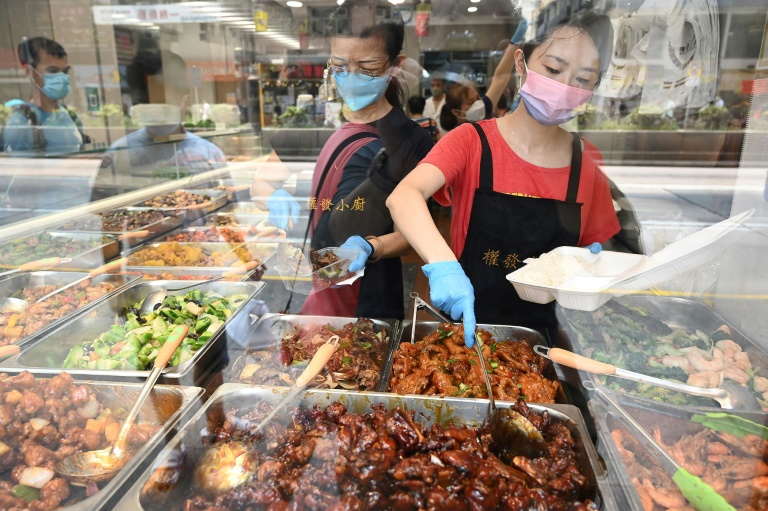
Hong Konger Kitty Chan pivoted to takeout to help her restaurant survive the pandemic, but she has since opened a second shop as demand for cheap mealboxes surges in a city enduring economic woes.

Small shops selling inexpensive two-dish mealboxes have mushroomed across one of the world’s least affordable cities, cropping up in working-class and white-collar areas alike as people tighten their belts.

“The Covid restrictions were a catalyst,” she told AFP at her restaurant in Kowloon, one of the world’s most densely populated city districts, as a queue of hungry patrons snaked down the street.

“There are multiple factors in this city that make us many people’s kitchen.”

Hong Kong took an economic hit in 2019 when months of democracy protests kept visitors away and helped tip the city into a prolonged recession.

More than 2.5 years of strict Covid controls have again pushed the Asian finance hub into negative growth. 

Hong Kong finance chief Paul Chan warned Thursday there is a “very high chance” the city will end the year in a full-blown recession while the fiscal deficit is expected to balloon to HK$100 billion ($12.7 billion), twice initial estimates.

The mealbox boom “is similar to the emergence of dollar shops during the (2008) financial crisis,” said Andy Kwan, director of the ACE Centre for Business and Economic Research think tank.

“People tend to spend less when the economy is not well and confidence is low,” he told AFP. 

Chan’s restaurants are selling 2,000 to 3,000 mealboxes per day at around HK$48 ($6).

Mealboxes go for anything from HK$25 to HK$80 depending on ingredients and shop locations, and many include a drink or soup.

– Buffet in a box – 

To compete in what is now a crowded market, Chan tries to supply the kind of food you can get in a sit-down restaurant — mostly wok-fried Cantonese dishes such as black-pepper beef short ribs, steamed fish and razor clams.

Her strategy has attracted a mostly white-collar clientele.

“The two-dish mealbox is a very interesting entry point to observe our economy,” said Fred Ku, an economist at the Chinese University of Hong Kong. 

Ku said that while the two-dish restaurant had long been a feature of the city, “the consumers’ perception has changed and these mealboxes are no longer a symbol of relatively low income”.

China and Hong Kong have largely escaped the runaway inflation seen across the globe. 

But food in particular has become more expensive — Chan estimates her grocery purchases have risen about 20 percent this year.

Mealbox restaurants are also popular with Hong Kongers who have refused to vaccinate themselves against Covid.

The city uses a QR code system that denies unvaccinated people access to most public premises.

Retiree Grace, who gave only her first name, described herself as “a denied person” because she had only gotten one vaccination shot. 

“At first I thought why not give (mealboxes) a try since I had to have takeaway,” the 68-year-old told AFP. “But now I find it pretty attractive… it feels like having a buffet.”  

– Tourist trickle –

A Facebook group for sharing tips on mealbox restaurants, started by social worker Andrew Wong, has grown to 87,000 members.

“When I opened the group at the end of 2021, we found 110 to 120 such restaurants, and so far in 2022, we have found 150 brand new spots,” he told AFP.

Another crowd-sourced map lists more than 440 two-dish restaurants across Hong Kong, up from around 330 in May.

Wong said the boom was fuelled by Covid restrictions and the drop in tourist numbers over the last three years.

Before the protests and pandemic, Hong Kong would see around 65 million tourists a year, with 78 percent coming from the Chinese mainland.

That has slowed to a trickle, with the Chinese border effectively closed and international arrivals still facing mandatory hotel quarantine on arrival.

City leader John Lee has vowed to reopen the city and hinted at further Covid relaxations in the coming weeks. 

But Hong Kong’s international access remains far behind rivals such as Singapore, London and Tokyo.

“People are wondering if there is any policy to stabilise the economy and whether the government is enterprising enough to bring changes,” think-tank director Kwan said. 

“Meanwhile, people are cutting daily expenses so they can have more to spend if the worst happens”.

Pressure on Putin as reservists called up for war

Pressure ratcheted up on President Vladimir Putin as his decision to send reservists to Ukraine triggered spreading protests and hundreds of arrests at home, and Western leaders tore into the Russian leader at the United Nations.

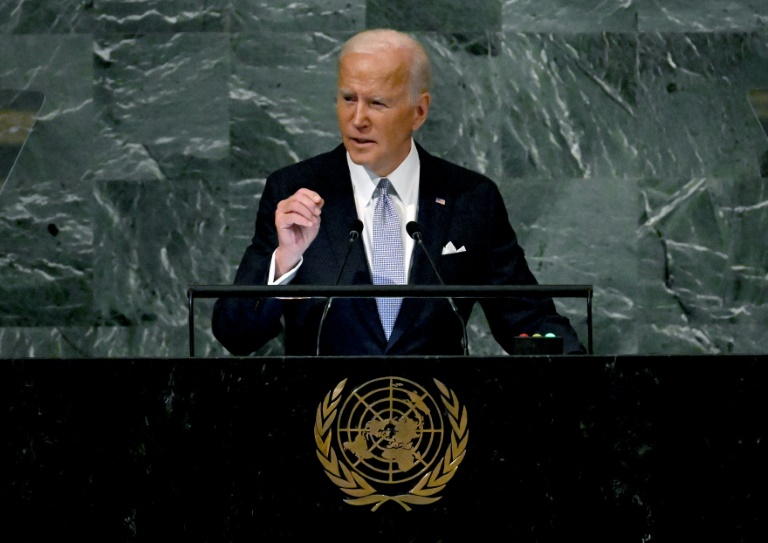
Training his fire on Putin as he addressed the General Assembly, US President Joe Biden accused him of “shamelessly” violating the UN Charter with a war aimed at “extinguishing Ukraine’s right to exist as a state.”

Speaking in unison with fellow NATO leaders, Biden on Wednesday denounced Putin for making “overt nuclear threats against Europe” as part of his latest escalation, and warned that “a nuclear war cannot be won and must never be fought.”

Addressing the assembly later via video — the sole leader allowed to do so — Ukrainian President Volodymyr Zelensky urged the UN to punish Russia for the invasion, calling for a special tribunal and compensation fund and for Moscow to be stripped of its veto.

“A crime has been committed against Ukraine and we demand just punishment,” said Zelensky, who earned a standing ovation.

The high-profile addresses came hours after Putin dramatically upped the stakes in his seven-month war by calling up 300,000 military reservists — a step Western powers portrayed as desperation and that drew protesters into the streets across Russia.

In Russia, more than 1,300 people were arrested in 38 different cities, according to the OVD-Info monitoring group — the largest protests seen since Putin launched his offensive in February.

AFP journalists in central Moscow saw at least 50 people detained by police in anti-riot gear, while in the former imperial capital Saint Petersburg, police surrounded and detained a small group of protesters, loading them onto a bus as they chanted, “No mobilization!”

“Everyone is scared. I am for peace and I don’t want to have to shoot,” said protester Vasily Fedorov, a student wearing a pacifist symbol on his chest. 

Flights out of Russia were nearly fully booked this week, airline and travel agent data showed, in an apparent exodus of people unwilling to join the conflict.

– Prisoners released –

On the same day as Putin’s mobilization order, Ukraine announced the exchange of a record-high 215 imprisoned soldiers with Russia, including fighters who led the defense of Mariupol’s Azovstal steelworks that became an icon of Ukrainian resistance.

Ten freed prisoners — including two from the United States, five from Britain, and others from Sweden, Morocco and Croatia — were transferred to Saudi Arabia from Russia, Riyadh said, without specifying when they would be returned home.

But the diplomatic breakthroughs did little to lower the temperature as Western leaders voiced outrage at Putin’s latest moves — and Moscow’s plan to stage annexation referendums this week in Russian-held regions of Ukraine.

Donetsk and Lugansk in the east and Kherson and Zaporizhzhia in the south are holding votes over five days beginning Friday — a move that would allow Moscow to accuse Ukraine of attacking supposedly Russian territory.

Turkey was the latest NATO member to speak out Wednesday against Russia’s referendum plans, slamming them as “illegitimate.”

The referendums follow a pattern established in 2014, when Russia annexed the Crimea peninsula from Ukraine after a similar vote.

Like in 2014, Washington, Berlin and Paris denounced the latest ballots, saying the international community would never recognize the results.

– ‘Not a bluff’ –

In a pre-recorded address early Wednesday, Putin accused the West of trying to “destroy” Russia through its backing of Kyiv as he announced a partial military mobilization.

“When the territorial integrity of our country is threatened, we will certainly use all the means at our disposal to protect Russia and our people. This is not a bluff,” Putin said.

“Those who are trying to blackmail us with nuclear weapons should know that the wind can also turn in their direction.”

On the sidelines of the UN gathering, French President Emmanuel Macron urged the world to “put maximum pressure” on Putin, while German Chancellor Olaf Scholz denounced the call-up as “an act of desperation”.

And British Prime Minister Liz Truss — in her first trip since succeeding Boris Johnson — vowed before the UN to keep up “our military support to Ukraine for as long as it takes”.

NATO Secretary General Jens Stoltenberg, meanwhile, condemned Putin’s “dangerous and reckless nuclear rhetoric.”

Top European Union diplomats held an emergency meeting late Wednesday on the UN sidelines to discuss potential new sanctions against Russia.

“We will study, we will adopt new restrictive measures, both personal and sectoral,” EU foreign policy chief Josep Borrell said post-meeting, adding that a final decision needed to be made formally.

Russia’s “seizure and militarization” of Ukraine’s Zaporizhzhia nuclear plant — Europe’s largest — also drew condemnation as a “root cause” for nuclear instability from several countries, including the United States, France, and Britain.

“(The) heightened risks of a nuclear incident will remain dangerously high as long as Russia remains present on the site of (the nuclear plant),” they said in a joint statement calling for Moscow’s withdrawal. 

– ‘Liberate us from what?’ –

The flurry of announcements by Moscow came with Russian forces in Ukraine facing their biggest challenge since the start of the conflict.

During a sweeping counter-offensive in recent weeks, Kyiv’s forces have retaken hundreds of towns and villages.

In a rare admission, Moscow said Wednesday 5,937 Russian soldiers had died in Ukraine since February.

As Putin made his announcement, residents were clearing rubble and broken glass from a nine-story apartment block hit by an overnight missile strike in the eastern Ukrainian city of Kharkiv.

“They want to liberate us from what? From our homes? From our relatives? From friends?” a 50-year-old resident, who gave her name as Galina, raged. “They want to free us from being alive?”

With a gamer prince and oil billions, Saudi turns to eSports

Wearing headphones and anti-sweat finger sleeves, gamers from eight countries guided gun-toting avatars through a battle royale in the Saudi capital, as cheering onlookers watched the action on a big screen.

The PUBG Mobile tournament was part of Gamers8, a summer festival spotlighting Saudi Arabia’s emergence as a global eSports dynamo — one that officials hope can compete with powerhouses like China and South Korea.

Much like with Formula One and professional golf, the world’s biggest oil exporter has in recent years leveraged its immense wealth to assert itself on the eSports stage, hosting glitzy conferences and snapping up established tournament organisers.

These moves have attracted the kind of criticism Saudi officials have come to expect, with some eSports leaders objecting to Riyadh’s human rights record.

Yet the lack of long-term financing for eSports makes the industry especially eager to do business with the Saudis, which helps explain why the backlash so far has been relatively muted, analysts say.

Saudi gamers, meanwhile, are revelling in their country’s newfound status and the eye-watering prize pools it brings.

“In the past, there was no support,” said 22-year-old Faisal Ghafiri, who competed in the PUBG tournament, which featured $3 million in prize money.

“Thank God, now is the best time for me to play eSports and participate in tournaments,” he added, noting that what was once a hobby had transformed into a lucrative “job”.

– Call of duty –

Saudi Arabia’s interest in gaming and eSports comes from the very top, with Crown Prince Mohammed bin Salman said to be an avid “Call of Duty” player.

The national eSports federation was created in 2017, and the number of eSports teams in the kingdom has since blossomed from two to more than 100.

Survey findings indicate 21 million people -– nearly two-thirds the national population –- consider themselves gamers.

In January, the kingdom’s sovereign wealth fund launched the Savvy Gaming Group, which acquired top eSports firms ESL Gaming and FACEIT in deals reportedly worth a total of $1.5 billion.

Last week, Prince Mohammed released a national eSports strategy that calls for the kingdom to create some 39,000 eSports-related jobs by 2030 while producing more than 30 games in domestic studios.

Next year Riyadh will host the Global Esports Games, billed as the world’s “flagship” competitive eSports event.

“I think what’s incredible is that the government has put eSports front and centre, whereas a lot of countries are still trying to work out a positioning,” said Chester King, CEO of British Esports.

“The investment, I would say, is probably top of the world.”

Gaming is also expected to be a major component of headline-grabbing development projects like the Red Sea megacity NEOM, with its planned 170-kilometre-long (105 miles) twin skyscrapers known as The Line.

Yet NEOM is also where Saudi Arabia has encountered its biggest eSports setback. 

Two years ago, Riot Games announced a partnership that would have made NEOM a sponsor of the European championship for the game League of Legends.

The outcry was immediate and intense, led by LGBTQ gamers who condemned Saudi Arabia’s prohibition of same-sex sexual acts, which can be a capital offence.

League of Legends is considered LGBTQ-friendly, having just last week named gay hip-hop star Lil Nas X as its “president”, an honorary title.

Within 24 hours of its NEOM announcement, Riot Games backed out, and Danish tournament organiser BLAST terminated its own deal with the megacity roughly two weeks later.

– eSportswashing? –

“Saudi Arabia’s reputation will always be a hindrance to the Western eSport community, despite attempts to improve it,” said Jason Delestre of the University of Lille, who studies the geopolitics of eSports.

Saudi officials are undeterred, however, and they have deep backing in the eSports world.

“Gaming was always a bit more morally flexible, as they are mostly project-based and lack a sustainable business model,” said Tobias Scholz, an eSports expert at the University of Siegen in Germany.

“ESports need the money compared to golf or others.”

Vlad Marinescu, president of the International Esports Federation, dismissed any suggestion the kingdom was using eSports to engage in reputation-laundering.

“Laundering is a word that has the prerequisite of starting with something dirty. The culture of the Kingdom of Saudi Arabia is beautiful and rich,” Marinescu told AFP.

Prince Faisal bin Bandar bin Sultan, chairman of the Saudi Esports Federation, told AFP his vision is for the kingdom to become a natural choice for all eSports programming.

“One of the most amazing things for me is at our recent event, at Gamers8, the amount of young Saudi players who came up to me and said, ‘We always loved watching these things, but we never thought we would have it here,'” he recalled.

“And that’s the emotion, and that’s the image that I want to keep.”

Close Bitnami banner
Bitnami