US Business

US home sales fall for seventh straight month in August

Existing home sales slipped in August to the lowest in two years, marking a seventh straight monthly declines, according to industry data released Wednesday showing the continued slowing in the US housing as mortgage rates surge.

Sales of all types of homes and condos fell 0.4 percent from July even while prices eased in the month, the National Association of Realtors (NAR) said.

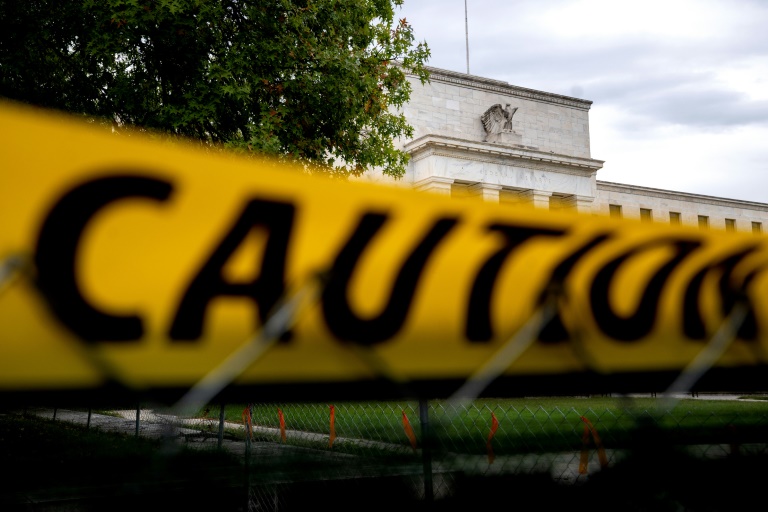
The report comes on the same day the Federal Reserve was poised to deliver another big increase in the key interest rates, a move that will boost borrowing costs with further repercussions for the critical housing market.

“The housing sector is the most sensitive to and experiences the most immediate impacts from the Federal Reserve’s interest rate policy changes,” said NAR chief economist Lawrence Yun. “The softness in home sales reflects this year’s escalating mortgage rates.”

The median home price fell for the second month in a row to $389,500, coming down from a record-high $413,800 in June, the report said. 

The housing market soared during the pandemic as Americans, flush with savings, took advantage of bargain mortgage rates to snap up homes. But as the Federal Reserve has raised interest rates aggressively to combat scorching inflation, sales have taken a hit.

Existing home sales dropped 19.9 percent from the August 2021 level, with the most drastic declines occurring in the lowest price homes, according to NAR. The median price was still 7.7 percent above the year-ago figure.

The sales pace last month slowed to an annual rate of 4.80 million, seasonally adjusted, better analysts forecast but still the lowest since May 2020.

Economists warn that further slowing is likely.

Last month’s “marginal decline in sales does not mean that the floor has been reached. Sales lag mortgage applications, which continue to fall, pointing to further significant declines,” said Ian Shepherdson of Pantheon Macroeconomics.

Mortgages costs have continued to escalate: The 30-year fixed rate jumped to 6.25 percent last week according to the Mortgage Bankers Association, the highest rate since October 2008.

Existing home sales make up 90 percent of the US real estate market.

Sales last month varied by region, with the Northeast and West recording increases, while the Midwest dropped and the South unchanged.

'Bad buzz': Gaming industry reels from 'Grand Theft Auto' hack

The video game industry is coming to terms with one of the biggest hacks in its history, after footage was leaked online of “Grand Theft Auto 6” — the next instalment of one of the world’s most popular franchises.

The game had not even been formally announced by publisher Rockstar Games and the footage that surfaced on social media on Monday was far from finished.

On the same day, early footage from “Diablo 4”, a game set for release next year, was also shared online.

And Rockstar is just the latest in a long line of video game firms to have suffered from such leaks — Activision-Blizzard, Electronic Arts, Ubisoft and Capcom have all been in the same situation.

The most severe case came last year, when hackers made off with the source code — the fundamental architecture — of the games “Cyberpunk 2077” and “The Witcher 3” from Polish publisher CD Projekt RED.

Analysts and experts told AFP that Rockstar might face problems with the marketing and release of the game, but the wider industry was only lightly affected by the steady stream of hacks and leaks.

– ‘Keep pushing’ –

The company issued a defiant statement earlier in the week, confirming the breach but denying it would cause any difficulties.

“Our work on Grand Theft Auto will continue as planned,” Rockstar said in a statement on Twitter that was liked more than one million times.

The firm added that it did not envisage any long-term effects for any of its projects.

Grand Theft Auto 5, the last iteration of the game that revolves around heists and street violence, was released in 2013 and has since sold 170 million copies and generated some seven billion dollars in revenue.

The next release, which has been teased, is among the most anticipated games ever.

Industry figures were quick to offer support to developers whose unfinished work was being widely critiqued online.

“To my fellow devs out there affected by the latest leak, know that while it feels overwhelming right now, it’ll pass,” wrote Neil Druckmann of Naughty Dog studio. 

“One day we’ll be playing your game, appreciating your craft, and the leaks will be relegated to a footnote on a Wikipedia page. Keep pushing. Keep making art.”

The sentiment was shared around the video game world, with developers sharing footage of their own prototype artwork for hugely successful video games.

– ‘May even help them’ –

Rockstar, like all games studios, is incredibly protective of the games it is developing — partly because it helps with marketing, and partly because games do not come together until the final phase of development.

Julien Pillot, a French economist, said the leak was a “bad buzz” and was likely to hamper the game’s launch strategy.

Loic Gezo, a cybersecurity expert, said the company would need to reassure customers that it could handle the fallout.

Brendan Sinclair of trade website GamesIndustry.biz said he did not expect huge fallout for the company, but suggested there might be longer-term costs in terms of securing their systems.

“Developers have a hard enough time thwarting hackers even when they don’t get a peek under the hood like this,” he said. 

But ultimately, he suggested such leaks were not always bad for business.

“I don’t know if it ultimately hurts game sales that much,” he said. “In some cases, it may even help them.”

Putin calls up reservists, US takes his threats 'seriously'

President Vladimir Putin called up Russian military reservists on Wednesday, saying his promise to use all military means in Ukraine was “no bluff,” and hinting that Moscow was prepared to use nuclear weapons.

His mobilisation call comes as Moscow-held regions of Ukraine prepare to hold annexation referendums this week, dramatically upping the stakes in the seven-month conflict by allowing Moscow to accuse Ukraine of attacking Russian territory.

A senior US official said Washington was taking Putin’s “irresponsible” veiled threat to use nuclear weapons “seriously” and warned it could alter its “strategic posture” if need be.

Four Russian-occupied regions of Ukraine — Donetsk and Lugansk in the east and Kherson and Zaporizhzhia in the south — said on Tuesday that they would hold the votes over five days beginning Friday.

In a pre-recorded address to the nation early on Wednesday, Putin accused the West of trying to “destroy” his country through its backing of Kyiv. Russia needed to support those in Ukraine who wanted to “determine their own future”, he said.

The Russian leader announced a partial military mobilisation, with Defence Minister Sergei Shoigu telling state television that some 300,000 reservists would be called up.

– ‘Act of desperation’ –

“When the territorial integrity of our country is threatened, we will certainly use all the means at our disposal to protect Russia and our people. This is not a bluff,” Putin said.

“Those who are trying to blackmail us with nuclear weapons should know that the wind can also turn in their direction,” Putin added.

But Ukrainian President Volodymyr Zelensky said in a interview with Germany’s Bild media group released Wednesday, he did not think Putin would resort to nuclear weapons.

German Chancellor Olaf Scholz denounced the call-up as “an act of desperation” in a “criminal war” he said Russia could not win.

Jailed Kremlin critic Alexei Navalny said it would result in a “massive tragedy, in a massive amount of deaths”.

Putin said that through its support for Ukraine, the West was trying to “weaken, divide and ultimately destroy our country”. Shoigu said Moscow was “fighting not so much Ukraine as the collective West” in Ukraine.

In the wake of their announcements flights to neighbouring ex-Soviet countries were booked up for days to come, airline data showed, in what appeared to be a rush to quit the country. Prices for remaining seats skyrocketed.

The sudden flurry of moves by Moscow this week came with Russian forces in Ukraine facing their biggest challenge since the start of the conflict.

In a sweeping Ukrainian counter-offensive in recent weeks, Kyiv’s forces have retaken hundreds of towns and villages that had been controlled by Russia for months.

In a rare admission of military losses from Moscow, Shoigu said on Wednesday 5,937 Russian soldiers had died in Ukraine since the launch of the military intervention in February.

– ‘Wake-up, finally’ –

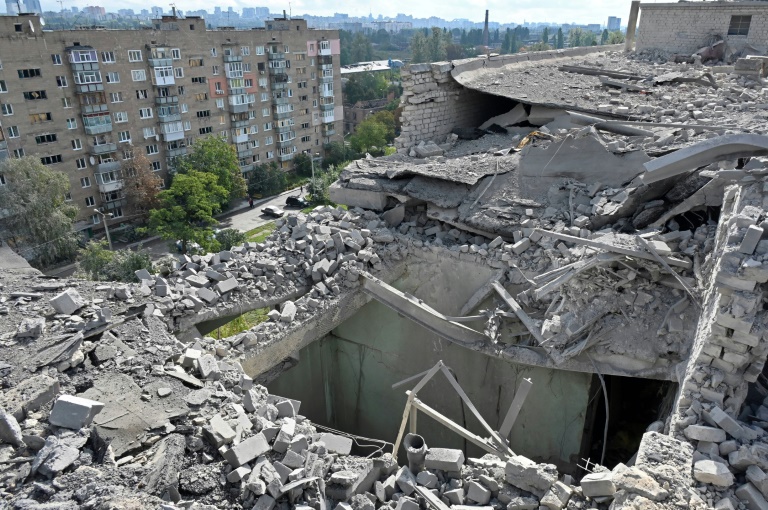
As Putin made his announcement, residents were clearing rubble and broken glass from a nine-storey apartment block hit by an overnight missile strike in the eastern Ukrainian city of Kharkiv.

Svetlana, 63, gathered with friends to look on as neighbours and municipal workers moved debris, urged the region’s Russian neighbours to ignore the mobilisation and “to wake up, finally”.

Her neighbour, 50-year-old Galina, expressed bewilderment.

“They want to liberate us from what? From our homes? From our relatives? From friends? What else?” she told AFP. “They want to free us from being alive?”

The referendums follow a pattern established in 2014, when Russia annexed the Crimea peninsula from Ukraine after a similar vote.

Like in 2014, Washington, Berlin and Paris denounced the latest ballots, saying the international community would never recognise the results.

Beijing, which so far has tacitly backed Moscow’s intervention called on Wednesday for a “ceasefire through dialogue” after Putin’s address and in likely reference to the referenda said the “territorial integrity of all countries should be respected”.

“It’s irresponsible rhetoric for a nuclear power to talk that way. But it’s not atypical for how he’s been talking the last seven months and we take it very seriously,” John Kirby, spokesman for the White House’s National Security Council, told ABC’s “Good Morning America”.

Ukrainian President Volodymyr Zelensky told German media he does not believe Russia will use nuclear weapons warned against giving in to Putin.

“Tomorrow, Putin can say — as well as Ukraine, we want part of Poland, otherwise we will use atomic weapons. We cannot make these compromises,” he said. 

– Strike at nuclear plant –

NATO Secretary General Jens Stoltenberg meanwhile denounced Putin’s “dangerous and reckless nuclear rhetoric.”

And EU foreign policy chief Josep Borrell on Wednesday accused Putin of putting world peace “in jeopardy”.

“Putin’s announcement of sham referenda, partial military mobilisation and nuclear blackmail are a grave escalation,” Borrell wrote on Twitter.

“Threatening with nuclear weapons is unacceptable and a real danger to all,” he said. 

Kyiv said the referendums were meaningless and vowed to “eliminate” threats posed by Russia, saying its forces would keep retaking territory regardless of what Moscow or its proxies announced.

The Ukrainian nuclear operator Energoatom meanwhile on Wednesday accused Russia of again striking the Zaporizhzhia atomic power plant in southern Ukraine.

Europe’s largest nuclear facility, located in Russian-held territory, has become a hot spot for concerns after tit-for-tat claims of attacks there.


Walmart hiring fewer US holiday staff this year

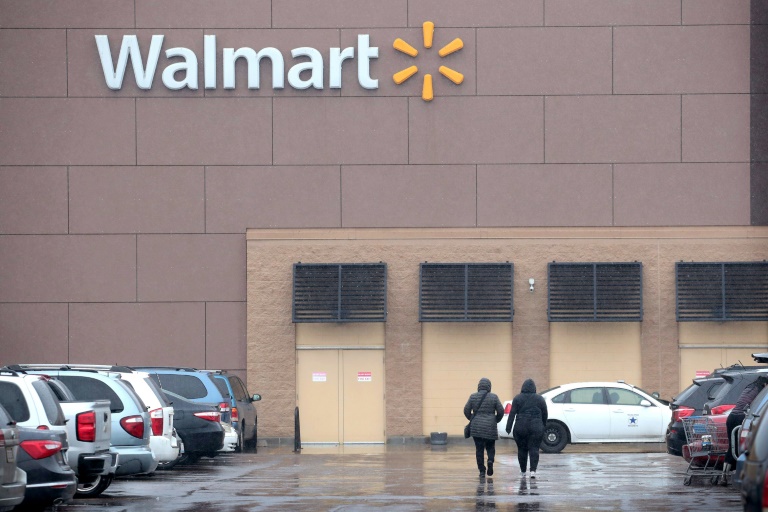
Walmart announced Wednesday it will hire 40,000 workers for the upcoming holiday season, far fewer than last year, as inflation weighs on US households and curtails consumption.

The big-box retailer, the biggest private employer in the United States, said the additional staff will help “millions of families across the country bring the holidays to life,” according to a company blog post.

A year ago, Walmart said it would hire 150,000 workers for temporary and permanent posts as it competed for employees with other retailers and logistics companies in a torrid labor market.

But the economy has changed significantly from that time. 

In July, Walmart cut its profit outlook in the wake of the worst inflation in decades that has forced many Americans to spend more on food and other household staples that have lower profit margins than many discretionary goods.

Neil Saunders, an expert in retail at GlobalData Retail, said the more modest hiring reflects Walmart’s desire to protect profit margins given the “marked slowdown” in consumer demand since last year.

“They don’t need anywhere near as many associates to serve consumers as they did during the holidays of 2021,” Saunders said.

“Holiday sales won’t be terrible this year, but a lot of growth will be driven by inflation and underlying volumes will be down. This necessitates fewer staff on the shop floor, in warehouses and in fulfilment facilities processing online orders.”

Earlier this month, delivery company UPS said it would hire more than 100,000 workers by the end of the year, the same level as in 2021.

Milan Fashion Week opens with a spring in its step

Chinese buyers are back and business is booming — Milan Fashion Week opened Wednesday on an optimistic note, despite the shadows cast by the soaring cost of energy.

Almost 70 catwalk shows and 110 presentations are scheduled over the next six days, featuring the giants of Italian fashion, from Gucci to Prada, Versace, Armani, Dolce & Gabbana and Bottega Veneta.

The return of a mostly full live programme in February after two years of coronavirus was marred by Russia’s invasion of Ukraine two days in.

But this season the international jet set are back in force, from 300 journalists to 450 buyers expected — including the first Chinese delegation since the pandemic closed borders across the globe.

Fendi kicked off the week with a 90s-inspired collection shown off to a techno party beat, the models sporting shag haircuts with long fringes as they sashayed down the runway.

Low-rise cargo pants, embellished with straps and sometimes overskirts, featured alongside tank tops and vinyl wedges. A pastel palette was enhanced with enough absinthe green to get drunk on.

Among the key events of spring/summer 2023 are Moncler’s 70th birthday celebrations and Ferragamo’s catwalk show at the site of its future Milan hotel.

Meanwhile a number of personnel changes are causing interest, with Marco de Vincenzo having taken over as new creative director at Etro, Filippo Grazioli at Missoni and Andrea Incontri at Benetton.

New faces Valentina Ilardi, Marco Rambaldi and Matty Bovan will also be closely watched as an indication of future trends.

– Exports up –

And the mood is upbeat. After the pain of the pandemic, Italian fashion has found its feet again, with industry turnover up by 25 percent in the first half of 2022.

It represents “the strongest growth in the sector for 20 years”, noted Carlo Capasa, head of Italy’s chamber of fashion, at a recent press conference.

The growth is similar to that of the first half of 2021, when it rebounded after the 2020 lockdowns, leading the chamber to forecast annual turnover for 2022 of more than 92 billion euros.

There are clouds on the horizon, however, with Europe facing rampant inflation and an energy crisis linked to the Ukraine war.

The growth this year is partly explained by the increase in prices but stripping taking that into account, turnover still increased by more than 18 percent, returning to levels seen before the 2008 financial crisis.

Exports increased significantly in the first five months of 2022, up 21.9 percent for fashion, and 30.2 percent in related sectors.

– Sanctions hit exports –

The US and South Korean markets had the strongest performance, while there were slowdowns in China and in Russia, where the luxury goods industry has been hard hit by Western sanctions.

Exports to Russia fell 26 percent in clothes fashion, 68 percent for jewellery and 56 percent for eyewear.

“The energy crisis has a significant impact on fashion because the entire upstream supply chain is energy intensive,” Capasa said.

“To manufacture fabric or a bag you need raw materials that consume a lot of energy.”

The cost of energy previously made up about 10 percent of the final product, he said: now it is at least 30 percent.

“Prices cannot be adjusted indefinitely and that puts companies in the difficult position of asking if it is worth bothering,” he said.

With Italy facing a new government after elections on Sunday, he expressed hope that there would be “dramatic measures” to help counter rising energy costs.

Prince William cites queen's love for environment in climate plea

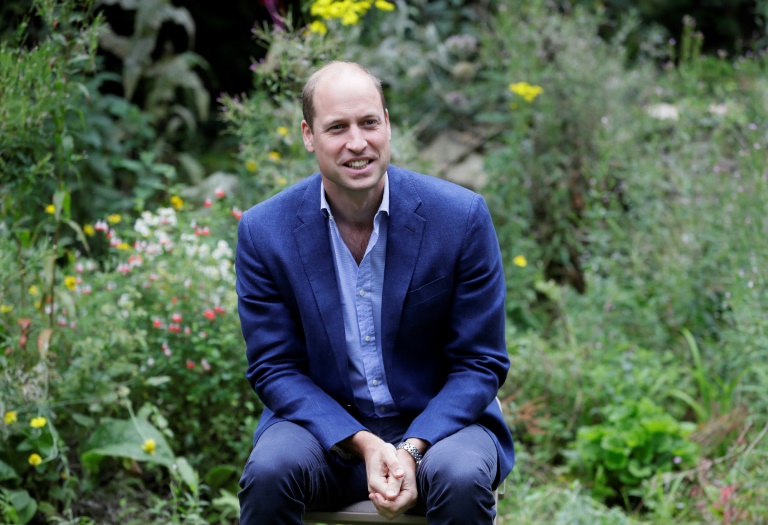
Prince William on Wednesday hailed his late grandmother’s passion for the environment as he called for the “fastest change the world has ever known” in transitioning to sustainable energy sources. 

The prince, now heir to the throne after Queen Elizabeth II’s death, sent a pre-recorded video message to an innovation summit in New York for the annual Earthshot Prize, which he created in 2019 to reward efforts to combat climate change.

“Although it is the saddest of circumstances that means I cannot join you in person today, I am pleased to be able to join you in video,” he said, two days after the funeral for his grandmother Queen Elizabeth II, who died on September 8. 

“During this time of grief, I take great comfort in your continued enthusiasm, optimism and commitment to The Earthshot Prize and what we are trying to achieve,” he added in the video, which was released by his Kensington Palace office.

“Protecting the environment was a cause close to my grandmother’s heart, and I know she would have been delighted to hear about this event and the support you are all giving our Earthshot Finalists -– the next generation of environmental pioneers.”

William, 40, who took on the title of Prince of Wales following his grandmother’s death, presented the inaugural Earthshot prizes at a ceremony in London last October, with projects from Costa Rica, Italy, the Bahamas and India picking up prizes.

His environmentalism also follows the example of his late grandfather Prince Philip, a former president of the World Wildlife Fund, and his father, the new King Charles III, who has long warned of the dangers of climate change. 

The prince acknowledged that the world “is an uncertain place right now”, with conflict, soaring energy prices and food shortages hitting families around the world. 

“While addressing these in the short-term, we must also remain resolutely focused on tackling the greatest challenges that threaten our tomorrow,” he said.

“Together, we need to ensure the transition to sustainable solutions is the fastest and most endemic change the world has ever known.”

American, Russians blast off for ISS as war rages in Ukraine

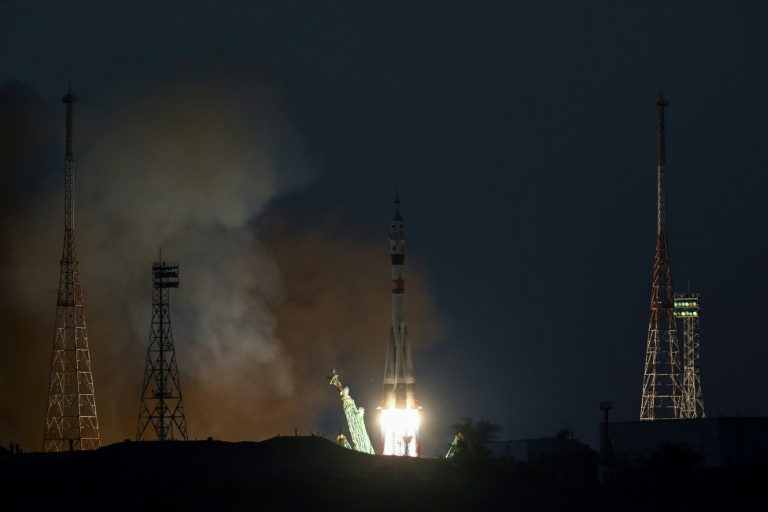
A US astronaut and two Russian cosmonauts blasted off to the International Space Station (ISS) Wednesday on a Russian-operated flight, in a rare instance of cooperation between Moscow and Washington.

The Russian space agency Roscosmos and NASA both distributed live footage of the launch from Kazakhstan and commentators speaking over the feed said it was stable and that “the crew is feeling well”.

NASA’s Frank Rubio and Russia’s Sergey Prokopyev and Dmitry Petelin make up the crew that launched from the Russia-leased Baikonur cosmodrome at 1354 GMT.

Rubio is the first US astronaut to travel to the ISS on a Russian Soyuz rocket since President Vladimir Putin sent troops into pro-Western Ukraine on February 24.

In response, Western capitals including Washington have hit Moscow with unprecedented sanctions and bilateral ties have sunk to new lows. 

Space remained an outlier of cooperation between the two countries.

Russia’s only active female cosmonaut Anna Kikina is expected to travel to the orbital station in early October aboard a SpaceX Crew Dragon. 

She will become only the fifth professional woman cosmonaut from Russia or the Soviet Union to fly to space, and the first Russian to fly aboard a spacecraft of SpaceX, the company of billionaire Elon Musk.

Russian cosmonauts and Western astronauts have sought to steer clear of the conflict that is raging back on Earth, especially when in orbit together.

A collaboration among the United States, Canada, Japan, the European Space Agency and Russia, the ISS is split into two sections: the US Orbital Segment, and the Russian Orbital Segment.

– Russia leaving ISS –

At present, the ISS depends on a Russian propulsion system to maintain its orbit, about 250 miles (400 kilometres) above sea level, with the US segment responsible for electricity and life support systems.

Tensions in the space field have grown after Washington announced sanctions on Moscow’s aerospace industry — triggering warnings from Russia’s former space chief Dmitry Rogozin, an ardent supporter of the Ukraine war.

Rogozin’s recently appointed successor Yuri Borisov later confirmed Russia’s long-mooted move to leave the ISS after 2024 in favour of creating its own orbital station.

US space agency NASA called the decision an “unfortunate development” that would hinder scientific work on the ISS.

Space analysts say that the construction of a new orbital station could take more than a decade and Russia’s space industry — a point of national pride — would not be able to flourish under heavy sanctions. 

The ISS was launched in 1998 at a time of hope for US-Russia cooperation following their Space Race competition during the Cold War.

During that era, the Soviet space programme flourished. It boasted a number of accomplishments that included sending the first man into space in 1961 and launching the first satellite four years earlier.

Experts say Roscosmos is now a shadow of its former self and has in recent years suffered a series of setbacks, including corruption scandals and the loss of a number of satellites and other spacecraft.

Russia years-long monopoly on manned flights to the ISS is also gone, to SpaceX, along with millions of dollars in revenue. 

US Fed set to raise interest rates as recession fears mount

The Federal Reserve opened its second day of deliberations Wednesday that are expected to produce another big increase in interest rates as it tries to cool the economy to tamp down the highest inflation in 40 years, but recession fears are rising.

Soaring prices are putting the squeeze on American families and businesses and already have become a political liability for President Joe Biden, as he faces midterm congressional elections in early November.

But a contraction of the world’s largest economy would be a more damaging blow to Biden, to the Fed’s credibility and the world at large.

Economist Diane Swonk of KPMG warned the central bank will come under increasing pressure, especially if unemployment begins to rise, and Fed officials “will become political pinatas.”

Federal Reserve Chair Jerome Powell has made it clear that officials will continue to act aggressively to cool the economy and avoid a repeat of the 1970s and early 1980s, the last time US inflation got out of control.

It took tough action — and a recession — to finally bring prices down in the 1980s, and the Fed is unwilling to give up its hard-won, inflation-fighting credibility.

Many economists are expecting a third straight three-quarter point rate hike when the meeting concludes Wednesday, which would be an unprecedented action since that era. But there is a chance the Fed could opt for a full point increase.

Powell and other central bankers have been sending the same message: A downturn is better than continued high inflation given the pain that would inflict, especially on those least able to withstand it.

“Since inflation began to accelerate in early 2021, Fed officials have been overly optimistic that it would quickly recede to the central bank’s 2 percent target,” economists Mickey Levy and Andrew Levin wrote in The Wall Street Journal.

“The economy now faces a serious risk of persistent high inflation.”

The Fed’s policy-setting Federal Open Market Committee (FOMC) is scheduled to announce its decision at 1800 GMT Wednesday.

Powell’s press conference after the meeting will be closely scrutinized for clues on how much more he thinks the Fed will have to do before it declares victory in the inflation fight.

Markets have been roiled in recent days by the Fed’s resolve to continue its forceful action. But stocks opened higher on Wall Street Wednesday ahead of the decision, with investors perhaps hopefully Powell will soften his tone.

– Avoiding a downturn –

Inflation is a global phenomenon amid the Russian war in Ukraine on top of global supply chain snarls and Covid lockdowns in China, and other major central banks are taking action as well.

European Central Bank President Christine Lagarde said Tuesday that more increases will be needed to stop inflation from taking hold. 

US policymakers have the luxury of a strong job market, and low unemployment, which gives it some leeway to tackle high prices.

Even so, many economists say at least a short period of negative GDP in the first half of 2023 will be needed before inflation starts coming down.

Despite a welcome drop in gasoline prices at the pump in recent weeks, the disappointing consumer price report for August showed widespread increases. 

But Ian Shepherdson of Pantheon Macroeconomics, who believes inflation has peaked, said incomes are growing amid rising wages, which bodes well for the outlook.

“The US economy is not in recession or headed there,” he said in an analysis.

The Fed has front-loaded its rate hikes, cranking up the benchmark lending rate four times this year, including two straight three-quarter-point hikes in June and July.

The aim is to raise the cost of borrowing and cool demand, and it is having an impact: The housing market has slowed as mortgage rates have surged.

Recent statements from Fed officials indicate more rate hikes are coming, and no cuts until inflation is under control — dousing hopes that had built up in markets following the July policy meeting.

“The irony here is that just as the Fed is ratcheting-up the anti-inflation rhetoric to fever-pitch, the forces needed to drive down inflation over the next year are now in place,” Shepherdson said.

The FOMC also will release the quarterly forecasts from members, which will show how they feel about the direction of the economy and the impact of the policy moves, and how soon inflation will come down.

US Fed set to raise interest rates as recession fears mount

The Federal Reserve opened its second day of deliberations Wednesday that are expected to produce another big increase in interest rates as it tries to cool the economy to tamp down the highest inflation in 40 years, but recession fears are rising.

Soaring prices are putting the squeeze on American families and businesses and already have become a political liability for President Joe Biden, as he faces midterm congressional elections in early November.

But a contraction of the world’s largest economy would be a more damaging blow to Biden, to the Fed’s credibility and the world at large.

Economist Diane Swonk of KPMG warned the central bank will come under increasing pressure, especially if unemployment begins to rise, and Fed officials “will become political pinatas.”

Federal Reserve Chair Jerome Powell has made it clear that officials will continue to act aggressively to cool the economy and avoid a repeat of the 1970s and early 1980s, the last time US inflation got out of control.

It took tough action — and a recession — to finally bring prices down in the 1980s, and the Fed is unwilling to give up its hard-won, inflation-fighting credibility.

Many economists are expecting a third straight three-quarter point rate hike when the meeting concludes Wednesday, which would be an unprecedented action since that era. But there is a chance the Fed could opt for a full point increase.

Powell and other central bankers have been sending the same message: A downturn is better than continued high inflation given the pain that would inflict, especially on those least able to withstand it.

“Since inflation began to accelerate in early 2021, Fed officials have been overly optimistic that it would quickly recede to the central bank’s 2 percent target,” economists Mickey Levy and Andrew Levin wrote in The Wall Street Journal.

“The economy now faces a serious risk of persistent high inflation.”

The Fed’s policy-setting Federal Open Market Committee (FOMC) is scheduled to announce its decision at 1800 GMT Wednesday.

Powell’s press conference after the meeting will be closely scrutinized for clues on how much more he thinks the Fed will have to do before it declares victory in the inflation fight.

Markets have been roiled in recent days by the Fed’s resolve to continue its forceful action. But stocks opened higher on Wall Street Wednesday ahead of the decision, with investors perhaps hopefully Powell will soften his tone.

– Avoiding a downturn –

Inflation is a global phenomenon amid the Russian war in Ukraine on top of global supply chain snarls and Covid lockdowns in China, and other major central banks are taking action as well.

European Central Bank President Christine Lagarde said Tuesday that more increases will be needed to stop inflation from taking hold. 

US policymakers have the luxury of a strong job market, and low unemployment, which gives it some leeway to tackle high prices.

Even so, many economists say at least a short period of negative GDP in the first half of 2023 will be needed before inflation starts coming down.

Despite a welcome drop in gasoline prices at the pump in recent weeks, the disappointing consumer price report for August showed widespread increases. 

But Ian Shepherdson of Pantheon Macroeconomics, who believes inflation has peaked, said incomes are growing amid rising wages, which bodes well for the outlook.

“The US economy is not in recession or headed there,” he said in an analysis.

The Fed has front-loaded its rate hikes, cranking up the benchmark lending rate four times this year, including two straight three-quarter-point hikes in June and July.

The aim is to raise the cost of borrowing and cool demand, and it is having an impact: The housing market has slowed as mortgage rates have surged.

Recent statements from Fed officials indicate more rate hikes are coming, and no cuts until inflation is under control — dousing hopes that had built up in markets following the July policy meeting.

“The irony here is that just as the Fed is ratcheting-up the anti-inflation rhetoric to fever-pitch, the forces needed to drive down inflation over the next year are now in place,” Shepherdson said.

The FOMC also will release the quarterly forecasts from members, which will show how they feel about the direction of the economy and the impact of the policy moves, and how soon inflation will come down.

Germany reaches deal to nationalise troubled gas giant Uniper

Germany has reached a deal to nationalise troubled gas giant Uniper, the government said Wednesday, as the energy sector reels from the fallout of Russia’s war in Ukraine.

The deal will leave Germany with a 99 percent stake in the debt-laden gas company, the economy ministry said in a statement.

“Uniper is a central pillar of German energy supplies,” the ministry said.

Under the agreement, Berlin will inject eight billion euros ($7.9 billion) in cash into Uniper and buy 500 million euros of shares from its majority shareholder, the Finnish state-owned energy company Fortum.

Fortum will also be repaid for an eight-billion-euro loan it gave Uniper.

“The situation has become much more dramatic” for Uniper since the shutdown in late August of the Nord Stream 1 gas pipeline from Russia to Germany, Economy Minister Robert Habeck told a press conference.

The crisis intervention was needed to “secure our gas supply and to protect consumers from an uncontrollable situation”, Finance Minister Christian Lindner said.

One of the biggest importers of Russian gas, Uniper has been squeezed as Moscow has reduced supplies to the continent in the wake of its invasion of Ukraine in February.

– Gas crisis –

Missing deliveries from Russia have had to be replaced with expensive supplies from the open market, where prices for gas have skyrocketed.

The German state had already agreed in July to take a 30 percent stake in Uniper as part of an initial agreement, but will now own around 99 percent under the new bailout terms.

Uniper announced earlier this month that the two sides were exploring a possible nationalisation as the energy crisis showed no signs of abating.

Letting the company go bust could have had a chain reaction where “many other energy suppliers could have ended up in a very difficult situation” as they bore the brunt of higher prices, Uniper CEO Klaus-Dieter Maubach said at a press conference. 

The pressure on the gas supplier was already felt in January when Fortum provided an eight-billion-euro loan to Uniper as prices began to climb amid tensions with Moscow before the invasion of Ukraine.

The Finnish company, which is itself majority owned by the government in Helsinki, held a near-80-percent stake in Uniper.

Fortum said Uniper has accumulated close to 8.5 billion euros in gas-related losses “and cannot continue to fulfil its role as a critical provider of security of supply as a privately-owned company”.

“New measures to resolve the situation were needed, as both Uniper and Fortum were exposed to significant risks,” said Fortum chief executive Markus Rauramo at a press conference.

– ‘No longer viable’ –

Fortum had taken an “inevitable decision in exceptionally uncertain circumstances”, said Tytti Tuppurainen, the Finnish minister responsible for state companies.

“The situation is a result of Russia’s attack on Ukraine. Putin is using energy as a weapon,” Tuppurainen said in a statement.

Russia’s war in Ukraine has triggered an earthquake on European energy markets, cranked up the pressure on suppliers and raised fears of possible shortages over the winter.

Germany has found itself particularly exposed due to its previous heavy reliance on Russian energy imports.

Since the outbreak of the war, Berlin has worked to wean itself off Russian gas and secure alternative supplies.

Officials have seized key pieces of energy infrastructure which were in the hands of Russian energy companies and mandated gas stores to be filled.

Earlier in September, the German government entered into discussions with another gas supplier, VNG, over a possible bailout package.

Close Bitnami banner
Bitnami