US Business

Bankers warn of toll on US consumers from prolonged inflation

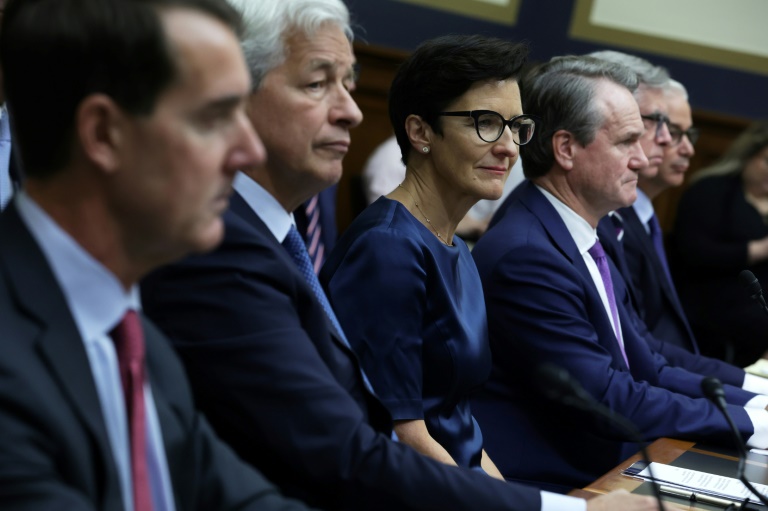
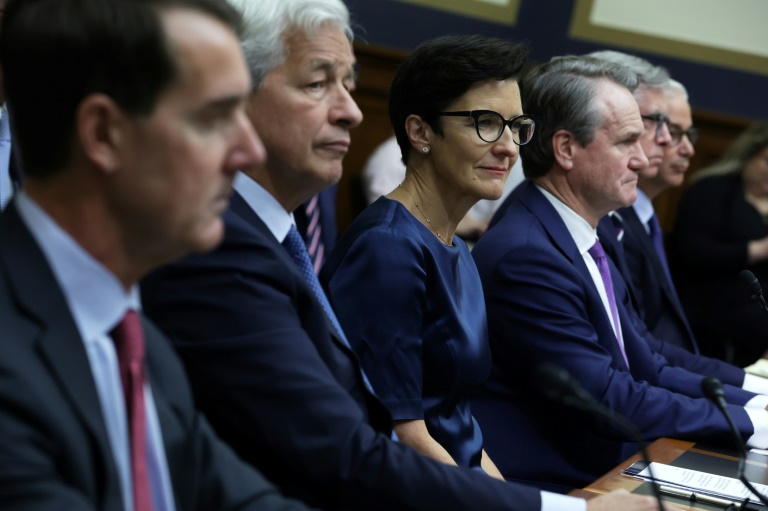
Higher interest rates and grinding inflation are likely to begin taking a higher toll on US consumers who have so far mostly managed to remain in healthy financial shape, bank CEOs told a congressional panel Wednesday.

The heads of the largest US banks warned in particular that low-income households face duress, as they appeared at a lengthy hearing before the House Financial Services Committee ahead of the Federal Reserve’s announcement of an interest rate hike of three-quarters of a point.

“It’s early days still in terms of seeing the impact of high interest rates on the consumer in the States,” said Citigroup Chief Executive Jane Fraser. “Fortunately, they entered this period with pretty strong balance sheets.”

Fraser warned of “greater stress” for consumers with low credit ratings, predicting a drop in savings rates and “tougher times ahead” in general.

Remarks on the economy were interspersed as bankers navigated politically charged questions on climate change, President Joe Biden’s regulatory policies, executive leadership diversity and other topics.

Andy Cecere, chief executive of US Bancorp, said that while savings rates remain above pre-pandemic levels, they have “stabilized” the last three months after growing consistently for the prior 18 months.

“The things that people are spending money on have changed substantially from discretionary to non-discretionary items like food and gas,” Cecere told the panel.

“It’s appropriate that we’re very focused on inflation, because again, it is most harmful for those who afford it the least.”

JPMorgan Chase Chief Executive Jamie Dimon said American consumers are in “rather good shape” with low debt levels in a strong jobs market.

But Dimon said the economy faces an uncertain course, with only a “small chance” of a soft landing to the Fed’s monetary tightening policy.

Dimon said there was also a chance of a “mild recession” as well as a “harder recession, noting that in light of the war in Ukraine and the drag on food and energy supply, “there’s a chance it could be worse.”

“And I think policy makers should be prepared for the worst,” Dimon added.

Bankers warn of toll on US consumers from prolonged inflation

Higher interest rates and grinding inflation are likely to begin taking a higher toll on US consumers who have so far mostly managed to remain in healthy financial shape, bank CEOs told a congressional panel Wednesday.

The heads of the largest US banks warned in particular that low-income households face duress, as they appeared at a lengthy hearing before the House Financial Services Committee ahead of the Federal Reserve’s announcement of an interest rate hike of three-quarters of a point.

“It’s early days still in terms of seeing the impact of high interest rates on the consumer in the States,” said Citigroup Chief Executive Jane Fraser. “Fortunately, they entered this period with pretty strong balance sheets.”

Fraser warned of “greater stress” for consumers with low credit ratings, predicting a drop in savings rates and “tougher times ahead” in general.

Remarks on the economy were interspersed as bankers navigated politically charged questions on climate change, President Joe Biden’s regulatory policies, executive leadership diversity and other topics.

Andy Cecere, chief executive of US Bancorp, said that while savings rates remain above pre-pandemic levels, they have “stabilized” the last three months after growing consistently for the prior 18 months.

“The things that people are spending money on have changed substantially from discretionary to non-discretionary items like food and gas,” Cecere told the panel.

“It’s appropriate that we’re very focused on inflation, because again, it is most harmful for those who afford it the least.”

JPMorgan Chase Chief Executive Jamie Dimon said American consumers are in “rather good shape” with low debt levels in a strong jobs market.

But Dimon said the economy faces an uncertain course, with only a “small chance” of a soft landing to the Fed’s monetary tightening policy.

Dimon said there was also a chance of a “mild recession” as well as a “harder recession, noting that in light of the war in Ukraine and the drag on food and energy supply, “there’s a chance it could be worse.”

“And I think policy makers should be prepared for the worst,” Dimon added.

Trump, children sued for 'incredible' fraud in New York

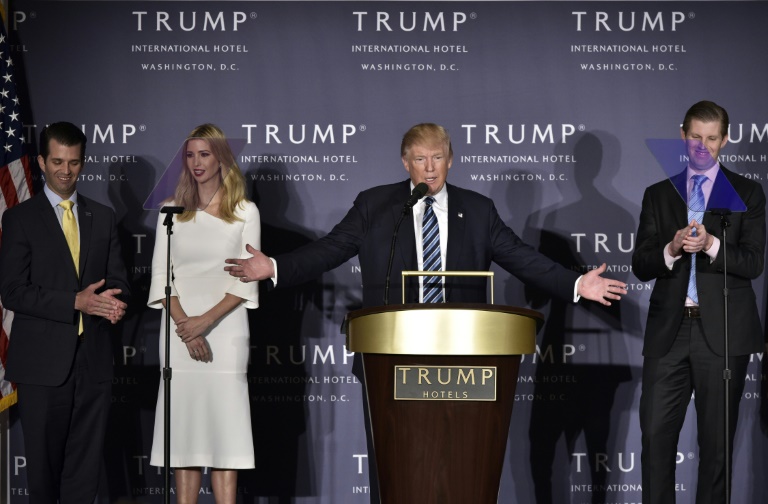
Donald Trump and family members lied to tax collectors, lenders and insurers for years in a scheme that routinely misstated the value of his properties to enrich themselves, according to a suit filed by New York’s attorney general on Wednesday.

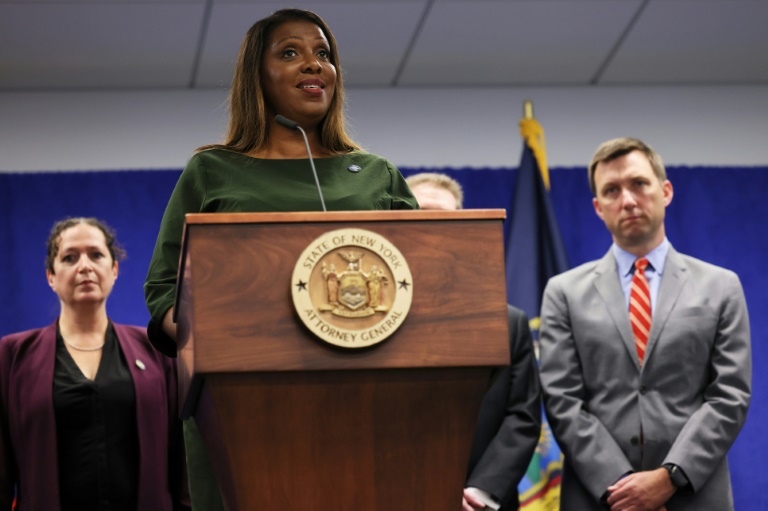
Top state prosecutor Letitia James said that with the help of his children and others at the Trump Organization, the former president provided fraudulent statements of his net worth and false asset valuations “to obtain and satisfy loans, get insurance benefits, and pay lower taxes.”

“In short, he lied to gain massive financial benefits for himself.”

The sweeping investigation is one of many criminal, civil and congressional probes into Trump, who is eyeing another run for the White House in 2024.

Trump repeated his oft-used defense that the suit is “another witch hunt” against him, while his spokesperson denounced it as a political move by Democrats against the Republican businessman.

James’ office requested that the former president pay at least $250 million in penalties — a sum she says he made from the fraud — and that his family be banned from running businesses in the state. 

She also urged that Trump along with his children Donald Trump Jr, Eric Trump and Ivanka Trump be barred from purchasing property in the state for five years.

“The very foundation of his purported net worth is rooted in incredible fraud and illegality,” James said in a statement.

Referring the title of Trump’s book “The Art of Deal,” she said that “Mr. Trump thought he could get away with the art of the steal, but today, that conduct ends.”

– ‘Staggering’ overvaluations –

James said her office, which lacks authority to file criminal charges, was making a criminal referral to the US Justice Department as well as the Internal Revenue Service based on the three-year investigation.

The lawsuit filed with the New York State Supreme Court includes allegations that Trump’s annual financial statements for at least a decade “grossly inflated” property values across his assets — from his Mar-a-Lago resort in Florida to Manhattan’s Trump Tower — to a “staggering” degree.

He did so to obtain favorable loans with lower interests and premiums, said James, who is running to be re-elected to her post in November.

Her office counted that Trump and his associates put out more than 200 false and misleading valuations of assets.

The suit details tactics used by Trump and his associates, saying they would represent that he had cash on hand when he didn’t, change valuation properties wildly, and use “objectively false numbers to calculate property values” including at his famous triplex on Fifth Avenue.

Among the alleged crimes was also valuing 12 rent-stabilized units at market rate in his Trump Park Avenue property — inflating the value by 65 times, James said.

“White collar financial crime is not a victimless crime,” James said.

“When the well-connected break the law to take in more money than they are entitled to, it reduces resources available to working people, to regular people, to small businesses and to all tax payers.”

James’ lawsuit requests that a judge appoint an independent authority to monitor the Trump Organization’s financial practices, and remove the Trumps from their own family business.

– Web of investigations –

New York authorities have been probing Trump and his family business since 2018, when the Manhattan district attorney opened a probe into the then-president who has long vied to present himself as a self-made billionaire.

James’ civil inquiry began the next year, after Trump’s former lawyer gave testimony that indicated the company had engaged in misconduct.

The DA’s criminal probe has not resulted in any charges as of yet.

Last month Allen Weisselberg, the Trump Organization’s long-time finance chief, pleaded guilty to tax fraud and agreed to testify at an upcoming criminal trial of the former US president’s real estate company.

He is to serve five months in prison contingent on his testifying truthfully at the October criminal trial of the Trump Organization on tax fraud charges, the Manhattan District Attorney Alvin Bragg said last month.

FBI agents separately searched Trump’s palatial Mar-a-Lago residence in Florida on August 8 and seized official documents marked “Top Secret,” “Secret” and “Confidential.”

Trump is also facing legal scrutiny for his efforts to overturn the results of the November 2020 election and over the January 6, 2021 attack on the US Capitol by his supporters.

The legal woes of former US president Donald Trump

New York state’s attorney general Letitia James filed a civil suit on Wednesday against Donald Trump and three of his children, accusing them of business fraud.

It was the latest development in multiple civil, criminal and congressional probes into the former US president.

The 76-year-old Trump is also being investigated for his role in last year’s US Capitol attack, his efforts to overturn the 2020 presidential election, and the stashing of classified documents at his Mar-a-Lago residence.

Here are some of the key investigations weighing on the one-term president as he eyes a third run for the White House in 2024:

– Capitol assault –

A series of explosive hearings by the House of Representatives panel probing the attack on the US Capitol by Trump supporters on January 6, 2021 offered a roadmap for potentially charging the ex-president with a crime.

The lawmakers leading the hearings presented their case that Trump knew he lost the 2020 presidential election to Joe Biden, yet pressed his claims of fraud and ultimately brought his supporters to Washington for a rally that ended with a violent assault on Congress.

The House select committee also uncovered evidence of alleged misconduct by Trump leading up to the insurrection, including his attempt to co-opt government departments into his bid to overturn the election.

The lawmakers’ work is separate from a criminal probe that the Justice Department has launched into the unrest and the events leading up to it.

Besides the legal ramifications, an unprecedented prosecution of a former chief executive would likely cause a political earthquake in a country already starkly divided along partisan Democratic and Republican lines.

– ‘Find’ the votes –

Trump is being investigated for pressuring officials in the southern swing state of Georgia to overturn Democrat Joe Biden’s 2020 victory — including a now-infamous taped phone call in which he asked the secretary of state to “find” enough votes to reverse the result.

Fulton County’s top prosecutor Fani Willis has assembled a special grand jury that could see Trump facing conspiracy charges connected to election fraud and interference.

Willis has already amassed significant testimony from members of Trump’s inner circle, including his former personal lawyer, ex-New York mayor Rudy Giuliani.

– The Trump Organization –

The civil suit filed by James, the New York state attorney general, against Trump and three of his children — Donald Trump Jr, Ivanka Trump and Eric Trump — accuses them of overvaluing multiple assets to secure loans and then undervaluing them to minimize taxes.

James is seeking $250 million in penalties as well as banning Trump and his children from serving as executives at companies in New York.

The attorney general is also seeking to bar Trump and his company, The Trump Organization, from purchasing property in the state for five years.

She also said her office was making a criminal referral to the US Justice Department and the Internal Revenue Service.

Trump denounced the suit as “another Witch Hunt by a racist Attorney General.”

– Raid on Florida residence –

An FBI search of Trump’s palatial Mar-a-Lago home in Florida in August turned up classified documents taken to his estate when he left office in January 2021.

The raid, which was personally approved by US Attorney General Merrick Garland, was triggered by a review of classified records that Trump finally surrendered to authorities in January this year — after months of back and forth with the National Archives.

The Justice Department began investigating after the 15 boxes were found to contain national defense information, including 184 documents marked as confidential, secret or top secret.

The FBI, in the affidavit used to justify the raid, said it was conducting a criminal investigation into “improper removal and storage of classified information” and “unlawful concealment of government records.”

The search warrant said the probe was also related to “willful retention of national defense information,” an offense that falls under the Espionage Act, and potential “obstruction of a federal investigation.”

A “special master,” a retired New York judge, has been appointed to screen the seized files for privileged materials.

Aviation chiefs warn of prolonged ticket price pain

Aviation industry leaders warned Wednesday that travellers must brace for even higher ticket prices as the sector battles fallout from the Covid pandemic, high oil prices and conflict fears.

International Air Transport Association director general Willie Walsh also said that airlines’ recovery would be delayed if China maintains its coronavirus travel clampdown into 2023.

The IATA head and Qatar Airways chief executive Akbar Al Baker said travellers around the world could expect more price pain in coming months because of higher fuel prices added to crippling losses from the past two years.

There was “little optimism” in the industry, Walsh told a news conference on the sidelines of an IATA meeting.

Walsh said that “the bottom line” is that if jet fuel prices keep going up “the only choice for companies is to have that reflected in ticket prices”.

“The price is so volatile,” he added. The IATA head and Qatar Airways chief said the ticket pressures would extend into 2023 and beyond.

IATA says airlines posted losses of $180 billion in 2020 and 2021 and expects another $9.7 billion in losses this year.

Baker, whose company this year recorded $1.5 billion in profit, slammed governments for “misleading” the public about the environmental damage of flying.

He said restrictions on airlines such as moves in many European countries to end flights of less than 500 kilometres (310 miles), was also adding to costs.

Baker said that if the cost of newer environmentally friendly fuels was higher then that would also be added to ticket pressures.

Both said any reopening of China’s frontiers would play a key role in the aviation industry’s recovery.

China had a “very important place” in international travel figures, said Walsh.

“If in 2023 China remains closed then it clearly will have an impact on the strength of the overall recovery,” he said.

He said Hong Kong’s aviation sector had been “devastated” by Covid restrictions, the city was no longer a global aviation hub and that Cathay Pacific was a “shadow” of its former importance.

Baker said many Chinese football fans may not be able to go this year’s World Cup in Qatar because of restrictions caused by China’s zero-coronavirus policy.

Biden lashes Putin as he backs reformed UN

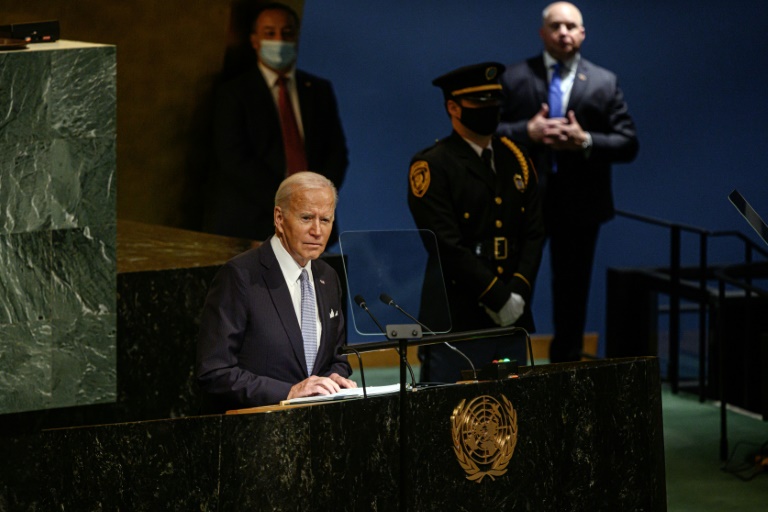
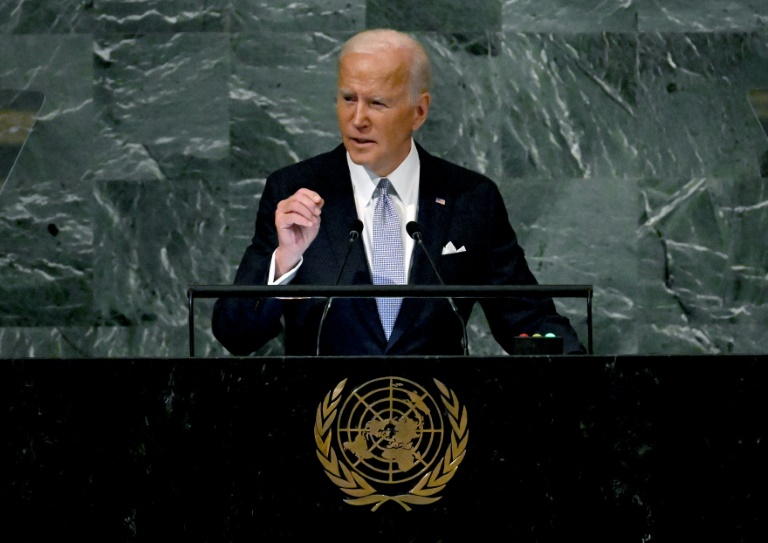
US President Joe Biden on Wednesday accused Russia of “shamelessly” violating the international order by invading Ukraine, as he pledged billions in food aid and backed an expansion of UN Security Council seats for the developing world.

Biden sought to woo the world in an address to the United Nations hours after Russian President Vladimir Putin called up reservists to fight in Ukraine, a step Western powers portrayed as desperation.

“Russia has shamelessly violated the core tenets of the United Nations Charter,” Biden told the General Assembly.

“Let us speak plainly. A permanent member of the United Nations Security Council invaded its neighbor — attempted to erase the sovereign state from the map.”

After a frontal denunciation of Russia, Biden focused much of his address on the interests of the developing world, where resentment has built in some quarters over the West’s massive spending on weapons for Ukraine.

Biden announced another $2.9 billion for a fund aimed at addressing global food insecurity, which has worsened markedly since the invasion of Ukraine, a major grain exporter.

He also threw his support behind an expansion of the Security Council, an idea mulled for decades but which has previously seen low US enthusiasm.

Biden said the United States would back permanent seats for Africa and Latin America in addition to its previous support to include Japan and India.

He also promised the United States would “refrain from the use of the veto, except in rare, extraordinary situations, to ensure the council remains credible and effective.”

Russia in recent years has been the most frequent user of its veto power. The United States, China, France and Britain also enjoy vetoes, a legacy of the power dynamics at the end of World War II.

Russia has previously scoffed at US high-mindedness on the Security Council, pointing to how former president George W. Bush circumvented it to invade Iraq.

– Calls to pressure Russia –

The General Assembly is meeting in person after two years of disruptions due to the pandemic. Only one leader was granted an exception to speak via video — Ukrainian President Volodymyr Zelensky, who addresses the world body later Wednesday.

Just as world leaders were meeting, Russian allies announced they would hold referendums in occupied territory on annexation and Putin announced the mobilization of reservists, showing he is in no hurry to end the war.

French President Emmanuel Macron, speaking on the sidelines of the General Assembly, said that the world must put “maximum pressure” on Putin whose decisions “will serve to isolate Russia further.”

Standing at the UN rostrum late Tuesday, German Chancellor Olaf Scholz said the world was “facing a new fragmentation” after years of hope following the end of the Cold War and his own nation’s reunification.

“Major global crises are piling up before us and are combining and reinforcing one another. Some have even seen this as a harbinger of a world without rules,” he said.

Scholz said that Putin will “only give up his war and his imperialist ambitions if he realizes he cannot win.”

“We stand firmly at the side of those under attack — for the protection of the lives and the freedom of the Ukrainians, and for the protection of our international order,” he said.

– No ‘Cold War’ with China –

Amid warnings of rising global division, Biden also sought to calm tensions with China, days after he again promised US support if Beijing invades Taiwan.

“Let me be direct about the competition between the United States and China,” Biden said. “As we manage shifting geopolitical trends, the United States will conduct itself as a reasonable leader. We do not seek conflict, we do not seek a Cold War.”

The Biden administration has been encouraged by Putin’s acknowledgement of Chinese concerns when he met President Xi Jinping last week.

On Wednesday, China called for a “ceasefire through dialogue” in Ukraine. It has previously offered moral support to Russia but US officials say Beijing has not accepted requests for material help.

Among other leaders addressing the United Nations was Iranian President Ebrahim Raisi, who traveled to New York just as protests spread in his country over the death of a woman arrested by morality police.

Biden said that Americans “stand with the brave women of Iran” after the death of Mahsa Amini, a 22-year-old who allegedly was beaten to death after not wearing her headscarf in compliance with the clerical state’s guidelines.

Raisi accused the West of “double standards” as he mentioned the killings of Indigenous women in Canada.

Raisi was trailed by protesters in New York with dissidents filing human rights lawsuits against the hardline cleric over his role as a judge during mass executions in the 1980s.

bur-sct/mlm/ec

Hurricane Fiona heads toward Bermuda, US advises citizens to defer travel

Hurricane Fiona churned toward Bermuda as a powerful Category 4 storm on Wednesday as Puerto Rico struggled to restore power and water after receving a crushing blow.

The US National Hurricane Center (NHC) said Fiona was expected to approach Bermuda, a British territory of some 64,000 people, late on Thursday.

In Washington, the State Department advised Americans to reconsider travel to Bermuda and authorized family members of US government personnel to leave.

“US citizens in Bermuda wishing to depart the island should depart now, ahead of Hurricane Fiona’s arrival,” it said in a travel advisory.

Fiona was upgraded overnight to a Category 4 hurricane, the second highest level on the Saffir-Simpson scale.

The NHC said the storm was packing maximum winds of 130 miles per hour (210 kilometers per hour) as it headed north toward Bermuda at around eight miles per hour.

“On the forecast track, the center of Fiona will continue to move away from the Turks and Caicos today, approach Bermuda late on Thursday and approach Atlantic Canada late Friday,” the NHC said.

“A storm surge will cause elevated water levels along the coast of Bermuda,” it said. “Near the coast, the surge will be accompanied by large and destructive waves.”

Fiona has left a trail of destruction across the Caribbean and killed four people in Puerto Rico, according to a US Federal Emergency Management Agency (FEMA) official quoted by The Washington Post.

One death was reported in the French overseas department of Guadeloupe and another in the Dominican Republic.

FEMA administrator Deanne Criswell is in Puerto Rico and toured flood damaged areas with the governor of the US territory, Pedro Pierluisi.

– ‘Will not stop’ –

FEMA said it was sending hundreds of additional personnel to Puerto Rico to help with relief efforts on the island, which suffered widespread power outages.

Pierluisi said the storm had caused catastrophic damage on the island of three million people, with some areas receiving more than 30 inches (76 centimeters) of rain.

US President Joe Biden has declared a state of emergency in Puerto Rico, which is still struggling to recover from Hurricane Maria five years ago.

LUMA, the Puerto Rico power company, said more than 2,000 utility workers were assessing damage and working to restore electricity to hundreds of thousands of customers.

“LUMA and all our partners will not stop until every customer is restored and the entire grid is reenergized,” its public safety manager Abner Gomez said in a statement.

The storm also left around hundreds of thousands of people in Puerto Rico without drinking water as a result of power outages and flooded rivers, officials said.

In the Dominican Republic, President Luis Abinader declared three eastern provinces to be disaster zones: La Altagracia — home to the popular resort of Punta Cana — El Seibo and Hato Mayor.

After years of financial woes and recession, Puerto Rico in 2017 declared the largest bankruptcy ever by a local US administration. 

Later that year, the double hit from hurricanes Irma and Maria added to the misery, devastating the electrical grid on the island — which has suffered from major infrastructure problems for years.

The grid was privatized in June 2021 in an effort to resolve the problem of blackouts, but the issue has persisted, and the entire island lost power earlier this year.

Biden rebukes Putin after new Ukraine escalation

US President Joe Biden tore into Vladimir Putin Wednesday as he addressed the United Nations just hours after the Russian leader dramatically escalated his seven-month war in Ukraine by calling up his country’s military reservists.

Biden accused Putin of “shamelessly” violating the UN Charter and castigated him over a veiled threat to use nuclear weapons — after Putin said his promise to use all military means in Ukraine was “no bluff.”

“Russia has shamelessly violated the core tenets of the United Nations Charter,” Biden said as he addressed the UN General Assembly, warning that “a nuclear war cannot be won and must never be fought.”

Russian forces have attacked Ukrainian schools, railway stations and hospitals during a war that Biden said was aimed at “extinguishing Ukraine’s right to exist as a state.”

John Kirby, spokesman for the White House’s National Security Council, had said ahead of Biden’s address that Washington was taking Putin’s “irresponsible” apparent threat to use nuclear weapons “seriously” and warned it could alter its “strategic posture” if need be.

Putin’s mobilization call came as Moscow-held regions of Ukraine prepare to hold annexation referendums this week, ramping up the stakes in the conflict by allowing Moscow to accuse Ukraine of attacking Russian territory.

Four Russian-occupied regions of Ukraine — Donetsk and Lugansk in the east and Kherson and Zaporizhzhia in the south — said on Tuesday that they would hold the votes over five days beginning Friday.

In a pre-recorded address to the nation early on Wednesday, Putin accused the West of trying to “destroy” his country through its backing of Kyiv. Russia needed to support those in Ukraine who wanted to “determine their own future”, he said.

The Russian leader announced a partial military mobilization, with Defense Minister Sergei Shoigu telling state television that some 300,000 reservists would be called up.

– ‘Not a bluff’ –

“When the territorial integrity of our country is threatened, we will certainly use all the means at our disposal to protect Russia and our people. This is not a bluff,” Putin said.

“Those who are trying to blackmail us with nuclear weapons should know that the wind can also turn in their direction,” Putin added.

But Ukrainian President Volodymyr Zelensky said in an interview with Germany’s Bild media group released Wednesday that he did not think Putin would resort to nuclear weapons.

“Tomorrow, Putin can say — as well as Ukraine, we want part of Poland, otherwise we will use atomic weapons. We cannot make these compromises,” he said. 

Separately, Zelensky’s foreign minister Dmytro Kuleba called Western allies to increase military aid to Kyiv and further isolate Moscow.

On the sidelines of the UN gathering, French President Emmanuel Macron urged the world to “put maximum pressure” on Putin, whose decisions “will serve to isolate Russia further.”

German Chancellor Olaf Scholz denounced the call-up as “an act of desperation” in a “criminal war” he said Russia could not win.

In the wake of the reservist announcement flights out of Russia to neighboring ex-Soviet countries were booked up for days to come, airline data showed, in what appeared to be a rush to quit the country. Prices for remaining seats skyrocketed.

The sudden flurry of moves by Moscow this week came with Russian forces in Ukraine facing their biggest challenge since the start of the conflict.

In a sweeping Ukrainian counter-offensive in recent weeks, Kyiv’s forces have retaken hundreds of towns and villages that had been controlled by Russia for months.

In a rare admission of military losses from Moscow, Shoigu said on Wednesday 5,937 Russian soldiers had died in Ukraine since the launch of the military intervention in February.

– World peace ‘in jeopardy’ –

As Putin made his announcement, residents were clearing rubble and broken glass from a nine-story apartment block hit by an overnight missile strike in the eastern Ukrainian city of Kharkiv.

“They want to liberate us from what? From our homes? From our relatives? From friends? What else?” she told AFP. “They want to free us from being alive?” said a 50-year-old resident, who gave her name as Galina.

The referendums follow a pattern established in 2014, when Russia annexed the Crimea peninsula from Ukraine after a similar vote.

Like in 2014, Washington, Berlin and Paris denounced the latest ballots, saying the international community would never recognize the results.

Beijing, which so far has tacitly backed Moscow’s intervention called on Wednesday for a “ceasefire through dialogue” after Putin’s address and in likely reference to the referendums said the “territorial integrity of all countries should be respected”.

NATO Secretary General Jens Stoltenberg meanwhile denounced Putin’s “dangerous and reckless nuclear rhetoric.”

And EU foreign policy chief Josep Borrell on Wednesday accused Putin of putting world peace “in jeopardy”.

“Putin’s announcement of sham referenda, partial military mobilization and nuclear blackmail are a grave escalation,” Borrell wrote on Twitter.

“Threatening with nuclear weapons is unacceptable and a real danger to all,” he said. 

Kyiv said the referendums were meaningless and vowed to “eliminate” threats posed by Russia, saying its forces would keep retaking territory regardless of what Moscow or its proxies announced.

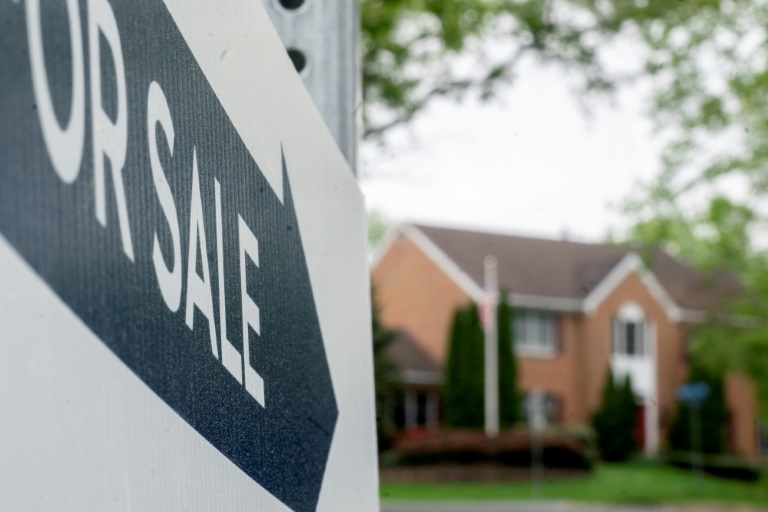
US home sales fall for seventh straight month in August

Existing home sales slipped in August to the lowest in two years, marking a seventh straight monthly decline, according to industry data released Wednesday showing continued slowing in the US housing market as mortgage rates surge.

Sales of all types of homes and condos fell 0.4 percent from July even while prices eased in the month, the National Association of Realtors (NAR) said.

The report comes on the same day the Federal Reserve was poised to deliver another big increase in the key interest rate, a move that will boost borrowing costs with further repercussions for the critical housing market.

“The housing sector is the most sensitive to and experiences the most immediate impacts from the Federal Reserve’s interest rate policy changes,” said NAR chief economist Lawrence Yun. “The softness in home sales reflects this year’s escalating mortgage rates.”

The median home price fell for the second month in a row to $389,500, coming down from a record-high $413,800 in June, the report said. 

The housing market soared during the pandemic as Americans, flush with savings, took advantage of bargain mortgage rates to snap up homes. But as the Federal Reserve has raised interest rates aggressively to combat scorching inflation, sales have taken a hit.

Existing home sales dropped 19.9 percent from the August 2021 level, with the most drastic declines occurring in the lowest price homes, according to NAR. The median price was still 7.7 percent above the year-ago figure.

The sales pace last month slowed to an annual rate of 4.80 million, seasonally adjusted, better than analysts forecast but still the lowest since May 2020.

Economists warn that further slowing is likely.

Last month’s “marginal decline in sales does not mean that the floor has been reached. Sales lag mortgage applications, which continue to fall, pointing to further significant declines,” said Ian Shepherdson of Pantheon Macroeconomics.

Mortgages costs have continued to escalate: The 30-year fixed rate jumped to 6.25 percent last week according to the Mortgage Bankers Association, the highest rate since October 2008.

Existing home sales make up 90 percent of the US real estate market.

Sales last month varied by region, with the Northeast and West recording increases, while the Midwest dropped and the South remained unchanged.

Stocks advance ahead of US rate hike

Stock markets pushed higher Wednesday as traders awaited another hefty US interest rate hike from the Federal Reserve.

The dollar reached the highest level in 20 years against a basket of major rival currencies with investors seeking safety as Russia escalates operations in its war against Ukraine.

The Dollar index, which compares the US unit against currencies including the euro, pound and yen, jumped to 111.06 points, also as the Fed prepares a third successive jumbo rate hike to combat decades-high inflation.

The British pound hit a new 37-year low at $1.1305, even as the Bank of England prepares to announce its own large interest rate hike Thursday.

“Global stock markets remain under pressure as investors await the Federal Reserve’s much-anticipated interest rate decision today, keep a close eye on the energy crisis in Europe, and weigh other risks including a slowing Chinese and global economies,” said City Index analyst Fawad Razaqzada.

Although European and US equity indices were advancing ahead of the Fed’s decision, Razaqzada said he believes “the path of least resistance is to the downside and the selling pressure will likely resume amid a bearish macro-outlook.”

Stocks have taken a battering since hotter-than-expected US inflation data last week solidified expectations that the Fed will announce another 75 basis-point lift, with some predicting a full percentage-point move.

The current Fed rate is 2.25 to 2.50 percent.

“The Fed is having to be cruel in order to restore price stability,” noted Russ Mould, investment director at AJ Bell.

“Higher rates will cause pain to households and businesses, with the jobs market being closely watched for signs of redundancies and hiring freezes.”

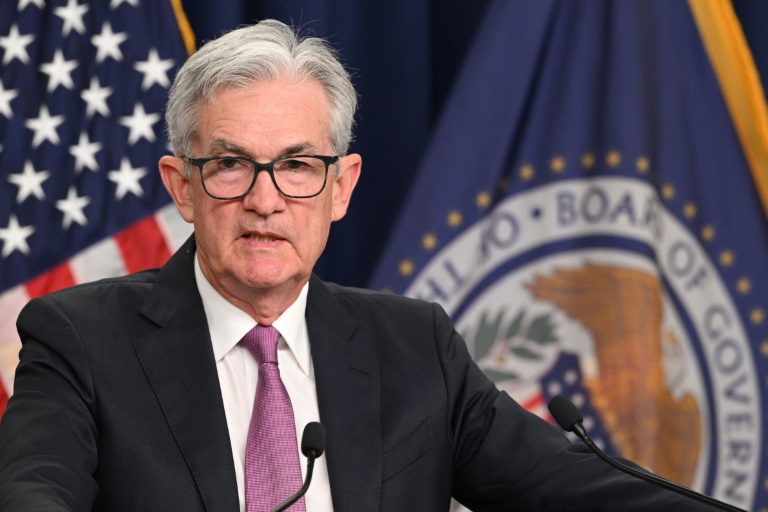
In the event of no surprises on the rate hike, the US central bank’s forecast and post-meeting comments from boss Jerome Powell will be the main attraction for investors.

Briefing.com analyst Patrick O’Hare said investors will be looking at the updated projection for the peak of this cycle of interest rate hikes, or the terminal rate, with the market now expecting a peak of 4.50-4.75 percent by May 2023.

If the Fed’s projection is lower, then a relief rally could come about, depending on what Powell says in his press conference, he said.

If Powell “strikes a softer tone than he did at the Jackson Hole Conference (of central bankers) in late August, suggesting the Fed may be getting close to a point where it can pause its rate hikes, then the stock market should respond quite favorably,” said O’Hare.

Other central banks are meeting this week. On Tuesday, policymakers in Sweden surprised markets by unveiling a one percentage-point hike.

Adding to the cautious mood was Vladimir Putin’s announcement of a “partial mobilisation” as Russia’s president upped the ante in his battle against Ukraine.

Putin backed annexation referendums in four regions in Russian-held parts of Ukraine and issued a thinly-veiled threat about using nuclear weapons.

The moves mark an escalation in the seven-month war, which has roiled markets and sparked an energy crisis.

Oil prices surged nearly three percent on Wednesday before turning negative. They have wilted in recent months on weaker demand expectations fuelled by recession fears.

“Crude oil prices have edged higher in the wake of this morning’s hawkishness from Russia, however once again progress has been difficult, as recession concerns dominate,” said Michael Hewson at CMC Markets.

Asian stock markets closed lower Wednesday, reversing Tuesday’s bounce.

– Key figures at around 1530 GMT –

New York – Dow: UP 0.4 percent at 30,840.96 points

EURO STOXX 50: UP 0.7 percent at 3,491.87

London – FTSE 100: UP 0.6 percent at 7,237.64 (close)

Frankfurt – DAX: UP 0.8 percent at 12,6767.15 (close)

Paris – CAC 40: UP 0.9 percent at 6,031.33 (close)

Tokyo – Nikkei 225: DOWN 1.4 percent at 27,313.13 (close)

Hong Kong – Hang Seng Index: DOWN 1.8 percent at 18,444.62 (close)

Shanghai – Composite: DOWN 0.2 percent at 3,117.18 (close)

Pound/dollar: DOWN at $1.1329 from $1.1384 Tuesday

Euro/dollar: DOWN at $0.9877 from $0.9970

Euro/pound: DOWN at 87.12 pence from 87.63 pence 

Dollar/yen: UP at 144.11 yen from 143.72 yen

Brent North Sea crude: DOWN 1.0 percent at $89.71 per barrel

West Texas Intermediate: DOWN 1.1 percent at $83.01 per barrel

burs-rl/lth

Close Bitnami banner
Bitnami