US Business

Europe equities drop on jumbo Swedish rate hike

European stocks retreated Tuesday as Sweden’s jumbo interest rate hike, aimed at tackling inflation, stoked expectations of more increases this week from the US Federal Reserve and the Bank of England.

The Swedish central bank sprang the biggest rise in three decades, ramping up its rate by a full percentage point to 1.75 percent.

The news sent the region’s markets into reverse as tighter global borrowing costs bear down on economic activity.

Frankfurt and Paris equities also dropped about one percent as news of rocketing German producer prices further fanned inflation fears.

London fell after reopening following funeral of Queen Elizabeth II on Monday.

The euro dipped against main rivals after Monday’s surge, while oil price gains were capped by the stronger dollar.

– ‘Nerves jangling again’ –

“European stocks rallied at the open — but a jumbo rate hike from Sweden’s central bank sent the nerves jangling again as investors worry about what’s in store from global central banks,” Markets.com analyst Neil Wilson told AFP.

The US Federal Reserve is forecast Wednesday to hike its key interest rate by another 0.75 percentage points.

One day later, the Bank of England (BoE) is predicted to deliver another sizeable increase in British borrowing costs.

“The (Swedish) hike underlined just how serious central banks are taking the inflation threat and with 75 basis point hikes from the Bank of England and Federal Reserve looking like slam-dunk certainties, the early optimism in the markets quickly evaporated,” added Wilson

“The reality of central bank tightening… is keeping a lid on stocks and will continue to act as a headwind for risk.”

Asian markets meanwhile enjoyed a much-needed bounce Tuesday, tracking Wall Street’s late rally as investors gird themselves for another big Fed hike, though fears of a recession remain elevated.

The Fed’s decision is the main markets focus after figures last week showed consumer prices are still rising at a pace not seen since the early 1980s.

Some observers have even speculated over a possible one-percentage-point move.

Elsewhere on Tuesday, the British pound remained under pressure, even as the BoE lines up another rate hike, after sliding on Friday to a 1985 low at $1.1351.

– Key figures at around 1100 GMT –

London – FTSE 100: DOWN 0.3 percent at 7,218.59 points

Frankfurt – DAX: DOWN 0.9 percent at 12,694.32

Paris – CAC 40: DOWN 1.0 percent at 6,002.38

EURO STOXX 50: DOWN 0.8 percent at 3,472.62

Tokyo – Nikkei 225: UP 0.4 percent at 27,688.42 (close)

Hong Kong – Hang Seng Index: UP 1.2 percent at 18,781.42 (close)

Shanghai – Composite: UP 0.2 percent at 3,122.41 (close)

New York – Dow: DOWN 0.2 percent at 30,765.98

Euro/dollar: DOWN at $1.0007 from $1.0024 on Monday

Dollar/yen: UP at 143.65 yen from 143.21 yen

Pound/dollar: UP at $1.1435 from $1.1431

Euro/pound: DOWN at 87.51 pence from 87.70 pence 

Brent North Sea crude: UP 0.6 percent at $92.58 per barrel

West Texas Intermediate: UP 0.5 percent at $86.19 per barrel

burs-rfj/bcp/rl
UN summit returns in divided world

The United Nations’ massive annual summit returns in person Tuesday to a world divided by multiple crises starting with Ukraine.

After two years of pandemic restrictions and video addresses, the UN General Assembly is again asking leaders to come in person if they wish to speak — with a sole exception made for Ukrainian President Volodymyr Zelensky.

But the death of Queen Elizabeth II disrupted the summit anew. President Joe Biden of the United States, by tradition the second speaker on the first day, will instead speak on Wednesday.

The first day will feature French President Emmanuel Macron and German Chancellor Olaf Scholz, the leaders of the two largest economies of the European Union, which has mobilized to impose tough sanctions over Russia’s invasion of Ukraine.

“This year, Ukraine will be very high on the agenda. It will be unavoidable,” top EU diplomat Josep Borrell told reporters in New York.

“There are many other problems, we know. But the war in Ukraine has been sending shock waves around the world.”

German Foreign Minister Annalena Baerbock vowed to support countries hardest hit by the fallout from the war as she headed to the General Assembly on Tuesday.

“The brutality of Russia’s war of aggression and its threat to the peace order in Europe have not blinded us to the fact that its dramatic effects are also clearly being felt in many other regions of the world,” Baerbock said.

But UN Secretary-General Antonio Guterres has been urging leaders not to forget other priorities such as education, the topic of a special summit on Monday.

“Education is in a deep crisis. Instead of being the great enabler, education is fast becoming the great divide,” Guterres told the summit.

He warned that the Covid-19 pandemic has had a devastating impact on learning, with poor students lacking technology at a particular disadvantage, and conflicts further disrupting schools.

In a report earlier this month, the UN Development Programme said Covid has set back humanity’s progress by five years.

With the Ukraine war leading to a global grain crisis, hunger could be another major issue on the agenda. On Tuesday, more than 200 NGOs called for urgent action from leaders gathered for the General Assembly to “end the spiralling global hunger crisis.”

“Around the world, 50 million people are on the brink of starvation in 45 countries,” they said, adding that as many as 19,700 people are estimated to be dying of hunger every day, which translates to one person every four seconds.

– Talks between rivals –

Other leaders to speak Tuesday include Turkish President Recep Tayyip Erdogan, who has staked out ground as a broker between Russia and Ukraine, including through a deal to ship out badly needed grain to the world.

Erdogan is also expected to meet in New York with Israeli Prime Minister Yair Lapid, a dramatic rebound in relations after the Turkish leader’s strident criticism of the Jewish state’s treatment of Palestinians.

In the type of last-minute diplomacy common at previous UN sessions, US Secretary of State Antony Blinken convened a first meeting of the foreign ministers of Azerbaijan and Armenia since a flare-up in fighting.

“Strong, sustainable diplomatic engagement is the best path for everyone,” Blinken told them.

Russian Foreign Minister Sergei Lavrov was visiting despite a hostile reaction from the United States.

He met Monday with his French counterpart, Catherine Colonna, who urged Russia to allow a security zone outside the Zaporizhzhia nuclear plant, whose occupation by Moscow has raised mounting concerns.

Also high on the agenda for the UN week will be Iran, whose hardline president, Ebrahim Raisi, is traveling to the General Assembly for the first time and will meet Tuesday with French President Emmanuel Macron.

In a US television interview ahead of his arrival, Raisi said that Iran wanted “guarantees” before returning to a nuclear deal that former president Donald Trump trashed in 2018.

“We cannot trust the Americans because of the behavior that we have already seen from them. That is why if there is no guarantee, there is no trust,” he told CBS News’ “60 Minutes” program.

Biden supports a return to the 2015 agreement, under which Iran drastically scaled back nuclear work in return for promises of sanctions relief.

But the Biden administration says it is impossible in the US system to promise what a future president would do.

“There is no better offer for Iran,” Colonna said ahead of the meeting with Macron.

“It’s up to them to make a decision,” she said.

Raisi can expect to be dogged by protests during his visit including by exile groups that have called for his arrest over mass executions of opponents a decade after the 1979 Islamic revolution.

Facebook parent Meta in EU setback against German rules

Facebook’s parent company Meta on Tuesday suffered a setback in its challenge against German antitrust rules as a top adviser to the EU Court of Justice backed the regulator.

Meta’s challenge came after it was banned by the German authority from collecting data from its various services including Instagram and WhatsApp, and linking the information to the Facebook account of the user for advertising purposes.

The German Federal Competition Authority had prohibited Meta from the data processing practice after finding that it constituted an abuse of the company’s dominant position on the social network market. 

Facebook had challenged the German decision at a court in Duesseldorf, which had sent the case on to the European court.

On Tuesday, the EU court’s advocate general said that while the antitrust authority does not have the jurisdiction to rule on an infringement of data protection rules, compliance with such rules could be taken as an “important indicator” in ascertaining if an entity has breached competition rules.

The court adviser also noted that a ban on processing sensitive personal data, such as an individual’s ethnic origin, health or sexual orientation, could apply in this case.

In order for an exemption to the prohibition concerning such data to apply, the user “must be fully aware that, by an explicit act, he is making personal data public”.

The advocate general added that the “conduct consisting in visiting websites and apps, entering data into those websites and apps and clicking on buttons integrated into them cannot, in principle, be regarded in the same way as conduct that manifestly makes public the user’s sensitive personal data”.

The advocate general’s opinion is non-binding but it often indicates which way the court will rule.

Hungary's anti-graft measures to get blocked EU funds

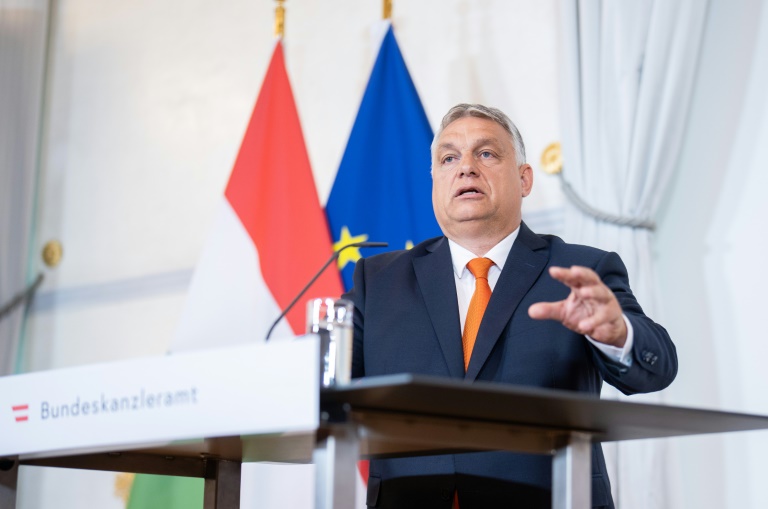
The government of Hungarian nationalist Prime Minister Viktor Orban is proposing a raft of anti-graft measures to unlock billions of euros in blocked EU funds as the country confronts an economic downturn.

Here are key questions regarding the issue:

– What to expect from the reforms? –

The government tabled amendments in parliament on Monday with more to follow on Friday for a total of 17 key changes, which are expected to be waved through.

The measures aim to create independent anti-corruption watchdogs to monitor the use of EU funds and make the legislative process more transparent.

They follow a proposal on Sunday by the European Union’s executive arm to suspend 7.5 billion euros ($7.5 billion) in financing for Hungary.

The proposed suspension is over concerns that Orban, who has ruled Hungary since 2010, is undercutting the rule of law and using EU money to enrich cronies.

On Thursday, the European Parliament declared that Hungary was no longer a “full democracy” — a symbolic vote that infuriated Budapest.

Miklos Ligeti, head of legal affairs at the NGO Transparency International Hungary, said under Orban checks and balances had been dismantled and “a highly dysfunctional rules system” put in place.

“There is no way of getting rid of the systemic corruption just by changing some laws,” he told AFP, adding “not much can be achieved”.

Transparency International ranks Hungary as the second lowest in the EU in its corruption perception index.

“Orban cannot really afford professional anti-corruption scrutiny as too many relatives and personal friends are involved,” said Peter Akos Bod, a professor at the Corvinus University of Budapest.

– Will it convince the EU? –

While the European Commission is “under pressure” to get Hungary to reform, it “does not have many tools at its disposal”, said Eulalia Rubio, a senior research fellow at the Paris-based Jacques Delors Institute.

The final decision on the commission’s proposal to suspend funds will be taken by EU states within three months.

“The European Union does not want to take a decision that will have an impact on the population,” Rubio told AFP.

It also does not want to alienate Hungary as Budapest “can harm other negotiations”, she added, such as rejecting more sanctions against Russia over its invasion of Ukraine.

The EU would have to decide on the commission proposal via a qualified majority vote, which requires 15 of the 27 countries representing a total of at least 65 percent of the bloc’s population.

Poland — another eastern EU member accused of flouting the rule of law — said it would fully oppose any measure depriving Hungary of the funds.

– Why does Hungary need the funds? –

As the rest of Europe, Hungary’s economy has been hard hit by ripple effects from the Ukraine war, with a weakening currency and fast-rising inflation.

The central European nation of 10 million people depends heavily on EU funds, according to experts.

Akos Bod, who was a central bank governor in the 1990s, said the funds were “badly needed”, with Hungary risking to have its credit rating downgraded.

“A downgrade may provoke capital flight and certainly further depreciation of the Hungarian forint,” he told AFP.

Opposition politicians have painted a dark picture.

“The country is starting to shut down due to lack of money,” European Parliament member Anna Julia Donath said in a social media post.

“We’re in big trouble, and they know it,” she added.

Hungary is also the only country still waiting for the green light from Brussels on its post-Covid recovery plan with 5.8 billion euros pending over corruption concerns. 

Asian markets see rare rally but caution rules as Fed hike nears

Asian markets enjoyed a much-needed bounce Tuesday, tracking Wall Street’s late rally as investors gird themselves for another big Federal Reserve interest rate hike this week, though fears of a recession remain elevated.

Global equities have taken a severe body blow in recent weeks as central banks struggle to rein in stubbornly high inflation, Russia continues its war in Ukraine and China’s economic woes darken the mood across trading floors.

With the main concern being that sharp increases in borrowing costs will cause recessions in major economies, this week will be a minefield for traders with several countries, including Britain, tipped to announce more tightening.

The Fed’s decision, however, is the main focus after figures last week showed prices are still rising at rates not seen since the early 1980s.

Most observers expect the bank to announce a third successive 75-basis-point lift, though there are some who have flagged a possible one-percentage-point move.

And there is speculation that the rises will not stop until the rate is above four percent, still some way from the current 2.25-2.75 percent.

“We expect central bank tightening and a fading of supply chain pressures to moderate job growth and core inflation,” JPMorgan Chase & Co said, tipping it to end at 4.25 percent by early next year.

“In turn, we anticipate this will allow the Fed and other central banks to pause” in the first half of 2023, said strategists including Marko Kolanovic and Nikolaos Panigirtzoglou.

In a sign of expectations that rates will continue up for some time, the two-year Treasury yield is on course to break four percent for the first time since 2007.

It is also much higher than the 10-year yield, which is called an inversion and considered a key pointer to recession.

– ‘Pessimism remains elevated’ –

The outlook remains downbeat, with Edward Moya at OANDA warning the lows of June could be seen again.

“Pessimism for equities remains elevated as the US economy appears to have a one-way ticket towards a recession as the Fed is poised to remain aggressive,” he said in a note.

“The risks for a retest of the summer lows could easily happen if the Fed remains fully committed (to) their inflation fight.”

And CMC Markets analyst Michael Hewson added that “the main factor spooking markets right now is how much higher will rates have to go, and will there be any more profit warnings” from firms such as that from US shipping giant FedEx last week.

Still, Asian markets were on the up Tuesday.

Hong Kong rose more than one percent with tourism-linked firms boosted by news that the city’s government was considering bringing an end to the hotel quarantine rules that have helped hammer the local economy.

Sydney and Mumbai were also up more than one percent, while Tokyo returned from a long weekend to post healthy gains. Shanghai, Seoul, Singapore, Taipei, Manila, Wellington, Bangkok and Jakarta were also higher.

London enjoyed early gains after a special public holiday for the queen’s funeral, with Paris and Frankfurt also on the front foot.

On currency markets, the dollar held its strength ahead of the expected rate hike.

And while a jump in Japanese inflation to an eight-year high will cause a headache for the Bank of Japan, officials there are expected to maintain their ultra-loose policy to support the economy, despite the yen sitting at 24-year lows against the dollar.

Sterling was also struggling to bounce back, even as the Bank of England lines up another big increase.

Oil prices edged up but gains were capped by the strong dollar and worries about the economic outlook, while traders were also keeping tabs on Iran nuclear talks that could see Tehran resume crude sales.

– Key figures at around 0810 GMT –

Tokyo – Nikkei 225: UP 0.4 percent at 27,688.42 (close)

Hong Kong – Hang Seng Index: UP 1.2 percent at 18,781.42 (close)

Shanghai – Composite: UP 0.2 percent at 3,122.41 (close)

London – FTSE 100: UP 0.4 percent at 7,267.78

Pound/dollar: UP at $1.1455 from $1.1434 on Monday

Euro/pound: DOWN at 87.60 pence from 87.69 pence 

Euro/dollar: UP at $1.0034 from $1.0026

Dollar/yen: UP at 143.45 yen from 143.24 yen

West Texas Intermediate: UP 0.2 percent at $85.88 per barrel

Brent North Sea crude: UP 0.4 percent at $92.38 per barrel

New York – Dow: DOWN 0.2 percent at 30,765.98

Hong Kong to decide on further Covid relaxation 'soon': city leader

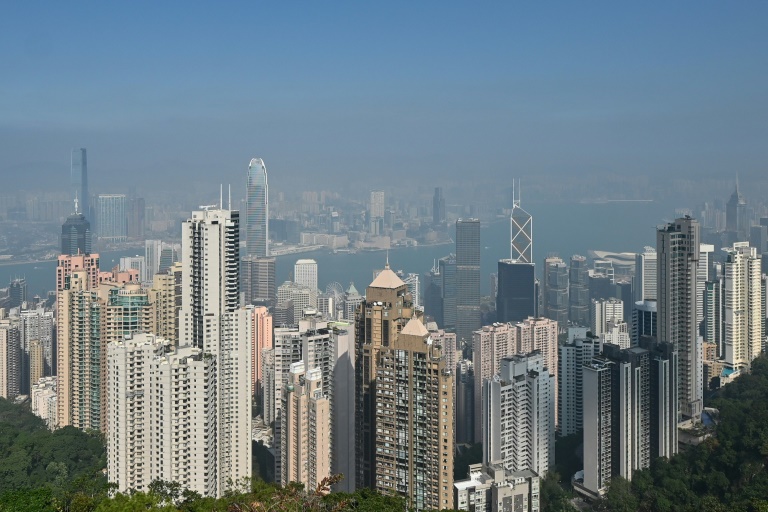
Hong Kong’s leader on Tuesday said he will soon make a decision on further relaxing coronavirus restrictions, as residents and businesses decry quarantine rules that have kept the finance hub cut off for more than two years.

“We will make a decision soon and announce to the public,” chief executive John Lee told reporters. 

“We want to be connected with the different places in the world. We would like to have an orderly opening up,” he added.

Lee’s comments came as a senior Chinese official also signalled support for an easing of the curbs during a rare briefing.

“It’s normal for the Hong Kong government to adjust and improve Hong Kong’s anti-epidemic measures accordingly,” Huang Liuquan, deputy director of China’s Hong Kong and Macau Affairs Office, told reporters in Beijing.

Hong Kong has adhered to a version of China’s strict zero-Covid rules throughout the pandemic, battering the economy and deepening the city’s brain drain as rival business hubs reopen.

It maintains mandatory hotel quarantine for international arrivals — currently at three days — widespread masking, business operating limits and bans on more than four people gathering in public.

Lee, a Beijing-anointed former security chief, took office in July and vowed to reopen the city while keeping cases low.

He reduced hotel quarantine from seven to three days but has faced a growing chorus of criticism from residents, business organisations and health experts saying he should go further.

– Quarantine free? –

Over the past week multiple Hong Kong media outlets have reported, citing sources, that the government has already agreed to lift quarantine.

Lee would not confirm that decision or commit to a firm timeline on Tuesday.

But his comments were the strongest indication yet that Hong Kong is planning to join much of the rest of the world in accepting endemicity.

That would leave just China and Taiwan still maintaining mandatory quarantine for arrivals.

Under President Xi Jinping, mainland China has stuck to a rigid zero-Covid strategy with snap lockdowns of huge cities for even a handful of cases.

Unlike on the mainland, most of Hong Kong’s residents have already had the coronavirus when it tore through earlier this year, leaving the city with one of the highest death rates per capita in the world.

Hong Kong is in the midst of a technical recession while its financial chief recently warned its fiscal deficit is expected to balloon to HK$100 billion ($12.7 billion) this year, twice initial estimates.

Arrivals at the airport, once one of the world’s busiest, are at a fraction of pre-pandemic levels with many airlines skipping the city altogether.

Regional rival Singapore has long dispensed with coronavirus controls and is hosting a slew of conferences, entertainment and sporting events over the coming months.

Meanwhile, Hong Kong has seen multiple events cancelled by organisers citing the uncertain pandemic controls — including most recently next year’s World Dragon Boat Championships which will be held in Thailand instead.

Hong Kong is planning to host a banking summit and the Rugby Sevens in November, although under current rules players in the latter will have to stay in a “closed loop” bubble.

SpaceX wants to bring satellite internet to Iran: Musk

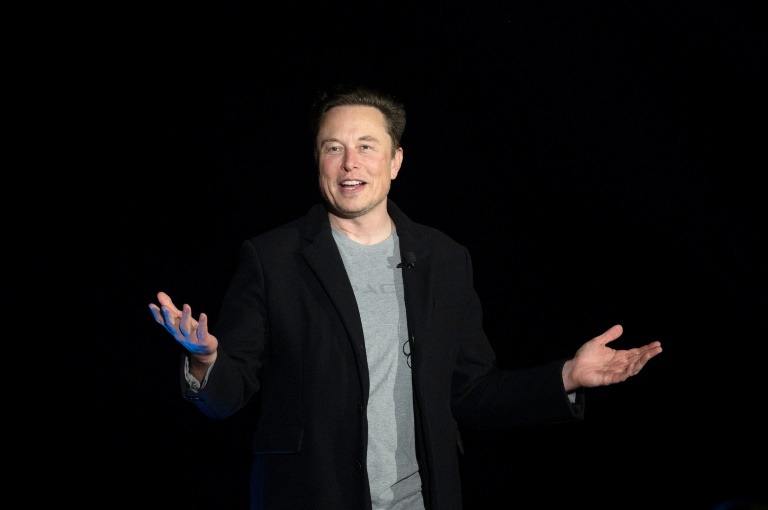
SpaceX will apply for an exemption from US sanctions against Iran in a bid to offer its satellite internet service to the country, owner Elon Musk said on Monday.

“Starlink will apply for an exemption from sanctions against Iran,” Musk said in response to a tweet from a science reporter.

Musk had initially announced that the Starlink satellite internet service had been made available on every continent — “including Antarctica” — with the company planning to launch up to 42,000 satellites to boost connectivity.

Iranian-born science journalist Erfan Kasraie had said on Twitter that bringing the service to Iran could be a “real game changer for the future” of the country, which elicited Musk’s response. 

Launched at the end of 2020, Starlink offers high-speed broadband service to customers in areas poorly served by fixed and mobile terrestrial networks through a constellation of satellites in low earth orbit. 

The service received notoriety after supplying antennas and modems to the Ukrainian military to improve its communications capabilities in its war with Russia. 

Starlink is monetized through the purchase of antennas, modems and subscriptions with rates that vary by country. 

Nearly 3,000 Starlink satellites have been deployed since 2019 and SpaceX is conducting about one launch a week, using its own Falcon 9 rockets to speed up its deployment.

Iran has been under a tightened US sanctions regime since former president Donald Trump terminated a 2015 agreement over its nuclear activities. 

While current President Joe Biden supports a renegotiation of the deal, Iranian insistence on long-term guarantees from Washington has stalled discussions. 

New rounds of sanctions were imposed on Iran this month after a Tehran-based company helped ship drones to Russia, and in response to a massive cyberattack targeting Albania in July allegedly carried out by Iran’s intelligence ministry.

Kremlin dismisses mass burial discoveries as 'lies'

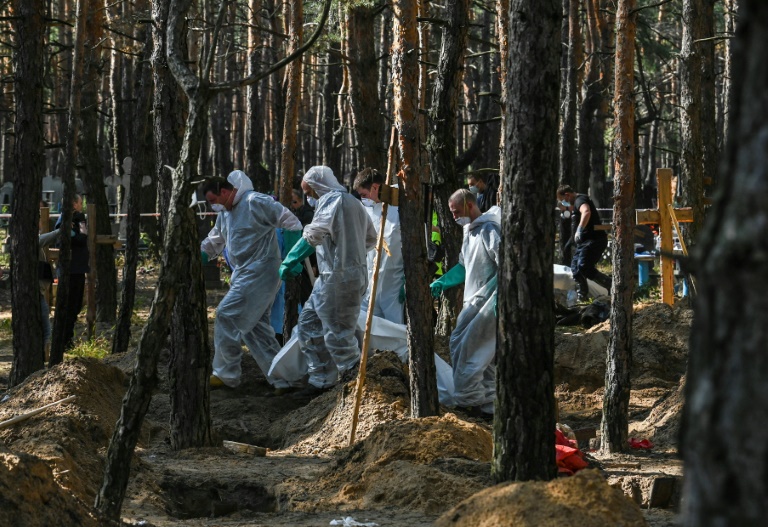
The Kremlin on Monday denied its forces were responsible for large-scale killings in east Ukraine and accused Kyiv of fabricating its discoveries of mass graves in recaptured territory.

In the latest incident spurring fears of an atomic emergency, Ukraine said Russian rockets landed dangerously close to a nuclear power station in southern Ukraine.

Ukraine recaptured Izyum and other towns in the east this month, crippling Kremlin supply routes and bringing fresh claims of Russian atrocities with the discovery of hundreds of graves — some containing multiple bodies.

“These are lies,” Kremlin spokesman Dmitry Peskov told reporters on Monday. Moscow, he said, “will stand up for the truth in this story”.

Fighting in the northeast has raged and AFP journalists heard artillery exchanges in frontline Kupiansk on Monday, as traumatised civilians headed out of the town now mainly in Ukrainian hands.

The streets were strewn with broken glass, spent cartridge casings and the discarded remains of ration packs issued by both forces.

Most of the fire was outgoing, with Ukrainian tanks and artillery targeting Russian positions on the west side of the town, over a mess of broken bridges. A column of smoke rose in the distance.

At the entrance to the town, cowering from the sounds of Ukrainian tank shells passing overhead towards Russian lines, civilians gathered to hitch rides or join buses to head out into safer Ukrainian territory. 

“It was impossible to stay where we were living,” said 56-year-old Lyudmyla, who braved the constant crack of shells to cross the Oskil river from the disputed east bank to the relative safety of the west.

“There was incoming fire not just every day, but literally every hour. It’s very tough there, on the other bank of the river.”

In his address to the nation on Monday, Ukrainian President Volodymyr Zelensky said the Russians were “panicking” as his forces held recaptured territory in the northeastern Kharkiv region.

– ‘Lost a lot of blood’ –

Russian-backed authorities in east Ukraine said a “punitive” strike by Kyiv’s forces had killed more than a dozen people and wounded more in the separatist stronghold of Donetsk.

The rebel head of the region claimed the strike was “deliberate” and said it would “not go unpunished”.

A court in the neighbouring rebel-held region of Lugansk meanwhile sentenced two employees of the Organization for Security and Cooperation in Europe to 13 years on treason charges.

OSCE chairman Zbigniew Rau condemned the “unjustifiable” detention of the mission’s members since the outbreak of the war, calling it “nothing but pure political theatre… inhumane and repugnant”.

Ukrainian civilians in the Kharkiv region have recounted months of brutality under Russian occupation.

In Kupiansk, Mykhailo Chindey told AFP he had been tortured on suspicion of supplying targeting coordinates to Ukrainian forces.

“One person was holding my hand and another one was beating my arm with a metal stick. They were beating me up two hours almost every day,” he told AFP. 

“I lost consciousness at some point. I lost a lot of blood. They hit my heels, back, legs and kidneys.”

Ukraine’s nuclear energy agency, Energoatom, said Russia struck the Pivdennoukrainsk nuclear power plant overnight, with a “powerful explosion” just 300 metres (985 feet) from its reactors.

The strike damaged more than 100 windows at the station, but the reactors were not damaged, Energoatom said, publishing photos of glass shattered around blown-out frames.

It also released images of what it said was a two-metre-deep crater from where the missile landed. No staff were wounded, it said.

– ‘Russia endangers the whole world’ –

Attacks around Ukrainian nuclear facilities have spurred calls from Kyiv and its Western allies to de-militarise surrounding areas.

Europe’s largest atomic facility — the Zaporizhzhia nuclear plant in Russian-held territory in Ukraine — has become a hot spot for concerns after tit-for-tat claims of attacks.

The Mykolaiv region in southern Ukraine, where the Pivdennoukrainsk plant is located, is close to the front line of a Ukrainian counter-offensive.

Russian forces have continued to shell Ukrainian-held towns near the front lines.

The UN’s atomic agency deployed a monitoring team to the site in early September after new fighting.

“Russia endangers the whole world. We have to stop it before it’s too late,” Zelensky said early Monday.

Ukraine will be “very high on the agenda” when world leaders formally begin meeting in New York on Tuesday for the United Nations General Assembly, said the European Union’s foreign policy chief.

“There are many other problems, we know, but the war in Ukraine has been sending shockwaves around the world,” Josep Borrell said after meeting EU foreign ministers on the eve of the UN gathering, which Zelensky is to address by video.

burs-imm/cdw/it/leg

UN summit returns in divided world

The United Nations’ massive annual summit returns in person Tuesday to a world divided by multiple crises starting with Ukraine.

After two years of pandemic restrictions and video addresses, the UN General Assembly is again asking leaders to come in person if they wish to speak — with a sole exception made for Ukrainian President Volodymyr Zelensky.

But the death of Queen Elizabeth II disrupted the summit anew. President Joe Biden of the United States, by tradition the second speaker on the first day, will instead speak on Wednesday.

The first day will feature French President Emmanuel Macron and German Chancellor Olaf Scholz, the leaders of the two largest economies of the European Union, which has mobilized to impose tough sanctions over Russia’s invasion of Ukraine.

“This year, Ukraine will be very high on the agenda. It will be unavoidable,” top EU diplomat Josep Borrell told reporters in New York.

“There are many other problems, we know. But the war in Ukraine has been sending shock waves around the world.”

But UN Secretary-General Antonio Guterres has been urging leaders not to forget other priorities such as education, the topic of a special summit on Monday.

“Education is in a deep crisis. Instead of being the great enabler, education is fast becoming the great divide,” Guterres told the summit.

He warned that the Covid-19 pandemic has had a devastating impact on learning, with poor students lacking technology at a particular disadvantage, and conflicts further disrupting schools.

In a report earlier this month, the UN Development Programme said Covid has set back humanity’s progress by five years.

– Talks between rivals –

Other leaders to speak Tuesday include Turkish President Recep Tayyip Erdogan, who has staked out ground as a broker between Russia and Ukraine, including through a deal to ship out badly needed grain to the world.

Erdogan is also expected to meet in New York with Israeli Prime Minister Yair Lapid, a dramatic rebound in relations after the Turkish leader’s strident criticism of the Jewish state’s treatment of Palestinians.

In the type of last-minute diplomacy common at previous UN sessions, US Secretary of State Antony Blinken convened a first meeting of the foreign ministers of Azerbaijan and Armenia since a flare-up in fighting.

“Strong, sustainable diplomatic engagement is the best path for everyone,” Blinken told them.

Russian Foreign Minister Sergei Lavrov was visiting despite a hostile reaction from the United States.

He met Monday with his French counterpart, Catherine Colonna, who urged Russia to allow a security zone outside the Zaporizhzhia nuclear plant, whose occupation by Moscow has raised mounting concerns.

Also high on the agenda for the UN week will be Iran, whose hardline president, Ebrahim Raisi, is traveling to the General Assembly for the first time and will meet Tuesday with French President Emmanuel Macron.

In a US television interview ahead of his arrival, Raisi said that Iran wanted “guarantees” before returning to a nuclear deal that former president Donald Trump trashed in 2018.

“We cannot trust the Americans because of the behavior that we have already seen from them. That is why if there is no guarantee, there is no trust,” he told CBS News’ “60 Minutes” program.

Biden supports a return to the 2015 agreement, under which Iran drastically scaled back nuclear work in return for promises of sanctions relief.

But the Biden administration says it is impossible in the US system to promise what a future president would do.

“There is no better offer for Iran,” Colonna said ahead of the meeting with Macron.

“It’s up to them to make a decision,” she said.

Raisi can expect to be dogged by protests during his visit including by exile groups that have called for his arrest over mass executions of opponents a decade after the 1979 Islamic revolution.

Hurricane Fiona leaves one dead in Dominican Republic after ravaging Puerto Rico

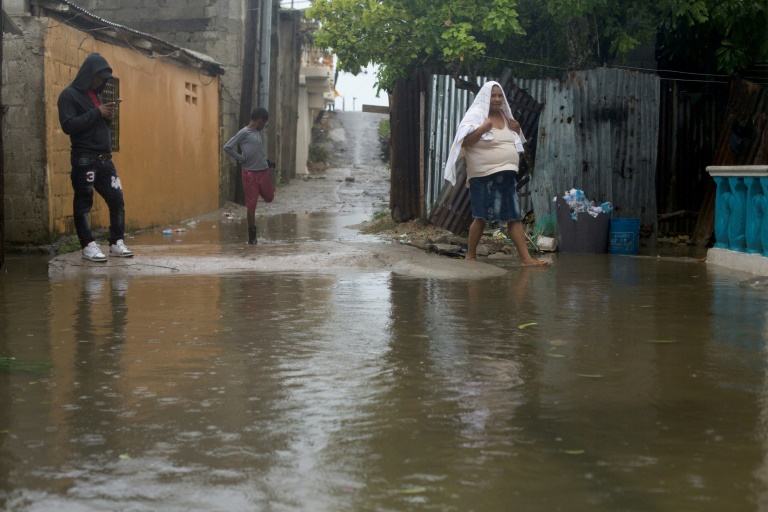
Hurricane Fiona dumped torrential rain on the Dominican Republic and left one person there dead on Monday after triggering major flooding in Puerto Rico and widespread power blackouts across both Caribbean islands.

The storm strengthened to a Category Two hurricane late Monday, said the US National Hurricane Center (NHC), which forecast continuing rains and possible new catastrophic floods during the night in both Puerto Rico and the eastern Dominican Republic.

Red alerts were in effect in seven of the island’s 32 provinces — down from 18 earlier in the day — with more than 12,000 people sheltering in safe areas, according to emergency services.

One man died in the storm while cutting down a tree in his home as a precautionary measure, authorities said, without giving further details. 

Several roads were flooded or cut off by falling trees or electric poles around the Dominican resort of Punta Cana where the electricity was knocked out, an AFP journalist on the scene said.

President Luis Abinader declared three eastern provinces to be disaster zones: La Altagracia — home to Punta Cana — El Seibo and Hato Mayor.

Footage from local media showed residents of the east coast town of Higuey waist-deep in water, trying to salvage personal belongings.

“It came through at high speed,” Vicente Lopez, in the Punta Cana beach of Bibijagua told AFP, bemoaning the destroyed businesses in the area.

Fiona was packing maximum sustained winds of 100 miles per hour (155 kilometers per hour), according to the NHC, which expected it to strengthen Tuesday to a Category Three storm — making it this season’s first major Atlantic hurricane.

After passing close to Turks and Caicos late Monday or early Tuesday, the storm is expected to track north later in the week, out into the ocean — although it could come perilously close to tiny Bermuda.

In Puerto Rico — where the rain was still beating down — US President Joe Biden has declared a state of emergency, authorizing the Federal Emergency Management Agency to provide assistance. 

— ‘They were crying’ —

Governor Pedro Pierluisi said the storm had caused catastrophic damage since Sunday, with some areas facing more than 30 inches (76 centimeters) of rainfall.

On Monday afternoon, Nelly Marrero made her way back to her home in Toa Baja, in the north of the US island territory, to clear out the mud that surged inside after she evacuated a day earlier.

“Thanks to God, I have food and water,” Marrero — who lost everything when Hurricane Maria devastated Puerto Rico five years ago — told AFP by telephone.

Hearing the flood alert ring out, Marrero headed out into the rain with her daughter and three infant grandchildren, seeking refuge at a relative’s house.

“It was very difficult with the babies — they were crying, they didn’t understand what was going on,” she said.

Across Puerto Rico, Fiona caused landslides, blocked roads and toppled trees, power lines and bridges, Pierluisi said.

A man was killed as an indirect result of the power blackout — burned to death while trying to fill his generator, according to authorities.

The governor said Fiona had caused “unprecedented” flooding and that more rain was expected “throughout the island today and tomorrow”.

Most of Puerto Rico, an island of three million people, was without power, but electricity had been restored for about 100,000 customers on Monday, the governor said.

The hurricane has also left around 800,000 people without drinking water as a result of power outages and flooded rivers, officials said.

“We are without electricity and water,” Elena Santiago, an anaesthesiologist at the Mennonite hospital in Aibonito told AFP. 

“The hospital is operating with a generator. Only emergencies are being attended to.

– Blackout problems –

Fiona made landfall in Puerto Rico as a Category One hurricane, at the lowest end of the five-tier Saffir-Simpson scale.

Before that, the storm had caused one fatality in the French overseas department of Guadeloupe, when Fiona was still classified as a tropical storm.

After years of financial woes and recession, Puerto Rico in 2017 declared the largest bankruptcy ever by a local US administration. 

Later that year, the double hit from two Hurricanes, Irma and Maria, added to the misery, devastating the electrical grid on the island — which has suffered from major infrastructure problems for years.

The grid was privatized in June 2021 in an effort to resolve the problem of blackouts, but the issue has persisted, and the entire island lost power earlier this year.

bur/jh/dw/caw/ssy

Close Bitnami banner
Bitnami