US Business

Hong Kong to further relax covid restrictions 'soon': city leader

Hong Kong’s leader on Tuesday said he will soon make a decision on further relaxing coronavirus restrictions, as residents and businesses decry quarantine rules that have kept the finance hub cut off for more than two years.

“We will make a decision soon and announce to the public,” chief executive John Lee told reporters. 

“We want to be connected with the different places in the world. We would like to have an orderly opening up,” he added.

Hong Kong has adhered to a version of China’s strict zero-Covid rules throughout the pandemic, battering the economy and deepening the city’s brain drain as rival business hubs reopen.

It maintains mandatory hotel quarantine for international arrivals — currently at three days — widespread masking, business operating limits and bans on more than four people gathering in public.

Lee, a Beijing-anointed former security chief, took office in July and vowed to reopen the city while keeping cases low.

He reduced hotel quarantine from seven to three days but has faced a growing chorus of criticism from residents, business organisations and health experts saying he should go further.

Over the past week multiple Hong Kong media outlets have reported, citing sources, that the government has already agreed to lift quarantine.

Lee would not confirm that decision or commit to a firm timeline on Tuesday.

But his comments were the strongest indication yet that Hong Kong is planning to join much of the rest of the world in accepting endemicity.

That would leave just China and Taiwan still maintaining mandatory quarantine for arrivals.

“Our goal is to maximise Hong Kong’s international connectivity and reduce the inconvenience for arrivals due to quarantine, on the condition that we can control the trend of the pandemic,” Lee said.

Hong Kong is in the midst of a technical recession while its financial chief recently warned its fiscal deficit is expected to balloon to HK$100 billion ($12.7 billion) this year, twice initial estimates.

Arrivals at the airport, once one of the world’s busiest, are at a fraction of pre-pandemic levels with many airlines skipping the city altogether.

Regional rival Singapore has long dispensed with coronavirus controls and is hosting a slew of conferences, entertainment and sporting events over the coming months.

Meanwhile, Hong Kong has seen multiple events cancelled by organisers citing the uncertain pandemic controls including most recently next year’s World Dragon Boat Championships which will be held in Thailand instead.

Hong Kong is planning to host a banking summit and the Rugby Sevens in November, although under current rules players in the latter will have to stay in a “closed loop” bubble.

Sport leaders eye Africa as talent source, investment target

Africa offers a vast underdeveloped market for global sports, with thousands of athletes ready to join international ranks if only there were major investment, industry leaders and stars say.

But more government and private-sector partnerships are needed to turbo-charge African sports and bring young players into top-tier leagues of football, basketball and even American football, participants at a business forum said Monday.

In the event on the sidelines of the United Nations General Assembly in New York, NBA commissioner Adam Silver hailed Africa as bursting with sporting potential, noting that more than 10 percent of players in the world’s premier basketball league were born in African countries or have African parents.

“Invariably more NBA, WNBA players will be discovered, will be nurtured, will be developed and then be able to play at the highest level,” he said of the region’s younger generations and the benefits of expanding youth training programs there.

Silver also stressed that in order to attract the “literally billions in investments that are needed,” sport in Africa must be seen as economically viable.

“In order to persuade… great businesspeople to invest in the infrastructure, we have to demonstrate that it’s a real business — that there is real return over time,” he said.

The forum featured former NBA stars like Congolese-American Dikembe Mutombo, WNBA sensation Chiney Ogwumike who is of Nigerian origin, and current Toronto Raptors power forward Pascal Siakam, a Cameroonian who caught the attention of scouts at a Basketball Without Borders camp in South Africa.

American football too has beefed up its presence. More than 100 current NFL players are African, according to Osi Umenyiora, a Super Bowl champion who leads an NFL initiative to expand the pipeline of new talent from places such as Ghana and Nigeria.

“From a business standpoint it would actually make sense to me to start making business in Africa now,” Umenyiora told the audience, adding the NFL has recently opened new player camps in Africa.

– ‘Grounded’ –

The discussion comes along the launch of the new African Super League, which is dangling major prize money for the 24 football clubs that qualify for the first edition next year.

Confederation of African Football president Patrice Motsepe said that while Africa’s link to European and American leagues is “important,” the Super League “will attract billions of dollars in football in Africa to pay the smartest and most talented young Africans and keep them on the continent.”

Recent 100-meter hurdles gold medalist Tobi Amusan, who in July became Nigeria’s first world champion in a track and field event, warned that Africa’s lack of infrastructure including training facilities could fuel a migration of athletes.

“I’m not saying don’t go to other places,” Amusan, who herself is based in Texas, told AFP.

“But if the government and private sector have stuff like this implemented in Africa, we keep our own grounded in our countries and not just have them wander away to other countries.”

The head of the region’s new top-flight basketball league also spoke of the delicate balance between international player recruitment and sports development on the ground.

“Africa needs to cease being just an exporter all the time,” said Amadou Fall, president of the Basketball Africa League, which launched last year.

Kremlin dismisses mass burial discoveries as 'lies'

The Kremlin on Monday denied its forces were responsible for large-scale killings in east Ukraine and accused Kyiv of fabricating its discoveries of mass graves in recaptured territory.

In the latest incident spurring fears of an atomic emergency, Ukraine said Russian rockets landed dangerously close to a nuclear power station in southern Ukraine.

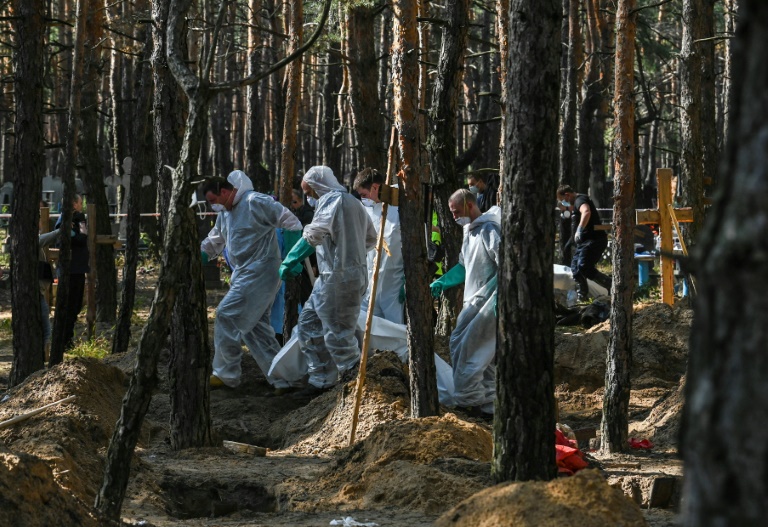
Ukraine recaptured Izyum and other towns in the east this month, crippling Kremlin supply routes and bringing fresh claims of Russian atrocities with the discovery of hundreds of graves — some containing multiple bodies.

“These are lies,” Kremlin spokesman Dmitry Peskov told reporters on Monday. Moscow, he said, “will stand up for the truth in this story”.

Fighting in the northeast has raged and AFP journalists heard artillery exchanges in frontline Kupiansk on Monday, as traumatised civilians headed out of the town now mainly in Ukrainian hands.

The streets were strewn with broken glass, spent cartridge casings and the discarded remains of ration packs issued by both forces.

Most of the fire was outgoing, with Ukrainian tanks and artillery targeting Russian positions on the west side of the town, over a mess of broken bridges. A column of smoke rose in the distance.

At the entrance to the town, cowering from the sounds of Ukrainian tank shells passing overhead towards Russian lines, civilians gathered to hitch rides or join buses to head out into safer Ukrainian territory. 

“It was impossible to stay where we were living,” said 56-year-old Lyudmyla, who braved the constant crack of shells to cross the Oskil river from the disputed east bank to the relative safety of the west.

“There was incoming fire not just every day, but literally every hour. It’s very tough there, on the other bank of the river.”

In his address to the nation on Monday, Ukrainian President Volodymyr Zelensky said the Russians were “panicking” as his forces held recaptured territory in the northeastern Kharkiv region.

– ‘Lost a lot of blood’ –

Russian-backed authorities in east Ukraine said a “punitive” strike by Kyiv’s forces had killed more than a dozen people and wounded more in the separatist stronghold of Donetsk.

The rebel head of the region claimed the strike was “deliberate” and said it would “not go unpunished”.

A court in the neighbouring rebel-held region of Lugansk meanwhile sentenced two employees of the Organization for Security and Cooperation in Europe to 13 years on treason charges.

OSCE chairman Zbigniew Rau condemned the “unjustifiable” detention of the mission’s members since the outbreak of the war, calling it “nothing but pure political theatre… inhumane and repugnant”.

Ukrainian civilians in the Kharkiv region have recounted months of brutality under Russian occupation.

In Kupiansk, Mykhailo Chindey told AFP he had been tortured on suspicion of supplying targeting coordinates to Ukrainian forces.

“One person was holding my hand and another one was beating my arm with a metal stick. They were beating me up two hours almost every day,” he told AFP. 

“I lost consciousness at some point. I lost a lot of blood. They hit my heels, back, legs and kidneys.”

Ukraine’s nuclear energy agency, Energoatom, said Russia struck the Pivdennoukrainsk nuclear power plant overnight, with a “powerful explosion” just 300 metres (985 feet) from its reactors.

The strike damaged more than 100 windows at the station, but the reactors were not damaged, Energoatom said, publishing photos of glass shattered around blown-out frames.

It also released images of what it said was a two-metre-deep crater from where the missile landed. No staff were wounded, it said.

– ‘Russia endangers the whole world’ –

Attacks around Ukrainian nuclear facilities have spurred calls from Kyiv and its Western allies to de-militarise surrounding areas.

Europe’s largest atomic facility — the Zaporizhzhia nuclear plant in Russian-held territory in Ukraine — has become a hot spot for concerns after tit-for-tat claims of attacks.

The Mykolaiv region in southern Ukraine, where the Pivdennoukrainsk plant is located, is close to the front line of a Ukrainian counter-offensive.

Russian forces have continued to shell Ukrainian-held towns near the front lines.

The UN’s atomic agency deployed a monitoring team to the site in early September after new fighting.

“Russia endangers the whole world. We have to stop it before it’s too late,” Zelensky said early Monday.

Ukraine will be “very high on the agenda” when world leaders formally begin meeting in New York on Tuesday for the United Nations General Assembly, said the European Union’s foreign policy chief.

“There are many other problems, we know, but the war in Ukraine has been sending shockwaves around the world,” Josep Borrell said after meeting EU foreign ministers on the eve of the UN gathering, which Zelensky is to address by video.

burs-imm/cdw/it/leg

Sport leaders eye Africa as talent source, investment target

Africa offers a vast underdeveloped market for global sports, with thousands of athletes ready to join international ranks if only there were major investment, industry leaders and stars say.

But more government and private-sector partnerships are needed to turbo-charge African sports and bring young players into top-tier leagues of football, basketball and even American football, participants at a business forum said Monday.

In the event on the sidelines of the United Nations General Assembly in New York, NBA commissioner Adam Silver hailed Africa as bursting with sporting potential, noting that more than 10 percent of players in the world’s premier basketball league were born in African countries or have African parents.

“Invariably more NBA, WNBA players will be discovered, will be nurtured, will be developed and then be able to play at the highest level,” he said of the region’s younger generations and the benefits of expanding youth training programs there.

Silver also stressed that in order to attract the “literally billions in investments that are needed,” sport in Africa must be seen as economically viable.

“In order to persuade… great businesspeople to invest in the infrastructure, we have to demonstrate that it’s a real business — that there is real return over time,” he said.

The forum featured former NBA stars like Congolese-American Dikembe Mutombo, WNBA sensation Chiney Ogwumike who is of Nigerian origin, and current Toronto Raptors power forward Pascal Siakam, a Cameroonian who caught the attention of scouts at a Basketball Without Borders camp in South Africa.

American football too has beefed up its presence. More than 100 current NFL players are African, according to Osi Umenyiora, a Super Bowl champion who leads an NFL initiative to expand the pipeline of new talent from places such as Ghana and Nigeria.

“From a business standpoint it would actually make sense to me to start making business in Africa now,” Umenyiora told the audience, adding the NFL has recently opened new player camps in Africa.

– ‘Grounded’ –

The discussion comes along the launch of the new African Super League, which is dangling major prize money for the 24 football clubs that qualify for the first edition next year.

Confederation of African Football president Patrice Motsepe said that while Africa’s link to European and American leagues is “important,” the Super League “will attract billions of dollars in football in Africa to pay the smartest and most talented young Africans and keep them on the continent.”

Recent 100-meter hurdles gold medalist Tobi Amusan, who in July became Nigeria’s first world champion in a track and field event, warned that Africa’s lack of infrastructure including training facilities could fuel a migration of athletes.

“I’m not saying don’t go to other places,” Amusan, who herself is based in Texas, told AFP.

“But if the government and private sector have stuff like this implemented in Africa, we keep our own grounded in our countries and not just have them wander away to other countries.”

The head of the region’s new top-flight basketball league also spoke of the delicate balance between international player recruitment and sports development on the ground.

“Africa needs to cease being just an exporter all the time,” said Amadou Fall, president of the Basketball Africa League, which launched last year.

Hurricane Fiona hits Dominican Republic after ravaging Puerto Rico

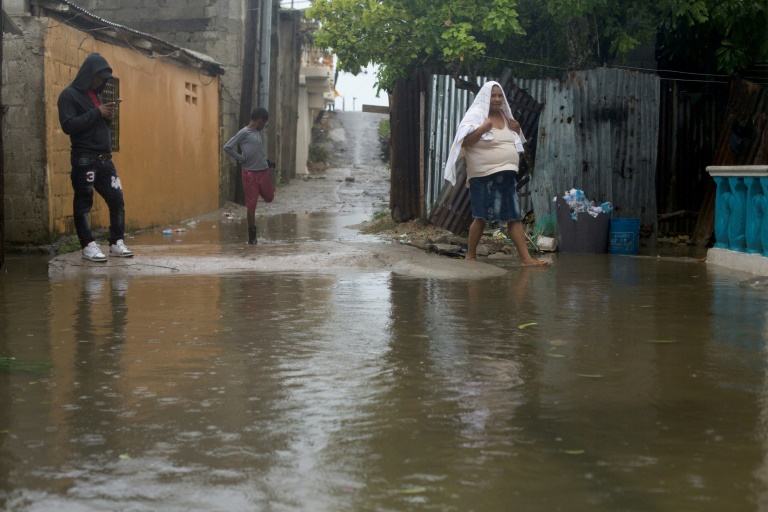
Hurricane Fiona dumped torrential rain on the Dominican Republic on Monday after triggering major flooding in Puerto Rico and widespread power blackouts in both Caribbean islands.

The storm strengthened to a Category Two hurricane late Monday, said the US National Hurricane Center (NHC), which forecast continuing rains and possible new catastrophic floods during the night in both Puerto Rico and in the eastern Dominican Republic.

The NHC said the hurricane was still strengthening and warned that “life-threatening and catastrophic flooding and mudslides” were possible. 

Several roads were flooded or cut by falling trees or electric poles around the Dominican resort of Punta Cana where the electricity was knocked out, an AFP journalist on the scene said.

President Luis Abinader declared three eastern provinces to be disaster zones: La Altagracia — home to Punta Cana — El Seibo and Hato Mayor.

Footage from local media showed residents of the east coast town of Higuey waist-deep in water, trying to salvage personal belongings.

With 18 of the island’s 32 provinces on red alert, nearly 800 people were sheltering in safe areas, according to emergency services.

Fiona was packing maximum sustained winds of 100 miles per hour (155 kilometers per hour), according to the NHC, which expected it to strengthen Tuesday to a Category Three storm — making it this season’s first major Atlantic hurricane.

After passing close to Turks and Caicos late Monday or early Tuesday, the storm is expected to track north later in the week, out into the ocean — although it could come perilously close to tiny Bermuda.

In Puerto Rico — where the rain was still beating down — Governor Pedro Pierluisi said the storm had caused catastrophic damage since Sunday, with some areas facing more than 30 inches (76 centimeters) of rainfall.

Nelly Marrero made her way Monday afternoon back to her home in Toa Baja, in the north of the US island territory, to clear out the mud that surged inside after she evacuated a day earlier.

“Thanks to God, I have food and water,” she told AFP by telephone — having lost everything when Hurricane Maria devastated Puerto Rico five years ago.

Hearing the flood alert ring out, Marrero headed out into the rain with her daughter and three infant grandchildren, seeking refuge at a relative’s house.

“It was very difficult with the babies — they were crying, they didn’t understand what was going on,” she said.

Across Puerto Rico, Fiona caused landslides, blocked roads and toppled trees, power lines and bridges, Pierluisi said.

A man was killed as an indirect result of the power blackout — burned to death while trying to fill his generator, according to authorities.

Fernando Vera, a resident of the town of Utuado, told US broadcaster NPR his family has never fully recovered from the devastation of Maria — one of two hurricanes that hit the island in 2017, along with Irma.

“We still struggle from the consequences of Maria and it’s kind of difficult knowing we’re going to probably have to start over again,” Vera said.

The governor said Fiona caused “unprecedented” flooding.

“Unfortunately, we expect more rain throughout the island today and tomorrow,” he said.

Most of Puerto Rico, an island of three million people, was without power, but electricity had been restored for about 100,000 customers on Monday, the governor said.

The hurricane has also left around 196,000 people without drinking water as a result of power outages and flooded rivers, officials said.

– ‘Start over again’ –

Fiona made landfall in Puerto Rico as a Category One hurricane, at the lowest end of the five-tier Saffir-Simpson scale.

Before that, the storm had caused one fatality — a man killed after his house was swept away by flooding in the French overseas department of Guadeloupe, when Fiona was still classified as a tropical storm.

US President Joe Biden has declared a state of emergency for Puerto Rico, authorizing the Federal Emergency Management Agency to provide assistance.

The former Spanish colony became a US territory in the late 19th century before gaining the status of associated free state in 1950.

After years of financial woes and recession, Puerto Rico in 2017 declared the largest bankruptcy ever by a local US administration.

Later that year, the double hit from Irma and Maria added to the misery, devastating the electrical grid on the island — which has suffered from major infrastructure problems for years.

The grid was privatized in June 2021 in an effort to resolve the problem of blackouts, but the issue has persisted, and the entire island lost power earlier this year.

bur/jh/dw/caw

Drought decimates Texas' key cotton crop

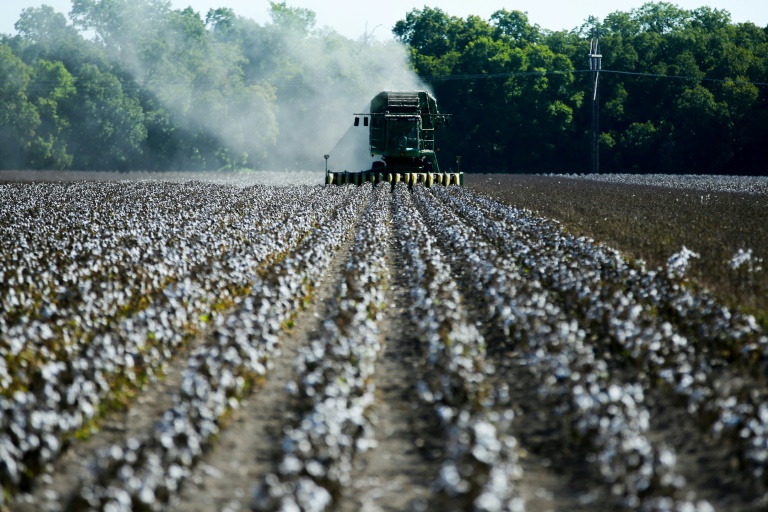
On Sutton Page’s ravaged cotton fields, there is almost nothing left to pick. The Texas farmer managed to salvage maybe a fifth of his crop, but the rest was lost to the severe drought that has taken a steep toll across the region.

This year, his harvest is “not well,” he says, but in reality, the drought in northern Texas has proven to be a disaster, with most of Page’s neighbors not even bothering to harvest their crop, leaving “bare, bare fields.” 

Texas produces almost half of America’s cotton, and the United States is the world’s third largest supplier, behind India and China. 

This year, national production will hit its lowest level since 2015, down 21 percent year-on-year, and Texas will suffer a 58 percent drop, the US Department of Agriculture estimates. 

In the northwest of the state, where cotton is the lifeline of the local economy and water is scarce, the 2022 harvest “could be one of the worst in 30 years,” worries Darren Hudson, professor of agricultural economics at Texas Tech University. 

With the cascading consequences for the global textile industry, in an economy already reeling from the pandemic, Hudson put the likely economic impact for the region at $2 billion.

Landon Orman, 30, works on 2,000 acres of cotton near Abilene, three hours west of Dallas. His non-irrigated cotton did not even sprout, while his partially watered crop grew but its yield will be slashed by half. 

In total, he predicts an 85 percent drop in production compared to a normal year. Like so many others, he has crop insurance, so “financially we’re not really doing that bad. But as a farmer, it sucks pretty bad that we can’t grow stuff sometimes.” 

– Depressing –

In Lubbock, the region’s cotton hub, rainfall over the past 12 months has roughly been half its normal volume, and what little fell came too late to save the crop.

“Starting in January, all the way to the month of May, no, no literally no rain,” said Sutton Page, 48. And from May “we started having 100 degree days and 30 mile an hour winds and it just dried everything out.” 

He had to plow 80 percent of his dying crop back into the ground to stop the land drying out. Of the few small plants that actually grew, it may not even be economical to harvest them.

“It’s a little depressing to some degree, because you work hard all year and you get to get the farms ready and you fertilize and, and and your crop doesn’t come up,” he said. 

– Frequency –

Cotton farmers in the plains of Texas know there will always be bad years, but the drought of 2022 could be the worst yet. And some worry there could be more on the way.

The region is “seeing worse conditions than this time last year,” and these are settling in over time, notes Curtis Riganti, a climatologist specializing in drought. 

“In the past 10 years, we saw maybe five or six of those years where we saw drought. Maybe one or two of those years we saw a very catastrophic drought,” said Kody Bessent, director of one of the region’s cotton growers’ associations.

These farmers in Texas, a state where climate skepticism abounds, prefer to see unpredictable weather cycles repeating themselves rather than the effects of global warming, which makes extreme weather events more common. 

While waiting for answers, everyone is trying their best just to maintain humidity in their soil.

Drought decimates Texas' key cotton crop

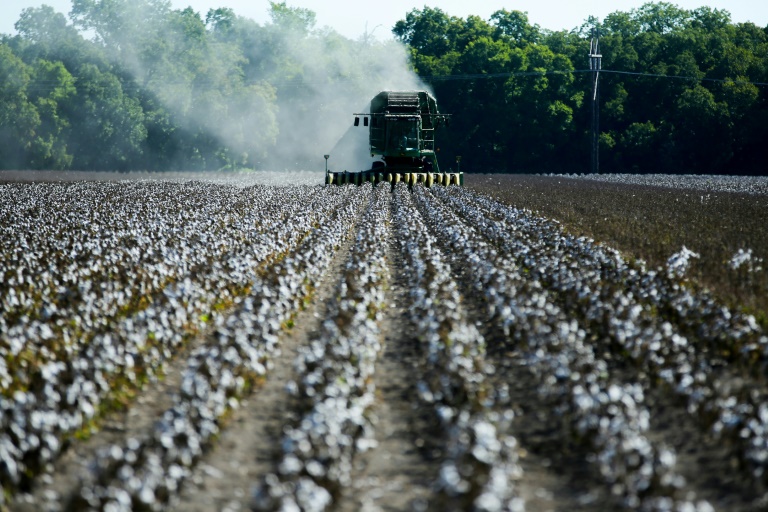
On Sutton Page’s ravaged cotton fields, there is almost nothing left to pick. The Texas farmer managed to salvage maybe a fifth of his crop, but the rest was lost to the severe drought that has taken a steep toll across the region.

This year, his harvest is “not well,” he says, but in reality, the drought in northern Texas has proven to be a disaster, with most of Page’s neighbors not even bothering to harvest their crop, leaving “bare, bare fields.” 

Texas produces almost half of America’s cotton, and the United States is the world’s third largest supplier, behind India and China. 

This year, national production will hit its lowest level since 2015, down 21 percent year-on-year, and Texas will suffer a 58 percent drop, the US Department of Agriculture estimates. 

In the northwest of the state, where cotton is the lifeline of the local economy and water is scarce, the 2022 harvest “could be one of the worst in 30 years,” worries Darren Hudson, professor of agricultural economics at Texas Tech University. 

With the cascading consequences for the global textile industry, in an economy already reeling from the pandemic, Hudson put the likely economic impact for the region at $2 billion.

Landon Orman, 30, works on 2,000 acres of cotton near Abilene, three hours west of Dallas. His non-irrigated cotton did not even sprout, while his partially watered crop grew but its yield will be slashed by half. 

In total, he predicts an 85 percent drop in production compared to a normal year. Like so many others, he has crop insurance, so “financially we’re not really doing that bad. But as a farmer, it sucks pretty bad that we can’t grow stuff sometimes.” 

– Depressing –

In Lubbock, the region’s cotton hub, rainfall over the past 12 months has roughly been half its normal volume, and what little fell came too late to save the crop.

“Starting in January, all the way to the month of May, no, no literally no rain,” said Sutton Page, 48. And from May “we started having 100 degree days and 30 mile an hour winds and it just dried everything out.” 

He had to plow 80 percent of his dying crop back into the ground to stop the land drying out. Of the few small plants that actually grew, it may not even be economical to harvest them.

“It’s a little depressing to some degree, because you work hard all year and you get to get the farms ready and you fertilize and, and and your crop doesn’t come up,” he said. 

– Frequency –

Cotton farmers in the plains of Texas know there will always be bad years, but the drought of 2022 could be the worst yet. And some worry there could be more on the way.

The region is “seeing worse conditions than this time last year,” and these are settling in over time, notes Curtis Riganti, a climatologist specializing in drought. 

“In the past 10 years, we saw maybe five or six of those years where we saw drought. Maybe one or two of those years we saw a very catastrophic drought,” said Kody Bessent, director of one of the region’s cotton growers’ associations.

These farmers in Texas, a state where climate skepticism abounds, prefer to see unpredictable weather cycles repeating themselves rather than the effects of global warming, which makes extreme weather events more common. 

While waiting for answers, everyone is trying their best just to maintain humidity in their soil.

'Grand Theft Auto' maker says game code stolen

Rockstar Games said Monday that data from the next installment in its blockbuster “Grand Theft Auto” franchise was stolen, as glimpses of play spread on social media.

The normally tight-lipped video game maker’s comment came after a trove of data that a hacker said was from a “Grand Theft Auto 6” title in the works was shared online, along with word that source code was also swiped from Rockstar.

“We recently suffered a network intrusion in which an unauthorized third party illegally accessed and downloaded confidential information from our systems, including early development footage for the next ‘Grand Theft Auto,'” Rockstar said in a tweet from its official account.

“We are extremely disappointed to have any details of our next game shared with you in this way.”

Rockstar added that it did not expect the hack to disrupt any of its projects or online play of its games, and that work on the next “Grand Theft Auto” game will continue as planned.

More than 230 million copies of “Grand Theft Auto,” referred to as “GTA,” have been sold overall.

“We have already taken steps to isolate and contain this incident,” Rockstar parent Take-Two Interactive said in a Securities and Exchange Commission filing about the hack.

The GTA franchise, in which players take on the role of a criminal, has been criticized for glorifying law-breaking, violence and abuse of women.

The maker of the notorious video game franchise announced in February that a new edition is under development, confirming long-bubbling speculation.

New York-based Rockstar Games did not say when GTA 6 will hit the street or how it will be different from the previous edition of the game released in 2013 to blockbuster sales.

“We watched GTA 6 leak and Rockstar Games – the most secretive company in the video game industry – get hacked in real time,” said a late Sunday tweet from the Gaming Detective account that included an apparent image of the title art.

“Let it be known we were here to witness history.”

Afghanistan frees American in exchange for Taliban ally

An American navy veteran detained in Afghanistan since 2020 was released in exchange for a Taliban ally imprisoned in the United States for heroin smuggling, US and Afghan officials announced Monday.

The Taliban government freed Mark Frerichs, who was working as a civil engineer on construction projects in Afghanistan when he was detained 31 months ago.

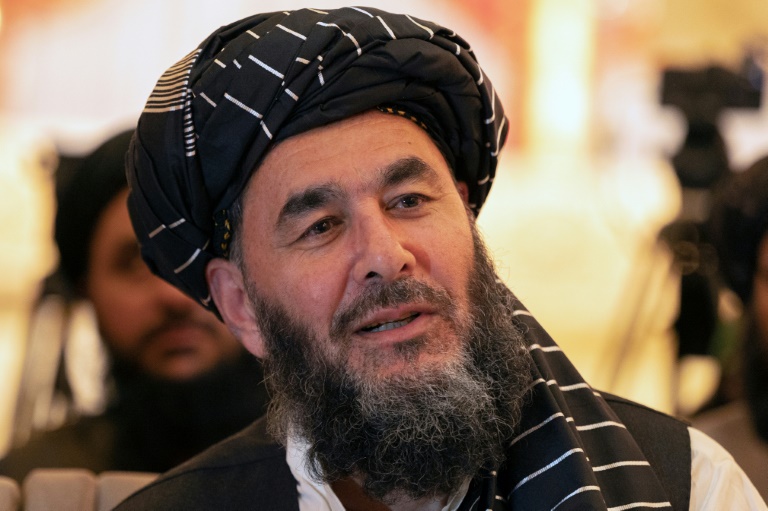
The US government, meanwhile, released Bashar Noorzai, a former regional strongman who was sentenced to life imprisonment in an American court 17 years ago for smuggling large amounts of heroin.

“After long negotiations, US citizen Mark Frerichs was handed over to an American delegation and that delegation handed over (Noorzai) to us today at Kabul airport,” Afghan Foreign Minister Amir Khan Muttaqi said at a press conference.

“We are happy that at Kabul International Airport, in the capital of Afghanistan, we witnessed the wonderful ceremony of one of our compatriots returning home.”

Frerichs, meanwhile, flew to Qatar, a US official said, adding that he was “in stable health.”

“Today, we have secured the release of Mark Frerichs, and he will soon be home,” US President Joe Biden said in a statement.

“Bringing the negotiations that led to Mark’s freedom to a successful resolution required difficult decisions, which I did not take lightly,” he said.

Qatari officials confirmed they played a months-long role in securing the veteran’s freedom.

The US government gave no other details, but diplomats told AFP that Qatar had helped US officials step up contacts with the Taliban in the months after Washington withdrew from Afghanistan. “This is one result of those contacts,” a diplomat said.

– Hero’s welcome –

Noorzai was welcomed with a hero’s fanfare by the government of the newly styled Islamic Emirate of Afghanistan (IEA). Photos show he was greeted by masked Taliban soldiers bearing floral garlands.

“If the IEA had not shown its strong determination, I would not have been here today,” Noorzai said.

“My release in exchange for an American will be a source of peace between Afghanistan and Americans.”

Noorzai is the second Afghan inmate released by the United States in recent months. In June, Assadullah Haroon was released after 15 years of detention in the United States’ notorious Guantanamo Bay prison.

Haroon was accused of links to Al-Qaeda but languished without charge for years at the US detention centre in Cuba, after his arrest in 2006 while working as a honey trader.

Afghan security analyst Hekmatullah Hekmat said Noorzai’s release was a “major achievement” for Kabul’s new rulers.

“The Taliban can tell their foot soldiers and Afghans that they are able to bring back their people held by opposition groups,” he told AFP.

– ‘Non-negotiable’ –

For Washington, Frerichs’ release was a priority issue to resolve after US forces withdrew from Afghanistan in August 2021 following the Taliban’s seizure of power.

The United States and allies have refused to recognise the new government, with Washington repeatedly telling the Taliban that they will have to “earn” legitimacy.

Biden had warned in January that the Taliban must release Frerichs “before it can expect any consideration of its aspirations for legitimacy.”

Noorzai, a militia commander, once fought with US-backed mujahideen forces against the Soviet occupation of Afghanistan and was a close associate of the Taliban’s late founder Mullah Omar.

While he held no official position, Noorzai had “provided strong support including weapons” for the Taliban in the 1990s, Taliban government spokesman Zabihullah Mujahid told AFP on Monday.

After travelling to the United States in 2005, he was arrested and accused of running a “worldwide narcotics network.” When released, he had served 17 years of a life sentence in a federal prison.

– Delayed by Zawahiri killing –

Biden, who spoke to Frerichs’ family ahead of the release, did not mention the deal involved.

But a senior Biden administration official said that the president okayed the swap in June after the Taliban made clear they wanted Noorzai in exchange for Frerichs’ freedom.

Granting Noorzai clemency and returning him would “not materially change” the situation for Americans or the state of the Afghan drug trade, the US official said.

The official said the deal was delayed as Biden ordered the drone strike that killed Al-Qaeda leader Ayman al-Zawahiri in his Kabul residence on July 31.

Immediately after that, Washington quickly resumed pressure on Kabul for the exchange, warning them not to harm Frerichs and that a release could “begin to rebuild trust,” the official said. 

Wall Street ends up thanks to technical rebound and bargain hunt

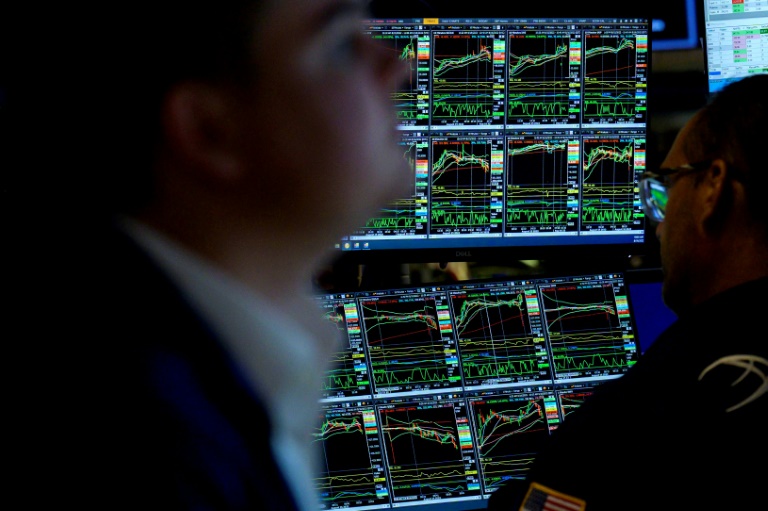
US stocks closed higher Monday thanks to a technical rebound and bargain-hunting after last week’s nightmarish run.

The Dow Jones industrial average gained 0.64 percent, the tech-rich Nasdaq was up 0.76 percent and the S&P 500 ended 0.69 percent higher.

All three indices had opened in the red Monday morning, before oscillating back and forth much of the day and finally gaining points before the close. 

“I think today it really was about bargain hunting,” RegentAtlantic analyst Andy Kapyrin said. 

Major Nasdaq stocks, such as Apple (+2.5 percent), Meta (+1.18 percent) and Nvidia (+1.39 percent) all ended higher after struggling for several days. 

After flagging Friday, FedEx (+1.17 percent ) was also in demand Monday, as was Gap (+4.39 percent), which was hit by a downturn last week after its deal with designer and rapper Kanye West ended. 

Briefing.com said the markets also benefitted from a technical rebound, with the S&P 500 flipping its direction after nearing a low Friday. 

Investors have their sights fixed on Washington as the Federal Reserve meets Tuesday and is expected to announce 75 basis point interest rate increase Wednesday. 

“The market is so oversold, so bearish, so few people optimistic on equities, that there’s very little room for a negative surprise,” Kapyrin said of Wednesday’s announcement, predicting it would be unlikely for investors to react negatively to a rate increase. 

Monday also saw a further rise in bond rates, in line with the Fed’s recent moves.

Ten-year US Treasury bonds hit 3.5 percent for the first time in 11 years. 

And two-year rates went up to 3.96 percent for the first time in nearly 15 years.

“We very rapidly have gone from a place where investors have not really seemed to be paying much attention to what the Fed says” to “a really a fitful and sporadic investor reaction” to Fed announcements, US Bank Wealth Management investor Bill Merz said. 

Merz said the market will likely be more sensitive to the Fed’s economic projections Wednesday than any rate changes. 

Close Bitnami banner
Bitnami