US Business

Tunisian 'hanging garden' farms cling on despite drought

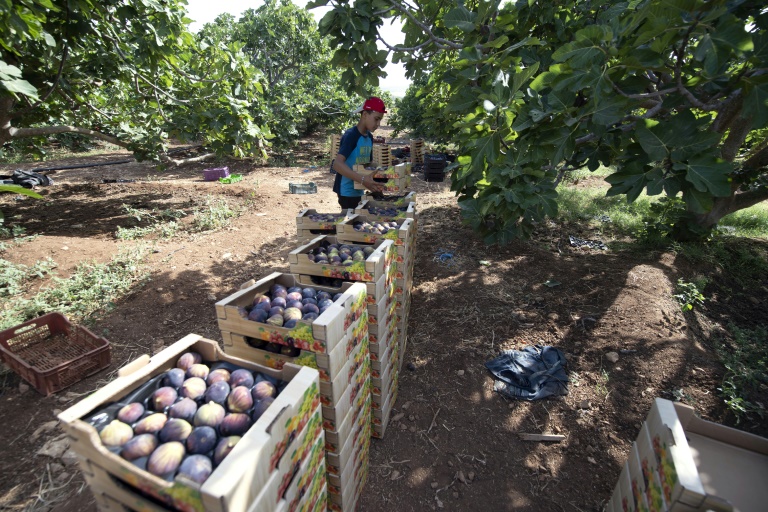
High in the hills of northwestern Tunisia, farmers are tending thousands of fig trees with a unique system of terracing they hope will protect them from ever-harsher droughts.

But the “hanging gardens” of Djebba El Olia have been put to the test this year as the North African country sweltered through its hottest July since the 1950s.

That has exacerbated a long drought that has left Tunisia’s reservoirs at just a third of their capacity.

The gardens are supplied with water from two springs high in the mountains.

The water is fed into the orchards by a network of canals that are opened and shut at set times, according to the size of the orchard.

Crucially, a wide variety of crops provides resilience and in-built pest control, unlike the monocultures that dominate modern agriculture and require huge inputs of pesticides to survive.

“We grow figs but also other trees like quinces, olives and pomegranates, and beneath them we plant a wide range of greens and legumes,” said activist Farida Djebbi as insects buzzed between thyme, mint and rosemary flowers.

Djebbi pointed out some of the channels, which irrigate the area’s 300 hectares (740 acres) of steeply sloping orchards.

In 2020, the Food and Agriculture Organization recognised the system as an example of “innovative and resilient agroforestry”, adding it to an elite list of just 67 “Globally Important Agricultural Heritage Systems”.

The system “has been able to adapt and take advantage of an inhospitable topography”, the UN agency said.

“Through the use of natural geological formations and the use of stones, local communities have been able to transform the landscape into fertile and productive lands.”

The FAO praised the diversity of local crop varieties grown by the area’s farmers, as well as their use of wild plants to repel potential pests and of livestock to “plough” and fertilise the soil.

– Growing up with figs –

While nobody knows exactly how old the system is, human habitation in the area predates the Carthaginian civilisation founded in the ninth century BC.

But while it may have endured for generations, the system is under threat as climate change kicks in.

Activist Tawfiq El Rajehi, 60, says the flow of water from springs irrigating the area has dropped off noticeably, particularly in the past two years.

Unlike in previous years, the surrounding peaks no longer get covered in snow each winter, and the leaves of many of the trees in the lower part of Djebba are yellowing and sick.

Rajehi, a teacher at the local school, said climate change and low rainfall were compounded by another factor: farmers favouring cash crops.

“Some farmers have moved to growing more figs instead of less water-intensive crops because figs have become more profitable in recent years,” he said.

“We need to keep a good balance and variety of plants.”

Nevertheless, residents say they are proud of their heritage.

Farmer Lotfi El Zarmani, 52, said there was also growing demand for Djebba figs, which were given a protected designation of origin by the agriculture ministry in 2012 — still the only Tunisian fruit to enjoy the certification.

“They’re getting a reputation, plus exporting them has become easier, plus they bring higher prices,” Zarmani said, adding that most exports go to the Gulf or neighbouring Libya.

Rajehi’s daughter, university student Chaima, put on protective gloves as she set out to harvest the fruit from her family’s small lot.

“Figs are more than a fruit for us. We’re born here among the fig trees and we grow up with them, we learn from a young age how to look after them,” the 20-year-old said.

Djebbi is working to persuade farmers to preserve traditional ways of processing the products harvested in the area.

She is working with 10 other women on a cooperative that distils essence from wildflowers, dries figs, and produces fig and mulberry jam.

“Products we learnt how to make from our mothers and grandmothers are becoming popular because they’re of such high quality,” she said.
China doubles down on coal as energy crunch bites

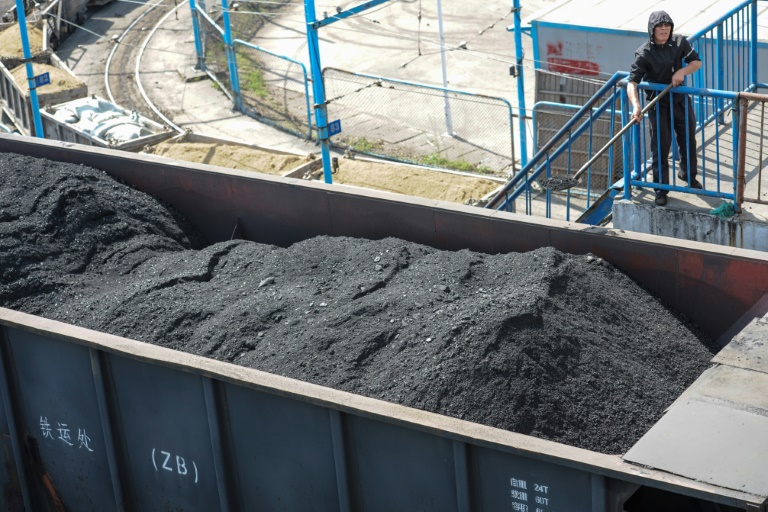
China has stepped up spending on coal in the face of extreme weather, a domestic energy crunch and rising global fuel prices — raising concerns Beijing’s policies may hinder the fight against climate change.

The country is the world’s biggest emitter of the greenhouse gases driving global warming, and President Xi Jinping has vowed to reduce coal use from 2026 as part of a broad set of climate promises.

Beijing has committed to peaking its carbon emissions by 2030 and achieving carbon neutrality by 2060. 

Overall carbon emissions in China have fallen for four consecutive quarters on the back of an economic slowdown, research reported by climate monitor Carbon Brief showed in early September.

But at the same time, slowing growth has led authorities to rely on smokestack industries in an effort to boost the economy.

The push to shore up coal power — which still makes up most of China’s energy supply — has alarmed analysts who warn that it will make an eventual transition to a renewables-dominated energy mix more difficult.

Spooked by an energy shortage last autumn, Chinese authorities in spring ordered coal producers to add 300 million tonnes of mining capacity this year — the equivalent of an extra month of coal production for the country.

In just the first quarter of 2022, regulators endorsed the equivalent of half the entire coal-fired power plant capacity approved in 2021, according to Greenpeace.

– Inefficiencies –

Authorities have also burned and mined more coal in recent weeks in order to meet increased air conditioning demand and make up for shrunken hydropower dams during China’s hottest-ever summer.

Premier Li Keqiang in June called for “releasing advanced coal capacity, as much as possible, and implementing long-term coal supply”.

The independent Climate Action Tracker warns that even the “most binding” climate targets laid out by Beijing would be in line with global warming of between three and four degrees Celsius before the end of the century — well above the Paris Agreement’s goal to limit global warming to 1.5C.

To meet that goal, it said, China would “need to reduce emissions as early as possible and well before 2030” — as well as “decrease coal and other fossil fuel consumption at a much faster rate than currently planned”.

Beijing’s unwillingness to let go of coal stems partly from inefficiencies in its power grid that prevent surplus energy from being transported across regions.

Coal and gas give local officials a ready source of energy and are, in practice, “the only way for local officials to avoid power shortages”, energy researcher Lauri Myllyvirta wrote in a Carbon Brief report.

– ‘Politically crucial year’ –

China has made real progress in building up renewable energy capacity.

The current operating solar capacity in the country accounts for nearly half the global total, according to San Francisco-based non-governmental organisation Global Energy Monitor (GEM).

But unlike wind or sunlight, stockpiles of coal and gas can be held for long periods of time and deployed as needed, giving local authorities a sense of security.

Yet, building more coal facilities means less focus on fixing problems with the grid, Myllyvirta said in comments to AFP, warning plant owners would be motivated to “slow down the transition as they will have an interest in making use of their brand-new assets”.

At the same time, the central government wants to “avoid large-scale blackouts, which we witnessed last winter in the northeastern provinces, in this politically crucial year for Xi”, Byford Tsang, senior policy adviser at climate think-tank E3G, told AFP.

President Xi is expected to secure an unprecedented third term in power at a major Communist Party meeting next month.

Tsang said skyrocketing international energy prices driven by the Russian invasion of Ukraine also pushed Beijing to shore up domestic coal production, pointing to a 17.5 percent drop in coal imports in the first half of this year compared to a year earlier.

Expanding coal capacity as a quick fix, however, goes against “immediate annual cuts in coal use that the UN and leading research organisations have called for”, GEM analysts said.

GEM said all of China’s proposed new mines could together emit as much as six million tonnes of the greenhouse gas methane each year once operational. That is roughly equivalent to the annual methane emissions of Austria, according to World Bank data.

“The more coal China builds now, the harder it becomes to finance and deliver renewable energy projects later,” Wu Jinghan, climate and energy project leader for Greenpeace East Asia, told AFP.

“The longer we wait to transition, the steeper the transition pathway becomes,” Wu said. “That means more disruptive and higher risk, financially and environmentally.”

Wanted crypto founder Do Kwon says 'not on the run'

Do Kwon, the wanted South Korean founder of the failed cryptocurrency Terra, denied Sunday he was on the run after the Singapore police said he was not in the city-state as had been believed.

Kwon’s whereabouts have been thrown into question after the Singapore Police Force (SPF) statement late Saturday, and his tweets did not reveal where he was.

The collapse of Terraform Labs earlier this year wiped out about $40 billion of investors’ money.

A South Korean court on Wednesday issued an arrest warrant for Kwon.

Early Sunday he said on Twitter: “I am ‘not on the run’ or anything similar”, but did not reveal where he was.

“For any agency that has shown interest to communicate, we are in full cooperation and we don’t have anything to hide,” he added.

“We are in the process of defending ourselves in multiple jurisdictions… and look forward to clarifying the truth over the next few months.”

The 31-year-old was earlier believed to be in Singapore, where last month he gave his first media interview since the crypto operator folded in May.

Late Saturday, the SPF said in an email response to an AFP query that “Do Kwon is currently not in Singapore”.

“SPF will assist the Korean National Police Agency (KNPA) within the ambit of our domestic legislation and international obligations,” said the brief statement, which gave no further details.

Singapore’s Straits Times newspaper has reported that Kwon’s work permit in the city-state was due to expire on December 7, but his application for a renewal could be at risk now.

South Korean prosecutors have also issued arrest warrants for five other people — who were not named — linked to stablecoin TerraUSD and its sister token Luna.

Kwon’s Terra/Luna system disintegrated in May, with the price of both tokens plummeting to near zero, and the fallout hitting the wider crypto market. Its collapse sparked more than $500 billion in losses.

Stablecoins are designed to have a relatively stable price and are usually pegged to a real-world commodity or currency.

TerraUSD, however, was algorithmic — using code to maintain its price at around one US dollar.

Many investors lost their life savings when Luna and Terra entered a death spiral, and South Korean authorities have opened multiple criminal probes into the crash.

'I belong here': New US citizens take oath on Ellis Island

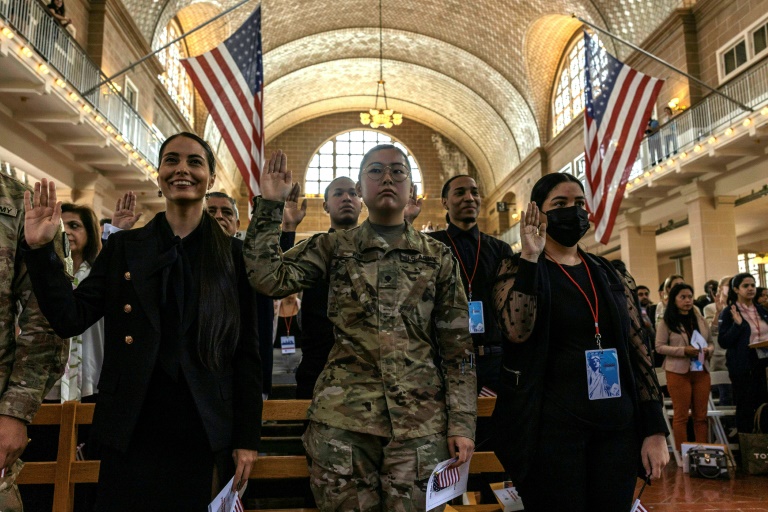
Tears flowed and flags waved as 200 New Yorkers became US citizens Saturday during a special naturalization ceremony at the city’s famed Ellis Island, which once welcomed thousands of immigrants daily.

Citizenship candidates hailing from about 60 different countries filed into the former immigration station’s great hall, where some 12 million people entered the United States over the course of six decades in the early 20th century. 

The ceremony, the first of its kind on the island since 2016, marked the anniversary of the constitution’s signing in 1787 and kicks off the government’s annual “citizenship week.”

The 200 new US citizens are among 19,000 that will be sworn in across the country this week, US Citizenship and Immigration Services said.

As sunlight streamed through the enormous arched windows, the emotion in the room was palpable as the group took an oath of allegiance to the United States, less than a mile away from the Statue of Liberty.

US Attorney General Merrick Garland presided, telling the newest American citizens: “This country — your country — wholeheartedly welcomes you.”

The head of the Justice Department choked back tears recounting how his own relatives fled religious persecution in Eastern Europe. 

He said two of his grandmother’s siblings were unable to escape, and died in the Holocaust.

“I have often thought about what members of my family felt as they came through buildings like this one,” he said. “And I have often thought about what their decisions meant for my own life.”

Before the ceremony, Lovell Brown, a 31-year-old originally from Jamaica, told AFP she was excited to be on the island for the first time for “such a big moment.”

“I just feel like I’m actually a part of the United States now,” said the teacher, who has lived in the United States since she was 17.

“It makes me feel like I belong here.”

– Immigration row –

The ceremony took place under a cloud of increasingly politicized controversy over arrivals of undocumented migrants in the United States.

It came a few days after some 50 migrants arrived unexpectedly on Martha’s Vineyard, a tony resort island in Massachusetts where the Republican governor of Florida, Ron DeSantis, had sent them in a highly political move.

Right-wing American governors have been busing, and now flying, migrants to cities largely populated by Democrats as a means of denouncing President Joe Biden’s immigration policy, which they say has allowed undocumented migrants to cross the border with Mexico in large numbers.

On Thursday morning, Texas’s Republican Governor Greg Abbott sent two buses carrying migrants not far from the official residence of Vice President Kamala Harris in Washington, a place chosen deliberately as she is overseeing the divisive issue of immigration for the White House. 

Garland broadly alluded to the country’s political tensions.

“Overcoming the current polarization in our public life is, and will continue to be, a difficult task,” he said. “But we cannot overcoming it by ignoring it.”

The pandemic sparked citizenship application backlogs and slowed the naturalization process. 

According to the most recent annual report from the US Department of Homeland Security, 814,000 people became citizens in 2021, up 30 percent from 628,000 the year before, when the Covid-19 epidemic brought much of public life to a halt.

– ‘I found my home’ –

Umaru Kabir Ahmed, 63, has lived in the United States since 1989 after leaving his native Nigeria.

The Bronx resident, who works in a nursing home, said he first applied to become a citizen in 2012. 

“I’m happy,” he said, explaining that his new documents reflect the American sensibility he’s cultivated over his three decades here. 

“A lot has changed — the way I talk, the way I eat, the way I sleep, the way I dress,” he said.

Some 40 percent of current US citizens can trace ancestry to Ellis Island, which opened in 1892.

Today it is part of the Statue of Liberty National Monument, accessible to the public by ferry and managed by the National Park Service.

At its peak in the early 20th century, thousands of people passed through Ellis Island daily — waiting in long lines for medical and legal inspections that sometimes resulted in detention, separated families, or denial of entry.

The naturalization ceremony’s contrast to the conditions immigrants faced then wasn’t lost on Warren Lawson, a 44-year-old from South Africa and Britain who has lived in the United States since 2016.

He said he felt lucky to be on the island and “learn about the history and see it firsthand.”

Lawson said he wanted citizenship because “this is probably the place that my kids are going to live for the rest of their lives, and I want to grow old in the same place as them.”

“I found my home.”

Korean cinematic rise years in the making, says 'Squid Game' star

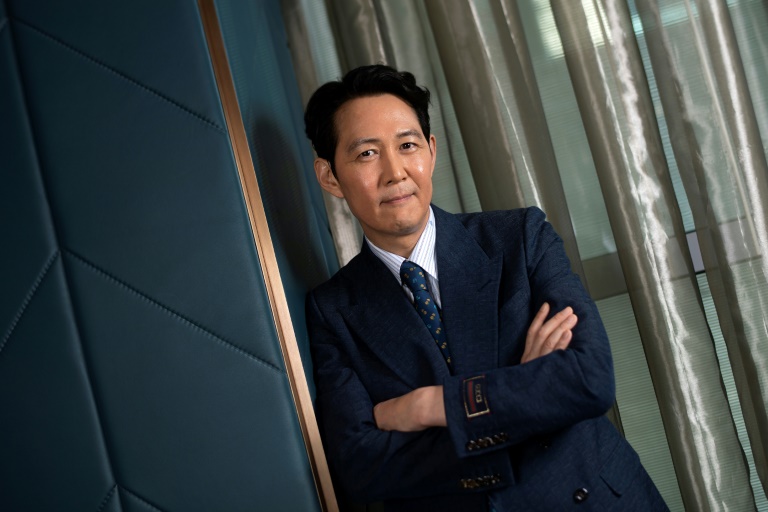
Smash hits like “Squid Game” and “Parasite” may make it look easy, but Emmy-winner Lee Jung-jae says South Korean cinema spent years learning how to reach unprecedented global audiences through stories about the competitiveness and violence of modern life.

Lee spoke to AFP just days after making history as the first foreign-language performer to win the Emmy for best actor in a drama with “Squid Game” — the most-watched Netflix show of all time.

“As a piece of work that is not in English that we’re able to bring to the global audience, we’re very happy about that,” said Lee.

“Even from Korea everybody was so happy and they were sending me congratulating messages,” he said during an interview at the Toronto film festival.

“When I go back there’s a lot of interviews and things waiting for me!”

The brutal social satire about misfits and criminals competing for cash in twisted versions of schoolyard games followed in the footsteps of South Korea’s “Parasite,” which two years earlier became the first foreign-language movie to win best picture at the Oscars.

“For a long time, Korean cinema has been trying to figure out how to connect better with global audiences,” said Lee.

“Now, as a result of these years-long efforts, we see a lot of high-quality content, that has resonated around the world and won critical acclaim.”

It has also been a huge commercial success: “Squid Game” director Hwang Dong-hyuk is writing an eagerly-awaited second season, with Lee teasing that his character Seong Gi-hun “will be completely different” this time around.

– ‘Overly competitive’ –

But before then comes “Hunt,” Lee’s directorial movie debut, which earned a prestigious “gala presentation” premiere this week at the Toronto International Film Festival — relatively rare for an Asian-language film. 

The twisty Cold-War era spy thriller in which Lee also stars is loosely based on real 1980s political events, including an attempted assassination of South Korea’s president and the defection of a North Korean pilot.

Lee said the film shares some themes with “Squid Game” — including its unflinching depiction of violence, as rival South Korean spies turn against and even torture one another.

For instance, it too looks at how an “overly competitive society could actually lead to people hurting each other.”

“Hunt” has already topped the box office in its home country, and will be released in North American theaters and on-demand streaming on December 2 by Magnolia Pictures. 

But in a further sign of how Korean movie-making is adapting to the needs of its new-found audience, the final version reflects a more global film.

Following its initial screening at the Cannes film festival in May, some critics complained the plot was difficult to follow for Western audiences not familiar with Korean politics, so Lee re-cut it to simplify some elements, and revised the subtitles.

But, he emphasized, the film is less about Korean history and more about “how this violence is happening all around the world globally,” hurting ordinary people.

“This movie is about these two protagonists and whether their principles are righteous.”

“What’s most important is, because it’s an espionage action-drama, that I just want you to really enjoy the film,” he said.

– ‘Growing closer’ –

When “Parasite” director Bong Joon-ho stunned Hollywood by winning best picture at the Oscars in 2020, he spoke about the importance of overcoming “the one-inch-tall barrier of subtitles.”

Lee said he has not discussed South Korea’s newfound global clout with Bong, but agreed that the country’s culture “has become widely understood globally” as the world becomes more inter-connected via technology such as global streaming and social media.

“In Korea actually we watch a lot of content from different countries and all around the world, so it’s very natural for us,” he said.

He added: “The world is a lot closer now… Korea’s distinctive story is not something that is difficult for foreign audiences to understand.”

“It’s natural. With everyone growing closer to each other, it’s not difficult to understand the emotions — whether it’s pain or grief — of others, because we live in a world where feelings are shared instantly.”

EU calls for war crime tribunal over mass graves in Ukraine

The EU presidency on Saturday called for the establishment of an international tribunal for war crimes after new mass graves were found in Ukraine.

“In the 21st century, such attacks against the civilian population are unthinkable and abhorrent,” said Jan Lipavsky, foreign minister of the Czech Republic which holds the European Union’s rotating presidency.

“We must not overlook it. We stand for the punishment of all war criminals,” he added in a message on Twitter.

“I call for the speedy establishment of a special international tribunal that will prosecute the crime of aggression.” 

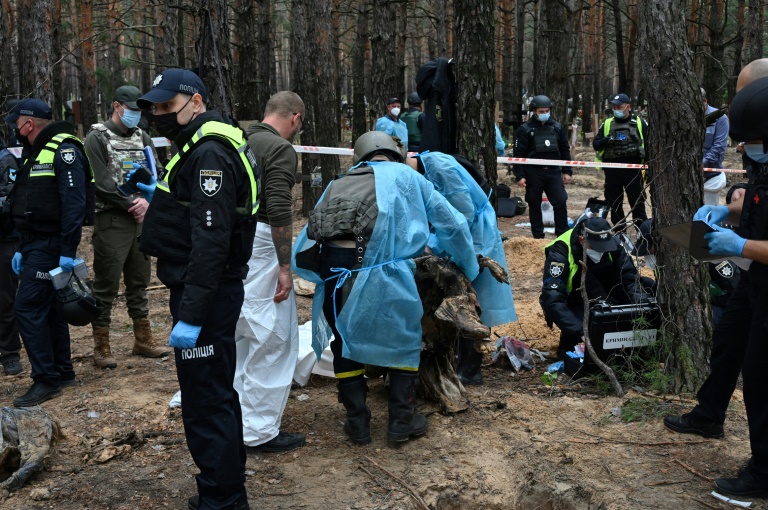
The appeal follows the discovery by Ukrainian authorities of around 450 graves outside the formerly Russian-occupied city of Izyum with some of the exhumed bodies showing signs of torture.

Ukrainian leader Volodymyr Zelensky, in his evening address, said that “new evidence of torture was obtained” from the bodies buried there.

“More than 10 torture chambers have already been found in various cities and towns liberated in Kharkiv region,” he added, describing the discovery of electrical implements for torture.

“That’s what the Nazis did. This is what Ruscists do. And they will be held accountable in the same way — both on the battlefield and in courtrooms,” he promised.

“Among the bodies that were exhumed today, 99 percent showed signs of violent death,” Oleg Synegubov, head of Kharkiv regional administration, said on social media.

“There are several bodies with their hands tied behind their backs, and one person is buried with a rope around his neck,” he added.

– ‘Probably 1,000 tortured and killed’ – 

US Secretary of State Antony Blinken said the mass graves likely provided more evidence that Russia is committing war crimes in its pro-Western neighbour. French President Emmanuel Macron described what had happened in Izyum as atrocities.

The Ukrainian parliament’s human rights commissioner, Dmytro Lubinets, said there were “probably more than 1,000 Ukrainian citizens tortured and killed in the liberated territories of the Kharkiv region”. 

The United Nations in Geneva has said it hopes to send a team to determine the circumstances of the deaths.

The macabre discoveries came a little more than five months after the Russian army, driven out of Bucha near the capital Kyiv, left behind hundreds of corpses of civilians, many of whom had signs of torture and summary executions.

On Thursday, EU chief Ursula von der Leyen said she wanted Russian President Vladimir Putin to face the International Criminal Court over war crimes in Ukraine.

In Washington, US President Joe Biden warned his Russian counterpart Vladimir Putin against using chemical or tactical nuclear weapons in the wake of serious losses in his war in Ukraine.

“Don’t. Don’t. Don’t,” Biden said, in an excerpt from an interview with CBS’ “60 Minutes” aired Friday evening.

“You would change the face of war unlike anything since World War II,” Biden said.

– ‘Pushing them back’ –

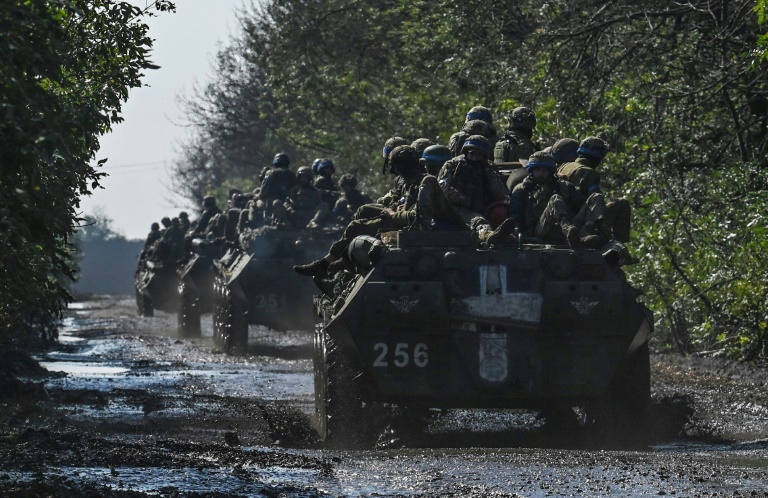
On the ground, Ukrainian forces have recaptured thousands of square kilometres in recent weeks thanks to a counter-offensive in the north-east and now threaten enemy positions in the south, as the fighting and bombings continue.

The Russians “are angry because our army is pushing them back in its counter-offensive,” said Svitlana Shpuk, a 42-year-old worker in Kryvyi Rih, a southern town, and Zelensky’s hometown, which was flooded after a dam was destroyed by Russian missiles.

Synegubov said an 11-year-old girl had been killed by missile fire in the region.

Pavlo Kyrylenko, governor of Donestk in eastern Ukraine which has been partially controlled by Russian-backed separatists since 2014, said on social media that a thermal power plant was “shelled by Russian invaders” on Saturday morning in Mykolaivka.

Ukrainian firefighters were battling the blaze, he said, adding that the Russian shelling had led to interruptions to drinking water supply.

“The occupiers are deliberately targeting infrastructure in the area to try to inflict as much damage as possible, primarily on the civilian population,” he charged.

He had earlier reported that two civilians had been killed and 11 wounded in the past 24 hours by Russian fire.

– Few residents on the streets –

In its daily briefing in Moscow, the Kremlin said it had carried out “high-precision” strikes against Ukrainian positions in the Mykolaiv and Kharkiv regions.

In the northeastern town of Kupiansk, which was recaptured last week by Ukrainian forces, clashes continued with the Russian army entrenched on the eastern side of the Oskil river.

Few residents ventured out into the streets where Ukrainian soldiers and volunteers were moving about. 

A column of smoke rose over the east of the city, where an ammunition depot was burning. 

In the centre of the small town, the damaged police station stood deserted, the tattered red flag of the Russian army lying on the ground outside.

The Ukrainian army in a statement said “the enemy carried out four missile strikes and 15 air strikes during the day, as well as more than 20 multiple rocket launcher strikes on civilian and military sites in Ukraine”.

In the relative calm of Kyiv on Saturday, hundreds of Ukrainians took part in a farewell ceremony at the national opera house for former ballet dancer and later teacher Oleksandr Shapoval. He was killed at the age of 47 in the east of the country while fighting the Russians.

Shapoval was hit by mortar fire on September 12, near the town of Mayorsk in the Donetsk region.

Meanwhile Ukraine’s Zaporizhzhia nuclear plant began receiving power from the national grid once again, the UN’s atomic agency (IAEA) said Saturday, after it was cut off from external power, raising the risk of an accident. 

The Russian-occupied plant, the largest in Europe, had been cut from the national grid since September due to shelling.

EU calls for war crime tribunal over mass graves in Ukraine

The EU presidency on Saturday called for the establishment of an international tribunal for war crimes after new mass graves were found in Ukraine.

“In the 21st century, such attacks against the civilian population are unthinkable and abhorrent,” said Jan Lipavsky, foreign minister of the Czech Republic which holds the European Union’s rotating presidency.

“We must not overlook it. We stand for the punishment of all war criminals,” he added in a message on Twitter.

“I call for the speedy establishment of a special international tribunal that will prosecute the crime of aggression.” 

The appeal follows the discovery by Ukrainian authorities of around 450 graves outside the formerly Russian-occupied city of Izyum with most of the exhumed bodies showing signs of torture.

“Among the bodies that were exhumed today, 99 percent showed signs of violent death,” Oleg Synegubov, head of Kharkiv regional administration, said on social media.

“There are several bodies with their hands tied behind their backs, and one person is buried with a rope around his neck,” he added.

“Russia leaves only death and suffering. Murderers. Torturers,” said Ukraine’s President Volodymyr Zelensky. Some of the remains exhumed included children and people who were likely tortured before dying, he added.

US Secretary of State Antony Blinken on Friday said that the graves likely provided more evidence that Russia is committing war crimes in its pro-Western neighbour, and French President Emmanuel Macron said what happened in Izyum were atrocities.

“I condemn in the strongest terms the atrocities committed in Izyum, Ukraine, under Russian occupation,” Macron tweeted.

– ‘Tortured’ –

The Ukrainian parliament’s human rights commissioner, Dmytro Lubinets, said there were “probably more than 1,000 Ukrainian citizens tortured and killed in the liberated territories of the Kharkiv region”. 

Ukraine national police chief Igor Klymenko said they had found multiple torture rooms in the town of Balakliya and elsewhere in Kharkiv since the Russians were driven out.

The United Nations in Geneva has said it hopes to send a team to determine the circumstances of the deaths.

The announcement of this macabre discovery has raised a new wave of indignation in the West.

The discoveries came a little more than five months after the Russian army, driven out of the vicinity of the Ukrainian capital Kyiv, left behind hundreds of corpses of civilians, many of whom bore the traces of torture and summary executions.

– “Deeply shocked’ –

The European Union is “deeply shocked” at the discovery by Ukrainian officials of mass graves in the recaptured city of Izyum, the bloc’s foreign policy chief Josep Borrell said Friday.

“This inhuman behaviour by the Russian forces, in total disregard of international humanitarian law and the Geneva conventions, must stop immediately.

On Thursday, EU chief Ursula von der Leyen said she wanted Russian President Vladimir Putin to face the International Criminal Court over war crimes in Ukraine.

In Washington, US President Joe Biden warned his Russian counterpart Vladimir Putin against using chemical or tactical nuclear weapons in the wake of serious losses in his war in Ukraine.

“Don’t. Don’t. Don’t,” Biden said, in an excerpt from an interview with CBS’ “60 Minutes” aired Friday evening.

Biden was responding to an interviewer’s question about the possibility of Putin, whose army is incurring heavy losses in the Ukraine counteroffensive this month, resorting to chemical or tactical nuclear weapons.

“You would change the face of war unlike anything since World War II,” Biden said.

“They will become more of a pariah in the world, more than they have ever been,” the US leader added.

– ‘Pushing them back’ –

On the ground, Ukrainian forces have recaptured thousands of square kilometres in recent weeks thanks to a counter-offensive in the north-east and now threaten enemy positions in the south, as the fighting and bombings continue.

The Russians “are angry because our army is pushing them back in its counter-offensive,” said Svitlana Shpuk, a 42-year-old worker in Kryvyi Rih, a southern town, and Zelensky’s hometown, which was flooded after a dam was destroyed by Russian missiles.

The governor of the Kharkiv region, Oleg Synegoubov, said that an 11-year-old girl was killed by missile fire in the region.

Pavlo Kyrylenko, the governor of Donestk in eastern Ukraine which has been partially controlled by Russian-backed separatists since 2014, said on social media that Ukrainian firefighters were battling a fire there and that the bombing had led to cuts in drinking water.

“The occupiers are deliberately targeting infrastructure in the area to try to inflict as much damage as possible, primarily on the civilian population,” he charged.

The Russian army denies targeting civilian infrastructure or residential areas.

In its daily briefing in Moscow, the Kremlin said it had carried out “high-precision” strikes against Ukrainian positions in the Mykolayev and Kharkiv regions.

In the relative calm of Kyiv on Saturday, hundreds of Ukrainians took part in a farewell ceremony at the Kiev national opera house for former ballet dancer and later teacher Oleksandr Shapoval, who was killed at the age of 47 in the east of the country while fighting the Russians.

Shapoval was hit by mortar fire on September 12, near the town of Mayorsk in the Donetsk region.

Biden en route to London to attend funeral of Elizabeth II

US President Joe Biden on Saturday headed to London to attend the funeral of Queen Elizabeth II.

The state funeral, the first in Britain since the death of Winston Churchill in 1965, will take place Monday at Westminster Abbey in London at 11:00 am (1000 GMT).

Biden will be among several hundred leaders from around the world attending the somber and historic event, along with some 2,000 other guests.

While the leaders of the European Union, France, Japan and many other countries will attend, those of Russia, Afghanistan, Myanmar, Syria and North Korea were not invited.

On Sunday, Biden will attend a reception organized by King Charles III, the White House announced. The two men spoke by phone on Wednesday, with Biden vowing to preserve the “special relationship” between their countries. 

A meeting Biden was to have held Monday with new Prime Minister Liz Truss at her Downing Street residence has been canceled, US and British officials announced, but the two instead will meet Wednesday in New York when both arrive to attend the annual United Nations General Assembly.

World leaders were beginning to gather in London on Saturday to prepare for Monday’s funeral.

Their presence — along with that of hundreds of thousands of mourners from across Britain and around the world — poses an extraordinary challenge to British police.

It will be London’s largest ever policing event, the city’s Metropolitan Police force said Friday. 

More than 2,000 officers have been drafted from across the country to help Scotland Yard.

After the funeral, the queen’s coffin will be transferred by royal hearse to Windsor Castle, west of London, for a committal service.

That will be followed by a family-only burial in which the queen will be laid to rest alongside her late husband Philip, both her parents and her younger sister.

Queen Elizabeth's favourite brands face losing royal warrant

Queen Elizabeth II’s death means that around 600 of her favourite brands risk losing their royal warrant and must now await the approval of her successor King Charles III.

Fortnum and Mason teas, Burberry raincoats, Cadbury chocolate and even broomstick and dog food manufacturers are among those facing the loss of royal prestige.

If they do not gain the new monarch’s stamp of approval, they will have two years to remove the seal that marks them as preferred suppliers to the sovereign.

In his former role as the prince of Wales, Charles issued his own royal warrants to more than 150 brands.

Above all, the warrant is a mark of quality.

Holders receive “the right to display the appropriate royal arms on their product, packaging, stationery, advertising, premises and vehicles”, the Royal Warrant Holders Association said.

For some companies, royal endorsement is a powerful selling point, even if it is hard to measure the true impact on sales.

Fortnum and Mason were the grocers and provision merchants by appointment to Queen Elizabeth, and the tea merchants and grocers by appointment to the prince of Wales.

“We are proud to have held a warrant from Her Majesty since 1954, and to have served her and the royal household throughout her life,” the luxury London department store said.

Fortnum and Mason has a long and close history with the royal family, having created Royal Blend tea for king Edward VII in 1902.

Twinings also had royal warrants as tea and coffee merchants to Queen Elizabeth and to the prince of Wales.

– Dubonnet and champagne –

Among the other brands that benefited from their association with Queen Elizabeth was the Dubonnet wine-based aperitif — the key ingredient in her favourite cocktail of Dubonnet and gin.

Launer, which prided itself on supplying the sovereign with her ever-present handbags since 1968, now risks losing its precious cachet.

However, Barbour jackets, particularly suited to country life in the British weather, were the official manufacturers of waterproof and protective clothing to both Queen Elizabeth and her eldest son.

But for brands less well-associated with Queen Elizabeth in the public mind, the royal warrant is “above all, the recognition of know-how and tradition”, Christian Porta, the managing director of global business development at Pernod Ricard, which owns Dubonnet, told AFP.

The French wine and spirits multinational holds warrants for Dubonnet and also for Mumm champagne.

However, in this field it has some competition: Bollinger, Krug, Lanson, Laurent-Perrier, Louis Roederer, Moet and Chandon and Veuve Clicquot also hold royal warrants.

– Tougher criteria –

Consumer brands also have the royal seal of approval, including Heinz, known for its ketchup and its tins of baked beans, adored by Britons.

For Kellogg’s cereals, as a US company, “it’s nice to have such a strong connection to the UK”, said Paul Wheeler, the brand’s spokesman in Britain.

He said the company had been supplying the royal family continuously during Queen Elizabeth’s 70-year reign.

“We used to have a special van, called Genevieve, only to deliver cereals to the royals straight from the factory,” Wheeler said.

There is no cost to obtaining a royal warrant, and suppliers continue to provide their services to the grantor on a commercial basis, while the royals are also free to use other suppliers.

Royal warrants last for five years, but the criteria for renewal have been tightened.

“It’s not only about giving a perfect service,” said Wheeler. “You have to show you’re a good business,” particularly with respect to human rights.

As a result, the royal warrant is therefore a guarantee of quality which some Britons will use when choosing their goods and services.

Cardinals' Pujols edges closer to 700 homer milestone

St. Louis Cardinals slugger Albert Pujols edged closer to Major League Baseball’s exclusive 700-homer club on Friday, belting the 698th home run of his career in a 6-5 win over Cincinnati.

The Cardinals trailed 4-2 in the sixth inning when Dominican-born Pujols sent a hanging slider from Reds pitcher Raynel Espinal 427 feet.

The two-run blast tied the game and moved Pujols two home runs away from becoming just the fourth player to reach 700 in a career.

Pujols, 42, had already passed former Yankee Alex Rodriguez for fourth on MLB’s career homer list with his 697th on Sunday.

The three men ahead of him on that list are the only others to reach 700: Barry Bonds with the MLB career record of 762, Hank Aaron with 755 and Babe Ruth with 714.

Pujols said when he signed a one-year contract to rejoin the Cardinals that this would be his final season.

St. Louis have 17 more regular-season games for him to chase the milestone.

Five of Pujols’s past six home runs have either tied the game or put the Cardinals ahead.

Of his 19 home runs this season, a dozen have come since August 10.

Close Bitnami banner
Bitnami