US Business

California sues Amazon for allegedly thwarting lower prices

California filed a lawsuit Wednesday accusing Amazon of using its market influence to prevent merchants from offering buyers better deals elsewhere online, in violation of state antitrust law.

Amazon pressures merchants not to list items at lower prices on other websites, which hurts sellers and consumers, California Attorney General Rob Bonta said in the lawsuit.

“Amazon coerces merchants into agreements that keep prices artificially high, knowing full well that they can’t afford to say no,” Bonta said in a release.

“Many of the products we buy online would be cheaper if market forces were left unconstrained.”

The attorney general in Washington had filed a similar suit against Amazon, but a judge dismissed the case in March.

“Similar to the DC Attorney General — whose complaint was dismissed by the courts — the California Attorney General has it exactly backwards,” an Amazon spokesperson said in response to an AFP inquiry.

“The relief the AG seeks would force Amazon to feature higher prices to customers, oddly going against core objectives of antitrust law.”

– Amazon dominance –

Amazon is such a dominant e-commerce site that merchants feel they have little choice when it comes to agreeing to the titan’s selling conditions, Bonta’s lawsuit argued.

Those demands include agreeing not to offer lower prices elsewhere, whether it be at Amazon rivals such as Walmart or a merchant’s own website, the suit said.

Vendors who don’t comply can see their listings made less prominent or even have their ability to sell items on Amazon suspended, according to the suit.

“Amazon takes pride in the fact that we offer low prices across the broadest selection, and like any store we reserve the right not to highlight offers to customers that are not priced competitively,” the spokesperson said, noting that sellers set their own prices for products at its website.

Sellers have reported that they could offer goods at lower prices on their own websites and some other e-commerce venues because they would save on fees charged by Amazon, state attorneys argued.

But “with other e-commerce platforms unable to compete on price, consumers turn to Amazon as a one-stop shop for all their purchases,” Bonta said.

“This perpetuates Amazon’s market dominance.”

Bonta is asking a state court in San Francisco to order Amazon to stop its price-floor practice and pay unspecified damages.

While it is true that some Amazon agreements with sellers preclude them from offering lower prices elsewhere online, such conditions are common in the retail industry and don’t stop merchants from lowering prices overall, GlobalData managing director Neil Saunders said in an analyst note.

“This, if anything, allows Amazon to protect its consumers by guaranteeing they are getting one of the best deals,” Saunders said.

“Amazon attracts a lot of scrutiny, but given the amount of competition it has injected into the retail market, it strains credulity to suggest the company has caused any serious harm to consumers.”

Unfortunately for Amazon, California has the resources to pour into the litigation, and it comes as Amazon sales are slowing, the analyst noted.

Seattle-based Amazon is also likely concerned that the California lawsuit is a prelude to federal antitrust action, Saunders said.

US regulators have ramped up their focus on the market power of tech giants, as the fate of legislation aimed at loosening their grip on markets remains undecided.
TikTok search results rife with misinformation: report

TikTok is serving up misinformation to users searching for news about politics, climate change, Covid-19, the war in Ukraine and more, according to a report released Wednesday.

Toxicity and false claims are a “significant threat” at TikTok, which is becoming a go-to online venue for young people to search for information, according to a study by NewsGuard, a media watchdog.

NewsGuard describes itself as a “journalism and technology tool” that rates the credibility of websites and online information.

“Even when TikTok’s search results yielded little to no misinformation, the results were often more polarizing than Google’s,” NewsGuard said of its findings.

NewsGuard in September analyzed the top 20 results from 27 TikTok searches on news topics, finding that 19.5 percent of the videos suggested contained false or misleading claims, the report stated.

Researchers said that they compared TikTok and Google results from searches for information about school shootings, abortion, Covid-19, US elections, Russia’s war on the Ukraine and other news.

False or misleading claims in results included conspiracy theories promoted by QAnon and supposed home recipes for hydroxychloroquine, a prescription drug used to treat malaria and lupus, according to NewsGuard.

TikTok says the methodology used in the analysis is flawed, and that it makes a priority of fighting misinformation.

“Our Community Guidelines make clear that we do not allow harmful misinformation, including medical misinformation, and we will remove it from the platform,” a TikTok spokesperson said in response to an AFP inquiry.

“We partner with credible voices to elevate authoritative content on topics related to public health, and partner with independent fact-checkers who help us to assess the accuracy of content.”

While testifying Wednesday at a Senate hearing on social media’s impact on national security, Twitter former senior vice president of engineering Alex Roetter said that the Chinese government is an investor in TikTok parent company Bytedance, and that it has incentives to maximize profit and user engagement.

“The TikTok algorithm pushes educational science, engineering, and math content on Chinese youth while pushing a feed containing twerking videos, misinformation, and other destructive content to US children,” Roetter told Senators.

Social media companies stand to benefit from attention-grabbing online content despite harmful effects it may have on society, Roetter said in opening remarks.

“Our terms of service and community guidelines are built to help ensure our vision of a safe and authentic experience,” TikTok chief operating officer Vanessa Pappas said at the hearing.

“Our policies have zero tolerance for disinformation, violent extremism and hateful behavior.”

TikTok search results rife with misinformation: report

TikTok is serving up misinformation to users searching for news about politics, climate change, Covid-19, the war in Ukraine and more, according to a report released Wednesday.

Toxicity and false claims are a “significant threat” at TikTok, which is becoming a go-to online venue for young people to search for information, according to a study by NewsGuard, a media watchdog.

NewsGuard describes itself as a “journalism and technology tool” that rates the credibility of websites and online information.

“Even when TikTok’s search results yielded little to no misinformation, the results were often more polarizing than Google’s,” NewsGuard said of its findings.

NewsGuard in September analyzed the top 20 results from 27 TikTok searches on news topics, finding that 19.5 percent of the videos suggested contained false or misleading claims, the report stated.

Researchers said that they compared TikTok and Google results from searches for information about school shootings, abortion, Covid-19, US elections, Russia’s war on the Ukraine and other news.

False or misleading claims in results included conspiracy theories promoted by QAnon and supposed home recipes for hydroxychloroquine, a prescription drug used to treat malaria and lupus, according to NewsGuard.

TikTok says the methodology used in the analysis is flawed, and that it makes a priority of fighting misinformation.

“Our Community Guidelines make clear that we do not allow harmful misinformation, including medical misinformation, and we will remove it from the platform,” a TikTok spokesperson said in response to an AFP inquiry.

“We partner with credible voices to elevate authoritative content on topics related to public health, and partner with independent fact-checkers who help us to assess the accuracy of content.”

While testifying Wednesday at a Senate hearing on social media’s impact on national security, Twitter former senior vice president of engineering Alex Roetter said that the Chinese government is an investor in TikTok parent company Bytedance, and that it has incentives to maximize profit and user engagement.

“The TikTok algorithm pushes educational science, engineering, and math content on Chinese youth while pushing a feed containing twerking videos, misinformation, and other destructive content to US children,” Roetter told Senators.

Social media companies stand to benefit from attention-grabbing online content despite harmful effects it may have on society, Roetter said in opening remarks.

“Our terms of service and community guidelines are built to help ensure our vision of a safe and authentic experience,” TikTok chief operating officer Vanessa Pappas said at the hearing.

“Our policies have zero tolerance for disinformation, violent extremism and hateful behavior.”

US Supreme Court does about-face in religion case

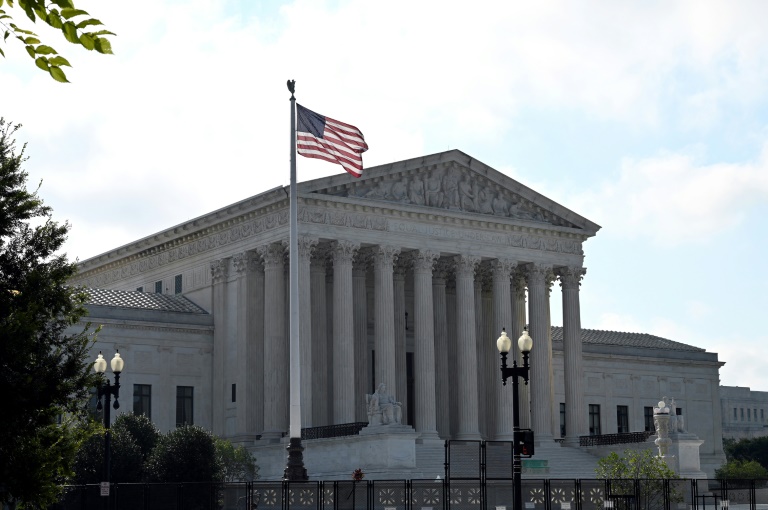
The US Supreme Court did an about-face Wednesday on a ruling in which it had granted temporary permission for an Orthodox Jewish university in New York to deny official recognition to an LGBTQ student group. 

Yeshiva University had turned to the court for an urgent ruling after a New York state judge said the school had to let the so-called Pride Alliance register as a student association, which would give it access to certain facilities and services.

On Friday, the Supreme Court sided with the university. But now it has vacated that ruling, saying the university has not exhausted all of its legal options at the New York state level.

If the university does not succeed in those proceedings, the court said, it “may return to this court.” The comment suggests the tug of war is not over.

Four of the court’s nine judges dissented.

“The First Amendment guarantees the right to the free exercise of religion, and if that provision means anything, it prohibits a State from enforcing its own preferred interpretation of Holy Scripture,” these judges argued.

“It is our duty to stand up for the Constitution even when doing so is controversial,” they said.

Yeshiva University was founded more than 100 years ago to promote the study of Judaism and has a student body of about 5,000. But it also gives degrees in a variety of non-religious areas such as biology or accounting.

In 2018, a group of LGBTQ students formed YU Pride Alliance and sought formal recognition as a student association so they could organize lectures and hold meetings, among other activities.

When the university administration said no, the association sued, and a New York state judge sided with it, citing a law banning discrimination.

The university then went to the Supreme Court.

“As a deeply religious Jewish university, Yeshiva cannot comply with that order because doing so would violate its sincere religious beliefs about how to form its undergraduate students in Torah values,” the university stated in its appeal.

This clash is part of a broader debate in the United States on striking a balance between religious rights and the principles of non-discrimination.

The Supreme Court, which turned sharply to the right under the presidency of Donald Trump, has in recent months issued several rulings in favor of religious rights.

In June, it struck down the 50-year old national right to abortion. 

Damaging US rail strike looms as W.House pushes for deal

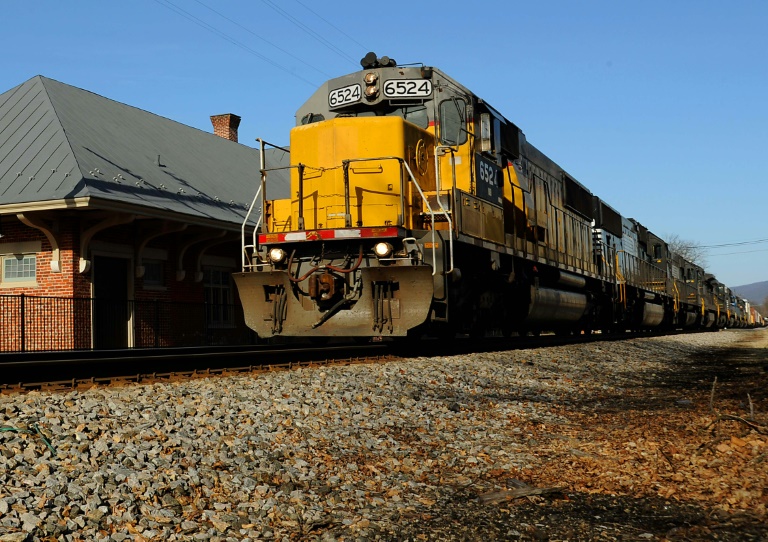
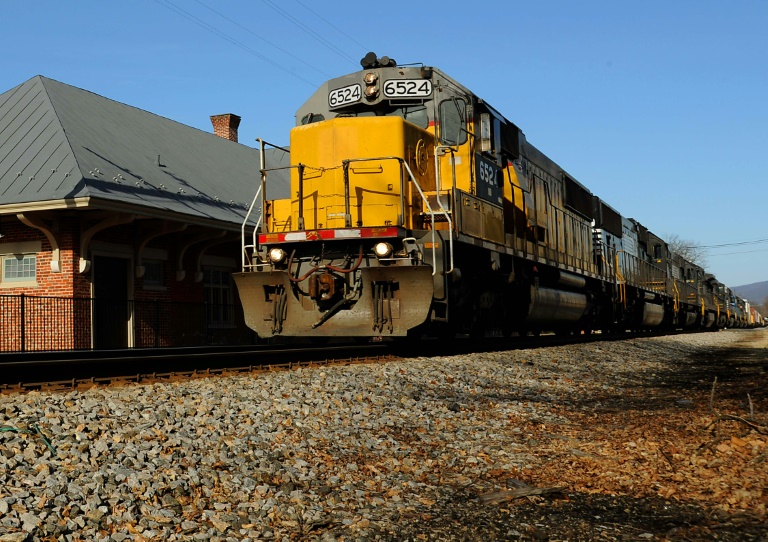
The Biden administration ramped up its efforts Wednesday to avoid a major strike by US freight railroad workers this weekend, which threatens to disrupt travel and supply chains two months before crucial midterm elections.

Pressure was growing on both sides to reach a deal ahead of a Friday deadline, with Amtrak canceling passenger routes in anticipation of disruption as farmers and retailers warned of supply chain chaos and called on Congress to intervene if necessary.

Negotiations are concentrated on provisions for vacation and sick days, with employees complaining they sometimes have to work long hours because of staff shortages.

Freight railroad companies and two unions representing mainly train conductors were called to a meeting at the Labor Department in Washington on Wednesday, two days after President Joe Biden sought to mediate the dispute.

In order to avert a strike on Friday at midnight, the sides would need to reach a deal, which would then be presented to the union members for a vote.

Absent an agreement, the unions and management could decide to continue the talks, keeping railroad workers on the job — or Congress could step in to block the strike.

Any strike would be bad news for Biden, who regularly expresses strong support for workers but is also struggling to avoid further economic damage ahead of key midterm congressional elections in early November.

Voters already are worried about soaring prices in the post-pandemic economy, where supply chain issues have been a constant scourge and annual inflation has surged to a 40-year high.

“The president and members of cabinet have been in touch with both unions and companies involved multiple times in order to try to avert a rail shutdown,” White House spokeswoman Karine Jean-Pierre said in a briefing Wednesday. 

“All parties need to stay at the table, bargain in good faith to resolve outstanding issues and come to an agreement,” she said. “A shutdown of our freight system rail system is an unacceptable outcome for our economy of the American people, and all parties must work to avoid just that.” 

– ‘Critical’ –

The Association of American Railroads has warned that a strike would bring 7,000 trains to a halt and could cost $2 billion a day.

Biden in July appointed an arbitration panel to facilitate the discussions and head off a work stoppage. The “emergency board” submitted its recommendations last month, and lawmakers could require the parties to accept the compromise if no deal is reached.

Farmers and retailers urged Congress to do just that if a long strike appeared on the cards, warning it would hit the US supply chains already battered by the Covid-19 pandemic.

“There is no real substitute for moving agricultural goods,” American Farm Bureau Federation President Zippy Duvall said Wednesday, warning of the impact on the global food chain if US farmers and ranchers cannot move their goods.

The National Retail Federation called freight rail “critical to the retail supply chain.”

“The timing coincides directly with peak shipping season for the winter holidays, and a rail strike at this juncture would be just one more significant, inflationary shock to an economy that is already reeling,” warned NRF CEO Matthew Shay.

Both organizations called on Congress to act quickly to avoid a shutdown.

Amtrak — which is not involved in the talks — said it was canceling the rest of its long distance passenger trains starting from Thursday to avoid disruption. 

The company had already canceled several passenger routes, including long distance routes earlier this week in advance of any strike. 

Local commuter lines in the nation’s capital also warned of potential disruptions.

Meanwhile, freight companies began making arrangements on Monday to transport hazardous materials.

The leaders of 10 other unions have already reached an agreement with the companies, which they were taking back to their members.

One, the IAM District 19 union, said Wednesday its members rejected the deal, although it agreed to continue talks until September 29. Two others said Wednesday that their members had ratified the deal.

Damaging US rail strike looms as W.House pushes for deal

The Biden administration ramped up its efforts Wednesday to avoid a major strike by US freight railroad workers this weekend, which threatens to disrupt travel and supply chains two months before crucial midterm elections.

Pressure was growing on both sides to reach a deal ahead of a Friday deadline, with Amtrak canceling passenger routes in anticipation of disruption as farmers and retailers warned of supply chain chaos and called on Congress to intervene if necessary.

Negotiations are concentrated on provisions for vacation and sick days, with employees complaining they sometimes have to work long hours because of staff shortages.

Freight railroad companies and two unions representing mainly train conductors were called to a meeting at the Labor Department in Washington on Wednesday, two days after President Joe Biden sought to mediate the dispute.

In order to avert a strike on Friday at midnight, the sides would need to reach a deal, which would then be presented to the union members for a vote.

Absent an agreement, the unions and management could decide to continue the talks, keeping railroad workers on the job — or Congress could step in to block the strike.

Any strike would be bad news for Biden, who regularly expresses strong support for workers but is also struggling to avoid further economic damage ahead of key midterm congressional elections in early November.

Voters already are worried about soaring prices in the post-pandemic economy, where supply chain issues have been a constant scourge and annual inflation has surged to a 40-year high.

“The president and members of cabinet have been in touch with both unions and companies involved multiple times in order to try to avert a rail shutdown,” White House spokeswoman Karine Jean-Pierre said in a briefing Wednesday. 

“All parties need to stay at the table, bargain in good faith to resolve outstanding issues and come to an agreement,” she said. “A shutdown of our freight system rail system is an unacceptable outcome for our economy of the American people, and all parties must work to avoid just that.” 

– ‘Critical’ –

The Association of American Railroads has warned that a strike would bring 7,000 trains to a halt and could cost $2 billion a day.

Biden in July appointed an arbitration panel to facilitate the discussions and head off a work stoppage. The “emergency board” submitted its recommendations last month, and lawmakers could require the parties to accept the compromise if no deal is reached.

Farmers and retailers urged Congress to do just that if a long strike appeared on the cards, warning it would hit the US supply chains already battered by the Covid-19 pandemic.

“There is no real substitute for moving agricultural goods,” American Farm Bureau Federation President Zippy Duvall said Wednesday, warning of the impact on the global food chain if US farmers and ranchers cannot move their goods.

The National Retail Federation called freight rail “critical to the retail supply chain.”

“The timing coincides directly with peak shipping season for the winter holidays, and a rail strike at this juncture would be just one more significant, inflationary shock to an economy that is already reeling,” warned NRF CEO Matthew Shay.

Both organizations called on Congress to act quickly to avoid a shutdown.

Amtrak — which is not involved in the talks — said it was canceling the rest of its long distance passenger trains starting from Thursday to avoid disruption. 

The company had already canceled several passenger routes, including long distance routes earlier this week in advance of any strike. 

Local commuter lines in the nation’s capital also warned of potential disruptions.

Meanwhile, freight companies began making arrangements on Monday to transport hazardous materials.

The leaders of 10 other unions have already reached an agreement with the companies, which they were taking back to their members.

One, the IAM District 19 union, said Wednesday its members rejected the deal, although it agreed to continue talks until September 29. Two others said Wednesday that their members had ratified the deal.

Ukraine's Zelensky vows 'victory' on visit to liberated Kharkiv region

Ukrainian President Volodymyr Zelensky on Wednesday promised “victory” on a visit to the strategic city of Izyum that was recently recaptured from Russia by Kyiv’s army in a lightning counter-offensive.

The visit comes at a decisive moment in Russia’s six-month-old invasion, with Ukraine expelling Moscow’s forces from swathes of the east and seriously challenging the Kremlin’s ambition to capture the entire Donbas region of Ukraine.

“Our blue-yellow flag is already flying in de-occupied Izyum. And it will be so in every Ukrainian city and village,” Zelensky said in a statement on social media.

“We are moving in only one direction — forward and towards victory.”

Pictures distributed by his office showed the Ukrainian leader wearing dark green and flanked by guards as he took selfies with soldiers and thanked troops at a flag-hoisting ceremony.

Ukraine has claimed sweeping successes in the northeastern Kharkiv region that borders Russia in recent days, and also says it has clawed back territory along a southern front near the Kherson region on the Black Sea.

Zelensky said Wednesday that Russia’s occupation of Crimea — annexed by Russia in 2014 — was a “tragedy” and promised that his forces would eventually recapture the peninsula.

Kyiv’s forces in the Kharkiv region have since September 6 recaptured around 8,500 square kilometres (3,200 square miles) and areas home to some 150,000 people, said deputy foreign affairs minister Ganna Maliar.

– ‘They killed my son’ –

In the reclaimed eastern Ukrainian village of Bogorodychne, 58-year-old Mykola told AFP he had “barely survived” the Russian occupation during which his brother was killed.

“How can I describe it in words? It was difficult. I was afraid,” he said.  

Wiping tears from her eyes with a veil, Mykola’s mother Nina said: “I cry every day. They killed my son.” 

Moscow said its forces were hitting back on areas recaptured in Kharkiv with “massive strikes”, also claiming to have captured dozens of Ukrainian servicemen in the southern Kherson and Zaporizhzhia regions.

Ukraine’s presidency warned Wednesday that floods could hit the city of Kryvyi Rih — Zelensky’s hometown — after a Russian strike damaged infrastructure, causing the Inhulets River to flood.

The centre and another district of the city of 600,000 people were at risk of flooding, said Kyrylo Tymoshenko, deputy head of the president’s office.

German Chancellor Olaf Scholz disclosed the contents of a 90-minute telephone conversation with Putin Wednesday, saying the Russian leader did not feel he had made a mistake in invading Ukraine.

“There was no indication that new attitudes are emerging,” he said of Tuesday’s conversation.

The Kremlin said Putin himself had discussed getting Ukrainian grain to those most in need in a telephone conversation with UN chief Antonio Guterres.

“Both sides emphasised the importance of meeting the needs, as a priority, of those in Africa, the Middle East and Latin America who need food,” said a statement from his office Wednesday.

The Kremlin, which has made little mention of the setbacks in recent days, vowed to continue fighting, claiming that the perceived threat Kyiv posed to Russia remained.

The Ukrainian official in charge of the eastern Donetsk region, partially controlled by pro-Moscow separatists since 2014, said Russian forces had attacked the entire frontline region over the past 24 hours.

– ‘Life and death’ –

Pavlo Kyrylenko, the Donetsk governor, said one civilian had been killed and again urged all others to leave, describing the order as a “matter of life and death”.

Military observers have credited the success of Ukraine’s pushback into the east on Western-supplied arms, particularly long-range precision artillery, and on the training of Ukrainian forces by Western allies.

The Ukrainian military announced on social media Wednesday that some 5,000 Ukrainian military personnel had been trained as part of a joint programme with the United Kingdom.

Western countries have also hit back against Russia with waves of economic sanctions.

EU commission president Ursula von der Leyen on Wednesday said the successive packages of EU measures against Russia for its invasion of Ukraine would remain and that Europeans had to keep their resolve against Moscow.

“I want to make it very clear, the sanctions are here to stay. This is the time for us to show resolve, not appeasement,” von der Leyen said in the European Parliament during her annual State of the Union speech.

Ukraine’s first lady Olena Zelenska attended the gathering in Strasbourg, receiving a standing ovation from lawmakers.

She also told MEPs that she would travel Wednesday to Kyiv to meet Zelensky. 

Biden tours Detroit Auto Show, highlighting electric vehicle push

Fresh off recent legislative victories, President Joe Biden touted an electric auto future Wednesday as the new-generation models shared the stage with gasoline at a revived Detroit Auto Show.

“The great American Road Trip is going to be fully electrified,” Biden proclaimed after test-driving one auto during a gleeful spin through showroom floor.

“When you’re driving coast to coast along I-10 or on I-75 here in Michigan, charging stations will be up and easy to find as gas stations are now.”

The visit by Biden, a self-professed “car guy,” has boosted the profile of the Detroit gathering, which is much smaller than in years past, with most foreign automakers and newer players like Tesla not presenting. 

While gasoline-powered cars still dominate US roads, Detroit auto giants have unveiled more EVs as they seek to wrest control of a growing market from Tesla and newer upstarts.

Biden’s appearance comes just weeks after the US president signed into law major new investments in semiconductor production and combatting climate change, lending the US president’s Democratic Party some momentum heading into the November midterm elections.

“People are on the precipice of a massive adoption of EVs,” Chevrolet Vice President Steve Majoros told AFP shortly before a presentation highlighting the General Motors brand’s slate of electric versions of top-selling trucks.

“More and more Americans are ready,” said Majoros, who said the increased number of charging stations has boosted confidence in EVs.

Stellantis brand Jeep released a 30-year commemorative edition of the popular Grand Cherokee SUV, as well as a new fifth-generation model that is the first Jeep plug-in hybrid.

Ford is scheduled to present its seventh-generation Mustang Wednesday night at an evening event. The company has organized a “stampede” to Detroit’s Hart Plaza of Mustangs from the six earlier generations, begun in Tacoma Washington and crossing nine states.

But the Detroit show has otherwise been short of the sort of glitzy reveals of years past, a shift that partly refects changing preferences of companies who now prefer to market directly to consumers in online launch events.

– Corvette fan –

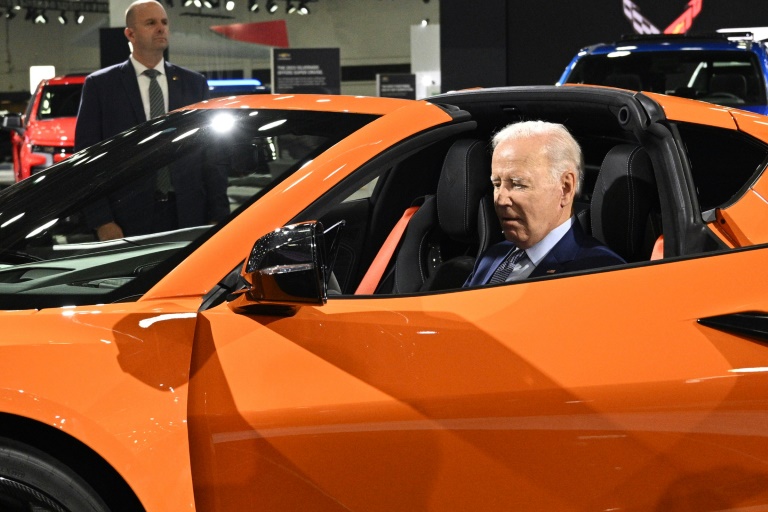
Midway through the morning, the Detroit convention center was cleared of journalists to secure the space for Biden, who was greeted by GM Chief Executive Mary Barra and other top GM officials before test-driving the Cadillac Lyriq, a luxury EV.

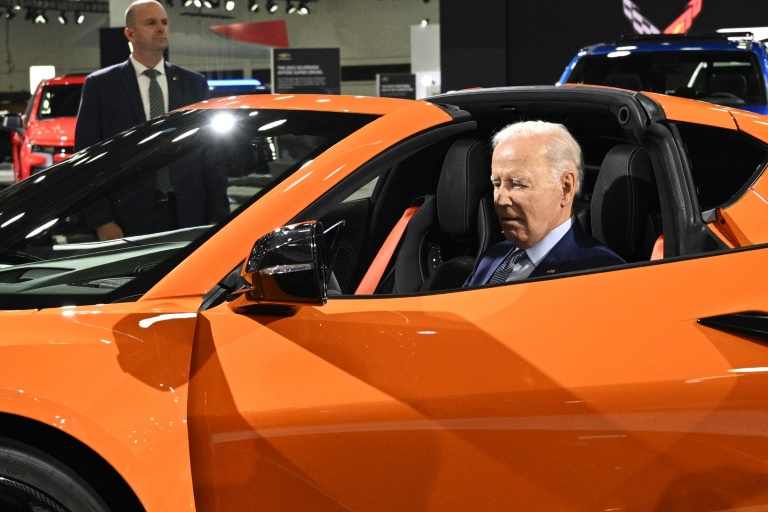
The US president said he liked the Lyriq, but took a particular shine to an Orange Corvette he had earlier examined, according to a White House pool press report.

“He said he’s driving it home,” Barra said of Biden’s reaction to the Corvette, a gasoline-powered vehicle. 

Biden announced that the administration had approved funding for the first round of EV charging stations included in a $7.5 billion program funded by the 2021 infrastructure bill. 

A White House fact sheet highlighted a deluge of announcements by companies that have amounted to nearly $85 billion in investment on manufacturing of EVs, batteries, and chargers in the United States since Biden took office.

Biden has a long and generally warm relationship with Detroit giants after presiding as vice president over the bailouts following the 2008 financial crisis. 

As president, he has visited both GM and Ford.

Biden “has given a lot of kudos to the Detroit automakers,” said Jessica Caldwell, executive director of insights for the automotive research firm Edmunds.

“He’s really highlighted a lot of their products,” she said. “He’s been seen driving a lot of their products at the White House and all sorts of other places.”

– Sourcing rules –

But automakers have been griping about a provision in the just-passed Inflation Reduction Act that sets strict sourcing requirements for federal EV subsidies. 

The requirement is meant to prod automakers into using EV batteries produced in North America as well as critical materials sourced from North America or countries with which the United States has a free trade agreement.

Automakers are hoping officials in Washington show flexibility in implementing the rule.

Majoros said it is too soon to say whether the rule will prevent new subsidies for key vehicles, such as the Equinox, an SUV unveiled last Thursday with a starting price of $30,000, an affordable level in a pricey space.

“We’re looking at future plans, we’re studying how things might adapt what we do from a sourcing perspective,” Majoros said.

The GM brand plans to begin modest production of the Equinox in 2023, but 2024 is expected to be a “big year” with higher output, Majoros said. Production will go still higher in 2025, but Chevy isn’t releasing specific targets.

Majoros said Chevrolet has capacity to “flex” output depending on demand, adding, “There’s a lot of questions about the rate at which industry will adapt.”

Biden tours Detroit Auto Show, highlighting electric vehicle push

Fresh off recent legislative victories, President Joe Biden touted an electric auto future Wednesday as the new-generation models shared the stage with gasoline at a revived Detroit Auto Show.

“The great American Road Trip is going to be fully electrified,” Biden proclaimed after test-driving one auto during a gleeful spin through showroom floor.

“When you’re driving coast to coast along I-10 or on I-75 here in Michigan, charging stations will be up and easy to find as gas stations are now.”

The visit by Biden, a self-professed “car guy,” has boosted the profile of the Detroit gathering, which is much smaller than in years past, with most foreign automakers and newer players like Tesla not presenting. 

While gasoline-powered cars still dominate US roads, Detroit auto giants have unveiled more EVs as they seek to wrest control of a growing market from Tesla and newer upstarts.

Biden’s appearance comes just weeks after the US president signed into law major new investments in semiconductor production and combatting climate change, lending the US president’s Democratic Party some momentum heading into the November midterm elections.

“People are on the precipice of a massive adoption of EVs,” Chevrolet Vice President Steve Majoros told AFP shortly before a presentation highlighting the General Motors brand’s slate of electric versions of top-selling trucks.

“More and more Americans are ready,” said Majoros, who said the increased number of charging stations has boosted confidence in EVs.

Stellantis brand Jeep released a 30-year commemorative edition of the popular Grand Cherokee SUV, as well as a new fifth-generation model that is the first Jeep plug-in hybrid.

Ford is scheduled to present its seventh-generation Mustang Wednesday night at an evening event. The company has organized a “stampede” to Detroit’s Hart Plaza of Mustangs from the six earlier generations, begun in Tacoma Washington and crossing nine states.

But the Detroit show has otherwise been short of the sort of glitzy reveals of years past, a shift that partly refects changing preferences of companies who now prefer to market directly to consumers in online launch events.

– Corvette fan –

Midway through the morning, the Detroit convention center was cleared of journalists to secure the space for Biden, who was greeted by GM Chief Executive Mary Barra and other top GM officials before test-driving the Cadillac Lyriq, a luxury EV.

The US president said he liked the Lyriq, but took a particular shine to an Orange Corvette he had earlier examined, according to a White House pool press report.

“He said he’s driving it home,” Barra said of Biden’s reaction to the Corvette, a gasoline-powered vehicle. 

Biden announced that the administration had approved funding for the first round of EV charging stations included in a $7.5 billion program funded by the 2021 infrastructure bill. 

A White House fact sheet highlighted a deluge of announcements by companies that have amounted to nearly $85 billion in investment on manufacturing of EVs, batteries, and chargers in the United States since Biden took office.

Biden has a long and generally warm relationship with Detroit giants after presiding as vice president over the bailouts following the 2008 financial crisis. 

As president, he has visited both GM and Ford.

Biden “has given a lot of kudos to the Detroit automakers,” said Jessica Caldwell, executive director of insights for the automotive research firm Edmunds.

“He’s really highlighted a lot of their products,” she said. “He’s been seen driving a lot of their products at the White House and all sorts of other places.”

– Sourcing rules –

But automakers have been griping about a provision in the just-passed Inflation Reduction Act that sets strict sourcing requirements for federal EV subsidies. 

The requirement is meant to prod automakers into using EV batteries produced in North America as well as critical materials sourced from North America or countries with which the United States has a free trade agreement.

Automakers are hoping officials in Washington show flexibility in implementing the rule.

Majoros said it is too soon to say whether the rule will prevent new subsidies for key vehicles, such as the Equinox, an SUV unveiled last Thursday with a starting price of $30,000, an affordable level in a pricey space.

“We’re looking at future plans, we’re studying how things might adapt what we do from a sourcing perspective,” Majoros said.

The GM brand plans to begin modest production of the Equinox in 2023, but 2024 is expected to be a “big year” with higher output, Majoros said. Production will go still higher in 2025, but Chevy isn’t releasing specific targets.

Majoros said Chevrolet has capacity to “flex” output depending on demand, adding, “There’s a lot of questions about the rate at which industry will adapt.”

US prosecutor moves to toss conviction of 'Serial' podcast subject

A US prosecutor asked a judge on Wednesday to vacate the conviction of a man who has served over 20 years in prison for his ex-girlfriend’s 1999 murder — a case that received worldwide attention thanks to the hit podcast “Serial.”

Adnan Syed, 42, has been serving a life sentence since 2000 for the murder of Hae Min Lee, whose body was found buried in February 1999 in a shallow grave in the woods of Baltimore, Maryland.

The 18-year-old Lee had been strangled.

Syed has steadfastly maintained his innocence but his multiple appeals have been denied, including by the US Supreme Court which declined in 2019 to hear his case.

In a surprise move on Wednesday, the Baltimore City state’s attorney, Marilyn Mosby, announced that she had asked a judge to vacate Syed’s conviction.

Syed should be released while prosecutors conduct an investigation to determine whether he should be granted a new trial or whether the charges should be dropped, Mosby said in a statement.

The move was prompted by the discovery of “undisclosed and newly-developed information regarding two alternative suspects, as well as unreliable cell phone tower data,” she said.

“Syed deserves a new trial where he is adequately represented and the latest evidence can be presented,” she added.

The Baltimore City state’s attorney’s office said they are “not asserting, at this time, that Mr. Syed is innocent” but it “lacks confidence in the integrity of the conviction.”

Syed’s case earned attention when it was taken up by “Serial,” a weekly podcast that saw a US journalist revisit his conviction and cast doubt on his guilt.

His case has also been the subject of a four-part documentary on the HBO channel called “The Case Against Adnan Syed.”

The “Serial” podcast — a mix of investigative journalism, first-person narrative and dramatic storytelling — focused its first season on Syed’s story in 12 nail-biting episodes.

Both Syed and Lee were high school honor students and children from immigrant families — he Pakistani, she South Korean — who had concealed their relationship from their conservative parents.

Prosecutors said during the trial that Syed was a “scorned lover” who felt humiliated after Lee broke up with him.

Mosby’s office said re-investigation of the case has “revealed evidence regarding the possible involvement of two alternative suspects” who were “not properly ruled out nor disclosed to the defense.”

Doubt has also been cast on the accuracy of cell phone data records that were used to determine Syed’s whereabouts on the day of the murder, it added.

Close Bitnami banner
Bitnami