US Business

Ethereum blockchain completes 'monumental' overhaul

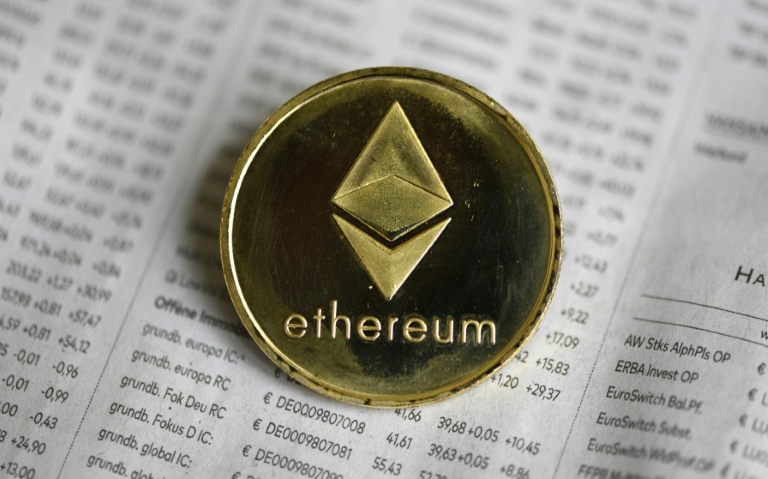
Senior figures in the crypto world said on Thursday that one of the biggest software upgrades the sector has ever seen was completed, an overhaul of the Ethereum blockchain aimed at reducing its massive energy consumption.

Developers had spent years working on a more energy-efficient version of Ethereum, a digital ledger that underpins a multibillion dollar ecosystem of cryptocurrencies, digital tokens (NFTs), games and apps.

“And we finalized!” tweeted Ethereum’s co-creator Vitalik Buterin, calling it a “big moment for the Ethereum ecosystem”.

Ethereum is the second most important blockchain after bitcoin, but it has faced criticism for burning through more power each year than New Zealand.

Buterin quoted research claiming that the “merge”, as developers have called the software upgrade, would reduce global energy consumption by 0.2 percent.

Enthusiasts hope a more energy efficient Ethereum will spur wider adoption, particularly as a way of enabling banks to automate transactions and other processes.

But so far the technology has been used largely to create speculative financial products.

And critics remain sceptical of the claims of massive energy savings, pointing out that it is unclear much energy the new system will need.

– Trading resumes –

The switchover changes the way transactions are logged on the Ethereum blockchain.

From the start of Ethereum in 2015, so-called crypto miners have competed against each other to solve equations — a system known as “proof of work”.

The process required vast computing power and only the winner would be chosen to update the blockchain and get rewards. 

The new system scraps the competition element, the miners and their energy-guzzling computer stacks.

Instead, “validators” will now be chosen in a lottery-style system.

Rather than solving an equation, they put up 32 ether (worth $55,000) — Ethereum’s cryptocurrency — and wait to be chosen in a system known as “proof of stake”.

Blockchain company Consensys called it a “monumental technological milestone” and the biggest update to Ethereum since it was launched.

The world’s biggest crypto exchange, Binance, had stopped trading ether during the merge process.

“The Ethereum Merge is complete,” the firm tweeted on Thursday morning, saying it was resuming trading in ether. 

The upgrade is likely to face a rocky beginning as crypto mining companies have already promised to keep running the old mechanism on a smaller blockchain “forked” from the main Ethereum chain.

And even if the “merge” is successful, Ethereum will still face major hurdles before it can be more widely adopted.

For example, it is expensive to use and the update will not reduce fees.

And the wider crypto sector is still beset by wildly fluctuating prices, security flaws and scams.


Asian stocks edge higher, with all eyes on Fed rate path

Asian stocks mostly edged higher on Thursday, tracking gains on Wall Street as markets adjusted following a rout this week on higher-than-expected US inflation data.

The data showed US yearly inflation slowing less than expected and monthly inflation rising, stoking fears that the US Federal Reserve would continue its aggressive tightening of monetary policy.

On Thursday, bourses in Tokyo, Hong Kong, Taipei, Singapore, Kuala Lumpur and Jakarta made cautious gains.

Markets in Shanghai and Seoul, however, were down at the close.

European stock markets rebounded somewhat at the open on Thursday.

Analysts said markets were bouncing back from the steep losses that followed the inflation data, and traders were pricing in an expected 75 basis-point interest rate hike by the Fed at a meeting next week.

The release of US producer price data also affected market sentiment, showing costs dropping for the second straight month, mainly driven by falling US fuel prices.

“Stock markets have stabilised a little after Tuesday’s rout which saw risk assets pummelled across the board,” said Craig Erlam, senior market analyst at OANDA.

Tokyo — the previous day’s biggest loser in Asia — closed up by 0.2 percent, but investors there remained wary of the speed and degree of future US rate hikes, analysts said.

In Hong Kong, stocks closed 0.4 percent higher on Thursday. 

On Wednesday, Wall Street stocks rose as investors prepared for next week’s Fed decision, with the Dow rising 0.1 percent and the S&P 500 gaining 0.3 percent.

Any US interest rate hike tends to strengthen the dollar, and Asian currencies remain at risk from the strong greenback.

On Thursday, the Australian dollar traded near a two-year low, with the yen at near 143 to the US dollar.

A day earlier, Japan’s central bank conducted a “rate check” operation on the yen, a move seen as a precursor to possible intervention, and which served to bring the currency back from the 145 level that is widely seen as a threshold by the market.

– ‘Front-running’ predictions –

Global consumer prices have soared for months, exacerbated by Russia’s invasion of Ukraine — which has hiked energy and food costs — and because of supply chain strains and Covid lockdowns in China.

Analysts say markets have been trying to “front-run” predictions of when inflation will peak.

“There appears to have been a tendency in recent months to front-run certain releases in the hope that it’s going to prove to be the ‘pivot’ moment when everything starts to look up, central banks can ease off the brake and risk assets will have bottomed,” said OANDA’s Erlam.

All eyes are now firmly on the Fed’s meeting next week, where another 75 basis-point rise is widely expected, after two consecutive increases of the same size.

Following the US inflation data, however, some analysts said it could rise by a full percentage point.

Aggressive interest rate tightening by central banks is slowing down major economies, as authorities attempt to stop them from overheating and tame sharp price rises.

On Wednesday, UK inflation slowed to 9.9 percent in August, but remained close to 40-year highs.

The Bank of England is expected to institute another rate hike next week.

“(The UK inflation figure is) not exactly cause for celebration, nor is it likely the peak, but you have to take your wins where you can these days,” said Erlam.

“The data also won’t in all likelihood change the outcome of the BoE meeting next week, with 75 basis points now heavily backed but 50 also possible.”

– Key figures at around 0800 GMT –

Tokyo – Nikkei 225: UP 0.2 percent at 27,875.91 (close) 

Hong Kong – Hang Seng Index: UP 0.4 percent at 18,930.38 (close)

Shanghai – Composite: DOWN 1.2 percent at 3,199.92 (close)

EURO STOXX 50: UP 0.41 percent at 3,582.12

London – FTSE 100: UP 0.7 percent at 7,324.97

Frankfurt – DAX: UP 0.5 percent at 13,092.77

Paris – CAC 40: UP 0.3 percent at 6,237.99

New York – Dow: UP 0.1 percent to 31,135.09 points (close)

Euro/dollar: UP at $0.9976 from $0.9972 

Pound/dollar: DOWN at $1.1521 from $1.1532  

Euro/pound: UP at 86.59 pence from 86.46 pence

Dollar/yen: UP at 143.58 yen from 142.20 yen 

Brent North Sea crude: UP 0.5 percent at $94.52 per barrel

West Texas Intermediate: UP 0.5 percent at $88.96 per barrel

Malaysian firm makes surprise bid for Macau gaming licence

A company controlled by Malaysian tycoon and Genting chairman Lim Kok Thay has put in a bid for a casino licence in Macau, a surprise challenge to the decades-long oligopoly of the six incumbent operators.

The former Portuguese colony is the only territory in China where casinos are allowed, and issues just six operating concessions for a multibillion-dollar industry that, until the pandemic, was bigger than Las Vegas.

Licences for the current operators — including MGM China, Sands China and Galaxy Entertainment Group — will expire at the end of the year, and they face plummeting revenues and heightened regulatory scrutiny from Beijing.

The six operators all submitted bids by Wednesday to renew their licences but the spotlight was stolen by newcomer GMM.

A GMM representative told reporters that the bid was submitted on behalf of leisure and entertainment firm Genting, according to Macao Daily.

Best known for its resort in the Malaysian highlands, Genting also operates in Las Vegas and Singapore and backed a ski resort in China that hosted this year’s Winter Olympics.

Shares in Macau casino operators fell two percent in Thursday morning trading in Hong Kong, according to Bloomberg Intelligence.

Macau’s gaming sector has been battered by pandemic-era restrictions that drove away the mainland Chinese gamblers who make up the vast majority of customers. 

Gross gaming revenue was down 98 percent from pre-pandemic levels and fell to a record low in July, officials earlier announced.

Chinese President Xi Jinping has spearheaded an anti-corruption campaign that has seen increased scrutiny of the high-rollers and officials who travel to gamble in Macau, where cases of money laundering are common.

For decades, Macau’s gaming industry was run as a monopoly by casino magnate Stanley Ho, but in 2002 more operators were brought in and issued 20-year concessions as part of a liberalisation effort. 

In January, authorities slashed the concession period of gaming licences from 20 years to 10 and unveiled regulations seeking to increase local ownership and government supervision. 

GMM’s bid adds an element of uncertainty to the sector, which had been dominated by the same big players for decades.

In a research note, JPMorgan Chase analysts argued it was “unlikely” for Macau to prefer a new foreign operator over incumbents who have a track record in investment and local employment.

In January, Genting’s Hong Kong cruise ship operator filed for liquidation after its shipyard in Germany went bankrupt.

Fuel prices jump in Kenya after subsidies cut

Fuel prices in Kenya surged to record highs on Thursday after the new government slashed subsidies, piling on misery for a population already facing deep economic hardship. 

The price of petrol increased by 20 shillings to 179.30 (about $1.50) per litre while diesel and kerosene prices are up by 20 and 25 shillings respectively, the Energy and Petroleum Regulatory Authority (EPRA) said. 

The new price regime that will remain in force until October 14 was announced shortly after Kenya’s new President William Ruto took office on Tuesday vowing to scrap food and fuel subsidies. 

“The interventions in place have not borne any fruit,” Ruto said in his inauguration speech. 

Kenya is reeling from the global surge in crude oil prices and last year introduced measures to cushion consumers from the high retail prices. 

It has so far spent 144 billion shillings ($1.2 billion) — about 86 percent of tourism earnings this year — to subside fuel, according to government figures. 

Ruto lambasted the policies of his predecessor Uhuru Kenyatta, saying they gobbled up billions of shillings with no impact.

“In addition to being very costly, consumption subsidy interventions are prone to abuse, they distort markets and create uncertainty, including artificial shortages of the very products being subsidised,” he said.

Under the new prices announced by EPRA, the subsidy for petrol has been removed while those for diesel and kerosene have been reduced. 

Kenya is the most dynamic economy in East Africa but many are suffering financial hardship with about a third of the population living in poverty. 

Prices for basic goods skyrocketed in the wake of Covid pandemic and the war in Ukraine, and unemployment remains a major problem, particularly among the young.

Inflation soared to a 65-month high of 8.5 percent in August, while the currency is at record lows at around 120 shillings to against the dollar.

There are fears the new fuel price increases could see public service providers hike fares and further add to cost of living pressures.

Ford unveils newest Mustang, extending gasoline-powered life

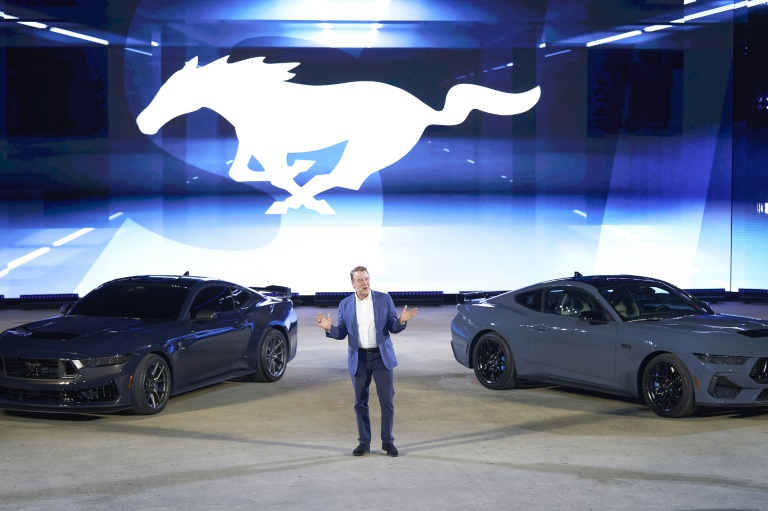
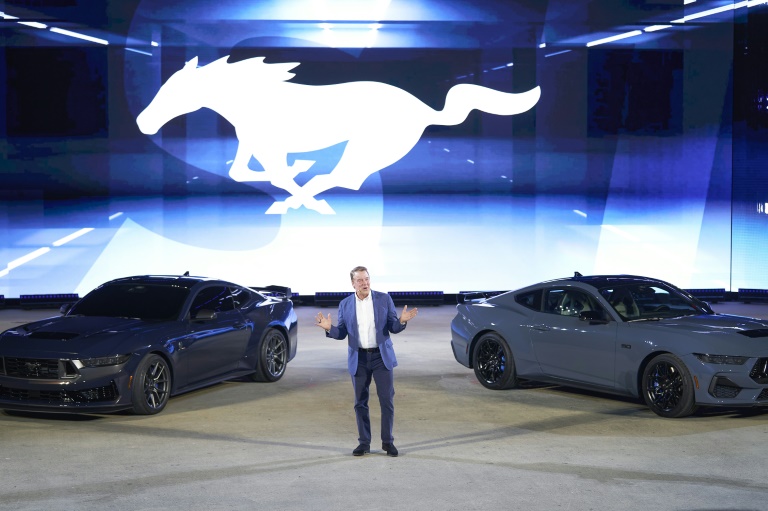
Ford unveiled Wednesday its seventh-generation Mustang in a brash and boisterous launch event in downtown Detroit that pointed to the staying power of gasoline-powered vehicles. 

The big reveal had been teased for months by company officials and organized as a celebration of the 58-year-old model. The event, organized for Ford employees and Mustang mavens, featured pulsating music, slickly produced videos on wide screens and a light projection of the brand’s horse logo onto a city building that loomed in the background.

The 50-minute event culminated with the arrival of three sleek new sedans in different trims and, later, a fourth option, a racing vehicle called “Dark Horse” that was introduced dramatically by Ed Krenz, Ford’s chief functional engineer for performance.

“Its name is indicative of its design and its aspirations,” Krenz told a cheering crowd. “Its demeanor: absolutely sinister. Dark Horse is for the enthusiast who wants purebred force of nature.”

Ford, which has dived into EV investment as much as any company in recent years, had refrained ahead of Wednesday from saying whether the new Mustang would be electric or gasoline-powered.

But the company made no apologies for its choice to go with the internal combustion engine (ICE).

“Investing in another generation of Mustang is a big statement at a time when many of our competitors are exiting the business of internal combustion vehicles,” said Jim Farley, CEO of Ford Motor Company in a press release, adding that the company is “turbocharging” ICE growth even as it invests $50 billion in EV growth through 2026.

Mustang brand manager Jim Owens said some customers prefer the “visceral” feeling of an ICE vehicle, adding that the company has already released an EV version of the Mustang, the Mach-E sport utility vehicle.

“We know that there are customers out there in the sports car segment who still want the internal combustion engine,” he told AFP in an interview before launch.

“There are a lot of late millennials and early Gen Zers who are into the sports car segment, and we think we have some wonderful things in here that are going to draw them in,” he said.

– Rival muscle cars exit –

The latest Mustang — once the inspiration for a Serge Gainsbourg song and seen in some 3,000 movies — features a “fighter jet-inspired” interior and performance features that make it “the most exhilarating and fun-to-drive yet,” Ford said.

The newest Mustang nods to earlier versions in its lighting and grille design, while also employing the latest in digital technology. This includes a key fob that lets drivers who love the sound of an engine revving satisfy their fix with the press of a button.

By extending the Mustang’s run, Ford runs counter to some other brands such as Dodge, which in August said it was phasing out its gasoline-powered muscle car models, the Challenger and the Charger.

Ford’s vehicle launch event also harked back to the spectacle of past car shows, even though the industry has been moving away from that marketing model in favor of online launches. 

The Detroit Auto Show of yore was known for stunts such as the 1992 arrival of the Jeep Grand Cherokee, which announced itself by crashing through glass.

For Wednesday’s Mustang launch, Ford organized a “Stampede” of earlier Mustangs that caravaned from around the country to Hart Plaza in downtown Detroit, creating an impressive row of Mustangs that went on for blocks. 

Participants were encouraged to participate in a best-dressed contest of “attire inspired by their favorite period in Mustang history, from the 1960s through today,” with the first-place prize a two-year car lease for a new Mustang.

The event also appeared to be intended as a morale boost for “Motor City,” where the auto show has been revived for the first time since 2019 after pandemic cancellations. Presenters repeatedly acknowledged the contribution of local Ford employees, especially at the nearby Flat Rock Assembly Plant, where the Mustang is built.

Ford unveils newest Mustang, extending gasoline-powered life

Ford unveiled Wednesday its seventh-generation Mustang in a brash and boisterous launch event in downtown Detroit that pointed to the staying power of gasoline-powered vehicles. 

The big reveal had been teased for months by company officials and organized as a celebration of the 58-year-old model. The event, organized for Ford employees and Mustang mavens, featured pulsating music, slickly produced videos on wide screens and a light projection of the brand’s horse logo onto a city building that loomed in the background.

The 50-minute event culminated with the arrival of three sleek new sedans in different trims and, later, a fourth option, a racing vehicle called “Dark Horse” that was introduced dramatically by Ed Krenz, Ford’s chief functional engineer for performance.

“Its name is indicative of its design and its aspirations,” Krenz told a cheering crowd. “Its demeanor: absolutely sinister. Dark Horse is for the enthusiast who wants purebred force of nature.”

Ford, which has dived into EV investment as much as any company in recent years, had refrained ahead of Wednesday from saying whether the new Mustang would be electric or gasoline-powered.

But the company made no apologies for its choice to go with the internal combustion engine (ICE).

“Investing in another generation of Mustang is a big statement at a time when many of our competitors are exiting the business of internal combustion vehicles,” said Jim Farley, CEO of Ford Motor Company in a press release, adding that the company is “turbocharging” ICE growth even as it invests $50 billion in EV growth through 2026.

Mustang brand manager Jim Owens said some customers prefer the “visceral” feeling of an ICE vehicle, adding that the company has already released an EV version of the Mustang, the Mach-E sport utility vehicle.

“We know that there are customers out there in the sports car segment who still want the internal combustion engine,” he told AFP in an interview before launch.

“There are a lot of late millennials and early Gen Zers who are into the sports car segment, and we think we have some wonderful things in here that are going to draw them in,” he said.

– Rival muscle cars exit –

The latest Mustang — once the inspiration for a Serge Gainsbourg song and seen in some 3,000 movies — features a “fighter jet-inspired” interior and performance features that make it “the most exhilarating and fun-to-drive yet,” Ford said.

The newest Mustang nods to earlier versions in its lighting and grille design, while also employing the latest in digital technology. This includes a key fob that lets drivers who love the sound of an engine revving satisfy their fix with the press of a button.

By extending the Mustang’s run, Ford runs counter to some other brands such as Dodge, which in August said it was phasing out its gasoline-powered muscle car models, the Challenger and the Charger.

Ford’s vehicle launch event also harked back to the spectacle of past car shows, even though the industry has been moving away from that marketing model in favor of online launches. 

The Detroit Auto Show of yore was known for stunts such as the 1992 arrival of the Jeep Grand Cherokee, which announced itself by crashing through glass.

For Wednesday’s Mustang launch, Ford organized a “Stampede” of earlier Mustangs that caravaned from around the country to Hart Plaza in downtown Detroit, creating an impressive row of Mustangs that went on for blocks. 

Participants were encouraged to participate in a best-dressed contest of “attire inspired by their favorite period in Mustang history, from the 1960s through today,” with the first-place prize a two-year car lease for a new Mustang.

The event also appeared to be intended as a morale boost for “Motor City,” where the auto show has been revived for the first time since 2019 after pandemic cancellations. Presenters repeatedly acknowledged the contribution of local Ford employees, especially at the nearby Flat Rock Assembly Plant, where the Mustang is built.

Asian stocks edge higher, with all eyes on Fed rate path

Asian stocks edged higher at the open on Thursday, tracking gains on Wall Street as markets adjusted following a rout this week on higher-than-expected US inflation data.

The data showed US yearly inflation slowing less than expected and monthly inflation rising, stoking fears that the US Federal Reserve would continue its aggressive tightening of monetary policy.

On Thursday, bourses in Tokyo, Hong Kong and Seoul opened cautiously up.

Analysts said markets were rebounding from the steep losses that followed the inflation data, and to price in an expected 75 basis-point interest rate hike by the Fed at a meeting next week.

The release of US producer price data also affected market sentiment, showing producer costs dropping for the second straight month, mainly driven by falling US fuel prices.

“Stock markets have stabilised a little after Tuesday’s rout which saw risk assets pummelled across the board,” said Craig Erlam, senior market analyst at OANDA.

Tokyo — the previous day’s biggest loser in Asia — rebounded slightly on Thursday but investors remained wary of the speed and degree of future US rate hikes.

“Investors remain deeply cautious about potentially excessive monetary tightening in the United States”, Okasan Online Securities said in a note.

On Wednesday, Wall Street stocks rose as investors prepared for next week’s Fed decision, with the Dow rising 0.1 percent and the S&P 500 gaining 0.3 percent.

Any US interest rate hike tends to strengthen the dollar, and Asian currencies remain at risk from the strong greenback.

On Thursday, the Australian dollar traded near a two-year low, with the yen at near 143 to the US dollar.

A day earlier, Japan’s central bank conducted a “rate check” operation on the yen, a move seen as a precursor to possible intervention, and which served to bring the currency back from the 145 level that is widely seen as a threshold by the market.

– ‘Front-running’ predictions –

Global consumer prices have soared for months, exacerbated by Russia’s invasion of Ukraine — which has hiked energy and food costs — and because of supply chain strains and Covid lockdowns in China.

Analysts say markets have been trying to “front-run” predictions of when inflation will peak.

“There appears to have been a tendency in recent months to front-run certain releases in the hope that it’s going to prove to be the ‘pivot’ moment when everything starts to look up, central banks can ease off the brake and risk assets will have bottomed,” said OANDA’s Erlam.

All eyes are now firmly on the Fed’s meeting next week, where another 75 basis-point rise is widely expected, after two consecutive increases of the same size.

Following the US inflation data, however, some analysts said it could rise by a full percentage point.

Aggressive interest rate tightening by central banks is slowing down major economies, as authorities attempt to stop them from overheating and tame sharp price rises.

On Wednesday, UK inflation slowed to 9.9 percent in August, but remained close to 40-year highs.

The Bank of England is expected to institute another rate hike next week.

“(The UK inflation figure is) not exactly cause for celebration, nor is it likely the peak, but you have to take your wins where you can these days,” said Erlam.

“The data also won’t in all likelihood change the outcome of the BoE meeting next week, with 75 basis points now heavily backed but 50 also possible.”

– Key figures at around 0230 GMT –

Tokyo – Nikkei 225: UP 0.4 percent at 27,918.46  

Hong Kong – Hang Seng Index: UP 0.3 percent at 18,896.92

Shanghai – Composite: DOWN 0.6 percent at 3,218.07

New York – Dow: UP 0.1 percent to 31,135.09 points (close)

London – FTSE 100: DOWN 1.5 percent at 7,277.30 (close) 

Euro/dollar: UP at $0.9976 from $0.9972 

Pound/dollar: UP at $1.1534 from $1.1532  

Euro/pound: UP at 86.50 pence from 86.46 pence 

Dollar/yen: UP at 143.28 yen from 142.20 yen 

Brent North Sea crude: DOWN 0.1 percent at $93.99 per barrel

West Texas Intermediate: UP 0.02 percent at $88.50 per barrel

How the tide turned on data centres in Europe

Every time we make a call on Zoom, upload a document to the cloud or stream a video, our computers connect to vast warehouses filled with servers to store or access data.

Not so long ago, European countries were falling over each other to welcome the firms that run these warehouses, known as data centres or bit barns.

Wide-eyed politicians trumpeted investments and dreamt of creating global tech hubs.

But then the dream went sour.

The sheer amount of energy and water needed to power and cool these server farms shocked the public.

The industry sucked up 14 percent of Ireland’s power last year, London warned home builders that power shortages caused by bit barns could affect new projects, and Amsterdam said it simply had no more room for the warehouses.

Then things got worse.

The war in Ukraine helped spark an energy crisis across the continent, leaving consumers facing rocketing bills and countries contemplating energy shortages.

“Data centres will be a target,” critical blogger Dwayne Monroe told AFP, saying the focus would only grow if Europe cannot fix its energy crisis.

Grassroots campaigns and local opposition have already helped to halt projects this year by Amazon in France, Google in Luxembourg and Meta in the Netherlands.

The Irish government, while reaffirming support for the industry, put strict limits on new developments until 2028.

The data industry says it feels unfairly targeted, stressing its efforts to source green energy and arguing that outsourcing storage to bit barns has helped slash consumption.

– ‘Veil of shadow’ –

These arguments are playing out most spectacularly in Ireland.

Activists are campaigning on a broad range of topics and using local forums to push their case.

“They take up a huge amount of space but provide basically no employment,” says Madeleine Johansson, a Dublin councillor for the People Before Profit party, which is campaigning on the issue.

Johansson recently had a motion passed in her council area banning the centres, sparking an almighty row with the national government that is yet to be resolved.

Dylan Murphy of Not Here, Not Anywhere, one of several climate groups pushing the issue in Ireland, has filed a motion in his local council in Fingal calling for companies to reveal the kind of information they are holding.

“There’s a complete lack of transparency… about what data is actually being stored in these data centres,” he said, calling it a “veil of shadow”. 

The data industry says revealing that information would be impossible.

Michael McCarthy of Cloud Infrastructure Ireland, a lobby group, said activists had lost the argument on sustainability and were now throwing everything at the wall. 

“Data centres definitely are large energy users but they’re part of a cohort of larger energy users,” he said.

McCarthy and industry figures in other countries say the real problem is years of underinvestment in national energy infrastructure. 

He also pointed out that the industry in Europe had pledged to become carbon neutral by 2030.

And there are still countries hankering to get data firms to locate there — particularly Iceland and Norway.

– Questions over metaverse –

Against this backdrop, the tech industry continues to innovate new products that invariably require vast amounts of processing power and data storage.

Machine-learning tools, for example, are hugely energy hungry — Google said earlier this year they accounted for between 10 and 15 percent of its total energy usage.

The metaverse, an emerging concept for a 3D internet championed by Facebook owner Meta, would also be hugely energy intensive. 

Critical blogger Monroe reckons the metaverse will buckle under its own weight, partly because of its data requirements.  

“The construction of the metaverse would require Facebook to build out a distribution of data centres that would rival what Amazon, Microsoft and Google have done for their clouds,” he said.

Meta did not respond directly to questions about the metaverse but told AFP that it was “proud to build some of the most energy and water efficient data centres in the world”.

As far as the carbon footprint of such innovation goes, energy experts interviewed by AFP said it would be difficult to assess.

The metaverse, for example, could help to reduce emissions in other areas by reducing the need for travel.

An energy official who did not want to be named questioned whether data centres were the best target for criticism when cryptocurrencies were so wasteful.

While data centres used about one percent of global energy output in 2020, cryptocurrency mining used about half that amount, according to the International Energy Agency.

McCarthy said those who opposed data centres needed to reckon with just how embedded they had become in everyday life, particularly since the coronavirus pandemic.

“They facilitate how we can work and live online, that’s the reality of it,” he said.

R. Kelly convicted of child pornography charges

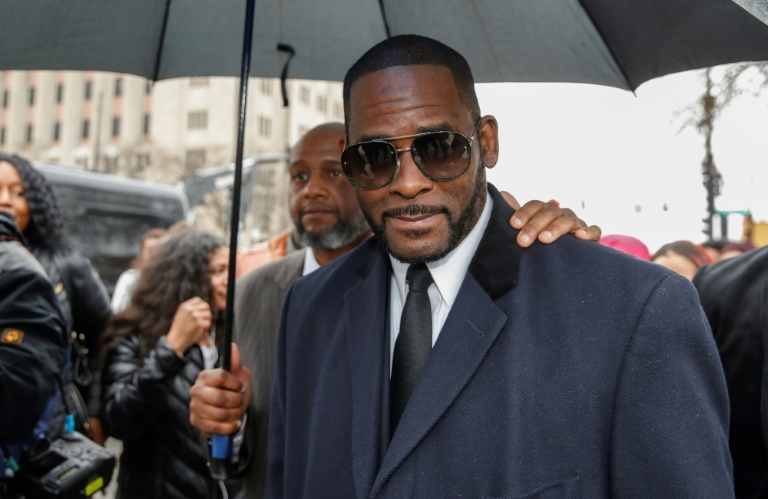
Disgraced R&B singer R. Kelly, who is serving a 30-year sentence for sex offenses, was found guilty of child pornography and other charges on Wednesday after a month-long trial in his hometown of Chicago.

Kelly, whose full name is Robert Sylvester Kelly, was convicted of three counts of producing child pornography and three counts of enticement of a minor.

The three-time Grammy Award-winner was acquitted by a federal jury of seven other counts, including charges that he obstructed justice in a previous trial.

Kelly and two ex-associates had been accused of rigging the singer’s 2008 child pornography trial in which a jury delivered a verdict of not guilty.

Kelly’s former manager, Derrel McDavid, and an ex-employee, Milton “June” Brown, were tried alongside the singer in the latest trial and were also acquitted of obstruction charges.

The 12-person jury took around 11 hours over two days to deliver the verdicts, which could add additional decades in prison to the 30 years Kelly is already serving. 

A minor victim declined to testify in the 2008 trial because of alleged threats and bribes, but the now 37-year-old woman took the witness stand this time.

“The guilty verdicts finally hold Robert Kelly accountable for the sexual abuse of a 14-year-old girl, and they help right the wrongs that occurred in a prior prosecution in Cook County,” the US attorney for the Northern District of Illinois, John Lausch, said of the 2008 trial.

“The damage Mr. Kelly inflicted on his victims is immeasurable. I want to thank the victims for their strength, perseverance and courage in coming forward to testify at trial,” he added.

No sentencing date was immediately set. Kelly faces 10 to 90 years in prison for these new convictions, Lausch’s office said in a statement. 

Excerpts from videos depicting sexual abuse by Kelly of girls as young as 14 were played for the jury during the trial.

Kelly was convicted in New York in September last year of recruiting teenagers and women for sex.

The “I Believe I Can Fly” artist was found guilty of eight charges of sex trafficking and one count of racketeering in the New York case.

– Faces further charges –


Kelly’s conviction in New York was widely seen as a milestone for the #MeToo movement: it was the first major sex abuse trial where the majority of the accusers were Black women.

It was also the first time Kelly faced criminal consequences for the abuse he was rumored for decades to have inflicted on women and children.

Kelly also faces prosecution in two other state jurisdictions.

In the New York case, his accusers described events that often mirrored one another.

Many of the alleged victims said they had met the singer at concerts or mall performances and were then handed slips of paper with Kelly’s contact details by members of his entourage.

Several said they were told he could bolster their music industry aspirations.

But prosecutors argued all were instead “indoctrinated” into Kelly’s world — groomed for sex at his whim and kept in line by “coercive means of control,” including isolation and cruel disciplinary measures.

Core to the New York case was Kelly’s relationship with the late singer Aaliyah.

Kelly wrote and produced her first album — “Age Ain’t Nothin’ But A Number” — before illegally marrying her when she was just 15 because he feared he had impregnated her.

His former manager admitted in court to bribing a worker to obtain fake identification allowing the union, which was later annulled.

California sues Amazon for allegedly thwarting lower prices

California filed a lawsuit Wednesday accusing Amazon of using its market influence to prevent merchants from offering buyers better deals elsewhere online, in violation of state antitrust law.

Amazon pressures merchants not to list items at lower prices on other websites, which hurts sellers and consumers, California Attorney General Rob Bonta said in the lawsuit.

“Amazon coerces merchants into agreements that keep prices artificially high, knowing full well that they can’t afford to say no,” Bonta said in a release.

“Many of the products we buy online would be cheaper if market forces were left unconstrained.”

The attorney general in Washington had filed a similar suit against Amazon, but a judge dismissed the case in March.

“Similar to the DC Attorney General — whose complaint was dismissed by the courts — the California Attorney General has it exactly backwards,” an Amazon spokesperson said in response to an AFP inquiry.

“The relief the AG seeks would force Amazon to feature higher prices to customers, oddly going against core objectives of antitrust law.”

– Amazon dominance –

Amazon is such a dominant e-commerce site that merchants feel they have little choice when it comes to agreeing to the titan’s selling conditions, Bonta’s lawsuit argued.

Those demands include agreeing not to offer lower prices elsewhere, whether it be at Amazon rivals such as Walmart or a merchant’s own website, the suit said.

Vendors who don’t comply can see their listings made less prominent or even have their ability to sell items on Amazon suspended, according to the suit.

“Amazon takes pride in the fact that we offer low prices across the broadest selection, and like any store we reserve the right not to highlight offers to customers that are not priced competitively,” the spokesperson said, noting that sellers set their own prices for products at its website.

Sellers have reported that they could offer goods at lower prices on their own websites and some other e-commerce venues because they would save on fees charged by Amazon, state attorneys argued.

But “with other e-commerce platforms unable to compete on price, consumers turn to Amazon as a one-stop shop for all their purchases,” Bonta said.

“This perpetuates Amazon’s market dominance.”

Bonta is asking a state court in San Francisco to order Amazon to stop its price-floor practice and pay unspecified damages.

While it is true that some Amazon agreements with sellers preclude them from offering lower prices elsewhere online, such conditions are common in the retail industry and don’t stop merchants from lowering prices overall, GlobalData managing director Neil Saunders said in an analyst note.

“This, if anything, allows Amazon to protect its consumers by guaranteeing they are getting one of the best deals,” Saunders said.

“Amazon attracts a lot of scrutiny, but given the amount of competition it has injected into the retail market, it strains credulity to suggest the company has caused any serious harm to consumers.”

Unfortunately for Amazon, California has the resources to pour into the litigation, and it comes as Amazon sales are slowing, the analyst noted.

Seattle-based Amazon is also likely concerned that the California lawsuit is a prelude to federal antitrust action, Saunders said.

US regulators have ramped up their focus on the market power of tech giants, as the fate of legislation aimed at loosening their grip on markets remains undecided.

Close Bitnami banner
Bitnami