US Business

Gripes over electric car tax credit as Biden visits Detroit show

Fresh off of recent legislative triumphs aimed at supporting US manufacturing, President Joe Biden is set for an upbeat appearance Wednesday at the first Detroit Auto Show since the pandemic.

After months of inaction in Congress, Biden capped the summer by signing into law major new investments in semiconductor production and combatting climate change, lending the US president’s Democratic Party some momentum heading into the November midterm elections.

But not far below the celebratory surface, the auto industry is grumbling over a change in the consumer EV tax credit policy that industry officials warn could slow the transition to emission-free vehicles.

At issue are sourcing requirements in the recently passed Inflation Reduction Act meant to prod automakers into using EV batteries produced in North America as well as critical materials sourced from North America or countries with which the United States has a free trade agreement.

The restrictions come as Washington seeks to wean its economic dependence on Russia and China, and as pandemic-induced shortages underscored the vulnerability of having far-flung supply chains.

But auto industry officials and EV experts worry the measure — which affects a consumer tax credit of up to $7,500 on EVs — will slow their adoption in the United States.

“You’re going to see a stalling in the rate of growth,” said John Eichberger, executive director of the Fuels Institute, a nonprofit research group which is funded by a range of energy and transportation companies but does not engage in policy advocacy.

– ‘Missed opportunity’ –

A self-professed “car guy,” Biden has made previous presidential visits to tour General Motors and Ford plants in Michigan — a key electoral swing state.

Biden’s appearance Wednesday at the Detroit Auto Show lends some shine to the revived event following a three-year pandemic hiatus.

Since the last show in 2019, Detroit’s “Big 3” — GM, Ford and Chrysler (now called Stellantis) — have announced tens of billions of dollars in EV investment and unveiled numerous new offerings.

Last Thursday, GM unveiled the Equinox EV, a model with a starting price of $30,000, less than half the average price of EVs now available in the market.

On the same day, Stellantis brand Jeep showed images of two new electric SUVs and confirmed that its all-electric SUV for Europe would launch in 2023. 

The arrival of EV versions of popular models like the Ford F-150 has meant that EV sales in the United States surged more than 66 percent in the second quarter compared with the period a year ago, according to Cox Automotive. 

EVs comprised 5.6 percent of the total US market, according to Cox.

Still, a meaningful transition to EVs from the internal combustion engine faces several challenges, including shortfalls of lithium and other key battery materials and doubts over consumer demand, in part because of lofty price tags — something the $7,500 tax credit aims to combat.

The Alliance for Automotive Innovation, a Washington trade group representing big automakers, highlighted fine print around the tax credit that it said would derail EV growth.

One of those is the requirement that automakers gradually increase minimum levels for choice materials through 2026.

The alliance praised tax credits in the bill for EV manufacturing plants, but said they were offset by the consumer provisions.

– ‘A bumpy road’ –

“Unfortunately, the EV tax credit requirements will make most vehicles immediately ineligible for the incentive,” said John Bozzella, president of the lobby group.

“That’s a missed opportunity at a crucial time and a change that will surprise and disappoint customers in the market for a new vehicle,” he added.

Alan Amici, chief executive of the Center for Automotive Research in Ann Arbor, Michigan, said the industry sees economic benefits to sourcing locally in light of the issues that surfaced during the pandemic.

But it takes time to adjust supply chains, he said.

“The industry needs to figure that out,” said Amici, adding that companies are studying the measure and hoped Washington officials might show flexibility in implementing the policy.

Eichberger cited analysis showing that, in certain years, only a few EV models would qualify for the credit under the standard.

He warned that a leveling off or decline in EV sales in the next couple of years could kill momentum for a transition that remains at an early stage.

“It’s going to be a bumpy road, and this is another bump,” Eichberger said.

Gripes over electric car tax credit as Biden visits Detroit show

Fresh off of recent legislative triumphs aimed at supporting US manufacturing, President Joe Biden is set for an upbeat appearance Wednesday at the first Detroit Auto Show since the pandemic.

After months of inaction in Congress, Biden capped the summer by signing into law major new investments in semiconductor production and combatting climate change, lending the US president’s Democratic Party some momentum heading into the November midterm elections.

But not far below the celebratory surface, the auto industry is grumbling over a change in the consumer EV tax credit policy that industry officials warn could slow the transition to emission-free vehicles.

At issue are sourcing requirements in the recently passed Inflation Reduction Act meant to prod automakers into using EV batteries produced in North America as well as critical materials sourced from North America or countries with which the United States has a free trade agreement.

The restrictions come as Washington seeks to wean its economic dependence on Russia and China, and as pandemic-induced shortages underscored the vulnerability of having far-flung supply chains.

But auto industry officials and EV experts worry the measure — which affects a consumer tax credit of up to $7,500 on EVs — will slow their adoption in the United States.

“You’re going to see a stalling in the rate of growth,” said John Eichberger, executive director of the Fuels Institute, a nonprofit research group which is funded by a range of energy and transportation companies but does not engage in policy advocacy.

– ‘Missed opportunity’ –

A self-professed “car guy,” Biden has made previous presidential visits to tour General Motors and Ford plants in Michigan — a key electoral swing state.

Biden’s appearance Wednesday at the Detroit Auto Show lends some shine to the revived event following a three-year pandemic hiatus.

Since the last show in 2019, Detroit’s “Big 3” — GM, Ford and Chrysler (now called Stellantis) — have announced tens of billions of dollars in EV investment and unveiled numerous new offerings.

Last Thursday, GM unveiled the Equinox EV, a model with a starting price of $30,000, less than half the average price of EVs now available in the market.

On the same day, Stellantis brand Jeep showed images of two new electric SUVs and confirmed that its all-electric SUV for Europe would launch in 2023. 

The arrival of EV versions of popular models like the Ford F-150 has meant that EV sales in the United States surged more than 66 percent in the second quarter compared with the period a year ago, according to Cox Automotive. 

EVs comprised 5.6 percent of the total US market, according to Cox.

Still, a meaningful transition to EVs from the internal combustion engine faces several challenges, including shortfalls of lithium and other key battery materials and doubts over consumer demand, in part because of lofty price tags — something the $7,500 tax credit aims to combat.

The Alliance for Automotive Innovation, a Washington trade group representing big automakers, highlighted fine print around the tax credit that it said would derail EV growth.

One of those is the requirement that automakers gradually increase minimum levels for choice materials through 2026.

The alliance praised tax credits in the bill for EV manufacturing plants, but said they were offset by the consumer provisions.

– ‘A bumpy road’ –

“Unfortunately, the EV tax credit requirements will make most vehicles immediately ineligible for the incentive,” said John Bozzella, president of the lobby group.

“That’s a missed opportunity at a crucial time and a change that will surprise and disappoint customers in the market for a new vehicle,” he added.

Alan Amici, chief executive of the Center for Automotive Research in Ann Arbor, Michigan, said the industry sees economic benefits to sourcing locally in light of the issues that surfaced during the pandemic.

But it takes time to adjust supply chains, he said.

“The industry needs to figure that out,” said Amici, adding that companies are studying the measure and hoped Washington officials might show flexibility in implementing the policy.

Eichberger cited analysis showing that, in certain years, only a few EV models would qualify for the credit under the standard.

He warned that a leveling off or decline in EV sales in the next couple of years could kill momentum for a transition that remains at an early stage.

“It’s going to be a bumpy road, and this is another bump,” Eichberger said.

NY opens immersive digital art show

Art lovers in New York can now enjoy an immersive digital experience with works by Gustav Klimt projected onto the walls and floors of a building that used to be a bank.

The goal, its creators say, is to bring young people and others into a 21st-century museum.

The exhibit, called “Hall des Lumières,” opens Wednesday in Manhattan’s Tribeca neighborhood.

It follows similar shows called “Atelier des Lumières” in Paris and “Infinity des Lumières” in Dubai.

The shows are the work of a French company called Culturespaces, which is partnering in New York with events company IMG.

Culturespaces boss Bruno Monnier said these digital art shows around the world cater to youths and anybody else who does not go to traditional venues like the Metropolitan Museum of Art in New York.

This nine-month show features works by Klimt and another Austrian, Friedensreich Hundertwasser.

Classical and electronic music plays as their works are projected onto every conceivable surface inside the Emigrant Industrial Savings Bank, an early 20th-century building in the Beaux-Arts style.

“I do think it’s a fantastic way to introduce people to art and I think they are very complementary to great museums and art galleries of New York and in many cities around the world,” said Stephen Flint Wood, Managing Director of IMG.

“You can come here in this atmosphere and be completely immersed and then go to museums and art galleries to see some paintings for yourself,” he told AFP.

Seeds of change for Dijon mustard amid shortage

France’s favourite condiment, Dijon mustard, is hard to find these days, with signs on supermarket shelves warning the lucky few who spot jars that they can only take one home.

A heatwave across the ocean in Canada, the world’s top mustard seed producer, is to blame for the drastic shortage that has dragged on for months in France.

Canada supplies around 80 percent of the mustard seeds used by French makers of the spicy condiment, the rest coming mostly from Burgundy, the region that surrounds Dijon.

But a drought slashed the Canadian harvest by half in 2021.

Now French mustard makers are aiming to boost production at home in Burgundy.

“It’s very important to increase that share so we can face weather risks that differ from one country to the other,” Luc Vandermaesen, president of the Burgundy Mustard Association, an industry group, told AFP.

“We can’t put all our eggs in one basket,” said Vandermaesen, who is also the chief executive of France’s third biggest mustard maker, Reine de Dijon (Queen of Dijon).

– Double the price –

The Dijon region has been famous for its mustard seeds since the Middle Ages, but production has been decimated by pests as chemicals used to kill them have been banned.

Output was divided by three between 2017 and 2021, falling from 12,000 tonnes to 4,000 tonnes.

In June, local producers were urged to more than double the area planted with mustard seeds to 10,000 hectares.

“The Canadian problems revived the importance of the Burgundy sector,” said Fabrice Genin, president of the Association of Mustard Seeds Producers of Burgundy.

As an incentive, mustard makers agreed to pay 2,000 euros ($2,008) per tonne for Burgundy seeds in 2023, up from 1,300 euros last year and more than double what they paid in 2021. 

The appeal appears to have worked, with 10,000 hectares planned for mustard seeds, said Jerome Gervais, a mustard expert at the chamber of agriculture in Burgundy’s Cote d’Or department. 

The number of seed producers jumped from 160 to more than 500, he added. 

“It’s more than hoped,” Gervais said.

– ‘Revenge’ –

Francois Detain, a farmer in Agencourt, gave up mustard seed production in 2019 after his fields were wrecked by a dry spring and an insect infestation.

But the price offered for mustard seeds allowed him to bring them back, even though Russia’s invasion of Ukraine has made fertilisers more expensive.

A drop in the prices of grains and oilseeds has also made mustard seeds more attractive.

“It’s sort of a revenge for us to be able to replant a local crop,” Detain said.

Shipping costs — which have soared due to supply chain bottlenecks since Covid pandemic lockdowns were lifted — have also given an edge to Burgundy seeds over those from Canada.

By next year, Burgundy should be producing 15,000 tonnes of mustard seeds, meeting 40 percent of the needs of mustard makers, Gervais said.

“(Store) shelves should be replenished in October,” Vandermaesen said. 

“The shortage will be completely over in early 2023. We are very confident for Christmas.”

How the tide turned on data centres in Europe

Every time we make a call on Zoom, upload a document to the cloud or stream a video, our computers connect to vast warehouses filled with servers to store or access data.

Not so long ago, European countries were falling over each other to welcome the firms that run these warehouses, known as data centres or bit barns.

Wide-eyed politicians trumpeted investments and dreamt of creating global tech hubs.

But then the dream went sour.

The sheer amount of energy and water needed to power and cool these server farms shocked the public.

The industry sucked up 14 percent of Ireland’s power last year, London warned home builders that power shortages caused by bit barns could affect new projects, and Amsterdam said it simply had no more room for the warehouses.

Then things got worse.

The war in Ukraine helped spark an energy crisis across the continent, leaving consumers facing rocketing bills and countries contemplating energy shortages.

“Data centres will be a target,” critical blogger Dwayne Monroe told AFP, saying the focus would only grow if Europe cannot fix its energy crisis.

Grassroots campaigns and local opposition have already helped to halt projects this year by Amazon in France, Google in Luxembourg and Meta in the Netherlands. 

The Irish government, while reaffirming support for the industry, put strict limits on new developments until 2028.

The data industry says it feels unfairly targeted, stressing its efforts to source green energy and arguing that outsourcing storage to bit barns has helped slash consumption.

– ‘Veil of shadow’ –

These arguments are playing out most spectacularly in Ireland.

Activists are campaigning on a broad range of topics and using local forums to push their case.

“They take up a huge amount of space but provide basically no employment,” says Madeleine Johansson, a Dublin councillor for the People Before Profit party, which is campaigning on the issue.

Johansson recently had a motion passed in her council area banning the centres, sparking an almighty row with the national government that is yet to be resolved.

Dylan Murphy of Not Here, Not Anywhere, one of several climate groups pushing the issue in Ireland, has filed a motion in his local council in Fingal calling for companies to reveal the kind of information they are holding.

“There’s a complete lack of transparency… about what data is actually being stored in these data centres,” he said, calling it a “veil of shadow”. 

The data industry says revealing that information would be impossible.

Michael McCarthy of Cloud Infrastructure Ireland, a lobby group, said activists had lost the argument on sustainability and were now throwing everything at the wall. 

“Data centres definitely are large energy users but they’re part of a cohort of larger energy users,” he said.

McCarthy and industry figures in other countries say the real problem is years of underinvestment in national energy infrastructure. 

He also pointed out that the industry in Europe had pledged to become carbon neutral by 2030.

And there are still countries hankering to get data firms to locate there — particularly Iceland and Norway.

– Questions over metaverse –

Against this backdrop, the tech industry continues to innovate new products that invariably require vast amounts of processing power and data storage.

Machine-learning tools, for example, are hugely energy hungry — Google said earlier this year they accounted for between 10 and 15 percent of its total energy usage.

The metaverse, an emerging concept for a 3D internet championed by Facebook owner Meta, would also be hugely energy intensive. 

Critical blogger Monroe reckons the metaverse will buckle under its own weight, partly because of its data requirements.  

“The construction of the metaverse would require Facebook to build out a distribution of data centres that would rival what Amazon, Microsoft and Google have done for their clouds,” he said.

AFP contacted Meta for a response.

As far as the carbon footprint of such innovation goes, energy experts interviewed by AFP said it would be difficult to assess.

The metaverse, for example, could help to reduce emissions in other areas by reducing the need for travel.

An energy official who did not want to be named questioned whether data centres were the best target for criticism when cryptocurrencies were so wasteful.

While data centres used about one percent of global energy output in 2020, cryptocurrency mining used about half that amount, according to the International Energy Agency.

McCarthy said those who opposed data centres needed to reckon with just how embedded they had become in everyday life, particularly since the pandemic.

“They facilitate how we can work and live online, that’s the reality of it,” he said.

Asian stocks slump at open, tracking US losses after inflation report

Asian markets opened lower on Wednesday, tracking losses in the United States and Europe after traders responded negatively to higher-than-expected US inflation data, raising fears of a prolonged period of interest rate hikes.

Tokyo, Hong Kong, Shanghai, Seoul, Taipei and Sydney all opened lower at the start of trading, reversing gains made in recent days due to positive market expectations from the US labour department’s consumer price index (CPI) report.

On Tuesday, US government data showed that the annual increase in CPI had slowed slightly in August to 8.3 percent, but that prices continued to rise month on month, increasing by 0.1 percent.

The news shook equity markets, where there had been widespread expectations of US year-on-year inflation being around eight percent, with a decrease in prices compared with July.

The US and other economies have been battling sky-high price increases for months, with US yearly inflation hitting a 40-year high of 9.1 percent in June.

Wall Street shares plunged following the news, with the Dow losing nearly 1,300 points and the S&P 500 falling 4.3 percent.

The news will have dashed hopes of a slowdown in the US Federal Reserve’s campaign of increasing interest rates to cool the overheating economy.

The Fed has already instituted two consecutive 75-basis-point hikes, and there are widespread expectations it will make a similarly sized increase at its meeting next week.

After Tuesday’s data, however, some investors are now predicting the next Fed hike could be by a full percentage point.

– ‘Scorching hot’ inflation –

Of concern to the Fed will be the fact that “core” US CPI, which excludes volatile food and energy prices, accelerated sharply, rising 6.3 percent on a year ago, higher than the 5.9 percent seen in July and June.

Despite the welcome relief from falling gasoline prices, food, housing and medical care costs continued to rise.

“Core inflation was scorching hot, coming in double expectations,” said senior market analyst Edward Moya at OANDA.

“The Fed will likely have to be even more aggressive with raising rates and that is bad news for risky assets.”

Noted investor Louis Navellier warned that persistently high interest rates to control inflation could lead to a US recession.

“Stocks are taking it very hard as forecasts are rising for Fed Funds to get higher and stay there longer resulting in a discount of future earnings multiples and increasing recession fears,” he said in a note.

The dollar, which had earlier this week fallen against its major rivals in anticipation of slowing inflation, surged in early Asian trade.

The euro dropped below parity with the US currency once again on Wednesday, hitting $0.9970.

The dollar’s rise is partly because the Fed has moved more aggressively with interest rate hikes than central banks in other major economies.

The European Central Bank raised its key rate by 75 basis points in September, with officials indicating a similarly sized increase could come at the next meeting in October.

Inflation has soared around the globe this year owing to extremely high energy and food bills.

This has been caused to a large extent by supply constraints after economies reopened from coronavirus pandemic lockdowns, and in the wake of Russia’s invasion of Ukraine.

– Key figures at around 0230 GMT –

Tokyo – Nikkei 225: DOWN 2.2 percent at 27,991.82 

Hong Kong – Hang Seng Index: DOWN 2.4 percent at 18,866.30

Shanghai – Composite: DOWN 0.7 percent at 3,239.90

New York – Dow: DOWN 3.9 percent at 31,104.97  (close)

London – FTSE 100: DOWN 1.2 percent at 7,385.86 (close)

Euro/dollar: UP at $0.9984 from $0.9974 

Pound/dollar: UP at $1.1506 from $1.1500  

Euro/pound: UP at 86.79 pence from 86.74 pence  

Dollar/yen: DOWN at 144.35 yen from 144.43 yen 

Brent North Sea crude: UP 0.1 percent at $93.30 a barrel

West Texas Intermediate: UP 0.2 percent at $87.48 per barrel

burs-aha/leg

Ukraine designer evokes the pain of war at NY fashion show

Fashion shows rarely begin with a moment of silence, but that is what Ukrainian designer Svitlana Bevza did Tuesday night for her country to decry the Russian invasion.

She went on to present a collection rich in patriotic symbols.

Bevza is an old hand at New York’s Fashion Week, where she has appeared since 2017. She is based in Kyiv and has her workshops there but was forced to leave after the invasion in late February, and its endless explosions and sirens, to protect her two children.

Her husband Volodymyr Omelyan, a politician who was a government minisister from 2016 to 2019, stayed home to fight. You can see him on her Instagram account, dressed in military garb and carrying a gun.

Bevza’s spring-summer collection, entitled ‘Fragile motherland” and unveiled at a building on Wall Street, was highly political. The blue and yellow Ukrainian flag was projected onto a wall.

“Some people maybe do not understand that this is going for real. And today is the 202nd day of war in Ukraine. And there’s thousands of people dead,” she told AFP.

“I was forced to leave the country with my kids. And my husband is at war,” she added. 

She presented tops that are sensual when worn with skirts or pants but still recall bullet-proof vests. Some look like shields that expose the shoulders and navel.

Grains of wheat — symbols of fertile Ukraine as a bread basket to the world — have a narrative stream through the collection. A Bevza necklace depicts them, charred black because “a lot of wheat was burned by Russians,” she said.

The ample cut of some of her skirts also recalls the fit of Ukrainian farm women harvesting wheat.

“There is a deep sacred meaning of the bread itself and the wheat that came through centuries,” she said, pointing to famine in the 1930s that was blamed on Stalin.

“What we protect now, we protect the fertile lands. And what we are basically fighting for is to live free, to live in peace in our land,” the designer said.

EU court decides record antitrust fine against Google

The European Union’s second-highest court will rule Wednesday whether Brussels went too far in handing Google a 4.3-billion-euro fine over its Android operating system for mobile phones.

The decision by the Luxembourg-based General Court could undo or demand modifications to the landmark decision, taken by the European Commission in 2018, which remains the EU’s biggest-ever antitrust fine. 

Google urged a panel of EU judges last year to throw out the decision it argued was unfounded and falsely relied on accusations it imposed its search engine and Chrome browser on Android phones.

The company also said that the EU was unfairly blind to the strength of Apple, which imposes or gives clear preference to its own services such as Safari on iPhones.

Google insisted that downloading rival apps was only a click away and that customers were in no way tied to Google products on Android.

The EU and complainants responded that Google used contracts with phone makers in the early days of Android to stifle rivals.

This was done “at a critical time in the development of mobile computing, when the market was still contestable”, said Thomas Vinje, a lawyer representing FairSearch, whose original complaint launched the case in 2013.

The decision by the General Court is unlikely to be the end of the story. Both sides can turn to the EU’s highest court, the European Court of Justice, for a final say on the 4.3-billion-euro fine, which was the equivalent of $5 billion when levied.

– Global action –

The Android case was the third of three major cases brought against Google by the EU’s competition czar Margrethe Vestager, whose legal challenges were the first worldwide to directly take on the Silicon Valley giants.

Since then, global regulators have followed suit, with Google facing a barrage of cases in the US and Asia based on similar accusations.

Vestager has already won against Google in its appeal of a separate case, the company’s 2.4-billion-euro fine for abusing its search engine dominance. As expected, the tech giant appealed that setback to the high court.

The EU, however, has lost recent cases involving the microchip industry. 

Vestager’s team lost an appeal against a $1 billion fine imposed on Qualcomm in the same court in June. 

That followed another setback in January when the EU lost the court’s backing for a 1.06-billion-euro fine on Intel.

Frustrated at the length of time it takes to pursue competition cases, Brussels has since then adopted the Digital Markets Act (DMA), which puts a much tighter leash on the way Big Tech can do business. 

The new law, set to come into force next year, would set up a rulebook of do’s and don’ts for Big Tech companies such as Google and Facebook. 

The DMA includes specific bans or limits on Google, Apple and other gatekeepers from promoting their own services on platforms.

Energy crisis to dominate EU chief's annual speech

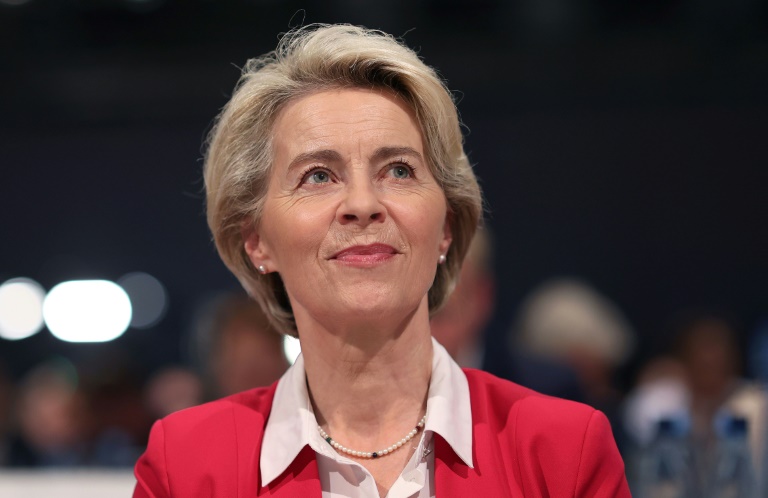
Europe’s fears of a long winter with scarce energy supplies because of Russia’s war in Ukraine are expected to top an annual speech by EU chief Ursula von der Leyen on Wednesday.

The “State of the European Union” address to the European Parliament is to focus on ways her European Commission can mitigate the looming crisis, which is being worsened by soaring inflation.

Among those listening to the speech will be Ukrainian First Lady Olena Zelenska, wife of President Volodymyr Zelensky, invited as von der Leyen’s guest of honour.

“The courage of the Ukrainian people has touched and inspired the world. Europe will stand with you every step of the way,” von der Leyen tweeted alongside photos of her and Zelenska in Strasbourg.

Energy measures mooted ahead of von der Leyen’s speech were a price cap on imported Russian gas, emergency compensation for consumers, a levy on non-gas electricity producers and an appeal for European households and businesses to cut back on power use.

Some of the responses — especially the idea of capping gas prices — have become bogged down by differences between EU member states, which will likely result in a less ambitious package than von der Leyen had sought.

EU countries are also wary of giving the commission too much power over their national energy policies, even though those have already been swept up in a bloc-wide push towards renewables as part of a carbon-neutral future.

European politicians accuse Moscow of trying to extort the EU over energy, as Russia tries to hit back at Western sanctions that pose long-term risks to its economy.

In the nearer term, however, Europe is feeling the pinch as it goes about unhitching itself from a long dependency on Russian fossil fuels.

Russian gas imports now account for around nine percent of total gas imports, down from around 40 percent before the Ukraine invasion and ensuing sanctions.

Russian President Vladimir Putin said a week ago it was “impossible” to isolate Moscow and vowed to cut gas and oil deliveries to countries imposing a price cap.

Russian giant Gazprom has shut the Nord Stream gas pipeline that supplies Germany, Europe’s export powerhouse.

Germany is “heading into a winter of recession”, the Ifo institute, a think tank, said this week.

EU energy commissioner Kadri Simson told MEPs on Tuesday: “There is no magic wand to bring prices back to the pre-war levels. But with a targeted emergency package we can ease the pressure on prices and help citizens looking forward.”

– Russian ‘blackmail’ –

Finnish Prime Minister Sanna Marin — whose country is joining NATO because of Russia’s invasion of Ukraine — said that Putin was trying to “blackmail” Europe.

She urged EU partners to stand up to Moscow and to stick together, including by imposing more sanctions.

She added: “The winter will be difficult. We see high energy prices already creating political division. Inflation will test many European societies, but we really have no choice but to stay united.”

The EU’s top diplomat, Josep Borrell, told MEPs that European consumers were “going to have to adjust heating habits” in the months ahead.

“If that is the price we have to pay in order to attain and achieve our energy independence then we’re doing so, we’re on the path to it,” he said.

To offset reduced gas supplies in winter, the EU has been stockpiling gas and has already filled its tanks to 82 percent capacity, exceeding a target originally set for October.

But in a sign of lingering unease, the Czech Republic, which holds the EU’s rotating presidency, on Tuesday announced it was convening an extraordinary meeting of the bloc’s energy ministers for September 30.

That meeting could also sign off on the proposals made by von der Leyen in her speech on Wednesday, some of which were to be negotiated further over the rest of this month.

Twitter ex-security chief in Congress as shareholders back Musk buyout

Twitter whistleblower Peiter Zatko told the US Congress Tuesday that the platform ignored his security concerns, in testimony that came as company shareholders greenlit Elon Musk’s $44 billion takeover deal.

Nearly 99 percent of the votes cast by stock owners endorsed the agreement with Musk to sell him the tech firm for $54.20 per share, Twitter said in a release.

Twitter added that it was ready to consummate the merger agreement immediately, and no later than September 15 as per a timeline mandated by the agreement.

The shareholder decision clears the way for the contract to close, even as billionaire Musk tries to exit it. Twitter has sued him to force it through.

“I’m here today because Twitter leadership is misleading the public, lawmakers, regulators and even its own board of directors,” Zatko, a hacker widely known as “Mudge”, told the hearing.

He said that, during his time as head of security for the platform from late 2020 until his dismissal in January this year, he tried alerting management to grave vulnerabilities to hacking or data theft — but to no avail.

“They don’t know what data they have, where it lives, or where it came from. And so, unsurprisingly, they can’t protect it,” Zatko said during his opening remarks to the Judiciary Committee.

He contended that employees across the company had too much access to user data.

Zatko testified that he brought evidence of problems to the executive team and “repeatedly sounded the alarm”.

“To put it bluntly, Twitter leadership ignored its engineers because key parts of leadership lacked competency to understand the scope of the problem,” he said.

“But more importantly, their executive incentives led them to prioritize profits over security.”

Zatko’s attorneys called the hearing a “watershed moment” that he hopes will enlighten the public and contribute to sorely needed legislation aimed at tech platforms.

Twitter has dismissed the 51-year-old’s complaint as being without merit.

But revelations of his whistleblower report in the US press in August were perfectly timed for Tesla chief Musk, who has used it as part of his justification for abandoning his unsolicited $44 buyout bid.

– ‘Elephant in the room’ –

In his report, Zatko directly refers to questions asked by Musk about bot accounts on Twitter, saying the company’s tools and teams for finding such accounts are insufficient.

Musk has listed bot accounts as among the reasons to justify his walking away from the deal. Twitter is suing to force him to complete the buyout, with a trial set to go ahead on October 17.

Zatko’s testimony “puts more pressure on Twitter camp ahead of Musk/Twitter trial,” Wedbush analyst Dan Ives told AFP.

“The Twitter shareholders approving this deal was a no brainer but now the major challenge begins with the Musk trial,” he said.

“The elephant in the room is the Zatko situation which could be an albatross for the Twitter camp and throw this deal off track.”

If Twitter prevails at trial, the judge could order the Tesla chief to pay billions of dollars to the company, or even complete the purchase.

Twitter CEO Parag Agrawal declined to testify at Tuesday’s hearing, citing the Musk litigation, Senator Chuck Grassley said.

Zatko insisted he had not made his revelations “out of spite or to harm Twitter.”

“Far from that, I continue to believe in the mission of the company,” he told Tuesday’s hearing.

Musk, himself an avid Twitter user, did not comment immediately on the hearing — but tweeted a popcorn emoji as Zatko spoke, suggesting he was watching the proceedings closely.

“Zatko’s testimony didn’t provide much new information,” said Insider Intelligence analyst Jasmine Enberg.

“There was also almost no mentions of bots, but that doesn’t mean that Musk won’t use Zatko’s allegation that Twitter was disinterested in removing bots to try to bolster his argument for walking away from the deal.”

Close Bitnami banner
Bitnami