US Business

Twitter ex-security chief in Congress as shareholders back Musk buyout

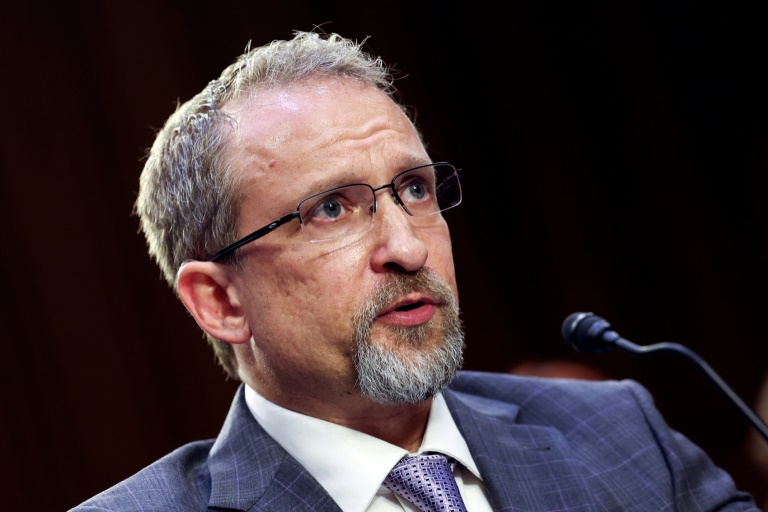
Twitter whistleblower Peiter Zatko told the US Congress Tuesday that the platform ignored his security concerns, in testimony that came as company shareholders greenlit Elon Musk’s $44 billion takeover deal.

Nearly 99 percent of the votes cast by stock owners endorsed the agreement with Musk to sell him the tech firm for $54.20 per share, Twitter said in a release.

Twitter added that it was ready to consummate the merger agreement immediately, and no later than September 15 as per a timeline mandated by the agreement.

The shareholder decision clears the way for the contract to close, even as billionaire Musk tries to exit it. Twitter has sued him to force it through.

“I’m here today because Twitter leadership is misleading the public, lawmakers, regulators and even its own board of directors,” Zatko, a hacker widely known as “Mudge”, told the hearing.

He said that, during his time as head of security for the platform from late 2020 until his dismissal in January this year, he tried alerting management to grave vulnerabilities to hacking or data theft — but to no avail.

“They don’t know what data they have, where it lives, or where it came from. And so, unsurprisingly, they can’t protect it,” Zatko said during his opening remarks to the Judiciary Committee.

He contended that employees across the company had too much access to user data.

Zatko testified that he brought evidence of problems to the executive team and “repeatedly sounded the alarm”.

“To put it bluntly, Twitter leadership ignored its engineers because key parts of leadership lacked competency to understand the scope of the problem,” he said.

“But more importantly, their executive incentives led them to prioritize profits over security.”

Zatko’s attorneys called the hearing a “watershed moment” that he hopes will enlighten the public and contribute to sorely needed legislation aimed at tech platforms.

Twitter has dismissed the 51-year-old’s complaint as being without merit.

But revelations of his whistleblower report in the US press in August were perfectly timed for Tesla chief Musk, who has used it as part of his justification for abandoning his unsolicited $44 buyout bid.

– ‘Elephant in the room’ –

In his report, Zatko directly refers to questions asked by Musk about bot accounts on Twitter, saying the company’s tools and teams for finding such accounts are insufficient.

Musk has listed bot accounts as among the reasons to justify his walking away from the deal. Twitter is suing to force him to complete the buyout, with a trial set to go ahead on October 17.

Zatko’s testimony “puts more pressure on Twitter camp ahead of Musk/Twitter trial,” Wedbush analyst Dan Ives told AFP.

“The Twitter shareholders approving this deal was a no brainer but now the major challenge begins with the Musk trial,” he said.

“The elephant in the room is the Zatko situation which could be an albatross for the Twitter camp and throw this deal off track.”

If Twitter prevails at trial, the judge could order the Tesla chief to pay billions of dollars to the company, or even complete the purchase.

Twitter CEO Parag Agrawal declined to testify at Tuesday’s hearing, citing the Musk litigation, Senator Chuck Grassley said.

Zatko insisted he had not made his revelations “out of spite or to harm Twitter.”

“Far from that, I continue to believe in the mission of the company,” he told Tuesday’s hearing.

Musk, himself an avid Twitter user, did not comment immediately on the hearing — but tweeted a popcorn emoji as Zatko spoke, suggesting he was watching the proceedings closely.

“Zatko’s testimony didn’t provide much new information,” said Insider Intelligence analyst Jasmine Enberg.

“There was also almost no mentions of bots, but that doesn’t mean that Musk won’t use Zatko’s allegation that Twitter was disinterested in removing bots to try to bolster his argument for walking away from the deal.”
US annual inflation eased in August – but likely not enough

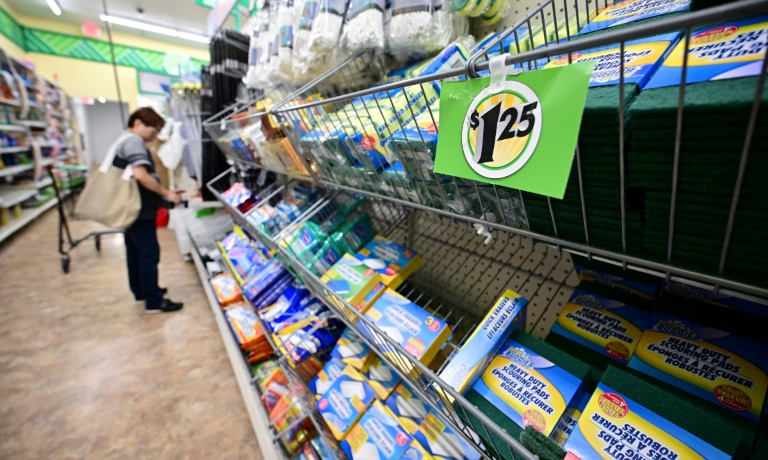
US annual inflation slowed slightly in August, largely thanks to falling gasoline prices — but likely not enough to satisfy the Federal Reserve and President Joe Biden, as high prices continue inflicting pain on Americans. 

The consumer price index (CPI), a key measure of inflation, actually rose 0.1 percent in August compared to July, when prices were flat, the Labor Department said Tuesday, a disappointing result amid widespread expectations that inflation would fall in the month.

The annual inflation pace improved to 8.3 percent, higher than expected but slightly below the prior months and confirming a slowdown from the blistering 9.1 percent rate in June — the highest in 40 years.

Prices have been soaring for months, exacerbated by the Russian invasion of Ukraine, which has impacted energy and food costs, as well as ongoing supply chain snarls amid Covid lockdowns in China.

Inflation has become a hot political issue just weeks away from key midterm congressional elections, and Biden has made fighting high prices his top domestic priority.

But he acknowledged Tuesday that it will take longer to slow inflation pressures.

“Today’s data show more progress in bringing global inflation down in the US economy. Overall, prices have been essentially flat in our country these last two months,” Biden said in a statement.

However, “it will take more time and resolve to bring inflation down.”

While Americans will welcome relief at the pump — there has been a steady drop in gasoline prices, which fell 10.6 percent last month — costs for food and housing continue to rise, straining family budgets.

The food index increased 11.4 percent over the last year, the largest 12-month increase since the period ending May 1979, the report said.

Medical care also has been a key contributor, and auto prices have accelerated, rising 0.8 percent in the month, according to the report.

More worryingly, the report showed that — excluding volatile food and energy prices — “core” CPI rose 6.3 percent over the past 12 months, faster than the 5.9 percent pace seen in July and June. 

Core CPI jumped 0.6 percent in August, double the pace in July, the data showed.

– ‘Ugly’ data –

Jason Furman, a former White House economist said the data was “not pretty.”

The “ugly” core data show “Broad-based relief not coming,” he said on Twitter.

The Federal Reserve views inflation as the biggest risk to the world’s largest economy, and has moved aggressively to cool demand, increasing the benchmark lending rate four times this year — with a third consecutive three-quarter point hike widely expected next week.

The Fed actions increase the cost of borrowing for homebuyers and businesses, which tends to cool investment and spending.

Fed Chair Jerome Powell has said the central bank will do whatever it takes to ensure high prices do not become entrenched, even at the risk of tipping the economy into a recession.

“The clock is ticking,” Powell warned Friday, pledging to “keep at it until the job is done.”

Treasury Secretary Janet Yellen on Sunday acknowledged that there is “certainly a risk” of an economic downturn amid the rising lending costs, but she noted the US job market is “exceptionally strong” with nearly two vacancies for every worker looking for a job.

She cautioned that “we can’t have a strong labor market without inflation under control.”

The strong job market — the unemployment rate was 3.7 percent in August — provides some comfort to the Fed, giving policymakers room to maneuver, and potentially quell inflation without a steep increase in joblessness.

But the worker shortage remains a concern since it could fuel a dangerous wage-spiral.

Rubeela Farooqi of High Frequency Economics said the latest data confirm “inflation readings remain unacceptably high for policymakers.” 

“Coupled with a labor market that is still strong, the data seal the deal for another aggressive, 75-basis point, rate hike next week,” she said in an analysis.

US annual inflation eased in August – but likely not enough

US annual inflation slowed slightly in August, largely thanks to falling gasoline prices — but likely not enough to satisfy the Federal Reserve and President Joe Biden, as high prices continue inflicting pain on Americans. 

The consumer price index (CPI), a key measure of inflation, actually rose 0.1 percent in August compared to July, when prices were flat, the Labor Department said Tuesday, a disappointing result amid widespread expectations that inflation would fall in the month.

The annual inflation pace improved to 8.3 percent, higher than expected but slightly below the prior months and confirming a slowdown from the blistering 9.1 percent rate in June — the highest in 40 years.

Prices have been soaring for months, exacerbated by the Russian invasion of Ukraine, which has impacted energy and food costs, as well as ongoing supply chain snarls amid Covid lockdowns in China.

Inflation has become a hot political issue just weeks away from key midterm congressional elections, and Biden has made fighting high prices his top domestic priority.

But he acknowledged Tuesday that it will take longer to slow inflation pressures.

“Today’s data show more progress in bringing global inflation down in the US economy. Overall, prices have been essentially flat in our country these last two months,” Biden said in a statement.

However, “it will take more time and resolve to bring inflation down.”

While Americans will welcome relief at the pump — there has been a steady drop in gasoline prices, which fell 10.6 percent last month — costs for food and housing continue to rise, straining family budgets.

The food index increased 11.4 percent over the last year, the largest 12-month increase since the period ending May 1979, the report said.

Medical care also has been a key contributor, and auto prices have accelerated, rising 0.8 percent in the month, according to the report.

More worryingly, the report showed that — excluding volatile food and energy prices — “core” CPI rose 6.3 percent over the past 12 months, faster than the 5.9 percent pace seen in July and June. 

Core CPI jumped 0.6 percent in August, double the pace in July, the data showed.

– ‘Ugly’ data –

Jason Furman, a former White House economist said the data was “not pretty.”

The “ugly” core data show “Broad-based relief not coming,” he said on Twitter.

The Federal Reserve views inflation as the biggest risk to the world’s largest economy, and has moved aggressively to cool demand, increasing the benchmark lending rate four times this year — with a third consecutive three-quarter point hike widely expected next week.

The Fed actions increase the cost of borrowing for homebuyers and businesses, which tends to cool investment and spending.

Fed Chair Jerome Powell has said the central bank will do whatever it takes to ensure high prices do not become entrenched, even at the risk of tipping the economy into a recession.

“The clock is ticking,” Powell warned Friday, pledging to “keep at it until the job is done.”

Treasury Secretary Janet Yellen on Sunday acknowledged that there is “certainly a risk” of an economic downturn amid the rising lending costs, but she noted the US job market is “exceptionally strong” with nearly two vacancies for every worker looking for a job.

She cautioned that “we can’t have a strong labor market without inflation under control.”

The strong job market — the unemployment rate was 3.7 percent in August — provides some comfort to the Fed, giving policymakers room to maneuver, and potentially quell inflation without a steep increase in joblessness.

But the worker shortage remains a concern since it could fuel a dangerous wage-spiral.

Rubeela Farooqi of High Frequency Economics said the latest data confirm “inflation readings remain unacceptably high for policymakers.” 

“Coupled with a labor market that is still strong, the data seal the deal for another aggressive, 75-basis point, rate hike next week,” she said in an analysis.

Ken Starr, who investigated Clinton, dead at 76

Ken Starr, who headed the investigation that led to the impeachment of president Bill Clinton for lying about his affair with White House intern Monica Lewinsky, died on Tuesday. He was 76.

Starr died in Houston, Texas, of complications from surgery, his family said in a statement.

A former judge and conservative legal stalwart, Starr was best known for leading the probe that resulted in Clinton’s December 1998 impeachment by the then Republican-controlled House of Representatives.

The Democratic president was acquitted by the Senate the following year.

Starr’s involvement with Clinton began when he was appointed special counsel in 1994 to investigate a land deal known as Whitewater involving Bill and Hillary Clinton.

That expanded into a probe of the president’s affair with the 24-year-old Lewinsky, which Clinton initially denied. 

The so-called Starr Report documented the president’s sexual relationship with the White House intern in graphic detail and resulted in Clinton being accused of perjury and obstruction of justice.

Starr, who was once touted as a potential Supreme Court justice, later wrote a book about the probe —  “Contempt: A Memoir of the Clinton Investigation.”

Time magazine chose Clinton and Starr as its “Men of the Year” in 1998.

Named a judge at the age of 37 by president Ronald Reagan, Starr went on to serve as solicitor general from 1989 to 1993 under president George H.W. Bush, arguing 25 cases before the Supreme Court.

Starr served as president of Baylor University from 2010 to 2016, when he left over the handling of sexual assault complaints against American football players at the Baptist school.

– ‘Impeachment is hell’ –

In January 2020, Starr joined the legal team that defended Republican president Donald Trump in his first impeachment trial before the Senate.

Starr lamented that the Senate was being called on “all too frequently” to try impeachments.

“Indeed we’re living in what I think can be aptly described as the age of impeachment,” he said.

“Like war, impeachment is hell,” Starr added. “At least presidential impeachment is hell.”

Like Clinton, Trump was impeached by the House but acquitted by the Senate.

Republican Senate minority leader Mitch McConnell praised Starr as a “brilliant litigator, an impressive leader, and a devoted patriot.”

“Ken poured his remarkable energy and talent into promoting justice, defending the Constitution, and upholding the rule of law,” McConnell said in a statement.

Lewinsky, in a February 2018 article in Vanity Fair, lashed out at the special counsel’s investigation which put her at the center of a political firestorm.

She said she had a chance meeting with Starr in December 2017 at a New York restaurant.

“I felt determined, then and there, to remind him that, 20 years before, he and his team of prosecutors hadn’t hounded and terrorized just me but also my family,” she said.

Looking for an apology, Lewinsky said she told Starr that while she wished she had made “different choices” she would have liked his office to have done the same.

Starr gave an “inscrutable smile,” Lewinsky said, and replied “I know. It was unfortunate.”

On Tuesday, Lewinsky tweeted that her “thoughts about Ken Starr bring up complicated feelings.”

“But of more importance, is that I imagine it’s a painful loss for those who love him,” she added.

Stocks slump, dollar jumps as US inflation runs hot

Stock markets hit reverse while the dollar shot higher Tuesday after data showing US inflation remains high and widespread.

Wall Street shares plunged, with the Dow losing nearly 1,300 points and the S&P 500 falling 4.3 percent, after the hotter-than-expected report, closely watched by the Federal Reserve as it prepares for its next interest rate decision next week.

Stocks had rebounded in recent days as investors clung to the hope that slowing price increases would allow the Federal Reserve to eventually pull back on its tough anti-inflation fight, but the data extinguished those hopes for now.

While the annual increase in the consumer price index (CPI) slowed slightly in August to 8.3 percent, monthly inflation actually rose 0.1 percent compared to July, the Labor Department said, a disappointing result amid widespread expectations that CPI would fall in the month.

More concerning, the report showed that excluding volatile food and energy prices, “core” CPI accelerated sharply in August, and rose 6.3 percent over the past 12 months, after the 5.9 percent pace seen in July and June.

Despite the welcome relief from falling gasoline prices, food, housing and medical care costs continue to rise.

The dollar, which had fallen against its major rivals in anticipation of slowing inflation, shot higher.

“Today was a crazy day,” said Greg Bassuk of AXS Investments, who added that the equities decline was “more than just a one-off overreaction.”

“I think part of the strong reaction today is based on the greater concern that investors in the market have about … the extent to which high prices have infiltrated in areas that were less anticipated,” he told AFP.

Gains in Europe swiftly turned to losses following the US inflation data.

Fed Chair Jerome Powell has made it clear the increases in the benchmark lending rate would continue until inflation is tamed.

Economists say the data confirm the Fed will announce a third consecutive three-quarter point increase next week, ending the slight possibility central bankers would opt for a more modest 0.5 point hike.

Market analyst Michael Hewson said the core inflation figures mean more aggressive rate hikes will be needed to tame rising prices.

“While the narrative of peak inflation may well be still valid, getting it down from these levels is likely to be a much tougher battle,” he said.

Inflation has soared around the globe this year owing to sky-high energy and food bills.

This has been caused to a large extent by supply constraints after economies reopened from pandemic lockdowns and in the wake of Russia’s invasion of Ukraine.

The dollar has soared as the Federal Reserve moved earlier and more aggressively than other central banks to raise interest rates and contain inflation.

– Key figures at around 2100 GMT –

New York – Dow: DOWN 3.9  percent to 31,104.97  (close)

New York – S&P 500: DOWN 4.3 percent at 3,932.69 (close)

New York – Nasdaq: DOWN 5.2 percent at 11,633.57 (close)

EURO STOXX 50: DOWN 1.7 percent at 3,586.18

London – FTSE 100: DOWN 1.2 percent at 7,385.86 (close)

Frankfurt – DAX: DOWN 1.6 percent at 13,188.95 (close)

Paris – CAC 40: DOWN 1.4 percent at 6,245.69 (close)

Tokyo – Nikkei 225: UP 0.3 percent at 28,614.63 (close)

Hong Kong – Hang Seng Index: DOWN 0.2 percent at 19,326.86 (close)

Shanghai – Composite: UP 0.1 percent at 3,263.80 (close)

Euro/dollar: DOWN at $0.9974 from $1.0120

Pound/dollar: DOWN at $1.1500 from $1.1680 

Euro/pound: UP at 86.74 pence from 86.64 pence 

Dollar/yen: UP at 144.43 yen from 142.82 yen  

Brent North Sea crude: DOWN 0.9 percent at $93,17 a barrel

West Texas Intermediate: DOWN 0.5 percent at $87.31 per barrel

burs-rl/imm/hs/st

Stocks slump, dollar jumps as US inflation runs hot

Stock markets hit reverse while the dollar shot higher Tuesday after data showing US inflation remains high and widespread.

Wall Street shares plunged, with the Dow losing nearly 1,300 points and the S&P 500 falling 4.3 percent, after the hotter-than-expected report, closely watched by the Federal Reserve as it prepares for its next interest rate decision next week.

Stocks had rebounded in recent days as investors clung to the hope that slowing price increases would allow the Federal Reserve to eventually pull back on its tough anti-inflation fight, but the data extinguished those hopes for now.

While the annual increase in the consumer price index (CPI) slowed slightly in August to 8.3 percent, monthly inflation actually rose 0.1 percent compared to July, the Labor Department said, a disappointing result amid widespread expectations that CPI would fall in the month.

More concerning, the report showed that excluding volatile food and energy prices, “core” CPI accelerated sharply in August, and rose 6.3 percent over the past 12 months, after the 5.9 percent pace seen in July and June.

Despite the welcome relief from falling gasoline prices, food, housing and medical care costs continue to rise.

The dollar, which had fallen against its major rivals in anticipation of slowing inflation, shot higher.

“Today was a crazy day,” said Greg Bassuk of AXS Investments, who added that the equities decline was “more than just a one-off overreaction.”

“I think part of the strong reaction today is based on the greater concern that investors in the market have about … the extent to which high prices have infiltrated in areas that were less anticipated,” he told AFP.

Gains in Europe swiftly turned to losses following the US inflation data.

Fed Chair Jerome Powell has made it clear the increases in the benchmark lending rate would continue until inflation is tamed.

Economists say the data confirm the Fed will announce a third consecutive three-quarter point increase next week, ending the slight possibility central bankers would opt for a more modest 0.5 point hike.

Market analyst Michael Hewson said the core inflation figures mean more aggressive rate hikes will be needed to tame rising prices.

“While the narrative of peak inflation may well be still valid, getting it down from these levels is likely to be a much tougher battle,” he said.

Inflation has soared around the globe this year owing to sky-high energy and food bills.

This has been caused to a large extent by supply constraints after economies reopened from pandemic lockdowns and in the wake of Russia’s invasion of Ukraine.

The dollar has soared as the Federal Reserve moved earlier and more aggressively than other central banks to raise interest rates and contain inflation.

– Key figures at around 2100 GMT –

New York – Dow: DOWN 3.9  percent to 31,104.97  (close)

New York – S&P 500: DOWN 4.3 percent at 3,932.69 (close)

New York – Nasdaq: DOWN 5.2 percent at 11,633.57 (close)

EURO STOXX 50: DOWN 1.7 percent at 3,586.18

London – FTSE 100: DOWN 1.2 percent at 7,385.86 (close)

Frankfurt – DAX: DOWN 1.6 percent at 13,188.95 (close)

Paris – CAC 40: DOWN 1.4 percent at 6,245.69 (close)

Tokyo – Nikkei 225: UP 0.3 percent at 28,614.63 (close)

Hong Kong – Hang Seng Index: DOWN 0.2 percent at 19,326.86 (close)

Shanghai – Composite: UP 0.1 percent at 3,263.80 (close)

Euro/dollar: DOWN at $0.9974 from $1.0120

Pound/dollar: DOWN at $1.1500 from $1.1680 

Euro/pound: UP at 86.74 pence from 86.64 pence 

Dollar/yen: UP at 144.43 yen from 142.82 yen  

Brent North Sea crude: DOWN 0.9 percent at $93,17 a barrel

West Texas Intermediate: DOWN 0.5 percent at $87.31 per barrel

burs-rl/imm/hs/st

Second US monkeypox death as virus linked to brain inflammation

A second US death was linked to monkeypox on Tuesday as health authorities published a study describing how two previously healthy young men experienced inflammation of the brain and spinal cord as a result of the virus.

There have been nearly 22,000 US cases in the current global outbreak, which began in May, but new infections have been falling since mid-August as authorities have distributed hundreds of thousands of vaccine doses.

The latest fatal case involved a severely immunocompromised resident of Los Angeles County who had been hospitalized, the local health department said, without revealing further details about the case.

“Persons severely immunocompromised who suspect they have monkeypox are encouraged to seek medical care and treatment early and remain under the care of a provider during their illness,” the department said.

The first US death linked to the viral illness occurred in Texas and was announced on August 30, although authorities said that as the person was severely immunocompromised, they were investigating what role monkeypox had played.

The current global outbreak is primarily affecting men who have sex with men.

Historically, the virus has been spread via direct contact with lesions, body fluids and respiratory droplets, and sometimes through indirect contamination via surfaces such as shared bedding. 

But in this outbreak, there is preliminary evidence that sexual transmission may also play a role.

– Brain and spinal cord inflammation –

The US Centers for Disease Control and Prevention meanwhile published a report about two unvaccinated men in their 30s who experienced brain and spinal cord inflammation after testing positive for the virus.

The first, patient A, was a gay man in his 30s from Colorado whose symptoms began with fever chills and malaise but progressed to rashes on his face, scrotum and extremities, with swabs of lesions testing positive for the virus.

He also developed lower extremity weakness and numbness, was unable to empty his bladder, experienced a persistent and painful erection, and was hospitalized.

Magnetic resonance imaging (MRI) revealed brain and spinal cord inflammation, and he was treated with the oral monkeypox antiviral tecovirimat as well as other drugs, and began to improve at two weeks.

He was released but continued to have left leg weakness and required an assistive walking device at one month followup.

A second person, patient B, was also a gay man in his 30s from the capital Washington. His fever, rashes and muscle pain progressed to bowel and bladder incontinence and progressive flaccid weakness of both legs.

Brain and spinal cord inflammation was confirmed on MRI and he was intubated in an intensive care unit, where he was treated with intravenous tecovirimat, as well a drug to reduce inflammation, and finally blood plasma exchange.

He remains in hospital but can walk with the assistance of a device.

The report said the underlying mechanism behind the two cases was unclear — it might have been direct invasion of the central nervous system, or an autoimmune response triggered by monkeypox infection elsewhere in the body. 

US sailor killed at Pearl Harbor finally laid to rest

The remains of a US sailor killed during the Japanese attack on Pearl Harbor over 80 years ago were buried Tuesday at Arlington National Cemetery, a spokeswoman told AFP.

Herbert Jacobson, nicknamed Bert by his relatives, was 21 years old when he was reported missing after the surprise attack by Japanese warplanes on the morning of December 7, 1941.

The assault, which catapulted the United States into World War II, damaged or destroyed most of the US fleet stationed at the Hawaii naval base, and resulted in the deaths of over 2,000 Americans.

It was the deadliest attack on US soil until the September 11, 2001 terrorist attacks.

Jacobson was among the more than 400 men who lost their lives aboard the USS Oklahoma, one of four battleships sunk by Japanese torpedoes.

The ship was refloated two years later, after which any recovered remains were buried at a military cemetery in Hawaii.

An attempt to identify the remains through dental records was made some years later, though it was largely unsuccessful.

A new campaign was launched in 2003, with a subsequent one in 2015, to use more advanced identification methods, such as DNA matching.

Since 2003, according to the US defense agency managing the program, 361 individuals have been successfully identified among the USS Oklahoma remains, including those of Bert Jacobson in 2019.

His funeral at Arlington National Cemetery, located across the river from Washington, had been previously postponed due to the Covid pandemic.

Russia announces 'massive strikes' across Ukraine front

Russia said Tuesday it was carrying out “massive strikes” across the Ukrainian frontline and accused Kyiv’s soldiers of abusing civilians in territories recaptured in a dramatic counter-offensive.

Moscow’s retaliation came after it was forced to pull back troops from swathes of the northeast, particularly in the Kharkiv region, following Kyiv’s lightning assault to wrest back terrain.

The territorial shifts marked one of Russia’s biggest setbacks since its troops were repelled from Kyiv in the earliest days of the nearly seven-month-long war, yet Moscow signalled it was no closer to agreeing to a negotiated peace.

“Air, rocket and artillery forces are carrying out massive strikes on units of the Ukrainian armed forces in all operational directions,” the Russian defence ministry said in its daily briefing on the conflict.

“High-precision” strikes have also been launched on Ukrainian positions around Sloviansk and Konstantinovka in the eastern Donetsk region, it added.

President Vladimir Putin’s spokesman said that in the Kharkiv region, reports were emerging of “outrageous” treatment of civilians.

“There are a lot of punitive measures… people are being tortured, people are being mistreated and so on,” Dmitry Peskov told journalists.

Russia’s allegations came after Ukrainian authorities claimed to have found four bodies of civilians with “signs of torture” in the recaptured eastern village of Zaliznychne.

Moscow also pushed back on Tuesday against what it called growing “bias” at United Nations’ human rights bodies, a day after a top UN official condemned Moscow’s “intimidation” of people in Russia opposed to its war in Ukraine.

– ‘Shift in momentum’ –

Ukrainian forces launched their counter-offensive in early September, seemingly catching Russia’s military off guard. 

Images posted by the Ukrainian military showed crates of munitions and military hardware scattered across territory abandoned by Russian forces.

Around the northeastern town of Balakliya, AFP journalists saw evidence of fierce battles, with buildings destroyed or damaged and streets mostly deserted.

President Volodymyr Zelensky said Tuesday that Ukraine had completed “stabilization measures” in more than 4,000 square kilometres (1,500 square miles) of recaptured territory, and was working to do the same in a similarly sized area.

“The remnants of occupiers and sabotage groups are being discovered, collaborators are being detained, the entire security is being restored,” he said in his evening address.

In the northeast, dozens of areas including the cities of Izyum, Kupiansk and Balakliya have been retaken, Ukraine said.

Ukrainian forces in the Kharkiv region have since September 6 reclaimed more than 300 settlements and areas home to around 150,000 people, said deputy foreign affairs minister Ganna Maliar.  

US National Security Council spokesman John Kirby said Tuesday that Washington would soon provide another tranche in its multi-billion-dollar effort to supply arms to Ukraine.

Kirby said it is too early to say whether gains by Ukraine signal a turning point in the overall war.

“What you’re seeing is certainly a shift in momentum by the Ukrainian armed forces,” he said, but Zelensky should be the one to “determine and decide whether he feels militarily they’ve reached a turning point.”

Despite the “dramatic events… it’s war and war is unpredictable,” Kirby added.

– Germany holds back –

Ukraine Defence Minister Oleksii Reznikov told French daily Le Monde in a Monday interview that the war has entered a new phase with the help of Western weapons.

Kyiv has nonetheless ramped up its calls for Western allies to rush more sophisticated weapons to help in its fight. 

“Weapons, weapons, weapons have been on our agenda since spring. I am grateful to partners who have answered our call: Ukraine’s battlefield successes are our shared ones,” Foreign Minister Dmytro Kuleba said.

But Germany was once again under the spotlight for failing to deliver Leopard battle tanks that Kyiv is seeking.

“Not a single rational argument on why these weapons cannot be supplied, only abstract fears and excuses,” said Kuleba, after Chancellor Olaf Scholz dodged a question on the issue on Monday, saying only that Germany would not “go-it-alone” on weapons deliveries.

In a phone call, the German leader urged Putin to “come to a diplomatic solution as quickly as possible, based on a ceasefire, a complete withdrawal of Russian forces and respect for the territorial integrity and sovereignty of the Ukraine”.

US must be 'at the table' in semiconductor field: Blinken

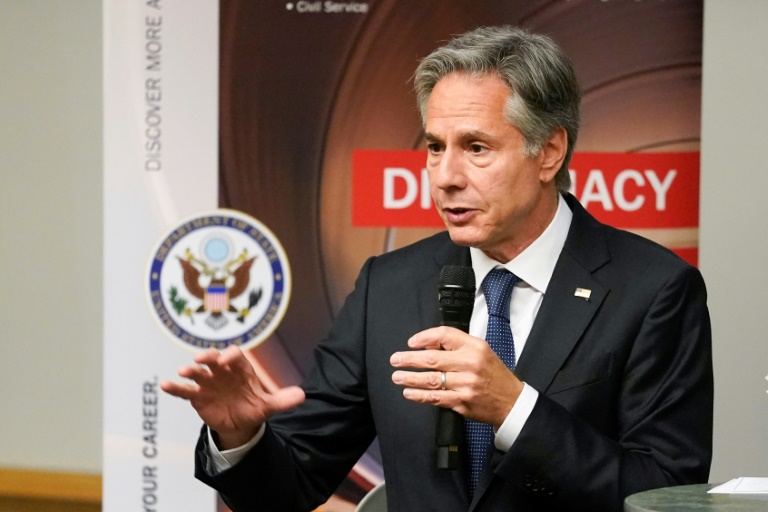
The United States should take on a greater role in the global semiconductor industry for the sake of its economy and security, US Secretary of State Antony Blinken said Tuesday.

Addressing students and researchers at Purdue University, home to one of America’s top engineering schools, Blinken stressed the importance of “getting into that tech diplomacy, making sure that the United States is at the table when decisions are being made.”

He added: “We need to be there, and not only do we need to be there, we need to be able to carry the debate.”

The United States is leading an unprecedented effort to supercharge domestic semiconductor research and production, both to alleviate Covid-19 supply chain issues and shift away from reliance on Chinese technology.

The electronic components are essential for multiple global sectors, including the auto industry and smartphones.

The Chips and Science Act, which US President Joe Biden signed into law last month, includes around $52 billion to promote domestic production of the microchips.

“What we do here resonates around the world,” Blinken said at Purdue, noting that the technology affects all sectors, including foreign policy and defense.

Despite being far from Silicon Valley, the stereotypical hub of US technological innovation, Purdue boasts a prestigious engineering school and has several laboratories specializing in semiconductor research.

US Secretary of Commerce Gina Raimondo accompanied Blinken on a tour of several research facilities at the Midwestern institution.

“The Chips Act is an investment in America,” she said, adding that the United States needs to go from “lab to fab,” meaning fabrication.

The two senior officials had just returned from a visit on Monday to Mexico, where they invited the country to join the United States in its multibillion-dollar push to boost semiconductor manufacturing to compete with China.

Supply chain snarls due to Covid-19 have disrupted production in all sectors, including advanced technology, and also revealed the dependence of the United States and other countries on China for technological components.

Biden recently called semiconductor production a matter of national security.

Close Bitnami banner
Bitnami