US Business

US inflation likely eased in August — but not enough

US inflation likely slowed in August, largely thanks to falling gasoline prices, but not enough to satisfy policymakers, especially President Joe Biden, as high prices continue to inflict pain on American families and businesses. 

The consumer price index (CPI), a key measure of inflation, is expected to have fallen in August compared to the prior month — the first decline since November 2020. The Labor Department is due to release the latest data Tuesday.

The annual inflation pace also is likely to have improved to 8.0 percent, according to a MarketWatch consensus forecast, from the blistering 9.1 percent rate in June — the highest in 40 years.

Prices have been soaring for months, exacerbated by the Russian invasion of Ukraine, which has impacted energy and food prices, as well as ongoing supply chain snarls amid Covid lockdowns in China.

While Americans will welcome relief at the pump, from the steady drop in gasoline prices, high costs for food and housing continue to strain family budgets.

“Risks remain skewed to the upside, due to an uncertain outlook for key inputs, including agricultural and energy commodities, as well as the pass-through of wage gains in a tight labor market,” according to Barclays US analysts Pooja Sriram and Jonathan Hill.

They project a one percent increase in food prices in the month, with housing up 0.6 percent.

Inflation also has become a hot political issue just weeks away from key midterm congressional elections, and Biden has made fighting high prices his top domestic priority, so any relief will be welcomed at the White House.

“Inflation is way too high, and it’s essential that we bring it down,” Treasury Secretary Janet Yellen said Sunday, echoing a comment she and other administration officials have made repeatedly to show their sympathy with the plight faced by consumers and firms.

– Recession risk –

The Federal Reserve views inflation as the biggest risk to the world’s largest economy, and has moved aggressively to cool demand, increasing the benchmark lending rate four times this year, with a third consecutive three-quarter point hike widely expected next week.

The Fed actions increase the cost of borrowing for homebuyers and businesses, which tends to cool investment and spending.

Fed Chair Jerome Powell has said the central bank will do whatever it takes to ensure high prices do not become entrenched, even at the risk of tipping the economy into a recession.

“The clock is ticking,” Powell warned Friday, pledging to “keep at it until the job is done.”

Yellen acknowledged that there is “certainly a risk” of an economic downturn amid the rising lending costs, but she noted the US job market is “exceptionally strong” with nearly two vacancies for every worker looking for a job.

And she cautioned that “we can’t have a strong labor market without inflation under control.”

Fed officials have said they are encouraged by easing price pressures, but not satisfied. A survey released Monday by the New York Federal Reserve Bank showed consumer inflation expectations fell sharply in August.

The strong job market — the unemployment rate was 3.7 percent in August — also provides some comfort, giving policymakers room to maneuver, and potentially quell inflation without a steep increase in joblessness.

But the worker shortage remains a concern since it could fuel a dangerous wage-spiral.

And many economists are skeptical the Fed can achieve the desired “soft-landing.”

“It is unlikely, but not impossible,” for the Fed to achieve that goal, according to Laurence Ball of Johns Hopkins University and Daniel Leigh and Prachi Mishra of the International Monetary Fund.

In a paper published last week they warned that “the small increase in unemployment the Fed projects won’t be enough” to bring inflation down.
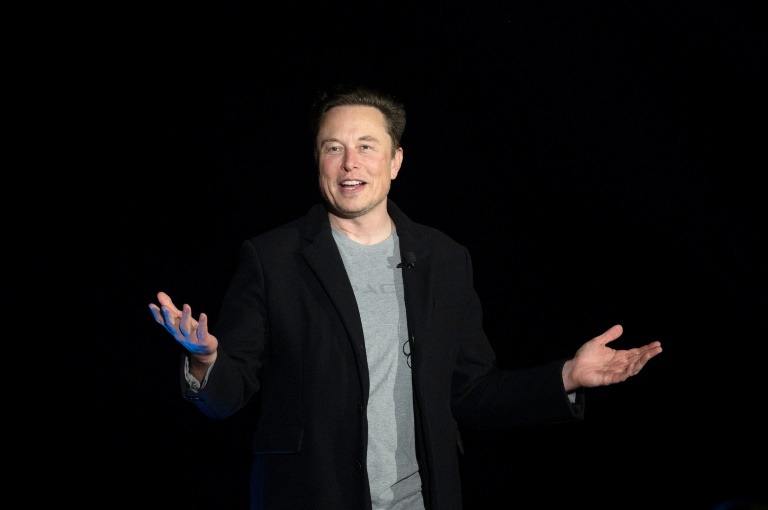
Peiter 'Mudge' Zatko: The wild card in Musk's clash with Twitter

Respected in cybersecurity circles, former Twitter security chief Peiter “Mudge” Zatko is a wild card in Elon Musk’s legal gambit to break a $44 billion deal to buy the social network.

Zatko’s whistleblower complaint of “extreme, egregious deficiencies” in Twitter defenses against hackers and “meager efforts to fight spam” plays into Musk’s quest to convince a judge that he was duped when he foisted his unsolicited offer on the company.

Twitter has dismissed 51-year-old Zatko’s complaint as being without merit, and vowed to show it did nothing wrong at an October trial in a Delaware court.

If the court focuses on the fact that the world’s richest man declined to do fact gathering typically associated with big-money mergers, Zatko’s allegations could wind up being moot.

He is to testify on Tuesday before a US Senate committee looking into whether security practices at Twitter were dangerously lax.

Zatko first testified before Congress 24 years ago, when he was a long-haired hacker determined to warn about the perils of poorly protected government computer systems.

This time, he will be called on to provide details about his accusations that Twitter hid flaws in its security as well as its fight against accounts run by spammers or software instead of genuine users.

Musk has listed the number of inauthentic accounts on Twitter as among reasons to justify walking away from the buyout deal he made in April.

“Once both parties step into court its a high risk/high reward scenario for both parties with the major X variable now being the Zatko whistleblower claims,” Wedbush analyst Dan Ives said in a note to investors.

“We continue to view the Zatko situation as a Pandora’s Box scenario for Twitter.”

If Twitter prevails at trial, the judge could order the Tesla chief to pay billions of dollars to the company, or even complete the purchase.

Twitter shareholders are expected to endorse the buyout deal in a special vote Tuesday.

– ‘Big problems’ –

“If  Mudge says Twitter has cybersecurity problems, Twitter has big problems,” said Vectra cybersecurity firm chief technology officer Aaron Turner, who says he has known Zatko since the 1980s.

A son of scientists, Zatko grew up in the US states of Alabama and Pennsylvania, his passions including music and software.

In 1996, he joined a hacker collective called L0pht. He and other members of the group testified before Congress two years later.

“It was the first time the U.S. government publicly referenced ‘hackers’ in a positive context,” Zatko said in a 2019 tweet marking an anniversary of the testimony.

Zatko has done stints at Google and online payment services company Stripe, and also at Pentagon research arm DARPA.

Twitter founder and former chief Jack Dorsey recruited Zatko in July 2020 after a spectacular hack of the accounts of celebrities and political figures including Barack Obama, Musk and Kim Kardashian.

US President Joe Biden’s team offered Zatko a position as White House security director early last year but he declined the job, believing he had work left to do at Twitter, his attorneys said.

-House of cards? –

Twitter fired Zatko in January, citing “ineffective leadership and poor performance.”

Zatko’s lawyers rejected Twitter’s claim, contending instead that he was terminated after a clash with top executives who refused to acknowledge his concerns about platform security.

“Mr Zatko put his career on the line because of his concerns about Twitter users, the public and the company’s shareholders,” his attorneys said.

Andrew Hay, director of operations at the Lares cybersecurity consulting firm, said “those in the industry who know Mudge know that his intentions have historically been honorable, non-partisan, and designed to benefit the world.”

Zatko’s whistleblower complaint, filed just days after Twitter agreed to give him a multi-million dollar severance package, is not necessarily evidence that the company misrepresented user numbers, according to analysts.

Musk’s lawyers will “try to prove that Twitter tried to sell him a house of cards,” but security flaws would have to be “really serious,” said University  of California, Berkeley law school professor Adam Badawi.

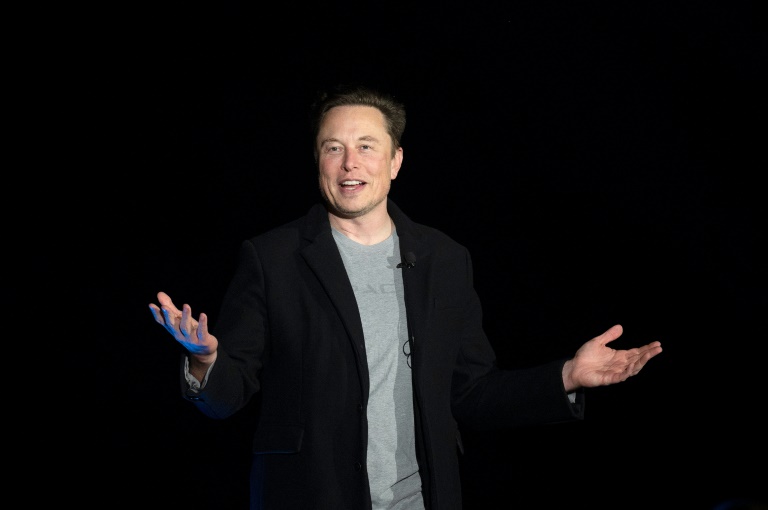
Peiter 'Mudge' Zatko: The wild card in Musk's clash with Twitter

Respected in cybersecurity circles, former Twitter security chief Peiter “Mudge” Zatko is a wild card in Elon Musk’s legal gambit to break a $44 billion deal to buy the social network.

Zatko’s whistleblower complaint of “extreme, egregious deficiencies” in Twitter defenses against hackers and “meager efforts to fight spam” plays into Musk’s quest to convince a judge that he was duped when he foisted his unsolicited offer on the company.

Twitter has dismissed 51-year-old Zatko’s complaint as being without merit, and vowed to show it did nothing wrong at an October trial in a Delaware court.

If the court focuses on the fact that the world’s richest man declined to do fact gathering typically associated with big-money mergers, Zatko’s allegations could wind up being moot.

He is to testify on Tuesday before a US Senate committee looking into whether security practices at Twitter were dangerously lax.

Zatko first testified before Congress 24 years ago, when he was a long-haired hacker determined to warn about the perils of poorly protected government computer systems.

This time, he will be called on to provide details about his accusations that Twitter hid flaws in its security as well as its fight against accounts run by spammers or software instead of genuine users.

Musk has listed the number of inauthentic accounts on Twitter as among reasons to justify walking away from the buyout deal he made in April.

“Once both parties step into court its a high risk/high reward scenario for both parties with the major X variable now being the Zatko whistleblower claims,” Wedbush analyst Dan Ives said in a note to investors.

“We continue to view the Zatko situation as a Pandora’s Box scenario for Twitter.”

If Twitter prevails at trial, the judge could order the Tesla chief to pay billions of dollars to the company, or even complete the purchase.

Twitter shareholders are expected to endorse the buyout deal in a special vote Tuesday.

– ‘Big problems’ –

“If  Mudge says Twitter has cybersecurity problems, Twitter has big problems,” said Vectra cybersecurity firm chief technology officer Aaron Turner, who says he has known Zatko since the 1980s.

A son of scientists, Zatko grew up in the US states of Alabama and Pennsylvania, his passions including music and software.

In 1996, he joined a hacker collective called L0pht. He and other members of the group testified before Congress two years later.

“It was the first time the U.S. government publicly referenced ‘hackers’ in a positive context,” Zatko said in a 2019 tweet marking an anniversary of the testimony.

Zatko has done stints at Google and online payment services company Stripe, and also at Pentagon research arm DARPA.

Twitter founder and former chief Jack Dorsey recruited Zatko in July 2020 after a spectacular hack of the accounts of celebrities and political figures including Barack Obama, Musk and Kim Kardashian.

US President Joe Biden’s team offered Zatko a position as White House security director early last year but he declined the job, believing he had work left to do at Twitter, his attorneys said.

-House of cards? –

Twitter fired Zatko in January, citing “ineffective leadership and poor performance.”

Zatko’s lawyers rejected Twitter’s claim, contending instead that he was terminated after a clash with top executives who refused to acknowledge his concerns about platform security.

“Mr Zatko put his career on the line because of his concerns about Twitter users, the public and the company’s shareholders,” his attorneys said.

Andrew Hay, director of operations at the Lares cybersecurity consulting firm, said “those in the industry who know Mudge know that his intentions have historically been honorable, non-partisan, and designed to benefit the world.”

Zatko’s whistleblower complaint, filed just days after Twitter agreed to give him a multi-million dollar severance package, is not necessarily evidence that the company misrepresented user numbers, according to analysts.

Musk’s lawyers will “try to prove that Twitter tried to sell him a house of cards,” but security flaws would have to be “really serious,” said University  of California, Berkeley law school professor Adam Badawi.

Television's A-listers ooze glamour on Emmys red carpet

Television’s biggest stars on Monday hit the red carpet — well, the gold carpet — for the Emmys, for the first full-fledged gala honoring the best of the small screen in the age of Covid-19.

After a virtual ceremony in 2020 and a scaled-back show last year, gowns and tuxedos were de rigueur at the Microsoft Theater in downtown Los Angeles, where the glitterati arrived in bright sunshine.

Here are some takeaways about who wore what at the Emmys: strapless dresses were big, as were metallics.

– Pretty in pink – 

For the first major Tinseltown awards show since the Oscars earlier this year, some of Hollywood’s A-list fashionistas opted for classic pretty in pink vibes.

Fashion house darling Elle Fanning, who is nominated for her work as Catherine the Great on “The Great,” wowed onlookers in a black strapless Sharon Long gown with a pink ruffled neckline and dramatic sweeping train with a pink lining.

Hannah Waddingham, a winner last year and nominee this year for comedy smash hit “Ted Lasso,” also embraced baby pink in a structured strapless Dolce & Gabbana corset dress that exploded in a puff of a full-length tulle skirt. 

And Connie Britton, one of the many acting nominees for HBO’s breakout dark comedy “The White Lotus,” rocked a floaty salmon-colored Monique Lhuillier gown with matching cape. 

– Shimmering metallics –

Glittering metallic fabrics are always a winner when one is hoping to end the night with a golden Emmys statuette.

Britain’s Lily James, who disappeared into the role of bombshell actress Pamela Anderson for the limited series “Pam and Tommy,” wore a skin-tight bronze Versace gown with ruching at the waist.

Quinta Brunson, a multiple nominee for producing, writing and starring in her breakout ABC sitcom “Abbott Elementary,” stunned the red carpet in a strapless brown Dolce & Gabbana gown with a bronze skirt and a daring thigh-high slit.

And Sandra Oh, nominated for the final season of “Killing Eve,” slayed in a sequined sparkling purple suit with a matching blouse open to the navel.

“I want to channel my inner rock star, and I love Prince, and I love the color purple,” she told Variety on the red carpet.

Not to be left out, “Euphoria” star Colman Domingo — who has already won an Emmy for best guest actor in a drama, an award handed out before Monday’s main event — was on trend in a patterned D&G gold suit with a black see-through shirt.

– Classic elegance –

Zendaya, widely tipped to repeat as best actress in a drama for raw teen series “Euphoria,” went for basic black — a strapless Valentino gown with a sweeping ball skit and pockets. Accessories? Diamonds and a black headband.

Andrew Garfield, Seth Rogen, “Succession” star Nicholas Braun and singer John Legend all looked quite dapper in white — a bold look for a big return to Emmys red carpet style.

NASA's Moon mission pushed back, again

NASA is now targeting September 27 as the earliest possible launch date for its uncrewed Artemis 1 mission to the Moon, the agency said in a blog post Monday.

The date would depend on engineering teams successfully carrying out a test to fuel up the Space Launch System rocket, and receive a waiver to avoid retesting batteries on an emergency flight system that is used to destroy the rocket if it strays from its designated range.

If it does not receive the waiver, the rocket will have to be wheeled back to its assembly building, pushing the timeline back several weeks.

For the September 27 date, a “70-minute launch window opens at 11:37 am EDT,” while the mission would end with an ocean splashdown of the Orion capsule on November 5.

A potential next date comes on October 2.

The Artemis 1 space mission hopes to test the SLS as well as the unmanned Orion capsule that sits atop it, in preparation for future Moon-bound journeys with humans aboard.

Once launched, it will take several days for the spacecraft to reach the Moon, flying around 60 miles (100 kilometers) at its closest approach.

One of the trip’s main objectives is to test the capsule’s heat shield — which at 16 feet (five meters) in diameter is the largest ever built — when the ship re-enters the atmosphere.

The next mission, Artemis 2, will take astronauts to the Moon without landing on its surface, while the third — set for the mid-2020s — would see the first woman and person of color on lunar soil.

NASA wants to build a lunar space station called Gateway and keep a sustained presence on the Moon to gain insight into how to survive very long space missions, ahead of a mission to Mars in the 2030s.

Ex-Google CEO says Ukraine proves value of IT in war

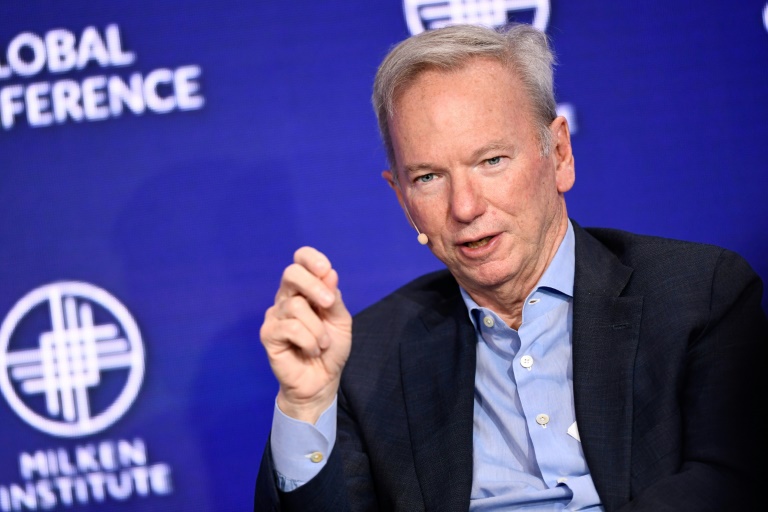
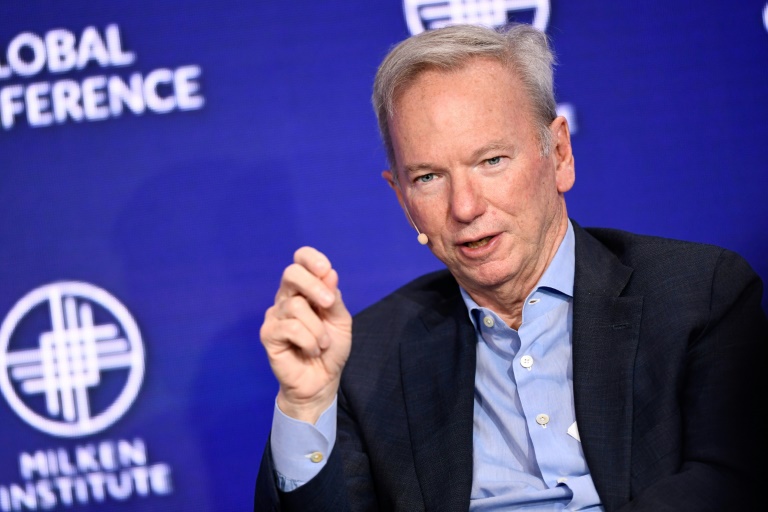
Ukraine has been a very effective proving ground for the use of contemporary information technology in war, from satellite dishes to smartphone apps, Eric Schmidt, the former Google chief executive, said Monday.

Schmidt, now a US government consultant on artificial intelligence, told reporters after a 36-hour visit to the country that the civilian tech sector has been crucial to Kyiv’s defense.

The proof came the day after Russian troops invaded on February 24. 

After a long stall, Ukraine’s legislature came together to agree on a crucial step to protect all the government’s data from Russian hackers and strikes.

“In one day, they had a meeting of the parliament and changed that law… they moved all their data from government servers in Kyiv to the cloud,” Schmidt said. 

“The war gave everybody a political excuse to do the right thing,” he said. 

The second crucial move came with US tech billionaire Elon Musk’s donation of access to his Starlink satellite-based broadband system, effectively insulating both the public and Ukrainian military from a Russian assault on telecommunications.

Musk and donors sent in some 20,000 ground terminals with small dish antennas that allowed everyday transmissions as well as helping fighters with targeting data. That stymied a key goal of the Russian attackers.

“Elon Musk is genuinely a hero here,” said Schmidt. “This allowed the strategy of shutting down the internet by the opposition to fail.”

– Field intelligence from citizen apps –

Two apps meanwhile got citizens directly involved, Schmidt said.

A function called “E-Enemy” was added to the popular Diia app used for government services that permitted people to report things such as damage from shelling, or Russian troop sightings.

And an encrypted Swiss chat service called Threema allowed users to send such data to the military without exposing their identities.

The military would get thousands of such reports every day, said Schmidt, and filter them with artificial intelligence programs.

“They would whittle them down to targets using computer intelligence and human intelligence and eventually go after them,” he said.

“So if you think about that, here’s what they had: they had an internet that stayed up, they had their government data protected,” and a way for citizens to give them intelligence information, he said.

Ukraine, long an incubator for programming as well as illegal hacking skills, has a deep IT workforce that has been able to launch cyberattacks against the Russia, breaking into their communications.

The country has also skillfully used biometric and facial recognition techniques to identify Russian troops involved in atrocities, such as the massacre in Bucha early in the war.

In addition, Ukrainian programmers have been skilled in making drones useful in the war.

“I can just report that based on my small amount of data, the Ukrainian tech industry really did make a contribution to the front,” said Schmidt.

Ex-Google CEO says Ukraine proves value of IT in war

Ukraine has been a very effective proving ground for the use of contemporary information technology in war, from satellite dishes to smartphone apps, Eric Schmidt, the former Google chief executive, said Monday.

Schmidt, now a US government consultant on artificial intelligence, told reporters after a 36-hour visit to the country that the civilian tech sector has been crucial to Kyiv’s defense.

The proof came the day after Russian troops invaded on February 24. 

After a long stall, Ukraine’s legislature came together to agree on a crucial step to protect all the government’s data from Russian hackers and strikes.

“In one day, they had a meeting of the parliament and changed that law… they moved all their data from government servers in Kyiv to the cloud,” Schmidt said. 

“The war gave everybody a political excuse to do the right thing,” he said. 

The second crucial move came with US tech billionaire Elon Musk’s donation of access to his Starlink satellite-based broadband system, effectively insulating both the public and Ukrainian military from a Russian assault on telecommunications.

Musk and donors sent in some 20,000 ground terminals with small dish antennas that allowed everyday transmissions as well as helping fighters with targeting data. That stymied a key goal of the Russian attackers.

“Elon Musk is genuinely a hero here,” said Schmidt. “This allowed the strategy of shutting down the internet by the opposition to fail.”

– Field intelligence from citizen apps –

Two apps meanwhile got citizens directly involved, Schmidt said.

A function called “E-Enemy” was added to the popular Diia app used for government services that permitted people to report things such as damage from shelling, or Russian troop sightings.

And an encrypted Swiss chat service called Threema allowed users to send such data to the military without exposing their identities.

The military would get thousands of such reports every day, said Schmidt, and filter them with artificial intelligence programs.

“They would whittle them down to targets using computer intelligence and human intelligence and eventually go after them,” he said.

“So if you think about that, here’s what they had: they had an internet that stayed up, they had their government data protected,” and a way for citizens to give them intelligence information, he said.

Ukraine, long an incubator for programming as well as illegal hacking skills, has a deep IT workforce that has been able to launch cyberattacks against the Russia, breaking into their communications.

The country has also skillfully used biometric and facial recognition techniques to identify Russian troops involved in atrocities, such as the massacre in Bucha early in the war.

In addition, Ukrainian programmers have been skilled in making drones useful in the war.

“I can just report that based on my small amount of data, the Ukrainian tech industry really did make a contribution to the front,” said Schmidt.

Biden evokes US Moon mission in renewed cancer fight

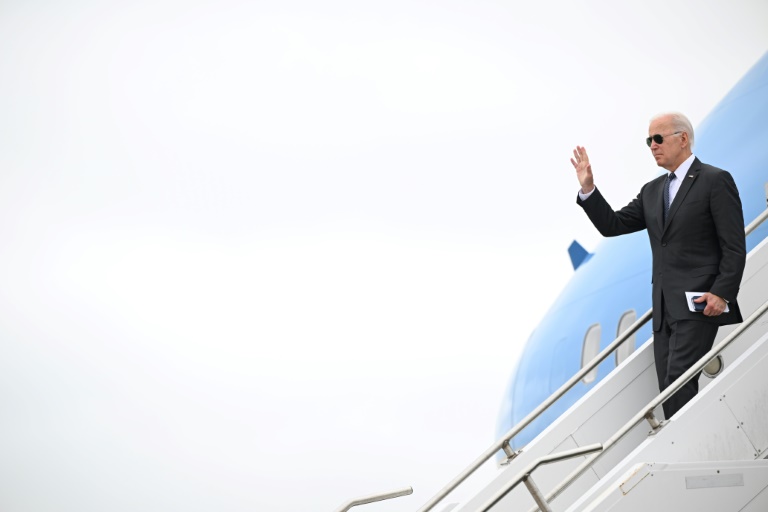
President Joe Biden on Monday invoked the national effort to land a man on the Moon 60 years ago in a speech touting his Cancer Moonshot initiative, which aims to slash cancer death rates across the United States by half.

The Democrat was in Boston for an address deliberately echoing John F. Kennedy’s famous 1962 “Moonshot speech” in which he called for landing an American on the lunar surface — something achieved in 1969, after his assassination.

This time, Biden is pushing government-backed efforts to coordinate and fund treatment of cancer, search for cures and generally to prevent the disease through better public health.

Cancer remains the number two cause of death after heart disease and Biden said his Cancer Moonshot can halve death rates over the next 25 years.

“I know we can do this together, because I know this: there’s nothing, nothing, nothing beyond our capacity or ability if we work together as the United States of America,” he said.

Biden said that as in 1962, when the country was in the thick of the Cold War and domestic tensions were high over civil rights, the United States today is at an “inflection point.”

And like Kennedy with his Moon program, Biden said he wanted to set “a national purpose that could rally the American people in a common cause.”

– Backing from JFK’s daughter –

Caroline Kennedy, daughter of the assassinated JFK and now US ambassador to Australia, said her father had defied the doubters in the 1960s, when “scientists weren’t sure even that a Moon landing on the surface of the Moon was possible.”

Kennedy, however, “understood the power of the idea” and saw the project as a way to unite the country. “No one embodies that spirit more than President Joe Biden,” she said. “As president, he has restored the soul of America.”

The battle against cancer is personal for Biden: his son Beau died of brain cancer in 2015 when Biden was vice president to Barack Obama.

Biden noted that cancer “does not discriminate…, it doesn’t care if you’re a Republican or Democrat.”

“I give you my word as a Biden: this Cancer Moonshot is one of the reasons why I ran for president.”

The linkage to the Moon program also sought to add to Democratic momentum ahead of November’s midterm congressional elections where the Democrats face the possibility of a Republican sweep in Congress, severely complicating the last two years of Biden’s first term.

– Change the trajectory –

Biden said his plan will push for cures and ways to manage cancer, turning “more cancers from death sentences into chronic diseases that people can live with.”

“We know we can change the trajectory,” he said.

The president said he was harnessing funding but also government expertise in high-tech research similar to the defense industry, where public-private partnerships drive innovations in weaponry and other military needs.

A new agency named Advanced Research Projects Agency for Health (ARPA-H) and the White House’s new “cancer cabinet” will “increase funding to break log jams and to speed breakthroughs,” while getting entrepreneurs support from cutting edge scientists with NASA, the Pentagon and the energy department.

The goal is to “use all the assets we have,” Biden said, and this “may require unusual partnerships.”

– Biotech boost –

Earlier, Biden signed an executive order meant to bolster the trailblazing US biotech sector’s efforts to take on growing commercial rivals in China.

The order brings federal support for “areas that will define US biotechnology leadership and our economic competitiveness in the coming decades,” a senior Biden administration official told reporters.

The official said that while US biotech research leads the world, the industrial applications are increasingly in the hands of other countries.

“Unless we translate biotechnology innovation into economic and societal benefits for all Americans, other countries, including and especially China, are aggressively investing in this sector,” posing a “risk,” the official said.

The White House says the US biotech industry is on the cutting edge of medical advances — recently seen in the rapid development of vaccines, tests and therapeutics to help manage the Covid-19 pandemic — but that the potential scope goes much further.

The official speaking to reporters cited studies suggesting that “before the end of the decade, engineering biology holds the potential to be used in manufacturing industry that accounts for more than one third of global output. That’s equivalent to almost $30 trillion in terms of value.”

Growing areas for biotech industry include new plastics and rubbers, jet fuel, and environmentally friendly fertilizers.

Oregon blaze latest major wildfire to engulf US West

A massive wildfire burned out of control Monday in Oregon forcing residents to flee and threatening towns and thousands of homes, in the latest blaze to scorch the US West during a blistering summer.

Dozens of active infernos in California, Idaho, Oregon, Washington and other western states have ravaged more than 1,200 square miles (3,100 square kilometers), worsening air quality and highlighting the devastating effects of a historic two-decade-plus drought that has left the region parched.

The Cedar Creek fire east of the city of Eugene, Oregon experienced “extreme” growth over the weekend and has now consumed 86,734 acres (35,100 hectares) — roughly twice the size of the US capital Washington — with zero percent containment as of Monday, according to the National Wildfire Coordinating Group (NWCG).

More than 1,200 firefighters and other personnel have converged on the steep mountainous terrain, much of it in US national forest land and hard to reach.

“They have been constructing firelines away from the active fire edge, along roads and trails, where they have a better chance of successfully stopping the fire,” NWCG reported. 

Evacuations were ordered for Lane and Deschutes counties, and the Deschutes and Willamette national forests have been closed. More than 2,000 homes were under threat, authorities said.

Dense smoke has enveloped the region, and according to NWCG, “smoke has created unhealthy air quality for communities east of the fire as well, including Bend,” a town that serves as a gateway for outdoor tourism.

“Get out of here as fast as I can,” Herman Schimmel, who moved to the small town of Westfir only recently, told The Oregonian newspaper. “That’s all I was thinking about.”

Local media reported that cooler and calmer weather had improved conditions somewhat later on Monday, with officials easing evacuation instructions in some areas.

The western United States is more than two decades into a historic drought that scientists say is being worsened by human-made climate change.

Much of the countryside is parched, creating conditions for hot, fast and destructive wildfires.

– Homes threatened –

An even larger blaze was burning in northwestern Oregon Monday, in a more remote region. The Double Creek fire, first detected on August 30, has consumed 155,000 acres and was 15 percent contained.

According to the National Interagency Fire Center (NIFC), more than 90 fires were currently burning across seven states in the West: California, Idaho, Montana, Oregon, Utah, Washington and Wyoming.

More than 1,200 square miles in total was burning — an area larger that Yosemite National Park — NIFC reported Sunday.

The Mosquito Fire, California’s current largest blaze, has now swept through 46,500 acres in the Sierra Nevada Mountains, with several small nearby towns reportedly evacuated.

The official CalFire website said that while cooler temperatures — following more than a week of blistering heat — had somewhat slowed the fire’s progress, stronger winds were pushing it to the north and northeast, threatening hundreds of homes.

Meanwhile, firefighters were working to contain the major Fairview fire, south of Los Angeles, which has claimed two lives.

Firefighters have the blaze 53 percent under control, local media reported Monday, raising hopes it may be slowing down after rainfall and lower temperatures at the weekend.

Air quality alerts have been issued in Oregon, Washington and Idaho due to smoke from the blazes.

Stock markets rally, as euro briefly surges

Stock markets rallied Monday, building on last week’s momentum as investors priced in the expectation of further interest rate hikes aimed at taming decades-high inflation.

The euro surged against main rivals, a day after German central bank chief Joachim Nagel signaled that the European Central Bank (ECB) would probably continue raising its key interest rate, an echo of a similar statement from Federal Reserve Chair Jerome Powell on Friday.

Investors worldwide are awaiting key US consumer price data for August, due Tuesday, with the annual inflation pace expected to ease to eight percent — still well above the Fed’s target of two percent.

That will be welcome relief, but is unlikely to be enough to sway the Fed from an expected three-quarter percentage point interest rate hike next week, the third consecutive increase of that size.

The ECB raised its key rate by a historic 75 basis points last week, and markets expect a similar-sized move at the October policy meeting.

Wall Street stocks ended with solid gains Monday — the broad-based S&P 500 advanced 1.1 percent — continuing the upswing last week that snapped a three-week losing streak.

Equities have been volatile of late as speculation about whether the Fed might ease up on its aggressive rate hikes in the near future sparks alternating hopes and fears. 

Fed officials have more or less ended the debate, saying while the increases may become smaller, the benchmark lending rate will not be coming down any time soon.

– Dollar loses ground –

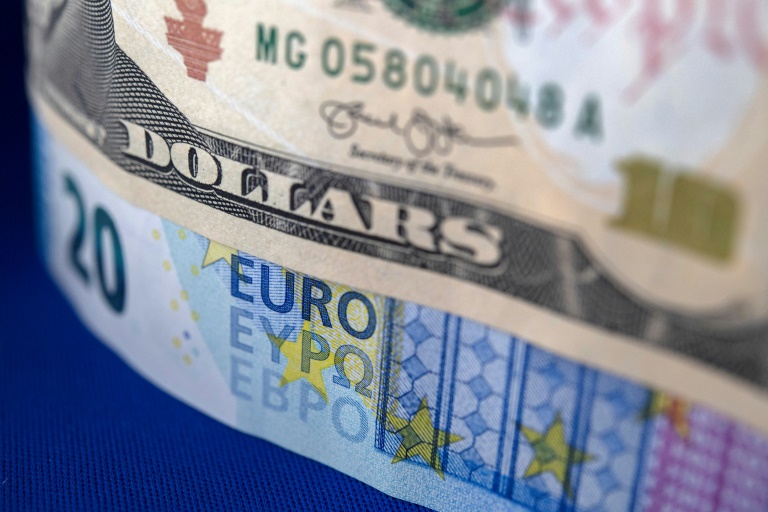
The European single currency rocketed more than 1.4 percent against the dollar and 1.6 percent versus the yen before trimming gains.

The US dollar also fell sharply against the pound sterling and the Swiss franc.

In equities, Frankfurt led the way, closing more than two percent higher, followed by Paris and London not far behind after data showed the British economy rebounded slightly in July.

Tokyo closed with a gain of more than one percent thanks to a weaker yen. Markets in Hong Kong, mainland China and South Korea were closed for a public holiday.

Oil prices gained Monday but remain pressured by the possibility of global demand weakening as growth slows and China’s harsh zero-Covid policy continues to sap economic activity.

– Key figures at around 2100 GMT –

New York – Dow: UP 0.7 percent at 32,381.34 (close)

New York – S&P 500: UP 1.1 percent at 4,110.41 (close)

New York – Nasdaq: UP 1.3 percent at 12,266.41 (close)

London – FTSE 100: UP 1.7 percent at 7,473.03 points (close)

Frankfurt – DAX: UP 2.4 percent at 13,402.27 points (close)  

Paris – CAC 40: UP 1.95 percent at 6,333.59 points (close)  

EURO STOXX 50: UP 2.1 percent at 3,646.51 points

Tokyo – Nikkei 225: UP 1.2 percent at 28,542.11 (close) 

Hong Kong – Hang Seng Index: closed for public holiday

Shanghai – Composite: closed for public holiday

Euro/dollar: UP at $1.0120 from $1.0046 

Pound/dollar: UP at $1.1680 from $1.1587 

Euro/pound: DOWN at 86.64 pence from 86.84 pence

Dollar/yen: DOWN at 142.82 yen from 142.56 yen 

Brent North Sea crude: UP 1.24 percent at $94.00 per barrel

West Texas Intermediate: UP 1.14 percent at $87.78. per barrel

Close Bitnami banner
Bitnami