US Business

Uncrewed Blue Origin rocket crashes in setback for space tourism

An uncrewed Blue Origin rocket carrying research payloads crashed shortly after liftoff from Texas on Monday, but the capsule carrying experiments escaped and floated safely back to Earth.

The incident marked a setback for Amazon founder and executive chair Jeff Bezos’ company as well as the space tourism sector, though observers were encouraged by the fact that had people been aboard, they would have likely survived.

Blue Origin tweeted a short video clip showing the moment when the capsule fired emergency thrusters to separate itself from its booster rocket early, around a minute after launching from the company’s base in west Texas.

“Booster failure on today’s uncrewed flight. Escape system performed as designed,” Blue said on its website, noting the rocket “impacted the ground” instead of landing upright as it normally does. 

The New Shepard suborbital rockets have been grounded pending an investigation, the Federal Aviation Administration (FAA) said, which is standard procedure.

“The capsule landed safely and the booster impacted within the designated hazard area. No injuries or public property damage have been reported,” the FAA added.

It was the 23rd mission for the New Shepard rocket program, named after the first American in space, and the first to end in failure. 

NS-23, which had 36 experiments on board, was first set to launch in late August, but was delayed due to inclement weather.

The anomaly occurred as the rocket was climbing at 700 miles per hour (1,126 kilometers per hour) at an altitude of about 28,000 feet (8,500 meters).  The rocket appeared to stall as it experienced the technical issue.

The capsule then initiated its escape sequence and outsped the booster, which it engulfed in bright yellow flames.

The incident marks a setback for both Blue Origin and the nascent space tourism industry.

– ‘Escape system worked well’ –

But billionaire entrepreneur Jareed Isaacman, who chartered a private space mission with SpaceX last year, tweeted “looks like the launch escape system worked well.”

“With so many launches, so many vehicles, engines and boosters in development across the industry, it should not be that surprising to see events like this,” Isaacman added.

Blue Origin began flying humans to space on 10-minute there and back rides last year for an unspecified ticket price. 

In all it has flown 32 people — some as paying customers and others as guests. Notable passengers include founder Bezos and Star Trek icon William Shatner.

Passengers experience a few minutes’ weightlessness and observe the curve of the Earth before the capsule re-enters the atmosphere and floats down for a gentle desert landing.

Other companies offering tourism experiences include Virgin Galactic, which hasn’t flown since carrying its founder Richard Branson to the edge of space in July 2021.

While Virgin Galactic and Blue Origin offer short jaunts to the cosmos, Elon Musk’s SpaceX works with another company called Axiom Space to offer longer missions to the International Space Station. 

Uncrewed Blue Origin rocket crashes in setback for space tourism

An uncrewed Blue Origin rocket carrying research payloads crashed shortly after liftoff from Texas on Monday, but the capsule carrying experiments escaped and floated safely back to Earth.

The incident marked a setback for Amazon founder and executive chair Jeff Bezos’ company as well as the space tourism sector, though observers were encouraged by the fact that had people been aboard, they would have likely survived.

Blue Origin tweeted a short video clip showing the moment when the capsule fired emergency thrusters to separate itself from its booster rocket early, around a minute after launching from the company’s base in west Texas.

“Booster failure on today’s uncrewed flight. Escape system performed as designed,” Blue said on its website, noting the rocket “impacted the ground” instead of landing upright as it normally does. 

The New Shepard suborbital rockets have been grounded pending an investigation, the Federal Aviation Administration (FAA) said, which is standard procedure.

“The capsule landed safely and the booster impacted within the designated hazard area. No injuries or public property damage have been reported,” the FAA added.

It was the 23rd mission for the New Shepard rocket program, named after the first American in space, and the first to end in failure. 

NS-23, which had 36 experiments on board, was first set to launch in late August, but was delayed due to inclement weather.

The anomaly occurred as the rocket was climbing at 700 miles per hour (1,126 kilometers per hour) at an altitude of about 28,000 feet (8,500 meters).  The rocket appeared to stall as it experienced the technical issue.

The capsule then initiated its escape sequence and outsped the booster, which it engulfed in bright yellow flames.

The incident marks a setback for both Blue Origin and the nascent space tourism industry.

– ‘Escape system worked well’ –

But billionaire entrepreneur Jareed Isaacman, who chartered a private space mission with SpaceX last year, tweeted “looks like the launch escape system worked well.”

“With so many launches, so many vehicles, engines and boosters in development across the industry, it should not be that surprising to see events like this,” Isaacman added.

Blue Origin began flying humans to space on 10-minute there and back rides last year for an unspecified ticket price. 

In all it has flown 32 people — some as paying customers and others as guests. Notable passengers include founder Bezos and Star Trek icon William Shatner.

Passengers experience a few minutes’ weightlessness and observe the curve of the Earth before the capsule re-enters the atmosphere and floats down for a gentle desert landing.

Other companies offering tourism experiences include Virgin Galactic, which hasn’t flown since carrying its founder Richard Branson to the edge of space in July 2021.

While Virgin Galactic and Blue Origin offer short jaunts to the cosmos, Elon Musk’s SpaceX works with another company called Axiom Space to offer longer missions to the International Space Station. 
'Squid Game' competes for Emmys history

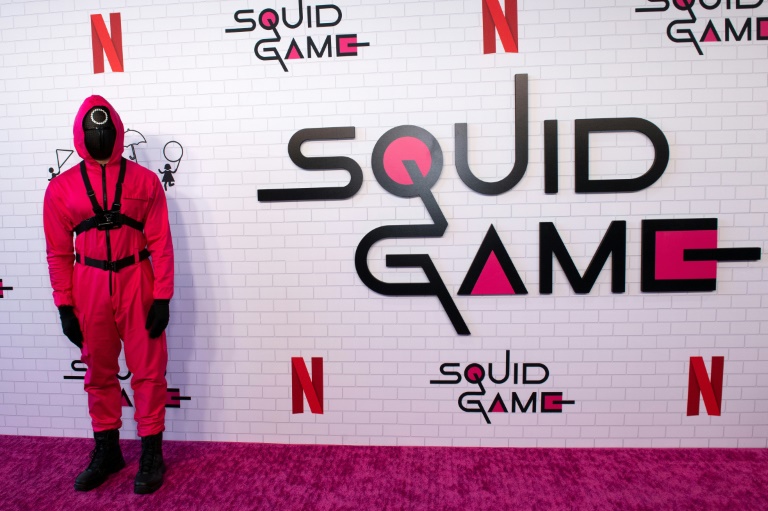
South Korea’s “Squid Game” is bidding to make Emmys history Monday by becoming the first foreign-language television show to win top honors for best drama.

The Netflix show — in which misfits and criminals compete for cash in barbaric and deadly versions of schoolyard games — is aiming to emulate the success of Oscar-winning South Korean movie “Parasite” with a triumph at TV’s top prize gala.

But it faces tough competition from previous winner “Succession,” the tale of a family vying for control of a media empire — rife with Shakespearean backstabbing — that earned the most nominations overall at 25.

“It’s pretty hard to go against that HBO juggernaut,” said Pete Hammond, awards columnist for Hollywood publication Deadline.

Experts polled by awards prediction site Gold Derby have tipped “Succession” as the favorite.

“I do think (‘Squid Game’) is going to win best actor,” noted Hammond — an outcome that would make Lee Jung-jae the category’s first winner for a non-English performance.

The South Korean series has already tasted Emmys victory, with four trophies at the Creative Emmys, the pre-gala event at which many statuettes are awarded in minor categories, including one for Lee Yoo-mi for best guest actress in a drama.

Other shows contending for the night’s top drama prizes include Apple TV+ dystopian workplace series “Severance,” starring Adam Scott, and the final season of Netflix’s much-lauded crime saga “Ozark.”

Zendaya, who became the youngest-ever best actress winner two years ago for HBO’s hard-hitting teen drama “Euphoria,” is tipped to repeat.

– Keaton ‘lock’ –

Best comedy series looks like an open goal for season two of Apple TV+’s fish-out-of-water soccer coach “Ted Lasso.” 

In the best actor category, star Jason Sudeikis is up against Bill Hader, whose dark hitman comedy “Barry” returns from a three-year absence.

Jean Smart is heavily tipped to repeat as best comedy actress for “Hacks,” in which she plays an aging Las Vegas diva forced to reinvent her dated stand-up routine.

Offering some fresh blood are the nominees in the limited series section, which honors shows capped at a single season.

Four of the five contenders chronicle real-life scandals.

“Dopesick” looks at the US opioid crisis, “The Dropout” recounts the Theranos fraud, “Pam and Tommy” recalls an infamous celebrity sex tape and “Inventing Anna” is inspired by a Russian con artist who scammed upper-crust New York.

But the pundits’ favorite in a tight race is “The White Lotus,” a satirical look at hypocrisy and wealth among the guests at a luxury Hawaii hotel.

The show — which is bending Emmy rules having returned for a second season, albeit with a largely new cast and location — has a whopping eight acting nominations, including for Jennifer Coolidge.

It took five statuettes at the Creative Emmys.

“I think Michael Keaton has got a lock on actor in a limited series” for ‘Dopesick’,” said Hammond, while Amanda Seyfried’s turn as disgraced Theranos boss Elizabeth Holmes in “The Dropout” is expected to prove popular.

– ‘The Slap’ –

The ceremony, which will be hosted by “Saturday Night Live” stalwart Kenan Thompson, is the first major Hollywood awards ceremony since this year’s extraordinary Oscars.

Back in March, Will Smith stunned viewers by slapping Chris Rock live on stage for cracking a joke about his wife.

Emmy organizers say they don’t expect a repeat.

“We have smart security. We have people around that make quick decisions,” Television Academy head Frank Scherma told Deadline.

“I can’t imagine that lightning will strike twice.” 

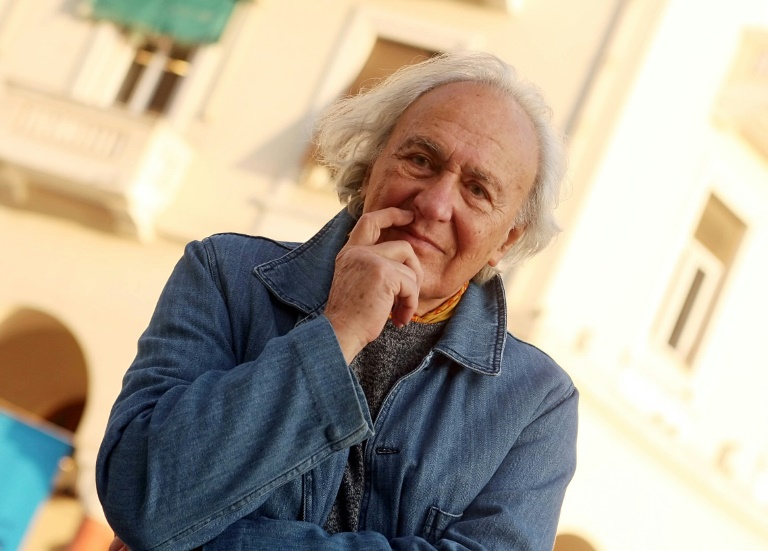
Photographer William Klein dies aged 96

American photographer William Klein, who made his mark with imagery of fashion and urban life, died in Paris on Saturday aged 96, his son Pierre Klein said in a statement Monday.

Klein, whose striking depictions of the restlessness and violence of city life helped revolutionise photography, died “peacefully”, the statement said.

Celebrated as one of the 20th century’s most influential artists, Klein also worked in film and fashion.

His death comes as a retrospective of his work draws to a close at New York’s International Center of Photography.

“According to his wishes, the funeral will be a very intimate event,” Pierre Klein said, although he added that there will be a later public memorial for his father.

Klein’s imagery was inspired by tabloid sensationalism, overturning established styles in street and fashion photography — including as one of the first to depict models outside studio backdrops.

His mostly black-and-white work plays with off-centre subjects and boosted contrast, with young men brandishing weapons at point-blank range or scowling faces seen in close-up, sometimes out of focus.

“William Klein took pictures like a boxer,” said Alain Genestar, director of the specialist magazine Polka and its associated gallery.

– Camera won at poker –

Born into a New York family of ultra-Orthodox Jews in 1926, William Klein grew to love Europe during his military service.

He became a painter after World War II, studying under French artist Fernand Leger, and also had dreams of becoming an architect.

But Klein was inspired by photography after winning his first camera in a poker game, beginning immediately to shoot Paris monuments with the German-made Rolleiflex.

Some of his early almost abstract pictures caught the eye of Vogue artistic director Alexander Liberman, who hired Klein when the photographer was just 26.

“Life is good and good for you in New York,” a book of photos from this return to his native city, was released in France in 1956 but long snubbed by US publishers, who disliked his eye for the grimy side of Manhattan life.

“My motto? ‘Anything goes’. No rules, no restrictions, no limits,” he later said of the work.

The book was spotted by legendary Italian film-maker Federico Fellini, who offered Klein a job as an assistant director on the movie “Nights of Cabiria”.

– Political turn –

Klein himself made a film about Rome, going on to a long career in cinema — including the fashion industry satire “Who Are You, Polly Maggoo?” in 1966.

He also directed hundreds of ads for French brands including carmakers Citroen and Renault.

Klein’s documentaries would take a political turn, as in the pro-North Vietnamese “Far from Vietnam” released in 1967 or “Muhammad Ali the greatest” in 1974.

“This black boxer who had converted to Islam had a real political side,” said Klein, who developed a keen interest in Black American struggles.

As the Ali film was getting underway, the director met Black nationalist leader Malcolm X on the plane to Miami.

“It was the only free seat, because no one wanted to be near him. We got on very well,” Klein later said.

Klein returned to photography in the 1980s, releasing several books over the following decades.

He had lived in France since meeting his wife Jeanne Florin, and the couple remained together until she died in 2005.

Stock markets rally, as euro briefly surges

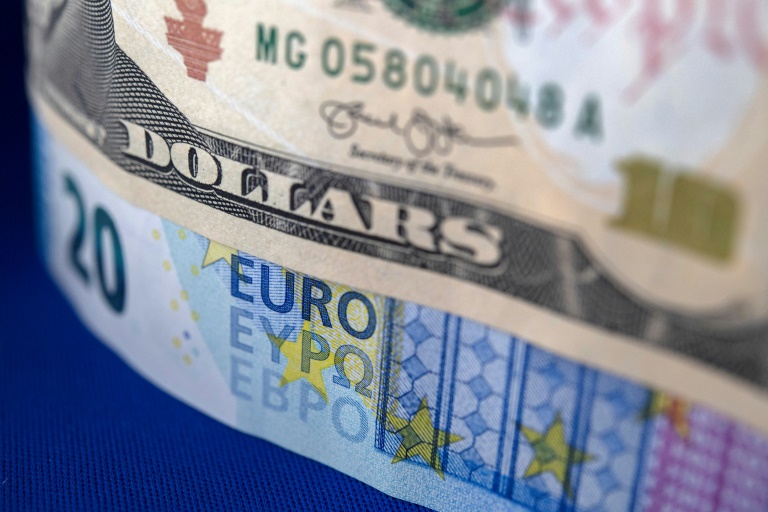
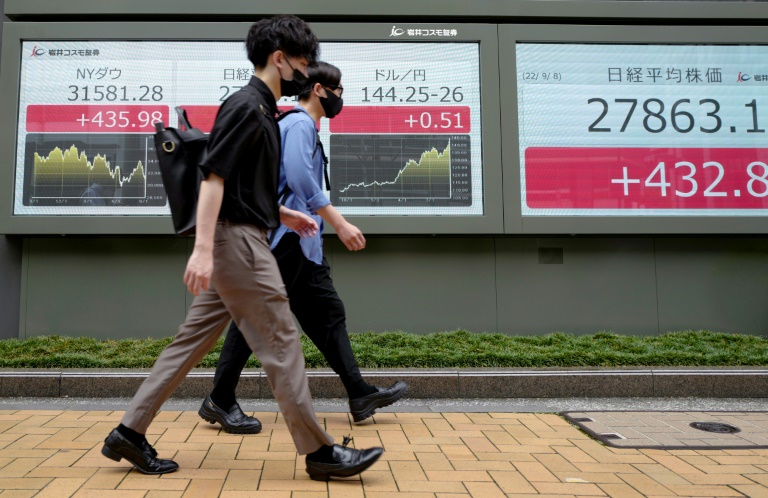
Stock markets rallied Monday, building on pre-weekend momentum as investors priced in the expectation of further interest rate hikes aimed at taming decades-high inflation.

The euro surged against main rivals, a day after German central bank chief Joachim Nagel signalled that the European Central Bank (ECB) would probably continue raising its key rate.

The European single currency rocketed more than 1.4 percent against the dollar and 1.6 percent versus the yen before trimming gains around midday.

The ECB raised the key rate by a historic 75 basis points last week, and markets expect a similar-sized hike at an October meeting.

Frankfurt led the way, closing more than two percent higher, followed by Paris and London not far behind after data showed the British economy rebounded slightly in July.

On Wall Street, stocks also advanced extending last week’s rally.

Tokyo closed with a gain of more than one percent thanks to a weaker yen. Markets in Hong Kong, mainland China and South Korea were closed for a public holiday.

Investors worldwide are awaiting key US inflation data for August, due Tuesday, with the consumer price index (CPI) expected to ease slightly to eight percent — still well above the Fed’s two-percent target.

Traders expect the Fed to impose another large rate hike next week, after two 75-basis-point increases already.

Clifford Bennett, chief economist at ACY Securities, said he expected stocks to “continue to drift higher” ahead of Tuesday’s CPI data.

The inflation print “may well see further improvement as petrol prices have continued to pull back”, he said. 

Oil prices gained Monday but remain pressured by the possibility of global demand weakening as growth slows and China’s harsh zero-Covid policy continues to sap economic activity.

– ‘Soft landing’ hopes –

US Treasury Secretary Janet Yellen on Sunday said she was hopeful the US economy could avoid a recession, but that the Fed would need to skilfully manage interest rates and also rely on “some good luck to achieve what we sometimes call a soft landing.

“My hope is we will achieve a soft landing, but Americans know it’s essential to bring inflation down and, over the longer run, we can’t have a strong labour market without inflation under control,” she told CNN.

Yellen said that while the US economy’s growth rate was slowing, the labour market remained “exceptionally strong”, with almost two openings for every jobseeker.

The release on Tuesday of the consumer price index will “provide some telling inflation data that will influence the market’s perspective on the Fed’s monetary policy approach”, analyst Patrick O’Hare of Briefing.com said.

– Key figures at around 1545 GMT –

London – FTSE 100: UP 1.7 percent at 7,473.03 points (close)

Frankfurt – DAX: UP 2.4 percent at 13,402.27 points (close)  

Paris – CAC 40: UP 1.95 percent at 6,333.59 points (close)  

EURO STOXX 50: UP 2.1 percent at 3,646.51 points

New York – Dow: UP 0.8 percent at 32,395.08 points  

Tokyo – Nikkei 225: UP 1.2 percent at 28,542.11 (close) 

Hong Kong – Hang Seng Index: closed for public holiday

Shanghai – Composite: closed for public holiday

Euro/dollar: UP at $1.0129 from $1.0046 

Pound/dollar: UP at $1.1699 from $1.1587 

Euro/pound: DOWN at 86.56 pence from 86.84 pence

Dollar/yen: DOWN at 142.45 yen from 142.56 yen 

Brent North Sea crude: UP 2.0 percent at $94.73 per barrel

West Texas Intermediate: UP 1.95 percent at $88.48 per barrel

Biden promotes US biotech, cancer fight in new 'Moonshot'

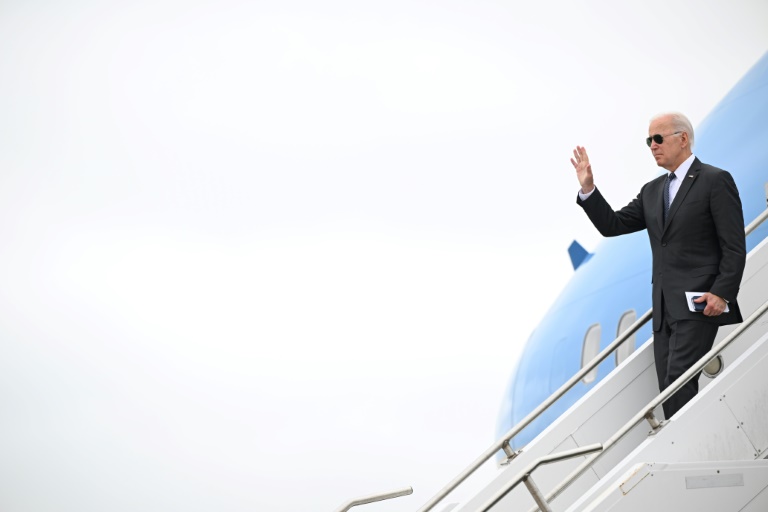
President Joe Biden issued an executive order Monday boosting the US biotech sector as part of his Cancer Moonshot initiative, which invokes the national effort to land a man on the Moon 60 years ago.

The Democrat was in Boston for an address deliberately set to echo John F. Kennedy’s famous 1962 “Moonshot speech” in which he called for landing an American on the lunar surface — something achieved in 1969.

This time, Biden is pushing for government-backed efforts to coordinate and fund a multilayered fight against cancer, with the goal of halving cancer death rates in the next 25 years.

As he set off from Washington, Biden issued an order meant to bolster the trailblazing US biotech sector’s efforts to take on growing commercial rivals in China.

The order brings federal support for “areas that will define US biotechnology leadership and our economic competitiveness in the coming decades,” a senior Biden administration official told reporters.

The official said that while US biotech research leads the world, the industrial applications are increasingly in the hands of other countries.

“Unless we translate biotechnology innovation into economic and societal benefits for all Americans, other countries, including and especially China, are aggressively investing in this sector,” posing a “risk,” the official said.

The White House says the US biotech industry is on the cutting edge of medical advances — recently seen in the rapid development of vaccines, tests and therapeutics to help manage the Covid-19 pandemic — but that the potential scope goes much further.

The official speaking to reporters cited studies suggesting that “before the end of the decade, engineering biology holds the potential to be used in manufacturing industry that accounts for more than one third of global output. That’s equivalent to almost $30 trillion in terms of value.”

Growing areas for biotech industry include new plastics and rubbers, jet fuel, and environmentally friendly fertilizers.

– Personal issue for Biden –

The battle against cancer is personal for Biden: his son Beau died of brain cancer in 2015 when Biden was vice president to Barack Obama.

In his speech at the John F. Kennedy Library and Museum in Boston, Biden will lay out how his administration is seeking to slash cancer rates through a systemic revamp of government funding and support for everything from medical research to improving access to healthcare and better environmental conditions.

The linkage to the Moon program will seek to raise public awareness and support ahead of midterm congressional elections where the Democrats face the possibility of a Republican sweep in Congress, something which would severely complicate the next two years of Biden’s first term.

Caroline Kennedy, the US ambassador to Australia and daughter of the assassinated JFK, told CNN she approved of the parallels drawn by Biden in the struggle to conquer the deadly disease.

“Sixty years after my father challenged Americans to land on the moon, President Biden is welcoming great challenges as new opportunities by setting us on a bold course to end cancer as we know it,” she said.

Biden’s focus on the cancer fight comes as NASA is once again looking to return to the Moon.

Hilfiger returns to New York with a new logo and metaverse focus

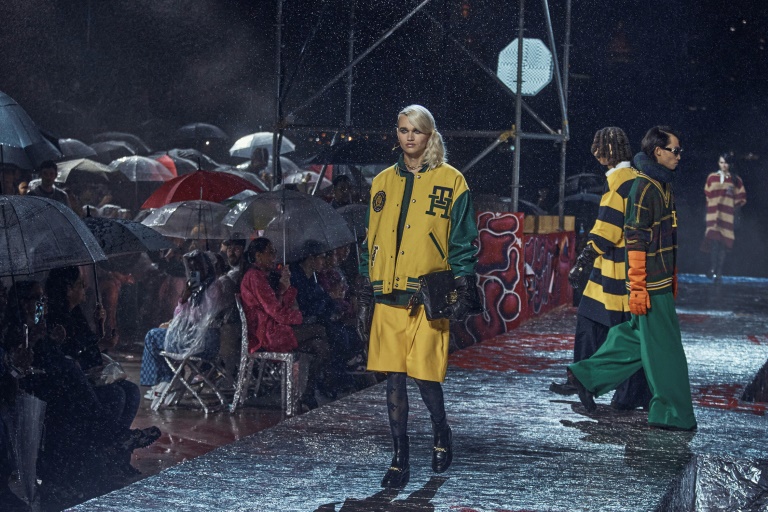
With a new logo and eyes on the metaverse, Tommy Hilfiger returned to New York’s Fashion Week, presenting a collection that seeks to reinvent his brand.

The American designer had not shown a collection on the catwalks of New York in three years, among the heavy-hitters including Ralph Lauren and Calvin Klein who opted out.

“We started the brand in New York — it is my home,” Hilfiger told AFP, explaining his decision to return.

While the designer grants Paris the distinction of global fashion capital, he says New York is at its epicenter, for “pop culture, fashion or music, entertainment, celebrity.”

His show on Sunday drew inspiration from Andy Warhol, who Hilfiger dubbed the world’s pop art king.

Although most labels are presenting their spring-summer 2023 collections, Hilfiger chose to show a fall collection that better reflected the current changing temperatures — and also allowed spectators to purchase items in real time.

– Back to basics –

Persistent showers threatened the outdoor show on the banks of the East River, as fog obscured Manhattan’s skyscrapers in the distance.

But between a DJ, drag queen performance and Travis Barker on the drums, those in attendance could be distracted from getting soaked.

As a remix of Beyonce’s latest hit “Break My Soul” with Madonna’s “Vogue” pumped in the background, Hilfiger introduced a return to form, with new takes on the horizontally striped sweatshirts and polos, or large-checked coats, that saw him reinvent prep and embrace hip hop in the 1990s and early 2000s.

To accessorize the classics the designer showed a playful line of ties, long-sleeved gloves, large scarves and heavy necklaces, which adorned a diverse parade of models spanning gender and body type.

“I went back to my archive with my design team,” said the designer whose brand, like Calvin Klein, is owned by the Dutch group PVH, and whose global retail sales notched $9.3 billion in 2021.

“And we took everything that was great 25-30 years ago and made it relevant for today.”

– Metaverse –

Sunday’s novelties included a new Hilfiger monogram, although the brand’s iconic logo is still in circulation.

And to add a final touch of modernity, a parallel, virtual show took place simultaneously on the metaverse, on the video game platform Roblox that’s populated with avatars.

“If you look at the millions of gamers in the world — many of them in Asia, by the way — you’re reaching an audience that you would not normally reach through physical fashion,” Hilfiger said.

Stock markets rally, as euro briefly surges

Stock markets rallied Monday, building on pre-weekend momentum as investors priced in the expectation of further interest rate hikes aimed at taming decades-high inflation.

The euro surged against main rivals, a day after German central bank chief Joachim Nagel signalled that the European Central Bank (ECB) would probably continue raising its key rate.

The European single currency rocketed more than 1.4 percent against the dollar and 1.6 percent versus the yen before trimming gains around midday.

The ECB raised the key rate by a historic 75 basis points last week, and markets expect a similar-sized hike at an October meeting.

Paris and Frankfurt stock markets rose by more than two percent in mid-afternoon trading, with London not far behind as data showed the British economy rebounded slightly in July.

Tokyo closed with a gain of more than one percent thanks to a weaker yen. Markets in Hong Kong, mainland China and South Korea were closed for a public holiday.

Investors worldwide are awaiting key US inflation data for August, due Tuesday, with the consumer price index (CPI) expected to ease slightly to eight percent — still well above the Fed’s two-percent target.

Traders expect the Fed to impose another large rate hike next week, after two 75-basis-point increases already.

Clifford Bennett, chief economist at ACY Securities, said he expected stocks to “continue to drift higher” ahead of Tuesday’s CPI data.

The inflation print “may well see further improvement as petrol prices have continued to pull back”, he said. 

Oil prices gained more than one percent Monday but remain pressured by the possibility of global demand weakening as growth slows and China’s harsh zero-Covid policy continues to sap economic activity.

– ‘Soft landing’ hopes –

US Treasury Secretary Janet Yellen on Sunday said she was hopeful the US economy could avoid a recession, but that the Fed would need to skilfully manage interest rates and also rely on “some good luck to achieve what we sometimes call a soft landing”.

“My hope is we will achieve a soft landing, but Americans know it’s essential to bring inflation down and, over the longer run, we can’t have a strong labour market without inflation under control,” she told CNN.

Yellen said that while the US economy’s growth rate was slowing, the labour market remained “exceptionally strong”, with almost two openings for every jobseeker.

The release on Tuesday of the consumer price index will “provide some telling inflation data that will influence the market’s perspective on the Fed’s monetary policy approach”, analyst Patrick O’Hare of Briefing.com said.

– Key figures at around 1355 GMT –

London – FTSE 100: UP 1.5 percent at 7,462.13  points

Frankfurt – DAX: UP 2.2 percent at 13,368.57 

Paris – CAC 40: UP 2.1 percent at 6,341.10 

EURO STOXX 50: UP 1.96 percent at 3,640.18

New York – Dow: UP 0.7 percent at 32,387.10 

Tokyo – Nikkei 225: UP 1.2 percent at 28,542.11 (close) 

Hong Kong – Hang Seng Index: closed for public holiday

Shanghai – Composite: closed for public holiday

Euro/dollar: UP at $1.0116 from $1.0046 

Pound/dollar: UP at $1.1679 from $1.1587  

Euro/pound: DOWN at 86.60 pence from 86.84 pence

Dollar/yen: UP at 142.66 yen from 142.56 yen 

Brent North Sea crude: UP 1.5 percent at $94.20 per barrel

West Texas Intermediate: UP 1.4 percent at $88.02 per barrel

Stock markets rally, as euro briefly surges

Stock markets rallied Monday, building on pre-weekend momentum as investors priced in the expectation of further interest rate hikes aimed at taming decades-high inflation.

The euro surged against main rivals, a day after German central bank chief Joachim Nagel signalled that the European Central Bank (ECB) would probably continue raising its key rate.

The European single currency rocketed more than 1.4 percent against the dollar and 1.6 percent versus the yen before trimming gains around midday.

The ECB raised the key rate by a historic 75 basis points last week, and markets expect a similar-sized hike at an October meeting.

London, Paris and Frankfurt stock markets were up about 1.5 percent nearing the half-way stage, with Tokyo closing with a gain of more than one percent thanks to a weaker yen.

Markets in Hong Kong, China and South Korea were closed for a public holiday.

Investors worldwide are awaiting key US inflation data for August, due Tuesday, with the consumer price index (CPI) expected to ease slightly to eight percent — still well above the Fed’s two-percent target.

Traders expect the Fed to impose another large rate hike next week, after two 75-basis-point increases already.

Clifford Bennett, chief economist at ACY Securities, said he expected stocks to “continue to drift higher” ahead of Tuesday’s CPI data.

The inflation print “may well see further improvement as petrol prices have continued to pull back”, he said. 

Oil prices gained one percent Monday but remain pressured by the possibility of global demand weakening as growth slows and China’s harsh zero-Covid policy continues to sap economic activity.

– ‘Soft landing’ hopes –

US Treasury Secretary Janet Yellen on Sunday said she was hopeful the US economy could avoid a recession, but that the Fed would need to skilfully manage interest rates and also rely on “some good luck to achieve what we sometimes call a soft landing”.

“My hope is we will achieve a soft landing, but Americans know it’s essential to bring inflation down and, over the longer run, we can’t have a strong labour market without inflation under control,” she told CNN.

Yellen said that while the US economy’s growth rate was slowing, the labour market remained “exceptionally strong”, with almost two openings for every jobseeker.

– Key figures at around 1100 GMT –

London – FTSE 100: UP 1.3 percent at 7,449.84 points

Frankfurt – DAX: UP 1.6 percent at 13,302.93

Paris – CAC 40: UP 1.3 percent at 6,292.35

EURO STOXX 50: UP 1.4 percent at 3,621.58

Tokyo – Nikkei 225: UP 1.2 percent at 28,542.11 (close) 

Hong Kong – Hang Seng Index: closed for public holiday

Shanghai – Composite: closed for public holiday

New York – Dow: UP 1.2 percent at 32,151.71 (close)

Euro/dollar: UP at $1.0145 from $1.0046 

Pound/dollar: UP at $1.1683 from $1.1587  

Euro/pound: FLAT at 86.84 pence

Dollar/yen: UP at 142.62 yen from 142.56 yen 

Brent North Sea crude: UP 1.1 percent at $93.86 per barrel

West Texas Intermediate: UP 1.0 percent at $87.66 per barrel

Auction to be held on Russia debt default insurance

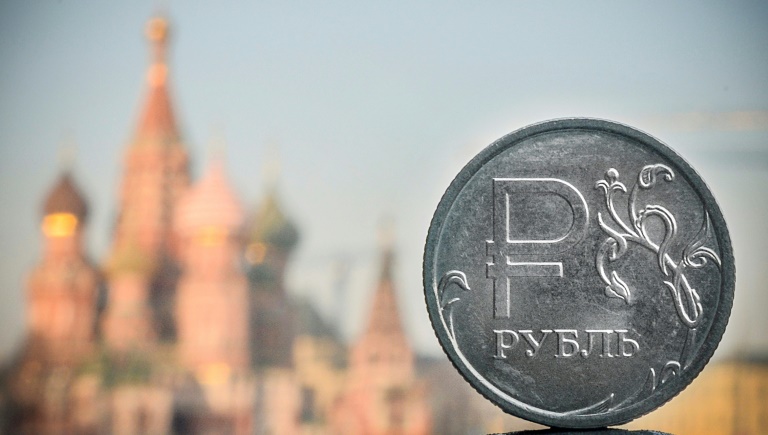
An auction to pay out insurance on Russia’s unpaid debt was due to take place on Monday, an event formally marking the sanctions-hit country’s first foreign default in more than a century.

Moscow was unable to transfer funds to creditors in June due to Western sanctions over its invasion of Ukraine.

The failure to pay its debt kicked off a complicated process to compensate investors who bought credit default swaps (CDS), a sort of insurance that bondholders purchase to protect against default by borrowers.

But the auction was repeatedly delayed as organisers had to ensure that the sanctions would not block the CDS payouts.

The country last defaulted on its foreign debt in 1918, when Bolshevik revolution leader Vladimir Lenin refused to recognise the massive debts of the deposed tsar’s regime.

Russia defaulted on domestic debt in 1998 when, due to a drop in commodity prices, it faced a financial squeeze that prevented it from propping up the ruble and paying off debts that accumulated during the first war in Chechnya.

The latest default follows a series of unprecedented Western sanctions that have isolated Russia from the global financial system, including a freeze on Moscow’s $300 billion in foreign currency reserves held abroad.

Russia lost the last avenue to service its foreign-currency loans after the United States removed an exemption in May that had allowed US investors to receive Moscow’s payments.

Russian authorities have insisted throughout that they have the funds to honour the country’s debt, calling the predicament a “farce” and accusing the West of pushing an “artificial” default.

Moscow’s foreign currency debt is relatively low, at around $40 billion.

But the sanctions prevented it from paying bond holders in June.

– ‘Credit event’ –

International ratings agencies, the institutions that decide whether are country is in default, were unable to officially declare whether Russia was in default due to sanctions prohibiting them from covering Moscow’s debt.

But Moody’s ratings agency released a less formal “issuer comment” saying missed payments on interest totalling $100 million amounted to a default.

The official ruling was therefore left in the hands of a little-known panel of investors, the Credit Derivatives Determinations Committee (CDDC), which organises CDS auctions.

In late June, the London-based CDDC — made up of 15 leading banks and financial firms — declared that Russia’s missed payment constituted a “credit event”.

CDS auctions are usually held around 30 days after the committee declares a credit event, but doubts over whether the sanctions allowed the process to take place caused the three-month delay.

Foreign investors are no longer able to trade Russian bonds, and the auctions are essentially transactions involving such assets.

But the US Treasury Department issued a waiver in July to allow the auction on eight Russian bonds to take place this month.

JPMorgan, the investment firm, says the CDS against Russian default are worth almost $2.4 billion.

The auction takes place in two stages. The first stage will set an initial price on the eight bonds, which will serve as a base to fix the final price for compensation in a second stage open more widely to investors.

The CDDC said the settlement dates for the auction could be slightly delayed due to a bank holiday for the funeral of Queen Elizabeth II on September 19.

Close Bitnami banner
Bitnami